Year: 2019

19 Oct 2019

IPOs are the beginning, not the end

Earlier this month at TechCrunch Disrupt San Francisco, we sat down with Box’s Aaron Levie and PagerDuty’s Jennifer Tejada to discuss their respective companies’ paths to an IPO, the general IPO landscape and the pros and cons of going public. With a lot of recent IPOs faltering and increased pressure on startup valuations, now is as good a time as ever to think about the role IPOs play in a company’s lifespan.

“I think it’s really important to think of the IPOs, the beginning, not the end,” said Tejada. “We all live in Silicon Valley and that can be a little bit of an echo chamber and you talk about exits all the time. The IPO is an entrance, right? It is part of the beginning of a long journey for a durable company that you want to build a legacy around. And so, it is a moment — it’s the start of you really sharing a narrative backed by financial data to help people understand your current business, the potential for your business, the market that you’re in, etc. And I think we tend to talk about it like it’s the be-all end-all.”

That’s something Levie definitely agrees with. “I think we have too much of a fixation on the IPO moment versus just building durable business models and how do they end up translating into valuations. The valuation that you get at an IPO is due to variety factors.”

GettyImages 1178603646

SAN FRANCISCO, CALIFORNIA – OCTOBER 02: (L-R) PagerDuty CEO & Chairperson Jennifer Tejada, Box Co-Founder/Chairman & CEO Aaron Levie, and TechCrunch Writer Frederic Lardinois speak onstage during TechCrunch Disrupt San Francisco 2019 at Moscone Convention Center on October 02, 2019 in San Francisco, California. (Photo by Steve Jennings/Getty Images for TechCrunch)

It’s no secret that Box and PagerDuty had very different experiences as they got ready to go public. Box announced its S-1 only a few days before a major market crash back in 2014. PagerDuty, on the other hand, went public earlier this year, with solid financials and very little drama.

Tejada, in many ways, attributed that to the work she and her team did to get the company ready for this moment. “I get asked a lot by CEOs that are thinking about getting ready to go public, ‘you know, what was your playbook? How do you do this?’ And I think instead of thinking about what’s the playbook, you need to be intellectually honest about what your business looks like,” she said. In her view, CEOs need to focus on the leading indicators for their business — the ones they want the market to understand. But she also noted that the market needs to understand a company’s potential in the long run.

“You want to make sure that the market understands where you think the business can go and gets excited about it, but that they don’t over-rotate in their expectations, because dealing with really high expectations creates a lot of downstream difficulty.”

19 Oct 2019

MediaLab acquires messaging app Kik, expanding its app portfolio

Popular messaging app Kik is, indeed, “here to stay” following an acquisition by the Los Angeles-based multimedia holding company, MediaLab.

It echoes the same message from Kik’s chief executive Tim Livingston last week when he rebuffed earlier reports that the company would shut down amid an ongoing battle with the U.S. Securities and Exchange Commission. Livingston had tweeted that Kik had signed a letter-of-intent with a “great company,” but that it was “not a done deal.”

Now we know the the company: MediaLab. In a post on Kik’s blog on Friday the MediaLab said that it has “finalized an agreement” to acquire Kik Messenger.

Kik is one of those amazing places that brings us back to those early aspirations,” the blog post read. “Whether it be a passion for an obscure manga or your favorite football team, Kik has shown an incredible ability to provide a platform for new friendships to be forged through your mobile phone.”

MediaLab is a holding company that owns several other mobile properties, including anonymous social network Whisper and mixtape app DatPiff. In acquiring Kik, the holding company is expanding its mobile app portfolio.

MediaLab said it has “some ideas” for developing Kik going forwards, including making the app faster and reducing the amount of unwanted messages and spam bots. The company said it will introduce ads “over the coming weeks” in order to “cover our expenses” of running the platform.

Buying the Kik messaging platform adds another social media weapon to the arsenal for MediaLab and its chief executive, Michael Heyward .

Heyward was an early star of the budding Los Angeles startup community with the launch of the anonymous messaging service, Whisper nearly 8 years ago. At the time, the company was one of a clutch of anonymous apps — including Secret and YikYak — that raised tens of millions of dollars to offer online iterations of the confessional journal, the burn book, and the bathroom wall (respectively).

In 2017, TechCrunch reported that Whisper underwent significant layoffs to stave off collapse and put the company on a path to profitability.

At the time Whisper had roughly 20 million monthly active users across its app and website, which the company was looking to monetize through programmatic advertising, rather than brand-sponsored campaigns that had provided some of the company’s revenue in the past. Through widgets, the company had an additional 10 million viewers of its content per-month using various widgets and a reach of around 250 million through Facebook and other social networks on which it published posts.

People familiar with the company said at the time that it was seeing gross revenues of roughly $1 million and was going to hit $12.5 million in revenue for that calendar year. By 2018 that revenue was expected to top $30 million, according to sources at the time.

The flagship Whisper app let people post short bits of anonymous text and images that other folks could like or comment about. Heyward intended it to be a way for people to share more personal and intimate details —  to be a social network for confessions and support rather than harassment.

The idea caught on with investors and Whisper managed to raise $61 million from investors including Sequoia, Lightspeed Venture Partners, and Shasta Ventures . Whisper’s last round was a $36 million Series C back in 2014.

Fast forward to 2018 when Secret had been shut down for three years while YikYak also went bust — selling off its engineering team to Square for around $1 million. Whisper, meanwhile, seemingly set up MediaLab as a holding company for its app and additional assets that Heyward would look to roll up. The company filed registration documents in California in June 2018.

According to the filings, Susan Stone, a partner with the investment firm Sierra Wasatch Capital, is listed as a director for the company.

Heyward did not respond to a request for comment.

Zack Whittaker contributed reporting for this article. 

19 Oct 2019

This Week in Apps: League of Legends goes mobile, Tim Cook talks to China and more

Welcome back to This Week in Apps, the Extra Crunch series that recaps the latest OS news, the applications they support, and the money that flows through it all.

The app industry in 2018 saw 194 billion downloads and more than $100 billion in purchases. Just in the past quarter, consumer spending exceeded $23 billion and installs topped 31 billion. It’s a fact: we spend more time on our phones than we do watching TV.

This week, Chinese censorship is still a big topic, and one which sees Apple CEO sitting down with Chinese regulators to discuss. China was also found to have forced a spy app on its people, according to a code review. Meanwhile, TikTok got cloned in Russia. It also decided to bring in corporate lawyers to help it to figure out how to moderate its content and be transparent.

We also take a look at headlines about Luna Display’s response to sherlocking, an Arcade developer’s localization efforts, and hear from a former App Store reviewer, among other things.

Let’s get to it.

19 Oct 2019

HuffPost is reportedly on the auction block

Late last night the Financial Times reported that HuffPost, arguably one of the crown jewels of Verizon Media Group’s remaining network of media properties (which includes TechCrunch), is up for sale.

Verizon has been shedding media properties in a retreat from the strategy that it had begun to execute with the acquisition of AOL for $4.4 billion back in 2015. Through the AOL deal, then-chief executive Tim Armstrong became the architect of the telecommunications company’s media and advertising strategy.

Armstrong’s vision was to roll up as much online real estate as he could while creating a high technology advertising architecture on the back-end that could better target consumers based on their media consumption (which the telecom company would also own).

The idea was to provide a broad-based competitor to the reach of ad platforms on Google and Facebook which were also targeting users based on their browsing history and interests. The benefit that Google and Facebook had was that they had a more holistic view of what consumers did online and they positioned themselves as a distribution channel between media companies and users — essentially redistributing their articles and videos and hoovering up the ad dollars that had previously gone to those media companies.

The multi-billion dollar land grab continued when Verizon paid $4.5 billion for Yahoo in 2017.

Now it appears that Verizon has a multi-billion dollar case of buyer’s remorse. Part of the billions that Verizon spent on Yahoo was for the early social network Tumblr, which Yahoo had acquired for $1.1 billion back in 2013.

Earlier this year Verizon unloaded Tumblr for the cost of a luxury Manhattan apartment. That $3 million sale was presaged by the significant fall from grace of other former high-flying media and tech properties.

Vice was once worth $5.7 billion at the height of the media investment bubble, but earlier this year Disney wrote down its stake in the company to virtually nothing.

At least Vice is emerging as a survivor. the company has rolled up Refinery29. Vox Media is also doing well in the new world of media. It bought Recode back in 2015 and recently acquired the publisher behind New York Magazine to expand its purview into paper publications and get its hands on the popular New York websites Intelligencer, The Cut, Vulture, and Grub Street.

Other publications like Hello Giggles, which was founded by the actress Zooey Deschanel, were sold to Time Magazine. High-fliers like Buzzfeed, HuffPost, Vice and Vox have all had to lay off staff in recent months.

It’s been a wild ride for HuffPost, which began in 2005 as a collection of celebrity bloggers brought together under the auspices of Arianna Huffington, from whom the site took its name.

AOL acquired The Huffington Post back in 2011 in a deal that was valued at $315 million less than a year after picking up TechCrunch for $25 million.

Verizon announced layoffs across its media properties at the beginning of the year. It cut roughly 7 percent of its staff — or around 800 jobs — including some at HuffPost.

In a statement to the Financial Times, Verizon said that it would not comment on rumors and speculation.

Neither Verizon Media nor HuffPost responded to a request for comment by the time of publication.

19 Oct 2019

The new iPhone is ugly

I’ll be the first to admit that I’m a bit old-fashioned when it comes to phones. Everyone scoffs at my iPhone SE, but the truth is it’s the best phone Apple ever made — a beautiful, well designed object in just about every way. But damn is the iPhone 11 Pro ugly. And so are the newest phones from Samsung and Google, while we’re at it.

Let’s just get right to why the new iPhones are ugly, front and back. And sideways. We can start with the notch. Obviously it’s not new, but I thought maybe this would be some kind of generational anomaly that we’d all look back and laugh at in a year or two. Apparently it’s sticking around.

I know a lot of people have justified the notch to themselves in various ways — it technically means more raw screen space, it accommodates the carrier and battery icons, it’s necessary for unlocking the phone with your face.

Yeah, but it’s ugly.

If they removed the notch, literally no one would want the version with the notch, because it’s so plainly and universally undesirable. If Apple’s engineers could figure out a way to have no notch, they’d have done it by now, but they can’t and I bet they are extremely frustrated by that. They try to hide it with the special notch-camouflaging wallpaper whenever they can, which is as much as saying, “hey, we hate looking at it too.”
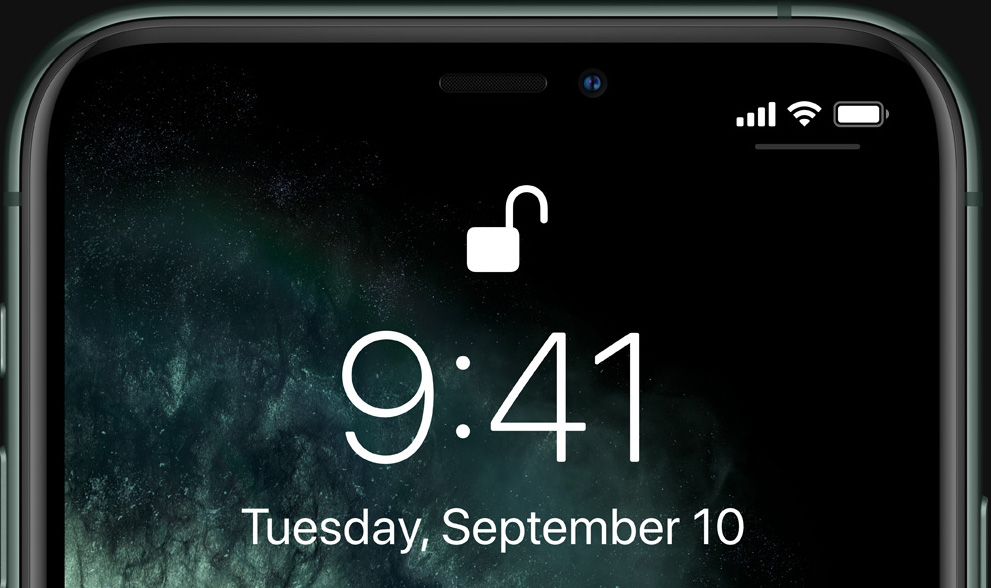
nonotch

You can forget for a few seconds. But in the back of your mind you know it’s there. Everyone knows.

It’s a prominent, ugly compromise (among several) necessitated by a feature no one asked for and people can’t seem to figure out if they even like or not. Notches are horrible and any time you see one, it means a designer cried themselves to sleep. To be fair that probably happens quite a bit. I grew up around designers and they can be pretty sensitive, like me.

I’m not a big fan of the rounded screen corners for a couple reasons, but I’ll let that go because I envision a future where it doesn’t matter. You remember how in Battlestar Galactica the corners were clipped off all the paper? We’re on our way.

Having the screen extend to the very edge of the device on the other hand isn’t exactly ugly, but it’s ugly in spirit. The whole front of the phone is an interface now, which would be fine if it could tell when you were gripping the screen for leverage and not to do something with it. As it is, every side and corner has some kind of dedicated gesture that you have to be wary of activating. It’s so bad people have literally invented a thing that sticks out from the back of your phone so you can hold it that way. Popsockets wouldn’t be necessary if you could safely hold your phone the way you’d hold any other object that shape.
 

iphone 11 pro

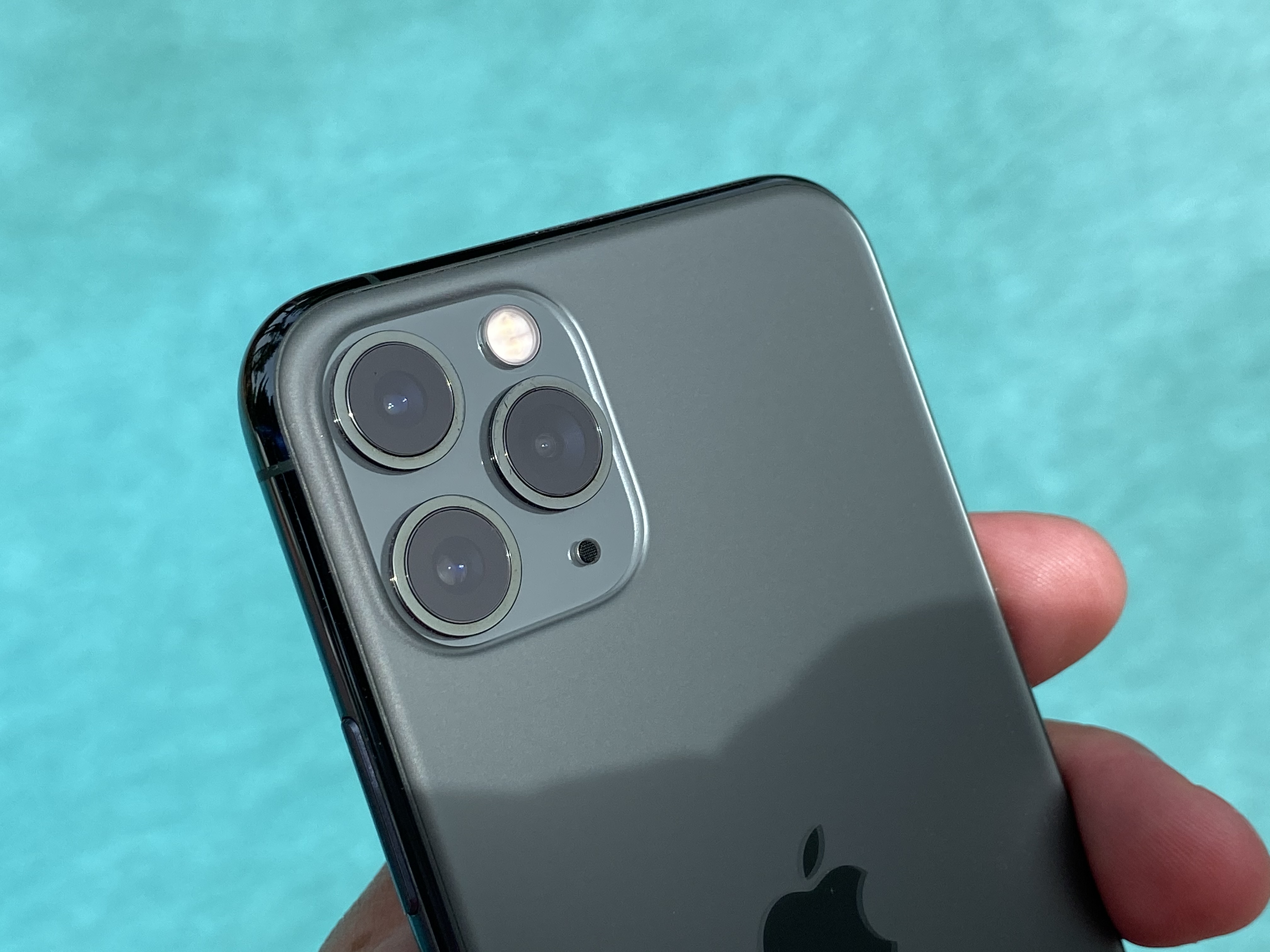
The back is ugly now, too. Man, is that camera bump bad. Bump is really the wrong word. It looks like the iPhone design team took a field trip to a maritime history museum, saw the deep sea diving helmets, and thought, Boom. That’s what we need. Portholes. To make our phone look like it could descend to 4,000 fathoms. Those helmets are actually really cool looking when they’re big and made of strong, weathered brass. Not on a thin, fragile piece of electronics. Here it’s just a huge, chunky combination of soft squares and weirdly arranged circles — five of them! — that completely take over the otherwise featureless rear side of the phone.
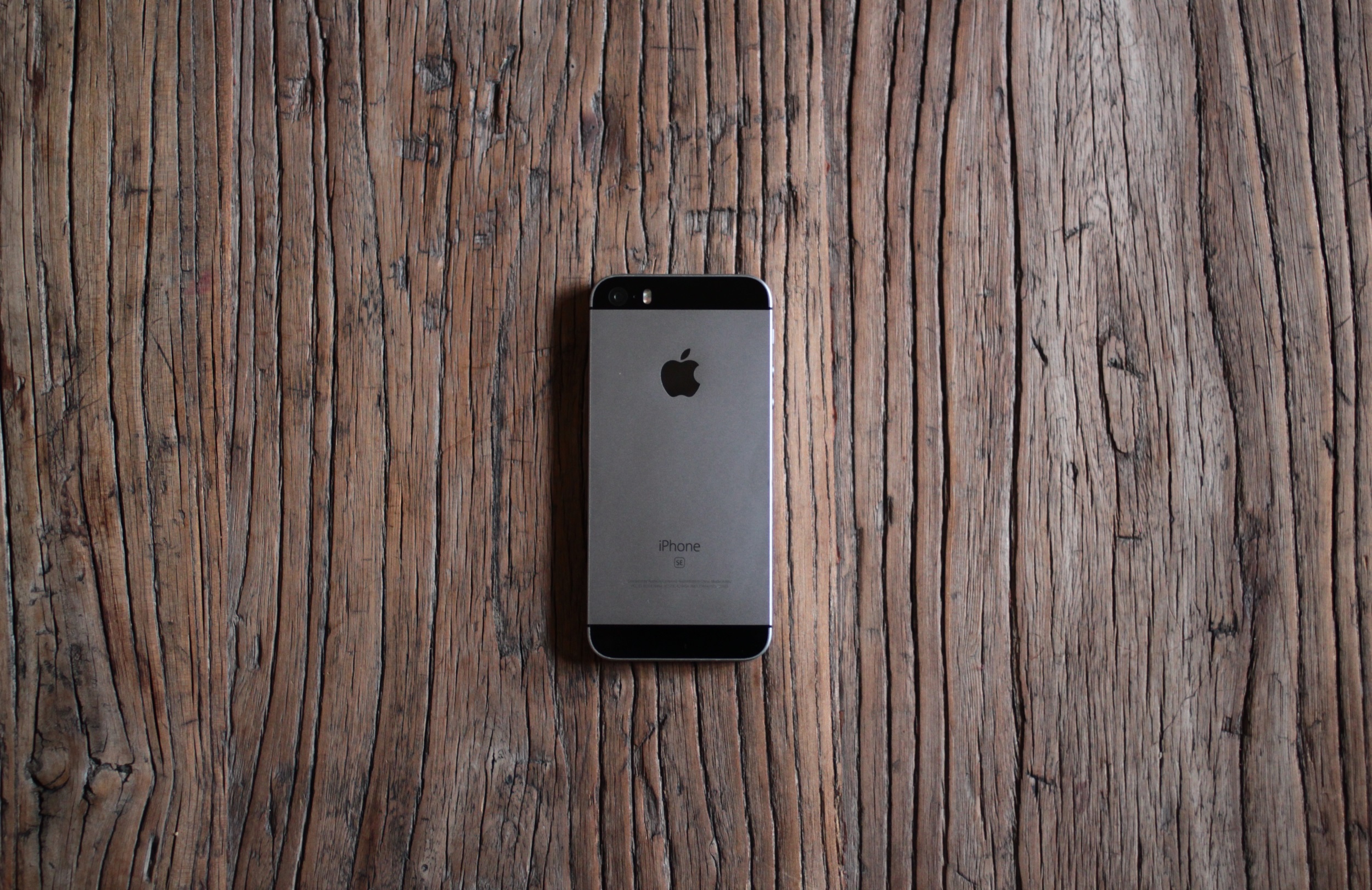
The back of the SE is designed to mirror the front, with a corresponding top and bottom “bezel.” In the best looking SE (mine) the black top bezel almost completely hides the existence of the camera (unfortunately there’s a visible flash unit); it makes the object more like an unbroken solid, its picture-taking abilities more magical. The camera is completely flush with the surface of the back, which is itself completely flush except for texture changes.

The back of the iPhone 11 Pro has a broad plain, upon which sits the slightly higher plateau of the camera assembly. Above that rise the three different little camera volcanoes, and above each of those the little calderas of the lenses. And below them the sunken well of the microphone. Five different height levels, producing a dozen different heights and edges! Admittedly the elevations aren’t so high, but still.
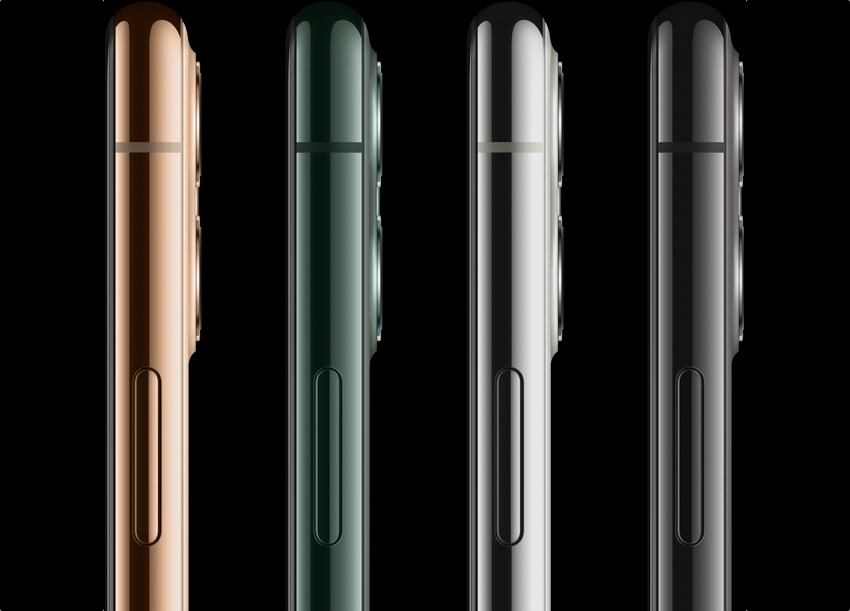
hero gallery color story m6kjl7t4boqm large

If it was a dedicated camera or another device that by design needed and used peaks and valleys for grip or eyes-free navigation, that would be one thing. But the iPhone is meant to be smooth, beautiful, have a nice handfeel. With this topographic map of Hawaii on the back? Have fun cleaning out the grime from in between the volcanoes, then knocking the edge of the lens against a table as you slide the phone into your hand.

Plus it’s ugly.

The sides of the phones aren’t as bad as the front and back, but we’ve lost a lot since the days of the SE. The geometric simplicity of the + and – buttons, the hard chamfered edge that gave you a sure grip, the black belts that boldly divided the sides into two strips and two bows. And amazingly, due to being made of actual metal, the more drops an SE survives, the cooler it looks.
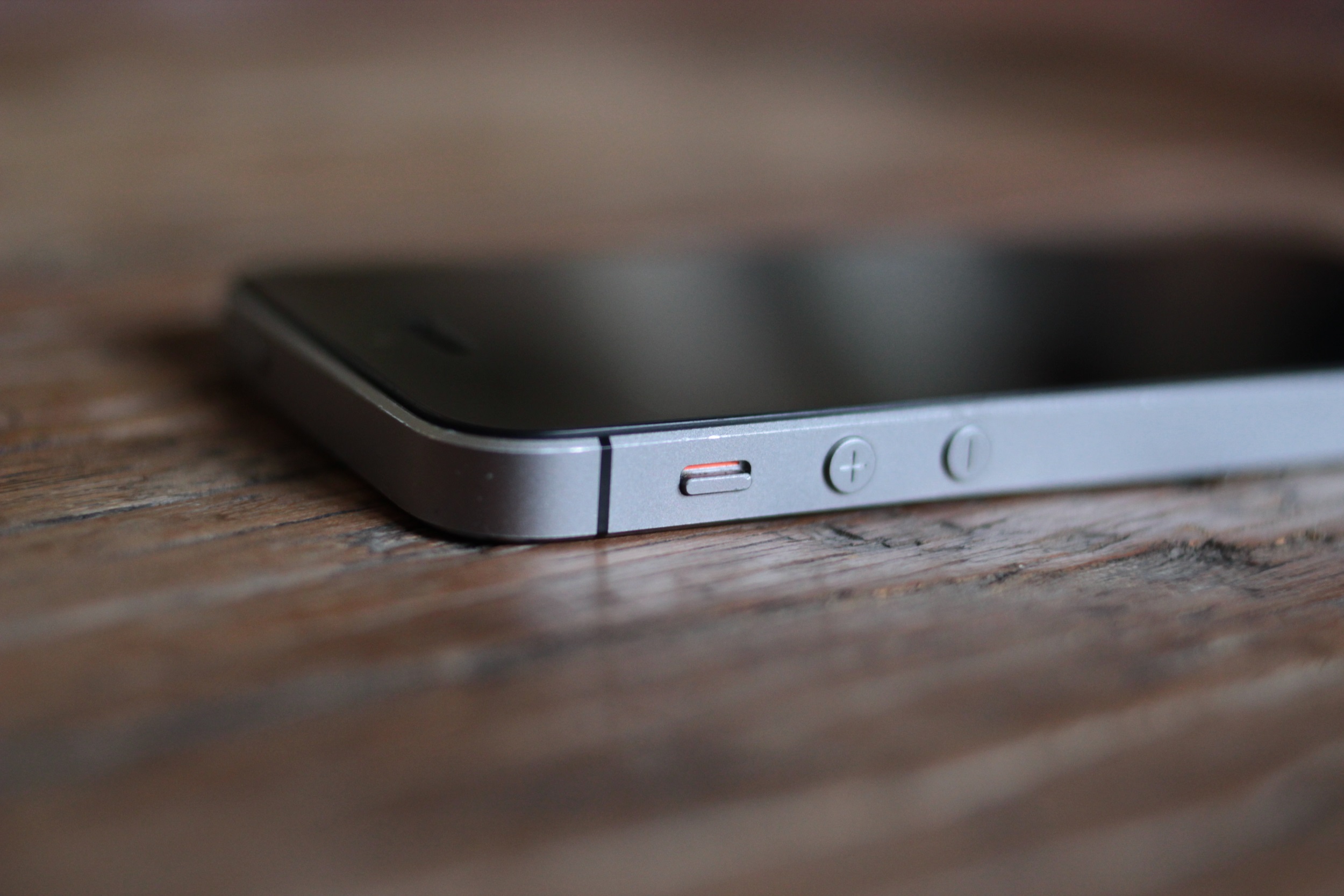
The sides of the new iPhones look like bumpers from cheap model cars. They look like elongated jelly beans, with smaller jelly beans stuck on that you’re supposed to touch. Gross.

That’s probably enough about Apple. They forgot about good design a long time ago, but the latest phones were too ugly not to call out.

Samsung has a lot of the same problems as Apple. Everyone has to have an “edge to edge” display now, and the Galaxy S10 is no exception. But it doesn’t really go to the edge, does it? There’s a little bezel on the top and bottom, but the bottom one is a little bigger. I suppose it reveals the depths of my neurosis to say so, but that would never stop bugging me if I had one. If it was a lot bigger, like HTC’s old “chins,” I’d take it as a deliberate design feature, but just a little bigger? That just means they couldn’t make one small enough.

sung 10

As for the display slipping over the edges, it’s cool looking in product photos, but I’ve never found it attractive in real life. What’s the point? And then from anywhere other than straight on, it makes it look more lopsided, or like you’re missing something on the far side.

Meanwhile it not only has bezels and sometime curves, but a hole punched out of the front. Oh my god!

Here’s the thing about a notch. When you realize as a phone designer that you’re going to have to take over a big piece of the front, you also look at what part of the screen it leaves untouched. In Apple’s case it’s the little horns on either side — great, you can at least put the status info there. There might have been a little bit left above the front camera and Face ID stuff, but what can you do with a handful of vertical pixels? Nothing. It’ll just be a distraction. Usually there was nothing interesting in the middle anyway. So you just cut it all out and go full notch.

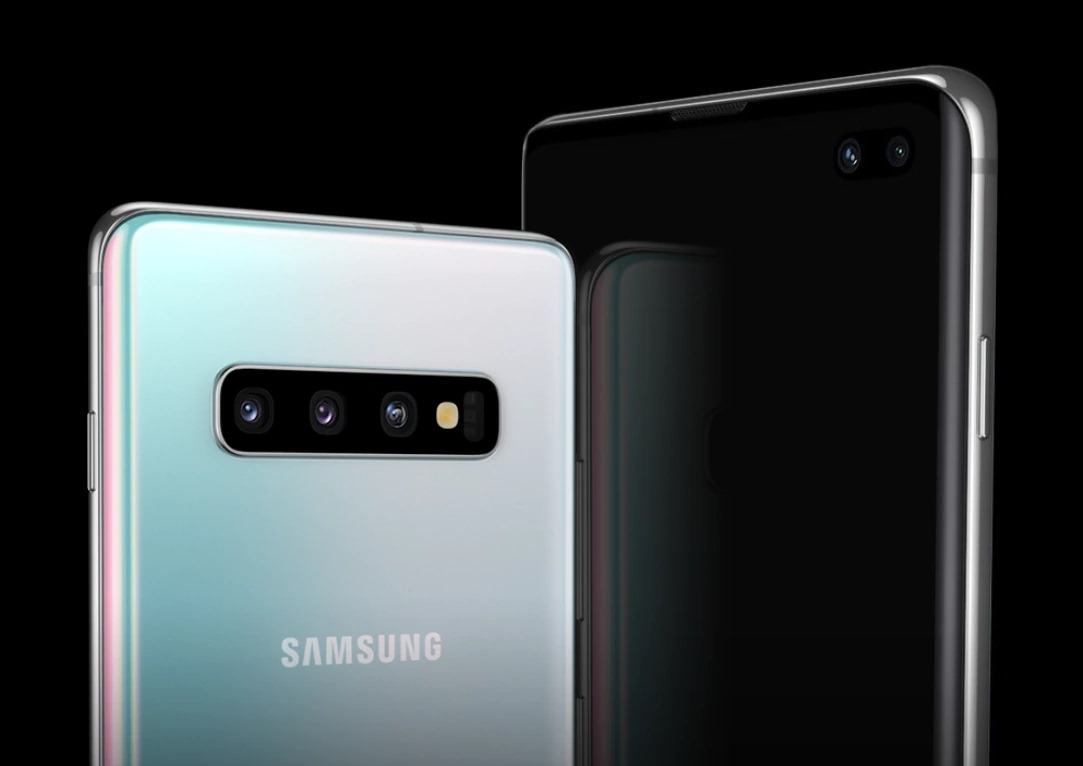
Samsung on the other hand decided to put the camera in the top right, and keep a worthless little rind of screen all around it. What good is that part of the display now? It’s too small to show anything useful, yet the hole is too big to ignore while you’re watching full-screen content. If their aim was to make something smaller and yet even more disruptive than a notch, mission accomplished. It’s ugly on all the S10s, but the big wide notch-hole combo on the S10 5G 6.7″ phablet is the ugliest.
galaxy s10 camera

The decision to put all the rear cameras in a long window, like the press box at a hockey game, is a bold one. There’s really not much you can do to hide 3 giant lenses, a flash, and that other thing. Might as well put them front and center, set off with a black background and chrome rim straight out of 2009. Looks like something you’d get pointed at you at the airport. At least the scale matches the big wide “SAMSUNG” on the back. Bold — but ugly.

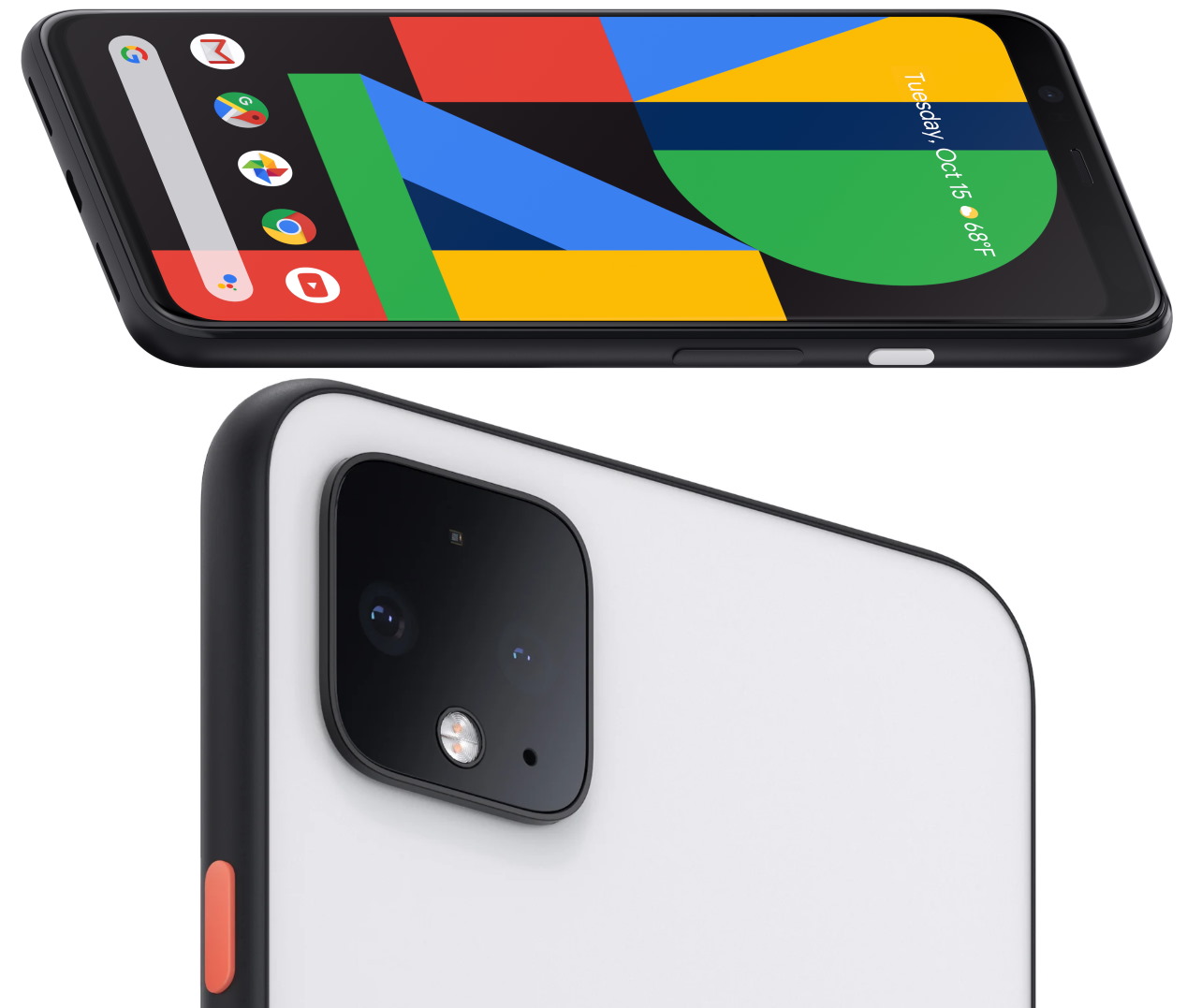
Google’s Pixel 4 isn’t as bad, but it’s got its share of ugly. I don’t need to spend too much time on it, though, because it’s a lot of the same, except in pumpkin orange for Halloween season. I like the color orange generally, but I’m not sure about this one. Looks like a seasonal special phone you pick up in a blister pack from the clearance shelf at Target, the week before Black Friday — two for $99, on some cut-rate MVNO. Maybe it’s better in person, but I’d be afraid some kid would take a bite out of my phone thinking it’s a creamsicle.
pixel 4

The lopsided bezels on the front are worse than the Samsung’s, but at least it looks deliberate. Like they wanted to imply their phone is smart so they gave it a really prominent forehead.


I will say that of the huge, ugly camera assemblies, the Pixel’s is the best. It’s more subtle, like being slapped in the face instead of kicked in the shins so hard you die. And the diamond pattern is more attractive for sure. Given the square (ish) base, I’m surprised someone on the team at Google had the rather unorthodox idea to rotate the cameras 45 degrees. Technically it produces more wasted space, but it looks better than four circles making a square inside a bigger, round square.

And it looks a hell of a lot better than three circles in a triangle, with two smaller circles just kind of hanging out there, inside a bigger, round square. That iPhone is ugly!


19 Oct 2019

Mercedes-Benz app glitch exposed car owners’ information to other people’s accounts

Mercedes-Benz car owners have said that the app they used to remotely locate, unlock and start their cars was displaying other people’s account and vehicle information.

TechCrunch spoke to two customers who said the Mercedes-Benz’ connected car app was pulling in information from other accounts and not their own, allowing them to see personal information — including names, locations, phone numbers, and other information — of other vehicle owners.

The apparent security lapse happened late-Friday before the app went offline “due to site maintenance” a few hours later.

It’s not uncommon for modern vehicles these days to come with an accompanying phone app. These apps connect to your car and let you remotely locate them, lock or unlock them, and start or stop the engine. But as cars become internet-connected and hooked up to apps, security flaws have allowed researchers to remotely hijack or track vehicles.

One Seattle-based car owner told TechCrunch that their app pulled in information from several other accounts. He said that both he and a friend, who are both Mercedes owners, had the same car belonging to another customer, in their respective apps but every other account detail was different.

benz app 2

Screenshots of the Mercedes-Benz app showing another person’s vehicle, and exposed data belonging to another car owner. (Image: supplied)

The car owners we spoke to said they were able to see the car’s recent activity, including the locations of where it had recently been, but they were unable to track the real-time location using the app’s feature.

When he contacted Mercedes-Benz, a customer service representative told him to “delete the app” until it was fixed, he said.

The other car owner we spoke to said he opened the app and found it also pulled in someone else’s profile.

“I got in contact with the person who owns the car that was showing up,” he told TechCrunch. “I could see the car was in Los Angeles, where he had been, and he was in fact there,” he added.

He said that he wasn’t sure if the app has exposed his private information to another customer.

“Pretty bad fuck up in my opinion,” he said.

The first customer reported that the “lock and unlock” and the engine “start and stop” features did not work on his app, somewhat limiting the impact of the security lapse. The other customer said they did not attempt to test either feature.

It’s not clear how the security lapse happened or how widespread the problem was. A spokesperson for Daimler, the parent company of Mercedes-Benz, did not respond to a request for comment on Saturday.

According to Google Play’s rankings, more than 100,000 customers have installed the app.

A similar security lapse hit Credit Karma’s mobile app in August. The credit monitoring company admitted that users were inadvertently shown other users’ account information, including details about credit card accounts and balances. But despite disclosing other people’s information, the company denied a data breach.

19 Oct 2019

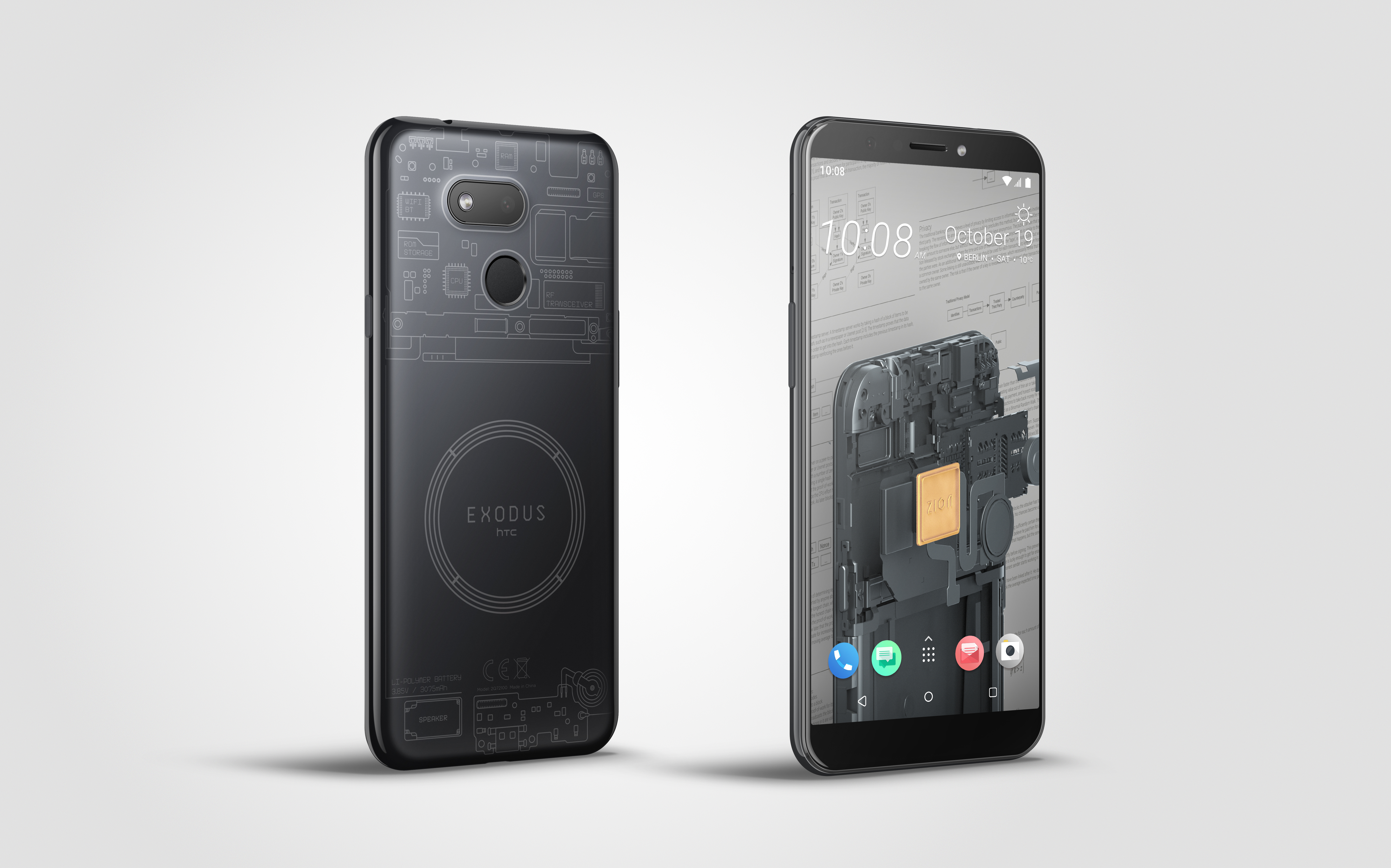
HTC releases a cheaper blockchain phone

Whatever you might say about HTC (and believe me, there’s plenty to say), at least the company takes some fascinating chance. As newly minted CEO Yves Maitre admitted to me at Disrupt a couple of weeks back, the once mighty smartphone giant has lost the thread in recent years. But if nothing else, the Exodus project marks a glimpse at some potential smartphone future.

With this weekend’s launch of the Exodus 1s at Berlin’s Lightning conference, HTC aims to make it clear that the project is more than just a one-off. The new device lowers the barrier of entry to €219 (~$244). All said, not a bad price for those looking to dabble in the technology. Oh, and obviously it’s available in all of the various equivalent cryptocurrencies.

Exodus1s 6V 19Oct1

The specs are fittingly pretty dismal. There’s a Snapdragon 435, running Android 8.1. The screen is a 5.7 inch HD+, coupled with a decent 4GB of RAM and 64GB of storage. Oh, and there’s a microUSB port and, good news, a headphone jack. Honestly, it’s a pretty low-end device, all told.

The big difference here being the the inclusion of a hardware wallet and Bitcoin node access. “We gave users the ability to own their own keys, and now we’ve gone one step further to allow users to run their own full Bitcoin node,” HTC’s Phil Chen said in a release tied to the news. “We are providing the tools for access to universal basic finance; the tools to have a metaphorical Swiss bank in your pocket.”

Exodus1s PerRight 19Oct1

Maitre told me the other week he still believes mainstream use of blockchain on these devices is more than two or three years out. What the 1s provides, however, is an inexpensive way to see what the technology provides today. Interested parties in Europe, Taiwan, Saudi Arabia and the UAE can order it online starting today.

19 Oct 2019

Startups Weekly: The unicorn from down under, an Uber TV show and All Raise’s expansion

Hello and welcome back to Startups Weekly, a weekend newsletter that dives into the week’s noteworthy news pertaining to startups and venture capital. Before I jump into today’s topic, let’s catch up a bit. Last week, I wrote about Revel, a recent graduate of Y Combinator that’s raised a small seed round.

Remember, you can send me tips, suggestions and feedback to kate.clark@techcrunch.com or on Twitter @KateClarkTweets. If you don’t subscribe to Startups Weekly yet, you can do that here.


What happened this week?

Uber the TV show

Is anyone surprised Mike Isaac’s “Super Pumped” is set to become a TV show? Travis Kalanick’s notorious journey to CEO of Uber and subsequent ouster was made for television. This week, news broke that Showtime’s Brian Koppelman and David Levien, the creators and showrunners of “Billions,” would develop the project, with Isaac himself on board to executive produce. I will be watching.

All Raise expansion

All Raise, an 18-month-old nonprofit organization that seeks to amplify the voices of and support women in tech, announced new chapters in Los Angeles and Boston this week. I spoke with leaders of the organization about expansion plans, new hires, product launches and more. “Women are hungry for the support and guidance we provide. I think the movement is just gathering momentum,” All Raise CEO Pam Kostka told me.

VCThe unicorn from down under

You’ve probably heard of Canva by now. The Australian tech company, which has developed a simplified graphic design tool, is worth a whopping $3.2 billion as of this week. Investors in the company include Bond, General Catalyst, Bessemer Venture Partners, Blackbird and Sequoia China. Alongside a fresh $85 million funding, Canva is also making its foray into enterprise with the launch of Canva for Enterprise. Read about that here.


What else?

  1. The Station, TechCrunch’s Kirsten Korosec’s new weekly newsletter, has officially launched. She is going deep each week on all things mobility and transportation. You can read her first one here and subscribe here.
  2. ‘Cloud kitchens’ is an oxymoron, says TechCrunch editor Danny Crichton. He penned an interesting piece this week, arguing cloud kitchens are just adding more competition to one of the most competitive industries in the world, and that isn’t a path to leverage.
  3. NASA made history this week when astronauts Christina H. Koch and Jessica Meir took part in the first-ever spacewalk in the agency’s history featuring only women. No, this isn’t startup-related but it’s pretty damn cool. Watch the video here.

EHJxl5XW4AAu3PN 1

NASA astronauts Christina H. Koch and Jessica Meir


VC deals


Startup spotlight: Petalfox. I discovered the business earlier this week. Basically, it’s a super easy way to order flowers, coffee and others goods via SMS. I’m trying it out. That’s all.


Equity

This week was honestly a treat. We had myself in the studio along with Alex Wilhelm and a special guest, Sarah Guo from Greylock Partners, a venture firm (obviously). Guo has the distinction of having the best-ever fun fact on the show. We kicked off with Grammarly, a company that recently put $90 million into its accounts. Then chatted about Lattice, Tempest, WeWork, SaaS, the future of valuations in Silicon Valley and more if you can believe it. Listen here.

Equity drops every Friday at 6:00 am PT, so subscribe to us on iTunesOvercast and all the casts.

19 Oct 2019

Apple’s China stance makes for strange political alliances, as AOC and Ted Cruz slam the company

In a rare instance of bipartisanship overcoming the rancorous discord that’s been the hallmark of the U.S. Congress, senators and sepresentatives issued a scathing rebuke to Apple for its decision to take down an app at the request of the Chinese government.

Signed by Senators Ron Wyden, Tom Cotton, Marco Rubio, Ted Cruz, and Congressional Representatives Alexandria Ocasio-Cortez, Mike Gallagher and Tom Malinowski, the letter was written to “express… strong concern about Apple’s censorship of apps, including a prominent app used by protestors in Hong Kong, at the request of the Chinese government.”

In 2019, it seems the only things that can unite America’s clashing political factions are the decisions made by companies in one of its most powerful industries.

At the heart of the dispute is Apple’s decision to take down an app called HKMaps that was being used by citizens of the island territory to track police activity.

For several months protestors have been clashing with police in the tiny territory over what they see as the undue influence being exerted by China’s government in Beijing over the governance of Hong Kong. Citizens of the former British protectorate have enjoyed special privileges and rights not afforded to mainland Chinese citizens since the United Kingdom returned sovereignty over the region to China on July 1, 1997.

“Apple’s decision last week to accommodate the Chinese government by taking down HKMaps is deeply concerning,” the authors of the letter wrote. “We urge you in the strongest terms to reverse course, to demonstrate that Apple puts values above market access, and to stand with the brave men and women fighting for basic rights and dignity in Hong Kong.”

Apple has long positioned itself as a defender of human rights (including privacy and free speech)… in the United States. Abroad, the company’s record is not quite as spotless, especially when it comes to pressure from China, which is one of the company’s largest markets outside of the U.S.

Back in 2017, Apple capitulated to a request from the Chinese government that it remove all virtual private networking apps from the App Store. Those applications allowed Chinese users to circumvent the “Great Firewall” of China, which limits access to information to only that which is approved by the Chinese government and its censors.

Over 1,100 applications have been taken down by Apple at the request of the Chinese government, according to the organization GreatFire (whose data was cited in the Congressional letter). They include VPNs, and applications made for oppressed communities inside China’s borders (like Uighurs and Tibetans).

Apple isn’t the only company that’s come under fire from the Chinese government as part of their overall response to the unrest in Hong Kong. The National Basketball Association and the gaming company Blizzard have had their own run-ins resulting in self-censorship as a result of various public positions from employees or individuals affiliated with the sports franchises or gaming communities these companies represent.

However, Apple is the largest of these companies, and therefore the biggest target. The company’s stance indicates a willingness to accede to pressure in markets that it considers strategically important no matter how it positions itself at home.

The question is what will happen should regulators in the U.S. stop writing letters and start making legislative demands of their own.

18 Oct 2019

AI is helping scholars restore ancient Greek texts on stone tablets

Machine learning and AI may be deployed on such grand tasks as finding exoplanets and creating photorealistic people, but the same techniques also have some surprising applications in academia: DeepMind has created an AI system that helps scholars understand and recreate fragmentary ancient Greek texts on broken stone tablets.

These clay, stone, or metal tablets, inscribed as much as 2,700 years ago, are invaluable primary sources for history, literature, and anthropology. They’re covered in letters, naturally, but often the millennia have not been kind and there not just cracks and chips but entire missing pieces that may comprise many symbols.

Such gaps, or lacunae, are sometimes easy to complete: If I wrote “the sp_der caught the fl_,” anyone can tell you that it’s actually “the spider caught the fly.” But what if it were missing many more letters, and in a dead language to boot? Not so easy to fill in the gaps.

Doing so is a science (and art) called epigraphy, and it involves both intuitive understanding of these texts and others to add context; One can make an educated guess at what was once written based on what has survived elsewhere. But it’s painstaking and difficult work — which is why we give it to grad students, the poor things.

Coming to their rescue is a new system created by DeepMind researchers that they call Pythia, after the oracle at Delphi who translated the divine word of Apollo for the benefit of mortals.

The team first created a “nontrivial” pipeline to convert the world’s largest digital collection of ancient Greek inscriptions, into text that a machine learning system could understand. From there it was just a matter of creating an algorithm that accurately guesses sequences of letters — just like you did for the spider and the fly.

PhD students and Pythia were both given ground-truth texts with artificially excised portions. The students got the text right about 57 percent of the time — which isn’t bad, as restoration of texts is a long and iterative process. Pythia got it right… well, 30 percent of the time.

But! The correct answer was in its top 20 answers 73 percent of the time. Admittedly that might not sound so impressive, but you try it and see if you can get it in 20.

greek process

The truth is the system isn’t good enough to do this work on its own, but it doesn’t need to. It’s based on the efforts of humans (how else could it be trained on what’s in those gaps?) and it will augment them, not replace them.

Pythia’s suggestions may not be perfectly right on the first try very often, but it could easily help someone struggling with a tricky lacuna by giving them some options to work from. Taking a bit of the cognitive load off these folks may lead to increases in speed and accuracy in taking on remaining unrestored texts.

The paper describing Pythia is available to read here, and some of the software they developed to create it is in this GitHub repository.