Year: 2019

16 Oct 2019

Daily Crunch: LinkedIn now supports real-world events

The Daily Crunch is TechCrunch’s roundup of our biggest and most important stories. If you’d like to get this delivered to your inbox every day at around 9am Pacific, you can subscribe here.

1. LinkedIn gets physical, debuts Events hub for people to plan in-person networking events

LinkedIn is bringing its professional networking features into the physical world: The company is launching Events, a (currently free) tool for people to plan, announce and invite people to meetups and other get-togethers.

“I think there is a massive whitespace for events today,” argued LinkedIn’s Ajay Datta. “People don’t have a single place to organize [work-related] offline meetups specific to an industry or a neighborhood. People want to find other people.”

2. Up close with Google’s new Pixel 4

Imaging has been improved across the board, including the already solid Night Sight, Portrait Mode and zoom, which uses a hybrid of digital and the physical telephoto lens. And then there’s Recorder, which virtually every journalist seems to be excited about.

3. Twitter says it will restrict users from retweeting world leaders who break its rules

This is Twitter’s current compromise as it faces criticism for inaction against world leaders who break its rules: It still won’t take down the tweets, but it will limit how users can interact with them.

4. Healx raises $56M Series B to use AI to find treatments for rare diseases

Healx says the new financing will be used to develop the company’s “therapeutic pipeline” and to launch its global Rare Treatment Accelerator program, partnering with patient groups in an attempt to make rare disease drug discovery much more efficient.

5. NASA extends contract with Boeing for SLS rocket, paving the way for up to 10 Artemis missions

NASA has a new contract extension in place with Boeing, which will cover rocket stages for its Space Launch System beyond Artemis I and Artemis II — including production of the core stage of the rocket for Artemis III, with which NASA plans to bring the first American woman and next American man to the surface of the Moon.

6. Arianna Huffington’s Thrive Global is buying a startup that uses neuroscience to boost app usage

Thrive Global is adding a tech tool to its arsenal of cognitive behavioral therapies with the acquisition of Boundless Mind. Originally called Dopamine Labs, the company was founded in 2015 to bring some of the same technologies that social media companies like Facebook used to boost engagement to a broader range of applications.

7. Will unreliable research bury your healthcare startup?

Healthtech founders stand on the shoulders of the scientists who preceded them to obtain reliable evidence. When they promote their own innovations, credibility is a critical prerequisite. But where does credibility come from? (Extra Crunch membership required.)

16 Oct 2019

This app waits on hold for you

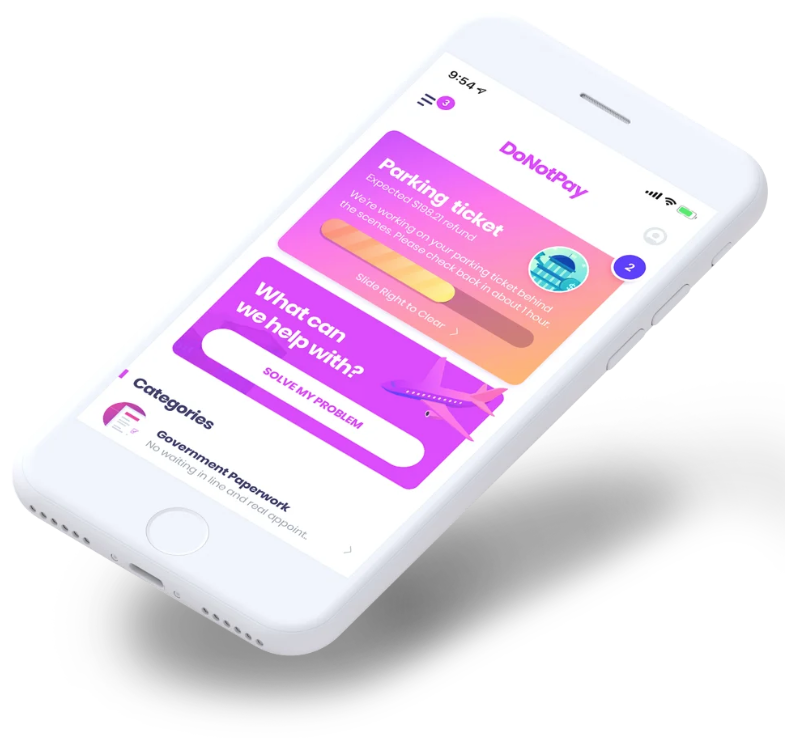
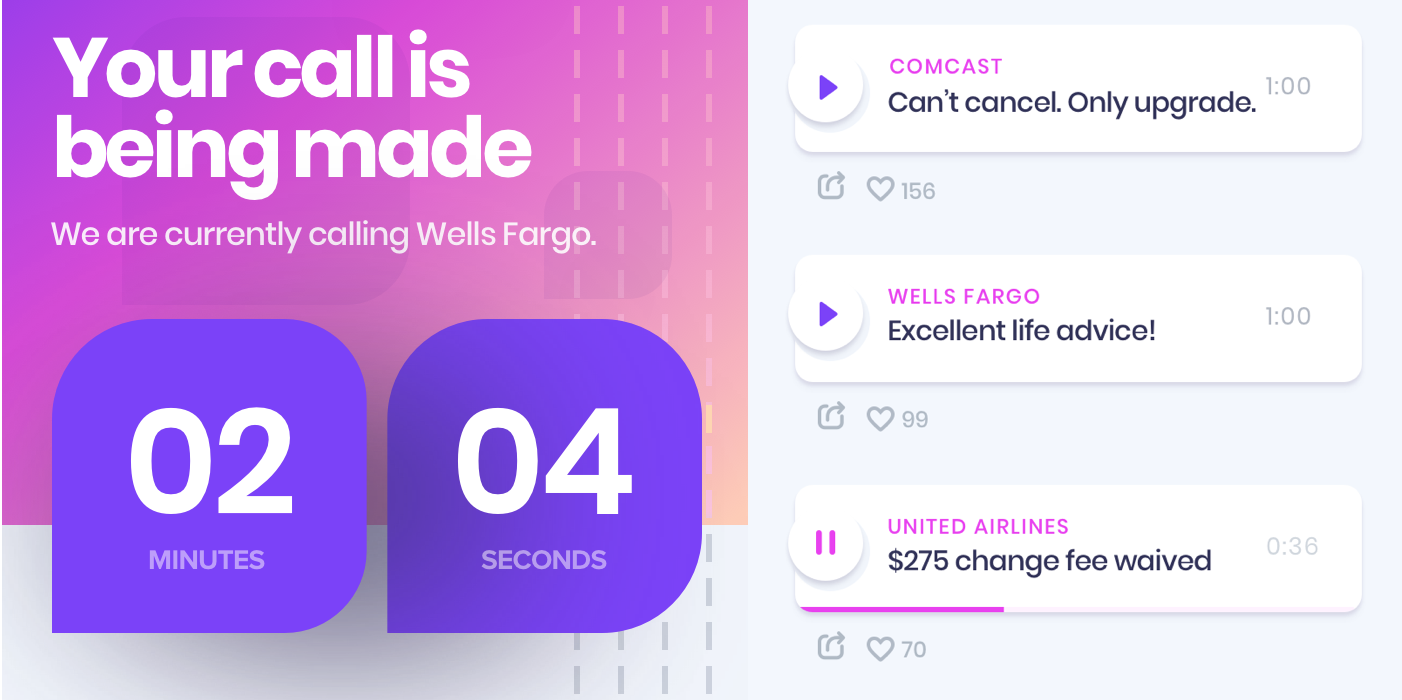
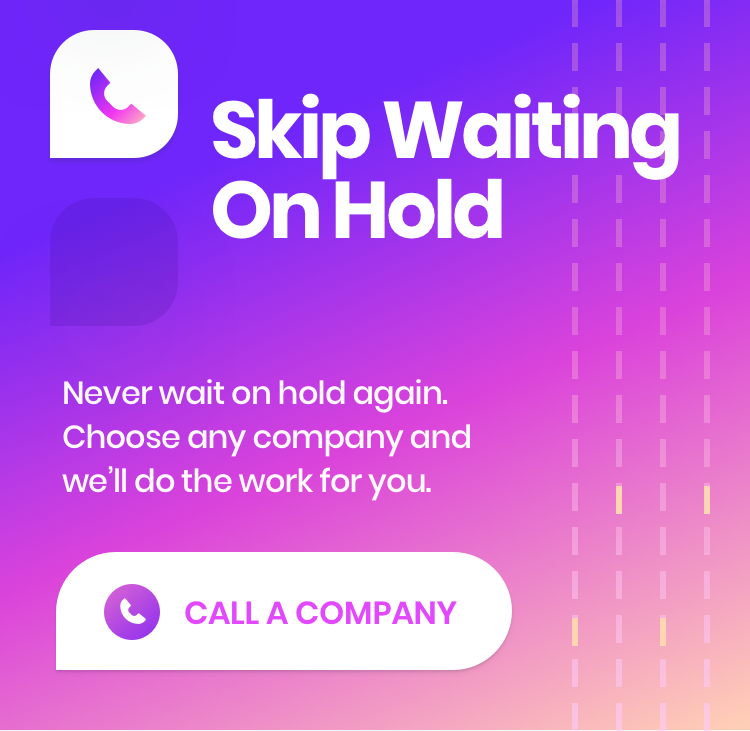
DoNotPay helps you get out of parking tickets, cancel forgotten subscriptions, and now it can call you when it’s your turn in a customer service phone queue. The app today is launching “Skip Waiting On Hold”. Just type in the company you need to talk to, and DoNotPay calls for you using tricks to get a human on the line quick. Then it calls you back and connects you to the agent so you never have to listen to that annoying hold music.

And in case the company tries to jerk you around or screw you over, the DoNotPay app lets you instantly share a legal recording of the call to social media to shame them.

How To Get Off hold

Skip Waiting On Hold comes as part of the $3 per month DoNotPay suite of services designed to save people time and money by battling bureaucracy on their behalf. It can handle DMV paperwork for you, write legal letters to scare businesses out of overcharging you, and it provides a credit card that automatically cancels subscriptions when your free trial ends.

“I think the world would be a lot fairer place if people had someone fighting for them” says DoNotPay’s 22-year-old founder Joshua Browder. $3 per month gets the iOS app‘s 10,000 customers unlimited access to all the features with no extra fees or commissions on money saved. “If DoNotPay takes a commission then we have an incentive to perpetuate the problems we are fighting against.”

Browder comes from a family of activists. His father Bill Browder got the Magnitsky Act passed, which lets the US government freeze the foreign assets and visas of human rights abusers. It’s named after Bill’s Russian lawyer who was murdered in Moscow after uncovering a $230 million government curruption scheme linked to President Putin’s underlings.

DoNotPay app

“These big companies [and governments] are getting away with a lot” Browder tells me. He hit a breaking point when frustrated with the process of appealing parking tickets. He built DoNotPay to cut through hassles designed to separate us from our money. In April it raised a $3.5 million seed round led by Felicis to develop an Android version after picking up early funding from Andreessen Horowitz. Surprisingly, the startup has never been sued.

For Skip Waiting On Hold, DoNotPay built out a database of priority and VIP customer service numbers for tons of companies. For legality, if you opt in to recording the exchanges, the app automatically plays a message informing both parties they’ll be recorded. A human voice detection system hears when a real agent picks up the phone, and then rings your phone. It’s like having customer service call you.

Not only can DoNotPay help you get in touch about cancelling subscriptions, scoring refunds, or retreiving information. It’s like “a body camera for customer service calls” Browder says. “Before they make a decision that rips off the customer, they’ll think ‘this could be made public and go viral and hurt our business.'” For example, an airline that jacks up prices for rescheduled flights surrounding hurricanes could be shamed for profiting off of natural disasters.

Record and share customer service calls

The full list of DoNotPay services includes:

  1. Customer service disputes where it contacts companies about refunds for Comcast bills, delayed flights, etc
  2. The free trial credit card that auto-cancels subscriptions before you’re actually charged
  3. Traffic and parking appeals where it generates a letter for you based on answers to questions like if signs were too hard to read or there was a mistake on the ticket
  4. Hidden money discovery that finds refunds in your bank fees, identifies forgotten subscriptions, gets you free stuff on your birthday, and more
  5. Government paperwork assistance that can help you get DMV appointments and fill out forms
  6. Skip Waiting On Hold

Browder hopes that with time, companies and governments will make all these chores easier for everyone. To avoid putting itself out of a job, DoNotPay is constantly looking for new annoyances to eliminate. “I’m from the UK. America seems to be a pay-to-play society. The more money you have to more rights you have” Browder concludes. But those rights could be restored for all by building a robot lawyer that’s affordable to everyone.

16 Oct 2019

Uber integrates electric moped service Cityscoot in Paris

Uber wants to become a super app by providing multiple services in a single app. That’s why the company is announcing an integration with French startup Cityscoot.

Cityscoot is a free-floating electric scooter service (moped scooters). Just like other free-floating mobility services, you can open an app, locate the nearest vehicle around you, unlock it and ride.

And Cityscoot has been doing well as the company now has 4,000 scooters in Paris. It has raised €40 million and expanded to Nice, Milan and Rome.

In the coming days, Uber will activate an integration with Cityscoot in the Uber app. You’ll be able to locate, get the unlock code and pay straight from the Uber app. A Cityscoot ride costs €0.29 per minute.

Cityscoot Uber

This could boost Cityscoot’s usage numbers and provide another source of revenue for Uber. I’m sure there’s some referral agreement between the companies.

Uber is now much more than a ride-hailing app in Paris. The company has already launched Jump bikes and scooters in Paris. And Uber also plans to launch public transport directions in Paris.

UberxCityscoot 2

16 Oct 2019

Autify raises $2.5M seed round for its no-code software testing platform

Autify, a platform that makes testing web application as easy as clicking a few buttons, has raised a $2.5 million seed round from Global Brain, Salesforce Ventures, Archetype Ventures and several angels. The company, which recently graduated from the Alchemist accelerator program for enterprise startups, splits its base between the U.S., where it keeps an office, and Japan, where co-founders Ryo Chikizawa (CEO) and Sam Yamashita got their start as software engineers.

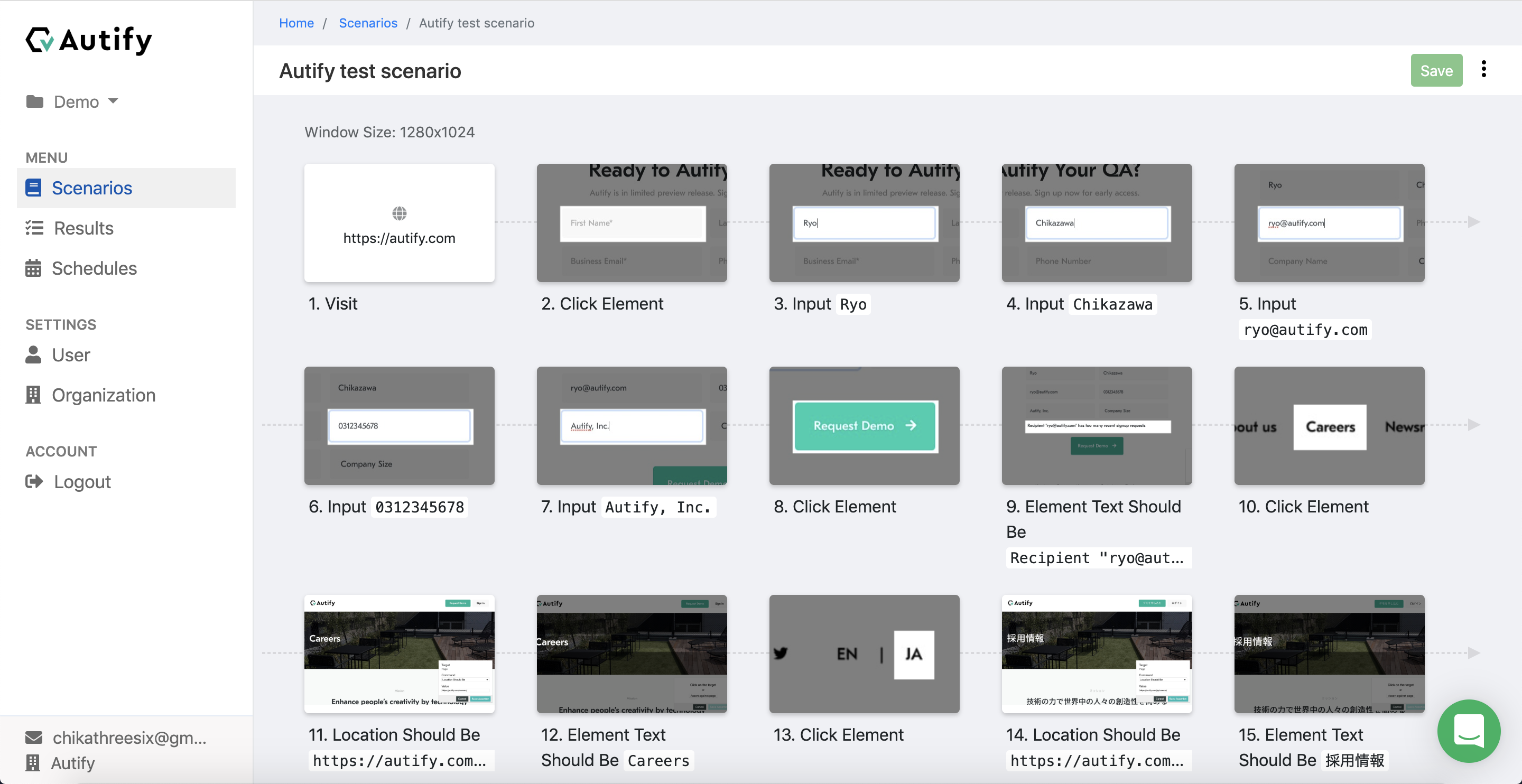
The main idea here is that Autify, which was founded in 2016, allows teams to write test by simply recording their interactions with the app with the help of a Chrome extension and can then have Autify run these tests automatically on a variety of other browsers and mobile devices. Typically, these kinds of tests are very brittle and quickly start to fail whenever a developer makes changes to the design of the application.

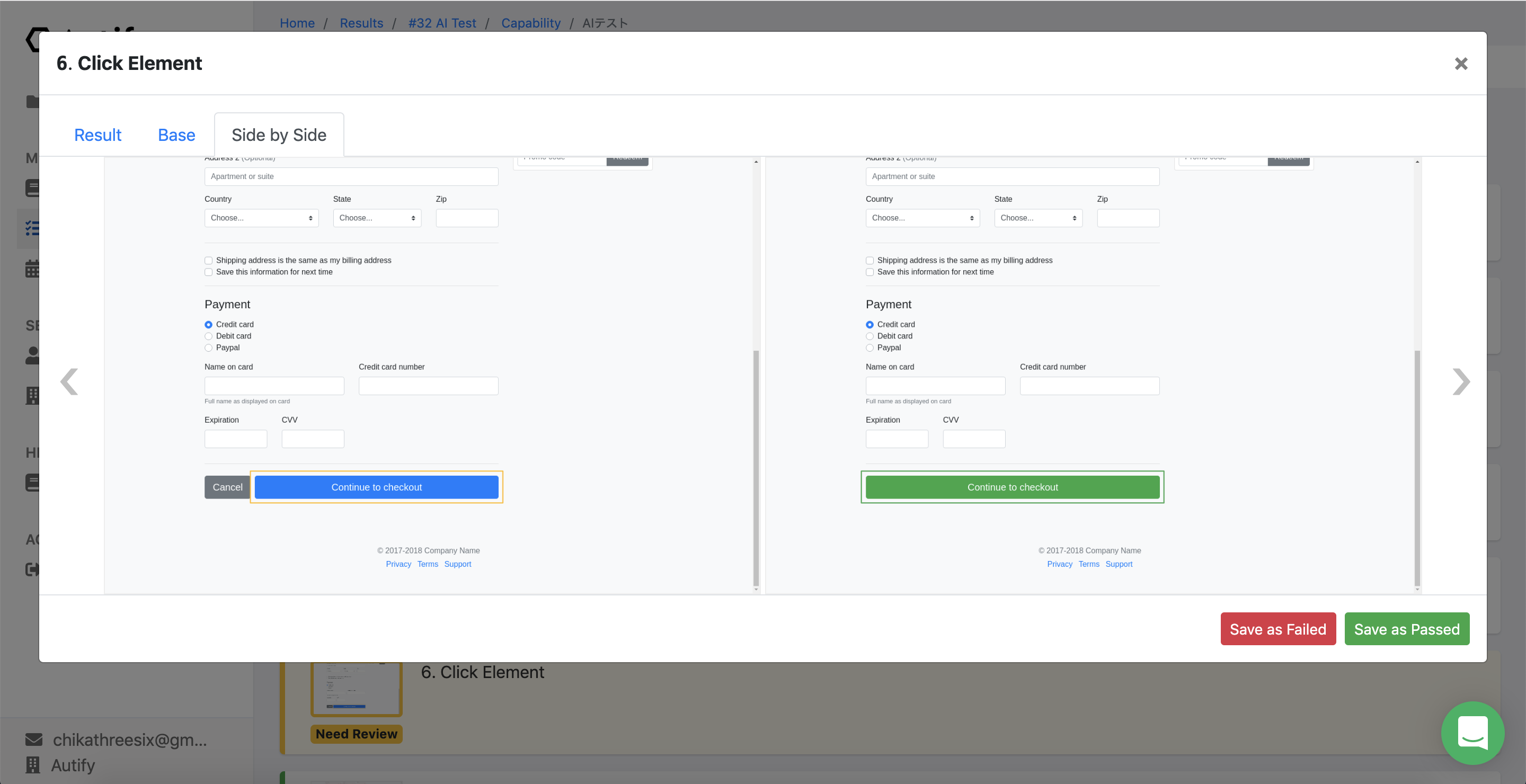
Autify gets around this by using some machine learning smarts that give it the ability to know that a given button or form is still the same, no matter where it is on the page. Users can currently test their applications using IE, Edge, Chrome and Firefox on macOS and Windows, as well as a range of iOS and Android devices.

Scenario Editor

Chikizawa tells me that the main idea of Autify is based on his own experience as a developer. He also noted that many enterprises are struggling to hire automation engineers who can write tests for them, using Selenium and similar frameworks. With Autify, any developer (and even non-developer) can create a test without having to know the specifics of the underlying testing framework. “You don’t really need technical knowledge,” explained Chikizawa. “You can just out of the box use Autify.”

There are obviously some other startups that are also tacking this space, including SpotQA, for example. Chikizawa, however, argues that Autify is different given its focus on enterprises. “The audience is really different. We have competitors that are targeting engineers, but because we are saying that no coding [is required], we are selling to the companies that have been struggling with hiring automating engineers,” he told me. He also stressed that Autify is able to do cross-browser testing, something that’s also not a given among its competitors.

The company introduced its closed beta version in March and is currently testing the service with about a hundred companies. It integrates with development platforms like TestRail, Jenkins and CircleCI, as well as Slack.

Screen Shot 2019 10 01 at 2.04.24 AM

16 Oct 2019

Microsoft launches new open-source projects around Kubernetes and microservices

Microsoft today announced two new open-source projects: Dapr, a portable, event-driven runtime that takes some of the complexity out of building microservices, and the Open Application Model (OAM), a specification that allows developers to define the resources their applications need to run on Kubernetes clusters and which Microsoft developed in cooperation with Alibaba Cloud.

As Microsoft Azure CTO Mark Russinovich told me ahead of today’s launch, OAM very much solves a problem that a lot of developers and ops teams are facing every day. “If you take a look just at the Kubernetes ecosystem, Kubernetes has no concept of an application,” he explained. “It’s got the concept of a deployment and services, but nothing that coherently connects these things together into one unit and deployment lifecycle that a developer would understand in the way they look at their applications.” He argues that while Kubernetes has Helm charts, once an application is deployed, Kubernetes doesn’t know about the relationships between the objects that were represented in that chart. “We need a first-class application concept in a Kubernetes cluster.”

OAM is essentially a YAML file. It can be put in a service catalog or marketplace and deployed from there. But what’s maybe most important, says Russinovich, is that the developer can hand off the specification to the ops team and the ops team can then deploy it without having to talk to the developer. He also argues that Kubernetes itself is too complicated for enterprise developers. “At this point, it’s really infrastructure-focused,” he said. “You want a developer to focus on the app. What we saw when we talked to Kubernetes shops, they don’t let developers near Kubernetes.”

As for the cooperation with Alibaba Cloud on this specification, Russinovich noted that the two companies were already working on other projects together and that they both encountered the same problems when they talked to their customers and internal teams. Over time, they plan to bring the specification into an open-source foundation.

Alibaba Cloud will launch a managed service based on OAM, and chances are that Microsoft will do the same over time. “We’re looking to see what adoption looks like to decide,” Russinovich said.

While OAM solves an obvious problem for developers and ops team and fills a gap, Russinovich argues that Dapr may actually be quite revolutionary. “If you take a look at Dapr, it is really going to make microservices, cloud-native development, accessible to the enterprise.”

So what is Dapr? Microsoft describes it as “open source, portable, event-driven runtime that makes it easy for developers to build resilient, microservice stateless and stateful applications that run on the cloud and edge.”

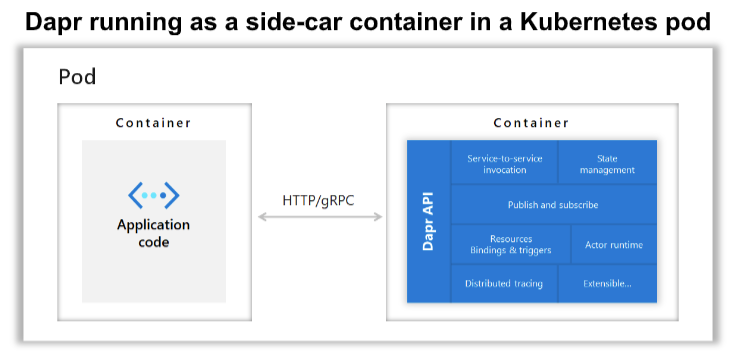
That’s a mouthful, but the general idea here is to make it easier for developers to write distributed, microservice-based applications. “If you take a look at the list of problems they run into, they want to be event-driven, so they have to manage things like events and responding to triggers,” he said. “They want communication between these microservices, so they’ve got to do pub/sub. They’ve got to do service discovery — how do I get a service from one microservice to another one. They’ve got to do state management — how does my microservice store state and retrieve it.” And then, depending on whether it’s a stateless or stateful app, developers have to work with different SDKs and programming models. Dapr, on the other hand, doesn’t need an SDK because it delivers its services through a local HTTP or gRPC endpoint, keeping the application code separate from the Dapr code. Because of this, Dapr is also independent of the language you write in.

Dapr abstracts a lot of this away and provides the building blocks (which can be accessed by HTTP or gRPC APIs) that encode best practices for building these distributed services.


16 Oct 2019

Foursquare CEO calls on Congress to regulate the location data industry

The chief executive of Foursquare, one of the largest location data platforms on the internet, is calling on lawmakers to pass legislation to better regulate the wider location data industry amid abuses and misuses of consumers’ personal data.

It comes in the aftermath of the recent location sharing scandal, which revealed how bounty hunters were able to get a hold of any cell subscriber’s real-time location data by obtaining the records from the cell networks. Vice was first to report the story. Since then there have been numerous cases of abuse — including the mass collection of vehicle locations in a single database, and popular iPhone apps that were caught collecting user locations without explicit permission.

The cell giants have since promised to stop selling location data but have been slow to act on their pledges.

“It’s time for Congress to regulate the industry,” said Foursquare’s chief executive Jeff Glueck (shown on the left in the photo above) in an op-ed in The New York Times on Wednesday.

In his opinion piece, Glueck called on Congress to push for a federal regulation that enforces three points.

Firstly, phone apps should not be allowed to access location data without explicitly stating how it will be used. Apple has already introduced a new location tracking privacy feature that tells users where their apps track them, and is giving them options to restrict that access — but all too often apps are not clear about how they use data beyond their intended use case.

“Why, for example, should a flashlight app have your location data?,” he said, referring to scammy apps that push for device permissions they should not need.

Second, the Foursquare chief said any new law should provide greater transparency around what app makers do with location data, and give consumers the ability to opt-out. “Consumers, not companies, should control the process,” he added. Europe’s GDPR already allows this to some extent, as will California’s incoming privacy law. But the rest of the U.S. is out of luck unless the measures are pushed out federally.

And, lastly, Glueck said anyone collecting location data should promise to “do no harm.” By that, he said companies should apply privacy-protecting measures to all data uses by not discriminating against individuals based on their religion, sexual orientation or political beliefs. That would make it illegal for family tracking apps, for example, to secretly pass on location data to healthcare or insurance providers who might use that data to hike up a person’s premiums above normal rates by monitoring their driving speeds, he said.

For a business that relies on location data, it’s a gutsy move.

But Glueck hinted that businesses like Foursquare would be less directly affected as they already take a more measured and mindful approach to privacy, whereas the fast and loose players in the location data industry would face greater scrutiny and more enforcement action.

“These steps are necessary, but they’re not sufficient,” said Glueck. But he warned that Congress could do “great damage” if lawmakers fail to sufficiently push overly burdensome regulations on smaller companies, which could increase overheads, put companies out of business and have a negative effect on competition.

“There’s no good reason that companies won’t be able to comply with reasonable regulation,” said Glueck.

“Comprehensive regulation will support future innovation, weed out the bad companies and earn the public trust,” he said.

16 Oct 2019

The Analogue Pocket might be the perfect portable video game system

Very few modern tech companies have executed on their mission as consistently, and at such a high level of quality as Analogue. Analogue’s obsessively engineered modern consoles for old-school physical cartridge video games are museum-quality hardware design, housing specially tuned processors that offer pitch- and pixel-perfect play of all NES, Sega Genesis, SNES and other retro console games on modern HD TVs – and their new $199 Analogue Pocket aims to provide the best way to play classic portable console titles in similar high fidelity.

The Analogue Pocket is a portable gaming console that can play the entire library of Game Boy, Game Boy Color and Game Boy Advance games out of the box – natively, without emulation, so that the gaming experience is exactly as you remember it (or as it was intended, if this is your first experience with these classic titles). That’s not all, though: Using cartridge adapters, the Analogue Pocket can support Game Gear, Neo Geo Pocket Color, Atari Lynx and other games, too.

4 Analogue Pocket All

It uses two FPGAs (Field Programmable Gate Arrays) which are processors that have been programmed specifically to play these games back as they were originally intended, mimicking the the operation of the original silicon found in the consoles that these games were designed for with the faithfulness of true restoration hardware. The result is a great gaming experience that will feel like the original – but played on the Analogue Pocket’s much more impressive hardware, which offers a 3.5-inch, 1600×1440 LCD display that provides a very high-resolution 615 ppi. For those keeping tracks that’s ten times the resolution of the original Game Boy display. And it’s color tuned for amazing color rendering and brightness – it could actually be the best display on a dedicated gaming device, period, let alone for a retro console.

The Analogue Pocket also works with an accessory called the Analogue Dock (sold separately, pricing TBD), which adds HDMI out and Bluetooth/wired controller support, to turn the Pocket into a home console for your big screen TV, too. The dock offers two standard USB ports for wired controllers, and its Bluetooth support works with any of 8Bitdo’s excellent gamepads. It’s basically a Switch but for all your favorite Game Boy series games, and with what looks like much better quality hardware.

6 Analogue Dock

That would be plenty to offer in a portable console, but the Analogue Pocket is designed to do still more. It has a built-in synthesizer and sequencer for making digital music, and the second FPGA it’s packing is designed to be used specifically for development. It allows the development community to bring their own cores to the platform, which means it could potentially support a whole host of classic and ported games in future.

Analogue Pocket is set to release some time in 2020, with a more specific date to be announced later on. It’s a natural next step for the company that delivered excellent gaming experiences via the Nt Mini, the Super Nt and the Mega Sg, but it’s still a nice, exciting surprise to find out that they’re tackling the rich history of mobile gaming next.

[gallery ids="1898038,1898039,1898040,1898041,1898042,1898043,1898044,1898045,1898046,1898047,1898048,1898049,1898050,1898051"]

16 Oct 2019

Instagram will give you more control over your third-party apps…in about six months

Instagram is slowly rolling out a new feature that will help better protect your personal data from being accessed by your long discarded, third-party applications — that is, any app you had once authorized to access your Instagram profile over the years. This may include websites you used for printing your Instagram photos, various dating apps, or Instagram tools for making collages, finding your top photos, and more.

Providing a tool to remove third-party apps’ access to your account is now a fairly commonplace security setting among platform providers. Instagram is late to offer such functionality. Twitter, Facebook, and Google have had similar functionality in place for years.

And Instagram isn’t hurrying its launch, either.

The company says its new security features will take a whopping six months to reach all users, as it’s designed to be a gradual rollout. For comparison’s sake, most new features tend to roll out in days or sometimes weeks, but rarely as long as half a year.

Revoke access 1

The choice to move slowly is worth calling out here — especially, given that Instagram’s parent company Facebook’s massive personal data scandal, Cambridge Analytica, arose because users had connected to a third-party app that improperly collected users’ personal data.

Instagram, arguably, has less of a treasure trove of personal information on hand to tap into, compared with Facebook. But there’s still no need to let some app you used once, many years ago, to continue to access information like your Instagram username, your photos, all your captions, timestamps of your posts, permalinks, and more. And if you maintain a private account with the intention of only sharing your content with close friends and family, this level of access might make you even more uncomfortable.

While Instagram isn’t clear in its public announcement about its reasoning for such a slow rollout, it’s tied to API changes for developers. The company is giving developers time to move from the Instagram Legacy API Platform to the Facebook Graph API.

As the company explains in a developer announcement, the new API will enable “appropriate consumer use-cases, while protecting user privacy and safety” — including giving users the ability to decide what information they share with apps, then revoke access through the Instagram mobile app. The legacy API platform will be deprecated on March 2, 2020.

It would have made sense for Instagram to communicate to users that the gradual rollout is because it’s giving developers time to get their apps ready for these changes. But because it didn’t mention this, the news of the slow rollout comes across as Instagram not believing such a feature is a priority or important to users.

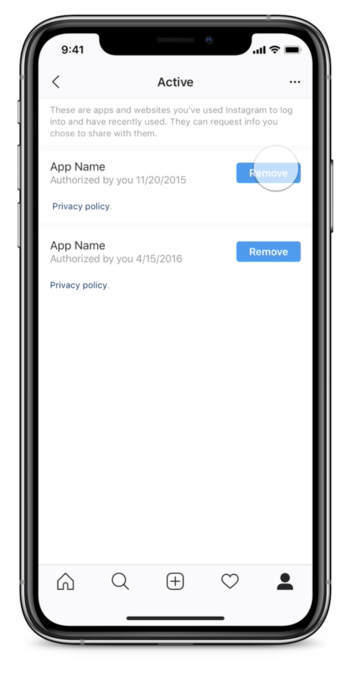
If you have the new security setting, you’ll find it under “Settings” in the Instagram app. It will be under “Security,” then “Apps and Websites.” From this screen, you can tap “Remove” on any apps you don’t want connected to your Instagram account.

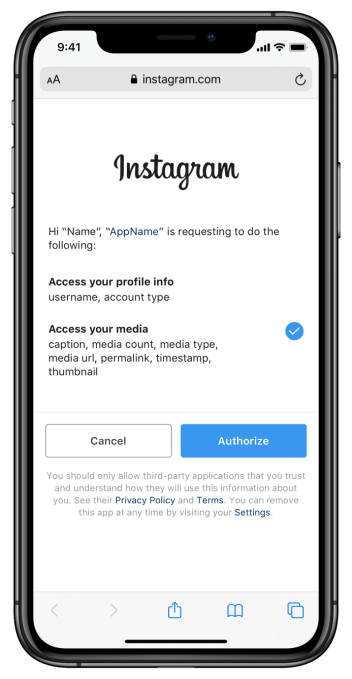
Related to this, Instagram says it’s also introducing an updated authorization screen that will detail all the information an app is requesting when you go to authorize it to connect to your Instagram account. If you think it’s over-reaching, you can just choose “Cancel” instead of “Authorize.”

Authorize Access

If you don’t have the new features now, just wait until sometime in 2020, I guess.

16 Oct 2019

Former Dropbox CTO Quentin Clark just joined General Catalyst as a managing director

Quentin Clark resigned a couple of weeks ago as the CTO of Dropbox at the same time that the storage company announced two other execs — Bharat Mediratta and Tim Young — were joining its leadership team in Clark’s stead.

Now we know where Clark was headed — into the world of venture capital and, more specifically, into a role as a managing director with the 19-year-old venture firm General Catalyst.

He joins a team of enterprise investors within the firm that includes Steve Herrod, himself the former CTO of VMWare; Paul Sagan, the former CEO of Akamai; and Holly Maloney, who joined GC as its first female managing director roughly two years ago after spending seven years with North Bridge Venture Partners in Boston. Clark will remain in the Bay Area, looking at earlier-stage opportunities alongside Herrod, while Sagan and Maloney handle later-stage deals from GC’s Boston location.

To find out a bit more, we talked late last week with Clark — who’d previously spent two years in the C-suite as SAP and 20 years with Microsoft before that — to learn why now is the right time to become an investor, and what he’s particularly interested in seeing.

TC: You’ve worked informally with GC for a number of years. Is that right?

QC: Yes, I was in Seattle for a long time. I moved down here five years ago and was introduced to a bunch of great folks in the venture community, including Hemant Taneja [of GC] and Reid Hoffman and I spent time with different investments in their portfolios, helping to advise them and investing and that kind of stuff. After I left SAP [in August 2016], I spent a year with GC engaging with a bunch of things in its portfolio.

TC: So becoming a VC was something you were considering.

QC: It was something I was considering long term, but Dropbox gave me this amazing opportunity to join them in this operational role that I couldn’t turn down, and working with [CEO] Drew [Houston] is now one of the highlights of my career.

TC: They must be very different, Dropbox and SAP. How would you characterize your experiences inside both companies?

QC: It isn’t often you get to help pivot something as impactful as what’s happening at Dropbox. We did [Dropbox’s] User Conference [event in late in September],  and we launched Dropbox Spaces, which is a fundamental pivot based on a point of view about what the workplace is like and where the pain points are, and you don’t get to do things like that very often. The last time I got to do something that significant was at MIcrosoft, migrating from on-premises to Azure and rebuilding the entire product portfolio to be entirely cloud based.

To have your hands that deeply in the work is rare. At SAP, it’s very, very large organization, with a very large portfolio, and you don’t personally dig in that deeply in terms of your ability to take an individual product and [change it into something else].

TC: How long ago did you start investing?

QC: I wasn’t investing at Microsoft. There’s now a much bigger tech scene [in Seattle] than five years ago. I really started exploring when I moved.

TC: You’re now going to be working as an enterprise-focused investor. But what, more specifically, interests you?

QC: I’m interested in healthcare. I’m interested in how people navigate their careers. But mostly, I’m business-to-business focused. I think the next generation of enterprise software will help people excel in the work, through machine intelligence, the cloud, the evolution and maturity of the devices we carry.  I think this wave we’ve seen with the consumer space will impact the enterprise space more deeply, so I’ll be looking for larger-scale impact on how people [manage] their day to day.

TC: Are you at all nervous about getting up to speed?

QC: I feel very well-supported. There’s a lot of teamwork at GC, so they won’t leave me out there to do this myself. This is literally a venture business, though. I am going to make decisions that 100 percent of them won’t pan out, but that’s part of finding success. My hesitancy will be around whether I’m investing enough, not whether I’m investing in the wrong things — at least, initially. But I do have 25 years of judgment that I can apply. I’ve been making investment choices in my career for a long time and seeing bets through and making them successful. That gives me confidence that I can exercise good judgment in this new role, too.

16 Oct 2019

UK quietly ditches porn age checks in favor of wider online harms rules

A controversial UK government scheme to introduce mandatary age checks for accessing online pornography has been dropped — for now.

Introduction of the measure, which was intended to protect children from accessing inappropriate content online, had already been delayed by several months this year, most recently after a bureaucratic oversight.

The reason given for ditching the plan now is the government says it has decided it no longer makes sense to introduce the age check provision at this stage — given wider plans to introduce comprehensive legislation to regulate a range of online harms, as set out in the Online Harms white paper earlier this year.

The news that age checks for accessing porn were being ditched dropped quietly, via a written statement from secretary of state for digital, Nicky Morgan, today.

“Since the White Paper’s publication, the government’s proposals have continued to develop at pace. The government announced as part of the Queen’s Speech that we will publish draft legislation for pre-legislative scrutiny. It is important that our policy aims and our overall policy on protecting children from online harms are developed coherently in view of these developments with the aim of bringing forward the most comprehensive approach possible to protecting children,” she writes.

“The government has concluded that this objective of coherence will be best achieved through our wider online harms proposals and, as a consequence, will not be commencing Part 3 of the Digital Economy Act 2017 concerning age verification for online pornography. The Digital Economy Act [DEA] objectives will therefore be delivered through our proposed online harms regulatory regime. This course of action will give the regulator discretion on the most effective means for companies to meet their duty of care. As currently drafted, the Digital Economy Act does not cover social media platforms.”

A spokesman for the Department for Digital, Culture, Media and Sport confirmed the intention is to incorporate the objectives of Part 3 of the DEA into comprehensive online harms regulation that will place a duty of care on platforms to protect users from a range of harmful content. Including in the case of inappropriate material being accessed by children.

The spokesman could not give a timeframe for such a provision making it into law now in light of the change of plans. But given how much government and parliamentary time continues being consumed by the brexit process there is no realistic chance of online porn age checks making it onto the UK’s statute books this year.

Getting agreement on comprehensive regulation of online harms is also unlikely to prove any less controversial. So the timeframe for passing a broader law could be a long one — ergo, it looks safe to assume regulations for accessing online porn are being booted into 2020 at least.

In terms of where it’s at with the wider online harms plan, a consultation on the White Paper was concluded in July, per the DCMS spokesman, who said the government will be publishing its response in the coming months. The intent is to introduce a draft bill this session and pass legislation as soon as possible, he added.