Year: 2019

16 Oct 2019

These are the Under Armour-designed suits for Virgin Galactic’s space tourists

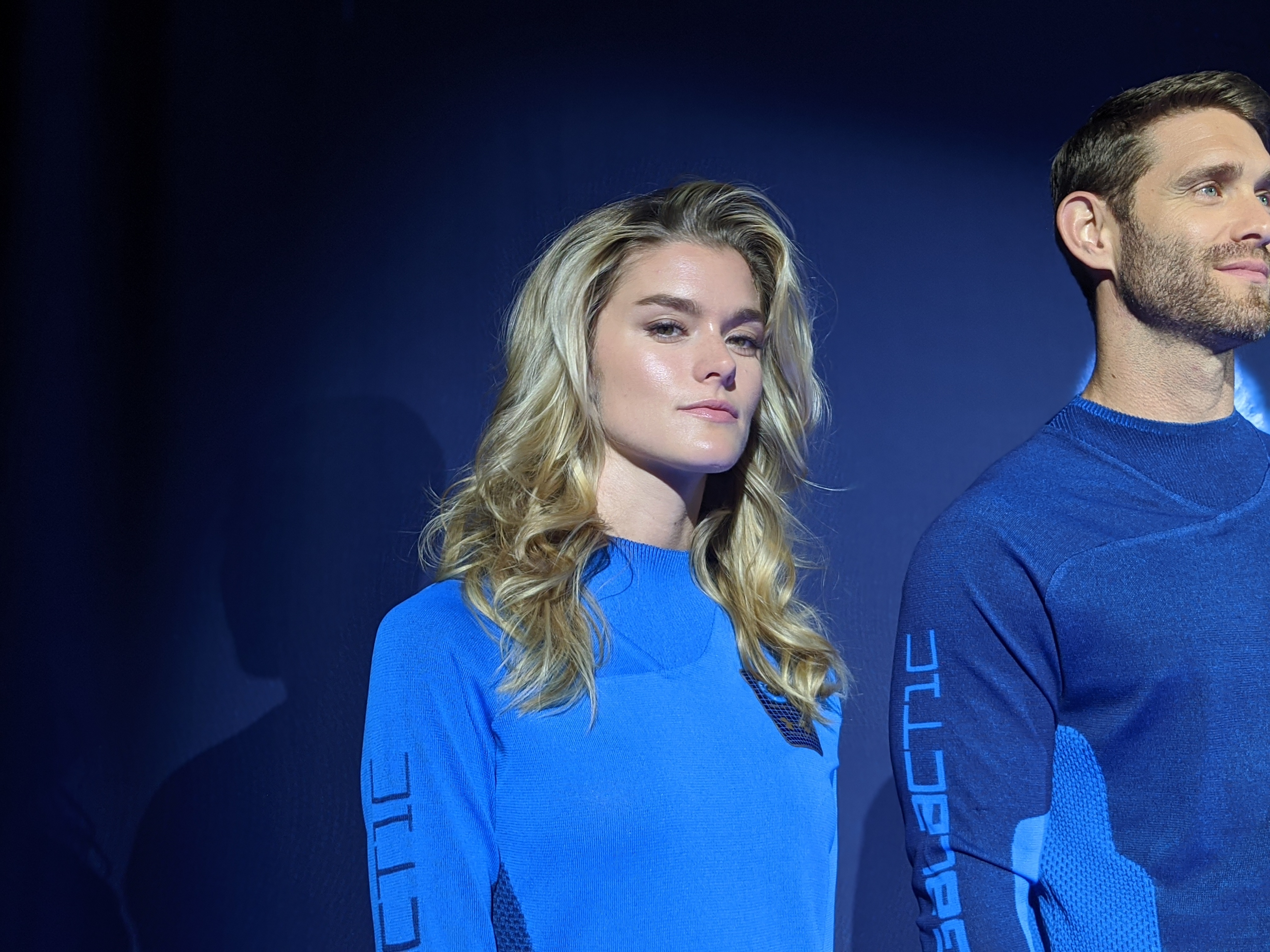
A day after NASA debuted the space suits set to be worn by the first woman on the moon, Virgin Galactic showed of its own gear at an event in New York. Created in collaboration with fitness wear company, Under Armour, the gear is designed for wear by Virgin’s private astronauts.

ezgif 2 d4c4bd8bed69

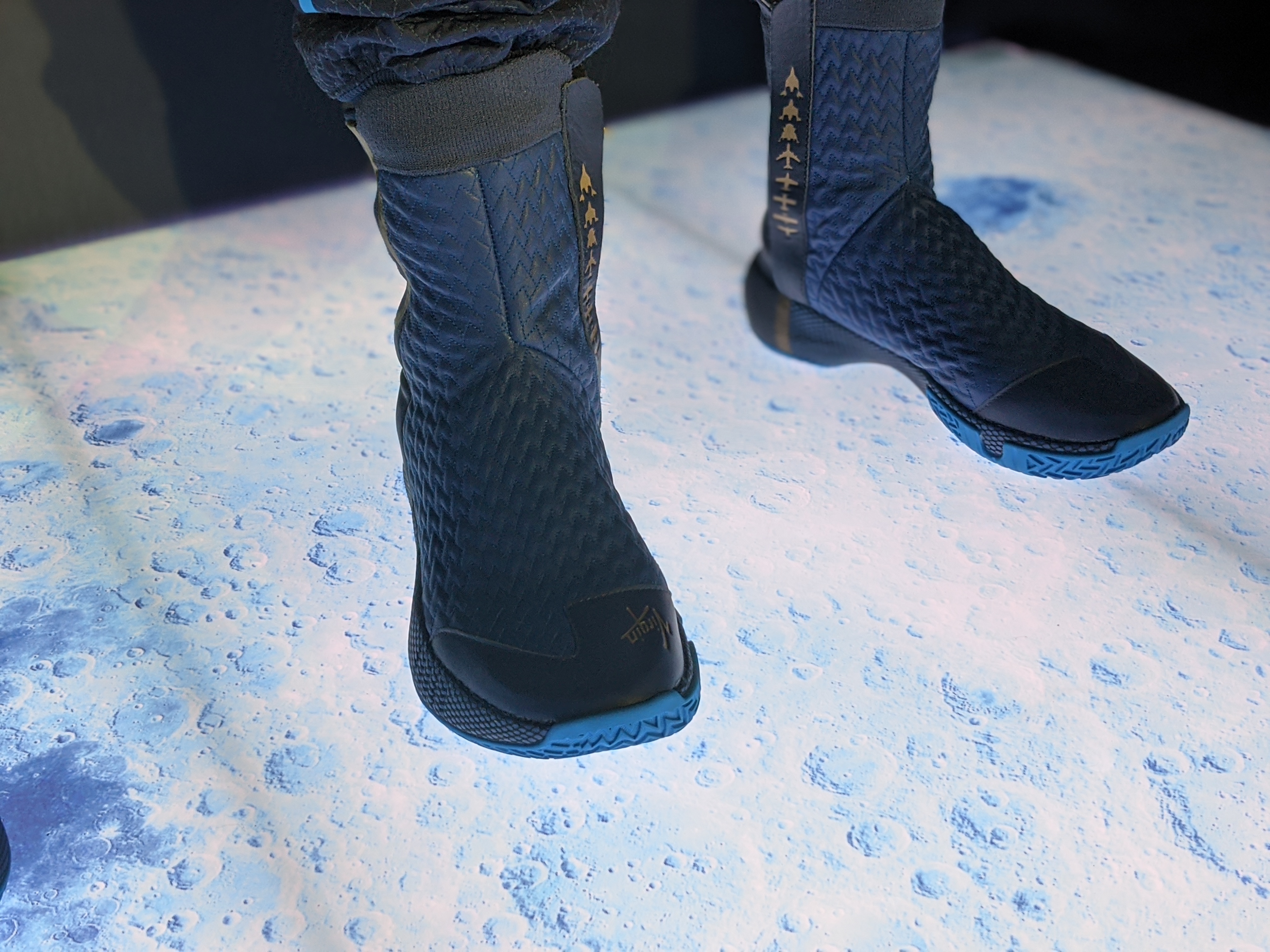
The getup includes a limited edition jacket, base layer, training suit, footwear and space suit. The elements were created with “input” for a wide range of different people, including doctors, pilots, clothing designers and astronaut trainers. All were tested in labs designed to simulate the various stages of space flight.

00100trPORTRAIT 00100 BURST20191016101924153 COVER

The unveiling comes shortly after Virgin Galactic founder Richard Branson announced that crewed test flights will begin this year (with about 2.5 months left on the calendar).

Branson was present at this morning’s event, leading a simulated zero gravity vertical space walk in the suit. The billionaire will, naturally, be wearing the same suit on the private space company’s upcoming first commercial space flight. For other interested parties, the cost of the 90 minute space flight runs around $250,000. Late last year, Branson reported that the company had already collected some $80 million in deposits.

00100trPORTRAIT 00100 BURST20191016101859548 COVER

The blue suits mark a stark contrast from the more traditional garb unveiled at NASA’s event. Instead, they’re something closer to jet pilot jump suits, tailored to the measurements of some of the 600 people who have signed up for the flight. The company debuted them at an event in a skydiving range, complete with with a fog machined-powered zero gravity ballet.

Under Armour CEO Kevin Plank noted at the event that, despite the Star Trek style look, there’s nothing particularly exceptional about the suits. They’re built using off-the-shelf Under Armour technologies and designed for comfort. They also have a number of “secret pockets” on board, so passengers can take personal belongings with them on the flight.

16 Oct 2019

Justice Dept. says it’s taken down ‘one of the world’s largest’ child exploitation sites on the dark web

The Justice Department says it’s dismantled one of the largest child exploitation sites on the dark web.

With the help of international partners in the U.K. and South Korea, U.S. prosecutors have brought charges against a South Korean citizen, Jong Woo Son, for conspiracy to advertise, product, and distribute child abuse imagery.

Son was charged in August 2018 but the indictment was only unsealed Wednesday. NBC News was first to report the indictments.

The site contained more than 200,000 unique videos — some 8 terabytes of data — involving children.

Prosecutors said the site was only accessible on the dark web, a term used for an encrypted and anonymized version of the internet that’s accessible through services like the Tor anonymity network. Investigators identified the real-world internet location of the site by viewing the source of the website, which pointed to a server hosted at the defendant’s residence in South Korea.

“Darknet sites that profit from the sexual exploitation of children are among the most vile and reprehensible forms of criminal behavior,” said Brian A. Benczkowski, assistant attorney general. “Today’s announcement demonstrates that the Department of Justice remains firmly committed to working closely with our partners in South Korea and around the world to rescue child victims and bring to justice the perpetrators of these abhorrent crimes.”

More than three-dozen other individuals involved with the site have also been arrested and charged under various state and national laws.

16 Oct 2019

Canva, now valued at $3.2 billion, launches an enterprise product

Canva, the Australian-based design tool maker, has today announced that it has raised an additional $10 million to bring its valuation to $3.2 billion, up from $2.5 billion in May.

Investors in the company include Mary Meeker’s Bond, General Catalyst, Bessemer Venture Partners, Blackbird and Sequoia China.

Alongside the new funding and valuation, Canva is also making its foray into enterprise with the launch of Canva for Enterprise.

Thus far, Canva has offered users a lightweight tool set for creating marketing and sales decks, social media materials, and other design products mostly unrelated to product design. The idea here is that, outside of product designers, the rest of the organization is often left behind with regards to keeping brand parity in the materials they use.

Canva is available for free for individual users, but the company has addressed the growing need within professional organizations to keep brand parity through Canva Pro, a premium version of the product available for $12.95/month.

The company is now extending service to organizations with the launch of Canva for Enterprise. The new product will not only offer a brand kit (Canva’s parlance for Design System), but will also offer marketing and sales templates, locked approval-based workflows, and even hide Canva’s massive design library within the organization so employees only have access to their approved brand assets, fonts, colors, etc.

Canva for Enterprise also adds another layer of organization, allowing collaboration across comments, a dashboard to manage teams and assign roles, and team folders.

“We’re in a fortunate place because the market has been disaggregated,” said Canva CEO and founder Melanie Perkins. “The way we think about the pain point consumers have is that people are being inconsistent with the brand, and there are huge inefficiencies within the organization, which is why people have been literally asking us to build this exact product.”

More than 20 million users sign into Canva each month across 190 countries, with 85 percent of Fortune 500 companies using the product, according to the company.

Perkins says that the ultimate goal is to have every person in the world with access to the internet and a design need to be on the platform.

16 Oct 2019

RealTime Robotics scores $11.7M Series A to help robots avoid collisions

One of the major challenges facing engineers as they develop more agile robots is helping them move through space while avoiding collisions, especially in a dynamic environment. RealTime Robotics, a Boston-based startup announced an $11.7 million Series A investment to help solve this problem.

SPARX Asset Management led the round with participation from some strategic investors including Mitsubishi Electric Corporation, Hyundai Motor Company and Omron Ventures. Existing investors Toyota AI Ventures, Scrum Ventures and the Duke Angel Network also pitched in. Today’s investment is actually the culmination of a couple of investments over this year that the company is announcing today, and brings the total raised to $12.9 million.

RealTime Robotics CEO Peter Howard says the company’s solutions are grounded in advanced research on robotic motion planning. “We are based on research work done at Duke University in 2016 in the field of work called robotic motion planning, which is basically how a six or seven degree of freedom robot finds its way through space without hitting anything,” Howard told TechCrunch.

It’s an extremely difficult problem to solve, especially in dynamic environments where robots are interacting with humans and other robots, and you can’t necessarily predict with precision the kinds of movements the robot will have to make. The company has created a two-part solution to help called RapidPlan and RapidSense, which it describes as, “allowing people and multiple robots to work collaboratively and cooperatively within the same work cell, without the need for expensive safety systems or time-consuming programming efforts.” The solution involves a combination of proprietary hardware and software working together to help robots move through space safely.

It’s still very early days for the startup. It’s currently working with 13 customers on proof of concept projects with a goal of having these customers act as OEMs and sell the products on behalf of the company. He said that major robotics companies are working with the technology, as well as several automotive companies, which would also have an interest in collision avoidance with self-driving cars. In fact, Toyota was one of its earliest investors and Hyundai is an investor in this round.

Howard says once it establishes itself in these markets, he could see looking at other industries that could make use of this technology such as agriculture, food service and construction. “Anywhere where people are currently employed principally for their motor skills, you can think of as a market that’s fairly ripe for [this type of technology],” Howard said.

16 Oct 2019

NASA extends contact with Boeing for SLS rocket, paving the way for up to 10 Artemis missions

NASA has a new contract extension in place with Boeing, which will cover rocket stages for its Space Launch System (SLS) beyond Artemis I and Artemis II, the missions covered under the current contract it holds with the aerospace company. The new contract includes production of the core stage of the rocket for Artemis III, which is the mission set for 2024 that NASA intends to bring the first American woman and next American man to the surface of the Moon.

The contract also includes permission for Boeing to place orders for key “long-lead materials” to be used in the building of future SLS core rockets, including as many as 10 to be used in missions beyond Artemis III. The goal is to give Boeing time and opportunity to secure better pricing for parts it can order in bulk, and also to ensure it can lock down parts that are in short supply or require a longer head’s up period to ensure production happens in time with delivery requirements and deadlines.

NASA and Boeing will still have to finalize the full and final details of the contract that will cover the remaining balance of the core stages (up to 10) and as many as eight Exploration Upper Stages (EUS). The EUS is a second stage rocket that will be fuelled by liquid oxygen and hydrogen, and will be used to send payloads launched aboard SLS beyond low-Earth orbit, with the first one targeted to fly on Artemis VI, with the ultimate aim of using it to propel cargo to deep space destinations.

NASA Administrator Jim Bridenstine has been on a cross U.S. whistle-stop tour in the past couple of months, checking in on various key manufacturing facilities and supplier sites for those involved in both Artemis and the commercial crew launch program. This week, he presented the new xEMU and Orion Crew Survival spacesuit designs for the first time. Meanwhile, NASA Acting Associate Administrator for Human Exploration and Operations Ken Bowersox said at a presentation on October 10 that NASA’s first SLS mission could slip from the end of next year to the middle of 2021, which would put more pressure on that 2024 target for the first Artemis Moon landing mission.

16 Oct 2019

Live Caption, Google’s automatic captioning technology, is now available on Pixel 4

Live Caption, Google’s automatic captioning system first introduced at its I/O developer conference this May, is now officially available, alongside the launch of the new Pixel 4. But unlike some of the other technologies highlighted at the company’s Pixel hardware event yesterday, Live Caption won’t be limited to Google’s new smartphone alone. After the initial debut on Pixel 4, the automatic captioning technology will roll out to Pixel 3, Pixel 3 XL, Pixel 3a and Pixel 3a XL before the year-end, says Google, and will become more broadly available in 2020.

The company has already offered automatic captions on YouTube for a decade, but that same sort of experience isn’t available across the wider web and mobile devices. For example, Google explains, you can’t read captions for things like the audio messages sent by your friends, on trending videos published elsewhere on social media, and on the content you record yourself.

There’s a significant accessibility issue with the lack of captions in all these places, but there’s a convenience issue, as well.

If you’re in a loud environment, like a commuter train, or trying to watch content privately and forgot your headphones, you may need to just use the captions. Or maybe you don’t want to blare the audio, which disturbs others around you. Or perhaps, you want to see the words appear because you’re having trouble understanding the audio, or just want to be sure to catch every word.

With the launch of the Pixel 4, Live Caption is also available for the first time to the general public.

The technology will capture and automatically caption videos and spoken audio on your device, except for phone and video calls. This captioning all happens in real-time and on your device — not in the cloud. That means it works even if your device lacks a cell signal or access to Wi-Fi. The captions also stay private and don’t leave your phone.

Google Live Caption UIDemo720 16MB

This is similar to how the Pixel 4’s new Recorder app functions. It, too, will do its speech-to-text processing all on your device, in order to give you real-time transcriptions of your meetings, interviews, lectures, or anything else you want to record, without compromising your privacy.

You can launch the Live Captions feature with a tap from the volume slider that appears, then reposition the caption box anything on your screen so it doesn’t get in the way of what you’re viewing.

Currently, the feature supports English only. But Google says it’s working to add more languages in the future.

After today’s launch on Pixel 4 and the rollout to the rest of the modern Pixel line of smartphones this year, it will start to show up in other new Android phones. Google says it’s working with other manufacturers to make the technology available to more people as soon as next year.


16 Oct 2019

Arianna Huffington’s Thrive Global is buying a startup that uses neuroscience to boost app usage

When Arianna Huffington stepped down from her role at the Huffington Post to start Thrive Global, she said the goal of her new business was to help a generation “avoid the burnout that all too often comes with success today.”

In practice, that has meant creating a business that sells mindfulness and general health and wellness tips and tricks to a cohort of corporations that believe increased mental and physical health can lead to greater on-the-job productivity.

Now, Thrive Global is adding a tech tool to its arsenal of cognitive behavioral therapies with the acquisition of the Los Angeles-based startup, Boundless Mind.

Originally called Dopamine Labs, the company was founded in 2015 to bring some of the same technologies that social media companies like Facebook used to boost engagement to a broader range of applications.

Terms of the deal were not disclosed, but the stock and cash acquisition will see all nine members of the current Boundless team join Thrive Global. Previous Boundless investors including Revolution’s Rise of the Rest Seed Fund and Esther Dyson will join Thrive Global’s cap table.

“We were very impressed by their neuroscience-based artificial intelligence that they used to power changes in behavior,” says Huffington. “We can use technology to hook people to unhook them from unhealthy behaviors.”

Boundless “epitomized the use of technology to encourage healthy habits,” Huffington says.

From Huffington’s perspective, most health problems in the U.S. are actually rooted in behavioral problems rather than biological ones. “Until 100 years ago, people died from infectious diseases… Now most people are dying from behaviors,” says Huffington, quoting Boundless Mind co-founder Dalton Combs.

Roughly 70% of healthcare spending in the U.S. goes to behavioral change and lifestyle-related conditions, says Huffington. Thrive Global tackles the issue through a combination of pop psychology and celebrity advice, while Boundless uses artificial intelligence and machine learning nudges.

The Boundless technology works by monitoring what activity is happening on the phone’s tap screen (similar to Apple’s screen time monitoring). What Boundless does on the back end is analyze that data and create prompts to encourage behavior — in much the same way that other companies’ apps have notifications to prompt re-engagement.

Going forward, the Boundless team is hoping to use more of the information coming from a phone’s increasing array of sensors to better refine its notifications. Results from the adoption of the company’s software vary, but Boundless points to data from apps spanning health, fitness, productivity, finance and e-commerce – including a 60% increase in walking, 30% increase in productivity and 21% increase in engagement around diet and exercise. 

APPROVED BOUNDLESS x AH PHOTO 1

Arianna Huffington and the co-founders and staffers of Boundless Mind

Thrive Global has three pillars to its business: live workshops, a digital health program called Thriving Academy, and a newer mental health focused package called Thriving Mind.

The company has already signed corporate partners like Accenture, JPMorgan, Hilton, Bank of America and Procter & Gamble, and Huffington says customers have already seen results in lower rates of employee attrition and better employee satisfaction results on surveys. 

These kinds of correlations don’t mean causation and the company is still working to better quantify the benefits of adopting its workplace wellness protocols. One of the places where Thrive Global is putting its brain training regime to the test is in call centers in Central America, 

“You can imagine how the Boundless intervention will allow us to hyper-personalize,” says Danny Shea, Thrive Global’s head of global expansion. In call centers that could mean prompting an employee to take a break after a long or stressful call.

“We’re thrilled to see the continued growth and market expansion at Thrive Global” said Somesh Dash, General Partner at IVP and member of Thrive Global’s Board of Directors. “The combination of Thrive’s mission and Boundless Mind’s technology is truly remarkable and the integration will help Thrive scale a game-changing and differentiated behavior change technology platform to enterprises around the world.”

To date Thrive Global has raised over $65 million from investors including JAZZ Venture Partners, IVP, Marc Benioff, Ray Dalio, and Kevin Durant.


16 Oct 2019

Evervault raises $3.2M from Sequoia, Kleiner for an API to build apps with privacy baked in

Data privacy for apps is typically part of the purview of compliance teams — a model that isn’t always perfect, judging by the number of breaches and the extensive regulation that’s been (and still being) put in place to force companies and organizations to behave better. Now, in an effort to improve how apps manage data privacy, a startup called Evervault — founded by a 19 year-old in Dublin, Ireland — is building a data protection solution aimed at developers, by way of an API, which aims to bake data protection into the app from the start.

To help get its product out to market, the company today is announcing that it has raised $3.2 million in seed funding from a high-profile set of investors. Led by Sequoia, the round also includes Kleiner Perkins, Frontline, SV Angel and other unnamed investors.

Ultimately, the aim will be to sell Evervault into any app or piece of software that uses PII (personally identifiable information), to help developers build encrypted “data cages” to handle the information from the moment it’s ingested.

“I believe that once data has been ingested, it should be encrypted and never decrypted again,” founder Shane Curran said in an interview. “There’s a philosophical argument to be made over offering privacy at different levels, but we’re looking at the holistic side of things. If your app gets breached, the data will not leak.”

But that impressive investor list in this seed round is all the more notable when you consider that Evervault’s product has yet to be released.

Curran, the company’s CEO (and as of the time of writing, only full-time employee), said in an interview that Evervault’s API has been built, but the startup is still working on how run it efficiently at scale. The funding will be used to help with that, as well as to help with hiring more for the team. (There are two others joining Curran soon, he said.)

Evervault’s product is notable, because it represents a shift in how companies are approaching only data privacy.

“It’s moving away from compliance teams because it should be in products from day one,” said Evervault’s 19-year-old founder to explain why it’s focusing on developer tools.

“Originally, I thought of how to solve data protection from the developer side as a mathematical problem, but it was only having done the research and being exposed to others on that space that it became something interesting to me,” he added.

A lot of the early work in building so-called “data cages”, Curran noted, was targeted at “crypto anarchists,” but that idea has evolved as data breaches have grown and the concept of data protection has entered the mainstream consciousness: this has opened up an opportunity to build solutions so that companies can continue to operate online as they do but in a way that your data stays private. “It should be something more reasonable beyond the idea of ‘companies should never touch our data,'” he said. The aim with Evervault, he said, is to make a service more secure with regards to personal data, but in a way that doesn’t compromise the experience for the user, or the app/software company itself.

That idea of building a completely new way of handling data protection, but using a method that will let businesses continue operating as they do, is part of what compelled some of this investment.

“Data is king, and the team at evervault is on a mission to solve the ‘how’ of ensuring data privacy,” said Mamoon Hamid, partner, Kleiner Perkins. “Their developer-first approach ensures that data privacy becomes part of the development fabric, instead of an afterthought left for compliance to troubleshoot. We’re thrilled to partner with evervault and help build the new Internet infrastructure for data privacy.”

On another level, the idea of baking data protection into the app’s code itself also follows on from a bigger trend in building apps, where components are brought in from outside by way of APIs rather than built from the ground up when they are not part of the team’s core competency, or commoditised processes.

It’s the same model we see when apps with voice interfaces might, for example, use NLP from Amazon rather than building that function in house; or an e-commerce service integrates a payment API from Stripe for transactions.

The Stripe comparison, it turns out, is true in more ways than one. Curran first conceived of the idea that became Evervault when he was just 17, as the basis of what became his first-prize-winning submission for the BT Young Scientist & Technology Exhibition, an annual competition in Ireland. (His original description of the tech was this: “qCrypt: The quantum-secure, encrypted, data storage platform with multijurisdictional quorum sharding technology.”)

This happened to be same competition that first brought attention to Patrick Collison, Stripe’s co-founder and CEO, who in 2005 also won first prize in the Young Scientist Exhibition, when he was also still a student, for having developed a new computer language, CROMA, as a dialect of LISP to simplify coding.

Putting CROMA to one side, Collison went on to co-found and sell one company, Auctomatic, and then start the extremely successful Stripe. And that is where the two (for now at least) have diverged. After winning the competition in 2017, Currant stayed with his original concept, eventually jetting off to the Bay Area to pitch it to what he referred to as the “Irish mafia” in Silicon Valley to see how much further he could take it.

One coffee led to another, and before he knew it, he was meeting with tier-one VCs and angels, who not only convinced him to develop his prize-winning idea into a business, but gave him money to do it. He did finish high school, he told me, but spent only “a few days” at university before deciding to take a leave of absence to pursue Evervault.

“Shane has a special combination of clear vision, deep thoughtfulness and insatiable curiosity,” said Stephanie Zhan, partner at Sequoia, in a statement. “We are thrilled to partner with evervault at the seed, to solve for today’s massive data breaches and build simple developer tools for data privacy.”

It’s a pretty classic Silicon Valley story of gifted, very young founder finding early success, but as with all stories like that, it glosses over some of the challenges: Curran is still only 19, he’s building a company from scratch, and his idea is still, essentially, untested as the product has not launched.

“Imposter syndrome is very real,” Curran said, before backtracking a bit. “I mean, I always knew what I wanted to do, but I would have never thought that Sequoia or the others would invest in me. Very spontaneously, this thing just fell together, but then I think, I couldn’t have done it any better. This does set the bar very high, but I’m not complaining.”


16 Oct 2019

Evervault raises $3.2M from Sequoia, Kleiner for an API to build apps with privacy baked in

Data privacy for apps is typically part of the purview of compliance teams — a model that isn’t always perfect, judging by the number of breaches and the extensive regulation that’s been (and still being) put in place to force companies and organizations to behave better. Now, in an effort to improve how apps manage data privacy, a startup called Evervault — founded by a 19 year-old in Dublin, Ireland — is building a data protection solution aimed at developers, by way of an API, which aims to bake data protection into the app from the start.

To help get its product out to market, the company today is announcing that it has raised $3.2 million in seed funding from a high-profile set of investors. Led by Sequoia, the round also includes Kleiner Perkins, Frontline, SV Angel and other unnamed investors.

Ultimately, the aim will be to sell Evervault into any app or piece of software that uses PII (personally identifiable information), to help developers build encrypted “data cages” to handle the information from the moment it’s ingested.

“I believe that once data has been ingested, it should be encrypted and never decrypted again,” founder Shane Curran said in an interview. “There’s a philosophical argument to be made over offering privacy at different levels, but we’re looking at the holistic side of things. If your app gets breached, the data will not leak.”

But that impressive investor list in this seed round is all the more notable when you consider that Evervault’s product has yet to be released.

Curran, the company’s CEO (and as of the time of writing, only full-time employee), said in an interview that Evervault’s API has been built, but the startup is still working on how run it efficiently at scale. The funding will be used to help with that, as well as to help with hiring more for the team. (There are two others joining Curran soon, he said.)

Evervault’s product is notable, because it represents a shift in how companies are approaching only data privacy.

“It’s moving away from compliance teams because it should be in products from day one,” said Evervault’s 19-year-old founder to explain why it’s focusing on developer tools.

“Originally, I thought of how to solve data protection from the developer side as a mathematical problem, but it was only having done the research and being exposed to others on that space that it became something interesting to me,” he added.

A lot of the early work in building so-called “data cages”, Curran noted, was targeted at “crypto anarchists,” but that idea has evolved as data breaches have grown and the concept of data protection has entered the mainstream consciousness: this has opened up an opportunity to build solutions so that companies can continue to operate online as they do but in a way that your data stays private. “It should be something more reasonable beyond the idea of ‘companies should never touch our data,'” he said. The aim with Evervault, he said, is to make a service more secure with regards to personal data, but in a way that doesn’t compromise the experience for the user, or the app/software company itself.

That idea of building a completely new way of handling data protection, but using a method that will let businesses continue operating as they do, is part of what compelled some of this investment.

“Data is king, and the team at evervault is on a mission to solve the ‘how’ of ensuring data privacy,” said Mamoon Hamid, partner, Kleiner Perkins. “Their developer-first approach ensures that data privacy becomes part of the development fabric, instead of an afterthought left for compliance to troubleshoot. We’re thrilled to partner with evervault and help build the new Internet infrastructure for data privacy.”

On another level, the idea of baking data protection into the app’s code itself also follows on from a bigger trend in building apps, where components are brought in from outside by way of APIs rather than built from the ground up when they are not part of the team’s core competency, or commoditised processes.

It’s the same model we see when apps with voice interfaces might, for example, use NLP from Amazon rather than building that function in house; or an e-commerce service integrates a payment API from Stripe for transactions.

The Stripe comparison, it turns out, is true in more ways than one. Curran first conceived of the idea that became Evervault when he was just 17, as the basis of what became his first-prize-winning submission for the BT Young Scientist & Technology Exhibition, an annual competition in Ireland. (His original description of the tech was this: “qCrypt: The quantum-secure, encrypted, data storage platform with multijurisdictional quorum sharding technology.”)

This happened to be same competition that first brought attention to Patrick Collison, Stripe’s co-founder and CEO, who in 2005 also won first prize in the Young Scientist Exhibition, when he was also still a student, for having developed a new computer language, CROMA, as a dialect of LISP to simplify coding.

Putting CROMA to one side, Collison went on to co-found and sell one company, Auctomatic, and then start the extremely successful Stripe. And that is where the two (for now at least) have diverged. After winning the competition in 2017, Currant stayed with his original concept, eventually jetting off to the Bay Area to pitch it to what he referred to as the “Irish mafia” in Silicon Valley to see how much further he could take it.

One coffee led to another, and before he knew it, he was meeting with tier-one VCs and angels, who not only convinced him to develop his prize-winning idea into a business, but gave him money to do it. He did finish high school, he told me, but spent only “a few days” at university before deciding to take a leave of absence to pursue Evervault.

“Shane has a special combination of clear vision, deep thoughtfulness and insatiable curiosity,” said Stephanie Zhan, partner at Sequoia, in a statement. “We are thrilled to partner with evervault at the seed, to solve for today’s massive data breaches and build simple developer tools for data privacy.”

It’s a pretty classic Silicon Valley story of gifted, very young founder finding early success, but as with all stories like that, it glosses over some of the challenges: Curran is still only 19, he’s building a company from scratch, and his idea is still, essentially, untested as the product has not launched.

“Imposter syndrome is very real,” Curran said, before backtracking a bit. “I mean, I always knew what I wanted to do, but I would have never thought that Sequoia or the others would invest in me. Very spontaneously, this thing just fell together, but then I think, I couldn’t have done it any better. This does set the bar very high, but I’m not complaining.”

16 Oct 2019

Europe issues interim antitrust order against Broadcom as probe continues

Europe has ordered chipmaker Broadcom to stop applying exclusivity clauses in agreements with six of its major customers — imposing so called ‘interim measures’ based on preliminary findings from an ongoing antitrust investigation.

The move follows a formal statement of objections issued by the Competition Commission in June. At the time the regulator said it would seek to order Broadcom to halt its behaviour while the investigation proceeds — “to avoid any risk of serious and irreparable harm to competition”.

Today Broadcom has been ordered to unilaterally stop applying “anticompetitive provisions” in agreements with six customers, and to inform them it will no longer apply such measures.

It is also barred from agreeing provisions with the same or similar effect, and from taking any retaliatory practices intended to punish customers with an equivalent effect.

Commenting in a statement, antitrust chief Margrethe Vestager, said: “We have strong indications that Broadcom, the world’s leading supplier of chipsets used for TV set-top boxes and modems, is engaging in anticompetitive practices. Broadcom’s behaviour is likely, in the absence of intervention, to create serious and irreversible harm to competition. We cannot let this happen, or else European customers and consumers would face higher prices and less choice and innovation. We therefore ordered Broadcom to immediately stop its conduct.”

We’ve reached out to Broadcom for comment.

The chipmaker has 30 days to comply with the interim measures, though it can choose to challenge the order in court.

Should the order stand it will apply for up to three years — or the date of adoption of a final competition decision on the case (whichever is earlier).

The Commission began investigations into Broadcom a year ago.

“We have reached the conclusion that in first sight — or in legal lingo, prima facie — Broadcom is currently infringing competition rules by abusing its dominant position in the system on a chip market in TV set-top boxes, fiber modems and xDSL modems,” said Vestager today, speaking during a press conference setting out the interim measures decision.

In June, when the Commission issued formal objections, it said it believes the chipmaker holds a dominant position in markets for the supply of systems-on-a-chip for TV set-top boxes and modems — identifying clauses in agreements with manufacturers that it suspected could harm competition.

At the time it flagged seven agreements. That’s now been reduced to six as the scope of the investigation has been limited to three markets, following submissions from Broadcom after the Statement of Objections.

Vestager said the slight reduction in scope is “a reflection of a process having heard Broadcom’s arguments” over the past few months.

The use of interim measures is noteworthy — as a sign of how the EU regulator is seeking to evolve competition enforcement to keep up with market activity. It’s the first time in 18 years the commission has sought to use the tool.

“Interim measures are one way to tackle the challenge of enforcing our competition rules in a fast and effective manner,” said Vestager. “This is why they are important. And especially that in fast moving markets. Whenever necessary I’m therefore committed to making the best possible use of this important tool.”

During a recent hearing in front of the EU parliament — as the commissioner heads towards another five years as Europe’s competition chief combined with an expanded role as an EVP setting digital policy — she suggested she will seek to make greater use of interim orders as an enforcement tool.

Asked today whether she has already identified other cases where interim measures could be applied, she said she hasn’t but added: “The tool is on the table. And if we find cases that live up to the two things that have to be fulfilled at the same time, yes we will indeed use interim measures more often.

“We don’t have a line up of cases [where interim measures might be applied],” she added. “Two quite substantial conditions will have to be met. One we have to prove that it’s likely there will be serious and irreparable harm to competition, and second we’ll have to find that there is an infringement at first sight.

“[It’s] an instrument, a tool, where we still will have to be careful and precise,” she went on, noting that the Broadcom investigation has taken a full year’s investigation work up to this point. “We are careful and we will not compromise on the right for the company in question to defend themself.”

Responding to a question about whether interim measures might be more difficult to apply in digital vs traditional markets, she said the regulator will need to be able to identify harm.

“The thing is for an interim measures case to work obviously you will have to be able to identify the harm. And that of course when markets are fast moving — that is the first sort of port of call. Can we identify harm in this market?” she said. “But… we do a lot of different things to fully grasp how competition works in fast moving, platform-driven, network-driven markets in order to be able to do that. And to be able to use the instrument if we find a case where this would be the thing to do in order to prevent irreparable and serious harm to competition.”