Year: 2019

15 Oct 2019

TikTok taps corporate law firm K&L Gates to advise on its U.S. content moderation policies

As TikTok continues its rapid U.S. growth, the company is being challenged to better explain its content moderation choices. Why, for example, is the short-form video app censoring the Hong Kong protests but not U.S. political content? Why is it banning political ads, but supports hashtags like #trump2020 and #maga, each with millions, or even hundreds of millions, of views? TikTok so far has struggled to answer these questions. Now, it’s hoping to change that with the formation of a new committee of experts who will help TikTok craft its content moderation policies and increase transparency around these topics and others that afflict popular social media platforms.

That is to say, the committee’s focus won’t only be on political censorship —  that’s just the most important, hot-button issue facing TikTok in the U.S. today.

However, TikTok says the new committee will advise across a wider range of issues beyond censorship, including also child safety, hate speech, misinformation, bullying, and other potential issues, both existing and those yet to come.

To aid in this, the company is working with a group from corporate law firm K&L Gates, including former Congressmen Bart Gordon and former U.S. House Rep, now government affairs counselor Jeff Denham, who bring their expertise in the technology sector to the initiative.

K&L Gates was chosen for this initiative after TikTok talked to several firms for some time. It says that K&L Gates made the cut because it was considered to be a top-5 public affairs firm with an outstanding reputation, and because Bart Gordon’s previous role as Chairman of the House Committee on Science and Technology, in particular, offered TikTok strong expertise in the space.

TikTok says its committee, which has not yet been formed, will look to include outside and independent voices to help it better craft its policies. It couldn’t identify who else would be on the committee as those people haven’t been selected.

The committee will focus on helping TikTok strengthen its own internal moderation teams, moderation and content policies, and overall transparency, the company says.

“TikTok is beloved because it provides an outlet for creative expression and a uniquely genuine and inspiring app experience. It’s amazingly rewarding to know that we’re bringing joy to so many – but it also brings great responsibility on our part,” said TikTok U.S. General Manager, Vanessa Pappas, in a statement. “We are committed to meeting this responsibility fully,” she added.

Initially, TikTok will create the committee of outside experts with the help of its new advisors at K&L Gates. It will then work to increase its transparency around content moderation and continue to build out a deeper bench of internal leaders in order to tackle the challenges caused by its rapid expansion.

Asked if an entirely new set of policies would be the result of this activity, a spokesperson couldn’t say, noting that a decision on that front will be the role of the committee.

This effort has been in the works for some time, and is not a result of the increasing amount of bad press about the censorship on TikTok’s platform.

But the decision to announce the news of a committee formation is an attempt by TikTok to help manipulate the narrative here. The reality, however, is that TikTok isn’t censoring all political content or just the “non-fun” stuff, as it would have you believe.

If that were true, then there would be no TikTok hashtags focused on U.S. politics — like #dumptrump or #trumptrain, for example. Nor would the app offer hashtags for causes like #blacklivesmatter or its controversial counterslogan with racist undertones, #alllivesmatter. All these and more are in the app today, with hundreds of millions of combined views.

TikTok’s announcement comes at a time when the company is again coming under the eye of the U.S. government and regulators. The app was already fined $5.7 milliion for children’s privacy law (COPPA) violations. And now, Sen. Marco Rubio (R-FL) sent a letter to Treasury Secretary Steven Mnuchin Wednesday requesting that the Committee on Foreign Investment in the United States look into ByteDance, the Chinese company that owns TikTok, for its 2017 acquisition of Musical.ly. The letter claims that there is “growing evidence” that TikTok’s U.S. platform is engaging in censorship.

TikTok, before today, had admitted its content guidelines were out of date, and said it took a localized approach to its moderation choices. But a hashtag like #hongkong in TikTok shows “barely a hint of unrest,” The Washington Post recently reported.

With legal — and soon, independent — advice and strategic consulting in the works, TikTok hopes to figure out how a Chinese-owned app can participate in the democratic U.S. social media market, without becoming another mouthpiece for the Chinese Communist Party.

None of the controversies around TikTok seem to be impacting its growth in the U.S., however. TikTok in September was the No. 3 most-downloaded (non-game) app in the U.S., ahead of Facebook and Messenger, according to Sensor Tower. It was also the No. 1 social media app worldwide at that time.
15 Oct 2019

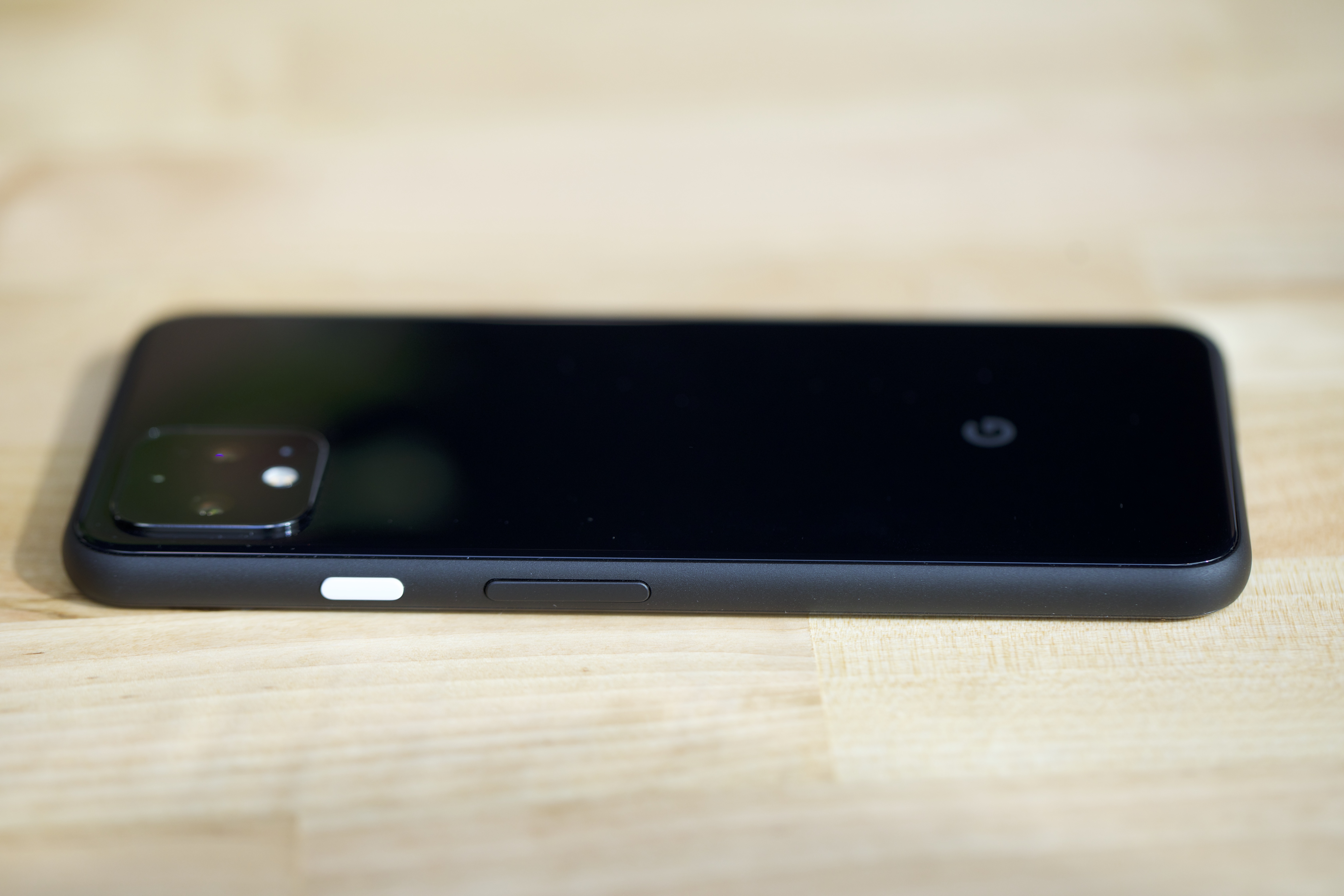
Up close with Google’s new Pixel 4

This is the Pixel 4, the handset that literally everyone saw coming. Even by Google’s standards, the handset leaked like crazy. Some was almost certainly by design as the company looked to hype up its new flagship amid slowing smartphone sales. That said, showing up for preorder on two different sites in the past few days is a lot, even by Pixel Standards.

From the front, at least, the new device doesn’t really stand out The standard Pixel 4 maintains some pretty sizable bezels on the top and bottom, even as most of the industry has moved toward a notch or hole punch to accommodate the camera.

CMB 8458

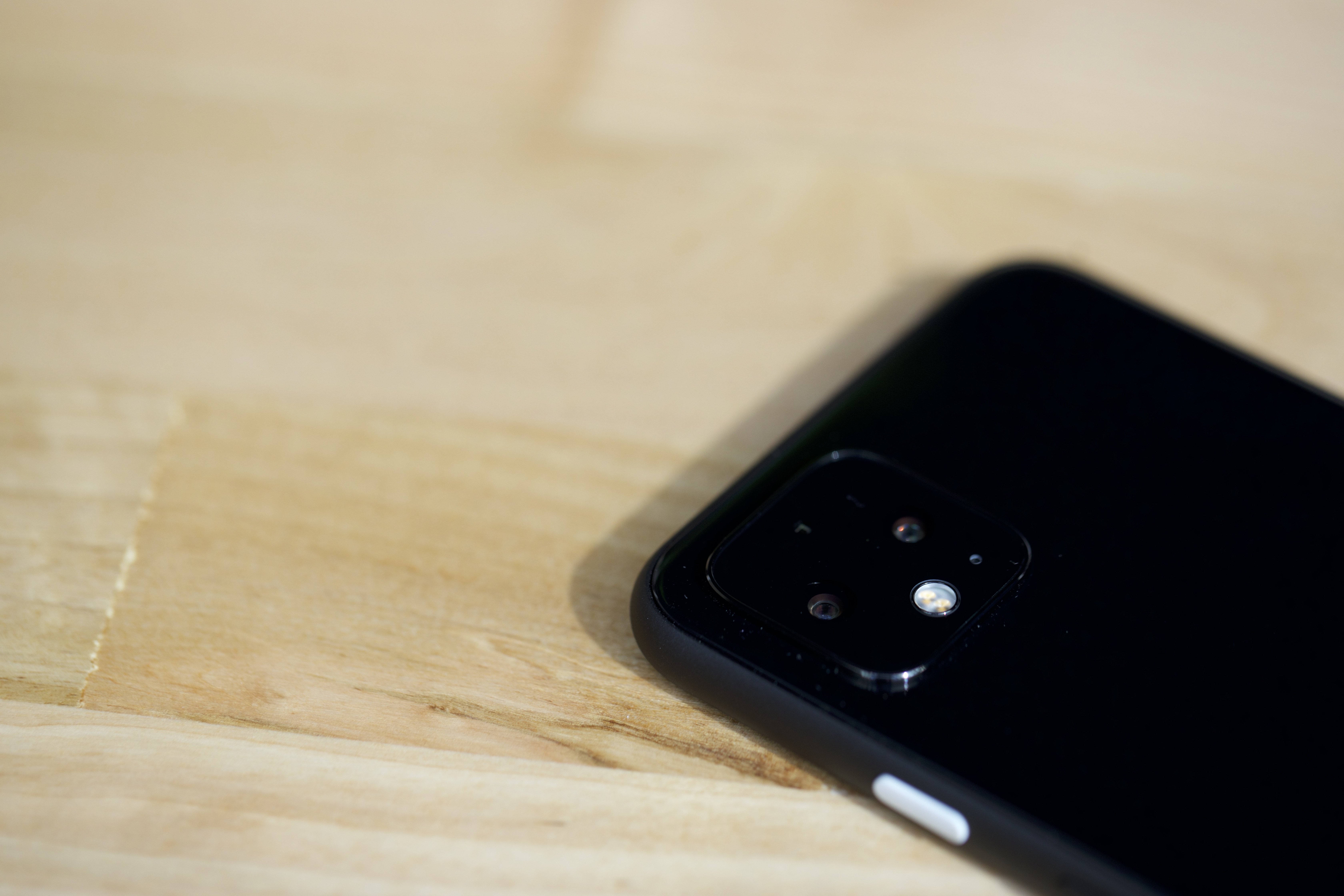
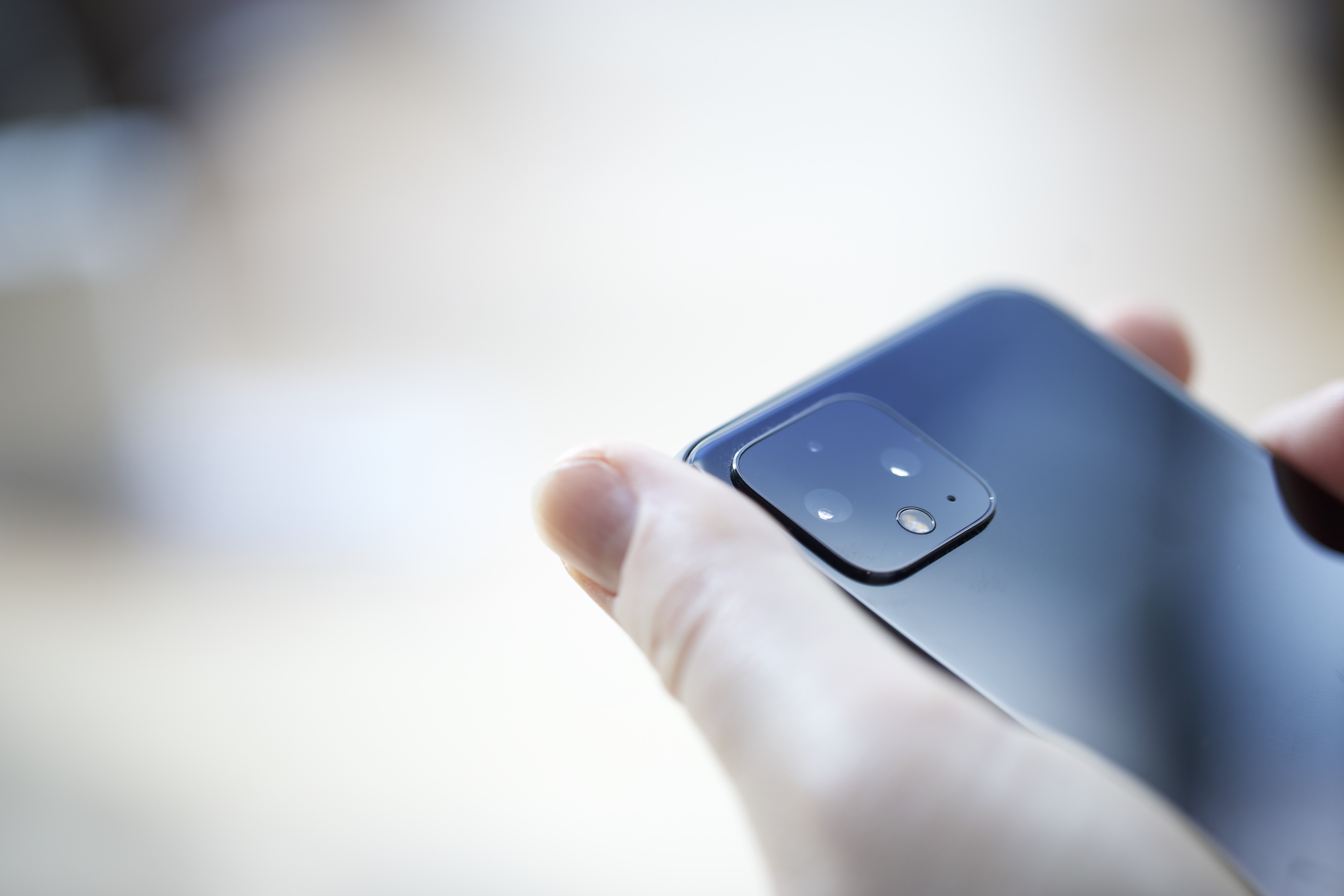
The back of the device is another story entirely, of course. After a few generations of pushing back on multiple camera setups, Google is finally embracing them with the 4. The pair of cameras are positioned in a square configuration, similar to the iPhone 11.

The sensor is up top and the flash is on the bottom, with the wide angle and telephoto sitting next to one another in the middle. There’s a 12- and 16-megapixel, per earlier leaks. I’ve included a handful of random shots I’ve taken here. They leave a little to be desire — more when we get our hands on the device later for a proper review, but this should give you some idea of what we’re working with here.

CMB 8438

Honestly, I’m pretty excited to see what’s on offer with the device here. Google’s always done a good job using AI/ML to augment the single lens configuration, so the idea of what it’s capable of producing in tandem with dual lenses could well make it a contender for one of the best camera phones on the market.


CMB 8437

Imagining has been improved across the board here, including the already solid Night Sight, Portrait Mode and zoom, which uses a hybrid of digital and the physical telephoto lens. I mean, if it’s good enough for Annie Leibovitz, right?

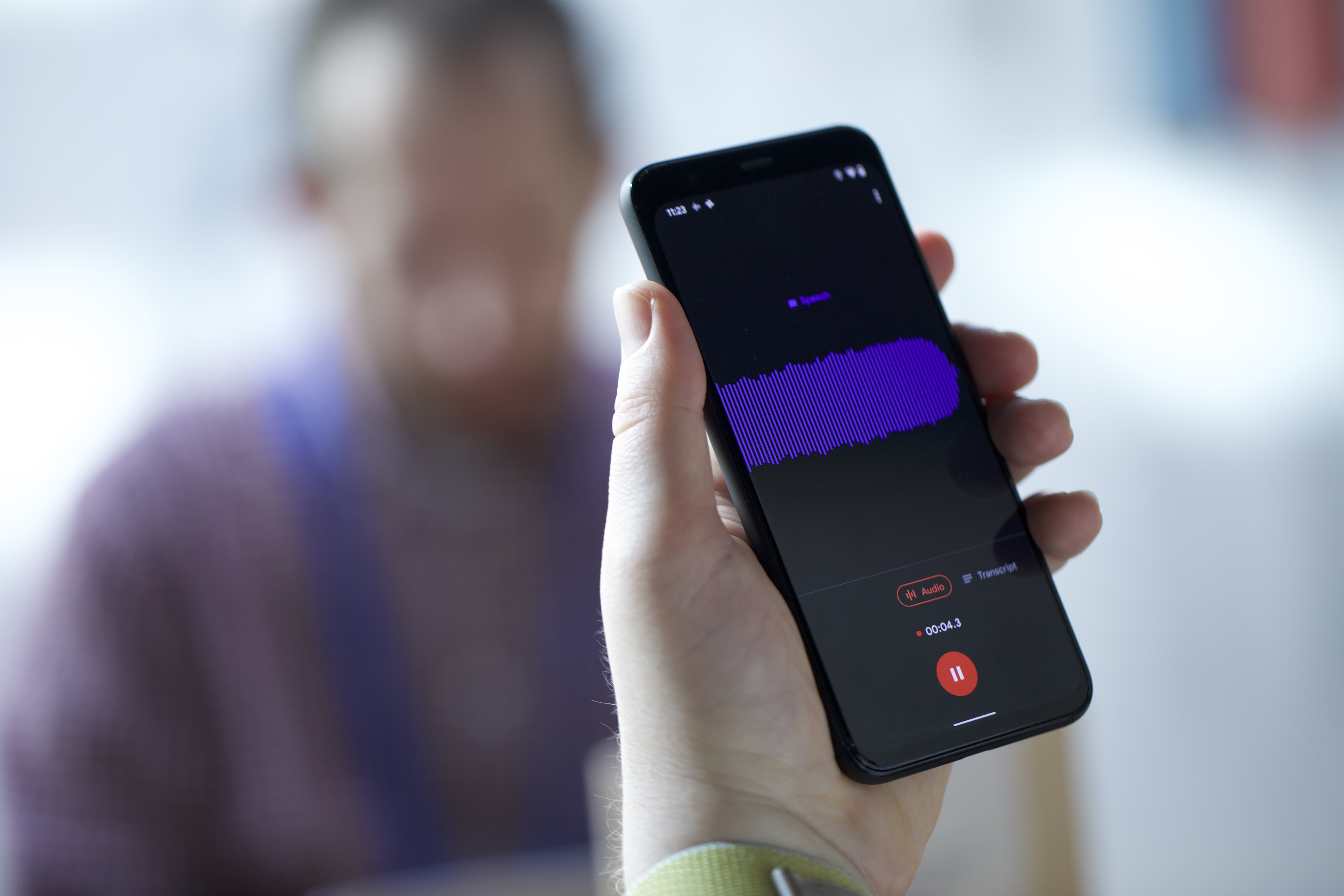
Recorder is an exciting new prospect for someone who makes a living interviewing people such as myself. I tried it out, but honestly, it leaves a bit to be desired in this super noisy setting. Again, a more official writeup of that later, though I do appreciate that the company is doing the transcribing on-board, versus the cloud.

[gallery ids="1897517,1897523,1897522,1897518"]

That means a faster response and no concern over more sensitive stuff. Once recording, you’ll see a gray wave form that turns blue when speech is detected. Tapping “transcript” will show the speech. From there you can share it via social media or save it to Google Drive.

CMB 8450

It’s fun to see Google embracing gestures here, as a natural followup to its squeezable Active Edge. Admittedly, it’s something that plenty of phone makers have tried with limited success Perhaps the inclusion of the new radar chip will save it from accidental gestures and make it more user friendly.

Screen Shot 2019 10 15 at 12.01.18 PM

Or maybe the inclusion of a kind of game where you can wave at Pikachu and other Pokemon will help with adoption. I don’t have particularly high hopes on either one, if I’m being honest Training users on a new form of input is an uphill climb, though the gestures are pretty responsive. At least everyone is already familiar with face unlocks which is augmented by the aforementioned radar feature, detecting the user as they reach for the phone and beginning the unlock process from there.

The handset ships October 24, starting at $799. Look for a much meatier review in the near future.


15 Oct 2019

Watch OpenAI’s ‘human-like’ robot solve a Rubik’s Cube one-handed

There’s always been something so annoying about people who found the need to stack additional challenges onto solving a Rubik’s Cube quickly, whether it was doing it blind-folded or while juggling or one-handed. While it might have just been a challenge for them, it also seemed like a need to show off.

OpenAI is clearly interested in showing off what its Dactyl robotic-hand can do with a Rubik’s Cube.

The organization announced that the robot has learned to solve a Rubik’s Cube one-handed, an accomplishment that speaks to the robot’s dexterity in handling and manipulating the cube more than anything. Previously, we had seen the robot interact with unknown objects without any real-world training, only virtual simulations. Now, Dactyl has built on that ability to learn this new one.

Allowing the robot to analyze the cube and figure out a way to solve it would be one thing, actually pulling off the movements to carry that out would be another, but “learning” to solve means that even with severe impairments that altered its path of action — like having some of its fingers tied together, the system was able to make adjustments to find the path towards solving the puzzle.

It’s certainly not a flawless system, and it won’t be taking down any world champions in the next few weeks but in the video below you can see it solve the cube in under four minutes, which is pretty damn impressive.

15 Oct 2019

Uber, Lime and Spin scooters are now legal in SF

Uber, Lime and Spin have officially deployed their electric scooters on the streets of San Francisco as part of the city’s permitting program. Last month, the city announced Uber’s JUMP, Lime, Ford’s Spin and Scoot were granted permits to operate the shared electric scooter services. Scoot, however, has operated in the city since last year.

The new program allows Scoot to operate 1,000 scooters, down from the 1,250 it had previously operated, while JUMP, Spin and Lime will be able to deploy 500 each. That cap for new providers will increase to 750 on December 15 and to 1,000 on Feb. 15, 2020, as long as each company continues to meet the terms of and conditions of the permit.

“The new Powered Scooter Share Permit includes a more stringent complaint tracking process through a shared complaint database,” the San Francisco Municipal Transportation Agency wrote in a blog post on Friday. “Operators will be required to track all complaints (and the resolution of these complaints) and provide this information to SFMTA on a regular basis. Operators will also be required to take proactive measures to ensure that their customers are aware that sidewalk riding is both unsafe and illegal and implement deterrent measures, including graduated monetary penalties and suspensions for those who engage in unsafe riding behavior.”

It’s worth pointing out that Uber will now benefit from both JUMP and Lime ridership. That’s because of the partnership Uber and Lime formed last July. Through the partnership, riders can reserve Lime scooters through the Uber app. In SF, however, this integration is not yet live. This means riders in SF can soon access JUMP scooters, Lime scooters, JUMP e-bikes, cars and transit info through a single app. For those with app fatigue, this is a major advantage for Uber.

Bird, which owns Scoot, could have applied for its own permit but CEO Travis VanderZanden “didn’t want to get greedy with it,” he told me earlier this month at TechCrunch Disrupt San Francisco.

For both Lime and Spin, it’s been quite the journey to get to this point of city-sanctioned deployment. After deploying their respective scooters without permission last March, they were forced to remove their scooters and then apply for a permit. Lime and Spin were not granted permits and each subsequently appealed the city’s decision. The city denied both of those appeals, but a neutral hearing officer recommended the city allow both Spin and Lime to operate scooters in the future.

Fast forward to today, and the city legislators have now proposed the creation of an office of emerging technology. The idea is that before any new tech is tested or piloted, the city would review it with all relevant departments and determine if it results in the overall common good.

San Francisco Board of Supervisors President Norman Yee has already secured $250,000 to fund this new office. If his proposal passes, the office could open this January. That would mean any new tech, like automatic repositioning of micromobility vehicles, for example, would go through a more rigorous vetting process.

Uber, which is exploring sidewalk detection and autonomous re-parking of scooters and bikes, imagines cities seeing the benefit in that tech. In San Francisco, where it requires vehicles lock to a stationary object, Uber envisions a robotic lock that retracts itself.

“I suspect that the reason many cities require locks is for the same reason we think robotic tech is appealing,” Uber Head of New Mobility Robotics Alan Wells told TechCrunch. “If it’s locked to something, it’s far less likely to be in the way. I think the premise of the tech is to provide a far more flexible way to deliver that end-result of vehicles that are not in the way.”

15 Oct 2019

Spearhead will give $1M to 15 founders to invest freely

Spearhead, an investment fund launched by AngelList’s Naval Ravikant and Accomplice’s Jeff Fagnan, plans to raise roughly $100 million for its third fund to provide founders $1 million each to invest in technology startups of their choosing.

The firm, created in 2017, initially provided founders $200,000 in investment capital sourced from Spearhead I, a $25 million vehicle, followed by Spearhead II, a $35 million vehicle. The group now plans roughly $100 million to give its founders 5x more capital to play with.

Each founder is allotted 15% carry in his or her fund, while Spearhead holds on to 5%. This time around, says Spearhead’s Jeff Fagnan, standout “leads,” or those tapped to deploy capital from the fund, will also have the opportunity to receive another $10 million to invest at the end of the two-year program during a culminating demo day-like event.

Spearhead is designed to train founders, who tend to be well-connected to the tech ecosystem and knowledgeable about startups, to be effective angel investors. Previous Spearhead leads include Shippo co-founder and chief executive officer Laura Behrens Wu, Scale AI founder and CEO Alex Wang and Rippling co-founder and chief technology officer Prasanna Sankar. To date, 35 founders have completed the program.

Applications to join Spearhead’s third cohort will become available this week. Those who participate will be encouraged to write checks at the pre-seed stage.

“There’s starting to be gap opening up again at the pre-seed,” Fagnan tells TechCrunch. “Founders are the right way to fill that gap. Founders backing their most talented friends … founders backing founders is the right way for this to go. We need to redefine who thinks of themselves as an angel investor.”

To be eligible to become a Spearhead lead, you must live in San Francisco, Los Angeles, Boston or New York City and run, or very recently have run, a startup. The firm plans to accept around 15 applicants.

“We are trying to build an active community within the leads and we’ve found smaller equals better; fewer people coming together and taking deeper accountability,” Fagnan said.

Spearhead leads can invest their capital in any tech startups, so long as there’s no existing equity relationship. Existing Spearhead investments include ZeroDown, Altitude Networks, Scythe, Airgarage, Cloosiv, Height, O.School, PopSQL, Superplastic and Sword Health.

15 Oct 2019

Entrepreneur First, the ‘talent investor’, pulls out of Hong Kong

Entrepreneur First (EF), the Greylock-backed “talent investor” that recruits and backs individuals pre-team and pre-idea to enable them to found startups, is pulling out of Hong Kong, TechCrunch has learned.

According to sources, the London HQ’d company builder has told provisional candidates for its 2020 Hong Kong cohort that they should instead apply to one of its other international outposts, which includes Berlin, Paris, Singapore, Bangalore, London and (most recently) Toronto.

The immediate Hong Kong operations aren’t changing, however, and the current cohort will complete the program and present at January’s Demo Day as planned. Hong Kong alumni will also continue to receive investment support as usual.

“We’ve decided not to recruit for further cohorts in Hong Kong after January 2020,” EF co-founder Matt Clifford tells me, confirming the news. “There’s no change to the current cohort and we’ll be running exactly the same program for them as for the previous Hong Kong cohorts. We’ll be in Hong Kong at the end of the month to run our investment process as usual and the companies we back will take part in our Demo Day in January as normal”.

Clifford also confirmed that EF had made a handful of early offers to individuals for the next Hong Kong cohort (originally planned for 2020). “We really rate them all, so we’ve offered to transfer their offer to any other EF site,” he says.

As for why EF is pulling out of Hong Kong, Clifford says that although there has been three “good cohorts” in Hong Kong, the talent pool there hasn’t proven big enough to support two cohorts per year “in the long run”. In the first two Hong Kong cohorts, EF has backed around 100 individuals and 11 companies, many of which have gone onto raise external funding.

“The quality is very high, but we need higher volume to make a site work at scale,” he explains. “We’ve always said to our investors that we’ll deploy capital wherever we see the best long term opportunities and, while Hong Kong might well have been viable for another cycle or two, we see more sustainable opportunities elsewhere”.

What Clifford doesn’t mention, of course, is the current political unrest in Hong Kong, which continues to see pro-democracy protests and a subsequent police clamp down. This has included lethal force and the use of controversial “emergency powers” by the Hong Kong administration. Clearly any such climate will make it difficult to attract talent to the country, which a program like EF is reliant on.

Meanwhile, Clifford says there’s no change to the scale of EF’s plans, more broadly. The talent investor still plans to back around 1,000 founders globally in 2020. “We’ve obviously got the Toronto expansion we announced recently coming up and some other sites in the pipeline, so the total number of individuals and companies we expect to invest in remains the same,” he says.

I also understand that the four full-time permanent members of the Hong Kong team have been offered roles elsewhere at EF, meaning that there are likely no net job losses.

15 Oct 2019

Annie Leibovitz used the Pixel 4 to shoot a new collection of photos

Google ended today’s hardware event by going deep on the photo technology in its new Pixel 4, and brought out someone who’s actually been using the camera — legendary photographer Annie Leibovitz.

The company announced that it’s working with Leibovitz back in October 2018. Today, she spoke about the experience of working with the Pixel 3 and Pixel 4 for the past year.

Leibovitz told the audience that while she’s been using cameraphones for a while, she was “dying for this opportunity, to be given this opportunity by Google” to go out and use a cameraphone as a professional photographer.

The discussion didn’t include too many details about the project itself — from what I gathered, it’s a collection of photos of a wide range of activists and “changemakers.” Leibovitz said each portrait is a “diptych,” combining a photo of the ostensible subject with a second photo of something that’s important to them and their work.

She admitted that in the beginning, she had “a little bit of a rough start,” but as time went on, Leibovitz said, “I just relaxed and I totally enjoyed myself.” For example, she said her final shoot was with soccer star Megan Rapinoe, and she described the experience as one where “it really felt like we were just floating … I wasn’t really thinking about the camera.”

Google’s Lily Lin ended their conversation by asking about “pro tips” for other photographers.

“It’s all inside you,” Leibovitz replied. “You just go out and you do it … I mean, we all are using this camera, and it’s a brand new language.”

15 Oct 2019

Google aims to change the definition of good photography with Pixel 4’s software-defined camera

Google’s new Pixel 4 camera offers a ton of new tricks to improve its photographic chops, and to emphasize the point, it had Professor Mark Levoy, who leads camera technology development at Google Research, up on stage to talk about the Pixel 4’s many improvements, including its new telephoto lens, updated Super Res Zoom technology and Live HDR+ preview.

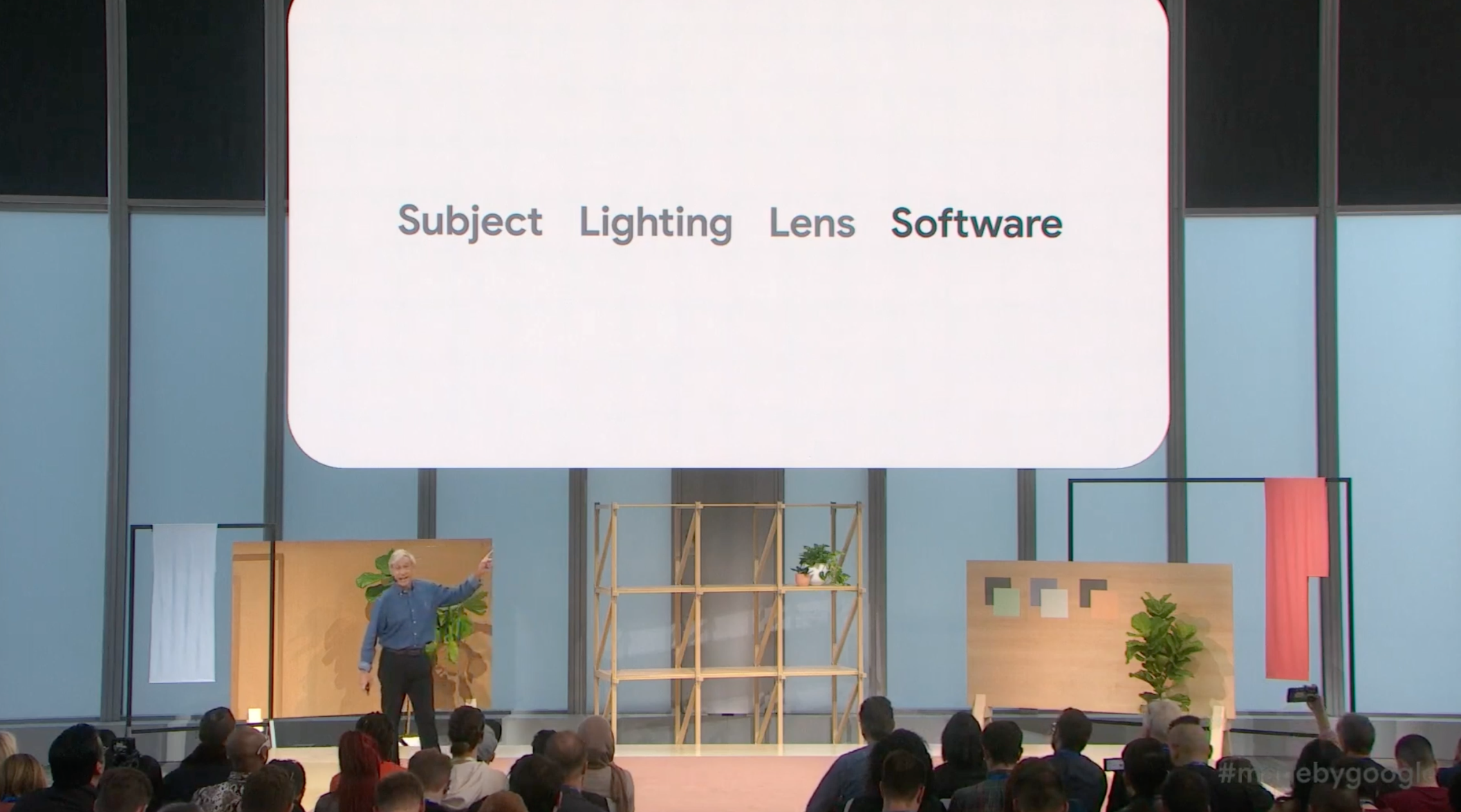
Subject, Lighting, Lens, Software

Levoy started by addressing the oft-cited saying among photographers that what’s most important to a good photo is first subject, then lighting and followed after that by your hardware: ie., your lens and camera body. He said that he and his team believe that there’s a different equation at play now, which replaces that camera body component with something else: Software.

Screen Shot 2019 10 15 at 10.59.55 AM

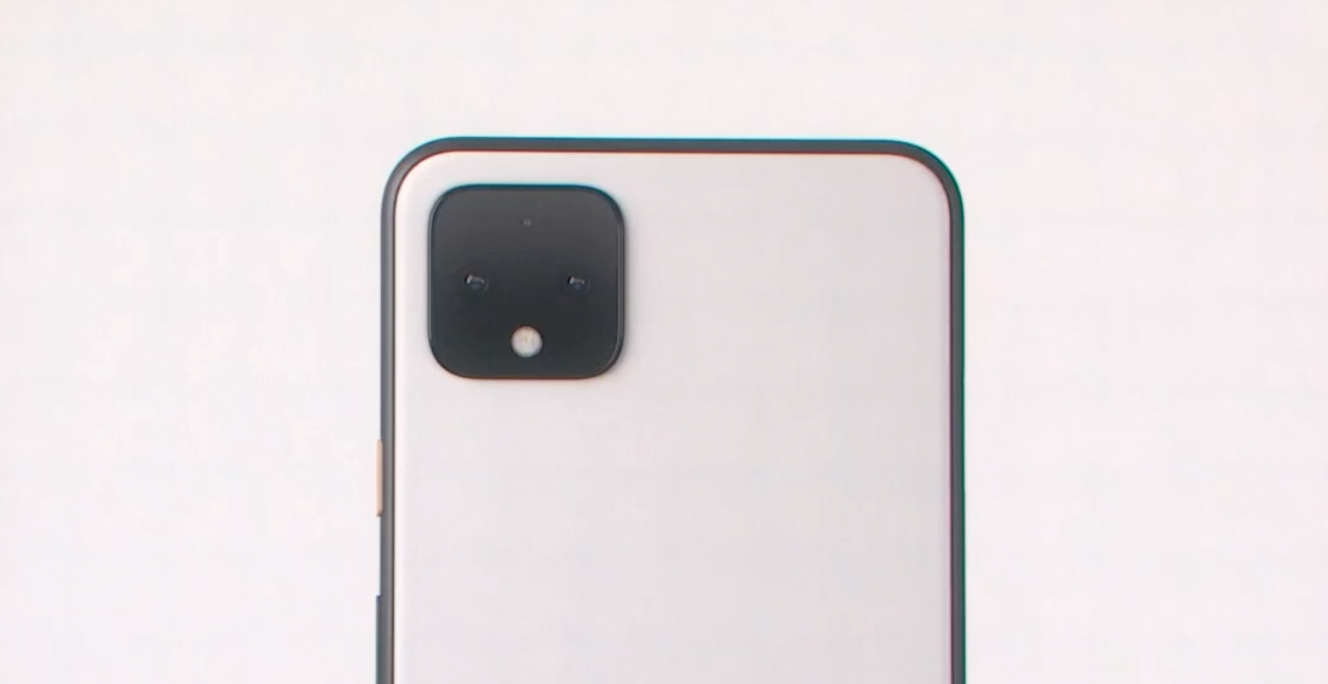
Lens is still important in the equation, he said, and the Pixel 4 represents that with the addition of a telephoto lens to the existing wide angle hardware lens it offers. Levoy also offered the opinion that a telephoto is more useful generally than a wide angle, clearly a dig at Apple’s addition of an ultra-wide angle hardware lens to its latest iPhone 11 Pro models.

Google Pixel 4 Camera

In this context, that means Google’s celebrated “computational photography” approach to its Pixel camera tech, which handles a lot of the heavy lifting involved when it takes a photo from a small sensor, which tend to be bad, and turns that into something pretty amazing.

Levoy said that he calls their approach a “software-defined camera,” which most of the time just means capturing multiple photos, and combining data from each in order to produce a better, single final picture.

Screen Shot 2019 10 15 at 11.07.56 AM

What’s new for Pixel 4

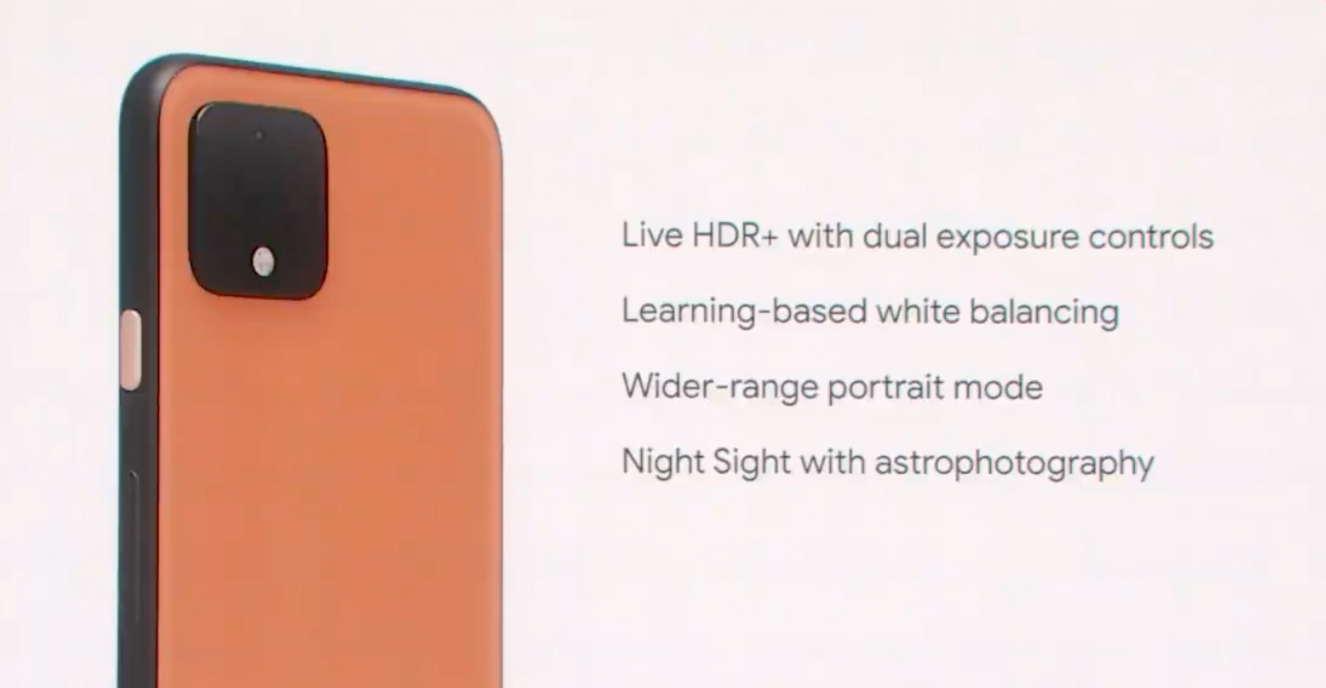
There are four new features for the Pixel 4 phone powered by computational photography, which include Live HDR with dual exposure controls, which shows you a real-time image of what the final photo will look like with the HDR treatment applied, instead of just giving you a very different looking final shot. It also bakes in exposure controls that allow you to adjust the highlights and shadows in the image on the fly, which is useful if you want bolder highlights or silhouettes from shadows, for instance.

Also new is “Learning-based white balance,” which addresses the tricky issue of getting your white balance correct. Levoy said that Google has been using this approach in white-balancing night sight photos since the introduction of that feature with Pixel 3, but now it’s bringing it to all photo modes. The result is cooler colors, and particularly in tricky lighting situations when whites tend to be incorrectly exposed as orange or yellow.

Screen Shot 2019 10 15 at 11.02.01 AM

The new wide-range portrait mode makes use of info from both the dual-pixel imaging sensors that Pixel 4 uses, as well as the new second lens to derive more depth data and provide an expanded, more accurate portrait mode to separate the subject from the background. It now works  on large objects and portraits where the person in focus is standing further back, and it provides better bokeh shape (the shape of the defocused elements int eh background) and better definition of strands of hair and fur, which has always been tricky for software background blur.

Lastly, Night Sight mode gets overall improvements, as well as a new astral photography mode specifically for capturing the night sky and star fields. The astral mode provides great looking night sky images with exposure times that run multiple minutes, but all with automatic settings and computational algorithms that sort out issues like stars moving during that time.

google pixel 4 sample images

Still more to come

Google wanted to emphasize the point that this is a camera that can overcome a lot of the problems faced typically by small sensors, and it brought out heavyweight photography legend Annie Lebowitz to do just that. She showed some of the photos she’s been capturing both with Pixel 3 and Pixel 4, and they did indeed look great, although the view from the feed doesn’t say quite as much as would print versions of the final photos.

[gallery ids="1897442,1897441,1897440"]

Levoy also said that they plan to improve the camera over time via software updates, so this is just the start for Pixel 4. Based on what we saw on stage, it definitely looks like a step-up from the already excellent Pixel 3, but we’ll need more time hand-on to see what it does compared to Apple’s much-improved iPhone 11 camera.

15 Oct 2019

Amazon migrates more than 100 consumer services from Oracle to AWS databases

AWS and Oracle love to take shots at each other, but as much as Amazon has knocked Oracle over the years, it was forced to admit that it was in fact a customer. Today in a company blog post, the company announced it was shedding Oracle for AWS databases, and had effectively turned off its final Oracle database.

The move involved 75 petabytes of internal data stored in nearly 7,500 Oracle databases, according to the company. “I am happy to report that this database migration effort is now complete. Amazon’s Consumer business just turned off its final Oracle database (some third-party applications are tightly bound to Oracle and were not migrated),” AWS’s Jeff Barr wrote in the company blog post announcing the migration.

Over the last several years, the company has been working to move off of Oracle databases, but it’s not an easy task to move projects on Amazon scale. Barr wrote there were lots of reasons the company wanted to make the move. “Over the years we realized that we were spending too much time managing and scaling thousands of legacy Oracle databases. Instead of focusing on high-value differentiated work, our database administrators (DBAs) spent a lot of time simply keeping the lights on while transaction rates climbed and the overall amount of stored data mounted,” he wrote.

More than 100 consumer services have been moved to AWS databases including customer-facing tools like Alexa, Amazon Prime and Twitch among others. It also moved internal tools like AdTech, its fulfillment system, external payments and ordering. These are not minor matters. They are the heart and soul of Amazon’s operations.

Each team moved the Oracle database to an AWS database service like Amazon DynamoDB, Amazon Aurora, Amazon Relational Database Service (RDS), and Amazon Redshift. Each group was allowed to choose the service they wanted, based on its individual needs and requirements.


15 Oct 2019

Here’s everything Google just announced at the Made By Google 2019 event


Google held its annual “Made By Google” hardware event this morning in New York City, where they launched all sorts of new gear back to back to back.

Didn’t have time to watch the whole stream, but still want to know the bulletpoints of what’s new? We’ve got you covered.

Stadia Launch

Stadia, Google’s cloud video game streaming service, will launch on November 19th.

Pixel Buds

Google Pixel buds

Google went back to the drawing board with its answer to the AirPods. Shipping sometime in “Spring 2020”, the new Pixel Buds will cost $179. Google says the battery should last about 5 hours per charge, with the familiar floss-style charging case packing an additional 24 hours worth of charge. On-board microphones will adapt the sound based on your environment, and help to cancel out background noise like wind.

Pixelbook Go

Google Pixelbook Go

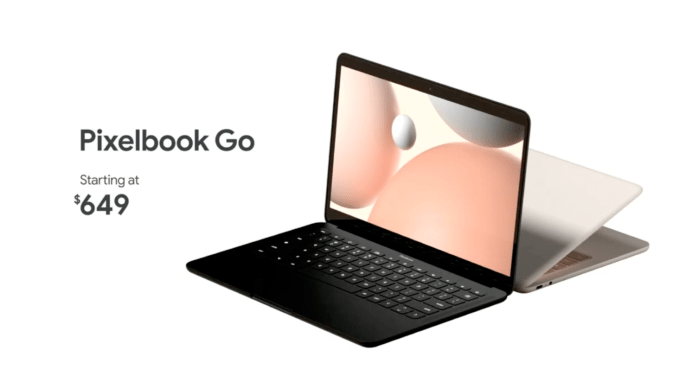
It’s been a while since Google shipped a higher-end Chrome OS laptop — but with Pixelbook Go, they’re taking another swing at it. It’s got a 13.3″ display, up to 16GB of RAM, up to 256GB of storage, with the company promising around 12 hours of battery life. It’ll weigh roughly 2lbs, with a base model that’ll cost $649.

New Nest Aware

Nest Aware (which lets you add cloud recording to your Nest cameras) used to cost a few bucks per device. Now it’s a flat fee, regardless of how many cameras you’ve got. $6 per month gets you 30 days of “event” history (read: just the bits of video where things are actually happening), while $12 per month gets you 10 days of 24/7 video history.

Nest Aware also now lets you put your Nest Minis/Nest Hubs into a security-centric listening mode, with the smart speakers listening for things like smoke alarms and dogs barking and sending you notifications accordingly.

They’ll switch to the new tier structure in “early 2020”.

Nest WiFi

EG7TM0pXYAIlB

As rumored over the past few weeks, Google is mashing up the concepts of its Google Wifi mesh router with its Google Home speakers, voltroning them into Nest WiFi — a router/smart speaker hybrid. They’ll ship starting on November 4th; a two pack will cost $269, with a three pack going for $349.

New Nest Mini

Google Nest Mini

The Google Home Mini is now the “Nest Mini” — and a bit has changed beyond the name. It’s now wall mountable without any adapters, with a speaker that Google says offers up double the bass. Its got a new machine learning chip on board for faster responses, and more microphones to work better in louder environments. It’ll ship on October 22nd for $49.

Pixel 4

Google Pixel 4

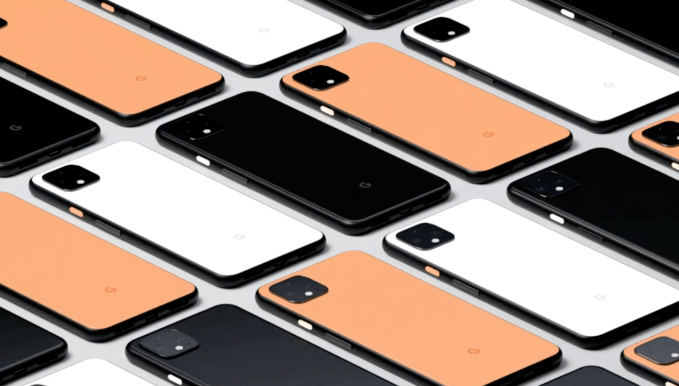
After an endless series of leaks, the next generation of Pixel — Google’s flagship Android phone — is officially official. The Pixel 4 will come in at 5.7″ with a 2,800mAh battery, while the Pixel XL 4 comes in at 6.3″ with a 3,700mAh battery. They’re both running on the Snapdragon 855 chipset with 6GB of RAM. They’ve both got “Project Soli” radar chips inside, allowing you to do things like switch songs, snooze alarms, or silence calls by waving your hand over the phone without actually touching it.

The main focus here for Google is the cameras, with the company leaning hard into the idea of using machine-learning and AI-centric software to improve photos — things like dual exposure controls, AI-driven “learning” white balance, and an improved Night Sight mode that can handle taking photos of star-lit nights. Both phones have two cameras on the back (12.2 megapixel f/1.7 main camera and a 16 megapixel f/2.4 telephoto lens) and one on the front (8 megapixels).

It’ll ship starting October 24th, starting at $799.