Year: 2019

14 Oct 2019

Uber lays off another ~350 across Eats, self-driving and other departments

Uber has just laid off around 350 employees across a variety of teams within the organization, marking what the company says is its third and final phase of layoffs of the process it began earlier this year, Uber CEO Dara Khosrowshahi said to employees today in an email obtained by TechCrunch (full email below). Those affected include employees from Eats, performance marketing, Advanced Technologies Group, recruiting, as well as various teams within the global rides and platform departments. Some employees have also been asked to relocate.

“Days like today are tough for us all, and the ELT and I will do everything we can to make certain that we won’t need or have another day like this ahead of us,” Khosrowshahi wrote in the email. “We all have to play a part by establishing a new normal in how we work: identifying and eliminating duplicate work, upholding high standards for performance, giving direct feedback and taking action when expectations aren’t being met, and eliminating the bureaucracy that tends to creep as companies grow.”

In total, the layoffs represent about 1% of the company, an Uber spokesperson told TechCrunch. All of this comes about one month after Uber laid off 435 employees across its product and engineering teams and less than three months after Uber laid off about 400 people from its marketing team. At this point, most departments at Uber have been affected by layoffs.

For Uber’s self-driving car unit, this is its first round of layoffs since it spun out into its own unit earlier this year. Uber has previously said the team consists of more than 1,200 people and today still employs more than 1,200, despite the layoffs. according to an Uber spokesperson. Based on the terms of ATG’s $1 billion fundraising round in April, the unit is worth $7.25 billion on a post-money basis.

More than 70% of those affected in this round of layoffs are based in the U.S. and Canada, and the rest are relatively evenly distributed across APAC, Latin America and EMEA. Uber notified those affected this morning.

As TechCrunch previously reported, these layoffs are a result of Uber CEO Dara Khosrowshahi asking every member of his executive leadership team if they were to start from scratch, if their respective organizations would loo the way they do.

“As you know, over the past few months, our leaders have looked carefully at their teams to ensure our organizations are structured for success for the next few years,” Khosrowshahi wrote to employees. “This has resulted in difficult but necessary changes to ensure we have the right people in the right roles in the right locations, and that we’re always holding ourselves accountable to top performance.”

In Q2 2019, Uber lost more than $5 billion — its biggest quarterly revenue loss to date — though a chunk of its losses were a result of stock-based compensation expenses for employees following the company’s IPO in May.

In other parts of Uber’s business, it’s continuing to invest money in ensuring its drivers remain 1099 independent contractors. Already, Uber, along with Lyft and DoorDash, put $30 million toward a 2020 ballot initiative that would enable them to keep their drivers as independent contractors. In light of gig worker protection bill AB-5 passing in the California State Senate and Assembly, Uber Chief Legal Officer Tony West made it clear the company was willing to invest more money into that campaign initiative. California Governor Gavin Newsom has since signed that bill into law, which goes into effect Jan. 1, 2020.

While West said he believes Uber would pass the test and prove its drivers are properly classified, there would surely be a financial impact if Uber fails the test. West did not comment on what that impact could be, but industry analysts have estimated a change in classification for drivers could result in up to a 30% cost increase.

Uber will report its Q3 earnings on November 4. The company is currently trading at $31.26 per share, which is well below its IPO pricing of $45.

Below is Khosrowshahi’s full email with the subject line, “Stronger moving forward”:

Team Uber,

As you know, over the past few months, our leaders have looked carefully at their teams to ensure our organizations are structured for success for the next few years. This has resulted in difficult but necessary changes to ensure we have the right people in the right roles in the right locations, and that we’re always holding ourselves accountable to top performance.

Today is the last wave of a process we began months ago with our Marketing team, and more recently, with our Product and Engineering teams. This time, ATG, Eats, Global Rides and Platform (Rides Ops, CommOps, Safety & Insurance, U4B, and Product Ops), Performance Marketing, and Recruiting have made changes. As part of this exercise, some of our employees are being asked to relocate, and around 350 will be leaving the company.

Days like today are tough for us all, and the ELT and I will do everything we can to make certain that we won’t need or have another day like this ahead of us. We all have to play a part by establishing a new normal in how we work: identifying and eliminating duplicate work, upholding high standards for performance, giving direct feedback and taking action when expectations aren’t being met, and eliminating the bureaucracy that tends to creep as companies grow.

We have proven ourselves to be not only one of the most ambitious and innovative companies in the world, but also one of the most resilient. We’ve always pushed through tough times and come out the other side a better and stronger company—that will continue to be true tomorrow, and every day after.

As always, we’ll be at the All Hands tomorrow and will dedicate most of the time to answer your questions. Add yours to the slido here.

Eyes forward—back to building.

Dara

14 Oct 2019

Founder’s guide to the pre-IPO secondary market

The increase in activity in the pre-IPO secondary market means that founders, early employees, and investors are receiving liquidity much sooner in a company’s lifecycle than ever before. For most startups and privately held companies, liquidity is often an issue for stockholders as no market exists for selling shares and/or transfer restrictions prevent their sale. Secondary stock transactions, however, are a way to work around this problem.

Here’s a quick look at how they work and what to keep in mind, especially if you’re going through the process for the first time. (If you’re not familiar, secondaries are transactions in which an existing stockholder sells their stock for cash to third parties or back to the company itself before the company undergoes an exit; traditionally, an exit refers to an M&A or an IPO.)

Offering secondary transactions to founders is a tool VCs have been using to win deals. For example, if a VC promises that the founders will receive $1,000,000 in cash through a secondary sale from a $15,000,000 venture financing round, the founders will likely prefer that VC’s term sheet to a term sheet from a VC that does not offer that deal.

Why would a founder consider a secondary sale of their equity?

14 Oct 2019

Daily Crunch: Facebook has a weak stance on political ads

The Daily Crunch is TechCrunch’s roundup of our biggest and most important stories. If you’d like to get this delivered to your inbox every day at around 9am Pacific, you can subscribe here.

1. Facebook should ban campaign ads. End the lies.

Facebook recently formalized its approach to political advertising, declaring, “We don’t believe, however, that it’s an appropriate role for us to referee political debates.” In other words, it will allow politicians to say whatever they want in their ads, even if their claims are blatantly false.

Josh Constine proposes a different solution: If Facebook, Twitter, Snapchat and YouTube don’t want to be the arbiters of truth in campaign ads, then they should stop selling them.

2. Fortnite is just a black hole right now

Fortnite just blew up its entire map and all that’s left is a black hole. Some are speculating that this is simply a teaser for a new Fortnite map, but it’s unclear when that map will arrive.

3. SoftBank reportedly preps a package to take control of WeWork parent company

SoftBank Group, the multibillion-dollar Japanese technology conglomerate and investment firm, has put together a bid that would save WeWork parent company The We Company, just weeks before the co-working real estate company’s imminent collapse, according to The Wall Street Journal.

4. Kik says it’s ‘here to stay,’ following shutdown reports

The once-mighty messaging service announced in late September that it would be shutting down its app and eliminating the vast majority of its team, following a protracted battle with the SEC. And yet the company tweeted over the weekend: “Great news: Kik is here to stay!!!!”

5. California’s Privacy Act: What you need to know now

The CCPA was signed into law in June 2018 — enshrining protections for a sub-set of U.S. citizens against their data being collected and sold without their knowledge. It will take effect on January 1, with a six-month grace period before enforcement begins. (Extra Crunch membership required.)

6. Why each Libra member’s mutiny hurts Facebook

Visa, Stripe and eBay have all dropped out of Facebook’s cryptocurrency project. The companies have said they could still get involved later, but their exit clouds the project’s future and leaves Facebook to absorb more of the blowback.

7. This week’s TechCrunch podcasts

Equity does something different this week, getting on the phone with an IPO expert to discuss the public market cycle, both domestically and abroad. And after taking a break for Disrupt, Original Content is back with a review of “The Politician” on Netflix.

14 Oct 2019

Shipping giant Pitney Bowes hit by ransomware

Shipping tech giant Pitney Bowes has confirmed a cyberattack on its systems.

The company said in a statement that its systems were hit by a “malware attack that encrypted information” on its systems, more commonly known as ransomware.

“At this time, the company has seen no evidence that customer or employee data has been improperly accessed,” the statement said, but many of its internal systems are offline, causing disruption to client services and other corporate processes.

The company said it’s working with a third-party consultant to address the issue. But it’s not immediately known what kind of ransomware encrypted its systems.

A spokesperson for the company did not immediately return a request for comment.

Pitney Bowes is a widely used shipping tech company that provides mailing services to sellers, with more than 1.5 million clients across the world, including the Fortune 500. The company allows sellers to make mailing items and goods easier and more efficient, and is widely used by sellers in marketplaces like Etsy and Shopify.

Several customers on Twitter complained that they were unable to perform basic tasks. It’s known that some account, product support pages, and software and downloads pages are unavailable.

It’s the latest in a string of attacks on high-profile businesses. In the past few months, drinks giant Arizona Beverages, aluminum maker Norsk Hydro, and science services company Eurofins have all been hit by ransomware.

Last week, the FBI warned of “high impact” ransomware attacks targeting larger businesses.

14 Oct 2019

Disney+ tweets all the movies and shows coming to its streaming service

In an impressive bit of pre-launch marketing, Disney today announced basically every movie and TV show coming to its upcoming streaming service Disney+ by way of a massive Twitter thread. The thread, which was posted in chronological order starting with Snow White and the Seven Dwarfs in 1937, reveals not just Disney’s best-known titles but also its long tail of cult classics, flops, oddities, and other lesser-known films.

To date, Disney has advertised the extensive catalog coming to Disney+, which launches on November 12, by highlighting the top titles from Disney, Marvel, Star Wars, Pixar, NatGeo, and more.

It has also touted its dozens of upcoming original productions like The Mandalorian, a Lady and the Tramp remake, a Rogue One prequel, High School Musical: The Musical: The Series, and many others.

But today’s Twitter thread is a reminder that Disney’s back catalog goes deep.

For every Disney animation classic, there’s a crappy direct-to-video sequel, like Belle’s Magical World, for example. There are the cheesy 80’s TV shows. There are the And while Pixar may have spun Toy Story into one of its best-known franchises, it also produced the broadly panned Cars 2.

Then there are the titles that you may have forgotten — or never knew existed in the first place — from Meet the Deedles to Zenon Girl of the 21st Century to Fuzzbucket to The Computer Who Wore Tennis Shoes to that movie about the country bears.

For anyone who grew up on Disney, the list is a nostalgic look back at not just the studio’s hits, but also the titles that had quickly faded from your memory, or those that even make you cringe.

While most streaming services today round out their catalog lineup with less popular content in order to claim a larger number of total titles available, they don’t tend to promote their B movies and crappy TV shows in any of their marketing or advertising, for obvious reasons.

Disney’s approach, by comparison, is refreshingly transparent.

While you may never have watched The Biscuit Eater or Justin Morgan Had a Horse or The Adventures of Ichabod and Mr. Toad, and may never care to, Disney+ is at least letting you know what sort of filler content comes with your $6.99 per month subscription.

And as you scroll your way down through one of the biggest tweetstorms ever, you’ll likely come across a few niche titles that appeal to you, despite not being the stuff of headlines.

Disney+ is available for pre-order ahead of its Nov. 12 launch.


14 Oct 2019

Google updates its Titan security keys with USB-C

Google has revealed its latest Titan security key — and it’s now compatible with USB-C devices.

The latest Titan key arrives just weeks after its closest market rival Yubico — which also manufactures the Titan security key for Google — released its own USB-C and Lightning compatible key, but almost two years after the release its dedicated USB-C key.

These security keys offer near-unbeatable security against a variety of threats to your online accounts, from phishing to nation-state attackers. When you want to log in to one of your accounts, you plug in the key to your device and it authenticates you. Most people don’t need a security key, but they are available for particularly high-risk users, like journalists, politicians, and activists, who are frequently targeted by hostile nation states.

By Google’s own data, security keys are far stronger than other options, like a text message sent to your phone.

Many companies, like Coinbase, Dropbox, Facebook, Twitter and Google, support the use of security keys. But although the list of supported companies is not vast, it continues to grow as security key usage increases.

Google said its newest key will be available from October 15 for $40.

14 Oct 2019

Fortnite’s black hole stunt is the kind of alpha energy we’re here for

As you are likely already aware, Epic Games is pulling a massive PR stunt that has shrunk the world’s most popular game down to a single black hole.

As part of Fortnite’s Season 10 live event, called “The End”, the entire Battle Royale Island was sucked into a black hole, with every Fortnite social media channel deleting all of its content save for a livestream of aforementioned black hole.

It’s like the game never even existed.

This has been going on for nearly 24 hours now. I’d say there’s less than one percent possibility that this is actually the end of the game.

For one thing, Fortnite is an insane revenue generator for Epic Games, a company that not only makes games but develops software for others to make games. In fact, Fortnite was actually built as a marketing vehicle for Epic’s Unreal Engine, to show off what’s possible with the technology.

No numbers have been released recently, but at one point last summer, The Verge reported that the game was making $300 million/month.

Fast forward to today, more than two years after launch, and the game is far and away the most popular video game on the planet, with 250 million registered accounts. It’s also one of the biggest esports by prize pool, with Epic pledging $100 million in prize cash for 2019.

But beyond the money (and let’s not underplay the money here), there is also some evidence that the black hole event is slated to end on Tuesday morning. A data miner who goes by Lucas7yoshi on Twitter points to code on Fortnite.com that allegedly reveals the end of the event is on Tuesday at 6AM EST. Of course, this is far from confirmed and though we’ve reached out to Epic, we haven’t heard back.

The point? Epic didn’t just delete Fortnite. (However, it’s been terribly fun to watch gamers’ temper tantrums play out on social media.)

Rather, the company is building as much hype as possible around its next chapter. With the entire map sucked into a black hole, all signs point to a brand new map.

This is important for two unequal reasons.

First and foremost, Fortnite has always taken place on the same map. Points of interest have been wiped away and replaced, and biodomes have been updated and tweaked along the way. Indeed, the ‘current’ Fortnite map is markedly different from the map the game launched with.

fortnite season1 season10

But it has been a slow transition, with one small change here and there for more than two years. Whatever the reason behind this, one symptom has undoubtedly had an effect on the game. The longer you’ve played Fortnite, the more of an advantage you have.

This is particularly true with mechanics like building. Experience in other games, be it Battle Royale or third-person shooters, doesn’t carry over into Fortnite where winning on both defense on offense rests in a player’s ability to build.

But, the map plays its part, too. Long-time players of the game know this island inside and out. They know that you can slide down this part of the mountain without taking fall damage, or that it’s difficult to jump your way onto this plateau without building. They know every single loot spawn on the map.

This has meant that, after two years, Fortnite has favored the veterans, which has left newcomers in a particularly difficult position.

Epic has tried to counter the imbalance of its players in a number of ways. For one, the game added Playground mode to give players a chance to practice in a relatively low-stakes environment. But Fortnite also made changes in the game that have given an edge to brand new players. The easiest and most obvious example of this is the introduction of the mechs in the beginning of Season 10, which were essentially unbeatable at their debut and took little to no skill to operate. Veterans were not pleased.

The piece that has been missing for the game is a good jumping-on point.

A brand new map may be the biggest opportunity yet for brand new players to join up alongside veterans of the game and have a fighting chance of being successful. For the first time, everyone will be lost. No one will know where all the loot is spawned in this or that building, or how to rotate from one point of interest to another with the greatest height advantage or the most cover.

But, instead of transitioning from the original map to a new one in a matter of hours, as is standard with every other update to a game, Epic has decided to draw this one out.

And let’s keep this in context. Most schools are off today for Columbus Day. All those kids who were excited to grind out Season 11 on their day off are now left staring into a Black Hole with nothing to do but simmer in rage or… ya know, do something else.

This is exactly the kind of alpha energy from a game maker that I am here for. The ego!

While other games worry about getting as many players on their servers as possible at any given second of any day, Fortnite is taking a few days off to let you really miss it. Distance makes the heart grow fonder. For both old and new players, a new map means a fresh start and a fresh reason to get excited about Fortnite.

Much less critically, a new map addresses competition.

EA’s Apex Legends remains one of the biggest threats to Fortnite. The Battle Royale game had an explosive (and reportedly expensive) launch and hit 50 million users faster than Fortnite did at launch. But interest in the game petered out until very recently, when EA introduced a brand new map for the first time.

The new map, called World’s Edge, reinvigorated the player base. It’s been out for about two weeks now.

With Epic’s black hole stunt, the publisher is having a true snap back moment.

“Go play your other game, if you must, or better yet just stare longingly into this cryptic black hole,” Fortnite is saying. “You’ll come running back the moment you hear I’ve returned.”

14 Oct 2019

India’s Reliance Jio unveils video call assistant to help businesses automate customer support

Before Google moves to bring its human-sounding robot calling service Duplex to help users automate their interactions with businesses to international markets, an Indian giant is deploying its own solution to get a jumpstart on the local market.

Reliance Jio today unveiled AI-powered Video Call Assistant service that will allow businesses to automate their customer support and other communications. The service, built in collaboration with Radisys, a U.S.-based subsidiary of Reliance Industries, can be accessed via a 4G phone call and does not require installation of any additional app, Jio said.

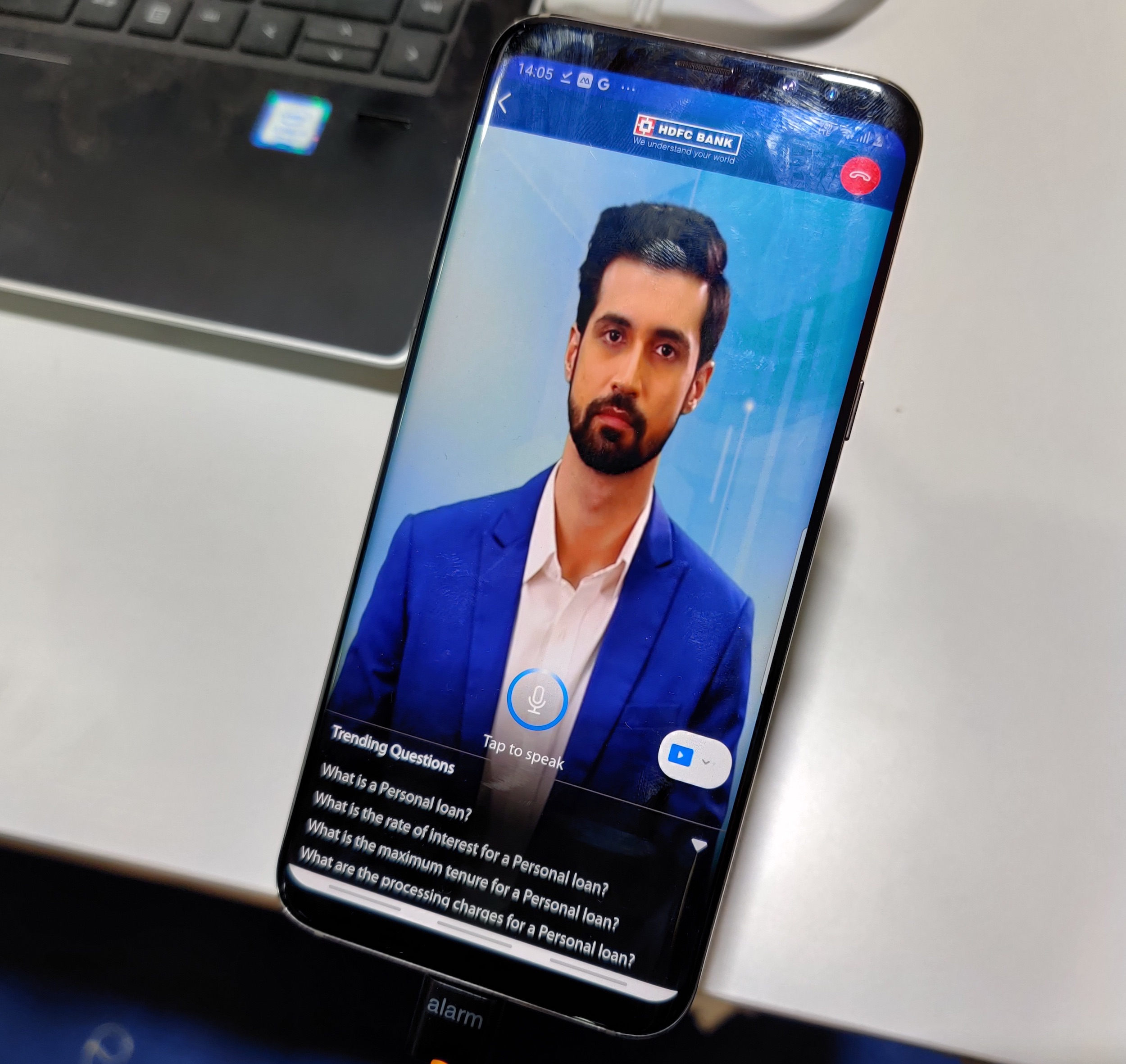
Executives of Reliance Jio demonstrated the technology on Monday at the third installment of Indian Mobile Congress, similar to but not affiliated with the trade show Mobile World Congress. They said they have already courted a number of customers for this service, including HDFC Bank.

In the demo, a user dials a regular phone number and sees a video chat option. Once tapped, the user is greeted by a pre-recorded video message from a human. To demonstrate the AI’s capabilities, an executive of Reliance Jio asked the bot what was the interest rate on personal loans. The human-looking bot was able to answer the question without any delay.

The company, which became the largest telecom operator in India in three years, is also offering audio and text bot options to brands, executives said. “It may be a large business or small, our bot service is built for all,” one of the two executives said.

reliance jio video bot

Image: Manish Singh / TechCrunch

The company said its developer toolkit — called Jio Bot Maker — will allow brands to build and deploy the AI assistant in “just five minutes.”

The company is hoping to address the “current customer pain points like endless call-hold music or seemingly never-ending IVR wait-times,” it said, as it looks to court more businesses in the country.

Earlier this year, Reliance Jio inked a deal with Microsoft to bring Office 365 and other services from the Redmond-headquartered giant to small businesses in India for subsidized cost.

The company has also developed a point-of-sale machine that its agents are increasingly trying to sell to neighborhood stores in the nation. Popularly known as kirana stores, these millions of mom and pop shops dot the entire country.

Reliance Industries, parent firm of Reliance Jio and the largest industrial house in the nation, also operates the largest retail chain in the country, called Reliance Retail. Despite billions of dollars spent on India’s e-commerce market, online sales still amount for just 3% of the overall sales in the nation, according to industry estimates.

The person who appears on the video chat could be replaced by anyone from the CEO of a company to a brand ambassador, Reliance Jio said. “We aim to democratize AI by enabling small businesses to create their own AI-based Bot with no coding and with minimal effort,” it added.

The company plans to introduce support for multiple languages to its bot service and serve “millions of businesses” across various industries in India.

Jio did not reveal when it plans to launch the developer kit to the public, but a spokesperson told TechCrunch that it will be made available “in the near future.”

Jio has made no secret that it wants to develop AI assistants to help businesses. Last year, it acquired Haptik, a Mumbai-based startup that develops “conversational” platforms and virtual assistants. The size of the deal was $100 million.

Aakrit Vaish, co-founder and CEO of Haptik, told TechCrunch in an interview earlier that the startup was developing voice bots.

14 Oct 2019

UK biotech startup Mogrify injects $16M to get novel cell therapies to market soon

Cambridge, UK-based biotech startup Mogrify, which is working on systematizing the development of novel cell therapies in areas such as regenerative medicine, has closed an initial $16 million Series A.

The raise follows a $4M seed in February — taking its total raised to date to $20M.

Put simply, Mogrify’s approach entails analysis of vast amounts of genomic data in order to identify the specific energetic changes needed to flip an adult cell from one type to another without having to reset it to a stem cell state — with huge potential utility for a wide variety of therapeutic use-cases.

“What we’re trying to do with Mogrify is systematize that process where you can say here’s my source cell, here’s my target cell, here are the differences between the networks… and here are the most likely points of intervention that we’re going to have to make to drive the fate of an adult cell to another adult cell without going through a stem cell stage,” says CEO and investor Dr Darrin Disley.

So far he says it’s successfully converted 15 cells out of 15 tries.

“We’re now rapidly moving those on through our own programs and partnership programs,” he adds.

Mogrify’s business has three main components: Internal program development of cell therapies (current cell therapies it’s developing include enhancing augmented cartilage implantation; non-invasive treatment of ocular damage; and for blood disorders). It’s also developing a universal source of cells for use in immunotherapy — to act as “disease-eaters”, as Disley puts it.

Speculative IP development is another focus. “Because of the systematic nature of the technology we’re in a position very rapidly to identify areas of therapy that have particular cell conversions at their essence — and then drive that IP generation around those cells very quickly and create an IP footprint,” he says.

Partnering deals is the third piece. Mogrify is also working with others to co-develop and bring targeted cell therapies to market. Disley says it’s already closed some partnerships, though it’s not announcing any names yet.

The startup is drawing on around a decade’s worth of recent work genomics science. And specifically on a data-set generated by an international research effort, called Fantom 5, which its founders had early access to.

“We started with that massive Fantom data-set. That’s the baseline, the background if you like. Think of it like two cities in America: Chicago and New York. There’s your source cell, there’s your target cell. And because you have all the background data of every piece of the network — every building, every skyscraper — if you look at the two you can identify the difference in the gene expression, therefore you can identify which factors will regulate a wide array of those genes. So you can start identifying the differences between the two,” explains Disley.

“We’ve then added to that massive data sets in DNA-protein and protein-protein interactions… so you start to now overlay all of that data. And then we’ve added on top of that new next-gen sequencing data and epigenetic data. So you’ve now got this massive data-set. It’s like having a network map between all the different cell types. So you’re therefore then able to make predictions on how many interventions, what interventions are needed to drive that change of state — and it’s systematic. It doesn’t just recommend one set. There’s a ranking. It can go down to hundreds. And there is some overlap and redundancies, so for example if one — you’re preferred thing — doesn’t work the way you wanted it to you can go back and select another.

“Or if there’s an IP issue around that factor you can ignore that piece of the network and use an alternative route. And once you’ve got to your target cell, if it needs to some tweaking you can actually re-sequence it and take that back and that’s your starting cell again. And you can go through this optimization process. So what comes out at the other end… you’ve got a patent that it like a small molecule composition of matter patent; it’s the therapeutic. So you’re not coming out with the target, you’re actually coming out with here is the composition of matter on the cell.”

In terms of timeframe for getting novel cell therapies from concept to market Disley suggests a range of between four and seven years.

“Once you’ve identified the cell type that can be be the basis of your GMP manufacturable process and then you can tweak that to take it to the therapeutic indication you can develop a cell therapy and bring that to market in five years,” he says. “It’s not like the old days with small molecules where it can take ten, 15, 20 years to get a serious therapy on the market.

“When you’re treating patients… is because there are no other treatments for them, when you go into phase two and do your safety study [and] efficacy study you’re actually treating patients already in terms of their disease. And if you get it right you can get a fast track approval. Or a conditional approval… so that you may not even have to do a phase 3 [testing].”

“We’re not using any artificial intelligence here,” he also emphasizes, pointing to his experience investing in companies in the “big extreme data space” which he argues do best by using “unbiased approaches”.

“AI I think is still trying to find its way,” he continues. “Because in its essence it will be able to get to answers with smaller amounts of data but it’s only as good as the data you train it on. And the danger with AI… it just learns to recognize what you want it to recognize. It doesn’t know what it doesn’t know.

“In combination, once you continue to generate this massive cell network data etc you can start applying aspects of machine learning and AI. But you couldn’t do Mogrify with AI without the data. You have to do it that way. And the data is so complex and combinatorial — 2,000 transcription factors, in terms of regulation of those genes, they then interact in network to do the protein-protein interactions, you’ve got epigenetic aspects of that, you could even start adding cell microbiome effects to that later — so you’ve got a lot of factors that could influence the phenotype of the cell that’s coming out the other end.

“So I think with AI you have to be a little careful. I think it will be a more optimizing tool once you’ve got sufficient confidence in your system.”

The plan for the Series A funding is to ramp up Mogrify’s corporate operations and headcount — including bringing in senior executives and expertise from industry — as well as spending to fund its therapy development programs.

Disley notes its recent appointment of Dr Jane Osbourn as chair as one example.

“We’re bringing in more people with a lot of cell therapy experience from big pharma, around then more on the manufacturing and delivery of that — so really building so that we’re not just a tech company,” he says. “We’ve very strong already, we’re already 35 people on the tech and early stage drug discovery side — we’re going to add another 30 to that. But that’s going to be increasingly more people with big pharma, cell therapy development, manufacturing experience to get products on to market.”

Partner search is another focus for the Series A. “We’re trying to find the right strategy partners. We’re not doing services, we’re not doing products — so we want to find the right strategic partners in terms of doing multi-programs in a partnership,” he adds. “And then a series of more tactical deals where people have got a specific problem with a cell conversion. These more turnkey deals, if you like. We still get up-fronts, milestones and royalties but they’re smaller.”

Despite now having enough money for the next two to two and half years it’s also leaving the Series A open to continue expanding the round over the next 12 months — up to a maximum of another $16M.

“We have so many interested investors,” Disley tells us. “This round we didn’t actually open our round. We did it with internal investors and people we’re very close to who we’ve worked with before, and there were investors lining up… [so] we are leaving it open so that in these next 12 months we may choose to increase the amount we bring in.

“It would be a maximum of another $16M if it was an A round but we may decide just to go straight forward if we progress very fast to a much bigger B round.”

14 Oct 2019

Samsung opens Android 10 One UI beta ahead of final launch

After pushing back a planned early-October launch, Samsung has introduced the Android 10 beta of its One UI. The 2.0 version of the Android skin follows a little under a year after the first version’s beta (released in November 2018). The concept goes counter to the earliest Android overlays, instead intending to create a simpler take on Google’s operating system.

Manufacturers’ long standing instance on putting their own stamp on Android is understandable — if sometimes misguided. Samsung’s initial stated intention for One UI is to let software and hardware, “work together in perfect harmony,” to paraphrase Stevie Wonder.

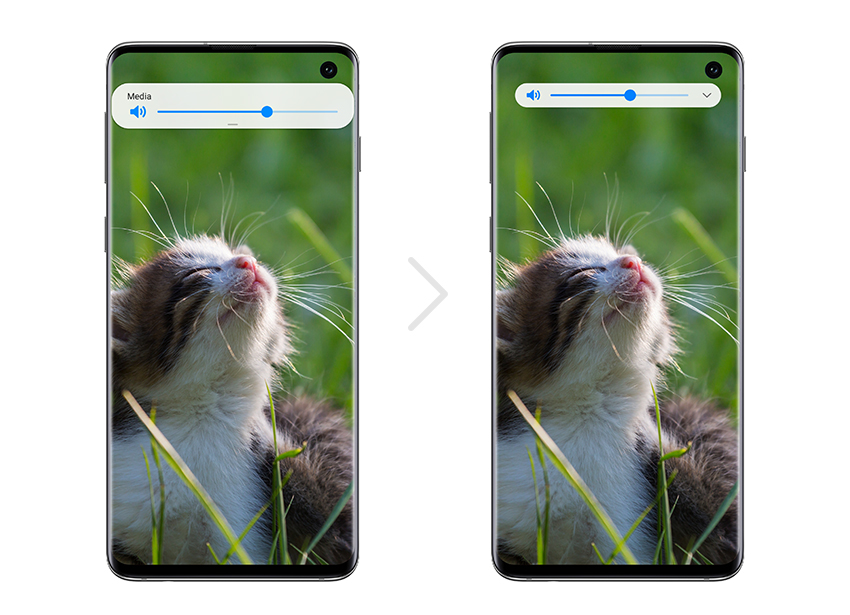
Samsung One UI Beta Program Cat S10 full screen

One UI is largely a success on these fronts. And Samsung is understandably cautious about the roll out, opting again for a public beta version, ahead its Android 10 release. “Select” Galaxy S10 owners in the U.S. can sign up for the program starting today, with a final release “in the coming months.” There are a lot of Galaxy phones out there, so the company clearly wants to get the experience right, gathering up user feedback in the process. 

Here’s what’s new, per Samsung,

  • A new, smarter layout with animated icons and improved edge lighting
  • An enhanced Dark Mode that reduces display brightness while viewing content and provides battery saving benefits
  • Minimized pop-ups, embedded loading indicators and the ability to only view buttons the user needs
  • A streamlined design where notifications take up less space, allowing users to stay up to date while focusing on the task at hand
  • Focus Mode to pause apps temporarily for times when you need to minimize distractions

More info on Samsung’s blog.