Year: 2019

15 Oct 2019

GoFundMe launches free platform for nonprofits and charities, rolls out button to donate anywhere

GoFundMe has made its name primarily as a platform for individuals to create fundraisers for personal causes — a service that has seen hundreds of campaigns go viral through social media to raise collectively well over $5 billion in funding to date. Now, the startup is taking the next step in its ambition to build what CEO Rob Solomon calls the “giving layer of the internet”.

GoFundMe is launching a new free-to-use fundraising platform for nonprofits of all sizes called GoFundMe Charity; and for the first time, it has created a button that can be integrated into any site or app to donate money wherever people want to do so. Both will roll out in November, but the charity platform already counts nonprofits like the American Cancer Society and the Boston Marathon among its customers.

To be clear, providing services to non-profits is not totally new territory for GoFundMe. The company acquired CrowdRise, which focused specifically on non-profits, in 2017 and gradually started to integrate some of the functionality and branding into the bigger platform a year later. And since last year it has offered a service for teams and groups (including nonprofit groups) to come together to raise for the same cause.

With this latest launch, teams fundraising remains, but GoFundMe will be sunsetting CrowdRise the brand and transitioning the platform’s nonprofit customers (which include high profile events like the Boston Marathon) to GoFundMe Charity.

With that change comes a new business model and a wider range of services for non-profits aimed at making GoFundMe a more useful and flexible platform.

On the business model, charity groups will now have the option either to pay fees to use the service (donor-covered fees), or use it for free by offering the tipping feature that GoFundMe uses on its consumer-focused site. This is a departure compared to the the platforms that power many nonprofit sites and events, which typically charge for their services. GoFundMe says it will specify what the the donor-covered fees will be public closer to the launch date.

Then, moving away from the familiar, basic layout that GoFundMe offers for individual causes today, nonprofits will also be given more design freedom: They will have the option to customise their pages; or they can run GoFundMe campaigns on their own sites and apps by placing a customised button for people to donate — similar to how Facebook disseminated its “Like” buttons, or PayPal and other payment services created “buy” buttons.
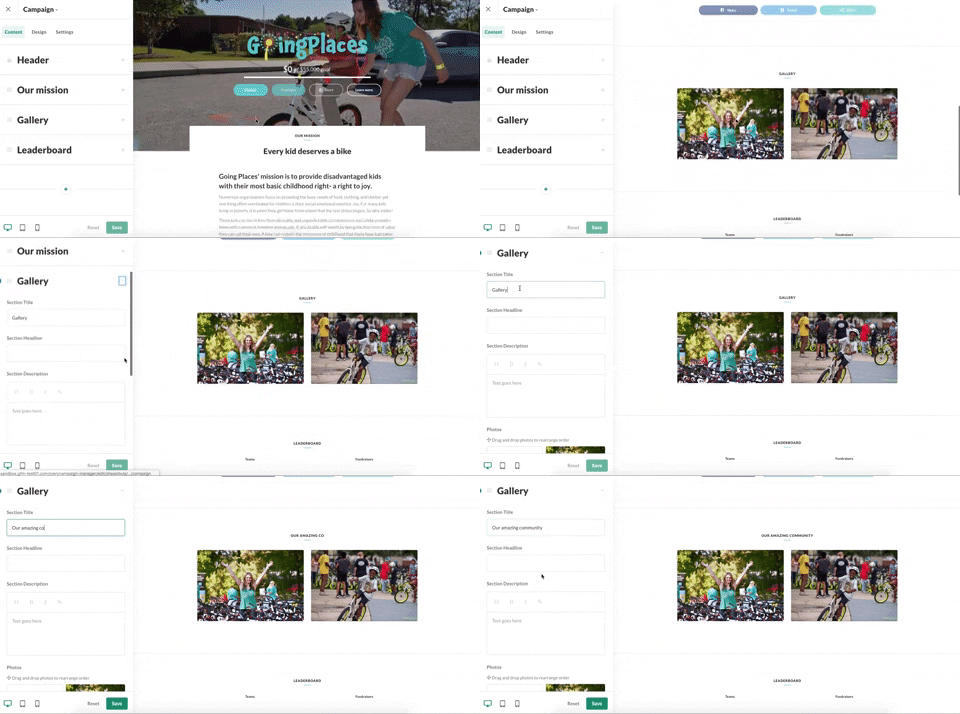
Campaign Customization Editing Campaign Sections Katie Going Places

They will also be provided with analytics on how their campaigns are performing, and CRM integrations to link up GoFundMe campaigns with wider marketing efforts. And nonprofits running events where individuals are fundraising — for example, around charity runs — will be able to do this under the bigger GoFundMe umbrella, including enlisting and organising individual fundraisers, or selling tickets to charity events.

GoFundMe will also be leveraging its own traction in the fundraising market to grow this business.

The idea is twofold here: The first aim will be to bring to nonprofit groups the kind of storytelling and social media virality that has done so well on GoFundMe already.

The second aim will be to bring the mountain to Mohamed, so to speak: the platform currently has more than 50 million users, and like other funding platforms, GoFundMe has made a business out of recirculating those donors: once you give to one cause, your details are in the system and that makes it easier to donate elsewhere on the same platform. Now the non-profits will also have access to that pool of users that has been proven to be willing to step up financially.

The giving layer of the internet

The news comes at an interesting time for GoFundMe.

While its individual causes-based campaigns continue to be created and disseminated across social platforms, it is facing competition of two kinds: that of the platforms themselves (specifically, Facebook, which is using its billions of users to grow its own causes-donations platform rapidly: in September it passed the $2 billion mark in fundraising for causes); and that of user ennui, where people have been facing up to kind of fatigue when it comes to too many individuals asking for money, and sometimes not for the most worthy of causes.

Ramping up its business for nonprofits, on the other hand, catapults GoFundMe into a much bigger, older and (potentially?) more resilient sector of the charitable donations market. In the US alone, some $427 billion was donated to nonprofits in 2018, according to Giving USA. That’s up on an estimated $410 billion in nonprofit donations in in 2017.

Currently, only around a quarter of donations are made through digital platforms, with the remainder through more traditional channels such as events, door-to-door appeals and direct-mail campaigns. As digitally native consumers become targets for nonprofits, GoFundMe sees an opportunity in taking the tools and services it originally built for individuals, and tailoring them to these groups.

“Charities have the same challenges as individuals in reaching constituents,” said Solomon in an interview. “We’re talking about whole generations of people who will not donate to charities the same way that older generations did. Charity has been disrupted by the internet and those older methods won’t work anymore.”

Solomon said that GoFundMe is not commenting on whether it expects more nonprofits to pay fees or run the option for tipping among its users, nor would he say if GoFundMe has projected how much it might make from one or the other option.

He did note that the company is profitable and has been able to grow its business on the back of the tipping model it now uses for its individual campaigns (it dropped its platform fee in 2017 and then acquired YouCaring, a competitor that built a profitable business on tipping alone).

GoFundMe has never disclosed much on the financial front: it has only ever had one round of funding, of an undisclosed amount, from a group of investors that included Accel, Greylock, TCV, Iconic, Meritech and Stripes. We’d heard that at one point PayPal started preliminary talks to acquire the company for about $1 billion, but that never developed, and GoFundMe has continued to grow.

Solomon did add today that those investors will eventually want “a liquidity event,” whether that comes in the form of an IPO, or private equity investment, or an M&A move, but that won’t be for a while.

“We’re not focused on that at all, and don’t expect to see anything for another year or two,” he said.
15 Oct 2019

Surfing the reverse mullet with Alexis Ohanian

For many years the allure of Silicon Valley was contingent on the ability to move here. Its ecosystem didn’t work remotely. “We see a very strong indication that where you’re located does matter… come to Silicon Valley,” intoned Joe Kraus of Google Ventures at the first Disrupt conference I ever intended, speaking for essentially all VCs, including Y Combinator.

Easy enough if you’re American. Much, much trickier if you need a visa to get there. Is it still true that the Valley doesn’t work remotely? Or is there another path for startups from faraway countries these days? Last week I sat down with Alexis Ohanian in his ancestral homeland of Armenia to discuss this.

Every nation seems to have its own set of incubators and seed investors these days. Armenia is no exception: I met Ohanian at the launch event for Aybuben Ventures, a VC fund “for Armenia and The Armenians.” (As I wrote last week, the Armenian diaspora is a big deal.) But what happens next, when you need to raise a serious Series A, but your local market realistically isn’t big enough to support your company?

Even five years ago you would have had a lot of trouble tapping into the Valley. Since then, though, things have changed. The price of Bay Area talent — and real estate — has led to the rise of “mullet startups,” as coined by Andreessen Horowitz’s Andrew Chen. Such comapnies have their headquarters in the Bay to take advantage of the Valley, but their tech teams somewhere cheaper and more spacious. “Business up front, party out back.”

Ohanian’s point is that there’s no reason the mullet model can’t work backwards: launch a company with a strong tech team in some remote location, then, when you hit the inflection point, open a Bay Area office, move the executive team there, and turn yourself into a mullet startup. (Aided by the fact that if coming as a company, your visa options widen to include e.g. the EB-5 Immigrant Investor Visa.) Call it the “reverse mullet,” exemplified by e.g. PicsArt.

This model is especially viable for nations which have deep engineering / tech talent, so that the “party out back” tech team becomes an ongoing competitive advantage. (This is part of why Ohanian keeps hammering home the importance of learning to code during his visits to Armenia, something which is probably easier in a nation which already features compulsory chess education.) All of which sounds great in theory —

— but it’s not like we see a herd of unicorns with reverse mullets out there … yet. If we do, though, that will be an exceptionally interesting new growth model, with significant ramifications — a way for Silicon Valley to essentially metastasize to the rest of the world. This in turn will, ironically, reify its primacy as the center of the global tech industry, the sun around which all the faraway planets orbit, after so many prophecies of decentralization. Count the reverse mullet unicorns in three years, and if there are more than a mere few, we’ll know the answer.

15 Oct 2019

Bird’s chief legal & policy officer is leaving the company

Bird, the $2.5 billion electric scooter business, is losing its chief legal and policy officer. David Estrada, who was hired last year from Kitty Hawk, is joining another mobility company, SoftBank-backed Nuro.

A spokesperson for Bird tells TechCrunch Estrada is leaving the Santa Monica-based company to be closer to his family. Nuro, for its part, is based in Mountain View, CA.

davidestrada

Bird’s former chief legal officer, David Estrada.

Estrada, who previously oversaw public policy at the electric aircraft company Kitty Hawk as its chief legal officer, has been responsible for Bird’s compliance and government relations efforts as the company scaled to over 100 global cities. Prior to joining Kitty Hawk, Estrada spent nearly two years as Lyft’s vice president of government relations and worked as the legal director for Google X, partnering with states on legislation around autonomous vehicles, Google Glass and drone delivery.

Nuro, founded in June 2016, has emerged as a key player in the rapidly-expanding autonomous delivery sector. The company has attracted a whopping $1.03 billion in venture capital funding to date, according to Pitchbook. SoftBank funneled an astounding $940 million into the business earlier this year at an undisclosed valuation. In addition to SoftBank, Nuro is backed by Greylock and the Chinese venture capital firm Gaorong Capital.

The company has been developing a self-driving stack and combining it with a custom unmanned vehicle designed for last-mile delivery of local goods and services. It began piloting grocery delivery in 2018 in the Phoenix suburb of Scottsdale.

Bird has overcome a number of unique hurdles with many more afoot, including pushback from local governments who were aggravated by the sudden appearance of hundreds of scooters. At Nuro, Estrada will have the opportunity to focus on the future of unmanned delivery, another sector faced with regulatory challenges and political barriers.

14 Oct 2019

Harley pulls plug on LiveWire production shortly after EV debut

Harley Davidson has halted production and delivery of its first electric motorcycle LiveWire, after discovering what the Milwaukee-based manufacturer described as a non-standard condition.

Harley Davidson told TechCrunch it is not recalling LiveWire motorcycles already on the road. Reuters was the first to report that Harley Davidson had stopped production and deliveries.

“We recently discovered a non-standard condition during a final quality check; stopped production and deliveries; and began additional testing and analysis, which is progressing well,” HD said in a statement.

“We are in close contact with our LiveWire dealers and customers and have assured them they can continue to ride LiveWire motorcycles. As usual, we’re keeping high quality as our top priority.”

Harley Davidson has not said when production and sale could resume, nor did it provide more information on the non-standard condition.

The production stoppage threatens to derail Harley Davidson’s bet on electrification. The $29,799, 105 horsepower electric motorcycle was to be the first of a future line-up of EVs from HD spanning motorcycles, bicycles and scooters.

The LiveWire went into production in 2019 after years of hints and even concept electric motorcycle roadshow. Delivery to dealers began September 27.

The LiveWire and subsequent EV products are meant to compliment, not replace, Harley Davidson’s premium internal-combustion cruiser motorcycles.

New motorcycle sales in the U.S., particularly to customers aged under 40, have been in the doldrums since the recession. Harley Davidson’s revenues have dropped over the last decade. HD’s shift to electric motorcycles is a bid to hold down its loyal gas-motorcycle following, while creating products to appeal to millennial and the on-demand mobility market.

This puts the iconic American company in a position to hedge competition from a crop of e-moto startups — such as Zero — and jump out front as the EV leader among established motorcycle companies.

Now that strategy could be hampered by this production halt.

14 Oct 2019

Libra claims 180 potential replacements for 7 mutineers

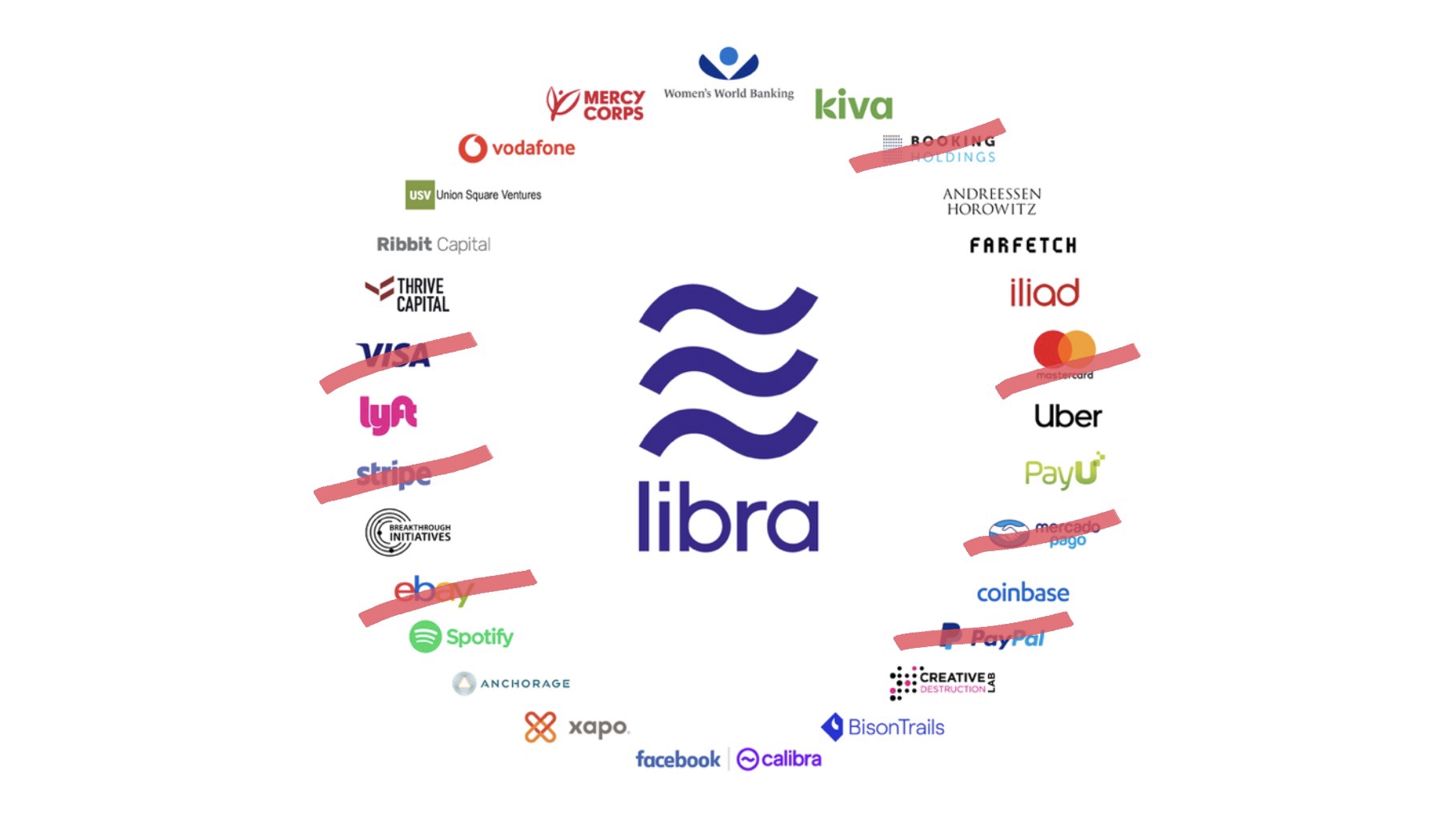
Attempting to signal its popularity despite high-profile defections from Visa, Stripe, and more, the Facebook-led cryptocurrency Libra Assocation announced that 1,500 organizations have expressed interest in joining the Libra project. 180 of those meet eligibility requirements to become members, which could replace the 7 companies that dropped out of the Association this month.

This new crop of potential recruits could help the Libra Association reach its 100-member goal ahead of a scheduled 2020 launch that looks likely to be delayed by intense regulator pushback.

The announcement came out of the first official meeting of the Libra Association today in Geneva, Switzerland. The group appointed its board of directors: Facebook’s head of its cryptocurrency Calibra team David Marcus, Andreessen Horowitz’s Katie Haun, Xapo’s Wences Cesares, Kiva Microsystems’ Matthew Davie, and PayU’s Patrick Ellis. Marcus’ inclusion should be no surprise given he’s been the public face of Libra, even though his former company PayPal pulled out of the Association.

Another former PayPal’er Bertrand Perez was formally named the Libra Association’s COO and Interim Managing Director after unofficially holding these titles. The former senior director of payments engineering at PayPal is now also the chairperson of Libra’s five-member board and full-membership council. “We have no vocation to play the pirates” he told news outlet Revyuh last month, noting “if, for example, the European Central Bank still refuses us the right to operate in Europe, we will not do it, we do not intend to play the pirates, we respect the legislation.”

Libra’s head of communications and policy Dante Disparte formerly of Risk Cooperative and head of business development Kurt Hemecker formerly of Zong had their roles confirmed too.

The remaining Libra Association members listed below signed the Libra charter. They’ve agreed that members can leave for any reason, and with some restrictions transfer their membership plus $10 million in Libra Investment Tokens stake to another eligible organization.

  • Payments: PayU (Naspers’ fintech arm)
  • Technology and marketplaces: Facebook/Calibra, Farfetch, Lyft, Spotify AB, Uber Technologies, Inc.
  • Telecommunications: Iliad, Vodafone Group
  • Blockchain: Anchorage, Bison Trails, Coinbase, Inc., Xapo Holdings Limited
  • Venture Capital: Andreessen Horowitz, Breakthrough Initiatives, Ribbit Capital, Thrive Capital, Union Square Ventures
  • Nonprofit and multilateral organizations, and academic institutions: Creative Destruction Lab, Kiva, Mercy Corps, Women’s World Banking
  • No Longer Members: Visa, Mastercard, PayPal, Stripe, Booking Holdings, eBay, Mercado Pago

Libra Association 21 Members

The Libra Association did not announce any changes in strategy or other plans that could help the organization assuage regulators’ fears. One path suggested by Libra Association member Andreessen Horowitz’s partner Chris Dixon was to move to Libra being denominated in U.S. dollars rather than being pegged to a basket of international currencies. That might quiet concerns about Libra potentially competing directly with the US dollar.

This leaves the reveal of the 180 potential members as the biggest news from the meeting. A Libra Association spokeperson writes:

“Since the Libra project was announced on June 18th, 2019, it has generated excitement around the world. the Libra Association confriemd that over 1,500 entities have indicated interest in joining the Libra project effort, and approximately 180 entities have met the preliminary membership criteria shared at Libra.org.”

Those requirements include businesses hitting two of three thresholds of a $1 billion USD market value or $500 million in customer balances, reaching 20 million people a year, or being recognized as a top 100 industry leader. There are other criteria for cryptocurrencies businesses, non-profits, and universities.

Bertrand Perez

The Libra Association chairperson, COO, and interim managing director Bertrand Perez

However, we don’t have information on when the interest of those 1500 potential partners was tallied. The withdrawl of Mastercard, PayPal, and more, comments from regulators intent on blocking the currency, and Marcus’ tense questioning on Capitol Hill could have since scared off some would-be allies.

Marcus and Perez face an uphill battle to get Libra to market. Not only do they have to prove it’s safeguarded against fraud, moneylaundering, and hurting sovereign currencies. They also must tangle with the toxic brand Facebook has developed over the years. Legislators who feel like the social network is too big are seizing on their second chance to constrain it with Libra.

14 Oct 2019

Leo Labs and its high-fidelity space radar track orbital debris better than ever — from New Zealand

Ask anyone in the space business and they’ll tell you that orbital debris is a serious problem that will only get worse,but dealing with it is as much an opportunity as it is a problem. Leo Labs is building a global network of radar arrays that can track smaller debris than we can today, and with better precision — and the first of its new installations is about to start operations in New Zealand.

There are some 12,000 known debris objects in low Earth orbit, many of which are tracked by the U.S. Air Force and partners. But they only track debris down to 10 centimeters across — meaning in reality there may be hundreds of thousands of objects up there, just as potentially destructive to a satellite but totally unknown.

“Everyone’s flying blind and no one’s really talking about it,” said Leo Labs CEO Dan Ceperly. But his company hopes to change that with a set of advanced radars dedicated to the purpose, and to construct which the company raised $13 million last year.

“We’re extremely excited to show this New Zealand radar, because it’s the first instance of our next generation technology. We launched the company on the strength of this radar,” Ceperly said.

The installation uses what’s called a phased array radar, very different from the traditional big dishes one generally thinks of. The beam is electronically steered, letting it change targets in milliseconds or sweep the sky faster than any physically controlled dish could.

radar halfpipe

The phased array radar has no moving parts, the beam is steered from many identical small antennas electronically.

Not only that, but it can detect and track objects down to 2 centimeters across. They’re small, yes, but moving at thousands of miles per hour. Something the size of an M&M still hits hard enough to take out a satellite at that speed.

The ability to see objects of that size in orbit could increase the number tracked to a quarter of a million, Ceperly estimated. And with other radars able to track about a thousand objects per hour, they couldn’t possibly do the job even if they could draw a bead on them.

“A lot of these new satellites maneuver pretty frequently — so you want to be able to track them closely,” he said. “But if you have one radar, you can measure its orbit at one point, maybe every day or two, and of course on the far side of the Earth your coverage isn’t any good. With our radar network you’ll be able to check ten times a day.”

The increasingly common phenomenon of shared-ride launches with dozens of satellites on board presents a new opportunity. Ground based radars just aren’t designed to track 40 or 50 new objects in the sky all scooting off in different directions from the same spot. You might wait a week or more to be be able to ground-truth your satellite’s telemetry. Leo’s quick-acquisition, high-precision arrays are designed with this in mind, meaning trajectories and orbits can be verified in hours instead of days. That can be the difference between saving and losing a multi-million dollar investment.

The biggest player in this market is the U.S. Air Force, which has been the main tracking provider for years. But it relies on a hodgepodge of Cold War and newer tech, and because it’s military it’s limited in the type of information it can provide. Powerful radars are out there, but they’re often restricted by government contracts and cost hundreds of millions or more. And there are no good tracking stations in the Southern hemisphere. Leo Labs aims to pick up where the competition leaves off.

“We’re happy to announce that construction is complete on the New Zealand radar and we’re getting data out of it,” Ceperly said.

This first array will soon (after some testing but before the end o the year) join another in Texas and soon others around the world in producing data for Leo Labs’ SaaS platform — yes, it’s orbital debris tracking as a service, with a web portal and everything.

“All that intel goes into the second part of the company, a bunch of software in the cloud where the data gets analyzed,” Ceperly said. “We look for risky situations like satellites starting to tumble, potential collisions, et cetera. We send out alerts through a RESTful API, we have a dashboard with 3D visualizations, tables and maps, all that stuff. In the past there were no SaaS services for tracking satellites in flight. Governments can spend a decade and a billion dollars building a radar, but these new space companies can’t — so we thought that was a huge opportunity for us.”

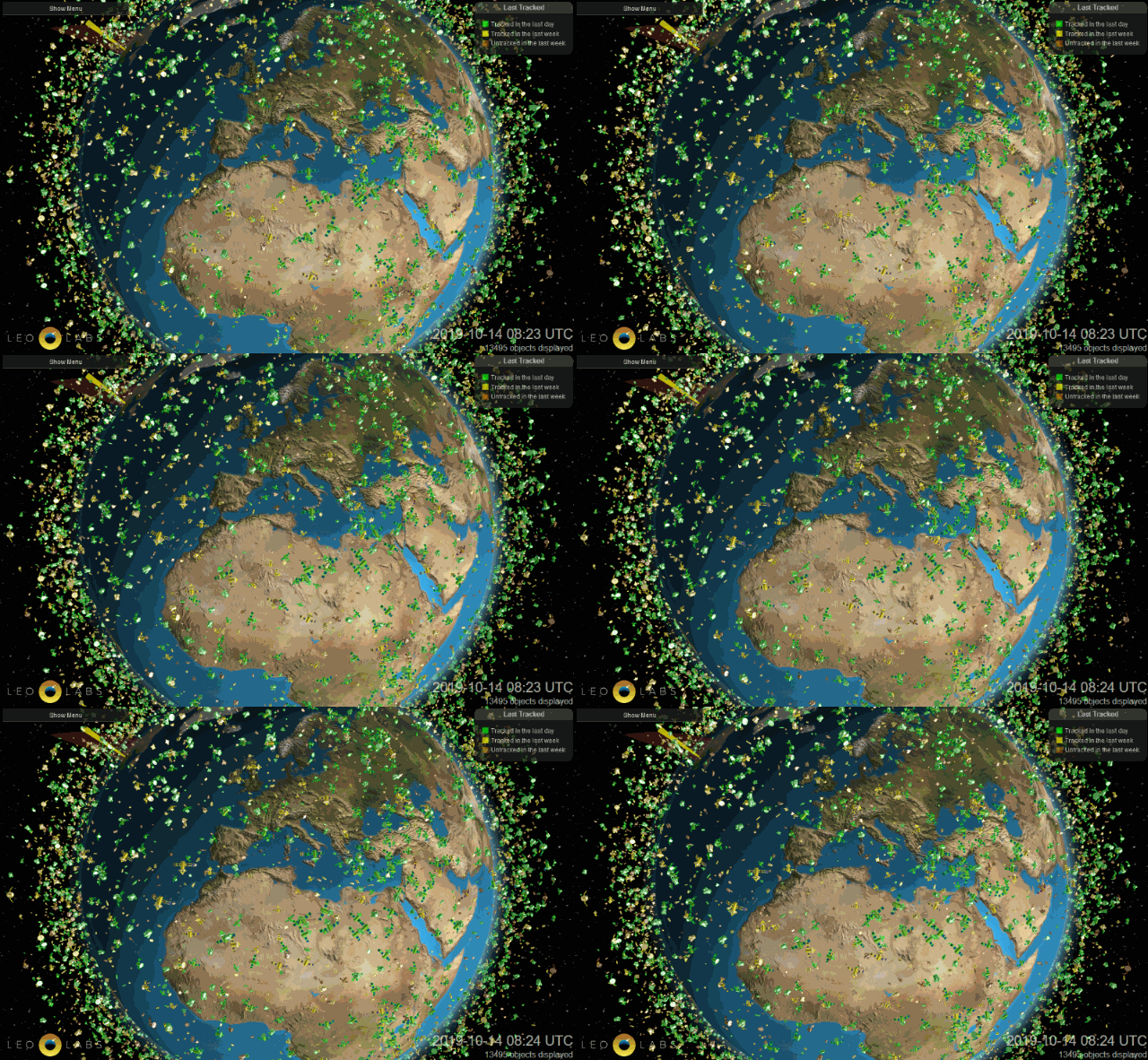
leo gif

You can see a visualization of what it all looks like here — obviously it’s not to scale, but space is getting crowded, isn’t it?

Already they have plenty of supporters and subscribers: Planet, Digital Globe, Black Sky and the Air Force Research Lab are all sold. Swarm Technologies, whose satellites are so small that existing radar solutions barely cut it, was a natural customer. In fact Swarm founder Sara Spangelo just recently emphasized the importance of tracking space debris in a panel I moderated at Disrupt SF.

The company was spun out of SRI in 2016, its founding team experienced in building radars and doing debris tracking, and apparently just in time. The orbital economy is heating up and the infrastructure to support it is starting to creak.

14 Oct 2019

WeWork pulls thousands of phone booths out of service over formaldehyde scare

WeWork, the co-working empire once valued at $47BN before reality struck plunging the business and its investors into crisis, has another problem to add to its growing pile — one which doesn’t exactly reflect well on its core business of kitting out and maintaining modern working environments.

The problem is a safety concern affecting users of WeWork co-working spaces in the US and Canada. Today the company emailed members in the regions to warn that around 1,600 phone booths installed at WeWork locations have been found to have elevated levels of formaldehyde — which it warns could cause health issues for people exposed to the gas.

WeWork blames the issue on a manufacturer of the booths.

The booths are provided in its co-working spaces for WeWork members to be able to take calls in private — given other common areas are shared by all users. 

“After a member informed us of odor and eye irritation, WeWork performed an analysis, including having an outside consultant conduct a series of tests on a sampling of phone booths. Upon receiving results late last week, we began to take all potentially impacted phone booths out of service,” it writes in an email to members.

Affected phone booths “are being taken out of service immediately, and will be removed from your location as soon as possible”, it adds. 

In addition to ~1,600 booths it has confirmed are affected, a further 700 booths are being taken out of service in what WeWork describes as “an abundance of caution” — i.e. while it carries out more checks — with the promise of a further update once it’s concluded its tests. 

Members wanting to know which booths are safe to use in the meanwhile are told to contact the community team at their WeWork location.

WeWork also says alternative quiet spaces will be provided, such as in conference rooms and unused offices. 

Discussing the health risks of formaldehyde gas — a chemical which is used in various building materials –WeWork’s email warns: “Short-term exposure to formaldehyde at elevated levels may cause acute temporary irritation of the nose, throat, and respiratory system, including coughing or wheezing. These effects are typically transient and usually subside after removal of the formaldehyde source.

“Long-term exposure to formaldehyde, such as that experienced by workers in jobs who experience high concentrations over many years, has been associated with certain types of cancers. You can find additional information in this FAQ from the Occupational Safety and Health Administration.”

The email encourages any WeWork members with health concerns to contact a doctor.

A tipster who sent us the email reported experiencing a sensation of “burning eyes” after using the booths.

They also said several people in their team had experienced the same issue.

“Some complained that they felt nauseous after spending time inside the booths,” the tipster wrote. “I never felt that, but the burning eyes was 100% there for me several times. Scary stuff.”

Reached for comment, a WeWork spokesperson confirmed the formaldehyde issue, saying it’s taking “a number” of booths out of service at “some” locations in the US and Canada — due to “potentially elevated levels of formaldehyde caused by the manufacturer”.

“The safety and well-being of our members is our top priority, and we are working to remedy this situation as quickly as possible,” it adds in a statement.

It is not clear exactly how many WeWork locations contain affected booths at this point.

Nor has WeWork provided more detailed information about how long members might have been exposed to elevated levels of formaldehyde — with its email merely suggesting some of the booths have been in place for “months”. 

“The potentially impacted phone booths have been installed over the past few months, exact timing varies based on location,” it writes.

Although clearly the level of exposure will vary from person to person depending on their use of the booths.

The company did not respond to a question asking whether any of its international WeWork locations are affected by the issue.

14 Oct 2019

Hulu rolls out 4K content to Xbox One, with Amazon Fire TV and others coming ‘soon’

Hulu this summer finally brought back 4K content to its service, after abruptly removing it in 2018 while it focused on other priorities. Initially, its 4K content was only available on Apple TV 4K and Chromecast Ultra. Today, Hulu says it’s available on Xbox One devices, with support for Amazon Fire TV and LG WebOS in the works. More devices will also be supported soon, the company notes.

The streaming service had never really prioritized 4K content, having first rolled out support in December 2016 — years after rivals Netflix and Amazon Prime Video had done the same. Its lineup was also fairly minimal at the time, with 20 James Bond films and a handful of Hulu Originals. And then it was pulled.

Today, Hulu’s 4K lineup is again focused largely on its original programming, including shows like The Handmaid’s Tale, The First, Castle Rock, Catch-22, and others. The company’s FAQ says most of its originals are available in 4K Ultra HD, and stream at 16 Mbps.

Netflix, by comparison, has a much larger library, thanks in part to its more sizable investment in original programming, which it has increasingly shot in 4K over the past few years. Amazon Prime Video also includes its own originals in 4K and around 50 other licensed films.

However, access to Netflix’s 4K library requires its more expensive ($15.99/mo) Premium plan. Accessing Hulu’s 4K library does not require an upgrade.

There are plenty of other ways to get to 4K content, including through iTunes and Google Play Movies & TV — the latter which began offering 4K content for purchase back in 2016. Roku also dedicates a section to 4K content within its main navigation. Apple TV+ originals will also be available in 4K HDR and Dolby Atmos, when it launches in November. Disney+ is also promising 4K at no extra cost. And there’s 4K content available on Vudu, YouTube, FandangoNow, fuboTv, and others.

Hulu’s lack of attention to 4K hasn’t stalled its growth, however, as most consumers don’t consider 4K availability as a reason not to subscribe. In fact, Hulu’s subscriber growth in the U.S. has been steadily climbing, reaching 28 million earlier this year, up 12% from the end of 2018. And with a Disney+ bundle deal now in the works, Hulu is set to grow even faster in the near future.


14 Oct 2019

Jackson Square Ventures just closed its third fund with $193 million; here’s how it plans to invest it

Jackson Square Ventures (JSV), an eight-year-old, San Francisco-based early-stage venture firm that takes its name from the neighborhood in San Francisco where it’s headquartered, has closed its third fund with $193 million in capital commitments — a sizable step up from its first two funds, which had both rounded up roughly $120 million from the firm’s limited partners.

The firm, whose founding partners originally spun out of Sigma Partners, invests primarily in U.S.-based software-as-a-service and marketplace companies, with occasional outliers if it can find a way to rationalize the investment. Such was the case with Cornershop, a Latin American online grocery delivery service that JSV cofounder Greg Gretsch first came to know when one of the company’s cofounders, Oskar Hjertonsson, moved in across the street from him.

Recalls Gretsch, “This ‘Swede from Chile’ had sold his earlier company, Needish to Groupon and it later became Groupon Latin America. Afterward, I advised him a bunch and told him, ‘I’d invest in anything you do.’ Then he said he and his team were working on a group photo-sharping application, and I was like, ‘I’d invest in anything but that.'” Gretsch laughs now, but Hjertonsson and company soon realized that a much bigger opportunity was to start a kind of Instacart for Latin America.

That particular pitch resonated with Gretsch, who invested as an angel investor. A year later, he brought the team to JSV with one caveat. “I told everyone, ‘I know this is out side the norm for us. It’s outside the U.S. in Latin America. But it is a marketplace.” Soon after Gretsch’s colleagues — including fellow managing directors Pete Solvik and Josh Breinlinger — met the team and JSV led Cornershop’s Series A round.  Cornershop went on to raise roughly $32 million altogether before selling a majority stake in its business last week to Uber for undisclosed terms.

Gretsch says that Hjertonsson and his cofounders are exactly the type of founders that JSV seeks out. “They’re humble and not cocky or overly promotional.”

He says that more broadly, JSV avoids companies in hyped up spaces, sticking instead to what it knows, which includes enterprise software (DocuSign was among its portfolio companies), and network effects businesses, whether they’re business-to-business or business-to-consumer companies (Gretsch counts portfolio companies OfferUp and Strava in the latter category).

As for how much the firm puts to work, Gretsch says that its sweet spot is Series A deals and that JSV tends to write initial checks of between $4 million and $6 million, preferring a more concentrated portfolio to spreading its bets.

When it does pull the trigger, it’s typically to fund a company that’s already seeing a million dollars in annual recurring revenue, though he says marketplaces can be “pre-revenue” as long as they’re able to show traction on both the supply and demand side. For example, JSV led the Series A round last year in L.A.-based CREXi, a four-year-old, commercial real estate marketplace and technology platform for buyers, brokers, agents and tenants. At the time, it had no revenue, but it could apparently show demand for brokers to list properties on its platform.

Generally speaking, says Gretsch, JSV looks to own 15 to 20 percent of a company — which is down from 20 to 25 percent in years past, owing to companies raising larger and sometimes continuous seed rounds.

Of course, it also means that companies are further along by the time JSV seems them, and they very typically have customers using the product already. Indeed, Gretsch notes that these days, JSV spend “most of our time focusing on customer references, because if customers are singing your praises, that says a lot.”

14 Oct 2019

Announcing TechCrunch Robotics & AI on March 3, 2020 at UC Berkeley

Robotics is back! We are excited to announce that on March 3 next year TechCrunch will host its fourth annual TC Sessions: Robotics & AI at UC Berkeley’s Zellerbach Hall.

Last year, 1500 founders, technologists, engineering students and investors turned up for a day of main stage interviews with the top figures in AI and robotics, as well as workshops, speaker Q&A, and intense networking. The show aims to sit at the intersection of straight-up technology and robotics startups, a zone that’s getting richer every year thanks to rapid advances in AI, GPUs, sensors, and all the other related fields.

Boston Dynamics founder Marc Raibert, a regular guest at the show, sums up the show this way: “TechCrunch’s AI / Robotics show blends the best of thoughtful, research-focused robotics with a unique business in technology focus. The result is an event that not only shows cutting edge technology but provides perspective of how it will be impacting business soon.”

Last year, we officially added AI to the title of the show, a recognition that AI is perhaps the single biggest driver behind rapid advancement in robotics. As serial medical robotics entrepreneur Dr. Frederic Moll said at TechCrunch Disrupt SF earlier this week, “Everybody focuses on the mechatronic part of robotics, but what’s going to change the world is the intelligence of robotics.”

Get ready for TechCrunch editorial interviews with the world’s top robotics and AI expert, newsmaking demos, super edifying workshops, and fantastic networking. Whether you’re looking for technology and product insights, investment, engineeringing talent, new partners or all of the above, no show delivers more in a single day than TC Sessions: Robotics & AI.

If you want to get a sense of agendas from our past shows, check out past agendas: 2017 @ MIT, 2018 @UC Berkeley, 2019 @ UC Berkely.

Register your interest today for the event and you’ll save $100 off tickets when sales launch.

Interested in sponsoring the event? Fill out this form and our sales team will get right back to you.