The reelection campaign will be livestreamed. US president Donald Trump has joined Amazon-owned livestreaming platform Twitch.
Twitch is best known as a social video streaming platform for gamers but does host other content, including politics.
The verified DonaldTrump Twitch account, spotted earlier by Reuters, has just one video in the recent broadcast section so far: A livestream of a Trump rally which took place in Minneapolis yesterday evening.
Alongside the saved video of this broadcast is a growing selection of user generated clips culled from the stream, with titles such as “This is our president.”, “LOL”, “KEK” and “pepelaugh”.
Another clip remarks on how a single black man — who’s visible in the top corner of the shot of the audience behind Trump — vanishes as “they zoom him out of the picture”.
Trump is not the only high profile US politician to be taking to Twitch to broadcast campaign rallies in real time ahead of next year’s presidential election.
Democratic senator Bernie Sanders, who is making a pitch to be the party’s presidential candidate, joined the platform a few months ago. And at the time of writing Sanders still has more followers than Trump on Twitch (88,795 vs 37,754).
Over on Twitter, meanwhile — Trump’s go-to social media soapbox for skewering opponents and deflecting criticism, via his preferred medium of the early morning attack tweet — the president has ~65.6M followers.
So Twitter is very unlikely to be concerned that its highest profile user is flirting with Amazon’s social streaming platform. (Though it’s much less clear how happy “Jeff Bozo” will be about Trump getting on Twitch.)
Trump has dabbled with using Twitter’s own video streaming tool, Periscope. But the choice of Twitch for streaming his campaign rallies looks mostly like a case of horses for courses. Periscope is more for on-the-fly mobile streaming, whereas Twitch is a platform built for playing to (and building) a ‘lean back’ audience.
Troll culture also thrives on gamer Twitch. And Trump is of course edgelord of the trolls. Ergo he should fit right in.
With Periscope Twitter has been taking a strongerapproach to tackling abusive comments in recent years (and also trying to fight fake and spam content) — in line with its stated desire to increase ‘conversational health’ on its platforms. So it’s probably happy to have dodged a bullet here.
Certainly Twitter CEO Jack Dorsey has more enough flying his way over whatever Trump choses to tweet next.
Tick tock it’s now o’clock, startuppers. The last few hours of super early bird savings on passes to Disrupt Berlin 2019 are slipping away faster than grains of sand through an hourglass. The bird bites the dust and prices go up as of 11:59 p.m. (CEST) tonight, 11 October.
Buy your passes to Disrupt Berlin now and, depending on which pass you choose, you can save up to €600. Who wants to pay more than necessary?
What’s high on your Disrupt must-see list? Maybe it’s the Hackathon where up to 500 participants will compete in sponsored challenges to create solutions to real-world problems — in less than 36 hours. It’s intense, exhausting caffeine-fueled fun, and we can’t wait to see which teams win the individual contests and which one team wins the €5,000 grand prize for best overall hack.
Perhaps you’re all about witnessing the glorious chaos that is Startup Battlefield? Who can blame you? It’s fast-paced action as 15-20 of the top early-stage startups take the Main Stage to deliver a convincing 6-minute pitch and demo to a tough panel of expert technologists and veteran VCs. The follow-up Q&A is no joke, either. Talk about flop sweat. It’s worth the ride and the chance to take home the Disrupt Cup and $50,000.
Could be you’re looking to make business connections to keep your startup (founder or investor) dream moving forward. Set your GPS for Startup Alley, the exhibition floor where opportunity awaits. Hundreds of early-stage startups and sponsors will be in force to talk tech, share inspiration, meet potential customers, investors and collaborators. It’s a veritable breeding ground of opportunity, innovation and inspiration.
While you’re there, be sure to connect with our TC Top Picks. TechCrunch editors hand-pick this cohort of stellar early-stage startups choosing only up to five to represent each of these tech categories: AI/Machine Learning, Biotech/Healthtech, Blockchain, Fintech, Mobility, Privacy/Security, Retail/E-commerce, Robotics/IoT/Hardware, CRM/Enterprise and Education.
As always, we’ll feature a slate of amazing speakers on our different stages. Iconic technologists, boundary-pushing VCs, entrepreneurs who’ve persevered, done the work and reaped the rewards. They’ll be on hand to share their stories, tips and insights. You’ll find big topics on the Main Stage and an opportunity to have smaller, more intimate conversations with speakers in our Q&A Sessions.
So much to do at Disrupt Berlin 2019 and so little time to get the best price on passes. Super early bird pricing ends tonight at 11:59 p.m. (CEST). Don’t let the hours slip past you — buy your passes. It’s now o’clock, baby!
Is your company interested in sponsoring or exhibiting at Disrupt Berlin 2019? Contact our sponsorship sales team by filling out this form.
One of the most exciting aspects of Disrupt Berlin 2019, which takes place on 11-12 December, is networking with like-minded startuppers from around the world. But with thousands of attendees, hundreds of early-stage startups exhibiting in Startup Alley — and only two programming-packed days to take it all in — how the heck can you zero in on the right connections?
Never fear, we’ve got you covered and then some. Take advantage of CrunchMatch, our free business match-making service that takes the pain out of networking. No more wasting time talking to the wrong people.
Before we explain how CrunchMatch simplifies your Disrupt experience, we must ask a vital question. Did you buy your pass yet? If not, know this: super early bird pricing ends tonight at 11:59 p.m. (CEST). Buy your ticket now, and save up to €600.
Where were we? Ah, yes…CrunchMatch can help everyone attending Disrupt Berlin ’19 — founders looking for developers, investors hunting hot prospects, technology service providers eager for new customers, founders looking for marketing help — the list is endless. Here’s how it works.
We’ll email registered attendees when CrunchMatch launches and explain how to access the platform. Then you create a profile listing your specific business criteria, goals and interests. CrunchMatch (powered by Brella) waves its magic algorithm to find and suggests matches. And, subject to your approval, CrunchMatch proposes meeting times and sends out meeting requests.
If you’re wondering whether an automated, albeit curated, networking platform can really make a difference, listen up. In 2018, CrunchMatch facilitated more than 3,000 meetings. And Yoolbox — makers of a portable wireless charger — says the connections it made through CrunchMatch helped to increase its distribution.
Needmore encouragement? More than 95 percent of our CrunchMatch users reported that they’d use the platform again. And here’s what Caleb John, co-founder of Cedar Robotics, said about his experience using CrunchMatch.
“CrunchMatch is a great way to pitch your ideas to investors quickly. Instead of approaching each one individually, just type up your pitch and send it to 50 people. Even if only 10 percent get back to you, you still have five investors. It’s one of Disrupt’ best benefits.”
You have only two action-filled days at Disrupt Berlin 2019. Make the most of your time, save your shoe leather and tap into more opportunity with CrunchMatch. And don’t forget: the super early bird price disappears tonight at 11:59 p.m. (CEST). Go buy your pass and save!
Is your company interested in sponsoring or exhibiting at Disrupt Berlin 2019? Contact our sponsorship sales team by filling out this form.
Klarna is quietly becoming a fintech giant. Following its latest founding round, the company is now valued at $5.5 billion. That’s why I’m excited to announce that Klarna co-founder and CEO Sebastian Siemiatkowski will join us at TechCrunch Disrupt Berlin.
If you live in Europe and regularly purchase stuff online, chances are you’ve used Klarna already. The company offers a simple way to pay for e-commerce purchases over multiple installments.
And it’s been massively successful in Europe. You could think as Klarna as a sort of credit card-alternative payment method. Even if you don’t have a credit card, you can choose to purchase something right now, pay after 30 days or pay over 3 or 4 installments without any interest.
This way, expensive payments become slightly easier for customers. And if there’s a problem with your purchase, Klarna ensures that you don’t have to pay or get your money back — your money never left your bank account in the first place.
Just like using a PayPal account, if you pay on another site that uses Klarna, you don’t have to enter your payment information again. Merchants that leverage Klarna gets paid instantly after a purchase, even if clients choose to pay later.
Klarna is also building a marketplace of stores. You can download the mobile app and search for products across multiple stores. This could become a great alternative to e-commerce giants like Amazon.
Up next, Klarna wants to grow its presence in the U.S. While it already has millions of customers and thousands of merchants, the company thinks there’s still a ton of potential in the U.S.
If you want to know how a Swedish startup plans to disrupt the credit card industry in the U.S., buy your ticket to Disrupt Berlin to listen to this discussion — and many others. The conference will take place December 11-12.
In addition to panels and fireside chats, like this one, new startups will participate in the Startup Battlefield to compete for the highly coveted Battlefield Cup.
In 2005, Sebastian Siemiatkowski co-founded Klarna in order to provide safe and smooth online payments. He currently serves as its Chief Executive Officer. Over the past decade, he has overseen the company’s rapid growth across Europe and more recently into North America. Klarna is a now fully licensed bank with 60mn consumer and 170,000 merchant user base.
Sebastian has received multiple awards for his leadership, including runner up in the 2015 global EY Entrepreneur of the Year award, Leader of the Year by Adecco, and European Entrepreneur of the Year Award by TechTour. He holds a master’s degree from the Stockholm School of Economics.
The founder of African investigative digital media site Sahara Reporters Omoyele Sowore remains detained in Nigeria on charges including treason, his wife Opeyemi Sowore told TechCrunch.
Her husband founded Sahara Reporters to create and aggregate news content, social media tips, and self-digital reporting toward exposing corruption in Africa and his home country of Nigeria.
After being jailed and beaten several times for his journalistic work in Nigeria, Sowore re-located to New York City and formed Sahara Reporters in Manhattan in 2006 to report under U.S. legal protections.
Several outlets, including Reuters, reported his arrest in August 2019. According to Opeyemi Sowore — who lives in New Jersey — her husband was detained in Lagos on August 4th while at a protest. He was then transferred to Nigeria’s capital, Abuja.
Per social media and press reporting, Omoyele Sowore (who goes by Sowore), was participating in #RevolutionNow movement of peaceful demonstration against bad governance in Nigeria.
After several hearings, he is still being held in Abuja, his wife said.
According to a copy of his court charging document obtained by TechCrunch, Sowore is charged with two counts of conspiring to stage a revolution and to remove Nigeria’s president, Muhammadu Buhari, from office “otherwise than by constitutional means.”
Sowore is also charged with cybercrimes for “knowingly send[ing] messages by means of a press interview granted on Arise Television…for the purpose of causing insult…and ill-will on the…President of the Federal Republic of Nigeria” and for money laundering based on a transfer of $19,975 from a Nigerian bank account to a Sahara Reporters held account in New York.
Sowore pleaded not guilty to the charges and rejected an offer of bail for roughly $800,000, according to press reports and his wife.
As for the veracity of the charges, Sowore’s wife Opeyemi believes they are a cover to go after her husband for his activism and work with Sahara Reporters.
Sowore has never been an advocate of violence or insurrection, according to his wife.
“If you look at his history he is the most peaceful person. He does what he does so Nigeria can work for all Nigerians…be inclusive of all ethnic groups, all socio-economic backgrounds, and religions,” Opeyemi Sowore said.
“I think the charges are about silencing a critical voice that’s shining light on corruption,” she added.
Not everyone is a fan of Sowore and Sahara Reporters’ work, particularly in Nigeria. The country has has made strides in improving infrastructure and governance and has one of Africa’s strongest economies and tech scenes.
But Nigeria is still plagued by corruption, particularly around its oil-resources, and has a steady-stream of multi-billion dollar scandals— yes billions — in state related funds being stolen or simply going missing.
Sahara Reporters has made a practice of reporting on such corruption. The site, which has a tips line and small TV station, has exposed improprieties of many public officials and forced a number of resignations in Nigeria’s government.
The internet, mobile, and digital media play a central role in the work of Sahara Reporters. In an interview in 2014, Sowore explained to me how these mediums often do much of the investigative work.
“In many cases, there’s less investigation to breaking these stories than you’d think. The corruption and who’s perpetrating it is generally well-known and the evidence easy to distribute through social media and devices. We just need a safe place to report it from, and the rest often takes care of itself,” Sowore said.
Ironically, Sowre’s own thesis of using digital and social media for advocacy may be tested on his getting out of jail.
Sowore’s wife is working on a campaign of global supporters — including Amnesty International — to shine a light on her husband’s charges, innocence, and press for his release.
Away from the activism and politics, “I want Yele to come home safely. I’m worried about his safety and we have two small children and they miss their father dearly,” Opeyemi Sowore said.
The trial for her husband Omoyele Sowore is scheduled for early November.
Affordable and readily available, Red Heart is the yarn brand that many knitters, including me, used the first time we picked up a pair of needles. I was surprised to see a pitch from them land in my inbox, since hand-knitting yarn is usually something I don’t get to cover for TechCrunch. But the brand recently released a new line of yarn called Heat Wave, which uses proprietary technology to create acrylic yarn that generates heat when exposed to sunlight.
Like Red Heart’s classic Super Saver yarn, Heat Wave is completely acrylic, but becomes up to 12°F warmer when exposed to the sun, even on overcast days. I learned how to knit on Super Saver and still keep a few skeins in my stash. When I opened the box of Heat Wave samples Red Heart sent me, I was surprised to see that the yarns felt nearly indistinguishable. I took my skeins of yarn outdoors on a sunny day with an infrared thermometer and found that Heat Wave did indeed measure up to the company’s claims, emitting more heat than either Super Saver or a ball of 100% wool yarn in similar colors.
Amy Olsen, the product development lead of Red Heart, tells me that the company worked with a supplier (Red Heart prefers to keep their name under wraps) that developed microscopic acrylic fibers with heat-generating properties in the core. Since it is part of the structure of the fiber, it won’t wash out the way a spray-on application would. The fiber is then spun into aran-weight yarn at Red Heart’s mill in Albany, Georgia.
There are other heat-generating textiles used in commercial products, like Uniqlo’s Heattech line of clothing, but many of them work by retaining heat generated by the body. Since Red Heart Heat Wave absorbs solar energy, it has the benefit of extra warmth when you are outdoors, but returns to the same temperature as other acrylic garments when you go back inside.
As an obsessed knitter and tech reporter, I always get a thrill when these two parts of my life connect. For example, researchers are exploring how to use knitted fabrics in soft robotics, while Georgia Institute Technology mathematician, physicist and hand-knitter Elisabetta Matsumoto is currently conducting a five-year research project to create models that can predict how different types of knitted fabric will behave. On the machine-knitting front, a team of MIT researchers have developed AI-based software that enables people without knitting or design experience to create their own clothes.
Red Heart’s Heat Wave is interesting because it is one of the first times I can recall new textile tech being centered as a selling point for a hand-knitting yarn and hopefully it will encourage more people to explore the intersection between STEM and fiber crafts. Olsen says that the yarn will become a regular part of Red Heart’s product line, with plans to release more colors in the future.
The lockup provision prevents major shareholders — namely those who purchased equity pre-public listing — from selling their shares for a specified number of days following the IPO.
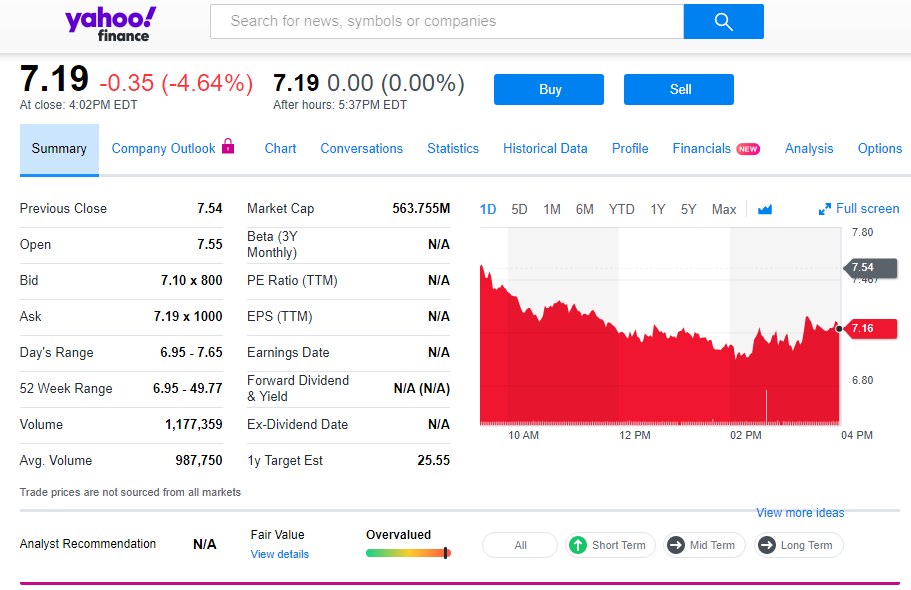
Jumia’s stock price began Thursday at $7.54, fell to an all-time low of $6.98 by 2pm, and then closed 35 cents down from opening, at $7.19. Jumia’s trading volume on Thursday moved up 19 percent over the daily average since the company went public.
Sites that track SEC Form 4 trades, or sales by insiders, aren’t showing anything (at the moment) for Jumia.
What does this all mean? It appears there wasn’t an immediate big stock sell by Jumia’s early and large shareholders post lockup expiry. There was some speculation these investors could drop the company after several rough and tumble months for Jumia post IPO.
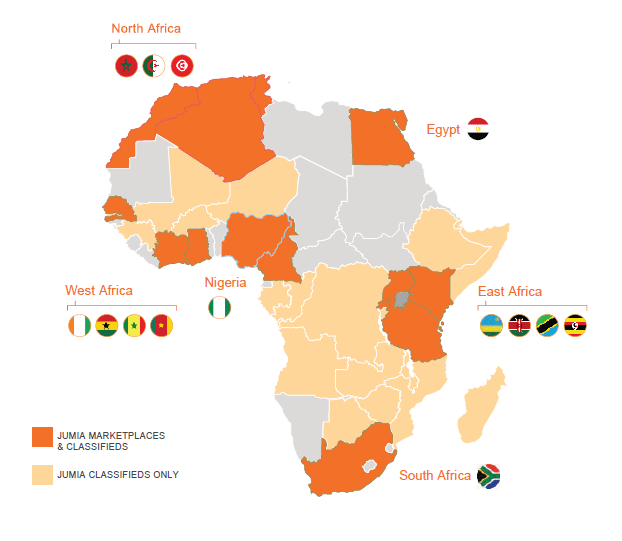
Founded in Lagos in 2012, Jumia currently operates multiple online verticals in 14 African countries — from B2C consumer retail to travel bookings.
For Jumia, going public has been an up and down affair. After becoming the first tech startup operating in Africa to list on a major exchange, the company saw its share price rise 70% after listing on the NYSE in April at $14.50.
Then in May, Jumia’s stock tumbled when it came under assault from a short-seller, Andrew Left, who accused the company of fraud in its SEC filings.
Jumia’s latest earnings reporting — delivered in August — had some downside beyond losses. The company did post second-quarter revenue growth of 58% (≈$43 million) and increased its customer base to 4.8 million from 3.2 million over the same period a year ago.
But Jumia also posted greater losses for the period, 67.8 million euros, compared to 42.3 million euros in 2018.
On top of that, Jumia opened up about a sales related fraud (that it has reported in its original SEC IPO filing) committed by some of its employees and members of its JForce program “to benefit from differences between commissions charged to sellers and higher commissions paid to JForce agents,” according to a Jumia statement.
“The transactions in question generated approximately 1% of our GMV in each of 2018 and the first quarter of 2019 and had virtually no impact on our 2018 or 2019 financial statements,” the statement continued.
Collectively, this has added up to influence Jumia’s share-price falling some 50% from its opening price of $14.50 and 80% from its high of $46.99 on May 1.
As a public company now, the most direct way for Jumia to revive its share-price would be reducing its losses while maintaining or boosting revenues. Of course, that’s the common prescription for many a tech company.
Jumia believes expanding and generating more revenue through its JumiaPay product (with better margins than B2C e-commerce transactions) could help close the revenue vs. loss gap.
Investors and the market at large will be able to track Jumia’s progress during its next (Q3) earnings call, scheduled for November 12, Jumia confirmed to TechCrunch.
SAP’s CEO Bill McDermott today announced that he wouldn’t seek to renew his contract for the next year and step down immediately after nine years at the helm of the German enterprise giant.
Shortly after the announcement, I talked to McDermott, as well as SAP’s new co-CEOs Jennifer Morgan and Christian Klein. During the call, McDermott stressed that his decision to step down was very much a personal one, and that while he’s not ready to retire just yet, he simply believes that now is the right time for him to pass on the reins of the company.
To say that today’s news came as a surprise is a bit of an understatement, but it seems like it’s something McDermott has been thinking about for a while. But after talking to McDermott, Morgan and Klein, I can’t help but think that the actual decision came rather recently.
I last spoke to McDermott about a month ago, during a fireside chat at our TechCrunch Sessions: Enterprise event. At the time, I didn’t come away with the impression that this was a CEO on his way out (though McDermott reminded me that if he had already made up his decision a month ago, he probably wouldn’t have given it away anyway).
“I’m not afraid to make decisions. That’s one of the things I’m known for,” he told me when I asked him about how the process unfolded. “This one, I did a lot of deep soul searching. I really did think about it very heavily — and I know that it’s the right time and that’s why I’m so happy. When you can make decisions from a position of strength, you’re always happy.”
He also noted that he has been with SAP for 17 years, with almost 10 years as CEO, and that he recently spent some time talking to fellow high-level CEOs.
“The consensus was 10 years is about the right amount of time for a CEO because you’ve accomplished a lot of things if you did the job well, but you certainly didn’t stay too long. And if you did really well, you had a fantastic success plan,” he said.
In “the recent past,” McDermott met with SAP chairman and co-founder Hasso Plattner to explain to him that he wouldn’t renew his contract. According to McDermott, both of them agreed that the company is currently at “maximum strength” and that this would be the best time to put the succession plan into action.
SAP co-CEO Jennifer Morgan.
“With the continuity of Jennifer and Christian obviously already serving on the board and doing an unbelievable job, we said let’s control our destiny. I’m not going to renew, and these are the two best people for the job without question. Then they’ll get a chance to go to Capital Markets Day [in November]. Set that next phase of our growth story. Kick off the New Year — and do so with a clean slate and a clean run to the finish line.
“Very rarely do CEOs get the joy of handing over a company at maximum strength. And today is a great day for SAP. It’s a great day for me personally and Hasso Plattner, the chairman and [co-]founder of SAP. And also — and most importantly — a great day for Jennifer Morgan and Christian Klein.”
Don’t expect for McDermott to just fade into the background, though, now that he is leaving SAP. If you’ve ever met or seen McDermott speak, you know that he’s unlikely to simply retire. “I’m busy. I’m passionate and I’m just getting warmed up,” he said.
As for the new leadership, Morgan and Klein noted that they hadn’t had a lot of time to think about the strategy going forward. Both previously held executive positions in the company and served on SAP’s board together for the last few years. For now, it seems, they are planning on continuing on a similar path as McDermott.
“We’re excited about creating a renewed focus on the engineering DNA of SAP, combining the amazing strength and heritage of SAP — and many of the folks who have built the products that so many customers around the world run today — with a new DNA that’s come in from many of the cloud acquisitions that we’ve made,” Morgan said, noting that both she and Klein spent a lot of time over the last few months bringing their teams together in new ways. “So I think for us, that tapestry of talent and that real sense of urgency and support of our customers and innovation is top of mind for us.”
SAP co-CEO Christian Klein
Klein also stressed that he believes SAP’s current strategy is the right one. “We had unbelievable deals again in Q3 where we actually combined our latest innovations — where we combined Qualtrics with SuccessFactors with S/4 [Hana] to drive unbelievable business value for our customers. This is the way to go. The business case is there. I see a huge shift now towards S/4, and the core and business case is there, supporting new business models, driving automation, steering the company in real time. All of these assets are now coming together with our great cloud assets, so for me, the strategy works.”
Having co-CEOs can be a recipe for conflict, but McDermott started out as co-CEO with Plattner, so the company does have some experience there. Morgan and Klein noted that they worked together on the SAP board before and know each other quite well.
What’s next for the new CEOs? “There has to be a huge focus on Q4,” Klein said. “And then, of course, we will continue like we did in the past. I’ve known Jen now for quite a while — there was a lot of trust there in the past and I’m really now excited to really move forward together with her and driving huge business outcomes for our customers. And let’s not forget our employees. Our employee morale is at an all-time high. And we know how important that is to our employees. We definitely want that to continue.”
It’s hard to imagine SAP with McDermott, but we’ve clearly not seen the last of him yet. I wouldn’t be surprised if we saw him pop up as the CEO of another company soon.
Below is my interview with McDermott from TechCrunch Sessions: Enterprise.
Three years ago, the founder of LendingClub, Renaud Laplanche, took the wraps off his second act, a consumer lending venture called Upgrade that now employs 350 people, has lent roughly $2 billion to 200,000 people, and has raised $142 million from investors.
It was jumping into a crowded market that has only grown more frenzied, with an seemingly endless number of fintech startups that market themselves as more thoughtful alternatives to established banks and traditional credit card companies. While giants like Visa and MasterCard charge interest and late fees for overdue payments, for example, the Stockholm, Sweden-based company Klarna, which allows shoppers to buy now and pay later, makes money through retailer transaction fees and late fees but doesn’t charge interest fees. In a similar twist, Max Levchin’s lending company, Affirm, doesn’t charge late fees when its customers rack up big charges but it does charge interest rates (sometimes as high as 30 percent).
Upgrade is slightly different in that that it doesn’t invite customers to defer their payments when they buy something using dollars from Upgrade. But it still largely fits into the same mold in that it markets itself as better for lending customers and more mindful of them. Its flagship personal loans product, for example, is largely used by customers to pay off credit cards and it features credit health tools that ostensibly teach people how to improve their credit scores.
A brand-new credit product — the Upgrade Card — takes things even further. As Laplanche explains it, the card “basically combines the payments capabilities of a credit card with the low cost of a bank loan into one single product.”
Adds Laplanche of this hybrid creation: “Lending Club created a $100 billion industry with personal loans 12 years ago; I think this is 10 times bigger — and 10 times cheaper for consumers.
We’re inherently skeptical of most lending products being good — or “cheap” — for customers, but for those readers who may be interested, here’s how it works: Instead of asking a cardholder to pay a minimum amount each month from the balance they owe on their card, Upgrade breaks down the balance into an installment plan with equal monthly payments — plus an interest payment — hat can be completed in a year to three years’ time.
“It’s like a mortgage or a car loan with a clear payment schedule,” says Laplanche. “You can budget for it and it sort of forces you to pay down the balance over a reasonable period,” unlike credit cards where customers can run a balance for as long as they like — which can wind up costing them an arm and a leg in interest payments alone over time.
There is no prepayment penalty and the card replenishes as it is paid off. More, unlike many credit cards that reward users for spending with cash back and other perks, Upgrade customers receive 1% cash back each time they make a payment toward their balance.
Still, there is an annual percentage rate, just as with most credit cards, and it’s not much kinder than other alternatives, with an annual interest rate that ranges from 6.49% to 29.99%
Laplanche further concedes that, as with any lending product, customers who miss payments or start with a lower credit score are more likely to confront a higher interest rate than someone who is able to pay off their card as they use it.
Upgrade partnered with Cross River Bank to create the new card. The 11-year-old, Fort Lee, N.J.-based institution has itself raised at least $128 million over the years, including via a $100 million round led by KKR that closed late last year and a $28 million round put together in 2016 with the help of Battery Ventures, Andreessen Horowitz, and Ribbit Capital, among others.
Cross River has become the go-to institution for a lot of fintech startups, including Affirm, Transferwise, and Coinbase — startups that want to stay compliant with consumer protection regulations but might have had trouble partnering with a large bank, especially when starting out.
Upgrade, which closed its last round, is probably due for a new round itself, having closed its $62 million Series C round in August of last year. Asked about this, however, Laplanche says only that, “We’re good.”
In the meantime, it’s apparently planning ahead with the resources it has currently. Beyond the Upgrade Card, the company expects to introduce a savings account in the first quarter of next year, a move similar to the move Robinhood announced earlier this week when it unveiled a high-yield cash management account. It makes sense. If the economy turns, and it seems likely given the ongoing spat between China and the U.S., not to mention other unanswered questions, consumers are likely to look increasingly for safe havens like savings and cash management accounts.
Whether the moves are enough to insulate Upgrade, or numerous other fintech startups, in a serious downturn, remains to be seen, but Laplanche has weathered worse before. Though LendingClub was among the first peer-to-peer lenders and enjoyed a splashy debut on the public market in the summer of 2014, by the spring of 2016, Laplanche was asked to resign and was soon after charged by the SEC with fraudulently inflating the company’s returns. He settled with the agency last year without admitting wrongdoing. He also paid a fine and agreed to be barred from the securities industry for three years.
“Orphan Black” ended its five-season run back in 2017, but Serial Box is currently continuing the story with “Orphan Black: The Next Chapter,” a weekly series of e-books and audiobooks.
While spinoff novels and licensed fiction are nothing new, I was particularly interested in this revival because Serial Box is a venture-backed startup bringing back the tradition of serialized fiction. Plus, ‘The Next Chapter” feels particularly official because the audio version is narrated by Tatiana Maslany, whose starring turn as the show’s various clones was so central to its appeal.
So for a bonus episode of the Original Content podcast, I spoke to Malka Older, the head writer of “Orphan Black: The Next Chapter.”
Older was a fan of the series, and she explained that by jumping several years ahead in the “Orphan Black” timeline, the writing team could “give the original series space to breathe” and find a new approach to its big themes.
While Older noted that she has no problem depicting large corporations as villains — something she’s done in her own novels — she wanted to do something new here:
We started thinking more about governments. And particularly when you come to these questions of biotechnology and genetics, governments are increasingly getting involved and trying to figure out what their role is in regulating them —or facilitating them for economic reasons. And then we’re also seeing security questions and things like biometric security become much more pervasive. So to start thinking about how that would effect the lives of these clones was just a really rich seam to open up.
We also cover some topics that should be interesting to non-“Orphan Black” fans, like the appeal of serialized fiction versus binge-watching. Older noted that if you wait for all the weekly installments to come out, you can still binge “The Next Chapter,” but she also said, “Not all of us have the opportunity to really binge everything. And it’s not always bad to have structural constraints on how much you can consume at one time.”
You can listen to the interview in the player below, subscribe using Apple Podcasts or find us in your podcast player of choice. If you like the show, please let us know by leaving a review on Apple. You can also send us feedback directly. (Or suggest shows and movies for us to review!)

 According to a copy of his court charging document obtained by TechCrunch, Sowore is charged with two counts of conspiring to stage a revolution and to remove Nigeria’s president, Muhammadu Buhari, from office “otherwise than by constitutional means.”

 Sites that track