Year: 2019

08 Oct 2019

With a possible Apple tag waiting in the wings, Tile unveils Sticker, an adhesive device for tracking objects

We are still waiting to see if Apple officially unveils a new spin on the business of tracking tags — the small devices that you put on ‘dumb’ objects like keys, wallets and other objects you have a habit of losing or leaving places to be able to pinpoint their location — but in the meantime, Tile, one of the pioneers of this technology, is upping its game today with its least-obtrusive device yet: a sticker.

Today, the startup unveiled Sticker, a new, waterproof tracking device that it created in collaboration with 3M, which uses adhesive to attach to objects to be able to track them by Bluetooth to a range of 150 feet, or further using Tile’s community network by way of its app.

Alongside this, the startup is also announcing enhancements to its existing range of Tile tracking devices. The Slim is now in the shape and thinness of a credit card, designed for wallets and other places where you might insert card-shaped information (for example, in luggage ID compartments), and its range has been extended to 200 feet with a battery life of three years.

And the Mate and Pro tags — the square-shaped fobs that Tile is most famous for — are also getting their ranges extended to 400 feet.

All four models are going on sale as of today at a range of prices: Tile Stickers starting from $39.99 for a 2-pack, $59.99 for a 4-pack; Tile Slim at $29.99; Tile Mate at $24.99; and Tile Pro at $34.99. The message here is that Tile is continuing to increase its flexibility and use cases with these updates and new Sticker release.

“Over the years we’ve seen our customers use Tile for a variety of items,” said CJ Prober, Tile CEO, in a statement. “From wallets to remote controls, power tools to backpacks, our customers have shown us they want a Tile for everything. We’ve designed our new product line to empower the Tile community to find literally anything.”

The moves come on the heels of a competitive time for Tile. On the one hand, the business area that it identified early on has clearly caught the attention of a number of other companies, underscoring the opportunity. But the flip side of that is a lot of new competition in an area that is already crowded and has seen some high-profile failures.

On the launch front, in addition to Apple’s reported interest in launching a competitor, earlier this year Verizon (which also owns TechCrunch) also launched its own IoT play in this area, and Google has also created tighter integrations for people to use its Home devices and Android platform to locate objects. At the same time, some of Tile’s earliest competitors have been heavily challenged to make a go of it: Trackr last year rebranded to Adero and just weeks later laid off nearly half its staff, a decline that we’ve heard has not been halted in the months since.

For its part, Tile last summer raised $45 million last summer on the heels of some interesting strategic partnerships with the likes of Comcast — which, similar to Verizon, Apple, and Google, sees an opportunity in doing more with item tracking as part of a bigger end-to-end connected home play. The feeling is that Tile raised the money to help leverage its bigger market profile in the hopes of staving off this wave of competitors and the many others that already existed before that.

Indeed, if you search on something like Amazon for Bluetooth tracking stickers, you’ll see that this is not exactly a new thing, and there are a number of alternatives out there (one of the big reasons why this market has been a challenging one).

One big differentiator with Tile has been the wider network and economies of scale that it promises to its users: once you are out of the Bluetooth range of your tag, you are able to track the object by way of its app and the wider Tile community, which forms a Bluetooth-based P2P network of sorts to be able to locate items. Of course, the premise of this is that enough people are using Tiles to begin with to create the locating network in the first place, which is one reason why forming collaborations with the likes of Google and Comcast can be very critical longer term to Tile’s success.
08 Oct 2019

Opera’s desktop browser gets built-in tracking protection

Browser maker Opera today announced the launch of version 68 of its flagship desktop browser. The marquee feature of the launch is the addition of a tracker blocker that will make it harder for advertisers and others to track you while you browse the web — and which has the additional benefit of speeding up your browsing session. Indeed, Opera argues that turning on both the tracking protection and the built-in ad blocker can speed up page loads by up to 23 percent.

The new tracking protection feature is off by default (as is the existing ad blocker). The tracking feature uses the EasyPrivacy Tracking Protection List, which has been around for quite a few years now.

“We consider the tracker blocker to be a browser feature which can be kept on at all times, “writes Opera PC product manager Joanna Czajka. “Our browser, however, also has plenty of extended privacy features which come in handy when someone feels the need to increase the privacy of their browsing even further.”

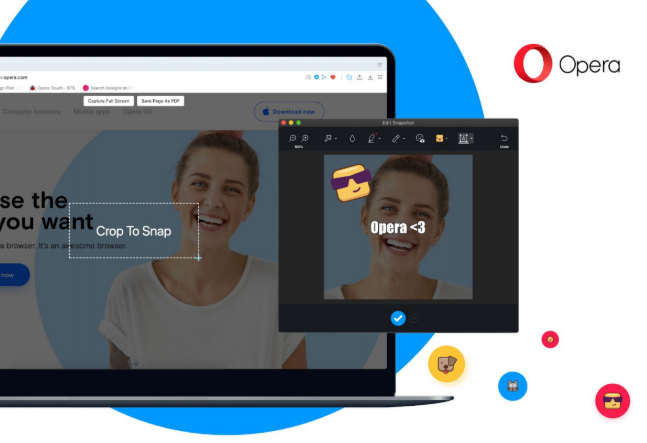
In addition to the new tracking protection, which is increasingly becoming standard among browser vendors (and which is surely putting some additional pressure on Google and its Chrome browser), Opera is also introducing a new screenshotting feature with this update. That’s not an unusual feature, but it’s a pretty full-featured implementation, with the ability to blur parts of a page and draw on the screenshots.

opera screenshot


08 Oct 2019

Eight Chinese tech firms placed on U.S. Entity List for their role in human rights violations against Muslim minority groups

Eight Chinese tech firms, including SenseTime and Megvii, have been added to the U.S. government Entity List for their role in enabling human rights violations against Muslim minority groups in China, including the Uighurs. The firms were among 28 total organizations, mostly Chinese government agencies, that were implicated “in the implementation of China’s campaign of repression, mass arbitrary detention, and high-technology surveillance against Uighurs, Kazakhs and other members of Muslim minority groups” in the Xinjiang Uighur Autonomous Region, according to an announcement by the U.S. Commerce Department.

According to the United Nations, up to one in 12 Muslim residents of Xinjiang region, or about a million people, are being held in detention camps, where they are subjected to force labor and torture.

Being placed on the Entity List means that these organizations must apply for additional licenses in order to purchase products from U.S. suppliers. But approval is difficult to obtain, which essentially means they are blocked from doing business with American companies. After Huawei was placed on the Entity List earlier this year, founder and CEO Ren Zhengfei said that he expected the company to lose $30 billion in revenue, among other financial repercussions.

The government organizations placed on the Entity List today include the Xinjiang Uighur Autonomous Region People’s Government Public Security Bureau and several associated government agencies, and tech companies video surveillance manufacturers Dahua Technology and Hikvision, AI tech firms Yitu, Megvii, SenseTime and iFlyTek, digital forensics company Meiya Pico and Yixin Technology Company.

Sense Time, the world’s most highly-valued AI startup, has supplied software to the Chinese government for its national surveillance system, including CCTV cameras and smart glasses worn by police officers.

Both Megvii, the maker of Face++, and Yitu Technology focus on facial recognition technology and have worked with the Chinese government on software used in mass surveillance systems. According to the New York Times, Hikvision made a recognition system designed to identify ethnic minorities, but began phasing it out last year.

In a 2017 report, the Human Rights Watch said voice recognition company iFlyTek supplied voiceprint technology to police bureaus in Xinjiang Province, which was used to build biometric databases for mass surveillance.

The impact of the blacklisting will depend on how deeply entrenched each company is with U.S. business partners, but many Chinese firms have begun reducing their reliance on American technology in light of the trade war. For example, Meiya Pico told the Chinese Securities Journal, a state-run publication, that overseas sales revenue makes up less than 1% of the company’s total revenue and most of its suppliers are domestic companies.

TechCrunch has contacted the eight companies for comment. In a statement, a Hikvision spokesperson said “Hikvision strongly opposes today’s decision by the U.S. Government and it will hamper efforts by global companies to improve human rights around the world. Hikvision, as the security industry’s global leader, respects human rights and takes our responsibility to protect people in the U.S. and the world seriously. Hikvision has been engaging with Administration officials over the past 12 months to clarify misunderstandings about the company and address their concerns.”

08 Oct 2019

German tech investor leads Series A for Germany’s first medical Cannabis startup

German just hit a new milestone in the space where venture capital and the burgeoning Cannabis industry meet.

Berlin startup Demecan has completed a Series A financing round of 7 million euros to expand its production facility for medical cannabis and the wholesale trade in Germany. It’s become the only German company allowed to produce medical cannabis in Germany.

This is a watershed for the country and is the first investment in this sector for btov Partners, a private investor network. The other half of the funding came from a single, named German family office, which is understood to have its roots in the consumer goods sector. Only two other companies, two of them from Canada, were awarded the contract to produce medical cannabis in Germany in May 2019.

btov Partners manages assets of €420 million and has previously invested in tech startups such as Blacklane, Data Artisans, DeepL, Facebook, Foodspring, ORCAM, Raisin, SumUp, Volocopter and XING.

The green light from Germany’s Federal Institute for Drugs and Medical Devices (BfArM), means Demecan will be able to produce at least 2,400 kilograms of dried cannabis flowers over the next four years. Demecan is also active as an importer and wholesaler of medical cannabis and can thus cover the entire value chain. Since the German government allowed cannabis to be prescribed for therapeutic purposes in 2017 demand has outstripped supply.

Jennifer Phan of btov Partners said in a statement: “Demecan operates in a very attractive market at the right time. Germany currently represents the third-largest market for medical cannabis in the world and is on a growth path. We believe that the company has a first-mover advantage in a highly regulated market environment, especially as it is the only German manufacturing and trading company in the European market”.

Dr. Constantin von der Groeben, co-founder of Demecan, added: “In recent years, we have intensively dealt with the market and reached an important milestone by winning the tender process. We are now focusing on further growth and the start of production in 2020.”

08 Oct 2019

This startup just raised $8 million to help busy doctors assess the cognitive health of 50 million seniors

All over the globe, the population of people who are aged 65 and older is growing faster than every other age group. According to United Nations data, by 2050, one in six people in the world will be over age 65, up from one in 11 right now. Meanwhile, in Europe and North America, by 2050, one in four people could be 65 or over.

Unsurprisingly, startups increasingly recognize opportunities to cater to this aging population. Some are developing products to sell to individuals and their family members directly; others are coming up with ways to empower those who work directly with older Americans.

BrainCheck, a 20-person, Houston-based startup whose cognitive healthcare product aims to help physicians assess and track the mental health of their patients, is among the latter. Investors like what it has put together, too. Today, the startup is announcing $8 million in Series A funding round co-led by S3 Ventures and Tensility Venture Partners.

We talked earlier today with BrainCheck cofounder and CEO Yael Katz to better understand what her company has created and why it might be of interest to doctors who don’t know about it. Our chat has been edited for length and clarity.

TC: You’re a neuroscientist. You started BrianCheck with David Eagleman, another neuroscientist and the CEO of NeoSensory, a company that develops devices for sensory substitution. Why? What’s the opportunity here?

YK: We looked across the landscape, and we realized that most cognitive assessment is [handled by] a subspecialty of clinical psychology called neuropsychology, where patients are given a series a tests and each is designed to probe a different type of brain function — memory, visual attention, reasoning, executive function. They measure speed and accuracy, and based on that, determine whether there’s a deficit in that domain. But the tests were classically done on paper and it was a lengthy process. We digitized them and gamified them and made them accessible to everyone who is upstream of neuropsychology, including neurologists and primary care doctors.

We created a tech solution that provides clinical decision support to physicians so they can manage patients’ cognitive health. There are 250,000 primary care physicians in the U.S. and 12,000 neurologists and [they’re confronting] what’s been called a silver tsunami. With so many becoming elderly, it’s not possible for them to address the need of the aging population without tech to help them.

TC: How does your product work, and how is it administered?

YK: An assessment is all done on an iPad and takes about 10 minutes. They’re typically administered in a doctor’s office by medical technicians, though they can be administered remotely through telemedicine, too.

TC: These are online quizzes?

YK: Not quizzes and not subjective questions like, ‘How do you think you’re doing?’ but rather objective tasks, like connect the dots, and which way is the center arrow pointing — all while measuring speed and accuracy.

TC: How much does it cost these doctors’ offices, and how are you getting word out?

YZ: We sell a monthly subscription to doctors and it’s a tiered pricing model as measured by volume. We meet doctors at conferences and we publish blog posts and white papers and through that process, we meet them and sell products to them, beginning with a free trial for 30 days, during which time we also give them a web demo.

[What we’re selling] is reimbursable by insurance because it helps them report on and optimize metrics like patient satisfaction. Medicare created a new code to compensate doctors for cognitive care planning though it was rarely used because the requirements and knowledge involved was so complicated. When we came along, we said, let us help you do what you’re trying to do, and it’s been very rewarding.

TC: Say one of these assessments enables a non specialist to determine that someone is losing memory or can’t think as sharply. What then?

YZ: There’s phrase: “Diagnose and adios.” Unfortunately, a lot of doctors used to see their jobs as being done once an assessment was made. It wasn’t appreciated that impairment and dementia are things you can address. But about one third of dementia is preventable, and once you have the disease, it can be slowed.  It’s hard because it requires a lot of one-on-one work, so we created a tech solution that uses the output of tests to provide clinical support to physicians so they can manage patients’ cognitive health. We provide personalized recommendations in a way that’s scalable.

TC: Meaning you suggest an action plan for the doctors to pass along to their patients based on these assessments?

YZ: There are nine modifiable risk factors found to account for a third of [dementia cases], including certain medications that can exacerbate cognitive impairment, including poorly controlled cardiovascular health, hearing impairment, and depression. People can have issues for many reasons — multiple sclerosis, epilepsy, Parkinson’s — but health conditions like major depression and physical conditions like cancer and treatments like chemotherapy can cause brain fog. We suggest a care plan that goes to the doctor who then uses that information and modifies it. A lot of it has to do with medication management.

A lot of the time, a doctor — and family members — don’t know how impaired a patient is. You can have a whole conversation with someone during a doctor’s visit who is regaling you with great conversation, then you realize they have massive cognitive deficits. These assessments kind of put everyone on the same page.

TC: You’ve raised capital, how will you use it to move your product forward?

YK: We’ll be combining our assessments with digital biomarkers like changing voice patterns and a test of eye movements, and we have developed an eye-tracking technology and voice algorithms, but those are still in clinical development; we’re trying to get FDA approval for them now.

TC: Interesting that changing voice patterns can help you diagnose cognitive decline.

YK: We aren’t diagnosing disease. Think of us as a thermometer that [can highlight] how much impairment is there and in what areas and how it’s progressive over time.

TC: What can you tell readers who might worry about their privacy as it relates to your product?

YK: Our software is HIPAA compliant. We make sure our engineers are trained and up to date. The FDA requires that we we put a lot of standards in place and we ensure that our database is built in accordance with best practices. I think we’re doing as good a job as anyone can.

Privacy is a concern in general. Unfortunately, companies big and small have to be ever vigilant about a data breach.

08 Oct 2019

Mars Curiosity Rover finds evidence of an ancient oasis on Mars

On its latest trek through the Gale Crater on Mars, the Curiosity Rover has discovered evidence that’s leading . scientists to believe that there was an oasis at the base of that 150-kilometer-wide crater.

Curiosity scientists described the scene in an article in “Nature Geoscience” published earlier this week. Researchers analyzing data from the Rover are extrapolating from the data that rocks enriched by mineral salts are evidence of briny ponds that went through periods of drying out and overflowing.  Those deposits serve as a watermark made by climate fluctuations as Mars’ climate changed from a wet one to the current frigid ice desert it is today.

The next step in their research is for scientists to understand how long the transition took and when it happened, according to a statement from NASA’s Jet Propulsion Laboratory in Pasadena, Calif.

The Gale Crater is the leftover geological formation from an impact that changed the surface of Mars. Eventually water and wind filled in the crater and the hardening sediment, carved by wind, created the Mount Sharp geological formation that the Curiosity Rover is scaling right now.

The Rover is taking samples of each layer as it climbs and sending that data back to reveal new information about the environment on Mars over time, NASA said.

“We went to Gale Crater because it preserves this unique record of a changing Mars,” said lead author William Rapin of Caltech, in a statement. “Understanding when and how the planet’s climate started evolving is a piece of another puzzle: When and how long was Mars capable of supporting microbial life at the surface?”

Rapin and his co-authors found salts across a 500-foot-tall section of sedimentary rocks that Curiosity first visited in 2017. The “Sutton Island” salts suggest that water had collected in pools across the formation in addition to the intermittent very dry periods that the scientists had already discovered.

Scientists speculate that the geological formations may have resembled the salt lakes in South America’s Altiplano. Streams and . rivers flowing . from mountain ranges lead to similar basins as the Martian terrain. And those lakes are similarly influenced by climactic changes.

“Finding inclined layers represents a major change, where the landscape isn’t completely underwater anymore,” said Team member Chris Fedo, who specializes in the study of sedimentary layers at the University of Tennessee. “We may have left the era of deep lakes behind.”

Future missions will see Curiosity driving toward more inclined layers to investigate rock structures. If they formed in drier conditions, that may mean a new phase of development for the crater — and reveal still more secrets about life on Mars from millions of years ago.

07 Oct 2019

Group Nine acquires PopSugar

Group Nine — the digital media company formed by the merger of Thrillist, NowThis, The Dodo and Seeker — just announced that it has reached an agreement to acquire women’s lifestyle publisher PopSugar.

The financial terms of the deal were not disclosed, but The Wall Street Journal reports that it’s an all-stock transaction that values PopSugar at more than $300 million.

PopSugar was founded by husband-and-wife Brian and Lisa Sugar in 2006, and previously raised $41 million in funding from Sequoia Capital and IVP. Group Nine, meanwhile, just announced a fresh $50 million in funding from its backers Discovery and IVP, which it said would be used to grow its commerce business and for strategic acquisitions.

Brian and Lisa Sugar are both joining Group Nine’s executive team. Brian Sugar and Sequoia’s Michael Moritz are also joining Group Nine’s board of directors.

Earlier this year, there were reports that Group Nine was in talks to acquire a different women’s lifestyle publisher, Refinery29, which was ultimately acquired by Vice Media instead.

In a statement, Group Nine CEO Ben Lerer (pictured above) said:

When we started Group Nine almost three years ago by combining Thrillist, NowThis, The Dodo, and Seeker, we foresaw the impending consolidation of the industry and set out to create a model for the next-generation media company with significant scale, deeply loyal and engaged audiences, multiplatform expertise, and highly diversified revenue. POPSUGAR hugely expands our reach within an important demographic, bringing us a community that deeply loves the POPSUGAR brand and a company with the proven ability to diversify their revenue across premium advertising, affiliate, direct-to-consumer commerce, licensing, and experiential channels.

In the acquisition announcement, Group Nine says the combined organizations will reach an audience of more than 200 million social media followers and also points to PopSugar’s commerce offerings — including its quarterly subscription Must Have Box and its Glow marketplace for fitness content and merchandise — as a good fit for its broader ambitions in this market.

07 Oct 2019

Via is launching an on-demand public transit network in the city of Cupertino

Shuttle startup Via and the city of Cupertino are launching an on-demand public transportation network, the latest example of municipalities trying out alternatives to traditional buses.

The aim is for these on-demand shuttles, which will start with six vans branded with the city of Cupertino logo, to provide more efficient connections to CalTrain and increase access to public transit across the city.

The on-demand shuttle service, which begins October 29, will eventually grow to 10 vehicles and include a wheelchair accessible vehicle. Avis Budget Group, another partner in this service, is the fleet management service that will maintain the vehicles.

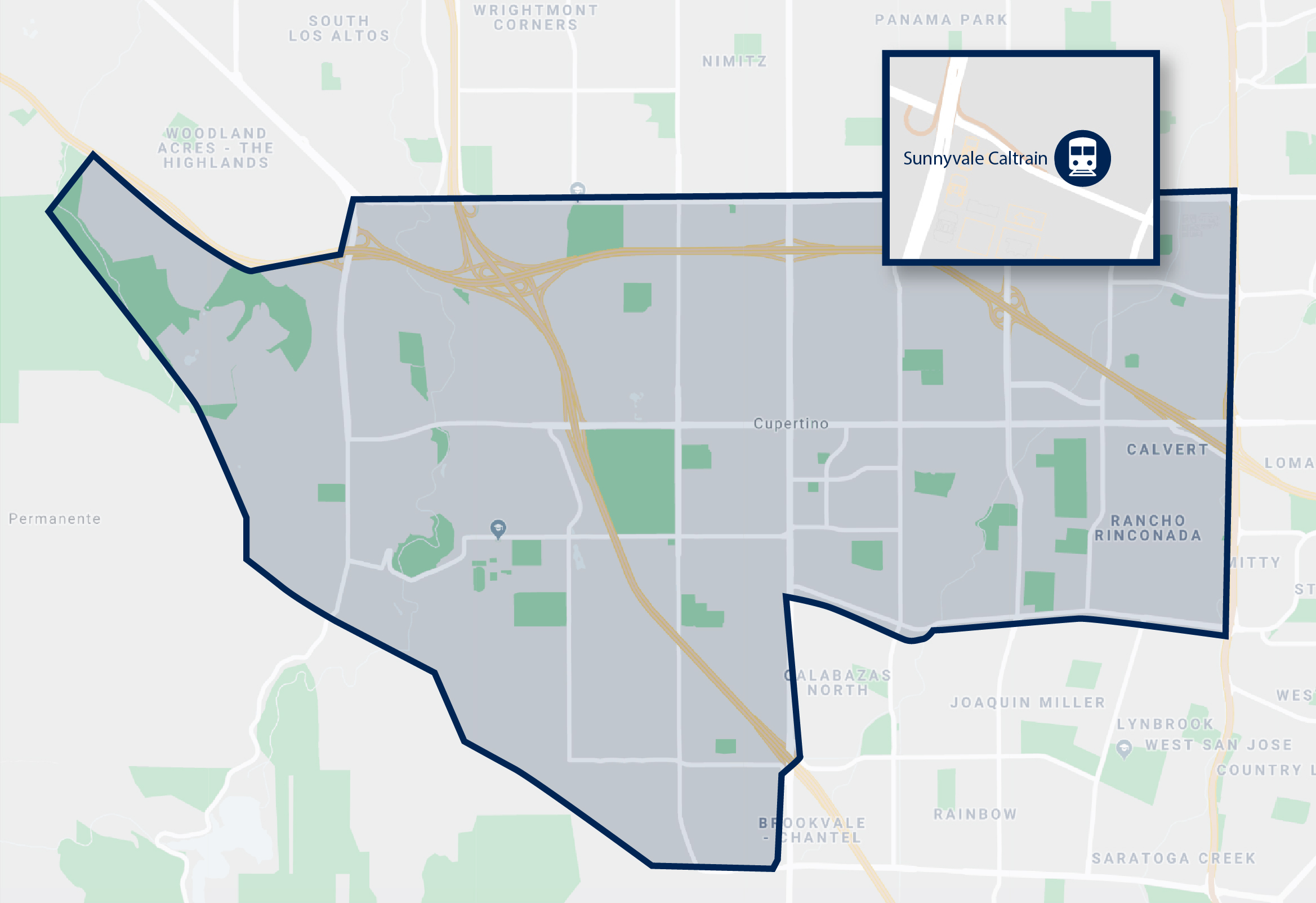
In Cupertino, residents and commuters can use the Via app or a phone reservation system to hail a shuttle. The network will span the entire 11-square-mile city with a satellite zone surrounding the Sunnyvale CalTrain station for commuters, Via said Monday. Cupertino Mayor Steven Scharf views the Via on-demand service as the next generation of “what public transportation can be, allowing us to increase mobility while taking a step toward our larger goal of reducing traffic congestion.”

The service, which will run from 6 a.m. to 8 p.m. weekdays and 9 a.m. to 5 p.m. Saturdays, will cost $5 a ride. Users can buy weekly and monthly passes for $17 and $60, respectively.

Via Cupertino Service Zone 1

Via has two sides to its business. The company operates consumer-facing shuttles in Chicago, Washington, D.C. and New York.

Via also partners with cities and transportation authorities, giving clients access to their platform to deploy their own shuttles. The city of Cupertino, home to Apple, SeaGate Technologies and numerous other software and tech-related companies, is one example of this. Austin’s Capital Metropolitan Transportation Authority also uses the Via platform to power the city’s Pickup service. And Via’s platform is  used by Arriva  Bus UK, a Deutsche Bahn Company, for a first- and last-mile service connecting commuters to a high-speed train station in Kent, U.K.

In January, Via announced it was partnering with Los Angeles as part of a pilot program that will give people rides to three busy public transit stations. Via claims it now has more than 80 launched and pending deployments in over 20 countries, providing more than 60 million rides to date.

While city leaders appear increasingly open to experimenting with on-demand shuttles, success in this niche business isn’t guaranteed. For instance, Chariot, which was acquired by Ford, shut down its operations in San Francisco, New York and the UK in early 2019.

07 Oct 2019

The NBA should learn from Google China

By now, you’ve probably heard about the tweet heard ‘round the world, or at least, the part of the world where Mandarin is spoken. The GM of the Houston Rockets basketball franchise wrote a tweet — since deleted — supporting the democracy protesters that have lit up Hong Kong these past few weeks.

As Eben Novy-Williams of Bloomberg wrote, “Through decades of painstaking deal-making, the NBA created a multibillion-dollar opportunity in China, the world’s second-largest economy. Now a single swiftly deleted tweet has put all that time and money in jeopardy.”

It’s a situation that’s becoming increasingly typical for American companies, technology or not. Apple pulled the Taiwanese flag emoji from keyboards in Hong Kong and Macau this weekend, lest it lose its lucrative, mostly-iPhone market that accounted for $10 billion in revenues in its last quarter. US-headquartered airliners had to change the pulldown options in their checkout flows to avoid mentioning Taiwan last year, lest they lose access to Chinese airspace.

One wonders what kind of a business empire can collapse with a single dropdown menu item?

Or a single emoji?

Or a single tweet?

Businesses are not supposed to be this brittle, but American companies continue to approach the mirage of the Chinese economy as if it is open for the taking, and that the American consumer (and their representatives in Washington) are going to continue to ignore the “authoritarian straddle” these companies have to undertake to appease Beijing while trying to not displease Washington.

Despite all evidence to the contrary that such a straddle is impossible though, they keep on coming.

Just this past week, PayPal announced that it was entering mainland China through its acquisition of GoPay, becoming the first foreign payments provider in the highly-digitalized economy. Over the past year, MSCI, the creator of some of the most important stock indices in the world, has increasingly shifted weight to Chinese stocks, sending billions of dollars to mainland companies.

What is surprising is that this whole rise-and-fall, can-we-get-in-and-stay-in story was already written by Google almost exactly a decade ago. Google worked hard for years to cement itself on the mainland, but following a series of hacks that targeted political dissidents using its Gmail service, Google announced that it was leaving the country in 2010, redirecting users to its Hong Kong search engine.

Since that decision, Google has had very little access to mainland China, nor have any other prominent American tech companies. The one notable exception has been LinkedIn, which has engaged in aggressive censoring of speech in China in order to keep the lights on (although, given the speech I read on LinkedIn, one wonders whether a complete blackout in America wouldn’t do us all a favor).

As much as Google’s executives (and its shareholders) may have wanted to re-enter China though, it seems obvious that the enforced lack of access has ultimately been a godsend for the company’s policy decisions. For a decade, it barely had to handle the authoritarian straddle, and could center itself on individual choice, open access to the internet, and freedom of speech with minor reservations.

Sure, the economic mirage of China continued, and even Google couldn’t maintain its patience, attempting to launch its Project Dragonfly censored Chinese search engine to much outcry, ultimately to shelve it, giving its leadership a bit of a black eye. But Google is now out of the authoritarian straddle once again — and out of harms way. That ultimately is the solution that the NBA needs.

Beijing has its rules. Google, United Airlines, the NBA, and even Apple has no sway over them. Not even tens of billions of dollars of threatened tariffs from the Trump administration have made a dent in any of the CCP’s policies.

Maybe it’s time to take the hint, pack the balls up, and walk home.

07 Oct 2019

Instagram is killing its creepy stalking feature, the Following tab

Instagram is removing its Following tab, a feature that became better known as a stalking tool than one to aid with new account discovery, as the company had intended. Today, Instagram says that its Explore tab is the go-to place to find new people, places and hashtags to follow. Meanwhile, the Following tab is now only used by a small number of people on a regular basis.

Combined, those factors were the key reasons behind its shutdown, we understand.

But the Following tab wasn’t just unhelpful and therefore ignored by Instagram users — a number of people forgot, or never even knew, it existed in the first place. There are numerous stories of people’s illicit or private activities being outed because of what they were liking and following on Instagram.

The tab was fairly notorious for the transparency it brought to our online lives. It was often a place where “micro-cheating” activity was caught, for example. That is, it could reveal when a person in a committed relationship was spending just a little too much time liking someone else’s posts, engaging with an ex’s content, or networking with series of potential “backup partners” on a regular basis.

iOS Before Following


It could also easily reveal when someone’s main use case for Instagram was to like and follow IG “models” — something that didn’t seem like the kind of activity most would want to be offered in a trackable format. (And information that was particularly awkward to see when the person in question was not a close friend, but rather a work colleague of some sort.)

The tab was known to have impacted or even ended friendships, too — like in the case where someone wouldn’t respond to their friend’s texts, or claim they were “busy.” Meanwhile, they were consistently active on Instagram, and very obviously lying.

Gossip followers also liked the tab, as it would reveal who celebs were following — sometimes an indication of a new relationship, either personal or professional in nature.

Overall, the tab generally became known as a creepy tool, and not one that offered any significant benefit to users in terms of being a legitimate discovery mechanism.

Android After Activity


Though Instagram is only announcing this change today, many users had already lost access to the tab. Back in August, for example, a big thread on Reddit saw users complaining their Following tab had disappeared. They assumed it was a bug, however.

After the tab’s removal, you’ll only see your own activity, as before, when you click the Heart button.

The company says the Following tab is being removed starting today, but it will take the rest of the week for the rollout to complete.