Year: 2019

07 Oct 2019

Checking in on the state of ISAs

Income share agreements (ISAs) rose to public awareness this year — if measured in press articles and discussion on “VC Twitter” — after several years of niche experimentation among a small community of education advocates. An ISA in a financing model where the student participates in an education program without paying tuition, then pays a certain percentage of their income for a set time term in return.

As I mentioned in my analysis of ISAs back in April, there is rapid growth in ISA pilots by traditional universities in the US and by vocational training programs but there’s also a lot of regulatory uncertainty. All stakeholders in the US want the federal government to provide a regulatory framework for the ISA market since the current lack of policy creates market uncertainty and opportunities for unethical actors.

I asked several of the entrepreneurs, investors, and policy experts at the forefront of ISAs to share their perspectives on the current state of the ISA movement:

  • Tonio DeSorrento, Vemo Education
  • Ethan Pollack, Aspen Institute
  • Shaan Hathiramani, Flockjay
  • Austen Allred, Lambda School
  • Alison Griffin, Whiteboard Advisors
  • Sam Lessin, Slow Capital
  • Terri Burns, GV
  • Kristen Sharp, Entangled Solutions
  • Leo Polovets, Susa Ventures
  • Jan Lynn-Matern, Emerge Education

Here’s what they had to say…

GettyImages 960803498

Image via Getty Images / manopjk

Tonio DeSorrento, Founder & CEO of Vemo Education

“What’s been really fascinating, in recent years, is the innovation that is occurring at colleges and universities that are using ISAs to support and improve student success.

07 Oct 2019

Spotify gains Siri support on iOS 13, arrives on Apple TV

In a long-awaited move, Spotify announced this morning its iOS 13 app would now offer Siri support and its streaming music service would also become available on Apple TV. That means you can now request your favorite music or podcasts using Siri voice commands, by preferencing the command with “Hey Siri, play…,” followed by the audio you want, and concluding the command with “on Spotify.”

The Siri support had been spotted earlier while in beta testing, but the company hadn’t confirmed when it would be publicly available.

According to Spotify, the Siri support will also work over Apple AirPods, on CarPlay, and via AirPlay on Apple HomePod.

In addition, the Spotify iOS app update will include support for iPhone’s new data-saver mode, which aids when bandwidth is an issue.

Spotify is also today launching on Apple TV, joining other Spotify apps for TV platforms, including Roku, Android TV, Samsung Tizen, and Amazon Fire TV.

The app updates are still rolling out, so you may need to wait to take advantage of the Apple TV support and other new features.

The lack of Siri support for Spotify was not the streaming music service’s fault — it wasn’t until iOS 13 that such support even became an option. With the new mobile operating system launched in September, Apple finally opened up its SiriKit framework to third-party apps, allowing end-users to better control their apps using voice commands. That includes audio playback on music services like Spotify, as well as the ability to like and dislike tracks, skip or go to the next song, and get track information.

Pandora, Google Maps and Waze were among the first to adopt Siri integration when it became available in iOS 13 — a clear indication that some of Apple’s chief rivals have been ready and willing to launch Siri support as soon as it was possible.

Though the integration with Siri will be useful for end-users and beneficial to Spotify’s business, it may also weaken the streaming company’s antitrust claims against Apple.

Spotify has long stated that Apple engages in anti-competitive business practices when it comes to its app platform, which is designed to favor its own apps and services, like Apple Music, it says. Among its chief complaints was the inability of third-party apps to work with Siri, which gave Apple’s own apps a favored position. Spotify also strongly believes the 30% revenue share required by the App Store hampers its growth potential.

The streamer filed an antitrust complaint against Apple in the European Union in March. And now, U.S. lawmakers have reached out to Spotify to request information as a part of an antitrust probe here in the states, reports claim. 

Despite its new ability to integrate with Siri in iOS 13, Spotify could argue that it’s still not enough. Users will have to say “on Spotify” to take advantage of the new functionality, instead of being able to set their default music app to Spotify, which would be easier. It could also point out that the support is only available to iOS 13 devices, not the entire iOS market.

Along with the Apple-related news, Spotify today also announced support for Google Nest Home Max, Sonos Move, Sonos One SL, Samsung Galaxy Fold, and preinstallation on Michael Kors Acess, Diesel and Emporio Armani Wear OS smartwatches.


07 Oct 2019

iPhone 11 Pro is the most accessible iPhone yet

Last year’s iPhone was an outlier for me. Although I reviewed the then-new iPhone XS line, the model I ultimately chose for myself was the “lesser” iPhone XR. I chose it mostly for aesthetic reasons. As much as I appreciated its well-rounded technical merits, I was downright giddy at the notion I could have an iPhone in my favorite color: blue. I’ve not once regretted my choice nearly a year later. Color aside, the XR was—and remains—a terrific device.

At a fundamental level, choosing the iPhone XR was more significant than a favorite color or a willingness to accept some technical differences. As a visually impaired person, foregoing the XS meant I was purposely giving up a pivotal accessibility feature—the OLED screen—that would have made my experience with the device more accessible. In hindsight, the fact I decided on the objectively worse phone in the XR speaks volumes about how great it was as a product, and how color can spark such raw, immense delight.

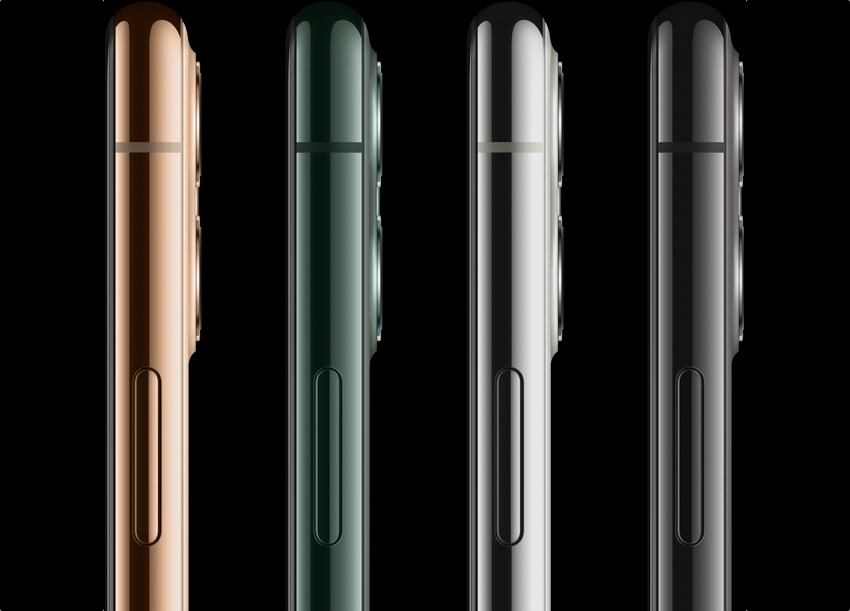
This year, there is no blue iPhone. Without the emotional appeal of color in the equation, I’m reminded once again why the best iPhone money can buy—the iPhone 11 Pro Max—is the best, most accessible iPhone for me.
hero gallery color story m6kjl7t4boqm large

The Awesomeness of OLED

Apple provided me with two review units: one white iPhone 11 and one midnight green iPhone 11 Pro Max. As of this writing, I’ve had both phones for close to two weeks and I’ve spent roughly a week with each phone. I also have my year-old XR handy as a reference tool.

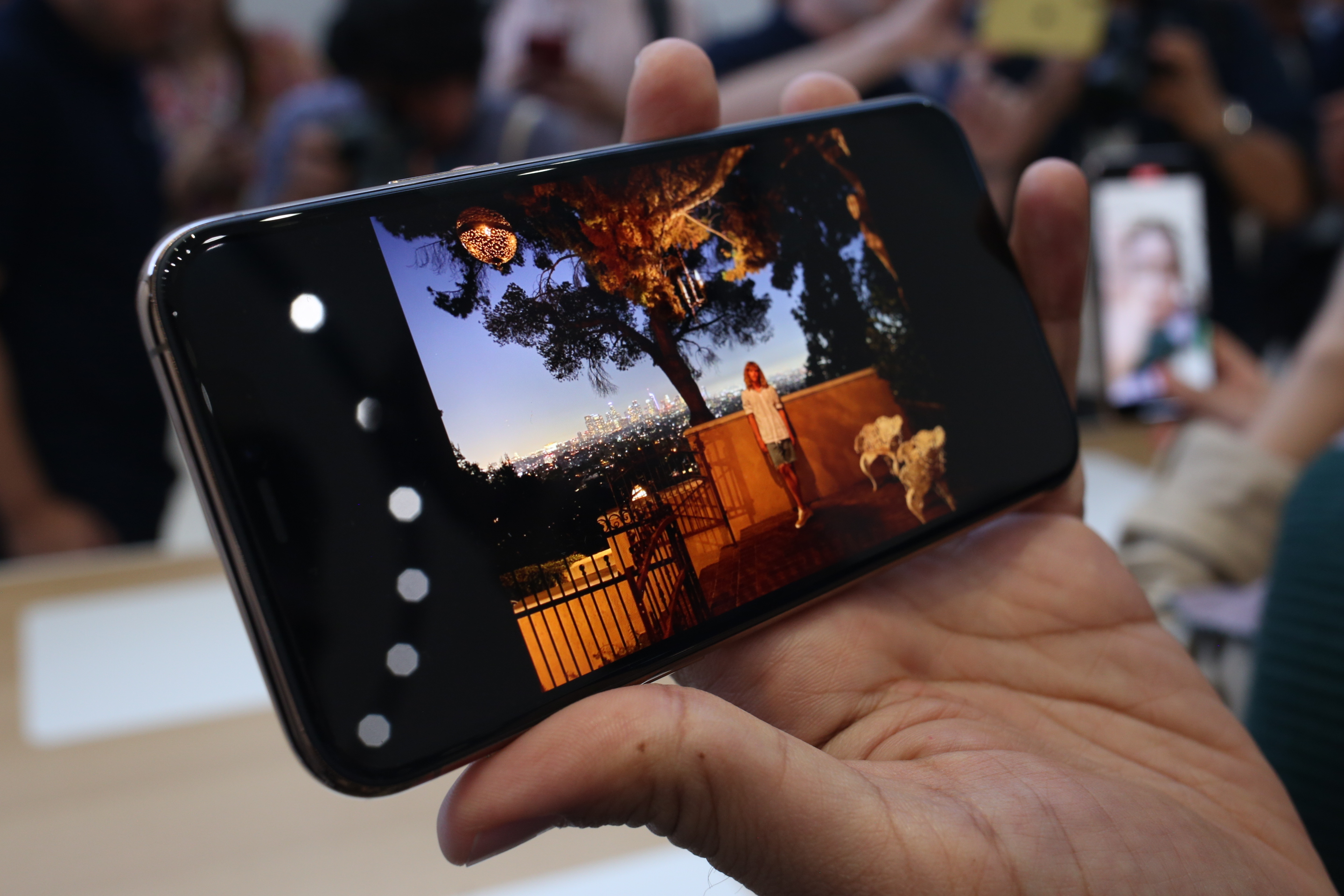
While I have spent lengthy time with OLED displays before—my iPhone X had one and, on a much smaller scale, every Apple Watch has had one—coming back after a year with my XR’s Liquid Retina LCD screen was quite literally eye-opening. Even with my poor eyesight, I immediately could notice a substantial difference in quality after putting my XR (and iPhone 11) side by side with the 11 Pro Max. For two years now, Apple has rightfully boasted about the XR’s (now 11) LCD screen being the best in the industry. It is ridiculously good, but the Pro’s OLED display is itself so good that I’ve wondered during testing how I was able to live happily with my XR last year.

In practice, the Super Retina XDR display on the 11 Pro Max is appreciably better in all phases. In addition to being physically larger (albeit not by much), the 11 Pro Max display’s brightness and sharpness make everything I see on my device much easier. It reduces eye strain and fatigue, which are constant battles for me. iOS 13’s new dark mode looks fantastic on OLED screens; I have it set to automatically switch from light to dark at sundown, and use apps like Twitter and Things in their pitch black modes at nighttime. Although there are dark mode skeptics, I personally find it to be a welcome reprieve during evening hours, and the credit is due to the Pro’s OLED display.

I started my testing with the iPhone 11 Pro Max for a few days, then switched to the regular 11 for another few days. After using both, knowing their respective screen technologies, I instantly knew which model I preferred. I could use the iPhone 11 with no problem, but having access to both phones reaffirmed to me just how superior OLED is for my vision. For my needs, it’s OLED or bust.
Apple iPhone 11

Three years with Face ID

I’ve written about my trials with Face ID before. As we collectively enter our third year with Apple’s facial recognition system, I think it’s worth briefly examining where it stands in context of the new iPhones and accessibility.

Apple says Face ID in the new iPhones is “up to 30 percent faster” while working from further away and at more angles than before. I cannot tell how much better it is in these regards; it’s Face ID and it seems to work just as well as it ever has. My strabismus still seems to wreak havoc on the phones’ TrueDepth camera system.

I set up Face ID on my 11 Pro Max and turned off Require Attention so that I needn’t look directly at the camera to unlock my phone. (When you do this, Apple blasts a modal alert on screen saying Face ID won’t be as secure as it could be. Fair enough, but it’s a trade-off I have to make in order to use it.) It’s worked like a charm, as usual.

What’s interesting, though, is what happened when I switched to the regular iPhone 11. I set up Face ID, but forgot to go into Settings and disable Require Attention. I suddenly realized this the other day, as I had clearly forgotten Face ID settings don’t sync from device to device. In hindsight it’s impressive how much Face ID has seemingly improved at recognizing my gaze. Whether it’s purposeful on Apple’s part, I don’t know, but I think it’s telling that I was unlocking my phone and paying for Lyft rides pretty much hassle-free for days with Require Attention on by default.

My strabismus still makes me an edge case, so I prefer Require Attention be disabled, as it’s the path of least resistance. Yet the happy accident I had regarding Require Attention led to a pleasant surprise. I can’t say it’s directly attributable to this generation of Face ID, but it’s an improvement regardless.

Adieu, 3D Touch

Like the much-maligned Touch Bar on the MacBook Pro, I have long been an ardent supporter of 3D Touch. I wrote about how it could positively impact accessibility when in debuted with the iPhone 6s four years ago, and missed it with my XR.

Apple’s removal of 3D Touch lends credence to the cons I outlined in my 2015 piece—namely, that it was too complex (for users and Apple) and it was too undiscoverable. The Apple community at large has felt this way about the feature since the beginning, especially bemoaning how it never percolated across iOS devices, most notably the iPad.

iOS 13 has brought Haptic Touch, first introduced with the iPhone XR last year, as a replacement for 3D Touch. It’s more or less equivalent; iOS 13 has expanded Haptic Touch’s scope so as to pick up many of 3D Touch’s tricks. These include Quick Actions on home screen icons and message previews in Mail and Messages. And importantly of course, these features work on iPads running iPadOS.

From an accessibility perspective, I have enjoyed having access to these shortcuts again on my iPhone 11 review units. I missed them during my time with the XR until now; the contextual menus throughout the OS really do cut down on excessive swiping and tapping. I like how Apple has grown Haptic Touch for the most part. I cannot tell an appreciable functional difference between it and 3D Touch in terms, say, starting a new email or text message from the home screen.

Where I believe Haptic Touch is a regression from 3D Touch is in performance. Accessing Quick Actions or link previews, for instance, feels like it takes forever relative to before. It isn’t so bad to the point that it’s unusable, but it’s definitely noticeable. More importantly, it causes Haptic Touch to lose a bit of the luster that makes haptic feedback such a promising assistive technology. Where 3D Touch always felt instantaneous, Haptic Touch, capable as it is, feels slower, thus ruining the fun a little. I assume this latency can and will improve over time, but count me as one who misses 3D Touch in the new iPhones.

[gallery ids="1885238,1885228,1885236,1885214,1885218,1885223,1885222"]

Miscellany

A few cursory notes on the new iPhones worth mentioning.

SIM card swapping. This is an extremely first-world problem, because I am privileged in the sense I get to review new iPhones every year. But this is an accessibility matter! Every year I get a new iPhone (or multiple iPhones) for testing, I’m reminded just how inaccessible the act of swapping my SIM card can be. It is a test of my visual acuity and fine-motor skills, both of which are not strong suits of mine. Especially on the midnight green, where the finish is so dark on the sides I can hardly see where the SIM tray is, moving between three iPhones can be quite adventurous. (I remember the jet black iPhone 7 having the same issue in terms of finding the SIM tray.) I like that Apple provides users with the SIM tool; the SIM card dance isn’t their fault. Still, as a visually impaired reviewer, I felt compelled to share this bit of accessibility minutia.

Color. Speaking of color, I do like the new midnight green finish a lot. The CW’s Arrow is my favorite television show, and the shade of green strikes me as the iPhone Oliver Queen would choose.

Battery life. One of the iPhone 11’s biggest selling points is the dramatically increased battery life. I’ve long compromised my battery—on an iPhone, iPad, or Apple Watch—because I need to run my devices with maximum screen brightness in order to see. That I can do so on iPhone 11 and still mostly benefit from the battery gains speaks volumes about Apple’s battery work. I can go a whole day, using my phone normally at max brightness, and not stress about conserving my battery or finding an outlet somewhere.

Portrait (pig?) Mode. Seriously, Portrait Mode on the new iPhones was made for pigs.

The bottom line

It’s a testament to the “completeness” of last year’s iPhone XR that I was so happy with it. Yes, it was beautifully blue, but it was also a damn good all-around iPhone. Apple describes the iPhone 11 as having “just the right amount of everything,” the iPhone for everyone, but that tagline could just as easily apply to the XR. Even today, the XR is a great phone if you can do without the second camera. The iPhone 11 is simply a better iPhone XR.

The iPhone 11 and 11 Pro are close enough, spec-wise, that if it the regular 11 came in blue, I might’ve been tempted to upgrade to that. There’s a reason Apple offers iPhones in a rainbow of colors; the psychological impact color has on consumerism is a very real phenomena. Perhaps someday soon there will be a blue iPhone with a Super Retina OLED display. That said, while both iPhones are highly impressive, I’m happy with the Pro for the upgraded screen quality and three cameras. You really can’t go wrong with either iPhone 11, but for this year anyway, the return to OLED was the clincher for me.


07 Oct 2019

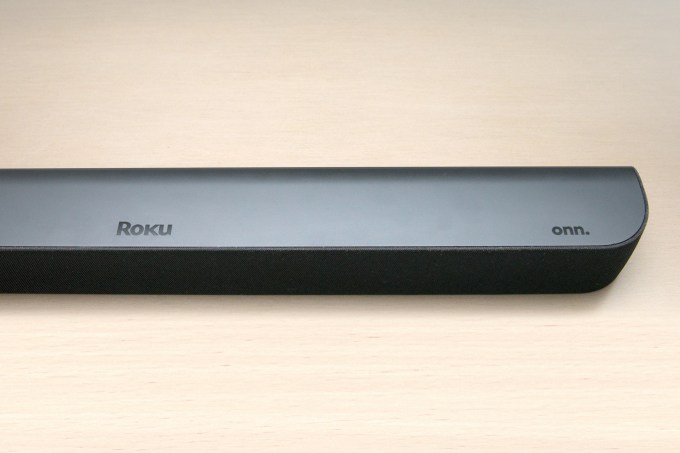
Roku to launch low-cost versions of its soundbar and subwoofer under Walmart’s onn brand

Roku will produce lower-cost versions of its new Smart Soundbar and Wireless Subwoofer for Walmart under the retailer’s own onn brand, the company announced this morning. While already Roku offers distinct versions of some of its streaming media players exclusively for retailers like Walmart and Best Buy, the company had briefly mentioned a larger deal with Walmart in its second-quarter financial report.

In addition to the Roku TVs and players sold at Walmart, Roku had said it would offer “several new Roku devices including audio products,” under the Walmart onn brand.

The new onn Roku audio devices for Walnart are an expansion of the line introduced last month.

In September, Roku debuted two new devices including the Smart Soundbar and Wireless Subwoofer, both at $180 each. The idea was to complement the existing Roku wireless speakers, in the case of the subwoofer, or offer an alternative for those who didn’t own a Roku TV or didn’t have enough space to set up the wireless speakers, in the case of the soundbar.

The Walmart onn-branded Smart Soundbar and Wireless Subwoofer, meanwhile, will only cost $129 each.

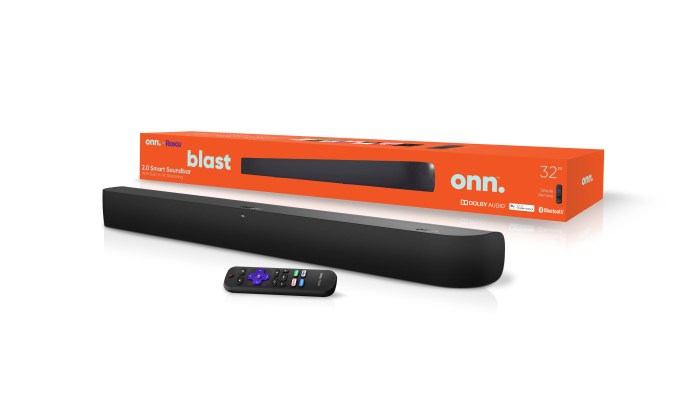
onn Roku Smart Soundbar lifestyle

Similar to Roku’s flagship models, onn Roku Smart Soundbar offers support for Dolby Audio, streaming from Bluetooth devices, and connects to the TV via HDMI-ARC or HDMI and Optical. However, it will ship with Roku’s simpler IR remote offering TV power and channel button shortcuts, instead of the more powerful voice remote that comes with the $180 version.

It also features 40W of peak power versus the Roku Smart Soundbar’s 60W and different drivers.

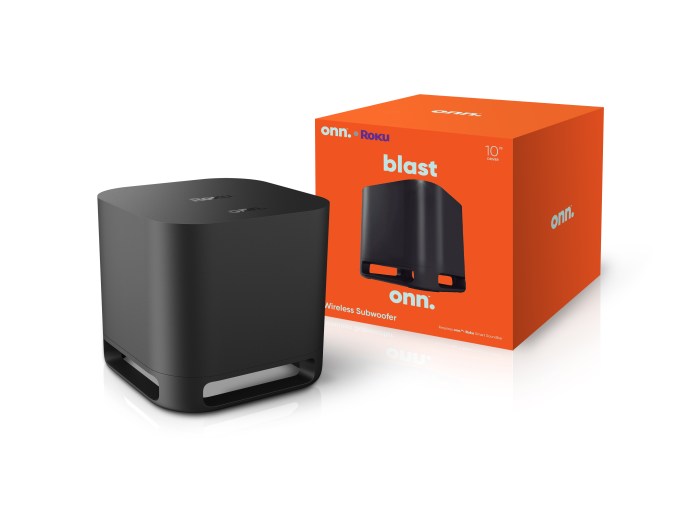
The onn Roku Wireless Subwoofer is designed to work with the onn Roku Smart Sounbar to offer customers a deeper, richer bass. The lower-cost version features a 10″ driver like the Roku Wireless Subwoofer, but it’s slightly smaller and features 150 peak watts of power versus the Roku Wireless Subwoofer’s 250 peak watts of power.

Both devices also feature branding and cosmetic differences, Roku says.

“Roku and Walmart have worked together for years to enhance the entertainment experience for millions of people who have purchased Roku TV models and Roku streaming players. Now, we’re looking forward to getting these new audio products on shelves to provide consumers with better sound for their TV experience at a great price,” said Mark Ely, Vice President of Players and Whole Home Product Management at Roku, in a statement.

onn Roku Wireless Subwoofer

The Walmart exclusivity deal will help to bring more customers to Roku’s products at a time when the majority of Roku’s revenue isn’t hardware sales, but rather platform revenue.

Led by advertising, Roku platform revenue has out-earned hardware sales for the past five quarters. And in Q2, Roku saw $250.1 million in revenue versus $224.4 million expected, up 59% from the same quarter in 2018 — the rise largely attributed to advertising.

onn Roku Smart Soundbar

The new onn Roku-branded products may serve as an entry point for some customers into Roku’s wider range of products, including its streaming players and Roku OS-powered TVs, for example. This, in turn, could help Roku grow its customer base for its platform business. In addition, Walmart shoppers are historically price-conscious, meaning they’re the ideal demographic to target with Roku’s growing ad-supported streaming business, where it provides free movies and TV through its home page hub, The Roku Channel.

The devices will become available sometime in the next few weeks both in Walmart stores and on Walmart.com, says Roku.

07 Oct 2019

Next Insurance raises $250M from Munich Re, becomes a unicorn

Next Insurance, a three-year-old U.S.-based firm that sells insurance products to small businesses, has become the latest unicorn in the nation after bagging $250 million in a new financing round, the startup said today.

Germany-based Munich Re, one of the world’s largest reinsurers, alone funded Next Insurance’s Series C round, the two said in a statement. The new financing round valued the three year-year-old startup, which has raised $381 million to date, at over $1 billion, the startup said.

Guy Goldstein, co-founder and chief executive of Next Insurance, said the startup will use the fresh capital to build new products and expand its customer initiatives. Next Insurance offers a wide-range of insurance coverage to over 1,000 unique types of business. It has amassed over 70,000 customers in the U.S., the only market where it currently operates.

In a statement, Joachim Wenning, Chairman of the Board of Management at Munich Re, said the new investment will help Munich Re expand its footprint in the U.S.’ insurance market of small and medium-sized commercial customers.

“Next Insurance will benefit from our expertise in primary insurance and reinsurance. This investment emphasizes Munich Re’s commitment to be the leading provider of digital insurance solutions,” added Wenning.

More to follow…

07 Oct 2019

83North closes $300M fifth fund focused on Europe, Israel

83North has closed its fifth fund, completing an oversubscribed $300 million raise and bringing its total capital under management to $1.1BN+.

The VC firm, which spun out from Silicon Valley giant Greylock Partners in 2015 — and invests in startups in Europe and Israel, out of offices in London and Tel Aviv — last closed a $250M fourth fund back in 2017.

It invests in early and growth stage startups in consumer and enterprise sectors across a broad range of tech areas including fintech, data centre & cloud, enterprise software and marketplaces.

General partner Laurel Bowden, who leads the fund, says the latest close represents investment business as usual, with also no notable changes to the mix of LPs investing for this fifth close.

“As a fund we’re really focused on keeping our fund size down. We think that for just the investment opportunity in Europe and Israel… these are good sized funds to raise and then return and make good multiples on,” she tells TechCrunch. “If you go back in the history of our fundraising we’re always somewhere between $200M-$300M. And that’s the size we like to keep.”

“Of course we do think there’s great opportunities in Europe and Israel but not significantly different than we’ve thought over the last 15 years or so,” she adds.

83North has made around 70 investments to date — which means its five partners are usually making just one investment apiece per year.

The fund typically invests around $1M at the seed level; between $4M-$8M at the Series A level and up to $20M for Series B, with Bowden saying around a quarter of its investments go into seed (primarily into startups out of Israel); ~40% into Series A; and ~30% Series B.

“It’s somewhat evenly mixed between seed, Series A, Series B — but Series A is probably bigger than everything,” she adds.

It invests roughly half and half in its two regions of focus.

The firm has had 15 exits of portfolio companies (three of which it claims as unicorns). Recent multi-billion dollar exits for Bowden are: Just Eat, Hybris (acquired by SAP), iZettle (acquired by PayPal) and Qlik.

While 83North has a pretty broad investment canvas, it’s open to new areas — moving into IoT (with recent investments in Wiliot and VDOO), and also taking what it couches as a “growing interest” in healthtech and vertical SaaS. 

“Some of my colleagues… are looking at areas like lidar, in-vehicle automation, looking at some of the drone technologies, looking at some even healthtech AI,” says Bowden. “We’ve looked at a couple of those in Europe as well. I’ve looked, actually, at some healthtech AI. I haven’t done anything but looked.

“And also all things related to data. Of course the market evolves and the technology evolves but we’ve done things related to BI to process automation through to just management of data ops, management of data. We always look at that area. And think we’ll carry on for a number of years. ”

“In venture you have to expand,” she adds. “You can’t just stay investing in exactly the same things but it’s more small additional add-ons as the market evolves, as opposed to fundamental shifts of investment thesis.”

Discussing startup valuations, Bowden says European startups are not insulated from wider investment dynamics that have been pushing startup valuations higher — and even, arguably, warping the market — as a consequence of more capital being raised generally (not only at the end of the pipe).

“Definitely valuations are getting pushed up,” she says. “Definitely things are getting more competitive but that comes back to exactly why we’re focused on raising smaller funds. Because we just think then we have less pressure to invest if we feel that valuations have got too high or there’s just a level… where startups just feel the inclination to raise way more money than they probably need — and that’s a big reason why we like to keep our fund size relatively small.”

07 Oct 2019

Berlin’s Tier Mobility scoops up $60M for its scooter-based transportation service

On the heels of Bird closing a $275 million round to help put itself in pole position in the electric scooter market, a smaller European rival has also raised some money to grow its own business. Tier Mobility, a Berlin-based startup that operates a fleet of 20,000 scooters across 40 cities in 12 countries, has raised $60 million, funding that co-founder and CEO Lawrence Leuschner said Tier plans to invest in further geographical expansion and technology.

Tier earlier this year started to describe itself as a “micro mobility” player, with plans to augment scooters with other transportation options, but in an interview Leuschner declined to say what those might be, or when they will come online. In the meantime, it’s been upgrading its fleet to a more robust hardware to cut down on maintenance costs (which has typically been one of the biggest strains on scooter startups): these newer scooters have lifespans of around 18 months and now make up some 80% of Tier’s current fleet, Leuschner said.

This latest funding, a Series B, is being co-led by Mubadala Capital and Goodwater Capital. Mubadala is the state fund for Abu Dhabi, which is currently the only non-European market where Tier operates. Mubadala made some headlines earlier this year when it was revealed that Softbank was backing its $400 million fund for European investments. (Indirectly, this also means that Softbank is backing Tier.)

“We firmly believe that micro-mobility as a form of transportation is here to stay, especially in Europe,” said Amer Alaily from Mubadala Capital in a statement. “We are confident that Tier Mobility is best positioned to become the leading player in Europe and globally. We are excited and look forward to building a global category leading company out of Europe.”

Others in this round include insurance giant Axa Germany, Evli Growth Partners, White Star Capital, Northzone, Speedinvest, Point9, Indico, Kibo Ventures, Market One Capital and Formula One racing champion Nico Rosberg, and the valuation is not being disclosed.

The scooter market is a crowded one, but Tier’s rapid growth points both to the opportunity for those building services in it, and Tier’s own success. Since raising its Series A (initially €25 million, but expanded to €32 million in February of this year), Tier has grown to 10 million rides, adding 8 million in the last four months both through its direct services and by way of partnerships with others, such as car rental company Sixt. That growth has led Tier to claim that it is currently the fastest-growing mobility company “in the world.” Leuschner — who co-founded the company with Matthias Laug (now CTO) — said the goal now is to hit between 3 million and 5 million rides monthly.

The funding today takes the total raised by Tier to around $95 million, a relatively modest amount when you consider the hundreds of millions raised by the likes of Bird (capital that it’s using in part to grow in Europe in direct competition with Tier).

Tier has taken the view, however, that big money isn’t the only way to build a big service. “With our series A funding of €32 million, we built the fastest growing mobility company,” Leuschner said. “We achieved that with a fraction of the capital of Bird and Lime. That shows how efficiently we are operating. With this round we will now accelerate the growth based on our scalable infrastructure and positive unit economics.”

With scooter market’s unit economics unlike that of car-based on-demand transportation (the vehicles are owned, and there are not drivers to pay out, for starters), he said that Tier is already profitable in some of its markets.

One of the big sticking points that has hindered the growth of more scooter services has been regulation and specifically safety concerns, with reports of faulty software and human error / reckless driving both contributing to a number of accidents.

Leuschner noted that Tier has had around 250 accidents to date across its 10 million rides, with “the vast majority minor accidents.”

“We continue to educate users, but I can’t see a significant safety issue compared to other vehicles,” he added. “I think Tier is has taken a leadership role in safety with the safest scooter on the market, permanent education of our users and insurance for every driver in every city.”

In this regard, having an insurance company — Axa — now on board as a strategic investor will potentially see both more safety initiatives rolled out by Tier, but also potentially the emergence of insurance policies provided to customers as part of the service.

“Tier Mobility is not only the fastest growing mobility company in the world, but one of the fastest growing companies in consumer tech history,” noted Chi-Hua Chien, the star investor and Goodwater Capital co-founder who had previously been at Kleiner Perkins and before that Accel. “With phenomenal execution they have emerged as the leading micro-mobility provider in Europe on only a fraction of the invested capital of their competitors. This is a true testament to the uniquely capital efficient and profitable model the team chose to deploy from the outset. Tier’s unique approach to operations and partnerships yields superior unit economics and defensibility.”

07 Oct 2019

Ritesh Agarwal to invest $700M in Oyo’s new $1.5B financing round

India’s budget lodging startup Oyo Hotels and Homes said today it plans to raise about $1.5 billion as part of a new financing round as the startup looks to expand its footprints in the U.S. and Europe.

Ritesh Agarwal, the founder and CEO of Oyo, has committed to infuse $700 million to buy new shares in the company, which has already become one of the largest hotel chains in Asia. Existing investors SoftBank Group, Lightspeed Venture Partners, Sequoia India also intend to participate in the round, which would value the six-year-old startup at $10 billion.

In a statement, the 25-year-old founder said the “continued support of our investors like SoftBank Vision Fund, Lightspeed, Sequoia Capital is a testament to the love, trust, and relentless support of our asset owners and customers.”

He added that the startup, which today operates in over 80 markets and manages over 1.2 million rooms, “can build a truly global brand out of India, while ensuring that the business is run efficiently and with a clear path to profitability.”

Oyo, which employs about 20,000 people, said it maintains a strong balance sheet of about $2 billion across different verticals, and plans to invest a significant part of it in the business. Agarwal said the startup is “operating profitably at the building level but at the same time our EBIDTA has also improved by 50%” over the last year.

Oyo, which entered China last year, claims to have 590,000 rooms there and presence in 332 cities. In the U.S., it has established presence in 21 states and 60 cities. In August this year, the company said it was investing $335 million in its rental business in Europe.

In July this year, Agarwal said he was planning to spend $2 billion through an entity called RA Hospitality Holdings, to raise his stake in the company from 10% to 30%. Early investors Lightspeed and Sequoia have agreed to sell part of their stake in the startup. Prior to today’s announcement, Oyo had raised about $1.7 billion — $1 billion of which came from its last year’s financing round. Oyo today counts Airbnb as one of its investors.

07 Oct 2019

5 days left to save on passes to Disrupt Berlin 2019

A show of hands, startuppers. Who’s ready to save some money on passes to Disrupt Berlin 2019, our premier tech conference that takes place on 11-12 December? Then listen up, because our super early bird pricing ends in just five days. Right now, passes start at €345 + VAT and, depending on which pass you choose, you can save up to €600. Ka-ching!

Save your euros. Buy your passes to Disrupt Berlin before the Friday, 11 October at 11:59 p.m. (CEST) deadline. Then plan your strategy to make sure you take full advantage of Disrupt. Let’s look at what’s in store.

We’re talking two full days of programming. A roster of world-class speakers and panelists — founders, investors and icons. These are folks who have done the hard work in the trenches. They know how to succeed, and they’ll share their experiences, insights and advice.

We’re thrilled that our roster includes the likes of Julian Stiefel, co-founder/co-CEO of Tourlane. The company’s ongoing mission? Using a recent round of funding ($47 million) to address the challenging problems associated with booking group travel.

You’ll also hear from Jen Rubio, co-founder and chief brand officer of Away, one of the most successful consumer brands in years. How successful? The company, which launched in 2015, has sold more than 1 million suitcases, raised a $100 million round at a $1.4 billion valuation earlier this year and turned profitable in 2018. We’re guessing she might have just one or two tips for aspiring direct-to-consumer entrepreneurs.

Don’t miss the legendary entrepreneurial showdown that is Startup Battlefield. This epic pitch competition has, since its inception, launched 857 companies that have gone on to collective raise $8.9 billion and produce 113 exits. Be in the room and cheer on some of the world’s top early-stage startups as they compete for the $50,000 equity-free prize, investor love and global media attention.

Ready to network? There’s no better place to start than Startup Alley, the Disrupt expo floor. You’ll find hundreds of innovative early-stage startups exhibiting their tech products, services and platforms. Make connecting with the people who can help move your business forward by using CrunchMatch.

Our business-matching platform makes it easier to find and connect with people who share your business interests. You create a profile listing your specific criteria and goals. The CrunchMatch algorithm suggests matches and, subject to your approval, proposes meeting times and sends meeting requests.

When you’re in Startup Alley, be sure to keep an eye out for our TC Top Picks. These companies, curated and selected by TechCrunch editors, represent the best early-stage startups in these categories: AI/Machine Learning, Biotech/Healthtech, Blockchain, Fintech, Mobility, Privacy/Security, Retail/E-commerce, Robotics/IoT/Hardware, CRM/Enterprise and Education.

An amazing slate of speakers, a world-class pitch competition, hundreds of exhibitors and full-tilt networking. That’s just a small taste of what’s waiting for you at Disrupt Berlin 2019  on 11-12 December. Why pay more than necessary? The super early bird pricing disappears on Friday, 11 October at 11:59 p.m. (CEST) deadline. Buy your passes here today.

Is your company interested in sponsoring or exhibiting at Disrupt Berlin 2019? Contact our sponsorship sales team by filling out this form.

07 Oct 2019

5 days left to save on passes to Disrupt Berlin 2019

A show of hands, startuppers. Who’s ready to save some money on passes to Disrupt Berlin 2019, our premier tech conference that takes place on 11-12 December? Then listen up, because our super early bird pricing ends in just five days. Right now, passes start at €345 + VAT and, depending on which pass you choose, you can save up to €600. Ka-ching!

Save your euros. Buy your passes to Disrupt Berlin before the Friday, 11 October at 11:59 p.m. (CEST) deadline. Then plan your strategy to make sure you take full advantage of Disrupt. Let’s look at what’s in store.

We’re talking two full days of programming. A roster of world-class speakers and panelists — founders, investors and icons. These are folks who have done the hard work in the trenches. They know how to succeed, and they’ll share their experiences, insights and advice.

We’re thrilled that our roster includes the likes of Julian Stiefel, co-founder/co-CEO of Tourlane. The company’s ongoing mission? Using a recent round of funding ($47 million) to address the challenging problems associated with booking group travel.

You’ll also hear from Jen Rubio, co-founder and chief brand officer of Away, one of the most successful consumer brands in years. How successful? The company, which launched in 2015, has sold more than 1 million suitcases, raised a $100 million round at a $1.4 billion valuation earlier this year and turned profitable in 2018. We’re guessing she might have just one or two tips for aspiring direct-to-consumer entrepreneurs.

Don’t miss the legendary entrepreneurial showdown that is Startup Battlefield. This epic pitch competition has, since its inception, launched 857 companies that have gone on to collective raise $8.9 billion and produce 113 exits. Be in the room and cheer on some of the world’s top early-stage startups as they compete for the $50,000 equity-free prize, investor love and global media attention.

Ready to network? There’s no better place to start than Startup Alley, the Disrupt expo floor. You’ll find hundreds of innovative early-stage startups exhibiting their tech products, services and platforms. Make connecting with the people who can help move your business forward by using CrunchMatch.

Our business-matching platform makes it easier to find and connect with people who share your business interests. You create a profile listing your specific criteria and goals. The CrunchMatch algorithm suggests matches and, subject to your approval, proposes meeting times and sends meeting requests.

When you’re in Startup Alley, be sure to keep an eye out for our TC Top Picks. These companies, curated and selected by TechCrunch editors, represent the best early-stage startups in these categories: AI/Machine Learning, Biotech/Healthtech, Blockchain, Fintech, Mobility, Privacy/Security, Retail/E-commerce, Robotics/IoT/Hardware, CRM/Enterprise and Education.

An amazing slate of speakers, a world-class pitch competition, hundreds of exhibitors and full-tilt networking. That’s just a small taste of what’s waiting for you at Disrupt Berlin 2019  on 11-12 December. Why pay more than necessary? The super early bird pricing disappears on Friday, 11 October at 11:59 p.m. (CEST) deadline. Buy your passes here today.

Is your company interested in sponsoring or exhibiting at Disrupt Berlin 2019? Contact our sponsorship sales team by filling out this form.