Year: 2019

04 Oct 2019

Snap CEO isn’t expecting much from Facebook antitrust investigations

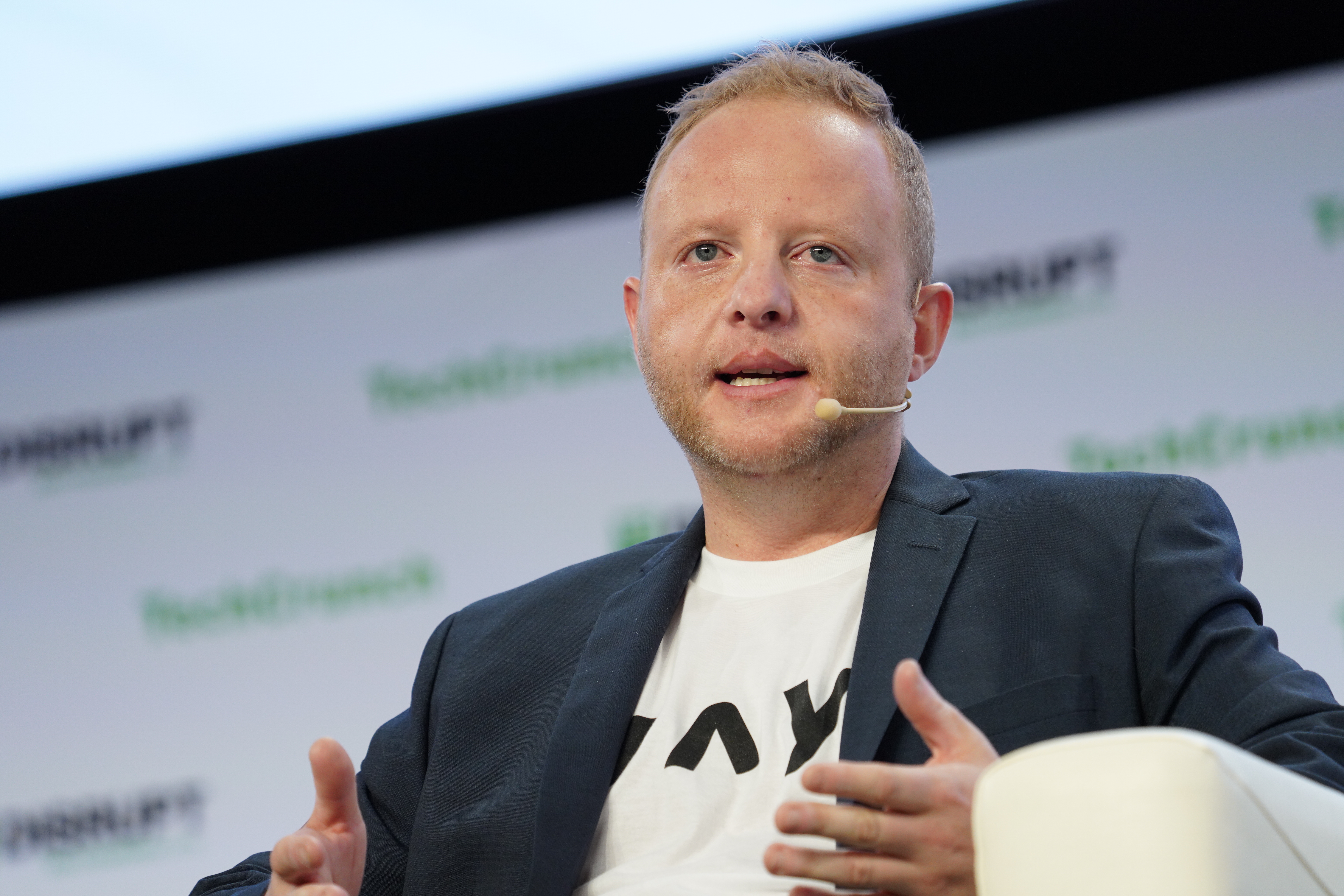
Facebook’s relentless blatant feature copy of Snapchat have been seen as one of the chief examples of the company’s competitive overreach, but Snap CEO Evan Spiegel isn’t sure whether antitrust activity from the government is going to change the company’s near-term prospects of competing with Instagram.

“I mean the history of antitrust would basically say that these investigations last like seven to ten years or something like that and that basically nothing happens,” Spiegel said onstage at TechCrunch Disrupt SF. “I think a lot can change in the seven to ten years that this process will take.”

Though Spiegel didn’t seem to have the most faith in the process giving Snap a more level playing field to take on Facebook, he did say there were clear public concerns with how Facebook was responding to competition in the market.

“The thing that everyone’s concerned about is like is that they’ve seen that competition has been what has motivated Facebook to make those changes over time,” Spiegel said onstage. “So, if you look at Snapchat, the inventions that we create around ephemerality, around privacy, those have really motivated Facebook to dramatically change their product offering in order to compete.”

Whether Facebook was specifically suppressing Snapchat content, Spiegel said, “It’s hard to say and I you know I’d probably be stupid to talk about it here.”

“I think what everyone is concerned about is what they would characterize as anti competitive practices so for example, you know, people upload snaps they create on Snapchat to Instagram, all the time, and then Instagram suppresses you know the Snapchat hashtag or they suppress people’s ability to post snap codes as their profile picture or suppress their ability to link to Snapchat on their profile. And that’s an example of anti-competitive behavior.”

Spiegel also confirmed that the company had put together a list of some of Facebook’s competitive moments called Project Voldemort, noting that the list had been started several years ago. The initiative’s existence was first reported by The Wall Street Journal.

“I didn’t make it, our legal team put it together,” Spiegel said. “I think just because they kept hearing from our partners all of these things that Facebook was doing and it was actually so many that people couldn’t actually remember them all so they started writing them down.”

04 Oct 2019

Amid mounting concerns around vaping cannabis, entrepreneurs say regulators need to step up

As a concerns over the safety of vaping products for cannabis sweeps across the country, executives in the industry are passing the buck to regulators to come up with a solution.

The need for national regulation touches everything from how to bank cannabis businesses to how to manage the distribution of cannabis products, but the pain is most acute as vaping related illnesses sweep the United States.

To date, the CDC has recorded roughly 1,080 lung injury cases associated with using e-cigarette, or vaping products in 48 states and 1 U.S. territory. According to the agency, 18 deaths have been confirmed in 15 states, so far. And most of those patients report a history of using THC-containing products.

“I want the CDC and the regulatory bodies that are actually looking into the case to kind of investigate those causes and come back,” said Bharat Vasan, the former chief executive officer at Pax Labs, a marijuana vaporizer manufacturer,  speaking onstage at Disrupt San Francisco 2019. Vasan declined to address whether Pax Labs products could be considered 100% safe. “I think that’s a good question for the company,” said the former chief executive who had worked for Pax for over a year.

Both Vasan, who now runs a consumer and cannabis focused investment firm, Yellow Dog Ventures, and Eaze and Wayv founder Keith McCarty, think that more regulation would fuel growth and provide more stability for a market that’s already the fastest growing industry in the United States.

“It’s like the final stage of prohibition,” says Vasan. “It’s ending but it’s ending state by state by state for cannabis.”

Keith McCarty WayvDSC03851

New bills like the SAFE Act, which recently passed the House of Representatives, would allow national banks to work with cannabis companies. The lack of access to appropriate financial services has been one source of friction in the U.S. cannabis industry. Although it hasn’t stopped any number of entrepreneurs like Vasan, McCarty and others from launching businesses to serve the industry.

Still, it’s a bit of a scary time for many executives in the industry. Bruce Linton was ousted at Canopy Growth, and chief operating officer Ben Cook and General Counsel Lisa Sergi Trager, resigned from MedMen Enterprises. And there’s still a potentially toxic cloud of vapor hanging over the industry in the form of additives and chemicals that have been linked to wave of lung illnesses that swept through the country over the past year, according to the Food and Drug Administration and the Centers for Disease Control. From

Despite the headwinds for vaping, America is clearly becoming cannabis country. “It still happens to be the fastest growing industry in the world,” McCarty said. And even though venture capital investors can’t invest into the industry directly, the ancillary services, products,  and logistic requirements to build a fully functioning, mature industry, represents a significant opportunity for entrepreneurs.

“The market and the population is saying through sentiment that we want this,” said McCarty “[And] this industry continues to move in the right direction… up and to the right.”

At the same time, McCarty also sees the need for more government regulation to move the industry fully into the realm of legitimate, regulated enterprises and rid cannabis of the grey and black market operators that have far more freedom to sell harmful products, thanks to their under-the-table operations.

“We have three times as many illicit dispensaries as we do ones that are legal in the state of California,” says McCarty. “And what the voters voted in is safe access. Safe access is about availability of access points to be able to receive and consume cannabis based on the law and regulations.”

Ultimately, McCarty sees the support for the continuing integration of cannabis products as legal medical and recreational options as something that should have bi-partisan support.

“Our government should be looking at voter sentiment and the population . . . is overwhelmingly in support of cannabis  . . .well beyond that for medical and even for for recreational . . . so it’s probably one of the… only items on the agenda, too, that is bipartisan, like truly supported by parties,” McCarty says. “I’m talking about putting money towards schools, books, education as opposed to all the illicit things that we’re trying to break away from, like the illicit sale of things that you know that may be harming people from a health and wellness perspective.”

04 Oct 2019

How you shouldn’t handle your data breach

So you’ve had a data breach. Don’t worry, it’s not just you. These days it happens to everyone, no matter how large or small your company is. It’s almost inevitable, some might say, and not a case of if but when.

A lot is already out of your control. Whether a hacker broke in and stole customer data or someone on staff left a cloud server exposed without a password, the incident alone is bad enough. But then you’ll also face a stream of headlines, flack from your customers, and endless tweets and social media posts. Trust will invariably suffer, your brand will hurt, and recovery seems like a million miles away.

But as breaches become more commonplace, few companies remember the actual incident itself — or even the number of users or customers affected. No matter what kind of security incident you’re thrown into, what happens afterward is how you will be remembered.

Get it right, you can save face. Get it wrong, and you’ll never live it down. Here’s what not to do when you have a data breach.

Don’t try to cover it up

04 Oct 2019

How you shouldn’t handle your data breach

So you’ve had a data breach. Don’t worry, it’s not just you. These days it happens to everyone, no matter how large or small your company is. It’s almost inevitable, some might say, and not a case of if but when.

A lot is already out of your control. Whether a hacker broke in and stole customer data or someone on staff left a cloud server exposed without a password, the incident alone is bad enough. But then you’ll also face a stream of headlines, flack from your customers, and endless tweets and social media posts. Trust will invariably suffer, your brand will hurt, and recovery seems like a million miles away.

But as breaches become more commonplace, few companies remember the actual incident itself — or even the number of users or customers affected. No matter what kind of security incident you’re thrown into, what happens afterward is how you will be remembered.

Get it right, you can save face. Get it wrong, and you’ll never live it down. Here’s what not to do when you have a data breach.

Don’t try to cover it up

04 Oct 2019

Top VCs on how to break into venture capital

Becoming a venture capitalist is notoriously difficult. One part timing, one part experience, another part network. Rarely can someone provide succinct instructions on how to break into the field of private market investing or how to create your own VC fund.

On stage at TechCrunch Disrupt San Francisco, established VCs Theresia Gouw, the founder of a new firm called aCrew Capital, and Floodgate co-founder Ann Miura-Ko explained what they see as two distinct paths to the top of VC.

On path is long, calculated and requires endurance. The first step is to become an associate at a venture capital fund (this typically requires a college degree and a few years working in investment banking or in the greater finance industry). Next, you spend several years learning the ins and outs of the trade. And finally, once you’ve developed a portfolio and reputation in startups investing, you can rise to the partner ranks or raise your own VC fund.

“When I was starting in 2008 everyone said ‘no one starts a venture capital firm,'” Miura-Ko, who launched Floodgate nearly a decade ago after a stint as an analyst at CRV and seven years obtaining a Ph.D. in cybersecurity, told TechCrunch’s Connie Loizos. “Today, there are so many different paths into the market and that’s both an opportunity and a huge challenge … The question is how do you stand out? … You have to figure out what’s your schtick?”

Gouw, for her part, was a managing partner at the renowned firm Accel from 1999 to 2014 after consulting for Bain & Company. In 2014, she co-founded one of the first female-run venture capital firms, Aspect Ventures, alongside Jennifer Fonstad. Last month, however, the pair announced the firm would be splitting up, with Gouw launching aCrew and Fonstad starting Owl Capital.

Gouw, said to be one of the wealthiest women in venture thanks to several high-profile bets, says raising your own fund is all about relationships: “I think there are many great entry paths into [venture] now,” she said. “Remember what makes you stand out as an investor is investing in great companies… These people are going to be the references for you when you want to raise your first fund. It’s about investing in great people who are trying to do great things.”

The other route to venture is newer and simpler. Just start making investments, the two explained. This only works if you have money to invest, i.e. if you’ve sold your startup for a decent sum or you’re being paid an exorbitant sum by one of the tech giants.

“There’s some great investors who went out and started building their own individual track records as either advisors or angels,” Gouw said. “And, you know, there’s obviously a lot of great entrepreneurs who then go and start venture funds.”

04 Oct 2019

Daily Crunch: Facebook faces government pressure over encryption

The Daily Crunch is TechCrunch’s roundup of our biggest and most important stories. If you’d like to get this delivered to your inbox every day at around 9am Pacific, you can subscribe here.

1. Facebook is being leaned on by US, UK, Australia to ditch its end-to-end encryption expansion plan

U.S. Attorney General William Barr, acting U.S. Homeland Security Secretary Kevin McAleenan, U.K. Home Secretary Priti Patel and Australia’s minister for home affairs, Peter Dutton, have co-signed an open letter to Facebook calling on the company to halt its plan to roll out end-to-end encryption across its suite of messaging products.

Facebook isn’t the only messaging company using end-to-end encryption, but it’s in governments’ crosshairs on account of a plan to expand its use of e2e crypto.

2. Bird raises $275 million Series D round at a $2.5 billion valuation

The scooter startup’s new round comes a few months after TechCrunch reported Bird was looking to raise a Series D round at a $2.5 billion valuation.

3. Instagram launches Threads, a Close Friends chat app with auto-status

What if Instagram could automatically tell your Close Friends you’re home, working, on-the-move or chilling and might want to hang out? That’s the idea behind its new companion app Threads.

4. Startups ‘are staying private way too long’ says Salesforce founder Marc Benioff

“What public markets do is indeed the great reckoning,” Benioff said while onstage at Disrupt SF. “But it cleanses [a] company of all of the bad stuff that they have.”

5. Kitty Hawk reveals its secret project, Heaviside

HVSD (named after renowned physicist and electrical engineer Oliver Heaviside) is an electric aircraft designed to go anywhere and land anywhere fast and quietly. Sebastian Thrun’s aviation startup has been working on the aircraft for two years.

6. TikTok explains its ban on political advertising

This isn’t really a new ban, but rather a reiteration of an existing one. The company says it won’t allow ads supporting a candidate, political party or issue, because they don’t fit with the “light-hearted and irreverent feeling” that the app is aiming for.

7. Google-backed Dunzo raises $45M to expand its hyperlocal delivery startup in India

An Indian startup that is increasingly posing a threat to established food and grocery delivery businesses, as well as to e-commerce giants, just closed a new financing round.

04 Oct 2019

Amid AR/VR experiments, Apple reportedly buys UK visual effects studio

Apple has reportedly acquired UK special effects studio IKinema, a startup that may be useful in Apple’s quest to bolster its mobile devices with AR special effects and in its more far-flung attempts to enter the AR/VR headset market.

The company issued its standard confirmation for the deal to several other publications, “Apple buys smaller companies from time to time, and we generally don’t discuss our purpose or plans.” The news was first reported by FT after rumors were floated by MacRumors. TechCrunch has reached out to Apple.

IKenema has used motion-tracking work to live animate the bodily movements of digital characters, but the team has also stockpiled this information to create realistic models of movements of digital characters in digital environments, specifically in the context of games and virtual reality titles.

These models were highlighted in the startup’s RunTime product that integrated into game engines like Epic Games’ Unreal Engine. RunTime was powering avatar interactions in experiences like The Void’s “Star Wars: Secrets of the Empire,” a virtual reality experience at Disney resorts, as well as in works by studios like Capcom Linden Lab, Microsoft Studios, Nvidia, Respawn and Square Enix.

unnamed 1

RunTime being used in Impulse Gears’ PSVR game, Farpoint

The company’s Orion product, allowed motion capture with lower-cost input, essentially syncing limited input like head and hand movement  with motion models that could allow for a hybrid solution that still looked realistic. The technology was being used for visualizations by teams at NASA, Tencent, and others.

What does Apple want with this company?

There are a handful of spots that this tech could prove helpful, the most obvious of which would be bringing special AR effects to the iOS camera, juxtaposing the spatial data that the camera can gather from a real-world space with digital AR models. This could theoretically allow something like an AR figure to walk up your stairs or sit on a chair. The issue iKenema doesn’t solve in these scenarios is computer vision segmentation to be able to tell what surface is a table versus a floor versus a couch cushion, but enabling digital models to interact with these spaces is a big advance.

Where else?

Well, a little bit more of a reach for Apple would be using this tech in the context of a VR or AR avatar system. iKenema worked a lot with motion capture, but they did so with the explicit purpose of designing models for digital humans to interacted with digital environments in real-time. Their solution was already being used by virtual reality developers to give VR gamers a way to visualize how their own bodies moved in VR given limited inputs.

Facebook Horizon World Builder

Facebook Horizon’s legless avatars

Virtual reality systems typically only know the location of your head and hands given trackers on the controllers and headset, but IKinema’s solution allowed developers to make the rest of users in-game bodies look more natural inside games. This is a pretty difficult challenge, and it’s the reason plenty of VR titles have made avatar systems that are missing legs, necks, arms and shoulders, because everything looks awful if the movements are off.

Apple’s computer vision needs are only heightening as they bowl forward on AR and VR devices while also aiming to bolster the camera on the iPhone as a point of differentiation from Google and Samsung devices.


04 Oct 2019

Ellen Pao calls out Twitter’s ‘public town square’ model as flawed

Project Include CEO Ellen Pao, who has been working to foster diversity, inclusion and ethics in the tech industry, called out Twitter’s “public square” model as flawed — and a decision that indicates a lack of ethical consideration, on Twitter’s part.

The topic of Twitter came up on a panel at TechCrunch Disrupt SF 2019 this morning, when Pao was asked her opinion as to whether Twitter should make exceptions to its platform rules for public figures — like President Trump, for example.

She said doesn’t believe that it should. And not just because the decision in and of itself raises ethical questions, but because of how these decisions can ultimately shape the direction of Twitter’s platform as a whole.


“I think it’s a question of ethics to break these exceptions — because you want to drive this growth that you want to use to fuel your stock price and to fuel recruiting, and to fuel this capitalism — that’s driving all sorts of decisions without thinking about the long-term direction of where your platform is going,” Pao explained.

She also questioned whether Twitter has been successful in creating an online version of the public town square, which is how Twitter CEO Jack Dorsey has repeatedly described the social media platform.

“Jack talks about this public square, where you have this digital version of the public square. But people aren’t screaming at you on the public square, they’re not calling you racist things, they’re not throwing pictures of like horrible things…I don’t want to be in a public square like that,” Pao said. “And I don’t want to have a public square that’s digital create these horrible events in real life,” she added.

On Twitter (or really, on social media in general) the hateful words and sentiments can often spill over into real-world action.

“I don’t think that’s an ethical decision. I don’t think that’s a values-driven decision. I don’t think that’s creating a good public square, I don’t think that’s doing a service for your users who are from the groups that are being hated on,” Pao said. “I think you really have to think about your whole community. You have to think about the types of conversations you want to have.”

She clarified that it’s not about censoring speech, but the challenges in creating a place where people can actually engage in conversations — even those in which they disagree, and even those where there may be conflict.

Twitter’s failure has been not understanding where free speech ends and moderation begins. And this is not a problem unique to its platform. All of social media is struggling with this same issue.

In Pao’s mind, it’s a question of where meaningful conversation ends and outright harassment begins.

“Using the F word, and the C word, and the N word? That’s not a conversation, right? That’s not an exchange of ideas,” she said. “I don’t think people think enough about what they want their platforms to be, what they want the platforms to encourage.”

04 Oct 2019

Former Tinder CEO strikes back against sexual misconduct accusations with defamation lawsuit

Former Tinder CEO Greg Blatt has filed a defamation lawsuit against Sean Rad and Rosette Pambakian, seeking at least $50 million in damages and accusing them of having “conspired to make false allegations of sexual harassment and sexual assault against Blatt with the specific intent to damage Blatt’s good name, personal and professional reputation, and credibility.”

In response, Rad and Pambakian’s attorney Orin Snyder described the suit as part of a campaign “to retaliate against and smear a victim of sexual assault and the person who reported it.”

Last year, Rad (Tinder’s co-founder and former CEO), Pambakian (its former vice president of marketing and communications) and other Tinder founders and executives filed a lawsuit against Tinder’s parent company Match Group and its majority shareholder IAC, accusing them of financial manipulation to lower the company’s valuation and stripping the plaintiffs of lucrative stock options.

The suit also accused Blatt (pictured above) of groping and sexually harassing Pambakian at the company’s 2016 holiday party, when Blatt was still Tinder’s CEO. In response to the suit, Match and IAC said the claims were meritless.

At the time, Pambakian was still employed at Tinder. She later dropped out of the suit due to an arbitration agreement, and was fired a few months after, leading her to claim that Match did this “in blatant retaliation for joining a group of colleagues and Tinder’s original founding members in a lawsuit against Match and IAC, standing up for our rights, calling out the company’s CEO Greg for sexual misconduct, and confronting the company about covering up what happened to me.”

Pambakian is now pursuing a separate suit against Blatt and Match Group, accusing them of wrongful termination and sexual assault.

Blatt’s new suit, however, claims:

Rad and Pambakian have attempted to weaponize an important social movement, undermining the plight of true victims of sexual abuse by making false accusations in cynical pursuit of a $2 billion windfall … Blatt is expected to be a key witness for IAC and Match in the Valuation Lawsuit. Damaging Blatt’s credibility and tarnishing his character are important elements of Pambakian’s and Rad’s litigation strategy in that action.

The suit also says that the encounter with Pambakian at the Tinder holiday party involved consensual flirting and kissing, but that they “never engaged in any further physical encounters” and made mutual apologies the following Monday.

According to the suit, Rad filed a complaint months later accusing Blatt of harassing Pambakian, and the complaint “was thoroughly investigated by in-house counsel and two outside law firms,” who concluded that there was no harassment or abuse.

The holiday party and Rad’s subsequent complaint are also discussed in a draft of Blatt’s resignation letter from Tinder (which has been obtained by TechCrunch and other publications), in which Blatt said that after joining a “female executive” and other Tinder employees in a hotel room, he “engaged in some snuggling and nuzzling (I can’t come up with words that better describe what I would call the most superficial of human contact) with the female executive.”

Blatt went on to describe his behavior as “really dumb,” while also insisting that “the snuggling and nuzzling was consensual.”

Blatt’s complaint includes an email that appears to be from Rad to his financial advisor, written shortly before Rad’s complaint, in which he wrote about Blatt: “Fuck him. We’re at war. We will destroy him.”

The suit also claims that Rad and the firm Bench Walk Advisors offered Pambakian millions of dollars for participating in the lawsuit. (Snyder told The Verge there were no upfront payments for participation: “The only payments were triggered by IAC/Match retaliating against plaintiffs by stripping away their hard-earned equity.”)

Here’s Snyder’s full statement in response to Blatt’s suit:

This is a new low for IAC/Match and their former CEO. They continue to retaliate against and smear a victim of sexual assault and the person who reported it. Their attacks are based on lies and documents that are taken out of context. When all of the evidence comes to light, it will be obvious what happened here. It’s shameful that these public companies are continuing to cover-up the truth.

And you can read the full suit below.

2019-10-3 Blatt Dkt 18 Firs… by TechCrunch on Scribd

04 Oct 2019

Microsoft says Iranian hackers targeted 2020 presidential candidate

Microsoft said it has found evidence that hackers associated with Iran have targeted a 2020 presidential candidate.

The tech giant’s security and trust chief confirmed the attack in a blog post, but the company would not say which candidate was the target.

The threat group, which Microsoft calls Phosphorous — also known as APT 35 — made more than 2,700 attempts to identify consumer email accounts belonging to specific Microsoft customers. These accounts, he said, are “associated” with a presidential campaign, current and former U.S. government officials, journalists and prominent Iranians living outside the country.

“Four accounts were compromised as a result of these attempts; these four accounts were not associated with the U.S. presidential campaign or current and former U.S. government officials,” said Tom Burt, Microsoft’s vice president of customer security and trust.

The threat group tried to obtain access to secondary email accounts linked to a Microsoft account, which they would use as a way to break into the account, said Burt.

Some attacks involved gathering and targeting user phone numbers.

Burt said the attacks were “not technically sophisticated” but attempted to use a “significant amount of personal information” both to identify and attack the accounts.

This isn’t the first time Phosphorous has appeared on Microsoft’s radar. The tech giant sued the threat group, believed to be backed by Tehran, earlier this year to take control of several domains used by the hackers to launch watering hole attacks. The hacker group is also believed to be linked to former U.S. Air Force counter-intelligence officer Monica Witt, who defected to Tehran in 2013 and is now wanted by the FBI for alleged espionage.

In previous campaigns, the hackers have targeted academics and journalists with spearphishing campaigns designed to look like Yahoo and Google login pages but can defeat two-factor authentication.

Microsoft said it’s made more than 800 notifications of attempted state-backed attacks against users who are protected by the tech giant’s account monitoring service aimed at political campaigns.