Year: 2019

04 Oct 2019

Amazon’s Prime Video app disappears from the App Store

In what will hopefully turn out to be just a mistake, the Amazon Prime Video app has disappeared from the Apple App Store, making it unavailable for new downloads or updates to users both on iOS and Apple TV. Twitter users began to tweet to Amazon for help about the problem on Friday morning, to which Amazon’s support channels have yet to reply.

The app’s disappearance was earlier reported by AppleInsider, iMore, and others.

The most likely reason for the app’s removal is a technical one — an issue with the update could have caused it to be temporarily pulled, perhaps.

What’s not likely is that Amazon Prime Video is gone for good.

The company just released an X-Ray upgrade to the app across platforms, including iOS, allowing users to get more information about what they’re streaming, including Amazon’s run of Thursday Night Football games.

Nor is it likely that Apple has for some reason booted out Prime Video, given the anti-competitive nature of such a move (Apple TV+ is soon to launch), at a time when the tech giants are under increased regulatory scrutiny.

The issue isn’t only impacting users in the U.S., nor is it limited to iPhone, as Apple TV is also affected.

Amazon has not responded publicly to users asking for help.

TechCrunch has also reached out to Amazon for comment and will update when we hear back.
04 Oct 2019

Stephen Curry invests in Guild Education

Stephen Curry, along with SC 30, Inc. President Bryant Barr, just announced an investment in Guild Education, which helps Fortune 1000 companies, like Disney and Loews, offer debt-free degrees to their employees.

“We pioneered what we call education as a benefit,” Guild Education co-founder and CEO Rachel Carlson told TechCrunch. “We’re the tech platform and network of non-profit and public universities. We built those things together so that every employee at those companies has access to go back to school with the support of their employer.”

Guild Education aligns with Curry’s recently announced non-profit organization Eat. Learn. Play Foundation, Curry told TechCrunch.

“The timing was crazy because of our Eat. Learn. Play Foundation that launched last July,” Curry said. “This is an opportunity to really target that learn piece and explore how important it is in terms of college education and college completion. And we’re trying to attack that from elementary school and on.”

Guild Education’s mission also aligns with Curry’s personal goals to finish college. Curry didn’t have a chance to complete his degree in sociology from Davidson before getting drafted to the NBA in 2009.

“There’s a parallel there,” Curry said. “It’s a process I’ll have to go through very, very soon.”

Unfortunately, Davidson College’s process for accepting credits does not align with Guild Education. The college, Barr told TechCrunch, has a strict requirement for what transfers in as credits.

Although Curry will not be completing his degree via Guild Education, the company is available to more than three million Americans.

“Our students are the most underrated of the American workforce,” Carlson said. “There are 64 million Americans who have not gone to college. We both shared the belief that we have to offer pathways for underrated, talented people who haven’t had the opportunities they deserve. We can expand that opportunity through education.”

04 Oct 2019

Alteryx acquires machine learning startup Feature Labs

Alteryx, a publicly traded analytics company, announced this morning that it has acquired Feature Labs, a machine learning startup that launched out of MIT in 2018. The company did not reveal the terms of the deal.

Co-founder and CEO Max Kanter told TechCrunch at the time of the launch, that company had been based on research at MIT that looked at how to automate the creation of machine learning algorithms. “Feature Labs is unique because we automate feature engineering, which is the process of using domain knowledge to extract new variables from raw data that make machine learning algorithms work,” Kantor told TechCrunch in 2018.

It is precisely this capability that appealed to Alteryx . “Feature Labs’ vision to help both data scientists and business analysts easily gain insight and understand the factors driving their business matches the Alteryx DNA,” Alteryx co-founder and CEO Dean Stoecker said in a statement. It’s worth noting that the company acquired another machine learning startup, Yhat, in 2017 and launched a new feature, Alteryx Promote, based on that technology later that year.

As for Feature Labs, writing in a blog post announcing the deal, Kantor and chief data scientist Alan Jacobson saw a partner that could help it grow faster while fitting the long-term goals for the company. Kantor and Jacobson also sought to reassure its users that the mission will continue. “We plan to use this [acquisition] to expand our AI and ML efforts in both the Open Source data science community, as well as for line of business analysts that desire code-free tools that can guide them through the complex process to successfully implement AI and ML techniques with their domain knowledge,” they wrote in the post.

Feature Labs offers open source libraries for data scientists that have been downloaded over 350,000 times, according to the company. The company was founded in 2018 in Cambridge, Massachusetts and has raised $3 million, according to Crunchbase data. It will remain in Cambridge and form a new Alteryx engineering hub in the city.

Alteryx went public in 2017 after raising over $160 million from VC firms like Iconiq Partners, Insight Venture Partners and Sapphire Ventures. This represents its fifth acquisition and second this year.

04 Oct 2019

Why San Francisco is still the gold mine for tech startups

Hello and welcome back to Equity, TechCrunch’s venture capital-focused podcast where each week we discuss other people’s copious dollars and lacking sense.

This week was special! Kate and Alex at Disrupt where they recorded live in front of an audience. Equity has recorded at Disrupt before. Equity has taped before an audience before. But this was the first time that we taped it at Disrupt and in front of an audience that actually had chairs. Progress!

Charles Hudson of Precursor Ventures joined us as well, making for an excellent show. Astute listeners among us will recall that Hudson is a former guest on the show, having taken part back in mid-2017.

Onto the topics, we discussed the impending Precursor Ventures opportunity fund (more here). We wanted to know why it was of modest size, especially in an era of ever-larger venture capital funds.

Next, we turned to a trio of startup stories, starting with Rhino, a company that is working to shake up the rental deposit market. Hate paying deposits for an apartment? Would you rather pay a small, regular fee? Rhino hopes that you would, and has raised $21 million to build out the idea.

Also on our list of topics was a small upstart by the name of Knowable, our colleague Josh Constine profiled the business here. The company sells educational audio bits, and they want you to know, they are not a podcasting business. We’re still a bit unclear of the difference between educational audio and podcast but VCs seem confident enough in the company’s prospects, funneling $3.75 million in the project.

The last startup we riffed on is called oollee. The company provides people with an unlimited supply of filtered drinking water for a small monthly fee. It’s raised $1 million in pre-seed funding from investors, including Mission Gate Inc. and Columbus Holdings, and, of course, we have thoughts!

After that we touched on the most valuable Y Combinator companies, including Stripe (more here and here), Airbnb and DoorDash. The list of YC’s hits is getting long. And, it provided the perfect segue to Airbnb.

Airbnb intends to go public via a direct listing, according to a whole bunch of recent reports. Every VC in town seems to have opinions about direct listings as the next best path to the public markets, maybe they’re right. Finally, WeWork is selling off a bunch of stuff that it bought recently. Here’s a list of what it bought, but SpaceIQ, Teem, Conductor and more are said to be on the chopping block.

All that and we had fun! Back to normal next week.

Equity drops every Friday at 6:00 am PT, so subscribe to us on iTunesOvercast, Pocketcast, Downcast and all the casts.

04 Oct 2019

AI Medical Service raises $42.9 Series B for AI-based software that checks endoscopy scans for signs of cancer

AI Medical Service, a Tokyo-based company developing AI-based software to help detect gastric cancer, announced today that it has raised a $42.9 million Series B. Investors include Globis Capital Partners, World Innovation Lab and Sony Innovation Fund by IGV. The funding will be used for clinical trials of its software, which looks for signs of cancer in real-time during endoscopies, product development and overseas expansion.

This brings AI Medical Service’s total funding so far to $57 million, including a previous round of $9 million from the Incubate Fund in August 2018. Founded in 2017, the company’s software focuses on signs of cancer in gastrointestinal organs, including the esophagus, stomach and intestines, with the goal of reducing the amount of hours doctors and other health professionals need to spend going over scans. AI Medical Service is currently collaborating with 80 medical institution on joint research for regulatory approval of its products.

Dr. Tomohiro Tada, CEO of AI Medical Service, told TechCrunch in an email that the world market for endoscopy is growing by 10% every year, with Japanese manufacturers holding about a 70% market share. For its expansion strategy, Tada says the company will initially focus on other Asian countries, including Singapore, Thailand and Indonesia, where there are high rates of stomach cancer. Then it will focus on the U.S. and Canada.

Research shows that about 15% to 30% of lesions are missed during endoscopy procedures and the goal of AI Medical Service is to increase the accuracy of scan results. Its first product, which uses a deep-learning convolutional neural network (CNN) to analyze medical images, will apply for regulatory approval soon.

There are other companies, including ai4gi, Olympus and Shanghai Wision AI, that are also working on AI-based endoscopy technology, but Tada says AI Medical Service does not see them as competitors because it focuses specifically on AI detection of gastric cancer, whereas ai4gi and Wision AI are developing software for colonscopies.

In a prepared statement, Globis Capital Partners director Satoshi Fukushima said “We foresee an irreversible trend of doctors diagnosing cancer in collaboration with AI in the near future. Supported by the world’s leading medical institutions and specialists in the field and led by experienced management, the endoscopy AI developed by AIM has huge potential to help endoscopists and patients globally.”

04 Oct 2019

Tourlane cofounder Julian Stiefel to speak at TechCrunch Disrupt Berlin this December

Back in May, Tourlane raised $47 million in its ongoing mission to address the complex problems that still exist today around booking group travel. Tourlane has become a major player in this sector.

We’re excited to announce that co-founder/co-CEO Julian Stiefel will be speaking at Disrupt Berlin in December!

Tourlane works directly with service providers and offers customers flights, accommodations, tours, activities and transfer options in one place, thus saving time when coordinating multiple bookings from different vendors or working with offline travel agents. The platform provides real-time pricing, availability, instant trip visualization and drag-and-drop adjustments to make multi-day trip planning easier.

Prior to Tourlane, Stiefel took on a key role in Airbnb’s marketing team after the company acquired his travel startup back in 2011.

Buy your ticket to Disrupt Berlin to listen to this discussion — and many others. The conference will take place December 11-12.

In addition to panels and fireside chats, like this one, new startups will participate in the Startup Battlefield to compete for the highly coveted Battlefield Cup.

04 Oct 2019

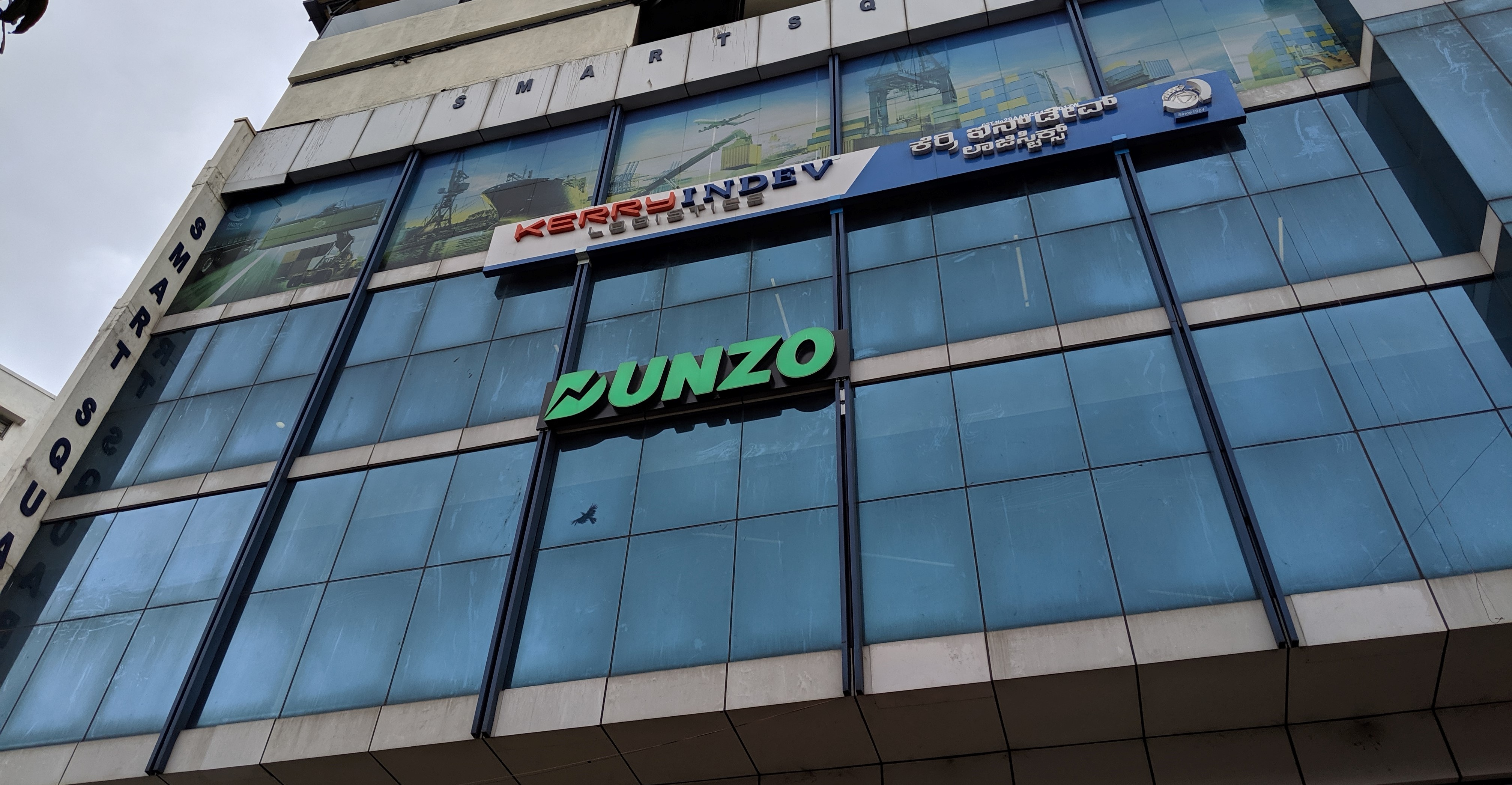
Google-backed Dunzo raises $45M to expand its hyperlocal delivery startup in India

An Indian startup that is increasingly posing a threat to established food and grocery delivery businesses and e-commerce giants just closed a new financing round to expand its business in the nation.

Bangalore-based Dunzo said today it has raised $45 million from Google, Lightbox, STIC Ventures, and 3L Capital. The new financing round — dubbed Series D — valued the four-year-old startup at about $200 million, three people familiar with the matter told TechCrunch. The startup has raised $81 million to date.

Dunzo operates an eponymous hyper-local delivery service. Users get access to a wide-range of items from grocery, perishables, pet supplies, medicines to dinner from their neighborhood stores and restaurants.

But that’s not all. You can have Dunzo pick up and deliver anything in a city. Forgot your laptop charger at home? Dunzo can take care of it. Part of the service’s charm is that its delivery is fast (most of its deliveries take under 25 minutes) and as long as the store is not very far away, it’s not going to cost you more than a $1.

Dunzo is currently operational in eight Indian cities: Bangalore, Delhi, Noida, Pune, Gurgaon, Powai, Hyderabad, and Chennai. The startup said it will use the fresh capital to expand its technology infrastructure and develop partnerships with small and medium businesses.

dunzo hq techcrunch

Dunzo founders told TechCrunch that food category already accounts for a quarter of all deliveries the service processes. As the service scales, it is increasingly becoming a competitor to food delivery startups such as BigBasket, Swiggy, and Zomato.

In recent months, Dunzo has also started to test delivery of smartphones and other products. The startup recently quietly began to deliver Xiaomi smartphones to users in select parts of India. Unlike Amazon or Flipkart, that take a day or two to deliver an item, Dunzo was getting the new phones to users in 30 minutes. Dunzo has tested a similar partnership with Puma, executives told TechCrunch.

In an interesting turn of events, last month Swiggy announced Go, a service that allows users in select cities in India to deliver any kind of product — not just food, thereby entering Dunzo’s territory.

More to follow shortly…

04 Oct 2019

Here are the five Startup Battlefield finalists at Disrupt SF 2019

Over the past two days, 20 startups have taken the stage at Disrupt SF, laying out their visions, demonstrating their technology and answering questions from our expert judges.

The startups came from all across the world, and they’re tackling industries ranging from cholera detection to orbital refueling.

Now we’ve taken the judges’ feedback and chosen five finalists — who will be presenting tomorrow, October 4, for a new group of judges. The ultimate winner will take home $100,000, equity-free, as well as receive temporary ownership of the Disrupt Cup.

You can watch the finals at Disrupt SF or on the TechCrunch website at 1:15pm Pacific. And without further ado, here are the finalists:

OmniViz

OmniVis aims to make detection of cholera and other pathogens as quick, simple, and cheap as a pregnancy test. Its smartphone-powered detection platform could save thousands of lives.

You can read more about OmniVis here.

Orbit Fab

Orbit Fab has created space-based robotic refueling technology. You might remember the company from a milestone accomplishment it achieved earlier this year: Becoming the first startup to supply water to the International Space Station.

You can read more about Orbit Fab here.

Render

Render has created a managed cloud platform. At the Startup Battlefield, it announced the ability to spin up object storage in the cloud, while greatly simplifying the tasks associated with adding storage.

You can read more about Render here.

StrattyX

StrattyX is a trading interface that lets you set up sophisticated “if-this-then-that” rules and execute orders on the stock market. The company aims to open up automated trading software to anyone, from non-professional traders who have some savings to professional day traders.

You can read more about StrattyX here.

Traptic

Things like wheat and corn are routinely harvested by machines, but strawberries (and other fruits) present a unique challenge. Traptic uses 3D vision and robotic arms to harvest ripe strawberries.

You can read more about Traptic here.

04 Oct 2019

Greyparrot uses computer vision to improve waste management

Meet Greyparrot, a London-based startup that wants to improve waste management. The company uses computer vision to make sorting more efficient at different stages of the waste chain. And Greyparrot has been selected as a wildcard for the Startup Battlefield at TechCrunch Disrupt SF.

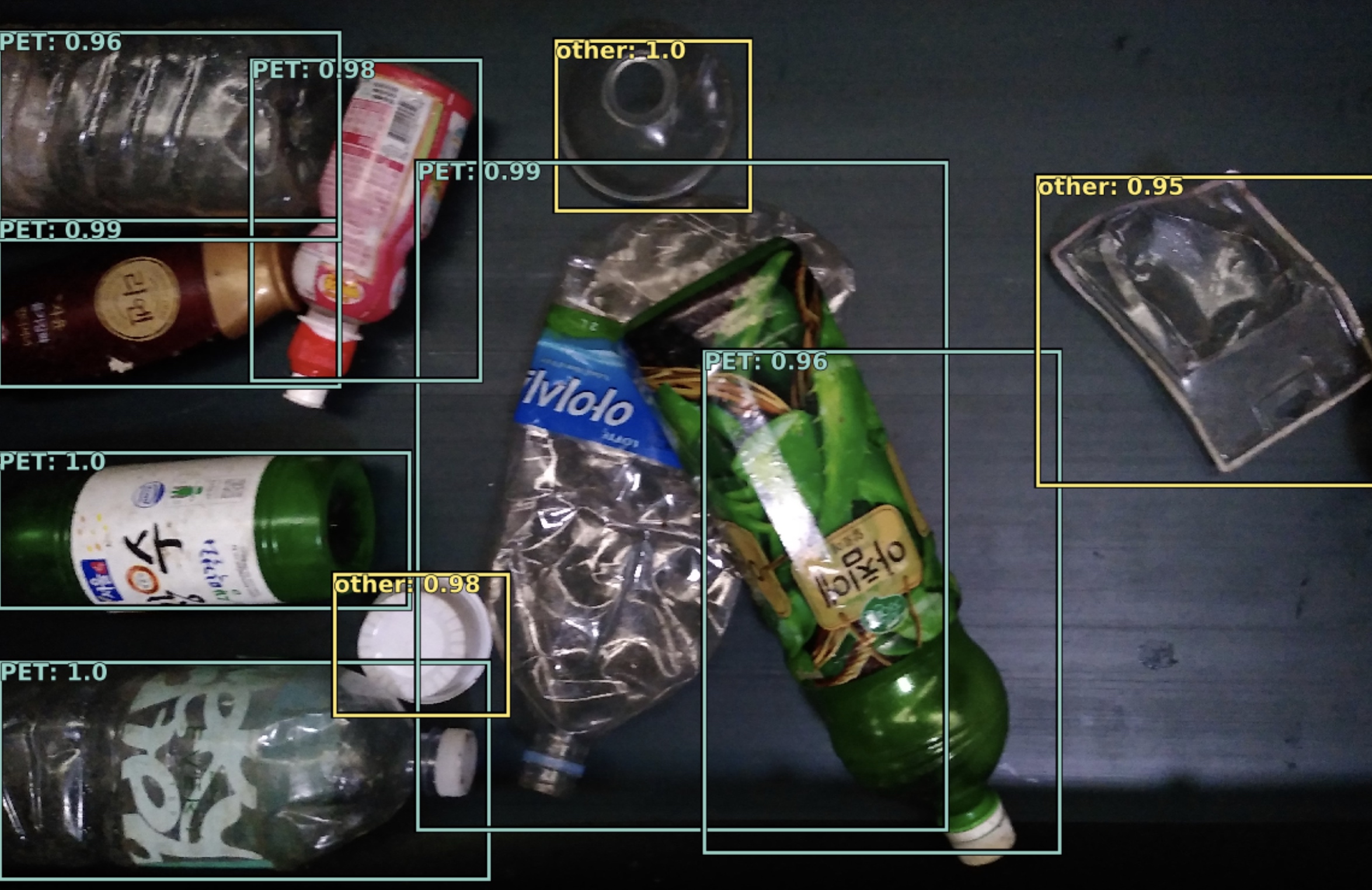
The company has been using machine learning with images of different types of waste to train a model that detects glass, paper, cardboard, newspapers, cans and different types of plastics (black trays, PET, HDPE).

Greyparrot can then use a simple camera combined with a computer to sort waste in a fraction of a second.

There are many different use cases for this kind of technology, but it seems particularly promising in sorting facilities. Those facilities already use a ton of machines to separate small and big objects, metal from plastics, etc. But many of them still rely on humans at the end of the process to pick up the last remaining false positive objects.

Greyparrot

While it’s never possible to sort everything with a 100% accuracy, you want to get as close as possible to 100%. Sorting facilities create huge cubes of PET plastics and send them to countries on the other side of the world so that they can transform PET into something else.

In some cases, those cubes are not pure enough. For instance, Indonesia regularly refuses containers of waste and send them back to the U.S. or Europe.

Greyparrot wants to help with the last step of the sorting process. The product can be used to assess the purity of a conveyor belt to see if it’s good enough. It can also identify problematic objects and give coordinates to a sorting robot so that it can automatically pick up impurities.

The startup has been testing its solution in facilities in the U.K. and South Korea. It has raised $1.2 million so far.

In the future, Greyparrot also has other ideas of use cases. For instance, you could imagine embedding Greyparrot’s technology in a smart bin to automatically sort waste from the very beginning. You could also use Greyparrot in reverse vending machines and credit your account when you return plastic bottles.

04 Oct 2019

StrattyX lets you buy and sell shares using automated rules

StrattyX is a trading interface that lets you set up sophisticated “if-this-then-that” rules and execute orders on the stock market. The startup is participating in the Startup Battlefield at TechCrunch Disrupt SF.

There are plenty of brokers that let you buy and sell shares using a mobile app and a web interface. But if you want to access more sophisticated tools and automate strategies, there’s not much you can do.

StrattyX wants to open up automated trading software to anyone, from non-professional traders who have some savings to professional day traders. The startup focuses on this specific part of the process.

It doesn’t try to reinvent the wheel and it doesn’t want to become an online stock broker. Instead, the company integrates with existing brokers, such as Robinhood, TD Ameritrade and many others as long as they support trading via an API. It acts as an interface and executes orders on your behalf.

You can create rules based on multiple different factors. In addition to traditional stop-loss and stop-limit orders, you can say that you want to buy or sell shares if something happens on Twitter, in the news or on the stock market.

Here are a few examples of rules you can create:

  • If @realdonaldtrump tweets something that contains “China” or “tariff,” sell Apple shares.
  • If the value of EUR drops by 2% against USD, buy LVMH shares.
  • If news headline contains “Tesla delays deliveries,” sell Tesla shares.

Interestingly, StrattyX will provide a marketplace of strategies. If a star investor starts using StrattyX to define a set of automated rules, other users could follow the same strategy.

StrattyX then wants to go one step further by giving you the tools to train a model using machine learning and user-generated data sets. You could imagine a feature that lets you upload a .csv file with price history and different types of data points, such as SEC filings, earnings, etc.

The company is also working on a feature that would show you news headlines that you’d rate with a Tinder-style swipe gesture — swipe right if you think it’s good news, swipe left if you think it’s bad news.

StrattyX is launching its mobile app today. It’s a sort of minimum viable product for now — some features are still in beta. The company is also working on a desktop version that would be useful for professional traders in particular.

StrattyX initially costs $5 per month per user, with more expensive plans for bigger teams and whether you execute a lot of orders through the product. The startup is looking to raise a seed round in the coming months.