Year: 2019

03 Oct 2019

Natalist founder Halle Tecco wants to get you pregnant

Halle Tecco is no stranger to conception struggles. The Rock Health founder and former CEO has been public about her journey on social media, including two rounds of IVF, eventually leading to a healthy baby girl. Now, she wants to help others make babies, too.

To get there, Tecco has joined a class of new fertility tech companies that have popped up in the last few years. Taking from her years of experience building Rock Health, she’s now launched a new company called Natalist, which offers conception products “inspired by beauty and backed by science” to help those hoping to get pregnant in the near future.
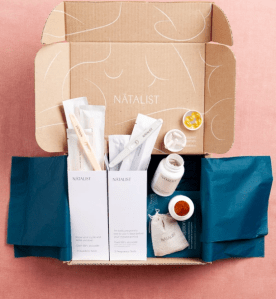
Screen Shot 2019 10 02 at 2.49.21 PMYou can pick and choose various products in Natalist’s pretty packaging or opt for the basic “Get Pregnant” bundle, which includes 7 ovulation and 3 pregnancy tests, a one-month supply of prenatal vitamins and Omega DHA, plus the company’s Conception 101 book.

Of course, that package merely provides the basics for any healthy woman with a regular period and no other fertility issues — and, besides the book, its all something you could find in your local pharmacy. But, as Tecco was quick to point out, not every woman is keen on going into their local CVS, grabbing a pregnancy test and taking it up to the register. In fact, many women Tecco polled before starting her company mentioned the need in the market for discretion. Buying online from a trusted brand would provide them with both privacy and security in the product.

While Natalist’s first offerings are the minimum for anyone trying to make a baby, Tecco has already raised a cool $5 million to build out products addressing more serious fertility concerns like PCOS and endometriosis, which combined affect one out of every five women in their child bearing years and can make it a lot harder to get pregnant or make a pregnancy stick.

“We plan to use the funding to bring new products to market but we wanted to start with products that are sort of tried and true,” Tecco told Techcrunch, further explaining she’d like to see Natalist be more than just physical products and become more of a platform to help women through their pregnancy journey.

“We really want to have a support platform for women who have questions or concerns, really creating a great customer experience and helping them troubleshoot if things aren’t going the way that they want them to and also arm them with information and knowledge around getting pregnant,” Tecco said.

While she doesn’t see herself creating something like the app Glow, which both offers information and data through various stages of pregnancy and a community of women working on becoming pregnant, she does see the value of collaboration with these types of communities on various fertility apps and would like to reach out to those founders to see if there might be something there they can work on in the future as well.

For those interested in checking out Natalist’s products, the “Get Pregnant” bundle starts at $90 for a one time purchase or $75 per month for the subscription plan. You can also add products from the site a la carte, should you want more tests or vitamins than what’s in the one-month package.

And for those of you TechCrunch readers interested in the funding details, Natalist took in seed money from Collaborative Fund, Cowboy Ventures, Fuel Capital, Rock Health and xFund, as well as several well-known angel investors, including Katrina Lake, Julia Cheek, Christine Lemke, John Doerr, Malay Gandhi, David Vivero, and R. Martin Chavez.
03 Oct 2019

MyMilk Labs launches Mylee, a small sensor that analyzes breast milk at home

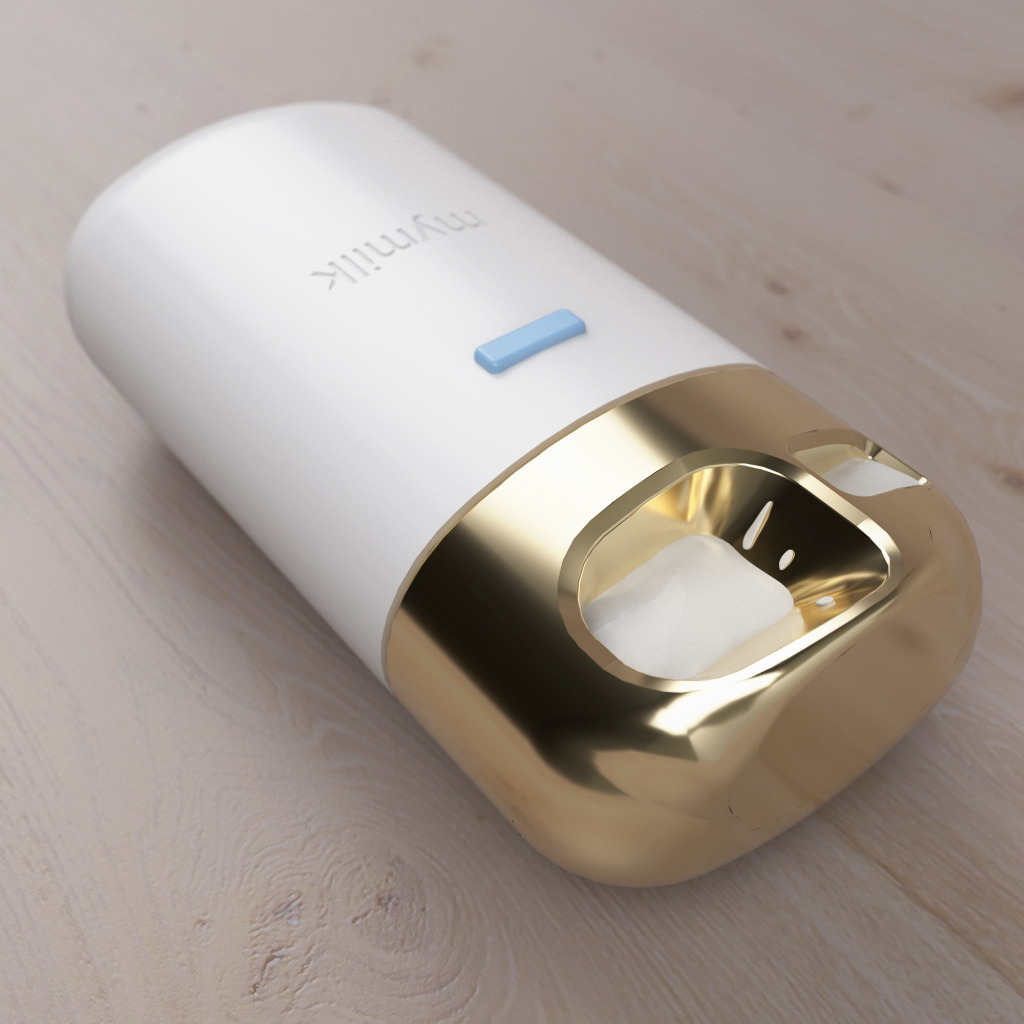
Many expectant mothers are told that breastfeeding will come naturally, but it is often a fraught and confusing experience, especially during the first few weeks after birth. Parents often worry about if their babies are getting enough nutrition or if they are producing enough milk. MyMilk Labs wants to give nursing mothers more information with Mylee, a sensor that scans a few drops of breast milk to get information about its composition and connects to a mobile app. The Israel-based company presented today at Disrupt Battlefield as one of two wild card competitors picked from Startup Alley.

The Mylee launched at Disrupt with a pre-order price of $249 (its regular retail price is $349). Based in Israel, MyMilk Labs was founded in 2014 by Ravid Schecter and Sharon Haramati, who met while working on PhDs in neuroimmunology and neurobiology, respectively, at the Weizmann Institute of Science.

Mylee deviceDuring the company’s stage presentation, Schecter said the device is meant to give mothers and lactation consultants objective information about breast milk.

Breast milk changes in the first days and weeks after birth, progressing from colostrum to mature milk. Mylee scans the electrochemical properties of milk and then correlates that to data points based on MyMilk Labs’ research to calculate where the sample is on the continuum, then tells mothers if their milk is “delayed” or “advanced,” relative to the time that has passed since they gave birth.

The device’s first version is currently in a beta pilot with lactation consultants who have used them to scan milk samples from 500 mothers.

MyMilk Labs already has consumer breast milk testing kits that enable mothers to provide a small sample at home that is then sent to MyMilk Labs’ laboratories for analysis. One is a nutritional panel that gives information about the milk’s levels of vitamins B6, B12 and A, calories and fat percentage, along with dietary recommendations for the mother. Another panel focuses on what is causing breast pain, a frequent complaint for nursing mothers. It tests for bacterial or fungal infections and gives antibiotic suggestions depending on what strains are detected.

Though some doctors believe testing kits are unnecessary for the majority of nursing mothers, there is demand for more knowledge about breastfeeding, as demonstrated by the line-up of breast milk testing kits from MyMilk Labs and competitors like Lactation Labs, Everly Well and Happy Vitals. Haramati said on stage that MyMilk Labs plans to eventually transfer some of the tests’ capabilities to the Mylee.

03 Oct 2019

Molecule.one uses machine learning to make synthesizing new drugs a snap

Say you’re a pharmaceutical company. You’ve figured out that a novel molecule could be effective in treating an illness — but that molecule only exists in a simulation. How do you actually make it, and enough of it, to test in the real world? Molecule.one is a computational chemistry platform that helps bring theoretical substances to life, and it is debuting its product onstage at Disrupt SF Startup Battlefield.

Computational chemistry is, believe it or not, something of a hot ticket right now. The explosion in computing resources over the last decade has made it possible for the extremely complex systems of molecular biology to be simulated in high enough fidelity to produce new drugs and other important substances.

For example, say a company knows that a condition is caused by overproduction of a given protein. By simulating that protein in the soup of the cell environment, computational chemists can also introduce and virtually observe the behavior of thousands or millions of molecules that don’t occur naturally but might, say, lock down those excess proteins and tag them for removal by the cell.

This process of drug discovery has been productive, but unlike in the real world, in a simulation you don’t actually have to make that magical molecule. It’s just a bunch of numbers interacting with other numbers. How can a pharmaceutical company, which may have paid a lot of money for those numbers, turn them into actual molecules? That’s where Molecule.one steps in.

1.4.0 Molecule Dashboard Reaction tree

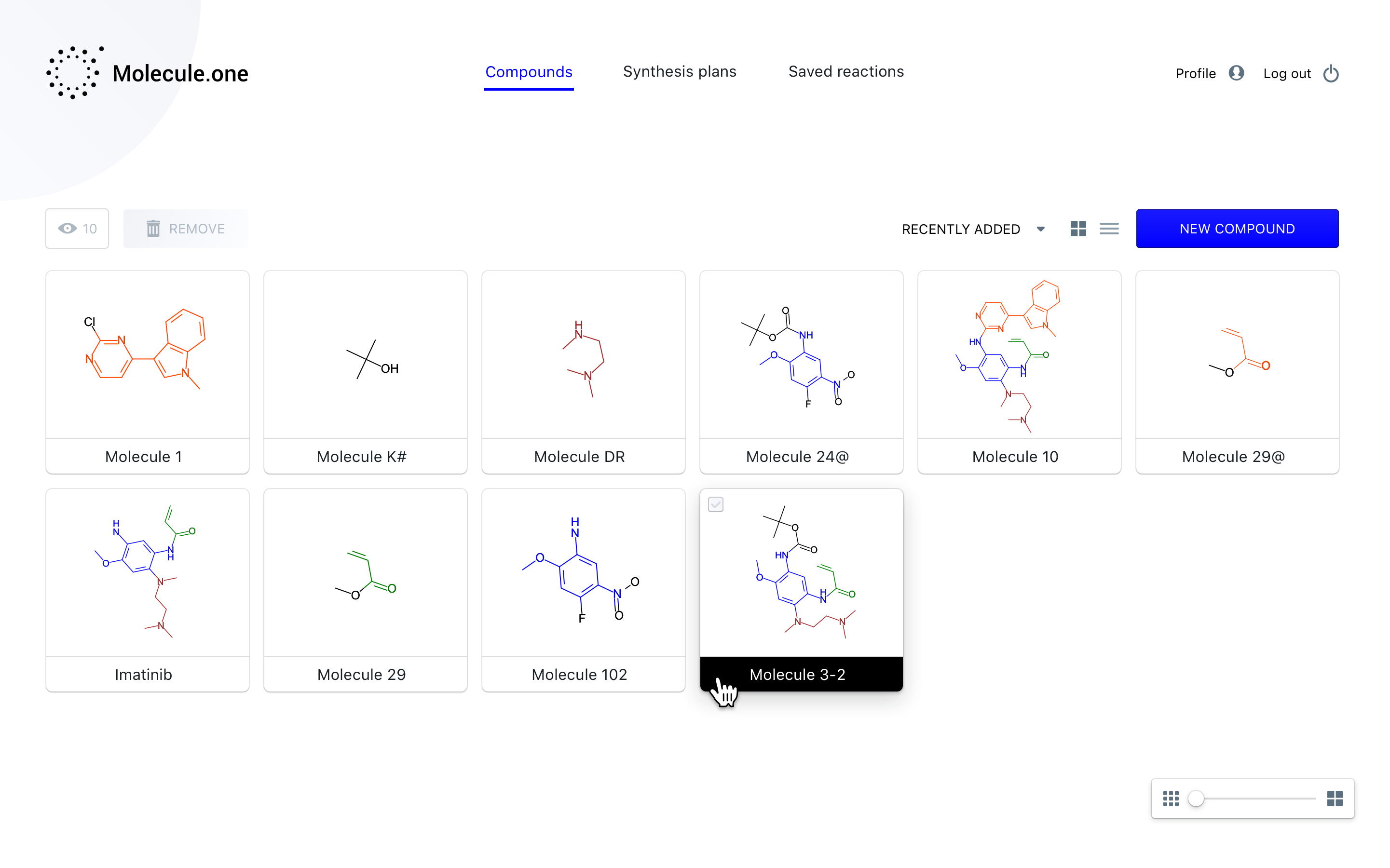
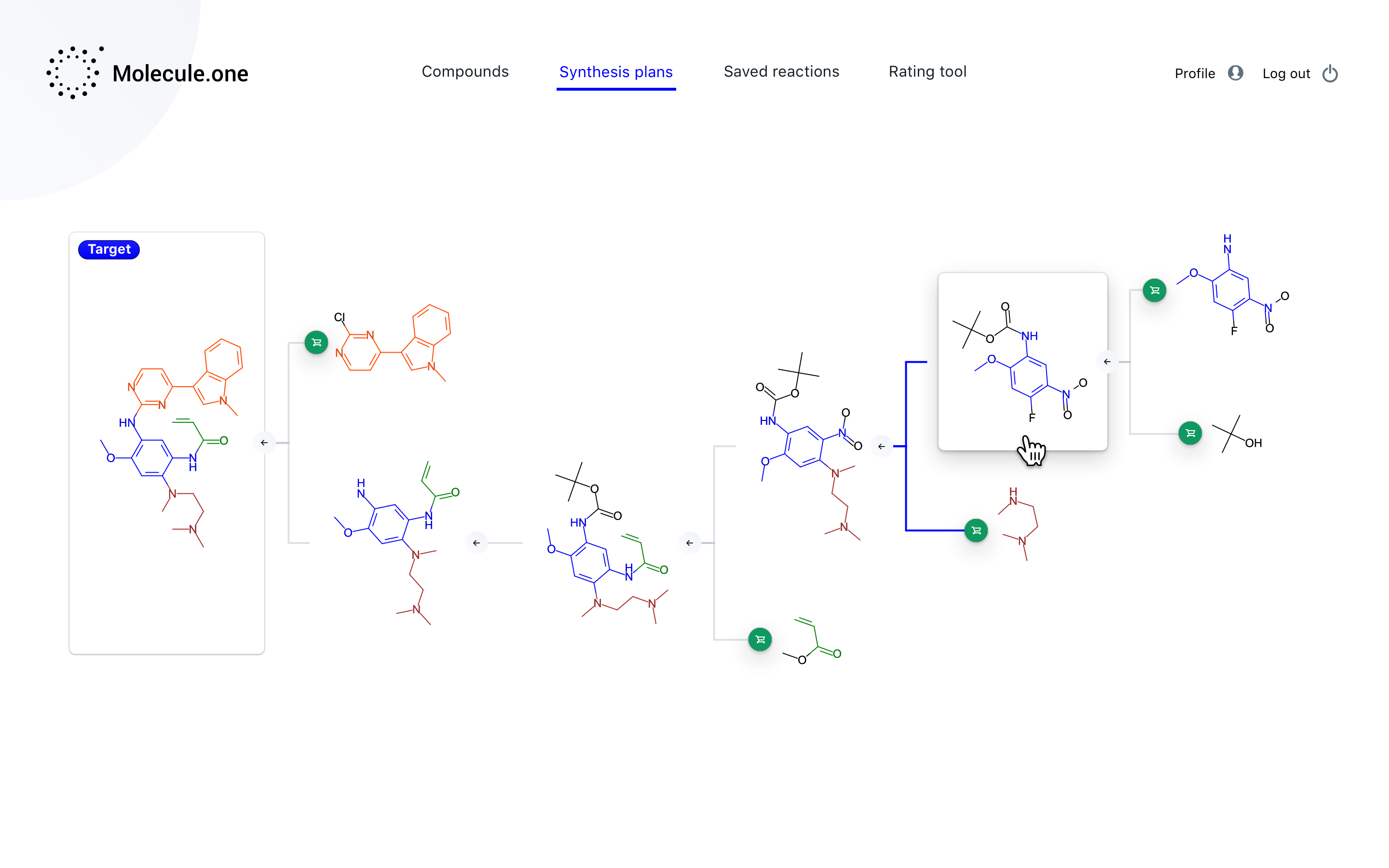
Essentially, the company has created a software platform that automates the process of getting from chemicals A, B, and C to chemical Z, with the many steps in between accounted for and documented. It’s based on a machine learning system that has ingested millions of patents and known chemical processes, allowing it to connect the dots and propose a method for creating pretty much any complex organic molecule. In other words, once a drug company has the “what” — a molecule or compound that may fight Alzheimer’s — Molecule.one provides the “how.”

Piotr Byrski met co-founder Paweł Włodarczyk-Pruszyński (who goes by Maxus to avoid confusion with COO Paweł Łaskarzewski) while in college, where they studied and did research together, eventually both earning MDs. They discovered a shared aversion to the grunt work of chemistry — beakers, distillates, titration, and so on.

molecule one header


“We found out we shared a similar analytical approach to chemistry. A lot of chemists really like the cooking process involved with organic synthesis,” Byrski told me. “I have to say… I never liked it very much. That made me think that there are many things in the everyday life of a chemist that can be automated, and need to be automated.”

“Automating organic synthesis seems like just another difficult automation problem, but it’s one with real effects. Real people are suffering because drugs are coming to the market,” he said. “We thought we could help. So we did some research, and we found that the field is so under-developed —  the direction research is going is completely unsatisfactory. We began market research — we were both first timers so it was pretty new to us at the time — and we found out there was a big market need for this. It wasn’t a scientific discovery that would sit on a shelf, it could be applied today to help multiple industries.”

By the time they were working on this, companies were already applying simulation, and statistical techniques (machine learning is essentially weapon-grade statistical analysis) were already popping up. BenevolentAI started in 2013, Recursion in 2014, Atomwise in 2015; clearly the field was growing, and is still adding new companies, like ReviveMed. But these are mainly focused on the question of new drugs based on simulations.

“They provide a list of maybe tens of thousands of structures to a pharmaceutical company, but the company then needs to actually verify whether the predictions have any real-life backing. For that you need physical access to these molecules — just knowing the structure doesn’t cut it,” said Byrski.

Molecule.one’s system tells them how to manifest these structures.

1.1.1 Molecule Dashboard Compounds

“We are making the whole synthesis pathway, so going from compounds that are available to ones that you want,” said Włodarczyk-Pruszyński. “Along the way we need to solve many problems — there are many reasons why a reaction could fail. We want to tell users how to make compounds with the process with the highest chance of success.”

And succeed they have: “Our system works for structures that have never been seen before by any chemist,” Byrski said.

The obvious question is why these huge pharma companies, with their bottomless pockets and technical expertise, don’t put together their own synthesis platforms. It comes down to people.

“The most important factor is that it’s hard for a pharmaceutical company to hire machine learning specialists who have a deep background in chemistry. Over 90 percent of the people I know that work on this in the pharmaceutical business are chemists who have some training in machine learning. This is a difficult problem that requires coming at it from the opposite direction,” Byrski explained. “Our head of machine learning [Stanislaw Jastrzębski] is a PhD from the computational side, who would normally go to Google, Facebook or Microsoft. We’ve built a team that is unique in how it bridges the computational technology and chemistry.”

The databases used by Molecule.one’s systems, surprisingly, are mostly public. The U.S. Patent office has tons of patents involving chemical processes — some important, some small, some obscure, some obvious, but all verified and presented formally. This was a gold mine sitting in plain sight, Byrski said. Or perhaps a box full of Lego pieces just waiting to be assembled into the right machine.

The main “proprietary” information they used was a private listing of commercially available chemicals and their prices. A molecule may have more than one pathway to reach it, after all, or perhaps thousands, and one might be cheaper than the others or involve fewer toxic reagents.

With strong results from public databases, they have a better chance of getting pharma companies to share their internal databases when signing up for the service.

The actual business is conducted SaaS-wise, naturally, and all the work takes place in the cloud. There’s also an enterprise tier that allows for on-premises operation, for companies that would rather not have their trade secrets anywhere but on company-owned infrastructure.

So far the company has bootstrapped, and currently has about $400K in the bank, which Byrski said should last them well into next year. “The biggest cost is people,” he said. “Developers, designers, chemists. We’re a software business so we don’t have a lot of other costs — we don’t have to hire a lab, for example.” So they are looking for funding to help hire and scale.

It’s not common in Poland to segue directly from medical school into a startup, Byrski admitted. But he and Włodarczyk-Pruszyński felt that this was too significant an opportunity to do good to pass up. With luck their platform will prove as popular as the drug discovery startups that helped make it necessary to invent.

03 Oct 2019

Leo Aerospace provides bespoke rocket launches — from a hot air balloon

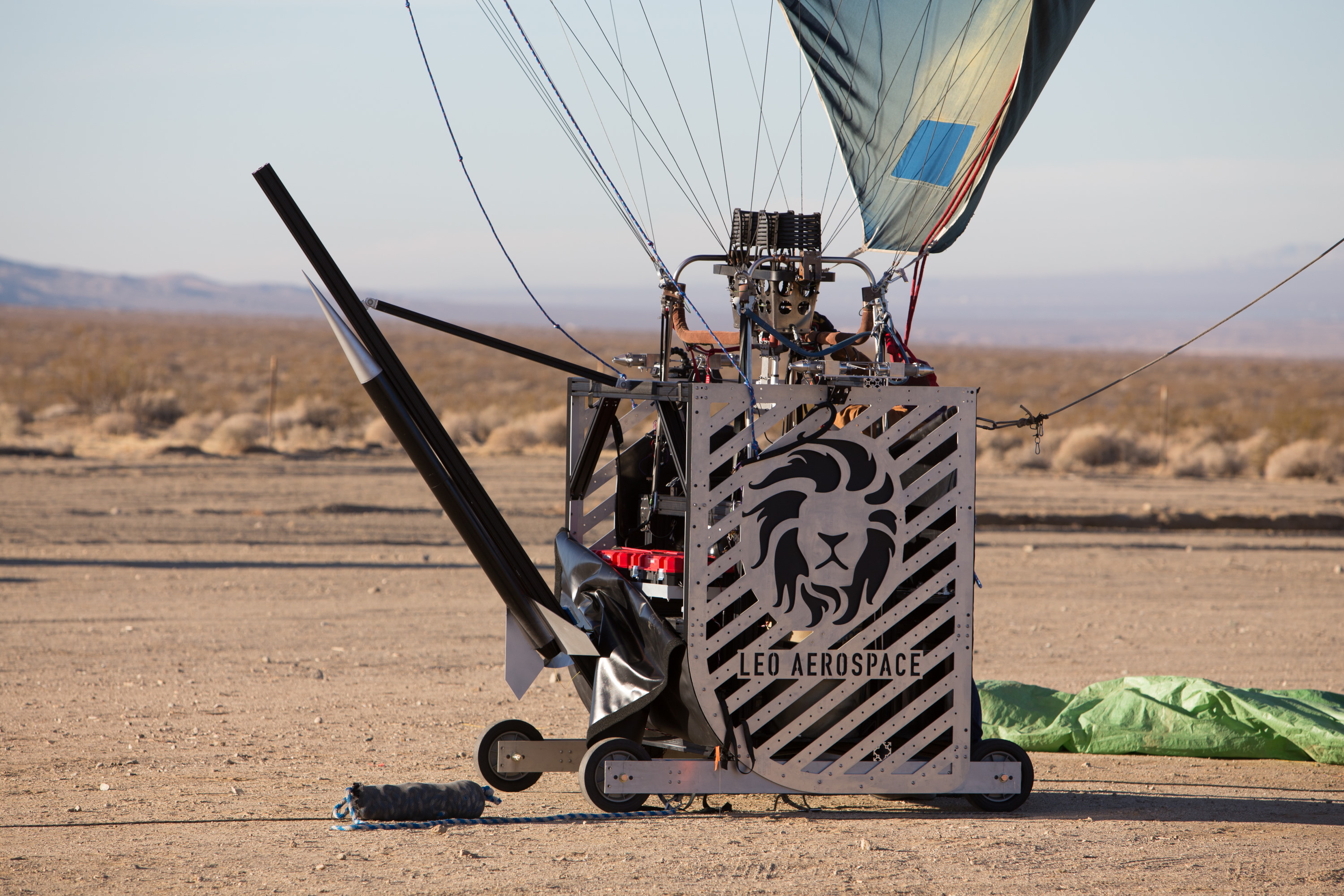
The demand for orbital launches is increasing steadily, and the industry is nowhere near keeping up. Leo Aerospace thinks it can help with a launch technique that’s more efficient and requires far less infrastructure than an ordinary rocket: a hot air balloon. With a rocket attached to it, of course. It sounds wacky at first, but it could prove to be an economical and flexible way of getting to orbit.

Leo is originally out of Purdue, one of two such teams on stage this week at Disrupt SF Startup Battlefield. Co-founder and CEO Dane Rudy said they were looking into new and better ways to achieve orbit besides the traditional surface-based rocket approach.

leo j“We found this really elegant solution that was actually tested in a rudimentary way in the 50s by the Air Force, which is launching rockets from an aerostat — a balloon,” he said.

Perhaps used to countering narrowed eyes and barely disguised incredulity at this point, he hastened to follow up.

“It actually worked really well for what it was designed for. The issue they ran into was that the U.S. shifted toward sending people to the Moon — so there just wasn’t a need for that technology in the Apollo program. But the rise in small satellites has created a huge demand tailored to these capabilities,” he said.

It turns out using a balloon has big benefits. A large amount of a rocket’s fuel and engineering is dedicated to pushing it from the ground, where the atmosphere is heaviest, to the thinner upper atmosphere, where drag and other issues are much less of a worry. By going the first few miles straight up in a balloon, much less rocket is needed to get into orbit, since you’re skipping one of the hardest parts.

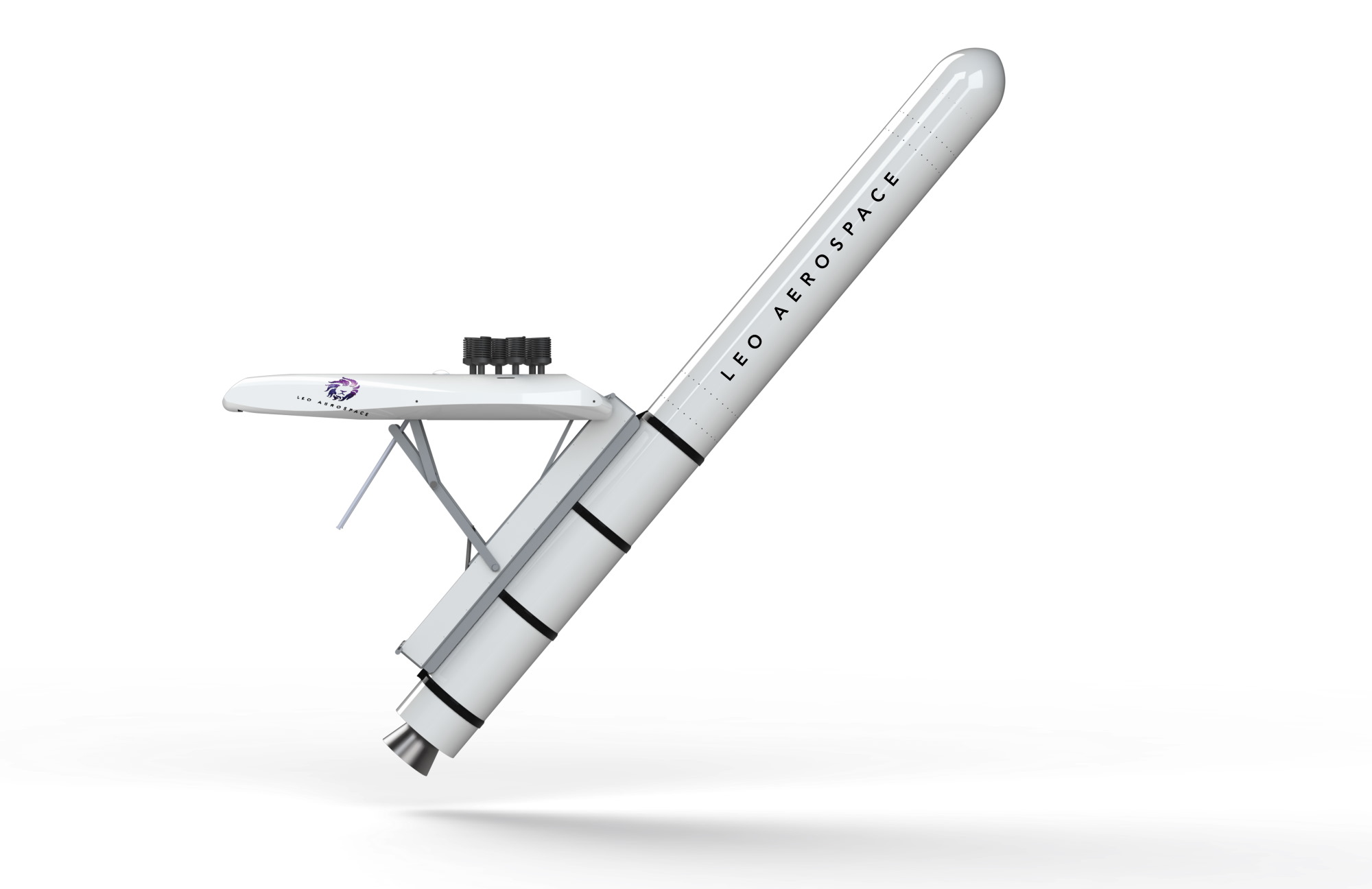
The technique is more or less exactly what you’d imagine: A large balloon inflates and lifts the payload, a small rocket, to a designated altitude. Once there it aligns itself and… well, lifts off is perhaps the wrong term. But it ignites and exits the atmosphere at a planned trajectory and inserts the payload into orbit.

There are already air-launch systems out there that use planes rather than balloons, presenting their own challenges and advantages. Leo Aerospace’s main draws are flexibility and cost.

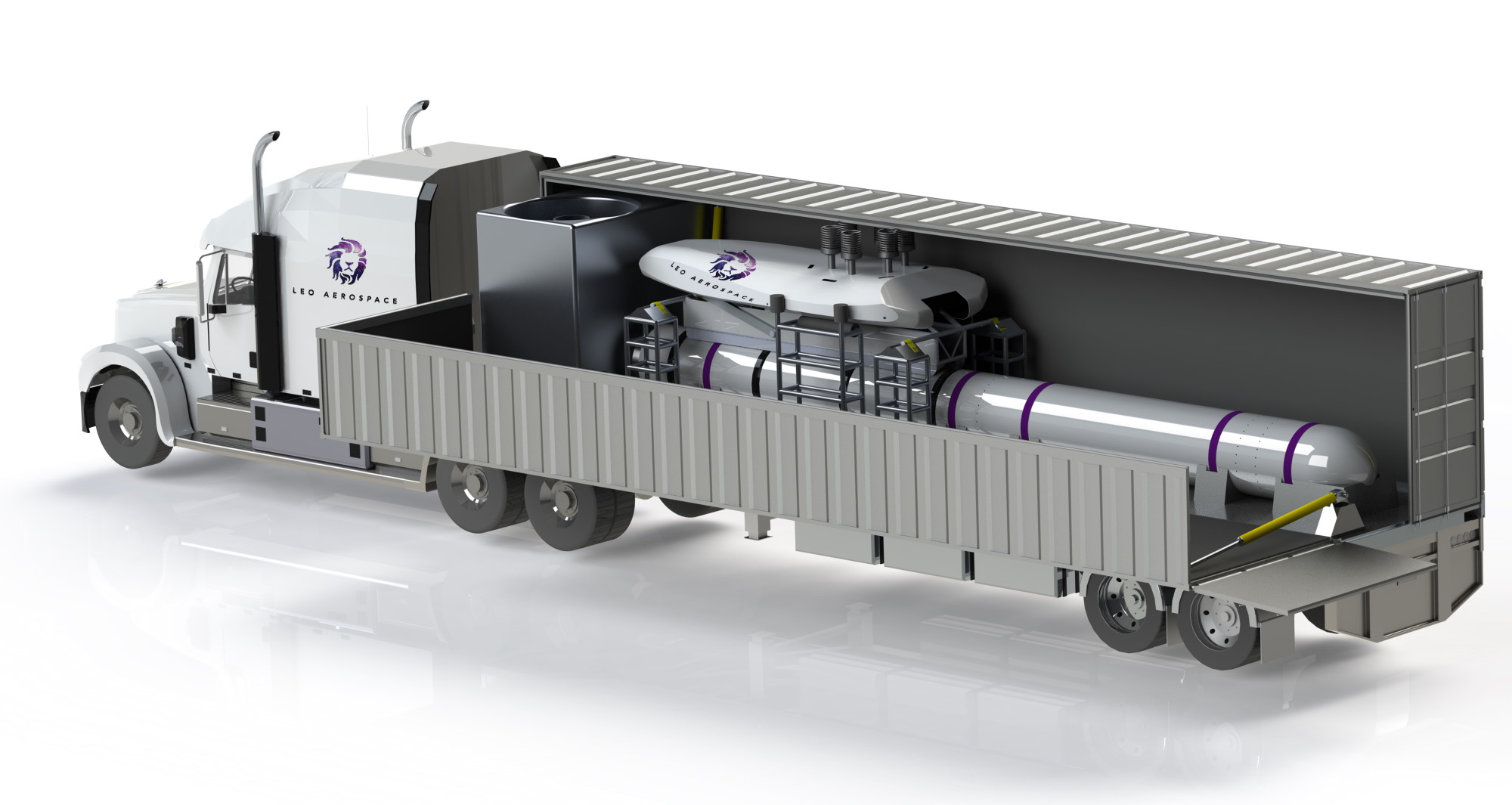
“Our system is fully mobile — it doesn’t require any ground infrastructure,” said Rudy. “The whole thing fits into a regular shipping container.”

That means it can take off wherever and, perhaps more importantly, whenever the client chooses.


shipping

Right now the launch industry is expanding like crazy, both because of an increase in total launches and the rise of “ride-sharing,” where dozens of payloads share the cost of a single rocket. The cost goes down, but there are serious inconveniences.

“They don’t have much choice in when they launch or what orbit they’re going to. There’s also the complexity of having to ride with a bunch of other payloads on board — you have to compromise on timing and so on,” Rudy said.

While ride-sharing means many payloads will get to space that might not have a few years ago, it also means they might wait for years while the rest of the seats fill up and get ready to roll. With Leo it’s practically Domino’s for orbit.

That’s all great in theory, but the fact is no one has made a balloon-based commercial launch system. When the Air Force did it, it was pretty crude: The rocket was carried in a vertical position and shot right through the balloon when it went up. That kind of rules out reusing the balloon, but Leo’s entire business is founded on reusability, since that brings costs down immensely.

launch regulus

“That was one of the big problems we had to solve — the expense of the balloon itself; helium is expensive, and the envelope [i.e. the balloon material] is expensive and fragile,” said Rudy. “How do we make that zero stage, as we call it, reusable?”

Amazingly, they determined that tough, ripstop nylon and hot air were actually the best solution. It’s remarkably close in principle to an ordinary recreational hot-air balloon, but with the slight difference that it has to fly up to 18 kilometers of altitude and carry a rocket with it.

“The difference is how do you control and command this sort of vehicle, integrate it into airspace, suspend the rocket beneath it and all that,” Rudy said. “All the stuff you have at Vandenberg Air Base for a launch — we have to make all that mobile.”

Mike Mojave Launch 11 of 25

A bit like going from an ordinary car to a self-driving one, Leo’s balloon may be similar to the recreational type in its basic form, but the technical advances are in how it is controlled and tracked. They can adjust for wind, control the yaw and rotation, rise to a very precise altitude, and so on — naturally, all remotely and with partial autonomy.

The rocket doesn’t shoot through its balloon as before, but fires off at a mission-determined angle. 18 km closer to space, with far less air resistance to worry about, the three-stage rocket (two solid, then one non-cryo liquid) can be much smaller and have far less mass — requiring less than half the fuel to lift a given mass to orbit. To be specific, the system is specced to send 33 gross kilograms, 25 kg of payload, to a 550 kilometer orbit — or about twice that to 300 kilometers.

December saw the company performing reduced-scale tests at altitude, an important stepping stone to regulatory approval. The plan is to make their first full-scale suborbital launch next year with their first customer’s payload on board. Orbital launches are planned for 2022.


Leo has gotten through December’s tests on a quite barebones budget for a space startup of about $520,000, through TechStars and a grant from the National Science Foundation. That’s great for a foundation, Rudy said, but full-scale tests and an eventual transition to commercial operations will take more than six figures.

An Air Force Small Business Innovation Research grant has opened the door to other government sources, and there’s been interest from that quarter in the non-orbital potential of the system, for instance high-altitude testing, mobile communications infrastructure, and so on. So already there are multiple eggs in multiple baskets — an attractive quality for investors.

“We’ve done all the foundational work,” said Rudy.  “Now it’s just about scaling up.”

03 Oct 2019

OzoneAI wants companies to pay you for your data, upending the ad model

Imagine this. Instead of giving away your personal data so web giants can show you ads, you cut out the middle person and allow advertisers to pay you directly for your data.

It’s a novel idea for a new startup that bills itself as a “data privacy” company.

OzoneAI says it preserves users’ privacy by allowing them more granular controls over who gets their data. In the startup’s utopian vision, companies can skip over the major advertising giants like Google and Facebook and buy access to anonymized data from the users themselves. That could mean companies buying your Spotify playlists, your Amazon wish list, or your access to your social media. The user is paid for the access, and the company gets to use the data for better targeting their ads.

The company made its public debut at Disrupt SF on the Startup Battlefield stage.

The startup seeks to capitalize on the wave in recent years of mistrust over online ads. As websites have become more aggressive in their advertising by persistently tracking users and collecting personal data, users have fought back with ad-blockers and privacy apps.

OzoneAI thinks there can be a happy medium between selling and protecting your data. With an app, users can grant companies access to their data and get paid for it. In return, companies get anonymized data which they can use for better targeting consumers.

By taking big tech out of the equation, the startup thinks it can make advertising more efficient for everyone.

But not everyone will see it that way. The privacy-minded with their ad blockers aren’t likely to lower their own bar to allow advertisers any more access to their data than is necessary. But for those who want to make a quick buck, will their actions be motivated more by making money and less about privacy?

When asked, the company’s founders Lyndon Oh and Ben Colman, who both previously worked for Google, denied it was encouraging users.

“However much activity you want to sell, that’s completely up to you,” the founders said. “You are anonymized as an identity; however, your data is not. The fact that you watched ‘The Avengers’ five times last week is not anonymized — you are selling that directly.”

Users’ data is fed into the machine learning engine to make recommendations for other companies and services, allowing the process to match activity to another business. OzoneAI makes its money by charging a 30% cut from the businesses who subscribe to a user’s data, which they say still provides better value than the “spray and pay” model that companies who want to advertise on Facebook and Google are subjected to.

The user can use the OzoneAI app to log in to their various social networks, shopping sites, email provider and anything else. That authorizes OzoneAI to vacuum up your data and begin processing it.

Unsurprisingly, many will turn their nose up at the concept of having a startup they’ve never heard of be effectively given unfettered access to all their online accounts so they can sell your data directly to companies hungry to advertise to you. The startup says it, like any company with similar access to the firehose of a person’s online life, has access to that data but immediately writes the data to its servers in an encrypted way. The user retains the private key to their cloud-stored encrypted data, so OzoneAI says it can’t access the user’s data. Through the app, the user can also “detonate” and destroy any of their collected data.

But by giving users control of their data, the user has to trust OzoneAI more than the existing advertising system. Given how broken the existing system is, it likely wouldn’t take much trust at all. But it’s an uphill battle for an emerging startup with not much of a name. And one hiccup could send that trust tanking.

The founders said other tech companies are “doing the same thing,” and that’s reason enough why users should trust OzoneAI.

But “another company does it” doesn’t mean it’s the right thing. OzoneAI was “just putting users directly in front of the business,” the founders said.

The old saying goes, “If you’re not paying, you are the product.” And yet as much as you are paying — with your data — then you inexplicably are still the product.

02 Oct 2019

OmniVis could save lives by detecting cholera-infected water in minutes rather than days

Clean drinking water is one of the most urgent needs in developing countries and disaster-stricken areas, but safety tests can take days — during which tainted water can infect thousands. OmniVis aims to make detection of cholera and other pathogens as quick, simple, and cheap as a pregnancy test. Its smartphone-powered detection platform could save thousands of lives.

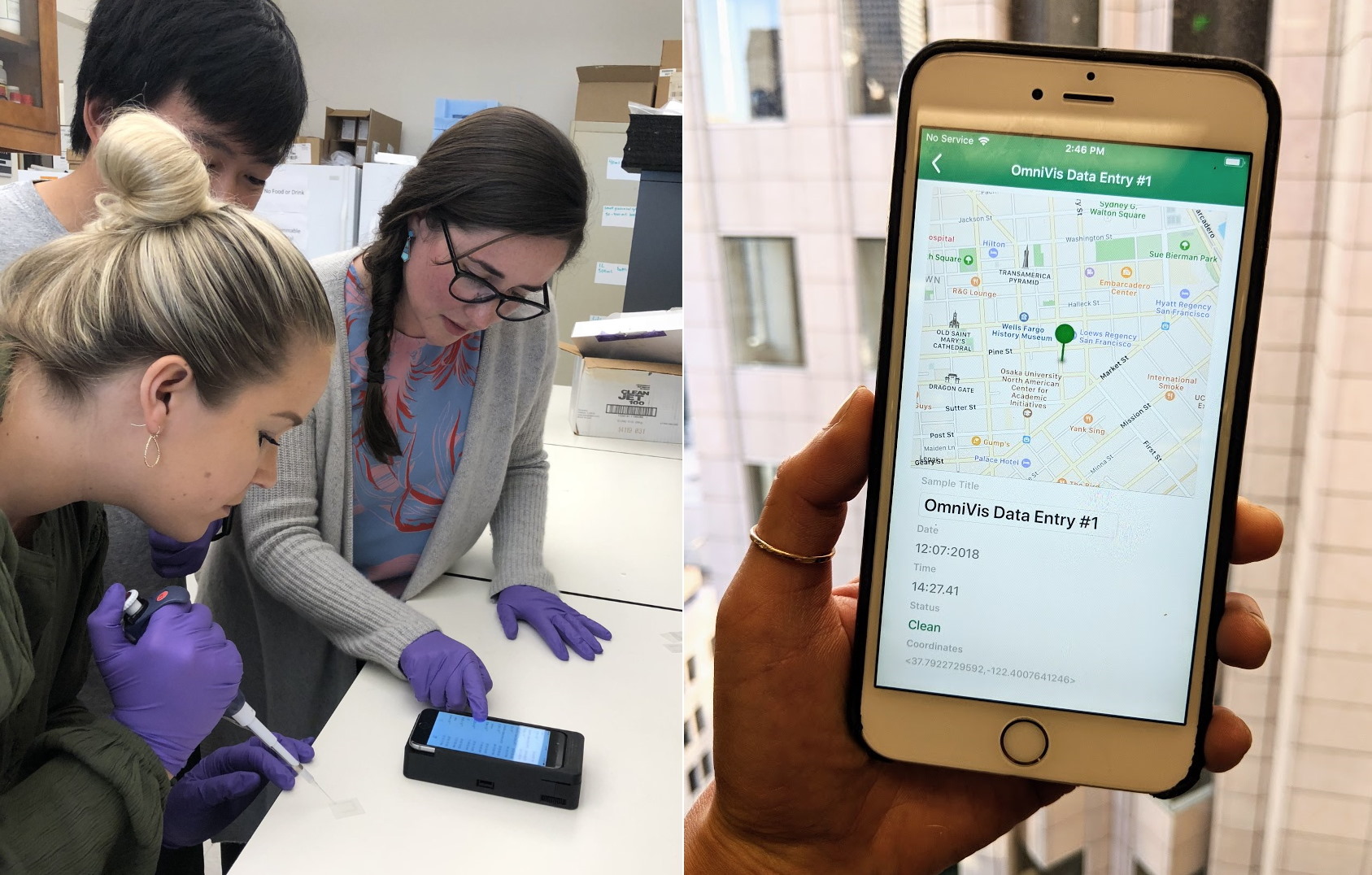
OmniVis, which presented on stage at Disrupt SF’s Startup Battlefield today, emerged from research conducted at Purdue University, where CEO and co-founder Katherine Clayton completed her doctorate. She and her advisors were working on the question of using microfluidics, basically very close inspection of the behavior of fluids, to detect cholera bacteria in water.

In case you forgot your Infectious Diseases 101, cholera is a bacterium that thrives in water polluted by fecal matter. When ingested it multiplies and causes severe diarrhea and dehydration — which as you might imagine can become a life-threatening problem if a community is short on clean water.

While normally uncommon, there was a huge cholera outbreak in Haiti in 2010 following a major earthquake there; 665,000 people were infected and more than 8,000 people died. It was this humanitarian disaster that prompted Clayton to look into how such an event might have been prevented. She’s been working on what would become the OmniVis platform since 2013.

“It’s been a long time coming,” she told me.

That’s not uncommon for academic spin-offs with valuable IP but zero product experience. Moving from lab bench to field-ready hardware has taken years of hard work. But the resulting device could upend a costly and slow water testing process that leaves communities at risk in crucial moments.

omnivis lab

Existing water testing is generally done at a central location, a lab run by a university, utility, or the local government. It depends on the region — and of course if there has been a disaster, it may not even be functional. Going from sample collection to results may take several days, and it isn’t cheap, either. Clayton estimated it at $100 per sample.

“But that’s just supplies and labor,” she said. “Not the cost of the lab, the PCR machines — which are tens of thousands of dollars — the pipettes, the dyes, the disposables and consumables, the training… not to mention in a lot of areas you’re not just going to walk by a nice central laboratory. Some countries may only have one or two testing facilities.”

Another option is disposable rapid diagnostic tests, more like pregnancy tests than anything, meant for use with stool samples — but their accuracy is low even then, and with cholera diluted in a water source you may as well be flipping a coin.

Such was the state of testing when Haiti had its outbreak and Clayton began looking into it. In 2013 they began investigating microfluidics as a method for detection. It works by exposing a set of chemical reagents, or “primers,” to a water sample. These primers are engineered to bind to bits of cholera’s DNA and then when heated, replicate it — a process called DNA amplification.

[gallery ids="1889722,1889720,1889721,1891113,1891110,1891105"]

The more cholera is present, the more DNA will be available to amplify, and it multiplies to the point where it affects the viscosity of the water — a factor that can be tested by the device. Interestingly, the device in no way “analyzes” the DNA or identifies it; all it does is measure how viscous the water is, which is a highly reliable proxy for how much cholera was present in it to begin with.

It turns out this method is both quick and accurate: In 30 minutes it gives as good or better results as central testing.

“The worst thing we could ever do is say there’s no cholera in the water when there is,” Clayton said. So they’re focused on robust test results over all else. But ultimately the device still had to go from the lab to the real world. To that end the team conducted pilot tests in Haiti, where they worked with local NGOs and communities to get some direct feedback.

What they found was promising — but also resulted in major changes to the product. For one thing, they had to switch from iPhone to Android.

“People feel safer with Android than iPhone, which is considered a luxury item,” Clayton said. They also found that men and women operated the system equally well — the team is 84 percent women, she noted, and their design choices may have crept into the product the same as can happen on what is much more common, a male-dominated team. English and Svengali users likewise did fine. Interestingly, locals were baffled by roman numerals. “That was surprising,” she said, but illustrative of how even the smallest assumptions need to be questioned.

“I love user-centered design,” Clayton said. “I think it’s the only way to get engineering to work. UX and graphic design is not my or my colleagues’ specialty, so we had to get some outside contractors for that.”

The production device, which OmniVis hopes to ship in about six months, should cost around a thousand dollars — but at about $10 per test it will pay for itself quickly, especially considering how much easily it can be deployed and used. A half-hour turnaround on a test that can be performed by an aid worker with an hour’s training is an invaluable tool in a disaster-stricken area where infrastructure like mail and roads may be in disorder.

These devices, by the way, are not bought and paid for by the people who drink the water. Like the water-testing labs, they’ll be owned and operated by NGOs, governments and others with budgets for this kind of thing.

Cholera is the first pathogen the company is aiming to detect, but the system can just as easily detect several others simply by using different disposable tests equipped with different primers. E. Coli could be next — with the proper testing, Clayton said. And others would follow. It’s not hard to imagine an OmniVis device being a must-have for any relief work where water needs to be tested.

02 Oct 2019

Samsung pulls the plug on Chinese smartphone production

Samsung this morning confirmed with Reuters that it has shuttered handset production in China. The move comes as the company continues to struggle in the world’s No. 1 smartphone market.

As we noted in a deeper dive into China’s smartphone sales back in August, the Korean hardware giant has struggled to maintain a market share in the low single digits. It’s not alone, of course; Apple, too, has faced an uphill effort to crack the market, which is dominated by homegrown names, including Huawei, Vivo, Oppo and Xiaomi.

Sales have been driven by a combination of pricing and, in the case of embattled Huawei, patriotic purchasing decisions.

Samsung has slowly phased out production in the country over the past year, suspending operations in some plants, before ultimately pulling the plug altogether. The news follows a similar move by Sony. Apple, meanwhile, is maintaining its production in the country for now.

More recently, Samsung has looked to others countries, including India and Vietnam, which have undercut China’s production costs. The company will, however, continue selling phones in China, even as it eyes other cheaper locations for manufacturing.

02 Oct 2019

Chris Dixon from A16Z announces free crypto startup school at TechCrunch Disrupt

Chris Dixon, a general partner at Andreessen Horowitz, announced a new crypto-related startup school at TechCrunch Disrupt today in San Francisco.

Dixon says that the firm is not looking for equity, but really wants to provide a way to teach some best practices in the emerging field of crypto currency. “We are going to run a startup school for crypto-specific startups and what we’ve learned over the last 7 years as best practices in this category,” Dixon told TechCrunch’s Josh Constine on stage today.

The company doesn’t intend to charge any money, nor will it take any equity in the companies that participate. In Dixon’s words, they are doing this to push the category forward and help crypto startups get going. He hopes that based on the good will of offering this education for free, that startups who participate may end up having a conversation with A16Z about possibly getting an investment, but he made clear that this absolutely was not a requirement.

Last year, the firm made its commitment to crypto clear when it established a crypto fund run by Katie Haun. Dixon told TechCrunch at the time of that announcement that his firm had already invested in 20 crypto companies over the previous five years including Ripple and Coinbase way back in 2013, prior to establishing a fund devoted to crypto.

The company will be setting up a page on the company website for companies interested in signing up for the crypto startup schoole.

02 Oct 2019

Will Smith just dropped $10K on a startup that pitched him on Disrupt’s stage

Actor and Hollywood media mogul Will Smith surprised the TechCrunch Disrupt SF 2019 audience this afternoon by announcing he would invest $10K in a startup that pitched to him on stage as part of “elevator pitch” contest, where the winner would get to take a selfie with the star. The company, Socionado.com, helps companies with their social media presence. However, what got Smith’s attention was their well-delivered pitch, he said.

The startups didn’t get much time to prepare, having been plucked from the Startup Alley earlier in the day.

In addition to responding well to the pitch itself, Smith also liked the concept and the business model.

“As I built out my social media team, that was the idea — I wanted to take back my storytelling,” said Smith. “I think that’s hugely important.”

“That was really the best pitch so we’re gonna rock a selfie,” Smith said, jumping up to snap a photo with the founder.

Smith’s investment strategy isn’t usually this off-the-cuff, however.

Speaking on stage at the Disrupt conference, he also offered more details on his plans for Dreamers VC, the investment firm founded with Japanese soccer star, Keisuke Honda, which was announced last year by Honda’s management firm KSK Group.

Smith noted the firm has an interest in “doing good” with its funds — pointing, in particular, to an investment in “Boring tech.” (He actually means The Boring Company, per the Dreamers VC website, where it’s listed alongside a host of others.)

He also offered a little background on how Dreamers VC came to be in the first place.

“Well, you know, I met with [Keisuke Honda]  and we just hit it off immediately. And, you know, we felt like there was a beautiful intersection between being able to create businesses, but also to stay focused on solving problems of the world,” Smith explained. Honda already had banking relationships in Japan that were looking to make their way into the U.S.

“So the relationship worked out well,” he said.

Plus, Smith adds, “I had already been investing and he had already been in investing and our values were were in alignment. We want to solve some of the world’s problems. We want to do well by doing good.”

02 Oct 2019

Render announces object storage service at TechCrunch Disrupt

It was a big day for startup Render, which participated in the TechCrunch Disrupt Startup Battlefield today. While it was at it, it also announced some upgrades to its managed cloud platform.

First of all, it announced the ability to spin up object storage in the cloud, while greatly simplifying the tasks associated with adding storage. CEO and founder Anurag Goel says that the storage option is something customers have been requesting, and as with their other services, they handle a lot of the heavy lifting for them.

“One of the things that our users want us to do next is to build out object storage. Even though they can use things like Amazon S3 and other cloud storage options, they know that Render is going to be easier for them to use. So they really want object storage, and they want everything in one place,” Goel explained.

If you want to do that today without Render, you would have to spin up a virtual machine in the cloud, attach the storage, set up backup schedules and take care of all of these other associated tasks, and what Render is doing with Render Disk, is stripping that all away and managing the process for them.

While the startup was at it, it also developed a concept called infrastructure as code. This allows developers to define their infrastructure requirements in a yaml file. When the developer sends the file to GitHub, Render can build the infrastructure for the customer on the fly based on the contents of this file.

Finally, they are offering a one-click launch to customers. This could come in handy for companies who are offering free trials or open source tools, to enable users to launch their applications with a single click from GitHub and it will load all of the required files.