Year: 2019

01 Oct 2019

Jobpal pockets $2.7M for its enterprise recruitment chatbot

Berlin-based recruitment chatbot startup Jobpal has closed a €2.5 million (~$2.7M) seed round of funding from InReach Ventures and Acadian Ventures.

The company, which was founded back in 2016, has built a cross-platform chatbot to automate candidate support and increase efficiency around hiring by applying machine learning and natural language processing for what it dubs “talent interaction”.

The target customers are large enterprises with Jobpal offering the product as a managed service.

For these employers the pitch is increased efficiency by being able to rapidly respond to and engage potential job applicants whenever they’re reaching out for more info via an always-on channel (i.e. the chatbot) which is primed to respond to common questions.

Candidates can also apply for vacancies via the Jobpal chatbot by answering a series of questions in the familiar messaging thread format. Jobpal says its chatbot can also be used to screen applicants’ CVs and recommend the most promising candidates.

It takes care of the logistical legwork of scheduling interview appointments — leaving HR departments with more time to spend on more meaningful portions of the recruitment process.

Co-founder and CEO Luc Dudler tells TechCrunch it has more than 30 enterprise clients at this stage, generating “thousands of conversations” per day. Customers he name checks include the likes of Airbus, Deutsche Telekom and McDonald’s.

The software works on popular messaging platforms including WhatsApp, Facebook Messenger, WeChat and SMS, and is available in 15+ languages — though Jobpal confirms the German market remains its largest so far.

“The sheer volume of interest and number of questions enterprises receive from prospective talent is often difficult to deal with, which results in a suboptimal experience and frustrated candidates. Conversational interfaces and Natural Language Processing enable us to deliver a candidate-centric experience and increase the efficiency of the recruiting function,” says Dudler, arguing that the recruitment landscape has become “candidate first” — putting the onus on enterprises to get the “candidate experience” right.

“This technology allows employers to engage with candidates when they want and on the platforms they use, such as WhatsApp. This gives control to the candidates, meaning they can get answers in a matter of seconds, instead of days or weeks. For Internal HR teams, they can spend time more time finding the best talent, as jobpal automates tedious and time-consuming tasks, allowing recruitment teams to focus on more value-add tasks.”

“We focus mainly on communication and engagement, and our customers only do in-house recruitment. We don’t work with agencies,” he adds.

Jobpal points to increased engagement from use of its chatbot — claiming companies are seeing more queries from jobseekers than they used to receive emails, as well as arguing the “low-friction” approach is accessible and convenient and leads to increased conversion rates.

With any automated process there could be a risk of biased and unequitable outcomes — depending on the criteria the chatbot is using to sift candidates. Although Jobpal says it’s not using algorithms to take recruitment decisions, so the biggest bias risk looks to be in the hands of the employers setting the criteria.

Misinterpretation of candidates’ queries based on the technology failing to understand what’s being asked could potentially lead to responses that disproportionately disadvantage certain applicants. Though Jobpal says queries that are too complex are routed to a human to deal with.

“We get a lot of queries about the application process/deadline/evaluation, qualifications needed, supporting documents, working hours, growth options and salary that Jobpal is designed to deal with,” says Dudler, of Jobpal candidate users. “Our chatbots don’t answer questions that are too personal, too obscure or anything non-recruitment related such as customer service queries.”

“Jobpal stores the query data but it’s de-associated from the candidate data. This data is used to train AI models which supports general communication as well as company-specific chatbots. We don’t mine or sell candidate profiles, and we don’t do algorithmic decision making in the recruitment process,” he adds.

The software integrates with a number of enterprise Human Capital Management suites at this point, including SAP SuccessFactors, Workday, Oracle (formerly Taleo), Avature and Smartrecruiters.

The seed round follows what Dudler couches as “a huge increase in demand” — with the team spying an opportunity for further growth.

“We’ll be investing in product development and tripling our headcount in the next 12 months. Specifically, we are looking to recruit a VP of marketing,” he tells us.

Chatbots still strike many consumers as robotic — and even irritating — but the technology has nonetheless been flourishing in the customer support and recruitment space for several years now. Business areas where there’s no shortage of repetitive tasks for automating. And where being able to offer some level of service 24/7 is a major plus.

On the hiring front, the power imbalance between employer and job applicant might even make interfacing with a bot more appealing for a candidate than the pressure of talking to an actual human who already works at the target employer.

For certain types of jobs employee churn can also be incredibly high — making hiring essentially a neverending task. Again, chatbots are a natural fit in such a scenario; being scalable, they take the strain out of repeat and formulaic conversations — with the promise of a smooth pipeline of candidate conversions.

Given all that there’s now no shortage of recruitment chatbots touting automated support for HR departments. At the same time there’s unlikely to ever be a one-size fits all approach to the hiring problem. It’s a multifaceted, multi-dimensional challenge on account of the spectrum of work that exists and jobs to be filled, and indeed the human variety of jobseekers.

This is why there are so many different ‘flavors’ and ‘styles’ of chatbots offering to assist, some with algorithmic matching, and/or targeting different types of employers and/or jobs/industry (or indeed jobseekers; passive vs active) — others just super basic tools (such as the Jobo bot which alerts jobseekers to vacancies matching criteria they’ve specified).

Some more sophisticated chatbot examples include MeetFrank (passive job matching); Mya (for recruiting agencies and massive enterprises, including for shift filling); Vahan (low skilled, blue-collar job-matching for high attrition delivery jobs); and AllyO (conversational AI for “end-to-end HR management”).

While a few recruitment chatbots that are closer to what Jobpal is offering include the likes of IdealBrazen and Xor, to name three.

With so much chatbot competition pledging to ‘streamline recruitment’ by applying automation to the hiring task, employers might be forgiven for thinking they have a fresh choice headache on their hands.

But for startups applying AI technology to ‘fix recruitment’ by making talk cheap (and structured), the patchwork of players and approaches still in play suggests there’s ongoing opportunity to grab a slice of a truly massive market. 
01 Oct 2019

In the dual-class shares debate, the big exchanges should get off the sidelines

Adam Neumann’s fall from grace was astonishingly swift once his company, WeWork, filed to go public in August. Even while his spending was fairly well-documented across time (as were his apparent conflicts of interest), he was humiliated for enriching himself, then ultimately kicked out of the corner office before the company, in the least surprising turn of events in recent weeks, today yanked its S-1 registration.

Neumann never exactly hid who he is or how he operates, so what suddenly sparked the ire of reporters — and investors — around the world? What, exactly, in an ultimately unsurprising IPO filing had people coughing up their morning coffee? Boiled down to the worst offense among many (including, most notably, selling his own company the trademark “We” for $5.9 million in stock) was very likely the lock on control that Neumann had set up through a multi-class voting structure that aimed to cement his control. And by ‘cement,’ we mean he would enjoy overwhelming control for not just for 5 or 10 years after the company went public but, unless Neumann sold a bunch of of his shares, until his death or “permanent incapacity”

Given that Neumann is just 40 years old and mostly abstains from meat, that could have been an awfully long time. Yet this wasn’t some madcap idea of his made from whole cloth. There are plenty of founders who have or who plan to go public with dual or multi-class shares designed to keep them in control until they kick the bucket. In some cases, it’s even more extreme that that.

Consider at Lyft, for example, Logan Green and John Zimmer hold high-voting shares entitling them to twenty votes per share not until each is dead but both of them. If one of them dies or becomes incapacitated, Lyft’s so-called sunset clause enables the remaining cofounder to control the votes of the deceased cofounder. Even more, after the lone survivor kicks the bucket, those votes still aren’t up for grabs. Instead, a trustee will retain that person’s full voting powers for a transition period of 9 to 18 months.

The same is true over at Snap, where cofounders Evan Spiegel and Bobby Murphy have designated the other as their respective proxies. Accordingly, when one dies, the other could individually control nearly all of the voting power of Snap’s outstanding capital stock.

That’s not the worst of it, either. Many dual class shares are written in such a way that founders can pass along control to their heirs. As SEC Commissioner Robert Jackson, a longtime legal scholar and law professor, told an audience last year, it’s no academic exercise.

You see, nearly half of the companies who went public with dual-class over the last 15 years gave corporate insiders outsized voting rights in perpetuity. Those companies are asking shareholders to trust management’s business judgment—not just for five years, or 10 years, or even 50 years. Forever.

So perpetual dual-class ownership—forever shares—don’t just ask investors to trust a visionary founder. It asks them to trust that founder’s kids. And their kids’ kids. And their grandkid’s kids. (Some of whom may, or may not, be visionaries.) It raises the prospect that control over our public companies, and ultimately of Main Street’s retirement savings, will be forever held by a small, elite group of corporate insiders—who will pass that power down to their heirs.

Why public market investors haven’t pushed back on such extremes isn’t clear, though they’re far from an homogenous group, of course. Surely, some aren’t aware of what they’re agreeing to when they’re buying shares, given that dual-class structures are far more prevalent than they once were. Other investors may plan to churn out of the shares so quickly that they’re uninterested in a company’s potential governance issues later in time.

A third possibility, suggests Jay Ritter, who is a professor of finance at the University of Florida and an I.P.O. expert, is that even with dual-class structures, shareholders have legal rights that limit that ability of an executive who has voting control to do anything he or she wants, and the board of directors, including the CEO, has a fiduciary duty to maximize shareholder value.

Says Ritter, “I don’t think it’s accidental that with the We Company, the board of directors let [Neumann] get away with various things, and as it was transitioning to a public company, a lot of [outside participants] pushed and said, ‘This is a company where we’re worried about corporate governance and we’re willing to apply a big discount to people with inferior voting rights.'”

Of course, some investors believe visionary founders should be left to control their companies as long as they wish because, in the case of Alphabet and Facebook specifically, their founders have produced asymmetric returns for many years. But we’re still fairly early into this experiment. Do we really want more situations like we saw with Sumner Redstone of Viacom, with trials over founders’ mental capacity playing out in the media?

For his part, Alan Patricof — the renowned venture capitalist who founded the private equity firm Apax Partners before cofounding the venture firm Greycroft — say he isn’t looking forward to that future. Instead, he think it’s time the exchanges that list these companies’ shares do something about it. “I”m not holier than thou in this industry,” says Patricof, “but if you want to be a publicly traded company, you should act like a public company.” To Patricof, that means one vote for one share — period.

There’s a precedent for intervention. Patricof notes that dual-class stock first emerged in 1895 and by that 1926, there were 183 companies with such stock. It became so widespread, that the New York Stock Exchange banned the use of non-voting stock until 1956, when it made changed its rules for the Ford Motor Company, which granted only partial voting rights to new shareholders. In the ensuing years, few companies took advantage of dual-class listings until Google bounded onto the scene and now, 15 years after its IPO, it’s like 1926 all again.

Indeed, while Patricof is sympathetic to the argument that founders might need protection for a few years after an IPO, things have gone way too far, in his estimation, and he thinks the best solution would be for the NYSE and Nasdaq to meet for lunch and decide to ban multi-class shares again.

There aren’t a lot of other options. VCs aren’t going to force the issue by turning away founders with whom they want to work. Neither are bankers or large institutional investors like mutual funds; they’ve also shown they’re more than happy to look the other way if it means money in their pockets. “I could be wrong,” says Patricof, “but I don’t think it would that tough for [the big exchanges] to impose a ban that keeps founders from wielding so much power at the expense of the company’s other shareholders.”

Given how fiercely competitive the exchanges are, it’s certainly hard to imagine, this meeting of the minds. But the only other plausible path back to a saner system would seemingly be the Securities & Exchange Commission, and it seems disinclined to do anything about the issue.

Indeed, while Commissioner Jackson has advocated for change, SEC Chairman Jay Clayton would clearly prefer to leave well enough alone. After the S&P Dow Jones Indices and another major index company, FTSE Russell, decided to ban all companies with multiple classes of stock a couple of years ago — they’re uncomfortable with forcing popular index funds to buy stakes in companies that give investors little say in corporate decisions — Clayton reportedly called the moves “governance by indexation” at a conference.

It’s easy to see his argument that the indexes are being heavy handed. On the other hand, a lot of market participants might rather see companies forced to do away with dual-class structures — or at least forced to dismantle their multi-class structures after a fixed period or specific event — to watching those with with unchecked power be broken into pieces afterward.

The reality is that neither WeWork, nor Neumann, are not the zany outliers they’ve been made to seem. They’re very much a product of their time, and if shareholders don’t want to see more of the same, something has to be done. It might be incumbent on the exchanges to do it.

01 Oct 2019

Khatabook raises $25M to help businesses in India record financial transactions digitally and accept online payments

Even as tens of millions of Indians have come online for the first time in recent years, most businesses in the nation remain offline. They continue to rely on long notebooks to keep a log of their financial transactions. A nine-month old startup that is digitizing the bookkeeping and allowing merchants to accept online payments just raised a significant amount of capital.

Khatabook, a Bangalore-based startup, said on Tuesday it has raised $25 million in a new financing round. The Series A round for the startup was funded by GGV Capital, Partners of DST Global, RTP Ventures, Sequoia India, Tencent, and Y Combinator. A clutch of high-profile angel investors including Amrish Rau, Anand Chandrasekharan, Deep Nishar, Gokul Rajaram, Jitendra Gupta, Kunal Bahl, and Kunal Shah also participated in the round. The startup has raised $29 million to date.

Khatabook operates an eponymous Android app that allows small and medium businesses to keep a log of their financial transactions and accept payments online. The app, which was launched on Google Play Store in December last year, has amassed 5 million merchants from more than 3,000 cities, towns, and villages in India, Ravish Naresh, cofounder and CEO of Khatabook told TechCrunch in an interview this week.

The app, which remains free of charge, was used to process transactions worth more than $3 billion in August, said Naresh. Most merchants in developing markets are not online currently. They continue to rely on logging their financial transactions — credit, for instance — on notebooks. As you can imagine, this methodology is not structured.

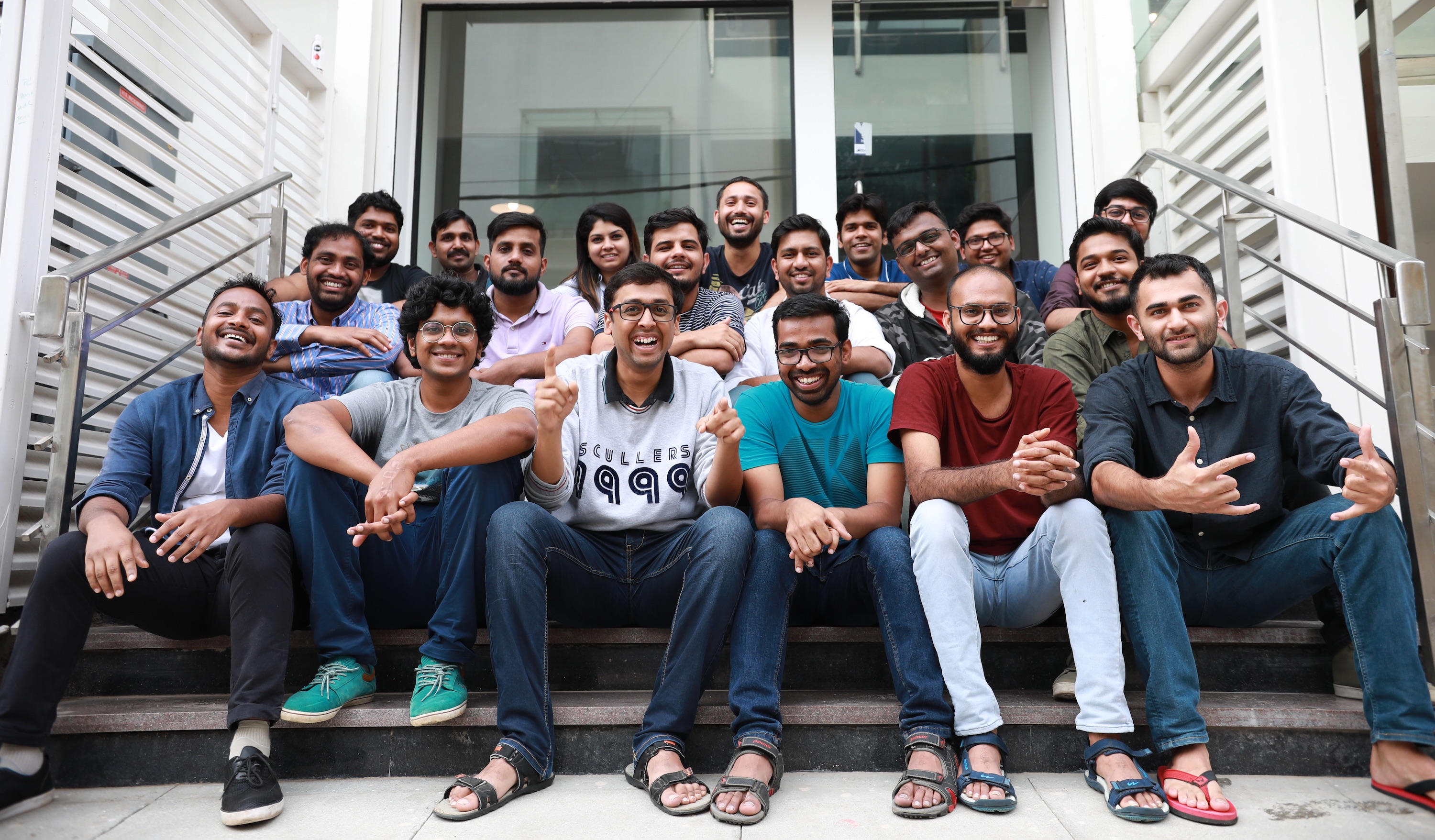
khatabook team

Even has Reliance Jio, a telecom operator launched by India’s richest man Mukesh Ambani, upended the Indian market and brought tens of millions of Indians online for the first time in last three years, most businesses in the country are still carrying out their operations without the use of any technology, said Naresh. “Could we build an app that makes it very easy for merchants to digitize their bookkeeping?” he said.

“As soon as we launched the app, we instantly started to go viral,” he said. For several months now, the startup is seeing 20% growth each month, he said. In six months, the app has helped businesses recover $5 billion in previously unpaid credits, Naresh claimed. Without any marketing, the app has also gained a significant number of users in Nepal, Pakistan, and Bangladesh, said Naresh.

“At Khatabook, we have taken early but significant steps towards leveraging this trend to digitize India’s shopkeepers. For most of our merchants, we are the first business software they’ve used in their entire life. And we will continue to build more India-first innovations to further enable the growth of what is still a largely untapped sector,” he said.

In a statement, Hans Tung, Managing Partner of GGV Capital, said, “as a global investor, we seek out founders who understand the local market and respond to growth opportunities with speed and agility – we certainly see this with the Khatabook team.”

Naresh, a cofounder of property startup Housing, said the startup will use the capital to build new features such as billing and invoicing to serve merchants. In next 12 months, Khatabook will aim to add 25 million businesses, he said.

A growing number of startups in India are attempting to help businesses. OkCredit, which raised $67 million last month, serves 5 million merchants. IndiaMART, a 23-year-old B2B firm that went public this year, led a round in a startup called Vyapar last month that is addressing similar problems.

30 Sep 2019

Monthly enlists experts and celebrities to teach 30-day online classes

You may know Max Deutsch from Month to Master, his yearlong self-improvement program where he tried to master one “expert-level” skill each month — such as solving a Rubik’s Cube in 20 seconds, holding a 30-minute conversation in a foreign language and even challenging world champion Magnus Carlsen to a game of chess (Deustch lost).

Now, Deustch and his co-founder Valentin Perez are launching Monthly, which Deustch told me is designed to “leverage technology to help scale this kind of learning to many more people.”

Specifically, Monthly offers 30-day classes taught by experts and celebrities— the instructors often have hundreds of thousands or millions of YouTube subscribers. For example, Andrew Huang is teaching a class on music production, Daria Callie is teaching a class on realistic portrait painting and Stevie Mackey is teaching a class on singing.

When you enroll in a class, you’ll be assigned a different task every day; you might watch an instructional video one day, and then do something more hands-on the next. While the classes are online, you have to enroll and take the class at set periods of time — currently, Huang’s class is the only one open for enrollment.

Deutsch acknowledged that this can seem “a bit antithetical to the benefit of online learning (that you can do it whenever you want),” but he noted that often, “‘whenever you want’ ends up offering most people too much flexibility and becomes ‘maybe some other time.'”

So by having explicit start and stop days for a class, he said, “the commitment you’re making to yourself is more significant and as a result you’re much more likely to stick with it and follow through on your aspirations.”

You’ll also be placed in peer groups with 20 other students, with whom you share work and give and receive feedback. And at the end of it, Deutsch said you’ll have produced “something tangible that you’ve made that you’re proud of and that you can share with the world” — a voice recording, a film, a painting, etc.

Pricing will vary from $179 to $279, depending on the class. Deutsch didn’t provide specific numbers on how the money is shared with instructors, but he noted that the split varies depending on whether students signed up via Monthly or via an instructor promotion. And either way, he said, “creators are getting a very compelling split.”

As for funding, Monthly has raised an undisclosed amount from Floodgate’s Ann Miura-Ko at Floodgate, Intuit founder Scott Cook (Deutsch worked as a product manager at Intuit), and OVO Fund’s Eric Chen.

30 Sep 2019

Twitter launches its anti-abuse filter for Direct Messages

Twitter is rolling out its spam and abuse filter for Direct Messages, a month and a half after the company announced it had started testing the feature. The filter will be available on Twitter’s iOS, Android and Web apps.

The filter adds a new view to the Additional Messages inbox, where DMs from people you don’t follow go. If you click on it, messages that potentially contain offensive content also have their previews hidden, with an option to delete the message without opening it first.

The new DM filter is useful for people who want to keep their Twitter messages open, but (like most people) don’t want to see abusive content. The feature, however, feels long overdue considering that offensive messages are so common for users with open inboxes that third-party developers have launched their own filtering tools, including a recently-released plugin that detects and deletes dick pics.

Earlier this month, Twitter also released its Hide Replies feature in the U.S. and Canada after testing it in Canada. It gives users the option of picking replies to a tweet to hide, but does not delete them. Instead, they are still visible in a separate view that is linked to a button in the original tweet.

30 Sep 2019

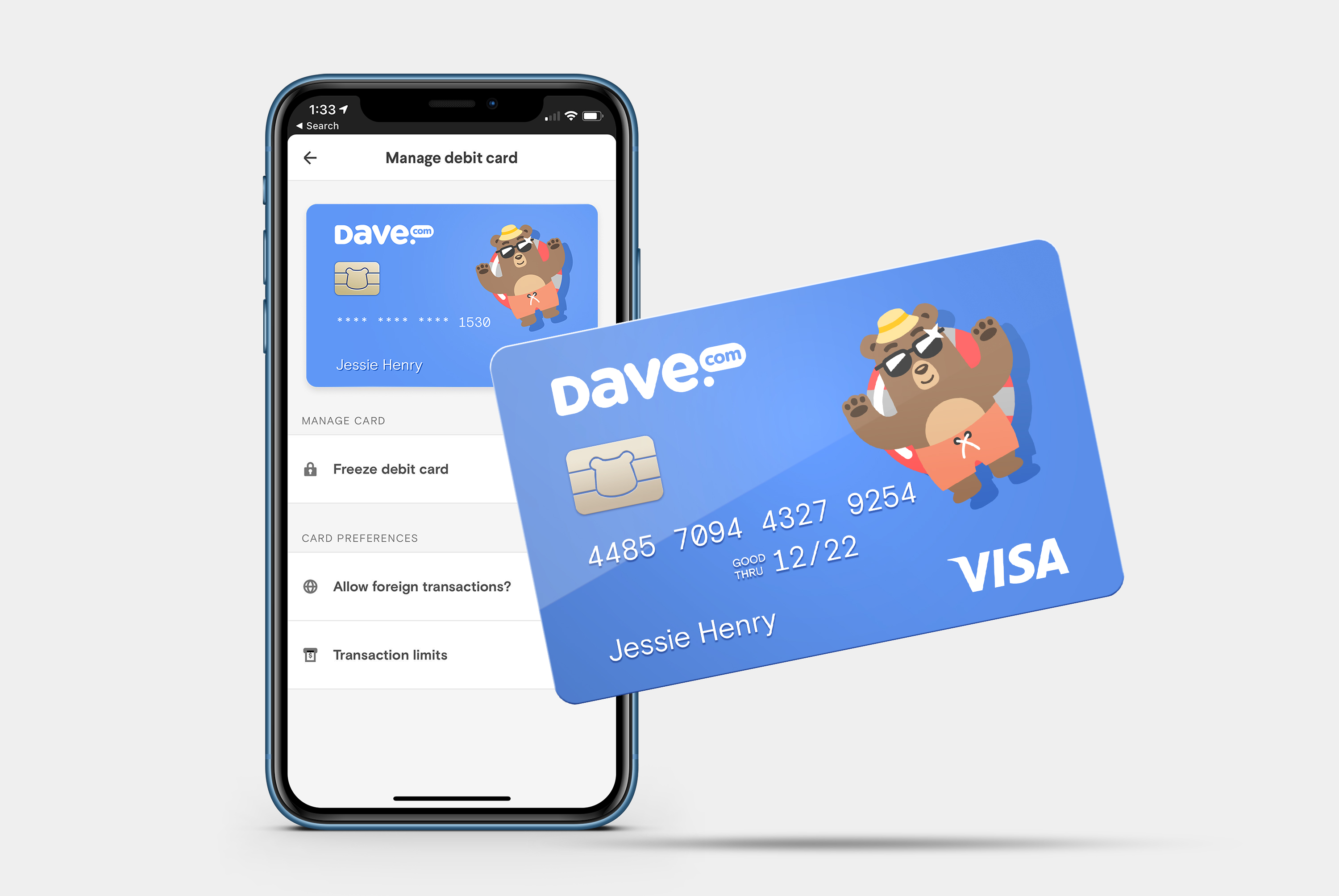
Upstart banking company Dave is now worth $1 billion, as Norwest puts in $50 million

Two years after the Los Angeles-based fintech startup Dave launched with a suite of money management tools to save consumers from overdraft fees, the company is now worth $1 billion thanks to a nascent banking practice that had investors lining up.

The company used its overdraft protection service and money management display to shift customers’ focus away from the total balance that their account would show by giving them a sense of how much was actually left in their accounts once debits were included in their statements.

“What was cool about our financial management product was that we were trying to use Dave as a replacement for their current bank,” says Jason Wilk, Dave’s co-founder and chief executive.

Dave now counts over 4 million users for its financial management app and has roughly 800,000 people on the waiting list to use its banking services, Wilk says.

The company has taken a methodical approach to opening its doors as a digital bank, in part because it wants to have the necessary support infrastructure in place to service the demand that Wilk expects to see for its service.

“It’s one thing to help people with budgeting. It’s another to actually manage their money,” says Wilk.

3 1

Dave will use the $50 million raised from Norwest to significantly expand its product and engineering team within the next 12 months, in order to double down on the core business and ensure the success of the banking product.

“We can prove that Dave can be helpful by showing how we can help you manage your current account, and then Dave banking is the marketing lever from there,” says Wilk.

For now, customers need to have the financial management app installed to be able to access the company’s banking service.  

Dave charges $1 per month for access to its financial management tools and that also gives customers the ability to use a cushion of between $50 to $75 to avoid being hit with overdraft fees from their current bank account. Dave asks for a tip every time a customer uses that cushion to cover expenses — something that Wilk says is still cheaper than having to worry about overdraft fees.

And, to add a bit of environmental spin, for every tip that Dave receives, the company plants a tree. “We plant millions and millions of trees,” says Wilk.

The company is FDIC insured through a partner bank, the Memphis-based Evolve Bank and Trust, which acts as a backstop for the company’s financial management activities.

“We already had a relationship with them for some payment processing stuff,” says Wilk. “We liked the team and liked the terms and went with them.”

Terms between financial services firms can vary, and, Wilk says, Evolve Bank was willing to give the company a good deal on splitting the interchange fee, which is a big source of revenue for upstart banks.

It’s possible that Dave could have received a bigger check at a potentially higher valuation, but Wilk says the startup is trying to stay lean.

“The company is growing so quickly, we didn’t want to get too diluted on this round,” he says. “We think the company is quite a bit more valuable than [$1 billion]. You don’t want to raise too much money too quickly if you really think the valuation is going to climb… Since we signed the term sheet the company has already grown another 40%.”

It was only four months ago that Dave was announcing a $110 million credit financing with Victory Park Capital and the launch of its banking product.

Dave’s products and services have a few advantages for customers that are just getting started on the path to financial security. The company monitors everyday monthly payments and reports them to credit agencies to improve customers’ credit ratings. The company also provides up to $100, interest-free, overdraft protection.

“Banks have failed their customers by building products that put their own interests ahead of the humans who use them. People don’t need predatory fees, they need tools that actually solve their challenges around credit building, finding work and getting access to their own money to cover immediate expenses. Dave is the banking product that works with its customers, not against them,” said Wilk, in a June statement announcing the funding and banking product launch.

While Dave is getting some hefty firepower and a generous valuation from Norwest, it’s also operating in a market where its core services that were a point of differentiation are quickly becoming table stakes.

Earlier in September, the new startup banking company Chime announced that it had hit 5 million banking customers and was offering its own overdraft protection service.

The San Francisco-based bank has also raised a lot more capital for a potential piggy bank to raid if it needs to acquire or spend on engineering talent to build out new products and services. Earlier this year, the company announced a $200 million round and said it had hit roughly 3 million customers. Clearly Chime is adding new banking customers at a torrid pace.

And they’re facing global competition as well. N26, the European startup bank with a $3.6 billion valuation and hundreds of millions in financing launched in the U.S. a few months ago as well.

The company sees a global opportunity to create new digital banking services in a world where large amounts of capital and an elite set of consumers move easily between international markets.

“We have an opportunity that we build a bank that has more than 50 million users around the globe. Today, we only have 3.5 million users but we’re accelerating,” said N26 chief executive, Valentin Self, in an interview with TechCrunch. “From a country perspective, we have agreed already that we go to Brazil. There’s no plan after Brazil yet. Now let’s focus on the U.S., then on Brazil, then next year we’ll find out what’s the feedback from these two markets.”

30 Sep 2019

Rocket Lab launch switcheroo shows the flexibility of the new orbital economy

New Zealand-based launch provider Rocket Lab has announced its next commercial mission, “As The Crow Flies,” taking an Astro Digital satellite to orbit in October. Interestingly, this launch originally had a different payload, but was switched out on fairly short notice — not exactly a common practice in this business.

The launch, scheduled for a two-week window starting October 15, will take a single spacecraft created by Astro to low Earth orbit. Corvus — the genus to which crows and ravens belong — is the name of the series of imaging satellites the company has already put up there; hence the name of the mission.

But this mission wasn’t scheduled to launch for some time yet. October’s launch, the fifth this year from Rocket Lab, was set to be another customer’s, but that customer seems to have needed a bit of extra time to prepare — and simply requested a later launch date.

And because the weather is fine, and one Electron rocket is much like another, Rocket Lab and Astro Digital just decided to use that launch window anyway and head to orbit a bit early.

This kind of thing really isn’t done much in the world of launch services. There are so many moving parts and so much red tape, not to mention weather, labor and everything else involved, that launch dates are often set years in advance, frequently delayed anyway, and then either lift off or sit on the launchpad until they do. But flexibility is fundamental to the Rocket Lab business model, as founder and CEO Peter Beck has said repeatedly.

“Electron is a launch on demand service — we’re ready when the launch customer is,” he told TechCrunch regarding today’s announcement. “Electron is designed for standardized, rapid production — we don’t build to tail numbers. This ensures we can have launch vehicles on standby, ready to be assigned a payload for launch on demand.”

When the inevitable delays happen, whether for product, funding or regulatory reasons, both provider and customer have to be ready to work with one another.

“The systems are complex and everything has to be right before launch, so we always want to ensure our customers have the flexibility to make launch timing work for them,” Beck said. “We’re accommodating that reality but allowing our customers to adjust their launch schedule as required, without causing disruption to the other missions on our manifest.”

As the new space economy grows, the old methods and infrastructure are increasingly unable to keep up, necessitating this kind of flexibility. Other launch providers are building toward small scales and adjustable time frames as well, and there’s a line around the globe of small satellite makers who are waiting to take advantage.

You’ll be able to watch the launch from the Māhia Peninsula complex live whenever weather permits takeoff, sometime after October 14.

30 Sep 2019

AWS IQ matches AWS customers with certified service providers

AWS has a lot going on, and it’s not always easy for customers to deal with the breadth of its service offerings on its own. Today, the company announced a new service called AWS IQ that is designed to connect customers with certified service providers.

“Today I would like to tell you about AWS IQ, a new service that will help you to engage with AWS Certified third party experts for project work,” AWS’s Jeff Barr wrote in a blog post introducing the new feature. This could involve training, support, managed services, professional services or consulting. All of the companies available to help have received associate, specialty or professional certification from AWS, according to the post.

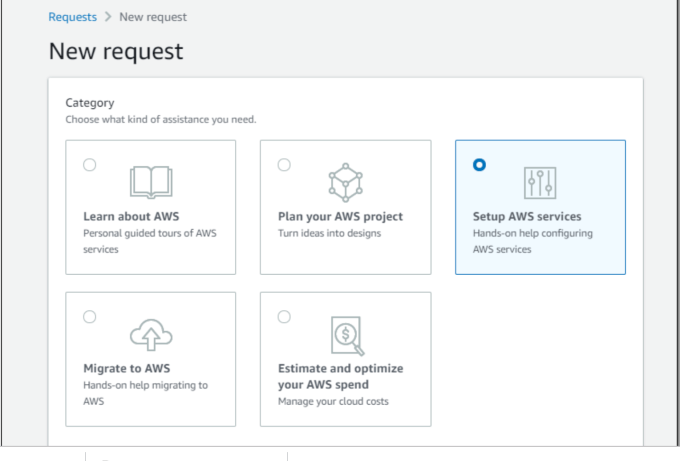
You start by selecting the type of service you are looking for such as training or professional services, then the tool walks you through the process of defining your needs including providing a title, description and what you are willing to pay for these services. The service then connects the requestor with a set of providers that match the requirements. From there, the requestor can review expert profiles and compare the ratings and offerings in a kind of online marketplace.

AWS IQ start screen

You start by selecting the type of service you want to engage.

Swami Sivasubramanian, vice president at AWS says they wanted to offer a way for customers and service providers to get together. “We built AWS IQ to serve as a bridge between our customers and experts, enabling them to get to work on new projects faster and easier, and removing many of the hassles and roadblocks that both groups usually encounter when dealing with project-based work,” he said in a statement.

The company sees this as a particularly valuable tool for small and medium sized vendors, who might lack the expertise to find help with AWS services. The end result is that everyone should win. Customers get direct access to this community of experts, and the experts can more easily connect with potential customers to build their AWS consulting practice.

30 Sep 2019

SpaceX details Starship and Super Heavy in new website

After CEO Elon Musk shared new details about its in-development Starship spacecraft on Saturday, SpaceX has updated its website with a new section dedicated to the fully reusable cargo and passenger vehicle. The new Starship website also provides a bunch of info about Super Heavy, the first-stage booster that will propel Starship to orbital altitudes and beyond.

Starship, once complete, will be “world’s most powerful launch vehicle,” according to SpaceX, with a cargo capacity of 100 metric tons (that’s over 220,000 lbs) to Earth orbit. With orbital refueling, it’ll also be able to take its freight — and passengers — to the Moon, Mars and beyond.

Per the new Starship site, the final vehicle will be 160 feet tall (without the booster) and 30 feet in diameter, with a propellant capacity of 1,200 metric tons of liquid methane and liquid oxygen. Payload, and crew depending on configuration, will occupy the top third of the rocket, while the bottom two-thirds will house the propellant and six Raptor engines, including three for atmospheric flight and three for propulsion in space. At the top of the rocket there are two actuated (meaning you can control their movement) fins that will move to orient the rocket for re-entry and landing. At the bottom, two large fins will also help produce drag, crucial for its controlled descent. Starship will be made of stainless steel, and one half of its surface will be covered in glass tiles to take the brunt of the worst of the heat upon atmospheric entry.

starship

As for Super Heavy, it’ll have the same 30-foot diameter, but be much taller, at 223 feet, with a propellant capacity of a massive 3,300 metric tons, and a thrust capability of 72 meganewtons (MN) (the thrust of the Saturn V rocket was only 35 MN, by comparison). Actuated grid fins near the top of the rocket will be used for its controlled landing, much like those found on the Falcon 9 boosters SpaceX uses today. The bigger booster will have 37 Raptor engines, however, and six landing legs for stability when it comes back down to be readied for re-use. It’ll be made entirely of stainless steel.

SpaceX notes that Starship is used to deliver satellites at “a lower marginal cost per launch” compared to Falcon, and that the design of its cargo compartment will provide the largest potential cargo fairing of any current planned space freight vehicle. This will allow it to carry even very large objects like assembled space telescopes, the company notes.

It’s also designed to continue to service the International Space Station with cargo resupply, and would be able to transport a lot more cargo in one go than the current Dragon capsules SpaceX uses. It’s also designed to be able to deliver cargo and people to the Moon and other planets, and to return for multiple trips.

SpaceX also provided updated specs for the Raptor engine that will power the Starship system. Each Raptor will be 4 feet in diameter, 10.2 feet high and have a thrust capability of 2 MN (which is just over the thrust force of the Space Shuttle’s main engine during takeoff, coincidentally).

On the site, SpaceX says it’s targeting orbital flight for Starship in 2020, and at the event Musk went further still, saying that Starship should attain this milestone in less than  six months — and even allowed for the possibility that it could fly with people on board in one year.

30 Sep 2019

European early-stage VC firm ‘Project A’ on Europe’s startup scene taking the next step

Project A, the Berlin-based VC, just raised a new $200 million fund (€180 million) to continue backing European startups at Seed and Series A stage.

In addition, the firm — whose investments include WorldRemit, Catawiki, Voi and Uberall — announced it will now have a presence in London and Stockholm in order to put people on the ground in what it says are “two of its favorite ecosystems.”

What better time, therefore, to catch up with the team at Project A, where we talked investment thesis, why Stockholm and London, and the increasing interest in Europe from U.S. LPs and VCs. Other subjects we touched on include diversity in venture, and, of course, Brexit!

TechCrunch: You last raised a fund in 2016, totaling €140 million, what changes have you noticed since then with regards to the types of companies you are seeing and the European ecosystem as a whole?

Uwe Horstmann: Entrepreneurs definitely matured a lot over the last few years. We see more and more of serial founders who combine drive with experience delivering great results. We also noticed an increase in more tech / product-centric and in B2B models.

This doesn’t come as a surprise as the market for consumer-oriented models started developing much earlier and is now reaching its limits after a few years. Many entrepreneurs gained experience in the Old Economy or have been consulting companies for a few years, learned about the struggle with products and processes first-hand and developed solutions specifically tailored to the industry’s needs.

We also notice a rise in professionalism in company setups and a higher ambition level in founding teams. This is probably also due to a more professional angel and micro fund scene that has developed in Europe.

TC: I note that you have U.S. LPs in the new fund, which I think is a first for Project A, and more broadly we are seeing a lot more interest from U.S. VCs in Europe these days. Why do you think that is, and how does this change the competitive landscape for deal-flow and the ambition of European founders?

Thies Sander: Having our first U.S. LPs on board makes us proud. LPs have noticed that European VC returns have really picked up during recent fund cohorts.