Year: 2019

30 Sep 2019

Microsoft OneDrive Personal Vault rolls out worldwide, launches expandable storage

Earlier this summer, Microsoft introduced an extra layer of security to its Dropbox competitor, OneDrive. The security features, called OneDrive Personal Vault, allow users to protect their files with two-step verification, like a fingerprint or facial recognition, PIN code or a one-time code sent through email, SMS or Microsoft Authenticator. At the time of launch, however, the feature was only available to select markets. Today, it’s rolling out worldwide and introducing new features, including expandable storage.

The company said OneDrive Personal Vault would initially be available to Australia, New Zealand and Canada, but would reach all OneDrive users by the end of the year.

With today’s expansion, it’s a little ahead of schedule, as it’s just now the end of September.

Personal Vault is available to all OneDrive users, with some limitations.

For those using OneDrive’s free or standalone 100GB storage plan, you’re able to store up to three files in Personal Vault. Office 365 subscribers can store as many files as they want, up to their storage limits.

Stronger authentication is the key selling point for Personal Vault, but it also comes with additional security measures. This includes “Scan and Shoot,” which lets you scan documents or shoot photos directly to Personal Vault, bypassing your device storage, like the camera roll. Personal Vault will also automatically lock files after a period of inactivity, restrict sharing on the files saved to prevent accidental shares and automatically sync files to a BitLocker-encrypted area of the hard drive on Windows 10 PCs.

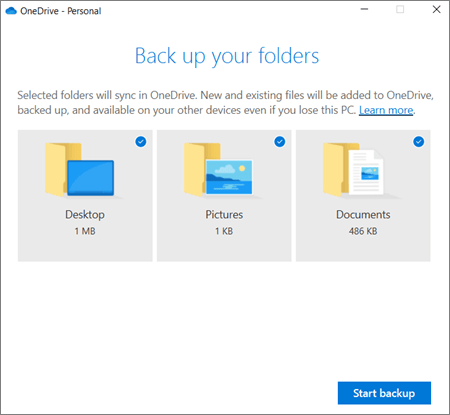
ba2d0566 5e67 43ce 998a fa1aa6517dbeIn addition to the global launch of Personal Vault, Microsoft also today introduced new storage options for One Drive, plus new features like PC Folder backup and dark mode.

Starting today, OneDrive users will now be able to add storage to their plans in 200GB increments, starting at $1.99 per month.

Meanwhile, PC Folder backup will allow OneDrive to back up your desktop, documents and picture folders from your Windows PC to the cloud, similar to rival desktop apps from Dropbox and Google Drive, for example. This option is available to Windows 7, 8 and 10 PCs. On Windows 10, it’s integrated so users can even opt to enable it during Windows setup or updates.

And OneDrive will now support a dark mode on iOS 13.

Personal Vault is live globally, as of today.

30 Sep 2019

Daily Crunch: Facebook faces VR challenges

The Daily Crunch is TechCrunch’s roundup of our biggest and most important stories. If you’d like to get this delivered to your inbox every day at around 9am Pacific, you can subscribe here.

1. Not all is predictable on Facebook’s social Horizon

Last week, Facebook unveiled Horizon, a massively multiplayer VR world that’s scheduled to launch in 2020. This might seem to play to Facebook’s software strengths, but Lucas Matney argues that the social networking giant may not actually have much of an advantage against smaller game studios.

For example, the team at Against Gravity has already built a network inside VR called Rec Room that’s been maturing over the past few years, with rich environments and toolsets for multiplayer interactions. (Extra Crunch membership required.)

2. Spotify now lets you add podcasts to playlists

Users can create their own custom playlists of their favorite podcasts, or even those that combine music and audio — similar to Spotify’s newly launched playlist “Your Daily Drive.”

3. Kickstarter darling EcoFlow Delta battery generator is not what it seems

The EcoFlow Delta is a new battery generator available on Kickstarter with incredible features claimed. Most are true, some are not.

4. YouTube TV is now available on Fire TV devices

Earlier this year, Google and Amazon reached an agreement to bring their streaming video apps to each other’s platforms. The YouTube app launched on Fire TV in July, and now Google is adding its live TV streaming service.

5. Amboss, the knowledge platform for medical professionals, scores €30M Series B

Launched in 2014 as a study platform for medical students, Amboss has since evolved to offer what it claims is the “most comprehensive and technologically-advanced” knowledge platform for medical professionals.

6. Learn everything you can about mobility at Disrupt SF

We’re bringing some of the industry’s leaders onstage at Disrupt SF — including Bird founder and CEO Travis VanderZanden, Kitty Hawk CEO Sebastian Thrun and Zoox CEO Aicha Evans.

7. This week’s TechCrunch podcasts

The latest episode of Equity kicks off with the reemergence of the much-criticized startup Bodega, which is now known as Stockwell and has raised a total of $45 million in funding. Meanwhile, Original Content reviews “Between Two Ferns: The Movie” on Netflix.

30 Sep 2019

Verizon picks up the assets of Disney-backed VR startup Jaunt

After raising $100 million, virtual reality content startup Jaunt has been in a precarious position for a few years now. It seems like the saga has finally come to a close as the startup announces that Verizon has purchased the company’s technology.

The studio rode the wave of VR hype following Facebook’s acquisition of Oculus, but after years of trying to find a business in immersive entertainment, spanning software and camera hardware, the company has spent its past year trying to sell off its VR assets while pursuing a business focused on augmented reality and what it calls the “distribution of volumetric video of humans.”

A deal with Spinview Global to purchase the company’s VR tech that was reported last year never ended up happening, a spokesperson tells TechCrunch. Verizon is walking away with Jaunt’s technology assets here which is inclusive of their VR tech and their newer AR efforts. It doesn’t sound like any employees are coming onboard as part of the transition, but there will be some Jaunt folks helping bring the tech onboard for a brief period.

The company’s spokesperson opted not to comment when asked whether the startup was winding down following the deal.

Why does Verizon want these assets? Verizon Media (of which TechCrunch is apart of) already has some assets in the VR space including the virtual reality content studio RYOT which has been playing around with 360 content and general AR/VR content. The company’s Envrnmnt arm is basically focusing on making AR and VR apps run more efficiently on mobile, which is something Jaunt has had to be mindful of as they’ve tried to focus on broadcasters that need to deal with bandwidth strains.

We don’t have a price tag on the deal, but the startup raised $100 million from investors including GV and Disney. In October of last year, the company laid off a “significant portion of its employees” and by the end of the year they were auctioning off office furniture.

30 Sep 2019

Google brings its Jacquard wearables tech to Levi’s Trucker Jacket

Back in 2015, Google’s ATAP team demoed a new kind of wearable tech at Google I/O that used functional fabrics and conductive yarns to allow you to interact with your clothing and, by extension, the phone in your pocket. The company then released a jacket with Levi’s in 2017, but that was expensive, at $350, and never really quite caught on. Now, however, Jacquard is back. A few weeks ago, Saint Laurent launched a backpack with Jacquard support, but at $1,000, that was very much a luxury product. Today, however, Google and Levi’s are announcing their latest collaboration: Jacquard-enabled versions of Levi’s Trucker Jacket.

These jackets, which will come in different styles, including the Classic Trucker and the Sherpa Trucker, and in men’s and women’s versions, will retail for $198 for the Classic Trucker and $248 for the Sherpa Trucker. In addition to the U.S., it’ll be available in Australia, France, Germany, Italy, Japan and the U.K.

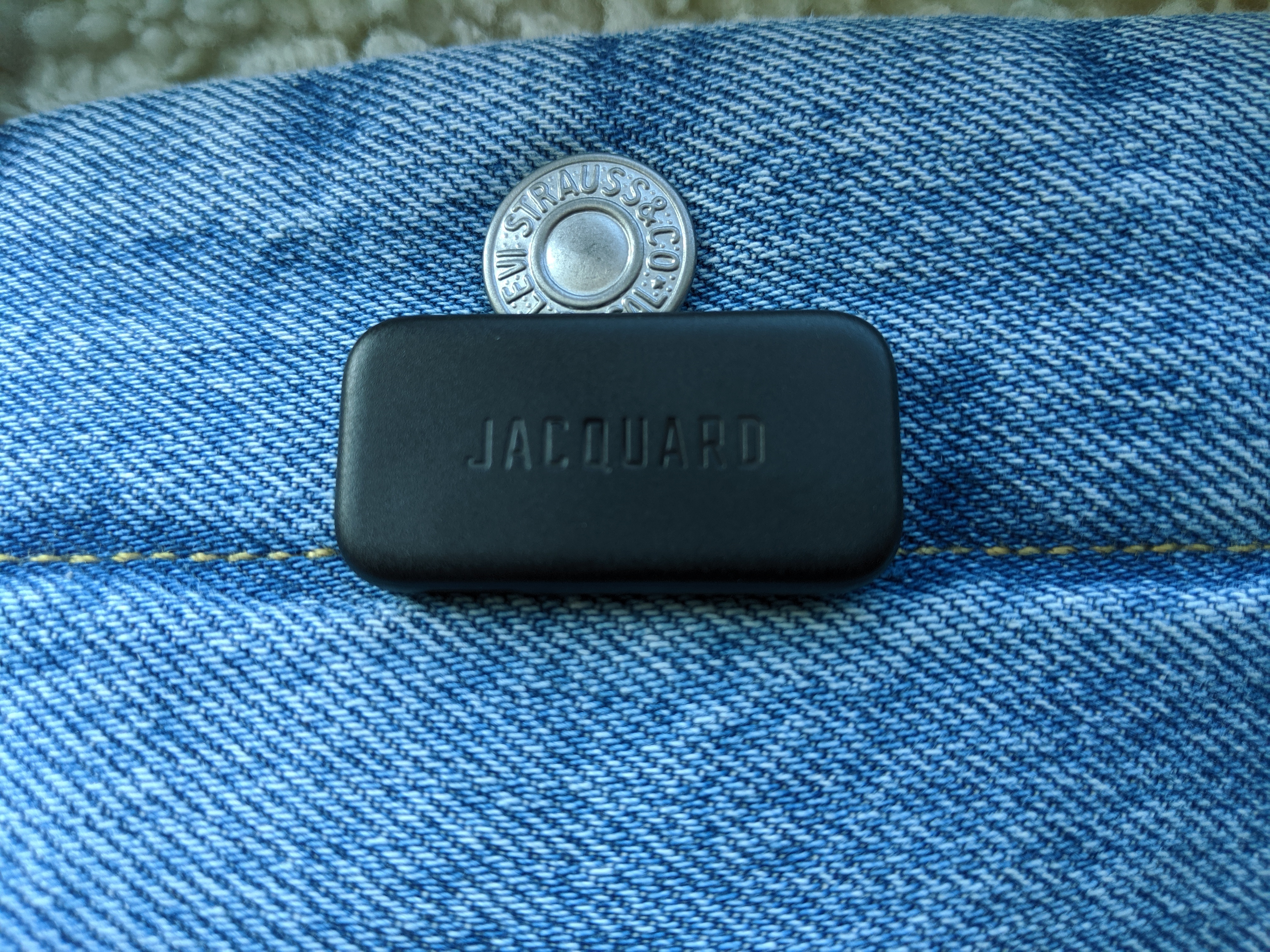
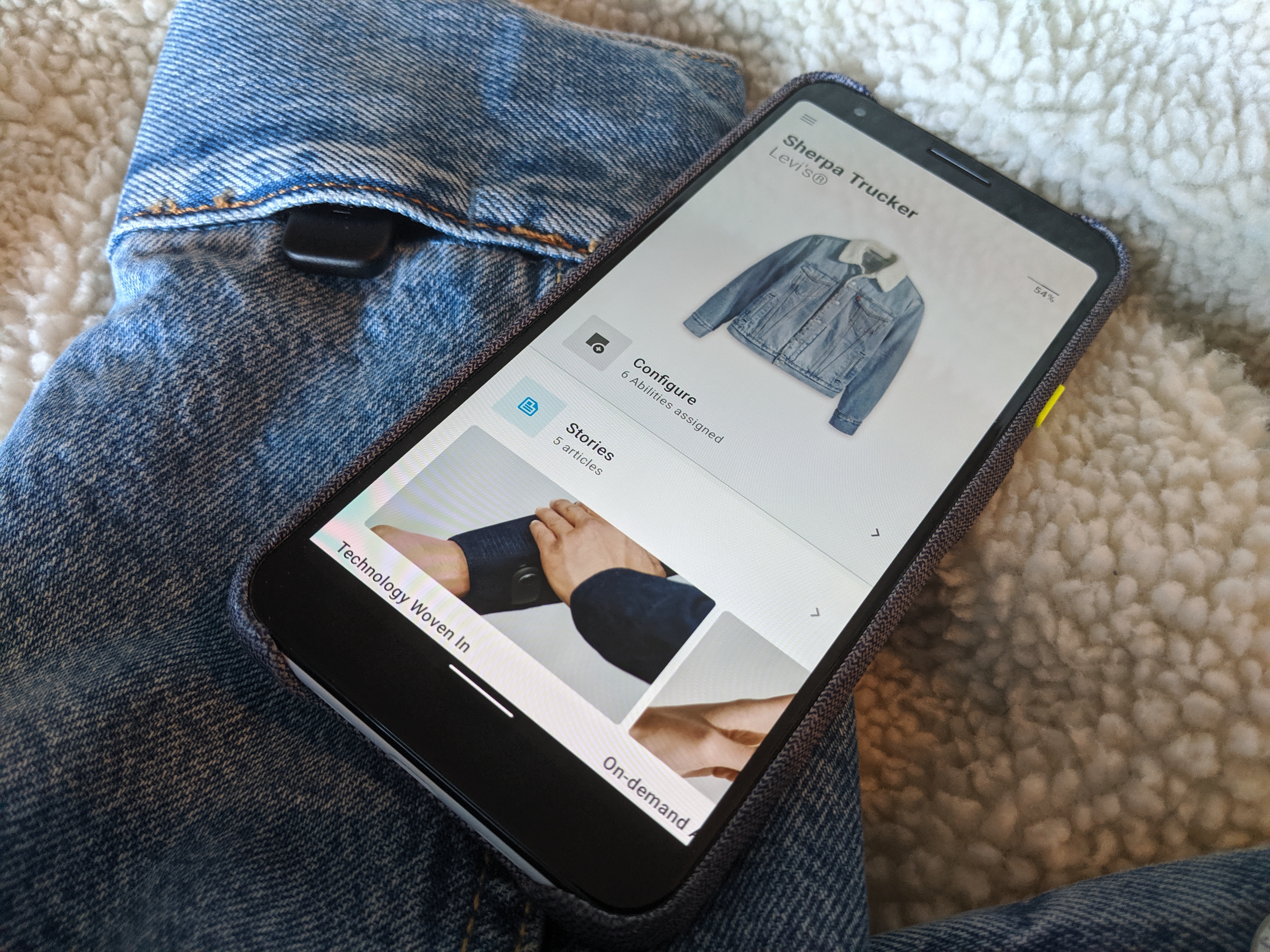
The idea here is simple and hasn’t changed since the original launch: a dongle in your jacket’s cuff connects to conductive yarns in your jacket. You can then swipe over your cuff, tap it or hold your hand over it to issue commands to your phone. You use the Jacquard phone app for iOS or Android to set up what each gesture does, with commands ranging from saving your location to bringing up the Google Assistant in your headphones, from skipping to the next song to controlling your camera for selfies or simply counting things during the day, like the coffees you drink on the go. If you have Bose noise-canceling headphones, the app also lets you set a gesture to turn your noise cancellation on or off. In total, there are currently 19 abilities available, and the dongle also includes a vibration motor for notifications.

2019 09 30 0946 1

What’s maybe most important, though, is that this (re-)launch sets up Jacquard as a more modular technology that Google and its partners hope will take it from a bit of a gimmick to something you’ll see in more places over the next few months and years.

“Since we launched the first product with Levi’s at the end of 2017, we were focused on trying to understand and working really hard on how we can take the technology from a single product […] to create a real technology platform that can be used by multiple brands and by multiple collaborators,” Ivan Poupyrev, the head of Jacquard by Google told me. He noted that the idea behind projects like Jacquard is to take things we use every day, like backpacks, jackets and shoes, and make them better with technology. He argued that, for the most part, technology hasn’t really been added to these things that we use every day. He wants to work with companies like Levi’s to “give people the opportunity to create new digital touchpoints to their digital life through things they already have and own and use every day.”

What’s also important about Jacquard 2.0 is that you can take the dongle from garment to garment. For the original jacket, the dongle only worked with this one specific type of jacket; now, you’ll be able to take it with you and use it in other wearables as well. The dongle, too, is significantly smaller and more powerful. It also now has more memory to support multiple products. Yet, in my own testing, its battery still lasts for a few days of occasional use, with plenty of standby time.
jacquard dongle

Poupyrev also noted that the team focused on reducing cost, “in order to bring the technology into a price range where it’s more attractive to consumers.” The team also made lots of changes to the software that runs on the device and, more importantly, in the cloud to allow it to configure itself for every product it’s being used in and to make it easier for the team to add new functionality over time (when was the last time your jacket got a software upgrade?).

He actually hopes that over time, people will forget that Google was involved in this. He wants the technology to fade into the background. Levi’s, on the other hand, obviously hopes that this technology will enable it to reach a new market. The 2017 version only included the Levi’s Commuter Trucker Jacket. Now, the company is going broader with different styles.

“We had gone out with a really sharp focus on trying to adapt the technology to meet the needs of our commuter customer, which a collection of Levi’s focused on urban cyclists,” Paul Dillinger, the VP of Global Product Innovation at Levi’s, told me when I asked him about the company’s original efforts around Jacquard. But there was a lot of interest beyond that community, he said, yet the built-in features were very much meant to serve the needs of this specific audience and not necessarily relevant to the lifestyles of other users. The jackets, of course, were also pretty expensive. “There was an appetite for the technology to do more and be more accessible,” he said — and the results of that work are these new jackets.
IMG 20190930 102524

Dillinger also noted that this changes the relationship his company has with the consumer, because Levi’s can now upgrade the technology in your jacket after you bought it. “This is a really new experience,” he said. “And it’s a completely different approach to fashion. The normal fashion promise from other companies really is that we promise that in six months, we’re going to try to sell you something else. Levi’s prides itself on creating enduring, lasting value in style and we are able to actually improve the value of the garment that was already in the consumer’s closet.”

I spent about a week with the Sherpa jacket before today’s launch. It does exactly what it promises to do. Pairing my phone and jacket took less than a minute and the connection between the two has been perfectly stable. The gesture recognition worked very well — maybe better than I expected. What it can do, it does well, and I appreciate that the team kept the functionality pretty narrow.

Whether Jacquard is for you may depend on your lifestyle, though. I think the ideal user is somebody who is out and about a lot, wearing headphones, given that music controls are one of the main features here. But you don’t have to be wearing headphones to get value out of Jacquard. I almost never wear headphones in public, but I used it to quickly tag where I parked my car, for example, and when I used it with headphones, I found using my jacket’s cuffs easier to forward to the next song than doing the same on my headphones. Your mileage may vary, of course, and while I like the idea of using this kind of tech so you need to take out your phone less often, I wonder if that ship hasn’t sailed at this point — and whether the controls on your headphones can’t do most of the things Jacquard can. Google surely wants Jacquard to be more than a gimmick, but at this stage, it kind of still is.
IMG 20190930 104137IMG 20190930 104137

30 Sep 2019

Stranger Things 4 takes Netflix’s hit retro sci-fi show beyond Hawkins

Stranger Things 4 got its first teaser today, courtesy of the official Stranger Things Twitter account. The Netflix series, which is in its fourth season (although the creators, brothers Matt and Ross Duffer, maintain that each instalment isn’t really a ‘season’ in the traditional TV sense, but rather more like a movie broken up across multiple episodes), is being renewed alongside an overall film and TV deal with a 9-figure value for the Duffers at Netflix.

Stranger Things manages a unique blend of sci-fi, horror, 1980s-era nostalgia and coming-of-age teen buddy comedy. It’s among the most successful of Netflix’s original content creations, by most accounts, and also one of the most critically-acclaimed. Details about this fourth series are scarce for now, but based on the teaser we can expect the action to move out of Hawkins, the sleepy town which has provided the backdrop for all of the action thus far (minus a very strange outing for main character Elle back in season two).

Judging strictly from this preview, we can also probably safely assume that a lot of the action will take place in the ‘Upside Down,’ the fictional dark mirror dimension where the series villain monsters are from. It’ll be interesting to see if Stranger Things 4 can spend a whole season in this realm, which seems to mostly be filled with moss, slime, dust and spores of some kind.

30 Sep 2019

Stranger Things 4 takes Netflix’s hit retro sci-fi show beyond Hawkins

Stranger Things 4 got its first teaser today, courtesy of the official Stranger Things Twitter account. The Netflix series, which is in its fourth season (although the creators, brothers Matt and Ross Duffer, maintain that each instalment isn’t really a ‘season’ in the traditional TV sense, but rather more like a movie broken up across multiple episodes), is being renewed alongside an overall film and TV deal with a 9-figure value for the Duffers at Netflix.

Stranger Things manages a unique blend of sci-fi, horror, 1980s-era nostalgia and coming-of-age teen buddy comedy. It’s among the most successful of Netflix’s original content creations, by most accounts, and also one of the most critically-acclaimed. Details about this fourth series are scarce for now, but based on the teaser we can expect the action to move out of Hawkins, the sleepy town which has provided the backdrop for all of the action thus far (minus a very strange outing for main character Elle back in season two).

Judging strictly from this preview, we can also probably safely assume that a lot of the action will take place in the ‘Upside Down,’ the fictional dark mirror dimension where the series villain monsters are from. It’ll be interesting to see if Stranger Things 4 can spend a whole season in this realm, which seems to mostly be filled with moss, slime, dust and spores of some kind.

30 Sep 2019

Hyundai is getting into the flying car business

Hyundai Motor Group has launched a new air mobility division aimed at developing technology for the commercialization of flying cars, the latest company to dive into the emerging industry.

The division will be led by Dr. Jaiwon Shin, an aeronautics engineer who most recently led the Aeronautics Research Mission Directorate at NASA. While at NASA, Shin oversaw a $725 million program into aeronautics research initiatives, such as supersonic X-plane, electrification of aircraft, UAS traffic management, and urban air mobility.

The South Korean automaker said the business unit led by Shin will “develop core technologies and innovative solutions for safe and efficient airborne travel.” Shin’s expertise centers on airframe, engine, aviation safety, and air traffic management — technologies that Hyundai says will allow it to take a lead in the urban air mobility sector.

That urban air sector is expected to grow into a market worth $1.5 trillion within the next 20 years,” according to Shin.

Of course, there are many others pursuing various kinds of air taxis, including Uber, Kitty Hawk Corp., Terrafugia and Volocopter, to name just a few.

All of these companies, including Hyundai see the flying cars as a way to solve the traffic problems on the ground. Flying cars could merely move that congestion to the skies, which is why technologies around airspace traffic management — which Shin has experience in — is just as important as developing the aircraft.

30 Sep 2019

Hyundai is getting into the flying car business

Hyundai Motor Group has launched a new air mobility division aimed at developing technology for the commercialization of flying cars, the latest company to dive into the emerging industry.

The division will be led by Dr. Jaiwon Shin, an aeronautics engineer who most recently led the Aeronautics Research Mission Directorate at NASA. While at NASA, Shin oversaw a $725 million program into aeronautics research initiatives, such as supersonic X-plane, electrification of aircraft, UAS traffic management, and urban air mobility.

The South Korean automaker said the business unit led by Shin will “develop core technologies and innovative solutions for safe and efficient airborne travel.” Shin’s expertise centers on airframe, engine, aviation safety, and air traffic management — technologies that Hyundai says will allow it to take a lead in the urban air mobility sector.

That urban air sector is expected to grow into a market worth $1.5 trillion within the next 20 years,” according to Shin.

Of course, there are many others pursuing various kinds of air taxis, including Uber, Kitty Hawk Corp., Terrafugia and Volocopter, to name just a few.

All of these companies, including Hyundai see the flying cars as a way to solve the traffic problems on the ground. Flying cars could merely move that congestion to the skies, which is why technologies around airspace traffic management — which Shin has experience in — is just as important as developing the aircraft.

30 Sep 2019

Instagram launches a ‘creators’ account to encourage more… creation

Instagram deployed a new tool today that should help it continue to build a more viable alternative to YouTube for individual creators looking to try a different platform. It’s a dedicated account called @creators, which will deliver tips and tricks for people hoping to become more active on the platform.

Based on the pinned FAQ story that Instagram has posted to the account, and a brief explainer with some testimonials from actual creators using the platform. Some of the questions that Instagram answers include how to get Verified, which must be asked so incredibly frequently by this particular set of folks.

The grid posts of @creators include some helpful tips like pointing out that 60% of people listen to stories on the platform with the sound on. Clearly, the account is geared towards pushing video creation tips and tools, which makes sense given that’s an area of growth for the company, and a way for it to win over disaffected YouTubers and younger creators who are looking for their new home on the web.

This could be a huge potential opportunity for Instagram, in fact, and this account, while a small part of an overall approach to wooing creators, is a good one.

30 Sep 2019

SmartNews’ head of product on how the news discovery app wants to free readers from filter bubbles

Since launching in the United States five years ago, SmartNews, the news aggregation app that recently hit unicorn status, has quietly built a reputation for presenting reliable information from a wide range of publishers. The company straddles two very different markets: the U.S. and its home country of Japan, where it is one of the leading news apps.

SmartNews wants readers to see it as a way to break out of their filter bubbles, says Jeannie Yang, its senior vice president of product, especially as the American presidential election heats up. For example, it recently launched a feature, called “News From All Sides,” that lets people see how media outlets from across the political spectrum are covering a specific topic.

The app is driven by machine-learning algorithms, but it also has an editorial team led by Rich Jaroslovsky, the first managing editor of WSJ.com and founder of the Online News Association. One of SmartNews’ goal is to surface news that its users might not seek out on their own, but it must balance that with audience retention in a market that is crowded with many ways to consume content online, including competing news aggregation apps, Facebook and Google Search.

In a wide-ranging interview with Extra Crunch, Yang talked about SmartNews’ place in the media ecosystem, creating recommendation algorithms that don’t reinforce biases, the difference between its Japanese and American users and the challenges of presenting political news in a highly polarized environment.

Catherine Shu: One of the reasons why SmartNews is interesting is because there are a lot of news aggregation apps in America, but there hasn’t been one huge breakout app like SmartNews is in Japan or Toutiao in China. But at the same time, there are obviously a lot of issues in the publishing and news industry in the United States that a good dominant news app might be able to help, ranging from monetization to fake news.

Jeannie Yang: I think that’s definitely a challenge for everybody in the U.S. With SmartNews, we really want to see how we can help create a healthier media ecosystem and actually have publishers thrive as well. SmartNews has such respect for the publishers and the industry and we want to be good partners, but also really understand the challenges of the business model, as well as the challenges for users and thinking of how we can create a healthier ecosystem.