Year: 2019

26 Sep 2019

Apple’s new ‘For All Mankind’ trailer focuses on the people dealing with a Soviet space race win

Apple’s new premium subscription TV service is launching on November 1, and there’s a new trailer for one of its original shows, the Ronald D. Moore project ‘For All Mankind.’

The series is fictional period piece set in the late ’60s/early ’70s, which follows an alternate timeline in which Soviet Russia, not the U.S., is the first to land a man on the Moon. It seems like there will be a lot of fallout as a result of the U.S. losing this key battle in the space race, but the biggest divergence from our actual history might be that the Americans seem to go all-in on an astronaut qualification and training program for women, much earlier than they did in real life.

Watching this, which is more focused on the various cast members than previous trailers for this show (which set up the premise), I get strong The Calculating Stars and the entire ‘Lady Astronaut’ novel series vibes, which are great books by Mary Robinette Kowal if you’re looking for alternative history with a space bent right now, and don’t want to wait for Apple’s $5 per month service to launch.

That said, I’m definitely still very interested in checking this out when it is available, and it doesn’t hurt that it’s from the same creator who brought us the early 2000s Battlestar Galactica reboot and Outlander, my favorite time-traveling British history romp.

26 Sep 2019

Europe shows the way in online privacy

After passively watching for many years as tech giants developed dominant market positions that threaten consumer privacy and stifle competition, American antitrust regulators seem to have finally grasped what’s happening and decided to take action. 

This increasing scrutiny, which tacitly acknowledges that Europe’s more proactive regulators were perhaps right all along, is helping unleash a wave of tech startups at the expense of big tech. By holding industry titans accountable over the privacy and use of our data, regulators are encouraging long overdue disruption of everything from back-end infrastructure to consumer services.

Over the past decade, Facebook, Google, Amazon and others have tightened their grip on their respective domains by buying up hundreds of smaller rivals, with little U.S. government opposition. But as their dominance has grown, and as egregious privacy violations and mishaps proliferate, regulators can no longer look the other way.

In recent months, American regulators have announced a flurry of new antitrust investigations into big technology companies. The Federal Trade Commission has voted to fine Facebook $5 billion for misusing consumer data, the U.S. House Judiciary Committee is probing the tech industry for antitrust violations and 50 attorneys general announced an antitrust probe into Google. U.S. officials are even considering establishing a digital watchdog agency.

It’s hard to understand why it took so long, though perhaps U.S. officials were loath to target domestic companies that were driving huge economic growth and creating millions of new jobs. In contrast, their counterparts across the pond have been on an antitrust tear under the watch of European Union antitrust commissioner (and now also EVP of digital affairs) Margrethe Vestager.

Now that regulators from both Europe and the United States are pursuing antitrust probes, they have exposed areas where startups can innovate. 

Startups take on big tech

26 Sep 2019

Oculus CTO: ‘We missed an opportunity’ with Gear VR

At the Oculus Connect developer conference, one of the company’s veteran executives offered some insights on the end of its best-selling product. “As we move forward into the future with Quest, it is probably time for me to give a bit of a eulogy for Gear VR,” CTO John Carmack told the audience

Carmack detailed that the current software was current but that Samsung’s latest and future phones will not support the headset and its “days were numbered.”

“I do think we missed an opportunity here,” said John Carmack. “I invested a whole lot of effort into it and it’s the foundation that we based all of the mobile things off of.”

The headset was first launched in 2014 with an Innovator Edition that supported the Note 4 and endured a number of editions that made minor adjustments to the size and onboard electronics of the headset. Users could slot their Samsung phones into the headset, which would then launch Oculus’s software and storefront.

Carmack said that the headset line was the company’s best selling by far but that it was also the least retentive of users, trailing Rift, Quest and Go. This isn’t hugely surprising given the friction it took to get into an experience as well as just how many of the headsets were given away for free through bundle deals.

26 Sep 2019

Daily Crunch: Amazon announces new Alexa devices

The Daily Crunch is TechCrunch’s roundup of our biggest and most important stories. If you’d like to get this delivered to your inbox every day at around 9am Pacific, you can subscribe here.

1. Everything Amazon announced at its Alexa event

Amazon held a big shindig yesterday to announce a whole bunch of new hardware ahead of the holidays. Naturally, the lineup includes new Echo smart speakers, as well as Alexa-powered earbuds, glasses, a smart ring and even an oven.

Oh, and Alexa is also getting celebrity voices — starting with Samuel L. Jackson, whose smooth tones you can purchase for just 99 cents.

2. Facebook announces Horizon, a VR massive-multiplayer world

Facebook Horizon is a virtual reality sandbox universe where you can build your own environments and games, play and socialize with friends or just explore the user-generated landscapes. Basically, it’s Facebook’s take on Second Life, and it’s launching in private beta next year.

3. Verizon lights up 5G in (parts of) NYC

Manhattan and downtown Brooklyn are the carrier’s first focus in New York City, bringing the total number of cities with Verizon 5G to 13. (Obligatory reminder: Verizon owns TechCrunch.)

4. Summer wants to vanquish student loans for borrowers, and now has $10M to do it

Through Summer’s platform, borrowers can get a full 360-degree view of their current student loan situation, and begin exploring options for how to repay it in the most financially efficient way possible.

5. Nigeria’s CcHub acquires Kenya’s iHub to create mega Africa incubator

Two of Africa’s powerhouse tech incubators will join forces: Nigerian innovation center and seed-fund CcHub has acquired Nairobi-based iHub.

6. Founders, get to Disrupt SF for answers to the really hard questions

Yes, it’ll be fun to see all the celebrities (Will Smith! Steph Curry!) at Disrupt SF, but be sure to check out the agenda for the Extra Crunch stage, where we’ll get more in-depth about the challenges that every founder faces.

7. How Amazon is closing out competitors by opening up voice

More Amazon news: The company announced the formation of a new consortium called the Voice Interoperability Group, which aims to create a set of standards and technology for voice-enabled hardware, with users able to trigger one voice over another with the right set of “wake words.” (Extra Crunch membership required.)

26 Sep 2019

Gatsby raises $15M Series A for its modern web development platform

Gatsby, a platform that uses modern web technologies like React and GraphQL to help developers build better sites faster, today announced that it has raised a $15 million Series A round led by CRV. Previous investors Trinity Ventures, Mango Capital, Fathom Capital and Dig Ventures also participated, as did Kong CEO Augusto Marietti and Adobe CPO Scott Belsky. The company previously raised a $3.8 million seed round.

While Gatsby may not be a household name yet, it has grown quickly since its launch in 2015. Its users today include the likes of IBM, PayPal, Braun, Airbnb and Impossible Burger. The company argues that about 1 percent of the top 10,000 websites have now been built on top of the platform, which promises that it allows these companies to do away with their old LAMP stack and move to a more modern stack, based on modern open-source tools and engineering practices. Gatsby also does away with a monolithic CMS system and instead brings together a variety of tools that still allow content creators to use platforms like WordPress or Drupal to create what’s essentially a headless CMS system. In that case, Gatsby simply becomes the presentation layer for the CMS.

gatsby team

“We’ve spent four years building Gatsby to be the most comprehensive platform for building a modern website,” writes Gatsby founder and CEO Kyle Matthews. “What would take companies months or even years to implement with a cutting edge web stack is trivial to start with, build with, and deploy on Gatsby.”

Gatsby itself is based on the GatsbyJS open source project. The company says over 2,500 people have contributed since that project started. Matthews says Gatsby (the company) is now contributing about $3 million per year to open source projects that include the core Gatsby tools and the plugin ecosystem around it.

Like similar open source projects, Gatsby monetizes its tools by offering a hosted service that helps teams of developers stand up a new site quickly, with prices starting at $50/month for one site.

Screen Shot 2019 09 26 at 9.39.40 AM


26 Sep 2019

Israeli VC Pico Venture Partners closes on $80M

Pico Venture Partners, an early-stage investment firm headquartered in Jerusalem, has raised $80 million for its second flagship fund following a $35 million debut effort.

The four-year-old firm is not industry specific; rather, the outfit seeks “values-based, execution-driven Israeli entrepreneurs who leverage technology to modernize processes and unlock greater efficiency in the marketplace.” In other words, Pico is an opportunistic firm, looking for local founders with potential to bring big returns.

Pico has previously invested in Vroom, an online used-car marketplace that’s raised nearly $500 million in funding. Other portfolio companies include cloud automation business Spotinst, AI-enabled career development tool Gloat and business management tool Arbox.

Led by co-founding partners Elie Wurtman — a former general partner at Benchmark Capital Israel — Todd Kesselman and Gina LaVersa — former investment bankers — Pico operates offices in Tel Aviv and New York, in addition to Jerusalem.

“At PICO, we put an emphasis on impact,” Wurtman said in a statement provided to TechCrunch. “With this fund, we’re looking to partner with Israeli founders who want to use new technologies to make an impact on industries that need to be looked at from a refreshed perspective. While we’re looking for early-stage companies with significant growth potential, we also want to ensure we’re investing in entrepreneurs who have a clear vision about how they can make a real impact on markets, people and society.”

26 Sep 2019

Uber Incubator launches to develop new products and services

Uber today announced Uber Incubator, an initiative open to both Uber employees and those outside the Uber organization to develop products and services on top of Uber’s platform.

“Our process follows lean startup methodologies,” Uber wrote in a blog post. “We provide support and resources to teams with a compelling opportunity, so they can rapidly pressure test the business model and iterate their idea towards product-market fit. Once the business is proven sustainable, it receives funding consistent with disciplined business-building best practices to scale to the next stage and merge into the overall Uber platform.”

The idea for Transit, for example, came out of the Uber Incubator, the company said, and there’s already another project underway called New Mobility Robotics. That includes sensing and robotics for light electric vehicles, like bikes and scooters, on Uber’s platform. Details are scarce, but Uber has previously talked about exploring autonomous bikes and scooters that would be able to drive themselves to charging areas or other locations.

At an event today in San Francisco, Uber also showed off its swappable batteries for JUMP bikes, as well as kiosks, which it plans to deploy next year. The idea is for riders to be able swap out the batteries themselves.

JUMP also plans to bring these swappable batteries to its scooters. This comes shortly after Uber’s JUMP received a one-year permit to operate its shared electric scooters in San Francisco.

As part of the incubator, Uber also launched a six-month entrepreneur in residence program, open to both Uber employees and external people. Those participating in the EIR program will work closely with members from the incubator.

Meanwhile, Uber’s corporate team is working to ensure its drivers remain independent contractors. As Uber outlined last month, the company is pushing for a framework that would establish a guaranteed earnings minimum while on a trip, offer portable benefits and enable drivers to “have a collective voice.”

On a press call following the passage of gig worker protections bill AB5, Uber Chief Legal Officer Tony West said Uber is continuing to explore several legal and political options to lay the groundwork for a statewide ballot initiative in 2020. Uber and Lyft announced a $60 million joint initiative last month, and West said Uber is open to investing even more money in that committee account.

At the event today, Uber also announced the addition of a driver earnings estimate tool.

26 Sep 2019

Uber is adding the ability to text 911 in-app

Sexual assaults and other safety-related issues are unfortunately a reality in the ride-hailing business. Uber, which has been the subject of some of these allegations, just announced the ability for riders to text 911 from within the app.

During a ride, riders can access Uber’s safety toolkit to text 911 a prepopulated message of all the pertinent information, like the car license plate, where they’re going and their exact location.

“We know that in an emergency, every second counts,” Uber Senior Director of Product Management Sachin Kansal said at an Uber event today. “The combination of being able to text 911 through the app and being able to send the exact location through the Uber app is an absolute game changer, and law enforcement professionals tell us that this can potentially save lives.”

This comes shortly after the Washington Post reported how Uber’s investigations team works to limit the company’s liability. Between 2014-2018, CNN found 103 Uber drivers who had been accused of sexual assault or abuse of passengers.

Uber first added 911 assistance to its app in May 2018 in partnership with RapidSOS. Uber will launch this 911 text feature next month in Los Angeles in partnership with local law enforcement. Down the road, Uber hopes to launch the feature in additional markets throughout the U.S.

26 Sep 2019

My Galaxy Fold display is damaged after a day

Samsung’s new rebooted Galaxy arrives this week with one job: it just needs to not break. I’d already spent thousands of words breaking down the ins and outs of the product the first time around. This round, on the other hand, was more about making sure everything worked.

Back in April, I was among the reviewers whose device worked perfectly well. I toted the original Fold around the Bay Area without a problem, much to the amusement of curious co-workers. Samsung collected the devices soon after, as it went back to the drawing board due to issues with other units, but mine remained fully in tact.

This time out, however, I wasn’t so lucky. I pulled the Fold from my pocket while standing in line at CVS after work the other day. I opened it up and spotted something new nestled between the lock screen’s flapping butterfly wings. There was a brightly colored, amorphous blob. You can see it there in the photo at the top of the story (as well as a zoomed-in version below). It’s not huge. It’s maybe just under a centimeter across — and it’s a bit tricky to photograph.

close fold

In the grand scheme of first-gen foldable display problems, this isn’t a huge one, judging by photos from those who’ve had issues with the first model. In that case, devices were sent back with an entire side blacked out (in many cases the result of peeling back a laminate that resembled the protective layer devices ship with). Still, it’s not a great look after about 27 hours with the device, considering that it wasn’t dropped on concrete, dunked in water or stepped on. And the placement smack dab in the center dampens the effect of a 7.3-inch screen.

If I had to guess, I’d say it was pressing the display to close the device that did it. Samsung has since collected the device and will be taking it apart (likely in Korea) to find out what went wrong. We’ll update accordingly.

We can’t say the company didn’t warn us. As I noted the other day, Samsung issued a video prior to launch, advising users to “Just use a light touch,” B/W the footnote, “Do not apply excessive pressure to it.” The Fold itself came with ample paperwork warning against:

  • Excessive pressure
  • Placing objects like keys on the screen before folding
  • Exposing the Fold to water or dust
  • Adding your own screen protector to the existing screen protector
  • Keeping the device next to easily deactivated objects like credit cards and implanted medical devices

There was nothing inside the device while folded. I didn’t get it wet or feed it after midnight, and there’s no visible damage to the laminate layer, so I can’t really say definitively what happened here. And while the screen is certainly still usable, I think I’d probably be…irked if I had just paid $2,000 for a handset and had to deal with a large, rainbow colored blob in the exact center of the screen.

Part of the white-glove service Samsung is rolling out here is a $149 screen replacement. We got a comment from Samsung on the matter, and it sounds like this particular issue might fall within normal use that wouldn’t require an additional fee. Here’s what the company has to say on the matter:

We have seen an enthusiastic response to the launch of the Galaxy Fold in several markets over the past few weeks, with thousands of consumers enjoying the unique experience it offers.

The Galaxy Fold is a first-of-its-kind device, made with new materials and technologies that allow it to open and close just like a book.

We encourage Galaxy Fold owners to read the care instructions included in the box and in the product manual available online. Products used within these guidelines are covered under warranty. If they have any questions, Galaxy Fold owners can consult with Samsung product specialists through the Galaxy Fold Premier Service any time, any day.

The “products used within these guidelines are covered under warranty” appears to be the pertinent bit here.

It’s hard to say how widespread these issues are. When the device officially goes on sale in North America on Friday, there will be significantly more of these in the wild, at which point we’ll know more definitively whether this was a very specific anomaly.

Anyone who reviews products for a living knows that these things can happen. I’ve had review headphones that sounded like electrified tin cans, only to swap them with the company for the real deal. Manufacturing defects can occur with review units and commercial products, alike. Generally, such things aren’t cause for concern (and manufacturing issues are usually covered by warranties), but in this case it’s certainly worth highlighting, given the first-gen product’s history with display issues.

We’ll certainly let you know how this shakes out and whether whatever conclusion Samsung ultimately reaches would fall under the warranty of the Fold’s fine print or whether users might want to budget an additional $149, just in case.

26 Sep 2019

App Annie acquires analytics firm Libring, bringing ad tech-related insights to its platform

App Annie, a go-to source for mobile app market data and analytics, is expanding its platform with the acquisition of mobile analytics provider Libring. The deal will allow App Annie to present its mobile app market data side by side with advertising analytics data, in order to paint a more complete picture of an app’s performance and revenue.

Already, App Annie customers leverage its platform to track key metrics related to their app’s growth and usage, like downloads, active users, retention numbers, demographics, rankings, reviews, competitive analysis, and more. But the company said it heard from publishers and brands how it’s still difficult to analyze their user acquisition efforts, including their ad spend and related costs.
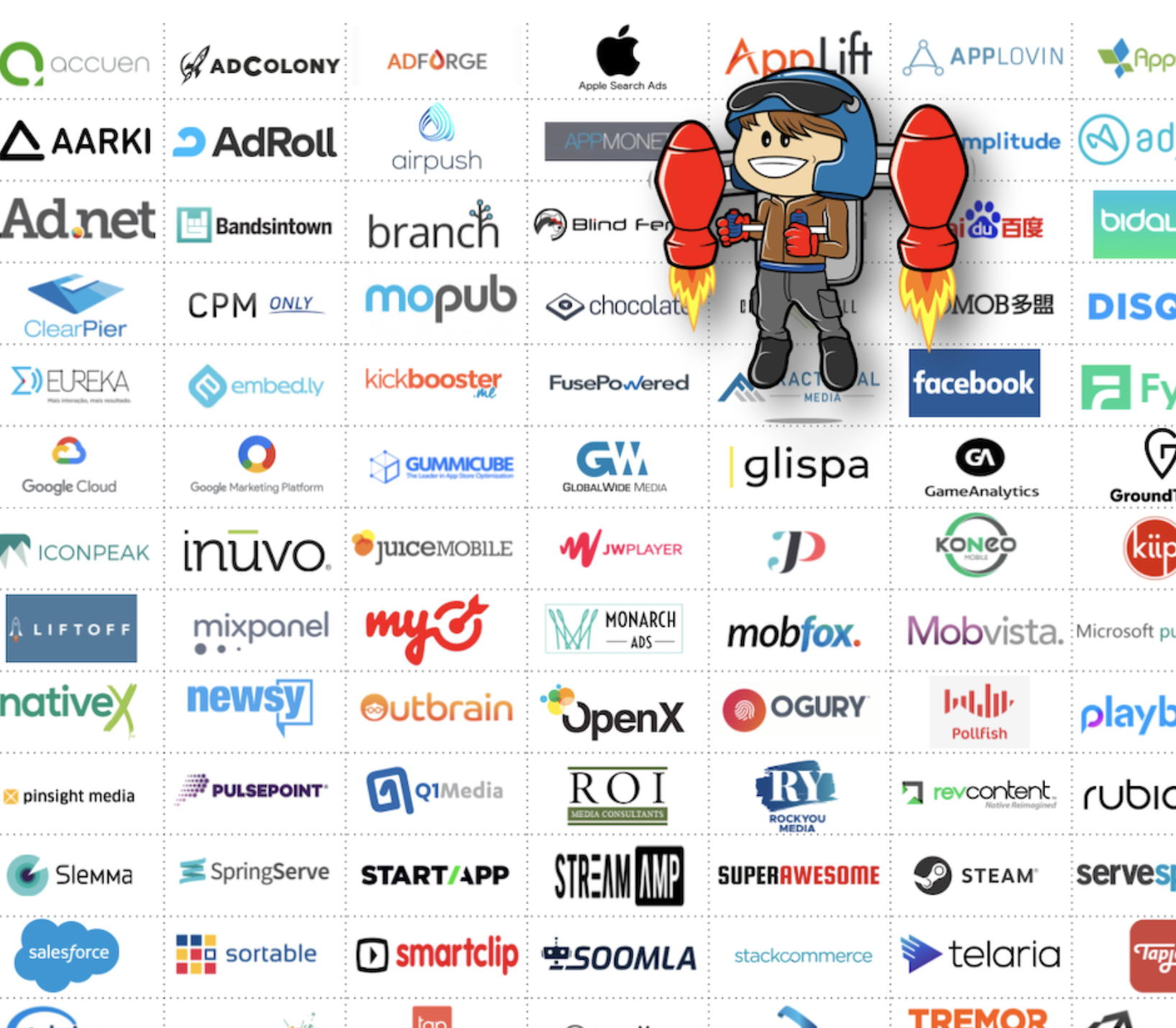
Screen Shot 2019 09 26 at 12.42.07 PMWith the addition of Libring, App Annie is integrating ad tech insights into its platform.

This includes the ability to combine the ad spend and monetization insights from over 325 data sources including Supply Side Platforms (SSPs), Demand Side Platforms (DSPs), app stores, and analytics platforms.

This data is then presented in a single dashboard so it’s easier to understand critical metrics — like the customer acquisition cost, the lifetime value, the return on ad spend, and the return on investment.

It’s ideal for larger organizations who have outgrown the spreadsheet, as it’s been sort of the App Annie of revenue aggregation, so to speak.

“The most successful companies find a way to capitalize on mobile, yet they have been struggling to maximize its value to their business,” explained App Annie CEO Ted Krantz, in a statement about the acquisition. “Today, this requires custom work to stitch together multiple point solutions, spreadsheets, business intelligence teams, agencies, and consultants. We are committed to solving this by applying data science and machine learning to automate these composite metrics for brands and publishers,” he said.

The deal comes at a time when mobile ad spend is continuing to grow rapidly — it’s expected to double to $375 billion globally by 2022, the company noted. It’s now a massive part of the overall app industry, at triple the amount of consumer spending on the app stores.

As a result of the deal, Libring’s 30-plus employees are joining App Annie.

In the near-term, Libring’s current customers will continue to use its product as they do today.

But App Annie tells us there’s only some overlap between the two companies’ respective customer bases. For now, App Annie will work with its customers who want to purchase the new analytics service and find out what sort of enhancements they are looking for in an analytics solution. Libring’s customers can also choose to buy App Annie’s analytics, if they choose.

Later, App Annie will migrate the Libring backend to the same infrastructure provider the rest of App Annie uses, and will then integrate the front-end so customers can log in and visualize the new analytics and other market data together. More information about how this will all work will be shared when those tools are closer to being available, which is still several months from now.

Going forward, App Annie says its data science team will also offer predictive and prescriptive insights based on the new data.

According to Libring’s website, its customers included SEGA, Slickdeals, Reddit, Jam City, Wooga, EA, Zynga, Next Games, Meet Me, GameInsight, Deviant Art, Webedia, Ubisoft, theChive, saambaa, badoo, textnow, and others.

App Annie declined to disclose the deal terms.

Related to the changes and expansion, App Annie also today introduced a new brand which features a gem logomark. The gem is meant to be a tribute to mobile gaming and the idea of “leveling up” while also a reflection of the value of actionable data, the company says.

AppAnnie Rebrand Logo Lockups DARKBLUE 1

The acquisition comes on the heels of several notable milestones for App Annie, including the launch of a product development testing ground, App Annie Labs; plus the addition of mobile web analytics in March — the same time when App Annie passed $100 million in annual recurring revenue.

The company is soliciting feedback about its plans for Libring and will post updates about the project on App Annie Labs, it says.