Year: 2019

26 Sep 2019

The future of Uber is promoting Eats

Uber’s best bet is to use its ubiquity and product breadth to beat rivals in ride hailing, scooters, and food delivery. It’s the only US company doing all three, but competition threatens to eat away at its margins on each. But if it can become your one-stop-shop for getting yourself or a meal from point A to point B, it might be able to salvage its share price and survive until self-driving cars change its economics.

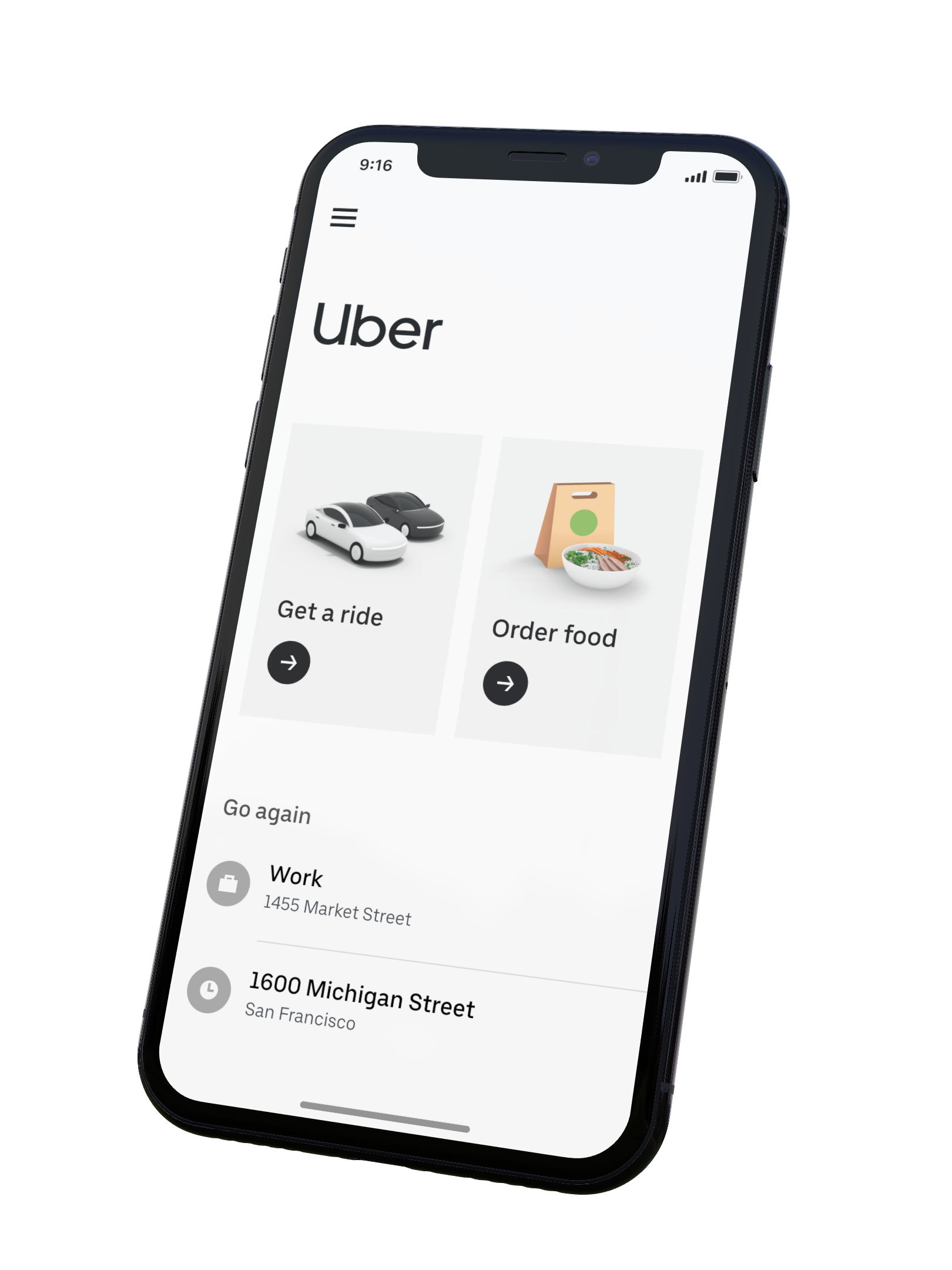
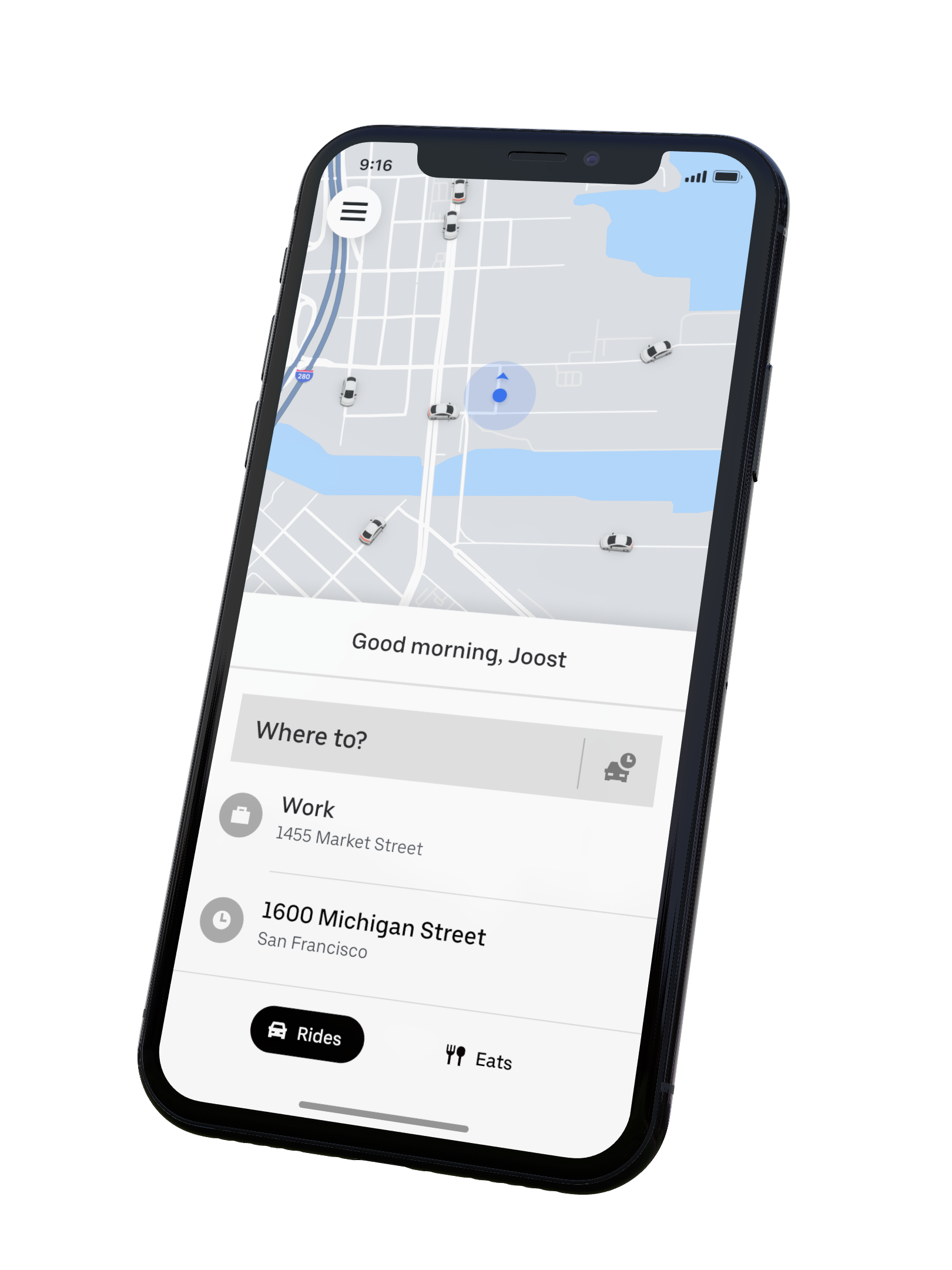
So today at Uber’s own launch event it unveiled two visions for the future of Uber’s home screen. One test adds a prominent Uber Eats button to the bottom of the screen, and it’s already reaching some users in US, Canada, Europe, and Australian cities. An even more aggressive version replaces the hallmark map with two big buttons in the screen’s center: one for ride hailing, one for Uber Eats. Clearly it’s imperative to Uber to can get more of its nearly 100 million users Eating. This version is now testing in 9 markets.

Uber App V2

Uber’s new V2 test that highlights Uber Eats that’s now running in 9 markets

“We want to be the operating system for your every day life” says CEO Dara Khosrowshahi. “A one-click gateway to everything that Uber can offer you.”

Additional launches announced today include:

-The expansion of its rider loyalty Rewards program to its first international markets starting with Brazil and Mexico

-Flexibility in how your Rewards are applied so instead of always getting $5 in Uber cash, you could get 25% off your next UberX or 10% off your next Uber Eats

-Allergy-friendly filters in Uber Eats search and easy ways to communicate allergies and dietary restrictions to restaurants

-To reduce waste, Uber Eats will now default to not including utensils and straws unless you request them

-A partnership with Feeding America will allow restaurants that use Uber Eats to easily donate excess food, and see Uber Freight moving food donations between the non-profit’s 200 food banks and 60,000 pantries

-Uber Copter will be available for all New York City users offering 8 minute rides to JFK airport

Uber App V1 1

Uber’s V1 test makes Uber Eats slightly more prominent with a tab button at the bottom

26 Sep 2019

The time is right for Apple to buy Sonos

It’s been a busy couple of months for smart speakers – Amazon released a bunch just this week, including updated versions of its existing Echo hardware and a new Echo Studio with premium sound. Sonos also introduced its first portable speaker with Bluetooth support, the Sonos Move, and in August launched its collaboration collection with Ikea. Meanwhile, Apple didn’t say anything about the HomePod at its latest big product event – an omission that makes it all the more obvious the smart move would be for Apple to acquire someone who knows what they’re doing in this category: Sonos.

Highly aligned

From an outsider perspective, it’s hard to find two companies who seem more philosophically aligned than Sonos and Apple when it comes to product design and business model. Both are clearly focused on delivering premium hardware (at a price point that’s generally at the higher end of the mass market) and both use services to augment and complement the appeal of their hardware, even if Apple’s been shifting that mix a bit with a fast-growing services business.

Sonos, like Apple, clearly has a strong focus and deep investment in industrial design, and puts a lot of effort into truly distinctive product look and feel that stands out from the crowd and is instantly identifiable once you know what to look for. Even the company’s preference for a mostly black and white palette feels distinctly Apple – at least Apple leading up to the prior renaissance of multicolour palettes for some of its more popular devices, including the iPhone.

airplay2 headerThen from a technical perspective, Apple and Sonos seem keen to work together – and the results of their collaboration has been great for consumers who use both ecosystems. AirPlay 2 support is effectively standard on all modern Sonos hardware, and really Sonos is essentially the default choice already for anyone looking to do AirPlay 2-based multiform audio, thanks to the wide range of options available in different form factors and at different price points. Sonos and Apple also offer an Apple Music integration for Sonos’ controller app, and now you can use voice control via Alexa to play Apple Music, too.

Competitive moves

The main issue that an Apple-owned Sonos hasn’t made much sense before now, at least from Sonos’ perspective, is that the speaker maker has reaped the benefits of being a platform that plays nice with all the major streaming service providers and virtual assistants. Recent Sonos speakers offer both Amazon Alexa and Google Assistant support, for instance, and Sonos’ software has connections with virtually every major music and audio streaming service available.

What’s changed, especially in light of Amazon’s slew of announcements this week, is that competitors like Amazon are looking more like they want to own more of the business that currently falls within Sonos’ domain. Amazon’s Echo Studio is a new premium speaker that directly competes with Sonos in a way that previous Echos really haven’t, and the company has consistently been releasing better-sounding versions of its other, more affordable Echos. It’s also been rolling out more feature-rich multi-room audio features, including wireless surround support for home theater use – all things squarely in the Sonos wheelhouse.

alexa echo amazon 9250064

For now, Sonos and Amazon seem to be comfortably in ‘frenemy’ territory, but increasingly, it doesn’t seem like Amazon is content to leave them their higher-end market segment when it comes to the speaker hardware category. Amazon still probably will do whatever it can to maximize use of Alexa, on both its own and third-party devices, but it also seems to be intent on strengthening and expanding its own first-party device lineup, with speakers as low-hanging fruit.

Other competitors, including Google and Apple, don’t seem to have had as much success with their products that line up as direct competitors to Sonos, but the speaker-maker also faces perennial challenges from hi-fi and audio industry stalwarts, and also seems likely to go up against newer device makers with audio ambitions and clear cost advantages like Anker, too.

Missing ingredients/work to be done

Of course, there are some big challenges and potential red flags that stand in the way of Apple ever buying Sonos, or of that resulting union working out well for consumers. Sonos works so well because it’s service-agnostic, for instance, and they key to its success with recent products seems to also be integration with the smart home assistants that people seem to actually want to use most – namely Alexa and Google Assistant.

Under Apple ownership, it’s highly possible that Apple Music would at least get preferential treatment, if not become the lone streaming service on offer. It’s probable that Siri would replace Alexa and Assistant as the only virtual voice service available, and almost unthinkable that Apple would continue to support competing services if it did make this buy.

That said, there’s probably significant overlap between Apple and Sonos customers already, and as long as there was some service flexibility (in the same way there is for streaming competitors on iOS devices, including Spotify) then being locked into Siri probably wouldn’t sting as much. And it would serve to give Siri the foothold at home that the HomePod hasn’t managed to provide. Apple would also be better incentivized to work on improving Siri’s performance as a general home-based assistant, which would ultimately be good for Apple ecosystem customers.

Another smart adjacency

Apple’s bigger acquisitions are few and for between, but the ones it does make are typically obviously adjacent to its core business. A Sonos acquisition has a pretty strong precedent in the Beats purchase Apple made in 2014, albeit without the strong motivator of providing the underlying product and relationship basis for launching a streaming service.

What Sonos is, however, is an inversion of the historical Apple model of using great services to sell hardware. The Sonos ecosystem is a great, easy to use, premium-feel means of making the most of Apple’s music and video streaming services (and brand new games subscription offering), all of which are more important than ever to the company as it diversifies from its monolithic iPhone business.

I’m hardly the first to suggest an Apple-Sonos deal makes sense: J.P. Morgan analyst Samik Chatterjee suggested it earlier this year, in fact. From my perspective, however, the timing has never been better for this acquisition to take place, and the motivations never stronger for either party involved.

Disclosure: I worked briefly for Apple in its communications department in 2015-2016, but the above analysis is based entirely on publicly available information, and I hold no stock in either company.

26 Sep 2019

Kobalt’s edge in changing the music industry

Kobalt Music Group is driving the music industry to provide more transparency and faster royalty payments to musicians and challenging the traditional record labels and publishers with its own alternative service offerings that don’t take ownership of copyrights. Competition and market size are headwinds in its future growth, however, and the incumbents are thriving not dying. As I’ll outline in this final post of the Kobalt EC-1, its competitive edge rests in its administrative infrastructure and services for songwriters built on top of it.

This is Part IV of the Kobalt Music Group EC-1. Catch up on the prior posts in the series: Part I (founding story and overview), Part II (an operating system for the music industry), and Part III (music’s middle class and DIY stars).

Kobalt’s alternative to a record label, AWAL, is targeting a small but growing “middle class” of recording artists earning tens of thousands of dollars per year in royalties. But as I outlined in my last article, this business is sandwiched between the countless artists who make very little money, and the global superstars who are all owned by the big three labels. Revenue growth may be slow.

Kobalt’s publishing division, Kobalt Music Publishing, is in a stronger competitive position by comparison. Unlike recording artists, songwriters aren’t concerned with building fan followings and marketing themselves to consumers. Since the high end of the earning spectrum is lower for songwriters and the dynamics of fame on social media aren’t relevant to their careers, professional songwriters can be categorized in just the two camps of middle class and stars.

In each case, their core needs are:

  1. Administration of their royalties
  2. Matchmaking to find the right co-writers and to find the right recording artist to actually record (or “cut”) their song
  3. Pitching their songs for use in films, commercials, games, etc. (called sync licensing).

Here’s a closer look at this market opportunity — perhaps one of the most interesting areas of growth in the music industry today.

Songwriting’s middle class

GettyImages 680618218

Image via Getty Images / NoSystem images

26 Sep 2019

The Google Assistant can now control your Xbox One

It wasn’t so long ago that Microsoft was betting heavily on its Cortana digital assistant. That’s a bet that didn’t pay off. But since this is the new Microsoft, the company is instead betting on integrating its products with those services that its users do actually use and today, the company announced that you will now be able to control your Xbox One from the Google Assistant. For now, this feature is in beta, but you can expect a full launch later this fall.

To be clear, this doesn’t mean the Google Assistant is now available on your Xbox One and you can’t ask it for the weather. What it does mean is that you’ll be able to ask the Assistant to launch games on the Xbox, pause them, turn up the volume, etc. (Hey Google, turn off Xbox.”).

You can find a full list of supported commands here.

a9nfhgsxpxo31

This will work with virtually every Assistant-enabled device, including your iOS and Android phones. To get started, you set up the Xbox like any other third-party Assistant device in the Google Home app on Android or iOS — and that’s essentially what the Xbox One then becomes in the Assistant ecosystem: just another device you can control with it.

It’s worth noting that Microsoft, which has basically given up on Cortana for the consumer market, is also working with Amazon to bring Alexa to your PC. Microsoft doesn’t really care what you use to control your Microsoft devices, as long as you use a Microsoft or Windows 10 device. Now it’s probably just a matter of time before you can control your PC with the Assistant — or even get full Assistant support in Windows 10.

26 Sep 2019

Learn how to help build a sustainable gig economy at Disrupt SF

A handful of years ago, the on-demand or ‘gig’ economy was seen as an innovative system of modern work that provided workers and consumers alike with flexibility, independence, and convenience. It seems like every week, a new on-demand or labor marketplace startup would stroll through Sand Hill Road with a slick logo and a new way to flip the nature of work on its head and would walk out with seven-figure checks.  

However, the gig economy ballooned — now permeating nearly every major industry — and its negative externalities have become inescapably evident. In the past year alone, whether it was new headline-grabbing regulations or new disclosures from the high-profile IPOs of Uber and Lyft, the issue of inequitable labor treatment for gig workers has risen to the forefront of public debate. Now, more activists, founders and companies are dedicated to figuring out how to create a more just and sustainable economic system for gig workers.

This year at TechCrunch Disrupt SF, we’ll be joined on the Extra Crunch stage by a panel of gig-focused civic leaders and founders to break down how one can best be a positive force in the modern gig economy.

From the activist side, we have Derecka Mehrens, an Executive Director at Working Partnerships USA and co-founder of Silicon Valley Rising – an advocacy campaign focused on fighting for tech worker rights and creating an inclusive tech economy. Though Silicon Valley Rising, Derecka has worked with some of the Valley’s largest and most influential tech giants (including Google and Apple) to invest in and improve labor and renter housing protections for local workers. With roughly two decades in civic advocacy, Derecka has helped and continues to help Bay Area workers organize, play more active roles in local policy, and reach milestone victories in wage improvement.

We’ll also dive into the founder’s perspective with Amanda de Cadenet, founder of Girlgaze, a platform that connects advertisers with a network of 200,000 female-identifying and non-binary creatives. Prior to founding Girlgaze, Amanda founded the website, online community and interview series known as “The Conversation”, which focuses on female empowerment and bringing to light key social issues that plague the female-identifying population. As a former photographer, author and TV host herself, Amanda continues to build companies determined to shift the lack of diverse and equal gender representation in media and creative industries. 

We’ll be diving deep into all the roles to be played by the public sector, startups and the private sector, gig workers themselves and the broader community in ensuring we have an equitable future of work landscape. We couldn’t be more excited to tackle all these topics and we hope to see you there! Buy tickets to Disrupt SF here at an early-bird rate!

Did you know Extra Crunch annual members get 20% off all TechCrunch event tickets? Head over here to get your annual pass, and then email extracrunch@techcrunch.com to get your 20% discount. Please note that it can take up to 24 hours to issue the discount code.

26 Sep 2019

Breaking a sweat with Nintendo’s Ring Fit Adventure

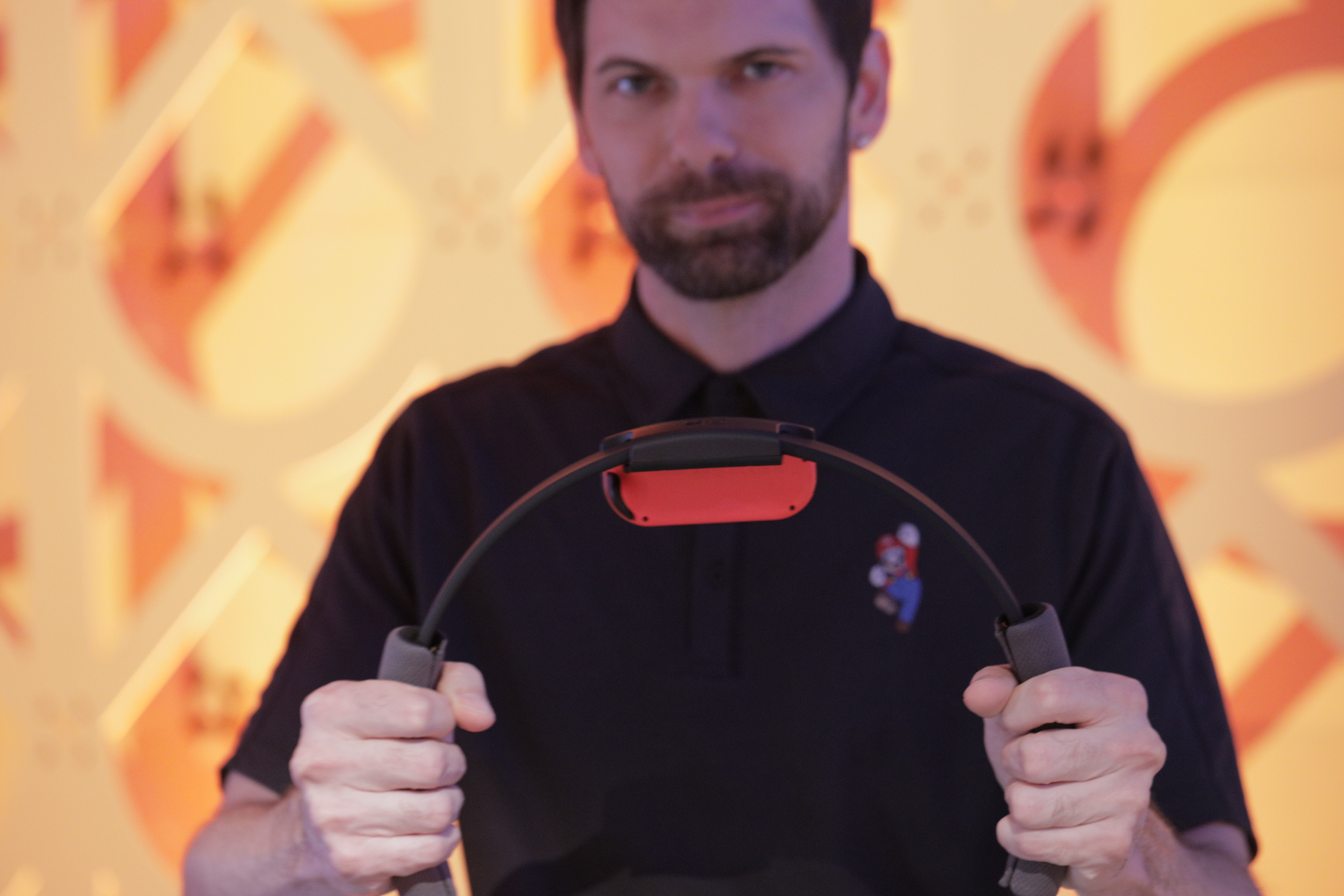
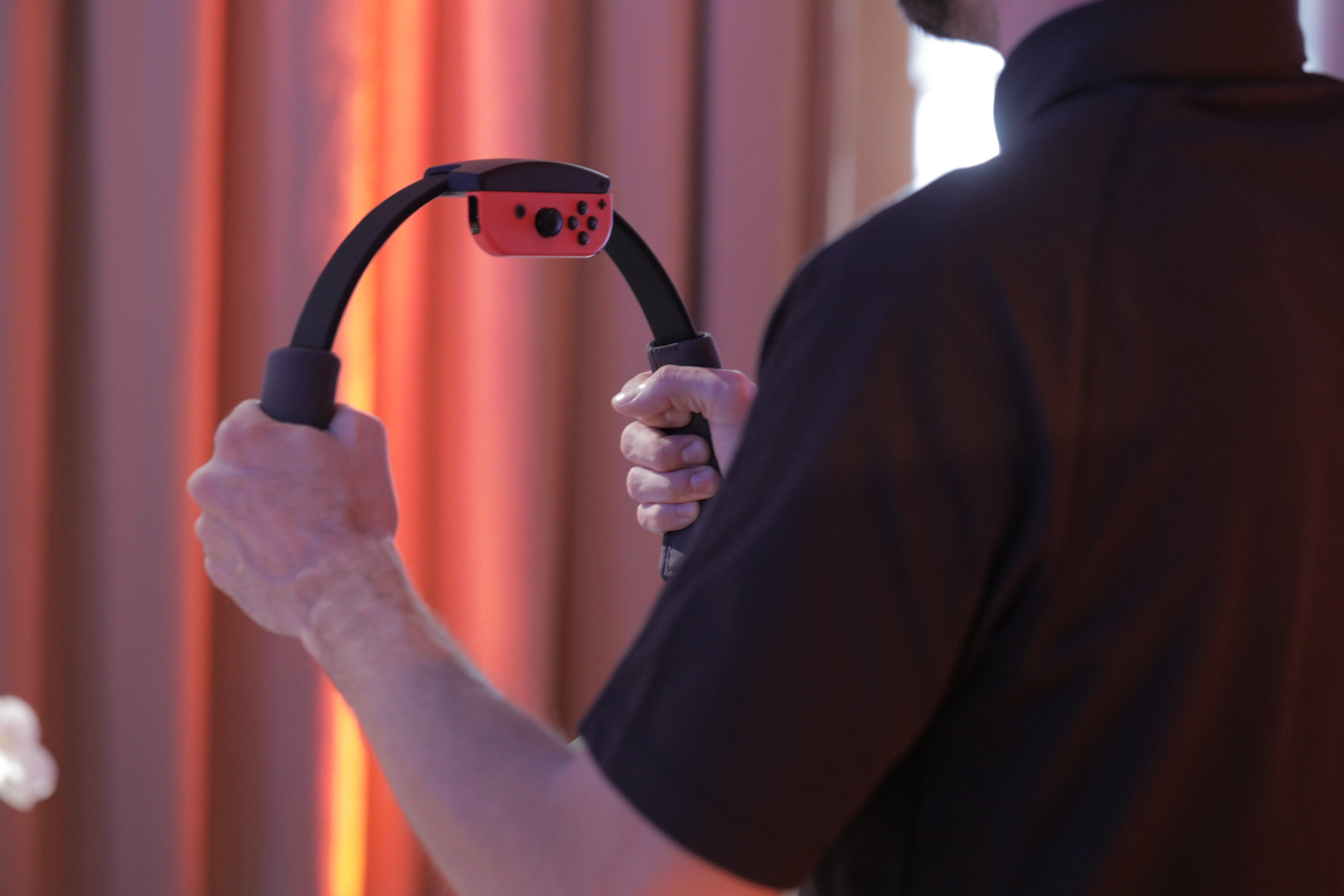
On October 18, Nintendo will finally fill a Wii Fit-shaped hole in its product line. The Ring Fit is a kind of spiritual accessor to the numerous fitness titles that helped make the Wii’s motion controls such a massive, demographic spanning success. But the large, round peripheral is perfectly at home on the Switch, taking a page from offerings like Labo, which find clever new ways to leverage existing hardware.

I took the forthcoming peripheral for a brief spin earlier this week, and like Labo was pleasantly surprised with what Nintendo was able to accomplish here, using the Switch’s Joy-Cons as a starting point. Here, each side serves a uniquely different purpose. One slots into the ring and the other into a band that straps on the player’s thigh.

Nintendo Switch Ring Fit

In the case of the former, the controller serves as the brains for the flexible steering wheel controller, measuring movements via built-in sensors, including the accelerometer. Using that set up, you can spin the ring to move selection in the starting menu and squeeze its sides to select. The second controller, meanwhile, serves as a sort of makeshift Fitbit, keeping track of your lower body movement — a pretty central part of the workout.

Adventure is the first title to use the hardware. It almost certainly won’t be the last, though Nintendo, per usual, won’t comment on any future plans. Rather than going the straight sports route, à la Wii Sports, Nintendo’s instead created what amounts to a Final Fantasy-style turn by turn adventure game that makes the player battle bad guys by breaking a sweat.

There are a ton of different games and workout experiences out of the box, but the basic adventure plays out as follows: You move your character by running in place, squeezing the ring to blow up boxes for coins and pulling it apart to suck in power-ups. Jumps are accomplished by pointing the ring downward and pressing in. You will break a sweat.

Your character’s anime-style hair is a big ball of fire, growing or diminishing based on how well you’re keeping up. Every so often along the track, a boss will appear. You’ll then engage in a turn by turn battle using a variety of different ring-based exercises. When it’s the monster’s turn, you’ll squeeze the ring against your torso to defend yourself.

Nintendo’s dreamed up an impressive variety of exercises that utilize the ring’s resistance. Playing an hour a day, it’s easy to actually lose some weight. The game also does a pretty good job encouraging you to mix things up. I’d certainly be interested in doing some extended testing — I like the idea of a fitness regiment one can accomplishment at home or in a hotel room with minimal equipment.

Nintendo Switch Ring Fit

You can also detach the Joy-Cons and take the ring with you to get some reps in away from the system — say, on lunch break at work. The controllers will continue to record your progress and upload them when you get back.

That said, I’m pretty committed to the Switch Lite these days. The Ring Fit will work with the system, assuming you also have a pair of Joy-Cons. You can prop up the Lite and use that screen for the game, but you’ll really want a TV screen for the full effect here. It’s easy to imagine, however, Nintendo combining Labo VR with the exercise kit for a more immersive fitness effect.

26 Sep 2019

Beyond Pricing raises $42M to tell you what to charge on Airbnb

Most people just guess how to price their vacation rental based on minimal research, or take platforms like Airbnb’s suggestions that just want to maximize their own revenue. Beyond Pricing aligns itself with home owners, taking 1% of bookings to optimize their rates on a daily basis.

As you might expect of a startup that costs 1% to often earn people 10% to 40% more on anything, it blew up. In the 4.5 years since I covered its $1.5 million seed round, it’s grown for 26 to 7,000 cities and 4 to 60 employees. Beyond Pricing now handles over 150,000 listings. It stealthily raised $2 million more in 2016. But today it announces a mammoth $42.5 million Series A funding round led by Bessemer Venture Partners .

bp ian mchenry

“We skipped a lot of intermediary funding” Beyond Pricing CEO Ian McHenry tells me with a chuckle. “We wanted to have a capital partner that could help us take a few more risks and build out a bunch of new products and go after Europe in a big way since it’s over half of the whole market.” That cash could grow the startup’s total priced bookings past the $2 billion it’s handled so far, dive deeper into working with professional property managers, and even see it build algorithms for today’s unique hotels with tons of different room types.

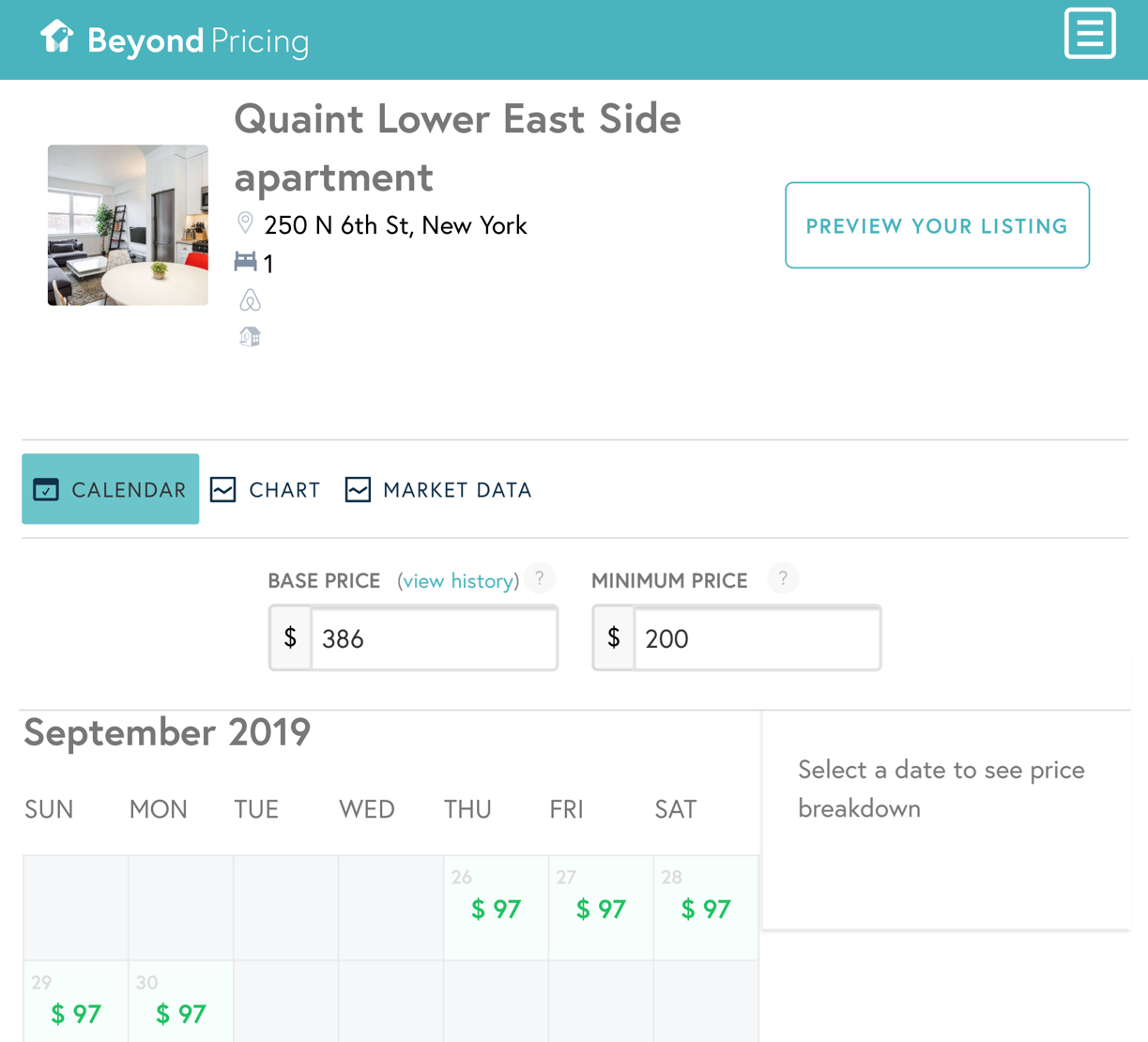
Here’s how Beyond Pricing works. You connect your Airbnb and other vacation rental platforms or your own rental calendar. Beyond Pricing scours all the platforms for what similar homes charge, their vacancy rates, what hotels are charging, historic and current demand fluctuations, airline info, weather, and more. You can look at charts of prices in your neighborhood or nearby hotels, and adjust the base and minimum rates. Then Beyond Pricing automatically applies its daily rates to your listing or lets you export them to start earning the most possible.

Beyond Pricing 1

It’s basically giving the technology big hotel chains use to ordinary people and property managers, or an Uber Surge Price algorithm for Airbnbs. Instead of haphazardly choosing a high season and low season rate or maybe an upcharge on weekends, Beyond Pricing does what no human would or could accurately: provide 365 uniquely optimized prices. While the platforms just want you renting your place out as much as possible to boost their take, even if it means more work and upkeep for you, Beyond Pricing wants you to earn as much as possible to grow its 1% cut.

But next, McHenry wants to go bigger. Modern hotels don’t just have ‘King’ or ‘Two Twins’ rooms. They offer a wide range of suites, views, decors, and amenities. Hotel pricing systems aren’t built for that, but Beyond Pricing is since it’s used to assessing quirky individual homes. One area he’s not keen on: getting back into the risk of managing property. Beyond Pricing was once Beyond Stays, but saw a leaner business in pricing technology instead of cleaning bedsheets.

bp property logo

The biggest threat? That Airbnb will completely conquer the vacation rental market, depriving Beyond Pricing of data and the ability to play platforms off of each other. But McHenry knows it’s too lucrative of a market for VRBO, HomeAway, and others to back down.

For now, McHenry’s having a lot of fun with his spreadsheets. A former investment banker focused on airlines and an avid traveler, he wanted to see more awesome properties for rent and more people earning extra income or a living off of them. “I’m a huge data nerd. I love looking at numbers and trying to optimize things. If I had my druthers I’d end up just playing with the algorithms all day.”

26 Sep 2019

Terminal raises $17M led by 8VC to source and build remote teams of engineers

As LinkedIn announces the next stage of its own ambitions in the world of recruitment by bringing in more big data insights, another one of the startups indirectly chipping away at its position among knowledge workers by providing a way of hiring and building entire teams in remote locations is announcing another round of funding.

Terminal, a San Francisco-based startup and platform that lets companies build out remote engineering teams in international locations, and then helping with the wider practicalities that include finding workspace and sorting out benefits, is today announcing that it has raised $17 million in funding. Terminal’s hubs are currently in Guadalajara, Mexico and Vancouver, Montreal, Toronto, and Kitchener-Waterloo in Canada, and the company is going to use some of the funding to expand to 10 other cities globally over the next two years.

The round is being led by 8VC — the venture firm founded by Joe Lonsdale, who also happens to be a co-founder of Terminal (seems like co-founding while also funding is a pattern for Lonsdale, a prolific investor who also famous for being a co-founder of Palantir Technologies).

Others participating include Atomic (where two co-founders, Jack Abraham and Dylan Serota, also co-founders), Cathay Innovation, Cherubic Ventures (where another co-founder, Andrew Dudum, is a partner that also double times also at Atomic), Craft Ventures, Kleiner Perkins, Lightspeed Venture Partners, and other unnamed investors.

Despite four of the five co-founders (the last is Luke Finney, who seems to be full-time just on Terminal) being from the VC world, the startup has raised relatively little funding since being founded two years ago: prior to this it had only disclosed one raise, totalling $10 million, according to PitchBook data.

LinkedIn has carved out a big swathe of the online recruitment market specifically in the area of knowledge workers, who also use the platform to provide public profiles of themselves, to brush up their skills, and to network with other folk in their various industries. That business has racked up 4 million hires this year already, CEO Jeff Weiner noted earlier today at a company event.

But within that, there are a lot of more specific use cases where the LinkedIn model is not a perfect fit, and that’s opened the door for a lot of other kinds of businesses to establish themselves and thrive.

Terminal is an example of one of these. Its particular pain point has to do with the dearth of engineers in major tech centers, and beyond, with typically five job openings for every one engineer in the U.S. alone.

While the technology world has coalesced around several key geographical areas — Silicon Valley at the epicentre and several major metropolitan areas like New York, London, Berlin and so on complementing that — the fact remains that the demand for engineers in those places, where the companies are based, still outstrips supply. On top of that, the biggest cities are overcrowded and expensive, and that turns off many people from wanting to live in them.

Terminal’s solution is to source suitable engineers in other locales and use its platform to help a company build a team from them. This is not just about building a team ‘in the cloud’ — although the idea is that, yes, the cloud is basically what makes all of this possible — but also covering office space, payroll and other HR specifics and more.

“Terminal is taking aim at the biggest problem holding back innovation: access to top technical talent.” said Joe Lonsdale, partner at 8VC, in a statement. “The best engineers are no longer concentrated in the Bay Area. They exist all over the world. Terminal helps startups access these engineers. Many of our fast-growing companies at 8VC rely on Terminal to help them scale.” Customers currently include Bungalow, Chime, Dialpad, Earnin, Gusto, Hims/Hers, and KeepTruckin.

Other startups have emerged to redress the imbalance of talent in specific locations while also helping to support new ecosystems to emerge: Andala is taking a somewhat similar approach, but it focuses on emerging markets to source talent, and engineers on its platform tend to work as contractors, not full-time employees.

While Andala is tapping into a big swing in the direction of contact-based talent sourcing, it’s interesting to see Terminal taking the bet on the fact that it can successfully create teams remotely that might just remain for the long term.

“We’re providing life-changing opportunities for engineers,” said Terminal CEO, Clay Kellogg, in a statement. “Developers and programmers love building their careers in an engineer-centric community working on world-changing products. We’re offering them a vibrant community with all of the HR resources, benefits and perks that they can get if they worked in Silicon Valley — without having to leave their hometown. This funding means we can provide exciting growth opportunities to even more engineers around the world.”

The push to more flexible working environments — including allowing people to work from home, as well as work more flexible hours — has really disrupted the traditional idea of 9-5 and everyone working together in a big (or small) building in order to get things done. At best, the consequences of that have sometimes led to more productivity and employee satisfaction, but challenges also remain. Terminal’s aim at building whole full-time teams in remote locations is interesting in that it will once again put a new spin on the idea of workplace culture, but for many businesses, especially startups, it’s a leap that is worth taking.

“KeepTruckin has built a modern technology platform to usher the fragmented trucking industry into the digital age, and our engineers have been at the center of creating a customer-centric experience since day one,” said Shoaib Makani, CEO and co-founder, KeepTruckin, in a statement. “As a fast-growing company, being able to attract and retain top tech talent is critical to our success. Terminal has been a key partner in helping us build our engineering team in Vancouver and tapping into Terminal’s extensive network has reduced the time it takes to scale our team.”


26 Sep 2019

Alexa developers can now personalize their skills by recognizing the user’s voice

Amazon Alexa is already capable of identifying different voices to give personalized responses to different users in the household, thanks to the added support for voice profiles two years ago. Now, those same personalization capabilities will be offered to Alexa Skill developers, Amazon has announced.

Alongside Amazon’s big rollout of new consumer devices on Wednesday, the company also introduced a new “skill personalization” feature for the Alexa Skills Kit, that lets developers tap into the voice profiles that customers create through the Alexa companion app or from their device.

This expanded capability lets developers make skills that are able to remember a user’s custom settings, address their preferences when using the skill, and just generally recognize the different household members who are speaking at the time, among other things.

To work, Alexa will send a directed identifier — a generated string of characters and numbers — to the skill in question, if the customer has a voice profile set up. Every time the customer returns to that skill, the same identifier is share. This identifier doesn’t include any personally identifiable information, Amazon says, and is different for each voice profile for each skill the customer users.

Skill developers can then leverage this information to generate personalized greetings or responses based on the customers’ likes, dislikes, and interests.

If the customer doesn’t want to use skill personalization even though they configured a voice profile, they can opt out of the feature in the Alexa app.

Personalization could be a particular advantage to Alexa skills like games, where users may want to save their progress, or to music or podcasts/audio programming skills, where taste preferences come into play.

However, Alexa’s process for establishing voice profiles still requires manual input on users’ parts — people have to configure the option in the Alexa companion app’s settings, or say to Alexa, “learn my voice.” Many consumers may not know it’s even an option — which means developers interested in the feature may have to educate users by way of informational tips in their own apps, at first.

The feature is launching into preview, which means Amazon is just now opening up the ability to select developers. Those interested in putting the option to use will have to apply for access and wait to hear back.

26 Sep 2019

OnePlus 7T arrives with Android 10 in October for $599

For the past few years, OnePlus has happily pushed into a six-month product refresh cycle. It’s a model that’s worked well for the plucky smartphone maker, and another way it’s managed to buck some of the prevailing industry trends as competitors struggle to maintain sales amid a global slowdown.

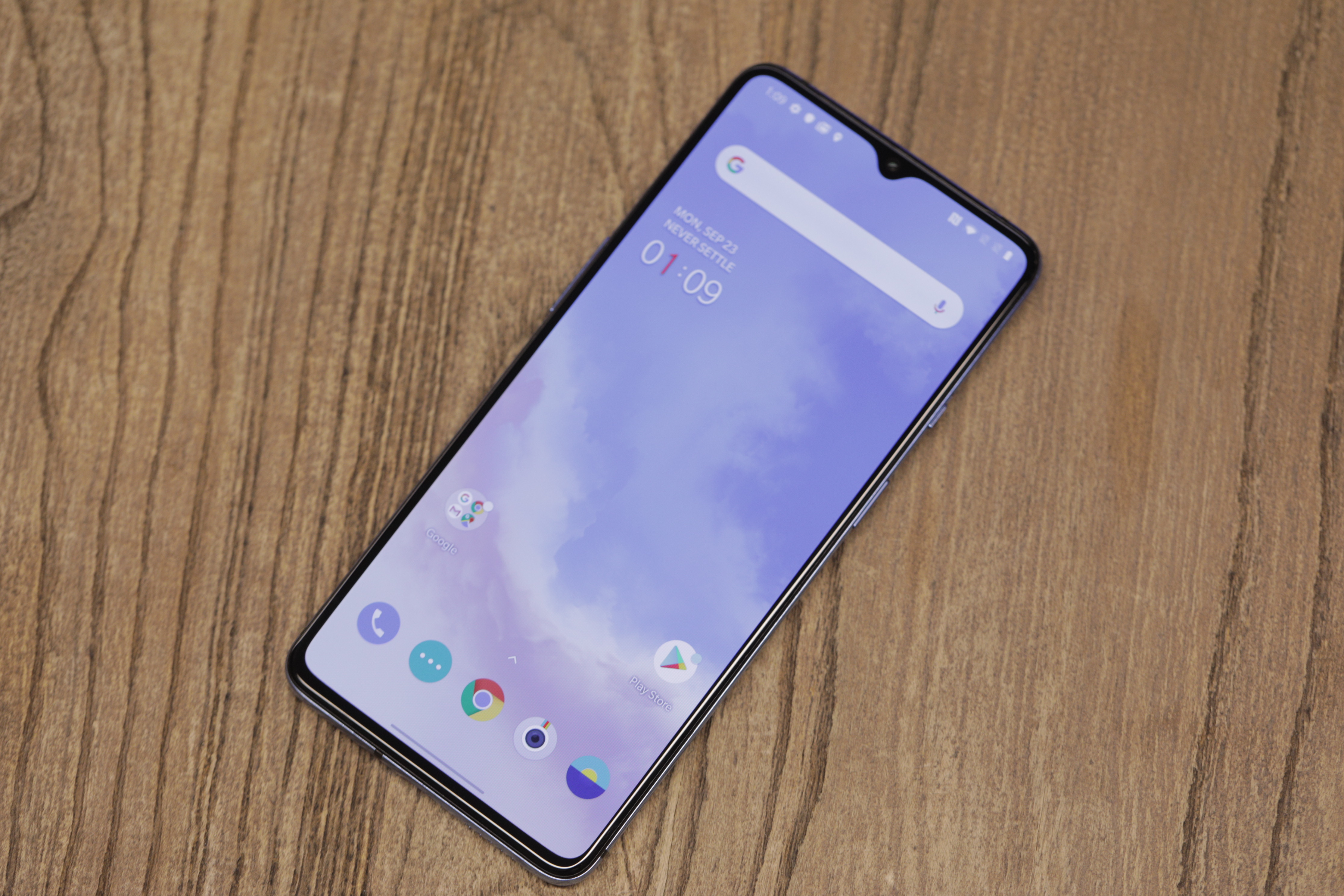
As tends to be the case, the year’s second flagship seems to mostly be about refining its predecessor — and keeping the company competitive. The OnePlus 7T adopts the 90Hz AMOLED screen offered on the 7 Pro, coupled with a three-camera set up on the rear.

OnePlus 7t

That last bit keeps with the company’s solid design language, with a large, circular configuration that’s an aesthetic improvement over Apple’s square situation. The lenses are a 48 megapixel main, 2x telephoto and ultra-wide-angle with a 117-degree field of view.

The speakers have been upgraded to include Dolby Atmos and fast charging has been amped up, promising a full charge in an hour. That’s nearly 25% faster than OnePlus’s previous version of Warp Charge.

Perhaps most interesting is that the company gets the jump on the competition by being the first to ship with Android 10 preloaded. How far the company has come from the CyanogenMod days. Of course, it continues to offer a customized experience through the “bespoke” OxygenOS.

OnePlus 7t

I’m usually resistant to Android add-ons, but OnePlus has generally done a good job augmenting and, in some cases, improving the stock Android experience. In addition to design choices, the company says the latest version of the software includes “370 rigorous optimizations.”

The best bit continues to be the pricing. The OnePlus 7T will run $599 when it starts shipping on October 18. It’s a nice price for a solid piece of hardware in an era when flagships routinely run in excess of $1,000.

[gallery ids="1885409,1885408,1885407,1885406,1885405,1885404,1885402,1885401,1885400"]