
Year: 2019

05 Sep 2019

OpenGov acquires ViewPoint Cloud, adding building codes and permitting to its platform

In the same week that it announced a $51 million round of funding, OpenGov — the startup that provides SaaS software designed to help governments and other civic organizations run their operations — is announcing an acquisition to expand the kinds of tools it provides to customers.

The company has acquired ViewPoint, a platform used by city governments — customers currently number 200 towns, cities, counties, and state agencies — to manage building codes and other similar databases, as well as interface with the public to apply for permits and licenses related to those rules and regulations.

The terms of the deal have not been disclosed. To be clear, ViewPoint’s full name is ViewPoint Cloud and it’s not to be confused with another company called simply Viewpoint, which — slightly confusingly — also operates in the area of building and construction, but was acquired last year for about $1.2 billion.

OpenGov was started under the premise of building enterprise-grade solutions for the public sector that took into consideration some of the particularly bureaucratic aspects of public sector business, but at the same time provided solutions that worked as well (if not better for being more tailored) as those built for the private sector.

Most of OpenGov’s business has been built organically — that is, from within the company — but it has also made a few acquisitions over the years to augment that — others include “civic intelligence” platform Ontodia and Peak Democracy to add engagement tools — and this is also where ViewPoint fits in.

It will be adding a new area of services into the mix that customers can use to manage and provision applications and licenses for things like building codes, an often thorny area rife with paperwork and arcane technicalities that has long been a challenge both for governments and those building housing and other structures to navigate.

“I co-founded this company with the idea that governments deserve cutting-edge technology,” said ViewPoint CEO Nasser Hajo in a statement. “ViewPoint has since grown to become the cloud-based permitting and licensing market leader, stretching the boundaries of what’s possible to bring efficiency, transparency, and civic engagement to public agencies. OpenGov is the leading enterprise cloud software company in the GovTech sector, and we could not be more thrilled at the opportunity to join forces and continue building the technology that will power governments for decades to come.”

ViewPoint has been around since 1995 and established a fairly narrow remit. but it has also built a solid business from that place, claiming customer retention of 98%. For OpenGov — which has 2,000 customers to ViewPoint’s 200 — that means not just a more diversified product offering, but also another line of predictable and recurring revenue.

“Not only are OpenGov and ViewPoint among the fastest-growing GovTech companies, we are each the only multi-tenant cloud platforms of scale in our respective categories,” said OpenGov’s CEO and co-founder Zac Bookman in a statement. “I could not be more excited for our joint future and to bring this incredible software to every government that wants to take advantage of it.”

We’ve seen the rise of a number of smaller startups that have been leveraging the cloud to build software to make a wide variety of work-related tasks more efficient. Govtech — with its focus on cutting down paperwork, improving security and reducing spend — has been fertile ground for these startups to tackle, but longer term that will also mean more consolidation as bigger companies look to diversify and expand their platforms, and smaller startups find it harder to scale. That could spell more acquisitions for OpenGov, which is backed by some $140 million with investors including Weatherford Capital, 8VC (whose founder, Joe Lonsdale, is also a co-founder of OpenGov), Andreessen Horowitz, JC2 Ventures and Emerson Collective (the investment firm connected to Laurene Powell Jobs).
05 Sep 2019

8-month-old startup FPL Technologies raises $4.5M to improve credit card experience in India

An eight-month-old startup in India that wants to improve the user experience of credit card holders in the nation has received the backing of at least two major investors.

Pune-based FPL Technologies said Thursday it has raised $4.5 million in its maiden financing round from Matrix Partners India, Sequoia Capital India, and others.

In an interview with TechCrunch earlier this week, Anurag Sinha, co-founder and CEO of FPL Technologies, said the startup aims to build a full stack solution to reimagine how people in India get their first credit card and engage with it.

Even as hundreds of millions of people in India today are securing loans from organized financial lenders, most of them are unable to get a credit card. Fewer than 25 million people in the country today have a credit card, according to industry estimates. And even those who have a credit card are not exactly pleased with the experience.

fpl team

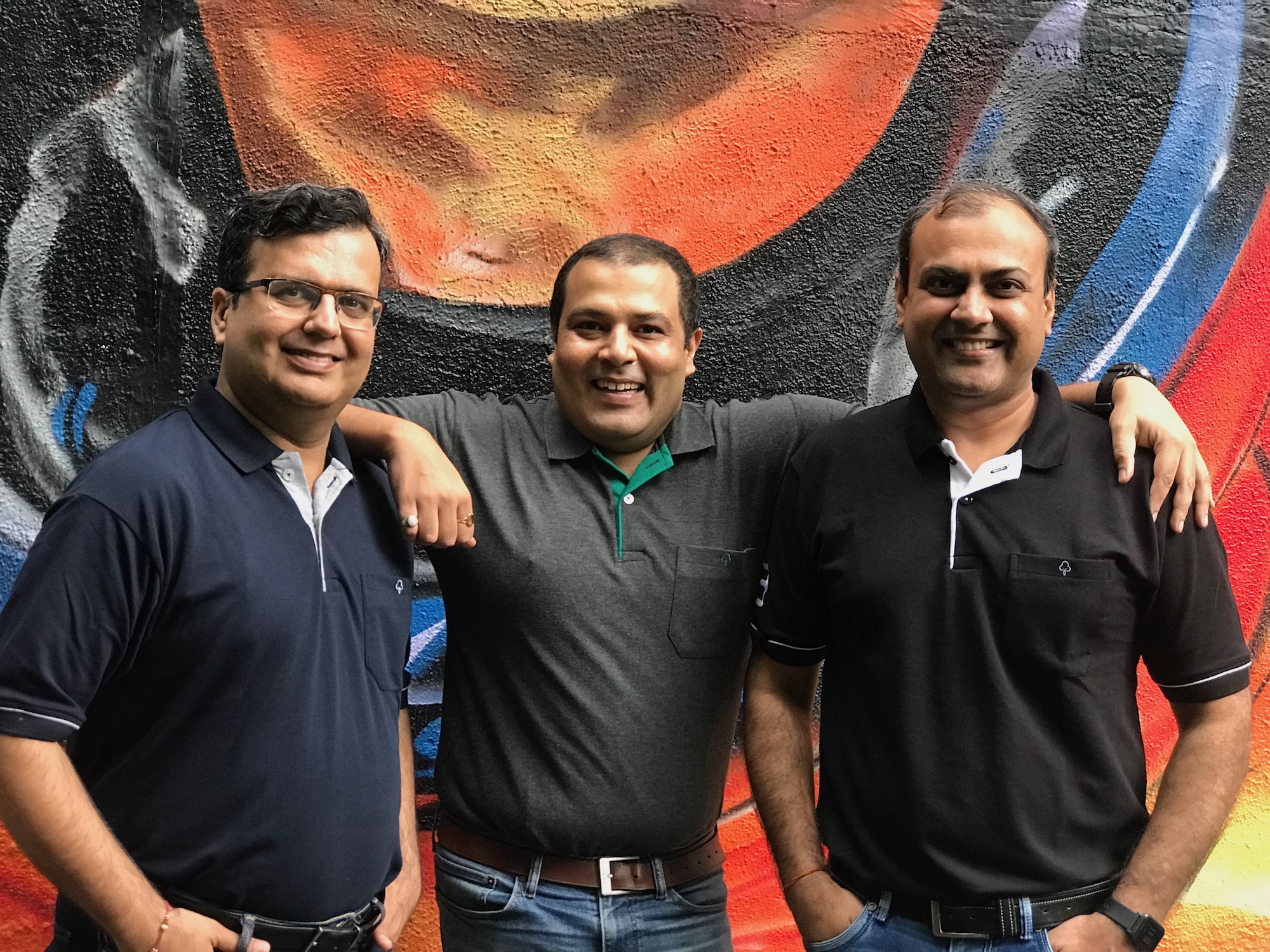
Vibhav, Anurag, Rupesh, co-founders of FPL Technologies, pose for a picture

Much of the blame goes to banks and other credit card issuing firms that are largely relying on archaic technology to operate their plastic card business.

Sinha, an industry veteran, said through his startup, he aims to address a wide range of pain points of credit card holders such as in-person meeting or telephonic interaction with bank representatives for getting a credit card, or having to talk to someone to get basic support, and not being able to mask the card’s identity when shopping online.

The startup, which employs about 20 people currently, aims to build the mobile credit card service in the next couple of months, but in the meantime, it is offering an app called OneScore to help users check their credit score and learn how to improve it. Sinha said OneScore, unlike most of its rivals, doesn’t sell the data of customers to third-party agencies.

The app was launched two months ago and has already amassed over 100,000 users, Sinha said. These users would get the first dibs on the startup’s mobile credit card, he said.

In a statement, Shailesh Lakhani, Managing Director of Sequoia Capital India, said, “When they presented a plan to modernize credit cards in India it immediately resonated with the Sequoia India team. It’s a delight to partner with them as they work on developing more flexible, affordable and easier to use financial products for Indian consumers.”

In recent months, a handful of startups in India have started to explore ways to expand the reach of credit cards in the nation and incentivize users to become more responsible with how they engage with it. Bangalore-based SlicePay offers a credit card to students in India. CRED, a startup by industry veteran Kunal Shah, recently raised $120 million to motivate users to improve their financial behavior.

05 Sep 2019

Google launches an open-source version of its differential privacy library

Google today released an open-source version of the differential privacy library it uses to power some of its own core products. Developers will be able to take this library and build their own tools that can work with aggregate data without revealing personally identifiable information either inside or outside their companies.

“Whether you’re a city planner, a small business owner, or a software developer, gaining useful insights from data can help make services work better and answer important questions,” writes Miguel Guevara, a product manager in the company’s Privacy and Data Protection Office. “But, without strong privacy protections, you risk losing the trust of your citizens, customers, and users. Differentially-private data analysis is a principled approach that enables organizations to learn from the majority of their data while simultaneously ensuring that those results do not allow any individual’s data to be distinguished or re-identified.”

As Google notes, the current version of the Apache-licensed C++ library focuses on features that are typically hard to build from scratch and includes many of the standard statistical functions that developers would need (think count, sum, mean, variance, etc.). The company also stresses that the the library includes an additional library for “rigorous testing” (because getting differential privacy right is hard), as well as a PostreSQL extension and a number of recipes to help developers get started.

These days, people often roll their eyes when they see ‘Google’ and ‘privacy’ in the same sentence. That’s understandable (though I think there is considerable tension inside the company about this, too). In this case, however, this is unquestionably a useful tool for developers that will allow them and the users they serve to build tools that analyze personal data without compromising the privacy of the people whose data they are working with. Typically, building those takes some considerable expertise, to the point where they may either not build them or simply not bother to to include these privacy features. With a library like this, they have no excuse not to implement differential privacy.

05 Sep 2019

Only 48 hours left on super early bird savings for Disrupt Berlin 2019

It’s time to trot out our fractured German. Why? Because you have only 48 hours left to take advantage of super early bird pricing on passes to Disrupt Berlin 2019. And that begs the question: Warum mehr bezahlen als nötig? Why pay more than necessary?

Passes at the super early bird price start at €345 + VAT and, depending on which pass you purchase, you can save up to €600. Don’t wait — buy your Disrupt passes by 11:59 p.m. (CEST) on 6 September.

Over the course of two programming-packed days, you’ll engage with and be inspired by your people — 3,000 startuppers from more than 50 countries. Whether you’re an investor searching for an exciting startup to add to your portfolio or a founder determined to take your startup to the next level, you’ll find plenty of opportunity waiting at Disrupt Berlin.

One founder, Luke Heron, the CEO of TestCard, is Disrupt devotee. As he sees it, attending Disrupt is “a no-brainer.” After exhibiting in Startup Alley and cultivating solid investor relationships, Heron emailed TechCrunch editors this happy update.

“We just closed $1.7m in funding in large part to you and your team. You guys are fantastic — the lifeblood of the startup scene.”

On the investor side of the equation, Michael Kocan, a managing partner at Trend Discovery, used CrunchMatch, our free business-matching platform that simplifies networking, to find and connect with early-stage startups.

“I scheduled more than 35 meetings with startups that I pre-vetted using CrunchMatch, and we made a significant investment in one.”

Do you want to exhibit your tech and talent in Startup Alley? You have two options. You can purchase a Startup Alley Exhibitor Package, or you can apply to our TC Top Picks program. Apply if your early-stage startup falls into one of these tech categories: AI/Machine Learning, BioTech/HealthTech, Blockchain, FinTech, Mobility, Privacy/Security, Retail/eCommerce, Robotics/IoT/Hardware, SaaS and Social Impact & Education.

If you’re chosen, you’ll win a free Startup Alley Exhibitor Package and bask in the spotlight of VIP treatment, media and investor attention — and you’ll be interviewed by a TC editor on the Showcase Stage.

There’s so much more to see at Disrupt Berlin. Startup Battlefield, the TC Hackathon and we’re building out a world-class line up of speakers.

Disrupt Berlin 2019 takes place on 11-12 December, and you have just 48 hours left to get the best price possible. Buy your Disrupt passes before the deadline strikes at 11:59 p.m. (CEST) on 6 September. Warum mehr bezahlen als nötig?

Is your company interested in sponsoring or exhibiting at Disrupt Berlin 2019? Contact our sponsorship sales team by filling out this form.

05 Sep 2019

Is your startup TC Top Picks material? Apply to exhibit for free at Disrupt Berlin 2019

If you’re the founder of an early-stage startup here’s a big, fat reminder about one of the great experiences you can have at Disrupt Berlin 2019 on 11-12 December. Apply to our TC Top Picks program for a chance to step into the startup spotlight.

If you’re selected, you’ll receive a free Startup Alley Exhibitor Package and a bunch of other perks (more on those in a minute). Here’s the first low bar for entry.

TechCrunch editors will accept applications from early-stage startups that fall into one of the following tech categories: AI/Machine Learning, Biotech/Healthtech, Blockchain, Fintech, Mobility, Privacy/Security, Retail/E-commerce, Robotics/IoT/Hardware, CRM/Enterprise and Education.

They’ll thoroughly review every application and then select up to five startups they feel represent the very best in each category. Want a sense of what our editors look for? Here’s the list of the TC Top Picks from Disrupt Berlin 2018.

Now, about those other perks we mentioned. All Top Picks get one full day to exhibit in Startup Alley, plus three Founder passes, access to the full conference and all programming across four stages, including Startup Battlefield, our epic pitch competition with a $50,000 prize. You’ll also receive invitations to VIP events, like the investor reception where you’ll have the opportunity to connect with top-tier investors and global press.

You also get the complete attendee list (via TC Events Mobile App) and CrunchMatch — our business networking platform, use of the Startup Alley Exhibitor Lounge and access to exclusive video content after the conference ends.

Here’s another huge perk — one that offers long-term marketing benefits.  Each Top Pick startup will be interviewed by a TechCrunch editor live on the Showcase Stage. We’ll record that interview and promote it on our social media platforms. That video will drive traffic to your site and be a great talking point whenever you pitch potential customers and investors.

And in a classic “but wait, there’s more” moment, every early-stage startup that exhibits in Startup Alley has a shot at being chosen as a Wild Card. Why is that a good thing? Because Wild Cards get to compete in the Startup Battlefield.

Disrupt Berlin 2019 takes place on 11-12 December. Looking for investor love, media attention and international recognition? Then apply to be a TC Top Pick. We can’t wait to see what you’ve got.

Bonus: Want to launch your start up on a global stage? You can use the same application form to apply to Startup Battlefield.

Is your company interested in sponsoring or exhibiting at Disrupt Berlin 2019? Contact our sponsorship sales team by filling out this form.

05 Sep 2019

India’s Milkbasket in talks to raise over $50M

Milkbasket, a Gurugram-based micro-delivery startup, is in talks to close a new financing round as it looks to expand its footprints in milk, groceries, fruits, and vegetables delivery market that has attracted the attention of many in recent months including Amazon India.

The four-year-old startup is in advanced stages of talks with private equity funds to raise more than $50 million, up from $26 million it has secured to date, people familiar with the matter told TechCrunch. The round, Series C, is likely to close within the next two months, they said. A Milkbasket spokesperson declined to comment.

Milkbasket, which operates in Bangalore, Gurugram, Noida, and Ghaziabad, and Hyderabad, allows users to order their daily supplies until midnight and delivers it in the early morning hours. It has also started a subscription service for users who need the same set of items delivered to them everyday.

In a recent interview with Indian newspaper Economic Times (paywalled), the startup executives said they are not trying to get items instantly to customers but focus on recurring supplies that need to reach people’s doorsteps at certain hours of the day, thereby mimicking how a traditional milkman and paperboy operate to lower delivery costs.

The startup, which focused on just delivering milk in its early years, is increasingly exploring new categories to enter, and might soon begin delivering prescribed medicine in some cities, one of the people said. Milk delivery is now a small portion of the startup’s business.

It competes with BigBasket and Grofers, both of which are heavily backed and locked in a fierce battle to gain market share. Many more startups are entering micro-delivery territory. Naspers and Tencent-backed Swiggy launched a new service called “Go” yesterday that will enable people in Bangalore to have anything delivered to them.

Google-backed Dunzo is also increasingly gaining popularity and slowly expanding to more cities across India. FreshToHome, a startup that delivers meat and vegetables, recently started to offer milk delivery in select places.

Last month, Amazon launched Fresh to offer fresh fruits and vegetables in parts of Bangalore. The company is increasingly expanding its fulfilment centers across the nation to offer its customers a wider selection of items, Siddharth Nambiar, Director of Prime Now in India, told TechCrunch in a recent interview.

The foods and grocery market is growing in India. According to some estimates, it will reach $869 billion in sales in 2023, with digital-based services seen as an important vector for growth.

05 Sep 2019

SF based African fintech startup Chipper Cash expands to Nigeria

The African no-fee, cross-border payment startup Chipper Cash has expanded to Nigeria.

The San Francisco based startup, with offices in Ghana and Kenya, will offer its P2P payment service and app in Africa’s most populous nation in partnership with PayStack—the payment gateway company. Paystack CEO Shola Akinlade confirmed the collaboration.

Chipper Cash will establishe a company presence in Lagos and has hired a country manager, Abiodun Animashaun, co-founder of Lagos-based ride-hail startup Gokada.

Animashaun is one of two senior figures departing African tech ventures to join Chipper Cash. Alicia Levine will leave Nairobi based internet hardware and service startup BRCK to become Chipper Cash’s Chief Operating Officer, according to Chipper Cash CEO Ham Serunjogi.

The startup went live in October 2018, joining a field of fintech startups aiming to scale digital finance applications across Africa’s billion-plus population.

Chipper Cash was co-founded by Serunjogi (from Uganda) and Ghanaian Maijid Moujaled, both of whom emigrated to the U.S. to study and work in Silicon Valley.

The fintech company now has more than 70,000 active users and has processed 250,000 active transitions on its no-fee, P2P, cross-border mobile-money payments product.

The startup also runs Chipper Checkout: a merchant-focused, fee-based C2B mobile payments product that supports its no-fee mobile money business.

Chipper Checkout will make its debut in Nigeria several months after Chipper Cash’s mobile payments launch, according to Serunjogi.

The imperative to move to Nigeria was pretty straight-forward. “Nigeria is the largest economy and most populous country in Africa. Its fintech industry is one of the most advanced in Africa, up there with Kenya and South Africa,” he said.

“I think for any company doing fintech across borders, that is looking to be successful in Africa, it’s imperative that you have a presence in Nigeria.”

For some fintech startups, such as Chipper Cash, locating in Nigeria is not just strategic for expanding in Africa, but also to serve international ambitions.

Chipper Cash was recently profiled in an ExtraCrunch feature as one of three African fintech startups — with goals to scale globally — that has co-located in San Francisco with operations in Africa. The play is to tap the best of both worlds in VC, developers, and the frontier of digital finance.

Toward that end, Chipper Cash raised a $2.4 million seed round led by Deciens Capital this May.

The payments company also persuaded 500 Startups and Liquid 2 Ventures — co-founded by American football legend Joe Montana — to join the round.

Per stats offered by Briter Bridges and a 2018 WeeTracker survey, fintech now receives the bulk of VC capital and deal-flow to African startups.

A number of estimates show the continent’s 1.2 billion people represent the largest share of the world’s unbanked and underbanked population.

In addition to creating greater financial inclusion on the continent, African fintech products and solutions have also found traction internationally. Safaricom (M-Pesa), Flutterwave, Paystack, Paga, Mines, and Chipper Cash are among companies that offer or plan to offer their products in regions such as Asia, Europe, and Latin America.


05 Sep 2019

Federal judge rules that the “terrorist watchlist” database violates U.S. citizens’ rights

A Federal judge appointed by President George W. Bush has ruled that the “terrorist watchlist” database compiled by Federal agencies and used by the Federal Bureau of Investigation and the Department of Homeland Security violates the rights of American citizens who are on it.

The ruling, first reported by The New York Times, raises questions about the constitutionality of the practice, which was initiated in the wake of the September 11 terrorist attacks.

The Terrorist Screening Database is used both domestically and internationally by law enforcement and other federal agencies and inclusion on the database can have negative consequences — including limiting the ability of citizens whose names are on the list to travel.

The U.S. government has identified more than 1 million people as “known or suspected terrorists” and included them on the watchlist, according to reporting from the Associated Press.

The ruling from U.S. District Judge Anthony Trenga is the culmination of several years of hearings on the complaint, brought to court by roughly two dozen Muslim U.S. citizens with the support of Muslim civil-rights group, the Council on American Islamic Relations.

The methodology the government used to add names to the watch list was shrouded in secrecy and citizens placed on the list often had no way of knowing how or why they were on it. Indeed, much of the plaintiffs lawsuit hinged on the over-broad and error-prone ways in which the list was updated and maintained.

“The vagueness of the standard for inclusion in the TSDB, coupled with the lack of any meaningful restraint on what constitutes grounds for placement on the Watchlist, constitutes, in essence, the absence of any ascertainable standard for inclusion and exclusion, which is precisely what offends the Due Process Clause,” wrote Judge Trenga.

In court, lawyers for the FBI contended that any difficulties the 21 Muslim plaintiffs suffered were outweighed by the government’s need to combat terrorist threats.

Judge Trenga disagreed. Especially concerning for the judge were the potential risks to an individual’s reputation as a result of their inclusion on the watchlist. That’s because the list isn’t just distributed to federal law enforcement agencies, but also finds its way into the hands of over 18,000 state, local,  county, city,  university and college, and tribal and federal law enforcement agencies and another 533 private entities. The judge was concerned that mistaken inclusion on the watchlist could have negative implications in interactions with local law enforcement and potential employers or local government services.

“Every step of this case revealed new layers of government secrets, including that the government shares the watchlist with private companies and more than sixty foreign countries,” said CAIR Senior Litigation Attorney Gadeir Abbas. “CAIR will continue its fight until the full scope of the government’s shadowy watchlist activities is disclosed to the American public.”

Federal agencies have consistently expanded the number of names on the watchlist over the years. As of June 2017, 1.16 million people were included on the watchlist, according to government documents filed in the lawsuit and cited by the AP — with roughly 4,600 of those names belonging to U.S. citizens and lawful permanent residents. In 2013, that number was 680,000, according to the AP.

“The fundamental principle of due process is notice and the opportunity to be heard,” said CAIR Trial Attorney Justin Sadowsky. “Today’s opinion provides that due process guarantee to all Americans affected by the watchlist.”

05 Sep 2019

Samsung’s Galaxy Fold arrives in Korea September 6, US in ‘coming weeks’

Five months after its planned launch, the Samsung Galaxy Fold is finally here. Well, almost. After offering a broad September time frame a few months back, the electronics giant just announced that the foldable foldable phone will be arriving in its native South Korea on September 6. Customers in the U.S. will have to wait a bit longer, with device arriving in “coming weeks.” Ditto for France, Germany, Singapore and the U.K.

The handset will be available in both black and silver options, along with a 5G version of the handset in “select countries,” marking the third Samsung device to offer up the next gen wireless technology.

If you follow the mobile space at all, you’re no doubt familiar with the saga. The company was targeting a spring timeframe for the launch of what is ostensibly the first consumer folding phone. The future, however, didn’t arrive as quickly as Samsung was hoping. Multiple review devices returned to the company broken. After initially blaming reviewers for the problems, the company ultimately accepted responsibility and went back to the drawing board for the 7.3 inch device.

“During the past several months, Samsung has been refining the Galaxy Fold to ensure it delivers the best possible experience,” the company explains. “Not only we improved the Galaxy Fold’s design and construction, but also took the time to rethink the entire consumer journey.”

Developing…

05 Sep 2019

Reps from DHS, the FBI and the ODNI met with tech companies at Facebook to talk election security

Representatives from the Federal Bureau of Investigation, the Office of the Director of National Intelligence and the Department of Homeland Security met with counterparts at tech companies including Facebook, Google, Microsoft and Twitter to discuss election security, Facebook confirmed.

The purpose was to build on previous discussions and further strengthen strategic collaboration regarding the security of the 2020 U.S. state, federal, and presidential elections,” according to a statement from Facebook head of cybersecurity policy, Nathaniel Gleicher.

First reported by Bloomberg, the meeting between America’s largest technology companies and the trio of government security agencies responsible for election security is a sign of how seriously the government and the country’s largest technology companies are treating the threat of foreign intervention into elections.

Earlier this year the Office of the Inspector General issued a report saying that the Department of Homeland Security has not done enough to safeguard elections in the United States.

Throughout the year, reports of persistent media manipulation and the dissemination of propaganda on social media platforms have cropped up not just in the United States but around the world.

In April, Facebook removed a number of accounts ahead of the Spanish election for their role in spreading misinformation about the campaign.

Companies have responded to the threat by updating different mechanisms for users to call out fake accounts and improving in-house technologies used to combat the spread of misinformation.

Twitter, for instance, launched a reporting tool whereby users can flag misleading tweets.

“Improving election security and countering information operations are complex challenges that no organization can solve alone,” said Gleicher in a statement. “Today’s meeting builds on our continuing commitment to work with industry and government partners, as well as with civil society and security experts, to better understand emerging threats and prepare for future elections.”