Year: 2019

29 Aug 2019

Juul introduces new POS standards to restrict sales to minors

Juul Labs, the e-cigarette behemoth partially owned by Altria, has today announced a new POS age-verification system that it will require all Juul retailers to comply with by May 2021.

The Retail Access Control Standards program, or RACS for short, raises the standard for age-restricted POS systems, automatically locking the POS each time a Juul product is scanned until a valid, adult ID is scanned. The system also looks for bulk purchases (four four-count packs of Juul Pods is the legal limit for a single transaction) and locks when the fifth Juul Pod pack is scanned, automatically removing the fifth pack from the customer’s cart.

Thus far, more than 50 retail chains, which represents 40,000 outlets, have committed to switching over to RACS, with 7,000 stores in the process of switching now and 15,000 to have implemented the technology by 2019’s end. The deadline for switching over to the RACS system is May 2021, at which point Juul will only sell its products to RACS-compliant retailers.

The company recognizes that overhauling a POS can be costly and difficult, and is offering $100 million+ in incentives to retailers who switch over. For retailers with newer POS systems, the switch might only require a software update, while others may need to update their hardware, as well.

Now, the system isn’t foolproof. After an ID is scanned, all personal information is automatically deleted from the system, which means that bad actors/unauthorized resellers could amass a bulk amount of Juul products by visiting various stores or returning to the same store multiple times.

However, this is likely just the beginning for the RACS program, which for the first time gives Juul much more control around how their products move through the market, ultimately limiting the opportunity for Juul products to end up in the hands of minors.

Alongside the introduction of RACS, Juul is also expanding the Track & Trace program it piloted in April in the Houston area.

Track and Trace allows teachers, parents, law enforcement and otherwise responsible adults to log the serial number of confiscated Juul devices, giving Juul the information it needs to track that device through the supply chain and identify the store where it was sold.

Using Juul’s 2,000 shopper-strong secret shopper program, the company can then specifically target those stores and shut down the illegal sale of Juul devices to minors.

Today, Track and Trace is expanding nationwide in the U.S.

While these are major steps in combating underage use of Juul products, the company itself admits that it believes youth vaping numbers will continue to rise.

From the release:

It is our expectation that this year’s survey, unfortunately, will likely show continued growth in youth use of vapor products in the U.S. If this turns out to be the case, it will be due in part to the fact that:

  • When this year’s NYTS data was collected, T21 laws were being passed in a dozen states but had not been implemented
  • Little to no category-wide actions have been taken as FDA is finalizing its guidance that, once implemented, should impose additional restrictions on the sale and marketing of certain flavored vapor products — actions that we voluntarily imposed on ourselves last November

In November 2018, Juul announced its Youth Prevention Plan ahead of the FDA’s crackdown on e-cig products. It included the ban of flavored Juul pod sales in convenience stores and other Juul-approved retailers, limiting the sale of non-tobacco and non-menthol flavored pods to its online storefront. Juul says this represented 50 percent of its revenue at the time. The company also took down its Facebook and Instagram pages, and revamped its Twitter to ditch any promotional or marketing content from the platform.

Still, even with the many steps the company has taken to limit youth use of the product, one of Juul’s biggest obstacles is the sale of counterfeit and infringing products, which may include dangerous and/or unknown chemicals. The company hired former Apple employee Adrian Punderson to help lead the fight against counterfeits in February.

As of December 2018, Juul was reportedly valued at $38 billion, estimated to own more than 70 percent of the e-cig market.

29 Aug 2019

Mews grabs $33M Series B to modernize hotel administration

If you think about the traditional hotel business, there hasn’t been a ton of innovation. You mostly still stand in a line to check in, and sometimes even to check out. You let the staff know about your desire for privacy with a sign on the door. Mews believes it’s time to rethink how hotels work in a more modern digital context, especially on the administrative side, and today it announced a $33 million Series B led by Battery Ventures.

When Mews Founder Richard Valtr started his own hotel in Prague in 2012, he wanted to change how hotels have operated traditionally. “I really wanted to change the way that hotel systems are built to make sure that it’s more about the experience that the guest is actually having, rather than facilitating the kind of processes that hotels have built over the last hundred years,” Valtr told TechCrunch.

He said most of the innovation in this space has been in the B2C area, using Airbnb as a prime example. He wants to bring that kind of change to the way hotels operate. “That’s essentially what Mews is trying to do. [We want to shift the focus to] the fundamental things about why we love to travel and why people actually love to stay in hotels, experience hotels, and be cared for by professional staff. We are trying to do that in a way that that actually delivers a really meaningful experience and personalized experience to that one particular customer,” he explained.

For starters, Mews is a cloud-based system that automates a lot of the manual tasks like room assignments that hotel staff at many hotels often still have to handle as part of their jobs. Valtr believes by freeing the staff from these kinds of tedious activities, it enables them to concentrate more on the guests.

It also offers ways for guests and hotels to customize their stays to get the best experience possible. Valtr says this approach brings a new level of flexibility that allows hotels to create new revenue opportunities, while letting guests choose the kind of stay they want.

From a guest perspective, they could by-pass the check-in process altogether, sharing all of their registration details ahead of time, and then getting a pass code sent to their phone to get into the room. The system integrates with third-parting hotel book sites like Booking.com and Expedia, as well as other services, through its open hospitality API, which offers lots of opportunities for properties to partner with local businesses.

The company is currently operating at 1000 properties across 47 countries, but it lacks a presence in the US and wants to use this round to open an office in NYC and expand into this market.”We really want to attack the US market because that’s essentially where most of the decision makers for all of the major chains are. And we’re not going to change the industry if we don’t actually change the thinking of the biggest brands,” Valtr said.

Today, the company has 270 employees spread across 10 offices around the world. Headquarters are in Prague and London, but the company is in the process of opening that NYC office, and the number of employees will expand when that happens.

29 Aug 2019

Spotify aims to turn podcast fans into podcast creators with ‘Create podcast’ test

Spotify is testing a new ‘Create podcast’ feature that shows up atop a user’s list of their subscribed podcasts in the app interface, as first uncovered by Jane Manchung Wong (@wongmjane) (via Engadget). The button then provides a takeover promotion directing users to download Anchor, the podcast creation app that Spotify acquired in February.

This is yet another example of the investment that Spotify is making in podcasts – both their consumption and their creation. The subscription streaming company also unveiled a new analytics dashboard for podcasts earlier this year, and released it to all creators earlier in August. Because the company is also primarily a music streaming service, these insights include showing podcast creators what artists their listeners primarily gravitate towards.

Spotify has also launched a personalized playlist that mixes music with podcasts, opened up its podcast submission tool to all creators, and redesigned its navigation in-app to put podcasts on more equal footing with music, all in 2019 alone. The company is clearly doubling down on podcasts as a key element of its overall platform, building on a number of acquisitions on both the content and creation side.

Podcasts represent a way for Spotify to both diversify its revenue and open up a new line of business wherein it can own more of the upside, since its current licensing relationships with music labels mean it gets very little of the money paid from subscribers to its service based on their streams of songs. Especially via selling ads to creators and advertisers, Spotify stands to be able to make more from podcasts in terms of profit if it can continue to increase usage among listeners.

29 Aug 2019

Plex is launching its own ad-supported video service, starting with content from Warner Bros. TV

Streaming media company Plex this morning announced it will begin to offer ad-supported video, including movies and TV, by way of a new content agreement with Warner Bros. Domestic Television Distribution. Though Plex has more recently expanded into new areas beyond organizing home media — including streaming TV and cloud DVRs, streaming music by way of a TIDAL partnership, podcasts, news and more — this new deal represents the first time that Plex has ever offered ad-supported content on its service that will benefit its bottom line.

At the Consumer Electronics Show in January, TechCrunch broke the news that Plex was preparing to move into the ad-supported movies market.

The company at the time said it was in discussions with various rights holders and content providers, including premium networks, to bring more streaming video to its platform. Its model would be similar to Roku’s The Roku Channel, in that it would start with free, ad-supported movies and TV, then add more content, which may at some point include subscriptions.

Plex was unable to say how many movies and TV shows would be coming to Plex users by way of its licensing agreement, nor could it offer a sampling of titles due to the nature of its contract with Warner Bros. But it will have more to share on this front as the offering gets closer to launch, later this year.

The company also said it will use SpotX for programmatic ads, with more ad sales capabilities to roll out in the future. The revenue from the ad sales will be on top of what Plex already makes from its premium feature set, by way of its Plex Pass subscriptions.

Also still in the works is how, exactly, the free movies and TV will be surfaced in the Plex user interface.

Today, Plex has a left-hand side menu navigation where “online content” can be found, like TIDAL, news, podcasts, and web shows. This would be a likely destination to add the new AVOD (ad-supported video on demand) collection, but Plex may decide to redesign parts of its interface instead.

The movies and TV shows will be available to the millions of Plex users in the U.S., not just subscribers. But its larger AVOD service, which will eventually be expanded, will be global in nature.

Today, Plex has grown to around 20 million users, but it doesn’t say how many are paying customers.

“Plex has always been about solving new media challenges, and our mission is to tame the growing chaos in the media landscape,” said Keith Valory, CEO of Plex, in a statement about the launch. “Licensing these movies from Warner Bros. enables us to offer more types of third-party content than any other platform and bring it all together in one beautiful solution. Premium ad-supported movies and shows deserve first-class treatment alongside other content that consumers enjoy daily, as opposed to being orphaned in yet another stand-alone app.”

29 Aug 2019

Apple expands access to official repair parts for third-party shops

Apple just announced a new program to make it easier to repair out-of-warranty iPhones. In addition to Apple Authorized Service Providers, independent third-party repair shops will be able to access official repair parts and tools.

There are currently three options when you break your screen or other parts of your iPhone. You can go to an Apple store and give your iPhone to Apple employees. You can go to an authorized store (such as Best Buy stores in the U.S.), which means your iPhone will be repaired by Apple-certified technicians. Or you can go to a normal repair shop.

Authorized Service Providers already have access to official parts and tools. If your iPhone is under warranty, you can get a free repair and Apple pays back the authorized repair shop directly.

But until today, if you were a non-authorized repair shop, you couldn’t get official parts. It could result in mixed experiences with parts that don’t perform as well as official parts.

Starting today, any repair shop in the U.S. can get a free online certification in order to access the new repair program. After that, you can buy genuine parts and tools. You can also access the same repair manuals and diagnostics as authorized repair shops.

Apple says that it’ll expand the new program to more countries in the future. The company is already testing the program with 20 shops in North America, Europe and Asia.

This is great news for customers as it should improve the overall quality of repairs. Apple is essentially lowering the entry barrier to qualify to official parts.

If you want to make sure that your device is repaired using genuine parts or if your device is still under warranty, you should still go to an authorized repair shop or an official Apple store. It’s going to be hard to tell if third-party repair shops are using genuine parts as nobody is forcing them to switch to the new program.

29 Aug 2019

India’s Vedantu raises $42M to expand its live and interactive online tutoring platform

Vedantu, a Bangalore-based startup that operates an online tutoring service, today announced it has raised $42 million as it races to expand its reach in the nation where tens of millions of students enter formal education and prepare for under-graduate level competitive exams each year.

The Series C financing round for the five-year old startup was led by Tiger Global and WestBridge Capital, with existing investors Accel, Omidyar India and TAL Education and Vedantu co-founders also participating in it. Vedantu has raised $58 million to date.

Vedantu offers a mix of recorded and live and interactive courses. Students who have enrolled for the interactive sessions are required to answer questions every few minutes by tapping on their smartphone screen. They can also raise their doubts at the end of the session.

Vedantu, which caters to students aged between 12 to 18 (serving students in grade 6 to 12), offers a large catalog of recorded sessions at no charge to users. It generates revenue from selling subscription to live and interactive sessions, Vamsi Krishna, co-founder and CEO of the startup, told TechCrunch in an interview.

These subscriptions can vary from Rs 100 ($1.4), for students looking for sessions around a particular topic, to Rs 50,000 ($700) for long-term courses that prepare students for under-graduate level courses, Krishna explained.

More than 1.5 million students watch educational videos on Vedantu each month, of which 30,000 are paying subscribers. The platform has amassed users from more than 30 nations, mostly those of Indian diaspora.

Before founding Vedantu, Krishna, who is a teacher himself, ran Lakshya Institute that helped students prepare for under-graduate level courses until early 2014, before selling majority stake to Mumbai-based K-12 tutoring and test preparation firm MT Educare.

He said he will use the fresh capital to broaden the startup’s engineering team and product offerings, and find more users. Because Vedantu does not rely on previously recorded footage, scaling Vedantu could be a challenge.

But the startup is not looking to aggressively expand its courses and its current live format has provided it with room to allocate more students in a session.

Vedantu competes with a number of local players including unicorn Byju’s, which is widely believed to be the largest edtech startup in the world with its valuation nearing $6 billion. Byju’s, which has more than 2.4 million paid subscribers (and over 30 million users), offers courses for students in kindergarten to year 12, in addition to those preparing for competitive under graduation level courses.

Unacademy, another edtech startup in India, focuses on the same space and recently raised a $50 million round.

India has the largest population in the world in the age bracket of 5 to 24 years. The education space in the nation is estimated to grow to $35 billion in the next six years.

More to follow…

29 Aug 2019

Kaszek Ventures raises $600 million in two funds as Latin America’s startup market booms

Kaszek Ventures, the investment firm that has been one of the primary architects of the recent boom in startup financing and growth in Latin America, has just raised $600 million across two new funds.

The new commitments (raised in roughly two months) put Kaszek’s total capital under management at roughly $1 billion, making the firm the first local early stage investor to hit that milestone.

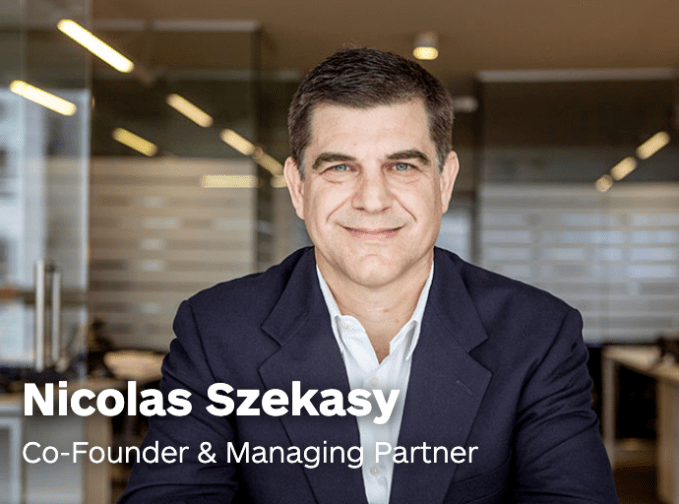
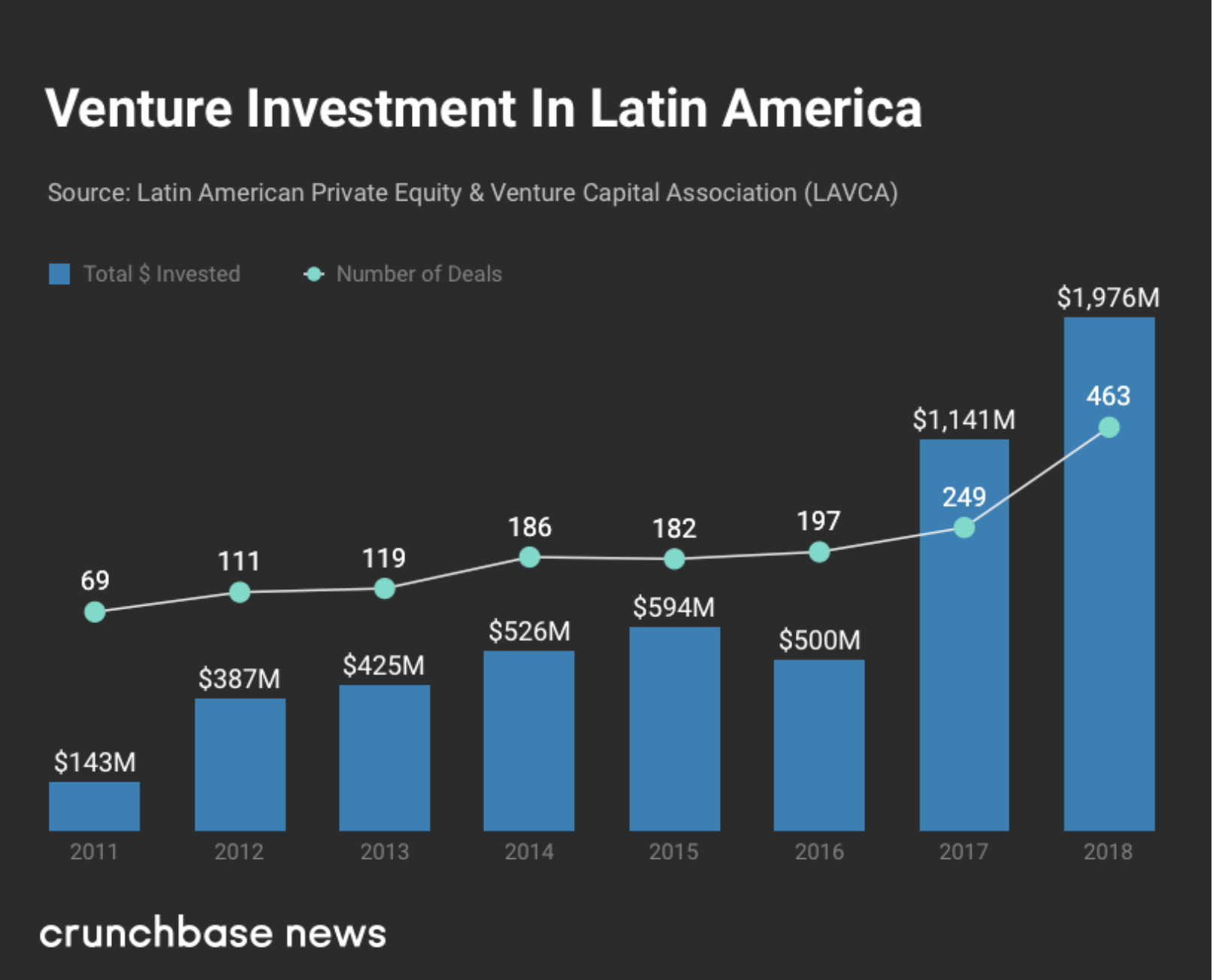
In the eight years since Hernan Kazah and Nicolas Szekasy launched Kaszek Ventures in 2011 the startup ecosystem in Latin America has experienced a renaissance, with investments in the region surging to nearly $2 billion in 2018.

Much of that growth has come on the back of Kaszek portfolio companies like Gympass, the provider of corporate-sponsored gym memberships and perks; Konfio, the Mexican small business lending platform; Nubank, the Brazilian consumer credit company now worth roughly $10 billion; and Loggi, the Latin American logistics company with the billion-dollar valuation.

For Kazah and Szekasy, the growth of their nearly eponymous venture fund marks a successful reinvention of two of the most prominent executives of Latin America’s most highly valued tech startup, MercadoLibre.

Screen Shot 2019 08 29 at 7.39.12 AM

The former chief operating officer and chief financial officer of the region’s leading e-commerce marketplace, initially launched their firm to see if they could replicate their success as entrepreneurs from the other side of the table and bring the expertise and wisdom they’d amassed from their time running what is now a $29.2 billion dollar company (by market capitalization).

“We thought we could identify many more MercadoLibres and identify teams that were outstanding and would have a very ambitious vision in a very large market,” says Szekasy. “I thought I could have more impact if I moved and started working on the investing side.”

The first fund was a relatively modest $95 million investment vehicle, but one of its first investments would go on to show the potential for outsized returns that existed in the Latin American market. That company would be Nubank, and Kaszek was among the first money into the company (alongside Sequoia Capital) when it was little more than a pitch deck and an entrepreneur — David Velez.

“They had very relevant experience in scaling a tech company to multiple countries in the region,” says Velez of the decision to take cash from Kaszek. In the early days, the firms partners were involved in all stages of the company’s growth, helping recruit talent like country managers in different regions, to localizing the pitch for different countries. “They were very active also and continue to be very active around marketing and product. They helped us develop our first website and craft our pitch to consumers and eventually develop a lot of the digital marketing muscle,” Velez says. 

The local knowledge that Kaszek provided was a great compliment to the global perspective that Sequoia brought to the table, says Velez.

For Matias Muchnick, a co-founder and chief executive of NotCo, the experience of Kaszek’s founders and the breadth of their network provided incalculable help as the company expanded beyond Chile to Latin America more broadly — and as it was fundraising.

From a Kaszek-sponsored retreat at Stanford University, Muchnick was introduced to a professor who became an advisor to the company. The professor then put Muchnick in touch with Bezos Expeditions through a connection and the firm wound up investing.

Nubank may have been the firm’s first success story to come from its portfolio, but Kaszek would notch multiple other wins from its later funds.

Standouts from the firm’s $200 million third investment vehicle include the The Not Co, a new food company working on a range of products from vegetarian ice cream and mayonnaise to replacement meat patties. That company managed to attract the attention of Jeff Bezos and his Bezos Expeditions investment fund. Two other standouts in Mexico are Kavak, a car marketplace and Credijusto, an online lending company which raised $42 million from Goldman Sachs and other investors earlier today

Now the firm has added to its firepower with the close of a $375 million main fund and its first “Opportunity Fund” a $225 million investment vehicle that will enable the company to maintain its stakes in later stage companies as they raise increasingly large rounds.

Kazah expects that the firm will invest a bit larger amounts in roughly the same number of companies, with the fund making between 25 and 30 new investments, he said.

And increasingly large rounds are becoming the norm in Latin America just as they’ve done in other rapidly maturing technology ecosystems.

Screen Shot 2019 08 29 at 7.02.31 AM

Chart courtesy of Crunchbase News

That rapid growth has been parlayed into returns that represent an 8x multiple on invested capital for the first Kaszek Ventures fund, a 5x multiple on the second fund, and a 2x return for the firm’s third fund — already, according to a person familiar with the firm. 

“We have been investors in Kaszek Ventures since 2011 and are thrilled to continue this partnership” said Du Chai, Managing Director at Horsley Bridge Partners, in a statement. “Kaszek has been a top performer while building a great platform with talented individuals.”

In part, Kaszek’s success is an extension of broader macroeconomic trends that were bound to transform the region, according to Szekasy.

“We were looking at Silicon Valley and looking at what was happening in China and saw that Latin America was a very large region with a large population and GDP and the right demographics and a fast pace of adoption of new technologies,” says Szekasy.

One of those new technologies that helped speed up the adoption of new technology services across Latin America was the rollout of 4G, says Kazah.

Screen Shot 2019 08 29 at 7.40.18 AM

The mobile internet was always going to be the way that Latin Americans went online, thanks to the penetration of mobile phones across the continent. But high speed internet transformed the types of companies and services that could be on offer, Kazah says.

“In 2011 we had 10% 4G penetration… now more than 90% of the cell phones purchased have been cellphones with 4G access,” according to Kazah. “That really changed the entire ecosystem… companies can aspire to have more sophisticated products… in the last couple of years they started to accelerate their growth.. We finally got to a point where there’s critical mass.”

Not only has the technology improved, but increasing political stability and the rise of a middle class market in countries like Colombia and Mexico mean that there’s more opportunities for new businesses in countries across the continent.

Brazil has always been an economic powerhouse, but now Mexico, Colombia and even countries like Argentina and Chile are showing signs of increasingly vibrant startup ecosystems.

Attention from international investors is also helping to drive the region to new heights. Earlier this year Softbank announced that it would create a new Latin America fund with $5 billion to invest in startup companies. DST and Tiger Global are also active investors in the region.

“One of the reasons Latin America was lagging was that the region was not at a critical mass inflection point technologically, but it was also the lack of capital,” says Kazah. “Softbank on the one hand provides capital but  on the other hand it has opened the eyes of others as well.”


29 Aug 2019

NASA completes inflight testing of supersonic plane X-59’s virtual cockpit window

The X-59 supersonic research airplane developed by NASA, which aims to pioneer quiet supersonic flight for eventual use in commercial aviation, is one step closer to reality thanks to testing of a system it will use to provide the aircraft’s pilot with a fully virtual view of the skies. The eXternal Visibility System (or XVS because NASA loves ‘X’ in their acronyms) includes a front-facing camera and display combo that can provide a view for the pilot enhanced by augmented reality, which will include overlaying information like guidance to destination airports, warnings and alerts when other aircraft enter their airspace, and additional info and key cues upon landing approach and takeoff.

Sensors and a 4K camera feed combine to output the info on a 4K monitor that is inside the aircraft facing the pilot in the cockpit. There’s also an additional retractable camera located underneath the aircraft that can provide a key second view during lower speed flight, as in approaching an airport for landing.

The tests involved mounting the XVS on a Beechcraft King Air UC-12B test plane, and then flying with pilots on board and gauging their ability to spot other aircraft through the display, including in situations where it’s traditionally very difficult for pilots to spot the planes, as in when aircraft are coming at each other but with a slight offset in their relative paths vs. being truly head-on.

The reason the XVS is even necessary is that the X-59 will feature a totally new, unique design that emphasizes a much more contoured look vs. current commercial aircraft, which is how it aims to achieve its quiet flight and avoid loud sonic booms when it actually goes supersonic. This is a key development target because the whole point of the aircraft is to show that it’s possible to fly at supersonic speeds without loud booms at ground level, in order to show regulators that it’s possible to fly commercial supersonic aircraft over land and populated areas. The Concorde, which provided supersonic flight commercially from 1976 until 2003, couldn’t operate over land for this reason.

Despite not having a front-facing window, the X-59 will have a transparent canopy, and test pilots say that even if the XVS system were to somehow fail, they could still fly the aircraft using that external view and information from the aircraft’s sensor and avionics system alone.

The X-59 is currently under construction, being built by Lockheed Martin, and aims to take its first flight sometime in 2021.

29 Aug 2019

Climate activists plan to use drones to shut down Heathrow Airport next month

A UK group of climate activists is planning to fly drones close to Heathrow Airport next month in a direct action they hope will shut down the country’s largest airport for days or even longer.

The planned action is in protest at the government’s decision to green-light a third runway at Heathrow.

They plan to use small, lightweight “toy” drones, flown at head high (6ft) within a 5km drone ‘no fly’ zone around the airport — but not within flight paths. The illegal drone flights will also be made in the early morning at a time when there would not be any scheduled flights in the air space to avoid any risk of posing a threat to aircraft.

The activists point out that the government recently declared a climate emergency — when it also pledged to reduce carbon emissions to net zero by 2050 — arguing there is no chance of meeting that target if the UK expands current airport capacity.

A press spokesman for the group, which is calling itself Heathrow Pause, told TechCrunch: “Over a thousand child are dying as a result of climate change and ecological collapse — already, every single day. That figure is set to significantly worsen. The government has committed to not just reducing carbon emissions but reducing them to net zero — that is clearly empirically impossible if they build another runway.”

The type of drones they plan to use for the protest are budget models which they say can be bought cheaply at UK retailer Argos — which, for example, sells the Sky Viper Stunt Drone for £30; the Revell GO! Stunt Quadcopter Drone for £40; and the Revell Spot 2.0 Quadcopter (which comes with a HD camera) for £50.

The aim for the protest is to exploit what the group dubs a loophole in Heathrow’s health and safety protocol around nearby drone flights to force it to close down runways and ground flights.

Late last year a spate of drone sightings near the UK’s second busiest airport, Gatwick, led to massive disruption for travellers just before Christmas after the airport responded by grounding flights.

At the time, the government was sharply criticized for having failed to foresee weaknesses in the regulatory framework around drone flights near sensitive sites like airports.

In the following months it responded by beefing up what was then a 1km airport exclusion zone to 5km — with that expanded ‘no fly’ zone coming into force in March. However a wider government plan to table a comprehensive drones bill has faced a number of delays.

It’s the larger 5km ‘no fly’ zone that the Heathrow Pause activists are targeting in a way they hope will safely trigger the airport’s health & safety protocol and shut down the airspace and business as usual.

Whether the strategy to use drones as a protest tool to force the closure of the UK’s largest airport will fly remains to be seen.

A spokeswoman for Heathrow airport told us it’s confident it has “robust plans” in place to ensure the group’s protest does not result in any disruption to flights. However she would not provide any details on the steps it will take to avoid having to close runways and ground flights, per its safety protocol.

When we put the airport’s claim of zero disruption from intended action back to Heathrow Pause, its spokesman told us: “Our understanding is that the airport’s own health and safety protocols dictate that they have to ground airplanes if there are any drones of any size flying at any height anywhere within 5km of the airport.

“Our position would be that it’s entirely up to them what they do. That the action that we’re taking does not pose a threat to anybody and that’s very deliberately the case. Having said that I’d be surprised to hear that they’re going to disregard their own protocols even if those are — in our view — excessive. It would still come as a surprise if they weren’t going to follow them.”

“We won’t be grounding any flights in any circumstances,” he added. “It’s not within our power to do so. All of the actions that have been planned have been meticulously planned so as not to pose any threat to anybody. We don’t actually see that there need to be flights grounded either. Having said that clearly it would be great if Heathrow decided to ground flights. Every flight that’s grounded is that much less greenhouse gas pumped into the atmosphere. And it directly saves lives.

“The fewer flights there are the better. But if there are no flights cancelled we’d still consider the action to be an enormous success — purely upon the basis of people being arrested.”

The current plan for the protest is to start illegally flying drones near Heathrow on September 13 — and continue for what the spokesman said could be as long as “weeks”, depending on how many volunteer pilots it can sign up. He says they “anticipate” having between 50 to 200 people willing to risk arrest by breaching drone flight law.

The intention is to keep flying drones for as long as people are willing to join the protest. “We are hoping to go for over a week,” he told us.

Given the plan has been directly communicated to police the spokesman conceded there is a possibility that the activists could face arrest before they are able to carry out the protest — which he suggested might be what Heathrow is banking on.

Anyone who flies a drone in an airport’s ‘no fly’ zone is certainly risking arrest and prosecution under UK law. Penalties for the offence range from fines to life imprisonment if a drone is intentionally used to cause violence. But the group is clearly taking pains to avoid accusations the protest poses a safety risk or threatens violence — including by publishing extensive details of their plan online, as well as communicating it to police and airport authorities.

A detailed protocol on their website sets out the various safety measures and conditions the activists are attaching to the drone action — “to ensure no living being is harmed”. Such as only using drones lighter than 7kg, and giving the airport an hour’s advance notice ahead of each drone flight.

They also say they have a protocol to shut down the protest in the event of an emergency — and will have a dedicated line of communication open to Heathrow for this purposes.

Some of the activists are scheduled to meet with police and airport authorities  tomorrow, face to face, at a London police station to discuss the planned action.

The group says it will only call off the action if the Heathrow third runway expansion is cancelled.

In an emailed statement in response to the protest, Heathrow Airport told us:

We agree with the need to act on climate change. This is a global issue that requires constructive engagement and action. Committing criminal offences and disrupting passengers is counterproductive.

Flying of any form of drone near Heathrow is illegal and any persons found doing so will be subject to the full force of the law. We are working closely with the Met Police and will use our own drone detection capability to mitigate the operational impact of any illegal use of drones near the airport.

Asked why the environmental activists have selected drones as their tool of choice for this protest, rather than deploying more traditional peaceful direct action strategies, such as trespassing on airport grounds or chaining themselves to fixed infrastructure, the Heathrow Pause spokesman told us: “Those kind of actions have been done in the past and they tend to result in very short duration of time during which very few flights are cancelled. What we are seeking to do is unprecedented in terms of the duration and the extent of the disruption that we would hope to cause.

“The reason for drones is in order to exploit this loophole in the health and safety protocols that have been presented to us — that it’s possible for a person with a toy drone that you can purchase for a couple of quid, miles away from any planes, to cause an entire airport to stop having flights. It is quite an amazing situation — and once it became apparent that that was really a possibility it almost seemed criminal not to do it.”

He added that drone technology, and the current law in the UK around how drones can be legally used, present an opportunity for activists to level up their environmental protest — “to cause so much disruption with so few people and so little effort” — that it’s simply “a no brainer”.

During last year’s Gatwick drone debacle the spokesman said he received many enquiries from journalists asking if the group was responsible for that. They weren’t — but the mass chaos caused by the spectre of a few drones being flown near Gatwick provided inspiration for using drone technology for an environmental protest.

The group’s website is hosting video interviews with some of the volunteer drone pilots who are willing to risk arrest to protest against the expansion of Heathrow Airport on environmental grounds.

In a statement there, one of them, a 64-year-old writer called Valerie Milner-Brown, said: “We are in the middle of a climate and ecological emergency. I am a law-abiding citizen — a mother and a grandmother too. I don’t want to break the law, I don’t want to go to prison, but right now we, as a species, are walking off the edge of a cliff. Life on Earth is dying. Fires are ravaging the Amazon. Our planet’s lungs are quite literally on fire. Hundreds of species are going extinct every day. We are experiencing hottest day after hottest day, and the Arctic is melting faster than scientists’ worst predictions.

“All of this means that we have to cut emissions right now, or face widespread catastrophe on an increasingly uninhabitable planet. Heathrow Airport emits 18 million tons of CO2 a year. That’s more than most countries. A third runway will produce a further 7.3 million tons of CO2. For all Life — now and in the future — we have to take action. I’m terrified but if this is what it will take to make politicians, business leaders and the media wake up, then I’m prepared to take this action and to face the consequences.”


29 Aug 2019

Bring your international delegation to Disrupt Berlin 2019

Brilliant ideas, founders, entrepreneurs and early-stage startups know no borders — they come from every corner of the world. Consider this your invitation to showcase the amazing early-stage startups in your country at Disrupt Berlin 2019 on 11-12 December.

How? Secure a Country Pavilion located within Startup Alley, the exhibition floor and the very heart of any Disrupt event. We’re searching for delegations of international startup groups, government innovation centers, incubators and accelerators. We’re talking people who want to promote their emerging startups and establish their reputations as world-class leaders in tech innovation.

Thousands of attendees make a beeline for Startup Alley to explore and meet the hundreds of early-stage startups displaying their latest in products, platforms and services. Among those attendees you’ll find investors eager to add to their portfolios, 200 media outlets hunting for great stories and potential customers and collaborators. Hello, opportunity!

How do you qualify for a Country Pavilion? The early-stage startups in your delegation must be less than two years old and have secured less than $2.5 million in funding. If you can leap that low bar, send our event team an email at startupalley@techcrunch.com. Tell us about your delegation and where you’re from, and we’ll provide more information about the application process.

Startup Alley is a networking dream come true, and we’ve got just the tool to help you find, connect and schedule meetings with the people (like investors) who can help move your business forward. We’re taking CrunchMatch of course. Our free business match-making platform cuts through the noise and helps you find the right people.

How does it work? When the platform goes live (don’t worry, we’ll notify you), simply create a profile with your specific criteria, goals and interests. The CrunchMatch (powered by Brella) algorithm shifts into high gear to find like-minded startuppers. The platform suggests matches and, subject to your approval, proposes meeting times and sends meeting requests. That was easy.

Oh, and in case you were wondering — you can exhibit in Startup Alley even you’re not part of a country delegation. Simply purchase a Startup Alley Exhibitor Package for €745 + VAT. And that price includes three Founder passes. Sweet!

Bring your international delegation to Disrupt Berlin 2019 on 11-12 December, claim your Country Pavilion in Startup Alley and show the world the brilliant, emerging startups in your country. Email our events team today — we can’t wait to see you in Berlin.

Is your company interested in sponsoring or exhibiting at Disrupt Berlin 2019? Contact our sponsorship sales team by filling out this form.