Year: 2019

29 Aug 2019

Google to pay security researchers who find Android apps and Chrome extensions misusing user data

Google said it will pay security researchers who find “verifiably and unambiguous evidence” of data abuse using its platforms.

It’s part of the company’s efforts to catch those who misuse user data collected through Android apps or Chrome extensions — and to avoid its own version of a scandal like Cambridge Analytica, which saw millions of Facebook profiles scraped and used to identify undecided voters during the U.S. presidential election in 2016.

Google said anyone who identifies “situations where user data is being used or sold unexpectedly, or repurposed in an illegitimate way without user consent” is eligible for its expanded data abuse bug bounty.

“If data abuse is identified related to an app or Chrome extension, that app or extension will accordingly be removed from Google Play or Google Chrome Web Store,” read a blog post. “In the case of an app developer abusing access to Gmail restricted scopes, their API access will be removed.” The company said abuse of its developer APIs would also fall under the scope of the bug bounty.

Google said it isn’t providing a reward table yet but a single report of data misuse could net $50,000 in bounties.

News of the expanded bounty comes in the wake of the DataSpii scandal, which saw browser extensions scrape and share data from millions of users. These Chrome extensions uploaded web addresses and webpage titles of every site a user visited, exposing sensitive data like tax returns, patient data, and travel itineraries.

Google was forced to step in and suspend the offending Chrome extensions.

Instagram recently expanded its own bug bounty to include misused user data following a spate of data incidents,

29 Aug 2019

Instagram may allow creators to syndicate IGTV videos to Facebook

Following the departure of Instagram’s founders, Facebook is working to more closely integrate the photo-sharing app with its flagship social network. It’s already added its brand name next to Instagram’s, and is working to make both platforms’ messaging products interoperable. Now, Facebook is prototyping a means of syndicating Instagram’s IGTV video to Facebook’s video site, Facebook Watch.

In another find from noted reverse engineer, Jane Manchun Wong, Instagram was found to have under development a feature that would allow Instagram users to post their IGTV content to both Instagram as a preview, as well as to Facebook and Watch — the latter by toggling an additional switch labeled “make visible on Facebook.”

Wong says the feature is still in the prototype stage, as the buttons themselves aren’t functional.

This move, should it come to pass, could prompt more video creators to use IGTV, given that it would boost their videos’ distribution by also including Facebook as a destination for their content. The videos could also be part of an ongoing, episodic series, Wong had found.

This, in turn, could help IGTV — an app which hasn’t quite taken off as a standalone video platform. Today, IGTV takes inspiration from TikTok and Snapchat’s vertical video. It’s meant to engage Instagram users with longer-form, portrait mode video content but within Instagram and in a separate IGTV app. But IGTV has often been filled with poorly cropped and imported web video, rather than content designed specifically for the platform.

Meanwhile, the IGTV app has struggled to rise to the top of the App Store’s charts the way its parent, Instagram has. Today, it’s ranked No. 159 in the Photo & Video category on the App Store, and unranked in the Overall top charts.

To address some of the issues that creators have complained about, Instagram this week rolled out a few changes to the upload experience. This included the new ability to select the 1:1 crop of an IGTV thumbnail for the creator’s Profile Cover as well as the ability to edit which 5:4 section of the IGTV video shows in the Feed.

IGTV will also now auto-populate Instagram handles and tags on IGTV titles and descriptions, and will now support the ability to longer video from mobile. With the latter change, IGTV has increased the minimum threshold to upload on mobile to one minute, and is allowing mobile uploads up to 15 minutes.

Instagram declined to comment on the possible syndication of IGTV content to Facebook and Facebook Watch.

29 Aug 2019

Female founders: All Raise AMA applications @ Disrupt SF 2019 close tomorrow

The future is female and all you fierce female founders have one last shot at receiving 30 minutes of face time with some of the industry’s leading female funders. Say what now? We’re talking the All Raise “ask me anything” (AMA) sessions at Disrupt SF 2019 — and applications close tomorrow, August 30.

All Raise, a startup nonprofit focused on accelerating female founder success, will host a day-long AMA event on October 3 at Disrupt SF 2019. It’s a match-up of early-stage startup founders and top VCs — and more than 100 female founders will take part in at least 30 sessions scheduled throughout the day.

Each session lasts 30 minutes, and three founders will use that time to ask a their female funder well, anything. What business issues keep you up at night? How do you prep for your next round of funding? What do you need to consider when making key hires? This is not a pitching event — it’s a rare networking opportunity to connect with and learn from the very best.

You might be paired with one of these leading VCs.

  • Dayna Grayson, NEA
  • Susan Lyne, BBG
  • Shauntel Garvey, Reach Capital
  • Eurie Kim, Forerunner
  • Jess Lee, Sequoia
  • Kara Nortman, Upfront
  • Sarah Guo, Greylock,
  • Anarghya Vardhana, Maveron
  • Eva Ho, Fika Ventures
  • Sarah Smith, Bain Capital Ventures
  • Jess Lin, Work-Bench

Apply for an All Raise AMA session if you meet the following criteria:

  • You’re a U.S.-based woman founder
  • You’ve raised at least $250,000 in a seed, A or B round.

Note: All Raise gives special consideration to founders from underrepresented groups (e.g. Black, Latinx or LGBTQIA women).

All Raise will review the applications and notify the founders. Acceptance is based on availability for session spots, investor fit with industry sector and company stage, as well as demand for certain categories.

Bonus: After All Raise chooses the participants, we’ll randomly select 30 founders to receive a free Expo-only pass.

If you’re selected, you’ll need to buy any pass to Disrupt SF (unless you win one of the Expo Only passes). You’ll receive an email from All Raise with your session time.

Female funders helping female founders. Don’t squander this chance to learn from the women who know funding best. Apply for an All Raise AMA session by tomorrow, August 30, and get ready to move your business forward.

If you are interested in sponsoring this event or exhibiting at Disrupt San Francisco 2019, fill out this form to get in contact with our sales team.

29 Aug 2019

Apple will unveil the next iPhone September 10

Invites for the next big Apple event have just landed in press mailboxes everywhere, confirming the rumored September 10 date. Invites for the event, which is set for Steves Jobs Theater on the company’s shiny new Cupertino campus, note that the event is “by innovation only.” It is a small theater, after all.

The centerpiece of the event will, of course, be the iPhone 11, which is rumored to arrive in three different flavors: The standard 11 (replacing the budget XR) and two 11 Pro models, set to replace the XS and XS Max, respectively.


Developing…

29 Aug 2019

Urbvan raises $9 million for its private shuttle service in Mexico

As cities in emerging markets grapple with increasingly traffic-clogged and dangerous streets, Urbvan, a startup providing private, high-end transportation shuttles in Mexico, has raised $9 million in a new round of financing.

Co-founded by Joao Matos Albino and Renato Picard, Urbvan is taking the reins from startups like the now-defunct Chariot and tailoring the business for the needs of emerging market ecosystems.

Hailing from Portugal, Albino arrived in Mexico City as a hire for the Rocket Internet startup Linio. Although Linio didn’t last, Albino stayed on in Mexico eventually landing a job working for the startup Mercadoni, which is where he met Picard.

The two men saw the initial success of Chariot as it launched from Y Combinator, but were also tracking companies like the Indian startup Shuttl.

“We wanted to make shared mobility more accessible and a little bit more efficient,” says Albino. “We studied the economics and we studied the market and we knew there was a huge urgency in the congested cities of  Latin America.”

Unlike the U.S. — and especially major cities like San Francisco and New York — where public transportation is viewed as relatively safe and efficient, the urban environment of Mexico City is seen as not safe by the white collar workers that comprise Urbvan’s principle clientele.

The company started operating back in 2016. At the time it had five vans that it leased and retrofitted to include amenities like wi-fi and plenty of space for a limited number of passengers. Since those early days the company has expanded significantly. It now claims over 15,000 monthly users and a fleet of 180 vans.

Urbvan optimized for safety as well as comfort, according to Albino. The company has deals with WeWork, Walmart and other retailers in Mexico City so that all . of the stops on t he route are protected and safe. The company also vets its drivers and provides them with additional training because of the expanded capacity of the vans.

Each van is also equipped with a panic button and cameras inside and outside of the van for additional monitoring.

Customers either pay $3 per ticket or sign up for a monthly pass that ranges from $100 to $130.

Financing for the company came from Kaszek Ventures and Angel Ventures with previous investor Mountain Nazca also participating.

For Albino, who went to India to observe Shuttl’s operations, the global market for these kinds of services is so large that there will be many winners in each geography.

“Each city is different and you need to adapt. The technology needs to be adaptable to the city’s concerns . and where it can . add more value,” says Albino. “The Indian market is super different from Latin America.. It’s a huge market with a lot of congestion… But the value proposition is a bit more basic [for Shuttl].”

Urbvan is currently operating in Mexico City and Monterrey, but has plans to expand into Guadalajara later this year.

29 Aug 2019

‘The Operators’: Finance in startups with Duda CFO Stephanie Hsiung and Zeus Living’s Head of Finance Mark Kang

Welcome to this transcribed edition of The Operators. The Operators features insiders from companies like Airbnb, Brex, Calm, Facebook, Google, Lyft, Slack, Uber, WeWork, and Zeus Living sharing their stories and tips on how to break into fields like marketing and product management. They also share best practices for entrepreneurs on how to hire and manage experts from domains outside their own.

This week’s edition features two finance experts with experience from Calm, AdRoll, Morgan Stanley, Change.org, Zeus Living, and Duda. Listen in as they unpack how to build a career in finance at a tech startup and how founders should be thinking about hiring and managing this function.

Stephanie Hsiung is the CFO of Duda, a new and exciting enterprise website builder. Prior to taking the CFO role at Duda, Stephanie served as the VP of Finance at Calm, the leading meditation and mental wellness app and recent unicorn. She was also previously the VP of Finance at Change.org, and was at AdRoll before that.

Mark Kang is the Head of Finance at Zeus Living, which is one of the fastest-growing providers of furnished housing for business travelers. He brings experience from venture capital, banking at Morgan Stanley, where he managed IPOs, and also spent time at Barclays.

image1 6

Mark Kang, Neil Devanie, Stephanie Hsiung. Image via The Operators

Neil Devani and Tim Hsia created The Operators after seeing and hearing too many heady, philosophical podcasts about the future of tech, and not enough attention on the practical day-to-day work that makes it all happen.

Tim is the CEO & Founder of Media Mobilize, a media company and ad network, and a Venture Partner at Digital Garage. Tim is an early-stage investor in Workflow (acquired by Apple), Lime, FabFitFun, Oh My Green, Morning Brew, Girls Night In, The Hustle, Bright Cellars, and others.

Neil is an early-stage investor based in San Francisco with a focus on companies building stuff people need, solutions to very hard problems. Companies he’s invested in include Andela, Clearbit, Kudi, Recursion Pharmaceuticals, Solugen, and Vicarious Surgical.

If you’re interested in starting or accelerating your marketing career, or how to hire and manage this function, you can’t miss this episode!

The show:

The Operators features insiders from companies like Airbnb, Brex, Calm, Facebook, Google, Lyft, Slack, Uber, WeWork, and Zeus Living sharing their stories and tips on how to break into fields like marketing and product management. They also share best practices for entrepreneurs on how to hire and manage experts from domains outside their own.

In this episode:

In Episode 6, we’re talking about finance. Neil interviews Stephanie Hsiung, the CFO of Duda, a new and exciting enterprise website builder, and Mark Kang, the Head of Finance at Zeus Living, one of the fastest-growing providers of furnished housing for business travelers.

Neil Devani: Hello and welcome to the Operators, where we talk to entrepreneurs and executives from leading technology companies like Google, Facebook, Airbnb, and Calm about how to break into a new field, how to build a successful career, and how to hire and manage talent beyond your own expertise.

We skip over the lofty prognostications from venture capitalists and storytime with founders to dig into the nuts and bolts of how it all works. Hear from the people doing the real day to day work, the people who make it all happen, the people who know what it really takes… The Operators.

Today we’re talking to two finance experts with experience in investment banking and billion-dollar tech startups. I’m your host, Neil Devani and we’re coming to you from Digital Garage here in downtown San Francisco.

Joining me today is Stephanie Hsiung, CFO of Duda, an enterprise website builder, and formerly the VP of finance at Calm, the leading meditation and mental wellness app. She was also the VP of Finance at Change.org and AdRoll before that.

Also joining us is Mark Kang, Head of Finance at Zeus Living, a rising provider of furnished housing for business travels. They have 1400 homes under management in four major metro areas. Mark has experience as a venture capitalist as well and was previously a banker at Morgan Stanley and Barclays. Stephanie and Mark, thank you for joining us.

Stephanie Hsiung: Thank you for having us.

Mark Kang: Yes, thanks for having us.

29 Aug 2019

MIT’s new thread-like robots could travel through blood vessels in the brain for more effective surgery

MIT has developed robotic thread that could make existing the least invasive current brain surgery techniques even less so, and potentially make it easier and more accessible to treat brain blood vessel issues like blockages and lesions than can cause aneurysms and strokes.

The new development from MIT researchers combines robotics with current endovascular (ie. within blood vessel) surgery techniques, reducing the risks associated with guiding incredibly thin wires through complicated brain blood vessel pathways. Today, this type of procedure, which is much less invasive than past methods of brain surgery, nonetheless requires an incredibly skilled surgeon to guide the wire manually. It’s a very diffucl surgery for surgeons, and it also means that they’re exposed to radiation from the X-rays required to provide a view of the path they’re weaving through the patient’s brain.

These ‘robot-threads’ developed by MIT takes research done on so-called ‘hydrogels,’ which are materials made mostly of water that work well within the human body. At the thread’s core is a material called ‘nitinol’ that can bend, and is springy, meaning it has a natural tendency to spring back to its original shape when bent.

The material is coated in an ink-like substance, which is then bonded with a hydrogel, regulating in a magnetically manipulable material that can still surviving within the human body. Using a large magnet, the researchers could then steer the thread through a demonstration obstacle course they built to show off how it could work in a surgical situation.

MIT’s researchers also note that you can modify the core construction of the robot threads with other materials to serve different functions, and showed this by replacing the nitinol at its centre with a fiber optic filament, which in practice could be used to transmit laser light to blast away a blockage in a brain blood vessel.

The tech could be put to use to make it so that surgeons can operate the threads from a safe distance – or even remotely. This would not only be safer for the doctors, but could also open up more access to this highly specialized kind of surgery for patients, too.

29 Aug 2019

Mozilla CEO Chris Beard will step down at the end of the year

Chris Beard announced via blog post today his plans to step down as Mozilla Corporation CEO at the end of 2019. Beard joined the web software company in 2004, remaining an employee since then, with the exception of 2103, when he left to become Greylock’s “executive-in-residence,” while remaining on as an advisor.

Beard was appointed interim CEO for Mozilla in April 2014, coming on as full time chief executive in July of that same year. The company has seen a bit of a resurgence in recent years, after having ceded much of its browser marketshare to the likes of Google and Apple. Firefox has undergone something of a renaissance over the past year, as have the company’s security tools.

“Today our products, technology and policy efforts are stronger and more resonant in the market than ever, and we have built significant new organizational capabilities and financial strength to fuel our work,” Beard said in the blog post. “From our new privacy-forward product strategy to initiatives like the State of the Internet we’re ready to seize the tremendous opportunity and challenges ahead to ensure we’re doing even more to put people in control of their connected lives and shape the future of the internet for the public good.”

Mozilla is currently seeking a replacement for Beard, though he’s agreed to stay on through year’s end. Executive chairwoman Mitchell Baker announced in her own post that she’s agreed to step into an interim role if needed.

“One of the accomplishments of Chris’ tenure is the strength and depth of Mozilla Corporation today. The team is strong. Our organization is strong, and our future full of opportunities,” Baker said. “It is precisely the challenges of today’s world, and Mozilla’s opportunities to improve online life, that bring so many of us to Mozilla. I personally remain deeply focused on Mozilla. I’ll be here during Chris’ tenure, and I’ll be here after his tenure ends. I’m committed to Mozilla, and to making serious contributions to improving online life and developing new technical capabilities that are good for people.”

29 Aug 2019

Facebook rolls out new business tools for Messenger, kills the ‘Discover’ tab

Facebook today is formally rolling out a new suite of tools for its 40 million active businesses on Messenger, including appointment booking, lead generation, and others announced earlier this year at its F8 developer conference. As a part of these changes, Facebook will also begin to phase out the Discover tab in Messenger — a feature that became home to both games and businesses following last fall’s redesign.

Today, Facebook says the Discover tab will be pulled from the Messenger app over the next several months. Instead, it will invest in making sure Facebook users are directed to interact with businesses via Messenger in other ways.

“We want to make it more seamless for people to reach out to businesses on Messenger in places where they’re already looking to connect,” explains Facebook, of its decision to kill off the Discover feature. “We will put more investment into tools to connect people and businesses – including updates to m.me linksweb plugins, various entry points across our family of apps, as well as ad products – that lead to Messenger,” the company says.

In terms of its new business tools, the lead generation product will launch as a Messenger template within Facebook Ads Manager this week. The template lets businesses create automated experiences to help qualify their leads in Messenger, then continue conversations in the app or integrate with existing CRM tools to track the leads further.

The feature has been in beta following F8, but will now be publicly available.

Appointment booking was announced at F8, too, but is only now launching into beta with select developers and businesses. This feature allows businesses to accept appointment requests and make bookings in real-time through Messenger. It also integrates with existing calendar booking software, and can help Messenger conversations be turned into in-store traffic, as well as online and phone appointments, the company says.

The feature will be launched globally to all developers later in the year.

Another update mentioned today involves plans to launch improved event reporting in Messenger later this year, which will allow businesses to report and track their Messenger conversations.

Plus, Facebook says it’s updating the Standard Messaging window for businesses to 24 hours (which is how long they have to respond to inquiries from customers.) This brings it in-line with WhatsApp’s window.

messenger biz 2

After 24 hours, businesses can still use sponsored messages to re-engage customers, and message tags (e.g. updates on purchases, event reminders, changes to their account, and now in closed beta, “human agent,” which will let agents respond to issues that need resolution after the standard messaging window closes.)

Messenger’s Subscription Messaging beta program, meanwhile, is changing today as well.

It’s now going to be limited to “vetted news organizations.” This came about because some businesses were using the feature in violation of Facebook’s guidelines, the company admitted. The feature is designed to send regular news updates to subscribers. The timing of this change is somewhat interesting, as Facebook is preparing to relaunch efforts to feature top news stories on its social network, this time vetted by journalists and featuring content Facebook pays for. There’s room for some interoperability here between the news product and subscriptions/updates, but it’s not clear if or how that will come to pass.

Of course, the biggest Messenger consumer news from F8 — a desktop app for Mac and PC — hasn’t yet come to pass, but is expected sometime this year.


29 Aug 2019

Launching from beta, ProGuides is making money ensuring that gamers never play alone

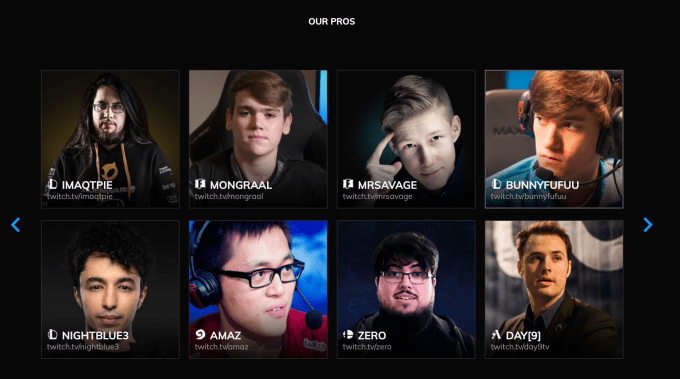
When ProGuides pulled the covers off of its service earlier this year, the young Los Angeles-based startup intended to give gamers a way to train with professional and semi-pro esports players from around the world.

But as users signed on to the service, it became clear that they weren’t looking for training necessarily… Instead what players wanted was a ringer.

“After we launched the beta, we found some interesting user behavior,” says Sam Wang. “We found that gamers who were experienced already and wanted experienced players who are better than [the matches] the game can provide… At the end of the day you do get to play with someone pretty awesome and is something that i think  can make games better.

That’s right, ProGuides is pitching a marketplace for experienced gamers so that its customers aren’t randomly matched with some noob if they can’t game with their usual partners.

“Our tagline is ‘Play with pros’ now,” says Wang. “We already have over 5,000 sessions that were played in the last two months.”

The professional gamers who list their services on the site charge an average of $10 per session and ProGuides takes about a 25% cut. The company lowers its rates for popular gamers or gamers who are willing to spend more time on the platform either selling their services or actually coaching esports players.

Wang says that that pros on the platform are making anywhere from $750 to $2500 per month and that there are currently 250 coaches on the platform.

A typical session on ProGuides lasts around 45 minutes and players are available for Fortnite, League of Legends.  Super Smash Brothers, CS:GO and Hearthstone

ProGuides raised $1.9 million in pre-seed funding last June. The company is backed by Amplify, an LA-based early stage investor and company accelerator, Quest Venture Partners, Greycroft Tracker fund and the GFR Fund.

The LA-based company also has some venture-backed competition on the East Coast. Gamer Sensei, which has raised roughly $6 million (according to CrunchBase) has a similar proposition. It’s backed by Accomplice and Advancit Capital.

Screen Shot 2019 08 29 at 9.17.36 AM