Year: 2019

29 Aug 2019

2019 tech IPOs: Some thoughts from the public company roller coaster

2019 has already been an active year for U.S. tech IPOs. Some highly anticipated unicorns, such as Uber and Lyft, have disappointed investors with their IPO debuts and their first results as public companies. Others, such as Fiverr, Zoom and CrowdStrike, have soared. And food-tech brand Beyond Meat (two words you normally don’t see together) hit a high of $239 from their $25 IPO price.

The first of these 2019 tech IPO companies will soon face a new challenge as the early investor and employee lockups expire — often 180 days after the IPO — allowing them to sell and increasing the number of shares available to trade. Lyft will remain at the front of the 2019 pack when the lockups expire, bringing more of the company’s stock into play on the public market. Regardless of what happens next, it’s amazing to see the trajectory of companies that have built such impressive businesses in such a remarkably short period of time.

I was recently at the New York Stock Exchange (NYSE) to ring the opening bell and celebrate our three- millionth borrower on the platform. It brought back great memories from when our company, LendingClub, entered the public fray in 2014. LendingClub was the largest U.S. tech IPO that year, and is still one of the biggest U.S. tech IPOs of all time. We listed at a $5.4 billion valuation, and our shares surged 67% on the first day of trading. We were thrilled to celebrate the validation of our hard work and excited about the next stage of our growth. However, by the time our lockups expired, we had fallen back to around our IPO valuation of $15 a share.

Since then, despite being the market leader in the fastest-growing sector of consumer credit in the country with double-digit annual growth, the company today is worth less than a fifth of what it was in 2014. Our story is thankfully unique, and I’ll spare you the details here, but suffice to say… we had a rough period. We are back on track now, delivering growth and margin expansion while executing against our vision.

However bespoke our story, there are some observations I’ll share that might be useful for others as they think about life post-IPO. I’m not going to cover the issues around short-termism and the tyranny of quarterly targets (which have been well-documented elsewhere), but rather a few of the implications that sure would have been useful for me to know going in…

Things will be different — really

I’d compare the period leading up to the IPO to the period when you are expecting a baby. Intellectually, you know things will be different when you bring home a newborn. But knowing it and living it are two different things. Going public is a transformational event that permanently changes your company and how the CEO, CFO and board spend their time (with obvious trickle-down effects). From the moment we rang the NYSE bell on December 11, 2014, everything changed.

Making money matters

Investors buying your stock are essentially valuing your future cash flow. At some point, you have to have your “show them the money” moment and become profitable. Amazon famously lost a total of $2.8 billion over 17 straight quarters after their IPO and was the subject of a lot of skepticism and criticism throughout. The company maintained their strategy, delivering top-line growth and investing in their future and, suffice to say, investor patience paid off!

At LendingClub, we have invested millions of dollars to develop products that delight our 3 million+ customers (and, at 78, our NPS is at its highest level in the history of the company) and expand our competitive moat. We are now driving toward adjusted net income profitability.

Like it or not, there is a scoreboard

Once you go public, some people stop thinking of you as a business, and start thinking about you as a stock price. And that stock price is always broadcasting. It broadcasts to your equity investors, your employees, your partners, your board — to everyone who is listening.

You can’t preserve your culture, but you can and must maintain the values your company holds dear.

When the stock is up, everyone feels great. But, in a volatile market or a downturn, there are a lot of people who will be needing to hear your view on what’s happening. Communication to your stakeholders is not in the way of you doing your job, it is a critical part of your job that just got A LOT bigger. You need to stay ahead of it and deliberately carve out the time to make it a priority.

There are others sharing the microphone

When you are starting out, the world is divided into two types of people: those who love you, and those who don’t know/care. When you are a public company, a lot of voices join the conversation. You’ll add a different beat of reporters focused on your financials. You have analysts who are paid to research and think about your company, your strategy, your prospects and your value. These analysts may have never covered a company quite like yours (after all, you are breaking new ground) and you’ll need to spend time together to understand what matters.

You also can attract a whole new kind of investor, a “short” who has a vested interest in your stock going down. All of these voices are speaking to your stakeholders and you need to understand what they are saying and how it should affect your own communications.

Be careful, the microphone is on

Remember those days when everyone attended the “all hands” and you could share the details of your product road map, your corporate strategy, what’s working and what isn’t? Yeah, those are over. The risk of material nonpublic information leaking means you need to find a new balance in transparency with your employees (and your friends and partners for that matter).

It’s a change to behavior and to culture that doesn’t come naturally (at least it didn’t to me). It’s a change that can be frustrating to employees as the necessary opacity can erode trust as people feel out of the loop. At LendingClub, we still regularly communicate as much as we can and trust our employees, but there are places where you have to draw the line.

Your competitors are listening

Ironically enough, while your ability to share key details with employees is limited, you are sharing a lot with your competition. Shareholders and money managers want to know your battle plans and expect a detailed update at your earnings call every quarter. You can expect that your competitors are taking notice and taking notes.

Your scarcest resource

As the above would indicate, being public means that you are inevitably going to be spending less time running the business, and more time focused externally. Not a bad thing, but something you need to plan for so that you have the resources in place underneath you to maintain business momentum. If your management team isn’t materially different as you head to the market than it was a few years ago, I’d be surprised if you have what you need.

Your culture will change, focus on your values

I once asked a senior Google executive advice on how to preserve culture when going through massive periods of transition. She told me that you can’t preserve your culture, but you can and must maintain the values your company holds dear. Her advice, which I have followed and am passing on to you, is to make sure you write them down, hire against them and assess performance against them.

We started this practice years ago and it is remarkable how consistent our values have remained even as the company has evolved and matured. We codified six core values that put the customer at the center of everything we do. We are guided by our No. 1 value — Do What’s Right. You know a LendingClubber when you meet them, and it is part of what makes us great.

Being a public company is not for the faint-hearted, but being public is part of growing up. Being public legitimizes the company, unlocks liquidity to fuel growth and enables you to attract the next generation of talent. We always said that going public would allow us to deliver more value to a greater number of consumers and would lend legitimacy to our growing industry. We have facilitated more than $50 billion in loans and are still at a small percentage of our immediately addressable market. Although challenging at times, we’re seeing our dream to truly help everyday Americans come to life.

We’ve worked hard since our IPO to change the face people associate with finance. We’ve built a diverse team, established strong core values and nurtured a culture that has resulted in the kind of company we want to represent fintech and the tech industry as a whole — both inside and outside Silicon Valley.

So, to the new joiners in the public sphere — life in the spotlight is a wild ride. Congratulations on this step in your journey, and on to the next!

29 Aug 2019

“Filmmaker Mode” will automatically turn off all the dumb motion smoothing and noise reduction on new TVs


Most people don’t adjust the settings on their TV after they buy it.

Most newer TVs, meanwhile, come with a bunch of random junk turned on by default; things like motion smoothing that makes epic movies look like soap operas, or noise reduction that can wash out details and make an actor’s skin look cyborg-y. These things help the TVs catch more eyes on the retail show floor — look how smooth the butterfly wings in the demo video are moving!

Movie makers and show creators tend to hate these things because they algorithmically screw with details they’ve spent many hundreds of hours fine tuning frame-by-frame. But getting the viewer to go in and muck with a bunch of settings, hidden behind confusing names (often unique to each company, because Branding™) and a dozen button presses, is hard.
That’s the driving force behind Filmmaker Mode. Push a button, and all that crap gets turned off.

It’s a move which the UHD Alliance (a group made up of 40 companies like Dolby, Panasonic, Samsung, Universal, Warner Brothers, and a bunch of other industry mega companies) says they’re making with the input of icons like Martin Scorsese, Patty Jenkins, Ryan Coogler, Rian Johnson, and Christopher Nolan.

Flip on Filmmaker mode, and your TV set should:

  • Turn off all motion smoothing effects
  • Turn off noise reduction, sharpening, and other after-the-fact processing effects
  • Automatically display the media in its intended aspect ratio/frame rate.
  • Turn off overscan, unless required by the video
  • Set the white point color to the widely used D65 standard

According to The Digital Bits, the mode is meant to be toggled on in either of two ways: manually via a button on the remote, or automatically when a video’s metadata says so. Want all the motion smoothing stuff back on for sports? Push a button, and it’s back.

LG, Panasonic, and Vizio have committed to implementing the new mode, and I imagine others will hop on board once word of the mode spreads. The downside? It sounds like this is only coming to new TVs, with no announced plans so far about it coming to older sets via software update. Fortunately, you can always toggle most of this stuff manually.

If you’ve spent hours tweaking your tv and pouring through AV forums to find settings that you love, awesome — keep’em. But if you’re at a friends house in a few years watching Lord of the Rings and can’t get over Gimli’s unusually smooth skin compliments of TruDynamicNoiseMasterPlus 4.0, maybe tell them about Filmmaker mode.

29 Aug 2019

MIT’s autonomous boat robots can now shapeshift to form new structures

MIT Shapeshifting Roboats 01 0Work continues on developing MIT’s fully autonomous robot boats – ‘roboats’ if you’d rather – and now they have a new trick, allowing them to change configurations and reassemble with one another to form a range of new structures.

When last we checked in on the ‘roboat’ project, the robots had achieved a basic level of autonomy, allowing them to do basic navigation, and also to latch on to one another to form rudimentary assemblies. Now, they’re improved to the point where they can not only connect, but also both disconnect and re-assemble into new types of structures – all on their own.

The researchers working on the self-assembling roboats have devised an algorithm that manages all the planning involved in getting groups of the aquatic robots to unlatch from each other, then route a path that avoids any potential collisions, and then reconnect with other robots again in a new type of configuration. They’ve demonstrated this working both in simulation and in a pool at MIT, with the rectangular platform robots configuring themselves into straight lines, squares and even Ls.

So they’ve essentially mastered the basic shapes from Tetris, but this is a key step in the ultimate goal of making these the basis for truly utilitarian robots that can assemble and reassemble on-demand to create bridges, floating platforms, on-demand barges of any size and more, which would have obvious applications for reshaping urban environments with easy access to water.

The self-configuration and re-configuration happens because the roboats now come in two flavors: workers and coordinators. These units combine to form an overall platform, but the coordinators include GPS and a measuring tool for determining their relative pose and velocity. The workers have actuators to help the overall platform unit steer. The coordinators work together to figure out how they’re currently arranged, compare that to the target arrangement, and then issue orders about which ones stay in place, and which ones have to change position to achieve that new shape given their staring point.

While the robots used for these specific experiments were about 3 feet by 1.5 feet in size, the full-sized roboats are about four times the size – but researchers think the algorithm will work when applied to them, too. That will be crucial if the team hopes to achieve its goal of building a bridge capable of autonomous formation to span the nearly 200-foot canal that connects the NEMO Science Museum in Amsterdam to a nearby neighborhood, which they’re aiming to do sometime next year.

29 Aug 2019

Marc Benioff will discuss building a socially responsible and successful startup at TechCrunch Disrupt

Salesforce chairman, co-founder and CEO, Marc Benioff, took a lot of big chances when he launched the company 20 years ago. For starters, his was one of the earliest enterprise SaaS companies, but he wasn’t just developing a company on top of new platform, he was building one from scratch with social responsibility built-in.

Fast forward 20 years and that company is wildly successful. In its most recent earnings report, it announced a $4 billion quarter, putting it on a $16 billion run rate, and making it by far the most successful SaaS company ever.

But at the heart of the company’s DNA is a charitable streak, and it’s not something they bolted on after getting successful. Even before the company had a working product, in the earliest planning documents, Salesforce wanted to be a different kind of company. Early on, it designed the 1-1-1 philanthropic model that set aside one percent of Salesforce’s equity, and one percent of its product and one percent of its employees’ time to the community. As the company has grown, that model has serious financial teeth now, and other startups over the years have also adopted the same approach using Salesforce as a model.

In our coverage of Dreamforce, the company’s enormous annual customer conference, in 2016, Benioff outlined his personal philosophy around giving back:

“You are at work, and you have great leadership skills. You can isolate yourselves and say I’m going to put those skills to use in a box at work, or you can say I’m going to have an integrated life. The way I look at the world, I’m going to put those skills to work to make the world a better place,” Benioff said at the time.

This year Benioff is coming to TechCrunch Disrupt in San Francisco to discuss with TechCrunch Editors how to build a highly successful business, while giving back to the community and the society your business is part of. In fact, he has a book coming out in mid-October called Trailblazer: The Power of Business as the Greatest Platform for Change, in which he writes about how businesses can be a positive social force.

Benioff has received numerous awards over the years for his entrepreneurial and charitable spirit including Innovator of the Decade from Forbes, one of the World’s 25 Greatest Leaders from Fortune, one of the 10 Best-Performing CEOs from Harvard Business Review, GLAAD, the Billie Jean King Leadership Initiative for his work on equality and the Variety Magazine EmPOWerment Award.

Disrupt SF runs October 2 to October 4 at the Moscone Center in the heart of San Francisco. Tickets are available here.

Did you know Extra Crunch annual members get 20% off all TechCrunch event tickets? Head over here to get your annual pass, and then email extracrunch@techcrunch.com to get your 20% off discount. Please note that it can take up to 24 hours to issue the discount code.

29 Aug 2019

Target’s Drive Up pickup service expands nationwide

Target’s same-day curbside pickup service, Drive Up, has now reached all 50 U.S. states, the retailer announced on Thursday. The service allows consumers to shop online then pull up to designated spaces at their local store to have their purchases ferried to their vehicle by Target staff.

Drive Up has rolled out to Target stores at a fairly fast pace, given the technology requirements, infrastructure and operational changes required to support these fast-to-fill online orders.

The company in April 2018 introduced Drive Up to its first locations outside of Target’s hometown market of Minneapolis-St. Paul, where it had been in piloting testing since October 2017. With the public launch, Drive Up was immediately available across nearly 270 stores in Florida, Texas and the Southeast. By summer 2018, it had reached over 800 stores, with plans to reach 1,000 by year-end.

Instead, it hit the 1,000-store milestone in October 2018.

And with the start of this year’s back-to-school shopping season, Drive Up became available at over 1,500 stores.

With the expansion announced today, Drive Up has now reached 1,750 stores, thanks to recent rollouts in Alaska, Hawaii, Washington, Oregon, Idaho, North Dakota, South Dakota, Montana, and Wyoming. As it launches in new locations, Target will often dole out free product samples as a perk for its first customers and to encourage repeat business.

Overall, Drive Up seems to be working to bring more consumers to its stores — even if they don’t come inside.

In less than two year’s time, Drive Up has become one of Target’s best-rated services. During its most recent earnings, Target noted that it had more than doubled the total number of Drive Up orders in 2018 by fulfilling nearly 5 million orders within the first part of this year alone.

The retailer also recently noted that roughly 1 in 5 customers placing a same-day order in Q2 were placing an order with Target for the first time.

The backend side of Drive Up has improved over time, as well, with improvements to optimize both order picking and delivery of curbside orders to customers.

At launch, Target was committing to fulfill Drive Up orders within 2 hours. Today, Target says it’s able to offer fulfillment by Drive Up in as soon as one hour.

By this holiday season, Target says that “most” of its 1,855 U.S. stores will offer Drive Up service.

“We’ve heard the message loud and clear from our guests: They absolutely love the ease and convenience of Drive Up, whether they’re shopping for household essentials, road trip snacks or baby gear,” said Dawn Block, senior vice president, digital, in a statement about the nationwide expansion. “So our team has worked hard to rapidly expand the service since its introduction less than two years ago to all 50 states. And the work’s not done. The team’s continuing to find ways to make the service even better.”

The service is not without competition, however.

Walmart Grocery offers curbside pickup at over 2,500 locations. Sam’s Club in July announced same-day pickup nationwide. Amazon, which has historically lacked a brick-and-mortar presence, has been quick to react to the threat of curbside pickup. Most recently, it announced a new partnership with Rite Aid, that will see the arrival of a “Counter” service — a free, in-store pickup option — at 1,500 Rite Aid locations by year-end. (Amazon also offers grocery pickup at select Whole Foods.)

However, in-store pickup isn’t quite as convenient as curbside service. And that’s especially true for curbside’s top demographic: parents — often those with young children. Among Target Drive Up’s best-sellers, for example, are things like diapers, wipes, and formula.

Drive Up is one of several ways Target is fighting back against Amazon. The company also now owns same-day delivery service Shipt, offers online order pickup, subscriptions to common household items, and runs a Prime Pantry competitor with next-day service, Target Restock. 

29 Aug 2019

Former Google X ecec Mo Gawdat wants to reinvent consumerism

Mo Gawdat, the former Google and Google X executive, is probably best known for his book Solve for Happy: Engineer Your Path to Joy. He left Google X last year. Quite a bit has been written about the events that led to him leaving Google, including the tragic death of his son. While happiness is still very much at the forefront of what he’s doing, he’s also now thinking about his next startup: T0day.

To talk about T0day, I sat down with the Egypt-born Gawdat at the Digital Frontrunners event in Copenhagen, where he gave one of the keynote presentations. Gawdat is currently based in London. He has adopted a minimalist lifestyle, with no more than a suitcase and a carry-on full of things. Unlike many of the Silicon Valley elite that have recently adopted a kind of performative aestheticism, Gawdat’s commitment to minimalism feels genuine — and it also informs his new startup.

07 28 19 Frontrunner 38“In my current business, I’m building a startup that is all about reinventing consumerism,” he told me. “The problem with retail and consumerism is it’s never been disrupted. E-commerce, even though we think is a massive revolution, it’s just an evolution and it’s still tiny as a fraction of all we buy. It was built for the Silicon Valley mentality of disruption, if you want, while actually, what you need is cooperation. There are so many successful players out there, so many efficient supply chains. We want the traditional retailers to be successful and continue to make money — even make more money.”

What T0day wants to be is a platform that integrates all of the players in the retail ecosystem. That kind of platform, Gawdat argues, never existed before, “because there was never a platform player.”

That sounds like an efficient marketplace for moving goods, but in Gawdat’s imagination, it is also a way to do good for the planet. Most of the fuel burned today isn’t for moving people, he argues, but goods. A lot of the food we buy goes to waste (together with all of the resources it took to grow and ship it) and single-use plastic remains a scourge.

How does T0day fix that? Gawdat argues that today’s e-commerce is nothing but a digital rendering of the same window shopping people have done for ages. “You have to reimagine what it’s like to consume,” he said.

The reimagined way to consume is essentially just-in-time shipping for food and other consumer goods, based on efficient supply chains that outsmart today’s hub and spoke distribution centers and can deliver anything to you in half an hour. If everything you need to cook a meal arrives 15 minutes before you want to start cooking, you only need to order the items you need at that given time and instead of a plastic container, it could come a paper bag. “If I have the right robotics and the right autonomous movements — not just self-driving cars, because self-driving cars are a bit far away — but the right autonomous movements within the enterprise space of the warehouse, I could literally give it to you with the predictability of five minutes within half an hour,” he explained. “If you get everything you need within half an hour, why would you need to buy seven apples? You would buy three.”

Some companies, including the likes of Uber, are obviously building some of the logistics networks that will enable this kind of immediate drop shipping, but Gawdat doesn’t think Uber is the right company for this. “This is going to sound a little spiritual. There is what you do and there is the intention behind why you do it,” he said. “You can do the exact same thing with a different intention and get a very different result.”

That’s an ambitious project, but Gawdat argues that it can be done without using massive amounts of resources. Indeed, he argues that one of the problems with Google X, and especially big moonshot projects like Loon and self-driving cars, was that they weren’t really resource-constrained. “Some things took longer than they should have,” he said. “But I don’t criticize what they did at all. Take the example of Loon and Facebook. Loon took longer than it should have. In my view, it was basically because of an abundance of resources and sometimes innovation requires a shoestring. That’s my only criticism.”

T0day, which Gawdat hasn’t really talked about publicly in the past, is currently self-funded. A lot of people are advising him to raise money for it. “We’re getting a lot of advice that we shouldn’t self-fund,” he said, but he also believes that the company will need some strategic powerhouses on its side, maybe retailers or companies that have already invested in other components of the overall platform.

T0day’s ambitions are massive, but Gawdat thinks that his team can get the basic elements right, be that the fulfillment center design or the routing algorithms and the optimization engines that power it all. He isn’t ready to talk about those, though. What he does think is that T0day won’t be the interface for these services. It’ll be the back end and allow others to build on top. And because his previous jobs have allowed him to live a comfortable life, he isn’t all that worried about margins either, and would actually be happy if others adopted his idea, thereby reducing waste.

29 Aug 2019

Daily Crunch: Apple changes audio review program

The Daily Crunch is TechCrunch’s roundup of our biggest and most important stories. If you’d like to get this delivered to your inbox every day at around 9am Pacific, you can subscribe here.

1. Apple is turning Siri audio clip review off by default and bringing it in house

Following reports that contractors were reviewing customers’ Siri audio samples for quality control, Apple says it has revamped the process. Moving forward, users have to opt-in to participate, and the audio samples will only be reviewed by Apple employees.

“As a result of our review, we realize we haven’t been fully living up to our high ideals, and for that we apologize,” the company said.

2. Mozilla CEO Chris Beard will step down at the end of the year

Mozilla is currently seeking a replacement for Beard, though he’s agreed to stay on through year’s end. Executive chairwoman Mitchell Baker announced in her own post that she’s agreed to step into an interim role if needed.

3. Federal grand jury indicts Paige Thompson on two counts related to the Capital One data breach

Thompson allegedly created software that allowed her to see which customers of a cloud computing company (although the indictment does not name the company, it has been identified as Amazon Web Services) had misconfigured their firewalls, and as a result accessed data from Capital One and more than 30 others.

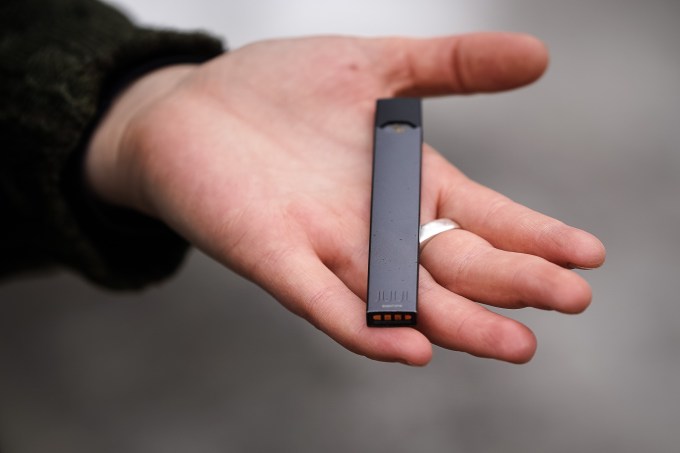
Woman holding Juul e-cig

A woman is holding a Juul e-cigarette, in Montreal. (Photo: Josie_Desmarais/Getty Images)

4. Juul introduces new POS standards to restrict sales to minors

The Retail Access Control Standards program, or RACS for short, automatically locks the point-of-sale system each time a Juul product is scanned until a valid, adult ID is scanned as well.

5. Apple expands access to official repair parts for third-party shops

Until today, if you were a non-authorized repair shop, you couldn’t get official parts. This could result in mixed experiences for customers.

6. Spotify aims to turn podcast fans into podcast creators with ‘Create podcast’ test

The streaming music service is testing a new ‘Create podcast’ feature that shows up above a user’s list of subscribed podcasts. It directs them to download Anchor, the podcast creation app that Spotify acquired in February.

7. How UK VCs are managing the risk of a ‘no deal’ Brexit

The prevailing view among investors about founders is that Brexit means uncertain business as usual. One response: “Resilience is the mother of entrepreneurship!” (Extra Crunch membership required.)

29 Aug 2019

Nike Huaraches get updated for the smartphone age

Ever since they went from Back to the Future fantasy to real world wearable tech, Nike has promised that the Adapt line was more than just a one-off gimmick. Slowly but surely, the company has made its self-lacing motor technology more accessible, most notably though its long awaited Adapt BB sneakers, which arrived earlier this year.

The company announced today that it will be bringing the tech to its Huarache line next month, with the release of the Adapt Huaraches. Introduced in 1991, the line was built around a neoprene bootie derived from water skits. The new shoes feature a similar structure updated for 2019 style and along with smartphone integration.

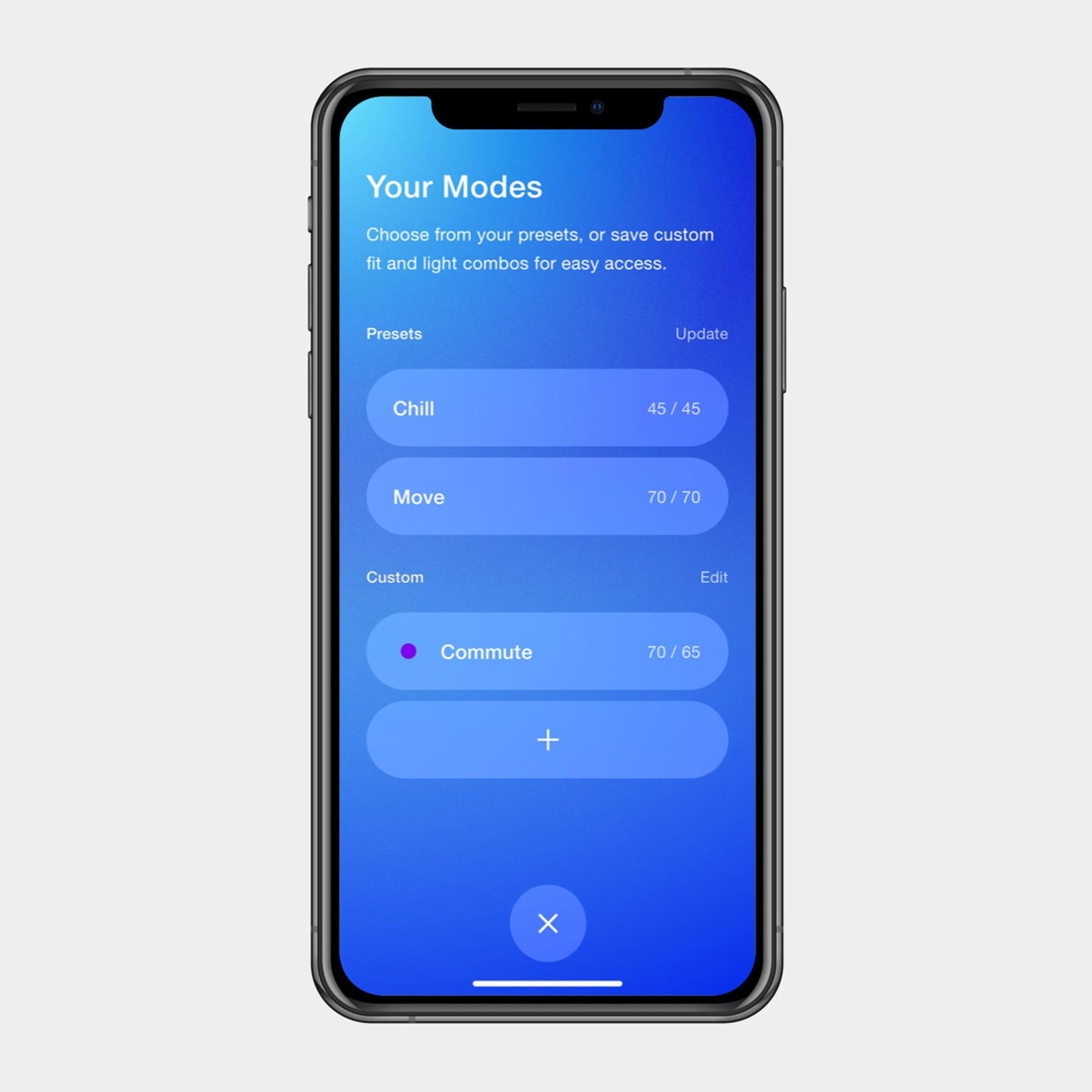
Like the Adapt BB, the new Huaraches feature a pair of LED lights in the sole that change color based on their connection to the device. The mobile app, meanwhile, is used to adjust the lacing fit. FitAdapt features a bunch of different tension levels, based on different situations. The shoes also, notably, can be used with Apple Watch and Siri, meaning you can ask Apple’s assistant to tighten up your laces.

NikeNews AdaptHuarache Interface 2 square 1600

“This makes the Nike Adapt Huarache a double-barreled revolution,” Nike writes in a release. “First, it brings a storied franchise into the future. Second, and most significant, it propels Nike FitAdapt into the fast-paced, quick-shifting world of the everyday athlete — offering the personalized comfort needed in, say, the sprint to catch the bus, before seamlessly shifting fit as you settle into an empty seat with a sigh of quiet relief.”

The shoes are due out September 13. No pricing yet, but it seems likely they’ll be in the same ballpark as the $350 BBs.

29 Aug 2019

48 hours left: Buy your early-bird passes to Disrupt SF 2019

We dedicate this post to all the busy, overworked startuppers — the last-minute mamas, procrastinating papas and everyone in between. We empathize and gently offer this swift boot in the booty. You have only 48 hours left to save a bundle on your pass to Disrupt San Francisco 2019.

Beat the deadline — 11:59 p.m. (PST) on August 30 — and you can save up to $1,300. Get moving and buy your tickets right here, right now.

Don’t miss out on our flagship Disrupt, which takes place October 2-4. It’s the quintessential tech conference for anyone focused on early-stage startups. Join more than 10,000 attendees — including over 1,200 exhibiting startups — for three jam-packed days of programming. We’re talking four different stages with interactive workshops, Q&A sessions and interviews with some of the industry’s top tech titans, founders, investors, movers and shakers. Check out our list of speakers and the Disrupt agenda.

Disrupt is a breeding ground of opportunity, networking and collaboration. It’s a place where ideas are born, and partnerships are made. Don’t take our (admittedly very biased) word for it. Your peers happen to agree. Here’s what Sage Wohns, co-founder of Agolo, an artificial intelligence startup, had to say about his Disrupt experience:

Disrupt helps you connect more with the startup community in very tangible ways. You can meet investors and bigger players in your industry to see if there’s an opportunity to work together. Disrupt is unique in how it brings everyone — all the industry touch points — together under one roof. It’s incredibly valuable.

We haven’t even mentioned the Startup Battlefield pitch competition, the TC Top Picks who will set up camp in Startup Alley or the TC Hackathon!

So much to see, hear and do at Disrupt San Francisco 2019. And yet, so little time left — 48 tiny little hours — to save money on your pass. What are you waiting for? Get your early-bird tickets now before the clock strikes 11:59 p.m. (PST) on August 30.

Is your company interested in sponsoring or exhibiting at Disrupt San Francisco 2019? Contact our sponsorship sales team by filling out this form.

29 Aug 2019

Google to pay security researchers who find Android apps and Chrome extensions misusing user data

Google said it will pay security researchers who find “verifiably and unambiguous evidence” of data abuse using its platforms.

It’s part of the company’s efforts to catch those who misuse user data collected through Android apps or Chrome extensions — and to avoid its own version of a scandal like Cambridge Analytica, which saw millions of Facebook profiles scraped and used to identify undecided voters during the U.S. presidential election in 2016.

Google said anyone who identifies “situations where user data is being used or sold unexpectedly, or repurposed in an illegitimate way without user consent” is eligible for its expanded data abuse bug bounty.

“If data abuse is identified related to an app or Chrome extension, that app or extension will accordingly be removed from Google Play or Google Chrome Web Store,” read a blog post. “In the case of an app developer abusing access to Gmail restricted scopes, their API access will be removed.” The company said abuse of its developer APIs would also fall under the scope of the bug bounty.

Google said it isn’t providing a reward table yet but a single report of data misuse could net $50,000 in bounties.

News of the expanded bounty comes in the wake of the DataSpii scandal, which saw browser extensions scrape and share data from millions of users. These Chrome extensions uploaded web addresses and webpage titles of every site a user visited, exposing sensitive data like tax returns, patient data, and travel itineraries.

Google was forced to step in and suspend the offending Chrome extensions.

Instagram recently expanded its own bug bounty to include misused user data following a spate of data incidents,