Year: 2019

28 Aug 2019

Grab promises to invest $500 million into Vietnam

Ride-hailing company Grab is going to focus some of its efforts on Vietnam with a $500 million investment over the next five years to grow its activities in the country.

While Grab started as a ride-hailing company, it is now much more than that. The company has become a “super app” that you can open to order a ride, order food from restaurants, make payments, get insurance products, loans and much more. It is mostly active in Southeast Asia.

The company recently announced that it would use some of the $7 billion that it has raised to date to bet on Indonesia. Grab plans to invest $2 billion in Indonesia to modernize the country’s transportation infrastructure. The Indonesian government is supporting the move, and Grab is using this opportunity to capture market share.

With today’s move, Grab is essentially doing the same thing at a smaller scale in Vietnam. In particular, Grab is once again partnering with government officials. It has announced a “Tech for Good” roadmap in the country that should foster Vietnam’s economic development at large.

Grab plans to provide work opportunities in 63 cities in order to fight unemployment rate. The company is looking for drivers, delivery persons and merchants. They will be able to access credit and insurance products. Of course, this plan will only work if there are enough Grab customers in those cities over the long term.

The company plans to invest in local startups through GrabVentures. Grab will also launch programs to improves digital and financial literacy. Finally, Grab plans to share data with local governments in order to tackle traffic congestion and pollution.

When it comes to metrics, Grab is already quite big in Vietnam. For instance, the company is currently handling 300,000 food deliveries per day through GrabFood. It represents a 400 percent increase in gross merchandise volume during the first half of 2019. Grab drivers have generated close to $1 billion in revenue over the years.

28 Aug 2019

Zhiyun’s Smooth-Q2 aims to be the most portable quality smartphone gimbal available

Zhiyun has been steadily rolling out new gimbals for smartphones and dedicated cameras for a few years now, and the company’s quality and feature set has improved dramatically over time. Now, it’s launching the Zhiyun Smooth-Q2 smartphone gimbal on Kickstarter, with the aim of delivering a “truly pocket-size” gimbal that has all the bells and whistles you could ever want or need.

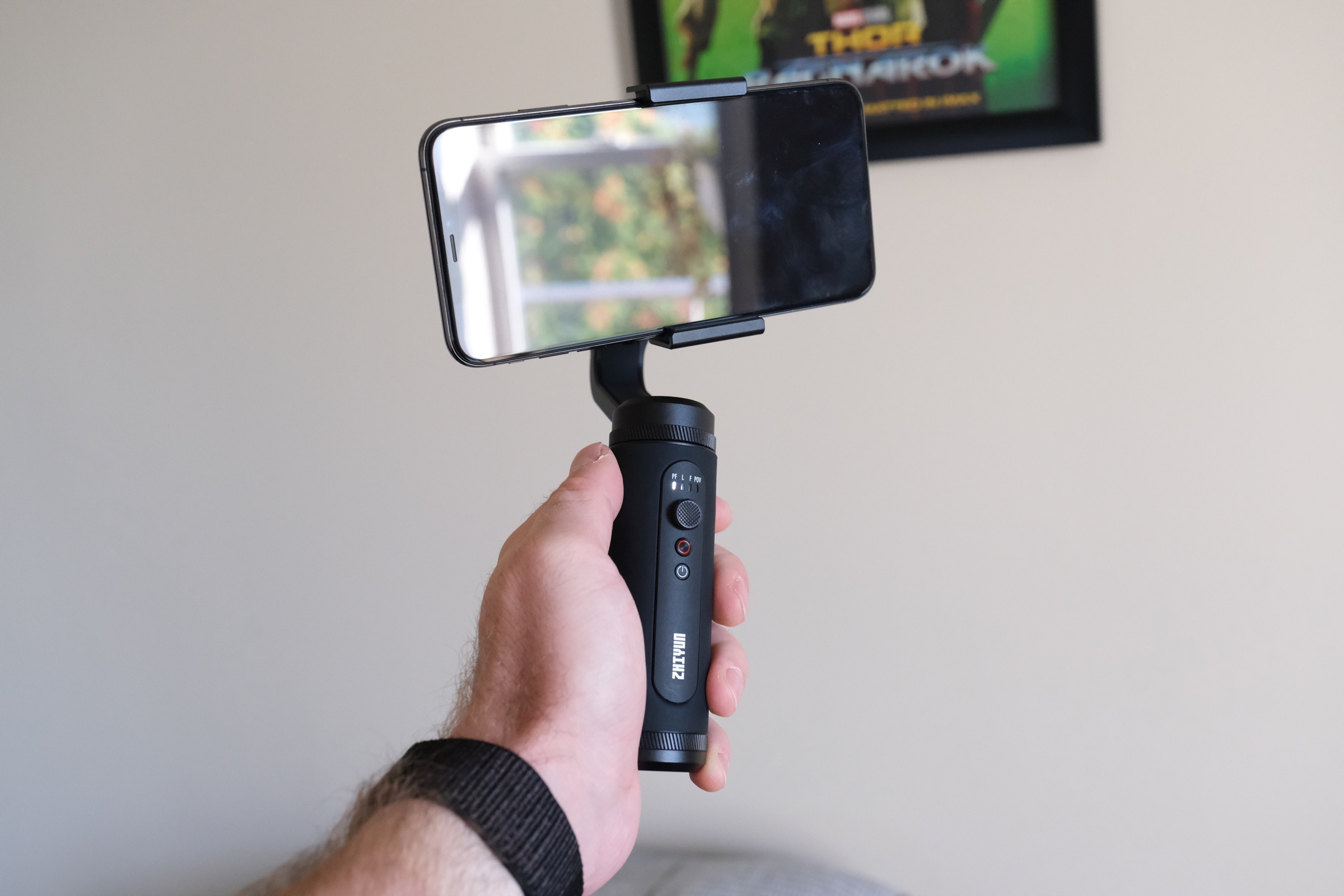
The Smooth-Q2 is indeed a portable powerhouse – the company sent me a pre-production unit to test, and though it’s not the final shipping hardware, it already works and feels like a polished, quality device. The first thing you’ll notice right away about the Smooth-Q2 is its size – it can indeed slip inside a coat or pant pocket, though you’ll need a fairly deep one to make that work. Even if you don’t necessarily have a compatible pocket, it’s hard to beat the Smooth-Q2 for sheer portability, and that’s bound to save you some packing space when you’re getting ready for your next trip.

Smooth Q2 1

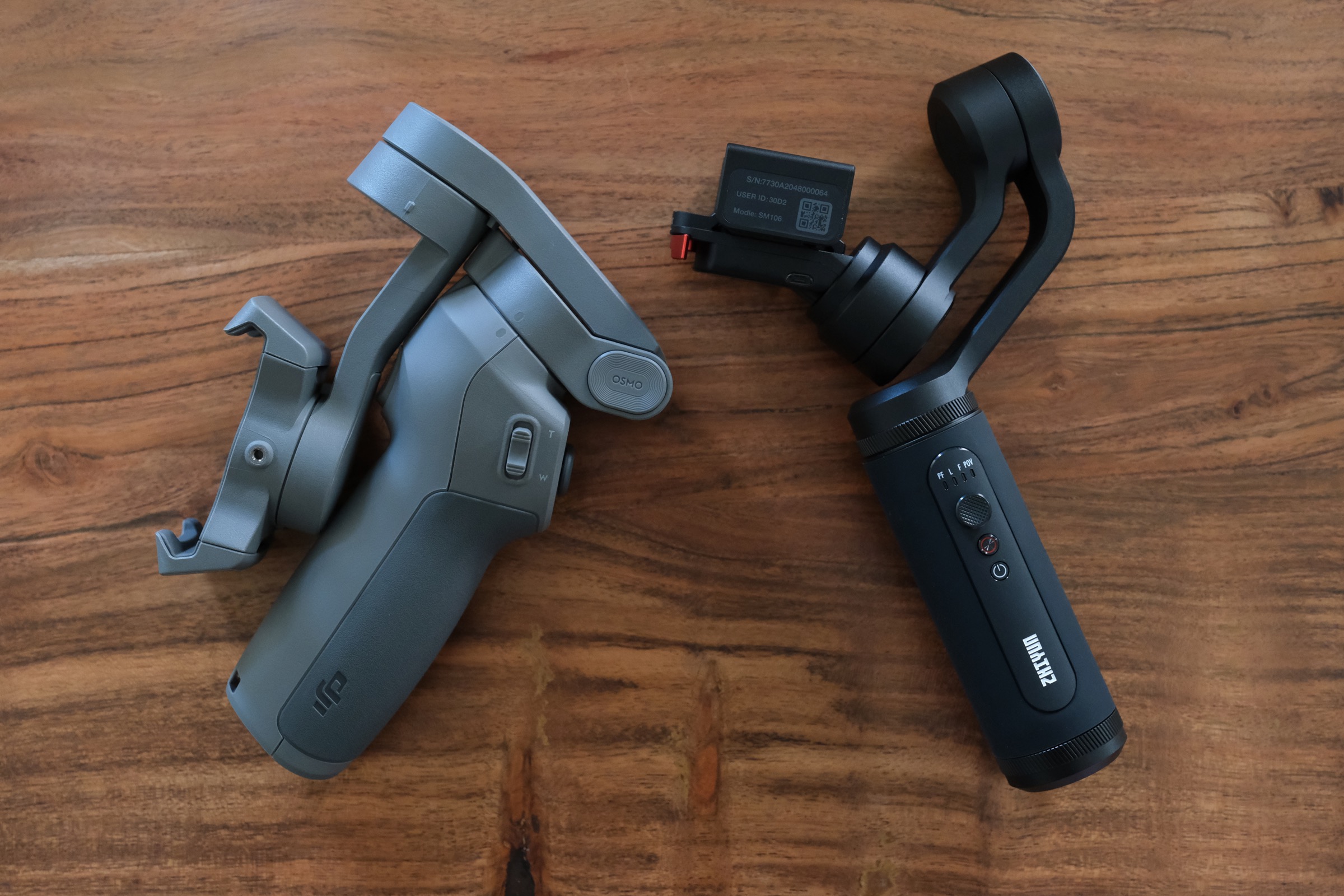
There’s another recently released small-size smartphone gimbal on the market – the DJI Osmo Mobile 3. That has a clever method of folding down for easier packing, but the Smooth-Q2’s design, while similar in overall footprint, means it’s much easier to put in your actual pocket (or pack in a bag’s side pocket) than is the DJI version. And while both are incredibly easy to balance even if you’re a gimbal novice, I found the Zhiyun was actually the simpler of the two.

The Zhiyun Smooth-Q2 also feels more solidly constructed, though its simpler controls (it doesn’t have a trigger around or a zoom lever) may leave some creators wanting. There are some other advantages here, too, however – a quick release spring-loaded clip means you can detach your smartphone quickly for other uses without unbalancing the gimbal, and go right back to shooting when you’re done. Plus, you can connect via Bluetooth and control your smartphone’s native camera app directly, instead of relying on their ZP Play app – which you can still use for features like object tracking.

The Smooth-Q2 offers 16-hours of battery life, so you should easily make it through a day without requiring power, and it can do time lapses, with or without programmed motion, a vortex mode for capturing crazy rotational footage, and an aluminum body that should be able to withstand less-than careful stowage in your bag.

In terms of quality, the Smooth-Q2 really delivers in early testing with my iPhone XS Max, and I’ve included two quick sample clips so you can see for yourself. These are shot in the gimbal’s basic PF mode, in which the camera pans as you turn the gimbal side to side.

Zhiyun’s crowdfunding these but the company’s history and reputation mean that you can count on them to deliver. The entry-level price is set at $109 U.S. for backers, which is a $30 discount off the planned retail cost, and they should ship to backers in October according to the company.

Smooth Q2 2

28 Aug 2019

ReadMe scores $9M Series A to help firms customize API docs

Software APIs help different tools communicate with one another, let developers access essential services without having to code it themselves, and are critical components for driving a platform-driven strategy. Yet they require solid documentation to help make the best use of them. ReadMe, a startup that helps companies customize their API documentation, announced a $9 million Series A today led by Accel with help from Y Combinator. The company was part of the Y Combinator Winter 2015 cohort.

Prior to today’s funding announcement, the company had taken just a $1.2 million Seed round in 2014. Today, it reports 3000 paying customers and that it’s been profitable for the last several years, an unusual position for a startup. In spite of this success, co-founder and CEO Gregory Koberger said as the company has taken on larger customers, they have more sophisticated requirements, and that prompted them to take this round of funding.

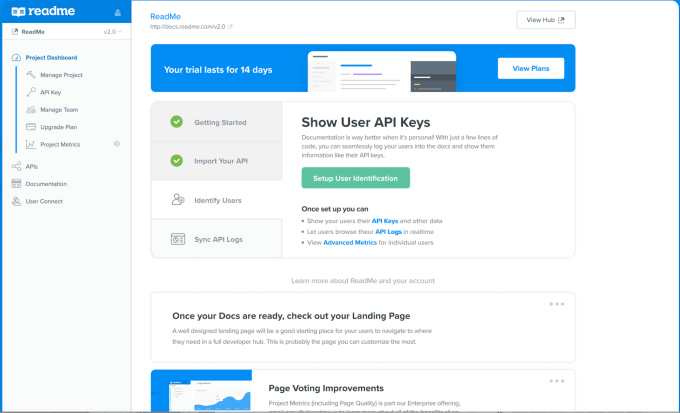
In addition, it has expanded the platform to use a company’s API logs to help create more dynamic documentation and improve customer support kinds of scenarios. But by taking on data from other companies, it needs to make sure the data is secure, and today’s funding will help in that regard.

“We’re going to still build the company traditionally by hiring more engineers, more support people, more designers, the obvious stuff, but the main impetus for doing this was that we started working with bigger companies with more secure data. So a lot of the money is going to help make sure that we handle that right,” Koberger explained.

Screenshot 2019 08 28 10.55.38

Image: ReadMe

He says this ability to make use of the API logs has opened up all kinds of possibilities for the company as the data provides a valuable window into how people use the APIs. “It’s amazing how much you get by just actually seeing what the server sees. When people are having problems with an API, they can debug it themselves because they can actually see the problems, The support team can see it as well,” Koberger said.

Accel’s Dan Levine, whose firm is leading the investment believes that having good documentation is the difference between making and breaking an API. “APIs don’t just create technical integration, they create ecosystems around core services and underpin corporate partnerships that generate billions of dollars. ReadMe is as much a strategy as it is a service for businesses. Providing clean, interactive, data-driven API documentation to make developers love working with you can be the difference between 100 partnerships or 1000 partnerships,” Levine said.

ReadMe was founded in 2014. It has 22 employees in their San Francisco offices, a number that should increase with today’s funding.

28 Aug 2019

Apple is turning Siri audio clip review off by default and bringing it in house

The top line news is that Apple is making changes to the way that Siri audio review, or ‘grading’ works across all of its devices. First, it is making audio review an explicitly opt-in process in an upcoming software update. This will be applicable for every current and future user of Siri.

Second, only Apple employees, not contractors, will review any of this opt-in audio in an effort to bring any process that uses private data closer to the company’s core processes.

Apple has released a blog post outlining some Siri privacy details that may not have been common knowledge as they were previously described in security white papers.

Apple apologizes for the issue.

“As a result of our review, we realize we haven’t been fully living up to our high ideals, and for that we apologize. As we previously announced, we halted the Siri grading program. We plan to resume later this fall when software updates are released to our users — but only after making the following changes…”

It then outlines three changes being made to the way Siri grading works.

  • First, by default, we will no longer retain audio recordings of Siri interactions. We will continue to use computer-generated transcripts to help Siri improve.
  • Second, users will be able to opt in to help Siri improve by learning from the audio samples of their requests. We hope that many people will choose to help Siri get better, knowing that Apple respects their data and has strong privacy controls in place. Those who choose to participate will be able to opt out at any time.
  • Third, when customers opt in, only Apple employees will be allowed to listen to audio samples of the Siri interactions. Our team will work to delete any recording which is determined to be an inadvertent trigger of Siri.

Apple is not implementing any of these changes, nor is it lifting the suspension on the Siri grading process that it halted until the software update becomes available for its operating systems that will allow users to opt in. Once people update to the new versions of its OS, they will have the chance to say yes to the grading process that uses audio recordings to help verify requests that users make of Siri. This effectively means that every user of Siri will be opted out of this process once the update goes live and is installed.

Apple says that it will continue using anonymized computer generated written transcripts of your request to feed its machine learning engines with data, in a fashion similar to other voice assistants. These transcripts may be subject to Apple employee review.

Amazon and Google had previous revelations that their assistants were being helped along by human review of audio, and they have begun putting opt-ins in place as well.

Apple is making changes to the grading process itself as well, noting that, for example, “the names of the devices and rooms you setup in the Home app will only be accessible by the reviewer if the request being graded involves controlling devices in the home.”

A story in The Guardian in early August outlined how Siri audio samples were sent to contractors Apple had hired to evaluate the quality of responses and transcription that Siri produced for its machine learning engines to work on. The practice is not unprecedented, but it certainly was not made as clear as it should have been in Apple’s privacy policies that humans were involved in the process. There was also the matter that contractors, rather than employees, were being used to evaluate these samples. One contractor described as containing sensitive and private information that, in some cases, may have been able to be tied to a user, even with Apple’s anonymizing processes in place.

In response, Apple halted the grading process worldwide while it reviewed the process. This post and updates to its process are the result of that review.

Apple says that around 0.2% of all Siri requests got this audio treatment in the first place, but given that there are 15B requests per month, the quick maths tell us that though it is statistically insignificant, the raw numbers could be quite high.

The move away from contractors was signaled by Apple releasing employees in Europe, as noted by Alex Hearn earlier on Wednesday.

Apple is also publishing an FAQ on how Siri’s privacy controls fit in with its grading process, you can read that in full here.

The blog post from Apple and the FAQ provide some details to consumers about how Apple handles the grading process, how it is minimizing the data given to data reviewers in the grading process and how Siri privacy is preserved.

28 Aug 2019

Eero updates subscription plans

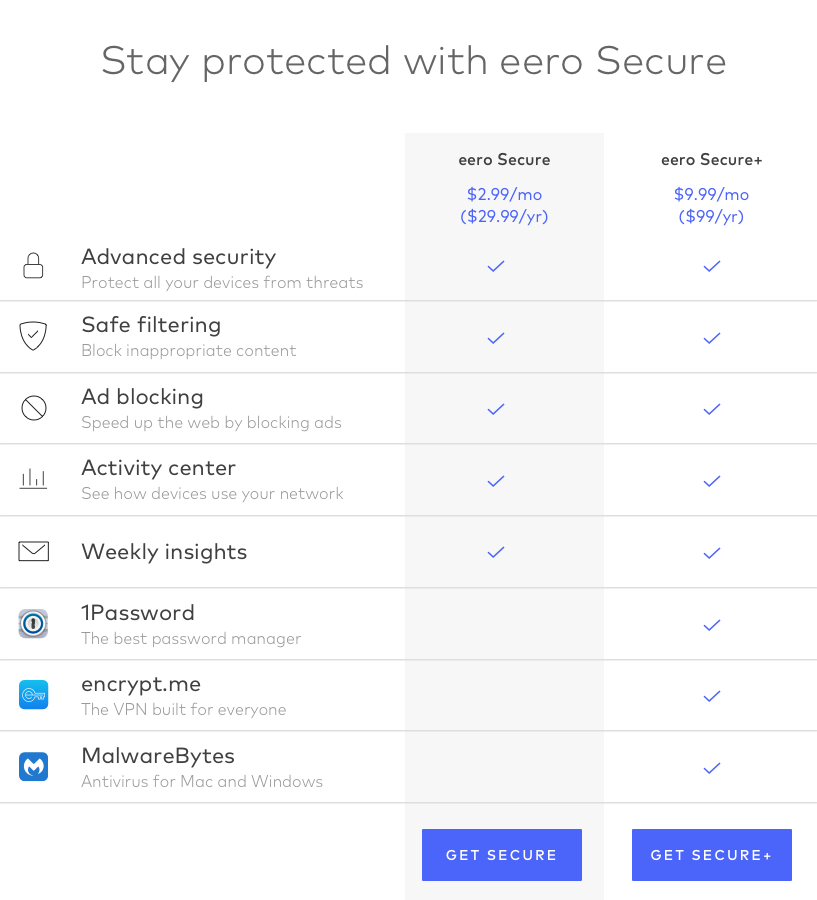
Router maker Eero is expanding its focus on subscriptions with a new two-tier system. Eero already had a $10 per month subscription called Eero Plus. It is now called Eero Secure+. The company is adding a cheaper plan with less features for $3 per month.

It seems a bit counterintuitive that Eero is selling software subscriptions. The company is mostly known for its tiny mesh routers that you can put in every room of your house.

Eero originally introduced a subscription back in 2017. It was designed as a sort of Amazon Prime of internet services focused on security. It included family plans to password manager 1Password, VPN service Encrypt.me and antivirus MalwareBytes.

Eero Secure+ is more or less a new name for Eero Plus. It costs $9.99 per month or $99 per year and includes the same services, as well as a few software additions, such as parental controls, filtering of dangerous websites at the network level as well as ad blocking.

Essentially, Eero intercepts DNS queries and blocks the ones to suspicious content — it could be a phishing site, an adult site or an ad network. The company replaces your default DNS with ZScaler’s DNS for that feature.

If you don’t want 1Password, Encrypt.me or MalwareBytes, you can now subscripte to Eero Secure to get those DNS-powered features. It costs $2.99 per month of $29.99 per year.

eeroSecure plans

As a reminder, Amazon acquired Eero in February 2019. Eero promised that its privacy policy wouldn’t change after the acquisition.

Still, paying a subscription for DNS filtering is a bit odd. Some public DNS services, such as Quad9, block access to malicious websites.

And if you’re looking for a fun weekend project, you can buy a cheap Raspberry Pi and play with Pi-Hole, an open source project that basically does everything Eero Secure does. You can also build your own VPN service as you should never trust VPN services. They don’t make you more secure and they can basically see all your network traffic.

28 Aug 2019

Sony’s new a6600 flagship APS-C camera adds stabilization and over 2x better battery life

Sony announced two new APS-C mirrorless interchangeable lens cameras at a special event in New York today, and the announcements are big news for anyone who’s looking for a small, capable camera that can handle everything from sport shooting to vlogging. The new a6600 flagship takes everything that is great about the a6400 it introduced earlier this year, and adds a big battery boost, in-body stabilization, a headphone jack and real-time eye autofocus for video.

The a6600 otherwise looks nearly identical to the a6400 on paper – it has the same 24.2 megapixel APS-C sensor, ISO sensitivity that expands all the way up to 102400, burst shooting at up to 11 fps, 3k 40p internal HDR recording and the same quality viewfinder. None of that is in any way a criticism, however – these were all excellent specs when they debuted on the a6400 earlier this year, and they’ll serve a6600 owners just as well.

What’s been added should be plenty exciting, however, since it brings the in-body image stabilization (IBIS) that was present on the a6500 but did not make it into the a6400, which was more capable in many other ways. This is a clutch feature for video creators, and that’s a key market for the a6XXX line for Sony, especially with its class-leading reputation for autofocus and high-quality 4K video capture. Ditto the addition of continuous real-time eye AF during movie recording.

Finally, that bigger Z battery (which debuted on the company’s full-frame mirrorless camera line and brought big battery life gains there) will be a boon to video and still shooters alike. The existing battery that powers the a6400, along with the rest of the line, is rated at 360 shots, but that’s very low compared to the a7 III’s 610 shots, and Sony is saying you’ll get over 2x the shooting time with the Z battery in the a6600 compared to its predecessor.

The a6600 retails for $1,400 U.S. for the body alone, and is available in a kit with the 18-135 lens from Sony for $1,800. It’ll be on sale in November.

Alpha Universe alpha 6100 ilce6100 selp1650 right black

Sony also unveiled a new entry-level option in its a6XXX line, the a6100. You get a lot of the benefits of the more expensive cameras here, including the same AF system (albeit without real-time Eye AF for movies, which is only on the a6600), and 4K 30p internal recording. You don’t get S-Log or HLG recording options, or HDR, however, and there’s no in-body stabilization. You’re also stuck with the older battery, lower maximum ISO sensitive (51200 in expanded mode) and a lower resolution electronic viewfinder. Still, all told it’s a good bargain – especially since you get Sony’s outstanding real-time object tracking autofocus feature.

The a6100 retails for $750 U.S. for the body alone, and is available in a kit with the 16-50 lens from Sony for $850, or with both the 16-50 and the 55-210 for $1,100. It’ll be on sale in October.

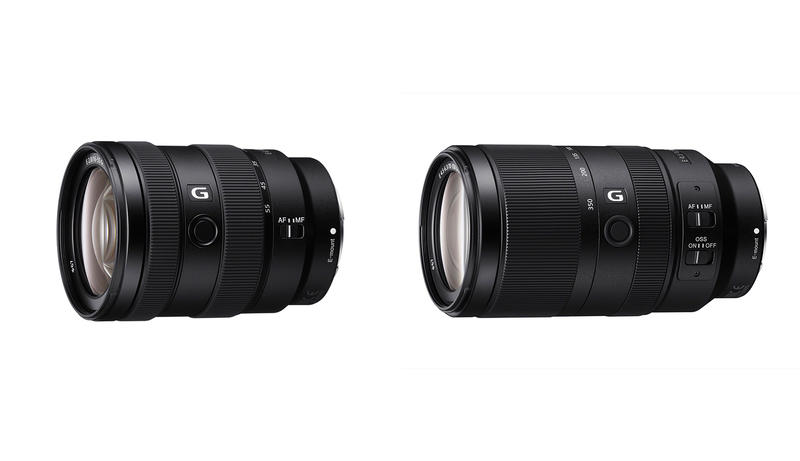
Alpha Universse 16 55mm G 70 350mm G.91159cb549bb213dddcb831882634037.ryg3hbESB

Finally, there are two new lenses which will be hugely beneficial to Sony APS-C camera shooters looking for pro-level options. The E-mount 16-55 F2.8 G gives you a focal range on par with the best glass available on other camera systems, and the E 70-350mm f4.5-6.3 G OSS gives you a really long reach zoom (105-535mm equivalent on a 35mm) with built-in stabilization in a relatively small package. The new 18-55mm lens sells for $1,400 and will be sold in October, and the 70-350mm goes on sale in November for $1,000.


28 Aug 2019

Facebook will require political advertisers provide further credentials, or have their ads paused

Ahead of the 2020 elections, Facebook today announced it’s tightening requirements for groups buying political ads on the social network. The company last year began requiring advertisers get authorized to run ads about social issues, elections, or politics, which involves advertisers providing identification to confirm who they are and where they’re located — including a U.S. street address, phone number, business email and website matching the email. Starting in mid-September, Facebook says advertisers will now need to submit more information about their organization in order to run political ads.

Failure to submit this information will see their ads paused, the company says.

There are five options for submitting more information, three of which will confirm the advertiser is registered in some way with the U.S. government. This includes submitting a tax-registered organization identification number (EIN); a government website matching an email ending in .gov or .mil; or a Federal Election Commission (FEC) identification number.

By submitting this information, Facebook will label the advertiser a “Confirmed Organization” in its ad archive. The advertiser will also be allowed to use their registered organization name in the ad disclaimers and the “i” icon that appears on the upper-right hand corner of the ad will read “Confirmed Organization.”

For smaller businesses or local politicians who want to run ads about social issues, elections, or politics, they can choose to submit one of two other options instead: an organization name with a verifiable phone number, business email, mail-deliverable address and business website with a domain matching the email; or they can provide no organizational information and use the Page Admin’s legal name on their personal information document.

In either of these two cases, the “i” icon on the ad will read “About this ad” instead of “Confirmed Organization.”

Facebook says this “i” icon is how people will be able to see who is trying to influence them through the ad.

Facebook Ads Info

Posted by Facebook on Tuesday, August 27, 2019

“Now, with one tap, people will not only see information about the ad, but they’ll be able to see the information Facebook confirmed, such as whether an advertiser used an EIN or FEC identification number. This will allow people to confidently gauge the legitimacy of an organization and quickly raise questions or concerns if they find anything out of the ordinary,” the company explained in a blog post announcing the changes.

Despite Facebook’s rule around political ads, the company admitted that there have been several cases where advertisers attempted to put out misleading “Paid for by” disclaimers on their ads.

VICE, for example, demonstrated how easy it was to manipulate the system by placing ads on behalf of VP Mike Pence, DNC Chairman Tom Perez, and the Islamic State, which Facebook approved. Business Insider also ran fake ads pretending to be Cambridge Analytica, which Facebook also approved.

More recently, Facebook banned conservative news outlet The Epoch Times from running ads on its platform because of ad policy violations. The organization had hidden under page names like “Honest Paper” and “Pure American Journalism,” to bypass Facebook’s ad transparency system in order to run some $2 million worth of ads promoting the president and spreading conspiracy theories about his opponents.

In addition to the changes around the advertiser requirements, Facebook is updating its social issues list in the U.S. to include 10 categories, instead of 20 distinct subjects. This doesn’t represent a narrowing focus, but rather makes the categories themselves broader to encompass more topics. For example, the “Civil and Social Rights” category would include sub-topics like freedom of religion, LGBTQ rights, and women’s rights.

The new categories were based on the issue lists in countries who recently held elections, Facebook says.

Facebook also will no longer require some environmentally-focused ads to submit these additional requirements, based on user feedback. This includes ads that “discuss, debate or advocate for environmental issues,” those that encourage recycling, or those highlighting sustainable products.

In the months ahead, Facebook says it will be updating its Ad Library to make it easier to track and compare U.S. presidential candidate spending, and it will expand its policy to prohibit ads that discourage people from voting.

It will turn its attention to Pages, too, by requiring national candidates or elected officials to go through Page Publishing Authorization, to verify their Pages are using real accounts and are based the U.S. Facebook will then begin exposing more information about the Page, including the business or organization behind it.

“We know we can’t tackle these challenges alone. That’s why we’re calling for sensible regulation and working directly with governments, watchdogs and regulators,” the company wrote in the blog post, referring to Mark Zuckerberg’s pro-regulation op-ed, which called for rules on Facebook’s terms. “While our efforts to protect elections are ongoing and won’t be perfect, they will make it harder for advertisers to obscure who is behind ads and will provide greater transparency for people.”


28 Aug 2019

Hackers to stress-test Facebook Portal at hacking contest

Hackers will soon be able to stress-test the Facebook Portal at the annual Pwn2Own hacking contest, following the introduction of the social media giant’s debut hardware device last year.

Pwn2Own is one of the largest hacking contests in the world, where security researchers descend to find and demonstrate their exploits for vulnerabilities in a range of consumer electronics and technologies, including appliances and automobiles.

It’s not unusual for companies to allow hackers put their products through their paces. Tesla earlier this year entered its new Model 3 sedan into the contest. A pair of researchers later scooped up $375,000 — and the car they hacked — for finding a severe memory randomization bug in the web browser of the car’s infotainment system.

Hackers able to remotely inject and run code on the Facebook Portal can receive up to $60,000, while a non-invasive physical attack or a privilege escalation bug can net $40,000.

Introducing the Facebook Portal is part of a push by Trend Micro’s Zero Day Initiative, which runs the contest, to expand the range of home automation devices available to researchers in attendance. Pwn2Own said researchers will also get a chance to try to hack an Amazon Echo Show 5, a Google Nest Hub Max, an Amazon Cloud Cam, and a Nest Cam IQ Indoor.

Facebook said it would also allow hackers to find flaws in the Oculus Quest virtual reality kit.

Pwn2Own Tokyo, set to be held on November 6-7, is expected to dish out more than $750,000 in cash and prizes.

28 Aug 2019

Insta360’s tiny new GO stabilized camera could be game-changer for social video

Insta360 has quickly established itself as the leader in 360-degree video capture, at least for the consumer market, and its new GO stabilized camera builds on that legacy and extends some of the tech it’s built into the category of more traditional, non-360-degree footage.

The $199.99 GO is truly tiny – it weighs under an ounce, and measures less than two inches tall, by under an inch wide. It’s tiny, and that’s ideal for the use case that Insta360 has in mind for this device – wearing it or mounting it virtually anywhere for capturing quick clips. The GO’s all about quick action grabs, with a 30-second cap on clip recording, which you trigger by pressing the lone control button on the device (a second press stops the clip, unless you let it run the entire 30 seconds).

Sport Running Easy Clip

GO’s design is clearly meant for social sharing, but its secret weapon vs. just using your smartphone or making use of other devices is that it packs Insta360’s FlowState stabilization on board. This is the company’s digital video stabilization feature, which works to great effect in its Insta360 One X 360-degree camera for smoothing out footage so that even in intense action sequences it’s not nausea-inducing.

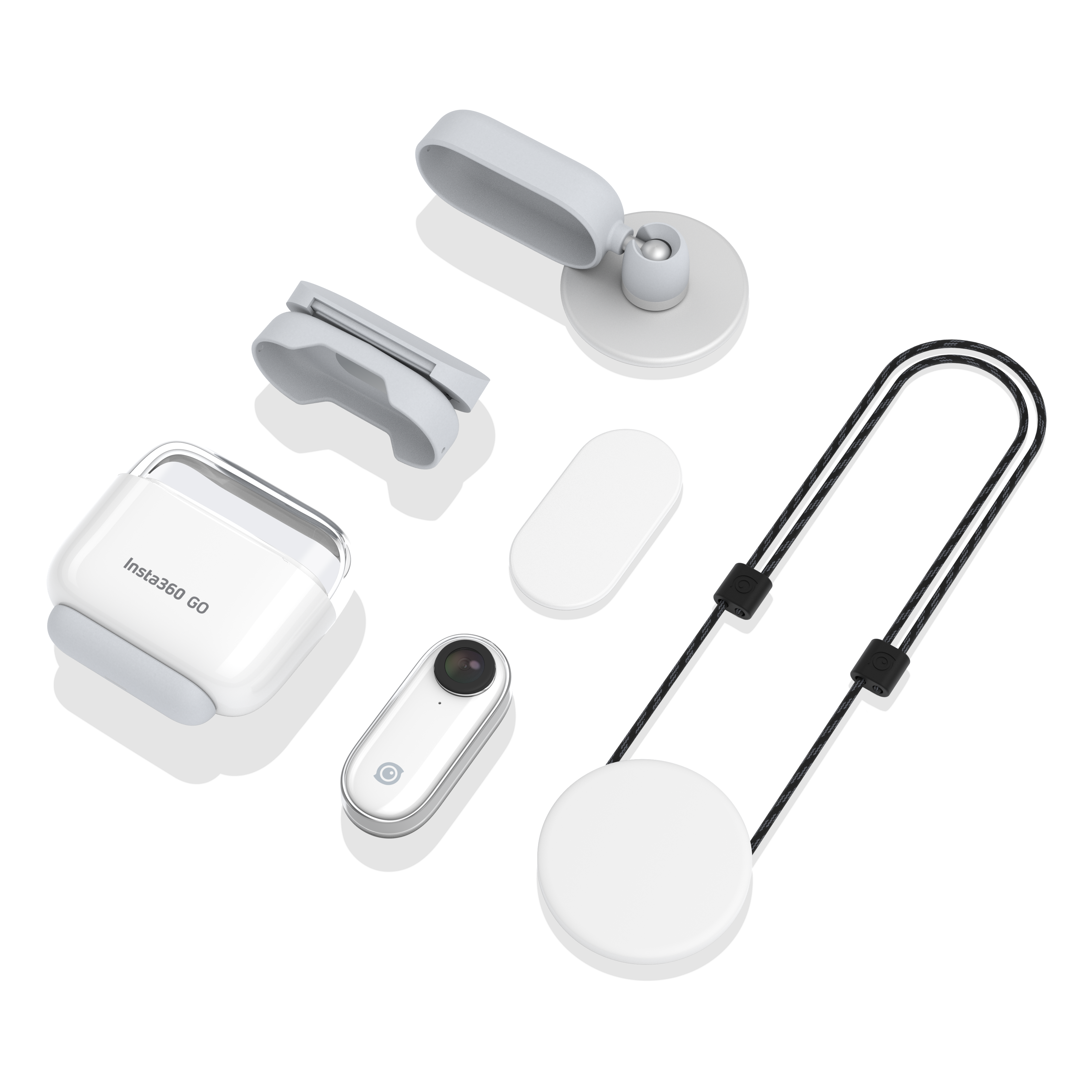
GO also features a magnetic body, which is designed to work in tandem with a variety of accessories, including backs for securing them unobtrusively to clothing, an underwater housing (the camera itself is IPX4 rated, which means essentially it’s protected from splashes but not meant to be submerged), and mounts for sticking to things like surf boards or vehicles. It can capture clips at resolution of up to 2720×2720, but it crops the image to 1080p (at 25 fps) for export as a result of the stabilization tech.

Shooting modes include a standard 25fps as mentioned, as well as a 30fps time-lapse which can record up to 8 hours (which will output a 9 second video) and a hyper laps mode that can shoot for up to 30 minutes to generate a 5 minute video. It can capture photos, too, exporting square images at 2560 x 2560 resolution, or a number of landscape options reading down from there.

In addition to simplifying capture, the Insta360 GO also hopes to make editing and sharing much easier, too, with its FlashCut auto editing feature. This software tool uses “AI” according to the company, in order to find the best clips (you can even sort by category, ie. ‘food’) you capture throughout the day and then stitch them together in a final edit. You can also fully tweak the edits it provides if you’d rather be a more involved creator.

The biggest limitation, based on just reading the specs and not having had a chance to test this out yet, is that the battery life is rated at around 200 clips per day, based on an average of 20 seconds per clip. But that’s including recharging the camera when not in use using the included Charge Case, which has 2.5 extra charges using its built-in battery. That and the recording limitation could prove challenging to anyone looking to create a lot of content with this camera, but on the other hand, it’s very easy to ensure you have it with you at all times – even when your smartphone isn’t nearby.

Collection

At $199.99, the Insta360 GO isn’t exactly cheap – but it does include the Charge Case, a pendant with a magnet you can use to wear it around you neck, a stand, a clip for clothing and a sticky mount for putting it on most smooth surfaces. You can also laser-engrave it if you purchase it directly via Insta360’s website. But after some missed starts for this category like the Google Clips camera, and earlier entrants like the Memoto and Narrative Clip lifelogging cameras, I’ll be curious to see if Insta360’s additional features help this gadget define a category.

28 Aug 2019

Lego is piloting audio and braille building instructions

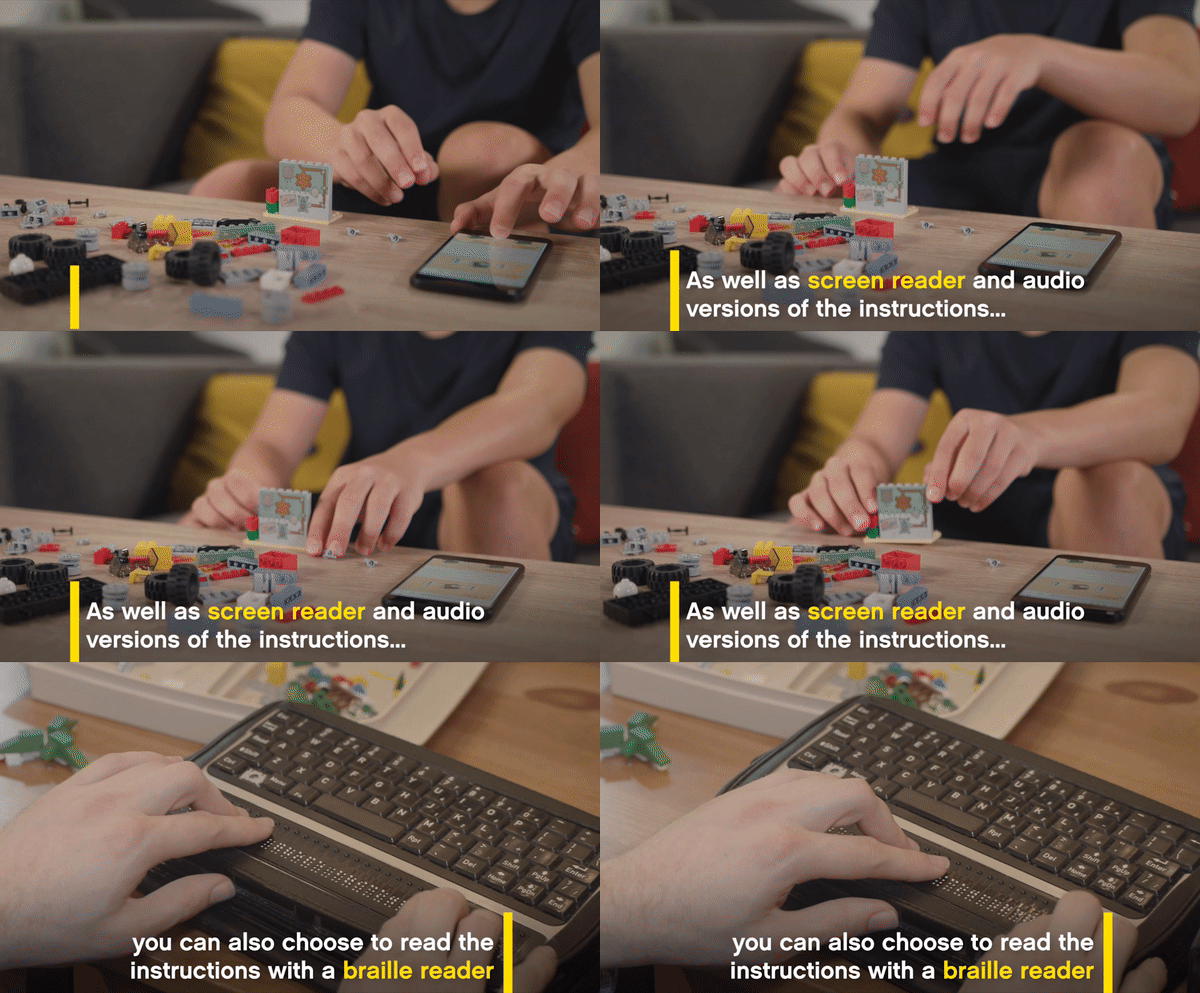
Here’s a nice thing from some companies this morning — and it’s got a compelling back story, to boot. Lego this morning announced a new accessibility initiate that will make building instructions for select kits available as braille or text for voice readers, in order to reach builders with blindness and vision impairment.

The service is currently available for free through the Lego Audio Instructions site. It’s still in pilot mode, which mostly means it’s currently limited to four kits, with one each from Classic Lego, Lego City, Lego Friends and Lego Movie 2. The company is currently collecting feedback from the experiences with plans to build out its offerings at some point in the first half of next year.

ezgif 5 89f5aac6f44e

The idea comes from Matthew Shifrin, a 22-year-old blind Lego enthusiast. He approached the company with the idea after he and a friend worked together to create instructions for kits that he could read.

“I had a friend, Lilya, who would write down all the building steps for me so that I could upload them into a system that allowed me to read the building steps on a Braille reader through my fingers,” he says in a release. “She learned Braille to engage with me and support my LEGO passion, and then spent countless hours translating LEGO instructions into Braille.”

[gallery ids="1874890,1874889,1874888,1874887,1874886,1874885"]

MIT’s Media Lab helped create a software that uses AI to translate visual LXFML data (LEGO Exchange Format Mel Script) instructions into text. The result of those instructions are currently being hosted on the Lego site.