Year: 2019

27 Aug 2019

VoiceOps raises $9M to help companies coach their call center reps

At a time when the industry appears to bet that AI will replace most human jobs, starting with the tens of millions currently residing in call centers, one startup is working to use the same technology to empower the jobs it is pegged to displace.

VoiceOps, a San Francisco-based startup, today announced it has raised $9 million in a Series A financing round led by Bain Capital Ventures. Existing investors Accel and Y Combinator also participated in the round. As part of the new fundraise, Ajay Agarwal of Bain Capital Ventures is joining VoiceOps’ board of directors, the startup said.

VoiceOps works with companies to help them coach and train their call center representatives. The idea is simple: Sales people are often not putting their best foot forward when they make the pitches. There is some oversight in what they should be presenting in their calls and what they end up pitching.

That’s where VoiceOps comes in. It claims to have built one of the world’s biggest datasets of sales behavior. It works with companies to understand what they are trying to sell and how they wish to go about it, Ethan Barhydt, co-founder and CEO of VoiceOps told TechCrunch in an interview.

voiceops 1 1

Co-founders of VoiceOps Ethan Barhydt, left, and Nate Becker pose for a picture. Their third co-founder, Daria Evdokimova, who previously serves as the startup’s CEO, is no longer involved in day to day operations.

The startup then uses an AI-powered system to analyze and transcribe the sales calls and evaluates how often sales people adhered to the guideline their managers had set.

After the analysis, VoiceOps shares insight with the client. This helps the company quickly understand exactly what gaps they need to address. Call centers make thousands of calls each day. It is hard to track exactly what improvements or changes someone needs, Barhydt explained.

Barhydt likened VoiceOps’s approach to how self driving car companies are improving their AI models. “Self driving car companies take millions of images, where they have people manually label the cars in the stop signs, in the street lights, on the road, and then they feed that data into these models, and train the models to be able to do this accurately at scale. So we are doing the same thing. But instead of doing it on images, we’re doing it on conversation. The underlying technical problem that we have to solve is how do you take these complex unstructured conversations and turn it into structured data,” he said.

VoiceOps declined to share the number of clients it has, but said its customers today run some of the largest call centers in insurance, real estate, travel, and insurance businesses, making as many as 50,000 calls each in a day. Additionally, the startup said its clients are able to see their conversion rate improve between 5% to 20% in the first 60 days itself, generating tens of million of additional revenue.

In the last 12 months, Barhydt said VoiceOps’ solutions have helped several of its customers hit historic highs. “Early customers who spent $50k with us last year have 5X’d their spend to $250k after seeing stellar results,” he said. Education group Penn Foster, one of VoiceOps’ clients, is seeing the best rate of conversation in its more than 100 years of existence, he said.

In an interview with TechCrunch, Bain Capital Ventures’ Agarwal said the startup will use the fresh capital to scale its product offerings, hire more engineers, and attract more customers. “This is a company that we we think will grow at extraordinary rates — four to five times kind of growth. The kind of momentum that they have demonstrated in the past six months, we want to see it continue and grow that over the course of the next year,” he said.

VoiceOps, which currently serves customers in the U.S., intends to focus on expanding its footprint within the nation. “There is a conception that all the call center jobs are going outside of the U.S., but if you look at the data, call center jobs are growing about five percent year-over-year,” VoiceOps’ Barhydt said.

According to official U.S. government figures, there are about 3.5 million Americans who work in this space today. VoiceOps wants to help them. “When reps receive effective coaching, their calls improve, they hit quota more often, and they make more money,” Barhydt said.

27 Aug 2019

The BBC is developing a voice assistant, code named ‘Beeb’

The BBC — aka, the British Broadcasting Corporation, aka the Beeb, aka Auntie — is getting into the voice assistant game.

The Guardian reports the plan to launch an Alexa rival, which has been given the working title ‘Beeb’, and will apparently be light on features given the Corp’s relatively slender developer resources vs major global tech giants.

The BBC’s own news site says the digital voice assistant will launch next year without any proprietary hardware to house it. Instead the corporation is designing the software to work on “all smart speakers, TVs and mobiles”.

Why is a publicly funded broadcaster ploughing money into developing an AI when the market is replete with commercial offerings — from Amazon’s Alexa to Google’s Assistant, Apple’s Siri and Samsung’s Bixby to name a few? The intent is to “experiment with new programmes, features and experiences without someone else’s permission to build it in a certain way”, a BBC spokesperson told BBC news.

The corporation is apparently asking its own staff to contribute voice data to help train the AI to understand the country’s smorgasbord of regional accents.

“Much like we did with BBC iPlayer, we want to make sure everyone can benefit from this new technology, and bring people exciting new content, programmes and services — in a trusted, easy-to-use way,” the spokesperson added. “This marks another step in ensuring public service values can be protected in a voice-enabled future.”

While at first glance the move looks reactionary and defensive, set against the years of dev already ploughed into cutting edge commercial voice AIs, the BBC has something those tech giant rivals lack: Not just regional British accents on tap — but easy access to a massive news and entertainment archive to draw on to design voice assistants that could serve up beloved personalities as a service.

Imagine being able to summon the voice of Tom Baker, aka Doctor Who, to tell you what the (cosmic) weather’s like — or have the Dad’s Army cast of characters chip in to read out your to-do list. Or get a summary of the last episode of The Archers from a familiar Ambridge resident.

Or what about being able to instruct ‘Beeb’ to play some suitably soothing or dramatic sound effects to entertain your kids?

On one level a voice AI is just a novel delivery mechanism. The BBC looks to have spotted that — and certainly does not lack for rich audio content that could be repackaged to reach its audience on verbal command and extend its power to entertain and delight.

When it comes to rich content, the same cannot be said of the tech giants who have pioneered voice AIs.

There have been some attempts to force humor (AIs that crack bad jokes) and/or shoehorn in character — largely flat-footed. As well as some ethically dubious attempts to pass off robot voices as real. All of which is to be expected, given they’re tech companies not entertainers. Dev not media is their DNA.

The BBC is coming at the voice assistant concept from the other way round: Viewing it as a modern mouthpiece for piping out more of its programming.

So while Beeb can’t hope to compete at the same technology feature level as Alexa and all the rest, the BBC could nonetheless show the tech giants a trick or two about how to win friends and influence people.

At the very least it should give their robotic voices some much needed creative competition.

It’s just a shame the Beeb didn’t tickle us further by christening its proto AI ‘Auntie’. A crisper two syllable trigger word would be hard to utter…

27 Aug 2019

Yelp will let users personalize their homepage and search results

Yelp announced this morning that it will start allowing users to tailor their search results and homepage based on their personal preferences.

In other words, if you’re vegetarian, or if you’re parent who’s usually looking for kid-friendly restaurants, you won’t have to reenter that information every time you do a search. Instead, you can enter it once and Yelp will prioritize those results moving forward.

“In the history of Yelp, this is the first time two people searching for the same thing from the same context are going to see different, personalized results,” said Head of Consumer Product Akhil Ramesh.

To do this, users select the “Personalize your experience” option, then choose options around dietary restrictions (whether they’re vegetarian, vegan, gluten-free and so on), their lifestyle (whether they’re parents, car owners or pet owners), their accessibility needs (wheelchair access, gender neutral bathrooms), the types of food they prefer and other interests (like bookstores or date nights).

Once you’ve made your selections, those preferences will start affecting the search results you see. The personalization should be obvious because the results will be identified as having “many vegetarian options” or “because you like Chinese food.” The homepage will also start highlighting locations that it thinks you would like.

In some ways, this feels like a long overdue move, particularly when so many other popular apps and websites are already heavily personalized. Shy is Yelp finally adopting this approach now?

For one thing, Ramesh pointed to a growing interest in different diets. For another, he said, “We have years and years of unstructured, expressive, quality content, and this content is representative of a real experience with a business. Over the last few years our machine learning and AI capabilities have grown immensely, and what that’s allowed us to do is build really useful features on top of the high quality content that we have.”

Ramesh emphasized that Yelp will focus on using your explicitly shared preferences to shape your results, as opposed to feeding all your behavior into an algorithm. After all, he said, “any machine learning algorithm is going to have tons of biases.”

He described this approach as “the human way”: If you were having a conversation with a person, “You wouldn’t try to assume what the person did over the weekend. You would just ask the person and have an open conversation.”

At the same time, he said there are times when using your general behavior in the app to influence the results could be helpful, so Ramesh said, “We’re trying to figure out how to balance those aspects.”

He also noted that your preferences could change depending on timing and context: You might abandon a certain diet, or you might go out for a meal without your kids. So you can adjust your preferences at any time — or conversely, dive more deeply into one of them by selecting a list from the homepage.

Asked how this affects Yelp’s ad business, Ramesh said it won’t influence the ads you see initially, but the ads will come with similar “Because you liked X” messages tied to your preferences..

“I wouldn’t be surprised if which advertiser we show will be you based on your preferences [eventually], but there’s no ETA
 on that,” he added.

27 Aug 2019

Carbon’s next partnership is a 3D-printed bike seat from Specialized

Carbon has been a kind of shining beacon in the world of 3D printing. In June, the company raised $260 million, bringing its valuation just shy of $2.4 billion. The company’s rapid growth is thanks in no small part to some high-profile partnerships, led by big names like Adidas and Riddell.

This morning, Carbon announced another partnership that’s a no-brainer in the wake of those sneaker and helmet deals. The company is teaming up with bicycle manufacturer Specialized for a 3D-printed bike seat.

“Carbon and Specialized share a mission to challenge the acceptable, create the extraordinary, and ultimately make products that enable people to push the limits of what’s possible,” Carbon CEO Joseph DeSimone said in a release tied to the announcement. “Our partnership with Specialized represents not only a breakthrough in bike saddle technology, but also our companies’ shared commitment to drive meaningful change by making products that improve human health and well-being.”

Certainly there’s room for a 3D-printed breakthrough in the world of bike saddles. The issue may be less pressing than what the NFL is currently dealing with on the traumatic brain front, but Carbon makes a pretty compelling argument for how its technology can be put to good use here.

CEM 4923

The S-Works Power Saddle utilizes the same lattice-structured Elastomeric Polyurethane as the Adidas FutureCraft sneakers and Riddell SpeedFlex helmet. Per Carbon:

Carbon Digital Light SynthesisTM (DLSTM) technology made it possible to develop a lattice design that enables the saddle to rebound quickly, giving riders the experience of having a ‘suspension’ for their sit bones. The saddle not only disperses pressure, but also significantly improves breathability. Ultimately, our innovation is designed to result in less pain and fewer injuries for riders, leading to better health and performance.

It’s easy to imagine the companies utilizing the technology to create a more bespoke experience, tailored to riders’ bodies. For now, however, they’re focused on more scalable manufacturing, with the seats arriving at some point next year.

27 Aug 2019

HackerRank expands its hiring platform to include data scientists

Everybody wants to hire data scientists — or at least that’s what it feels like these days. Problem is, data science isn’t just a basic set of skills, but an interdisciplinary skill set that attracts engineers with a wide variety of backgrounds that are often unrelated to computer science. That makes it hard to apply a traditional recruiting process to hiring data scientists (or AI/ML engineers, depending on how you define that role).

HackerRank, which has long offered a hiring platform for engineers, today announced that it wants to solve this problem by adding a data science platform for recruiters and hiring managers who are looking to find the right data scientists for their teams.

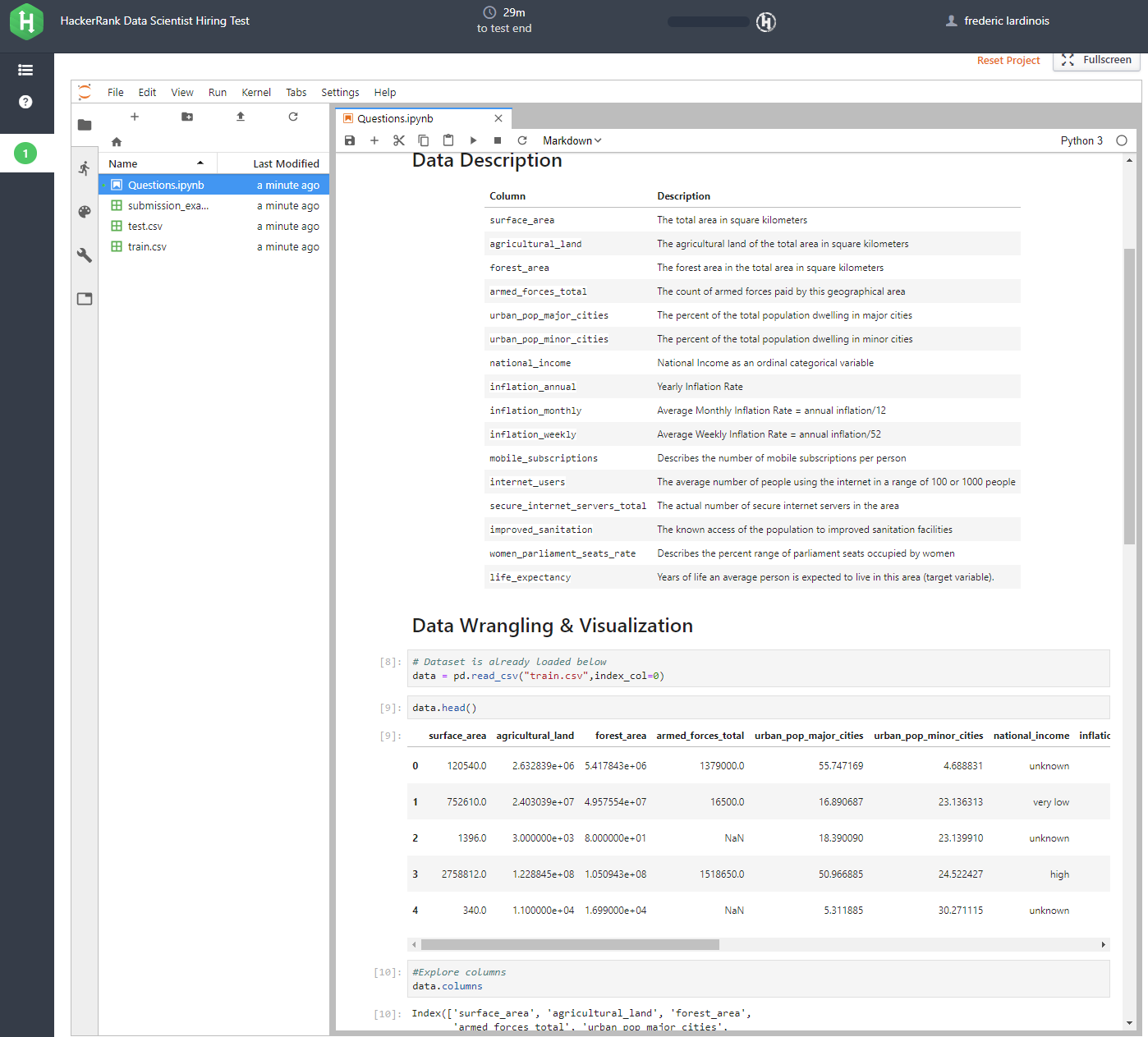
HackerRank Projects for Data Science, as the new product is called, helps businesses test how well candidates can handle standard, real-world scenarios like data wrangling and building models based on this data, as well as their skills in visualizing data. Companies can decide which skills they are looking for and then provide all candidates with the same problem set.

“With exponential growth in big data and companies using data to better serve customers across industries — from recommendations on your TV to autonomous driving in vehicles — the demand for skilled data scientists will continue to grow,” said HackerRank CEO and co-founder Vivek Ravisankar. “HackerRank has changed the way enterprises hire software developers—now, we’re bringing the same much-needed functionality to data science. This product will help close the gap between the expectations and needs of employers, allowing them to more easily identify and recruit the data science talent they need to ship innovative products.”

What’s especially smart here is that HackerRank is using industry-standard Jupyter notebooks as the development environment. Since that’s essentially the platform that most data scientists already use, there’s no need for potential employees to learn a new platform and they get to work in a realistic environment that will likely mimic what they’ll use at work, too.

The new platform is now available for all HackerRank customers who are using its recruiting platform. In total, the company currently has about 1,500 customers and close to 6 million developers on its platform that use the service to practice their coding skills (which is what HackerRank started out with) and, potentially, get hired.

If you are a data scientists and want to give it a try, HackerRank set up a trial environment for us that lets you try your hands at a sample project.

2019 08 26 1054

27 Aug 2019

Kadena brings free private blockchain service to Azure Marketplace

The hype around blockchain seems to have cooled a bit, but companies like Kadena have been working on enterprise-grade solutions for some time, and continue to push the technology forward. Today, the startup announced that Kadena Scalable Permissioned Blockchain on Azure is available for free in the Azure Marketplace.

Kadena co-founder and CEO Will Martino says today’s announcement builds on the success of last year’s similar endeavor involving AWS. “Our private chain is designed for enterprise use. It’s designed for being high performance is designed for integrating with traditional back ends. And by bringing that chain to AWS marketplace, and now to Microsoft Azure, we are servicing almost all of the enterprise blockchain market that takes place in the cloud,” Martino told TechCrunch.

The free product enables companies to get comfortable with the technology and build a Proof of Concept (PoC) without making a significant investment in the tooling. The free tool provides 2000 transactions a second across 4 nodes. Once companies figure this out and want to scale, that’s when the company begins making money, but Martino recognizes that the technology is still immature and companies need to get comfortable with it, and that’s what the free versions on the cloud platforms like Azure are encouraging.

Martino says Kadena favors a hybrid approach to enterprise blockchain that combines public and private chains, and in his view, gives customers the best of both worlds. “You can run a smart contract on our public chain Web protocol that will be launching on October 30th, and that smart contract can be linked to a cluster of private permission chain nodes that are running the other half of the application. This allows you to have all of the market access and openness and transparency and ownerlessness of a public network, while also having the control and the security that you find in a private network,” he said.

Martino and co-founder Stuart Popejoy both worked at JPMorgan on early blockchain projects, but left to start Kadena in 2016. The company has raised $14.9 million to date.

27 Aug 2019

Facebook is working with HackerOne on a bug bounty program for its Libra cryptocurrency

Facebook and its partners are moving ahead with its Libra cryptocurrency project and announced that it is working with HackerOne on a bug bounty program for applications built on its blockchain.

The move comes even as government regulators have called for the company to suspend the project, while they assess its legality and the potential threat it could pose to the global financial system.

Undeterred, Facebook and its partners in the Libra project are moving ahead, and offering up the bug bounty program as proof of how seriously the company is taking its responsibilities as it looks to entirely refashion the global financial system in its image.

They’re offering up to $10,000 for security experts who find flaws in code in projects developed on the foundation’s testnet.

“We are launching this bug bounty now, well before the Libra Blockchain is live. Our hope is that people around the world can turn to Libra for their everyday financial needs, so the infrastructure must be dependable and safe,” said Dante Disparte, Head of Policy and Communications, Libra Association, in a statement. “It’s important to note that the Libra Blockchain remains in testnet, which is an early-stage version of the code that is far from final. We remain committed to taking the time to get this right and we will not launch the Libra Blockchain until regulatory concerns have been taken into account and required regulatory approvals have been received.”

However, the launch of a bug bounty program for a testnet that’s not yet commercially viable, let alone approved seems potentially premature. Various spokespeople for the foundation noted that Libra is not yet launched.

“As Libra moves towards mainnet launch, this is an important step that shows the association is thinking about security actively and in a progressive way,” said Aaron Henshaw, chief technology officer of Bison Trails, a blockchain infrastructure service provider and partner in the Libra Foundation.

Some could view the launch as an overabundance of caution, others could call it a public relations stunt meant to assuage the public and lawmakers about the security of a system that has no guarantee of even launching.

The Libra Association, through a spokesperson, wouldn’t even comment on how many projects are currently operating on the Libra testnet.

Instead of a bug bounty, Facebook and its partners in the Libra Association may be better off dealing with the potential bugs their planned payments system could create for governments and the global financial system.


27 Aug 2019

Platform9 raises $25 million Series D for its managed hybrid cloud solution

Platform9, the startup best known for its SaaS-based, fully managed hybrid cloud platform, today announced that it has raised a $25 million Series D round led by NGP Capital. Mubadala Ventures and existing investors Redpoint Ventures, Menlo Ventures, Canvas Ventures and HPE Pathfinder also participated in the round.

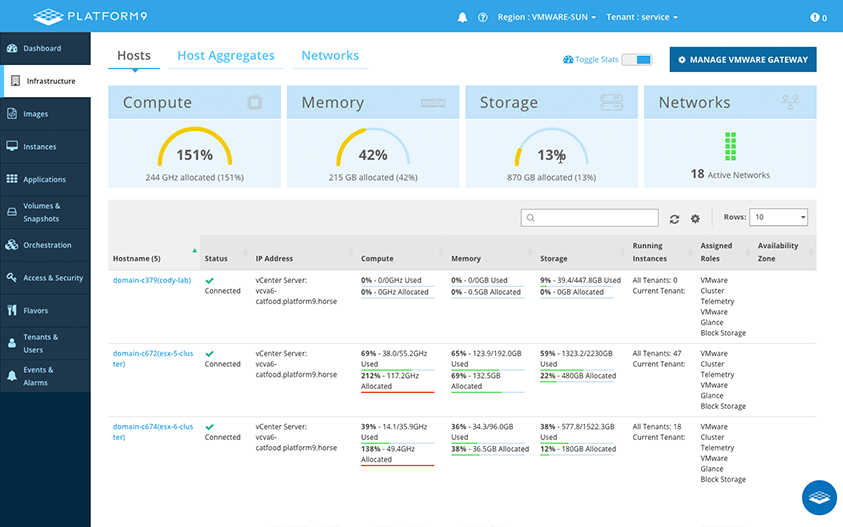
The company’s managed services sit on top of open-source tools like Kubernetes and OpenStack and focus on providing users with solutions that go beyond the basic infrastructure and help them throughout the lifecycle of their applications. With the proliferation of cloud-native technologies, enterprises are now struggling how to put them into production. With Fission, Platform9 even supports a new serverless framework that is still very much at the cutting edge. All of this comes with a considerable degree of complexity, though, if enterprises want to adopt and deploy these technologies themselves and as Platform9 CEO and co-founder Sirish Raghuram notes in today’s announcement, they want to move fast and are looking for services to simplify these deployments.

home product screen4

“Simplifying the operational burden of delivering cloud-native infrastructure at scale across any environment is a key consideration for organizations going through digital transformation,” he said. “They are looking to leverage open-source modern technologies on top of their existing infrastructure and multi-cloud deployments, without crumbling under the complexity of managing technologies such as Kubernetes, monitoring, service-mesh, and more.”

Platform9 says its revenue grew 130 percent in the last year and its bookings are up 156 percent. It’s also seeing new revenue retention of 124 percent. Like most companies in this position, Platform9 plans to use the new capital to expand its salesforce, product and marketing teams. It also plans to invest in developing its core Kubernetes product, including Managed Prometheus, Managed Istio, kubevirt and others, the company tells me.

The company remains committed to OpenStack, too. “For enterprises and service providers that have many VM workloads, OpenStack remains the only open platform for IaaS and our OpenStack business is on pace to grow  over 100% this year,” Raghuram tells me. “In addition to supporting OpenStack, we’re also investing in supporting VM workloads with kubevirt, which offers less functionality but could be very attractive to enterprise customers who are already committed to cloud-native with Kubernetes. However, kubevirt isn’t yet ready for production and we are guiding customers requiring production support for VMs today to choose OpenStack.”

27 Aug 2019

Mario Kart Tour arrives on iOS and Android on September 25

Nintendo’s next mobile game, Mario Kart Tour, will be available on iOS and Android devices starting on September 25. The official Twitter account for the game revealed the launch date, and shared the pre-registration link where users of both platforms can sign up to get the game when it launches.

The mobile instalment of Nintendo’s incredibly popular cart racing franchise was originally announced last year, and at that time had a planned launch window of sometime before the end of March 2019. Nintendo later updated that date to sometime during this summer, in order to “improve [the] quality of the application and expand the content offerings after launch,” according to a statement in one of the game-maker’s earnings reports.

September 25 is actually technically after the end of summer, the last day of which is officially on September 23, but it’s pretty close. Nintendo also released Dr. Mario World earlier this year, so it’s been a busy year for the company in terms of launching mobile adaptations of its popular franchises.

Mario Kart Tour had a closed beta in the U.S. and Japan, which was Android-only, earlier this year. Details from the beta include a look at the rather expansive roster, as well as a lot of in-game purchase mechanics that might frustrate fans of the main series.

27 Aug 2019

Russian humanoid robot makes its way to the International Space Station

A Russian Soyuz spacecraft docked with the International Space Station successfully late on Tuesday evening, after an initial attempt to do so didn’t end up working as planned on Saturday night. This second attempt went off without a hitch, however, and the capsule is now parked at a port on the Russian Zvezda module of the ISS. In the captain’s seat of the capsule, which is designed to carry human passengers, sat Skybot F-850, a humanoid robot built by Russia’s Rocsomos space agency.

The robot didn’t actually pilot the craft – it was on an automated trip with no humans aboard to take over manual control. This trip saw the Soyuz launched atop a new version of Russia’s Soyuz rocket, which it has used so far only to transfer cargo with uncrewed spacecraft. This mission was designed to test the updated rocket with a Soyuz without humans on board, in preparation of using the same model with crew on board starting next year.

The Skybot F-850 has a number of built-in sensors on board, and can measure things like G-forces exerted on passengers, as well as vibrations, temerparture readings and more, to provide an accurate idea of what a human would experience were they the ones sitting in the vehicle’s passenger seats instead of the robot.

This is the first use of a robot in this capacity by Rocosmos, and Skybot will remain at the ISS for around two weeks before it heads back to Earth. In addition to sensing conditions during launch, Skybot has some functions similar to your average Alexa speaker – it can answer questions, have short conversations and tell a few jokes. The plan however is to develop Skybot and its successors into more capable functional companions that can do activities in environments that are inhospitable to humans – including perhaps in the vacuum of outer space.