Year: 2019

27 Aug 2019

Kleiner Perkins bets on a premium email service that’s bringing Slack Groups into Gmail

While Slack is trying to kill email, a new email startup backed by Kleiner Perkins is trying to make corporate email more like Slack.

Consider is an email service for startups that balances some premium individual features with collaboration tools that it hopes will help them bring startups onboard.

The founders of Consider both met at Intercom as the 1st and 10th employees there. While at Intercom, CEO Ben McRedmond met Kleiner Perkins’ Mamood Hamid who was an early investor there. Hamid also wrote the first check for Consider before the founders even had a product to demo. That 2017 check combined with a more recent investment from Bedrock brings the total funding for the startup to $5 million.

As the product emerges from stealth, it’s also signaling a shift in its customer focus from individuals wanting an email experience that’s “calm and focused” to startup teams that are looking to keep more of their team’s collaboration happening inside email.

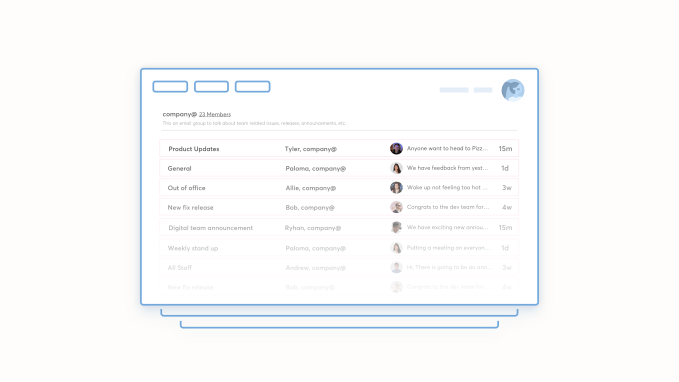
The central part of this strategy is the addition of a Slack-like Groups feature which allows people to join shared inboxes inside their company that people can forward messages to or cc on emails. The founders started the company with the idea that the inbox was essentially a list of to-dos, with this idea also extending to group-work, allowing engineers to amass bug reports and create a shared repository of emails with relevance to the whole group.
Blog 002

The startup says they aren’t actually trying to kill Slack or other synchronous chat tools but they want people to use email in a more collaborative way and part of that means categorizing the emails you receive and putting them in front of the right eyeballs. The fact is, the bulk of this functionality — though not all — is possible inside of stock Gmail with the right filters, but it’s all pretty messy and people will generally pay for an interface that is built to be effective.

The premium email service space has been gathering attention, most of that attention has been directed towards $30/month Superhuman, which was recently valued at $260 million.

Consider is charging $10 per user per month. They’re not discouraging individual users curious for a new inbox experience either, though without Groups there is less to differentiate the app. On an individual basis the app brings functionality focused on sorting emails and sending you batches of the ones it has deemed non-critical at certain times of the day so you aren’t being inundated with notifications.

The app is out of beta and live for sign-ups of Gmail users on Web, Mac, iOS and Android.

27 Aug 2019

WeWork acquires co-working rival Spacious

WeWork, now known as The We Company, announced this morning the acquisition of a rival co-working business, Spacious. The three-year-old, New York-based startup turns restaurants that sit empty during the day into co-working spaces, and is one of several niche co-working startupslike Convene, Knotel, Industrious, The Yard, The Wing, and Alley, for example.

Spacious was co-founded in 2016 by CEO Preston Pesek, whose background is in commercial real estate. The company’s goal was to take advantage of under-utilized urban spaces, including abandoned retail stores and empty restaurants, to serve the co-working crowd. The company has since converted dozens of restaurants in New York and San Francisco into weekday workspaces.

Customers can access the workspaces with anything from a $20 day pass all the way up to a $129 per month annual membership.

The restaurants benefit from the arrangement by gaining a new form a revenue in what’s an otherwise slim margin business, while also have the chance to attract new customers from the Spacious members who frequent their business. Customers, who may have otherwise worked from coffee shops, liked the arrangement because it was more affordable than WeWork. Some may have also liked that there was a hard stop to their workday, as the restaurant would have to open for business.

The Spacious team and its lineup of workspaces will now come to WeWork, the company says.

“Spacious’s team and real estate and operational expertise will help enable WeWork to continue to give our members access to the workspace they want, when they need it,” said WeWork chief product officer Chris Hill. “We’re thrilled to welcome Spacious to WeWork,” in a statement.

Terms of the deal were not disclosed. Spacious had raised just over $9 million, according to data from Crunchbase, from investors including Baseline Ventures, Redpoint, Lerer Hippeau, August Capital, MetaProp NYC, and BoxGroup.

The full announcement from Spacious CEO Preston Pesek is below.

It’s our great pleasure to announce to the Spacious community the exciting news that we are joining the WeWork family.

Since our inception, Spacious has explored new ways of activating and re-programming the physical built environment, in direct response to the technological changes that are revolutionizing how we interact with spaces, buildings, and cities.

In WeWork, we have found much natural alignment across our visions for the integration of work, technology, and physical space. We’re thrilled for the opportunity to continue to serve our members at Spacious today as part of the greater WeWork community.

Spacious’s service delivers a distributed network of walk-in, on-demand workspaces, wrapped in an experience of stylish hospitality. By joining WeWork, we’re taking the next step in providing easy access to on-demand workspaces across the world.

I would like to extend a big thanks to everyone who has joined us on this journey of building Spacious. From our team of amazing employees, to our loyal and enthusiastic customers, to our pioneering space and real estate partners, and to our intrepid investors, thank you. I hope you will join me in celebrating this exciting new opportunity with WeWork.

Sincerely yours,

Preston Pesek

CEO of Spacious

27 Aug 2019

Microsoft’s lead EU data watchdog is looking into fresh Windows 10 privacy concerns

The Dutch data protection agency has asked Microsoft’s lead privacy regulator in Europe to investigate ongoing concerns it has attached to how Windows 10 gathers user data.

Back in 2017 the privacy watchdog found Microsoft’s platform to be in breach of local privacy laws on account of how it collects telemetry metadata.

After some back and forth with the regulator, Microsoft made changes to how the software operates in April last year — and it was in the course of testing those changes that the Dutch agency found fresh reasons for concern, discovering what it calls in a press release “new, potentially unlawful, instances of personal data processing”. 

Since the agency’s investigation of Windows 10 started a new privacy framework is being enforced in Europe — the General Data Protection Regulation (GDPR) — which means Microsoft’s lead EU privacy regulator is the Irish Data Protection Commission (DPC), where its regional HQ is based. This is why the Dutch agency has referred its latest concerns to Ireland.

It will now be up to the Irish DPC to investigate Windows 10, adding to its already hefty stack of open files on multiple tech giants’ cross-border data processing activities since the GDPR came into force last May.

The regulation steps up the penalties that can be imposed for violations (to up to 4% of a company’s annual global turnover).

A spokeswoman for the Irish DPC confirmed to TechCrunch that it received the Dutch agency’s concerns last month. “Since then the DPC has been liaising with the Dutch DPA to further this matter,” she added. “The DPC has had preliminary engagement with Microsoft and, with the assistance of the Dutch authority, we will shortly be engaging further with Microsoft to seek substantive responses on the concerns raised.”

A Microsoft spokesperson also told us:

The Dutch data protection authority has in the past brought data protection concerns to our attention, which related to the consumer versions of Windows 10, Windows 10 Home and Pro. We will work with the Irish Data Protection Commission to learn about any further questions or concerns it may have, and to address any further questions and concerns as quickly as possible.

Microsoft is committed to protecting our customers’ privacy and putting them in control of their information. Over recent years, in close coordination with the Dutch data protection authority, we have introduced a number of new privacy features to provide clear privacy choices and easy-to-use tools for our individual and small business users of Windows 10. We welcome the opportunity to improve even more the tools and choices we offer to these end users.

The Dutch DPA advises users of Windows 10 to pay close attention to privacy settings when installing and using the software.

“Microsoft is permitted to process personal data if consent has been given in the correct way,” it writes. “We’ve found that Microsoft collect diagnostic and non-diagnostic data. We’d like to know if it is necessary to collect the non-diagnostic data and if users are well informed about this.

“Does Microsoft collect more data than they need to (think about dataminimalization as a base principle of the GDPR). Those questions can only be answered after further examination.”

During the onboarding process for Windows 10, Microsoft makes multiple requests to process user data for various reasons, including ad purposes.

It also deploys the female voice of Cortana, its digital assistant technology, to provide a running commentary on settings screens — which can include some suggestive prompts to agree to its T&Cs. “If you don’t agree, y’know, no Windows!” the human-sounding robot says at one point. It’s not clear whether the Dutch agency’s concerns extend to Microsoft’s use of Cortana to nudge users during the Windows 10 consent flow.

27 Aug 2019

Experian makes strategic investment in location data company PlaceIQ

PlaceIQ is announcing a strategic investment from credit reporting company Experian.

CEO Duncan McCall said the investment is part of a growth round that PlaceIQ raised after divesting itself of its advertising business (which is being taken over by Zeta Global). He declined to disclose the size of the round, or of the Experian investment.

“It’s a multi-year, strategic partnership, where we will work together to license data [to Experian], and they also proactively become an investor in the company,” McCall said, adding that this “coincided nicely with us divesting of our media business and raising a modest growth round.”

Experian’s venture arm has backed a number of financial technology startups. Under this partnership, the company will also incorporate PlaceIQ’s LandMark location data product into its broader suite of data and measurement tools.

Asked about the direction of PlaceIQ’s business going forward, McCall explained that the company started with a focus on selling location data, and now, it’s gone back to “being a data-only company again.”

“Of course, we would have preferred to have focused on just one business model all these years, but life’s not that simple,” he said.

In his telling, PlaceIQ had to expand into the ad sales business because the infrastructure didn’t exist at the time to incorporate that data into the ad-buying process. Now that the infrastructure is there, PlaceIQ can focus once more on selling location data, which can then be used for targeting on a broad range of ad-buying platforms.

According to Crunchbase, PlaceIQ previously raised a total of $52 million in funding.

27 Aug 2019

Google’s Nest doorbell camera plan gets a package-detection feature

Nest’s transition into the broader Google brand portfolio could honestly be going a bit better. For its part, Google has promised that it will keep adding compelling software features into the ecosystem, and this morning’s announcement is a pretty good start.

The company just announced the addition of a package-detecting feature for Nest Hello users with an active Nest Aware subscription. The feature, which starts rolling out to users today, will use the doorbell camera to track package pickups and deliveries.

Among the more interesting bits here is the ability to draw “Activity Zones” in order to distinguished those places on one’s doorstep or porch where packages are usually delivered. This leverages an existing Nest Aware feature that works as follows:

Activity Zones can have your camera send alerts and mark your video history timeline when there’s important motion in the zone. You can set up your own custom zones, and in some cases, Nest will even do the work for you by automatically creating a zone over a spot we think you’d find interesting so alerts become more specific and meaningful.

When packages are delivered and picked up, Next Aware will send a notification. The app will note when the feature is live, and users can opt to turn it on or off. Per Google:

To get the most out of the feature we suggest users check that packages can be seen in Hello’s video stream and ensure the spot is well-lit. If not, you may need to install a wedge to change Hello’s angle (a complementary wedge comes with the device), or remove the object that blocks the package from Hello’s view.

27 Aug 2019

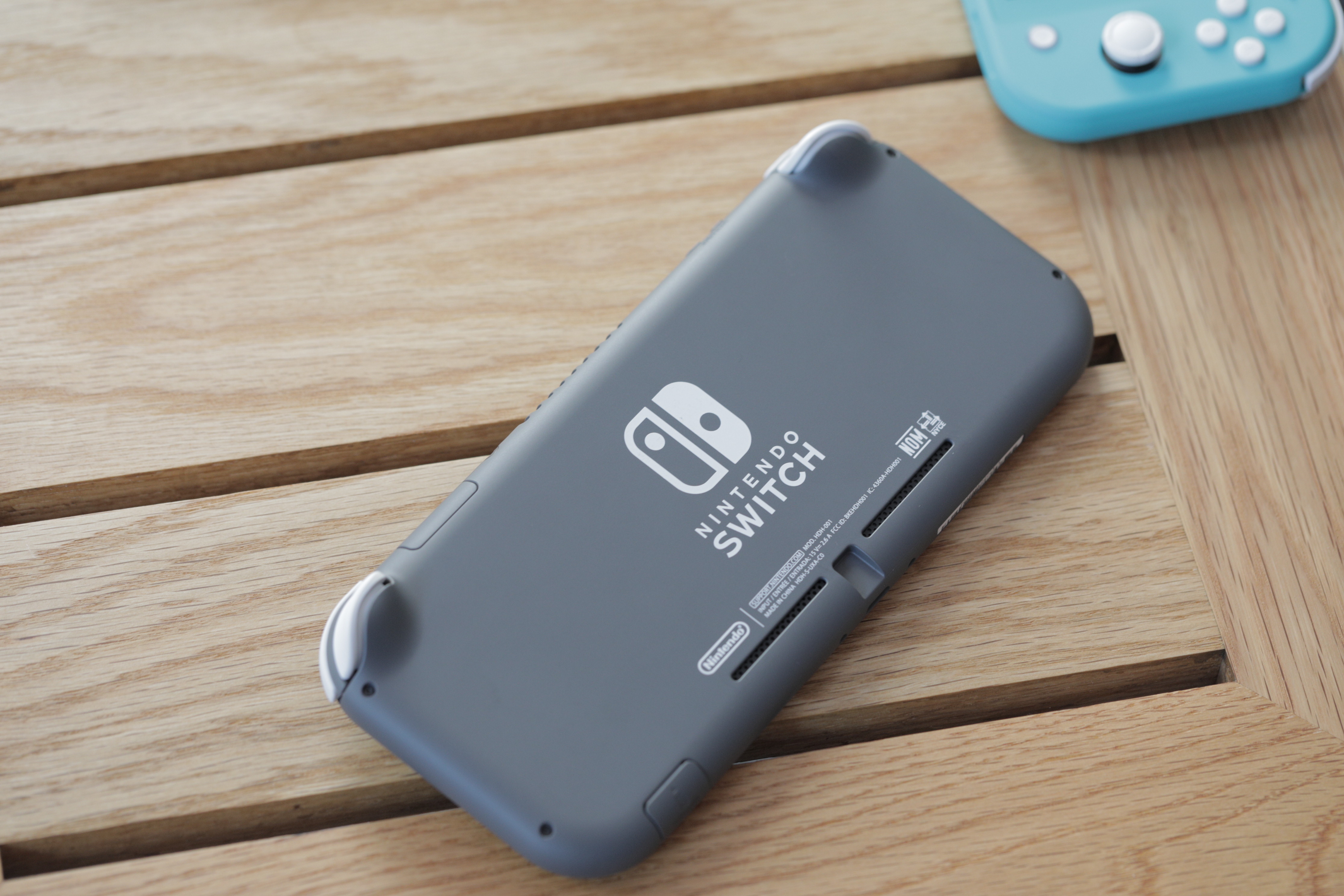
Switch Lite is the portable Nintendo fans deserve

It’s the plight of the early adopter. A few years from now, there will be a new version of the console — one that works out the biggest flaws of the original, most likely at a lower price point. Having used Nintendo’s latest console a fair bit since its launch three years back, I can say without hesitation that the Switch Lite is exactly the one I’d buy now.

Granted, I’m not a typical gamer by any stretch. My relationship with the industry could be described as casual at best. Oh, and I don’t have a television. Yep, I’m that guy… and have been for a while. Point being, the Lite appears very specifically tailored to my needs. Really, the bigger question at this point is which color?

The Lite is $100 cheaper than the original Switch, a feat it accomplishes by removing some of the console’s more innovative features, including the ability to dock and play it on a TV. The solid state body also removes the shakable Joy Cons from the equation.

The console is notably smaller, too, with the 6.2-inch touchscreen getting scaled down to 5.5 inches. It’s not a huge change, but it’s certainly noticeable. On the upside, the smaller footprint means a lighter (as the name implies) device, down to 0.61 pounds from 0.88 pounds. If you’ve spent any time playing the original Switch, you’ll notice the difference right away.

Nintendo Switch Lite

Like the newfound portability, I actually welcome the solid state design. I’ve basically played the Switch exclusively in handheld mode and have always found it annoying when the Joy Cons accidentally detach mid-game. As for those games that required a hearty Joy Con shake, that functionality is addressed in various ways, depending on the title. There’s an accelerometer built into the hardware here, so in many cases the player will end up shaking the whole console to accomplish this.

As FCC filings have confirmed, the battery is smaller on the Lite, but the smaller screensize negates that to some degree. A stated three to seven hours is a bit north of the original switch’s 2.5 to 6.5 hours — though still a fair bit less than the 4.5 to nine hours on the new model. Those numbers are game-dependent. Nintendo says the Lite should get about four hours playing Breath of the Wild, for example, versus the new Switch’s 5.5 hours.

Nintendo Switch Lite

That’s definitely a bummer. As someone who’s interested in the Switch primarily as a travel companion, battery life has always been my chief complaint with the original model. It would have been great if Nintendo would have made battery a bigger focus on the Lite. There are understandably some limitations due to the smaller footprint, but I suspect the company could have squeezed a bit more life out of it here.

The addition of an honest-to-goodness D-Pad on the left side is a nice touch, too — and hopefully an indication that a lot more NES/Super NES classics are about to come to the console. My aging self will be spending a lot of money on downloads if that ever happens.

Nintendo Switch Lite

The color choice is surprising, but quite nice. The yellow and turquoise pop quite nicely, while the gray is considerably more understated — insofar as a Nintendo portable console can be understated, that is. I honestly went back and forth trying to choose one, but if I had to pick tomorrow, it would probably be the turquoise.

At $200, the Lite is $100 cheaper than the standard model and a no-brainer for those who find it difficult staying in one place. It arrives September 20.

[gallery ids="1871343,1871342,1871341,1871340,1871339,1871338,1871337,1871336,1871335,1871334,1871333,1871332,1871331,1871330"]

27 Aug 2019

Only 24 hours left to apply to Hardware Battlefield at TC Shenzhen

This post goes out to a special group of early-stage hardware startup founders — the procrastinators, the vacillators and the last-minute decision-makers. You have just 24 hours left to submit your application to compete in the Hardware Battlefield at TC Shenzhen on November 11-12. The application window closes at precisely 11:59 p.m. (PT) on August 28. Apply right here, right now.

The Hardware Battlefield — sibling to our Startup Battlefield pitch competition — is your chance to launch your startup on a world stage in front of some of the hardware industry’s most influential VCs, technologists and journalists — and win a $25,000 equity-free prize. It won’t cost you a thing to apply or to participate, and an opportunity like this doesn’t come along every day. So, what are you waiting for?

TechCrunch editors look for the best of the best, and they’ll vet every qualified application before choosing 10-15 startups to compete. If you make the cut, you’ll have six rigorous weeks of free pitch coaching with our Battlefield team. When the big day comes, you’ll be ready to put your best pitch forward to a panel of expert judges.

Each team has six minutes to pitch and demo their product — followed by an in-depth Q&A with the judges. If you make it to the final round, you’ll do it all over again — this time in front of a new set of judges. From that select group, one team will rise above the rest to become the TC Shenzhen Hardware Battlefield champ and claim the $25,000 prize.

Even if your team doesn’t win, you still reap big benefits. Hardware Battlefield participants receive invaluable exposure to the media, investors and other influencers. The event takes place in front of a live audience, and we also record the Battlefield on video and publish it on TechCrunch to a global audience.

Meet these low bars in order to qualify for Hardware Battlefield:

  • Submit your application by 11:59 p.m. (PT) on August 28
  • You must have a minimally viable product to demo onstage
  • Your product has received little, if any, press coverage to date
  • Your product must be a hardware device or component

Time is running out. You have 24 hours left to take advantage of an opportunity to transform your business. Join us in Shenzhen, the hardware heartland. Apply to compete in TC Hardware Battlefield 2019 before the clock runs out at 11:59 p.m. (PT) on August 28.

Is your company interested in sponsoring or exhibiting at Hardware Battlefield at TC Shenzhen? Contact our sponsorship sales team by filling out this form.

27 Aug 2019

Tesorio raises $10M Series A to help companies track their cash flow

Tesorio, a startup that helps businesses aggregate and analyze their cash flow data, today announced that it has raised a $10 million Series A round led by Seattle’s Madrona Venture Group. Existing investors First Round Capital, Floodgate, Y Combinator, Fathom Capital and Fuel Capital. This brings Tesorio’s total funding to $17 million. Madrona’s Hope Cochran will join the company’s board.

The company is tackling an interesting market that is surprisingly underserved given that every company likely wants to be able to track its cash flow as closely as possible. In most companies, though, that’s still done with the help of Excel spreadsheets. The fact that Jeff Epstein, former CFO of Oracle; Ron Gill, former CFO of NetSuite; and Greg Henry, CFO of Couchbase and former SVP of Finance at ServiceNow all gave angle funding to Tesorio shows how big a problem this is.

“Billion-dollar companies are running their cashflow in Excel — and that’s real,” Tesorio co-founder and CEO Carlos Vega told me. “What that doesn’t allow you to do is use all that data that goes into that cashflow in a smart way. […] Imagine all of that could be connected and interconnected — and that’s basically what we’re building.”

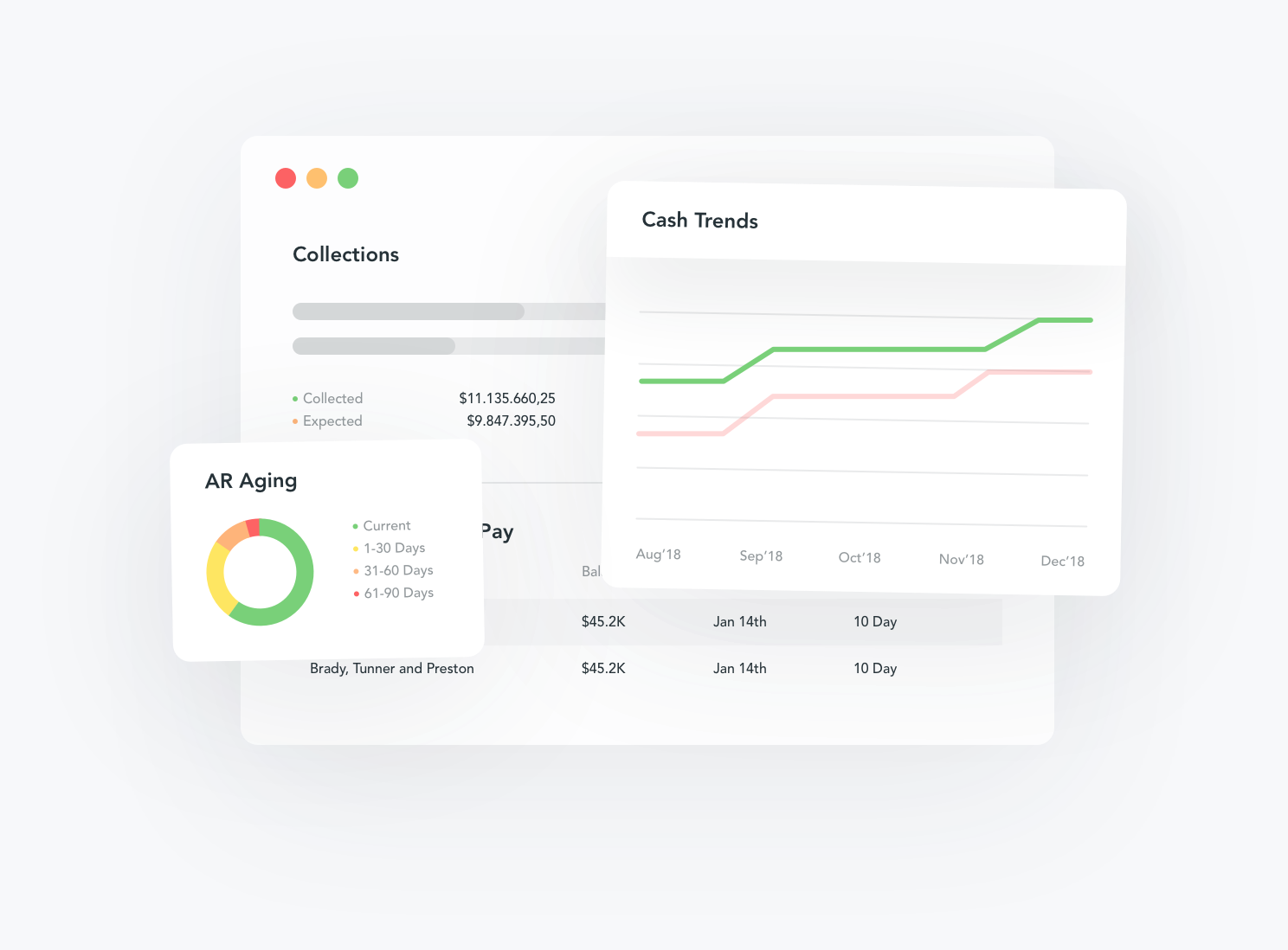
app image 01 total cash flow

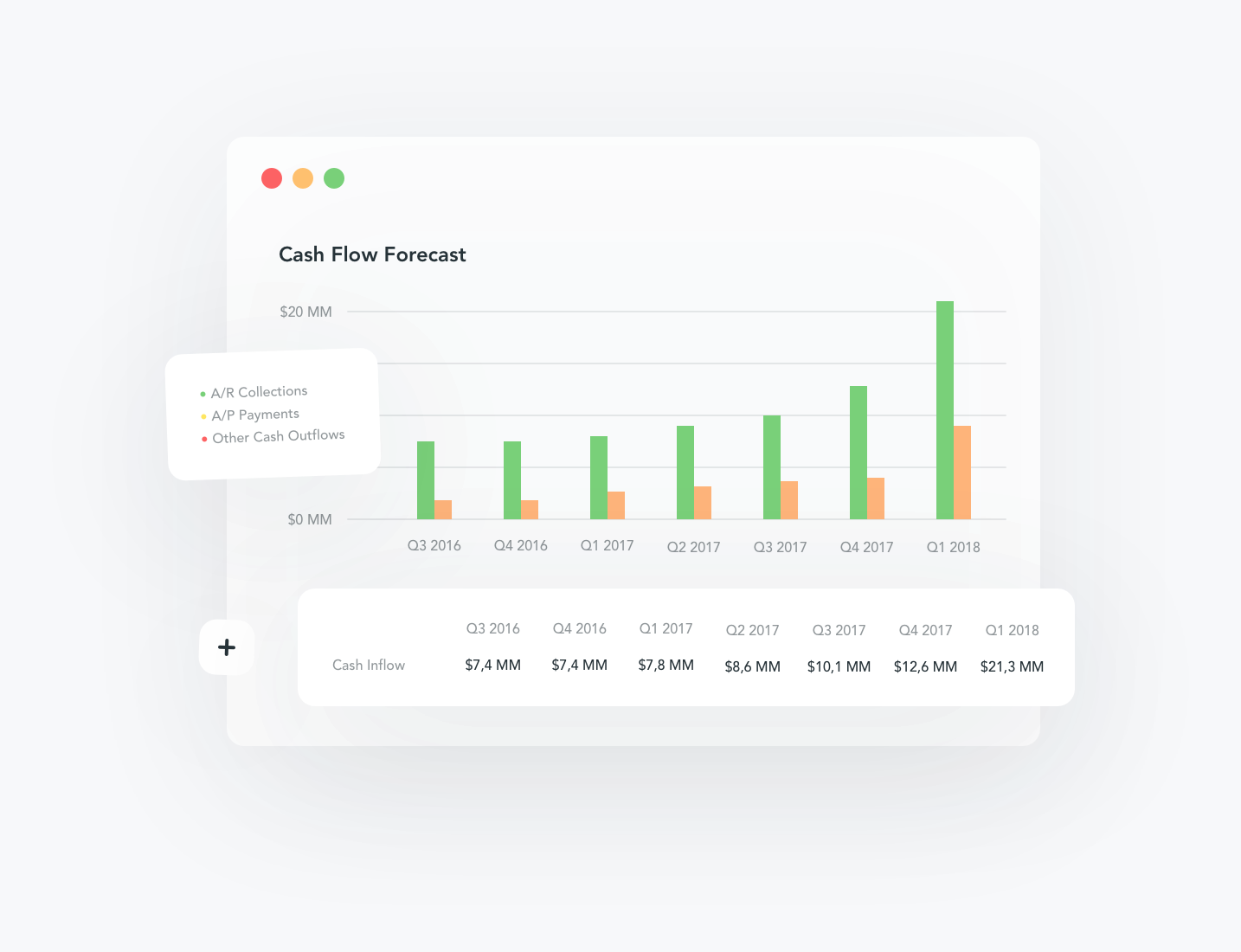
Tesorio helps businesses aggregate all of their cash flow — in some ways, you can think of it as a Mint for businesses — and then runs its AI models over it to predict a company’s overall financial health. Current customers include the likes of Veeva Systems, Box, and WP Engine, who use the company’s systems to, for example, automate their accounts payable operations to understand when customers are likely to pay. While there are other tools that help you manage the overall workflow, Vega argues that Tesorio is different because it can pull in data from all of these disparate systems and create a cash flow forecast based on this.

“Many departments have systems of record to log things like accounting entries, bank info, billings, customer interactions, spend, etc,” Vega explained. “The exciting opportunity is to tie that data together dynamically so you can have a multifaceted view on the trajectory of your business (with a focus on the effects to cash flow) and then automate the levers that can help you impact cash.”

While the company didn’t disclose any revenue numbers, it did not that its revenue grew 4x year-over-year in 2018.

As Vega told me, it’s usually the financial teams and CFO’s that adopt Tesorio. The company focuses on bringing on companies with 100 to 3000 employees and it already has a number of international customers, too. In total, the platform has already analyzed $56 billion in payments, 10 million invoices and 5 million user activities. As will all machine learning services, every new transaction also helps to make its models more precise.

As usual, Tesorio will use the new funding to expand its product — with a special focus on adding integrations with other finance systems — and its expand its go-to-market initiatives.

app image 02 cash flow forecast

Madrona’s Hope Cochran, who herself was a public company CFO during her time at Clearwire and King Digital, stressed the need for a service like this. “The ultimate financial metric for a company is Cash,” she writes in today’s announcement. “Not just the current balance, but the trajectory of the balance. In the vast majority of companies, this analysis is performed on a spreadsheet. One containing many links, often circular references, and pulling in data from multiple sources. The risk of an error, a break, is high. ”


27 Aug 2019

New open source project wants to expand serverless vision beyond functions

Serverless technology offers developers a way to develop without thinking about the infrastructure resources required to run a program, but up until now it has mostly been limited to function-driven programming. CloudState, a new open source project from Lightbend, wants to change that by moving beyond functions.

Lightbend CTO Jonas Bonér believes this ability to abstract away infrastructure could extend beyond functions and triggers into a broader developer experience. “I think people sometimes [don’t distinguish] between serverless and Function as a Service. I think that’s actually cutting the technology short. What serverless really brings to the table is this completely new developer experience and operations experience by trying to automate as much as possible,” Bonér told TechCrunch.

He says that when he talks to customers, they are hankering for a more complete serverless developer experience that includes all parts of the program. “A lot of people say that I have this excellent use case for the current incarnation of serverless and Function as a Service, but the rest of my application doesn’t really work running there,” he said. That’s exactly what CloudState is trying to address.

Bonér is careful to point out that he’s not looking to replace function-driven programming. He only wants to augment it. CloudState takes advantage of some existing technologies like KNative, the open source project that is trying to bring together serverless and containerization, as well as gRPC, Akka Cluster, and GraalVM on Kubernetes.

He acknowledges that CloudState is still a work in progress, but he has the basic building blocks in place, and he’s hoping to use the power of open source to drive the development of this early-stage project. Today, it includes several key pieces — a specification outlining the goals of the project, a protocol to begin implementing it and a testing kit.

The goal here is to bring to fruition this broader vision of what serverless means where developers can just write code without having to worry about the underlying infrastructure where the program will run. It’s a bold approach, but as Bonér says, it’s still early days, and will take time and a community to really build this out.

27 Aug 2019

Ron Johnson’s e-commerce startup Enjoy raises $150M, expands in U.K.

Enjoy, the e-commerce startup led by former Apple VP of retail operations, Ron Johnson, has raised an additional $150 million in Series C funding from L Catterton’s new consumer technology platform, LCH Partners. The funds will be used to fuel Enjoy’s U.K. expansion and other international growth. The startup is also today launching a partnership with British mobile network operator EE, which will allow the company to serve over 80% of U.K. households by 2020.

The company announced the funding but not the size of the round. An SEC filing shows $150 million was offered, but only half had closed. However, a source familiar with the round confirmed $150 million had been raised.

The new growth funding brings Enjoy’s total raise to date to $350 million, following its May 2015 launch. Prior investors include Riverwood Capital, Stamos Capital, Kleiner Perkins, Highland Capital, and Oak Capital Management.

Having spent over a decade at Apple, Johnson is best known for pioneering the concept of Apple’s retail stores and Genius Bar. He previously held an executive position at Target as VP of Merchandising and, following Apple, had a less successful run as J.C. Penney’s CEO which led to his ouster. (Though in hindsight, it’s been argued that J.C. Penney should have just stuck with his plan, after all.)

With Silicon Valley-based Enjoy, Johnson combined the convenience of online shopping with the personal service that comes from shopping in a physical, brick-and-mortar store and the help you’d receive at Genius Bar, for example.

As Johnson explained around the time of launch, the goal was to figure out how to provide personal service to those who want to buy online.

“One of the observations from my time at Apple is that Apple makes the easiest to use products on the planet, but look at how busy the stores are with people asking questions and needing help. So what about the rest? How do you deliver help in this digital world we live in?,” he said, during an interview at TechCrunch Disrupt 2015.

Through partnerships with other companies, including AT&T, Sonos, Google, and now EE, Enjoy creates an online mobile store where customers can shop for devices and receive same-day delivery. They can also opt to have an Enjoy expert deliver the item and help them get set up free of charge.

Enjoy generates its revenue from its business partners, who pay to have their products sold through an online storefront. Enjoy then returns information like what sort of challenges customers face with their setups, and help to reduce calls to tech support while also increasing brand loyalty.

“One of the highlights of my retail career was creating a new channel for Apple customers, which was the Apple Retail Store,” said Ron Johnson, CEO and Co-Founder of Enjoy, in a statement. “Now I get to do it again by creating the mobile retail store for not just one company, but for many great companies around the world. As we look to drive the next phase of our growth, L Catterton was a natural choice as our partner, given their expertise in building consumer and technology brands on a global scale,” he said.

Including today’s expansion by way of its EE partnership, Enjoy now operates in more than 54 U.S. markets and covers more than 50% of the U.S. population, and will be offered in 11 U.K. markets, covering more than 60% of the population, by year-end. As of 2020, it will reach 80% of the U.K. population.

The company also plans to expand to at least one other country this year, and additional countries in 2020.