Year: 2019

20 Aug 2019

Apple Card launches for all U.S. customers today, adds 3% cash back for Uber and Uber Eats

Apple this morning announced its highly anticipated new credit card, Apple Card, is launching today for all customers in the U.S. Customers will be able to apply for the Apple Card through the Wallet app on the iPhone, then immediately begin using it by way of Apple Pay — before the physical card arrives in the mail.

Powered by Goldman Sachs and Mastercard, the card will work both as a traditional credit card and through Apple Pay anywhere that Mastercard is accepted. In lieu of points, which are favored by many of today’s credit card users, Apple Card doles out cash back for purchases. And it especially incentivizes users to choose Apple Pay, which offers 2% back instead of just 1% for non-Apple Pay purchases.

In addition, purchases from Apple are rewarded with 3% back — making it an obvious choice for buying Apple hardware and other gear.

Apple says it’s now extending 3% back to Uber and Uber Eats, too.

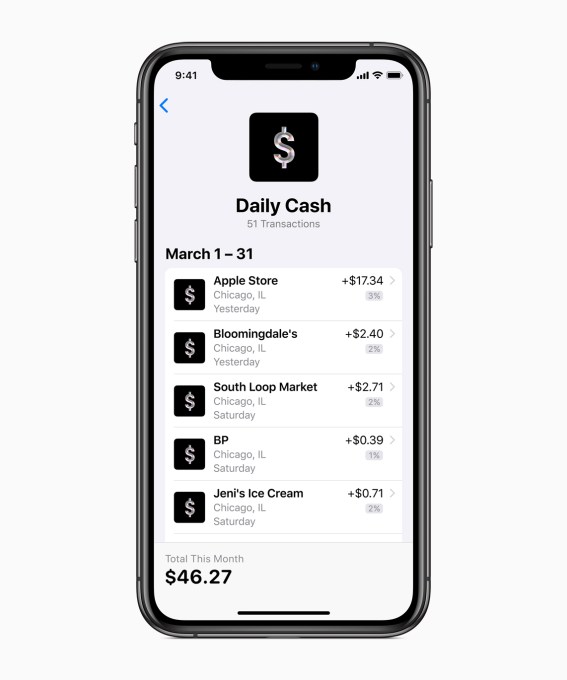
The cash back is added to your Apple Cash balance or to the card’s monthly balance if you don’t want to use an Apple Cash account.

Apple Card available today iPhoneXs Daily Cash screen 082019 inline.jpg.large 2x

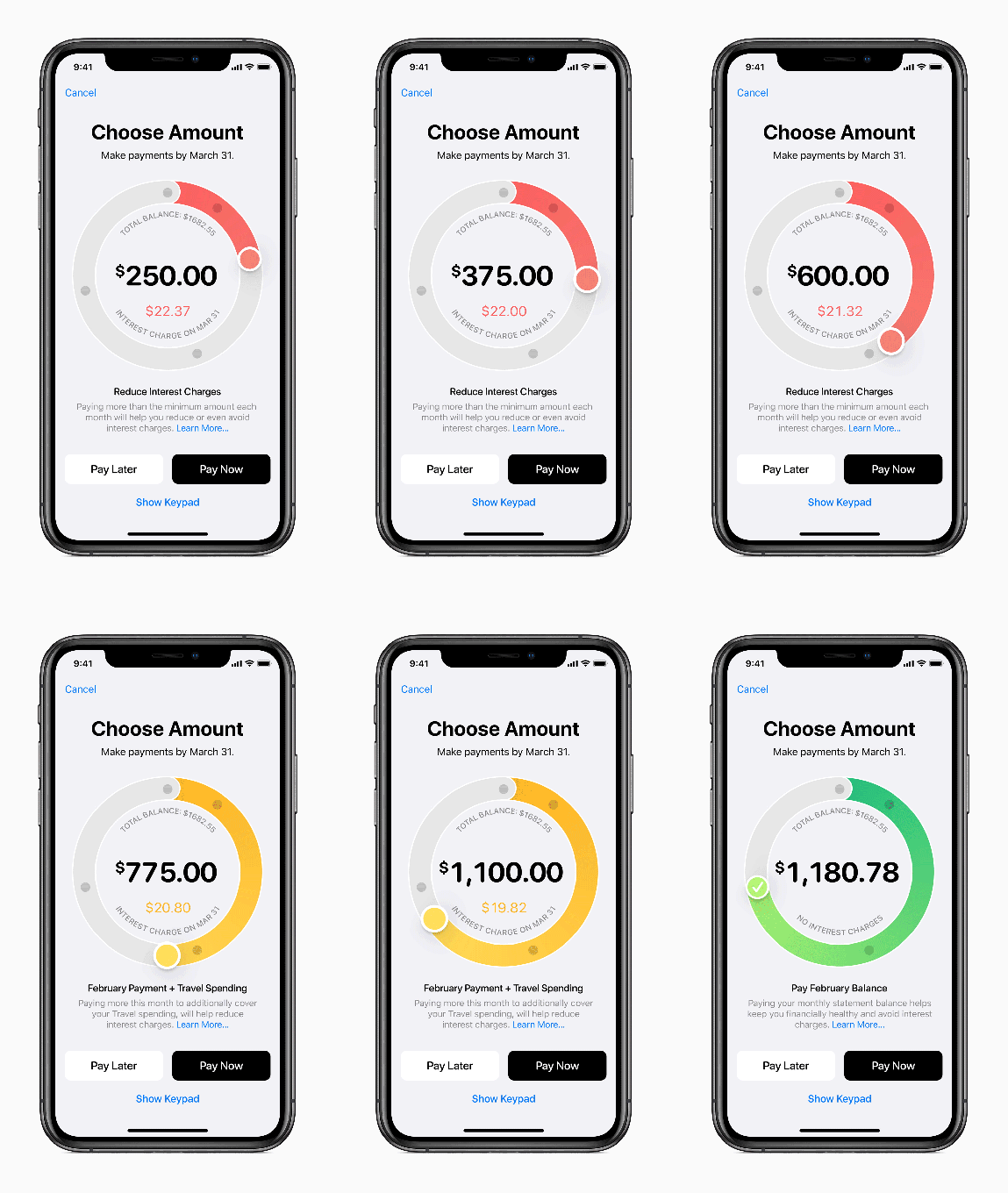
The card is designed to be more transparent about interest and fees. It carries no annual fees, cash advances fees, over the limit or late fees. Its variable APR ranges from 12.99% to 23.99% based on the creditworthiness of the applicant. Information about the user’s charges and interest is clearly displayed in the app companion, and charges are color-coded for easier understanding.

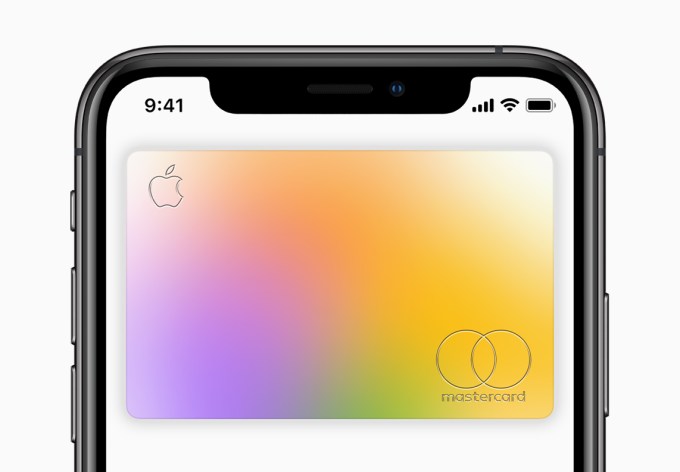
For example, if you’re spending at restaurants, the card will become orange on your device. When you shop for entertainment-related items, it changes to a mix of orange and pink.

Apple Card available today card on iPhoneXs screen 082019

The card benefits from its built-in nature on Apple devices, too.

Beyond the Wallet and Apple Cash integrations, Customers can text for support through iMessage and view transaction locations in Apple Maps.

“We’re thrilled with the overwhelming interest in Apple Card and its positive reception,” said Jennifer Bailey, Apple’s vice president of Apple Pay, in a statement. “Customers have told us they love Apple Card’s simplicity and how it gives them a better view of their spending.”

Apple Card available today card on iPhoneXs card payment screen 082019 inline.gif.large 2x

The launch follows an Apple Card preview earlier this month, where the card was offered to select users.

With today’s launch, Apple says it’s extending the 3% Daily Cash to more merchants and apps besides itself.

Starting today, Apple Card customers will receive 3% cash back on Apple Pay purchases with Uber and Uber eats. More merchants and apps will be added in the future, it says. In the fine print of today’s announcement, Apple notes that Apple Pay is coming soon to Uber services like Uber Cash, Scheduled Rides, and JUMP.

Purchases made with the physical, titanium Apple Card will continue to receive 1% cash back.

Apple touts the privacy benefits of its card as another advantage. Apple won’t know where a user has shopped, it says, and Goldman Sachs won’t share or sell data to third parties for marketing and advertising, the company says.

The Card will be available to customers in the U.S. with an iPhone 6 or higher, running iOS 12.4.

20 Aug 2019

IAC acquires nursing marketplace NurseFly for $15M

NurseFly, a startup that’s created a job marketplace for short-term nursing positions, is announcing its acquisition by holding company IAC.

While the companies aren’t disclosing the deal terms, a source with knowledge of the acquisition said the price was $15 million.

Co-founder and CEO Parth Bhakta told me that hospitals often hire travel nurses (signed for contracts of 13 weeks or a few months) when there’s a staffing shortage, or just because of seasonal needs. He said job sites aren’t really designed to fill these positions, while the existing, offline hiring process is “opaque,” where a nurse’s application “kind of goes into a black hole.”

On NurseFly, on the other hand, nurses can compare multiple offers, chat with employers and research the cost-of-living in different locations. The startup works directly with staffing agencies, charging them a subscription fee (the nurses use the site for free) for access to a pool of qualified candidates who have already provided the necessary documentation.

The startup was founded in 2017 and says it currently has more than 30,000 active job listings, with revenue growing 6x year-over-year. It’s headquartered in San Francisco and recently opened an additional office in Denver.

Bhakta described IAC as the “perfect partner” to help NurseFly “really go after the opportunity with additional resources, really go after it more aggressively with a larger team and organization, to create the best place for healthcare job seekers.”

Bhakta and his co-founder/CTO Eric Conner will continue to lead NurseFly post-acquisition. The company will become part of IAC’s Emerging & Other segment, which already includes staffing platform Bluecrew, and Bluecrew CEO Adam Roston will become NurseFly’s chairman.

20 Aug 2019

SpaceX’s spacefaring Tesla Roadster has made a full trip around the Sun


Somewhere in space, a mannequin wearing a SpaceX spacesuit and driving a cherry red original Tesla Roadster that once belonged to Elon Musk is celebrating its first trip around the sun. The absurd ‘Starman’ and Roadster combo was launched last year aboard the first Falcon Heavy test flight from Kennedy Space Center, and has now completed a full orbit of the Sun, baed on tracking info monitored by the site whereisroadster.com (via Space.com).

The Roadster and its fake driver were selected by SpaceX and Tesla CEO Elon Musk as the payload for the Falcon Heavy’s first flight in part because there was more than a decent chance that whatever was sent up on that first trip was going to end up little more than ash or fiery debris, but the launch actually went very smoothly – despite warnings to the contrary by Musk himself.

When it left Earth’s orbit, the Roadster’s radio was playing David Bowie’s “Life on Mars,” set on repeat, and on-boards cameras were broadcasting via internal power (you can check out the recorded version of the live stream below to see how that went).

In case you were wondering about the Roadster’s maintenance information, it’s now out of warranty more than 21,000 times over based on miles traveled, and it’s gone far enough to have traveled the entire world 33.9 times. Take that, range anxiety.

20 Aug 2019

LA-based gaming company, Scopely, expands in Spain and Ireland

The Los Angeles-based gaming company, Scopely is expanding its geographical footprint in Spain and Ireland.

The company is building out its Barcelona offices tripling its office space and planning to significantly expand its 100-person-strong team in the city. Meanwhile, Scopely is also planning to invest heavily in expanding its strategy-focused game studio, DIGIT, in Dublin.

Scopely didn’t say how many jobs it would be adding in either location.

The company has now hit lifetime revenue of over $1 billion across its franchises and recently launched Star Trek Fleet Command” and “Looney Tunes World of Mayhem”. Scopely also has licenses to develop games for World Wrestling Entertainment and The Walking Dead franchise.

“We are thrilled to expand our European footprint to accommodate our exponential growth,” said Javier Ferreira, Co-CEO of Scopely, in a statement. “I am excited to further lean in to the Barcelona market, which has top-quality talent. The same is true in Dublin with top tech talent flocking to the area, and both offices have amassed impressive highly-specialized expertise. Our Dublin and Barcelona teams play a critical role in the Scopely journey, and we are actively hiring across both markets.”

The company also plans to double its footprint in its hometown of Los Angeles in 2020.

The company has raised more than $250 million in financing to date from investors including Greenspring Associates, Greycroft Partners, Revolution Growth, Evolution Media Partners, Highland Capital Partners, Horizons Ventures, Sands Capital Ventures, The Chernin Group, Take-Two Interactive, Kobe Bryant, Arnold Schwarzenegger, Peter Guber, Jimmy Iovine, and Brendan Iribe.

20 Aug 2019

Starship Technologies raises $40M, crosses 100K deliveries and plans to expand to 100 new universities

Starship Technologies invented the category of rolling autonomous sidewalk delivery robots, and to date, the company has made over 100,000 commercial deliveries on behalf of customers. The milestone comes as Starship adds $40 million in Series A funding, bringing its total funding to $85 million. When it announced an additional $25 million in June 2018, Starship was also piloting its first university deployment – and now the company has a plan to expand to 100 university campuses over the next two years based on the strength of that pilot.

“When I came on board, I was testing a whole bunch of different go-to-market strategies,” explained Starship Technologies CEO Lex Bayer. “We were testing grocery delivery, university campuses, corporate campuses, industrial campuses, and we’ve actually seen tremendous traction on most of these environments. Our grocery business north of London, in Milton Keynes is going exceptionally […] But one of the experiments was to try university campuses. And I think, you know, as a company that’s a startup still, we have to always focus and have sequencing in terms of how we grow. And the university campus has just been pulling our business forward – not only our students pulling it, meaning there are more orders than the restaurant from the robots can keep up with that, sorry, we had to add restaurants and add hours. And so we’ve seen signal from the students, but we’ve also seen signal from universities reaching out to us, and from the food service providers.”

This vertical focus on post-secondary schools will see Starship robots deployed at the University of Pittsburgh today, and Purdue University in Indiana on September 9, with many more to follow. Starship’s ambitious goal is to deploy at 100 schools within the next two years, as mentioned, and it’s going to be using this funding in pursuit of that expansion. The market appetite is strong, as Bayer notes, and it’s a way to show that the robots can operate in all kinds of environments, in and among campuses that blend seamlessly with public city streets and sidewalks. Plus, the student population has proven the ideal initial customer base.

“I think, you know, starting with the younger generation is always great for that,” Bayer said. “Because so much of the way they see the world is the way the world can be; they’re not encumbered by all of the past and the way things were done before. And so when you present them with a better solution, they just use it and they say, ‘Oh, this is how things should be normally. This is the way things should be moving forward.'”

Pitt Student with StarshipAnd that perceived normalcy leads to high utilization: One of the robots serving one of the universities where Starship operates manages to drive the equivalent of the distance between San Francisco and New York City, which is quite an accomplishment when you consider that they only travel at a top speed of four miles per hour. Starship’s all-electric delivery robots have, in total racked up 350,000 miles across its delivery trips, and delivered 9,000 such rolls and 15,000 bananas, among various other grocery and food items.

“The first few years were really proving that this could be done, and that this technology is even possible,” Bayer explained. “And so it took us four years to get to the first 10,000 deliveries. And then it took us eight months ago from 10,000 deliveries to 50,000 deliveries, and now it’s taken us less than four months to get to 100,000. So that is a major milestone, and we’re the first autonomous vehicle company to do that. It’s something we’re obviously very proud of. But it really shows the sort of inflection that our company’s going through and how we’re really scaling up.”

Starship’s funding this round was led by Morpheus Ventures, and included existing investors Shasta Ventures, Matrix Partners, MetaPlanet Holdings and more, along with new investors TDK Ventures, Qu Ventures and others.

20 Aug 2019

IFTTT warns against migrating Nest devices to Google accounts

Google says it’s moving Nest devices over to a unified Google ecosystem for the sake of simplicity. But simple can be complicated, as is certainly the case here. In May, after user pushback, the company announced that it would maintain Works with Nest connections for some third-party integration.

IFTTT’s popular applets for the company’s camera, smoke detector and thermostat are among those exceptions. That certainly bodes well for those user who took the time to ingrate IFTTT functionality.

However, users who opt to migrate a Nest account to a Google one will apparently break their connections in the process. The organize issued a dual warning late last night, following a migration blog post encouraging users to migrate.

Per IFTTT,

  • Do not migrate your Nest account to a Google account. Migrating your Nest account will cause IFTTT and other Works with Nest integrations to be disconnected. This process is not reversible.
  • Do not disconnect Nest from IFTTT after August 31st as you will not be able to reconnect it. This affects users that do not migrate their Nest accounts to a Google one.

For its part, Google says it’s looking to bring similar automation functionality to Nest that presently requires third-party integration from services like IFTTTT.

20 Aug 2019

Yubico launches its dual USB-C and Lightning two-factor security key

Almost two months after it was first announced, Yubico has launched the YubiKey 5Ci, a security key with dual support for both iPhones, Macs and other USB-C compatible devices.

Yubico’s latest Yubikey is the latest iteration of its security key built to support a newer range of devices, including Apple’s iPhone, iPad, and MacBooks in a single device. Announced in June, the company said the security keys would cater for cross-platform users — particularly Apple device owners.

These security keys may be small enough to sit on a keyring, but they contain the keys to your online line. Your Gmail, Twitter, and Facebook account all support these plug-in devices as a second-factor of authentication after your username and password — a far stronger mechanism than the simple code sent to your phone.

Security keys offer almost unbeatable security and can protect against a variety of threats, including nation-state attackers.

Jerrod Chong, Yubico’s chief solutions officer, said the new key would fill a “critical gap in the mobile authentication ecosystem,” particularly given how users are increasingly spending their time across a multitude of mobile devices.

The new key works with a range of apps, including password managers like 1Password and LastPass, and web browsers like Brave, which support security key authentication.

20 Aug 2019

Reputation.com nabs $30M more to help enterprises manage their profiles online

In these days where endorsements from influential personalities online can make or break a product, a startup that’s built a business to help companies harness all the long-tail firepower they can muster to get their name out there in a good way has raised some funding to expand deeper into feedback and other experience territory. Reputation.com, which works with big enterprises in areas like automotive and healthcare to help improve their visibility online and provide more accurate reports to the businesses about how their brands are perceived by customers and others, has raised $30 million in equity financing, money that CEO Joe Fuca said the company will use to continue to expand its tech platform to source more feedback and to future-proof it for further global expansion.

The funding — led by Ascension Ventures, with participation also from new backers Akkadian Ventures, Industry Ventures and River City Ventures and returning investors Kleiner Perkins, August Capital, Bessemer Venture Partners, Heritage Group and Icon Ventures — is the second round Reputation.com has raised since its pivot away from services aimed at individuals. Fuca said the company’s valuation is tripling with this round, and while he wouldn’t go into the details from what I understand from sources (which is supported by data in PitchBook), it had been around $120-130 million in its last round, making it now valued at between $360-390 million now.

Part of the reason that the company’s valuation has tripled is because of its growth. The company doesn’t disclose many customer names (for possibly obvious reasons) but said that three of the top five automotive OEMs and as well as over 10,000 auto dealerships in the U.S. use it, with those numbers now also growing in Europe. Among healthcare providers, it now has 250 customers — including three of the top five — and in the world of property management, more than 100 companies are using Reputation.com. Other verticals that use the company include financial services, hospitality and retail services.

The company competes with other firms that provide services like SEO and other online profile profile management and sees the big challenge as trying to convince businesses that there is more to having a strong profile than just an NPS score (providers of which are also competitors). So, in addition to the metrics that are usually used to compile this figure (based on customer feedback surveys typically), Reputation.com uses unstructured data as well (for example sentiment analysis from social media) and applies algorithms to this to calculate a Reputation Score.

Reputation.com has been around actually since 2006, with its original concept being managing individuals’ online reputations — not exactly in the Klout or PR-management sense, but with a (now very prescient-sounding) intention of providing a way for people to better control their personal information online. Its original name was ReputationDefender and founded by Michael Fertik, it was a pioneer in what came to be called personal information management.

The company proposed an idea of a “vault” for your information, which could still be used and appropriated by so-called data brokers (which help feed the wider ad-tech and marketing tech machines that underpin a large part of the internet economy), but would be done with user consent and compensation.

The idea was hard to scale, however. “I think it was an addressable market issue,” said Fuca, who took over as CEO last year the company was reorienting itself to enterprise services (it sold off the consumer/individual business at the same time to a PE firm), with Fertik taking the role of executive chairman, among other projects. “Individuals seeking reputation defending is only certain market size.”

Not so in the world of enterprise, the area the startup (and I think you can call Reputation.com a startup, given its pivot and restructure and venture backing) has been focusing on exclusively for the better part of a year.

The company today integrates closely with Google — which is not only a major platform for disseminating information in the form of SEO management, but a data source as a repository of user reviews — but despite the fact that Google holds so many cards in the stack, Fuca (who had previously been an exec at DocuSign before coming to Reputation.com) said he doesn’t see it as a potential threat or competitor.

A recent survey from the company about reputation management for the automotive sector underscores just how big of a role Google does play:
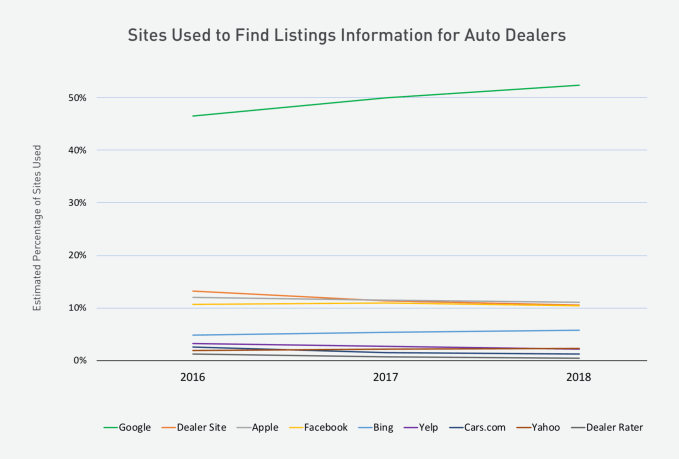
Screenshot 2019 08 20 at 11.48.57“We don’t worry about google as competitor,” Fuca said. “It is super attracted to working with partners like us because we drive domain activity, and they love it when people like us explain to customers how to optimise on Google. For Google, it’s almsot like we are an optimization partner and so it helps their entire ecosystem, and so I don’t see them being a competitor or wanting to be.”

Nevertheless, the fact that the bulk of Reputation.com’s data sources are essentially secondary — that is publically available information that is already online and collected by others — will be driving some of the company’s next stage of development. The plan is to start to add in more of its own primary-source data gathering in the form of customer surveys and feedback forms. That will open the door too to more questions of how the company will handle privacy and personal data longer term.

“Ascension Ventures is excited to deepen its partnership with Reputation.com as it enters its next critical stage of growth,” said John Kuelper, Managing Director at Ascension Ventures, in a statement. “We’ve watched Reputation.com’s industry leading reputation management offering grow into an even more expansive CX platform. We’re seeing some of the world’s largest brands and service providers achieve terrific results by partnering with Reputation.com to analyze and take action on customer feedback — wherever it originates — at scale and in real-time. We’re excited to make this additional investment in Reputation.com as it continues to grow and expand its market leadership.”


20 Aug 2019

Summer flash sale: Score 2-for-1 passes to Disrupt Berlin 2019

The dog days of summer are upon us, and even busy startuppers across Europe are enjoying a well-deserved vacation. Down time’s important and so is saving money, so all this week we’re holding a 2-for-1 summer flash sale on passes to Disrupt Berlin 2019.

Disrupt Berlin takes place on 11-12 December and, depending on the type of pass you buy, our super early-bird pricing can save you up to €600. But now you can double your savings simply by purchasing an Innovator, Founder or Investor pass before our 2-for-1 flash sale ends on August 23 at 11:59 p.m. (CEST). Buy your 2-for-1 passes right here.

Experience all the early-stage startup excitement and opportunity that Disrupt Berlin offers and do it at a huge discount. Join your community — roughly 3,000 attendees from more than 50 countries, including European Union members, Israel, Turkey, Russia, Egypt, India, China and South Korea. Explore hundreds of early-stage startups exhibiting in Startup Alley. Listen to and learn from our roster of speakers — leading founders, technologists, investors and tech icons along with up-and-coming founders.

Be sure to watch — or even better apply to compete in — the Startup Battlefield pitch competition. TechCrunch editors will select some of the best early-stage startups to go head-to-head on the Disrupt Main Stage. Who knows, you might take home the $50,000 top prize or find your next investment opportunity.

More opportunity awaits in the form of TC Top Picks. Apply here to be one of a select few startups to represent these tech categories: AI/Machine Learning, Biotech/Healthtech, Blockchain, Fintech, Mobility, Privacy/Security, Retail/E-commerce, Robotics/IoT/Hardware, CRM/Enterprise and Education. If you’re chosen, you’ll receive a free Startup Alley Exhibitor Package, a VIP experience and a ton of media and investor exposure. What’s more, a TechCrunch editor will interview every TC Top Pick on the Showcase Stage. We’ll record that interview and promote the video across our social media platforms. That video will drive traffic to your site and come in mighty handy as a future talking point with investors.

Disrupt Berlin 2019 takes place on 11-12 December. Don’t let sleepy summer days distract you from serious summer savings. You have the rest of this week to double your savings on Innovator, Founder or Investor passes. Buy your 2-for-1 passes before our flash sale ends on August 23 at 11:59 p.m. (CEST). We’ll see you in December!

Is your company interested in sponsoring or exhibiting at Disrupt Berlin 2019? Contact our sponsorship sales team by filling out this form.

20 Aug 2019

SpotQA picks up $3.25M seed funding for its automated software testing

SpotQA, a new automated software testing platform that claims to be significantly faster than either manual testing or existing automated QA solutions, has raised $3.25 million in seed funding.

Leading the round is Crane Venture Partners, the newly-outed London venture capital firm focusing on “intelligent” enterprise startups. Also participating is Forward Ventures, Downing Ventures and Acequia Capital.

Founded in 2016 by CEO Adil Mohammed, who sold his previous company to apparel platform Teespring, SpotQA’s flagship product is dubbed Virtuoso. Described as an “Intelligent Quality Assistance Platform” that uses machine learning and robotic process automation, it claims to speed up the testing of web and mobile apps by up to 25x and make QA accessible across an entire company, not just software or QA engineers.

“Over the years working closely with engineering teams, I learned how the QA and testing process, when done inefficiently, can be a big barrier for company growth and productivity,” Mohammed tells me. “The way testing is done today is not fit for purpose. Even automated testing methods are not keeping pace with agile development practices”.

This results in software testing creating a bottleneck that prevents companies deploying as fast as they’d like to, says the SpotQA CEO, which is pain point for all involved, from developers to testers, all the way through to DevOps and production. “It has a real impact on the company’s bottom line,” adds Mohammed.

The incumbent options are either manual testing or traditional automation. Mohammed says manual testing is slow and makes continuous development difficult as there is a constant “disconnect” between QA and other teams. In turn, traditional automation is not very smart and hasn’t seen much innovation in the last decade. “It’s still very code based, relies on expensive automation engineers and it is difficult to setup and maintain,” he argues.

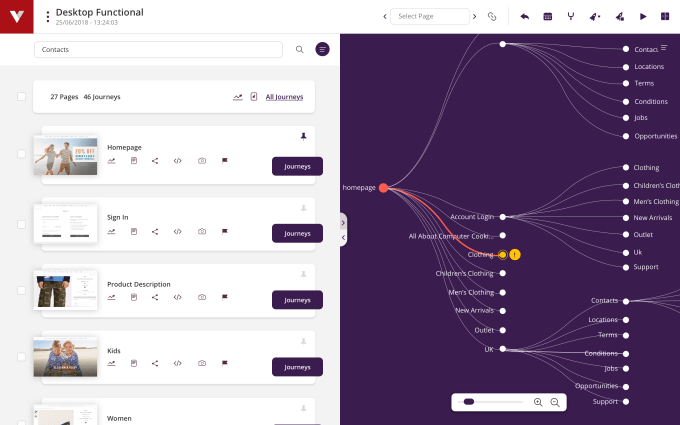
Explorations pages

In contrast, SpotQA claims to have designed Virtuoso so that software quality can be ensured across the entire software development lifecycle, something the company has branded “Quality Assistance”.

“By using machine learning and robotic process automation, Virtuoso is by far the most efficient and effective way to ensure bugs, inconsistencies and errors can be identified and fixed in a fraction of the time taken using manual and traditional automated testing,” says Mohammed.

Meanwhile, the London-based company will use the new injection of capital to scale engineering, sales and marketing, and to expand internationally. Existing Virtuoso customers include Experian, Chemistry, Optionis and DXC Technologies.