Year: 2019

20 Aug 2019

Microsoft’s new Chromium-based Edge browser is now in beta

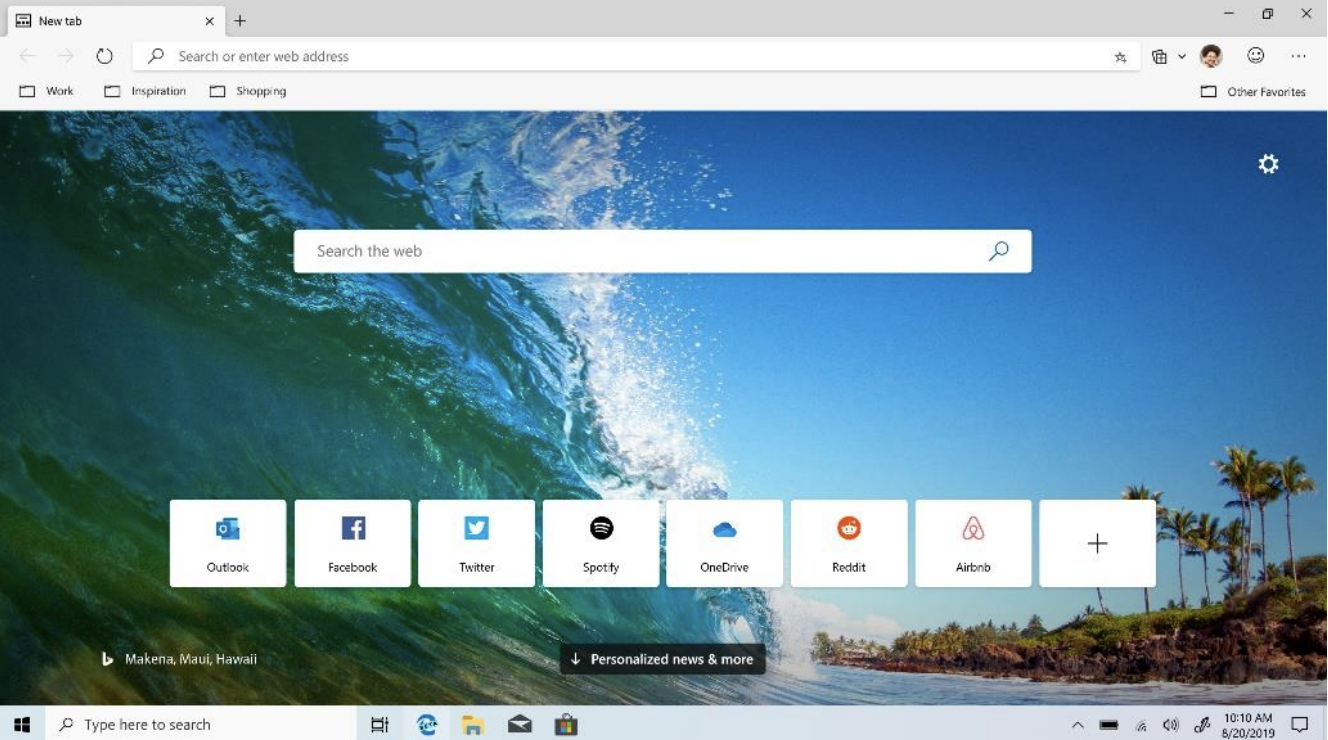
Microsoft today launched the first beta builds of its new, Chromium-based Edge browser for Windows and Mac. The new beta channel, which will see a new update roughly every six weeks, will join the existing dev and canary channels, which will continue to see daily and weekly updates, respectively.

Over the course of the last few months of preview releases in the existing channels, Microsoft gathered about 140,000 pieces of feedback. With this — and a sufficient amount of telemetry it also received from early adopters — the company now feels that it knows enough about how well Edge works on a wide range of machines and that it is stable enough for enthusiasts, web developers and business users to give it a try before its wider release.

“Beta represents the most stable preview channel, as features are added to Beta only after they have cleared quality testing in first the Canary channel and then the Dev channel,” Microsoft explains in today’s announcement. “Major version updates can be expected roughly every six weeks, alongside periodic minor updates for bug fixes and security.”
Screen Shot 2019 08 20 at 8.32.51 AM

At this point, Microsoft has also put all of the infrastructure in place to update the browser and tested it thoroughly through the early preview phase. If need be, that means the team can release an unscheduled beta when it discovers a bug and know that its update systems will work just fine.

Just like Chrome, Firefox and most other browsers, Microsoft will continue to test new features in the Canary and Developer builds before enabling them in the beta builds. The current Canary build, for example, features a very useful global media control button that lets you control YouTube, Spotify and other video and music services without having to switch tabs. Features like this will come to the beta channel in the coming months.

Also available in the beta, but currently behind a flag, are Microsoft’s tracking prevention features. Soon, the beta build will also get support for collections, Microsoft’s modern take on bookmarks, though as far as I can tell, that feature isn’t currently enabled in the canary and developer releases yet either. Other new features that’ll soon make their way to the beta are Internet Explorer mode for those companies that still use legacy applications that rely on Microsoft’s old, pre-Edge browser

With this release, Microsoft is also launching a security bounty program for Edge. Security researchers who find and disclose any high-impact vulnerabilities in the Beta and Dev channel releases are eligible for rewards of up to $15,000.

As a Microsoft spokesperson stressed in an interview ahead of today’s release, the team is also quite happy about the fact that t has now contributed more than 1,000 commits to the Chromium project. That project is mostly led by Google engineers, but it’s good to see that Microsoft’s plans for ramping up its contributions are paying off. By moving to Chromium, Microsoft gave up developing its own engine. At the time, the company argued that continuing to invest in an engine that only had a few users wasn’t exactly useful in keeping the overall web ecosystem healthy either and that it could have more impact by working on Chromium instead. That work, it seems, is starting to pay off now.

As the team told me, a lot of the work so far has gone into bringing Edge to beta status and making sure that all of the core features are working. That means you won’t see a lot of features in the browser that really set Edge apart from the competition (Collections are a good example here). As those core features become ever more stable, though, we’ll see the team focus more on tools and features that will differentiate Edge from the likes of Chrome.

Personally, I switched to the new Edge shortly after the first Developer and Canary releases and have been on the daily update channel ever since. Despite its preview status, the browser has been very stable on both Windows 10 and the Mac. Some versions were better than others, but I didn’t experience and major blocking bugs in the process and Edge has proven to be a fast and stable browser. That bodes well for the beta program.

20 Aug 2019

Google’s lightweight search app, Google Go, launches to Android users worldwide

Google Go, a lightweight version of Google’s search app, is today becoming available to all Android users worldwide. First launched in 2017 after months of beta testing, the app had been designed primarily for use in emerging markets where people are often accessing the internet for the first time on unstable connections by way of low-end Android devices.

Like many of the “Lite” versions of apps built for emerging markets, Google Go takes up less space on phones — now at just over 7MB — and it includes offline features to aid those with slow and intermittent internet connections. The app’s search results are optimized to save up to 40% data, Google also claims.

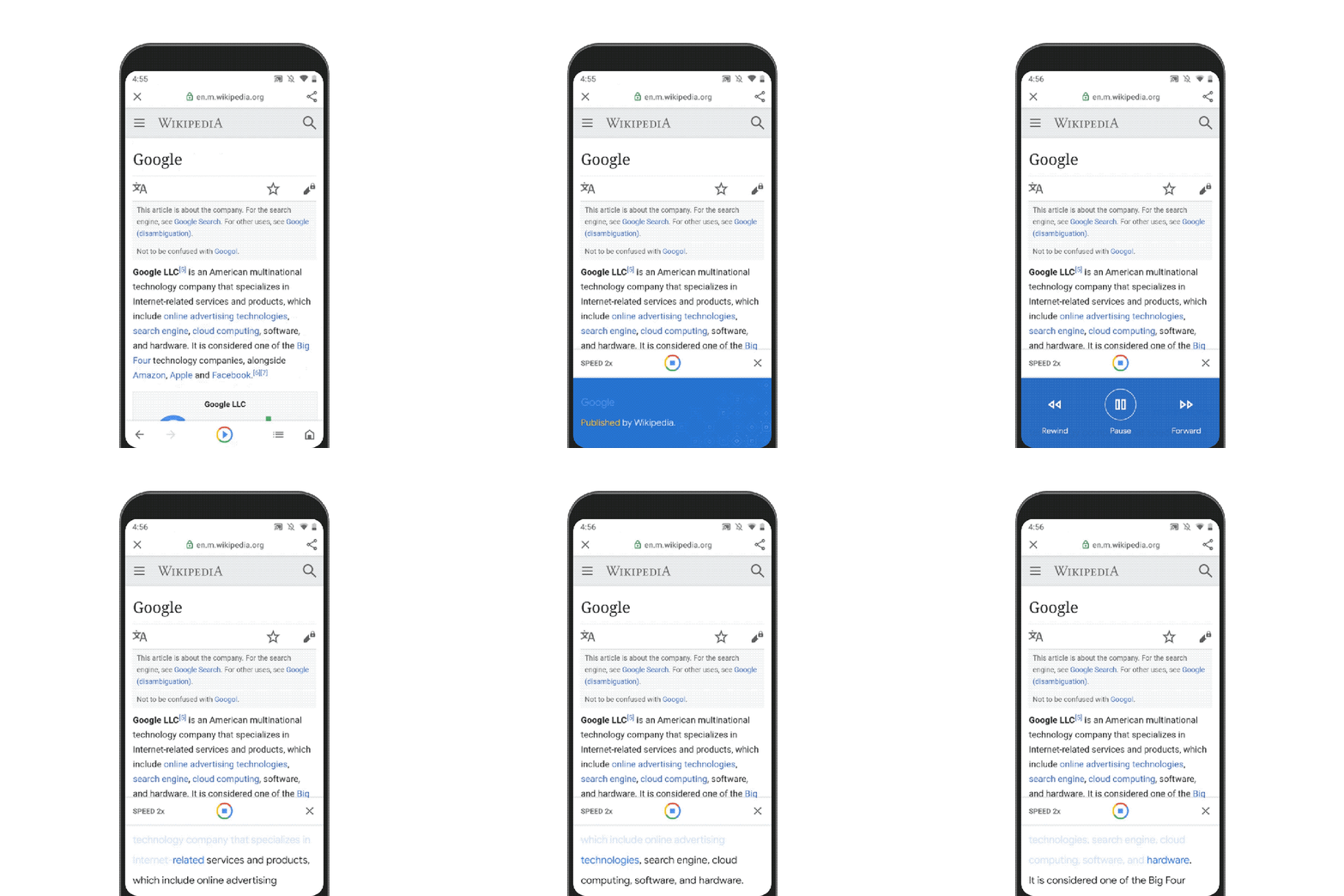
Beyond web search, Google Go includes other discovery features, as well — like the ability to tap through trending topics, voice search, image and GIF search, an easy way to switch between languages, and the ability to have web pages read aloud, powered by A.I.

At Google’s I/O developer conference this spring, the company announced it was also bringing Lens to Google Go.

global launch lens spanish to english

Lens allows users to point their smartphone camera at real-world objects in order to bring up relevant information. In Google Go, the Lens feature will help users who struggle to read. When the camera is pointed at text — like a bus schedule, sign or bank form, for example — Lens can read the text out loud, highlighting the words as they’re spoken. Users can also tap on a particular word to learn its definition or have the text translated.

While Lens was only a 100KB addition, according to Google, the updates to the Go app since launch have increased its size. Initially, it was a 5MB app and now it’s a little more than 7MB.

Previously, Google Go was only available in a few countries on Android Go edition devices. According to data from Sensor Tower, it has been installed approximately 17.5 million times globally, with the largest percentage of users in India (48%). Its next largest markets are Indonesia (16%), Brazil (14%), Nigeria (6%), and South Africa (4%), Sensor Tower says.

In total, it has been available to 29 countries on Android Go edition devices, including also: Angola, Benin, Botswana, Burkina Faso, Cameroon, Cape Verde, Cote d’Ivoire, Gabon, Guinea-Bissau, Kenya, Mali, Mauritius, Mozambique, Namibia, Niger, Nigeria, Philippines, Rwanda, Senegal, Tanzania, Togo, Uganda, Zambia, and Zimbabwe.

Google says the app now has “millions” of users.

Today, Google says it will be available to all users worldwide on the Play Store.

Google says it decided to launch the app globally, including in markets where bandwidth is not a concern, because it understands that everyone at times can struggle with problems like limited phone storage or spotty connections.

Plus, it’s a lightweight app for reading and translating text. At Google I/O, the company had noted there are over 800 million adults worldwide who struggle to read — and, of course, not all are located in emerging markets.

global launch karaoke

Google Go is one of many lightweight apps Google has built for emerging markets, along with YouTube Go, Files GoGmail Go, Google Maps Go, Gallery Go, and Google Assistant Go, for example.

The Google Go app will be available on the Play Store to global users running Android Lollipop or higher.

20 Aug 2019

Y Combinator’s Michael Seibel on building startups, early-stage deal-making and tech’s center of gravity

Hello and welcome back to Equity, TechCrunch’s venture capital-focused podcast, where we unpack the numbers behind the headlines.

We have a special episode ready for you today. As many of you know, it’s that time of year when hundreds of nascent startups make their big 2-minute pitch to the top venture capitalists of “Silicon Valley” (San Francisco) at Y Combinator’s Demo Day. We (Kate and Alex) thought we’d bring in a YC expert, YC chief executive officer Michael Seibel, to chat about the batch, changes in the last year, rising deal prices, SAFEs vs. convertible notes and the future of technology in SF.

“This place is where tech is happening and they want to be here,” Seibel told us. “Like I’m a struggling actor in Iowa and I want to get to Hollywood. This is kind of the promised land for a lot of people around the world.”

We had a lot of questions for Michael. For one, deal sizes and valuations at the seed stage are growing like crazy and YC is a big cause of that. To our surprise, Michael isn’t actually a big fan of these huge rounds.

“We don’t think this is necessarily a positive phenomenon; on the other hand, we like that our founders get less dilution,” he said.

If you’re interested in taking a look at each of the companies that made their pitch yesterday, at Day One of Y Combinator’s Demo Day, you can take a look at TechCrunch’s full list. Check back end of day Tuesday for a full list of companies that pitched on Day Two.

As a final note, Equity is still not an interview show. This was a fun exception!

Equity drops every Friday at 6:00 am PT, so subscribe to us on Apple PodcastsOvercast, Pocket Casts, Spotify, Downcast and all the casts.

20 Aug 2019

MIT develops a sensor that can work underwater without a battery and send back data

MIT researchers have created a new underwater sensor and communication system that doesn’t require batteries, and barely uses any power at all. This could help set up an underwater ‘internet of things’ according to MIT, which would allow for real-time sea temperature and marine life monitoring, without requiring regular equipment and power swaps to make it work. Without that requirement, it would even be possible to set up networks of underwater sensors in the seas of distant planets.

The system devised by MIT researchers use a transmitter that sends out sound waves underwater, which then hit sensors with embedded receivers, transmitting a tiny amount of energy in the process. The sensor then either uses that energy to answer back – or doesn’t, which corresponds to either a 1 or a 0, meaning it can effectively communicate in binary. The only energy required for this to work is the power stored in the sound wave sent by the transmitter.

The inspiration for devising this system came from a somewhat unlikely source: Fadel Adib, an assistant professor in the MIT Media Lab and one of the researchers who worked on the project was watching nature doc “Blue Planet” and thought about how much of the Earths oceans are left unstudied, and also about how the solution for that can’t be battery-powered sensors since that could result in a lot of excess pollution.

Essentially, the system works but allowing piezoelectric resonators, which have been used in things like microphones for well over 100 years, to either deform in response to a sound wave, or retain their shape and reflect, based on information contained in any kind of sensor you might want to pair with the piezoelectric material. That sends back the binary signal, which can then be collected and interpreted.

Next up for the research team is to show that this can work at longer distances, and in concert with other sensors for simultaneous transmission. Eventually, it might even be able to transmit sound and even low-res images, which would be a huge development in terms of establishing remote monitoring stations – especially as we pursue more science and research on worlds not our own.

20 Aug 2019

Discover the startups exhibiting at Disrupt SF 2019

We’re just a few weeks away from kicking off our flagship event, Disrupt SF 2019, that takes place on October 2-4. If you’re an investor looking to increase your portfolio, it’s the perfect time to start planning your Disrupt strategy. Never fear, we’re here to help you make the most of your valuable time. But first, a housekeeping item. If you haven’t already done so, buy your pass to Disrupt right here.

You’re no doubt familiar with Startup Alley, our exhibition floor where you’ll find more than 1,000 early-stage startups showcasing their products and technology. That’s an investor’s goldmine, is it not? Here’s the good news. We now have our first batch of Startup Alley exhibitors listed on our website. You can peruse the list, do your research in the comfort of your home or office and get a clear idea of who you want to meet at Disrupt.

The website list also includes our recently announced TC Top Picks. We vetted hundreds of applications and narrowed the field down to 45 exceptional startups representing the best of these tech categories: AI/Machine Learning, Biotech/Healthtech, Blockchain, Fintech, Mobility, Privacy/Security, Retail/E-commerce, Robotics/IoT/Hardware, SaaS and Social Impact/Education. You don’t want to miss seeing what these startups have to offer.

Ready for more good news? It’s CrunchMatch, our free business match-making platform available to Innovator, Founder or Investor passholders. It makes networking so much easier. Once the platform goes live (we’ll email notification), simply create your CrunchMatch profile outlining specific roles, goals and the type of people you want to meet. Founders would list category, stage, location, funding status, etc. Investor profiles might include investment categories, preferred funding stage, geographic preferences and the like.

CrunchMatch goes to work and suggests meetings and sends out invitations (which recipients can easily accept or decline). You can also use CrunchMatch to reserve dedicated (a.k.a. quieter) meeting spaces where you can network in comfort.

Researching our online list of exhibiting startups in advance and taking advantage of CrunchMatch will save you time and shoe leather. It will also free you up to experience more of what Disrupt SF offers. Like the Startup Battlefield. You know you’re going to want to check out those amazing founders.

Use some of your time to take in the world-class speakers. Here’s just one example, but you’ll find plenty more in the Disrupt SF agenda.

How to Evaluate Talent and Make Decisions: Ray Dalio knows a thing or two about building successful startups. As founder of the firm, Bridgewater, he helped build it into one of the most successful investment companies ever, managing a whopping $150 billion in assets. He recently wrote a book called Principles, and he’s coming to the TechCrunch Disrupt Extra Crunch stage in October to discuss the book and companion mobile app on how building a strong culture can lead to a flourishing startup.

Disrupt San Francisco 2019 takes place on October 2-4, and now you can start strategizing your Disrupt experience by researching the Startup Alley exhibitors listed on our website. Save time, make money. Now that’s an opportunity.

Is your company interested in sponsoring or exhibiting at Disrupt San Francisco 2019? Contact our sponsorship sales team by filling out this form.

20 Aug 2019

DigitalOcean launches managed MySQL and Redis database services

Half a year after launching its managed PostgreSQL service, upstart hosting and cloud services platform DigitalOcean today announced the launch of its managed MySQL and Redis database offerings, too.

Like most of the company’s latest releases, this move exemplifies DigitalOcean’s ambition to move beyond its discount hosting roots and to become a more fully-fledged cloud provider. Besides the database service and its core hosting products and infrastructure, the company now offers object and block storage and a Kubernetes engine, which itself can be used to run virtually any modern piece of cloud infrastructure. It’s unlikely to catch up with the hyperclouds anytime soon, but it’s good to have a competitor in the market.

“With the additions of MySQL and Redis, DigitalOcean now supports three of the most requested database offerings, making it easier for developers to build and run applications, rather than spending time on complex management,” said Shiven Ramji, DigitalOcean’s Senior VP of Product. “The developer is not just the DNA of DigitalOcean, but the reason for much of the company’s success. We must continue to build on this success and support developers with the services they need most on their journey towards simple app development.”

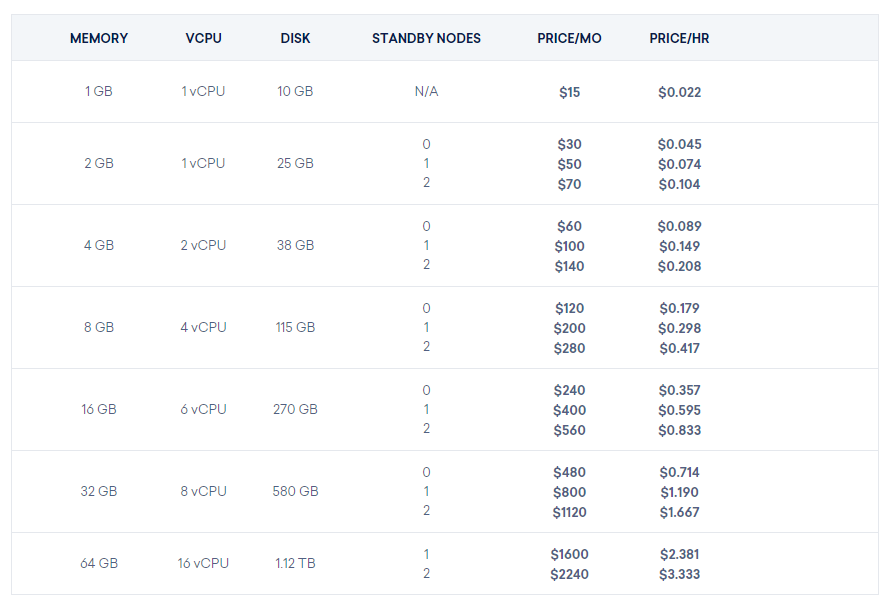
Pricing for the managed database services remains the same, no matter which engine you choose.

2019 08 19 1553

The new database services are now available in the company’s New York, Frankfurt and San Francisco data centers. Support for other database engines is also in the works. As the company notes, it selected MySQL and Redis because of popular demand from its developer community and it will do so for other engines as well. MySQL and Redis were the only services on DigitalOcean’s roadmap for 2019, though, so I don’t expect we’ll see any additional releases before the end of the year.

20 Aug 2019

Facebook unveils new tools to control how websites share your data for ad-targeting

Last year, Facebook CEO Mark Zuckerberg announced that the company would be creating a “Clear History” feature that deletes the data that third-party websites and apps share with Facebook. Today, the company is actually launching feature in select geographies.

It’s gotten a new name in the meantime: Off-Facebook Activity. David Baser, the director of product management leading Facebook’s privacy and data use team, told me that the name should make it clear to everyone “exactly what kind of data” is being revealed here.

In a demo video, Baser showed me how a user could bring up a list of everyone sending data to Facebook, and then tap on specific app or website to learn what data is being shared. If you decide that you don’t like this data-sharing, you can block it, either on a website and app level, or across-the-board.

Facebook has of course been facing greater scrutiny over data-sharing over the past couple years, thanks to the Cambridge Analytica scandal. This, along with concerns about misinformation spreading on the platform, has led the company to launch a number of new transparency tools around advertising and content.

In this case, Facebook isn’t deleting the data that a third party might have collected about your behavior. Instead, it’s removing the connection between that data and your personal information on Facebook (any old data associated with an account is deleted as well).

Baser said that disconnecting your off-Facebook activity will have the immediate effect of logging you out of any website or app where you used your Facebook login. More broadly, he argued that maintaining this connection benefits both consumers and businesses, because it leads to more relevant advertising — if you were looking at a specific type of shoe on a retailer’s website, Facebook could then show you ads for those shoes.

Still, Baser said, “We at Facebook want people to know this is happening.” So it’s not hiding these options away deep within a hidden menu, but making them accessible from the main settings page.

He also suggested that no other company has tried to create this kind of “comprehensive surface” for letting users control their data, so Facebook to figure out the right approach that wouldn’t overhwhelm or confuse users. For example, he said, “Every single aspect of this product follows the principle of progressive disclosure” — so you get with a high-level overview at first, but can see more information as you move deeper into the tools.

Facebook says it worked with privacy experts to develop this feature — and behind the scenes, it had to change the way it stores this data to make it viewable and controllable by users.

I asked about whether Facebook might eventually add tools to control certain types of data, like purchase history or location data, but Baser said the company found that “very few people understood the data enough” to want something like that.

“I agree with your instinct, but that’s not the feedback we got,” he said, adding that if there’s significant user demand, “Of course, we’d consider it.”

The Off-Facebook Activity tool is rolling out initially in Ireland, South Korea and Spain before expanding to additional countries.

20 Aug 2019

H20.ai announces $72.5M Series D led by Goldman Sachs

H20.ai‘s mission is to democratize AI by providing a set of tools that frees companies from relying on teams of data scientists. Today it got a bushel of money to help. The company announced a $72.5 million Series D round led by Goldman Sachs and Ping An Global Voyager Fund.

Previous investors Wells Fargo, NVIDIA and Nexus Venture Partners also participated. Under the terms of the deal, Jade Mandel from Goldman Sachs will be joining the H2O.ai Board. Today’s investment brings the total raised to $147 million.

It’s worth noting that Goldman Sachs isn’t just an investor. It’s also a customer. Company CEO and co-founder Sri Ambati says the fact that customers, Wells Fargo and Goldman Sachs, have led the last two rounds is a validation for him and his company. “Customers have risen up from the ranks for two consecutive rounds for us. Last time the Series C was led by Wells Fargo where we were their platform of choice. Today’s round was led by Goldman Sachs, which has been a strong customer for us and strong supporters of our technology,” Ambati told TechCrunch.

The company’s main product, H20 Driverless AI, introduced in 2017, gets its name from the fact it provides a way for people who aren’t AI experts to still take advantage of AI without a team of data scientists. “Driverless AI is automatic machine learning, which brings the power of a world class data scientists in the hands of everyone. lt builds models automatically using machine learning algorithms of every kind,” Ambati explained.

They introduced a new recipe concept today, that provides all of the AI ingredients and instructions for building models for different business requirements. H20.ai’s team of data scientists has created and open sourced 100 recipes for things like credit risk scoring, anomaly detection and property valuation.

The company has been growing since its Series C round in 2017 when it had 70 employees. Today it has 175 and has tripled the number of customers since the prior round, although Ambati didn’t discuss an exact number.  The company has its roots in open source and has 20,000 users of its open source products, according to Ambati.

He didn’t want to discuss valuation and wouldn’t say when the company might go public, saying it’s early days for AI and they are working hard to build a company for the long haul.

20 Aug 2019

PressReader aims to add more personalization to its digital news platform by acquiring News360

A pair of digital news companies are teaming up, with PressReader acquiring News360.

PressReader was founded back in 1999 as Newspaper Direct. It now operates a platform that converts newspapers and magazines into digital formats, while offering a $29.99 monthly subscription that provides unlimited access to more than 7,000 of those titles.

News360, meanwhile, is relatively youthful, having been founded in 2010. It’s also created a news aggregation app, but the announcement makes it sound like PressReader was particularly interested in the company’s NativeAI technology for analytics and personalization.

In a statement, PressReader CEO Alex Kroogman suggested that News360’s technology will be used to improve PressReader’s consumer experience and publisher tools:

In a world where news fatigue is a real and growing problem, and media literacy a global concern, it’s more important than ever for people to have access to the trusted content they need in an engaging environment. By understanding each person’s interests, and building advanced data science systems around content analytics, we will be able to give our millions of readers the trusted media they want, how they want it, when they want it, and where they want it, while building more audience intelligence into the data that drives our publisher and brand partnerships.

The News360 team will be joining PressReader and working out of the acquiring company’s Vancouver headquarters.

News360 CEO Roman Karachinsky told me via email that the combined company will continue to support the News360 app and “develop it alongside the PressReader apps,” but he added, “In the short-term[,] the team will be focused on adding News360 tech into PressReader, so I wouldn’t expect big changes to the News360 app until we’re done with this.”

The financial terms of the acquisition were not disclosed. According to Crunchbase, News360 has raised a total of $7.5 million from investors including Ordell Capital.

20 Aug 2019

Waymo self-driving cars head to Florida for rainy season

Waymo is taking some of its autonomous vehicles to Florida just in time for hurricane season to begin testing in heavy rain.

The move to Florida will focus on testing how its myriad of sensors hold up during the region’s rainy season as well as to collect data. All of the vehicles will be manually driven by trained drivers.

Waymo will bring both of its autonomous vehicles, the Chrysler Pacificas and a Jaguar I-Pace, to Naples and Miami, Florida for testing, according to a blog posted Tuesday. Miami is one of the wettest cities in the U.S., averaging 61.9 inches of rain annually.

The self-driving car company, which is a business under Alphabet, began testing its autonomous vehicles in and around Mountain View, Calif., before branching out to other cities and weather, including Novi, Michigan, Kirkland, Washington and San Francisco. But the bulk of the company’s activities have been in suburbs of Phoenix and around Mountain View — two places with lots of sun, and even blowing dust, in the case of Phoenix.

Waymo opened a technical center Chandler, Ariz. and started testing there in 2016. Since then the company has ramped up its testing and launched an early rider program in April 2017 as a step toward commercial deployment.

The company will spend the next several weeks driving on a closed course in Naples to test its sensor suite , which includes lidar, cameras and radar . Later in the month, Waymo plans to bring its vehicles to public roads in Miami. A few Waymo vehicles will be collecting data on highways between Orlando, Tampa, Fort Myers and Miami.

Waymo is hardly the only autonomous vehicle company to take advantage of Florida’s AV friendly regulations. Ford and Argo AI, the self-driving company it backs, have had a presence in the Miami since early 2018. Argo AI began collecting data and mapping and has since expanded to testing in autonomous mode last summer.

Last year, Ford partnered with Walmart and Postmates to test the business of delivering goods like groceries and pet food using self-driving vehicles. The pilot project is focused on Miami-Dade County.

Self-driving trucks startup Starsky Robotics also is testing in Florida.