Year: 2019

15 Aug 2019

Corey Weiner is taking over as CEO of mobile ad company Jun Group

After 18 years at the helm, Mitchell Reichgut is stepping down as CEO of Jun Group, with COO and President Corey Weiner taking over as chief executive.

The news comes just about a year after Jun Group was acquired by Advantage Solutions, but Reichgut said the acquisition was a “non-factor” in his decision.

“I think it is the right time for the company to have a leadership change,” he said. “I have been stepping back more and more, so it’s a natural progression, with a bunch of managers here taking on larger roles as I move on.”

In addition to Weiner (who’s been at Jun Group since 2003), other Jun Group executives taking on new roles include Mishel Alon becoming COO, Leslie Bargmann becoming vice president of client services and Jeremy Ellison becoming vice president of technology.

Reichgut, meanwhile, said he’s “stepping back entirely to focus on artwork and writing and community service after a long, long career.”

Looking ahead, Weiner he plans to double down on Jun Group’s approach to advertising, where it builds custom audience segments by polling users in its network, then shows video ads and branded content to interested viewers.

“Our primary motivation is to evangelize that format,” he said. “As you know, most advertising is interruptive and consumers don’t like that kind of advertising very much — in some cases, they’re annoyed by it . This value exchange flips the advertising paradigm on its head. By choosing to engage with advertising, they are getting something amazing in return.”

15 Aug 2019

Gradjoy is a Y Combinator backed fintech to help you knock out your student loans

The right people to solve the trillion dollar student debt crisis might be the ones who are suffering from it the hardest.

If you’re a recent college graduate, there’s a 50 percent chance you took on debt when you moved off campus. If you’re like the average student borrower, you graduated with $29,800 of loan debt, and are making a monthly re-payment of between $200 and $300, according to a recent report from the New York Fed.

Gradjoy is a new Y Combinator-backed startup that wants to help the 45 million student debt borrowers in the U.S. manage their repayment plans. Within seven days of being a live platform and a marketing strategy that consisted of reaching out to a few universities, Gradjoy is already managing $20 million in loans.

Co-founders Jose Bethancourt and Marco del Carmen turned down roles at Cloudflare and MongoDB, respectively, upon learning they’d been accepted to Y Combinator’s Summer 2019 class. Gradjoy bills itself as a “student loan co-pilot,” and currently exists a platform that helps users manage student loan repayments – whether that’s assessing pros and cons of refinancing, what a monthly payment should look like, and if they have any wiggle room based on greater income and spending habits. Gradjoy hopes to hammer a few cracks in the $1.5 trillion federal student loan debt crisis by giving new borrowers more insight into their repayment journey.

Loan companies will always advise borrowers to pay the minimum because they benefit from the outrageous interest fees amassed over time. Gradjoy wants to tap into your bank account and monitor your finances to deliver more transparent loan-management advice with a feature that lets you simulate how different payment amounts would affect your loans.

Bethancourt, a recent University of Texas graduate, was his own first user. He built the Gradjoy platform for himself while calculating his optimal student loan repayment plan in Excel. He’d met his co-founder in a coding bootcamp in the Rio Grande Valley at the border of Mexico and South Texas – where Bethancourt is originally from.

GradJoy Founders

Jose Bethancourt (Left) Marco del Carmen (Right)

Student lending is a predatory industry that benefits off the ignorance of first-time borrowers and has been known to purposefully constrict resources for customers. New borrowers must navigate landmines like refinancing scams, the “7 minute rule” for customer service assistance and tricky requirements buried within the public service loan forgiveness program.

A question is posed for new startups that want to punch up against greedy student loan servicers like Navient and AES. Without replicating the corrupt business models that lenders have in order to make money off the student loan debt problem, how can newcomers like Gradjoy turn profitable?

Screen Shot 2019 08 14 at 1.02.11 PM

Gradjoy bills itself as a “student loan co-pilot.”

Aside from venture capital, which Gradjoy will be seeking upon its graduation from Y Combinator, will make money in a few ways. In order to align with users’ goals, Gradjoy’s business model is tied to their savings. If a user refinances using GradJoy, they get a referral payment from their lending partners. The platform is currently beta testing their robo-advisor for debt, and in the future they plan on charging a small fee per month if they’re able to save a user money.

Student loans don’t only burden millennial bank accounts. The student loan debt crisis is creating an economic trend. Inability to repay student loans causes young people to rely on credit cards to make ends meet and delay major life choices like investing in property. Not to mention the affect of student debt on mental health for young people at an already-volatile point in their lives.

In five years, Gradjoy’s founders say they’d like to be running a more robust financial services product that was first focused on helping its customers pay off student loans. They hope to mobilize customers while they’re at the nascence of their financial independence, and scale up to launch a larger suite of financial service products.

15 Aug 2019

Local governments are forcing the scooter industry to grow up fast

Gone are the days when tech companies can deploy their services in cities without any regard for rules and regulations. Before the rise of electric scooters, cities had already become hip to tech’s status quo (thanks to the likes of Uber and Lyft) and were ready to regulate. We explored some of this in “The uncertain future of shared scooters,” but since then, new challenges have emerged for scooter startups.

And for scooter startups, city regulations can make or break their businesses across nearly every aspect of operations, especially two major ones: ridership growth and ability to attract investor dollars. From issuing permits to determining how many scooters any one company can operate at any one time to enforcing low-income plans and impacting product roadmaps, the ball is really in the city’s court.

15 Aug 2019

US Cyber Command has published malware linked to a North Korea hacking group

U.S. Cyber Command, the sister division of the National Security Agency focused on offensive hacking and security operations, has released a set of new samples of malware linked to North Korean hackers.

The military unit tweeted Wednesday that it had uploaded the malware to VirusTotal, a widely used database for malware and security research.

It’s not the first time the unit has uploaded malware to the server — it has its own Twitter account to tell followers what malware it uploads. On one hand the disclosure helps security teams fight threats from nation states, but it also gives a rare glimpse inside the nation-state backed hacking groups that Cyber Command is focused on.

The uploaded malware sample is named Electric Fish by the U.S. government, Electric Fish is a tunneling tool, designed to exfiltrate data from one system to another over the internet once a backdoor has been placed.

Electric Fish is linked to linked to the APT36 hacking group.

FireEye says APT36 has distinctly different motivations from other North Korean-backed hacking groups like Lazarus, which was blamed for the Sony hack in 2016 and the WannaCry ransomware attack in 2017. APT36 is focused on financial crimes, such as stealing millions of dollars from banks across the world, the cybersecurity firm said.

Electric Fish was first discovered in May, according to Homeland Security’s cybersecurity division CISA, but APT36 has been active for several years.

A recently leaked United Nations report said the North Korean regime has stolen more than $2 billion through dozens of cyberattacks to fund its various weapons programs.

APT36 has amassed more than $100 million in stolen funds since its inception.

15 Aug 2019

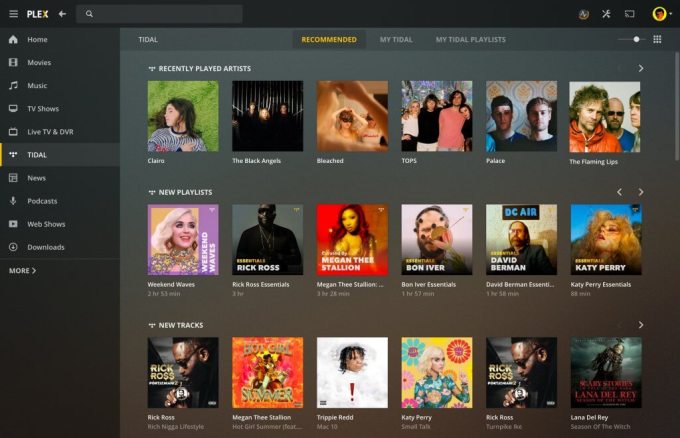
Media software Plex launches a new desktop app for Mac and Windows

Plex today is launching a new desktop application for Mac and Windows, with the goal of eventually replacing Plex Media Player as the company’s only desktop solution. The app’s arrival also signals a change in direction for the company, which will also now remove its existing Windows Store application and end support for the traditional home theater PC setup — the latter which involves a desktop computer connected to a TV or home theater.

The company explains this decision was made after examining how people were using Plex today, and found that most would have an equal or even better experience with a streaming device and its new players.

“It marks the end of an era for us, and we’d be lying if we said it wasn’t a little bittersweet,” the company wrote in a blog post about the change.

plex desktop tidal recommended 1024x661

Home theater PC-style configurations are today a bit of a holdover from an earlier era where there were fewer resources to stream personal media from your PC to your TV. Today, however, Plex’s apps for streaming devices are fairly capable, and a heck of a lot simpler to set up and use by mainstream consumers.

The company also noted that the new Apple TV and Android players support nearly all the same formats and that Plex’s app for streaming devices has come a long way in recent years.

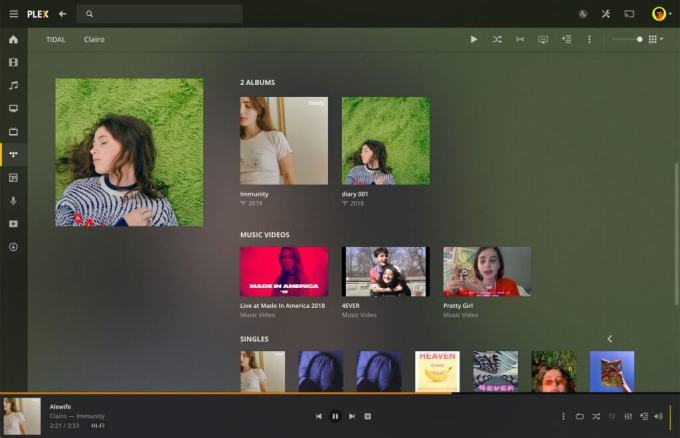
plex desktop tidal artist 1024x660

“Modern streaming devices don’t need as much care and feeding as desktop computers. They don’t need to sleep (much), they use a tiny amount of electricity…and they don’t require nearly as much effort to get up and running. They have remotes that work wonderfully out of the box (no more fiddly custom key mappings!) In short, they’re designed for the environment in which you’re using them, and it shows,” the company explained, in hopes of fending off any backlash.

Meanwhile, the new Plex desktop app includes all the capabilities of Plex Media Player along with support for offline access. Previously called “Sync,” this feature has been renamed to “Downloads,” and allows Plex users to take your media with you. Similar support for offline media will come to Plex’s mobile apps, too, at a later date, the company said.

To use the Downloads feature, you’ll need a Plex Pass subscription. But otherwise, the new desktop app is free.

Though the app is meant to replace Plex Media Player, the company says it will continue to update the software until January 2020, to allow time for everyone to make the transition.

15 Aug 2019

Apple, Samsung continue growth as North American wearables market hits $2B

New numbers out of Canalys show strong continued growth for the North America wearables market for Q2. The market hit $2 billion value for the quarter, according to the firm, marking a 38% year over year growth.

It’s not exactly earth shattering, but it’s steady for a category that felt almost dead in the water a year or two back. Growth for the quarter was lead by Apple and Samsung, which marked 32% and 121% growth, coming in at first and third place, respectively — at 2.2 million and 400,000 units.

Fitbit, meanwhile, retained its number two position. The company show a modest 18 percent growth, owing the slow down to fewer smartwatches (versus fitness bands) shipped. That tracks with the company’s disappointing quarterly results as the new Versa Lite failed to hit the mark. The move marks a misstep for the Versa brand, which has otherwise contributed well to Fitbit’s bounce back.

unnamed 1

Interestingly, while North America is the number two wearables market in terms of units shipped, it continues to be the most valuable. That’s likely due to higher unit prices, with the Apple Watch leading the pack, versus Xiaomi’s super cheap fitness bands, which have a much stronger foothold in their native China.

15 Aug 2019

Look inside Virgin Galactic’s shiny new Spaceport America

For a couple years now Virgin Galactic’s Spaceport America was more aspirational than functional, but now it’s been built out with the necessaries for commercial spaceflight — mainly coffee. The company just showed off the newly redesigned space from which it plans to launch flights… sometime.

Much of the undulating, aesthetically rusted building, located deep in the desert of New Mexico, is dedicated to housing the carrier craft and rocket planes that the company has been testing for the last few years.

That was almost certainly the hard part, in fact: Relocating the infrastructure necessary to support the spacefaring vehicles, including engineers, equipment, and supply chain people, as Virgin Galactic CEO George Whitesides told me in May.

But the spaceport itself must also become a place for humans to arrive, park at, nervously sip coffee and have a pre-flight meal — if that’s really a good idea for your first trip to space. Maybe stick to coffee.

The “first phase” of the consumer-side build-out includes an elegantly appointed little restaurant and cafe, and upstairs can be found “mission control,” which looks more like a conference room than a spaceplane pilot staging area.

[gallery ids="1869269,1869273,1869279,1869270,1869266,1869277,1869271,1869272"]

There are a number of little lounge areas for passengers and others to congregate in, and if the scale seems a little small, keep in mind that this isn’t an airport food court. These flights are going to be full, but they’re also going to be six passengers at a time

Jeremy Brown, design director for Spaceport America, explains that the choice of materials and terraced surfaces, leading up to the lighter, airier second story is meant to evoke the landscape outside, which nearly all the seating faces, and draw the attention outwards and upwards.

Although Virgin Galactic has had several successful test flights, there’s no indication when its first actual commercial flight will be.

“The last flight we did, we basically demonstrated a full commercial profile, including the interior of the vehicle,” Whitesides said in May. “Not only did we, you know, go up to space and come down, but because Beth was in the back — Beth Moses, our flight instructor — she was sort of our mock passenger. She got up a couple times and moved around, she was able to verify our cabin conditions.”

The paperwork is in order and the spaceport itself is now equipped with a cafe, so I wouldn’t be surprised if we saw the first flight from Virgin Galactic before the end of the year.

15 Aug 2019

How about earning crypto tokens to carbon-offset your Uber rides?

Most of us, by now, are aware that all sorts of crazy stuff is happening to the planet’s climate and the blame is pretty much universally recognized as lying with humans, pumping more and more carbon into the atmosphere. Scientists are now saying tree planting, for instance, has to happen very, very quickly if we are to avert disaster.

A few startups, such as Changers, have tried to incentivize us to do things like walk instead of taking the car, with mixed results.

Now a blockchain startup things it may have the making of one solution, rewarding us with crypto tokens for making the right choices for the planet. Now, before you roll your eyes, hear me out…

Imagine rewarding people for taking the bus instead of their car – and them exchanging that token to offset their carbon by planting a tree? Or incentivizing passengers for sharing their travel data – helping companies to improve their experience in the future? That’s the big idea here.

Here’s how it works: The DOVU platform offers a token, wallet, and marketplace and allows users to earn tokens and spend them to carbon offset their activity and on rewards within the mobility ecosystem, starting with their Uber rides.

Users link their Uber account to their Dovu wallet, enabling them to earn DOV tokens for every journey taken. The startup has connected to Uber APIs, meaning that, once authenticated, the user has to do nothing other than take the journey.

The Dovu CO2 calculator then automatically rewards the value of tokens depending on the length of the journey. The DOV tokens can then be spent within the Dovu Action, and the user can choose the project to back or the user can ask Dovu to choose the project on their behalf to ensure the carbon offsetting happens.

The platform can connect to any published API, meaning it is in a notional position to have an immediate impact on all the new mobility solutions globally.

With Jaguar Landrover as shareholders, Dovu potentially has the backing to try and make this happen.

Mobility-related organizations often have a need to reward, incentivize or nudge their users to do the right thing. It might be sharing their data for better service planning, taking an alternate route to help ease traffic congestion, or charging electric batteries at times that are best for the grid. Whether it’s influencing consumer behavior or encouraging data sharing, the DOVU platform could, in theory, provide a solution that meets the needs of both the mobility provider and the end-user. That at least is their pitch.

Hell, given the state of the planet, it might be worth a shot…

15 Aug 2019

Cloudflare says cutting off customers like 8chan is an IPO ‘risk factor’

Networking and web security giant Cloudflare says the recent 8chan controversy may be an ongoing “risk factor” for its business on the back of its upcoming initial public offering.

The San Francisco-based company and former Battlefield finalist, which filed its IPO paperwork with the U.S. Securities and Exchange Commission on Thursday, earlier this month took the rare step of pulling the plug on one of its customers, 8chan, an anonymous message board linked to recent domestic terrorist attacks in El Paso, Texas and Dayton, Ohio, which killed 31 people. The site is also linked to the shootings in New Zealand, which killed 50 people.

8chan became the second customer to have its service cut off by Cloudflare in the aftermath of the attacks. The first and other time Cloudflare booted one of its customers was neo-Nazi website The Daily Stormer in 2017, after it claimed the networking giant was secretly supportive of the website.

Cloudflare, which provides web security and denial-of-service protection for websites, recognizes those customer cut-offs as a risk factor for investors buying shares in the company’s common stock.

“Activities of our paying and free customers or the content of their websites and other Internet properties could cause us to experience significant adverse political, business, and reputational consequences with customers, employees, suppliers, government entities, and other third parties,” the filing said. “Even if we comply with legal obligations to remove or disable customer content, we may maintain relationships with customers that others find hostile, offensive, or inappropriate.”

Cloudflare had long taken a stance of not policing who it provides service to, citing freedom of speech. In a 2015 interview with ZDNet, chief executive Matthew Prince said he didn’t ever want to be in a position where he was making “moral judgments on what’s good and bad,” and would instead defer to the courts.

“If a final court order comes down and says we can’t do something… governments have tanks and guns,” he said.

But since Prince changed his stance on both The Daily Stormer and 8chan, the company recognized it “experienced significant negative publicity” in the aftermath.

“We are aware of some potential customers that have indicated their decision to not subscribe to our products was impacted, at least in part, by the actions of certain of our paying and free customers,” said the filing. “We may also experience other adverse political, business and reputational consequences with prospective and current customers, employees, suppliers, and others related to the activities of our paying and free customers, especially if such hostile, offensive, or inappropriate use is high profile.”

Cloudflare has also come under fire in recent months for allegedly supplying web protection services to sites that promote and support terrorism, including al-Shabab and the Taliban, both of which are covered under U.S. Treasury sanctions.

In response, the company said it tries “to be neutral,” but wouldn’t comment specifically on the matter.


15 Aug 2019

Cloudflare files for initial public offering

After much speculation and no small amount of controversy, Cloudflare, one of the companies that ensures that websites run smoothly on the internet, has filed for its initial public offering.

The company, which made its debut on TechCrunch’s Battlefield stage back in 2010, has put a placeholder value of the offering at $100 million, but it will likely be worth billions when it finally trades on the market.

Cloudflare is one of a clutch of businesses whose job it is to make web sites run better, faster, and with little to no downtime.

Recently the company has been at the center of political debates around some of the customers and company it keeps including social media networks like 8Chan and racist media companies like the Daily Stormer.

Indeed the company went so far as to cite 8Chan as a risk factor in its public offering documents.

As far as money goes, Cloudflare is — like other early-stage technology companies — losing money. But it’s not losing that much money, and its growth is impressive.

As the company notes in its filing with the Securities and Exchange Commission:

We have experienced significant growth, with our revenue increasing from $84.8 million in 2016 to $134.9 million in 2017 and to $192.7 million in 2018, increases of 59% and 43%, respectively. As we continue to invest in our business, we have incurred net losses of $17.3 million, $10.7 million, and $87.2 million for 2016, 2017, and 2018, respectively. For the six months ended June 30, 2018 and 2019, our revenue increased from $87.1 million to $129.2 million, an increase of 48%, and we incurred net losses of $32.5 million and $36.8 million, respectively.

Cloudflare sits at the intersection of government policy and private company operations and it’s potential risk factors include a discussion about what that could mean for its business.

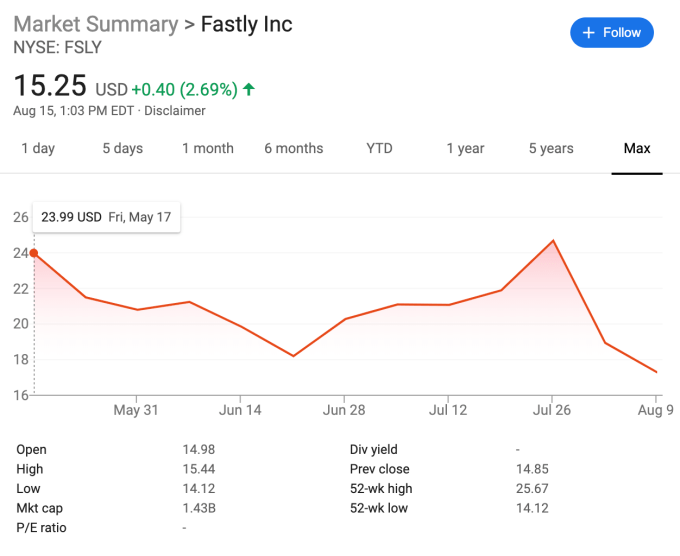
The company isn’t the first network infrastructure service provider to hit the market. That distinction belongs to Fastly, whose shares likely have not performed as well as investors would have liked.

Screen Shot 2019 08 15 at 10.10.17 AM

Cloudflare has raised roughly $332 million to date from investors including Franklin Templeton Investments, Fidelity, Union Square Ventures, New Enterprise Associates, Pelion Venture Partners, and Venrock. Business Insider reported that the company’s last investment gave Cloudflare a valuation of $3.2 billion.

The company will trade on the New York Stock Exchange under the ticker symbol “NET.” Underwriters on the company’s public offering include Goldman Sachs, Morgan Stanley, J.P. Morgan, Jefferies, Wells Fargo Securities and RBC Capital Markets.