India’s Reliance Jio, which has disrupted the telecom and features phone businesses in India in less than three years of existence, is now ready to aggressively foray into many more businesses with the help of global giants including Microsoft.
The subsidiary of India’s largest industrial house Reliance Industries today announced that it will commercially launch its optical fiber broadband business next month, an IoT platform on January 1, 2020, and “one of the world’s biggest blockchain networks” in the next 12 months.
The broadband service, called Jio Giga Fiber, is aimed at individual customers, small and medium sized businesses, as well as enterprises, Mukhesh Ambani, Chairman and Managing Director of Reliance Industries, said at a shareholders meeting Monday. The service, which will be available to consumers starting September 5, will offer free voice calls, high-speed internet and start at Rs 700 per month.
The company also announced a 10-year partnership with Microsoft to leverage the Redmond giant’s Azure, Microsoft 365, and Microsoft AI platforms to launch new cloud datacenters in India to ensure “more of Jio’s customers can access the tools and platforms they need to build their own digital capability,” said Microsoft CEO Satya Nadella in a video appearance Monday.
“At Microsoft, our mission is to empower every person and every organization on the planet to achieve more. Core to this mission is deep partnerships, like the one we are announcing today with Reliance Jio. Our ambition is to help millions of organizations across India thrive and grow in the era of rapid technological change… Together, we will offer a comprehensive technology solution, from compute to storage, to connectivity and productivity for small and medium-sized businesses everywhere in the country,” he added.
As part of the partnership, Nadella said, Jio and Microsoft will jointly offer Office 365 to more organizations in India, and also bring Azure Cognitive Services to more devices and in many Indian languages to businesses in the country. The solutions will be “accessible” to reach as many people and organizations in India as possible, he added.
Ambani also said Jio is working on a “digital stack” to create a new commerce partnership platform in India to reach tens of millions of merchants, consumers, and producers.
Meesho, a Bangalore-based social commerce startup, has raised $125 million in a new financing round to expand its business in the country and change the way millions shop online.
The Series D round was led by Naspers, and existing investors SAIF, Sequoia, Shunwei Capital, RPS and Venture Highway participating as well. Facebook also participated in the round, so did Arun Sarin, former CEO of Vodafone Group. The startup has raised $190 million to date.
Meesho is an online marketplace that connects sellers with customers on social media platforms such as WhatsApp, Facebook, and Instagram. The four-year-old startup claims to have a network of more than 2 million resellers from 700 towns who largely deal with apparel, home appliances and electronics items.
These resellers are mostly homemakers, most of whom have purchased a smartphone for the first time in recent years. Eighty percent of Meesho’s user base is female.
Meesho said the startup will use the fresh capital to expand its reach in the nation and add as many as 18 million new sellers by end of next year. “The latest investment will also strengthen Meesho’s aim to grow its community of women entrepreneurs who have dreamt of running their own businesses but lacked the funds and expertise to do so,” the company said.
More than 90% of businesses in India are still offline and unorganized. Meesho is trying to get these businesses, most of whom don’t have working capital to enable their own online presence, sell online, Vidit Aatrey, Meesho co-founder and CEO, told TechCrunch in an interview.
“I am particularly proud that Meesho has cut across gender, education levels, risk appetites and vocations to create livelihoods for people with no investment of their own. Our social sellers are small retailers, women, students and retired citizens, with 70% being homemakers who have found financial freedom and a business identity without having to step outside their homes,” said Aatrey.
Meesho also plans to use the new funds to further bulk up its technology platform to accommodate new product lines, and to evolve its analytics and machine learning platforms to handle national scale.
“The phenomenal growth they are already experiencing shows that Meesho has hit a sweet spot in the market and is well-poised to serve the next 500 million online shoppers in the country,” said Ashutosh Sharma, Head of India Investments, Naspers Ventures, in a statement.
ByteDance has taken another step into search with the launch of a new search portal today. Called Toutiao Search, the portal is part of the website for Toutiao, the news aggregator owned by ByteDance, and currently optimized only for mobile.
Though it is part of Toutiao’s website, the portal is separate from the Toutiao’s own search function, which lets users look for news articles and topics within the app. Toutiao Search brings up results from the Web, but like other search engines in China, the results are censored. For example, a search for “Hong Kong,” where large pro-democracy demonstrations are currently taking place, show only results from state-approved media outlets or ByteDance’s own services, like Xigua Video, Douyin (its domestic version of TikTok) or Toutiao.
[gallery ids="1867330,1867331,1867332"]
Searches for less contentious topics like “restaurant” also return a similar mix of web results and media from ByteDance apps. This means the company’s entrance into the search business not only sets it up as a new competitor to Baidu, which currently holds 76% of the search engine market, Sogou, Bing and 360, but will also help ByteDance drive traffic to all of its platforms. Google’s efforts to re-enter the Chinese market stalled when employees protested against the development of a censored search engine last year.
TechCrunch’s Rita Liao reported earlier this month that ByteDance, currently the most highly-valued tech startup in the world, has already hired people from other search companies, including Google, Baidu, Bing and 360. A recruiting post published earlier this month on ByteDance’s WeChat account was the company’s first public announcement that it is building a “universal search engine.”
TechCrunch has contacted ByteDance for more information about the new search portal.
The competition for control of the burgeoning market for burger replacements (and other alternatives to animal proteins) continues to heat up.
Beyond Meat and Impossible Foods the two leading contenders for top purveyor of plant-based patties (and other formulations) have spent most of the typically sleepy summer months jockeying for the position as top supplier to a food industry suddenly ravenous for alternatives to traditional meat product.s
As soon as the first Impossible Whoppers came off the flame broilers at Burger King, Beyond Meat was announcing a new fast food chain supply deal of its own with Subway.
Through that agreement the publicly traded provider of plant-based products will be grinding up meatless meatballs for Subway’s new vegetarian option to the classic meatball sub.
Subway will roll out meatless meatballs in 685 of its franchise locations in the U.S. and Canada starting in September.
Not to be outdone, Impossible Foods came swinging back with some a new partnership with the institutional food prep giant Sodexo. At roughly 1,500 Sodexo locations food slingers at healthcare facilities and corporate and university cafeterias will unveil new options like Impossible Foods-based sausage muffin sandwiches, sausage gravy and biscuits, steakhouse burgers and creole burgers.
Image courtesy of Sodexo
“Sodexo is committed to providing customers with more plant-forward and sustainable options as part of their diet,” said Rob Morasco, senior director culinary development, Sodexo, in a statement. “We are excited to expand our menu to include the Impossible Burger’s flavorful blend, which will be featured in several new products this fall.”
Set against this meatless horserace for national food service dominance, other plant-based providers have launched to take the startup direct-to-consumer approach to satisfy vegetarian cravings for other types of food substitutes.
It was partially in response to this furor over the vegetarian market that the world was introduced to Nuggs. Ben Pasternak, the company’s young founder, first came to fame as the teenage entrepreneur behind the social media app Monkey.
When Monkey was sold to a Chinese company in 2017, Pasternak turned his attention to food. He’s been cooking up the idea for Nuggs since that time. In 2018 the core team assembled with Pasternak bringing on Liam Mullen, a former pastry chef and self-trained molecular gastronomist who was working for the high-end New York restaurant Daniel at the age of 16.
Image courtesy of Nuggs
Unlike Impossible Foods, which has faced supply chain woes thanks to its initial strategy of building its own manufacturing facilities, Nuggs is manufactured by McCain Foods, a food prep giant that also led the company’s $7 million round. Other investors include Rainfall Ventures; Greylock Discovery Fund; Maven Ventures; NOMO Ventures; M Ventures; ACME Capital; Founder of MTV and CEO of iHeartMedia, Bob Pittman; Casper Founder & COO, Neil Parikh; and Former President of Tumblr, John Maloney.
While Beyond Meat and Impossible Foods have grabbed most of the headlines as the first generation of protein substitutes to really make a dent with consumers, Just (the company formerly known as Hampton Creek) has also nabbed some major deals with big fast food chains for its big product — egg replacements.
Launched in 2018, the egg replacement from Just inked a major deal in late July with Tim Hortons, the Canadian coffee, donut, and sandwich chain. Much as Beyond Meat has found a home for its meatless sausages at Dunkin Donuts in the U.S., Just has seen Tim Hortons take its eggless egg replacement to a Canadian consumers (Hortons also has a sandwich using Beyond Meat).
Some companies are going beyond plant-based protein replacements to lab-grown versions of the real thing. That’s been the story behind Perfect Day, which sold out of their $20-per-pint ice cream in a matter of hours. Like Impossible Foods and Beyond Meat, the company intends to sell through ice cream manufacturers rather than going direct to consumers with its own product, according to a CNBC report.
The three protein replacement companies have grabbed investor attention and heralded a surge of venture capital investment into plant based protein products. In all, Beyond Meat, Impossible Foods, and Just have snagged over $1 billion in funding.
For investors in Beyond Meat, the $122 million in capital will yield billions in returns. The company’s market capitalization is up to a meaty $13.4 billion from $1.5 billion when its stock first began public trading. Analysts at Barclays predict the market for alternative proteins could hit $140 billion by 2029.
New successes in printing vascular tissue from living cells point to the accelerating pace of development of 3D printing tissue — and eventually the ability to manufacture organs from small samples of cells.
Late last month Prellis Biologics announced a $8.7 million round of funding and some significant advancements that point the way forward for 3D printed organs while a company called Volumetric Bio based on research from a slew of different universities unveiled significant progress of its own earlier this year.
The new successes from Prellis have the company speeding up its timeline to commercialization including the sale of its vascular tissue structures to research institutions and looking ahead to providing vascularized skin grafts, insulin producing sells, and a vascular shunt made from the tissue of patients who need dialysis, according to an interview with Melanie Matheu, Prellis’ chief executive officer and co-founder.
The creation of a vascular shunt made from a patient’s own cells should increase the chances of the procedure working successfully, says Matheu. “[If] that shunt fails there aren’t many other options… and then people have ports put in their chest.” The proposed treatment from Prellis could increase quality of life and longevity of people who are waiting for a kidney,” according to Matheu.
A few months earlier, a team of researchers led by bioengineers Jordan Miller of Rice University and Kelly Stevens of the University of Washington (UW) with collaborators from UW, Duke University, Rowan University and the design firm, Nervous System, revealed a model of an air sac that mimicked the function of human lungs. The model could deliver oxygen to surrounding blood vessels — creating vascular networks that mimic the body’s own passageways.
“One of the biggest road blocks to generating functional tissue replacements has been our inability to print the complex vasculature that can supply nutrients to densely populated tissues,” said Miller, assistant professor of bioengineering at Rice’s Brown School of Engineering, in a statement. “Further, our organs actually contain independent vascular networks — like the airways and blood vessels of the lung or the bile ducts and blood vessels in the liver. These interpenetrating networks are physically and biochemically entangled, and the architecture itself is intimately related to tissue function. Ours is the first bioprinting technology that addresses the challenge of multivascularization in a direct and comprehensive way.”
Miller has launched a startup to commercialize the research called Volumetric Bio. While the researchers have made their findings freely available through open source licenses, they’re hoping to commercialize the technology by selling their bioprinters and materials and reagents.
The technology that Miller and his team develops uses photoreactor chemicals that respond to light, so specific area of liquid solidify while others can be rinsed away. The problem is that most of these chemicals have been found to cause cancer, so Miller and his team found a replacement to the traditional photoreactors in an unlikely place — the supermarket aisle.
The researchers surmised that food dye might do the trick and Miller just went to the supermarket and picked up a dye that’s typically used in baking, according to a story in Scientific American.
“We were screaming with joy, because it was stunning how simple an idea it was; it immediately enabled us to make this dramatically more complex architecture,” Miller told the magazine.
Prellis has made significant strides of its own. Alongside the funding, the company announced the successful implantation of tumors in animal subjects that were made using the company’s vascular scaffolds. The target market for these tests is in drug discovery, where animal testing can prove the efficacy of new treatments before they’re used on people in drug trials.
The printed structures, a combination of living cells and hydrogels are designed to provide a sort of scaffolding that an animal’s own cells can build on. In the study, conducted at Stanford University, Prellis was able to fully graft a tumor onto an animal using just 200,000 cells — far fewer than what’s required for typical tumor studies, according to the company.
And, as the company noted, within eight weeks, researchers identified branched vasculature of up to 50 microns inside of the transplanted structures, which indicated the animal’s vasculature system had incorporated the scaffolding into its own circulatory system.
Prellis is actually pitching its pre-made vascular scaffolds to researchers for their work on 3D printed biologics. Scientists at pharmaceutical companies and universities including UC San Francisco, Johns Hopkins, UC Irvine, and Memorial Sloan Kettering, are developing tests with standardized tissue structures (something that’s important for drug trials).
The drug discovery applications alone are a multi-billion dollar market, says Matheu, but the company is focused on its goal of fully transplantable 3D printed organs, starting with kidneys. The company is going to do their first large animal studies for organ implantation by the end of the year.
“My goal has always been and will always be that we want this to cost the same amount as procurement from a human donor,” says Matheu.
As Matheu looks ahead to the places where more work needs to be done, she points to getting a supply chain to source the right cells for drug therapies and organ development.
So the roadmap for new products begins with the vascular scaffolds, runs through vascularized skin grafts and developing insulin producing cells and vascular shunts for dialysis patients.
“Regenerative medicine has made enormous leaps in recent decades. However, to create complete organs, we need to build higher order structures like the vascular system,” said Dr. Alex Morgan, Principal at Khosla Ventures, in a statement. “Prellis’ optical technology provides the scaffolding necessary to engineer these larger masses of tissues. With our investment in Prellis, we’re supporting an initiative that will ultimately produce a functioning lobe of the lung, or even a kidney, to be used in addressing an enormous unmet global need.”
New successes in printing vascular tissue from living cells point to the accelerating pace of development of 3D printing tissue — and eventually the ability to manufacture organs from small samples of cells.
Late last month Prellis Biologics announced a $8.7 million round of funding and some significant advancements that point the way forward for 3D printed organs while a company called Volumetric Bio based on research from a slew of different universities unveiled significant progress of its own earlier this year.
The new successes from Prellis have the company speeding up its timeline to commercialization including the sale of its vascular tissue structures to research institutions and looking ahead to providing vascularized skin grafts, insulin producing sells, and a vascular shunt made from the tissue of patients who need dialysis, according to an interview with Melanie Matheu, Prellis’ chief executive officer and co-founder.
The creation of a vascular shunt made from a patient’s own cells should increase the chances of the procedure working successfully, says Matheu. “[If] that shunt fails there aren’t many other options… and then people have ports put in their chest.” The proposed treatment from Prellis could increase quality of life and longevity of people who are waiting for a kidney,” according to Matheu.
A few months earlier, a team of researchers led by bioengineers Jordan Miller of Rice University and Kelly Stevens of the University of Washington (UW) with collaborators from UW, Duke University, Rowan University and the design firm, Nervous System, revealed a model of an air sac that mimicked the function of human lungs. The model could deliver oxygen to surrounding blood vessels — creating vascular networks that mimic the body’s own passageways.
“One of the biggest road blocks to generating functional tissue replacements has been our inability to print the complex vasculature that can supply nutrients to densely populated tissues,” said Miller, assistant professor of bioengineering at Rice’s Brown School of Engineering, in a statement. “Further, our organs actually contain independent vascular networks — like the airways and blood vessels of the lung or the bile ducts and blood vessels in the liver. These interpenetrating networks are physically and biochemically entangled, and the architecture itself is intimately related to tissue function. Ours is the first bioprinting technology that addresses the challenge of multivascularization in a direct and comprehensive way.”
Miller has launched a startup to commercialize the research called Volumetric Bio. While the researchers have made their findings freely available through open source licenses, they’re hoping to commercialize the technology by selling their bioprinters and materials and reagents.
The technology that Miller and his team develops uses photoreactor chemicals that respond to light, so specific area of liquid solidify while others can be rinsed away. The problem is that most of these chemicals have been found to cause cancer, so Miller and his team found a replacement to the traditional photoreactors in an unlikely place — the supermarket aisle.
The researchers surmised that food dye might do the trick and Miller just went to the supermarket and picked up a dye that’s typically used in baking, according to a story in Scientific American.
“We were screaming with joy, because it was stunning how simple an idea it was; it immediately enabled us to make this dramatically more complex architecture,” Miller told the magazine.
Prellis has made significant strides of its own. Alongside the funding, the company announced the successful implantation of tumors in animal subjects that were made using the company’s vascular scaffolds. The target market for these tests is in drug discovery, where animal testing can prove the efficacy of new treatments before they’re used on people in drug trials.
The printed structures, a combination of living cells and hydrogels are designed to provide a sort of scaffolding that an animal’s own cells can build on. In the study, conducted at Stanford University, Prellis was able to fully graft a tumor onto an animal using just 200,000 cells — far fewer than what’s required for typical tumor studies, according to the company.
And, as the company noted, within eight weeks, researchers identified branched vasculature of up to 50 microns inside of the transplanted structures, which indicated the animal’s vasculature system had incorporated the scaffolding into its own circulatory system.
Prellis is actually pitching its pre-made vascular scaffolds to researchers for their work on 3D printed biologics. Scientists at pharmaceutical companies and universities including UC San Francisco, Johns Hopkins, UC Irvine, and Memorial Sloan Kettering, are developing tests with standardized tissue structures (something that’s important for drug trials).
The drug discovery applications alone are a multi-billion dollar market, says Matheu, but the company is focused on its goal of fully transplantable 3D printed organs, starting with kidneys. The company is going to do their first large animal studies for organ implantation by the end of the year.
“My goal has always been and will always be that we want this to cost the same amount as procurement from a human donor,” says Matheu.
As Matheu looks ahead to the places where more work needs to be done, she points to getting a supply chain to source the right cells for drug therapies and organ development.
So the roadmap for new products begins with the vascular scaffolds, runs through vascularized skin grafts and developing insulin producing cells and vascular shunts for dialysis patients.
“Regenerative medicine has made enormous leaps in recent decades. However, to create complete organs, we need to build higher order structures like the vascular system,” said Dr. Alex Morgan, Principal at Khosla Ventures, in a statement. “Prellis’ optical technology provides the scaffolding necessary to engineer these larger masses of tissues. With our investment in Prellis, we’re supporting an initiative that will ultimately produce a functioning lobe of the lung, or even a kidney, to be used in addressing an enormous unmet global need.”
Robert Ackerman Jr. is the founder and a managing director of AllegisCyber, an early-stage cybersecurity venture firm, and a founder of DataTribe, a cybersecurity startup “studio” in metropolitan Washington, D.C.
With the long battle for the Democratic nominee for president in 2020 firmly underway, more than 20 political hopefuls are talking about spreading the fruits of a solid economy to millions of middle-class Americans who may have missed the good times, implementing Medicare for all to solve financial healthcare pitfalls, and free college education.
One would-be candidate – Jay Inslee, the governor of the state of Washington – is talking almost exclusively about the need to address climate change far more quickly and far more seriously.
But what has not been discussed by any of them, even briefly, is the stunning existential threat to our critical national security and the entire well-being of the U.S. posed by mounting and painful cyber breaches of infrastructure and other targets. If no would-be candidates can acknowledge the significance and magnitude of the cyber threat – let alone put forward a strategy and plan to defend against the threat – it’s hard to take them seriously as prospective national leaders.
I’m hardly the only one with this view. “When we think about existential threats, government has to understand that electricity doesn’t reside in its own silo and that if something happens to (companies like) us, it would have a potentially cataclysmic impact on finance as well,” utility Southern Company CEO Tom Fanning recently told Fox Business.
Specifically, consider just a few examples of what is going on every day:
Election malfeasance. We hear daily outrage about threats to our increasingly digital electoral infrastructure, and yet there is no policy discussion.
Rampant theft of intellectual property. The strength of our economy is based on our ability to innovate, as encapsulated in IP. And yet our economic and military rivals are brazenly stealing this IP with impunity. They take our innovation and weaponize it to challenge U.S. industry leadership and compromise our defense military technologies.
Targeting of critical infrastructure. When most of our infrastructure was built, it was not with security in mind. Our society is dependent upon our infrastructure. What if our phones didn’t work, we couldn’t bank, electrical and gas service was cut off, our planes couldn’t fly and our ports could not function? Massive financing is required to boost security.
Manipulation of privacy by select technology giants. What is, in effect, another sort of breach, is the collection, aggregation and manipulation of our privacy by digital aggregators such as Google and Facebook, which is then further manipulated and stolen by criminals. (Note here: A positive response has been the Federal Trade Commission’s endorsement this month of a $5 billion settlement with Facebook over a long-running probe into its privacy missteps.)
How do we solve these problems? Blatantly dictating solutions would inevitably fail. What we can do successfully is set standards of performance and responsibility, coupled with timelines and severe penalties for failure to perform. There must be accountability –something that sometimes exists in industry (albeit at inadequate levels), but that is wholly missing in government at all levels.
While I care deeply about cybersecurity, I am not naïve about the extreme pressure confronting politicians to score well in polls – a requirement to have a shot at winning their party’s presidential nomination. Arguably, cybersecurity awareness may not fit this bill.
If enhanced cybersecurity is to be injected into the Democratic election agenda, the public must actively promulgate such a step. Supporting an outcry is the irrefutable fact that the signs of risk are flagrant. Earlier this year, Global Risks Report 2019 – published by the World Economic Form – said that the rapid evolution of cyber and technological threats poses one of the most significant dangers to societies around the world.
In the U.S., meanwhile, cybersecurity is now at the forefront of policy discussions and planning for future conflicts. The cyber threat has leveled the playing field in many ways, presenting unique concerns to the U.S. and its allies. Two years ago, the final report of the Department of Defense Science Board Task Force on Cyber Deterrence concluded that cyber capabilities of other nations exceeded U.S. ability to defend systems and said this would remain the case for at least another five to 10 years.
These and other threats manifest themselves through attacks on our digital infrastructure. And as the largest and most digitized economy in the world, we have the most to lose when our infrastructure is comprised. There is no higher priority threat to the U.S. If those who would be our leaders, including Donald Trump, cannot acknowledge such a huge external threat to our security, economy and lifestyle and take steps to resolve it, they have no business vying to become the leader of our nation in 2020.
Robert Ackerman Jr. is the founder and a managing director of AllegisCyber, an early-stage cybersecurity venture firm, and a founder of DataTribe, a cybersecurity startup “studio” in metropolitan Washington, D.C.
With the long battle for the Democratic nominee for president in 2020 firmly underway, more than 20 political hopefuls are talking about spreading the fruits of a solid economy to millions of middle-class Americans who may have missed the good times, implementing Medicare for all to solve financial healthcare pitfalls, and free college education.
One would-be candidate – Jay Inslee, the governor of the state of Washington – is talking almost exclusively about the need to address climate change far more quickly and far more seriously.
But what has not been discussed by any of them, even briefly, is the stunning existential threat to our critical national security and the entire well-being of the U.S. posed by mounting and painful cyber breaches of infrastructure and other targets. If no would-be candidates can acknowledge the significance and magnitude of the cyber threat – let alone put forward a strategy and plan to defend against the threat – it’s hard to take them seriously as prospective national leaders.
I’m hardly the only one with this view. “When we think about existential threats, government has to understand that electricity doesn’t reside in its own silo and that if something happens to (companies like) us, it would have a potentially cataclysmic impact on finance as well,” utility Southern Company CEO Tom Fanning recently told Fox Business.
Specifically, consider just a few examples of what is going on every day:
Election malfeasance. We hear daily outrage about threats to our increasingly digital electoral infrastructure, and yet there is no policy discussion.
Rampant theft of intellectual property. The strength of our economy is based on our ability to innovate, as encapsulated in IP. And yet our economic and military rivals are brazenly stealing this IP with impunity. They take our innovation and weaponize it to challenge U.S. industry leadership and compromise our defense military technologies.
Targeting of critical infrastructure. When most of our infrastructure was built, it was not with security in mind. Our society is dependent upon our infrastructure. What if our phones didn’t work, we couldn’t bank, electrical and gas service was cut off, our planes couldn’t fly and our ports could not function? Massive financing is required to boost security.
Manipulation of privacy by select technology giants. What is, in effect, another sort of breach, is the collection, aggregation and manipulation of our privacy by digital aggregators such as Google and Facebook, which is then further manipulated and stolen by criminals. (Note here: A positive response has been the Federal Trade Commission’s endorsement this month of a $5 billion settlement with Facebook over a long-running probe into its privacy missteps.)
How do we solve these problems? Blatantly dictating solutions would inevitably fail. What we can do successfully is set standards of performance and responsibility, coupled with timelines and severe penalties for failure to perform. There must be accountability –something that sometimes exists in industry (albeit at inadequate levels), but that is wholly missing in government at all levels.
While I care deeply about cybersecurity, I am not naïve about the extreme pressure confronting politicians to score well in polls – a requirement to have a shot at winning their party’s presidential nomination. Arguably, cybersecurity awareness may not fit this bill.
If enhanced cybersecurity is to be injected into the Democratic election agenda, the public must actively promulgate such a step. Supporting an outcry is the irrefutable fact that the signs of risk are flagrant. Earlier this year, Global Risks Report 2019 – published by the World Economic Form – said that the rapid evolution of cyber and technological threats poses one of the most significant dangers to societies around the world.
In the U.S., meanwhile, cybersecurity is now at the forefront of policy discussions and planning for future conflicts. The cyber threat has leveled the playing field in many ways, presenting unique concerns to the U.S. and its allies. Two years ago, the final report of the Department of Defense Science Board Task Force on Cyber Deterrence concluded that cyber capabilities of other nations exceeded U.S. ability to defend systems and said this would remain the case for at least another five to 10 years.
These and other threats manifest themselves through attacks on our digital infrastructure. And as the largest and most digitized economy in the world, we have the most to lose when our infrastructure is comprised. There is no higher priority threat to the U.S. If those who would be our leaders, including Donald Trump, cannot acknowledge such a huge external threat to our security, economy and lifestyle and take steps to resolve it, they have no business vying to become the leader of our nation in 2020.
A collision at sea that claimed the lives of 10 sailors has led to the Navy deciding to replace an unpopular touchscreen interface in some ships with more traditional mechanical controls. “Just because you can doesn’t mean you should,” a Navy official said of the outgoing technology.
The crash in question involved the U.S.S. John S. McCain and an oil tanker in August of 2017. The sailors at the helm lost control of the ship and put it in the path of the tanker, resulting in the collision that killed 10 and injured 58 more.
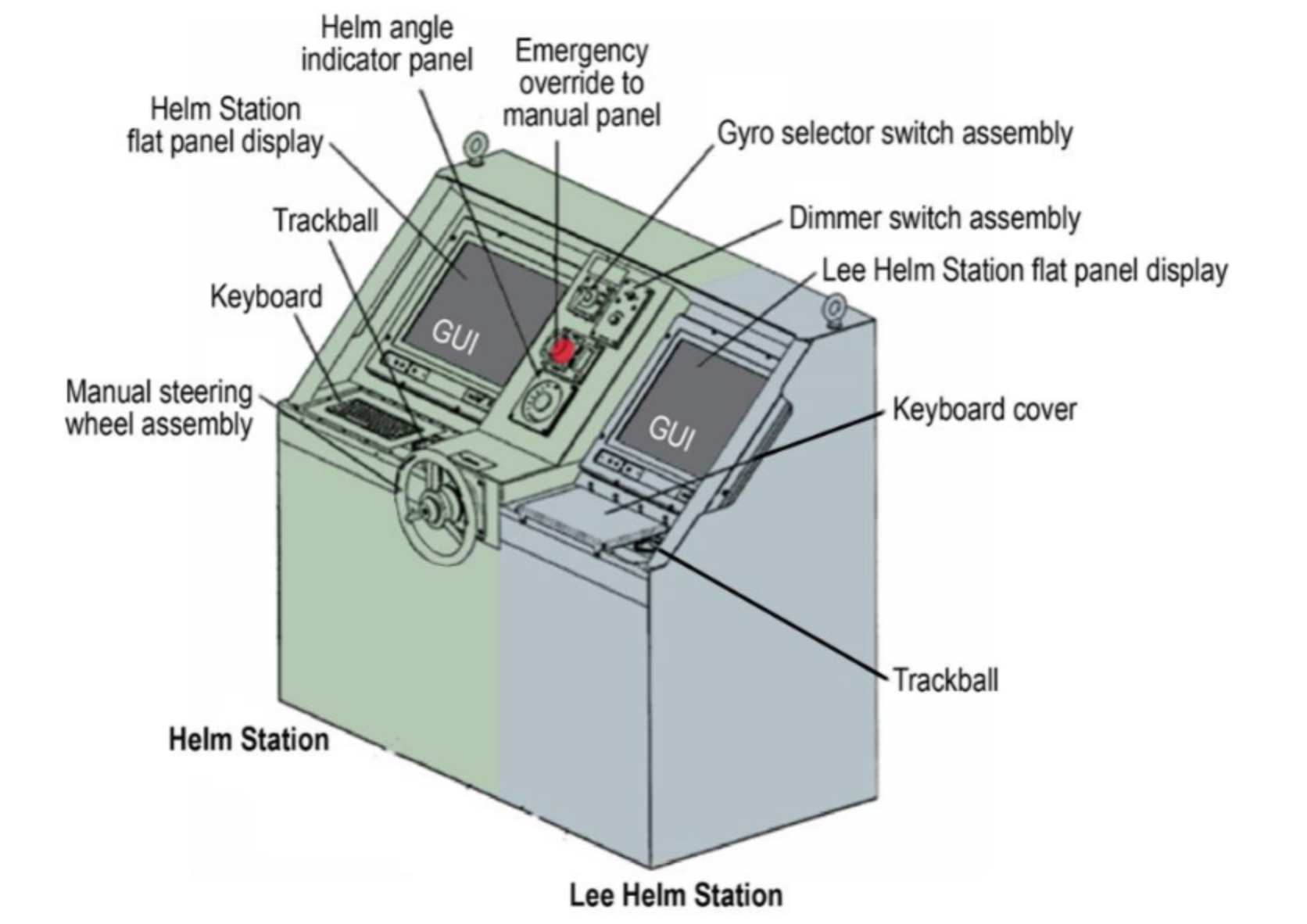
A National Transportation Safety Board investigation was issued recently and found that essentially, the sailors didn’t know how to control the ship properly due to a lack of proper training and documentation. The Northrop-Grumman designed “integrated bridge and navigation system,” or IBNS, is a pair of touchscreens that incorporate a number of functions — not so different from the dash touchscreen in a new car taking over the temperature and radio knobs and buttons. (To be clear, the top image doesn’t show the exact system, but one like it)
But the complexity of the system led to one sailor thinking he was controlling the ships entire throttle, while only in fact controlling one side. This led to the John S. McCain making a sharp turn directly into the path of the oncoming tanker.
“Their misunderstandings expressed during the post-accident interviews and the misunderstandings of other crewmembers who were permanently assigned to the John S McCain point to a more fundamental issue with the qualification process and training with the IBNS,” concluded the report.
Turns out no one really knew how these systems, which were installed only a year ago, really worked, and in a crisis situation were unable to quickly perform the maneuvers necessary. So the Navy is pulling the systems out of the destroyers they have been installed in.
Speaking at an event hosted by the American Society of Naval Engineers, Navy Rear Admiral Bill Galinis explained (as reported by USNI News) that the whole thing was unadvised.
When we started getting the feedback from the fleet from the Comprehensive Review effort… it was really eye-opening. And it goes into the, in my mind, ‘just because you can doesn’t mean you should’ category. We really made the helm control system, specifically on the 51 class [destroyers], just overly complex, with the touch screens under glass and all this kind of stuff. We got away from the physical throttles, and that was probably the number-one feedback from the fleet – they said, just give us the throttles that we can use.
And throttles they can use is exactly what they’ll get, at least on the destroyer classes featuring this particular interface. The contracting process is well underway already and the replacement procedure is quite straightforward, so the ships should get real mechanical controls starting next year. Whether this will lead to a broader questioning of computer-based and touchscreen controls in the Navy and military is anyone’s guess, but at least a few ships should be easier to control going forward.
Small satellite launch startup Vector has indefinitely shut down operations “in response a major change in financing,” the company confirmed. Co-founder and CEO Jim Cantrell has also been cut loose as part of the upset.
The news comes as a surprise to the space startup community, and apparently to its employees. The company lined up $70 million in funding late last year, and recently was announced as a qualified contestant in DARPA’s Launch Challenge. It even pulled in a multi-million dollar Air Force contract just last week.
That something must have gone awry with this latest funding is manifest. But just what, or who, is unclear. I’m contacting the venture firms in the round (Kodem, Morgan Stanley Alternative Investment Partners, Sequoia, Lightspeed and Shasta Ventures) and will update if anyone has any substantial comment.
The company offered the following statement, as well as confirming that Cantrell is out.
In response to a major change in financing, Vector has had to pause its operations. A core team is now evaluating options to complete the development of the company’s Vector R small launch vehicle while also supporting the Air Force and other government agencies on programs such as the recent ASLON-45 award.
I’ve asked for more details on the size of this “core team” and how many employees Vector will have to lay off as part of this “pause” in operations.
Vector has been working on an orbital launch vehicle, the Vector-R, with a 60 kilogram maximum payload — a small rocket for small satellites, for which there is plenty of demand. A heavier version that could lift 290 kg was also under development.
Plans were to demonstrate an orbital launch by the end of 2019, but as yet that has not occurred; a suborbital launch was also planned for sometime this summer, but that too is yet to happen.
Perhaps the launch delays were the cause of the funding problems, or perhaps the funding problems led to launch delays. I’ll update this story as soon as more details are available.