
Year: 2019

09 Aug 2019

Skip scooters are returning to Washington, D.C. after battery fires

Following battery issues and a single-alarm fire caused by improperly disposed of batteries in Washington, D.C., Skip has been given the green light to resume operations in Washington, D.C. and the surrounding areas of Alexandria and Arlington. The plan is to redeploy the scooters in the coming weeks.

In June, a battery on one of Skip’s scooters caught fire in D.C., prompting the company to ground its scooters in both D.C. and San Francisco. The scooter in question was found with its external battery on fire, which caused “minor damage” to a wall nearby. In light of that incident, Skip identified other potential at-risk batteries and quarantined them in its warehouse.

“In DC, they weren’t disposed of properly, which helped create the right conditions for a single-alarm fire,” Skip wrote in a blog post. “After the incident, DDOT asked us to suspend operations. Frankly, that was the right call. We didn’t just let our cities and riders down, we let ourselves down.”

Since then, Skip says it has consulted with battery experts and OSHA compliance firms to put in place new procedures and operations around handling and disposing of damaged equipment. Now, Skip has real-time monitoring and alerting for battery and vehicle issues to ensure batteries are disposed of before exhibiting any safety issues. Among other steps, Skip is now reporting its handling of batteries and employee injuries to the District Department Of Transportation.

Skip is not the only micromobility company that has experienced issues with battery fires. Last month, a couple of Lyft’s electric bike batteries caught on fire in San Francisco, prompting the company to pull its bikes from the streets. Late last year, Lime recalled some of its Ninebot scooters due to fire concerns.

And battery fires do not only affect electric bikes and scooters. You may remember the year of the exploding hoverboards, as well as exploding smartphones and laptops. What all of those have in common are lithium-ion batteries, which are very commonly used for portable electronics and now, personal electric vehicles. The downside to these types of batteries is potential overheating, which can lead to a failure mode called “thermal runaway” and result in a battery fire.

Other potential issues that can lead to battery failure is a bad design and the mere fact that scooters can be banged around by users. In the case of Skip, the issue seemed to fall on the latter.

“The investigation found the main cause to be physical damage, but it was not able to determine whether the damage was intentional or unintentional,” a Skip spokesperson told TechCrunch.

Given the amount of scrutiny all of these companies are under, coupled with their reliance on approval from cities, the likes of Skip, Lyft and Lime need to make sure their respective safety procedures are buttoned up if they want to thrive in this space.

09 Aug 2019

Skip scooters are returning to Washington, D.C. after battery fires

Following battery issues and a single-alarm fire caused by improperly disposed of batteries in Washington, D.C., Skip has been given the green light to resume operations in Washington, D.C. and the surrounding areas of Alexandria and Arlington. The plan is to redeploy the scooters in the coming weeks.

In June, a battery on one of Skip’s scooters caught fire in D.C., prompting the company to ground its scooters in both D.C. and San Francisco. The scooter in question was found with its external battery on fire, which caused “minor damage” to a wall nearby. In light of that incident, Skip identified other potential at-risk batteries and quarantined them in its warehouse.

“In DC, they weren’t disposed of properly, which helped create the right conditions for a single-alarm fire,” Skip wrote in a blog post. “After the incident, DDOT asked us to suspend operations. Frankly, that was the right call. We didn’t just let our cities and riders down, we let ourselves down.”

Since then, Skip says it has consulted with battery experts and OSHA compliance firms to put in place new procedures and operations around handling and disposing of damaged equipment. Now, Skip has real-time monitoring and alerting for battery and vehicle issues to ensure batteries are disposed of before exhibiting any safety issues. Among other steps, Skip is now reporting its handling of batteries and employee injuries to the District Department Of Transportation.

Skip is not the only micromobility company that has experienced issues with battery fires. Last month, a couple of Lyft’s electric bike batteries caught on fire in San Francisco, prompting the company to pull its bikes from the streets. Late last year, Lime recalled some of its Ninebot scooters due to fire concerns.

And battery fires do not only affect electric bikes and scooters. You may remember the year of the exploding hoverboards, as well as exploding smartphones and laptops. What all of those have in common are lithium-ion batteries, which are very commonly used for portable electronics and now, personal electric vehicles. The downside to these types of batteries is potential overheating, which can lead to a failure mode called “thermal runaway” and result in a battery fire.

Other potential issues that can lead to battery failure is a bad design and the mere fact that scooters can be banged around by users. In the case of Skip, the issue seemed to fall on the latter.

“The investigation found the main cause to be physical damage, but it was not able to determine whether the damage was intentional or unintentional,” a Skip spokesperson told TechCrunch.

Given the amount of scrutiny all of these companies are under, coupled with their reliance on approval from cities, the likes of Skip, Lyft and Lime need to make sure their respective safety procedures are buttoned up if they want to thrive in this space.

09 Aug 2019

Amazon’s lead EU data regulator is asking questions about Alexa privacy

Amazon’s lead data regulator in Europe, Luxembourg’s National Commission for Data Protection, has raised privacy concerns about its use of manual human reviews of Alexa AI voice assistant recordings.

A spokesman for the regulator confirmed in an email to TechCrunch it is discussing the matter with Amazon, adding: “At this stage, we cannot comment further about this case as we are bound by the obligation of professional secrecy.” The development was reported earlier by Reuters.

We’ve reached out to Amazon for comment.

Amazon’s Alexa voice AI, which is embedded in a wide array of hardware — from the company’s own brand Echo smart speaker line to an assortment of third party devices (such as this talkative refrigerator or this oddball table lamp) — listens pervasively for a trigger word which activates a recording function, enabling it to stream audio data to the cloud for processing and storage.

However trigger-word activated voice AIs have been shown to be prone to accidental activation. While a device may be being used in a multi-person household. So there’s always a risk of these devices recording any audio in their vicinity, not just intentional voice queries…

In a nutshell, the AIs’ inability to distinguish between intentional interactions and stuff they overhear means they are natively prone to eavesdropping — hence the major privacy concerns.

These concerns have been dialled up by recent revelations that tech giants — including Amazon, Apple and Google — use human workers to manually review a proportion of audio snippets captured by their voice AIs, typically for quality purposes. Such as to try to improve the performance of voice recognition across different accents or environments. But that means actual humans are listening to what might be highly sensitive personal data.

Earlier this week Amazon quietly added an option to the settings of the Alexa smartphone app to allow users to opt out of their audio snippets being added to a pool that may be manually reviewed by people doing quality control work for Amazon — having not previously informed Alexa users of its human review program.

The policy shift followed rising attention on the privacy of voice AI users — especially in Europe.

Last month thousands of recordings of users of Google’s AI assistant were leaked to the Belgian media which was able to identify some of the people in the clips.

A data protection watchdog in Germany subsequently ordered Google to halt manual reviews of audio snippets.

Google responded by suspending human reviews across Europe. While its lead data watchdog in Europe, the Irish DPC, told us it’s “examining” the issue.

Separately, in recent days, Apple has also suspended human reviews of Siri snippets — doing so globally, in its case — after a contractor raised privacy concerns in the UK press over what Apple contractors are privy to when reviewing Siri audio.

The Hamburg data protection agency which intervened to halt human reviews of Google Assistant snippets urged its fellow EU privacy watchdogs to prioritize checks on other providers of language assistance systems — and “implement appropriate measures” — naming both Apple and Amazon.

In the case of Amazon, scrutiny from European watchdogs looks to be fast dialling up.

At the time of writing it is the only one of the three tech giants not to have suspended human reviews of voice AI snippets, either regionally or globally.

In a statement provided to the press at the time it changed Alexa settings to offer users an opt-out from the chance of their audio being manually reviewed, Amazon said:

We take customer privacy seriously and continuously review our practices and procedures. For Alexa, we already offer customers the ability to opt-out of having their voice recordings used to help develop new Alexa features. The voice recordings from customers who use this opt-out are also excluded from our supervised learning workflows that involve manual review of an extremely small sample of Alexa requests. We’ll also be updating information we provide to customers to make our practices more clear.

09 Aug 2019

The smartwatch category is growing, as Apple remains dominant

Last week Samsung and Fossil kicked off the week by announcing new smartwatches. On the same day. At the same time. From a brief moment, it felt like 2015 all over again, when the world of smartwatches felt exciting and new.

Mid-way through 2019, the good news for smartwatches is that the category continues to grow. Numbers from Strategy Analytics show some truly impressive movement on that front, with shipments from 44 percent year over year in Q2, from 8.6 million to 12.3.

Lots of reason to celebrate there if you’re a smartwatch maker — or, rather, if you’re one very specific smartwatch maker. The very important caveat to the rosy numbers is that they start to look considerably less rosy when you take Apple out of the equation. The Apple Watch accounted for 5.7 million of those Q2 numbers. That’s 46 percent of the category, up slightly from 44 the year prior.

The numbers were reflected in Apple’s last earnings. The wearables category (which, notably, also includes AirPods) was a bright spot in the company’s otherwise disappointing hardware numbers. Compare that to the company with the second-largest numbers for the quarter: Samsung, which shipped two million smartwatches in that time period.

09 Aug 2019

Startups seek sperm… And venture capital backing

Hello and welcome back to Equity, TechCrunch’s venture capital-focused podcast, where we unpack the numbers behind the headlines.

This week we were helmed by Kate Clark and Alex Wilhelm, but those of you who love the show having guests on don’t despair. As we explain at the top, there’s a lot of folks coming on the show soon, many of whom you know by name.

But that’s to come, and we had a lot to chat through this week. Including, right from the jump, the latest gyrations in the stock market. Earlier this week tech stocks, and especially cloud and SaaS stocks, took a nosedive. Sentiment swung around later in the week when markets caught their breath and Lyft’s earnings went well. But the movement in highly-valued SaaS companies caught our eye. Perhaps if the market finally does correct, we’ll see growth stakes take the worst of it.

But it wasn’t all bad news on the show, a new app that raised $5 million caught Kate’s attention. It’s called Squad and it’s now backed by First Round Capital, the seed fund behind the likes of Uber . You can read Kate’s interview with the founder, Esther Crawford, here.

Next, we turned to two startups that are focused on male reproductive health. While we’ve covered startups focused on fertility before on the show, this is the first time we’ve delved into male-focused services that are designed to help men take part in conception. The news here is Dadi has raised another $5 million in venture capital funding. Legacy, the other male fertility company we discussed, is taking part in Y Combinator’s summer batch right now.

On the IPO-ish beat, we talked about Postmates which has a new stadium partnership, and, more importantly, permission to use cute robots to deliver things in San Francisco. After hearing about how small, rolling robots will handle last-mile deliveries for years, we’re excited for them to actually make it to market. In our view, technology of this sort won’t eliminate the need for human workers at on-demand shops, though they may replace some routine runs. Bring on the burrito robots.

We closed on Airbnb’s purchase of Urbandoor, yet another acquisition from the popular home-sharing company that will eventually go public. It has to, right? Perhaps Urbandoor will help unlock new revenues in the corporate travel space before we see an S-1. After all, Airbnb wants to debut with plenty of growth under its belt to help it meet valuation expectations. Adding revenue to its core business could be a good way to ensure that there’s new top-line to report.

More to come, including something special next week!

Equity drops every Friday at 6:00 am PT, so subscribe to us on Apple PodcastsOvercastSpotify, Pocket Casts, Downcast and all the casts.

09 Aug 2019

Autonomous air mobility company EHang to deploy air shuttle service in Guangzhou

China’s EHang, a company focused on developing and deploying autonomous passenger and freight low-altitude vehicles, will build out its first operational network of air taxis and transports in Guangzhou. The company announced that the Chinese city would play host to its pilot location for a citywide deployment.

The pilot will focus on not only showing that a low-altitude, rotor-powered aircraft makes sense for use in cities, but that a whole network of them can operate autonomously in concert, controlled and monitored by a central traffic management hub that Ehang will develop together with the local Guangzhou government.

Ehang, which was chosen at the beginning of this year by China’s Civil Aviation Administration as the sole pilot company to be able to build out autonomous flying passenger vehicle services, has already demonstrated flights of its Ehang 184 vehicles carrying passengers in Vienna earlier this year, and ran a number of flights in Guangzhou in 2018 as well.

In addition to developing the air traffic control system to ensure that these operate safely as a fleet working in the air above city at the same time, Ehang will be working with Guangzhou to build out the infrastructure needed to operate the network. The plan for the pilot is to use the initial stages to continue to test out the vehicles, as well as the vertiports it’ll need to support their operation, and then it’ll work with commercial partners for good transportation first.

The benefits of such a network will be especially valuable for cities like Guangzhou, where rapid growth has led to plenty of traffic and high density at the ground level. It could also potentially have advantages over a network of autonomous cars or wheeled vehicles, since those still have to contend with ground traffic, pedestrians, cyclists and other vehicles in order to operate, while the low-altitude air above a city is more or less unoccupied.

09 Aug 2019

India’s Lendingkart raises $30M to help small businesses access working capital

As India continues its race to adopt digital payments at a pace and scale seen rarely worldwide, the country’s startups are quickly building solutions to bring financial services to businesses. And they are attracting significant capital from local investors and global giants to scale their ambitions.

Lendingkart, one of the many startups in the country that is helping micro, small and medium-sized enterprises access working capital, has raised $30 million as part of Series D financing round, it said on Friday. Existing investors Fullerton Financial Holdings, Bertelsmann India Investments, and India Quotient funded the round. The five-year-old, Bangalore-based startup has raised $143 million to date.

To date, Lendingkart Finance has issued over 60,000 loans to more than 55,000 small and medium-sized enterprises in 1,300 cities across all of India. In a statement, the startup said it would use the fresh capital to widen its lending range and find new clients. It also wants to refine and bulk up its product offering.

Like in other developing markets, many businesses in India, including those who are operating in the exporting space, have to wait for days before they get paid from their previous clients. This creates an immense challenge for many who don’t have any savings. Their options are severely limited as traditional banks find them too risky to lend money.

“Micro and small businesses represent a vibrant yet underserved segment of the Indian economy. The support of all of our customers, investors and employees is empowering us to build the leading financial services platform for this segment,” said Harshvardhan Lunia, Cofounder and Managing Director of Lendingkart.

Lendingkart competes with a handful of businesses, including Gurgaon-based Indifi, which raised $21 million earlier this week, Bangalore-based Zest Money, Five Star Finance, Capital Float and, in some capacity, Drip Capital, which recently raised $25 million.

09 Aug 2019

HarmonyOS is Huawei’s homegrown operating system for smartphones and smart home devices

After months of conflicting remarks from Huawei executives, the Chinese networking giant on Friday officially unveiled HarmonyOS, a mobile operating system it has built to power smartphones and smart home devices as the company attempts to cut its reliance on international giants.

HarmonyOS will be made available for smart screen products such as TV later this year, said Richard Yu, CEO of the Huawei consumer division at company’s developer conference. In the next three years, Huawei will look to bring HarmonyOS to more devices, he said.

The mobile operating system, which is open source, will be limited to use in China for now, though the company has plans to bring it to international markets at a later stage.

The announcement today comes months after the U.S. government put Huawei and more than 60 affiliates in an entity list, restricting U.S. firms from conducting businesses with the Chinese giant. In the aftermath, Google, Intel, and other companies that contribute much of the technology and solutions that go into a smartphone suspended their business with Huawei, the world’s second largest smartphone maker.

The ongoing trade war between the U.S. and China has already started to impact Huawei’s bottom line.

The company reiterated today that it intends to continue to use Android moving forward, but HarmonyOS is officially its back up plan if things go south.

More to follow…

09 Aug 2019

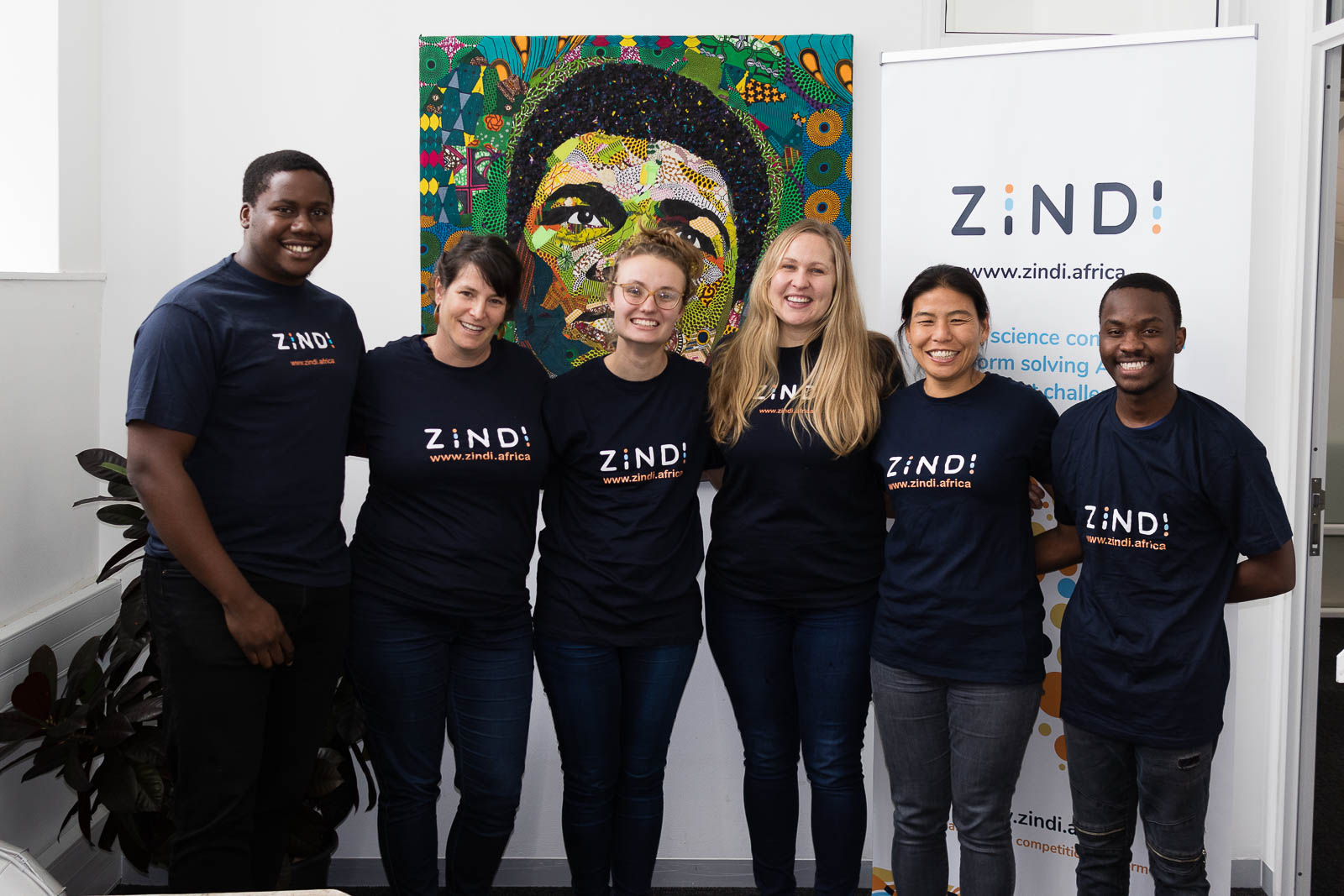
Zindi rallies Africa’s data scientists to crowd-solve local problems

Zindi is convening Africa’s data scientists to create AI solutions for complex problems.

Founded in 2018, the Cape Town-based startup allows companies, NGOs or government institutions to host online competitions around data-oriented challenges.

Zindi’s platform also coordinates a group of more than 4,000 data scientists based in Africa who can enroll to join a competition, submit their solution sets, move up a leader board and win the challenge — for a cash prize payout.

The highest purse so far has been $12,000, split across the top three data scientists in a competition, according to Zindi co-founder Celina Lee. Competition hosts receive the results, which they can use to create new products or integrate into their existing systems and platforms.

Zindi’s model has gained the attention of some big corporate names in and outside of Africa. Digital infrastructure company Liquid Telecom has hosted competitions.

This week, the startup announced a partnership with Microsoft to use cloud-based computing service Azure to power Zindi’s platform.

Microsoft will also host (and sport the prize money) for two competitions to find solutions in African agtech. In a challenge put forward by Ugandan IoT accelerator Wazihub, an open call is out for Zindi’s data scientist network to build a machine learning model to predict humidity.

In a $10,000 challenge for Cape Town-based startup FarmPin, Zindi’s leader board is tracking the best solutions for classifying fields by crop type in South Africa using satellite imagery and mobile phones.

Zindi Africa competition board


There’s demand in Africa to rally data scientists to solve problems across the continent’s public and private sectors, according to Zindi CEO Celina Lee.

“African companies, startups, organizations and governments are in this phase right now of digitization and tech where they are generating huge amounts of data. There’s interest in leveraging things like machine learning and AI to capitalize on the asset of that data,” she told TechCrunch.

She also noted that “80% of Zindi’s competitions have some sort of social impact angle.”

Lee recognizes a skills gap and skills building component to Zindi as a platform. “Data science skills are relatively scarce still… and companies are looking for ways to access data science and AI solutions and talent,” she said.

“Then there’s this pool of young Africans coming out of universities working in data…looking for opportunities to build their professional profiles, hone their skills and connect to opportunities.”

Lee (who’s originally from San Francisco) co-founded Zindi with South African Megan Yates and Ghanaian Ekow Dukerand, who lead a team of six in the company’s Cape Town office. The startup hopes to get 10,000 data scientists across Africa on its platform by this year and 20,000 by next year, according to Lee.

Zindi Team in Cape Town 1

“The idea is to just keep growing and growing our presence in every country in Africa,” Lee said. Zindi could add some physical presence in additional African countries by the end of this year, Lee added, noting Zindi currently hosts data scientists and competitions online and on the cloud from any country in Africa.

Zindi received its first funds from an undisclosed strategic investor and is in the process of raising a round. The startup, which does not disclose revenues, generates income by taking a fee from hosting competitions.

Zindi is also looking to add a recruitment service to connect data scientists to broader opportunities as a future source of revenue, according to Lee.

As a startup, Zindi’s emerging model could see it enter several existing domains in African business and tech. When Zindi adds recruitment, it could offer a service similar to talent accelerator Andela of connecting skilled African techies to jobs at established firms.

CEO Lee acknowledges such, but makes a distinction between data scientists and Andela’s developer focus. “We’re honing more in on statistical modeling, AI, machine learning and predictive analytics,” she said. “I also think the developer market in Africa is much more mature and lot of developers want to move into data science.”

In addition to competing on tech recruitment, Zindi could also become a cheaper and faster alternative for African companies and governments to contracting big consulting firms, such as Accenture, IBM or Bain.

Zindi’s co-founder Lee confirmed the startup has received inbound partnership interest from some established consulting firms — which indicates they’ve taken note of the startup.

“I think we are a bit disruptive because we’re offering companies in Africa the best data scientists in the continent at their fingertips,” she said.

Lee highlighted a couple distinctions between Zindi and data-driven consulting firms: affordability and potential scale.

The startup could also provide data science solutions to many African organizations that don’t have the resources to pay big consulting firms — meaning Zindi could be on to a much larger addressable market.

09 Aug 2019

A.Capital Partners, founded by Ronny Conway, targets $140 million for its third fund

Silicon Valley investor Ronny Conway is raising his third early-stage venture fund, shows a new SEC filing that states the fund’s target is $140 million and that the first sale has yet to occur.

The now six-year-old firm, A.Capital, focuses on both consumer and enterprise tech, and has offices in Menlo Park and San Francisco.

Among the many brand-name companies in its portfolio are Coinbase, Airbnb, Pinterest, and Reddit. (You can find its other investments here.)

Conway led the seed-stage program of Andreessen Horowitz (a16z) for roughly four years in its earliest days and left in 2013 to raise his debut fund, which closed with $51 million in capital commitments. He also raised two, smaller parallel funds at the time.

According to SEC filings, he sought out $140 million for his second fund, though he never announced its close.

A.Capital is today run by Conway, along with General Partner Ramu Arunachalam (also formerly of a16z) and Kartik Talwar, who worked previously with Conway’s brother, Topher, and his famed father, Ron, at their separate venture firm, SV Angel.

Conway maintains a far lower profile than his father in particular, who throughout his venture career has nurtured relationships not only with founders but with tech reporters and local politicians.

Though now ancient history in Silicon Valley years, Ronny Conway was credited with introducing Andreessen Horowitz to Instagram during its earliest days.

Conway, a former Googler, met Instagram cofounder Kevin System in the several years when he, too, worked for the search giant, beginning in 2006. It turned out to be a highly worthwhile introduction, though it could have been even lucrative for a16z.

Though the firm made a seed-stage bet on the what was then a far simpler mobile photo-sharing app, a16z never followed up with another check because of investment in another photo-sharing startup that would eventually flounder (PicPlz).

It was a sensitive issue at the time for a16z, with some noting its missed opportunity. In fact, Ben Horowitz later felt compelled to write in a blog post that Andreessen Horowitz made $78 million from its $250,000 seed investment in Instagram when Facebook acquired it $1 billion in 2012.