Year: 2019

08 Aug 2019

Africa’s top mobile phone seller Transsion to list in Chinese IPO

Chinese mobile-phone and device maker Transsion will list in an IPO on Shanghai’s STAR Market,  Transsion confirmed to TechCrunch. 

The company—which has a robust Africa sales network—could raise up to 3 billion yuan (or $426 million).

“The company’s listing-related work is running smoothly. The registration application and issuance process is still underway, with the specific timetable yet to be confirmed by the CSRC and Shanghai Stock Exchange,” a spokesperson for Transsion’s Office of the Secretary to the Chairman told TechCrunch via email.

Transsion’s IPO prospectus was downloadable (in Chinese) and its STAR Market listing application available on the Shanghai Stock Exchange’s website.

STAR is the Shanghai Stock Exchange’s new Nasdaq-style board for tech stocks that also went live in July with some 25 companies going public. 

Headquartered in Shenzhen—where African e-commerce unicorn Jumia also has a logistics supply-chain facility—Transsion is a top-seller of smartphones in Africa under its Tecno brand.

The company has a manufacturing facility in Ethiopia and recently expanded its presence in India.

Transsion plans to spend the bulk of its STAR Market raise (1.6 billion yuan or $227 million) on building more phone assembly hubs and around 430 million yuan ($62 million) on research and development,  including a mobile phone R&D center in Shanghai—a company spokesperson said. 

Transsion recently announced a larger commitment to capturing market share in India, including building an industrial park in the country for manufacture of phones to Africa.

The IPO comes after Transsion announced its intent to go public and filed its first docs with the Shanghai Stock Exchange in April. 

Listing on the STAR Market will put Transsion on the freshly minted exchange seen as an extension of Beijing’s ambition to become a hub for high-potential tech startups to raise public capital. Chinese regulators lowered profitability requirements, for the exchange, which means pre-profit ventures can list.

Transsion’s IPO process comes when the company is actually in the black. The firm generated 22.6 billion yuan ($3.29 billion) in revenue in 2018, up from 20 billion yuan from a year earlier. Net profit for the year slid to 654 million yuan, down from 677 million yuan in 2017, according to the firm’s prospectus.

Transsion sold 124 million phones globally in 2018, per company data. In Africa, Transsion holds 54% of the feature phone market—through its brands Tecno, Infinix, and Itel—and in smartphone sales is second to Samsung and before Huawei, according to International Data Corporation stats.
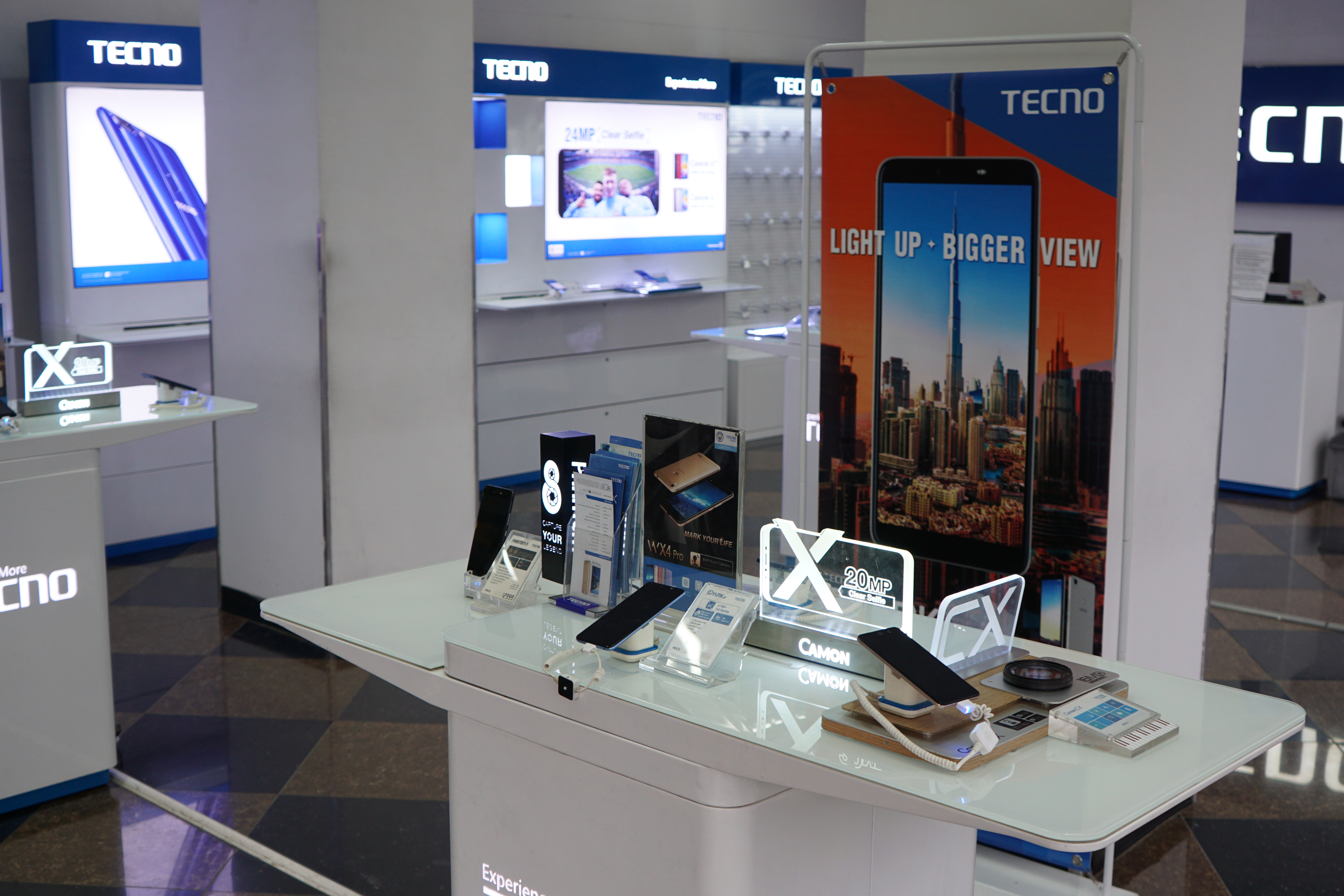
Transsion has R&D centers in Nigeria and Kenya and its sales network in Africa includes retail shops in Nigeria, Kenya, Tanzania, Ethiopia and Egypt. The company also attracted attention for being one of the first known device makers to optimize its camera phones for African complexions.

On a recent research trip to Addis Ababa, TechCrunch learned the top entry-level Tecno smartphone was the W3, which lists for 3600 Ethiopian Birr, or roughly $125.

In Africa, Transsion’s ability to build market share and find a sweet spot with consumers on price and features gives it prominence in the continent’s booming tech scene.

Africa already has strong mobile-phone penetration, but continues to undergo a conversion from basic USSD phones, to feature phones, to smartphones.

Smartphone adoption on the continent is low, at 34 percent, but expected to grow to 67 percent by 2025, according to GSMA.

This, added to an improving internet profile, is key to Africa’s tech scene. In top markets for VC and startup origination—such as Nigeria, Kenya, and South Africa—thousands of ventures are building business models around mobile-based products and digital applications.

If Transsion’s IPO enables higher smartphone conversion on the continent that could enable more startups and startup opportunities—from fintech to VOD apps.

Another interesting facet to Transsion’s IPO is its potential to create greater influence from China in African tech, in particular if the Shenzhen company moves strongly toward venture investing.

Comparatively, China’s engagement with African startups has been light compared to China’s deal-making on infrastructure and commodities—further boosted in recent years as Beijing pushes its Belt and Road plan.

Transsion’s IPO move is the second recent event—after Chinese owned Opera’s big venture spending in Nigeria—to reflect greater Chinese influence and investment in the continent’s digital scene.

So in coming years, China could be less known for building roads, bridges, and buildings in Africa and more for selling smartphones and providing VC for African startups.

08 Aug 2019

Earbuds lets audiences stream the playlists of athletes, entertainers and each other

Earbuds, a new startup from Austin founded by former Detroit Lions lineman Jason Fox, wants to bring the power of social media to your eardrums.

The company is one of a growing number of startups trying to rejuvenate the music streaming market by combining it with social networking so that audiences can listen to the playlists of their favorite athletes and entertainers… and their friends.

For Fox, the idea for Earbuds sprung from his experiences in the NFL, watching how other players interacted with crowds and hearing about the things fans wanted to know about their favorite players’ routines.

“We were playing Caroline in the first game of the season and Cam Newton was warming up right next to me,” Fox recalled. “He was jamming. Getting the crowd into it. And I was thinking there’re 85,000 people here and millions of more people watching at home…  And I thought… how many people would love to be in his headphones right now?”

Jason Fox TC

Earbuds founder Jason Fox

It wasn’t just Cam Newton who received attention. Fox said at every press conference one or two questions would be about what songs teammates played before games. On social media, players would take screenshots of their playlists and post them to platforms like Twitter or Instagram, Fox said.

The company has been out in the market in a beta version since February and has focused on lining up potential Earbuds devotees from among Fox’s friends in the NFL and entertainers from music and media.

“We made a decision to tweak something and make it very very heavily around influencers because that’s what’s really driving traffic for us,” Fox says. 

Screen Shot 2019 08 07 at 5.44.50 PM

Image courtesy of Earbuds

At its core, the app is just about making music more social, according to Fox. “There’s a social platform for everything, but in the days of terrestrial media distribution music has remain isolated,” he says. 

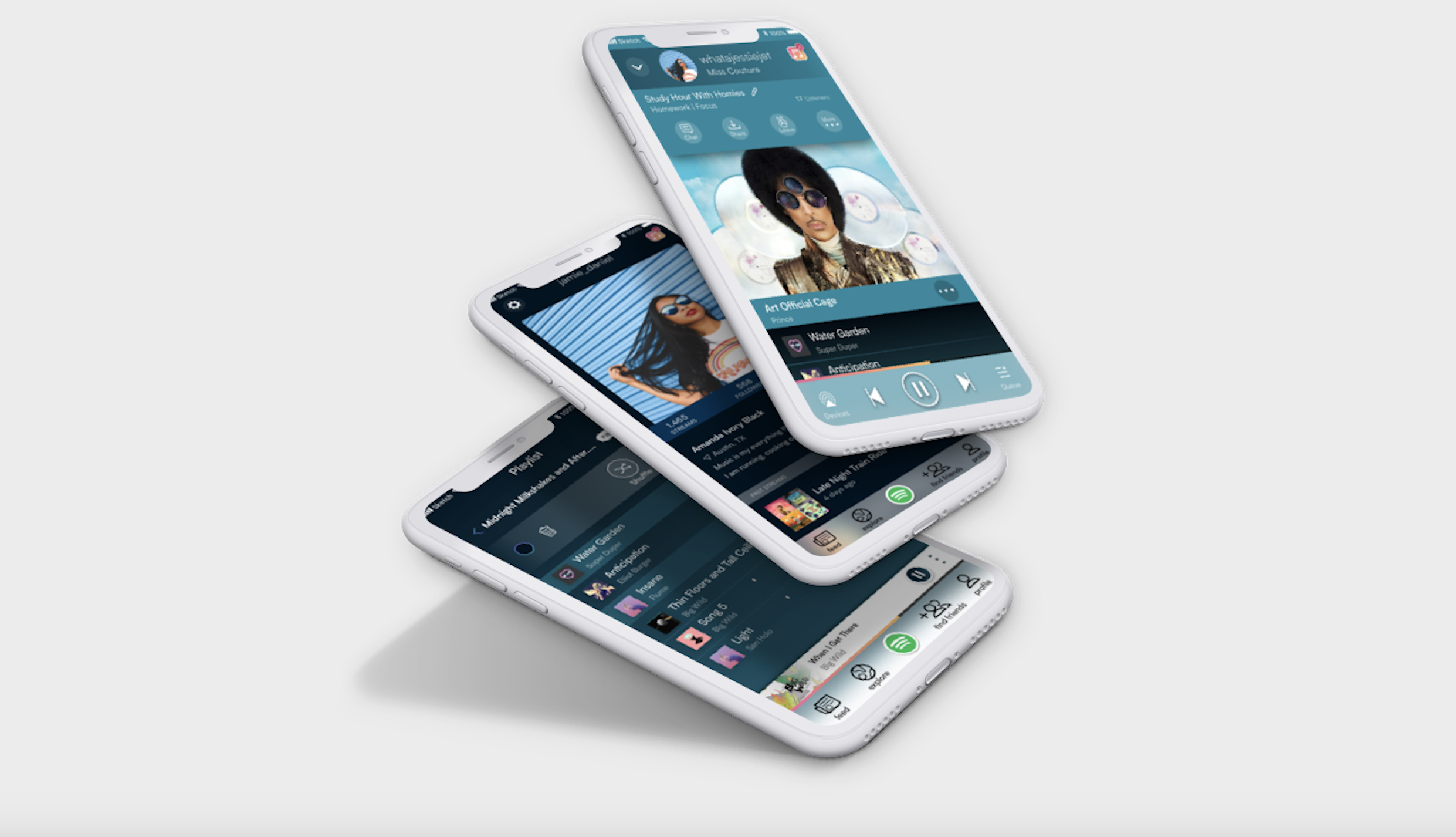
Logging on is easy. Users can create a login for the app or use their Google or Facebook accounts. One more step to link the Earbuds app with Spotify or Apple Music (the company offers one month free of the premium versions of either service to new users) and then a user can look for friends or browse popular playlists.

A leaderboard indicates which users on the app have streamed the most music and users can create their own streams by adding songs from their libraries to build in-app playlists.

Earbuds isn’t the first company to take a shot at socializing the music listening experience. The olds may remember services like Turntable.fm, which took a stab at making music social but shut down back in 2013. Newer services, like Playlist, are also combining social networking features with music streaming. That site focuses on connecting people with similar musical tastes.

Fox thinks that the ability to attract entertainers like Nelly (who’s on the app) and athletes could be transformative for listeners. Basically these artists and athletes can become their own online radio station, he says.

Fox spent nearly a year meeting with streaming services, music labels, athletes, artists and college students (the app’s initial target market) before even working with developers on a single line of code. The initial work was done out of Los Angeles, but after a year Fox moved the company down to Austin and rebuilt the app from the ground up to focus more on the user experience.

Early partnerships with Burton on an activation had snowboarders streaming their music as they rode a halfpipe proved that there was an audience, Fox said. Now the company is working on integrations across different sports and even esports.

Fox raised a small friends and family round of $630,000 before putting together a $1.5 million seed to get the app out into the market. Now the company is looking for $3 million to scale even more as it looks to integrations with sports teams and other streaming services like Twitch (to capture the gaming audience).

The company currently has seven employees.

Earbuds is available on iOS.

Screen Shot 2019 08 07 at 5.51.32 PM

07 Aug 2019

Postmates lands first-ever permit to test sidewalk delivery robots in San Francisco

On-demand delivery business Postmates says it’s been granted the first-ever permit for side-walk robotics operations in the city of San Francisco.

According to San Francisco Public Works, the permits are active for 180 days and authorize the testing of up to three autonomous delivery devices. We’ve reached out to the Public Works department for comment.

Postmates has been working alongside San Francisco supervisor Norman Yee, labor and advocacy groups to develop a framework for sidewalk robotics since 2017. The issuance of the permit makes San Francisco one of the first cities to formally allow companies to test autonomous delivery robots under a new pilot program.

Previously, companies were testing autonomous robots in various San Francisco streets sans permits, until the city voted to ban street robots from testing without official government permits akin to the electric-scooter saga of 2018.

“We’ve been eager to work directly with cities to seek a collaborative and inclusive approach to robotic deployment that respects our public rights of way, includes community input, and allows cities to develop thoughtful regulatory regimes,” a representative of Postmates said in a statement provided to TechCrunch.

Postmates semi-autonomous sidewalk rover, Serve, was unveiled in December. Using cameras and lidar to navigate sidewalks, Serve can carry 50 pounds for up to 25 miles after one charge. Postmates has a human pilot remotely monitoring the Serve fleets and each rover has a “Help” button, touchscreen and video chat display for customers or passers-by to use if necessary. The company originally said they planned to roll out the bots in 2019, though no pilots have been officially announced yet.

serve on the sidewalk

Postmates semi-autonomous delivery robot, Serve.

Postmates says they’ve made a number of changes to Serve in recent months, including implementing new lidar tech that’s smaller, more lightweight and durable, with zero-emission capabilities. Under Ken Kocienda, an Apple veteran that joined Postmates recently, the Serve team has also developed a new scripting language for animating Serve’s “eyes.”

“We are spending a lot of time going in and refining and inventing new ways that Serve can communicate,” Kocienda told TechCrunch in an interview earlier this year. “We want to make it socially intelligent. We want people, when they see Serve going down the street, to smile at it and to be happy to see it there.”

According to documents provided by Postmates, another autonomous delivery company, Marble, was not granted a permit after labor union Teamsters said the startup lacked an adequate Labor Dispute statement in its permit application. Marble is a last-mile logistics business based in San Francisco. Last year, the company closed a $10 million round with support from Tencent, CrunchFund and others.

Postmates, for its part, is expected to go public later this year in a highly-anticipated initial public offering. The business filed confidentially for its offering in February after lining up a $100 million pre-IPO financing that valued the business at $1.85 billion. Postmates is said to be simultaneously exploring an M&A exit, according to Recode, which recently wrote that Posmates has discussed a merger with DoorDash, another top food delivery provider.

In June, Postmates announced Google’s vice president of finance Kristin Reinke had joined its board of directors, a sign it was sticking to IPO plans.

Postmates is backed by Tiger Global, BlackRock, Spark Capital, Uncork Capital, Founders Fund, Slow Ventures and others.

07 Aug 2019

Warren makes $85B federally-funded broadband promise

As part of her bid for the presidency, Senator Elizabeth Warren (D-MA) has made some bold proposals to improve access to broadband in underserved areas, and has made it clear that restoring net neutrality is also among her priorities. She proposes $85 billion to cover the enormous costs of making sure “every home in America has a fiber broadband connection at a price families can afford.”

The proposal is part of a greater plan to “invest in rural America” that Sen. Warren detailed in a blog post. As well as promises relating to health care, housing, and labor, the presidential hopeful dedicated a section to “A Public Option for Broadband.”

This isn’t “broadband as utility,” as some have called for over the years, but rather a massive subsidy program to multiply and diversify internet services in rural areas, hopefully bringing them to the speeds and reliability available in cities.

Before announcing her own plan, she criticized the outcomes of earlier subsidies, like the FCC’s $2 billion Connect America Fund II:

[ISPs] have deliberately restricted competition, kept prices high, and used their armies of lobbyists to convince state legislatures to ban municipalities from building their own public networks. Meanwhile, the federal government has shoveled billions of taxpayer dollars to private ISPs in an effort to expand broadband to remote areas, but those providers have done the bare minimum with these resources — offering internet speeds well below the FCC minimum.

Her alternative is to shovel billions to everyone but ISPs to improve internet infrastructure.

“Only electricity and telephone cooperatives, non-profit organizations, tribes, cities, counties, and other state subdivisions will be eligible for grants from this fund,” she wrote, “and all grants will be used to build the fiber infrastructure necessary to bring high-speed broadband to unserved areas, underserved areas, or areas with minimal competition.”

By paying 90 percent of the costs of rolling out fiber and other costs, the federal government allows smaller businesses and utilities to get in on the fun rather than leaving it all to megacorporations like Comcast and Verizon. (Disclosure: TechCrunch is owned by Verizon through Verizon Media. Our parent company is almost certain to be dead set against Warren’s plan.)

Not only that, but it directly targets use by municipal broadband organizations, which have formed in some states and cities in response to ISP chokeholds on the region. These organizations have been rendered illegal or toothless across half the country by legislation often supported or even proposed by ISPs and telecoms. Sen. Warren said she would preempt state laws on this matter using federal legislation, something that would no doubt be controversial.

Applicants would have to offer at least one 100/100 megabit connection option, and one discount plan for low-income customers. This would ensure that companies don’t take the money and then lay down the bare minimum connection tolerable today.

The $85 billion fund will be administered by the Department of Economic Development, part of the Department of Commerce, under a newly minted Office of Broadband Access. $5 billion will be set aside for full cost coverage of broadband expansion on Native American lands, which are often worse off than non-Native rural areas.

To be clear, this internet effort would not mean a government-run broadband option, even in the municipal case (these are often nonprofits or private entities funded by governments). The plan is to help small companies and organizations overcome the prohibitive cost of entry and jump-start them into actual operation. The government would not operate the service or have any control over it other than, as mentioned, at the outset as far as requiring certain capacities and such.

In addition to the plan for a publicly-funded broadband push, Sen. Warren made it clear (as Sen. Sanders did last week) that she would be appointing FCC commissioners who support net neutrality, specifically as it was enacted in 2015 under Title II.

The FCC’s inaccurate broadband maps and progress reports will also get a kick in the pants under Warren’s plan, though the specifics are few. And “anti-competitive behaviors” like under-the-table deals between ISPs and landlords will be rooted out as well.

These are big promises and of course easy to make ahead of election, but they’re also smart ones, directly addressing frustrations in the industry and parts of the process currently dominated by immovable ISPs and their lobbyists. And the fact that these issues are being addressed so prominently at all as part of a presidential bid is good news to those currently on the wrong side of the digital divide.

07 Aug 2019

Instagram ad partner secretly sucked up and tracked millions of users’ locations and stories

Hyp3r, an apparently trusted marketing partner of Facebook and Instagram, has been secretly collecting and storing location and other data on millions of users, against the policies of the social networks, Business Insider reported today. It’s hard to see how it could do this for years without intervention by the platforms except if the latter were either ignorant or complicit.

After BI informed Instagram, the company confirmed that Hyp3r (styled HYP3R) had violated its policies and has now been removed from the platform. In a statement to TechCrunch, a Facebook spokesperson confirmed the report, saying:

HYP3R’s actions were not sanctioned and violate our policies. As a result, we’ve removed them from our platform. We’ve also made a product change that should help prevent other companies from scraping public location pages in this way.

The company started several years ago as a platform via which advertisers could target users attending a given event, like a baseball game or concert. It used Instagram’s official API to hoover up data originally, the kind of data-gathering that has been happening for years by unsavory firms in tech, most infamously Cambridge Analytica.

The idea of getting an ad because you’re at a ball game isn’t so scary, but if the company maintains a persistent record not just of your exact locations, but objects in your photos and types of places you visit, in order to combine that with other demographics and build a detailed shadow profile… well, that’s a little scary. And so Hyp3r’s business model evolved.

Unfortunately, the API was severely restricted in early 2018, limiting Hyp3r’s access to location and user data. Although we heard reports that this led to layoffs at the company around the time, the company seems to have survived (and raised millions shortly afterwards) not by adapting its business model, but by sneaking around the apparently quite minimal barriers Instagram put in place to prevent location data from being scraped.

Some of this was done by taking advantage of Instagram’s Location pages, which would serve up public accounts visiting them to anyone who asked, logged in or not. (This was one of the features turned off today by Instagram.)

According to BI’s report, Hyp3r built tools to circumvent limitations on both location collection and saving of personal accounts’ stories — content meant to disappear after 24 hours. If a user posted anything at one of thousands of locations and regions monitored by Hyp3r, their data would be sucked up and added to their shadow profile.

To be clear, it only collected information from public stories and accounts. Naturally these people opted out of a certain amount of privacy by choosing a public account, but as the Cambridge Analytica case and others have shown, no one expects or should have to expect that their data is being secretly and systematically assembled into a personal profile by a company they’ve never heard of.

Facebook and Instagram, however, had definitely heard of Hyp3r. In fact, Hyp3r could until today be found in the official Facebook Marketing Partners directory, a curated list of companies it recommends for various tasks and services that advertisers might need.

And Hyp3r has been quite clear about what it is doing, though not about the methods by which it is doing it. It wasn’t a secret that the company was building profiles based around tracking locations and brands — that was presumably what Facebook listed it for. It was only when this report surfaced that Hyp3r had its Facebook Marketing Partner privileges rescinded.

It’s unclear how Hyp3r could exist as a privileged member of Facebook’s stable of recommended companies and simultaneously be in such blatant violation of its policies. If these partners receive even cursory reviews of their products and methods, wouldn’t it have been obvious to any informed auditor that there was no legitimate source for the location and other data that Hyp3r was collecting? Wouldn’t it have been obvious that it was engaging in Automated Data Collection, which is specifically prohibited without Facebook’s permission?

I’ve asked Facebook for more detail on how and when its Marketing Partners are reviewed, and how this seemingly fundamental violation of the prohibition against automated data collection could have gone undetected for so long.

07 Aug 2019

Salesforce is acquiring ClickSoftware for $1.35B

Another day, another Salesforce acquisition. Just days after closing the hefty $15.7 billion Tableau deal, the company opened its wallet again, this time announcing it has bought field service software company ClickSoftware for a tidy $1.35 billion.

This one is designed to beef up the company’s field service offering under the Service Cloud umbrella. In its June earnings report, the company reported that Service Cloud crossed the $1 billion revenue threshold for the first time. This acquisition is designed to keep those numbers growing.

“Our acquisition of ClickSoftware will not only accelerate the growth of Service Cloud, but drive further innovation with Field Service Lightning to better meet the needs of our customers,” Bill Patterson, EVP and GM of Salesforce Service Cloud said in a statement announcing the deal.

ClickSoftware is actually older than Salesforce having been founded in 1997. The company went public in 2000, and remained listed until it went private again in 2015 in a deal with private equity company Francisco Partners, which bought it for $438 million. Francisco did alright for itself, holding onto the company for four years before more than doubling its money.

The deal is expected to close in the Fall and is subject to the normal regulatory approval process.

07 Aug 2019

Learn how enterprise startups win big deals at TechCrunch’s Enterprise show on Sept. 5

Big companies today may want to look and feel like startups, but when it comes to the way they approach buying new enterprise solutions, especially from new entrants. But from the standpoint of a true startup, closing deals with just a few big customers is critical to success. At our much anticipated inaugural TechCrunch Sessions: Enterprise event in San Francisco on September 5, Okta’s Monty Gray, SAP’s DJ Paoni, VMware’s Sanjay Poonen, and Sapphire Venture’s Shruti Tournatory will discuss ways for startups to adapt their strategies to gain more enterprise customers (p.s. early-bird tickets end in 48 hours – book yours here).

This session is sponsored by SAP, the lead sponsor for the event.

Monty Gray is Okta’s Senior Vice President and head of Corporate Development. In this role, he is responsible for driving the company’s growth initiatives, including mergers and acquisitions. That role gives him a unique vantage point of the enterprise startup ecosystem, all from the perspective of an organization that went through the process of learning how to sell to enterprises itself. Prior to joining Okta, Gray served as the Senior Vice President of Corporate Development at SAP.

Sanjay Poonen joined VMware in August 2013, and is responsible for worldwide sales, services, alliances, marketing and communications. Prior to SAP, Poonen held executive roles at Symantec, VERITAS and Informatica, and he began his career as a software engineer at Microsoft, followed by Apple.

SAP’s DJ Paoni has been working in the enterprise technology industry for over two decades. As president of SAP North America, DJ Paoni is responsible for the strategy, day-to-day operations, and overall customer success in the United States and Canada.

These three industry executives will be joined on stage by Sapphire Venture’s Shruti Tournatory, who will provide the venture capitalist’s perspective. She joined Sapphire Ventures in 2014 and leads the firm’s CXO platform, a network of Fortune CIOs, CTOs, and digital executives. She got her start in the industry as an analyst for IDC, before joining SAP and leading product for its business travel solution.

Grab your early-bird tickets today before we sell out. Early-bird sales end after this Friday, so book yours now and save $100 on tickets before prices increase. If you’re an early-stage enterprise startup you can grab a startup demo table for just $2K here. Each table comes with 4 tickets and a great location for you to showcase your company to investors and new customers.

07 Aug 2019

The Galaxy Book S is Samsung’s Windows-powered answer to the MacBook Air

We were hoping for at least one surprise during today’s big event. At the end of Unpacked, Samsung debuted the Galaxy Book S, a thin and light system created in tandem with Microsoft and Qualcomm.

The laptop runs Windows 10 on a Qualcomm mobile chip. Among other things, the chip gives the device some crazy long battery life — 23 hours on a charge, according to the company’s office number. The Book S features a single USB-C port on either side, and the small chip means you can fill it up it using the same charger as the Note 10. It’s clear now why the company was so proactive about adding more Windows compatibility for the Note 10.

The company even invited Microsoft CEO Satya Nadella on stage to discuss the growing partnerships between the two companies, which clearly has Apple firmly in its sights.

The laptop is coming in September, starting at $999. More information on specs and the like coming between now and than, though I wouldn’t expect too much from this device in terms of computing power. If anything, it’s probably something more akin to a premium Chromebook — a market Microsoft has been attempting to take on from a variety of angles.

Samsung has, too, of course. And perhaps this will prove a fruitful partnership for both parties.


07 Aug 2019

The Note’s most impressive new feature is only available on the 10+

The new Note’s 3D scanning feature got what may well have been the loudest applause line of today’s big Samsung event. It’s an impressive feature for sure, but it’s the kind with little real world value at the moment — and it’s only available on the pricier Note 10+. Understandable on the latter, at least.

After all, Samsung need some ways to distinguish the more expensive unit. Aside from size and pricing, the 10+ also features a time of flight sensor missing on the standard Note. That brings an extra level of depth sensing. For now, uses for the feature are pretty limit. Take AR Doodle — that’s available on both versions of the device.

CMB 7347

3D scanning is an impressive differentiator, and the demo rightfully got some cheers as Samsung employ walked a circle around a stuffed beaver toy named “Billy” (I dunno, man). The phone did a solid job capturing the image in 3D and pulled it out of its background. From there, a users can sync its movements to their own and animate it, AR/Animoji-style.

[gallery ids="1865885,1865884,1865883,1865881,1865871,1865870,1865869"]

Again, a neat demo, but pretty limited real world use for most of us. Though that’s pretty standard for these sorts of features. It’s as much about showing that the company is thinking about AR and offering the hardware to do it. Making it truly useful, however, will be in the hands of developers.

07 Aug 2019

Lyft stock surges as company reports huge revenues and huge losses

In its second quarterly earnings release as a public company, Lyft showed it still isn’t afraid to lose money as long as that means surging revenues.

The company’s stock price jumped nearly 11 percent after-hours (following a 2.7% bump in its share price before the earnings dropped). The company beat on revenue with $867 million for the quarter, compared with $505 million in Q2 of last year, but Lyft also had net losses of $644 million for Q2 compared to $179 million in the same period of 2018. The company pinned their adjusted net loss (which accounts for amortization of intangible assets and stock-based compensation expenses among other expenses) even lower at $197 million versus $177 million in 2018 Q2.

The losses measure in the hundreds of millions but they still represent a substantial quarter-over-quarter decrease, all while pumping up revenues to their highest yet. Last quarter, the company earned $776 million in revenues but lost $1.14 billion.

What made Wall Street more happy than the individual quarter’s results was Lyft’s optimism for Q3 as well as the full-year 2019. The company updated its outlook for both.

“We remain focused on reshaping transportation and we are pleased with the continued improvement in market conditions. This environment along with our execution is translating to strong revenue growth and sales and marketing efficiencies. As a result of this positive momentum, we anticipate 2019 losses to be better than previously expected and we are pleased to have updated our outlook,” a statement attributed to Lyft CEO Logan Green reads.

Lyft hasn’t had the most pleasant debut since it IPO’d in March; as of market open, the stock was down more than 30% from its all-time-high though that percentage will shrink significantly if this after-hours surge holds.

Breaking