Year: 2019

07 Aug 2019

Handy co-founder Oisin Hanrahan becomes chief product officer at acquirer ANGI Homeservices

ANGI Homeservices — which operates HomeAdvisor, Angie’s List and other brands — is naming Handy CEO Oisin Hanrahan as its new chief product officer.

Handy offers on-demand access to workers who can clean, assemble furniture, mount TVs and perform other tasks around the home. It was acquired last year by ANGI (a publicly-traded subsidiary of IAC).

Hanrahan co-founded Handy in 2012, and he’s continued to run the company since its acquisition. According to today’s announcement, he’ll continue to do that in his new role, while at the same time overseeing product strategy across the entire ANGI portfolio.

Speaking of that portfolio: The company says that across its various brands, it works with more than 250,000 home service professionals in 500 categories.

“During the acquisition and integration of Handy, I have been enormously impressed with Oisin’s product vision, entrepreneurial energy, and leadership skills,” said ANGI Homeservices CEO Brandon Ridenour in a statement. “The products that win are simple, functional and, above all, effective. Oisin took a powerful idea — connecting customers to quality housecleaning and handymen professionals online — and created a far better experience than was previously thought possible. I am looking forward to all of our brands, benefiting from his drive, determination, insights and product leadership.”

The announcement comes just ahead of ANGI and IAC’s earnings reports later this afternoon.

07 Aug 2019

Only 48 hours left for early-bird tickets to TC Sessions: Enterprise 2019

If enterprise software makes your entrepreneurial heart beat faster, you do not want to miss TC Sessions: Enterprise 2019 on September 5 in San Francisco. And if you really want to make your heart sing, buy an early-bird ticket and save $100. But act quickly, because that deal disappears in just 48 hours on August 9 at 11:59 p.m. (PT).

Join more than 1,000 enterprise software experts and aficionados — leaders, rising founders and VCs — to discuss, explore and gain insight into the current and future state of enterprise companies, trends and technology.

This day-long conference features more than 20 sessions on the Main stage including interviews, panel discussions, plus separate speaker Q&As and breakout sessions. You’ll hear from industry giants like these (to name just a few):

  • George Brady, CTO at Capital One
  • Jim Clarke, Intel’s director of Quantum Hardware
  • Scott Farquhar, co-founder and co-CEO at Atlassian
  • Aaron Levie, Box co-founder and CEO
  • Aparna Sinha, Google’s director of product management for Kubernetes and Anthos

Our presentations cover a wide range of crucial topics — like this one featuring Martin Casado (Andreessen Horowitz) and Wendy Nather (Duo Security):

Keeping the Enterprise Secure: Enterprises face a litany of threats from both the inside and outside the firewall. Now more than ever, companies — especially startups — have to put security first. From preventing data from leaking to keeping bad actors out of your network, enterprises have it tough. How can you secure the enterprise without slowing growth? We’ll discuss the role of a modern CSO and how to move fast… without breaking things.

You’ll find the lineup of events in the agenda, and we might even add a few surprises between now and September.

No TechCrunch Session would be complete without world-class networking, and you’ll have plenty of opportunities to build new connections. Even better, you’ll have CrunchMatch at your disposal. Our free business match-making platform helps you cut through the noise, zero in on the right people and produce better results.

You can’t clone yourself (yet), but you can bring your team and cover more ground. Take advantage of our group discount and save 20% when you purchase four or more tickets at once.

One more ROI checkpoint. For every ticket you buy to this Session, we’ll register you for a free Expo-only pass to TechCrunch Disrupt SF 2019.

TC Sessions: Enterprise takes place in less than one month, but the early-bird price evaporates in just 48 hours. Buy your early-bird ticket before the deadline — August 9 at 11:59 p.m. (PT). Save $100 and make your heart sing.

Is your company interested in sponsoring or exhibiting at TC Sessions: Enterprise? Contact our sponsorship sales team by filling out this form.

07 Aug 2019

At Disrupt SF, learn how to take a digital brand offline from Brooklinen, Framebridge and thredUP

Over the past couple decades, retail has fundamentally changed. Amazon has swept in and devoured mom and pop stores, while incumbent brands face increased competition from a new crop of digital-first companies.

But not everything changes. People still want to see and feel the goods they’ll purchase, and most brands still see huge benefits from having a physical outpost.

At Disrupt SF 2019, we’ll hear from three founders and CEOs who have managed to not only build successful D2C brands, but also take those brands into the physical world.

So without any further ado, we’re delighted to announce that Brooklinen cofounder and CEO Rich Fulop, Framebridge founder and CEO Susan Tynan, and thredUP founder and CEO James Reinhart will join us at Disrupt SF 2019, which runs October 2 – October 4.

Brooklinen launched in 2014 with a straightforward value proposition: luxury sheets for a relatively affordable price. The company was founded by Rich and Vicki Fulop, a married couple, who have expanded the brand to encompass not only bed linens but towels, bath mats, and even loungewear. Through a combination of word of mouth and fantastic brand design, the products have grown in popularity over the years. But one of the real breakthroughs of the company was the decision to move forward with a physical space.

The Fulops thought carefully about timing, location, whether or not to hold inventory, how to design the space, and some of the other details that might seem like minutiae but that make a meaningful difference in the success of the store. We’re amped to hear more from Fulop about how he made these decisions and which ones worked out.

Framebridge, founded by Susan Tynan, launched in 2014 and has raised a whopping $82 million to dramatically simplify the process of getting things framed. Framebridge helps users visualize how their items will look in different style frames, and then sends shipping labels to the user. By letting users shop online, and centralizing the framing process in a single location, the company has been able to offer customers lower prices than traditional framers. Lower prices then translates to users getting more things framed.

Earlier this year, however, Framebridge shook things up with the introduction of two physical stores: one in Bethesda, MD and one in downtown Washington D.C. According to Tynan, average order volumes are 40 percent higher in store than they were online. Tynan brings a unique perspective to the panel in that the stores are built specifically to mimic the process of buying through Framebridge’s website, with the hope to turn physical buyers into online buyers. Plus, Framebridge operates two stores in very different markets, with one location in a concentrated metropolitan area and one in a more suburban neighborhood.

Meanwhile, thredUP founder and CEO James Reinhart has paved his own way in the offline retail world. The company claims to be the largest online marketplace for secondhand clothing, and is looking to take that same dominance into brick-and-mortar. But not without a certain level of calculation.

thredUP is using its troves of consumer behavior data to make decisions in offline, including the locations of the stores. The first store, for example, was launched in San Marcos, TX because the company has an unusually high concentration of shoppers in that area. Moreover, thredUP uses data about what types of clothing shoppers in a certain geographical area are interested in, and stock their stores accordingly. Plus, the company has built technology to let offline shoppers browse the entire online inventory based on the things they like in the stores.

Obviously, there is plenty to learn from these founders about all the finer points of taking a digital-first brand into the real world. We’re thrilled to have them all in the same room, and hope you’ll join us.

Disrupt SF runs October 2 – October 4 at the Moscone Center in the heart of San Francisco. Tickets are available here.

Did you know Extra Crunch annual members get 20% off all TechCrunch event tickets? Head over here to get your annual pass, and then email extracrunch@techcrunch.com to get your 20% off discount. Please note that it can take up to 24 hours to issue the discount code.


07 Aug 2019

Virtual reality game-streaming platform Vreal shuts down

Vreal, an ambitious game-streaming platform that aimed to let VR users explore the worlds that live-streamers were playing in, is shutting down and laying off its staff after raising $15 million in venture capital. The startup announced the shutdown on its website’s homepage.

The Seattle startup raised cash from investors including Axioma Ventures, Upfront Ventures and Intel Capital. Vreal raised an $11.7 million Series A in early 2018.

Vreal’s tech let game streamers share the entire 3D environment of the VR world they were inside, something which allowed users to walk around streamers as avatars or explore on their own as passive observers while listening to the live-streamer blast their way through zombies.

The startup, which was founded in 2015, spent VR’s most hyped years building out their live-streaming tech. By the time they closed their Series A early last year, their platform was still in the pre-alpha launch stage. The platform launched in Early Access on Steam a few months later in June.

“Unfortunately, the VR market never developed as quickly as we all had hoped, and we were definitely ahead of our time. As a result, Vreal is shutting down operations and our wonderful team members are moving on to other opportunities,” a blog post titled “Moving on to new realities” on the company’s hollowed-out website now reads.

As I noted after the Series A announcement, the Vreal platform was “a product for a pretty tight niche: streamers with VR hardware broadcasting for viewers with VR hardware.” The company’s religious allegiance to VR hardware being the only way to enjoy and produce the content likely limited the platform’s reach too much. Two months ago, the company announced it was adding an experimental web browser view to its platform to expand its reach, but that move seems to have been too little, too late.

07 Aug 2019

HealthTech VCs, fundraising in August, reducing churn, North, and co-ops as startups

What tech gets right about healthcare

This week, our long-time healthtech correspondent Sarah Buhr href="https://techcrunch.com/2019/08/06/what-tech-gets-right-about-healthcare/">talked to leading health VCs Phin Barnes of First Round Capital, Matt Ocko of DCVC, and Nick Naclerio of Illumina Ventures about what they are seeing in the healthtech ecosystem, how they are thinking about investments in the space, as well as the reasons behind why they led their recent deals in health startups.

[DCVC’s] thesis is simple: if the cost for superior, life-saving care is half to 10x less, and results are 10-100 times better, then adoption happens quickly, and hospitals and insurance companies are hard-pressed to say no to saving money while lives are saved. Some of the healthcare companies we have invested in have achieved dramatic results to help deliver “disruption from within”.

One example is Karius, which uses genomics and AI to advance infectious disease diagnostics. The company can recognize almost every pathogen mankind has ever encountered at the genomic level.

Using machine learning algorithms that allow for rapid analysis of complex genomic data, they are pioneering new testing methodologies to accurately detect and characterize infectious diseases. Instead of relying on a century-old method developed by Louis Pasteur that can take weeks for a result, the Karius gene-based blood test that can return results in a day.

This can make the difference between life and death. And Karius’ technology is backed by multiple large-scale studies, peer-reviewed publications, and a delivery and reimbursement model that satisfies both doctors and administrators in the existing framework of the healthcare system.

How to fundraise in August

Fundraising is always brutal (even if journalists never cover the gritty and gory details). And August would seemingly be the most brutal month to fundraise, what with everyone on vacation. The reality though is that while you can’t fundraise in August the way you might in September or October, there are a lot of strategies you can use to take advantage of the uniquely relaxed tenor that August offers. I provide some context for how to fundraise in August, as well as some tactics to implement to maximize your fundraising efficiency in the fall.

07 Aug 2019

Nike buys an AI startup that predicts what consumers want

Nike’s market cap has swollen past $100 billion, but the shoe company still sees potential to learn more about what customers want and how to source and stock products to meet those needs. The company announced that it has acquired the Boston area startup Celect to help Nike beef up its predictive analytics strengths.

Like any good Boston startup, Celect’s tech came out of MIT — both of the company’s co-founders were former professors there. The startup’s tech focuses on delivering data insights after being fed a bunch of strctured and unstructured retail data. These insight allow retailers to see cost/benefit analysis of arranging their inventory, something that might interest Nike which banked $36.4 billion in revenue last year.

“As demand for our product grows, we must be insight-driven, data-optimized and hyper-focused on consumer behavior. This is how we serve consumers more personally at scale,” Nike COO Eric Sprunk said in a statement.

Terms of the deal weren’t disclosed. Celect raised over $30 million from investors including August Capital, NGP Capital and Activant Capital. The company most recently closed a $15 million Series C in December of last year.

07 Aug 2019

Ment.io wants to help your team make decisions

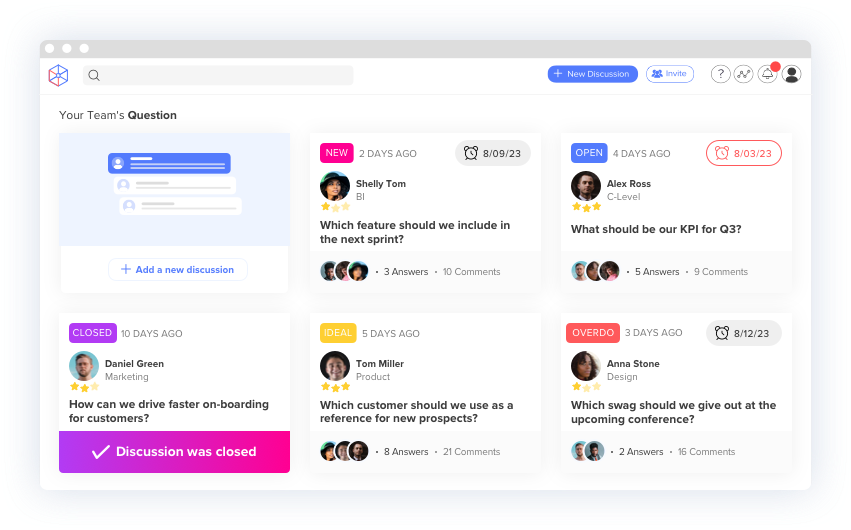
Getting even the most well-organized team to agree on anything can be hard. Tel Aviv’s Ment.io, formerly known as Epistema, wants to make this process easier by applying smart design and a dose of machine learning to streamline the decision-making process.

Like with so many Israeli startups, Ment.io’s co-founders Joab Rosenberg and Tzvika Katzenelson got their start in Israel’s intelligence service. Indeed, Rosenberg spent 25 years in the intelligence service, where his final role was that of the deputy head analyst. “Our story starts from there, because we had the responsibility of gathering the knowledge of a thousand analysts, surrounded by tens of thousands of collection unit soldiers,” Katzenelson, who is Ment.io’s CRO, told me. He noted that the army had turned decision making into a form of art. But when the founders started looking at the tech industry, they found a very different approach to decision making — and one that they thought needed to change.

If there’s one thing the software industry has, it’s data and analytics. These days, the obvious thing to do with all of that information is to build machine learning models, but Katzenelson (rightly) argues that these models are essentially black boxes. “Data does not speak for itself. Correlations that you may find in the data are certainly not causations,” he said. “Every time you send analysts into the data, they will come up with some patterns that may mislead you.”

home 1

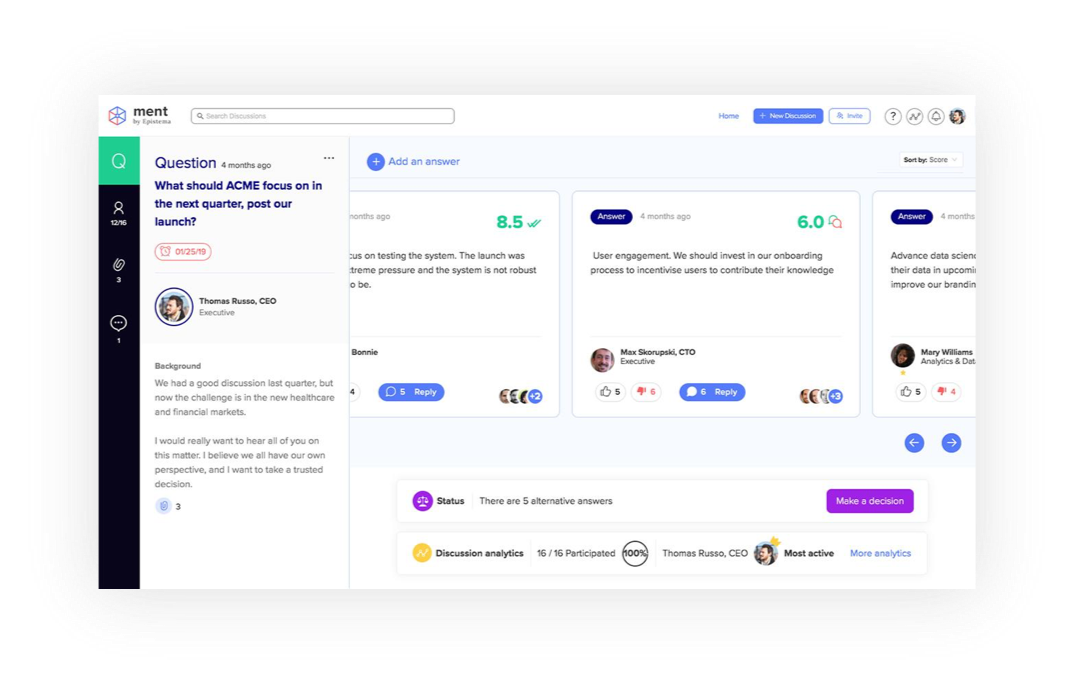
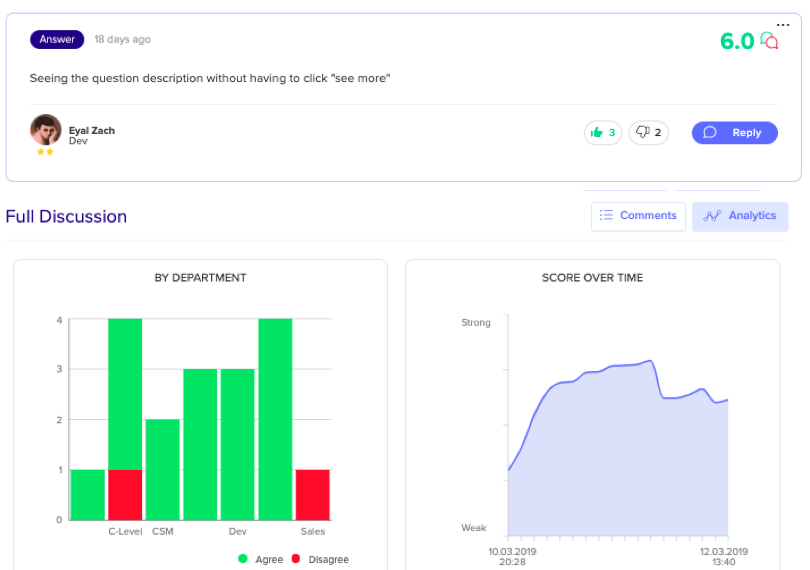
So Ment.io is trying to take a very different approach. It uses data and machine learning, but it starts with questions and people. The service actually measures the level of expertise and credibility every team member has around a given topic. “One of the crazy things we’re doing is that for every person, we’re creating their cognitive matrix. We’re able to tell you within the context of your organization how believable you are, how balanced you are, how clearly you are being perceived by your counterparts, because we are gathering all of your clarification requests and every time a person challenges you with something.”Ment1

At its core, Ment.io is basically an internal Q&A service. Anybody can pose questions and anybody can answer them with any data source or supporting argument they may have.

“We’re doing structuring,” Katzenelson explained. “And that’s basically our philosophy: knowledge is just arguments and counterarguments. And the more structure you can put in place, the more logic you can apply.”

In a sense, the company is doing this because natural language processing (NLP) technology isn’t yet able to understand the nuances of a discussion.Ment6If you’re anything like me, though, the last thing you want is to have to use yet another SaaS product at work. The Ment.io team is quite aware of that and has built a deep integration with Slack already and is about to launch support for Microsoft Teams in the next few days, which doesn’t come as a surprise, given that the team has participated in the Microsoft ScaleUp accelerator program.

The overall idea here, Katzenelson explained, is to provide a kind of intelligence layer on top of tools like Slack and Teams that can capture a lot of the institutional knowledge that is now often shared in relatively ephemeral chats.

Ment.io is the first Israeli company to raise funding from Peter Thiel’s late-stage fund, as well as from the Slack Fund, which surely creates some interesting friction, given the company’s involvement with both Slack and Microsoft, but Katzenelson argues that this is not actually a problem.

Microsoft is also a current Ment.io customer, together with the likes of Intel, Citibank and Fiverr.

Ment2

07 Aug 2019

How to fundraise in August

August is often considered the black hole of venture capital fundraising. Everyone is on vacation (well, everyone who’s not a founder anyway), while half of Silicon Valley is slogging down to Black Rock City for Burning Man. It understandably can just seem like an exercise in futility to try to raise any funding at all.

I’m here to tell you though that August is not the bleakest month of the year for fundraising (that actually would be December according to data from DocSend we’ve published). In fact, using August effectively for fundraising is perhaps the single most important factor for success in the coming fundraising season (there is a reason that YC Demo Day, one of the largest fundraising events in the calendar, is set for August 19-20 after all).

Let’s walk through a plan of attack.

First, the truth about VCs and vacation

Let’s get one thing out of the way: Yes, VCs take vacation, sometimes sparklingly expensive ones, like the kinds with yachts or the kinds where someone rents out a whole ski chalet (or two). It can seem like an incredibly enviable lifestyle, and it is at a certain point of success, particularly in comparison to the context of a founder who is working around the clock and eating instant ramen.

07 Aug 2019

PodcastOne is launching LaunchpadDM, a free hosting platform for independent podcasters

PodcastOne, the celebrity podcasting network from the founder of radio powerhouse WestwoodOne, is launching a free hosting platform for podcasters.

The Los Angeles-based syndicated podcasting platform, which counts athletes, politicians, talk radio, and reality television stars like Adam Carolla, Shaquille O’Neal, Steve Austin, Kaitlyn Bristowe, Dan Patrick, Spencer and Heidi Pratt, Jim Harbaugh, Ladygang, Dr. Drew, Chael Sonnen, Rich Eisen, Barbara Boxer, is angling to get insight into potential new talent through the venture. 

We will see which podcasts are performing well and offer them the opportunity to partner and grow with PodcastOne, and provide them with all the resources the network offers, including production, talent booking, promotion, a dedicated sales team and more,” said PodcastOne chief executive, Peter Morris, in a statement. “As the leading ad-supported podcast network, we are embracing the over 700,000 podcasts out there, and are here to support the long-term growth of independent podcasters.”

How I Podcast

Called Launchpad Digital Media, the new hosting service is pitching podcasters a free platform including unlimited hosting; access to analytics including listenership, geography, and device data; total ownership of direct monetization channels for a podcast’s subscriber base, and complete control over how podcasts are distributed via Apple, Spotify or other services.

The company is also billing itself as a discovery platform, offering free promotion for the services various podcasts across its own network of popular podcasting talent.

“Over the years, people have shared with us how hard it can be out there in the desert of independent podcasting: you have to pay to host and get your podcast heard; you get no help in discoverability; you’re scared to leave and stop paying your hosting platform because you might lose your subscribers; and it’s virtually impossible to get noticed by a major podcast network who can help you take your hard work to the next level,” said Morris, in a statement. “Launchpad was built with the independent podcaster in mind. We wanted to help solve these problems… for free.”

Since nothing is actually free, and since PodcastOne wants to get paid, the catch is the company’s own ability to insert pre- and mid-roll advertising into podcasts that are hosted on the new service.

So podcasters can manage their direct advertising, but they give PodcastOne the ability to slot in ads that the company chooses across any of the podcasts that agree to be hosted on the service. It gives the company access to both marquee talent for high value, big spending advertisers, and a way to flood other podcasts with whatever ads the company wants.

Ads that LaunchpadDM inserts won’t be longer than two total minutes per episode and podcasters can determine the location of the midroll spot when uploading the episode.

07 Aug 2019

Rookout lands $8M Series A to expand debugging platform

Rookout, a startup that provides debugging across a variety of environments including serverless and containers, announced an $8 million Series A investment today. It plans to use the money to expand beyond its debugging roots.

The round was led by Cisco Investments along with existing investors TLV Partners and Emerge. Nat Friedman, CEO of GitHub; John Kodumal, CTO and co-founder of LaunchDarkly, and Raymond Colletti, VP of revenue at Codecov also participated.

Rookout from day one has been working to provide production debugging and collection capabilities to all platforms,” Or Weis, co-founder and CEO of Rookout told TechCrunch. That has included serverless like AWS Lambda, containers and Kubernetes and Platform as a Service like Google App Engine and Elastic Beanstalk

The company is also giving visibility into platforms that are sometimes hard to observe because of the ephemeral nature of the technology, and that go beyond its pure debugging capabilities. “In the last year, we’ve discovered that our customers are finding completely new ways to use Rookout’s code-level data collection capabilities and that we need to accommodate, support and enhance the many varied uses of code-level observability and pipelining,” Weiss said in a statement.

It was particularly telling that a company like Cisco was deeply involved in the round. Rob Salvagno, vice president of Cisco Global Corporate Development and Cisco Investments, likes the developer focus of the company.

“Developers have become key influencers of enterprise IT spend. By collecting data on-demand without re-deploying, Rookout created a Developer-centric software, which short-circuits complexities in the production debugging, increases Developer efficiency and reduces the friction which exists between IT Ops and Developers,” Salvagno said in a statement.

Rookout, which launched in 2017, has offices in San Francisco and Tel Aviv with a total of 20 employees so far. It has raised over $12 million.