
Year: 2019

07 Aug 2019

Morty raises $8.5M series A to help first-time homebuyers secure their mortgages

For the past decade, Brian Faux has been fighting on the front lines of housing finance. In between pursuing a career in mortgage lending and holding stints at Freddie Mac and Wells Fargo, Faux spent more than two years in the detritus of the 2008 financial crisis advising the Department of Housing and Urban Development on how to recover the housing markets through the creation of the Distressed Asset Stabilization Program.

Now Faux, along with co-founders Nora Apsel and Adam Rothblatt, is working to take those hard-learned lessons and build a streamlined and simple mortgage broker online, particularly for first-time homebuyers. Through New York City-based Morty, the trio and their team have launched a tool that allows homebuyers to understand exactly what their buying power is and which homes they can afford.

That product has captured the attention of investors. The company announced today an $8.5 million Series A fundraise led by Prudence Holdings, with participation from Lerer Hippeau and Thrive Capital, the firm which had led Morty’s seed round in 2017. Prudence, a family office managed by Gavin Myers, previously backed real estate brokering startup Compass, and the Morty team first met the firm through participation in TechStars New York.

Morty’s main product guides homebuyers through the process of getting mortgage pre-approval and then finding and signing a loan with a mortgage lender. Through a “Home Financing Score,” the platform visually breaks down the factors that can lead to approval or rejection of a mortgage application, allowing users to optimize their finances to maximize their buying power.

While code operates much of the underwriting and origination process, there is a human touch as well. Faux explained that with current mortgage options, “It’s still too scary. It’s still too opaque, [so consumers] want that human interaction, eventually, but they just wanted it on their terms. And nobody’s kind of brought that to them” before Morty.

Apsel said that “As well as having a digital platform that automatically verifies and underwrites people so that they know exactly how much they qualify for, we also have have mortgage experts on staff available to help people through every step of the home buying process.”

She says that transparency and education have been key to Morty’s early indicators of success. “What we have found is that as long as you are communicating those things to all of the necessary parties — the homebuyer, the realtor, the title agent, everybody — it works. It’s the lack of transparency, and it’s the lack of communication that I think has frustrated this industry for so long,“ she said.

Z9A9266 FINAL 2 updated cleaner white background 1

Morty founders Adam Rothblatt, Brian Faux, and Nora Apsel. Photo via Morty

Morty, which at launch had licenses to operate in 10 states, has now expanded to cover 34 states. One notable exception though is New York, which has particularly stringent and slow-moving licensing processes. The company is hoping to have full nationwide coverage in the years ahead.

Faux says that while the startup focuses on first-time homebuyers, there is nothing preventing the company from expanding to repeat home sales as well. “Once you build trust, and once you show them who you truly are, unbiased and just looking out for their well being, they’ll come back to you,” he said.

Startups related to home buying have received intense attention from investors, with companies like Blend and Opendoor receiving nine-figure infusions of capital over the past few weeks. And Morty is also up against incumbents like LendingTree, which aggregates loans in a variety of categories. Morty’s differentiation is ultimately its focus on ease-of-use, as well as its wide licensing.

07 Aug 2019

FEMA is about to run a national test of the Emergency Alert System

Testing, testing. Is this emergency warning system on? We’re about to find out.

The Federal Emergency Management Agency, or FEMA, will later today buzz every television and radio in the U.S. with a test of the Emergency Alert System (EAS).

If you’re watching television or listening to radio at 2:20pm ET (11:20am PT), you’ll see and hear the test message.

“THIS IS A TEST of the National Emergency Alert System,” the message will read. “If this had been an actual emergency an official message would have followed the tone alert you heard at the start of this message. No action is required.”

FEMA’s Emergency Alert System is one of several systems in place to communicate emergency messages to the public on a mass scale.

As mobile devices became more common across the U.S. population than televisions and radios, FEMA began working on the Wireless Emergency System to send notifications to smartphone users. It was designed to allow the sitting president to send a message to all U.S. phones in the event of national emergency. Its first test ran last year after a short delay following Hurricane Florence on the east coast.

Today’s test, however, is to measure the system’s readiness to alert in the absence of cell service or internet connectivity.

“Other radio and television broadcast and cable stations in each state that monitor PEP stations will receive and broadcast the test message so that within minutes the test message should be presented by all radio and television, cable, wireline service providers and direct broadcast satellite service providers nationwide,” said FEMA in a blog post.

The first nationwide test was in 2011. This is the first nationwide test of the system this year, and the fifth test to date.

07 Aug 2019

FedEx ends ground-delivery contract with Amazon

FedEx is ending a partnership with Amazon to supply the ecommerce company with ground delivery shipping after its current contract ends this month, the company confirmed to Bloomberg. This is the second contract FedEx has allowed to end without renewal with Amazon, following a similar decision in June that covered only Express air shipments.

The new contract termination is more significant than the earlier one, in that it means FedEx will not be providing any last-mile delivery service for Amazon, the largest online retailer, in addition to its less sizeable Express air freight. FedEx previously said that Amazon actually makes up less than 1.3 percent of the shipper’s total revenue, as measured over the year that ended on December 31, 2018.

Amazon is expanding its own shipping capabilities considerably, adding more aircraft to its fleet, and deploying ground-based wheeled delivery robots for last-mile package transportation. The ecommerce giant also recently began its own Delivery Service Partner program to fund and support delivery startup businesses that can help address its need for logistics. It has increasingly relied on its own contracted last-mile delivery services in recent years, and also allocates more of this business to both UPS and USPS than to FedEx even outside its other offerings.

FedEx did explicitly point out that its Express contract ending had no impact on other aspects of its relationship with Amazon at the time, noting that its international and “other” business units (including ground) weren’t affected. The company also says it’s looking to capitalize on the demand for ecommerce outside of Amazon, and building its network intentionally to “serve thousands of retailers in the e-commerce space.”

07 Aug 2019

CircleCI brings its continuous integration to Microsoft programmers for first time

CircleCI has been supporting continuous integration for Linux and Mac programmers for some time, but up until today, Microsoft developers have been left on the outside looking in. Today, the company changed that announcing new support for Microsoft programmers using Windows Server 2019.

CircleCI, which announced a $56 million Series D investment last month, is surely looking for ways to expand its market reach, and providing support for Microsoft programmers is a good place to start, as it represents a huge untapped market for the company.

“We’re really happy to announce that we are going to support Windows because customers are asking for it. Windows [comprises] 40% of the development market, according to a Stack Overflow survey from earlier this year,” Alexey Klochay, CircleCI product manager for Windows told TechCrunch.

Microsoft programmers could have used continuous integration before outside of CircleCI, but it was much harder. Klochay says that with CircleCI, they are getting a much more integrated solution. For starters, he says, developers can get up and running right away without the help of an engineer. “We give the power to developers to do exactly what they need to do at their own pace without getting locked into anything. We’re providing  ease of use and ease of maintenance,” he explained.

CircleCI also provides greater visibility across a development team. “We are also giving companies tools to get to get better visibility into what everyone is building, and how everyone is interacting with the system,” he said.

Klochay says that much of this is possible because of the changes in Windows Server 2019, which was released last year. “Because of all the changes that Microsoft has been introducing, in the latest Windows Server, it has been a smoother experience than if we had to start the year ago,” he said.

Nathan Dintenfass from CircleCI says that in general, the Microsoft ecosystem has shifted in recent years to be more welcoming to the kind of approach that CircleCI provides for developers. “We have observed a maturation of the Windows ecosystem, and being more and more attracted to the kinds of teams that are investing in really high throughput software delivery automation, while at the same time same a maturation of the underlying cloud infrastructure that makes Windows available, and makes it much easier for us to operate,” he explained.

07 Aug 2019

Toyota partners with AI startup Preferred Networks on building helper robots for humans

Toyota is enlisting the help of startup Preferred Networks, a Japanese company founded in 2014 with a focus on artificial intelligence and deep learning, to help move forward its goal of developing useful service robots that can assist people in everyday life.

The two companies announced a partnership today to collaborate on research and development that will use Toyota’s Human Support Robot (HSR) robotics platform. The platform, which Toyota originally created in 2012 and has been developing since, is a basic robot designed to be able to work alongside people in everyday settings. Its primary uses involve offering basic car and support assistance in nursing and long-term care applications. Equipped with one arm, a display, cameras and a wheeled base, it can collect and retrieve items, and provide remote control and communication capabilities.

Preferred Networks already has some experience with Toyota’s HSR – it demonstrated one-such robot programmed to clean a room fully autonomously at Japan’s CEATEC robotics conference in 2018. The system could identify objects, responsd to specific human instructions and, importably pick up and put down objects it couldn’t define from its database in a safe manner.vision predict 01Toyota will be providing “several dozen” HSR units to Preferred Networks for the startup to work on, and then over the next three years, the two will collaborate on R&D, sharing the results of their work and the resulting intellectual property, with no restrictions on how either party uses the results of the joint work.

One of Toyota’s guiding goals as a company is to develop commercial home robotics that can work with people where they live. The automaker has a number of different projects in the works to make this happen, including through research at its Toyota Research Institute (TRI) subsidiary which works with a number of academic institutions. Toyota also recently revealed a number of robotics projects its bringing to the 2020 Olympic Games in Tokyo, which will help it field test a number of its projects.

07 Aug 2019

Zendesk puts Smooch acquisition to work with WhatsApp integration

Zendesk has always been all about customer service. Last spring it purchased Smooch to move more deeply into messaging app integration. Today, the company announced it was integrating WhatsApp, the popular messaging tool, into the Zendesk customer service toolkit.

Smooch was an early participant in the WhatsApp Business API program. What that does in practice says Warren Levitan, who came over as part of the Smooch deal, is provide a direct WhatsApp phone number for businesses using Zendesk . Given how many people, especially in Asia and Latin America, use WhatsApp as a primary channel for communication, this is a big deal.

“The WhatsApp Business API Connector is now fully integrated into Zendesk support. It will allow any Zendesk support customer to be up and running with a new WhatsApp number quicker than ever before, allowing them to connect to the 1.5 billion WhatsApp users worldwide, communicating with them on their channel of choice,” Levitan explained.

Levitan says the entire WhatsApp interaction experience is now fully integrated into the same Zendesk interface that customer service reps are used to using. WhatsApp simply becomes another channel for them.

“They can access WhatsApp conversations from within the same workspace and agent desktop, where they handle all of their other conversations. From an agent perspective, there are no new tools, no new workflows, no new reporting. And that’s what really allows them to get up and running quickly,” he said.

Customers may click or touch a button to dial the WhatsApp number, or they may use a QR code, which is a popular way of accessing WhatsApp customer service. As an example, Levitan says Four Seasons hotels prints a QR code on room key cards, and if customers want to access customer service, they can simply scan the code and the number dials automatically.

Zendesk has been able to get 1000 businesses up and running as part of the early access program, but now it really wants to scale that and allow many more businesses to participate. Up until now, Facebook has taken a controlled approach to on-boarding, having to approve each brand’s number before allowing it on the platform. Zendesk has been working to streamline that.

“We’ve worked tightly with Facebook (the owner of WhatsApp), so that we can have an integrated brand approval and on-boarding/activation to get their number lit up. We can now launch customers at scale, and have them up and running in days, whereas before it was more typically a multi-week process,” Levitan said.

For now, when the person connects to customer service via WhatsApp, it’s only via text messaging, There is no voice connection, and no plans for any for the time being, according to Levitan. Zendesk-WhatsApp integration is available starting today worldwide.

07 Aug 2019

Can a radical new event disrupt how VCs raise funds, unlocking cash for Europe?

For many years there’s been an accepted way to raise capital as a venture capital fund. Essentially, GPs (General Partners who set up and run venture capital firms) go ‘cap in hand’ to LPs (Limited Partners who invest into their VC firms) in pension funds, privately run ‘family offices’, ‘ultra-high net worths’ and other such oddly-named financial institutions. These meetings are always private and often VCs don’t even reveal who, specifically, has invested in their fund.

Because it’s so private, it favors fund managers who have been in the business for many years and already have a bulging contact book.

In recent years part of this process has begun to be unpacked by events organizers, recognizing the hearty profits to be made from match-making these two groups. The tickets to attend these events are eye-wateringly expensive, especially for the VCs trying to raise funds.

But in Europe, the VC market has suffered from a certain amount of out-dated practices, plenty of behind-closed-doors negotiations and certain lack of ‘energy’. Europe is a rich mine of startups, and there really ought to be a more competitive environment, but the lack of big exits and large markets (like the US or China) means things tend to only go so far.

Now a new initiative hopes to disrupt this rather cozy state of affairs with an event which will be – comparatively speaking – cheap to attend for VCs in fund-raising mode. But there’s a twist. They will have to pitch ‘on stage’ to the LPs attending.

Yes reader, suddenly they will be put in the exact same shoes as those poor entrepreneurs…

Alloccate which takes place on 19th September in London – is focused on connecting GPs in Europe, with LPs. But, in particular, the newer VC funds and the many sources of finances who would like to invest in VCs but don’t have the contacts. The aim is to accelerate the growth of the next generation of VC funds, which in turn will invest into Europe’s technology startups of the future.

Up to 30 emerging VC fund managers will be chosen by the Allocate selection committee to present their fund in a five-minute pitch to a room full of LPs, in, what appears to be, the first event of its kind in Europe. Speakers at the one-day event will include Simon Cook, CEO and co-founder of Draper Esprit; Lisa Edgar, Managing Director US fund of funds Top Tier Capital Partners and Katie Martin, Chairwoman of Wilson Sonsini Goodrich & Rosati.

This unusual event is being put together as a non-profit venture by two early-stage VC firms: 7Percent Ventures and Luminous Ventures. The lower prices will reflect the fact that the tickets and sponsorship sold will cover the event costs, and not be a venture in its own right.

Andrew J. Scott, Founder Partner at 7percent Ventures tells me: “The cash-raising process for a venture capital firm has traditionally been pretty opaque. University endowments or ‘family offices’ who look after private wealth and sometimes invest into VC firms, can be hard to reach.” He hopes, in particular, to help emerging VC’s “close the investment gap between Europe and the USA”.

Inspired by a VC pitch event in the US and the ‘pay it forward’ attitude of Silicon Valley, Allocate aims to cut out the middleman and make things more efficient for LPs and fund managers, and without paying £2,000+ for a conference ticket to do so.

“There are various PE, profit-led events which are crazy expensive and also just very corporate/PE focused, but not early-stage VC-focused. So we thought we’d do this! I was inspired by an event I saw SF which I pitched at. Our event will not be profit-led but about expanding the new VC industry,” he tells me.

Emerging fund managers are defined as people with up to three to four funds. So this is targeted at those who have not raised before: very much like a startup event.

“Other events in the industry are free for LPs, but this is like the bad old days when founders used to have to pay to pitch investors. These days investors pay more to attend conferences than startups to do, and pitching is often free – that’s how it should be,” says Scott

“But the GP/LP world, is still the wrong way round. VCs pay thru the nose, and LPs go free. Institutional government-backed funds, or an insurance or pension fund, have billions in the bank, yet a GP trying to raise a first fund will have to pay thousands to go to an event which is free for the LPs? That’s at best peculiar,” he says.

It seems like, at the very least, Allocate is trying to level the playing field, and make it accessible for all, and the same price for everyone. For emerging VC fund managers at least, this seems fairer. LPs always want to see low fees with a fund, so it seems better that VCs are not paying £3,000GBP a ticket to go to events to meet them.

“Raising money for a VC firm can be a who-knows-who business, much like raising venture capital money for a startup was 15 years ago. Raising startup investment is now very different, much more democratized, and we feel the European VC/LP investment world needs to catch up and be the same,” says Scott.

“We definitely want to encourage LPs who have or haven’t invested in VCs before. So much less money goes into VC here than in the US from sources like endowment funds and family offices” he says.

Lomax Ward, Partner at Luminous Ventures, adds: “We need to support and work with new and emerging fund managers and investors in a collaborative environment. The start-up scene in Europe is getting great momentum, evidenced by more and more success stories. But, the fact remains that launching an early-stage venture capital fund is very tough and we have founded Allocate to make it that little bit easier. Also, for LPs it will be a fantastic showcase of Europe’s leading emerging funds.”

Commenting on the idea, Raph Crouan, formerly of Apple and Startup Bootcamp tells me it’s a “Great idea and quite well apparently.”

Speaking off the record another VC tells me “It looks like it’s geared towards newer funds, particularly those raising Fund I maybe II, as opposed to the more established VCs and Seed funds. That’s a good idea.”

Another says: “It’s a good format in principle. It’s clever of 7 percent and Luminous to organise this to help their and other early-stage VCs with fund-raising, provided of course they succeed in getting lots of LPs to attend.”

Allocate chose London because, despite the uncertainty of BREXIT, the team says it remains at the center of the European startup sector. Though America still leads the world, its share of the global VC market has decreased significantly from 79% in 2008 to 53% last year, with the UK’s share of European VC having increased from 31% to 42% over the same period.

In comparison, until recently China was in the ascendant, VC investments in China in Q2 2019 are down nearly 77% year-on-year, while European investment continues to go from strength to strength. A third of the world’s top start-up cities are in Europe.

It seems therefore like it’s really time to put booster-rockets on the European VC scene. And hopefully and events like this can help it along.

07 Aug 2019

Twitter ‘fesses up to more adtech leaks

Twitter has disclosed more bugs related to how it uses personal data for ad targeting that means it may have shared users data with advertising partners even when a user had expressly told it not to.

Back in May the social network disclosed a bug that in certain conditions resulted in an account’s location data being shared with a Twitter ad partner, during real-time bidding (RTB) auctions.

In a blog post on its Help Center about the latest “issues” Twitter says it “recently” found, it admits to finding two problems with users’ ad settings choices that mean they “may not have worked as intended”.

It claims both problems were fixed on August 5. Though it does not specify when it realized it was processing user data without their consent.

The first bug relates to tracking ad conversions. This meant that if a Twitter user clicked or viewed an ad for a mobile application on the platform and subsequently interacted with the mobile app Twitter says it “may have shared certain data (e.g., country code; if you engaged with the ad and when; information about the ad, etc)” with its ad measurement and advertising partners — regardless of whether the user had agreed their personal data could be shared in this way.

It suggests this leak of data has been happening since May 2018 — which is also the day when Europe’s updated privacy framework, GDPR, came into force. The regulation mandates disclosure of data breaches (which explains why you’re hearing about all these issues from Twitter) — and means that quite a lot is riding on how “recently” Twitter found these latest bugs. Because GDPR also includes a supersized regime of fines for confirmed data protection violations.

Though it remains to be seen whether Twitter’s now repeatedly leaky adtech will attract regulatory attention…

Twitter specifies that it does not share users’ names, Twitter handles, email or phone number with ad partners. However it does share a user’s mobile device identifier, which GDPR treats as personal data as it acts as a unique identifier. Using this identifier, Twitter and Twitter’s ad partners can work together to link a device identifier to other pieces of identity-linked personal data they collectively hold on the same user to track their use of the wider Internet, thereby allowing user profiling and creepy ad targeting to take place in the background.

The second issue Twitter discloses in the blog post also relates to tracking users’ wider web browsing to serve them targeted ads.

Here Twitter admits that, since September 2018, it may have served targeted ads that used inferences made about the user’s interests based on tracking their wider use of the Internet — even when the user had not given permission to be tracked.

This sounds like another breach of GDPR, given that in cases where the user did not consent to being tracked for ad targeting Twitter would lack a legal basis for processing their personal data. But it’s saying it processed it anyway — albeit, it claims accidentally.

This type of creepy ad targeting — based on so-called ‘inferences’ — is made possible because Twitter associates the devices you use (including mobile and browsers) when you’re logged in to its service with your Twitter account, and then receives information linked to these same device identifiers (IP addresses and potentially browser fingerprinting) back from its ad partners, likely gathered via tracking cookies (including Twitter’s own social plug-ins) which are larded all over the mainstream Internet for the purpose of tracking what you look at online.

These third party ad cookies link individuals’ browsing data (which gets turned into inferred interests) with unique device/browser identifiers (linked to individuals) to enable the adtech industry (platforms, data brokers, ad exchanges and so on) to track web users across the web and serve them “relevant” (aka creepy) ads.

“As part of a process we use to try and serve more relevant advertising on Twitter and other services since September 2018, we may have shown you ads based on inferences we made about the devices you use, even if you did not give us permission to do so,” it how Twitter explains this second ‘issue’.

“The data involved stayed within Twitter and did not contain things like passwords, email accounts, etc.,” it adds. Although the key point here is one of a lack of consent, not where the data ended up.

(Also, the users’ wider Internet browsing activity linked to their devices via cookie tracking did not originate with Twitter — even if it’s claiming the surveillance files it received from its “trusted” partners stayed on its servers. Bits and pieces of that tracked data would, in any case, exist all over the place.)

In an explainer on its website on “personalization based on your inferred identity” Twitter seeks to reassure users that it will not track them without their consent, writing:

We are committed to providing you meaningful privacy choices. You can control whether we operate and personalize your experience based on browsers or devices other than the ones you use to log in to Twitter (or if you’re logged out, browsers or devices other than the one you’re currently using), or email addresses and phone numbers similar to those linked to your Twitter account. You can do this by visiting your Personalization and data settings and adjusting the Personalize based on your inferred identity setting.

The problem in this case is that users’ privacy choices were simply overridden. Twitter says it did not do so intentionally. But either way it’s not consent. Ergo, a breach.

“We know you will want to know if you were personally affected, and how many people in total were involved. We are still conducting our investigation to determine who may have been impacted and If we discover more information that is useful we will share it,” Twitter goes on. “What is there for you to do? Aside from checking your settings, we don’t believe there is anything for you to do.

“You trust us to follow your choices and we failed here. We’re sorry this happened, and are taking steps to make sure we don’t make a mistake like this again. If you have any questions, you may contact Twitter’s Office of Data Protection through this form.”

While the company may “believe” there is nothing Twitter users can do — aside from accept its apology for screwing up — European Twitter users who believe it processed their data without their consent do have a course of action they can take: They can complain to their local data protection watchdog.

Zooming out, there are also major legal question marks hanging over behaviourally targeted ads in Europe.

The UK’s privacy regulator warned in June that systematic profiling of web users via invasive tracking technologies such as cookies is in breach of pan-EU privacy laws — following multiple complaints filed in the region that argue RTB is in breach of the GDPR.

While, back in May Google’s lead regulator in Europe, the Irish Data Protection Commission, confirmed it has opened a formal investigation into use of personal data in the context of its online Ad Exchange.

So the wider point here is that the whole leaky business of creepy ads looks to be operating on borrowed time.

07 Aug 2019

Brolly launches ‘Brolly Contents’ to tackle the antiquated home contents insurance market

Brolly, the U.K. insurance app that lets you keep track of your various policies so that you are correctly and competitively covered, is launching a new product to plug what it sees as a gap in home contents insurance.

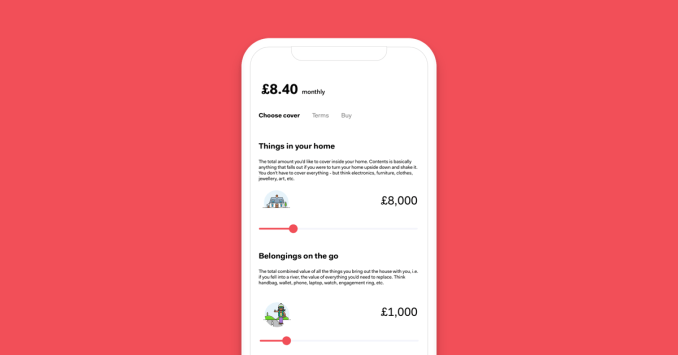
Dubbed “Brolly Contents,” the new offering promises “flexible” monthly cover for all or a subset of the items you own, transparently priced and delivered in a more convenient way via Brolly’s mobile app. Features of Brolly Contents include the ability to insure up to £40,000 worth of belongings, suitable for renters or property owners, and no fees for updates to your cover.

In addition, there’s a promised loyalty discount of up to 25% that increases each month you stay with Brolly and haven’t made a claim. That’s the antithesis to incumbent providers who offer large discounts for new customers, which are then clawed back the following years on the premise that you are too lazy or time poor to bother switching.

Brolly founder and CEO Phoebe Hugh tells me her aim is to rid customers of what she calls the “loyalty tax,” while simultaneously upgrading contents insurance for the digital age.

“For the majority of consumers, contents insurance is the first voluntary insurance product they will come across,” says Hugh. “A digital native generation are approaching this for the first time and are confused and unhappy with what is currently available. 9 out of 10 households headed by someone between 65-75 have contents insurance, versus just 4 out of 10 of under 30’s. This newer customer has become accustomed to digital delivery of everything, from banking to food delivery, and cannot find an insurance product that suits them. Brolly Contents is the first Brolly product to address these problems head on”.

Developed in partnership with specialist insurer Hiscox, Brolly Contents promises to be more flexible than similar products after Hugh and her team concluded that the current market wasn’t meeting existing Brolly customers’ needs, let alone expanding the market for contents insurance as a whole.

Contents insurance is typically sold as blanket cover but with lots of caveats, and/or requires tedious form filling and is still opaque at best. This leaves many not bothering to take out cover at all or discovering that the cover they have falls short when it’s time to make a claim.

In contrast, Brolly Contents claims to be more transparent, with a much simpler to understand product and an on-boarding experience delivered via in-app chat that walks you through how much cover you require and the amount of excess you wish to pay should you make a claim.

“With Brolly Contents, you can choose how much you want to insure and it doesn’t need to be everything in your home,” says Hugh. “You can get insured from as little as £4.50 a month, if you only want to protect a few things. There are no add-ons, and you can add valuables for no additional cost. Many businesses in this space, particularly some of the newer ones, are offering a branded product to customers which, in the background, consists of multiple underwriters with policies stitched together. As soon as you add some valuables and accidental damage, the price skyrockets. It’s pretty tricky to keep pricing competitive if this is how you operate”.

Brolly Contents

Meanwhile, Hugh — who before starting Brolly was an underwriter at Aviva — says that despite the insurtech hype, the insurance industry remains a “pre-disrupted market”. Incumbents are focused on where the profit currently is, and therefore the uninsured or beginner insurance customers aren’t well served. In the meantime, insurtech startups typically have to work with those same incumbents.

“A new business gaining traction in insurance is challenging; it’s unlikely you can underwrite yourself at the outset so you have to take a patient approach,” she says. “We found a world-class underwriting partner in Hiscox who shared our vision to simplify insurance, and who wanted to challenge the status quo, but are also trusted to pay out on claims. We’ve been working on Brolly Contents for over a year to deliver something genuinely new”.

Adds Matt Churchill, Head of Hiscox Futures: “Consumer expectations of insurance are changing. We identified early on that Brolly were leading the charge in exploring new ways of engaging customers. Together, we’ve designed a simple insurance product and brought it to life on Brolly’s proven technology driven platform. We hope it brings positive benefits to consumers looking for simplicity and flexibility from a home contents policy”.

07 Aug 2019

Applications still open for Hardware Battlefield TC Shenzhen

We’re still in the hunt for innovative early-stage hardware startup founders. And by that, we mean boundary-pushers, exceptional disrupters and all-around game-changers. If that sounds like you, you still have time to apply to compete in Hardware Battlefield at TC Shenzhen on November 11-12.

Don’t miss your chance to compete in our epic, hardware-focused pitch competition. Apply to TC Hardware Battlefield 2019. The grand prize is a cool $25,000, but there’s a lot more than money on the line. If you’re selected, you’ll launch your startup on a world stage — in front of eager investors and tech media. And you’ll do it in Shenzhen, the world’s hardware heartland. The exposure alone can be life-changing.

First things first. Does your startup qualify? The answer is yes — if you meet the following stipulations.

  • Submit your application by August 14
  • You must have a minimally viable product to demo onstage
  • Your product has received little or no international press coverage to date
  • Your product must be a hardware device or component (Enterprise hardware eligible)

Our discerning TechCrunch editors will thoroughly review every qualified application and pick approximately 10-15 startups to compete. If you’re selected, get ready to work, because you’ll receive free pitch coaching from our editors. That’s six rigorous weeks to get you primed and prepped to pitch your hardware on a world stage — and outshine the competition

Founders have just six minutes to pitch and demo their products — followed by an in-depth Q&A with the judges. If you make it to the final round, you’ll repeat the process in front of a new set of judges. After the hardware dust settles, the judges will name the Hardware Battlefield TC Shenzhen champion — who takes home the Battlefield Cup along with a check for an equity-free $25,000.

All the fast-paced action takes place in front of a live audience, and we capture the entire event on video and post it to our global audience on TechCrunch. That translates to a lot of exposure, and it can change the trajectory of your business — whether you win or not.

The Hardware Battlefield takes place during our second TC Shenzhen event (produced with TechNode, our partner in China). The show features top speakers from the startup world in China and beyond, plenty of startups exhibiting in Startup Alley and a hackathon. Stay tuned — we’ll have tickets available soon.

Take your shot — apply to TC Hardware Battlefield 2019 by August 14. Come to Shenzhen on November 11-12 and show us your hardware!

Is your company interested in sponsoring or exhibiting at Hardware Battlefield TC Shenzhen? Contact our sponsorship sales team by filling out this form.