Year: 2019

07 Aug 2019

Through a new partnership and $72 million in funding, LanzaTech expands its carbon capture tech

For nearly fifteen years LanzaTech has been developing a carbon capture technology that can turn waste streams into ethanol that can be used for chemicals and fuel.

Now, with $72 million in fresh funding at a nearly $1 billion valuation and a newly inked partnership with biotechnology giant, Novo Holdings, the company is looking to expand its suite of products beyond ethanol manufacturing, thanks, in part, to the intellectual property held by Novozymes (a Novo Holdings subsidiary).

“We are learning how to modify our organisms so they can make things other than ethanol directly,” said LanzaTech chief executive officer, Jennifer Holmgren.

From its headquarters in Skokie, Ill., where LanzaTech relocated in 2014 from New Zealand, the biotechnology company has been plotting ways to reduce carbon emissions and create a more circular manufacturing system. That’s one where waste gases and solid waste sources that were previously considered to be un-recyclable are converted into chemicals by LanzaTech’s genetically modified microbes.

The company already has a commercial manufacturing facility in China, attached to a steel plant operated by the Shougang Group, which produces 16 million gallons of ethanol per-year. LanzaTech’s technology pipes the waste gas into a fermenter, which is filled with genetically modified yeast that uses the carbon dioxide to produce ethanol. Another plant, using a similar technology is under construction in Europe.

Through a partnership with Indian Oil, LanzaTech is working on a third waste gas to ethanol using a different waste gas taken from a Hydrogen plant.

The company has also inked early deals with airlines like Virgin in the UK and ANA in Japan to make an ethanol-based jet fuel for commercial flight. And a third application of the technology is being explored in Japan which takes previously un-recyclable waste streams from consumer products and converts that into ethanol and polyethylene that can be used to make bio-plastics or bio-based nylon fabrics.

Through the partnership with Novo Holdings, LanzaTech will be able to use the company’s technology to expand its work into other chemicals, according to chief executive Jennifer Holmgren. “We are making product to sell into that [chemicals market] right now. We are taking ethanol and making products out of it. Taking ethylene and we will make polyethylene and we will make PET to substitute for fiber.”

Holmgren said that LanzaTech’s operations were currently reducing carbon dioxide emissions by the equivalent of taking 70,000 cars off the road.

“LanzaTech is addressing our collective need for sustainable fuels and materials, enabling industrial players to be part of building a truly circular economy,” said Anders Bendsen Spohr, Senior Director at Novo Holdings, in a statement. “Novo Holdings’ investment underlines our commitment to supporting the bio-industrials sector and, in particular, companies that are developing cutting-edge technology platforms. We are excited to work with the LanzaTech team and look forward to supporting the company in its next phase of growth.”

Holmgren said that the push into new chemicals by LanzaTech is symbolic of a resurgence of industrial biotechnology as one of the critical pathways to reducing carbon emissions and setting industry on a more sustainable production pathway.

“Industrial biotechnology ca unlock the utility of a lot of waste carbon emissions. ” said Holmgren. “[Municipal solid waste] is an urban oil field. And we are working to find new sources of sustainable carbon.”

LanzaTech isn’t alone in its quest to create sustainable pathways for chemical manufacturing. Solugen, an upstart biotechnology company out of Houston, is looking to commercialize the bio-production of hydrogen peroxide. It’s another chemical that’s at the heart of modern industrial processes — and is incredibly hazardous to make using traditional methods.

As the world warms, and carbon emissions continue to rise, it’s important that both companies find pathways to commercial success, according to Holmgren.

“It’s going to get much much worse if we don’t do anything,” she said.
07 Aug 2019

Gogoro announces Yamaha, Aeon and PGO are the first manufacturers that will use its swappable batteries in their own scooters

Gogoro, the Taiwanese electric vehicle company, has announced its first manufacturing partners. Yamaha, Aeon Motor and PGO will all launch new scooters this summer that run on Gogoro’s swappable batteries and charging infrastructure.

This means consumers who like Gogoro’s battery system will have a choice between buying Gogoro’s own scooters or scooters from its three partners. All scooters that use Gogoro’s energy network can exchange batteries at the 1,300 GoStations currently in Taiwan.

Beyond its own electric scooters, Gogoro sees its technology, most of which is developed in-house, as an open platform for electric vehicles, with the goal of reducing pollution in cities with heavy traffic. It recently launched a ride-sharing platform that can be used as a white-label solution by companies that want to launch their own electric scooter sharing program (Gogoro’s scooters are already use by Coup, the European ride-sharing startup).

For a deeper look into the company’s origins and plans, Extra Crunch subscribers can read a recently published interview with Gogoro co-founder and CEO Horace Luke.

07 Aug 2019

With warshipping, hackers ship their exploits directly to their target’s mail room

Why break into a company’s network when you can just walk right in — literally?

Gone could be the days of having to find a zero-day vulnerability in a target’s website, or having to scramble for breached usernames and passwords to break through a company’s login pages. And certainly there will be no need to park outside a building and brute-force the Wi-Fi network password.

Just drop your exploit in the mail and let your friendly postal worker deliver it to your target’s door.

This newly named technique — dubbed “warshipping” — is not a new concept. Just think of the traditional Trojan horse rolling into the city of Troy, or when hackers drove up to TJX stores and stole customer data by breaking into the store’s Wi-Fi network. But security researchers at IBM’s X-Force Red say it’s a novel and effective way for an attacker to gain an initial foothold on a target’s network.

“It uses disposable, low cost and low power computers to remotely perform close-proximity attacks, regardless of the cyber criminal’s location,” wrote Charles Henderson, who heads up the IBM offensive operations unit.

IBMXFR Warship 2

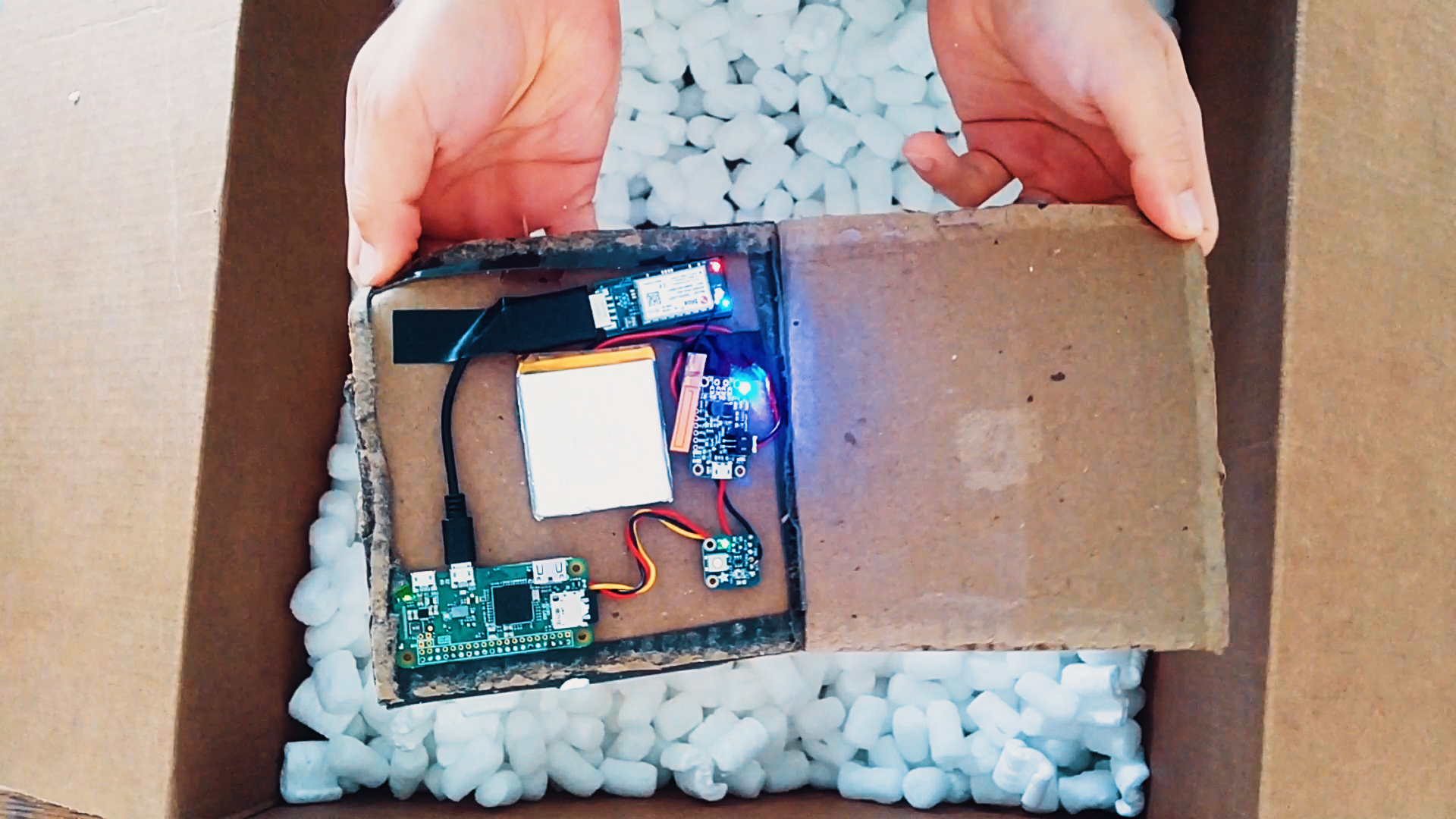
A warshipping device. (Image: IBM/supplied)

The researchers developed a proof-of-concept device — the warship — which has a similar size to a small phone, into a package and dropped it off in the mail. The device, which cost about $100 to build, was equipped with a 3G-enabled modem, allowing it to be remote controlled so long as it had cell service. With its onboard wireless chip, the device would periodically scan for nearby networks — like most laptops do when they’re switched on — to track the location of the device in its parcel.

“Once we see that a warship has arrived at the target destination’s front door, mailroom or loading dock, we are able to remotely control the system and run tools to either passively, or actively, attack the target’s wireless access,” wrote Henderson.

Once the warship locates a Wi-Fi network from the mailroom or the recipient’s desk, it listens for wireless data packets it can use to break into the network. The warship listens for a handshake — the process of authorizing a user to log onto the Wi-Fi network — then sends that scrambled data back over the cellular network back to the attacker’s servers, which has far more processing power to crack the hash into a readable Wi-Fi password.

With access to the Wi-Fi network, the attacker can navigate through the company’s network, seeking out vulnerable systems and exposed data, and steal sensitive data or user passwords.

All of this done could be done covertly without anyone noticing — so long as nobody opens the parcel.

“Warshipping has all the characteristics to become a stealthy, effective insider threat — it’s cheap, disposable, and slides right under a targets’ nose –all while the attacker can be orchestrating their attack from the other side of the country,” said Henderson. “With the volume of packages that flow through a mailroom daily — whether it be supplies, gifts or employees’ personal purchases — and in certain seasons those numbers soar dramatically, no one ever thinks to second guess what a package is doing here.”

The team isn’t releasing proof-of-concept code as to not help attackers, but uses the technique as part of its customer penetration testing services — which help companies discover weak spots in their security posture.

“If we can educate a company about an attack vector like this, it dramatically reduces the likelihood of the success of it by criminals,” Henderson said.

07 Aug 2019

In a 130-page court filing, Kik claims the SEC’s lawsuit “twists” the facts about its online token

CEO Ted Livingston of Kik

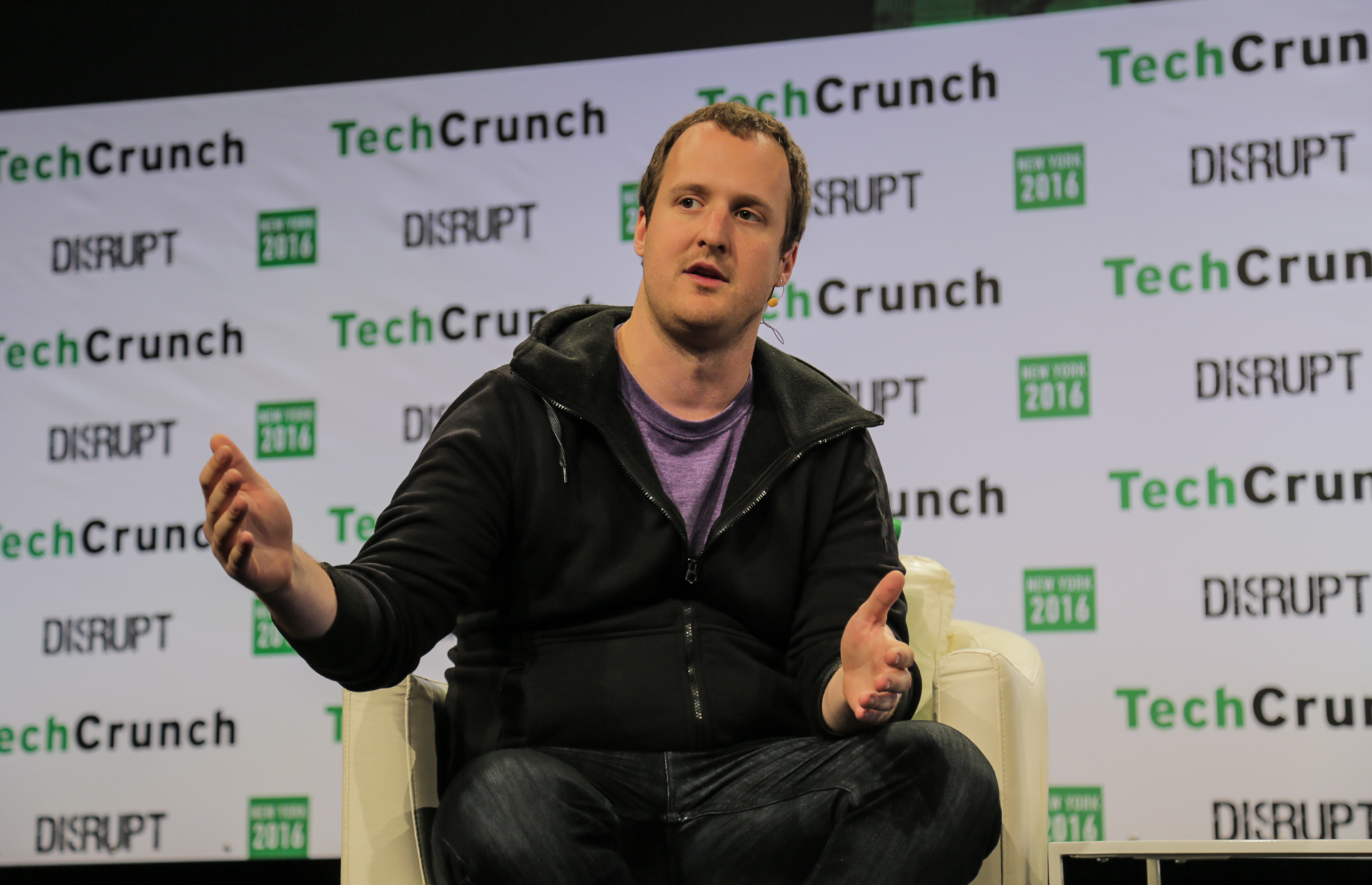
Kik Interactive has hit back at the Securities and Exchange Commission lawsuit that claims a $100 million token sale was illegal. The company, which owns Kik Messenger, filed a 130-page response today in U.S. District Court for the Southern District of New York, alleging that the SEC is “twisting” the facts about its token, called Kin, and asking for an early trial date and dismissal of the complaint.

One of the key issues in the case is if Kin was just an in-app token used to buy games, digital products and other services in Kik Messenger, or if it was meant to be an investment opportunity, as the SEC alleges.

Kik’s general counsel Eileen Lyon said in a press statement that “since Kin is not itself a security, the SEC must show that it was sold in a way that violates the securities laws. The SEC had access to over 50,000 documents and took testimony from nearly 20 witnesses prior to filing its Complaint, yet it is unable to make the case that Kik’s token sale violated the securities laws without bending the facts to distort the record.”

The SEC alleges that the token sale, announced in 2017, came at a time when the company had predicted that it would run out of money after Kik Messenger had been losing money for years, and that it then used proceeds from that sale to build an online marketplace for the app.

In the filing, Kik’s legal team denied that charge, claiming that the SEC’s allegations about its financial condition “is solely designed for misdirection, thereby prejudicing Kik and portraying it in a negative light” and that Kik began working on a cryptocurrency-based model after exploring monetization options that would help it compete against larger techc companies.

They added that “Kik’s Board and Executive Team alike believed that Kin was a bold idea that could solve the monetization challenges faced by all developers (not just Kik) in the existing advertising-based economy, by changing the way people buy and sell digital products and services.”

The SEC also alleges that the sale of digital tokens to U.S. investors was illegal because Kik did not register their offer as required by United States law, even though it claims that Kik marketed Kin as an investment opportunity whose value would increase. In its response, Kik denied that it offered or sold securities, or violated federal securities laws.

In the company’s press statement, Kik CEO Ted Livingston said “The SEC tries to paint a picture that the Kin project was an act of desperation rather than the bold move that it was to win the game, and one that Kakao, Line, Telegram and Facebook have all now followed.”

06 Aug 2019

SpaceX successfully launches twice re-flown Falcon 9 for AMOS-17 mission

SpaceX successfully launched a Falcon 9 first-stage that had previously served two missions in July and November of 2018, today carrying its final payload, the AMOS-17 satellite for Spacecomm. SpaceX had configured the Falcon 9 in its ‘expendable mode’ for this mission, which means it made use of all available fuel on board to carry the 14,000+ lb satellite to orbit, without enough left over to come back in a controlled descent and landing.

A service life of three full missions is nothing to sneeze at, however, and definitely helps SpaceX save some costs on each of the missions flown by this flight-proven rocket booster. Meanwhile, everything looks to have gone to plan in terms of the AMOS-17 mission parameters, too. So far, the multi-purpose geostationary communications satellite, which will provide mobile, streaming and video connectivity across parts of the Middle East, Africa, and Europe, has reached geostationary transfer orbit and is gearing up for its next burn to raise it to its target deployment orbit. We’ll update this post once it reaches that spot to confirm successful deployment.

SpaceX will attempt to recover the fairing used to protect the cargo as it ascends to space tonight – it’ll try to catch one half in a giant net strung across support structures on ‘Ms. Tree,’ a ship operated by SpaceX specifically for this purpose. The other half will fall into the ocean, and SpaceX will try to collect that half as well, using a second ship it has for that purpose. We’ll also update the post once we find out if that attempt has been successful.

SpaceX has recovered a fairing half using the net mounted on ‘Ms. Tree’ previously – it caught a fairing used in its last Falcon Heavy launch in June.

Developing…

06 Aug 2019

The Pill Club is donating 5,000 units of emergency contraception

Eleven million women in the U.S. live more than an hour from an abortion clinic, a number expected to increase as facilities close up shop following new restrictions on women’s healthcare in several states.

Planned Parenthood and other leading nonprofits continue to put up a good fight while private “mission-driven” companies in the burgeoning women’s health tech sector are all talk and little action. But a new effort from The Pill Club, an Alphabet-backed birth control and prescription delivery startup, may lead to change in the nascent sector.

The Pill Club has partnered with Power To Decide, a nonprofit campaign to prevent unplanned pregnancies, to dole out free emergency contraception to women in need. Together they’ll distribute 5,000 units of a generic form of Plan B, a pill taken after sex to stop a pregnancy before it starts. For the next three months The Pill Club will also match all donations up to $10,000 made to Power To Decide’s Contraceptive Access Fund, which helps low-income women access contraception. Anyone can sign up now to receive free units.

The Pill Club’s decision to share resources with a nonprofit comes as several states this year have imposed new laws restricting or outlawing abortion procedures. Alabama, for example, earlier this year passed a Senate bill banning abortion in the state. Arkansas, Indiana, Kentucky and others have also OK’d new restrictions on abortion.

The Pill Club

This is The Pill Club’s first effort to donate emergency contraception to populations in need, as well as its first partnership with a not-for-profit entity. Co-founder and chief executive officer Nick Chang says the startup thought long and hard about how it could be most helpful to women in this political climate.

“We thought, what can we do to support women in these states in ways that other companies may not be able to?,” Chang tells TechCrunch. “This is the moment where private companies can really go out and benefit women in ways that may not be supported in other avenues. Since we have the means and ability to do it in ways that are more convenient and private, it’s our opportunity to drive access and support.”

Founded in 2014 and backed with more than $60 million in venture capital funding, one might argue The Pill Club should have forged partnerships like this from the get-go. Curious what efforts other well-funded birth control startups were making to support women in 2019, especially women in contraceptive deserts who are likely unfamiliar with the new line of consumer birth control brands, I reached out to The Pill Club’s competitors Nurx, a fellow birth control delivery company, and Hers, a line of women’s healthcare products owned by the billion-dollar startup Hims.

Both companies emphasized the fact that many of their customers live in Southern states, or the region most impacted by new limitations to abortion care, but didn’t mention any new efforts to increase access, like partnerships with nonprofits or donations. Hers provided this quote from the company’s co-founder Hilary Coles, which didn’t answer my question but did make clear the company is thinking about serving contraceptive deserts:

“At Hers, our mission is to provide women with more convenient and affordable access to the healthcare system,” Hers co-founders Hilary Coles said in a statement. “Approximately 3.5 million patients go without care because they cannot access transportation to their providers and 19.5 million women have reported not having access to a clinic that provides birth control specifically. That’s simply unacceptable. Closing the gaps caused by geographic barriers between patients and their doctors was one of the primary challenges we set out to address when founding Hers. We’re proud to be a resource for women nationwide, including those who live in contraceptive deserts who may not otherwise have access to the care they need. It’s crucial to Hers to be part of the solution in alleviating the pain points women experience within the healthcare system.” 

It’s not the responsibility of these companies to improve the political landscape of the U.S., but with $340 million in private capital shared between them, the trio does have a unique opportunity to innovate, share, collaborate and influence. After all, that’s what’s so great about healthtech; it brings new, innovative solutions to an industry characterized by antiquated systems and slow movers. For once, Silicon Valley’s “move fast and break things” mantra may be appropriately applied to a facet of healthcare. Women need sustained access to contraception and abortion care. Fast.

“This is the time when private companies can step in,” Chang concluded. “We can come in and help out and it’s our responsibility to do that.”

06 Aug 2019

Comcast’s $10 internet plan opens up to all low income and disabled Americans

Low-income families face the same issues the luckier among us do when it comes to getting broadband: few options and fewer still that are affordable. Comcast, though simultaneously the source of many of these issues, has a good program for anyone facing financial hardship, and several new groups now qualify for $10 connectivity.

The “Internet Essentials” program has offered cheap internet to the economically disadvantaged and other groups who need a helping hand, for several years now. It’s connected some two million households so far and may connect plenty more under the new, expanded eligibility options the company just announced.

Essentially if you’re the beneficiary of any of a bunch of financial aid programs from the government, or are disabled, or a low income household, you’re eligible. You can apply here for free.

Previously you were eligible under a dozen or so of those programs, but today Comcast announced that the following groups are newly able to take advantage of the program:

  • Persons with disabilities
  • Seniors on Medicaid
  • All low-income adults (defined as 38 percent above the poverty line in your area)

That last one probably makes a lot of people eligible who might not have participated in one of the other programs, like the National School Lunch Program or Section 8 housing. If you’re low income, get on in there.

In case you’re not quite sure of your exact income, you’re also welcome if you take part in any of the following assistance programs:

  • Medicaid
  • National School Lunch Program (NSLP, free and reduced price lunch)
  • Supplemental Nutrition Assistance Program (SNAP or food stamps)
  • HUD housing assistance and Section 8
  • Temporary Assistance for Needy Families (welfare)
  • Supplemental Security Income (social security)
  • Head Start or Early Head Start
  • Low Income Home Energy Assistance Program (LIHEAP)
  • Tribal assistance (TTANF and FDPIR)
  • Women, Infants, and Children (WIC)
  • VA pension

Any of these should qualify you for $10 (plus applicable taxes and fees — probably a couple bucks) broadband. You can also apply for a $150 computer, but I’m not sure I’d recommend whatever they’re selling. Cheap laptops are pretty easy to find, so ask around before you go in on Comcast’s house brand.

Just to make sure expectations are in line with reality here, this is a 5-megabit connection, meaning it doesn’t really even qualify as “broadband” under current definitions. But you’ll be able to stream music, play games, do most web stuff, and watch YouTube perfectly fine. Just be ready to buffer a bit if you want to watch Netflix in HD. There’s also a 1-terabyte data cap, so 4K all day probably isn’t a good idea.

Good on Comcast for offering this (and rare it is the company deserves kudos). It’s more comprehensive than other low-income connection options from AT&T, Cox, and so on, though if they’re the monopoly in your area, you might not have a choice. At least the programs exist — there’s a pretty good list here. Be sure to ask your provider if they have one before you decide to pay full price.

06 Aug 2019

Rocket Lab’s Electron rocket will go reusable, with the company aiming for mid-air helicopter recovery

Private rocket launch startup and SpaceX competitor Rocket Lab made a big announcement today: It’ll be looking to re-use the first stage of its Electron rockets, returning them to Earth with a controlled landing after they make their initial trip to orbit with the payload on board. The landing sequence will be different from SpaceX’s however: They’ll attempt to catch the returned first stage mid-air using a helicopter.

That’s in part because, as Rocket Lab founder and CEO Peter Beck told a crowd when announcing the news today, the company is”not doing a propulsive re-entry” and “we’re not doing a propulsive landing,” and instead will leach off its immense speed upon return to Earth through a turnaround burn in space before releasing a parachute to slow it down enough for a helicopter to catch it.

There are a number of steps required to get to that point, but already, Rocket Lab has been looking to measure all the data it needs to ensure this is possible through its last few launches. It’s upgrading the instrumentation for its eighth flight to gather yet more data, and then on flight 10 it’ll have the rocket splash down into the ocean to recover that rocket for even more learning. Then, during a flight to be determined later (Beck is unwilling to put a number on it at this stage) they’ll try to actually bring one down in good enough shape to reuse it.

As for why, there’s a clear advantage to being able to re-fly rockets, and it’s a simple one to understand when you realize that there’s huge amount of demand for commercial launches.

“The fundamental reason we’re doing this is launch frequency,” Beck said. “Even if I can get the stage done once, I can effectively double production ratio.”

Rocket Lab has an HQ in Huntington Beach, California and its own private launch site in New Zealand, was founded in 2006 by Beck. The company has been test launching its orbital Electron rocket since 2017, and serving customers commercially since 2018. It also intends to launch from Virginia in the U.S. starting in 2019.

The company revealed its Photon satellite platform earlier this year, which would allow small satellite operators to focus on their specific service and use the off-the-shelf Photon design to skip the step of actually designing and building the satellite itself.

06 Aug 2019

Indie developer flooded with racist, misogynist abuse after announcing Epic partnership

The two developers of an indie game called Ooblets have been subjected to “tens of thousands if not hundreds of thousands” of abusive messages following their decision to put their game on the Epic Games Store. It’s a worrying yet entirely unsurprising example of the toxic elements of the gaming community and their strangely unlimited hatred for Epic.

Ooblets is a game by a husband and wife team that looks like a sort of farming/dancing/collecting simulator with a fun, cute style. They’ve been developing it for a couple years now with the help of Patreon supporters, and are getting closer to release.

In the process of lining up where and how to sell the game, the two entered into a contract with the Epic Games Store, which in exchange for near-term exclusivity would guarantee the developers the income they might have gotten if they’d decided to launch on multiple storefronts.

This practice adds some stability to what can be a very unpredictable sales environment, and as a side effect gave the two a fund up front to finish development without having to rely on their Patreon supporters — whom they told about the new deal and consulted about what should happen next.

To be clear, the game will still be able to be bought and played by pretty much everyone on PC, just using a different storefront. Like if the chips you prefer started being sold at 7-11 instead of AM/PM. Except you can go to either one just by clicking your mouse.

But when they announced the news to the broader internet, it drew down on Ben and Rebecca Cordingley the ire of the easily provoked gaming world, specifically those who believe that Epic’s purchase of exclusives for its nascent gaming storefront is an affront to all that is sane and good in this world.

Immediately the two were inundated with messages “on every conceivable platform” telling them to die, swallow bleach, get raped, and both accusing Ben of anti-semitism and mocking his being Jewish. Some, he said, went so far as to doctor video to make it seem like he had posted something then deleted it.

Horrified and taken aback by this massively disproportionate response to two people deciding to make a deal that should benefit their game and not affect their supporters (their patrons on Patreon were never promised the game, let alone on a specific platform), Ben wrote a post with his thoughts on the matter. You can read it here, along with some rather disturbing excerpts of the attacks on him and his wife.

These attacks are likely ongoing — in fact, the new post has probably just stoked the fire, and the two can look forward to a few more weeks of being told to kill themselves or that someone is going to find them and assault them.

The backlash against Epic over the last year has been perplexing to watch. The new storefront was created in the wake of Fortnite’s success to act as a dark horse challenger to the reigning champ of the PC gaming world, Valve’s Steam. Releasing on Steam has been a foregone conclusion for most PC games for years, but recently that practice has been challenged as companies like Epic and Ubisoft created their own launchers and game stores.

Flush with Fortnite cash, Epic has relied on two things to grow its storefront, which began (and remains) rather lackluster compared to its more mature and popular competitors. First, it has simply picked a number of games each month to give away for free, no strings attached — and not shovelware either, but actually great games that people want. Second, they’ve arranged for upcoming games to release exclusively on their platform.

Paid exclusivity is of course by no means new, especially not in the gaming community, where exclusivity among platforms has been the rule since the ’80s, when it was Mario vs Sonic, to today, when it’s Halo vs. Destiny or a hundred others. Sony, Microsoft, Nintendo, and many others pay huge amounts to lock in developers for years, sometimes buying them outright so their games will be released exclusively on a certain platform. Epic seems to be joining a fairly large club

Steam has many features Epic doesn’t, it is true. The community of recommendations, mods, forums, and gamified purchasing on Steam is unmatched anywhere else. But for the purpose of buying and launching a game, the two are pretty evenly matched. It’s understandable that people might be upset when a game they are looking forward to disappears from their wishlist on Steam, or that they have to download another app in order to launch some games. But this inconvenience is, let’s be honest, minimal.

It’s sad reading not just the initial outrage at the pair’s decision — which, as they explained, is helpful for them as developers and lets them finish the game with less financial uncertainty — but at the justification that many have put forward that by joking about how angry people get about the Epic thing in the original post, Ben was inviting the abuse he received. These “they should have known” or “they were asking for it” people seem to want the developer’s perceived tone to have equal importance as the thousands of death threats they received subsequently.

From Ben’s post:

I’d challenge anyone to be on the receiving end of this for a few minutes/hours/days to not come to the conclusion that a huge segment of the broader gaming community is toxic.

There’s a strange relationship a segment of the gaming community has with game developers. I think their extreme passion for games has made them perceive the people who provide those games as some sort of mystical “other”, an outgroup that’s held to a whole set of weird expectations. These folks believe they hold the magic power of the wallet over developers who should cower before them and capitulate to any of their demands. You can see this evidenced by the massive number of angry people threatening to pirate our game in retaliation to any perceived slight.

It’s hard to see the effects or scope of what a massive mob of online harassment is doing to someone until you’re on the receiving end of it. It’s also really hard to realize when you’re unwittingly part of a harassment group because you’ve been so convinced by the mob mentality that your anger and target are justified.

Ben and Rebecca are far from the first to be the target of this type of mob, and let’s not forget that 8chan got its start as a refuge for “gamergate” diehards who had been ejected from other platforms. The original toxic gamer outrage factory is now known for being an incubator for white nationalist terrorists. Threats from the collective fragile internet ego are manifesting in bullets and taking lives with frightening frequency.

If you’d like to support the game and developer, which I already intended to do before this unseemly furore, you can follow the developers and see the latest over at Ooblets.com.

06 Aug 2019

Disney will bundle Hulu, ESPN+ and Disney+ for a monthly price of $12.99

Disney’s upcoming streaming service Disney+ will be available as a $12.99 monthly bundle with ESPN+ and ad-supported Hulu.

That means the full Disney bundle (it owns ESPN and — thanks to the Fox acquisition — has a controlling stake in Hulu) will cost the same amount as Netflix’s standard U.S. plan.

Disney CEO Bob Iger announced the pricing this afternoon as part of the company’s third quarter earnings call, as reported in Axios and elsewhere.

Earlier this year, the company announced that Disney+ will cost $6.99 per month as a standalone subscription, and will launch on November 12. At the time, executives said they were “likely” to offer a bundle with ESPN+ and Hulu as well, but they didn’t offer any concrete plans or details.

At launch, Disney+ will include a big swath of the joint Disney-Fox content library, including the first two Star Wars trilogies, the latest Marvel movies, “The Simpsons” and the Signature collection of classic Disney films, with more content added as it gets freed up from third-party deals.

Disney is also developing original shows for the service, include several Marvel shows and the Star Wars spinoff “The Mandalorian.”