Year: 2019

01 Aug 2019

Google is bringing voice-free emergency operator access to Android

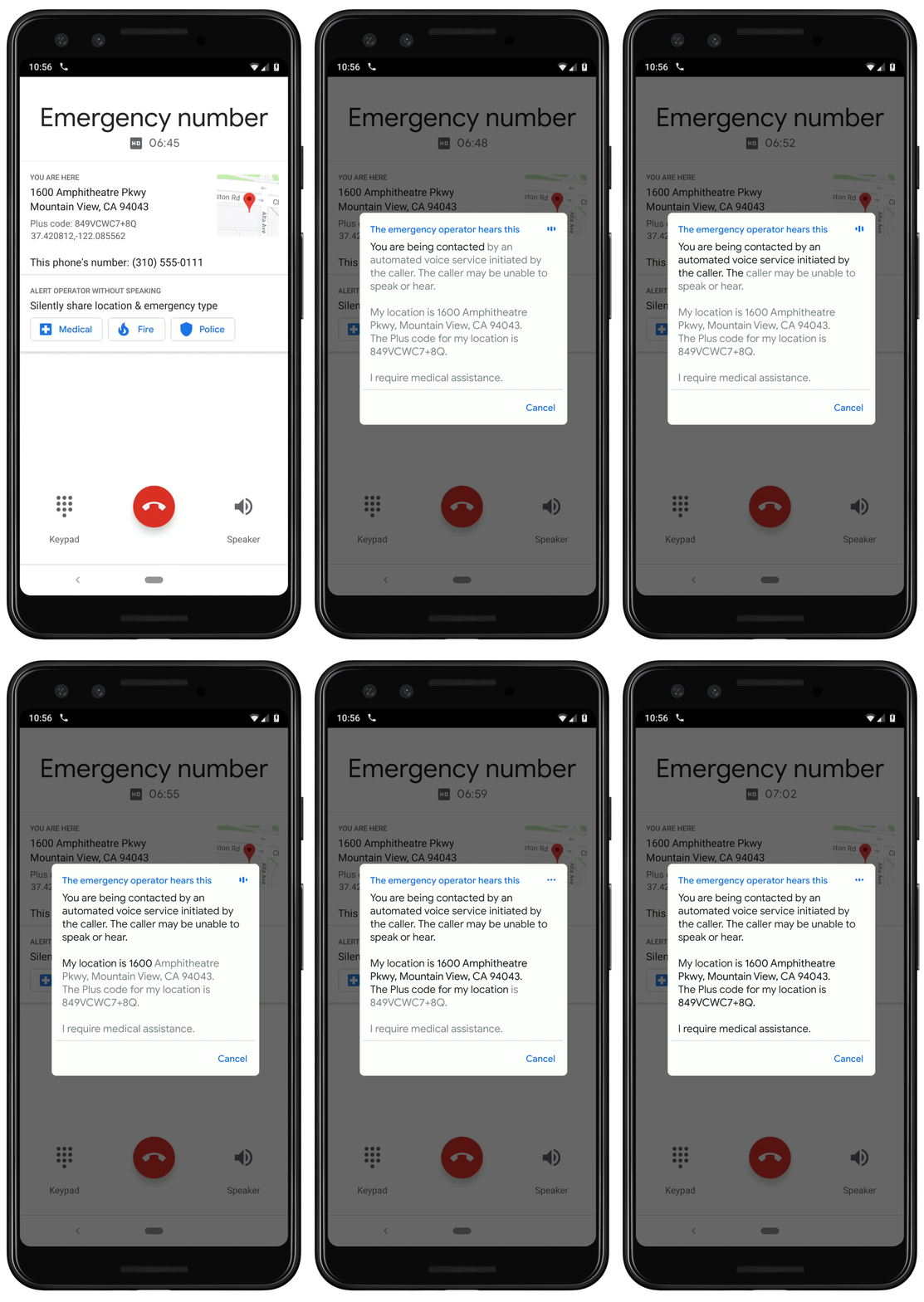
Google today highlighted a new feature that will bring voice-free emergency service interaction to Pixels and other Android device. Designed for instances of injury, situations where speaking can present a danger and for users with speech impairments, the feature allows callers to communicate via touch menus.

Once an emergency call is triggered, users can specify its nature by tapping “Fire,” “Medical” or “Police.” That information is passed along to an operator without requiring the caller to speak, alongside location information that pulls from the phone’s GPS and uses plus code, a method for locating callers without a specific address.

AED Lower Speech Rate 06

The menu information is stored locally on the phone, and all of the information shared remains confidential, shared only with the emergency operator. Once the information is entered, users can also speak directly to the operator if able.

The feature was created in collaboration with the National Emergency Number Association. It’s arriving on Pixel phones and select Android devices in the U.S. in the coming months.

01 Aug 2019

Citizen Ray: Bridgewater’s Ray Dalio is the wise uncle you wished you had

“I don’t want more success. I don’t want more money.” When most hedge fund managers say something like that to you, you’d be justified in suspecting that they’re giving you their carefully crafted Davos riff.

Because unlike many Silicon Valley billionaires who believe (or sort of believe) in the transcendence of their mission, the motives of the Wall Street titan are often straightforward: it’s about the money, and when the money gets huge, it’s about building a legacy.

But as Ray Dalio looked me in the eyes recently and said those words, I believed in his sincerity. That’s not to say he won’t earn enormous sums more. In fact, last year, the financial press widely reported that Dalio earned in the ten figures thanks to Bridgewater’s flagship Pure Alpha fund posting stellar returns.

But when you spend some time with Dalio and broach the various topics in which he has rarefied expertise, it’s apparent that today, the world’s most famous hedge funder could care less about ascending the ranks of the world’s megarich or in achieving more glory or praise for himself.

Although Dalio has diverse philanthropic interests, he retains a very hands-on role as co-CIO of Bridgewater, where he cuts an imposing figure as a guy with little time for inefficiency or nonsense. But he also wears his heart on his sleeve as he seeks to spread the word about principles-based decision-making and the coming paradigm shift that he says will have a dramatic impact on our economy and the markets.

ray dalio 0119 002

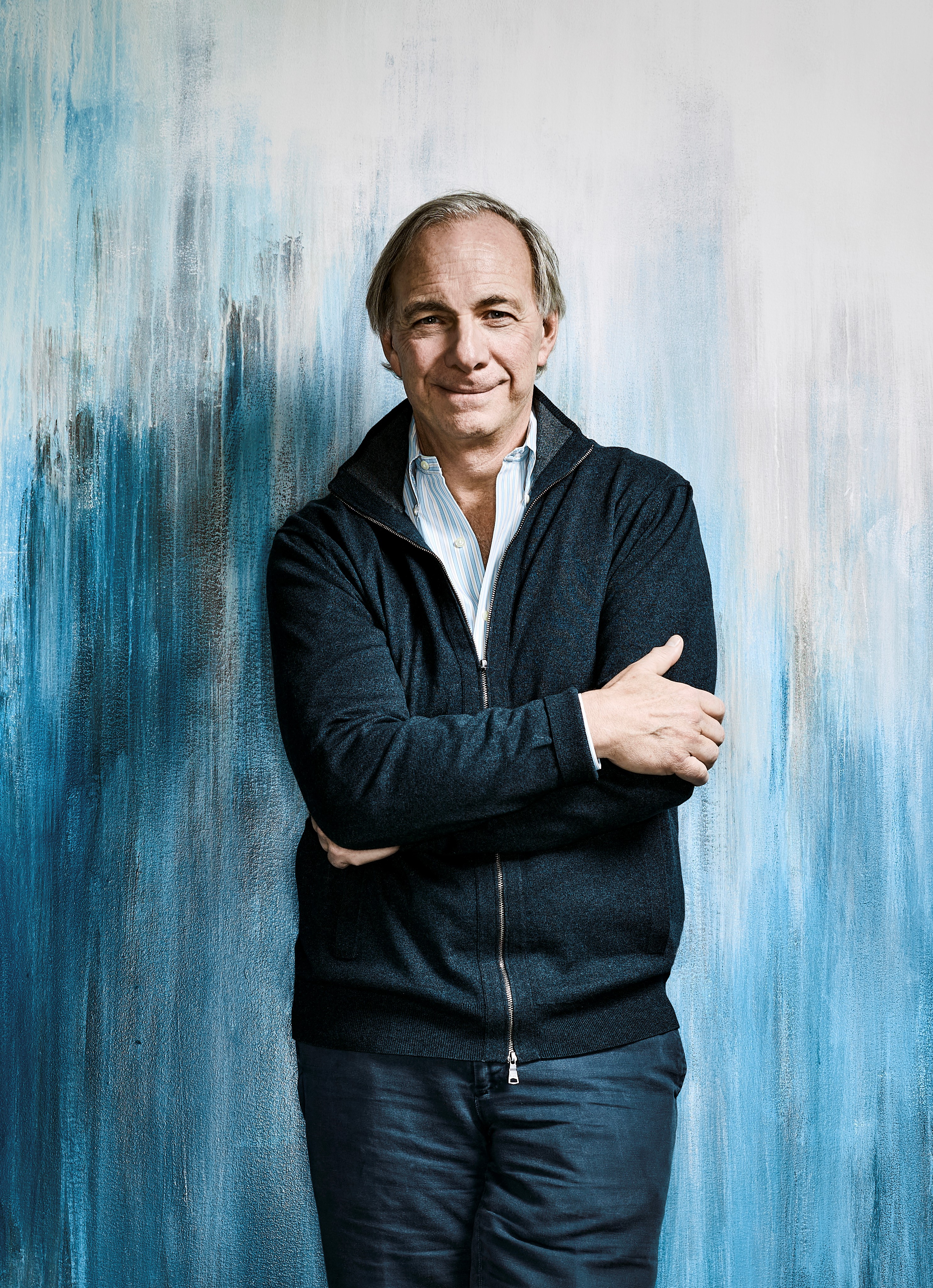
Ray Dalio – American investor, hedge fund manager, and philanthropist. Dalio is the founder of investment firm Bridgewater Associates, one of the world’s largest hedge funds. Image via Bridgewater Associates

The gospel of hyperrealism

By adhering to the twin pillars of radical transparency and radical truth-telling, Dalio believes that the idea meritocracy that powers Bridgewater can be replicated by the home-gamer. Are some of the specific principles that Bridgewater abides by controversial and harsh (e.g., Beware of the impractical idealist, Don’t expect people to recognize and compensate for their own blind spots, Use “public hangings” to deter bad behavior)? Yes. Does he care if you don’t buy into them? Not really:

01 Aug 2019

Watch a Tesla Model 3 play chess against the top-ranked player in the U.S.

Tesla cars can now take on human players in a game of chess, thanks to a software update it pushed out to vehicles earlier this month. Its programmers likely didn’t imagine they were designing a chess program to take on the best players in the world, however: U.S. no. 1 ranked chess player Fabiano Caruana (also currently ranked no. 2 in the world) played a Tesla Model 3 in a recent match… but Deep Blue vs. Kasparov, this was not.

Caruana bests the vehicle in just under five minutes of playing time, and he’s not particularly stressing the time, plus he’s offering a running commentary. The car makes some questionable moves, but to be fair, it’s not a super computer with deep artificial intelligence, and Caruana is one of the world’s best. He also gives it credit at the end, calling the game “challenging” and you can hear it’s probably more than he was expecting from a car’s infotainment system.

The car would probably beat me, but I’m unranked and haven’t played a game of chess in probably 15 years so there’s that.

01 Aug 2019

Go behind the curtain with Wall Street titan Ray Dalio

Today on Extra Crunch, TechCrunch fintech contributor Gregg Schoenberg went deep beneath the surface with an insider profile of investor Ray Dalio. While Dalio is certainly a celebrity in the world of financial services, some outside of Wall Street might need a quick refresher on Dalio, his career and his influence.

Dalio built his reputation in the finance universe as the founder of the world’s largest hedge fund Bridgewater Associates. With 40-plus year of operations under its belt, Bridgewater now manages roughly $160 billion in assets for a long list of the largest institutional investors from across the globe.

But outside of the investment community, Dalio has built up a chunky following through his book ‘Principles’, which outlines his views on management, leadership and investing. ‘Principles’ focuses on the best practices, mental frameworks and strategies that have worked for Dalio in both career and life.

While the set of tools presented in ‘Principles’ can be observed in practice every day at Bridgewater, its efficacy seems to have proven to be at least somewhat applicable across backgrounds. Since the full version of the book’s publication in 2017, ‘Principles’ has sold between one to two million-plus copies, been a New York Times Best-Seller, and has been praised by thought leaders across politics, business and the Valley including Bill Gates, Marc Benioff and Reed Hastings.

More recently in April, Dalio and his team launched the ‘Principles in Action’ mobile iOS app which includes the book’s full text intertwined with interactive videos (including some from actual internal Bridgewater meetings), animations, quizzes and case studies built to help users track personal growth goals. According to the app’s development team, since launch ‘Principles in Action’ has had roughly 115,000 downloads and an average of 30,000 monthly active users over the past three months, with users completing over 5,000 case studies. The team pushes out updates every two to three weeks and plans to launch on Android in December.

And if Gregg’s deep profile on Extra Crunch, the ‘Principles’ book and ‘Principles in Action’ app didn’t offer enough access to Dalio’s brain, Dalio will also be joining us for a fireside chat on the Extra Crunch stage this October at TechCrunch Disrupt SF, where he will discuss how to build an effective and actionable culture at a startup of any scale.

Though he’s been stock investing since age 12, Dalio’s new passion is sharing the tactics, to which he attributes his success, to as broad an audience as possible. So join us on Extra Crunch and at the Extra Crunch Disrupt stage for exclusive candid insights from Ray Dalio and the principles that have helped him become one of history’s most successful financial entrepreneurs.

01 Aug 2019

Daily Crunch: Fires prompt Lyft to pull e-bikes

The Daily Crunch is TechCrunch’s roundup of our biggest and most important stories. If you’d like to get this delivered to your inbox every day at around 9am Pacific, you can subscribe here.

1. Lyft pulls e-bikes in light of apparent battery fires

Lyft recently won the right to launch its pedal-assist bikes in San Francisco, but now it’s pulling those bikes from the city and other parts of the Bay Area after two of those bikes experienced apparent battery fires.

A spokesperson told us, “Out of an abundance of caution, we are temporarily making the ebike fleet unavailable to riders while we investigate and update our battery technology.”

2. For the next month, the Impossible Whopper will be available at Burger Kings across the country

The world’s second largest fast food chain is rolling out the Impossible Whopper nationwide at all of its 7,200 U.S. locations, testing demand for the meaty tasting meatless patty.

3. With the acquisition closed, IBM goes all in on Red Hat

These announcements further IBM’s ambitions to bring its products to any public and private cloud — which was the reason IBM acquired Red Hat in the first place.

4. Asana launches Workload to help prevent burnout

Workload provides a central view of how much more work any given team can currently handle. Team members can customize their own workload based on criteria like points or hours, and even set capacity limits.

5. Amazon-backed food delivery startup Deliveroo acquires Edinburgh software studio Cultivate

Cultivate is a software development and user experience design house that has worked with a number of big names, including Deliveroo itself.

6. Smartphone sales expected to drop 2.5% globally this year

New numbers from Gartner forecast a drop of 2.5%, down to 1.5 billion, with the biggest hits to the industry in Japan, Western Europe and North America.

7. The Exit: The acquisition charting Salesforce’s future

With Salesforce’s $15.7 billion acquisition of Tableau closing, we talked to investor Scott Sandell of NEA. (Extra Crunch membership required.)

01 Aug 2019

FCC cuts red tape on small satellite launches

The FCC is taking measures to make the launches of small satellites (but not large constellations) easier on the growing private space industry. The new licensing process should be simpler, easier, and more likely to yield a green light from the agency.

Approved unanimously at today’s open FCC meeting, the new item essentially creates an express lane for anyone looking to launch less than ten satellites weighing under 180 kilograms (about 400 pounds) each. There’s a new fee structure that should make it cheaper for these folks to apply, and should provide more certainty to them that their application will succeed.

This is an increasingly important segment of the satellite market, as startups, universities, and aerospace companies send up experiments or prototypes on the growing number of cheap orbital launch services. It’s fundamentally different from the launch environment of the preceding few decades and the beginning of an entirely new market.

Many inside the new space industry have told me that regulation is one of their biggest worries, mainly because it’s complicated and time-consuming. A good regulator should know when to step in and when to get out of the way, and the FCC has clearly opted for the latter today.

Unanimous support is a rare thing when the agency so often divides down party lines on other proposals and rules. It’s not often you hear Commissioner Rosenworcel, who bitterly opposes many of Chairman Ajit Pai’s policies, enthuse about a rule, but in the statement accompanying her vote she says: “Count me as excited that the Chairman has brought this decision before us today. It has my full support.”

The Commissioners noted that this is only one small improvement among many that need to happen in order to better promote space activity in the country.

Stemming the growing problem of orbital debris is one thing, and part of the new satellite licensing process requires applicants to minimize the debris they create. That’s a start, but entirely new rules are in the works as well.

Another, more FCC-native step to take is addressing the question of spectrum in space — that is, which slices of radio frequency should be assigned to orbital purposes, and what kind of restrictions should be placed on those purposes. With constellations of over 10,000 satellites planned, the sky is going to get mighty noisy if we’re not careful.

For now, smaller organizations looking to make it to orbit will be breathing a sigh of relief that at least one part of the red tape has been yanked out from between them and their goal.

The rules as proposed last year before the comment period and revision can be found here, but the final rules should be on the FCC’s site soon.


01 Aug 2019

Microsoft Azure now lets you have a server all to yourself

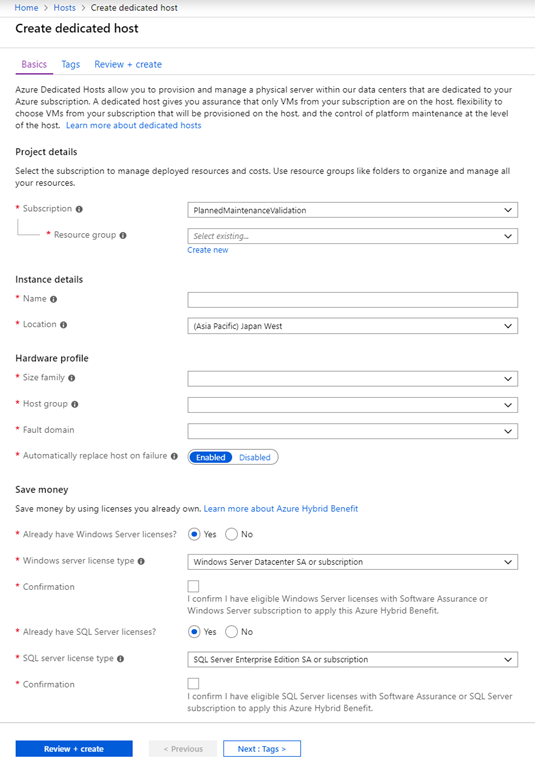
Microsoft today announced the preview launch of Azure Dedicated Host, a new cloud service that will allow you to run your virtual machines on single-tenant physical services. That means you’re not sharing any resources on that server with anybody else and you’ll get full control over everything that’s running on that machine.

Previously, Azure already offered isolated Virtual Machine sizes for two very large virtual machine types. Those are still available, but their use cases are comparably limited to these new hosts, which offer far more flexibility.

With this move, Microsoft is following in the footsteps of AWS, which also offers Dedicated Hosts with very similar capabilities. Google Cloud, too, offers what it calls ‘sole-tenant nodes.’

Azure Dedicated Host will support Windows, Linux and SQL Server virtual machines and pricing is per host, independent of the number of virtual machines you end up running on them. You can currently opt for machines with up to 144 physical cores and prices start at $4.039 per hour.

To do this, Microsoft is offering two different processors to power these machines. Type 1 is based on the 2.3 GHz Intel Xeon E5-2673 v4 with up to 3.5 gigahertz of clock speed, while Type 2 features the Intel Xeon® Platinum 8168 with single-core clock speeds of up to 3.7 gigahertz. The available memory ranges from 32GiB to 448GiB. You can find more details here.

As Microsoft notes, these new dedicated hosts can help companies reach their compliance requirements for physical security, data integrity and monitoring. The dedicated hosts still share the same underlying infrastructure as any other host in the Azure data centers, but users have full control over any maintenance window that could impact their servers.

These dedicated hosts can also be grouped into larger host groups in a given Azure region, allowing you to build clusters of your own physical servers inside the Azure data center. Since you’re actually renting a physical machine, any hardware issue on that machine will impact the virtual machines you are running on them, so chances are you’ll want to have multiple dedicated hosts for your failover strategy anyway.

110b3725 54e2 4840 a609 adf18fcbe32f

01 Aug 2019

Next-gen Fitbit Versa leak reveals Alexa support

The original Versa was precisely the hit a stumbling Fitbit needed. The device was a simple and affordable Apple Watch alternative, helping the company finally break into the one bright spot in the wearable field. According to yesterday’s earnings, the Versa Lite has so far failed to recapture the Versa’s success by offering a fewer features at a discounted price.

The good news for Fitbit, however, is that a new Versa is already on the way. Spotted by perennial leaker, Evan Blass, the device brings some hardware upgrades to the 2018’s device. The screen gets an update from LCD to AMOLED, along with a case refresh, which the Verge rightly notes makes the squircle design even more Apple Watch-esque.

Honestly, however, the biggest news about the device is probably smart assistant support. Wearables are among the key applications for voice interactions, so it certainly makes sense here. But what’s a poor wearable maker to do when the competition has Siri and Google Assistant? Simple: partner with Amazon.

No specifics on how Alexa will be used here, but the addition is a no-brainer for Fitbit. After all the money it pumped into acquisitions to create the Ionic and Versa, a proprietary smart assistant is probably a bridge too far at this point (and Samsung’s Bixby expenditures point to how difficult that growth can be). So the company enlisted an already extremely popular assistant with little wearable market share to show for it.

01 Aug 2019

Bird, Uber and Lyft get another chance to apply for electric scooter permit in SF

In light of a so-far successful electric scooter pilot program in San Francisco, the city has opened up the application process for service providers to deploy their respective scooters as part of a more permanent program. However, the permits will only be valid for about one year, “reflecting the rapid pace at which the scooter industry continues to involve,” the San Francisco Municipal Transportation Agency wrote on its blog.

That means starting in October 2019, we may see electric scooters from more than just Skip and Scoot. Skip and Scoot’s current permits expire on Oct. 14, 2019.

As part of the permitting program, the SFMTA plans to issue permits to “a limited number” of applicants, the agency said. The city also plans to maintain a cap on the number of scooters to be deployed at any one time, likely somewhere between 1,000 to 2,500 scooters per company. Currently, Skip is authorized to operate 800 scooters, while Scoot is authorized to operate up to 625.

The application requires companies to integrate locking mechanisms to all of its scooters, implement stricter policies to ensure people don’t ride on sidewalks as well as pilot adaptive scooters to ensure people with disabilities are not left out from this new form of transportation. This comes shortly after Lyft began testing adaptive bike share for riders in San Francisco and Oakland, Calif.

The deadline to apply is Aug. 21, 2019, which gives the likes of Bird (proud new owner of Scoot), Skip, Lime, Uber/JUMP, Lyft, Spin and the many others a fair amount of time to get their things in order. All of those companies mentioned above applied for permits to operate as part of SF’s pilot program, but were denied. Some companies took it worse than others, while others decided to focus their efforts on other markets for the time being.

What we can expect is yet another battle among the electric scooter providers to deploy their vehicles in the highly-coveted market of San Francisco. Last time, there were about one dozen applicants for the city’s pilot program.

On average, scooter riders took about 3,400 trips per day in San Francisco in May. Scoot has had a pretty drama-free existence in San Francisco, minus the whole theft and vandalism issue that forced the company to add a locking mechanism to its scooters. Skip, on the other hand, had to pull its scooters off the streets after one caught on fire in Washington, D.C.

It would be odd if the SFMTA didn’t consider that as it looks over all of the applications this time around. Meanwhile, given that a couple of Lyft’s electric bikes recently caught on fire due to apparent issues with the batteries, Lyft has likely given the SFMTA some pause around the company’s abilities to safely deploy electric vehicles.


01 Aug 2019

Why AWS gains big storage efficiencies with E8 acquisition

AWS is already the clear market leader in the cloud infrastructure market, but it’s never been an organization that rests on its past successes. Whether it’s a flurry of new product announcements and enhancements every year, or making strategic acquisitions.

When it bought Israeli storage startup E8 yesterday, it might have felt like a minor move on its face, but AWS was looking, as it always does, to find an edge and reduce the costs of operations in its data centers. It was also very likely looking forward to the next phase of cloud computing. Reports have pegged the deal at between $50 and $60 million.

What E8 gives AWS for relatively cheap money is highly advanced storage capabilities, says Steve McDowell, senior storage analyst at Moor Research and Strategy. “E8 built a system that delivers extremely high-performance/low-latency flash (and Optane) in a shared-storage environment,” McDowell told TechCrunch.