Year: 2019

01 Aug 2019

Ikea’s Sonos Symfonisk speakers are available starting today

The somewhat zany mash-up of Ikea and Sonos ended up providing great results, in the form of the Symfonisk line of wireless speakers, including the $99 Symfonisk shelf speakers and the $179 Symfonisk table lamp speaker. The speakers are both on sale today, starting at retail stores first, with online availability to follow later.

In case you missed it, our review found that these connected speakers, which work with all of Sonos’ other offerings, are a great value for people new to the Sonos system, or for anyone looking to build out their existing audio setup. The shelf speakers make great, affordable rears for surround sound setups, and offer audio that isn’t quite up to par with the Sonos One, but that definitely won’t disappoint, especially if you pick up two and pair them for stereo sound.

The Symfonisk lamp is on par with the Sonos One when it comes to sound, and can offer smart lighting, too, when paired with Ikea’s Tradfri connected light bulbs. It’s a good-looking lamp in its own right, two, with a fabric cover and both light and dark finishes depending on your decor preferences.

01 Aug 2019

Google Search gets freshers featured snippets

Featured snippets are surely one of the most useful features that Google added to its search engine in recent years. Today, the company announced that it has recently updated the algorithm that powers these snippets to prioritize more recent information.

In Google’s example, the search engine would previously regularly feature outdated data because it didn’t fully understand what a user was actually looking for. Understanding the actual intent of a search query is hard, after all.

“At the core of Search is language understanding, and our systems don’t understand language the same way humans do,” writes Pandu Nayak, Google’s VP for Search. “This is why we’re constantly developing new ways to better understand your searches and provide relevant results, especially in cases where there is useful context that is implied, like whether freshness matters.”

In Google’s examples, that means a search for ‘upcoming school holidays’ will now highlight the 2019/2020 holidays, not the 2018/2019 ones.

UK school holiday calendar design.max 1000x1000Similarly, when you look for information about upcoming events, this new algorithm will try to give you freshers and hence more accurate information. The example Google gives here is the premiere of Stranger Things 3. If you were looking for that before the update and before the lackluster third season hit Netflix, the algorithm would’ve highlighted an older post from 2018 with an unspecific date. After the update, it would’ve given you the exact date as soon as possible.

stranger things.max 1000x1000

01 Aug 2019

This $3.5 million new Pagani hypercar got its world debut in a Zynga mobile game

High-priced, handmade boutique sports cars typically make their debut where the well-heeled and the media gather. Pagani took a different approach this time around.

The Italian supercar manufacturer unveiled its new nearly $3.5 million Huayra Roadster BC in CSR2, the mobile game produced by Zynga .

The physical car will eventually get its moment. Pagani will show off the hypercar to the public next month at the Monterey Car Show. In the meantime, Zynga rebuilt the Pagani Huayra Roadster BC in CSR2, giving users a chance to “drive” the supercar.

Pagani HuayraBCRoadsterPB 2019 RaceScreenshot 2

“When Horacio Pagani first began designing cars 44 years ago, it would have been impossible to imagine that a car like the Roadster BC would ever be unveiled to the world in a mobile game,” said Michael Staskin, managing director of Pagani Automobili America, said in a statement. “We chose to partner with CSR2 on the reveal of the Roadster BC because we are both leaders in our respective industries, we both show incredible attention to design and detail and we both continue to disrupt what is considered normal in the automotive industry.”

CSR2 players can enter the 80 race ladder by using a Pagani Huayra Coupé. During the game, players get the chance to add the Pagani Huayra Roadster BC to their collection. Using augmented reality, players can also park their Pagani cars in their real-world driveways and open every panel to study the details close up.

In the real world, the Pagani Huayra Roadster BC gets its power from a 6.0-liter, twin-turbocharged V12 engine built for Pagani by Mercedes-AMG. The result is an engine that produces 800 horsepower at 5900 rpm and 774 pound feet of torque. It boasts a seven-speed, single-clutch automated manual transmission and weighs 2,756 pounds, just a skosh lighter than the regular Huayra Roadster.

As one might expect, the Roadster BC is a fast can-you-handle-how-it-corners beast that accelerates from zero to 60 mph in 2.5 seconds and generate 1.9 of lateral grips through corners.

Sadly, few will get to drive this real-world version. Pagani will make only 40 of Roadster BCs.

01 Aug 2019

Which immigration headlines should you care about?

Newsflash! President Donald Trump is planning to deport naturalized U.S. citizens, force H-1B visa holders to return to their home countries, and revoke the green cards of lawful permanent residents. He also wants to deport the Dreamers and evict millions of other immigrants from the country. Or wait — maybe he’s planning to increase visas for skilled workers, open the door to foreign-born researchers, protect DACA recipients, and — for an encore — bar himself from the United States.

Feel like you’ve got whiplash yet? Welcome to the nerve-wracking world of U.S. immigration policy — a strange place at the best of times but one made all the more confusing by the weaponization of immigration issues for political gain and the media’s continuing failure to cut through the spin.

Tech workers are better prepared than most to cope with a torrent of torrid immigration headlines, continuously amplified and distorted by Twitter rumors, Slack chatter, and credulous Facebook reposts. Still, the sheer volume of immigration news makes it hard to know what to pay attention to — and with 71 percent of Silicon Valley’s techies born outside the United States, this isn’t simply a theoretical problem. If you, your loved ones, colleagues, or staff are immigrants, then you need to learn to separate the signal from the noise.

So how can you tell the real deal from the real fake news? There’s no simple answer, but to keep you safe — and keep your heart rate in check — here are a few ground rules to help you figure out which headlines are worth taking seriously:

Whose headline is it anyway?

01 Aug 2019

An autonomous robot EV charger is coming to San Francisco

Electric-vehicle chargers today are designed for human drivers. Electrify America and San Francisco-based startup Stable are preparing for the day when humans are no longer behind the wheel.

Electrify America, the entity set up by Volkswagen as part of its settlement with U.S. regulators over the diesel emissions cheating scandal, is partnering with Stable to test a system that can charge electric vehicles without human intervention.

The autonomous electric-vehicle charging system will combine Electrify America’s 150 kilowatt DC fast charger with Stable’s software and robotics. A robotic arm, which is equipped with computer vision to see the electric vehicle’s charging port, is attached to the EV charger. The two companies plan to open the autonomous charging site in San Francisco by early 2020.

Stable render 2 final

A rendering of an autonomous electric vehicle charging station.

There’s more to this system than a nifty robotic arm. Stable’s software and modeling algorithms are critical components that have applications today, not just the yet-to-be-determined era of ubiquitous robotaxis.

While streets today aren’t flooded with autonomous vehicles, they are filled with thousands of vehicles used by corporate and government fleets, as well as ride-hailing platforms like Uber and Lyft . Those commercial-focused vehicles are increasingly electric, a shift driven by economics and regulations.

“For the first time these fleets are having to think about, ‘how are we going to charge these massive fleets of electric vehicles, whether they are autonomous or not?’ ” Stable co-founder and CEO Rohan Puri told TechCrunch in a recent interview.

Stable, a 10-person company with employees from Tesla, EVgo, Faraday Future, Google, Stanford and MIT universities, has developed data science algorithms to determine the best location for chargers and scheduling software for once the EV stations are deployed.

Its data science algorithms take into account installation costs, available power, real estate costs as well as travel time for the given vehicle to go to the site and then get back on the road to service customers. Stable has figured out that when it comes to commercial fleets, chargers in a distributed network within cities are used more and have a lower cost of operation than one giant centralized charging hub.

Once a site is deployed, Stable’s software directs when, how long and at what speed the electric vehicle should charge.

Stable, which launched in 2017, is backed by Trucks VC, Upside Partnership, MIT’s E14 Fund and a number of angel investors, including NerdWallet co-founder Jake Gibson and Sidecar co-founder and CEO Sunil Paul .

The pilot project in San Francisco is the start of what Puri hopes will lead to more fleet-focused sites with Electrify America, which has largely focused on consumer charging stations. Electrify America has said it will invest $2 billion over 10 years in clean energy infrastructure and education. The VW unit has more than 486 electric vehicle charging stations installed or under development. Of those, 262 charging stations have been commissioned and are now open to the public.

Meanwhile, Stable is keen to demonstrate its autonomous electric-vehicle chargers and lock in additional fleet customers.

“What we set out to do was to reinvent the gas station for this new era of transportation, which will be fleet-dominant and electric,” Puri said. “What’s clear is there just isn’t nearly enough of the right infrastructure installed in the right place.”

01 Aug 2019

Amazon says U.S. government demands for customer data went up

Amazon said the U.S. government asked more data from the company during the first-half of 2019 than on the previous six-month period.

The latest figures landed in the company’s transparency report, published quietly on its website late Wednesday, said the number of subpoenas it received went up by 14% and search warrants went up by close to 35%.

That includes data collected from its Amazon Echo voice assistant service, its Kindle and Fire tablets, and its home security devices.

Amazon turned over some or all data in about four out of five cases, the figures show.

But the number of other legal demands Amazon received were down slightly.

The company’s cloud business, Amazon Web Services — which makes up the bulk of Amazon’s annual operating income — also reported separately a 77% increase in the number of subpoenas it received for cloud-stored customer data, but a decline in received search warrants.

Per reporting rules set out by the Justice Department, Amazon said it received between 0 and 249 national security requests, for both consumer and cloud services.

Amazon was one of the last major tech companies to issue a transparency report, despite mounting pressure from privacy advocates. The company eventually buckled, releasing its first set of figures several days after whistleblower Edward Snowden leaked highly classified documents which revealed mass surveillance by the U.S. National Security Agency and its global intelligence counterparts.

The company said at the time and continued to maintain until recently that it “never participated” in the NSA’s so-called PRISM program, which allowed the government to obtain data from Apple, Google, Microsoft, and several other tech companies.

But TechCrunch noticed that Amazon removed that wording from its transparency report pages several weeks ago.

When reached, an Amazon spokesperson said that the change was “simply because it was a somewhat dated reference.”

01 Aug 2019

Verizon reports a big boost in wireless subscribers

Verizon reported its second quarter earnings this morning, and while revenue fall short of analyst predictions, the company had strong profits and subscriber growth.

Verizon reported consolidated revenue of $32.1 billion in Q2, down 0.4% year-over-year and lower than analyst estimates of $32.4 billion. However, it also reported adjusted earnings per share of $1.23, compared to analyst predictions of $1.20 (which was Verizon’s EPS a year ago).

The company saw significant growth in wireless subscribers, with a total net addition of 451,000 subscribers, including 420,000 net adds on the smartphone side and 245,000 on the phone side (compared to a net addition of 199,000 phone subscribers in Q2 2018).

Meanwhile, the Fios internet business saw 34,000 net additions, with revenue growing 1.9% year-over-year.

Breaking it down by business unit, Verizon Consumer revenue was $22.0 billion (flat year-over-year), Verizon Business revenue came in at $7.8 billion (down 1.1%) and Verizon Media (which owns TechCrunch) saw revenue of $1.8 billion, down 2.9%.

The earnings release also points to the carrier’s rollout of 5G, with a statement from CEO Hans Vestberg: “Verizon made history this quarter by becoming the first carrier in the world to launch 5G mobility. We are focused on optimizing our next-generation networks and enhancing the customer experience while we head into the second half of the year with great momentum.”

In an interview with CNBC, Vestberg predicted that half of the United States will have functioning 5G by 2020.

As of 11:16am Eastern, Verizon shares were up 1.14% since the start of trading.

01 Aug 2019

Holloway launches in-depth startup guides, aims to rewrite publishing with $4.6M from NYT, tech VCs

Founders need to get smart quickly about the many nuanced aspects of building a company, from understanding weird language in a big term sheet to hiring a key software developer.

But the best practical advice is scattered across blog posts, podcasts and books, and it gets outdated quickly as industry norms evolve. Even experienced founders spend a lot of time searching around, and still end up with the wrong information.

Holloway has an ambitious solution: today, it’s launching a library of book-length online guides about work, that are written and regularly updated by teams of industry experts.

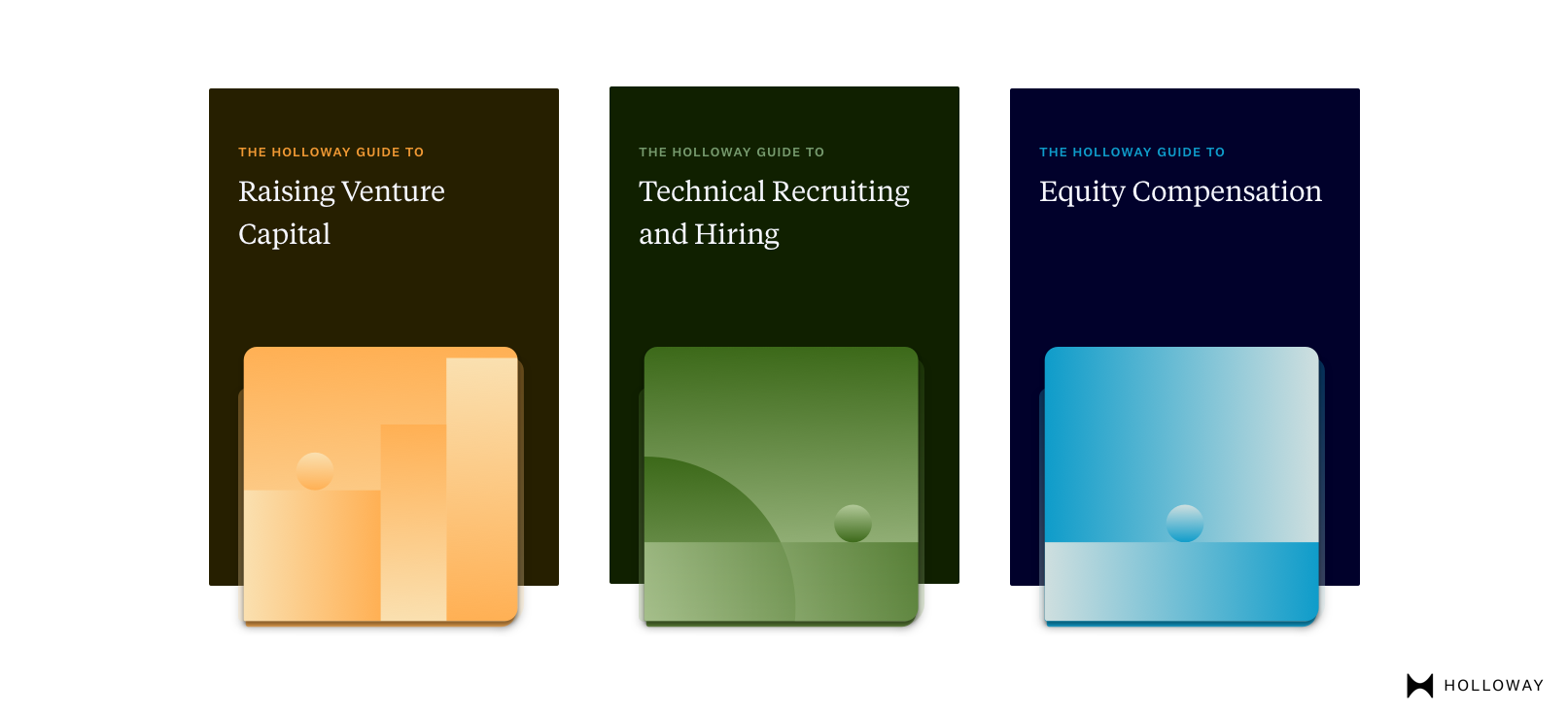
The flagship title is called Raising Venture Capital, which features 340 thoughtfully organized pages in 15 sections and 3 appendices on all aspects of the funding process. Designed for easy reading and easy searching in spite of the information density and length (it has a 14-hour total read-time), the guide could become a go-to resource for the startup world.

Some sections will be most appealing to newer founders, like the part on whether to raise VC in the first place. Other portions are relevant to even the most experienced serial entrepreneurs — like how to think through potential drag-along and pay-to-play provisions, full-ratchet anti-dilution clauses, and other tricky terms one might find. Did you know that investors can include more than 20 types of conditions in a term sheet? Do you know how to handle each one?

With $4.6 million in seed funding from a combination of top tech investors and The New York Times that it is also announcing now, Holloway intends to expand to cover the wide variety of work-related topics about startups and technology, and beyond. The next guide, currently in progress, will be on technical hiring and recruiting. A relatively shorter sample guide on equity compensation is already available for free.
holloway showcase guides

The goal is to democratize access to how the best are doing business today (and take on traditional publishing).

“We didn’t just do this for Silicon Valley and New York,” and other startup-heavy cities, cofounder and chief executive Andy Sparks tells me, “we did this for people in cities like Columbus and Atlanta where startup communities are growing, but knowledge is harder to come by.”

The lawyers and other experts who author and edit the guides could otherwise cost more than $800 an hour, he explains, and won’t have time for many clients in the first place. (The company estimates that there are $40,000 worth of legal fees in the VC guide.)

Sparks, previously the cofounder of analytics platform Mattermark, is also the lead author on Raising Venture Capital — along with another 20 or so contributors, like Brad Feld of the Foundry Group, and Darby Wong, cofounder of the popular legal document startup Clerky. The lead author of the technical recruiting guide is Ozzie Osman, former head of product engineering at Quora, and a main contributor to it is Aditya Agarwal, the former CTO of Dropbox.

The current pricing is $100 per guide forever (including future updates), with a discount available if you pre-order. Sparks says this may change to ensure the guides stay affordable as well as cover the very real costs of producing this quality of content.
Holloway sample 3


The big-picture bet is that the startup market is large enough to create strong demand for the initial guides, in the same way that many successful tech startups of this decade have started out serving companies like themselves. Some of the topics that Holloway is working on, like tech recruiting, naturally blend in with the rest of the business world and those wider audiences. Eventually, through expansion into broader work-related topics, Holloway’s online-first approach could compete against the existing book publishing industry at a bigger scale.

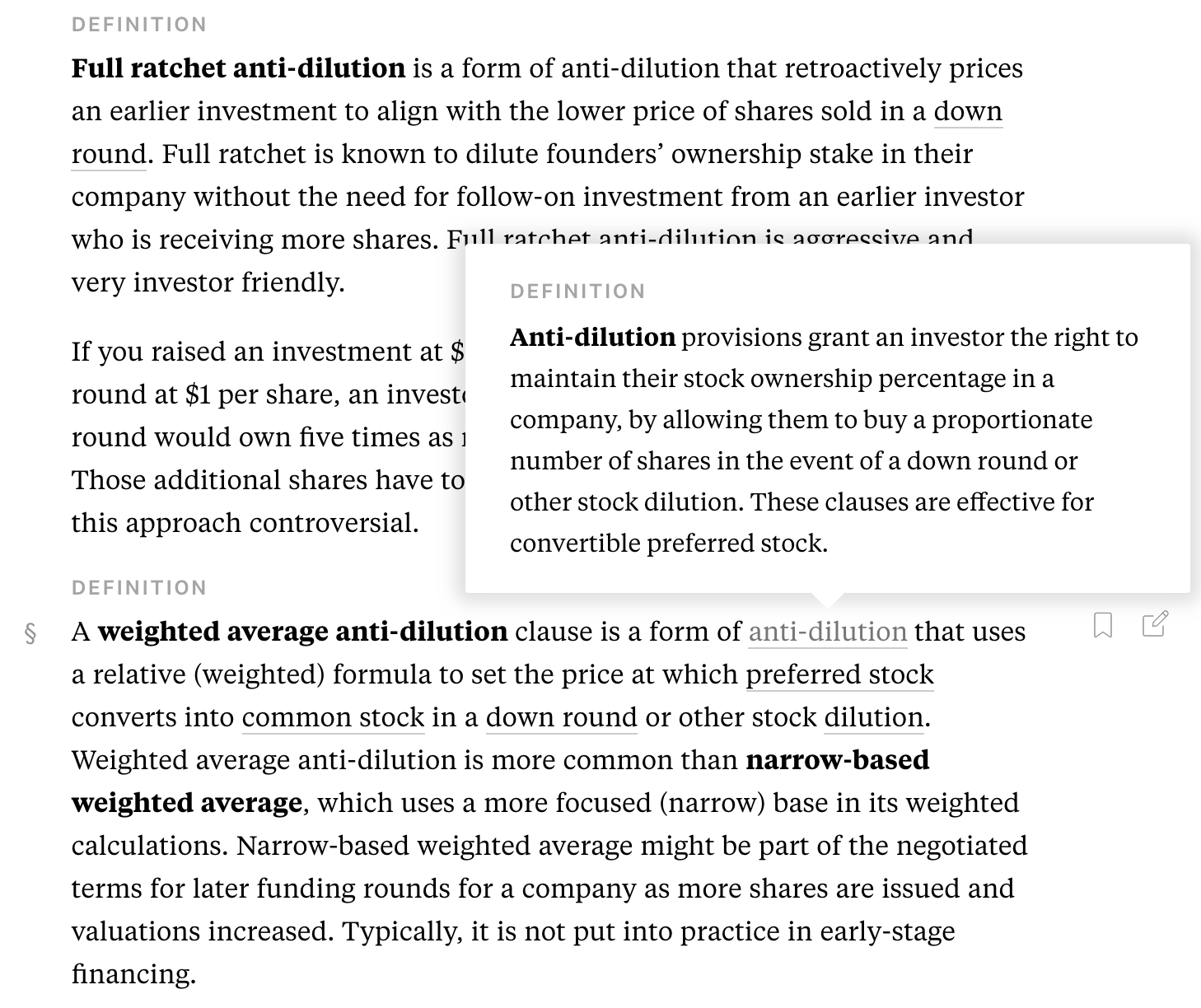
This is why the company is investing heavily in its software, in addition to its content. The interface was inspired by the experiences of cofounder Joshua Levy, a veteran technologist who found himself writing popular third-party guides on Github about how to use common services like AWS. Features in the software include search results that break out sections and sources, a detailed left-hand index view, a hyperlinked in-house glossary of hundreds of key terms, notes of warning and importance from experts, and numerous links to third-party sources.

“We decided to invest in a digital reading experience that makes reading book-length content in a browser a great experience,” Sparks said, “which also means you will land on the right guide when you go hunting for answers on search engines like Google.”

Holloway cofounders Joshua Levy (left) and Andy Sparks (right).

You’ll even see a number of links to TechCrunch and Extra Crunch articles in the guides. Sparks tells me that the company plans to continue to link to a wide variety of sources in the future — so when guest columnists write something great and practical on Extra Crunch, we will help them to get this work featured in Holloway as well. The company is also accepting a variety of contributor types for its guides going forward, which you can find more details about here.

(On that note, we’ve published an excerpt from Holloway’s Raising Venture Capital guide, about pro rata terms and issues, on Extra Crunch. Subscribers can go check it out here, and find a special discount to Holloway inside.)

Sparks is careful to say that the current guides are not literally finished, despite all the effort put into them so far. And indeed, they will never be. Holloway is named after the “hollow ways” seen in the European countryside, where well-used roads have gradually sunk through hundreds of years of regular use. The company intends for its guides to be the paths that people who build companies tread year after year, where the knowledge that accumulates from the usage of many forms the clear direction that those in the future to take.

The company’s investors include NEA, South Park Commons, The New York Times Co., Precursor Ventures and Comcast Ventures as well as Day One Ventures, Social Capital, Abstract Ventures, 415, Royal Bank of Canada, Lightspeed Ventures, & Full Tilt Capital. Angels include Leo Polovets, Lee Linden, Raj De Datta, Neil Parikh, Mikhail Larionov, Danielle & Kevin Morrill, Srinath Sridhar, Dennis Phelps and Kevin Lee.


 

01 Aug 2019

What founders need to know about pro rata rights

In the context of a term sheet, pro rata rights (or pro rata) govern whether investors may continue to invest in subsequent rounds of funding in proportion with their ownership. Investors with pro rata rights can invest in the company’s next round an amount that will allow them to maintain their ownership percentage.

This is an excerpt from the Holloway Guide to Raising Venture Capital, a comprehensive resource for founders of early-stage startups, covering technical details, practical knowledge, real-world scenarios, and pitfalls to avoid. Read our accompanying article about the company over on TechCrunch.  

In the context of a term sheet, pro rata rights (or pro rata) govern whether investors may continue to invest in subsequent rounds of funding in proportion with their ownership. Investors with pro rata rights can invest in the company’s next round an amount that will allow them to maintain their ownership percentage.

Pro rata is Latin for “in proportion.” Most people are familiar with the concept of prorating from dealing with landlords: if you’re entering into a lease halfway through the month, your rent may be prorated, where you pay an amount of the rent that is in proportion to your time actually occupying the property.

Almost all investors try to negotiate for pro rata rights, because if a company is doing well they want to own as much of it as possible. After all, why not double down on a winner than use that same money to invest in a newer, unproven company? In the 2018–2019 fundraising climate, though, it’s safe to say we’re at “peak pro rata.” Everybody wants pro rata, even those who don’t entirely understand how it works or affects companies.

Some founders include a major investor clause in the term sheet, which reserves certain rights and privileges to those they deem “major investors,” based on amount invested or number of shares purchased. Whether to grant pro rata rights to all investors or only those above a major investor threshold is a tricky decision for two reasons.

01 Aug 2019

Cloud-based design tool Figma launches plug-ins

Figma, the startup looking to put design tools in the cloud, has today announced new plugins for the platform that will help users clean up their workflows.

Figma cofounder and CEO Dylan Field says that plug-ins have been the most requested feature from users since the company’s launch. So, for the last year, the team has been working to build plug-in functionality on the back of Figma’s API (launched in March 2018) with three main priorities: stability, speed, and security.

The company has been testing plug-ins in beta for a while now, with 40 plug-ins approved at launch today.

Here are some of the standouts from launch today:

On the utility side, Rename It is a plug-in that allows designers to automatically rename and organize their layers as they work. Content Buddy, on the other hand, gives users the ability to add placeholder text (for things like phone numbers, names, etc.) that they can automatically find and replace later. Stark and ColorBlind are both accessibility plug-ins that help designers make sure their work meets the WCAG 2.0 contrast accessibility guidelines, and actually see their designs through the lens of eight different types of color vision deficiencies, respectively.

Other plug-ins allow for adding animation (Figmotion), changing themes (Themer), adding a Map to a design (Map Maker), and more.

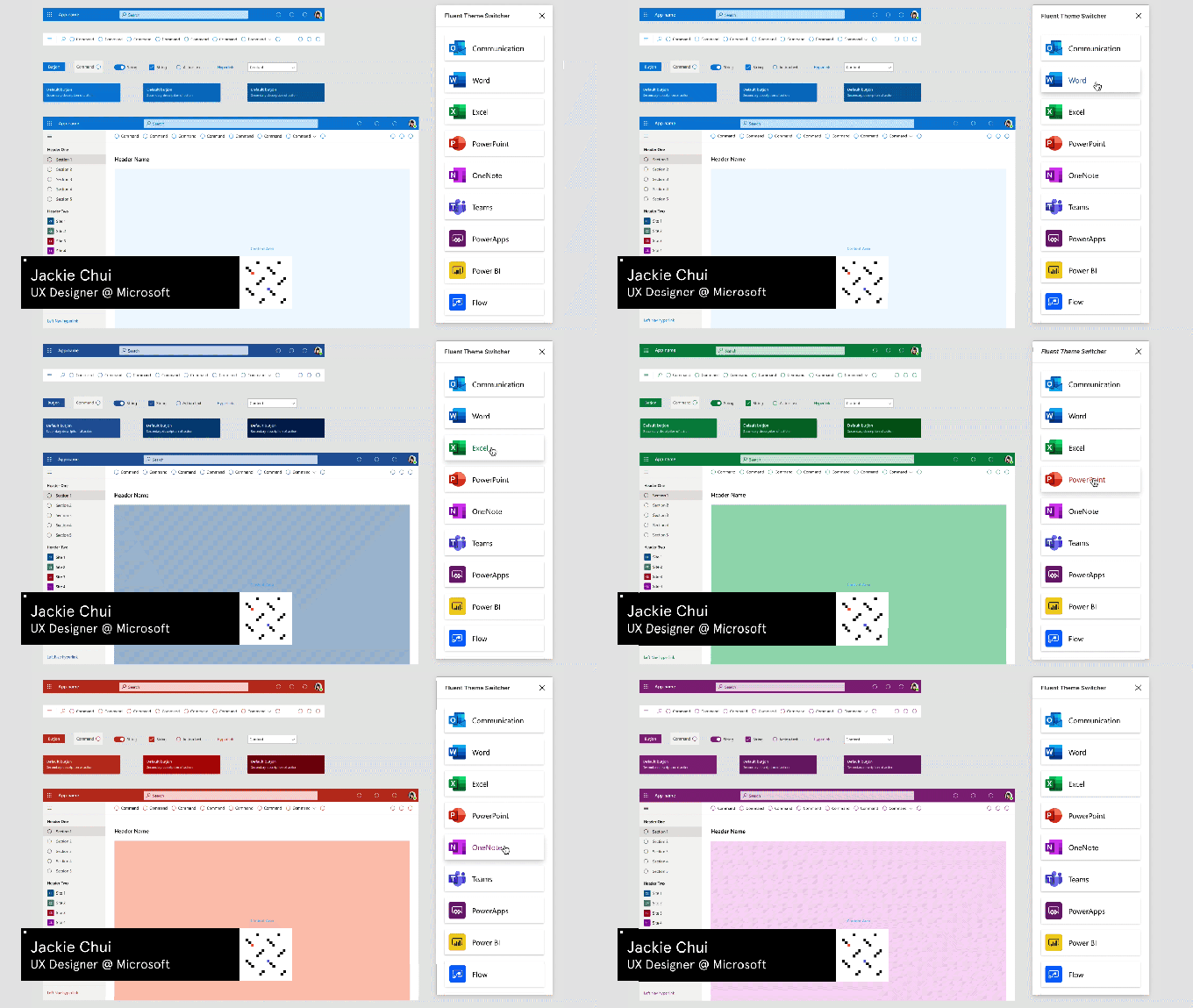
Anyone can create plug-ins for public use on the Figma platform, but folks can also make private plug-ins for enterprise use, as well. For example, a Microsoft employee built a plug-in that automatically changes the theme of the design based on the various Microsoft products, such as Word, Outlook, etc.

microsoft themes final

Field says that the company currently has no plans to monetize plug-ins, which it says will be free to all. Rather, the addition of plug-ins to the platform is a move based on customer happiness and satisfaction. Moreover, Figma’s home on the web allows for the product to evolve more rapidly and in tune with customers. Rather than having to build each individual feature on its own, Figma can now open up the platform to its power users to build what they’d like into the web app.

Figma has raised a total of nearly $83 million since launch, according to Crunchbase. As of the company’s latest funding round ($40 million led by Sequoia six months ago), Figma was valued at $440 million post-funding.