Year: 2019

31 Jul 2019

Trueface raises $3.7M to recognise that gun, as it’s being pulled, in real time

Globally, millions of cameras are in deployed by companies and organizations every year. All you have to do is look up. Yes, there they are! But the petabytes of data collected by these cameras really only become useful after something untoward has occurred. They can very rarely influence an action in “real-time”.

Trueface is a US-based computer vision company that turns camera data into so-called ‘actionable data’ using machine learning and AI by employing partners who can perform facial recognition, threat detection, age and ethnicity detection, license plate recognition, emotion analysis as well as object detection. That means, for instance, recognising a gun, as it’s pulled in a dime store. Yes folks, welcome to your brave new world.

The company has now raised $3.7M from Lavrock Ventures, Scout Ventures, and Advantage Ventures to scale the team growing partnerships and market share.

Trueface claims it can identify enterprises’ employees for access to a building, detect a weapon as it’s being wielded, or stop fraudulent spoofing attempts. Quite some claims.

However, it’s good enough for the US Air Force as it recently partnered with them to enhance base security.

Originally embedded in a hardware access control device, Trueface’s computer vision software inside one of the first ‘intelligent doorbell’, Chui which was covered by TechCrunch’s Anthony Ha in 2014.

Trueface has multiple solutions to run on an array of clients’ infrastructures including a dockerized container, SDKs that partners can use to build their own solutions with, and a plug and play solution that requires no code to get up and running.

The solution can be deployed in various scenarios such as fintech, healthcare, retail to humanitarian aid, age verification, digital identity verification and threat detection. Shaun Moore and Nezare Chafni are the cofounders and CEO and CTO, respectively.

The computer vision market was valued at USD 9.28 billion in 2017 and is now set to reach a valuation of USD 48.32 billion by the end of 2023.

Facial recognition was banned by agency use in the city of San Francisco recently. There are daily news stories about privacy concerns of facial recognition, especially in regards to how China is using computer vision technology.

However, Truface is only deployed ‘on-premise’ and includes features like ‘fleeting data’ and blurring for people who have not opted-in. It’s good to see a company building in such controls, from the word go.

However, it’s then it’s up to the company you work for not to require you to sign a statement saying you are happy to have your face recognized. Interesting times, huh?

And if you want that job, well, that’s a whole other story, as I’m sure you can imagine.
31 Jul 2019

Visa pitches a program offering fintechs faster market access through an ecosystem of partners

Visa is pitching a new way for startups in the fintech space to get to market faster by using its rails and a group of pre-approved partners.

The Fast Track program, a variant of an investment commitment and ecosystem of services the company has already launched in other geographies around the world, comes to the U.S. without an investment commitment, but with a pre-defined list of partners that will help new financial services startups launch more quickly, the company said.

Chiefly, the process makes it easier to integrate with Visa . It’s an attempt to put the payment processor’s network, VisaNet, at the center of a vast array of services ranging from payroll to business to business payments and online banking, online lending, and even digital wallets.

“There’s about $17 trillion in cash and checks today that hasn’t gone digital and $20 trillion in business to business that’s happening over wires and check… those are all opportunities for Visa,” says Terry Angelos, a former fintech entrepreneur who now serves as an senior vice president at Visa and the company’s global head of fintech. 

“To some degree Visa has been the original fintech,” says Angelos. “Today, you would  pitch it as a SAAS platform for payment and commerce.”

For its new service, Visa has come up with a list of partners to provide the array of compliance services and infrastructure that a startup in the financial services space would need to get up and running quickly.

“These are vetted partners that are providing a fast track process and a concierge service so we can track the companies in the program,” says Angelos. 

What the program won’t include, Angelos said, is a commitment to invest in startups in the U.S. that would be equivalent to the $100 million investment fund the company has carved out for European investments as part of the fast track program there.

“We have investments that are happening that are in parallel,” Angelos says. “We don’t have a separate fund.”

Companies that are partnering with Visa on this program represent a different service offering for the ecosystem including: Alloy, BBVA Open Platform, Cross River Bank, Galileo, Green Dot, Marqeta, Netspend (TSYS’ Consumer Segment), Stripe, TabaPay, TSYS, Q2, and Very Good Security. The company said its debit processing service will support some of the partners’ participation in the program.   

Last year, fintech companies raised $39.5 billion from investors globally, up 120% from the previous year, according to data provided by Visa. And as part of their outreach to this startup community, Visa is pre-qualifying portfolio companies from investment firms like Andreessen Horowitz, Nyca Partners, Ribbit Capital and Trinity Ventures for its program. 

“We see many entrepreneurs with big ideas that can add real value and solve problems in the global payments system; the problem can be the difficulty of distribution and connectivity to the essential infrastructure,” said Hans Morris, Managing Partner, Nyca Ventures, in a statement. “Fast Track solves for this, enabling some of our best companies to start working with Visa right away.”

Many of the firms’ portfolio companies are already partnering with Visa in some capacity. The company has already announced agreements (of an undefined and undisclosed nature) with startups like Currencycloud, Flutterwave, Ininal, N26, PayActiv, Rappi, Razer and Remitly

Visa has also invested in startups. In 2019 alone, the company added Anchorage, Bankable, Branch, Finix, Minna Technologies and Paymate to its stable of startups. 

The main thing that startups would get from the Visa Fast Track program is mentorship and access to the company’s experts in payments and fintech. And its effort to tie itself more closely to a financial services ecosystem comes as Visa finds itself under threat from some of the very startup technologies that the company may look to co-opt.

Cryptocurrencies and blockchain technologies offer the possibility of alternative payment mechanisms that don’t rely on the traditional money transfer systems developed decades ago by companies like Visa and Mastercard and can offer potentially faster transaction times and charge lower fees.

To combat that threat, Visa has been aligning with some of the largest technology companies to head off challengers at the pass. The company (along with its largest rival, Mastercard) is collaborating with Facebook on its controversial proposed cryptocurrency, Libra, in an effort to head off any challengers with a new transaction system of its own.

Angelos insists that there’s nothing nefarious in Visa’s efforts to engage with startups and says that the company is merely another actor supporting the movement of trillions of dollars into a digital economy.

“If you look at what’s happening in the fintech ecosystem… Fintechs are reducing friction and adding consumers that are underbanked,” Angelos says. “They can work on any payment rails they choose. [But] all those fintechs… are choosing to build at least part of their products on top of the rails that we built… if you look around the world, fintechs are probably leveraging the existing payment  rails to provide a lot of innovation and remove friction.”

31 Jul 2019

The maker of popular selfie app Facetune just landed $135 million at a unicorn valuation

Facetune, a photo editing app that empowers users to cover their gray hairs, refine their jaw lines, and reshape their noses, was first introduced around six years ago, and it quickly climbed to the top of the download charts, becoming Apple’s most popular paid app of 2017. Despite stiff competition, it has remaining highly popular, too.

That staying power hasn’t been lost Goldman Sachs Private Capital Investing, Insight Partners or ClalTech, which just gave Facetune’s parent company, Lightricks, $135 million in Series C funding at a post-money valuation of $1 billion.

The investment firms — two of which led a $60 million round in the company less than a year ago —  are getting much more than Facetune in the deal.

Lightricks, based in Tel Aviv, has 260 employees supporting six products across three divisions, including Facetune, whose second version was rolled out this year; Enlight, a line of mobile photography and editing tools that aims to make photo editing more accessible to amateurs; and the startup’s newest, enterprise-focused brand, Swish, a marketing video editor that helps companies tell their story with video ads.

The separate divisions each come with meaningful mind share. According to cofounder and CEO Zeev Farbman, Lightricks has seen 180 million downloads across it paid apps, which generally cost $3.99 to download. Since the company began offering subscription layers to users who want premium bells and whistles in 2017, it has amassed a respectable number of subscribers, as well. According to Farbman, Facetune now has more than 1 million subscribers; Enlight has roughly 1 million subscribers, and Swish’s subscribers brings the total to roughly 3 million subscribers altogether.

More subscription-based content-creation apps are on the way, says Farbman, who hints they may be coming shortly. (Other developments might take a while, he adds, explaining that Lightworks, originally founded by five PhDs, is “constantly working on things that will be out two or three years down the line.”)

Reshaping features

If it it has been mostly smooth sailing for the company, there have been headwinds from time to time.

Facetune has been accused of taking photo brushing too far, for example, with celebrity model Chrissy Teigen tweeting about the app last year, “I don’t know what real skin looks like anymore . . . everyone looks like an oil painting.”

Asked what he thought of the body image debate the app had prompted, Farbman says the company sees itself as “democratizing retouching, and [educating users about] how powerful image processing can be.

“If you go back 10 years,” he notes, before mobile image processing software was available to everyone, “people didn’t understand that the people they were seeing on magazine covers had undergone the photoshopping process.”

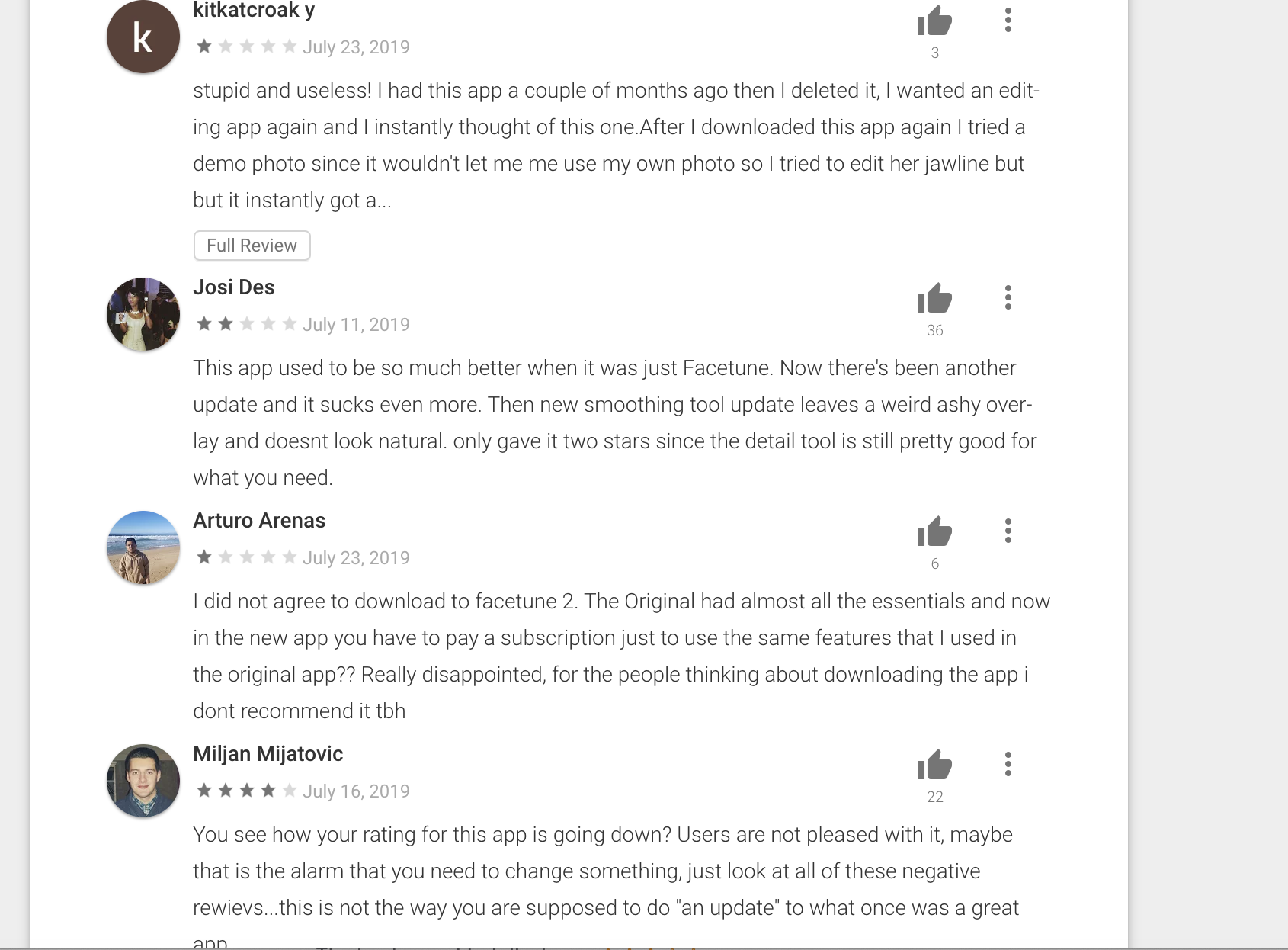
Facetune users have also long grumbled about the second release of the app, not realizing that when they update the app, they lose some of the features that were previously available to them. (You have to subscribe in order to continue using them.)

Lightricks


Clearly, Lightricks and its backers — and one million users — think the company’s products are worth the monthly expense, which ranges depending on the features a user wants to unlock.

A team that includes experts across a number of relevant domains is the reason, says Farbman, who himself previously spent most of his time in academia, studying computer graphics, computer vision, and computational photography.

After the photo editing app Snapseed made its debut and was quickly scooped up by Google, he and four PhD friends “realized that nobody is becoming a great platform for content creation.” They quickly got to work developing their first product — Facetune — and by 2015, the bootstrapped company, which had also by then introduced Enlight, was seeing $10 million in annual revenue.

Still, we “thought we could do better,” says Farbman. Toward that end, Lightricks raised money, and we “started to grow way faster as a company,” he recalls.

It also began rolling out its subscription offerings, and despite continued complaints from some corners (Facetune 2 came out in 2016), Farbman says more people are signing up — and agreeing to pay more — than he initially imagined would be the case.

It makes sense to him now, he suggests. “Our founding team includes PhDs who were at the top of their fields, which allowed us to attract a strong team at the beginning. And once you’re hiring the best people, you’re probably going to build the best software. And if you’re building the best software, you can charge premium prices for that.”

Lightricks’s latest financing brings its total funding to $205 million to date. The new funding will be used to crate more tools, says Farbman. He adds that his team also plans to begin acquiring companies strategically.

31 Jul 2019

Roxanne Varza to give an update on Station F at Disrupt Berlin

Station F is the world’s biggest startup campus and it’s based in Paris. Director Roxanne Varza first unveiled Station F at TechCrunch Disrupt back in December 2016. That’s why I’m excited to announce that Station F director Roxanne Varza is joining us at TechCrunch Disrupt Berlin to give us an update and tell us about future plans.

If you aren’t familiar with Station F, it starts with a beautiful building. Originally built in 1929, it is now classified as a historical monument. But now, it’s also a high-tech building and a cornerstone of the French tech ecosystem.

Varza has managed to create a community of entrepreneurs, VC funds and big tech companies that work, share knowledge and collaborate. In addition to Station F’s own Founders Program and Fighters Program, you can become a Station F member by joining a partner program.

Facebook, Naver (Line), Ubisoft, Microsoft and plenty of others all run their own incubator from Station F. And it’s been working really well as there are over one thousand startups based at Station F.

Station F is also a great signal for the international tech community. If you head over to its Instagram account, you can see that plenty of head of states and major tech CEOs come to Station F whenever they visit Paris, from Jack Dorsey to newly elected president of Ukraine Vlodomyr Zelensky. Around one third of Station F startups come from abroad and 600 members don’t even speak French.

More recently, Station F unveiled Flatmates, a co-living space for Station F members. Station F is creating a lifestyle and has become a cultural phenomenon for Paris. And I can’t wait to see what’s next.

Buy your ticket to Disrupt Berlin to listen to this discussion and many others. The conference will take place on December 11-12.

In addition to panels and fireside chats, like this one, new startups will participate in the Startup Battlefield to compete for the highly coveted Battlefield Cup.


Roxanne Varza is Director of STATION F, the biggest startup campus in the world with more than 1.000 startups, located in Paris. She is originally from Silicon Valley. Before joining STATION F, she led Microsoft Ventures Paris and TechCrunch France. She also worked for several London-based startups and cofounded StarHer, Tech.eu and Failcon France.

Prior to her current role, Roxanne was the lead for Microsoft’s start-up activities in France, running both Bizspark and Microsoft Ventures programs for 3 years. She was also Editor of TechCrunch France from 2010-2011 and has written for several publications including Business Insider and The Telegraph. In April 2013, Business Insider listed her as one of the top 30 women under 30 in tech. She has also been listed in additional rankings by Business Insider, Vanity Fair and Le Figaro, The Evening Standard and more.

Roxanne also co-founded StartHer (ex Girls in Tech Paris) and is the co-organizer of the Failcon Paris conference. More recently, she co-founded Tech.eu, a European tech media backed by Dave McClure, Adeo Ressi, Daniel Waterhouse and more.

Prior to TechCrunch, Roxanne worked for the French government’s foreign direct investment agency helping fast-growing startups develop their activities in France. Roxanne has spoken, moderated, mentored and judged numerous startup events and programs throughout Europe and also helps European startups with content and communications. Roxanne is trilingual and holds degrees from UCLA, Sciences Po Paris and the London School of Economics. She is also an epilepsy advocate.

31 Jul 2019

Startups BRCK and Swvl partner on free WiFi for Kenyan ride-hail buses

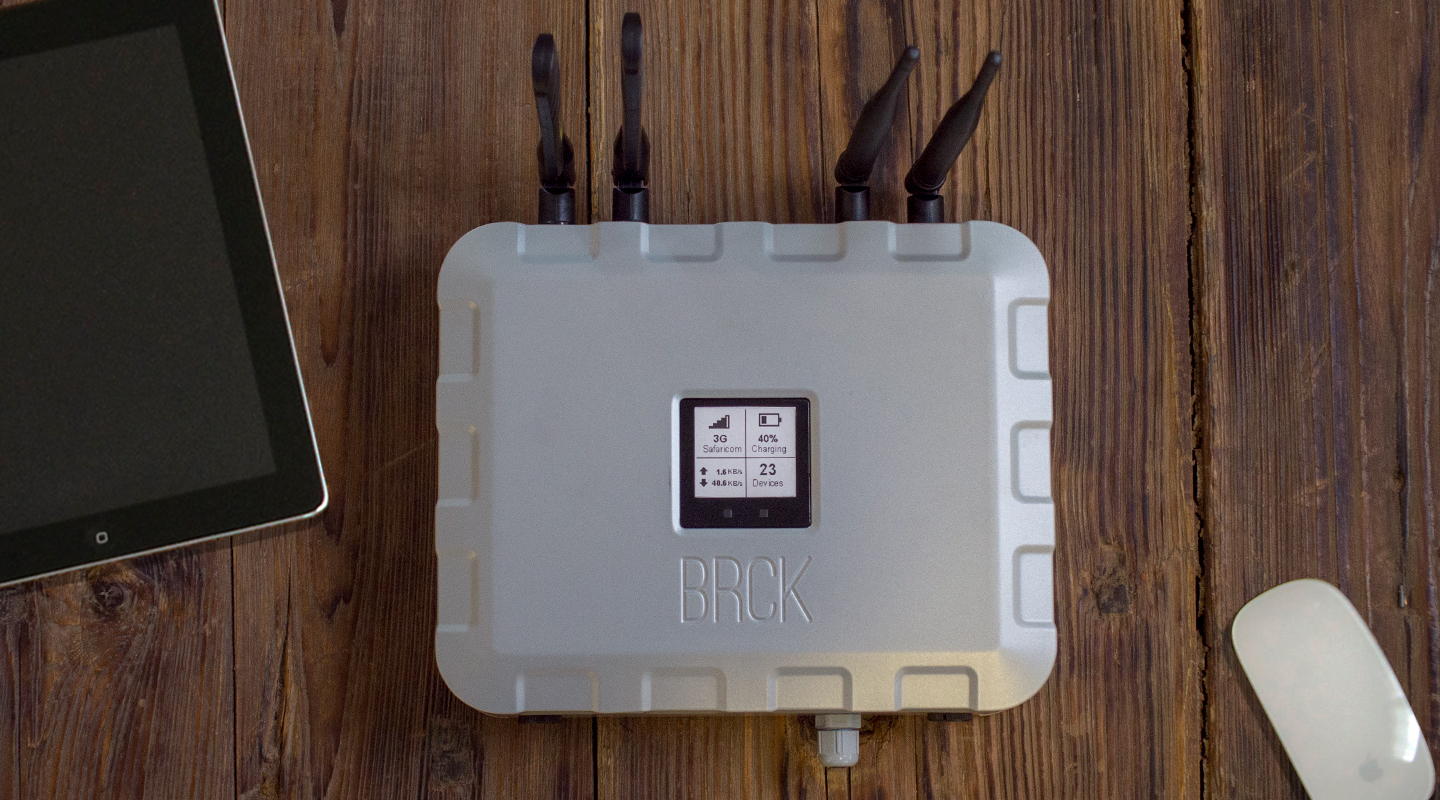
Nairobi based internet hardware and service startup BRCK and Egyptian ride-hail venture Swvl are partnering to bring WiFI and online entertainment to on-demand bus service in Kenya.

BRCK will install its routers on Swvl vehicles in Kenya and run its Moja service, which offers free public WiFi—internet, music, and entertainment—subsidized by commercial partners.

Founded in Cairo in 2017, Swvl is a mass transit service that has positioned itself as an Uber for shared buses. “Think ride hailing, but with a bus…and instead of the vehicle coming to you…you go to the bus, and the bus picks you up at a certain point and time,” Swvl’s general manager for Kenya, Shivachi Muleji, told TechCrunch via email.

The company raised a $42 million Series B round in June, with intent to expand in Africa, Swvl CEO Mostafa Kandil said in an interview.

In Kenya, BRCK has installed 15 of its units in Swvl buses and looks to offer its Moja WiFi service in 700 by 2020, BRCK’s chief operating officer Nivi Sharma told TechCrunch.  Swvl pays a monthly fee for the routers and for maintenance of the routers, Swvl confirmed.

Both BRCK and Swvl see a solid fit in pairing up their product offerings. “SWVL’s objectives to provide an alternative in the transportation industry line up nicely with BRCK’s objectives of providing connectivity to commuters,” said BRCK COO Nivi Sharma.

Backed by $10 million from investors including Steve Case’s Revolution VC fund, BRCK built its platform around providing internet solutions in East Africa. Founder Erik Hersman has described Africa’s internet challenges—mainly the lowest penetration rates in the world—as shifting toward more of an affordability than availability problem.

“The demand on internet in Africa is largely driven by the 10 to 15 percent who can afford it. The real massive opportunity is trying to connect the 70 to 80 percent of the people who can’t,” Hersman told TechCrunch in 2017.

SupaPossibleLead1To that end, BRCK paired up its Africa specific WiFi routers to its Moja service to offer free internet and content supported by commercial partners. Users can access Moja on their mobile phones, tablets, or laptops on public transportation or in public areas. They earn points from their browsing to apply to faster connectivity or premium content.

In 2018, BRCK began offering SupaBRCK devices to drivers of Nairobi’s highly-used Matatu buses for Kenyan commuters to access Moja. In February, the startup acquired Nairobi based internet provide Surf and its network of hotspots.

BRCK currently has 445,000 unique monthly active users on its Matatu based Moja mobile network in Kenya and Rwanda and 150,000 unique monthly active users on its fixed network—including users connecting at cafes, barbershops, and marketplaces, according to company data.

Swvl Bus with moja 2BRCK and Swvl wouldn’t confirm plans on expanding their mobile internet partnership to additional countries outside of Kenya.

Ride-hail markets in Africa have become an active sector for VC investment and global and local startups. The big players such as Uber  and Bolt are competing in Kampala and Nairobi—where in addition to car-service—they offer rickshaw taxis.

On-demand motorcycle startups are multiplying and piloting EVs with funds from international partners. And many ride-hail companies in Africa are adapting unique product solutions to local transit needs. The collective startup activity is making the continent home to a number of fresh mobility use-cases, including the BRCK and Svl WiFi partnership.


31 Jul 2019

Samsung posts 55.6% drop in second-quarter profit as it copes with weak demand and a trade dispute

As it forecast earlier this month, Samsung reported a steep drop in its second-quarter earnings due to lower market demand for chips and smartphones. The company said its second-quarter operating profit fell 55.6% year-over-year to 6.6 trillion won (about $5.6 billion), on consolidated revenue of 56.13 trillion won, slightly above the guidance it issued three weeks ago.

Last quarter, Samsung also reported that its operating profit had dropped by more than half. The same issues that hit its earnings during the first quarter of this year have continued, including lower memory prices as major datacenter customers adjust their inventory, meaning they are currently buying less chips (the weak market also impacted competing semiconductor maker SK Hynix’s quarterly earnings).

Samsung reported that its chip business saw second-quarter operating profit drop 71% year-over-year to 3.4 trillion won, on consolidated revenue of 16.09 trillion won. In the second half of the year, the company expects to continue dealing with market uncertainty, but says demand for chips will increase “on strong seasonality and adoption of higher-density products.”

Meanwhile, Samsung’s mobile business reported a 42% drop in operating profit from a year ago to 1.56 trillion won, on 25.86 trillion won in consolidated revenue. The company said its smartphone shipments increased quarter-over-quarter thanks to strong sales of its budget Galaxy A series. But sales of flagship models fell, due to “weak sales momentum for the Galaxy S10 and stagnant demand for premium products.”

Samsung expects the mobile market to remain lackluster, but it will continue adding to both its flagship and mass-market lineups. It is expected to unveil the Note 10 next month and a new release date for the delayed Galaxy Fold, along with new A series models in the second half of the year.

“The company will promptly respond to the changing business environment, and step up efforts to secure profitability by enhancing efficiency across development, manufacturing and marketing operations,” Samsung said in its earnings release.

It’s not just market demand that’s impacting Samsung’s earnings. Along with other tech companies, Samsung is steeling itself for the long-term impact of a trade dispute between Japan and South Korea. Last month, Japan announced that it is placing export restrictions on some materials used in chips and smartphones. Samsung said it still has stores of those materials, but it is also looking for alternatives since it is unclear how long the dispute between the two countries may last (and it could last for a long time).

31 Jul 2019

Sex tech startups band together to protest Facebook’s ad policies

There’s a double standard when it comes to the sexualities of men versus women, trans and gender non-conforming folks. Unbound and Dame Products, two sex tech startups, have teamed up to bring attention to the issue.

By launching a website, “Approved, Not Approved” and staging a protest outside Facebook’s NYC headquarters, the two startups hope to bring more awareness to the company’s advertising guidelines that seem to favor products that cater to cisgender men. The point of the digital campaign is to show how ads for sex toys and products geared toward men are more likely to be approved than those for women, trans or gender non-conforming people.

“For so long, advertisements have been how we continue to reinforce the status quo of what we view as societally desirable and validating,” Dame Products CEO Alexandra Fine told TechCrunch. “Since we’re in a category that’s often denied, we wanted to create an experience that illuminates the disparity.”

On Facebook, for example, it’s prohibitive to promote the sale or use of adult products or services except for ads that pertain to family planning and contraception. The policy also requires that ads for contraceptives cannot focus on sexual pleasure or sexual enhancement, and have to be targeted to people 18 years or older.

“They’re never going to view sexual pleasure as necessary — only functionality as necessary,” Fine said. “And since the functioning only matters for one sex, then we’re just encouraging shitty sex or at least one-sided sex. Healthy sex should be pleasurable sex. That’s really what I think is important.”

Facebook, however, clearly disagrees since it explicitly bans ads relating to sexual pleasure.

“We have had open lines of communication with both companies about our policies and are always taking feedback,” a Facebook spokesperson told TechCrunch. “We are working to further clarify our policies in this space in the near future.”

Unfortunately, there is no telling if and when Facebook and other platforms will change their advertising policies to enable companies like Dame Products and Unbound to reach potential customers through ads.

“I think a lot of us feel like we’ve been silenced by these platforms and they control so much,” Unbound CEO Polly Rodriguez told TechCrunch. “Facebook, Instagram, Pinterest — these are the channels startups live and die by. Not being able to advertise on them is a big deal because, in addition to the policies being biased and genders, it prevents those founders from being able to reach potential customers.”

Unbound CEO Polly Rodriguez. The startup was a finalist at TC Disrupt SF Startup Battlefield finalist in 2018.

In addition to missing out on potential customers, an inability to advertise can have a detrimental effect on a business in terms of raising venture funding.

“I think one of the most frustrating things is trying to raise a round and getting pushback around where you’ll spend the money,” Rodriguez said. “It’s just tough because it’s this vicious cycle where we could be growing at the same rate as a Him or a Roman. It’s definitely in the tens of millions of dollars in terms of foregone profits.”

In addition to the protest, Fine is suing New York City’s Metropolitan Transportation Authority alleging it’s in violation of Dame’s First Amendment rights, the due process clause of the 14th Amendment and the state’s constitutional rights regarding freedom of speech. The lawsuit came in light of the MTA preventing Dame from running its ads on the subway.

Still, despite efforts to squash it, sex tech may finally be getting its moment in the sun. Earlier this month, the sex tech industry had a big win when the organizer of the Consumer Electronics Show finally decided to allow sex tech companies to exhibit and participate in its competition. That came after the Consumer Technology Association, the organizer of CES, royally messed up with sex tech company Lora DiCarlo last year. The CTA revoked an innovation award from the company, which is developing a hands-free device that uses biomimicry and robotics to help women achieve a blended orgasm by simultaneously stimulating the G-spot and the clitoris. In May, CTA re-awarded the company and apologized.

“It’s so rare you see a victory like that and it was because of the press,” Rodriguez said. “It was because it takes. It’s unfortunate these companies don’t do the right thing because it’s the right thing to do. They do the right thing when enough people speak out about it.”

31 Jul 2019

Drone crash near kids leads Swiss Post and Matternet to suspend autonomous deliveries

A serious crash by a delivery drone in Switzerland have grounded the fleet and put a partnership on ice. Within a stone’s throw of a school, the incident raised grim possibilities for the possibilities of catastrophic failure of payload-bearing autonomous aerial vehicles.

The drones were operated by Matternet as part of a partnership with the Swiss Post (i.e. the postal service), which was using the craft to dispatch lab samples from one medical center for priority cases. As far as potential applications of drone delivery, it’s a home run — but twice now the craft have crashed, first with a soft landing and the second time a very hard one.

The first incident, in January, was the result of a GPS hardware error; the drone entered a planned failback state and deployed its emergency parachute, falling slowly to the ground. Measures were taken to improve the GPS systems.

The second failure in May, however, led to the drone attempting to deploy its parachute again, only to sever the line somehow and plummet to earth, crashing into the ground some 150 feet from a bunch of kindergartners. No one was hit but this narrowly avoided being a worst-case scenario for the service: not just a craft failing, but the emergency systems failing as well, and over not just a populated area but immediately over a bunch of children. The incident was documented last month but not widely reported.

Falling from a few hundred feet, the 12-kilogram (about 26 pounds) drone and payload could easily have seriously injured or even killed someone — this is why there are very strict regulations about flying over populated areas and crowds.

Obviously they grounded the fleet following this incident and will not spin up again until Matternet addresses the various issues involved. How was it even possible, for instance, that the parachute line was capable of being cut by something on the drone?

IEEE Spectrum first noted the news stateside. The company the following statement on the matter:

This is the first time ever that our vehicle parachute system has failed. As stated in the report, the flight termination system was triggered nominally per the drone’s specification, but the parachute cord was severed during the parachute deployment.

At Matternet, we take the safety of our technology and operations extremely seriously. A failure of the parachute safety mechanism system is unacceptable and we are taking all the appropriate measures to address it.

Swiss Post and Matternet reacted to the incident immediately by grounding all the operations involving this vehicle type. Our experts analyzed the incident and proposed the appropriate mitigations which are being evaluated by FOCA. We will restart operations once Matternet and Swiss Post, FOCA and our hospital customers in Switzerland are satisfied that the appropriate mitigations have been applied.

Drone delivery is a promising field, but situations like this one don’t do it any favors when regulators take a look. Despite sunny predictions from the industry, there is a huge amount of work yet to be done in terms of flight proving the technology, and although 2 failures out of some 3,000 may not sound like a lot, if one of those failures is an uncontrolled fall that nearly takes out some kids, that could set the entire industry back.

(This story has been slightly updated to accommodate a new statement from Matternet.)

30 Jul 2019

NASA calls for more companies to join its commercial lunar lander program

NASA has opened up a call for companies to join the ranks of its nine existing Commercial Lunar Payload Services (CLPS) providers, a group it chose in November after a similar solicitation for proposals. With the CLPS program, NASA is buying space aboard future commercial lunar landers to deliver its future research, science and demonstration projects to the surface of the Moon, and it’s looking for more providers to sign up as lunar lander providers fo contracts that could prove put to $2.6 billion and extend through 2028.

The list of nine providers chosen in November 2018 includes Astrobotic Technology, Deep Space Systems, Draper, Firefly Aerospace, Intuitive Machines, Lockheed Martin, Masten Space Systems, Moon Express and OrbitBeyond. NASA is looking to these companies, and whoever ends up added to a list as a result of this second call for submissions, to bring both small and mid-size lunar landers, with the aim of delivering anything from rovers, to batteries, to payloads specific to future Artemis missions with the aim of helping establish a more permanent human presence on the Moon.

NASA’s goal in building out a stable of providers helps its Moon ambitions in a few different ways, including providing redundancy, and also offering a competitive field so that they can open up bids for specific payloads and gain price advantages.

At the end of May, NASA announced the award of over $250 million in contracts for specific payload delivery missions that were intended to take place by 2021. The three companies chosen from its list of nine providers were Astrobotic, Intuitive Machines and OrbitBeyond – OrbitBeyond told the agency just yesterday, however, that it would not be able to fulfill the contract awarded due to “internal corporate challenges” and backed out of the contract with NASA’s permission.

Given how quickly one of their providers exited one of the few contracts already awarded, and the likely significant demand there will be for commercial lander services should NASA’s Artemis ambitions even match up somewhat closely to the vision, it’s probably a good idea for the agency to build out that stable of service providers.

30 Jul 2019

NASA calls for more companies to join its commercial lunar lander program

NASA has opened up a call for companies to join the ranks of its nine existing Commercial Lunar Payload Services (CLPS) providers, a group it chose in November after a similar solicitation for proposals. With the CLPS program, NASA is buying space aboard future commercial lunar landers to deliver its future research, science and demonstration projects to the surface of the Moon, and it’s looking for more providers to sign up as lunar lander providers fo contracts that could prove put to $2.6 billion and extend through 2028.

The list of nine providers chosen in November 2018 includes Astrobotic Technology, Deep Space Systems, Draper, Firefly Aerospace, Intuitive Machines, Lockheed Martin, Masten Space Systems, Moon Express and OrbitBeyond. NASA is looking to these companies, and whoever ends up added to a list as a result of this second call for submissions, to bring both small and mid-size lunar landers, with the aim of delivering anything from rovers, to batteries, to payloads specific to future Artemis missions with the aim of helping establish a more permanent human presence on the Moon.

NASA’s goal in building out a stable of providers helps its Moon ambitions in a few different ways, including providing redundancy, and also offering a competitive field so that they can open up bids for specific payloads and gain price advantages.

At the end of May, NASA announced the award of over $250 million in contracts for specific payload delivery missions that were intended to take place by 2021. The three companies chosen from its list of nine providers were Astrobotic, Intuitive Machines and OrbitBeyond – OrbitBeyond told the agency just yesterday, however, that it would not be able to fulfill the contract awarded due to “internal corporate challenges” and backed out of the contract with NASA’s permission.

Given how quickly one of their providers exited one of the few contracts already awarded, and the likely significant demand there will be for commercial lander services should NASA’s Artemis ambitions even match up somewhat closely to the vision, it’s probably a good idea for the agency to build out that stable of service providers.