Year: 2019

30 Jul 2019

Brittany Kaiser dumps more evidence of Brexit’s democratic trainwreck

A UK parliamentary committee has published new evidence fleshing out how membership data was passed from UKIP, a pro-Brexit political party, to Leave.EU, a Brexit supporting campaign active in the 2016 EU referendum — via the disgraced and now defunct data company, Cambridge Analytica.

In evidence sessions last year, during the DCMS committee’s enquiry into online disinformation, it was told by both the former CEO of Cambridge Analytica, and the main financial backer of the Leave.EU campaign, the businessman Arron Banks, that Cambridge Analytica did no work for the Leave.EU campaign.

Documents published today by the committee clearly contradict that narrative — revealing internal correspondence about the use of a UKIP dataset to create voter profiles to carry out “national microtargeting” for Leave.EU.

They also show CA staff raising concerns about the legality of the plan to model UKIP data to enable Leave.EU to identify and target receptive voters with pro-Brexit messaging.

The UK’s 2016 in-out EU referendum saw the voting public narrowing voting to leave — by 52:48.

New evidence from Brittany Kaiser

The evidence, which includes emails between key Cambridge Analytica, employees of Leave.EU and UKIP, has been submitted to the DCMS committee by Brittany Kaiser — a former director of CA (who you may just have seen occupying a central role in Netflix’s The Great Hack documentary, which digs into links between the Trump campaign and the Brexit campaign).

“As you can see with the evidence… chargeable work was completed for UKIP and Leave.EU, and I have strong reasons to believe that those datasets and analysed data processed by Cambridge Analytica as part of a Phase 1 payable work engagement… were later used by the Leave.EU campaign without Cambridge Analytica’s further assistance,” writes Kaiser in a covering letter to committee chair, Damian Collins, summarizing the submissions.

Kaiser gave oral evidence to the committee at a public hearing in April last year.

At the time she said CA had been undertaking parallel pitches for Leave.EU and UKIP — as well as for two insurance brands owned by Banks — and had used membership survey data provided by UKIP to built a model for pro-brexit voter personality types, with the intention of it being used “to benefit Leave.EU”.

“We never had a contract with Leave.EU. The contract was with the UK Independence party for the analysis of this data, but it was meant to benefit Leave.EU,” she said then.

The new emails submitted by Kaiser back up her earlier evidence. They also show there was discussion of drawing up a contract between CA, UKIP and Leave.EU in the fall before the referendum vote.

In one email — dated November 10, 2015 — CA’s COO & CFO, Julian Wheatland, writes that: “I had a call with [Leave.EU’s] Andy Wigmore today (Arron’s right hand man) and he confirmed that, even though we haven’t got the contract with the Leave written up, it’s all under control and it will happen just as soon as [UKIP-linked lawyer] Matthew Richardson has finished working out the correct contract structure between UKIP, CA and Leave.”

Another item Kaiser has submitted to the committee is a separate November email from Wigmore, inviting press to a briefing by Leave.EU — entitled “how to win the EU referendum” — an event at which Kaiser gave a pitch on CA’s work. In this email Wigmore describes the firm as “the worlds leading target voter messaging campaigners”.

In another document, CA’s Wheatland is shown in an email thread ahead of that presentation telling Wigmore and Richardson “we need to agree the line in the presentations next week with regards the origin of the data we have analysed”.

“We have generated some interesting findings that we can share in the presentation, but we are certain to be asked where the data came from. Can we declare that we have analysed UKIP membership and survey data?” he then asks.

UKIP’s Richardson replies with a negative, saying: “I would rather we didn’t, to be honest” — adding that he has a meeting with Wigmore to discuss “all of this”, and ending with: “We will have a plan by the end of that lunch, I think”.

In another email, dated November 10, sent to multiple recipients ahead of the presentation, Wheatland writes: “We need to start preparing Brittany’s presentation, which will involve working with some of the insights David [Wilkinson, CA’s chief data scientist] has been able to glean from the UKIP membership data.”

He also asks Wilkinson if he can start to “share insights from the UKIP data” — as well as asking “when are we getting the rest of the data?”. (In a later email, dated November 16, Wilkinson shares plots of modelled data with Kaiser — apparently showing the UKIP data now segmented into four blocks of brexit supporters, which have been named: ‘Eager activist’; ‘Young reformer’; ‘Disaffected Tories’; and ‘Left behinds’.)

In the same email Wheatland instructs Jordanna Zetter, an employee of CA’s parent company SCL, to brief Kaiser on “how to field a variety of questions about CA and our methodology, but also SCL. Rest of the world, SCL Defence etc” — asking her to liaise with other key SCL/CA staff to “produce some ‘line to take’ notes”.

Another document in the bundle appears to show Kaiser’s talking points for the briefing. These make no mention of CA’s intention to carry out “national microtargeting” for Leave.EU — merely saying it will conduct “message testing and audience segmentation”.

“We will be working with the campaign’s pollsters and other vendors to compile all the data we have available to us,” is another of the bland talking points Kaiser was instructed to feed to the press.

“Our team of data scientists will conduct deep-dive analysis that will enable us to understand the electorate better than the rival campaigns,” is one more unenlightening line intended for public consumption.

But while CA was preparing to present the UK media with a sanitized false narrative to gloss over the individual voter targeting work it actually intended to carry out for Leave.EU, behind the scenes concerns were being raised about how “national microtargeting” would conflict with UK data protection law.

Another email thread, started November 19, highlights internal discussion about the legality of the plan — with Wheatland sharing “written advice from Queen’s Counsel on the question of how we can legally process data in the UK, specifically UKIP’s data for Leave.eu and also more generally”. (Although Kaiser has not shared the legal advice itself.)

Wilkinson replies to this email with what he couches as “some concerns” regarding shortfalls in the advice, before going into detail on how CA is intending to further process the modelled UKIP data in order to individually microtarget brexit voters — which he suggests would not be legal under UK data protection law “as the identification of these people would constitute personal data”.

He writes:

I have some concerns about what this document says is our “output” – points 22 to 24. Whilst it includes what we have already done on their data (clustering and initial profiling of their members, and providing this to them as summary information), it does not say anything about using the models of the clusters that we create to extrapolate to new individuals and infer their profile. In fact it says that our output does not identify individuals. Thus it says nothing about our microtargeting approach typical in the US, which I believe was something that we wanted to do with leave eu data to identify how each their supporters should be contacted according to their inferred profile.

For example, we wouldn’t be able to show which members are likely to belong to group A and thus should be messaged in this particular way – as the identification of these people would constitute personal data. We could only say “group A typically looks like this summary profile”.

Wilkinson ends by asking for clarification ahead of a looming meeting with Leave.EU, saying: “It would be really useful to have this clarified early on tomorrow, because I was under the impression it would be a large part of our product offering to our UK clients.” [emphasis ours]

Wheatland follows up with a one line email, asking Richardson to “comment on David’s concern” — who then chips into the discussion, saying there’s “some confusion at our end about where this data is coming from and going to”.

He goes on to summarize the “premises” of the advice he says UKIP was given regarding sharing the data with CA (and afterwards the modelled data with Leave.EU, as he implies is the plan) — writing that his understanding is that CA will return: “Analysed Data to UKIP”, and then: “As the Analysed Dataset contains no personal data UKIP are free to give that Analysed Dataset to anyone else to do with what they wish. UKIP will give the Analysed Dataset to Leave.EU”.

“Could you please confirm that the above is correct?” Richardson goes on. “Do I also understand correctly that CA then intend to use the Analysed Dataset and overlay it on Leave.EU’s legitimately acquired data to infer (interpolate) profiles for each of their supporters so as to better control the messaging that leave.eu sends out to those supporters?

“Is it also correct that CA then intend to use the Analysed Dataset and overlay it on publicly available data to infer (interpolate) which members of the public are most likely to become Leave.EU supporters and what messages would encourage them to do so?

“If these understandings are not correct please let me know and I will give you a call to discuss this.”

About half an hour later another SCL Group employee, Peregrine Willoughby-Brown, joins the discussion to back up Wilkinson’s legal concerns.

“The [Queen’s Counsel] opinion only seems to be an analysis of the legality of the work we have already done for UKIP, rather than any judgement on whether or not we can do microtargeting. As such, whilst it is helpful to know that we haven’t already broken the law, it doesn’t offer clear guidance on how we can proceed with reference to a larger scope of work,” she writes without apparent alarm at the possibility that the entire campaign plan might be illegal under UK privacy law.

“I haven’t read it in sufficient depth to know whether or not it offers indirect insight into how we could proceed with national microtargeting, which it may do,” she adds — ending by saying she and a colleague will discuss it further “later today”.

It’s not clear whether concerns about the legality of the microtargeting plan derailed the signing of any formal contract between Leave.EU and CA — even though the documents imply data was shared, even if only during the scoping stage of the work.

“The fact remains that chargeable work was done by Cambridge Analytica, at the direction of Leave.EU and UKIP executives, despite a contract never being signed,” writes Kaiser in her cover letter to the committee on this. “Despite having no signed contract, the invoice was still paid, not to Cambridge Analytica but instead paid by Arron Banks to UKIP directly. This payment was then not passed onto Cambridge Analytica for the work completed, as an internal decision in UKIP, as their party was not the beneficiary of the work, but Leave.EU was.”

Kaiser has also shared a presentation of the UKIP survey data, which bears the names of three academics: Harold Clarke, University of Texas at Dallas & University of Essex; Matthew Goodwin, University of Kent; and Paul Whiteley, University of Essex, which details results from the online portion of the membership survey — aka the core dataset CA modelled for targeting Brexit voters with the intention of helping the Leave.EU campaign.

(At a glance, this survey suggests there’s an interesting analysis waiting to be done of the choice of target demographics for the current blitz of campaign message testing ads being run on Facebook by the new (pro-brexit) UK prime minister Boris Johnson and the core UKIP demographic, as revealed by the survey data… )

[gallery ids="1862050,1862051,1862052"]

Call for Leave.EU probe to be reopened

Ian Lucas, MP, a member of the DCMS committee has called for the UK’s Electoral Commission to re-open its investigation into Leave.EU in view of “additional evidence” from Kaiser.

We reached out to the Electoral Commission to ask if it will be revisiting the matter.

An Electoral Commission spokesperson told us: “We are considering this new information in relation to our role regulating campaigner activity at the EU referendum. This relates to the 10 week period leading up to the referendum and to campaigning activity specifically aimed at persuading people to vote for a particular outcome.

“Last July we did impose significant penalties on Leave.EU for committing multiple offences under electoral law at the EU Referendum, including for submitting an incomplete spending return.”

Last year the Electoral Commission also found that the official Vote Leave Brexit campaign broke the law by breaching election campaign spending limits. It channelled money to a Canadian data firm linked to Cambridge Analytica to target political ads on Facebook’s platform, via undeclared joint working with a youth-focused Brexit campaign, BeLeave.

Six months ago the UK’s data watchdog also issued fines against Leave.EU and Banks’ insurance company, Eldon Insurance — having found what it dubbed as “serious” breaches of electronic marketing laws, including the campaign using insurance customers’ details to unlawfully to send almost 300,000 political marketing messages.

A spokeswoman for the ICO told us it does not have a statement on Kaiser’s latest evidence but added that its enforcement team “will be reviewing the documents released by DCMS”.

The regulator has been running a wider enquiry into use of personal data for social media political campaigning. And last year the information commissioner called for an ethical pause on its use — warning that trust in democracy risked being undermined.

And while Facebook has since applied a thin film of ‘political ads’ transparency to its platform (which researches continue to warn is not nearly transparent enough to quantify political use of its ads platform), UK election campaign laws have yet to be updated to take account of the digital firehoses now (il)liberally shaping political debate and public opinion at scale.

It’s now more than three years since the UK’s shock vote to leave the European Union — a vote that has so far delivered three years of divisive political chaos, despatching two prime ministers and derailing politics and policymaking as usual.
Leave.EU

Many questions remain over a referendum that continues to be dogged by scandals — from breaches of campaign spending; to breaches of data protection and privacy law; and indeed the use of unregulated social media — principally Facebook’s ad platform — as the willing conduit for distributing racist dogwhistle attack ads and political misinformation to whip up anti-EU sentiment among UK voters.

Dark money, dark ads — and the importing of US style campaign tactics into UK, circumventing election and data protection laws by the digital platform backdoor.

This is why the DCMS committee’s preliminary report last year called on the government to take “urgent action” to “build resilience against misinformation and disinformation into our democratic system”.

The very same minority government, struggling to hold itself together in the face of Brexit chaos, failed to respond to the committee’s concerns — and has now been replaced by a cadre of the most militant Brexit backers, who are applying their hands to the cheap and plentiful digital campaign levers.

The UK’s new prime minister, Boris Johnson, is demonstrably doubling down on political microtargeting: Appointing no less than Dominic Cummings, the campaign director of the official Vote Leave campaign, as a special advisor.

At the same time Johnson’s team is firing out a flotilla of Facebook ads — including ads that appear intended to gather voter sentiment for the purpose of crafting individually targeted political messages for any future election campaign.

So it’s full steam ahead with the Facebook ads…
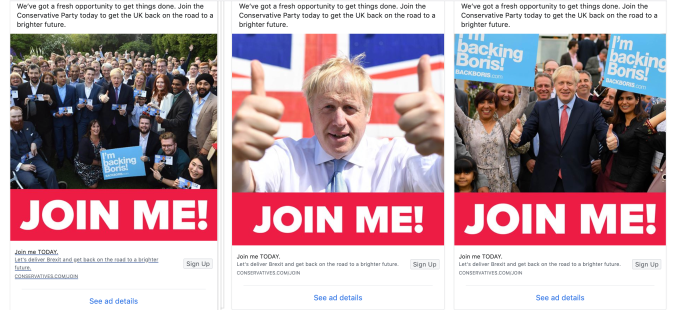
Boris Facebook ads

Yet this ‘democratic reset’ is laid right atop the Brexit trainwreck. It’s coupled to it, in fact.

Cummings worked for the self same Vote Leave campaign that the Electoral Commission found illegally funnelled money — via Cambridge Analytica-linked Canadian data firm AggregateIQ — into a blitz of microtargeted Facebook ads intended to sway voter opinion.

Vote Leave also faced questions over its use of Facebook-run football competition promising a £50M prize-pot to fans in exchange for handing over a bunch of personal data ahead of the referendum, including how they planned to vote. Another data grab wrapped in fancy dress — much like GSR’s thisisyourlife quiz app that provided the foundational dataset for CA’s psychological voter profiling work on the Trump campaign.

The elevating of Cummings to be special adviser to the UK PM represents the polar opposite of an ‘ethical pause’ in political microtargeting.

Make no mistake, this is the Brexit campaign playbook — back in operation, now with full-bore pedal to the metal. (With his hands now on the public purse, Johnson has pledged to spend £100M on marketing to sell a ‘no deal Brexit’ to the UK public.)

Kaiser’s latest evidence may not contain a smoking bomb big enough to blast the issue of data-driven and tech giant-enabled voter manipulation into a mainstream consciousness, where it might have the chance to reset the political conscience of a nation — but it puts more flesh on the bones of how the self-styled ‘bad boys of Brexit’ pulled off their shock win.

In The Great Hack the Brexit campaign is couched as the ‘petri dish’ for the data-fuelled targeting deployed by the firm in the 2016 US presidential election — which delivered a similarly shock victory for Trump.

If that’s so, these latest pieces of evidence imply a suggestively close link between CA’s experimental modelling of UKIP supporter data, as it shifted gears to apply its dark arts closer to home than usual, and the models it subsequently built off of US citizens’ data sucked out of Facebook. And that in turn goes some way to explaining the cosiness between Trump and UKIP founder Nigel Farage…


Kaiser ends her letter to DCMS writing: “Given the enormity of the implications of earlier inaccurate conclusions by different investigations, I would hope that Parliament reconsiders the evidence submitted here in good faith. I hope that these ten documents are helpful to your research and furthering the transparency and truth that your investigations are seeking, and that the people of the UK and EU deserve”.

Banks and Wigmore have responded to the publication in their usual style, with a pair of dismissive tweets — questioning Kaiser’s motives for wanting the data to be published and throwing shade on how the evidence was obtained in the first place.

30 Jul 2019

What Huawei didn’t say in its ‘robust’ half-year results

The media has largely bought into Huawei’s ‘strong’ half-year results today, but there’s a major catch in the report: the company’s quarter-by-quarter smartphone growth was zero.

The telecom equipment and smartphone giant announced on Tuesday that its revenue grew 22.3% to reach 401.3 billion yuan ($58.31 million) in the first half of 2019 despite all the trade restrictions the U.S. slapped on it. Huawei’s smartphone shipments recorded 118 million units in H1, up 24% year-over-year.

What about quarterly growth? Huawei didn’t say but some quick math can uncover what it’s hiding. The company clocked a strong 39% in revenue growth in the first quarter, implying that its overall H1 momentum was dragged down by Q2 performance.

The firm shipped 59 million smartphones in the first quarter, which means the figure was also 59 million units in the second quarter. As tech journalist Alex Barredo pointed out in a tweet, Huawei’s Q2 smartphone shipments were historically stronger than Q1.

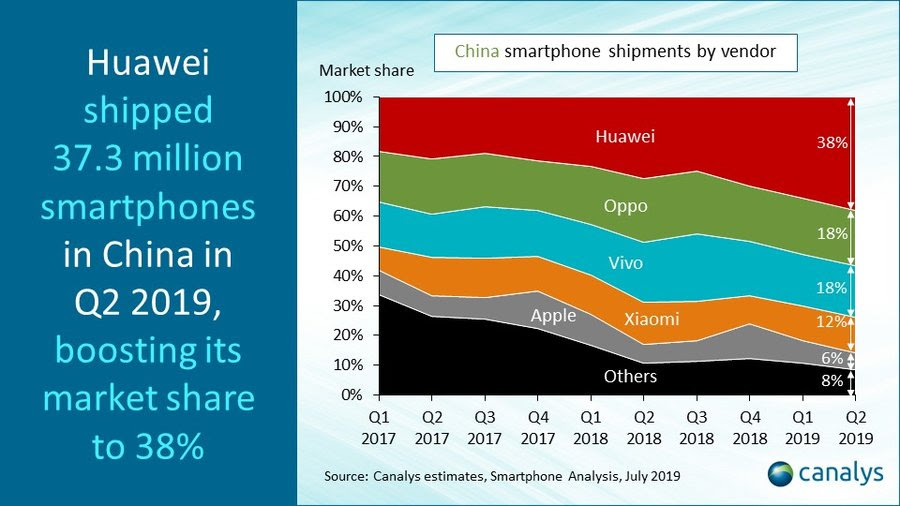
And although Huawei sold more handset units in China during Q2 (37.3 million) than Q1 (29.9 million) according to data from market research firm Canalys, the domestic increase was apparently not large enough to offset the decline in international markets. Indeed, Huawei’s founder and chief executive Ren Zhengfei himself predicted in June that the company’s overseas smartphone shipments would drop as much as 40%.

The causes are multi-layered, as the Chinese tech firm has been forced to extract a raft of core technologies developed by its American partners. Google stopped providing certain portions of Android services such as software updates to Huawei in compliance with U.S. trade rules. Chip designer ARM also severed business ties with Huawei. To mitigate the effect of trade bans, Huawei said it’s developing its own operating system (although it later claimed the OS is primarily for industrial use) and core chips, but these backup promises may take some time to materialize.

Consumer products are just one slice of the behemoth’s business. Huawei’s enterprise segment is under attack, too, as small-town U.S. carriers look to cut ties with Huawei. The Trump administration has also been lobbying its western allies to stop purchasing Huawei’s 5G networking equipment.

In other words, being on the U.S.’s entity list — a ban that prevents American companies from doing business with Huawei — is putting a real squeeze on the Chinese firm. Washington has given Huawei a reprieve that allows American entities to resume buying from and selling to Huawei, but the damage has been done. Ren said last month that all told, the U.S. ban would cost his company a staggering $30 billion loss in revenue.

Huawei chairman Liang Hua (pictured above) acknowledged the firm faces “difficulties ahead” but said the company is “fully confident in what the future holds,” he said today in a statement. “We will continue investing as planned – including a total of CNY120 billion in R&D this year. We’ll get through these challenges, and we’re confident that Huawei will enter a new stage of growth after the worst of this is behind us.”

30 Jul 2019

Conflura snags $9M Series A to help stop cyber attacks in real time

Just yesterday, we experienced yet another major breach when Capital One announced it had been hacked and years of credit card  application information had been stolen. Another day, another hack, but the question is how can companies protect themselves in the face of an onslaught of attacks. Conflura, a Palo Alto startup wants to help with a new tool that purports to stop these kinds of attacks in real time.

Today the company, which launched last year, announced a $9 million Series A investment led by Lightspeed Venture Partners . It also has the backing of several influential technology execs including John W. Thompson, who is chairman of Microsoft and former CEO at Symantec, Frank Slootman, CEO at Snowflake and formerly CEO at ServiceNow and Lane Bess, former CEO of Palo Alto Networks.

What has attracted this interest is the company’s approach to cyber security. “Conflura is a real-time cyber security company. We are delivering the industry’s first platform to deterministically stop cyber attacks in real time,” company co-founder and CEO Abhijit Ghosh told TechCrunch.

To do that Ghosh says, his company’s solution watches across the customer’s infrastructure, finds issues and recommends ways to mitigate the attack. “We see the problem that there are too many solutions which have been used. What is required is a platform that has visibility across the infrastructure, and uses security information from multiple sources to make that determination of where the attacker currently is and how to mitigate that,” he explained.

Microsoft chairman John Thompson, who is also an investor, says this is more than just real-time detection or real-time remediation. “It’s not just the audit trail and telling them what to do. It’s more importantly blocking the attack in real time. And that’s the unique nature of this platform, that you’re able to use the insight that comes from the science of the data to really block the attacks in real time,” Thompson said.

It’s early days for Conflura as it has 19 employees and 3 customers using the platform so far. For starters, it will be officially launching next week at Black Hat. After that, it has to continue building out the product and prove that it can work as described to stop the types of attacks we see on a regular basis from happening.

30 Jul 2019

‘The Operators’: Experts from WeWork and Brex talk marketing – Getting the most bang for your buck

Welcome to this transcribed edition of The Operators. TechCrunch is beginning to publish podcasts from industry experts, with transcriptions available for Extra Crunch members so you can read the conversation wherever you are.

The Operators features insiders from companies like AirBnB, Brex, Docsend, Facebook, Google, Lyft, Carta, Slack, Uber, and WeWork sharing their stories and tips on how to break into fields like marketing and product management. They also share best practices for entrepreneurs on how to hire and manage experts from domains outside their own.

This week’s edition features Christiana Rattazzi, Head of Technology Marketing at WeWork, the leading coworking company that has raised over $8 billion and has a valuation of $47 billion and a rumored IPO impending. Also joining the show is Elinitsa Staykova, VP of Marketing at Brex, another fast-growing unicorn, recently valued at over $2 billion, that is the leading provider of credit cards to startups and tech companies.

In this episode, Christiana and Elinitsa explain how marketing works, how to get into and succeed in the field of marketing, and how founders should think about hiring and managing the marketing function. With their experiences at two of tech’s biggest and most innovative marketers, WeWork and Brex, this episode is packed with broad perspectives and deep insights.

image1 5

Image via The Operators

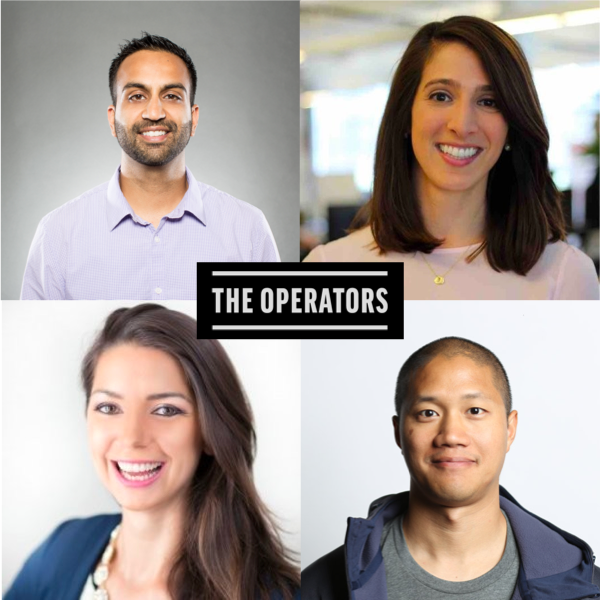
Neil Devani and Tim Hsia created The Operators after seeing and hearing too many heady, philosophical podcasts about the future of tech, and not enough attention on the practical day-to-day work that makes it all happen.

Tim is the CEO & Founder of Media Mobilize, a media company and ad network, and a Venture Partner at Digital Garage. Tim is an early-stage investor in Workflow (acquired by Apple), Lime, FabFitFun, Oh My Green, Morning Brew, Girls Night In, The Hustle, Bright Cellars, and others.

Neil is an early-stage investor based in San Francisco with a focus on companies building stuff people need, solutions to very hard problems. Companies he’s invested in include Andela, Clearbit, Kudi, Recursion Pharmaceuticals, Solugen, and Vicarious Surgical.

If you’re interested in starting or accelerating your marketing career, or how to hire and manage this function, you can’t miss this episode!

The show:

The Operators brings experts with experience at companies like AirBnB, Brex, Docsend, Facebook, Google, Lyft, Carta, Slack, Uber, WeWork, etc. to share insider tips on how to break into fields like marketing and product management. They also share best practices for entrepreneurs on how to hire and manage experts from domains outside their own.

In this episode:

In Episode 4, we’re talking about marketing. Neil interviews Christiana Rattazzi, Head of Technology Marketing at WeWork, and Elinitsa Staykova, VP of Marketing at Brex.


Neil Devani: Hello and welcome to another episode of The Operators, where we learn from the people building the companies of tomorrow. We publish every other Monday and you can find us online at www.operators.co. I’m your host, Neil Devani, and we’re coming to you today from Digital Garage here in downtown San Francisco.

Joining me is Eli Staykova, Vice President of Marketing at Brex. Brex is the corporate credit card for start-ups, one of the fastest companies to reach a billion dollar evaluation, having launched barely two years ago, and its customers include Y Combinator, Flexport, SoFi, and many, many other startups.

Also joining us is Christiana Rattazzi, the head of enterprise technology marketing at WeWork. WeWork, with almost 10 billion dollars in financing to date, also counts major corporations and startups among its hundreds of thousands of customers. The firm is reportedly the largest leaseholder in New York, London, and Washington DC and has a footprint in almost a hundred other countries.

Eli and Christiana, thank you for joining us. Just to start, if you can share with our listeners about yourselves, a little bit about where you’re from and how you got into marketing, that’d be great.

Christiana Rattazzi: Happy to lead off. I’m actually from the Bay Area, go Warriors and I was pre-med through college and really thought I was going to go to med school and as I started studying for the MCAT, really discovered that that was what the path was going to be like.

One where you spend a lot of time in the library and maybe you weren’t up for it later and I wasn’t sure I wanted to sign up for that but I wanted to be at a company and being able to speak about a product that I was passionate about. And so that got me into cleantech, as I started my career, actually in cleantech, in marketing because I really loved to write and I love to tell stories.

So that was the beginning of my career and it’s been a great ride since then.

Devani: And what about yourself?

Eli Staykova: I came to the Bay Area in 2006 so I’ve been living here for the past thirteen years, it’s been quite the ride. I came here for the business school at the GSB, Stanford, and I started my career in finance, so I worked for IFC, International Finance Corporation, then for UBS in their LBO group, and I thought that you know after that I would stay in finance.

However, after Stanford I decided to work and live here in San Francisco and it’s so hard to be in the Bay Area not working in tech so I eventually joined the tech world. I work for Apple in their corporate finance team and I recently made the switch back in February at the new company Brex.

Devani: Very cool. These are two very exciting companies, two companies that do a lot of marketing, probably have very sophisticated marketing operations at least that’s what I would assume from the outside.

For the folks who are listening, who maybe don’t know much about marketing, can you help us understand at a very high level, the marking operation in your company. What are the different departments or roles, the different things that are just the nuts and bolts of how it works?

30 Jul 2019

Vymo raises $18M to help salespeople manage their leads

Vymo, a New York-headquartered startup that operates an eponymous mobile-first service to help salespeople manage their leads, has raised $18 million in a new financing round to expand its footprint in the U.S. and other markets.

The Series B round for the six-year-old startup was led by Emergence Capital, a VC firm that focuses on enterprise cloud firms. Existing investor Sequoia India also participated in the round. Vymo has raised more than $23 million to date.

Vymo serves as a CRM (customer relationship management) solution and also works with other popular CRMs such as Salesforce. The service helps salespeople automatically capture their business calls, visits, messages, emails, calendar, and the engagement levels to better track and manage their leads, Yamini Bhat, co-founder and CEO of Vymo, told TechCrunch in an interview.

The ease is crucial for salespeople. “CRMs have existed for more than a decade. But they still see under 15% to 20% day-to-day adoption,” Bhat explained. “Salespeople don’t actively log their activities into the CRM, which creates management challenges. People don’t know which deal will close and when it will close.”

Research and advisory firm Gartner said in a report that “field representatives aren’t going to “live” in [sales force automation systems]…that ship has sailed.” In contrast, over 75% of Vymo’s registered users log in and take actions on the app every day. Vymo’s offering also looks at a salesperson’s activities to identify what is working best for them and makes recommendations for “high-value activities” to other members based on that.

Vymo, which employs about 100 people, has amassed over 40 enterprise customers including life insurance firms AIA Group and AXA in seven nations. More than 100,000 salespeople use Vymo’s service. The startup will use the fresh capital to expand its business in many parts of the world and also begin operations in the U.S. market, Bhat said.

“With its exceptionally high user adoption metrics and steadily expanding user base — 100,000 salespeople at over 40 global enterprises and counting — Vymo is delivering transformational value. It’s the kind of company we at Emergence love partnering with — one that stands to drastically improve the day-to-day work lives of millions of people,” Jake Saper, a partner with Emergence Capital, who joins Vymo’s board as part of the financing, said in a statement.

Shailesh Lakhani, Managing Director of Sequoia Capital India Advisors, said, “As early partners, we’ve seen Vymo grow rapidly across all metrics, but most importantly in avid adoption by mobile-first workers at some of the largest global enterprises. Vymo is uniquely positioned to become the standard by which sales and distribution is run in these institutions.”

30 Jul 2019

Huawei is shipping a lot more phones in spite of it all

There are a lot reasons to assume Huawei’s numbers would be on the decline. Even without getting caught smack in the middle of increasing trade tensions between two superpowers, the smartphone market has been trending down for some time now. A confluence of factors, including slowed upgrade cycles and stagnate economies in both China and abroad have contributed.

The market continues to “soften” in China as early adopters await the launch of 5G before jumping on with new handset. In spite of everything, however, Huawei appears to be the one company currently bucking the trend. And not just by a little bit, either. New numbers from Canalys put the company at a 31 percent year on year grown for the second quarter — a stark contrast to the six percent global decline for the category.

unnamed 6

The company shipped 37.3 million handsets for Q2, with China accounting for 64 percent of that number. Unsurprisingly, its home market has become an increasingly important sales driver as trade blacklists and the like have barred in from sales in some overseas markets.

An interesting, if unsurprising factor in that growth is a kind of hometown pride for the embattled brand, which sported a 38 percent market share for the quarter.

“[T]he US-China trade war is also creating new opportunities. Huawei’s retail partners are rolling out advertisements to link Huawei with being the patriotic choice, to appeal to a growing demographic of Chinese consumers willing to take political factors into account when making a purchase decision,” Canalys’ Mo Jia said in a release tied to the news. “Huawei itself has also been eager to give more exposure to its founder and CEO, Ren Zhengfei, to enhance its brand appeal to local consumers. At the same time, Huawei’s internal chipset and modem technologies will give it an edge over its competitors as 5G is commercialized by Chinese operators.”

That last bit means that Huawei will almost certainly see more growth in the coming years as 5G begins to roll out in China, starting this fall. This is, of course, as long as a ban on the use of American software and components don’t hamper the company entirely in the meantime.

Huawei was cautiously optimistic reporting its quarterly earnings this week. “Given the foundation we laid in the first half of the year, we continue to see growth even after we were added to the entity list,” Chairman Liang Hua said on a call. “That’s not to say we don’t have difficulties ahead. We do, and they may affect the pace of our growth in the short term.”

30 Jul 2019

NakedPoppy launches curated beauty marketplace for wellness junkies

NakedPoppy co-founders Jaleh Bisharat and Kimberly Shenk are an impressive duo. Bisharat, the startup’s chief executive officer, is a commanding presence and a bona fide marketing savant. The perfect compliment to Shenk, a reticent and data-focused chief product officer.

Together they’re building a cosmetics startup, NakedPoppy, where people can purchase high-quality “clean” makeup, or sustainable, ethically-made and cruelty-free products produced without harmful chemicals. It launches today with $4 million in venture capital backing from top investors, including Cowboy Ventures (the seed-stage fund led by Aileen Lee), Felicis Ventures, Khosla Ventures, Maveron, Polaris Ventures and Slow Ventures.

“Conventional makeup is considered hazardous waste by the EPA,” Bisharat tells TechCrunch. “You can look better and go clean.”

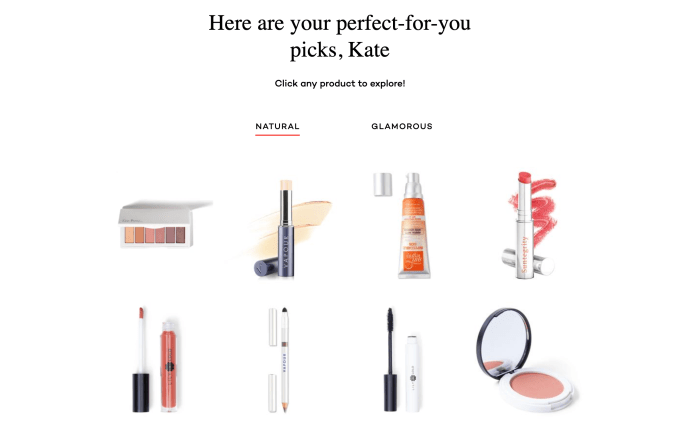
But NakedPoppy isn’t just another website for buying makeup. Like all companies today, it’s a tech company. NakedPoppy’s patent-pending personalization algorithm helps customers quickly find makeup that matches or complements their skin tone. To do this, customers are asked to complete a three-minute assessment and submit a photo of their wrist, which is used to pinpoint their base skin color.

NakedPoppy assessment

“I’m not the person that is up to trends or is keeping up with the YouTube stars,”  NakedPoppy’s product chief Shenk tells TechCrunch. “When I walk into Sephora my stomach drops … I am the kind of woman that wants to set it and forget it. Just give me the right thing and let’s move on.”

Bisharat adds that NakedPoppy targets the busy woman: “The one for whom it’s not entertainment to go shopping for makeup.”

The NakedPoppy team hopes its algorithm expedites the makeup shopping process for those who view the task as a chore not a hobby. Accounting for skin type, skin color, skin undertone, age, eye color, hair color, allergies, sensitivities and more, the startup presents each customer a filtered and tailored list of the 400 items its carries, ranging from lipsticks to foundation to blush and more. Cosmetic chemists screen all NakedPoppy products to ensure they were made with only clean ingredients.

Alongside its official launch, NakedPoppy is announcing its debut original product: Liquid eyeliner. The product was screened and tested by a number of clean beauty experts and even a VC: “This is a hero product, no doubt about it,” BBG Ventures’ managing partner Susan Lyne said in a statement. Lyne, of course, is a NakedPoppy angel investor. “Most eyeliners start drying out after a few weeks and get harder to apply. This one is still as supple as the day I got it. It looks natural, lasts all day and washes off easily with soap. It’s pretty perfect.”

For the record, I tried out the NakedPoppy eyeliner too and can attest to its greatness.

NakedPoppy founders

NakedPoppy co-founders Jaleh Bisharat (CEO, left) and Kimberly Shenk (CPO, right).

The women behind NakedPoppy, as I alluded to earlier, know what they’re doing. In fact, I’d go as far as to say they could’ve paired their marketing and data science expertise to build just about anything. Makeup, however, was their shared passion.

“For us, it’s a personal passion and an area of information asymmetry, like most people know that with the food you eat, you should try to eat organic or as healthy as you can, but you’d be surprised how few women — they just assume the FDA protects them,” Bisharat said. “The idea is to educate the world and help women move toward new solutions.”

Bisharat got her start in marketing two decades ago. Shortly after the e-commerce giant went public, she served as the vice president of marketing at Amazon . A career peak for many, Bisharat went on to lead marketing efforts at OpenTable, Jawbone, UpWork and, most recently, Eventbrite, where she met Shenk.

Before moving into the private sector, Shenk got her start as a data scientist in the U.S. Air Force, ultimately ending up as the director of data science at the now-public ticketing and events business, Eventbrite .

10 NakedPoppy Pouch

Bisharat and Shenk remained mum on what marketing tactics they’ll deploy to capture the attention of potential customers. Will they partner with social media influencers to spread the word? Double down on Instagram ads? Open brick-and-mortar shops? They wouldn’t say. Additional original products are definitely in the works, though, as is a foray into skincare and ultimately, a full-fledged dive into all self-care products.

The hope is to making buying clean makeup easy. Historically, the big makeup brands have been owned and operated by one of a dozen or so large companies dominating the space. Increasingly, however, direct-to-consumer brands and startups, most notably Glossier, have attracted customers that prioritize ease-of-access.

As the beauty industry adjusts, an influx of digital-first upstarts, NakedPoppy included, will be poised to steal market share from the long-reigning giants. Perhaps NakedPoppy’s push toward transparency in ingredients and production will encourage the big brands to do the same.

30 Jul 2019

AWS follows Microsoft into the Middle East, opening new region in Bahrain

AWS, Amazon’s cloud arm, announced today that it has opened a Middle East Region in Bahrain. The Middle East is an emerging market for cloud providers and is this new region is part of a continuing expansion for the cloud giant. Today’s news comes on the heels of Microsoft announcing its own Middle East data centers in Abu Dhabi and Dubai just last month.

As AWS CEO Andy Jassy pointed out last year at AWS re:Invent, the cloud is at different stages in different parts of the world and Amazon obviously wants to be a part of the emerging areas to extend its lead in the cloud infrastructure market.

“I think we’re just in the early stages of enterprise and public sector adoption in the U.S. Outside the U.S. I would say we are 12-36 months behind. So there are a lot of mainstream enterprises that are just now starting to plan their approach to the cloud,” Jassy told the AWS re:Invent audience last year.

Amazon sees this expansion as helping companies in the Middle East, much in the same way it has in the U.S., Europe and other parts of the world, to digitally transform through the use of cloud services.

The new region in the Middle East is composed of three Availability Zones. That’s AWS lingo for a distinct geographic area that holds at least one data center. “Each Availability Zone has independent power, cooling and physical security and is connected via redundant, ultra-low-latency networks,” the company explained in a statement.

Amazon reports that this is part of a continuing expansion. It also announced plans to open nine additional availability zones in Indonesia, Italy and South Africa in coming years.

30 Jul 2019

Blockchain (the company) launches an exchange (The Pit)

The company called Blockchain is mostly known for its cryptocurrency wallet. Today, the company is also launching an exchange so that you can buy and sell cryptocurrencies without going through a third-party exchange.

The company’s exchange is called The Pit and is focused on mainstream adoption and ease of use. It is available in 200 countries with support for a handful of cryptocurrencies and fiat currencies.

When it comes to depositing money in your account, The Pit currently supports USD, EUR and GBP via bank transfers. You can then buy and sell a handful of crypto assets — BTC, ETH, BCH, LTC, USDT and PAX.

Behind the scene, Nicole Sherrod has been heading the product for a year. She worked at TD Ameritrade and E*Trade in the past. And the company has opted for dedicated servers instead of a more traditional public cloud infrastructure, such as Amazon Web Services or Microsoft Azure.

The startup is waving trading fees for the first 30 days. After that, in addition to spread, you’ll pay 0.24% in taker fees if you trade less than $100,000 per month, and 0.14% in maker fees. Fees get lower after that threshold, but you should probably consider an OTC desk for large transactions.

That’s 0.01 percentage point lower than Coinbase Pro fees, 0.02 percentage point lower than Kraken fees if you trade less than $50,000 per month and on par with Kraken fees if you trade between $50,000-$100,000. Binance fees are lower, but I don’t think The Pit and Binance address the same market.

Integration with Blockchain wallets will foster adoption compared to other companies starting an exchange from scratch. Blockchain users have created 40 million wallet so far. And those users can connect to The Pit using their Blockchain account. The company has developed a new Blockchain Connect API for this feature.

Disclosure: I own small amounts of various cryptocurrencies.

30 Jul 2019

Techstars nabs $42M to expand its global presence

Techstars, a startup accelerator founded in 2006, has plans to double down on international growth with a new investment.

SVB Financial Group, the holding company of Silicon Valley Bank, led the $42 million round in Techstars, with participation from Foundry Group.

With $500 million AUM, Techstars is both a fund deploying capital to early-stage upstarts and an operating business nearing $100 million in annual revenue. Its latest equity investment, announced this morning, will fuel the latter, helping Techstars accelerate its global expansion efforts.

“Expect to see Techstars continue to expand more rapidly, not just in North America and Europe, but also throughout Asia, Latin America, Australia and more,” Techstars founder and co-chief executive officer David Cohen tells TechCrunch.

Cohen adds the company will also use the fresh funds to grow Techstars Studio, where it builds and launches its own companies; Techstars Ecosystem Development, which helps communities grow and sustain startup economies; Techstars Talent, where it lists available startup roles and more.

Techstars currently runs 49 accelerator programs in 35 cities in 16 countries. Known for backing a number of companies, including Plated, ClassPass, SendGrid and PillPack, Techstars invests roughly $80 million into 490 new startups per year.

“We have a model that is working consistently,” Cohen adds. “We’re helping entrepreneurs succeed all over the world. In turn, this is creating a better future for everyone. We owe it to entrepreneurs everywhere to bring the power of the Techstars network to their doorstep. We believe that talent is equally distributed around the world, but the opportunity is not. It’s on us to continue to grow our network for the benefit of current and future generations of entrepreneurs around the world.”