Year: 2019

30 Jul 2019

Daily Crunch: Capital One discloses enormous data breach

The Daily Crunch is TechCrunch’s roundup of our biggest and most important stories. If you’d like to get this delivered to your inbox every day at around 9am Pacific, you can subscribe here.

1. Capital One hacked, over 100 million customers affected

Another day, another data breach. This time, the company involved is Capital One, which says the breach affects roughly 100 million individuals in the U.S., and 6 million in Canada.

The data leaked potentially includes “names, addresses, ZIP codes/postal codes, phone numbers, email addresses, dates of birth, and self-reported income,” as well as information like “credit scores, credit limits, balances, payment history, contact information.”

2. What Huawei didn’t say in its ‘robust’ half-year results

The media has largely bought into Huawei’s “strong” half-year results today, but there’s a major catch in the report: the company’s quarter-by-quarter smartphone growth was zero.

3. Real estate platform Compass raises another $370M on a $6.4B valuation en route to an IPO

The platform is not just a marketplace to connect buyers to real estate agents to sellers, but an engine that helps figure out pricing, timing for sales and how to stage homes to get the best prices and most sales.

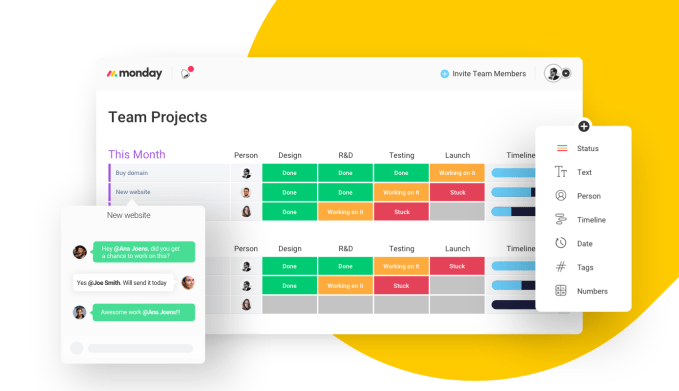
4. Monday.com raises $150M more, now at $1.9B valuation, for workplace collaboration tools

The big bump is in part due to the company’s rapid expansion; it now has 80,000 organizations as customers, up from a mere 35,000 a year ago.

5. The Museum of Future Experiences offers a spooky, surreal take on VR

The experience isn’t easy to describe, but afterwards, I felt equal parts amused, excited and unsettled, and I knew this wasn’t like any other VR I’d seen.

6. Techstars nabs $42M to expand its global presence

Techstars is both a fund deploying capital to early-stage upstarts and an operating business nearing $100 million in annual revenue. Its latest equity investment will fuel the latter.

7. Facebook and YouTube’s moderation failure is an opportunity to deplatform the platforms

While the major platforms reap the bitter harvest of years of ignoring the issue, startups can pick up where they left off. (Extra Crunch membership required.)

30 Jul 2019

The dreaded 10x, or, how to handle exceptional employees

The “10x engineer.” Shudder. Wince. I have rarely seen my Twitter feed unite against an idea so loudly, or in such harmony.

I refer of course to the thread last month by Accel India’s Shekhar Kirani, explaining “If you have a 10x engineer as part of your first few engineers, you increase the odds of your startup success significantly” and then going on to address, in his opinion, “How do you spot a 10x engineer?”

The resulting scorn was tsunami-like. The very concept of a 10x engineer seems so… five years ago. Since then, the Valley has largely come to the collective conclusion that 1) there is no such thing as a 10x engineer 2) even if there were, you wouldn’t want to hire one, because they play so poorly with others.

The anti-10x squad raises many important and valid — frankly, obvious and inarguable — points. Go down that Twitter thread and you’ll find that 10x engineers are identified as: people who eschew meetings, work alone, rarely look at documentation, don’t write much themselves, are poor mentors, and view process, meetings, or training as reasons to abandon their employer. In short, they are unbelievably terrible team members.

Is software a field like the arts, or sports, in which exceptional performers can exist? Sure. Absolutely. Software is Extremistan, not Mediocristan, as Nassim Taleb puts it.

30 Jul 2019

Google’s new version of Android Auto focuses on Assistant

Google is starting to roll out an updated version of its in-car platform Android Auto that aims to make it easier and safer for drivers to use.

The version, which was first revealed during Google I/O 2019, has a dark theme, new fonts and color accents, more opportunities to communicate with Google’s virtual assistant and the ability to fit wider display screens that are becoming more common in vehicles.

Android Auto, which launched in 2015, is not an operating system. It’s a secondary interface — or HMI layer — that sits on top of an operating system and brings the look and feel of a smartphone to the vehicle’s central screen. Rival Apple introduced its own in-car platform, Apple CarPlay, that same year.

Automakers, once hesitant to integrate Android Auto or Apple CarPlay into vehicles have come around. Today, Android Auto is available in more than 500 car models from 50 different brands, according to Android Auto product manager Rod Lopez.

Car owners with Android Auto support will start to see the new design over the next few weeks. However, updates will not be made to the standalone version of Android Auto, a smartphone app that gave users access to the platform even if their car wasn’t compatible to Android Auto. Google says it plans to “evolve” the standalone phone app from Android Auto to the Assistant’s new driving mode in the future.

Meanwhile, the in-car version features some important changes, notably more opportunities for drivers to use their voice — and not their hands — to interact with Android Auto. Users will notice the Google Assistant badge on Android Auto, that when tapped will provide information about their calendar, read the weather report or news.

3Android Auto Google Assistant Badge

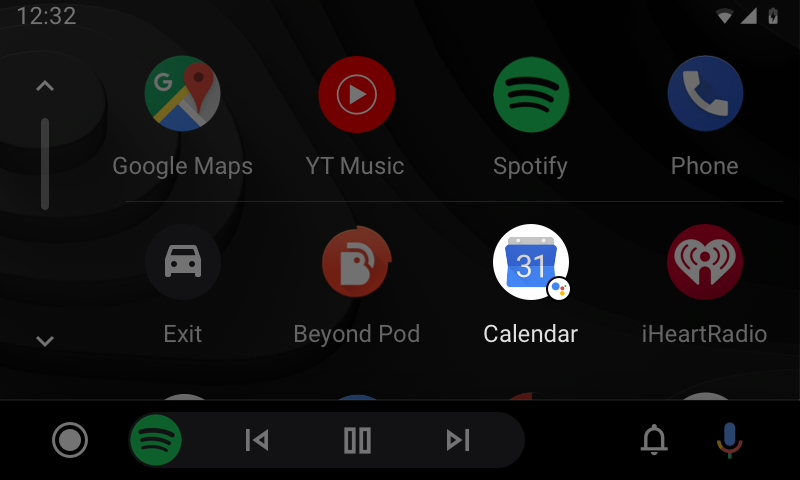
Other new features include a new app launcher designed to let users access their favorite apps with fewer taps. A button on the bottom left of the screen launches this feature. Once deployed, users will see app icons with the most commonly used ones featured in the top row.

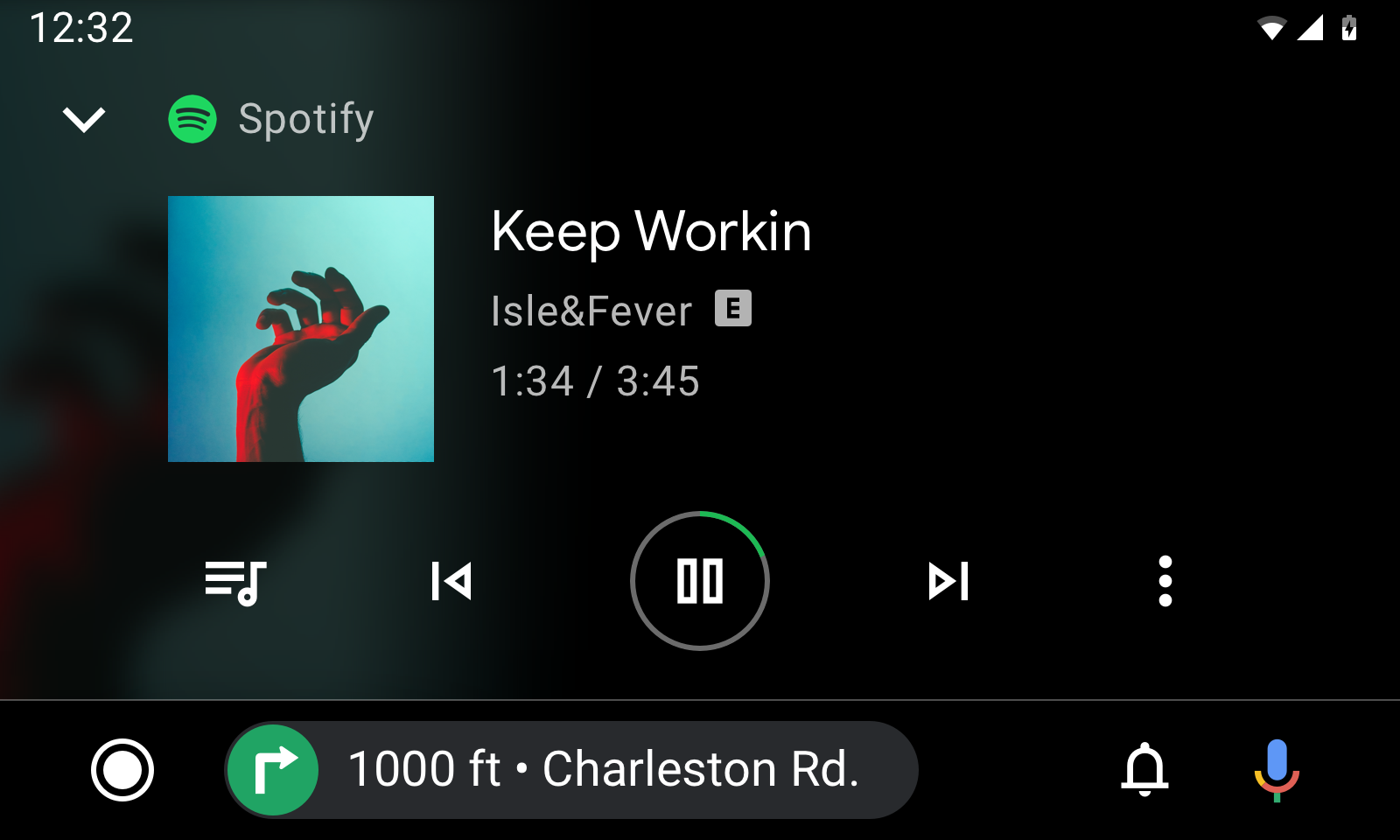
Android Auto has also improved its navigation, which is perhaps the most commonly used feature within the platform. Now, the navigation bar sits at the bottom of the display and allows users to manage multiple apps. This improvement means users won’t miss an exit or street while they’re listening to Spotify .

4Android Auto Media

The navigation feature also pops up as soon as the driver connects with Android Auto. If a route is already queued up on a phone, Android Auto will automatically populate the directions.

This latest version also has a new notification button — located on the bottom right corner — houses recent calls, messages and alerts. Drivers can tap the mic button or say ” “Hey Google” to have the Google Assistant help make calls, send messages and read notifications.

Google has also developed an operating system called Android Automotive OS that’s modeled after its open-source mobile operating system that runs on Linux. Instead of running smartphones and tablets, Google modified it so it could be used in cars. Polestar, Volvo’s standalone performance electric car brand, is going to produce a new vehicle, the Polestar  2, that has an infotainment system powered by Android Automotive OS.

30 Jul 2019

CrowdLobby wants to democratize political lobbying

Lobbying, whether we like it or not, is an effective way to enact political change. But it’s historically only been available to special interest groups and corporations with hoards of cash on hand. CrowdLobby, a non-partisan organization that launched this month, hopes to change that.

Last year, corporations and special interest firms spent $3.5 billion on lobbying, according to The Center for Responsive Politics. Through CrowdLobby, the aim is to help everyday people crowdfund to hire lobbyists of their own.

“Lobbyists do have a huge effect on current legislative processes,” CrowdLobby co-founder and CEO Heidi Drauschak (pictured above on right), a lawyer with experience in the lobbying industry, told TechCrunch. “Until we can totally change the whole structure, we have to play the game. It’s not that the game is a horrible game, but it’s just that not everyone gets a chance to play.”

CrowdLobby works by featuring campaigns around issues that its community has deemed to be important. From there, anyone can contribute to the campaign — which generally seeks $50,000. The team landed on that amount after having conversations with lobbyists regarding what it would take to make a change on a state level. CrowdLobby only charges you if the campaign hits its target.

“If enough funds are raised around a specific issue, we facilitate that aggregation and the hiring of the lobbyist itself,” Drauschak said.

In order to make money, CrowdLobby charges a processing fee. The startup is still experimenting with what to charge but currently has a 25% processing fee in place. That’s undoubtedly higher than processing fees to which people are generally accustomed, but Drauschak stressed that CrowdLobby is a two-sided marketplace that facilitates the entire lobbying process. That means aggregating the funds, figuring out which lobbyist to hire and then engaging in ongoing communications with the lobbyist.

“We want to give people the exact same benefits that someone who normally hires a lobbyist would get,” Drauschak said.

CrowdLobby officially launched this month with three featured campaigns focused on education, cannabis decriminalization and autism in the state of Virginia, which is where the company is headquartered.

crowdlobby campaigns

“The community can determine if a campaign goes live,” CrowdLobby co-founder and COO Sam Biggio (pictured above on left) told TechCrunch. “We try to stay out of that process as much as possible and be the objective tool for whatever the people want.”

Currently, CrowdLobby is working with a handful of lobbyists. But the ideal number of lobbyists depends on how many campaigns CrowdLobby has going on at any given time. Right now, the goal is to build a team of lobbyists that demonstrates the credibility of the platform, Drauschak said.

CrowdLobby plans to offer campaigns in additional states by next year, at the latest, as well as get some additional campaigns off the ground. CrowdLobby does not have traditional venture funding, but raised $35,000 in a Kickstarter campaign and is currently participating in the Lighthouse Labs accelerator in Richmond, Virginia, where they received additional funding.

“Anything political is always going to be dicey,” Drauschak said. “But we’ve been setting ourselves up to take [the venture funding] route when we’re ready.”

30 Jul 2019

Facebook is exploring brain control for AR wearables

Facebook this morning issued a lengthy breakdown of recent research into BCI (brain-computer interface) as a means with which to control future augmented reality interfaces. The piece coincides with a Facebook-funded UCSF research paper published in Nature today entitled, “Real-time decoding of question-and-answer speech dialogue using human cortical activity.”

Elements of the research have fairly humane roots, as BCI technology could be used to assist people with conditions such as ALS (or Lou Gehrig’s disease), helping to communicate in ways that their body is no longer naturally able.

Accessibility could certainly continue to be an important case use for the technology, though Facebook appears to have its sights set on broader applications with the creation of AR wearables that eliminate the need for voice or typed commands.

“Today we’re sharing an update on our work to build a non-invasive wearable device that lets people type just by imagining what they want to say,” Facebook AR/VR VP Andrew “Boz” Bosworth said on Twitter. “Our progress shows real potential in how future inputs and interactions with AR glasses could one day look.”

“One day” appears to be a key aspect in all of this. A lot of the key caveats in all of this note that the technology is still on relatively distant horizon. “It could take a decade,” Facebook writes in the post, “but we think we can close the gap.”

Among the strategies the company is exploring is use of a pulse oximeter, monitoring neurons’ consumption of oxygen to detect brain activity. Again, that’s still a ways off.

“We don’t expect this system to solve the problem of input for AR anytime soon. It’s currently bulky, slow, and unreliable,” the company writes. “But the potential is significant, so we believe it’s worthwhile to keep improving this state-of-the-art technology over time. And while measuring oxygenation may never allow us to decode imagined sentences, being able to recognize even a handful of imagined commands, like ‘home,’ ‘select,’ and ‘delete,’ would provide entirely new ways of interacting with today’s VR systems — and tomorrow’s AR glasses.”

Obviously there are some red flags here for privacy advocates. There would be with any large tech company, but Facebook in particular presents lots of built in privacy and security concerns. Remember the uproar when it launched a smart screen with built-in camera and microphones? Now apply that to a platform that’s design to tap directly into your brain and you’ve got a good idea of what we’re dealing with here.

Facebook addresses this concern in passing in the piece.

“We can’t anticipate or solve all of the ethical issues associated with this technology on our own,” Facebook Reality Labs Research Director Mark Chevillet says in the piece. “What we can do is recognize when the technology has advanced beyond what people know is possible, and make sure that information is delivered back to the community. Neuroethical design is one of our program’s key pillars — we want to be transparent about what we’re working on so that people can tell us their concerns about this technology.”

Facebook seems intent on getting out in front of those concerns a decade or so ahead of time. Users have seemingly been comfortable giving away a lot of private information, as long as it’s been part of a slow, steady trickle. By 2029, maybe the notion of letting the social network plug directly into our grey matter won’t seem so crazy after all.

30 Jul 2019

How retailers can survive the Amazon era

While Amazon’s 2019 Prime Day was riddled with complications from worker protests to antitrust investigations, the tech giant once again broke records with 175M items sold, surpassing both Black Friday and Cyber Monday combined. In just twenty years, Amazon revolutionized the logistics industry by fulfilling orders directly and offering its fulfillment services to third parties selling on the Amazon marketplace.

This year, more than half of US households will be Prime members. As Amazon continuously pushes delivery costs and times down, consumer expectations keep rising higher. But what does this mean for other retailers?

To survive in the post-Amazon era, the way companies have been storing and delivering physical goods to their final destination will need to change profoundly in the next decade.  Below are some of the key challenges facing the logistics landscape and three predictions for what we can expect to see next. 

The challenge 

Beating Amazon is difficult due to its sheer size, breadth and depth of its warehousing and fulfillment infrastructure and cutting-edge automation. Meanwhile, the typical logistics supply chain has become increasingly complex from transportation of physical goods from manufacturing facilities to last mile delivery to consumers. Further, legacy technology struggles to provide actionable insights due to low transparency, inefficient information flow, and limited automation. 

The gap between shipper’s expectations and logistics providers’ capabilities continues to widen as more of the supply chain lands in the hands of 3PLs—increasing capacity and capabilities but decreasing the shipper’s visibility and control on the process.

Now, also take into account other factors such as the industry wide shortage of blue collar workers and the net effect is that innovation in delivery and warehousing operations is becoming a pressing need.
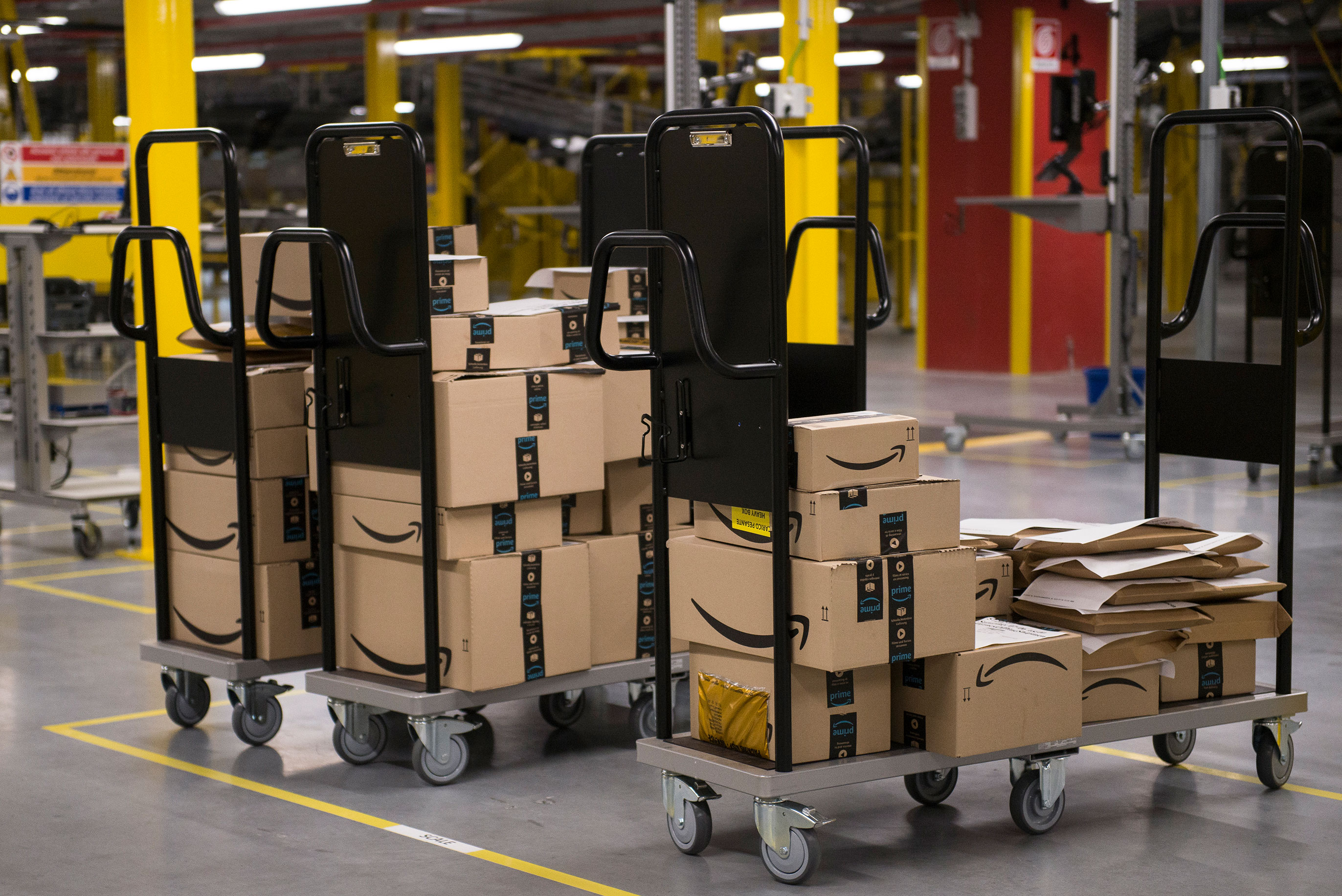
GettyImages 1161005963

TURIN, ITALY – JULY 09: Amazon boxes of Amazon Logistic Center on July 09, 2019 in Turin, Italy. (Photo by Stefano Guidi/Getty Images)

What’s next for logistics?

Shippers will increasingly need to reinvent their logistics value chain and upgrade various functions, from storage to distribution, as well as leverage new partners that bring innovative technologies and expertise.  

The technology startups that are well-positioned to build lean and effective solutions for the entire industry are those that focus on solving specific pain points including improving, visibility across the logistics chain; speed of delivery; and cost effectiveness of storage and fulfillment.

  •  24/7 tracking becomes table stakes

Over the last few years, the “consumerization of IT” wave hit the logistics industry, meaning business professionals expect enterprise software to look and feel like the consumer apps they use every day – simple, fast, and easy-to-use. 

 Most companies’ legacy infrastructure has challenges with easy tracking or visibility into existing inventory. A new wave of venture backed tech-enabled solutions that marries both technology and execution has emerged to address these issues. 

 Take Shipwell (freight), Stord (warehousing), and Shipbob (fulfillment) for example — these solutions can provide end to end digitized offerings with the speed, reliability, and affordability that are vital to shipping operation teams. 

 While there is still no clear next-gen inventory or warehouse management winner in the US, early signs indicate capacity providers are moving in this direction by offering more solutions such as additional workflow and dashboard tools to their service offerings.

  • Same day shipping will be the norm

 Amazon’s recent one-day shipping announcement is a precursor to where the industry is being pushed. According to Invesp, over 65% of retailers surveyed expect to offer same-day delivery within the next two years.

Many are trying to solve for end-to-end fulfillment solutions to e-commerce players, including warehousing, packaging, fulfillment, transportation, and reverse logistics services. Startups like Deliverr, Shipmonk and Darkstore offer competitive or better solutions in terms of cost and speed, usually controlling supply of storage directly and outsourcing or crowdsourcing delivery. 

Others have gone vertical, such as Cathay Innovation portfolio company and delivery app Glovo, who recently launched their version of a darkstore which is the size of a garage with limited inventory inside cities— but with a goal of guaranteeing 15 minute delivery. According to Glovo’s CEO Oscar Pierre, “Dark stores are a major priority for us, and we plan to open further stores in Barcelona, Lisbon, Milan and Tbilisi within the next year. Being able to deliver within 20 minutes has a massive influence on the customer’s decision. When the delivery time is short and the pricing sensitivity is low, that’s what makes people decide between going to their local convenience store or ordering from the app.”

Delivery speed expectation is experiencing its own “Moore’s law” and is an area we see a great amount of opportunity given the conflux of change needed from physical retail meeting digital expectations.

  • The cost-effectiveness of storage and fulfillment will rapidly improve 

Just as Spotify and Netflix have conditioned consumers to around a $10 price point, retailers and last mile delivery players are doing the same with shipping. This limits the ability for shippers to pass the costs onto consumers, thus forcing vendors to look elsewhere to cut costs.

Several startups are emerging to solve the problem that legacy companies are ill-equipped to solve: enabling retailers to compete with Amazon, respond faster to market needs and contain rising costs.

Flexible, on-demand warehousing has become a good option to save costs and expand footprint, AWS-style. Companies like FLEXE and Flowspace are connecting unused warehouse space and fulfillment capacity with clients that have dynamic warehousing and fulfillment needs, creating a more liquid and efficient market while also increasing visibility into their assets. On the trucking side, companies such as Convoy and Ontruck, (my firm’s investment) are also making sure trucks are being better utilized by matching capacity to empty trucks.

As many shippers (even behemoth’s like Walmart) grapple with creating a profitable e-commerce operation, areas including storage, distribution and fulfillment will be key areas to watch in the coming years.

Parting thoughts

Several technological innovations, from IoT sensors and machine learning models to autonomous robots, are transforming the logistics supply chain. Startups not only have the opportunity to survive the post-Amazon era but help the booming e-commerce industry deliver on its innovation potential.


30 Jul 2019

Wall St analyst Laura Martin on the fate of Netflix, breaking up Google, EU regulation, and a decade of more money for Hollywood

The rise of streaming video platforms like Netflix and Amazon Prime has upended traditional power balances in Hollywood and is reorganizing the way we consume films and TV series as consumers.

Following her talk at the recent Banff World Media Festival in Canada, I interviewed Laura Martin, the senior analyst covering entertainment and internet stocks at leading investment bank Needham & Company, to sort out how the pieces are moving in this chess game between content creators, streaming services, consumers, and government regulators.

We discuss why Netflix is still at risk of a downfall, the effect of EU content quotas, why Martin thinks regulators should break up Google, and why video streaming and game streaming are likely to merge into the same subscription products.

Here is the transcript of our discussion, edited for length and clarity:


Eric Peckham: There’s an optimistic case that the rise of online video streaming is a win for both consumers and content creators because it creates a vast landscape of content platforms. Onstage in Banff, you argued that the number of content platforms (and thus the number of content buyers) will in fact shrink. Why do you see it going that direction?

Laura Martin: There are 4,000 video apps on the Roku platform today (and similarly on Samsung and on Amazon Fire). What you’ll see is a consolidation in the industry as we get big players like the Walt Disney Company, AT&T, and Apple coming into the DTC business with big, deep pockets. Although we have more buyers of content today, it’s driving prices up.

It is likely that the big players are just battling out between themselves, putting smaller players out of business. Over a 10-year time frame, I expect just three or four winners, and that will bring more discipline back into the financial aspects of the business.

Peckham: What will separate the winners from the losers here?

30 Jul 2019

Vacasa to acquire Wyndham Vacation Rentals for $162M

Vacasa, a provider of vacation rental management services akin to Airbnb, has agreed to agree Wyndham Vacation Rentals from Wyndham Destinations.

Portland-based Vacasa will pay Wyndham a total of $162 million, including at least $45 million in cash at closing and upwards of $30 million in Vacasa equity.

Vacasa, founded in 2009, had raised $213 million in venture capital funding to date from investors such as Assurant Growth Investing and NewSpring Capital.

Its acquisition of Wyndham Vacation Rentals will bring a number of brands, including ResortQuest, Kaiser Realty and Vacation Palm Springs, under its ownership and will expand its portfolio to include 23,000 new homes across North America, Central and South America, Europe and Africa.

“We are excited to partner with the pioneering company in the short-term rental industry that helped make vacation homes popular for so many families around the world,” Vacasa founder and chief executive officer Eric Breon said in a statement. “Combining Wyndham Vacation Rentals’ decades of operational excellence with Vacasa’s next-generation technology will deliver the industry’s best vacation rental experiences.”

The deal comes amid a period of growth for the Oregon business, which says it expects to bring in more than $1 billion in gross bookings and roughly $500 million in net revenue in the next year.

The acquisition, announced this morning, is projected to close this fall.

30 Jul 2019

Nintendo Switch sales are up, even with new models on the way

Quarterly sales for the Switch remained brisk for Nintendo’s most recent quarterly earnings. The number made a jump from 1.88 to 2.13 million units year over year. Modest, sure, but still solid for a console that’s getting slightly long in the tooth — especially given the fact that we’ve been aware a new versions are on the way.

Two were confirmed earlier this month, addressing concerns with the product. There’s the Switch Lite, a $200 version of the console ($100 less than the standard price) that swaps convertibility for portability and a unit with longer battery life. The arrival of both will almost certainly boost sales as the company heads into the holiday season.

With the new quarter factored in, Switch sales are now at 36.9 million for the life of the product. Nintendo, meanwhile, expects total unit sales to hit 18 million for the full year. In spite of positivity numbers on the console front, operating profit dropped ~10 percent year over year for the quarter.

The 3DS, meanwhile, while still alive, has unsurprisingly began a death rattle, slowing to 200,000 for the quarter. Still, it was a respectable life, with more than 75 million sold over the life of Nintendo’s previous portable. Farewell, 3DS, it was a good run.

Mobile numbers saw a nice 10 percent bump for the quarter, and Nintendo’s got plenty of solid titles lined up for the back half of the year, so likely most aren’t too concerned by some lackluster financials this time out.

30 Jul 2019

Catalyst raises $15M from Accel to transform data-driven customer success

Managing your customers has changed a lot in the past decade. Out are the steak dinners and ballgame tickets to get a sense of a contract’s chance at renewal, and in are churn analysis and a whole bunch of data science to learn whether a customer and their users like or love your product. That customer experience revolution has been critical to the success of SaaS products, but it can remain wickedly hard to centralize all the data needed to drive top performance in a customer success organization.

That’s where Catalyst comes in. The company, founded in New York City in 2017 and launched April last year, wants to centralize all of your disparate data sources on your customers into one easy-to-digest tool to learn how to approach each of them individually to optimize for the best experience.

The company’s early success has attracted more top investors. It announced today that it has raised a $15 million Series A led by Vas Natarajan of Accel, who previously backed enterprise companies like Frame.io, Segment, InVision, and Blameless. The company had previously raised $3 million from NYC enterprise-focused Work-Bench and $2.4 million from True Ventures. Both firms participated in this new round.

Catalyst CEO Edward Chiu told me that Accel was attractive because of the firm’s recent high-profile success in the enterprise space, including IPOs like Slack, PagerDuty, and CrowdStrike.

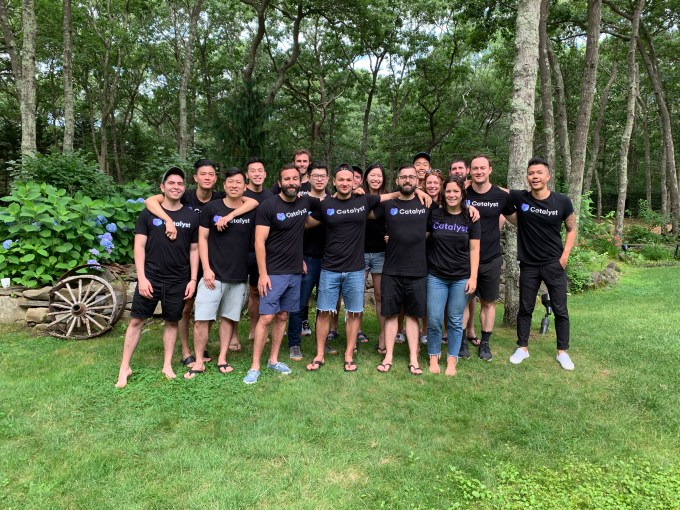
When we last spoke with Catalyst a year and a half ago, the firm had just raised its first seed round and was just the company’s co-founders — brothers Edward and Kevin Chiu — and a smattering of employees. Now, the company has 19 employees and is targeting 40 employees by the end of the year.

Team Photo

In that time, the product has continued to evolve as it has worked with its customers. One major feature of Catalyst’s product is a “health score” that determines whether a customer is likely to grow or churn in the coming months based on ingested data around usage. CEO Chiu said that “we’ve gotten our health score to be very very accurate” and “we have the ability to take automated action based on that health score.” Today, the company offers “prefect sync” with Salesforce, Mixpanel, Zendesk, among other services, and will continue to make investments in new integrations.

One high priority for the company has been increasing the speed of integration when a new customer signs up for Catalyst. Chiu said that new customers can be onboarded in minutes, and they can use the platform’s formula builder to define the exact nuances of their health score for their specific customers. “We mold to your use case,” he said.

One lesson the company has learned is that as success teams increasingly become critical to the lifeblood of companies, other parts of the organization and senior executives are working together to improve their customer’s experiences. Chiu told me that the startup often starts with onboarding a customer success team, only to later find that C-suite and other team leads have also joined and are also interacting together on the platform.

An interesting dynamic for the company is that it does its own customer success on its customer success platform. “We are our own best customer,” Chiu said. “We login every day to see the health of our customers… our product managers login to Catalyst every day to read product feedback.”

Since the last time we checked in, the company has added a slew of senior execs, including Cliff Kim as head of product, Danny Han as head of engineering, and Jessica Marucci as head of people, with whom the two Chius had worked together at cloud infrastructure startup DigitalOcean.

Moving forward, Chiu expects to invest further in data analysis and engineering. “One of the most unique things about us is that we are collecting so much unique data: usage patterns, [customer] spend fluctuations, [customer] health scores,” Chiu said. “It would be a hugely missed opportunity not to analyze that data and work on churn.”