Year: 2019

25 Jul 2019

Alibaba to help Salesforce localize and sell in China

Salesforce, the 20-year-old leader in customer relationship management (CRM) tools, is making a foray into Asia by working with one of the country’s largest tech firms, Alibaba.

Alibaba will be the exclusive provider of Salesforce to enterprise customers in mainland China, Hong Kong, Macau, and Taiwan, and Salesforce will become the exclusive enterprise CRM software suite sold by Alibaba, the companies announced on Thursday.

The Chinese internet has for years been dominated by consumer-facing services such as Tencent’s WeChat messenger and Alibaba’s Taobao marketplace, but enterprise software is starting to garner strong interest from businesses and investors. Workflow automation startup Laiye, for example, recently closed a $35 million funding round led by Cathay Innovation, a growth-stage fund that believes “enterprise software is about to grow rapidly” in China.

The partners have something to gain from each other. Alibaba does not have a Salesforce equivalent serving the raft of small-and-medium businesses selling through its e-commerce marketplaces or using its cloud computing services, so the alliance with the American cloud behemoth will fill that gap.

On the other hand, Salesforce will gain sales avenues in China through Alibaba, whose cloud infrastructure and data platform will help the American firm “offer localized solutions and better serve its multinational customers,” said Ken Shen, vice president of Alibaba Cloud Intelligence, in a statement.

“More and more of our multinational customers are asking us to support them wherever they do business around the world. That’s why today Salesforce announced a strategic partnership with Alibaba,” said Salesforce in a statement.

Overall, only about 10% of Salesforce revenues in the three months ended April 30 originated from Asia, compared to 20% from Europe and 70% from the Americas.

Besides gaining client acquisition channels, the tie-up also enables Salesforce to store its China-based data at Alibaba Cloud. China requires all overseas companies to work with a domestic firm in processing and storing data sourced from Chinese users.

“The partnership ensures that customers of Salesforce that have operations in the Greater China area will have exclusive access to a locally-hosted version of Salesforce from Alibaba Cloud, who understands local business, culture and regulations,” an Alibaba spokesperson told TechCrunch.

Cloud has been an important growth vertical at Alibaba and nabbing a heavyweight ally will only strengthen its foothold as China’s biggest cloud service provider. Salesforce made some headway in Asia last December when it set up a $100 million fund to invest in Japanese enterprise startups and the latest partnership with Alibaba will see the San Francisco-based firm actually go after customers in Asia.

25 Jul 2019

Toyota invests $600 million in Didi, with the two setting up a new joint venture for driver services

Didi Chuxing announced today that it has received new investment totaling $600 million from Toyota Motor Corporation. As part of the deal, the two companies will also set up a joint venture with GAC Toyota Motor to provide vehicle-related services to drivers on Didi’s ride-sharing platform. GAC Toyota itself is a joint venture between Toyota and GAC Group, one of China’s largest automakers.

Nikkei Asian Review first broke news of the deal at the end of May, reporting that Toyota was considering a $550 million investment in Didi and setting up a new mobility-services company in China.

Didi and Toyota announced last year 2018 that it would work together on services that use technology developed by Toyota for its mobility and vehicle-sharing platform, which includes autonomous driving software, a fully electric battery and the “e-Palette,” or modules that can be used to build autonomous vehicles of different sizes, ranging from small ones for deliveries to passenger buses.

Toyota has also backed other vehicle-sharing companies, including Uber and JapanTaxi.

DiDi’s partnership with Toyota is one of several partnerships it has made with car manufacturers and other vehicle-related companies as part of its D-Alliance, including Toyota, Volkswagen, Renault-Nissan-Mitsubishi, as well as major Chinese automakers like FAW, Dongfeng and GAC, with the intention of expanding its reach beyond its ride-hailing services by creating a platform that uses new energy, AI-based and mobility technology.

Didi recently announced that it will open its ride-hailing platform to third-party service providers as part of agreements with FAW, Dongfeng and GAC, three of China’s largest auto makers.

25 Jul 2019

Samsung readies Galaxy Fold for September launch

When it was unveiled on stage, the Galaxy Fold was heralded as the next big thing. Samsung seeded units to reviews and prepared for launch. And then a funny thing happened on the way to a smartphone paradigm shift: it started breaking. Multiple review units were sent back to Samsung with busted screens.

It was a small sample size, to be sure. First Samsung blamed reviews themselves. Ultimately, however, there was enough concern to cause the company to pump the breaks entirely. Now, nearly three months to the day after the device was set for release, Samsung’s finally got concrete information on the long delayed foldable. The company just announced a September launch date for the device. No concrete date just yet — but at least that’s better than the “coming weeks” line we’ve been hearing about timeframe for a few months now. 


25 Jul 2019

SpaceX untethered StarHopper ‘hop’ test flight aborted after engines briefly flare

SpaceX encountered a snag in an attempted test key to the development of its next-generation Starship spacecraft. Specifically, the StarHopper sub scale demonstration and testing craft it’s using to work on the Starthip’s propulsion system fails to undertake its first untethered test flight at a testing site in Boca Chica Beach in Texas,

The plan was to have the demonstration craft take off and fly to a height of 20 meters before returning to Earth, all under tis own power and directed by its own guidance system. Instead, It seemed to fire rockets and then was engulfed in smoke, before venting fire out of the top of the test craft for a few minutes prior to extinguishing, with StarHopper looking relatively unscathed. We’re still waiting on official confirmation of what happened from SpaceX, but they characterized this as an “abort” on a livestream of the test.

Last week during a static test fire, the StarHopper vehicle was engulfed in a large ball of flame. This wasn’t a planned event, but did not result in significant damage to the spacecraft, SpaceX later said.

StarHopper succeeded in flying its first tethered flight at the beginning of April, and has undergone further testing since then to prepare for its untethered trip. SpaceX CEO Elon Musk said earlier this month that a successful untethered test would pave the way for a full presentation of SpaceX’s Starship spacecraft plans at the end of July, but the test has encountered a few issues since then.

The reason SpaceX and other companies run tests like these is to identify potential issues early in the development process, so it’s good to see them making progress even if that doesn’t mean a “success” in the traditional sense of actually having achieved untethered flight.

SpaceX designed Starship will be fully reusable once complete, unlike Falcon 9 and Falcon Heavy, so it’ll reduce the cost of launches, and the company hopes to eventually use it to fly all its missions, though it’ll keep Falcon 9 and Falcon Heavy in service for its paying customers as long as there’s appetite.

25 Jul 2019

9 reasons the Facebook FTC settlement is a joke

The FTC just announced the details of its settlement agreement with Facebook over years of privacy practices in violation of a previous order. To say the settlement is favorable to Facebook, even with the record $5 billion penalty, is an understatement; the company’s lawyers are probably popping champagne right about now. Here’s why.

1. $5 billion is a laugh

$5 billion may sound like a lot, but in this context it is simply not a meaningful amount. Leaving aside that Facebook at this point probably makes that in a month, it simply does not correspond to the harm done or rewards reaped.

It’s highly likely that Facebook’s “unjust enrichment,” made as a result of the forbidden user data collection in which it engaged, is more than $5 billion. As Commissioner Rohit Chopra says in his dissenting statement, “breaking the law has to be riskier than following it.” In other words, you shouldn’t be able to steal $100, then pay a fine of $50 to get off the hook.

“The fact that Facebook’s stock value increased with the disclosure of a potential $5 billion penalty may suggest that the market believes that a penalty at this level makes a violation profitable,” wrote Commissioner Rebecca Kelly Slaughter in her own dissent.

In the case of Google, which in spirit is similar to this one, the settlement with the FTC amounted to several times the company’s unjust enrichment. Why isn’t that the case with Facebook? Because the investigation didn’t look into it.

2. The investigation was rushed and incomplete

No one likes it when serious investigations of wrongdoing (not that Facebook officially admits to any) drag on for too long, since in the meantime the wrongdoing may very well continue. But this case isn’t a simple one where Facebook may have violated one or two of the FTC’s prohibitions for a short period of time in 2014. The company ignored the government-ordered restrictions systematically for years, meriting an investigation on a similar scale.

Instead of getting deep into the questions of who was responsible, how much money was made, whether public statements were misleading, the extent of public harm, etc, the investigators opted to quickly establish a pattern of violating behavior and slap the company with a nice round number. (Let’s hope the antitrust investigation announced today is a bit more thorough.)

The brevity and limitations of the investigation are evident from the fact that…

3. They didn’t grill any executives

“The Commissioners supporting this outcome do not cite a single deposition of Zuckerberg or any other Facebook officer or director,” writes Chopra. Although there may have been off-record conversations or letters from execs in response to questions sent by investigators, they did not put Zuckerberg or Sandberg or any other big players in the hot seat. Seems fundamental when the investigation alleges complicity at the highest levels, right?

But not only were no executives put to the question…

4. There are no charges or consequences for them either
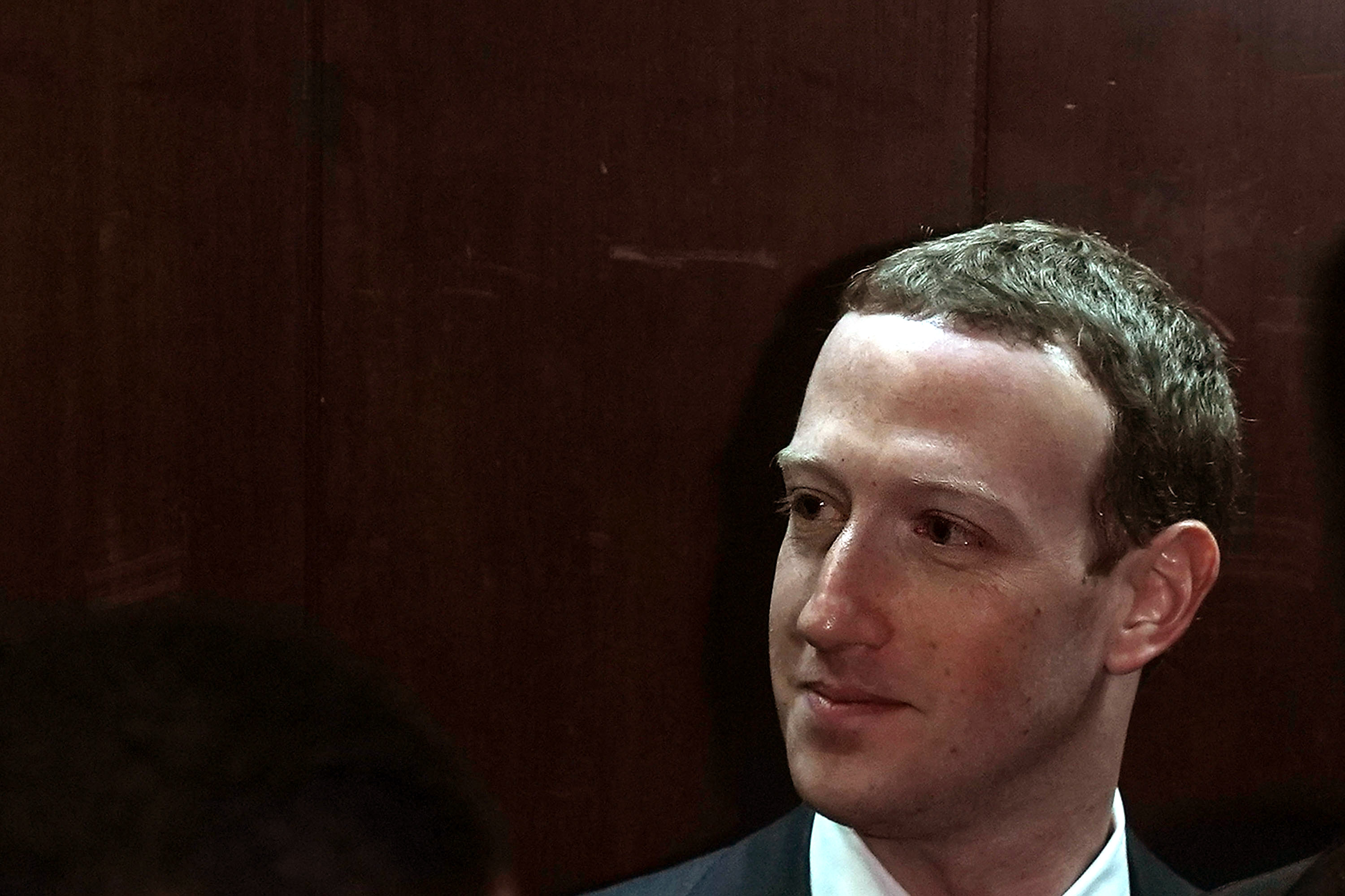
“I started Facebook, and at the end of the day I’m responsible for what happens on our platform,” wrote Mark Zuckerberg last year during the fracas surrounding his questioning by Congress. Nor is that only his opinion. There is a great deal of precedent for leveling additional, complementary charges at executives alongside those aimed at the company. They might not even need testimony to do it:

“I believe there is already sufficient evidence, including through public statements, to support a charge against Mark Zuckerberg for violating the 2012 order,” writes Chopra, and Commissioner Slaughter concurred. Even if that weren’t the case, they could state with certainty that leadership, if it was not directly complicit in rulebreaking, at least failed in their responsibility to prevent it.

Going after individuals, however, may involve separate fact-finding work, expensive and time-consuming litigation, and of course the risk that after all that, the judge will rule against the FTC and officially exonerate the defendant and set an unsavory precedent. They may have decided that risk was too great, but surely if some revealing information comes to light tomorrow individual charges may result.

About that…

5. You get immunity! And YOU get immunity!

It’s ordinary in settlements like to this to “release” companies from claims that they violated an agreement — like a plea bargain where you get probation and no record in exchange for a fine and community service. But the Facebook settlement gives both the company and its executives blanket immunity, not just for any violations the FTC has claimed, but for any violations it hasn’t claimed.

In other words, it’s giving Facebook a blank slate not only for violations it definitely did, but for any it might have secretly done between 2012 and 2018. “A release of this scope is unjustified by our investigation and unsupported by either precedent or sound public policy,” writes Slaughter. “I have not been able to find a single Commission order — certainly not one against a repeat offender — that contains a release as broad as this one,” concurs Chopra.

It’s extraordinary that a repeat offender that has shown a disdain for the FTC’s authority would get such comprehensive, top-to-bottom immunity. This isn’t just a plea bargain, it’s a plenary indulgence.

6. The privacy measures are honor system
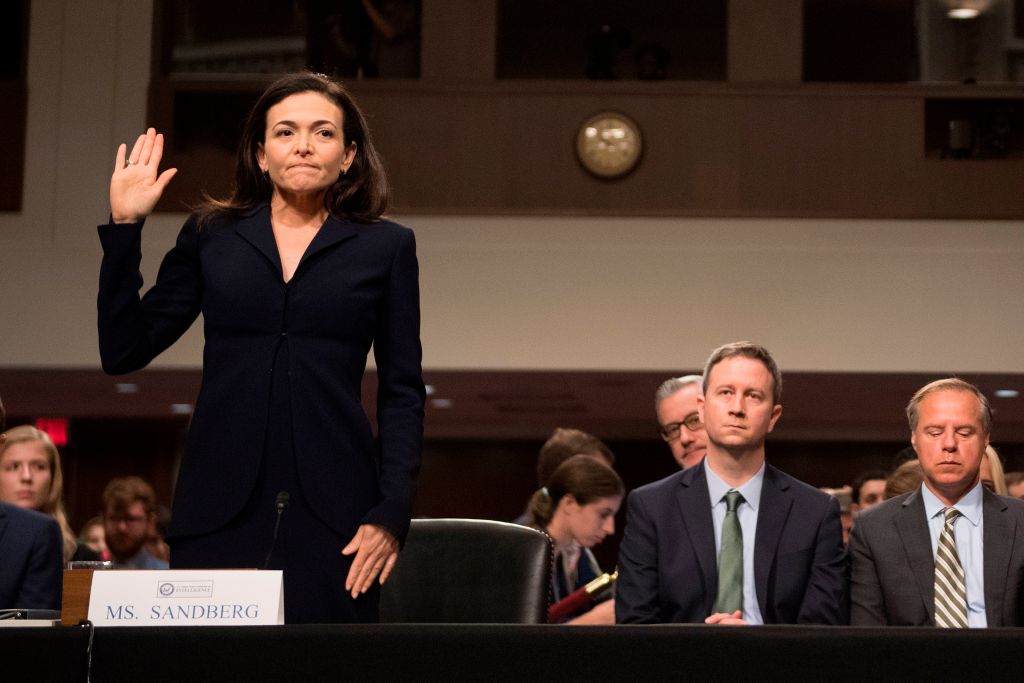
This was perhaps the FTC’s best chance to lay down strong rules as to what Facebook can and can’t do with user data going forward — especially considering the previous ones were shrugged off. Instead, apart from a few new rules like better notification of facial recognition systems, it basically just told Facebook it can do what it wants as long as it files the paperwork.

The settlement requires Facebook to document lots of things. If a new product is a potential risk, Facebook has to write a report on what data will be collected, how it will notify users, whether they can opt out, and how it is (and isn’t) planning to reduce that risk. Nowhere does the FTC spell out what constitutes unreasonable risk, minimum notification or opt-out requirements, or whether a product or strategy (like absorbing WhatsApp) is automatically suspect.

“It is akin to if federal regulators, instead of ordering automakers to install seatbelts, ordered them to document the pros and cons of installing seatbelts, and to decide for themselves whether it would be worthwhile,” writes Chopra.

As long as it files its paperwork, Facebook is free to decide what constitutes risk, damage to users, and how it should handle those things. It’s a bit like asking a bank robber to write a journal. But even if someone reads it and finds something objectionable…

7. The oversight is toothless

Facebook must establish a Privacy Committee, Compliance Officers, and an Independent Assessor to make sure that the rules it sets for itself are sufficient and being followed sufficiently. Unfortunately, what they do is a whole lot of reviewing, certifying, and briefing, and no doing.

The Compliance Officers sign off on the privacy program, to be sure, but they have few specific goals, like prevent this or ensure that. The Assessor also lacks authority, so if they decide the privacy program is not working out, they simply register their complaint and wait for Facebook to justify itself.

The “independent” committee’s makeup will be highly affected by the powers that be at Facebook, which have enormous voting power and will be able to make it hard on any troublesome members. Even if they couldn’t, the committee has no power over management — it’s just another Facebook-issued stamp for Facebook-written paperwork.

8. Fancy meeting you here
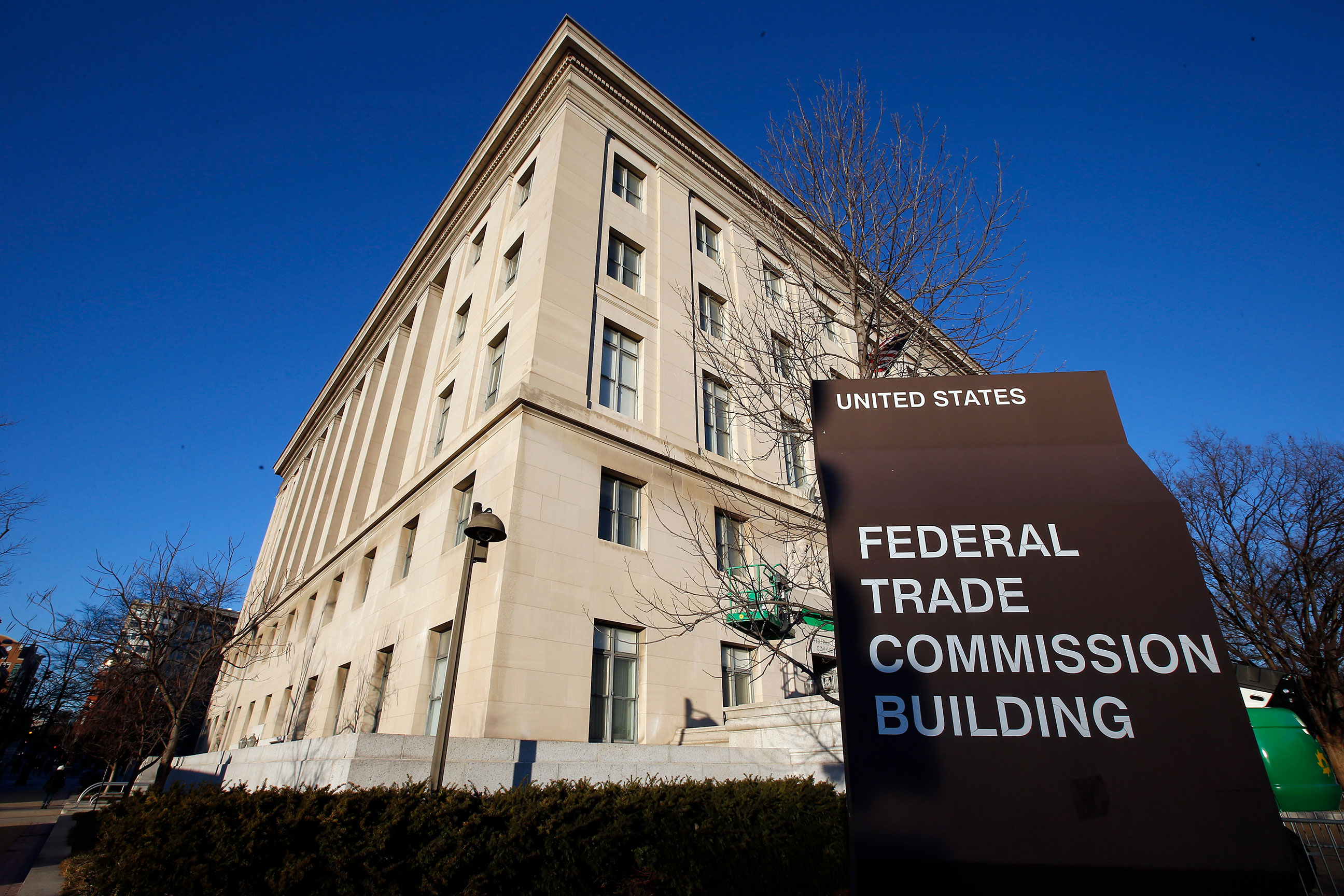
Federal Trade Commission building

Not pictured: revolving door at front entrance

As The Hill’s Harper Neidig points out: Sean Royall, Facebook’s head counsel in these proceedings, was deputy director at the FTC’s Competition Bureau (not the Bureau of Consumer Protection, which led this action) from 2001-2003. His boss at the bureau then was Joseph Simons — the current chairman of the FTC.

It’s probably just a coincidence.

9. It changes nothing, and endorses Facebook’s continued monetization of mass surveillance

Nothing in this order challenges the fundamental problem that over the last decade has increasingly caused friction between Facebook and both its users and (supposed) regulators: that its business model is predicated on mass collection of personal data on its users, which it distills then sells to advertisers.

That’s a business model that should give any consumer protection regulator pause, and yet this settlement is a tacit endorsement of it. The order really amounts to little more than additional paperwork for Facebook to fill out while it pursues its original course without any divergence.

To be fair, the FTC is a reactive agency and as such is limited by in how much it can really require proactively. But it doesn’t seem like they were testing those limits today. The decision not to litigate, the unimaginative penalty amount, and the eye-popping immunity grant suggest the agency is working comfortably within them and just wanted to get this thing out the door.

The requirements of the settlement were barely even considered on today’s earnings call, on which there appeared to be an understanding that it wouldn’t affect much if anything at all. Even the fear that Zuckerberg voiced earlier today that it would require hiring a thousand people who might otherwise be working on new products (a questionable claim, incidentally) went unaddressed.

This was an opportunity for the FTC to demonstrate that the U.S. is a venue where global internet companies like Facebook can still be held accountable for their actions. It was made clear today that not only will a big check change that, but that the check doesn’t even have to be that big.


24 Jul 2019

Robinhood stored passwords in plaintext, so change yours now

Investment and stock trading app Robinhood stored some user credentials, including passwords, in plaintext on internal systems, the company revealed today. This particularly dangerous security misstep could have seriously exposed its users, though it says that it has no evidence the data was accessed improperly. Better change your password now.

Sensitive data like passwords and personal information are generally kept encrypted at all times. That way if the worst came to pass and a company’s databases were exposed, all the attacker would get is a bunch of gibberish. Unfortunately it seems that there might have been a few exceptions to that rule.

A number of users, including CNET’s Justin Cauchon, received the following notice from Robinhood in an email:

When you set a password for your Robinhood account, we use an industry-standard process that prevents anyone at our company from reading it. On Monday night, we discovered that some user credentials were stored in a readable format within our internal systems. We wanted to let you know that your password may have been included.

We resolved this issue, and after thorough review, found no evidence that this information was accessed by anyone outside of our response team.

It seems that if it were truly “industry-standard,” then the rest of the industry would also have stored passwords in plaintext. Come to think of it, that would explain a lot, since Google, Facebook, Twitter, and others have all managed to make this same mistake recently.

A Robinhood representative stressed the rapidity of the company’s response to the issue, though they would not comment on how it was first discovered, nor how long the data was stored that way, nor what deviation from these industry norms caused the problem, nor how many users were affected, nor whether answers to these questions would ever be forthcoming. They did offer the following statement:

We swiftly resolved this information logging issue. After a thorough review, we found no evidence that this customer information was accessed by anyone outside of our response team. Out of an abundance of caution, we have notified customers who may have been impacted and encouraged them to reset their passwords. We take our responsibility to customers seriously and place an immense focus on working to ensure their information is secure.

If you got an email, you were among the unlucky few many majority handful some, so change your password. If you didn’t get an email… also change your password. You can never be too careful.

24 Jul 2019

Tesla focuses on service with 25 new service centers in Q2, rate of new openings to ‘increase’

Tesla is set to ramp up the rate at which it opens new service facilities aggressively, according to CEO Elon Musk’s guidance on the company’s Q2 2019 earnings call. In total, Tesla opened 25 new service centers during the quarter, and added 100 new service vehicles to its existing fleet – which is in contrast to an earlier statement made by Musk that they’d look to close most of their physical stores in an effort to reduce costs.

Notably, Musk referred to the locations only as ‘service centers’ during his comments on the subject on Wednesday’s earnings call, and never as stores – asked about ‘retail locations,’ he corrected the analyst asking and again said that what Tesla opened were ‘service centers’ specifically. He also emphasized the importance of ensuring that service scales in line with the size of Tesla’s overall fleet of vehicles in active use. Musk mentioned that the number of Tesla cars on the road doubled in the last year alone, meaning its seeing exponential growth in terms of the total size of the fleet it needs to service.

“Service scales not just with new production, but as the whole fleet sales,” Musk said, adding that they want to grow their service capabilities in a way that’s responsible when it comes to cost, but that that is “quite difficult” when it comes to the rate at which the company’s sales and shipments are increasing.

Even so, Tesla is taking on still more of its service work itself, rather than outsourcing to external vendors.

“We’ve in-sourced a great deal of the collision repair activities, which I think had quite a good impact on customer happiness,” Musk said. “This will continue in the months to come.” Musk also noted that the company is working hard to reset its processes in order to ensure that parts are available on-hand when and where needed for service, which is a gap that has prompted customer complaints in the past.

The Tesla CEO said that he meets with the Tesla service team “multiple times a week” to “get updates on the reliability of the vehicle,” noting the the best service possible is “no service” because that would represent maximum reliability (and of course, lowest possible ongoing costs for Tesla). He also said that the’ve seen “fewer and fewer service visits” “for the most recent cars that we’re building, so we’re on a good trend there.”

Tesla Head of Investor Relations Martin Viecha also noted that the number one reason for service visits is actually people looking to learn how to use Autopilot, and in general education represents a high percentage of visits.

Tesla CFO Zach Kirkhorn addressed a question about the service center expansion later in the call adding that the company is pursuing a path of systematic “focus on service and supercharging, as opposed to a retail presence.” He also noted that he believes efforts to improve their parts distribution, with a focus on ensuring that parts are available on-hand in inventory at the service centers where they’re needed will actually help bring down costs overall vs. housing them centrally or ordering on-demand from suppliers and Tesla’s own fabrication facilities.

24 Jul 2019

How startups can make the open office work, for employers and employees

The open office plan was intended to help collaboration and productivity across employees and teams while better utilizing less square feet per person. But the results haven’t always proven to be very successful, based on years of analysis.

Yet it is still the norm for tech companies of all sizes, and will likely stay that way.

Based on my years of experience working with hundreds of companies, I’ll lay out a basic framework below to help you think through how to adapt an open-office situation to best meet your needs.

I’ll also walk you through the example of a growing venture-backed startup that’s staffing up in one of the tougher office markets in the world: Manhattan.

But first, take a look at the data. Studies have shown that open floor plans can inhibit productivity and health. Open office workers take 62% more sick days than those in private offices, and a mere three hours of steady noise can cause measurable distress and a decrease in motivation. Face-to-face communication has been observed to actually decrease in open plan environments, with a measurable negative impact on productivity.

Considering that 70% of Americans today work in an open office, the issue of constant noise and distraction is ubiquitous across the country. The result is a bad rap—one doesn’t need to look very far to find one of the many articles online criticizing the design.

24 Jul 2019

TravelPerk launches flexible refunds to help businesses save on cancelled trips

Fresh from topping up its Series C with a whopping $60M, business travel booking platform TravelPerk is launching a new product it hopes will make customers keep singing its praises by shaving further friction off of programming work trips.

The Barcelona-based SaaS startup has been on a mission to make booking business travel suck less since 2015 — bagging around $133M in VC in the process. It’s now saying it wants to surpass the flexibility and convenience of consumer travel, which is the driving force behind today’s launch according to co-founder and CEO Avi Meir.

“The offer is actually very simple,” he says. “We want to give business travelers unprecedented flexibility to cancel and get a refund on any booking — hotels, trains, airbnb, cars, and flights — without any hassle.”

TravelPerk’s new feature — called FlexiPerk — lets users cancel all legs and elements of their trip and obtain a full refund, minus a 10% fee added to each booked element (though TravelPerk says 90% is the minimum guaranteed refund; if it can get more it pledges to pass that back to the customer too).

Meir contrasts that with what he says is the typical choice for businesses saddled with legacy travel booking platforms: Paying over the odds for a flexible fare (he claims that on average these cost 60% more than standard fares), or being forced to go through “complex and time-consuming refund processes”.

So, basically, for a tenth of the price of the trip the FlexiPerk promise is full flexibility to cancel — even just a couple of hours prior to when you were supposed to leave.

Although — one restriction — users cannot pick and choose when they want to to add a refund buffer to a trip.

Instead they have to sign up for a FlexiPerk contract, which requires seven days written notice to cancel. The contract commits them to paying the 10% fee on every booking component that’s refundable. 

So, essentially, the product adds a 10% premium to the price of all booked trips for users not to have to worry if they need to move or cancel some of their travel.

Meir describes the process of getting a refund on a FlexiPerk booking as “super straightforward”, saying users can cancel from the app in just “two clicks”. Refunds are processed automatically by the platform.

“By automatically making every booking refundable, at a fraction of the cost, FlexiPerk solves [the cost vs flexibility] problem for good,” is the grand claim for the product — which TravelPerk also touts as “something no other provider has offered before”. 

Though it’s perhaps better thought of as akin to paying for a separate business travel insurance product that will refund you if you need to cancel trips (though the latter likely with restrictions, based on the reasons for canceling).

TravelPerk also claims there’s no fine print further complicating the product offer. Though there are a few variables to bear in mind, depending on the trip elements booked — so, for instance, you do need to have not already checked into your flight to get the refund.

“You can cancel for any reason up to two hours before your departure, or until you have checked into your flight, hotel stay or car rental,” says Meir. “For hotels, we require that refund requests come before 4 p.m. local time on the first day of the stay.

“There are no limitations to the number of cancellations a traveler can make. As long as you booked a trip as a ‘FlexiPerk Trip’, you can cancel it. We do limit you to €5,000 per passenger, and €30,000 refund per trip.”

He says the goal is to serve businesses’ needs by removing the rigidity which has characterized legacy business travel booking platforms. And essentially they’re doing that by splitting the costs associated with refunds and cancelations via a universal 10% premium applied to all bookings.

“One of the biggest pain-points for business travel is the lack of flexibility. GBTA/Sabre listed it as the third most influential aspect of booking travel for EMEA travelers. Most of us throughout the company have seen first-hand the stress and expense of unpredictable schedules,” Meir tells TechCrunch.

“Additionally, FlexiPerk is a direct response to our customer’s wants and needs. As we’ve grown, we’ve been able to analyze more and more travel behaviour data, and the high amount of cancelled/rearranged trips (20%) along with the number of ‘Flexi’ fares booked, but never changed, stuck out. That’s where the idea for FlexiPerk came from.”

“Traditional travel has always been anything but flexible,” he adds. “From complex airline fee structures to unfriendly refund policies, the industry is built around the idea that travel plans will stay the same. But that’s just not how business works, particularly in the kind of fast-growing businesses that are our core market.

“Changes or cancellations are often unavoidable in a fast-paced organisation: in fact, our own data tells us that more than 20% of business trips booked are subsequently postponed, rearranged or cancelled.”

Data is key to TravelPerk being able to offer a fully flexible refund product, according to Meir — lots and lots of data fed into machine learning algorithms to determine the pricing structure for FlexiPerk.

“Our strategy has always been to first build the world’s largest business travel one-stop-shop, so that we process every business trip for our customers. Because we have trip data for millions of trips, we’re able to group them together, and to use machine learning to very accurately predict the risk of cancelation or change, while taking each ticket’s cancelation and change conditions/penalties into account.

“FlexiPerk is so significant because it’s only possible to deliver this kind of product if you’re selling literally millions of trips per year, and using machine learning to build an accurate model to price it correctly.”

Based on its own data, TravelPerk says that more than 20% of business trips are subsequently postponed, rearranged, or cancelled.

So as its customers weigh up the cost vs benefits of signing up for FlexiPerk the suggestion is they’ll make savings by paying the small added fee.

Indeed, TravelPerk claims beta customers have seen “significant” savings from using the product — saying on average they’ve saved 26% (vs paying for flexible fares and shelling out for last-minute cancellation fees).

The FlexiPerk product is launching today — as a wait-list for signups to what’s still a beta product.

This follows a period of closed testing with a handful of existing TravelPerk customers, including Sumup and Picnic. In supporting statements in a press release about the launch the two praised FlexiPerk for saving their businesses time and worry related to travel fees and refund processes.

“Now we can book anything with the peace of mind that we’ll get our money back if plans change,” said Picnic people associate, Elise Baeriswyl. “Using FlexiPerk has meant that we can focus on continued innovation in the financial space, rather than worrying about the cost of changing our travel plans,” added Sumup’s head of ops, Matabato Kimani.

“We’re rolling it out to as many people and markets as fast as we can,” Meir also told us of FlexiPerk’s availability. “We expect to move out of beta later this year.”

24 Jul 2019

Tesla co-founder and CTO JB Straubel stepping down

Tesla co-founder and CTO JB Straubel is stepping down from his day-to-day role as an executive at at the automaker, CEO Elon Musk announced during a conference call with analysts Wednesday.

Drew Baglino, vice president of tech, will take over his duties, Musk said.

Straubel will stay on a senior advisor role.

“I’m not disappearing, and I just wanted to make sure that people understand that this was not some, you know, lack of confidence in the company or the team or anything like that,” Straubel said.

Developing