Year: 2019

22 Jul 2019

Apple reportedly in talks to acquire Intel’s modem business for $1B+

Apple may have wrote a check and signed a deal with Qualcomm in order to ensure a 5G iPhone wasn’t late to market, but it’s clear the Cupertino hardware giant wasn’t interested in burying the hatchet too deep.

Apple is in “advanced talks” to buy Intel’s smartphone modem business for “$1 billion or more” according the a new report in The Wall Street Journal. Last month, The Information detailed that Apple was in talks to buy part of Intel’s modem business.

This latest report details that an agreement “could be reached in the next week” if the talks don’t fall apart.

This deal could potentially bring Apple hundreds of engineers and key patents from Intel that would allow them to build out technologies that they are currently licensing from Qualcomm for their cell network-connected mobile devices.

Any deal wouldn’t affect the near-term nature of Apple’s relationship with Qualcomm, as part of the companies’ settlement included a six-year licensing agreement, though full details of that agreement were not disclosed.

Apple has worked with Intel’s modem team closely, especially during their legal skirmishes with Qualcomm though Intel’s team was reported to be falling behind in scaling its 5G modem development.

An Apple spokesperson did not comment on the report.

22 Jul 2019

The PureCam Connected Car Security System is a dashcam with extras

Thanks to a rash of YouTube videos of traffic stops, wild crashes, and wacky antics, dashcams are becoming more and more popular with drivers. But does the world need one that shoots at 1080p and beams every minute of your drive back to a central storage device and can work as a Wi-Fi hotspot?

PureGear thinks so.

Their latest camera, the PureCam Connected Car Security System, shown at CES 2019, features front and back-facing cameras and 4G LTE connected. In the unit we tested, it used T-Mobile for data transfer.

The device connects to your car’s OBD port, a diagnostics port that sends data to the camera and powers it. It has a full 1080p camera in front, a small VGA screen, and a 720p rear-facing camera. It mounts to the window via a suction cup. It also can shoot in the dark and will sense when someone is breaking into your vehicle and begin recording.

This last part is critical. Because it is always connected, the PureCam will send footage of crashes and break-ins to the cloud. In this way, you have a video record inside and outside of the car.

The system requires a data plan so you’ll have to head down to the cellphone shop to pick up a spare SIM card, but it can also record footage to the included 16GB card.

The kit costs $249.99 and includes three months of wireless data and 7GB of cloud storage for 12 months. Because it has its data provider, you can connect up to three devices to the Purecam’s hotspot.

This camera is mostly designed for peace of mind. Because the screen is relatively small and automatically dims while driving, you won’t notice the system until you need it. Because it uses the OBD port you don’t have to run cables to a cigarette lighter power port or USB port, thereby freeing things up for phones and the like. Finally, because it wakes up when your car is parked, it adds an extra layer of security.

The PureCam is surprisingly easy to install – you have to find your OBD port – but you do need a modern car and be willing to spend a bit on the data plan. While it’s not a perfect system, it’s one of the cleverest and most useful dashcams we’ve tried.

22 Jul 2019

UK to toughen telecoms security controls to shrink 5G risks

Amid ongoing concerns about security risks posed by the involvement of Chinese tech giant Huawei in 5G supply, the UK government has published a review of the telecoms supply chain which concludes that policy and regulation in enforcing network security needs to be significantly strengthened to address concerns.

However it continues to hold off on setting an official position on whether to allow or ban Huawei from supplying the country’s next-gen networks — as the US has been pressurizing its allies to do.

Giving a statement in parliament this afternoon, the UK’s digital minister, Jeremy Wright, said the government is releasing the conclusions of the report ahead of a decision on Huawei so that domestic carriers can prepare for the tougher standards it plans to bring in to apply to all their vendors.

“The Review has concluded that the current level of protections put in place by industry are unlikely to be adequate to address the identified security risks and deliver the desired security outcomes,” he said. “So, to improve cyber security risk management, policy and enforcement, the Review recommends the establishment of a new security framework for the UK telecoms sector. This will be a much stronger, security based regime than at present.

“The foundation for the framework will be a new set of Telecoms Security Requirements for telecoms operators, overseen by Ofcom and government. These new requirements will be underpinned by a robust legislative framework.”

Wright said the government plans to legislate “at the earliest opportunity” — to provide the regulator with stronger powers to to enforcement the incoming Telecoms Security Requirements, and to establish “stronger national security backstop powers for government”.

The review suggests the government is considering introducing GDPR-level penalties for carriers that fail to meet the strict security standards it will also be bringing in.

“Until the new legislation is put in place, government and Ofcom will work with all telecoms operators to secure adherence to the new requirements on a voluntary basis,” Wright told parliament today. “Operators will be required to subject vendors to rigorous oversight through procurement and contract management. This will involve operators requiring all their vendors to adhere to the new Telecoms Security Requirements.

“They will also be required to work closely with vendors, supported by government, to ensure effective assurance testing for equipment, systems and software, and to support ongoing verification arrangements.”

The review also calls for competition and diversity within the supply chain — which Wright said will be needed “if we are to drive innovation and reduce the risk of dependency on individual suppliers”.

The government will therefore pursue “a targeted diversification strategy, supporting the growth of new players in the parts of the network that pose security and resilience risks”, he added.

“We will promote policies that support new entrants and the growth of smaller firms,” he also said, sounding a call for security startups to turn their attention to 5G.

Government would “seek to attract trusted and established firms to the UK market”, he added — dubbing a “vibrant and diverse telecoms market” as both good for consumers and for national security.

“The Review I commissioned was not designed to deal only with one specific company and its conclusions have much wider application. And the need for them is urgent. The first 5G consumer services are launching this year,” he said. “The equally vital diversification of the supply chain will take time. We should get on with it.”

Last week two UK parliamentary committees espoused a view that there’s no technical reason to ban Huawei from all 5G supply — while recognizing there may be other considerations, such as geopolitics and human rights, which impact the decision.

The Intelligence and Security committee also warned that what it dubbed the “unnecessarily protracted” delay in the government taking a decision about 5G suppliers is damaging UK relations abroad.

Despite being urged to get a move on on the specific issue of Huawei, it’s notable that the government continues to hold off. Albeit, a new prime minister will be appointed later this week, after votes of Conservative Party members are counted — which may be contributing to ongoing delay.

“Since the US government’s announcement [on May 16, adding Huawei and 68 affiliates to its Entity List on national security grounds] we have sought clarity on the extent and implications but the position is not yet entirely clear. Until it is, we have concluded it would be wrong to make specific decisions in relation to Huawei,” Wright said, adding: “We will do so as soon as possible.”

In a press release accompanying the telecoms supply chain review the government said decisions would be taken about high risk vendors “in due course”.

Earlier this year a leak from a meeting of the UK’s National Security Council suggested the government was preparing to give an amber light to Huawei to continue supplying 5G — though limiting its participation to non-core portions of networks.

The Science & Technology committee also recommended the government mandate the exclusion of Huawei from the core of 5G networks.

Wright’s statement appears to hint that that position remains the preferred one — baring a radical change of policy under a new PM — with, in addition to talk of encouraging diversity in the supply chain, the minister also flagging the review’s conclusion that there should be “additional controls on the presence in the supply chain of certain types of vendor which pose significantly greater security and resilience risks to UK telecoms”.

Additional controls doesn’t sound like a euphemism for an out-and-out ban.

In a statement responding to the review, Huawei expressed confidence that it’s days of supplying UK 5G are not drawing to a close — writing:

The UK Government’s Supply Chain Review gives us confidence that we can continue to work with network operators to rollout 5G across the UK. The findings are an important step forward for 5G and full fibre broadband networks in the UK and we welcome the Government’s commitment to “a diverse telecoms supply chain” and “new legislation to enforce stronger security requirements in the telecoms sector”. After 18 years of operating in the UK, we remain committed to supporting BT, EE, Vodafone and other partners build secure, reliable networks.”

The evidence shows excluding Huawei would cost the UK economy £7 billion and result in more expensive 5G networks, raising prices for anyone with a mobile device. On Friday, Parliament’s Intelligence & Security Committee said limiting the market to just two telecoms suppliers would reduce competition, resulting in less resilience and lower security standards. They also confirmed that Huawei’s inclusion in British networks would not affect the channels used for intelligence sharing.

A spokesman for the company told us it already supplies non-core elements of UK carriers’ EE and Vodafone’s network, adding that it’s viewing Wright’s statement as an endorsement of that status quo.

While the official position remains to be confirmed all the signals suggest the UK’s 5G security strategy will be tied to tightened regulation and oversight, rather than follow a US path of seeking to shut Chinese tech giants out.

Commenting on the government’s telecoms supply chain review in a statement, Ciaran Martin, CEO of the UK’s National Cyber Security Centre, said: “As the UK’s lead technical authority, we have worked closely with DCMS [the Department for Digital, Culture, Media and Sport] on this review, providing comprehensive analysis and cyber security advice. These new measures represent a tougher security regime for our telecoms infrastructure, and will lead to higher standards, much greater resilience and incentives for the sector to take cyber security seriously.

“This is a significant overhaul of how we do telecoms security, helping to keep the UK the safest place to live and work online by ensuring that cyber security is embedded into future networks from inception.”

Although tougher security standards for telecoms combined with updated regulations that bake in major fines for failure suggest Huawei will have its work cut out not to be excluded by the market, as carriers will be careful about vendors as they work to shrink their risk.

Earlier this year a report by an oversight body that evaluates its approach to security was withering — finding “serious and systematic defects” in its software engineering and cyber security competence.


22 Jul 2019

Onward raises $1.5 million to offer round-trip rides to older adults needing assistance

Uber and Lyft aren’t designed to transport people who need a little help getting out of the house or need someone to help get them from the doctor’s waiting room back to their home. While Uber, for example, has launched Uber Health to help patients get to their appointments, the drivers are not vetted with patient assistance in mind. This is where Onward comes in.

Onward, with $1.5 million in seed funding from Royal Street Ventures, Matchstick Ventures and JPK Capital, launched a few months ago in the San Francisco Bay Area to help seniors safely get from point A to point B. Unlike Uber and Lyft, Onward offers roundtrip, door-to-door rides and aims to provide freedom for older adults who may feel isolated, Onward co-founder Mike Lewis told TechCrunch.

The idea for Onward emerged from Lewis’ experience with his mother-in-law who had Alzheimer’s. It got him and his co-founder, Nader Akhnoukh, thinking about the idea of aging in place and how older people may feel isolated as they become unable to do the tasks they’ve spent their whole lives doing, like driving.

“The minute you can’t do that, it’s sad and scary,” Lewis said.

Onward has three types of customers: older adults who are no longer able to drive, someone who can’t drive for medical reasons (surgeries, eye exams, etc.) and caregivers who are unable to provide transportation to their loved ones.

Similar to Uber and Lyft, Onward drivers are 1099 contractors but a key difference is that they are paid hourly — at least $20 per hour. Currently, there are more than 25 drivers on board who are all trained in CPR, dementia, and have gone through a background check and car inspection.

Onward also ensures its drivers know how to fold wheelchairs, though, only some drivers have the ability to transport those in powered wheelchairs. This time next year, Onward expects to have hundreds of drivers. Lewis says he also expects the number of vehicles with the ability to transport people in powered wheelchairs to increase as the company grows.

For riders, they can expect to pay $35 per hour. The minimum charge for the trip is one hour, so this is definitely geared toward people who may need the driver to wait for them during a doctor’s appointment, for example. After the first hour, Onward charges by the minute.

That hourly fee gets riders round-trip rides with the driver waiting for you at the destination, door-to-door assistance at each stop and the ability to request favorite drivers.

Onward completed its first ride in March in the San Francisco Bay Area.  For the rest of the year, Onward plans to focus on San Francisco for the rest as well as one other launch market. To date, Onward has completed more than 500 trips.

22 Jul 2019

What Vidcon means for the future of social media platforms

This month marked the 10th annual VidCon, a digital content conference in Anaheim. VidCon is catered toward online creators, their fans and the brand marketers & entertainment companies that want to leverage their influence. The conference drew 75,000+ attendees last year (we’d guess it was even bigger this year!) with teens and tweens flying in from around the globe to meet their favorite online stars.

VidCon 2019 featured a rainbow slide, a terrifying snow cone/ice cream/cotton candy concoction called “The Unicorn,” and a giant Invisalign-branded gum and candy dispenser.

This was our second year at VidCon (read our recap of VidCon 2018 here). We’ve found there’s nothing quite like it if you want to understand teen culture, influencer marketing, and the future of social platforms, and are excited to share five of our key takeaways from the event. We’d love to hear from you about anything we missed — and subscribe to our weekly newsletter for more millennial and Gen Z insights.

TL;DR — here were our five main takeaways!

  1. TikTok is blowing up among Gen Z, and features much more diverse and “real” creators than other platforms. Brand marketers are still figuring out their place in the TikTok ecosystem, but some early adopters (like Chipotle) have had extremely strong results.
  2. Top creators are now talking openly about mental health, and how exhausting it is to constantly churn out unique and high-quality content. They’re encouraging new creators to seek more “stable” platforms (less algorithm-dependent) and try not to measure their self-worth in metrics.
  3. Creators are increasingly careful about brand partnerships, and many are choosing to launch their own products. Many creators have business managers to handle production, or can do it online reasonably easily. If done right, this yields higher revenue and a warmer reception from fans.
  4. Five years ago, digital creators aspired to be celebrities. Now celebrities aspire to be digital creators. Actors and athletes may soon be more famous among Gen Z for their digital work than for their “real jobs.”
  5. With new tech that democratizes content creation, everyone wants to be an influencer. VidCon has shifted from a pure fan event towards more of a strategic business conference, with aspiring influencers seeking tactical tips and new connections to grow their careers.

TikTok and a New Wave of “Authentic” Creators

Short-form video app TikTok, which hosts 15-second clips, was undoubtedly the star of VidCon — almost every TikTok panel was standing room only. Since launching in 2016, the app has grown to 500M monthly active users globally, far surpassing its predecessor, Musical.ly (which maxed out at 100M).

In contrast to perfectly curated Instagram feeds, the content on TikTok can be best described as “weird.” Videos are intended to induce a quick laugh or smile, often via comedy skits, dances, or odd skills that come in handy in TikTok’s “challenges.” At events like VidCon, where YouTubers travel with security and interact with fans through paid meet-and-greets, high-profile TikTokers are more accessible. They are also more diverse in apperance — many TikTokers look more like Billie Eilish than an Instagram model.

On the “Stars of TikTok panel,” only one of the six creators had hair that wasn’t bright blue or pink.

TikTok differentiates itself through a focus on authenticity — one of the company’s promo videos boldly claimed they want activists, not influencers. While YouTubers spend dozens of hours filming and editing, TikTokers say their work is more spontaneous. According to Chris Kerr of dance duo OurFire, “TikTok is all about living in the moment. Since it’s only 15 seconds, you just do it and put it up right away.” TikToker Andrea Okeke (“dreaknowsbest”) likes TikTok because she “doesn’t feel the need to fit in a box like I do on other platforms. I can just be Drea and they love me like that.” She purposefully keeps flaws in her TikTok videos for fans to find and share.

“People don’t realize the incredible diversity of the platform — all races, ages, careers. Firefighters, grandmas, nurses, 12 year olds. We see a lot of people who don’t have voices on other platforms.” — Vanessa Pappas, TikTok GM

The authenticity of TikTok also appeals to many brands trying to reach Gen Z. Chipotle senior digital manager Candice Beck said that when the company decided to incorporate more “relatable” content into their marketing strategy, they partnered with influencer David Dobrik on a TikTok #LidFlipChallenge that amassed 200M+ views. Chipotle had its top digital sales day ever after creating a “Dobrik” burrito. Other brands to check out on TikTok? Jimmy Fallon, the NBA, and the Washington Post.

Reaching a Breaking Point on Mental Health

The floodgates have opened for creators to talk about burnout and their struggles with mental health. In a panel on this topic, five creators swapped stories about having mental breakdowns after making it big on YouTube. Gabbie Hanna spoke about having panic attacks between takes of her videos, and collapsing in tears when she thought she wouldn’t meet her regular Wednesday upload timeline. Elle Mills said a frenetic schedule of constant tours and videos caused a “very public mental breakdown” less than a year after her ascent to stardom.

“It was hard for me because I felt like no one was going to watch, that everything I worked for was going to be taken away from me. That’s why a lot of YouTubers have breakdowns, they have that mentality.” — Elle Mills

Being a YouTuber may look easy and fun, but top creators have grueling schedules. Natalie Alzate, who has nearly 8M subscribers on her channel Natalies Outlet, works 18 hours a day to produce two videos every week. She warned aspiring creators that it’s “very taxing on your body,” and said that she eventually wants YouTube to be a hobby instead of her full-time job. Mikey Murphy, who started on YouTube at age 11, said that at 21 he is “out of ideas.” He referred to the YouTube standard of weekly videos as “unhealthy,” and advised young creators to ignore analytics because “it will crush you.”

Beyond the typical mean comments, creators who speak openly about mental health also feel pressure in representing a community of fans who face the same struggles. YouTuber Natalie Wynn (ContraPoints), who makes videos about topics like gender, race, and politics, said that her most angry comments come from fellow trans people — which is “really hard” to deal with. Because YouTube’s algorithms distribute her videos far beyond her own fans, she also feels a responsibility to make content that appeals to viewers with negative views of trans people — which means she has to adopt a playful and “non-threatening” tone even when discussing serious issues.

Creators Rethink #SponCon, Build Their Own Brands

Sponsored content has long been a tricky subject for creators — when they get big enough to start signing brand deals, many are accused of “selling out” or being “inauthentic.” Fans complain that they can’t trust a creator’s product recommendations or reviews if they’re being paid by the brand, leading some creators to disguise the fact that a post is sponsored (which is illegal).

We noticed a shift this year in how creators are thinking about sponsorships — many said they no longer consider a brand’s proposal unless they are already a genuine fan of the brand and their viewers know it. Sierra Schultzzie, a fashion YouTuber with 580k subscribers, said that her fans often tagged American Eagle in her posts because she talked about their jeans so frequently. When she signed a deal with the company, her viewers celebrated the fact that the brand “finally” sponsored her.

Sierra Schultzzie’s fans are receptive to her American Eagle sponsorship (and trust her endorsement of the products) because they know she loved the brand before she was paid.

Marketers have also had to get comfortable with giving up creative control of their campaigns. Creators know what kind of content will resonate, and don’t want to read a list of corporate talking points. Matt Nelson, the human behind WeRateDogs, did a Twitter campaign with Disney to promote the new Dumbo movie. He credits the campaign’s success to the fact that “Disney respected me as a creator enough to let me do my own posts with what I knew my audience wanted” — he “obsesses” over his analytics and knows what will perform well. He ended up getting 22k comments and nearly 70k likes on a post seeking dogs with ears like Dumbo.

Many creators are taking it a step further by launching their own brands. With new services that help anyone spin up a product line, this option is no longer limited to YouTube’s mega stars. 15-year-old Fiona Frills, who has 800k YouTube subscribers, said it was an easy decision to launch her own skincare line when she couldn’t find clean products on Sephora or Ulta for her acne. Shaun McKnight, whose wife runs the Cute Girls HairstyleYouTube channel (5.6M subscribers), said the family turned down lucrative hair brand deals for almost ten years because they eventually planned to launch their own brand.

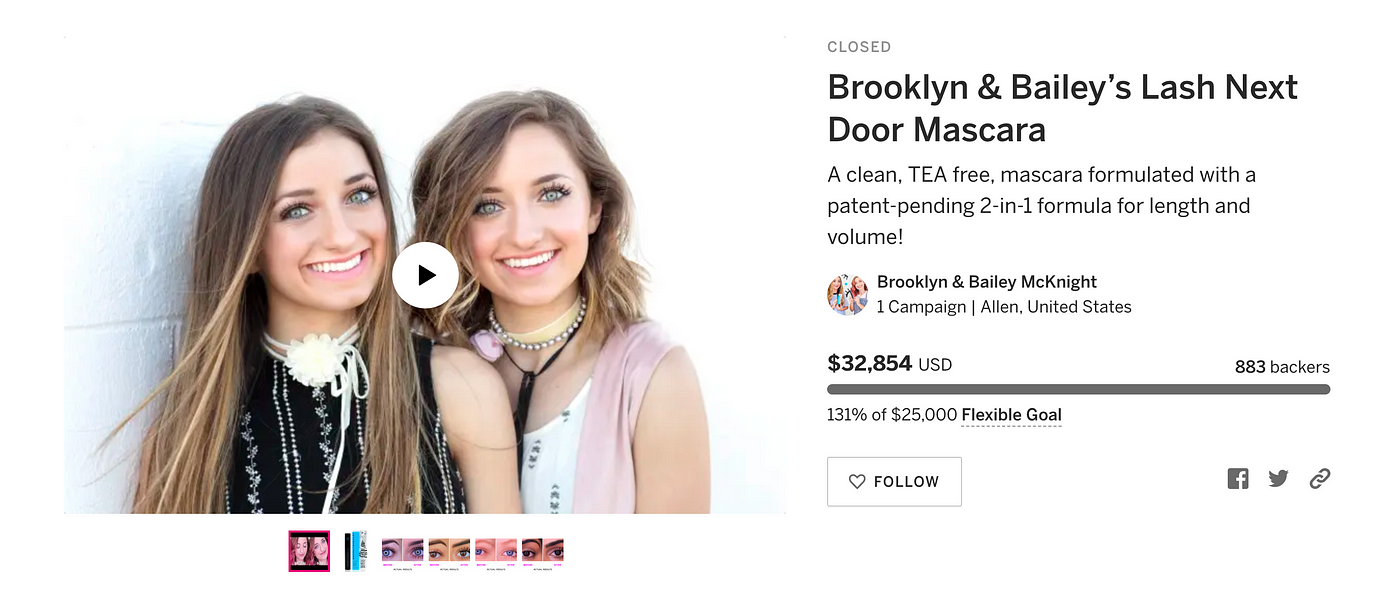
McKnight’s twin daughters Brooklyn and Bailey (6.2M subscribers) also launched their own mascara brand — which was developed in-house and partially funded on Indiegogo. They have since extended their brand to other beauty and accessory products, and have sold more than 250,000 sets of scrunchies. If an influencer can launch their own products, why would they take a partnership deal where they get a smaller cut of the revenue, have limited creative control, and get accused of “selling out”?

Celebrities Now Aspire to be Creators

Over the past five years, we’ve seen influencers replace “traditional” celebrities for Gen Z. This generation is watching significantly less linear TV than older generations and spending more time on their phones — the average Gen Zer watches 3.4 hours of online video every day. It’s not surprising that Gen Z’s biggest stars are more likely to emerge on YouTube, Instagram, or TikTok than on Disney or Nick. And we’re now seeing mainstream celebrities become digital creators to make themselves more Gen Z-friendly.

Will Smith is a perfect example of this — he created an Instagram account in late 2017 and a YouTube channel last year. He’s now a prolific poster, participating in viral teen challenges and earning the title “King of Instagram.” Professional athletes are also making use of social media to grow their younger fan base. Asani Swann, who leads Carmelo Anthony’s business strategy team, said that Anthony spends time on YouTube watching “a lot of things that kids watch.” He’s constantly asking himself, “How are the kids consuming content? He wants to figure out what the next move is.”

In Will’s Instagram post celebrating 10M followers, he noted that he avoided social media for most of his career because “in the past, to be a movie star you needed mystery and separation.”

YouTuber Kristopher London, who has nearly 3M followers across two accounts, has become famous on the platform for his basketball content. Though he’s never played professionally, he’s often more popular than NBA players at events like the NBA Summer League. He noted that it’s always strange to him when “kids are coming to take photos with me and not acknowledging the NBA players,” and he gets inbounds from the biggest names in the NBA about appearing in his videos.

Olympic gymnast Shawn Johnson now posts twice a week on YouTube — she regularly does challenges, “storytime” videos, and collabs with teen influencers. She’s also not afraid of a clickbait-y title. It’s not hard to imagine a world where kids know Shawn Johnson as a YouTuber, not an athlete!

From Idolizing Creators to Empowering a New Generation

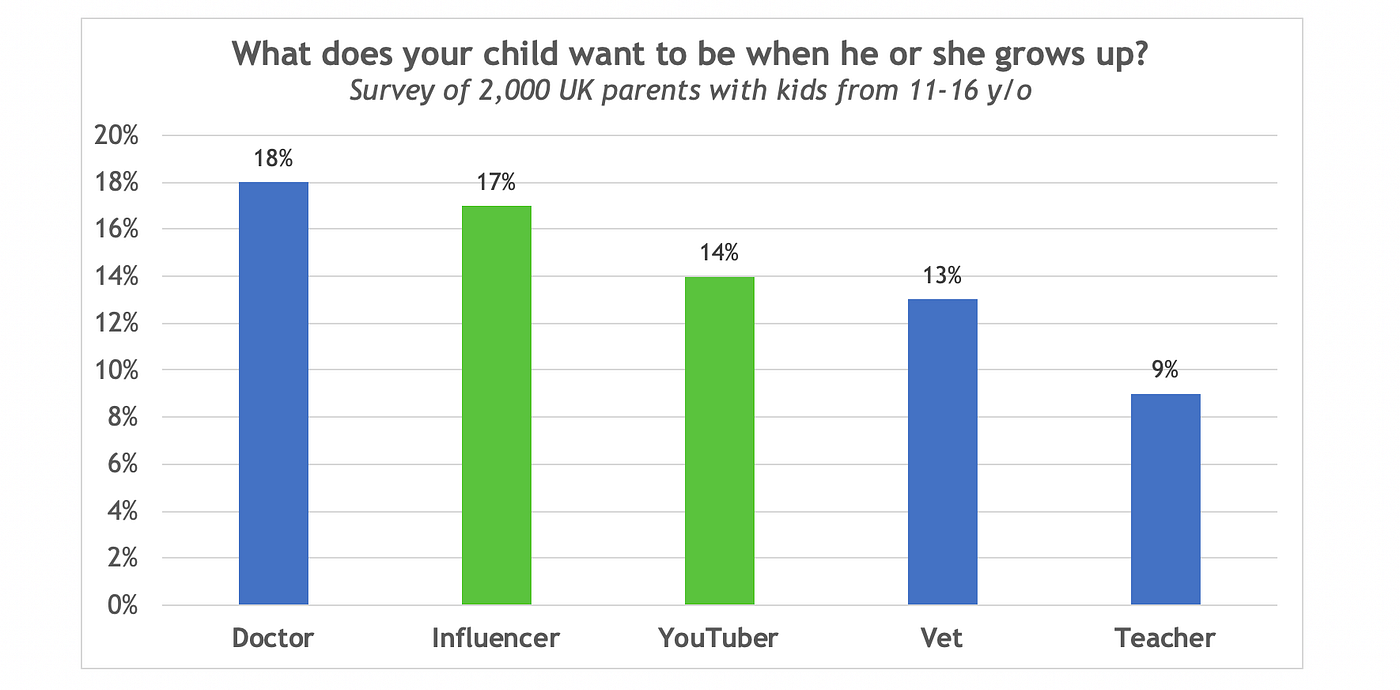
In years past, VidCon was mostly a fan fest, an opportunity for viewers to interact with their favorite creators. There’s still a lot of that behavior, but now many of these fans are aspiring creators themselves. VidCon’s young attendees seem to be increasingly focused on learning how to build a career online — one recent study found that “influencer” is now the #2 dream job for 11–16 year olds in the UK.

This shift was reflected in the setup of VidCon itself — the “creator” sessions, largely focused on practical advice for making content and building an audience, were moved to larger venues. At a creator session on live-streaming featuring model/IRL streamer Bri Teresi, attendees skipped past the typical “fan” questions and instead quizzed Bri on what tech she uses for overlays in her streams, what platform is the most friendly to new streamers, and how to avoid doxxing.

Brands have caught on to the fact that lifting up aspiring creators will increase engagement on their own content. Michelle D’Antonio, a senior manager at e-sports media platform Super League Gaming, said that encouraging young gamers has been key to growing the brand. Super League now hosts a daily show called Spawn Point that curates the best user-submitted plays: “[Kids now] are like, ‘Ninja’s great, but I want this to be about me.’ ”

This shift was also apparent in VidCon’s giant Expo Hall, where brands set up booths to draw in young consumers. Most of the influencer merch booths were surprisingly empty, except for the hour or so when the influencer themselves stopped by. The more popular booths allowed visitors to record their own content and potentially draw an audience — brands from Barbie to Best Buy created pseudo-studios to put attendees in the creator seat. These booths often had lines with dozens or even hundreds of people waiting in line for their chance in the spotlight. We expect this trend to accelerate, and are therefore particularly excited about new tech that helps consumers create content and grow businesses around it (we call this “creator infrastructure”).

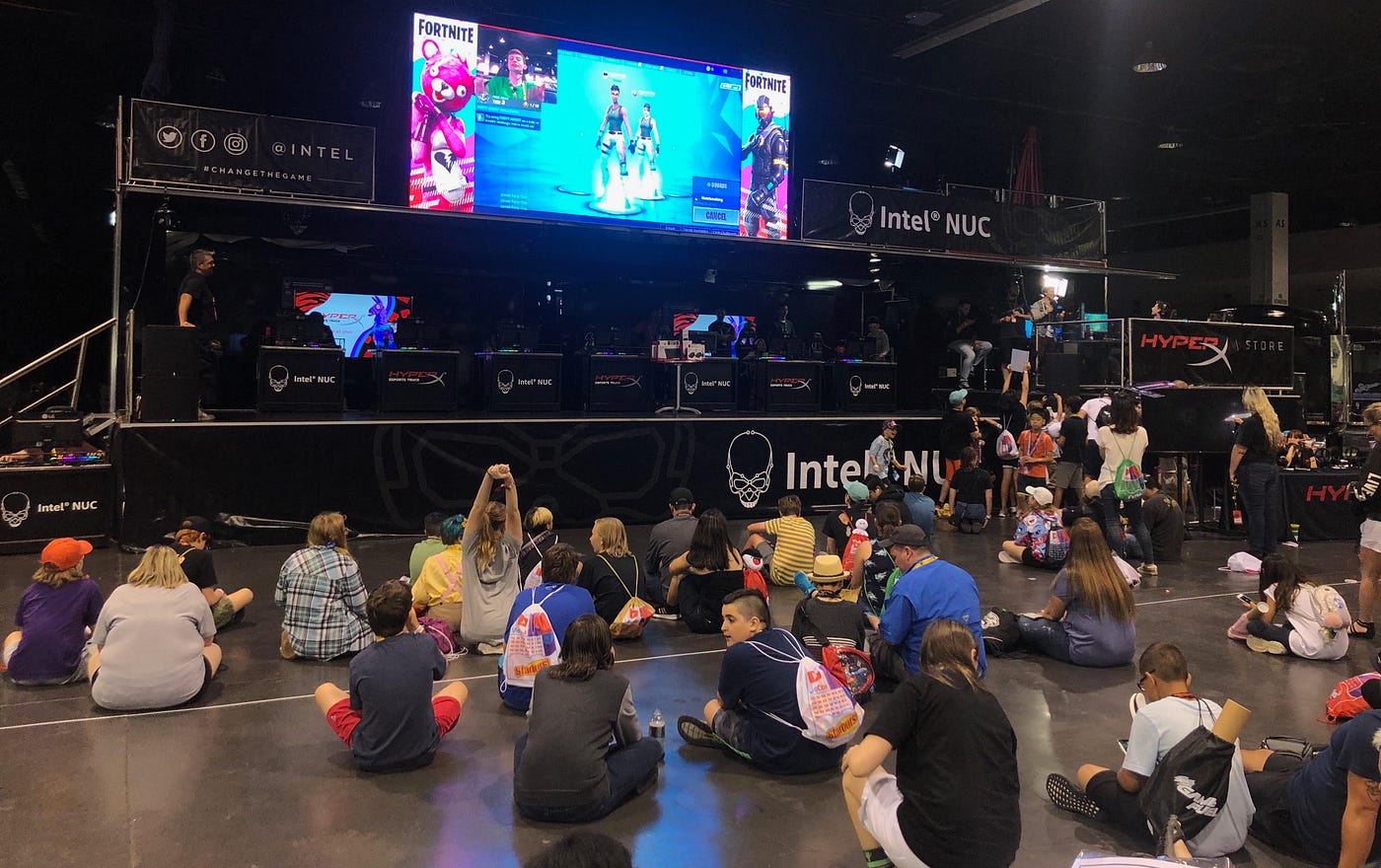
Dozens of kids lined up for the chance to play video games on an esports truck in front of a live audience, with their gameplay broadcast on huge screens that mimicked a professional event.

And finally, we wanted to wrap up with a few of the more surface-level trends we noticed at the VidCon expo hall and in the “community” sessions:

22 Jul 2019

In spite of slowing growth, Microsoft has been flexing its cloud muscles

When Microsoft reported its FY19, Q4 earnings last week, the numbers were mostly positive, but as we pointed out, Azure earnings growth has stalled. Productivity and business, which includes Office 365, has also mostly flattened out. But slowing growth is not always as bad as it may seem. In fact, it’s an inevitability that once you start to reach Microsoft’s market maturity, it gets harder to maintain large growth numbers.

That said, AWS launched the first cloud infrastructure service, Amazon Elastic Compute Cloud in August, 2006. Microsoft came much later to the cloud, launching Azure in February, 2010, but so were other established companies in Microsoft’s market share rearview. What did it do differently to achieve this success that the companies chasing it — Google, IBM and Oracle — failed to do? It’s a key question.

Let’s look at some numbers

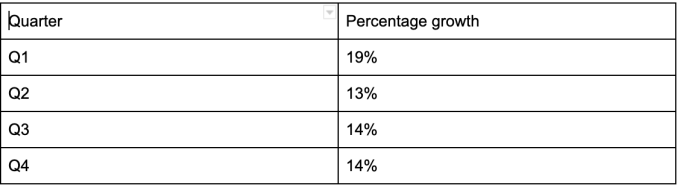
For starters, let’s look at the most numbers for Productivity & Business Processes this year. This category includes all of its commercial and consumer SaaS products including Office 365 commercial and consumer, Dynamics 365, LinkedIn and others. The percentage growth started FY19 at 19% but ended at 14%

Screenshot 2019 07 19 14.34.00

When you look at just Office365 commercial earnings growth, it started at 36% and dropped down to 31% by Q4.

22 Jul 2019

Daily Crunch: Microsoft invests $1B in OpenAI

The Daily Crunch is TechCrunch’s roundup of our biggest and most important stories. If you’d like to get this delivered to your inbox every day at around 9am Pacific, you can subscribe here.

1. Microsoft invests $1 billion in OpenAI in new multiyear partnership

OpenAI was founded three years ago by Elon Musk, Sam Altman and others with the aim of performing research and development that steers artificial intelligence in a “friendlier” direction.

Its deal with Microsoft is an “exclusive computing partnership,” with new AI technologies built for Microsoft’s Azure platform and existing OpenAI services ported over.

2. UVeye snaps up $31M for its hyper-detailed, AI-based drive-thru vehicle-scanning platform

UVeye’s technology can be used to assess the state of rental and used cars, help with insurance adjustments, inspect vehicles to diagnose mechanical or other problems and as part of wider security efforts.

3. Amazon is opening a pair of new robotic fulfillment centers in Ohio

The two warehouses will be located in the north of the state, in Akron and Rossford, respectively. They’ll function much like Amazon’s other shipping centers, providing a collaborative workspace between human employees and the company’s growing army of shipping robots.

logo for Slack is displayed on the a monitor at the New York Stock Exchange

NEW YORK, NY – JUNE 20: The logo for Slack is displayed on the a monitor at the New York Stock Exchange (NYSE), June 20, 2019 in New York City. (Photo by Drew Angerer/Getty Images)

4. Slack speeds up its web and desktop client

Slack’s latest update doesn’t introduce any new features or a new user interface. Instead, it’s almost a complete rebuild of the underlying technology that makes its web and desktop experiences work.

5. Cyber threats from the US and Russia are now focusing on civilian infrastructure

Although both sides have been targeting each other’s infrastructure since at least 2012, according to The New York Times, the aggression and scope of these operations now seems unprecedented.

6. How to go to market in middle America

There comes a time for many startup companies where they either realize they need to do a nationwide rollout, or they need to actively target buyers in the middle of the country. (Extra Crunch membership required.)

7. This week’s TechCrunch podcasts

The latest episode of Equity looks at whether it’s possible to predict the next generation of unicorns, while Original Content reviews the brilliantly titled Netflix special “Frankenstein’s Monster’s Monster, Frankenstein.”

22 Jul 2019

Google Cloud makes it easier to set up continuous delivery with Spinnaker

Google Cloud today announced Spinnaker for Google Cloud Platform, a new solution that makes it easier to install and run the Spinnaker continuous delivery (CD) service on Google’s cloud.

Spinnaker was created inside Netflix and is now jointly developed by Netflix and Google. Netflix open-sourced it back in 2015 and over the course of the last few years, it became the open-source CD platform of choice for many enterprises. Today, companies like Adobe, Box, Cisco, Daimler, Samsung and others use it to speed up their development process.

With Spinnaker for Google Cloud Platform, which runs on the Google Kubernetes Engine, Google is making the install process for the service as easy as a few clicks. Once up and running, the Spinnaker install includes all of the core tools, as well as Deck, the user interface for the service. Users pay for the resources used by the Google Kubernetes Engine, as well as Cloud Memorystore for Redis, Google Cloud Load Balancing and potentially other resources they use in the Google Cloud.

could spinnker.max 1100x1100

The company has pre-configured Spinnaker for testing and deploying code on Google Kubernetes Engine, Compute Engine and App Engine, though it will also work with any other public or on-prem cloud. It’s also integrated with Cloud Build, Google’s recently launched continuous integration service and features support for automatic backups and integrated auditing and monitoring with Google’s Stackdriver.

“We want to make sure that the solution is great both for developers and DevOps or SRE teams,” says Matt Duftler, Tech Lead for Google’s Spinnaker effort, in today’s announcement. “Developers want to get moving fast with the minimum of overhead. Platform teams can allow them to do that safely by encoding their recommended practice into Spinnaker, using Spinnaker for GCP to get up and running quickly and start onboard development teams.”


22 Jul 2019

Uber tests monthly subscription that combines Eats, rides, bikes and scooters

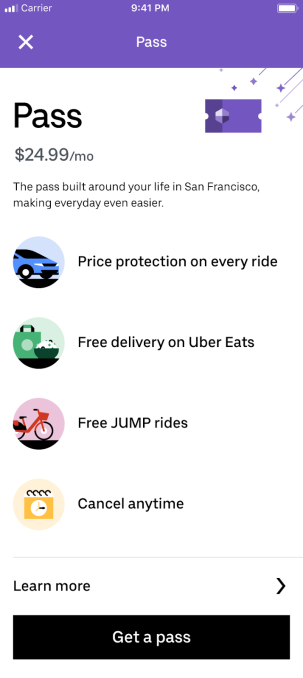
Uber is actively testing a monthly subscription pass that combines rides, Eats, bikes and scooters. In this pilot phase, Uber is testing a few different iterations in San Francisco and Chicago but each version includes a fixed discount on every ride, free Uber Eats delivery and free JUMP (bikes and scooters) rides. The pass costs $24.99 per month.

Uber Pass landing page for press 1In other cities, Uber is testing lower-priced passes that offer discounted rides and free delivery on Eats orders above a certain amount.
“From meals to wheels and everything in between, we’re always looking for ways to make Uber the go-to option for your everyday needs,” an Uber spokesperson said in a statement to TechCrunch.

This comes after TechCrunch first reported leaked screenshots from Uber’s Android app showing an Uber Eats pass in March, and imagined a scenario where Uber combined Eats with its Ride Pass product.

Uber first launched Ride Pass last October as a way for people to consistently pay lower prices on individual rides for a monthly fee. Lyft offers a similar monthly subscription product called All-Access.

But this is the first time Uber is combining all of its consumer offerings into one monthly subscription. A challenge in the micromobility space is product differentiation and brand loyalty, so this is a smart way for Uber to get customers to fully commit to its multi-modal platform. Imagine you’ve bought Uber’s monthly combo pass and are looking for a bike or scooter. You walk by a Lyft bike, but then open up your Uber app to see a JUMP bike isn’t all that far away. My bet is that you’d walk a bit more for that bike since you’ve already paid for it.

Meanwhile, JUMP is experiencing competition in the dockless e-bike space for the first time in San Francisco. On Friday, Lyft deployed its e-bikes that can be both docked and dockless, so it’s notable that Uber is piloting this product in SF. Uber’s combo plan also creeps into Postmates’ territory, which offers a monthly subscription product for unlimited free deliveries. As my colleague Josh Constine has previously noted, this could be a very lucrative move for Uber, as it locks customers into spending more money on Uber.

22 Jul 2019

Apple releases iOS 12.4 with software support for Apple Card

While iOS 13 is right around the corner with a ton of new features, it isn’t quite ready just yet. Apple has just released iOS 12.4, a new stable update. There aren’t many radical changes, but this is the first version that theoretically supports the Apple Card.

Apple has been testing its credit card for a few weeks now. According to Bloomberg, Apple’s retail employees have been able to sign up to the Apple Card.

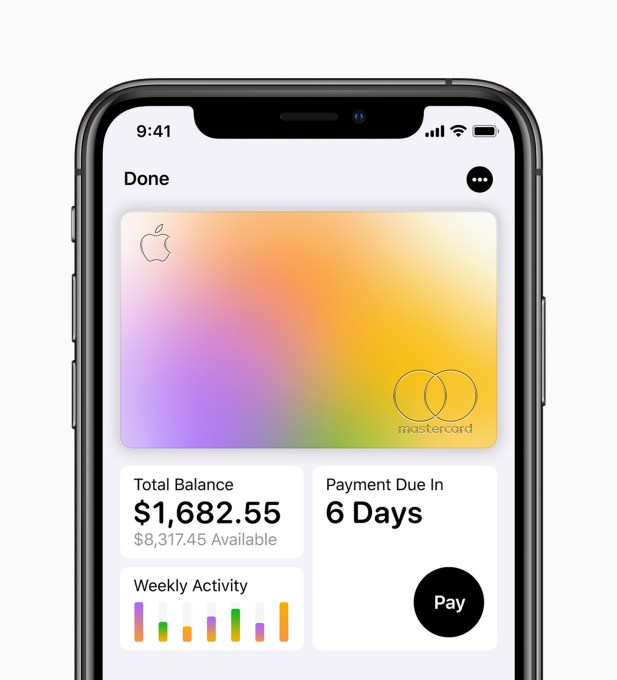
As a reminder, Apple has partnered with Goldman Sachs on a credit card for U.S. customers. When you sign up, you receive a Mastercard credit card that you control from the Wallet app.

In addition to a list of your most recent transactions, you can see a breakdown of your purchases by category. You get 1% back when you pay with your card, 2% if you pay using Apple Pay and 3% if it’s an Apple purchase.

Cash back is credited directly on your Apple Cash card. You can pay for things using Apple Pay, make a payment on your Apple Card or transfer it to your bank account.

The Apple Card was originally announced back in March. The company said that it would be available this summer. Now that iOS 12.4 is available, the release date shouldn’t be too far off.

iOS 12.4 also features a new migration tool so that you can wirelessly transfer data from one iPhone to another. It should make it easier to switch to a new iPhone, especially if you don’t use iCloud.

With this update, you can also control your Apple News+ content more granularly. For instance, you can clear downloaded magazines, check your downloaded issues and more.

Today’s update also re-enables Walkie Talkie on the Apple Watch. The company had to temporarily disable the feature due to a vulnerability.

Don’t forget to backup your iPhone to iCloud or iTunes before updating. Then head over to the Settings app, tap General and Software Update.