Year: 2019

17 Jul 2019

AlphaSense, a search engine for analysis and business intel, raises $50M led by Innovation Endeavors

Google and its flagship search portal opened the door to the possibilities of how to build a business empire on the back of organising and navigating the world’s information, as found on the internet. Now, a startup that’s built a search engine tailored to the needs of enterprises and their own quests for information has raised a round of funding to see if it can do the same for the B2B world.

AlphaSense, which provides a way for companies to quickly amass market intelligence around specific trends, industries and more to help them make business decisions, has closed a $50 million round of funding, a Series B that it’s planning to use to continue enhancing its product and expanding to more verticals.

Today, the company today counts some 1,000 clients on its books, with a heavy emphasis on investment banks and related financial services companies. That’s in part because of how the company got its start: Finnish co-founder and CEO Jaakko (Jack) Kokko he had been an analyst at Morgan Stanley in a past life and understood the labor and time pain points of doing market research, and decided to build a platform to help shorted a good part of the information gathering process.

“My experience as an analyst on Wall Street showed me just how fragmented information really was,” he said in an interview, citing as one example how complex sites like those of the FDA are not easy to navigate to look for new information an updates — the kind of thing that a computer would be much more adept at monitoring and flagging. “Even with the best tools and services, it still was really hard to manually get the work done, in part because of market volatility and the many factors that cause it. We can now do that with orders of magnitude more efficiency. Firms can now gather information in minutes that would have taken an hour. AlphaSense does the work of the best single analyst, or even a team of them.”

(Indeed, the “alpha” of AlphaSense appears to be a reference to finance: it’s a term that refers to the ability of a trader or portfolio manager to beat the typical market return.)

The lead investor in this round is very notable and says something about the company’s ambitions. It’s Innovation Endeavors, the VC firm backed by Eric Schmidt, who had been the CEO of none other than Google (the pace-setter and pioneer of the search-as-business model) for a decade, and then stayed on as chairman and ultimately board member of Google and then Alphabet (its later holding company) until just last June.

Schmidt presided over Google at what you could argue was its most important time, gaining speed and scale and transitioning from an academic idea into full-fledged, huge public business whose flagship product has now entered the lexicon as a verb and (through search and other services like Android and YouTube) is a mainstay of how the vast majority of the world uses the web today. As such he is good at spotting opportunities and gaps in the market, and while enterprise-based needs will never be as prominent as those of mass-market consumers, they can be just as lucrative.

“Information is the currency of business today, but data is overwhelming and fragmented, making it difficult for business professionals to find the right insights to drive key business decisions,” he said in a statement. “We were impressed by the way AlphaSense solves this with its AI and search technology, allowing businesses to proceed with the confidence that they have the right information driving their strategy.”

This brings the total raised by AlphaSense to $90 million, with other investors in this round including Soros Fund Management LLC and other unnamed existing investors. Previous backers had included Tom Glocer (the former Reuters CEO who himself is working on his own fintech startup, a security firm called BlueVoyant), the MassChallenge incubator, Tribeca Venture Partners and others. Kokko said AlphaSense is not disclosing its valuation at this point. (I’m guessing though that it’s definitely on the up.)

There have been others that have worked to try to tackle the idea of providing more targeted, and business focused search portals, from the likes of Wolfram Alpha (another alpha!) through to Lexis Nexis and others like Bloomberg’s terminals, FactSet, Business Quant and many more.

One interesting aspect of AlphaSense is how it’s both focused on pulling in requests as well as set up to push information to its users based on previous search parameters. Currently these are set up to only provide information, but over time, there is a clear opportunity to build services to let the engines take on some of the actions based on that information, such as adjusting asking prices for sales and other transactions.

“There are all kinds of things we could do,” said Kokko. “This is a massive untapped opportunity. But we’re not taking the human out of the loop, ever. Humans are the right ones to be making final decisions, and we’re just about helping them make those faster.”
17 Jul 2019

Contract management startup Icertis becomes unicorn with $115M new round

Icertis, a Washington-headquartered startup that develops cloud-based software to help large companies manage contracts, has raised $115 million at more than a billion dollar valuation to become the latest SaaS unicorn as it looks to further expand its footprints across the globe.

The Series E round for the 10-year-old firm was led by Greycroft and PremjiInvest, and saw participation from existing investors B Capital Group, Cross Creek Advisors, Eight Roads, Ignition Partners, Meritech Capital Partners and PSP Growth. The startup, which also has offices in Seattle, Pune, Singapore, London, Paris, Sydney, has raised $211 million to date.

Icertis said it would use the fresh capital to expand its technology platform to address wider use cases. It said it would also expand its blockchain framework that integrates with enterprise contract management platforms to solve challenges such as transparency in supply chain and certification compliance. Its revenue are at about $100 million currently — something it intends to scale, it said.

The firm, which claims that five of the world’s most valuable companies are its clients (one of which is Microsoft), said it would also scale its sales and marketing efforts to reach “every leading company in the world” and expand its partner ecosystem. It is also looking to acquire startups that are a fit to its contracting business.

Icertis lets users manage almost all kinds of contracts. Companies use Icertis’ products to handle procurement, sales, and corporate contracts, including non-disclosure agreements. In addition to helping users create contracts, Icertis’ software also tracks when terms are met, ensures regulatory compliance, and automates administrative tasks like sending renewal reminders.

Icertis, which was founded originally in India, says it has more than 2,000 high profile customers and it helps them manage more than 5.7 million contracts with an aggregate value of more than $1 trillion. In a statement, Mark Terbeek, a partner at Grycroft, said Icertis’ ability to win “a huge stable of blue-chip customers” was among the factors that attracted them to invest in the company.

“Companies must re-imagine every business process to compete in today’s hyper-competitive global markets,” said Samir Bodas, CEO and Co-founder of Icertis. “Nothing is more foundational than contract management as every dollar in and every dollar out of a company is governed by a contract. As the CLM market takes off, we are thrilled to have Premji Invest join the Icertis family, Greycroft double down by co-leading this round, and all investors re-up their commitment as we execute on our mission to become the contract management platform of the world.”

17 Jul 2019

ContractPodAi scores $55M for its ‘AI-powered’ contract management software

ContractPodAi, a London-based startup that has developed what it describes as AI-powered contract lifecycle management software, is disclosing $55 million in Series B funding. The round is led by U.S.-based Insight Partners, with participation from earlier backer Eagle Investment.

Founded in 2012, ContractPodAi offers an “end-to-end” solution spanning the three main aspects of contract management: contract generation, contract repository, and third-party review. Its AI offering, which uses IBM’s Watson, claims to streamline the contract management process and reduce the burden on corporate in-house legal teams.

“The legal profession has been historically behind the curve in technology adoption and our objective here is to support to digital transformation of legal departments via our contract management platform,” ContractPodAi co-founder and CEO Sarvarth Misra tells TechCrunch.

“Our business focusses on providing in-house counsel of corporations across the world with an easy to use, out of the box and scalable end to end contract management platform at a fixed fee SaaS licence model”.

With regards to ContractPodAi’s target customer, Misra says its solution is industry agnostic but is typically sold to large international businesses, including FTSE 500 and Fortune 2000 corporations. Customers include Bosch Siemens, Braskem, EDF Energy, Total Petroleum, Benjamin Moore and Freeview.

Armed with new capital, ContractPodAi says it plans to “significantly” scale up its product development, sales, and customer success teams globally. The company already has offices in San Francisco, New York, Glasgow and Mumbai, in addition to its London HQ.

Adds Misra: “We believe that market for contract management solutions is fragmented with providers focussing one or two aspects of contract management functionality. ContractPodAi’s objective has been to provide one contract management ecosystem which covers all aspects of contract management functionality… This, along with our fixed, transparent pricing and ability to provide full implementation as part of the annual SaaS, differentiates us the from the rest of the providers”.

17 Jul 2019

Elon Musk’s Neuralink looks to begin outfitting human brains with faster input and output starting next year

Neuralink, the Elon Musk-led startup that the multi-entrepreneur founded in 2017, is working on technology that’s based around ‘threads’ which it says can be implanted in human brains with much less potential impact to the surrounding brain tissue vs. what’s currently used for today’s brain-computer interfaces. “Most people don’t realize, we can solve that with a chip,” Musk said to kick off Neuralink’s event, talking about some of the brain disorders and issues the company hopes to solve.

Musk also said that long-term Neuralink really is about figuring out a way to “achieve a sort of symbiosis with artificial intelligence.” “This is not a mandatory thing,” he added. “This is something you can choose to have if you want.”

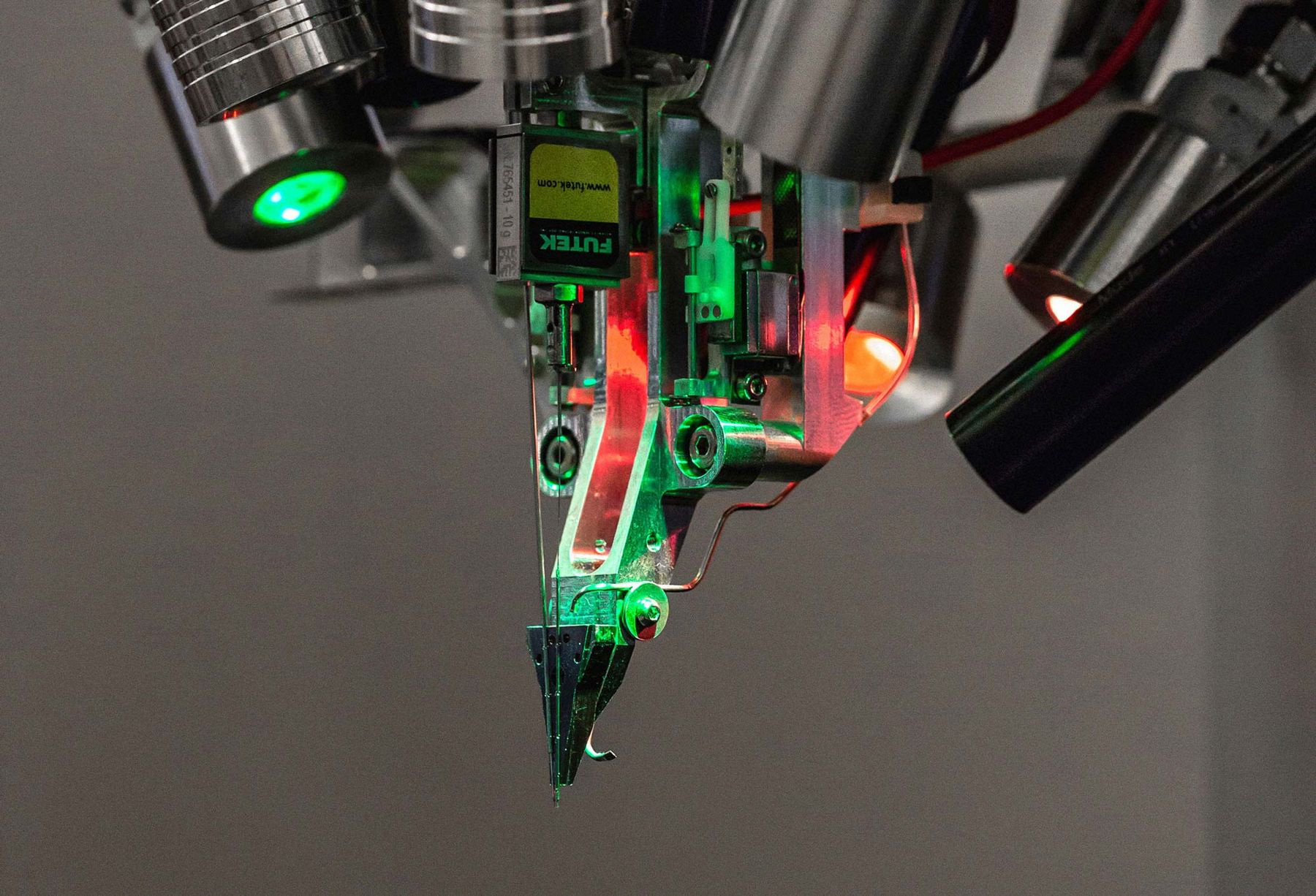
For now, however, the aim is medical and the plan is to use a robot that Neuralink has created that operates somewhat like a “sewing machine” to implant this threads, which are incredibly thin I(like, between 4 and 6 μm, which means about one-third the diameter of the thinnest human hair), deep within a person’s brain tissue, where it will be capable of performing both read and write operations at very high data volume.

All of this sounds incredibly far-fetched, and to some extent it still is: Neuralink’s scientists told The New York Times in a briefing on Monday that the company has a “long way to go” before it can get anywhere near offering a commercial service. The main reason for breaking cover and talking more freely about what they’re working on, the paper reported, is that they’ll be better able to work out in the open and publish papers, which is definitely an easier mode of operation for something that requires as much connection with the academic and research community as this.

Neuralink1

Neuralink co-founder and president Max Hodak told the NYT that he’s optimistic Neuralink’s tech could theoretically see use somewhat soon in medical use, including potential applications enabling amputees to regain mobility via use of prosthetics and reversing vision, hearing or other sensory deficiencies. It’s hoping to actually begin working with human test subjects as early as next year, in fact, including via possible collaboration with neurosurgeons at Stanford and other institutions.

The current incarnation of Neuralink’s tech would involve drilling actual holes into a subject’s skull in order to insert the ultra thin threads, but future iterations will shift to using lasers instead to create tiny holes that are much less invasive and essentially not felt by a patient, Hodak told the paper. Working on humans next year with something that meets this description for a relatively new company might seem improbable, but Neuralink did demonstrate its technology used on a laboratory rat this week, with performance levels that exceed today’s systems in terms of data transfer. The data from the rat was gathered via a USB-C port in its head, and it provided about 10x more what the best current sensors can offer, according to Bloomberg.

Neurlalink’s advances vs. current BCI methods also include the combined thinness and flexibility of the ‘threads’ used, but one scientist wondered about their longevity when exposed to the brain, which contains a salt mix fluid that can damage and ultimately degrade plastics over time. The plan is also that the times electrodes implanted in the brain will be able to communicate wirelessly with chips outside the brain, providing real time monitoring with unprecedented freedom of motion, without any external wires or connections.

Elon Musk is bankrolling the majority of this endeavour as well as acting as its CEO, with $100 million of the $158 million its raised so far coming from the SpaceX and Tesla CEO. It has 90 employees thus far, and still seems to be hiring aggressively based on its minimal website (which basically only contains job ads). Elon Musk also noted at the outset of today’s presentation that the main reason for the event was in fact to recruit new talent.

17 Jul 2019

Apple reportedly planning to fund creation of exclusive original podcasts

Apple is said to be planning to bankroll the creation of original podcasts from third-parties that it will offer exclusively on its own streaming services, Bloomberg reports. The report says that Apple’s plans to land podcast exclusives will help the company compete with similar offerings from streaming rivals including Spotify and Sticher, both of which are funding exclusive podcast content, and in some cases, wholly original shows to run on their own streaming audio offerings.

The report says that Apple execs have been reaching out to media companies that produce audio content to talk about the possibility of buying exclusive rights to some podcasts, albeit in a “preliminary” way, which suggests that this plan may be in the very early stages. It seems unlikely, then, that we would see any kind of Apple exclusive original podcast content ahead of other media efforts soon to launch from the company, including its Apple TV+ subscription video service coming this fall.

Apple has recently made a number of improvements to its podcast product offerings, both on the consumer and the creator side, including more detailed analytics for podcasters, and a full-fledged standalone Podcasts app for its macOS computers, which is launching alongside macOS Catalina this fall. Still, it’s largely been hands-off when it comes to content, aside from informally meeting with podcasters on occasion and sharing best practices.

Meanwhile, Spotify in particular has been especially aggressive about acquiring its own podcast media companies, including Gimlet, which makes popular podcast ‘Reply All”; Anchor, which creates podcast making tools for publishing and monetization; and Parcast, another podcast creation network with a deep library of true-life and other content.

Apple still enjoys a strong majority of audience when it comes to overall podcast listenership by all accounts, but Spotify is definitely chipping away by focusing effort and investment both on the product and on the content side. Apple considering funding content of its own definitely makes sense given its tactics in video, and the changed landscape of the podcast business.

17 Jul 2019

AI photo editor FaceApp goes viral again on iOS, raises questions about photo library access

FaceApp. So. The app has gone viral again after first doing so two years ago or so. The effect has gotten better but these apps, like many other one off viral apps, tend to come and go in waves driven by influencer networks or paid promotion. We first covered this particular AI photo editor  from a team of Russian developers about two years ago.

It has gone viral again now due to some features that allow you to edit a person’s face to make it appear older or younger. You may remember at one point it had an issue because it enabled what amounted to digital blackface by changing a person from one ethnicity to another.

In this current wave of virality, some new rumors are floating about FaceApp. The first is that it uploads your camera roll in the background. We found no evidence of this and neither did security researcher and Guardian App CEO Will Strafach or researcher Baptiste Robert.

The second is that it somehow allows you to pick photos without giving photo access to the app. You can see a video of this behavior here:

While the app does indeed let you pick a single photo without giving it access to your photo library, this is actually 100% allowed by an Apple API introduced in iOS 11. It allows a developer to let a user pick one single photo from a system dialog to let the app work on. You can view documentation here and here.

IMG 54E064B28241 1

Because the user has to tap on one photo, this provides something Apple holds dear: user intent. You have explicitly tapped it, so it’s ok to send that one photo. This behavior is actually a net good in my opinion. It allows you to give an app one photo instead of your entire library. It can’t see any of your photos until you tap one. This is far better than committing your entire library to a jokey meme app.

Unfortunately, there is still some cognitive dissonance here, because Apple allows an app to call this API even if a user has set the Photo Access setting to Never in settings. In my opinion, if you have it set to Never, you should have to change that before any photo can enter the app from your library, no matter what inconvenience that causes. Never is not a default, it is an explicit choice and that permanent user intent overrules the one-off user intent of the new photo picker.

I believe that Apple should find a way to rectify this in the future by making it more clear or disallowing if people have explicitly opted out of sharing photos in an app.

IMG 0475

One good idea might be the equivalent of the ‘only once’ location option added to the upcoming iOS 13 might be appropriate.

One thing that FaceApp does do, however, is it uploads your photo to the cloud for processing. It does not do on-device processing like Apple’s first party app does and like it enables for third parties through its ML libraries and routines. This is not made clear to the user.

I have asked FaceApp why they don’t alert the user that the photo is processed in the cloud. I’ve also asked them whether they retain the photos.

Given how many screenshots people take of sensitive information like banking and whatnot, photo access is a bigger security risk than ever these days. With a scraper and optical character recognition tech you could automatically turn up a huge amount of info way beyond ‘photos of people’.

So, overall, I think it is important that we think carefully about the safeguards put in place to protect photo archives and the motives and methods of the apps we give access to.

16 Jul 2019

iOS and Android are about to get a bunch of new emoji

Tomorrow is World Emoji Day. Why is there a World Emoji Day? No idea! But it’s tomorrow!

To recognize the day, Apple and Google have both shed some light on their plans regarding new emoji coming to their operating systems in the coming months. Both companies are adding around 60 new emoji in all, from cutesie stuff like sloths and otters to important icons of representation.

First up, both companies are overhauling their handholding couple emojis so that your emoji people can hold hands with whomever you please, regardless of gender or skin tone.

handhold

Google also notes that, as of Android Q, any Emoji that doesn’t have a gender specified in its Unicode documentation — emoji like ‘police officer’ or ‘person getting haircut’ and 51 others — will now default to a “gender ambiguous design”. You’ll be able to press-and-hold an emoji to select a “male” or “female” presentation, if you’d prefer.

Both platforms will also be getting a ton of new accessibility-focused emoji. Apple proposed these early last year, with the Unicode Consortium (the group that determines the official emoji set) giving its stamp of approval in February of this year.

There’s a service dog:

dog

People using two different kinds of wheelchairs:

wheelchair

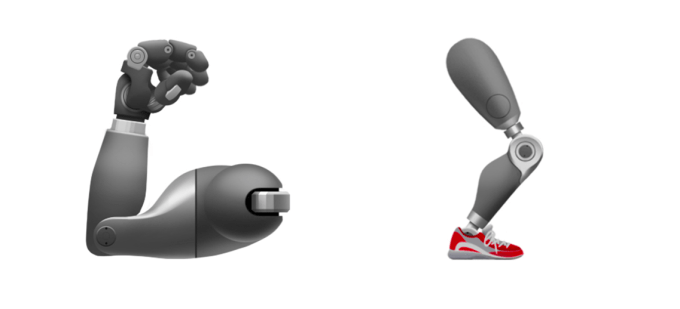
A prosthetic arm and prosthetic leg:

prosthetic

Ear with hearing aid, and the ASL sign for ‘deaf’:

hearing aid

And a person with a white cane:

white cane

There’s also a ton of other new stuff being added in, from animals to axes. There’s sloths:

sloth

And flamingos:

flamingo

And orangutans, otters, and skunks:

otter skunk

There’s a bunch of new clothing, including saris, swim shorts, and safety vests.

clothing

And, finally, an emoji that I am honestly kinda shocked wasn’t already in there: the yawning smiley.

yawn

I fully expect to see that last one used sarcastically across Slack and Twitter at least 43x a day.

Apple says the new emoji will hit iOS “this fall”, while Google says they’ll arrive with the release of Android Q later this year. If you want to see the full list of things coming in 2019, you can find it over on Emojipedia.


16 Jul 2019

CES will allow sex tech on a one-year trial bias, and finally bans booth babes

The Consumer Technology Association, the organization behind the annual Consumer Electronics Show, is slowly getting up to speed with the modern-day. Today, CTA announced it will allow sex tech startups to participate and compete for awards as part of the health and wellness category on a one-year trial basis.

This comes after the CTA royally messed up with sex tech company Lora DiCarlo last year. The CTA revoked an innovation award from the company, which is developing a hands-free device that uses biomimicry and robotics to help women achieve a blended orgasm by simultaneously stimulating the G-spot and the clitoris. In May, CTA re-awarded the company and apologized.

“CTA is committed to evolving and continuing to create an experience at CES that is inclusive and welcoming for everyone,” CES EVP Karen Chupka said in a statement. “We worked with a number of external advisors and partners to update and improve our existing CES policies.”

Additionally, CTA has banned booth babes, or, booth people, as it’s applicable to everyone, regardless of gender.

“Booth personnel may not wear clothing that is sexually revealing or that could be interpreted as undergarments,” the new policy states. “Clothing that reveals an excess of bare skin, or body-conforming clothing that hugs genitalia must not be worn.”

16 Jul 2019

Retail role play

Retailers and brands have both seen a tremendous shift in traditional retail dynamics, with merchants and marketplaces increasingly ceding control of the online and in-store shopping experience to the brands themselves. Democratizing access to data through new verticalized tools, however, represents a unique opportunity for retailers to leverage this trend by further transforming the retail dynamic and changing their role in the process.

Marketplaces and third-party sellers have always represented a kind of data “blind spot” for brands. Both provided little visibility on customers and even less control over customer experience or satisfaction.

Verticalized tools that provide new levels of data access are changing all that. For example, b8ta is offering a Retail-as-a-Service model and software platform to brands and retailers to better manage and analyze their in-store experience. Companies like Chatter Research are capturing real-time customer feedback that can be integrated side-by-side with POS data to further improve store performance. Solutions like these enable both parties to collaborate and give brands a unified omnichannel strategy. It also provides retailers with a unique opportunity to rethink their purpose and elevate their value proposition within the retail ecosystem, while also expanding margins and driving potential new revenue streams.

Brands already own the entire customer experience through their O&O stores and e-commerce sites. Amazon has also started providing access to more robust customer and sales information through their API. This has encouraged brands to build internal expertise while increasing their desire to have greater insight into — and control over — the sales process. The impetus now is on third-party retailers and marketplaces to provide similar (or better) opportunities and insight to match what O&O and e-commerce sites now provide.

The democratization of data access is a rare bit of good news.

Retailers are already shifting their focus to product discovery, search and transaction. They are more focused on ensuring a positive, in-store user experience — from processing a transaction (the global retail automation industry is expected to reach $21 billion by 2024) to finding and purchasing the product and accelerating conversions. These shifts, coupled with increased data visibility and analysis, fundamentally alter the value proposition for the retailer.

Platforms — like the above-mentioned b8ta and Chatter Research — allow retailers to capture data and provide it to brands so that they can ultimately be smarter about marketing and promoting through tracking customer visits, interactions and transactions. Soon, smart retailers will leverage this data access to an even greater degree, as brands increasingly rely on third-party retailers/marketplaces to grow their sales and market share. Retailers will sell it directly to brands using data marketplaces or use it to negotiate more favorable terms with product supply.

There are derivative benefits for retailers, as well. As more verticalized tools are deployed and adopted by both brands and retailers, they will continue to marry transactional data with user behavioral data while mapping consumer identification to brand marketing activity. Once the data is properly analyzed it will increase not only revenue per square foot but product margins in physical stores, as well, by helping retailers identify and recover lost sales. It also will lead to incremental investment by brands in shopper marketing, transforming advertising into selling.

The data holistically makes retailers stronger.

As merchants and third-party sellers struggle to reverse years of decline, the democratization of data access is a rare bit of good news. It changes the economics for all stakeholders involved, alters the roles of brands and merchants and creates new, much-needed monetization opportunities for retailers. Unlocking the value of data and empowering brands with it allows retailers to focus on where they can make the highest impact. While roles will change, data connectivity will ultimately strengthen partnerships and improve outcomes for all.

Revel Partners has published a white paper on retail, the brand-direct economy and the impact of data on retail efficacy and consumer satisfaction. To view it in its entirety click here.

16 Jul 2019

Final tickets to our 14th Annual TechCrunch Summer Party

One of Silicon Valley’s most fun and enduring traditions — the 14th Annual TechCrunch Summer Party — takes place on July 25. If you don’t have a ticket yet, know this: We just released the last batch of tickets. Once they’re gone, that’s it. No party for you. Don’t miss out on a night of fun and opportunity — buy your ticket today.

The Park Chalet, San Francisco’s coastal beer garden, provides a picturesque setting (ocean views anyone?) for a casual evening celebrating the early-startup spirit. Hang out and enjoy local craft beer, cocktails, delicious food and great conversation with other fearless tech entrepreneurs.

TechCrunch parties provide a relaxed way to connect and network, and they’re known as a place where startup magic happens. Who knows? You might meet your future co-founder or funder. Aaron Levie and Dylan Smith, founders of Box, met one of their first investors at a TechCrunch party.

It shouldn’t be too difficult to chat up an investor since our lead VC partner, Merus Capital, will be in the house, along with August Capital, Battery Ventures, Cowboy Ventures, Data Collective, General Catalyst and Uncork Capital.

No TechCrunch event would be complete without exciting startups showcasing their tech and talent.

Here’s the when, where and how:

  • When: July 25 from 5:30 p.m. – 9:00 p.m.
  • Where: Park Chalet in San Francisco
  • How much: $95

As always, you have a chance to win great door prizes, including TechCrunch swag, Amazon Echos and tickets to Disrupt San Francisco 2019.

The 14th Annual TechCrunch Summer Party takes place on July 25, and this is the last ticket release. Don’t miss out on a convivial evening of food, drink, connection and possibility in the company of your entrepreneurial peers. Buy your ticket right here.


Want a free ticket to Disrupt SF?

Volunteer for the Summer Party and work with the TechCrunch team for a few hours. Sign up to volunteer here.