Year: 2019

15 Jul 2019

‘The Operators’: Understanding your user – The art and science of UI/UX behind Facebook, Google, Mint, and Edmodo

Welcome to this transcribed edition of The Operators. TechCrunch is beginning to publish podcasts from industry experts, with transcriptions available for Extra Crunch members so you can read the conversation wherever you are.

The Operators highlights the experts building the products and companies that drive the tech industry. Speaking from experience at companies like Airbnb, Brex, Docsend, Edmodo, Facebook, Google, Lyft, Mint, Slack, Uber, WeWork, etc., these experts share insider tips on how to break into fields like design and enterprise sales. They also share best practices for entrepreneurs to hire and manage experts in fields outside their own.

This week’s edition features Gülay Birand, UX Lead and Product Design Manager at Facebook, and Tim Rechin, Head of Design at Edmodo, the leading education technology company. Gülay and Tim share their experiences and explain design, UI/UX, how to build a career in these fields, and how entrepreneurs should think about them.

Gülay and Tim bring experience from other great companies including Google, Amazon, Mint, and SAP. Having seen and grown in their disciplines from a variety of companies and customer types, they share deep insight from across tech.
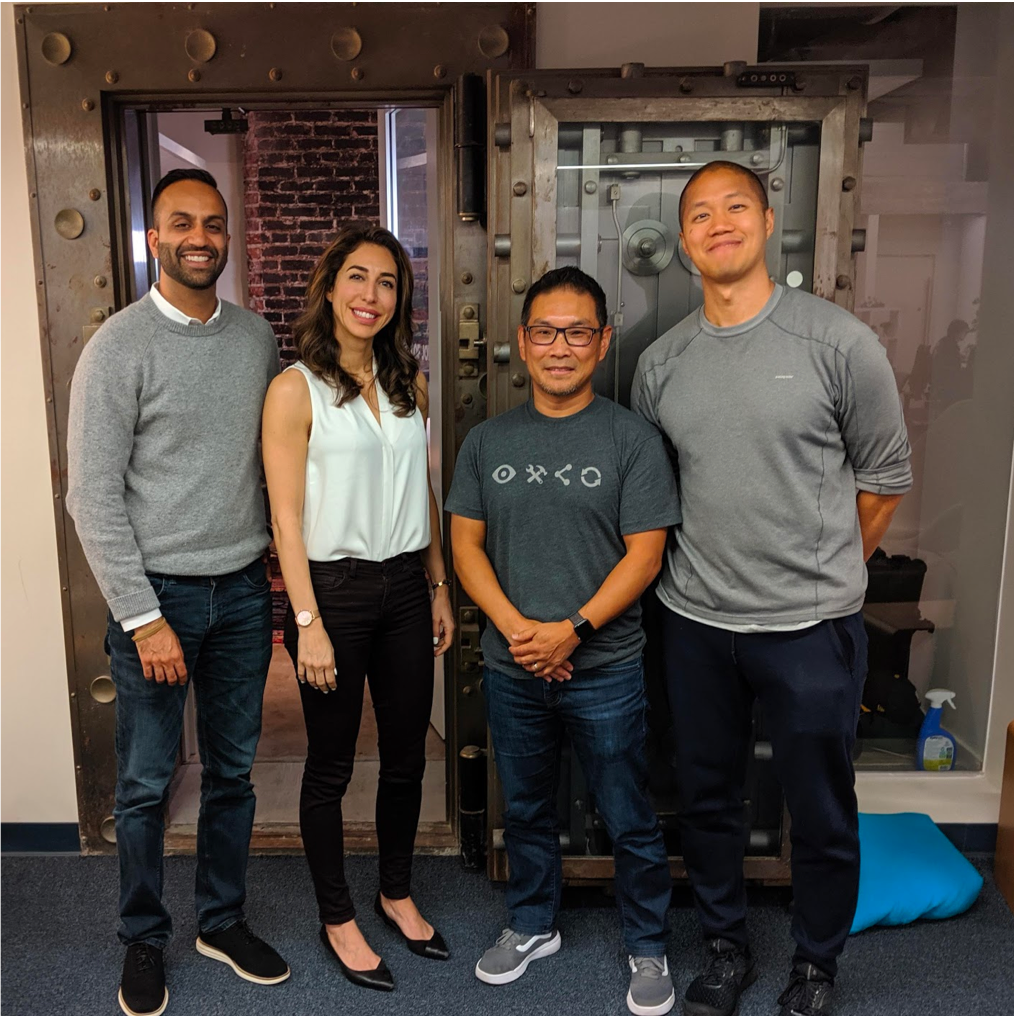
image1 2

Neil Devani and Tim Hsia created The Operators after seeing and hearing too many heady, philosophical podcasts about the future of the world and the tech industry, and not enough attention on the practical day-to-day work that makes it all happen.

Tim is the CEO & Founder of Media Mobilize, a media company and ad network, and a Venture Partner at Digital Garage. Tim is an early-stage investor in Workflow (acquired by Apple), Lime, FabFitFun, Oh My Green, Morning Brew, Girls Night In, The Hustle, Bright Cellars, and others.

Neil is an early-stage investor based in San Francisco with a focus on companies solving serious problems, including Andela, Clearbit, Recursion Pharmaceuticals, Vicarious Surgical, and Kudi.

If you’re interested in becoming a designer, doing UI/UX research, furthering your career in that field, or starting a company and don’t know when to hire or how to manage this discipline, you can’t miss this episode!

The show:

The Operators highlights the experts building the products and companies that drive the tech industry. Speaking from experience at companies like Airbnb, Brex, Docsend, Edmodo, Facebook, Google, Lyft, Mint, Slack, Uber, WeWork, etc., these experts share insider tips on how to break into fields like design and enterprise sales. They also share best practices for entrepreneurs to hire and manage experts in fields outside their own.

In this episode:

In Episode 3, we’re talking about design and UI/UX. Neil interviews Gülay Birand, UX Lead and Product Design Manager at Facebook, and Tim Rechin, Head of Design at Edmodo.

Neil Devani: Hello and welcome to The Operators, where we talk to the people building the companies of today and tomorrow. We publish every other Monday and you can find us online at Operators.co.

Today’s episode is very special, we are talking to two UI/UX experts who have designed and researched products that have been touched by billions of people. I’m your host, Neil Devani and we’re coming to you today from the Vault of Joi here at Digital Garage in downtown San Francisco.

Joining me is Tim Rechin, Head of Design at Edmodo, the leading classroom and education community with 100 million users globally. Also joining us is Gülay Birand, a UX lead and product design manager at Facebook.

Gülay works on the newsfeed product used by billions of people every day. Thank you for joining us, if you could tell us more about yourselves and your work it would be great to hear more.

Gülay Birand: Thank you, my name is Gülay Birand. I’m a product design manager at Facebook . I’ve been at Facebook for about three months. Prior to that I was at Google for about 8 years, and I led a horizontal team on Google Cloud Platform for about four years, leading growth and engagement, support, and product excellence initiatives.

Prior to that I did a bit of a tour to Google, so I worked on search, identity, a couple of other areas like mobile ads, and before that I was at T-Mobile where I was building mass market and franchise home experiences, mainly on Android. And prior to that I was at Amazon leading experiences for the very first Kindle, so that was a lot of fun.

Devani: And Tim tell us more about yourself and how you got here.

Tim Rechin: Yeah, so I’m currently at Edmodo, leading up design and that’s really across the entire platform that serves our teachers, students and parents in the US and globally. And before Edmodo, I was at Facebook, and I was on the Feed Ads team and responsible for the lead ads product that we launched that year. Before that I was at Mint, so doing personal finance and some of you may be using Mint.

Devani: I’m definitely using Mint, its great, I love it.

Rechin: And then before that SAP, Yahoo, eBay, and then Elance very early on which is now Upwork.

Devani: Very cool, all companies that I’ve used, products that I enjoy, thank you for helping create them.

Birand: Thank you.

Devani: So it’d be great if you could tell folks more about what you do every day. Who are the folks in your company that you are interacting with, what are your responsibilities, what does it mean to do the job that you do?

Rechin: That’s a good question, it’s a bit mixed. Just for some context, Edmodo is a company a little over 100 people and so our product teams are in the 6-7 product managers range. I lead a team of 3 designers. So my day to day is really getting to work and really trying to figure out what’s going on, so this year is a particularly busy year as we get ready for back to school.

And so we have a lot of concurrent projects going, so one of the things I like to do when I get in is level set, kind of see how my day is and I’ll go check in with the different teams. That’s part of the work I do, working with the different product teams and the strategy.

So like I said, we are working on lots of different projects, so it’s really just keeping everyone aligned and making sure that designers are delivering things on time, that any issues or gaps are being filled and we can go answer those questions that are coming from product managers and designers. In some cases too, there is a project that is about to be kicked off, so everything is not clean, phased, there are always these things that kind of pop up.

So I will find myself in meetings in talking about strategy to figure out how to kick off those projects or what our go-to-market is for back to school.
15 Jul 2019

Facebook’s testimony to congress: Libra will be regulated by Swiss

The head of Facebook’s blockchain subsidiary Calibra David Marcus released his prepared testimony before congress for tomorrow and Wednesday, explaining that “The Libra Association expects that it will be licensed, regulated, and subject to supervisory oversight. Because the Association is headquartered in Geneva, it will be supervised by the Swiss Financial Markets Supervisory Authority (FINMA). We have had preliminary discussions with FINMA and expect to engage with them on an appropriate regulatory framework for the Libra Association. The Association also intends to register with FinCEN as a money services business.”

Below you can read the full testimony:

15 Jul 2019

48-hour, buy-one-get-one sale — TC Sessions: Enterprise 2019

Every startupper we’ve ever met loves a great deal, and so do we. That’s why we’re celebrating Prime day with a 48-hour flash sale on tickets to TC Sessions: Enterprise 2019, which takes place September 5 at the Yerba Buena Center for the Arts in San Francisco.

We’re talking a classic BOGO — buy-one-get-one — deal that starts today and ends tomorrow, July 16, at 11:59 p.m. (PT). Buy one early-bird ticket ($249) and you get a second ticket for free. But this BOGO goes bye-bye in just 48 hours, so don’t wait. Buy your TC Sessions: Enterprise tickets now and save.

Get ready to join more than 1,000 attendees for a day-long, intensive experience exploring the enterprise colossus — a tech category that generates hundreds of new startups, along with a steady stream of multibillion-dollar acquisitions, every year.

What can you expect at TC Sessions: Enterprise? For starters, you’ll hear TechCrunch editors interview enterprise software leaders, including tech titans, rising founders and boundary-breaking VCs.

One such titan, George Brady — Capital One’s executive VP in charge of tech operations — will join us to discuss how the financial institution left legacy hardware and software behind to embrace the cloud. Quite a journey in such a highly regulated industry.

Our growing speaker roster features other enterprise heavy-hitters, including Aaron Levie, Box co-founder and CEO; Aparna Sinha, Google’s director of product management for Kubernetes and Anthos; Jim Clarke, Intel’s director of quantum hardware; and Scott Farquhar, co-founder and co-CEO of Atlassian.

Looking for in-depth information on technical enterprise topics? You’ll find them in our workshops and breakout sessions. Check out the exhibiting early-stage enterprise startups focused on disrupting, well, everything. Enjoy receptions and world-class networking with other founders, investors and technologists actively building the next generation of enterprise services.

TC Sessions: Enterprise 2019 takes place September 5, and we pack a lot of value into a single day. Double your ROI and take advantage of our 48-hour BOGO sale. Buy your ticket before July 16 at 11:59 p.m. (PT) and get another ticket free. That’s two tickets for one early-bird price. And if that’s not enough value, get this: we’ll register you for a free Expo-only pass to Disrupt SF 2019 for every TC Sessions: Enterprise ticket you purchase (mic drop).

Interested in sponsoring TC Sessions: Enterprise? Fill out this form and a member of our sales team will contact you.

15 Jul 2019

Online shopping guide SMZDM surges 44% on China stock market debut

When Chinese internet companies seek initial public offerings, they tend to look to the United States where rules for profitability are less strict. SMZDM, an online shopping guide that few people outside China have heard of, has joined a small rank of internet startups that are trading on public markets in mainland China.

SMZDM, short for Shen Me Zhi De Mai or “what’s worth buying” in Chinese, saw its shares soar nearly 44% on its first day of trading in Shenzhen. After pricing its IPO at 28.42 yuan ($4.13) and opening the day at 34.1 yuan, SMZDM closed at 40.92 yuan. This values the company at about 2.18 billion yuan ($320 million).

The company is raising 330 million yuan from the public offering and plans to spend the money on upgrading its big data capabilities so it can deliver more personalized content and services to users.

Before applying for an A-share listing on China’s main bourses, firms generally need a three-year track record of profitability, though the country has made progress to smooth the way for loss-making, high-potential tech firms. SMZDM clocked (in Chinese) net income of 19.35 million yuan ($2.81 million), 35.16 million yuan and 86.24 million yuan in 2015, 2016 and 2017. Its revenue climbed from 97.29 million in 2015 to 367 million yuan in 2017.

Since its founding nine years ago, SMZDM has only raised from one institutional investor, China Growth Capital. Why sell shares to the public when the company was already earning good money?

“For an internet startup to keep attracting talents, it needs to have a transparent corporate structure and an employee stock ownership plan,” Wu Haiyan, managing partner at China Growth Capital, told TechCrunch in an interview. “Of course, going public is another way to raise capital.”

SMZDM began life as founder Sui Guodong’s blog where he reviewed a range of gadgets as a pastime. Over time, the WordPress site blossomed into a public platform where people share guides to purchasing products of all sorts — from baby milk formula to Nikon’s latest lens — and where to get the best deal. When a transaction happens on its partnering marketplaces, SMZDM gets a commission.

The model means shopping guides like SMZDM rely overwhelmingly on shopping portals for success and are susceptible to the changes at the e-commerce behemoths. Indeed, over 85% of SMZDM’s commission and marketing revenues in 2018 came from Alibaba, JD.com, Amazon and its other major clients.

For now, at least, Alibaba and the like seem to show enough interest in third-party product review sites. As Wu argued, “the heart of e-commerce portals is to drive sales instead of building a community for giving and receiving unbiased feedback,” which is SMZDM’s value proposition. The key performance index of an online community, she added, is the level of user interaction and amount of content they generate.

That’s why both Alibaba and Tencent — which has backed e-commerce companies JD.com, Pinduoduo and Mogu — threw money at Xiaohongshu (“The Little Red Book” in Chinese), a part marketplace, part social media platform for learning lifestyle trends.

While shoppers on Xiaohongshu are predominantly female as is the case with most Chinese e-commerce services, over half of SMZDM’s users are male, a result largely attributable to its abundant content about hardware and home appliances.

That library of product reviews, Wu argues, is what sets SMZDM apart from its competitors.

“Building any community takes time and capital alone can’t help it grow,” the investor observed. “People stay for high-quality content and interaction with like-minded users. When a community starts to have its own vibe, people will stick around.”

15 Jul 2019

Uber finally sets diversity, inclusion and equity goals

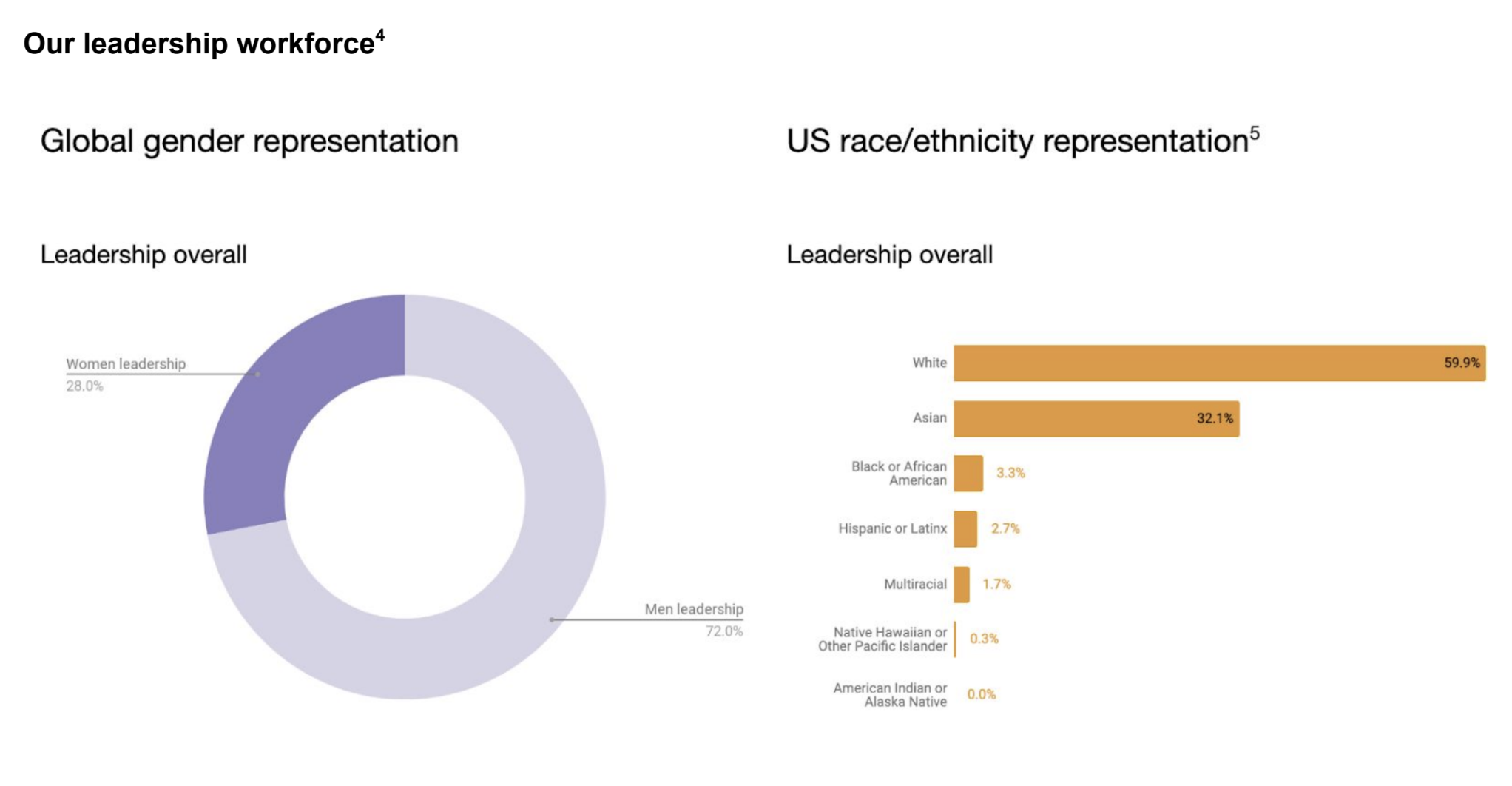
Within the sphere of diversity, inclusion and equity, it’s common knowledge that companies are unlikely to achieve meaningful progress unless they put goals in place. Uber has finally gotten the memo. Today, as part of its third diversity report, Uber committed to two three-year goals, as well as broke out the stats around intersectionality.

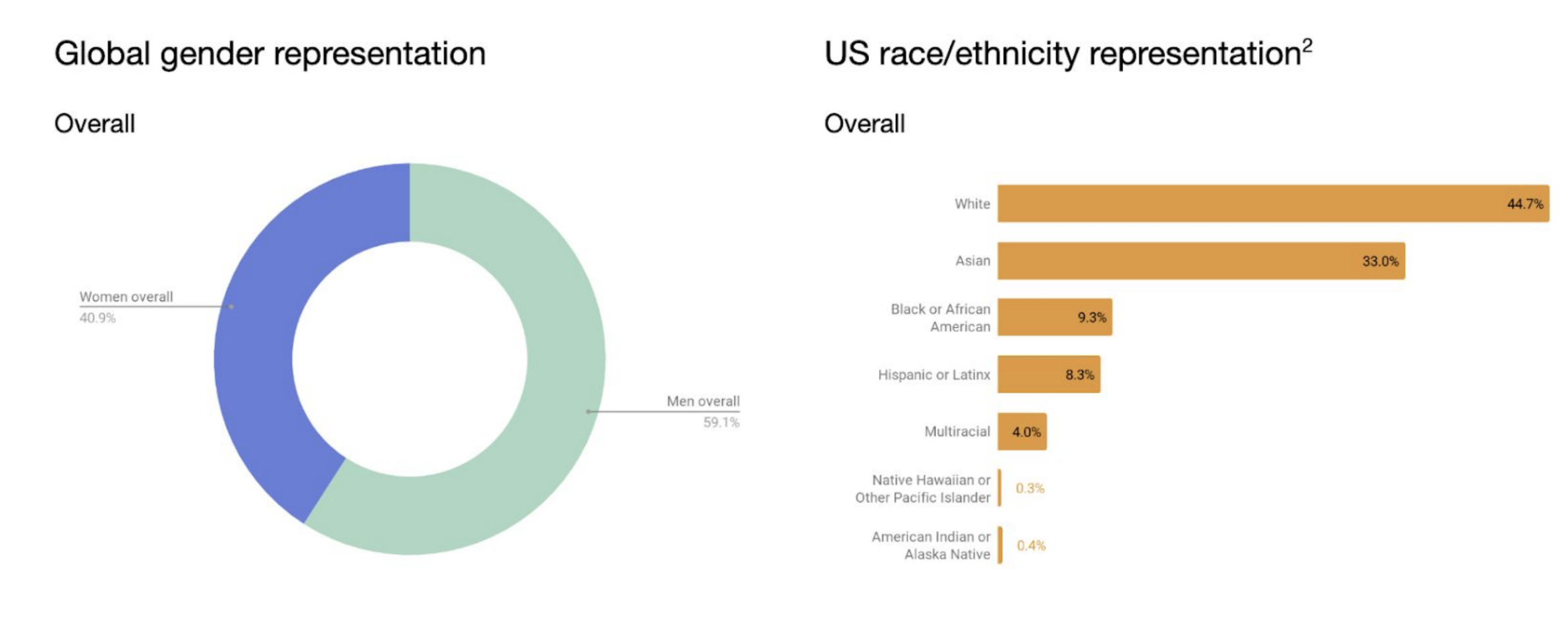
Today, Uber is still predominantly white and Asian, the company has made notable headway in the representation of black and Latinx people among its employees. Uber is now 9.3% black and 8.3% Latinx compared to just 8.1% black and 6.1% Latinx last year.

Screen Shot 2019 07 12 at 3.15.10 PM

While these numbers are an improvement, they are not where they need to be. Project Include’s Ellen Pao has previously said the numbers need to be at 13% black and 17% Latinx in order to reflect the demographics of the U.S. population.

“I think one area where we are improving but continue to need to improve is to increase the percentage of people of color at Uber,” Uber CEO Dara Khosrowshahi told TechCrunch. “In general, both black and Latinx employees. But not only increasing representation but also really understanding the experience of a POC at Uber — their engagement and their satisfaction.”

Another caveat is that when it comes to the representation of black and brown people in tech roles, also known as the higher-paying roles, the percentages decrease. Uber’s tech team is just 3.6% black, 4.4% Latinx and 2.7% multi-racial.

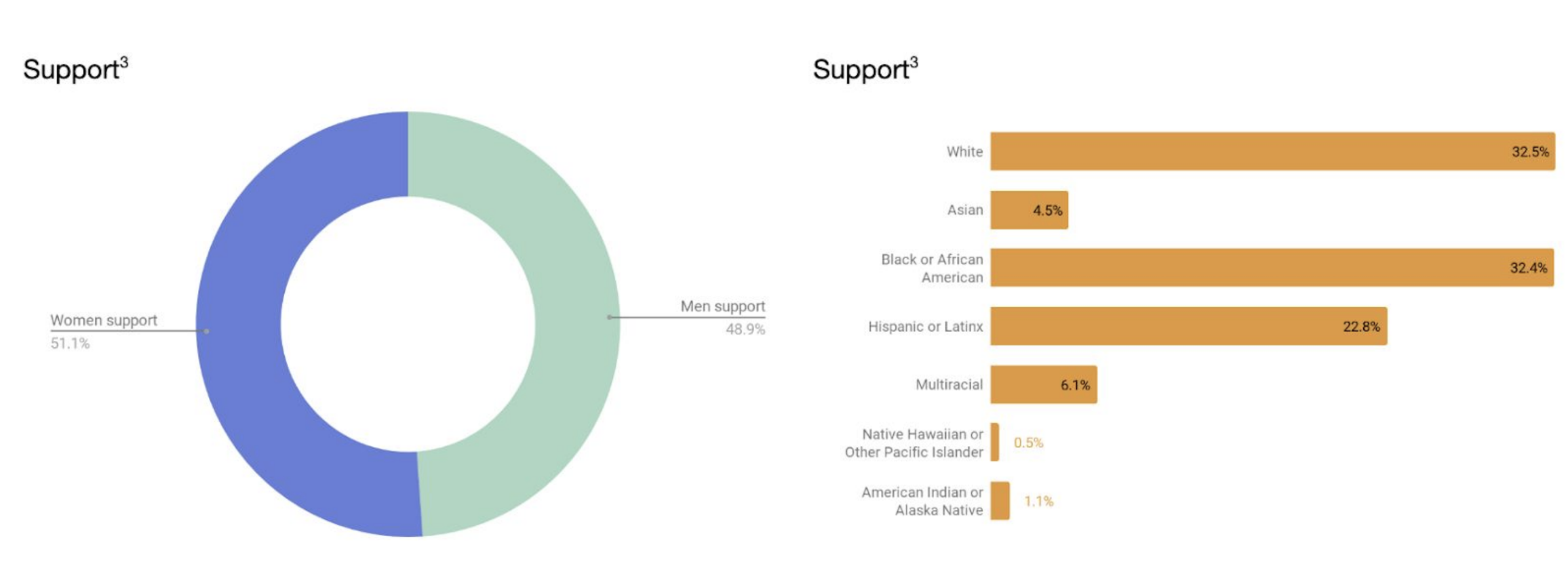
Even more alarming is the fact that black people make up 32.4% of Uber’s support staff. Latinx folks make up 22.8% of support staff, which includes community support representatives, people at Uber’s driver support Greenlight hubs, leasing specialists and self-driving operators.

Screen Shot 2019 07 12 at 3.18.13 PM

These roles are generally lower-paying ones, but Lee stressed that there has been positive growth across all the levels. Also, in order to further facilitate the growth of underrepresented people in the higher levels, Uber needs to make investments in the levels below.

“In order to make that change happen, we have to get people through the pipeline at levels below,” Uber Chief Diversity Officer Bo Young Lee told TechCrunch.

But it’s not easy, nor should it be, to advance in the ranks at Uber, Khosrowshahi said.

“I never want it to be easy because I want movement at Uber to be challenging and rewarding, but that challenge and reward should be available for everyone regardless of gender, color or beliefs,” he said. “We still have work to do as a company to make sure that challenge and reward is equally available to everyone.”

Unsurprisingly, there’s also little representation of black and brown people in leadership roles. While Khosrowshahi said he’s proud the promotion rates for women have improved over the last couple of years, he said, “I can’t yet say the same for promotions for people of color.”

Screen Shot 2019 07 12 at 3.19.14 PM

He added, representation of black and brown people at Uber in both tech and leadership positions “has to get better and it is getting better but we are early in this process.”

Uber is also in the early days of looking at intersectionality, having just started looking at the data in the last six months or so.

“I’m a strong believer that in order for true inclusion to be created, you have to look at how people in the organization who have the most intersectional identities are thriving,” Lee said. “Most of the gains, historically, when women have thrived are gained by white women. Black and brown women often gain the least.”

Here are some things I found notable:

  • There are more white men (30.1%) than there are black and Latinx people (17.6%) at Uber
  • Uber employs more black women (5.3%) than black men (4%)
  • White men make up 42.8% of the leadership team

It’s problematic that there are more white men than there are black and Latinx people at Uber. However, given what we all know about the tech industry, it’s not necessarily surprising.

“I certainly wasn’t pleased by it,” Lee said about the statistics. “But I wouldn’t say I was disappointed because I wasn’t surprised. It just gave me a really good starting place around what we were actually facing.”

Within the next three years, Uber aims to:

  1. Increase the percentage of women at levels L5 and higher (manager and above) to 35%
  2. Increase percentage of underrepresented employees at levels L4 and higher to 14%

Last week, Facebook laid out some new goals. The most notable one is to double the number of female and POC employees within the next five years. While Uber does not have that same goal in place, Uber expects to see the representation of women and POC double within the next few years on a year-over-year growth basis, Lee said. It’s important, however, to note that is different than on basis percentage point improvements.

While Uber has put some goals in place, Lee said it’s too early for the company to set goals around intersectionality. The first step seems to be to help people within Uber understand what intersectionality means and see how it shows up, or doesn’t show up, within its workforce.

“It doesn’t help us to hide this data,” Lee said of the company’s intersectional data. “If you don’t face the reality, you can’t make progress…While I’m not necessarily happy about the results or data as it stands, it is progress as long as we face it without excusing it.”

15 Jul 2019

Waze now shows road toll prices along your driving route

Navigation app Waze is making getting to where you’re going even easier – or at least more transparent. A new feature rolling out today will show you any tolls along your route, including the actual amount you’re going to pay, across both the U.S. and Canada.

This is above and beyond what you’ll get in most navigation apps, where you might get a visual or text indicator that there is a toll on one of the roads in your path (and you can opt to avoid them if possible) but you won’t know what you’re actually paying. With Waze, you’ll get the amount – sourced from its community of user drivers, rather than direct from the official toll road operators, however, but Waze’s crowd-sourced navigation data often has a leg up on the official source in other cases.

Waze will show you the toll prices up front, too, before the navigation actually gets under way, which is great because that’s when you actually have the opportunity to do something about it, whether it’s scrounging seat cushion change or just choosing to drive a different way.

This will be rolling out beginning today, so keep an eye out if you’re trying to get somewhere in the U.S. or Canada.

15 Jul 2019

No technical reason to exclude Huawei as 5G supplier, says UK committee

A UK parliamentary committee has concluded there are no technical grounds for excluding Chinese network kit vendor Huawei from the country’s 5G networks.

In a letter from the chair of the Science & Technology Committee to the UK’s digital minister Jeremy Wright, the committee says: “We have found no evidence from our work to suggest that the complete exclusion of Huawei from the UK’s telecommunications networks would, from a technical point of view, constitute a proportionate response to the potential security threat posed by foreign suppliers.”

Though the committee does go on to recommend the government mandate the exclusion of Huawei from the core of 5G networks, noting that UK mobile network operators have “mostly” done so already — but on a voluntary basis.

If it places a formal requirement on operators not to use Huawei for core supply the committee urges the government to provide “clear criteria” for the exclusion so that it could be applied to other suppliers in future.

Reached for a response to the recommendations, a government spokesperson told us: “The security and resilience of the UK’s telecoms networks is of paramount importance. We have robust procedures in place to manage risks to national security and are committed to the highest possible security standards.”

The spokesperson for the Department for Digital, Media, Culture and Sport added: “The Telecoms Supply Chain Review will be announced in due course. We have been clear throughout the process that all network operators will need to comply with the Government’s decision.”

In recent years the US administration has been putting pressure on allies around the world to entirely exclude Huawei from 5G networks — claiming the Chinese company poses a national security risk.

Australia announced it was banning Huawei and another Chinese vendor ZTE from providing kit for its 5G networks last year. Though in Europe there has not been a rush to follow the US lead and slam the door on Chinese tech giants.

In April leaked information from a UK Cabinet meeting suggested the government had settled on a policy of granting Huawei access as a supplier for some non-core parts of domestic 5G networks, while requiring they be excluded from supplying components for use in network cores.

On this somewhat fuzzy issue of delineating core vs non-core elements of 5G networks, the committee writes that it “heard unanimously and clearly” from witnesses that there will still be a distinction between the two in the next-gen networks.

It also cites testimony by the technical director of the UK’s National Cyber Security Centre (NCSC), Dr Ian Levy, who told it “geography matters in 5G”, and pointed out Australia and the UK have very different “laydowns” — meaning “we may have exactly the same technical understanding, but come to very different conclusions”.

In a response statement to the committee’s letter, Huawei SVP Victor Zhang welcomed the committee’s “key conclusion” before going on to take a thinly veiled swiped at the US — writing: “We are reassured that the UK, unlike others, is taking an evidence based approach to network security. Huawei complies with the laws and regulations in all the markets where we operate.”

The committee’s assessment is not all comfortable reading for Huawei, though, with the letter also flagging the damning conclusions of the most recent Huawei Oversight Board report which found “serious and systematic defects” in its software engineering and cyber security competence — and urging the government to monitor Huawei’s response to the raised security concerns, and to “be prepared to act to restrict the use of Huawei equipment if progress is unsatisfactory”.

Huawei has previously pledged to spend $2BN addressing security shortcomings related to its UK business — a figure it was forced to qualify as an “initial budget” after that same Oversight Board report.

“It is clear that Huawei must improve the standard of its cybersecurity,” the committee warns.

It also suggests the government consults on whether telecoms regulator Ofcom needs stronger powers to be able to force network suppliers to clean up their security act, writing that: “While it is reassuring to hear that network operators share this point of view and are ready to use commercial pressure to encourage this, there is currently limited regulatory power to enforce this.”

Another committee recommendation is for the NCSC to be consulted on whether similar security evaluation mechanisms should be established for other 5G vendors — such as Ericsson and Nokia: Two European based kit vendors which, unlike Huawei, are expected to be supplying core 5G.

“It is worth noting that an assurance system comparable to the Huawei Cyber Security Evaluation Centre does not exist for other vendors. The shortcomings in Huawei’s cyber security reported by the Centre cannot therefore be directly compared to the cyber security of other vendors,” it notes.

On the issue of 5G security generally the committee dubs this “critical”, adding that “all steps must be taken to ensure that the risks are as low as reasonably possible”.

Where “essential services” that make use of 5G networks are concerned, the committee says witnesses were clear such services must be able to continue to operate safely even if the network connection is disrupted. Government must ensure measures are put in place to safeguard operation in the event of cyber attacks, floods, power cuts and other comparable events, it adds. 

While the committee concludes there is no technical reason to limit Huawei’s access to UK 5G, the letter does make a point of highlighting other considerations, most notably human rights abuses, emphasizing its conclusion does not factor them in at all — and pointing out: “There may well be geopolitical or ethical grounds… to enact a ban on Huawei’s equipment”.

It adds that Huawei’s global cyber security and privacy officer, John Suffolk, confirmed that a third party had supplied Huawei services to Xinjiang’s Public Security Bureau, despite Huawei forbidding its own employees from misusing IT and comms tech to carry out surveillance of users.

The committee suggests Huawei technology may therefore be being used to “permit the appalling treatment of Muslims in Western China”.

15 Jul 2019

Petcube’s Bites 2 and Play 2 amuse pets and humans alike with Alexa built-in

Petcube’s original Bites smart treat dispenser and Play pet camera with a built-in laser pointer were great for pet parents who couldn’t always be around to hang out with their furry charges, but the new Bites 2 and Play 2 come with one big new upgrade that make them far more versatile than the original: They both double as Alexa-powered smart speaker devices.

Both the Bites 2 and Play 2 can hear and respond to Alexa requests, with a four-microphone array that in my limited testing actually outperforms the Alexa mics built into my Sonos One and Sonos Beam speakers, which is pretty impressive for devices whose main features are serving up treats and keeping an eye on your pets. That’s on top of the Bites 2 being able to remotely dispense treats for your pet, and the Play 2 providing playtime away from home with a built-in laser pointer you can direct from your phone.

The Bites 2 and Play 2 also feature other improvements, including new wider angle lenses that offer full 180-degree views of your home for more likelihood you’ll spot your pets wandering around, and better Fi-Fi connectivity support with additional 5GHz networking, plus night vision and full HD video. Currently, the field of view is limited to 160-degrees, with an update to follow that will unlock the full 180, but for most users, the 160 FOV is going to show you an entire room and then some.

With the Bites 2, you can also initiate video calls and chat with your pet, though my dog Chelsea basically is just confused by this. It is handy if I need to ask my partner if there’s anything else I’m forgetting to pick up from the store, however. And the treat-flinging feature definitely does appeal to Chelsea, especially now that it’s Alexa-integrated so that I can easily issue a voice command to give her a well-earned reward.

This has actually proven more than just fun – Chelsea suffers from a little bit of separation anxiety, so when we leave our condo she usually spends a few quick minutes complaining audibly with some rather loud barks. But since getting the Petcube Bites 2 to test, I’ve been reinforcing good behavior by reminding her to keep quiet, waiting outside the door and then flinging her a treat or two for her troubles. It’s pretty much done away with the bye-bye barking in just a short time.

The Play 2 doesn’t fling treats, but it does have a built-in laser pointer (which the company says is totally safe for your pets eyes). Chelsea straight up does not understand the laser or even really acknowledge it, so that’s a bit of a miss, but with a friend’s cat this proved an absolute show-stopping feature. I’ve also known dogs previously who loved this, so your mileage may vary, but if you’re unsure it’s probably worth picking up a dollar store laser pointer keychain first to ensure it’s their jam.

The $249 Bites 2 and $199 Play 2 offer a ton of value in just the image and build quality upgrades over their original incarnations, and their basic features are probably plenty enough for doting pet parents. But the addition of Alexa makes these both much more appealing in my opinion, since it essentially bundles an Echo in each device at no extra cost.

15 Jul 2019

Serena Williams, Mark Cuban invest $3 million in Mahmee, a digital support network for new moms

Tennis superstar and mom to a 22-month-old, Serena Willams has joined Mark Cuban to invest $3 million seed funding in Mahmee, a startup working toward filling the critical care gap in postpartum care.

For those who’ve never given birth or who (count your blessings!) never had any mishaps in the hospital or afterwards, the weeks and months following childbirth can be extremely hard on the new mom, with estimates as high as one in five women suffering from postpartum depression or anxiety and about 9% of women experiencing post-traumatic-stress-disorder (PTSD) following childbirth — and those are just the mood and mental health disorders.

Physical recovery, even for those with a healthy, run-of-the-mill birth, takes at least six weeks. Eight weeks if you’ve had a C-section. And, then there are all the medical complications. Williams, who has a history of blood clots, ended up basically shouting at the doctors to give her a CT scan that saved her life.

The real issue, at the heart of all this, according to Mahmee co-founder Melissa Hanna, is that “the data is fragmented.” She says this is why she built a network to get new moms the support they need — from their community, other moms and medical their providers.

Mahmee provides not only online group discussions with other moms going through the same thing and at the same stage but also connection to your medical provider. On top of that, it adds support from a trained “maternity coach” who can flag if something is wrong.

One example Hanna used was a new mom who was exhibiting symptoms of septic shock. The co-founder says a coach was able to call this mom on the spot and get her to contact her OB-GYN right away.

There are other online services like Postpartum Support International (PSI) and the Bloom Foundation, which both provide a sort of digital network and resources for new moms but Hanna believes it is that missing link to medical professionals after mom has gone home from the hospital that really make a difference.

“We’re so focused on delivering a healthy baby that mom gets side-lined,” She told TechCrunch. Adding in a statement, “And this industry is lacking the IT infrastructure needed to connect these professionals from different organizations to each other, and to follow and monitor patients across practices and health systems. This missing element creates gaps in care. Mahmee is the glue that connects the care ecosystem and closes the gaps.”

While other sites mentioned above are free to use, Mahmee, which goes beyond social support to providing engagement and patient monitoring, makes money through group and individual video calls (the introductory session with a coach is free) and various support groups. There are also different payment tiers starting at $20 a month and up towards $200 per month where new parents can ask unlimited questions through a HIPAA-secure, online dashboard connecting them with their medical providers and Mahmee coaches.

Do new moms need to pay someone to help them out and monitor them medically after they get home from the hospital? Possibly. Some local hospitals and medical networks also provide various types of help — both through counseling and new parent support groups. But often it can take weeks to get a counseling session at a busy hospital and your OB may have too many patients to call and check up on you. Having this type of support could just save your life — and, if anything else, checking in with a group of moms going through the same thing could be the key to saving your sanity.

Hanna admits it’s early days for her startup but tells TechCrunch there are over 1,000 providers in the Mahmee network so far. She plans to use the $3 million to grow her team out, including engineers, clinicians and sales staff and hints she’s working on several partnerships within the healthcare industry right now.

15 Jul 2019

48-hours only: 2-for-1 sale on passes to Disrupt Berlin 2019

We’re in a celebratory mood here at TechCrunch — it’s Prime day after all. So we’re setting you up for serious savings on passes to Disrupt Berlin 2019, which takes place on 11-12 December. Das ist wunderbar!

Jump on this classic buy-one-get-one — BOGO — deal that starts today and ends tomorrow, July 16, at 11:59 p.m. (GMT). Buy an Innovator, Founder or Investor pass and you’ll score a second one free. Treat your co-worker or friend to two days of the best of the European tech scene. Talk about value. But this BOGO goes bye-bye in just 48 hours, so don’t wait. Buy your passes to Disrupt Berlin 2019 now.

Imagine experiencing all that Disrupt Berlin has to offer knowing that you got two passes for the price of one. That’s some serious ROI before you even step foot in Berlin. Don’t miss the Startup Battlefield — our legendary pitch-off with $50,000 cash at stake. The competition is always fierce and fascinating. Last year was epic. Who knew tech could help address reduced sperm motility? Berlin’s reigning Startup Battlefield champ, Legacy, did.

If you’re set to network, head straight to the Startup Alley expo hall. It’s packed with hundreds of startups showcasing their considerable tech talents. It’s also home to a cadre of outstanding startups — our TC Top Picks. We vet applications and choose up to five startups that represent the best in a range of tech categories. It’s another great way to gain invaluable exposure. The vetting process for Startup Battlefield and the TC Top Picks program officially starts a bit later this summer, but you can get a head start on things by filling out an application at apply.techcrunch.com.

We’re building our 2019 speaker roster as we speak. As always it will feature world-class speakers and panelists — founders, investors and icons — who share their experiences, advice and insight. Last year, we had the pleasure of hearing Frank Salzgeber (European Space Agency), Lizzie Chapman (ZestMoney) and Rafal Modrzewski (ICEYE) — just to name a few.

Sign up for our mailing list to stay current as we announce the speakers, workshops, demos events and other surprises in the weeks ahead.

Disrupt Berlin 2019 takes place on 11-12 December, and we pack a lot of value into two short days. Double your ROI and take advantage of our 48-hour BOGO sale. Buy your Innovator, Founder or Investor passes before July 16 at 11:59 p.m. (GMT) and get another pass free. That’s two passes for one super early-bird price. Das ist wunderbar! Buy your BOGO passes to Disrupt Berlin 2019.

Is your company interested in sponsoring or exhibiting at Disrupt Berlin 2019? Contact our sponsorship sales team by filling out this form.