
Year: 2019

15 Jul 2019

Customer data management company Amperity raises $50M

Amperity is announcing that it has raised $50 million in Series C funding.

The company offers what co-founder and CEO Kabir Shahani said is the ability to “ingest every piece of atomic-level data remotely related to a customer and assemble it into a customer 360.”

To illustrate how Amperity can help businesses use their customer data more intelligently, Shahani (pictured above with his co-founder and CTO Derek Slager) said a company with a branded credit card could start sending targeted offers based on customer activity, while a retailer could start sending promotions targeted at online-only customers to bring them into physical stores.

And just to be clear: This is only using first-party data collected by the brand itself, not third-party data purchased from other companies. In fact, when I brought this up, Shahani told me he has a “very strong and convicted belief in the sanctity of the relationship between the consumer and brands.”

Amperity says that in 2018, its annual recurring revenue grew 355% year-over-year. Although the startup only launched in 2016, it’s already signed up an impressive roster of customers like Starbucks, Gap Inc., TGI Fridays and Planet Fitness.

Shahani said that when they sign up with Amperity, most of these businesses are already trying to use customer data to improve their messaging, but they aren’t able to do so in “a real-time, in-the-moment, frequent way,” and they aren’t effectively merging data from different channels into a single profile.

He also argued that while Salesforce and Adobe have announced plans to move into this market, it was “kind of an intention announcement”: “There aren’t any real customers behind it, there aren’t any real use cases deployed.”

As the large marketing clouds build up their offerings, Shahani suggested that Amperity will still have the advantage of a “network effect,” with businesses recommending the company’s platform to each other, and will also benefit from an interest in standalone, “best-in-class” products.

“The marketing cloud phenomenon of 10 years ago, 15 years ago has certainly burned a lot of companies,” Shahani said.

Amperity has now raised a total of $87 million. The new funding comes from Tiger Global Management, Goldman Sachs, Declaration Partners, Madera Technology Partners, Madrona Venture Group and investor Lee Fixel (who previously backed Amperity through his role at Tiger).

“It’s been exciting to watch this team execute against their vision and develop the deep technical capability required to become the clear category leader,” Fixel said in a statement.

Among other things, the money should help Amperity beef up its sales and marketing — Shahani said it didn’t start seriously hiring a sales team until a year ago, and it didn’t hire its first chief marketing officer until three months ago.

15 Jul 2019

Customer data management company Amperity raises $50M

Amperity is announcing that it has raised $50 million in Series C funding.

The company offers what co-founder and CEO Kabir Shahani said is the ability to “ingest every piece of atomic-level data remotely related to a customer and assemble it into a customer 360.”

To illustrate how Amperity can help businesses use their customer data more intelligently, Shahani (pictured above with his co-founder and CTO Derek Slager) said a company with a branded credit card could start sending targeted offers based on customer activity, while a retailer could start sending promotions targeted at online-only customers to bring them into physical stores.

And just to be clear: This is only using first-party data collected by the brand itself, not third-party data purchased from other companies. In fact, when I brought this up, Shahani told me he has a “very strong and convicted belief in the sanctity of the relationship between the consumer and brands.”

Amperity says that in 2018, its annual recurring revenue grew 355% year-over-year. Although the startup only launched in 2016, it’s already signed up an impressive roster of customers like Starbucks, Gap Inc., TGI Fridays and Planet Fitness.

Shahani said that when they sign up with Amperity, most of these businesses are already trying to use customer data to improve their messaging, but they aren’t able to do so in “a real-time, in-the-moment, frequent way,” and they aren’t effectively merging data from different channels into a single profile.

He also argued that while Salesforce and Adobe have announced plans to move into this market, it was “kind of an intention announcement”: “There aren’t any real customers behind it, there aren’t any real use cases deployed.”

As the large marketing clouds build up their offerings, Shahani suggested that Amperity will still have the advantage of a “network effect,” with businesses recommending the company’s platform to each other, and will also benefit from an interest in standalone, “best-in-class” products.

“The marketing cloud phenomenon of 10 years ago, 15 years ago has certainly burned a lot of companies,” Shahani said.

Amperity has now raised a total of $87 million. The new funding comes from Tiger Global Management, Goldman Sachs, Declaration Partners, Madera Technology Partners, Madrona Venture Group and investor Lee Fixel (who previously backed Amperity through his role at Tiger).

“It’s been exciting to watch this team execute against their vision and develop the deep technical capability required to become the clear category leader,” Fixel said in a statement.

Among other things, the money should help Amperity beef up its sales and marketing — Shahani said it didn’t start seriously hiring a sales team until a year ago, and it didn’t hire its first chief marketing officer until three months ago.

15 Jul 2019

The Dreamlight Zen uses lights and music to help wearers relax

Every time I’m back in Asia, it seems like I’m meeting with another sleep mask company. And every time, I wonder aloud about how the technology might ease the soul grinding 16 hour flight home. Last year, Brinc-backed Silentmode lent me a unit for the long flight along with a final night in Hong Kong’s notorious Chung King Mansions hostel (long, unfortunate Booking.com story on that one). I liked the idea, but ultimately found he product cumbersome — a particularly egregious issue for some who already finds its impossible to sleep on planes for longer than a 20 minute stretch.

Straightaway, it’s clear that Dreamlight has a leg up on Silentmode as far as design is concerned. It’s thinner, more streamlined and, for those concerned about such things, just better looking. Though I’m not sure how much that last bit matters to most as you’re doing your damnedest to get comfortable on a long international flight.

Ultimately, what’s more interesting to me is the direction the company’s going in here. Silentmode is very explicitly not designed for meditation. There’s certainly something to be said for focus on doing one thing (sleep) well, but meditation really seems like a no brainer for these sorts of products. Its founder also mentioned to me that the company didn’t include lights in the device, because who needs to stare at another screen. Again, fair enough, I suppose, but if done well, light therapy is a pretty compelling addition.

All of those things are baked into Dreamlight’s latest product, the Zen, which, as its name implies, is really focused on the meditation crowd. Here the system pulses orange light along with synchronized audio through the embedded headphones. The startup’s got a handful of first party content preloaded on the device, or your can connect it to your smartphone to use Calm or Headspace.

Unlike Silentmode, which is looking to content subscriptions to help monetize, Dreamlight’s all about the hardware at the moment. The company does appear eager to team with a third party meditation app to help provide content in the future, but for now, you can just bring your own via bluetooth.

The design’s really the thing here. The company’s done a fine job creating a comfortable wearable. I can only speak to wearing in a well light conference room during the day, but it seems like it would be easy enough to fall asleep with the thing on. The eye region in particular is well designed, doing a fine job eliminating light leakage without applying any pressure to the eyes.

The Pro version runs ~$300. The new Zen is roughly half that. The company also created a sleep mask only version, which strips it of its electronics. That runs $29, a small price to pay for a less miserable marathon flight.

15 Jul 2019

The Dreamlight Zen uses lights and music to help wearers relax

Every time I’m back in Asia, it seems like I’m meeting with another sleep mask company. And every time, I wonder aloud about how the technology might ease the soul grinding 16 hour flight home. Last year, Brinc-backed Silentmode lent me a unit for the long flight along with a final night in Hong Kong’s notorious Chung King Mansions hostel (long, unfortunate Booking.com story on that one). I liked the idea, but ultimately found he product cumbersome — a particularly egregious issue for some who already finds its impossible to sleep on planes for longer than a 20 minute stretch.

Straightaway, it’s clear that Dreamlight has a leg up on Silentmode as far as design is concerned. It’s thinner, more streamlined and, for those concerned about such things, just better looking. Though I’m not sure how much that last bit matters to most as you’re doing your damnedest to get comfortable on a long international flight.

Ultimately, what’s more interesting to me is the direction the company’s going in here. Silentmode is very explicitly not designed for meditation. There’s certainly something to be said for focus on doing one thing (sleep) well, but meditation really seems like a no brainer for these sorts of products. Its founder also mentioned to me that the company didn’t include lights in the device, because who needs to stare at another screen. Again, fair enough, I suppose, but if done well, light therapy is a pretty compelling addition.

All of those things are baked into Dreamlight’s latest product, the Zen, which, as its name implies, is really focused on the meditation crowd. Here the system pulses orange light along with synchronized audio through the embedded headphones. The startup’s got a handful of first party content preloaded on the device, or your can connect it to your smartphone to use Calm or Headspace.

Unlike Silentmode, which is looking to content subscriptions to help monetize, Dreamlight’s all about the hardware at the moment. The company does appear eager to team with a third party meditation app to help provide content in the future, but for now, you can just bring your own via bluetooth.

The design’s really the thing here. The company’s done a fine job creating a comfortable wearable. I can only speak to wearing in a well light conference room during the day, but it seems like it would be easy enough to fall asleep with the thing on. The eye region in particular is well designed, doing a fine job eliminating light leakage without applying any pressure to the eyes.

The Pro version runs ~$300. The new Zen is roughly half that. The company also created a sleep mask only version, which strips it of its electronics. That runs $29, a small price to pay for a less miserable marathon flight.

15 Jul 2019

Canal+ acquires Nollywood studio ROK from IROKOtv to grow African film

French television company Canal+ has acquired the ROK film studio from VOD company IROKOtv for an undisclosed amount.

Founded by Jason Njoku in 2010—and backed by $45 million  in VC—IROKOtv boasts the largest online catalog of Nollywood film content in the world.

Nollywood is a movie genre popularized in Nigeria that has become Africa’s de facto film industry and one of the largest globally, by production volume.

Based in Lagos, ROK film studios was incubated to create original content for IROKOtv, which can be accessed online anywhere in the world.

Actress and producer Mary Njoku—IROKOtv CEO Jason Njoku’s wife—founded ROK studios and will stay on as Director General under the Canal+ acquisition.

Owned by media conglomerate Vivendi, Canal+ looks to give Mary more production resources, without disrupting ROK’s creative chemistry.

“We are acquiring the talent of Mary,” Canal+ Chief Content Officer Fabrice Faux told TechCrunch on a call.

“We will provide administrative support, finance, and equipment, but otherwise it is our intention to give Mary maximum autonomy and creative freedom,” he said.

Mrs. Njoku’s creative work so far has led ROK to produce over 540 movies and 25 original TV series, according to company data.

Mary Njoku ROK IrokotvThrough ROK, Njoku has expanded Nollywood’s formula for producing films on low budgets, largely shot on location in Nigeria, that connect with African audiences wherever they are. One of ROK’s more recent popular productions is Ojukwu, a period series set in an 1800s Nigerian village, in which Njoku directs and acts.

“Nollywood is Africa…We tell the African story. You can bring a Nigerian story, a Ghanaian story, a South African story…we talk the same drama. So Africans can connect to the average Nollywood story anywhere in the world,” Njoku told TechCrunch.

With the ROK acquisition, Canal+ looks to bring the Nollywood production ethos to other countries and regions of Africa.

Ojukwu ROK IROKOtv“It’s not that easy to produce an interesting movie for $20,000. People in Nigeria, particularly Mary and IROKO, know how to do that,” said Faux from Canal+.
“We want her to bring that to French speaking Africa. Because we need more African content and we need the industry to develop in French speaking Africa.”

Faux would not divulge the acquisition price but confirmed there is a cash component of the deal. “This is key for Jason…to developing the VOD aspects of IROKO,” he said.

Under the deal, ROK will continue to create unique content for IROKOtv, ROK’s four existing channels—three on DSTV and ROK Sky in the UK—as well as Canal+’s Africa and global channels.

The ability to reach a larger network of African consumers on the continent and internationally is another acquisition play for Canal+. Nollywood online content has proven the ability to find demand anywhere Africans are, including diaspora populations abroad. IROKOtv’s top-three streaming countries are Nigeria, the US, and the UK, according to a company spokesperson.

“We’ll now be able to do things in English speaking and French speaking African markets…and gain access to an advertising market where we believe there’s huge potential for growth,” said Faux.

The ROK acquisition is not the Canal+ Group’s first collaboration with IROKOtv. The media company joined a $19 million Series E investment in 2016, that also saw Canal+ and IROKO launch a French VOD channel. This was shortly after Netflix announced it would go live in Africa, though with little original African content. Netflix has since started to commission film content from Nigeria.

VOD tech startups, such as IROKOtv, have worked to take African film online, where it can be better distributed and monetized. That’s become less of a hard road, given the continent’s improving mobile and internet penetration paired with better bandwidth and falling data costs. There has been some attribution and loss. In 2017, Y-Combinator-backed French language VOD startup Afrostream, which had raised over $100 million in VC, shuttered—ending subscription services in 24 African and 5 European countries.

Canal+ and ROK are open to producing content for other VOD and production outlets, according to Njoku and Faux. “We could [for Netflix], or we could create a production corner on another VOD service,” said Faux.

On the possibility of pursuing an African film with crossover appeal to non-African audiences—particularly in the wake Black Panther’s success—ROK CEO Mary Njoku did not rule it out.

“I have been tempted in the past and am tempted today, but I want to focus on making the channels we have now the best Nollywood channels out there,” she said.


15 Jul 2019

Canal+ acquires Nollywood studio ROK from IROKOtv to grow African film

French television company Canal+ has acquired the ROK film studio from VOD company IROKOtv for an undisclosed amount.

Founded by Jason Njoku in 2010—and backed by $45 million  in VC—IROKOtv boasts the largest online catalog of Nollywood film content in the world.

Nollywood is a movie genre popularized in Nigeria that has become Africa’s de facto film industry and one of the largest globally, by production volume.

Based in Lagos, ROK film studios was incubated to create original content for IROKOtv, which can be accessed online anywhere in the world.

Actress and producer Mary Njoku—IROKOtv CEO Jason Njoku’s wife—founded ROK studios and will stay on as Director General under the Canal+ acquisition.

Owned by media conglomerate Vivendi, Canal+ looks to give Mary more production resources, without disrupting ROK’s creative chemistry.

“We are acquiring the talent of Mary,” Canal+ Chief Content Officer Fabrice Faux told TechCrunch on a call.

“We will provide administrative support, finance, and equipment, but otherwise it is our intention to give Mary maximum autonomy and creative freedom,” he said.

Mrs. Njoku’s creative work so far has led ROK to produce over 540 movies and 25 original TV series, according to company data.

Mary Njoku ROK IrokotvThrough ROK, Njoku has expanded Nollywood’s formula for producing films on low budgets, largely shot on location in Nigeria, that connect with African audiences wherever they are. One of ROK’s more recent popular productions is Ojukwu, a period series set in an 1800s Nigerian village, in which Njoku directs and acts.

“Nollywood is Africa…We tell the African story. You can bring a Nigerian story, a Ghanaian story, a South African story…we talk the same drama. So Africans can connect to the average Nollywood story anywhere in the world,” Njoku told TechCrunch.

With the ROK acquisition, Canal+ looks to bring the Nollywood production ethos to other countries and regions of Africa.

Ojukwu ROK IROKOtv“It’s not that easy to produce an interesting movie for $20,000. People in Nigeria, particularly Mary and IROKO, know how to do that,” said Faux from Canal+.

“We want her to bring that to French speaking Africa. Because we need more African content and we need the industry to develop in French speaking Africa.”

Faux would not divulge the acquisition price but confirmed there is a cash component of the deal. “This is key for Jason…to developing the VOD aspects of IROKO,” he said.

Under the deal, ROK will continue to create unique content for IROKOtv, ROK’s four existing channels—three on DSTV and ROK Sky in the UK—as well as Canal+’s Africa and global channels.

The ability to reach a larger network of African consumers on the continent and internationally is another acquisition play for Canal+. Nollywood online content has proven the ability to find demand anywhere Africans are, including diaspora populations abroad. IROKOtv’s top-three streaming countries are Nigeria, the US, and the UK, according to a company spokesperson.

“We’ll now be able to do things in English speaking and French speaking African markets…and gain access to an advertising market where we believe there’s huge potential for growth,” said Faux.

The ROK acquisition is not the Canal+ Group’s first collaboration with IROKOtv. The media company joined a $19 million Series E investment in 2016, that also saw Canal+ and IROKO launch a French VOD channel. This was shortly after Netflix announced it would go live in Africa, though with little original African content. Netflix has since started to commission film content from Nigeria.

VOD tech startups, such as IROKOtv, have worked to take African film online, where it can be better distributed and monetized. That’s become less of a hard road, given the continent’s improving mobile and internet penetration paired with better bandwidth and falling data costs. There has been some attribution and loss. In 2017, Y-Combinator-backed French language VOD startup Afrostream, which had raised over $100 million in VC, shuttered—ending subscription services in 24 African and 5 European countries.

Canal+ and ROK are open to producing content for other VOD and production outlets, according to Njoku and Faux. “We could [for Netflix], or we could create a production corner on another VOD service,” said Faux.

On the possibility of pursuing an African film with crossover appeal to non-African audiences—particularly in the wake Black Panther’s success—ROK CEO Mary Njoku did not rule it out.

“I have been tempted in the past and am tempted today, but I want to focus on making the channels we have now the best Nollywood channels out there,” she said.


15 Jul 2019

Sutro’s smart pool monitoring device arrives next month

Sutro’s device has changed a lot since the company appeared as a contestant in our Hardware Battlefield way back in 2015. But who hasn’t, really? The startup happened to be in town as TechCrunch paid a visit to SSV’s Shenzhen headquarters. Turns out it’s a good place to be six weeks ahead of your product’s commercial launch. There are always plenty of kinks to be ironed out ahead of product, after all.

The heart of the product is the same, of course: a floating connected device that can continually measure the chlorine, pH and other levels of a pool’s content. The final version of the device, however, is cylindrical, with, thankfully, fewer wires hanging out than the previous version. Honestly, it looks a bit like a floating travel mug.

With a new production partner announced way back at CES in January, the company says it’s now six weeks away from shipping the product for those who purchase it directly through the startup’s site. Some point soon, it will also make the device available through pool stores and other online channels. For now, however, it’s direct purchase only.

At $699, the device isn’t cheap. Though the Bay Area-based startup believes that the nuisance of regularly monitoring pools will be enough to convince those with deep pockets to take the plunge, sop to speak. And the company’s already seen a fair amount of interest from potential customers since it started talking up the product nearly half a decade back.

A planned second version of the device will make things even more convenient, with plans to add a system for releasing chemicals into the water in order to automatically regulate the water’s make up. That bit certainly sounds appealing if a ways off.

Hardware is just the first step for the company, though. Sutro believes that with enough devices out in the real world, it can create useful datasets for water quality. While plenty of monitoring systems exist for reservoirs and aqueducts, a lot can happen on the way to the hose or faucet. Flint is, sadly, a recent example of this, as river water corroded aging pipes, causing lead to enter the water supply.

The company plans to use data from this and future products to build what it deems a “water genome,” offering rich information on water quality across the world.

15 Jul 2019

Cambridge Uni graphene spin-out bags $16M to get its first product to market

Cambridge, UK based graphene startup, Paragraf, has closed a £12.8 million (~$16M) Series A round of funding led by early stage VC  Parkwalk. Also investing this round: IQ Capital Partners, Amadeus Capital Partners and Cambridge Enterprise, the commercialisation arm of the University of Cambridge, plus several unnamed angel investors. 

The funding will be used to bring the 2015-founded Cambridge University spin out’s first graphene-based electronics products to market — transitioning the startup into a commercial, revenue-generating phase.

When we covered Paragraf’s $3.9M seed raise just over a year ago CEO and co-founder Dr Simon Thomas told us it was looking to raise a Series A ahead of Q3 2019 so the business looks to be right on track at this stage.

During the seed phase Paragraf says it was able to deliver a manufacturing facility, graphene layer production and first device prototypes “significantly” ahead of plan.

It’s now switching focus to products — with strategic volume device production partners, and commercialisation of its first device: A super-high sensitivity magnetic field detector which it says operates over temperature, field and power ranges “that no other device can currently achieve”.

Commenting in a statement, Thomas added: “I am extremely proud of the young team at Paragraf who have collectively delivered the early strategy milestones with great skill. This next phase will allow Paragraf to make these truly game-changing technologies a reality. Paragraf is continually seeking like-minded collaborative development, production and commercial partners to accelerate the delivery of the many exciting electronics technology opportunities graphene has to offer.”

In terms of the touted benefits of graphene, the atom-layer-thick 2D material has long been exciting scientists as a potential replacement for silicon in computer chips — thanks to a raft of key properties including high conductivity, strength and flexibility and thermal integrity. Researchers suggest it could deliver a performance speed increase of up to 1000x, while reducing energy use by up to 50x.

But while excitement about how graphene could transform electronics has been plentiful in the more than a decade since it was discovered, those seeking to commercialize the wonder material have found it challenging to manufacture at commercial grade and scale.

This is where Paragraf aims to come in — claiming to be the first company to deliver IP-protected graphene technology using what it bills as “standard, mass production scale manufacturing approaches”.

It also says its first sensor products have demonstrated “order of magnitude operational improvements over today’s incumbents”.

Such claims of course remain to be tested in the wild but Paragraf isn’t dialling down the hype vis-a-vis the transformative potential of baking graphene into next-gen electronics.

“Achieving large-scale, graphene-based production technology will enable next generation electronics, including vastly increased computing speeds, significantly improved medical diagnostics and higher efficiency renewable energy generation as well as currently unachievable products such as instant charging batteries and very low power, flexible electronics,” it writes.

A year ago Thomas told us Paragraf expected high-tech applications of graphene in consumer technologies to appear in the general market within the next 2-3 years — a timeline that should now have shrunk to just a year or two out.

15 Jul 2019

Yandex-Uber JV MLU acquires regional rival Vezet for shares and $71.5M in cash

On-demand transportation giant Uber made its name in part by aggressively entering new markets on a path of organic growth, but in recent times, it has shown itself more amenable to the concept of expansion through acquisition. Today, MLU, Uber’s ride-sharing and food delivery JV with Yandex (by way of Yandex .taxi) covering cities in Russia and surrounding regions, announced that it has acquired Vezet, a smaller rival that operates in 123 markets in the same region, for a price that’s estimated to be in the region of $204 million.

Alongside that MLU said that it would be investing an further 8 billion rubles ($127 million) in the Russian regions over the next three years, with half towards safety and security — including driver training — and half for “supporting regional drivers and taxi fleet companies.” (The latter could be in the form of special incentives to continue encouraging them to drive with MLU over others, and other loyalty programs.)

Current shareholders of Vezet “will receive new shares in MLU, representing up to 3.6% of the issued share capital of the company at closing, together with up to $71.5 million in cash,” based on Vezet meeting certain performance and integration targets, the companies said. Part of that integration will involve moving all of Vezet onto a single platform with MLU.

To be clear, the companies did not disclose the approximate valuation of the deal based on these percentages, but as a marker, when Uber last valued MLU ahead of its public listing, it put the figure at $3.68 billion. That would put shares of 3.6% at just under $132.5 million, valuing the Vezet transaction in total at around $204 million. (This is assuming that the valuation of MLU, prior to this acquisition, has not changed in the last three months.)

The deal will also slightly reduce Uber’s stake in the JV: MLU notes that following the completion of the acquisition, Yandex NV will own 56.2% of MLU, and Uber will own 35.0%, with 5.3% held by employees (part of the equity incentive plan).

The move speaks to the inevitable consolidation that has happened, and will continue to happen, in the ridesharing market. Vezet (which has a nice double-meaning in Russian: driving, and lucky — or maybe more accurately, things are going your way) itself is a combination of some smaller businesses, and today operates services under four brands: Vezet, Taxi Saturn, Fasten and Red Taxi.

It will also help MLU potentially remain in markets where it has had faced some potential issues in the past. In Kazan, for example, some had called on the government to ban MLU (specifically Yandex.taxi). That hadn’t come to pass, although the prospect of such legal actions might be diffused if it’s acquires a local operator that’s had a more harmonious rise in the market.

Vezet’s business model is built around providing a platform for individuals and existing fleets, which can use it to get routed to passengers looking for a ride from A to B. Like Uber and the many others in this business area, Vezet uses an app-based interface, but given its footprint and how it covers markets where smartphone penetration and usage are not as extensive as in mature markets, it also allows people to order rides through call centers. This deal will include all of Vezet’s assets.

While Uber originally forged an empire by entering markets on its own steam and building businesses from scratch (using tens of billions of dollars in VC funds to do it), in more recent years it’s formed regional joint ventures, including merging its operations in China with Didi and Southeast Asia with Grab alongside its Russia move with Yandex. It’s also started to acquire businesses to move into new markets, such as its recent deal to buy Careem for more than $3 billion to make a big splash in the Middle East.

The acquisition is expected to close at the end of the year, the companies said.

15 Jul 2019

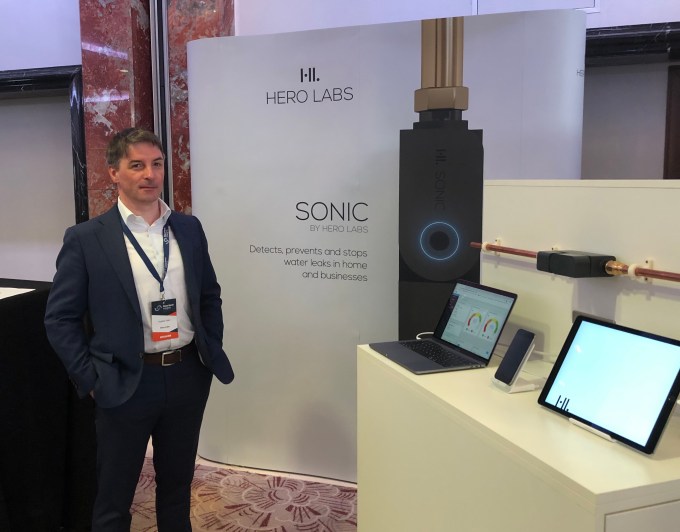
Hero Labs raises £2.5M for its ultrasonic device to monitor a property’s water use and prevent leaks

Hero Labs, a London-based startup that is developing “smart” technology to help prevent water leaks in U.K. properties, has raised £2.5 million in seed funding. The round is led by Earthworm Group, an environmental fund manager, with further support via a £300,000 EU innovation grant and a number of unnamed private investors.

The new capital will be used by Hero Labs to accelerate development of its first product: a smart device dubbed “Sonic” that uses ultrasonic technology to monitor water use within a property, including the early detection of water leaks.

Founded in 2018 by Krystian Zajac after he exited Neos, a smart home insurer that was acquired by Aviva, Hero Labs was born out of the realisation that a lot of smart home technology either wasn’t very smart or didn’t solve mass problems (Zajac had also previously ran a smart home company focusing on ultra high net-worth individuals that delivered bespoke designs for things like motorised swimming pool floors or home cinemas doubling up as panic rooms).

Coupled with this, the Hero Labs founder learned that water wastage was a very costly problem, both financially and environmentally, with water leaks being the number one culprit for property damage in the U.K. ahead of fires, gas explosions or break-ins combined. This sees water leaks cost the U.K. insurance industry £1 billion per year, apparently.

“My vision for the company is to solve real-life problems with truly smart technology,” Zajac tells me. “From working at Neos and alongside some of the world’s largest home insurers I understood the problems that impacted ordinary homeowners and their families on a day-to-day basis. Perhaps most surprisingly, I learnt that water leaks are far and way the biggest cause of damage to homes… I also wanted to do more for the environment in my next venture after learning that water leaks waste 3 billion litres of water a day in the U.K. alone”.

KZ Event

To that end, the Sonic device and service is described as a smart leak defence system. Aimed at anyone who wants to prevent water leaks in their property — including homeowners, landlords, facilities management, property developers and businesses — the ultrasonic device typically attaches to the piping below your sink and “listens” to the vibrations coming off the interconnected pipes.

Sonic then monitors the water flow using machine learning and its algorithms to identify usage and detect anomalies. This requires the technology to understand the difference between appliances, running taps and even flushing toilets so that it can build up a picture of normal water usage in the home and in turn identify if that pattern is broken. Crucially, if needed, Sonic can automatically shut off the water supply to prevent a water leak damaging the property or its possessions.

Will a full launch planned for later this year, Sonic is targeting consumers as well as small businesses initially. “We are [also] in discussions with insurers who might subsidise the product or give it away completely for free to certain more affluent customers to minimise the risk of water escape,” adds Zajac.