It’s hard to feel seen, heard and represented as a person of color in today’s current media landscape. Ravneet Vohra (pictured above), founder and CEO of Wear Your Voice, is changing that.
Wear Your Voice is an intersectional feminist multimedia platform that aims to center marginalized communities, including those who are queer, trans, non-binary, female, black, brown, Asian, Indigenous or some combination of those identities. The site features stories race, identity, body politics, culture, health and, of course, news and politics.
“Wear Your Voice was born out of my own story growing up as a South Asian woman in a mainly white community and not feeling seen or heard,” Vohra told TechCrunch. “Not just within the community I was in, but also in multimedia. Out of my pain, I made it my power and launched Wear Your Voice.”
Vohra bootstrapped WYV for the first five years, hit a rough patch in 2018, but survived because “our audience saved us,” she said.
“That’s when you know you’re destined to stay,” Vohra said. “Because nothing speaks louder than the support of people on the Internet saying, ‘No, you are integral to our safety. You provide a safe space.’ So people started throwing money at us.”
But Vohra and WYV were still in survival mode. The company needed more than enough money to survive. It needed money to thrive.
“It’s been an interesting journey,” she said. “I’ve tried the VC route and the angel route, and I always felt like the door was getting closed in my face because we weren’t centering white people.”
Wear Your Voice didn’t receive its first bit of outside funding until investor and Dallas Mavericks owner Mark Cuban came along. Vohra said she later “stumbled upon Mark, and that was a really defining moment.”
To date, Cuban is the company’s sole outside investor.
“With him coming on board, I now have a clearer, more defined role,” she said. “I’m now moving away from a survival mode into being able to do my job.”
With a recent influx of capital from Cuban, Wear Your Voice is building out its team, improving on its technology and forming partnerships — most recently a paid partnership with Planned Parenthood.
“My investment in Wear Your Voice was based on many factors, but the ultimate deciding factor was the high level of content they publish and the community it serves,” Cuban said in a statement. “Saying that, WYV doesn’t just serve underrepresented communities of color, it is also a place for the rest of us to listen and learn.”
Earlier this month, WYV partnered with Planned Parenthood for the Summer of Sex campaign. The campaign aims to center the experiences of lesbian, gay, bisexual, transgender, queer, intersex, asexual and other sexualities, sexes and genders (LGBTQIA+) and black, Indigenous, and people of color (BIPOC).
Sex is something that cannot be singularly defined, and yet so many continually attempt to define it through rigid hetero and cisnormative understandings. With this campaign, we are igniting and continuing important conversations about sex — from sex positivity, sexual health, and sexual liberation to purity culture’s effects on people of color, especially queer and trans folks. From desirability politics — how racism, misogyny, fatphobia, ableism, and more impact how we think about sex, attraction, humanity, and certain people’s prescribed roles — to masturbation and sex toys. From STI stigma and sex education to debunking myths about the clitoris and de-centering the penis and penetration in our understandings of sex and pleasure. We want to explore the myriad of ways QTBIPOC experience sex and the things surrounding it.
To achieve this, WYV is producing a number of articles, essays and interviews around the topic of sex.
“This is huge,” Vohra told me. “It’s a big deal for me because this explores sex through the QTBIPOC lens.”
Down the road, expect to see more partnerships with brands and corporations, Vohra said.
“There are so many other campaigns in the pipeline,” Vohra said. “We are also looking for more investment so I can continue to grow and really shake up the status quo of how normal digital media companies are operated and show them how to do it better.”
It’s hard to feel seen, heard and represented as a person of color in today’s current media landscape. Ravneet Vohra (pictured above), founder and CEO of Wear Your Voice, is changing that.
Wear Your Voice is an intersectional feminist multimedia platform that aims to center marginalized communities, including those who are queer, trans, non-binary, female, black, brown, Asian, Indigenous or some combination of those identities. The site features stories race, identity, body politics, culture, health and, of course, news and politics.
“Wear Your Voice was born out of my own story growing up as a South Asian woman in a mainly white community and not feeling seen or heard,” Vohra told TechCrunch. “Not just within the community I was in, but also in multimedia. Out of my pain, I made it my power and launched Wear Your Voice.”
Vohra bootstrapped WYV for the first five years, hit a rough patch in 2018, but survived because “our audience saved us,” she said.
“That’s when you know you’re destined to stay,” Vohra said. “Because nothing speaks louder than the support of people on the Internet saying, ‘No, you are integral to our safety. You provide a safe space.’ So people started throwing money at us.”
But Vohra and WYV were still in survival mode. The company needed more than enough money to survive. It needed money to thrive.
“It’s been an interesting journey,” she said. “I’ve tried the VC route and the angel route, and I always felt like the door was getting closed in my face because we weren’t centering white people.”
Wear Your Voice didn’t receive its first bit of outside funding until investor and Dallas Mavericks owner Mark Cuban came along. Vohra said she later “stumbled upon Mark, and that was a really defining moment.”
To date, Cuban is the company’s sole outside investor.
“With him coming on board, I now have a clearer, more defined role,” she said. “I’m now moving away from a survival mode into being able to do my job.”
With a recent influx of capital from Cuban, Wear Your Voice is building out its team, improving on its technology and forming partnerships — most recently a paid partnership with Planned Parenthood.
“My investment in Wear Your Voice was based on many factors, but the ultimate deciding factor was the high level of content they publish and the community it serves,” Cuban said in a statement. “Saying that, WYV doesn’t just serve underrepresented communities of color, it is also a place for the rest of us to listen and learn.”
Earlier this month, WYV partnered with Planned Parenthood for the Summer of Sex campaign. The campaign aims to center the experiences of lesbian, gay, bisexual, transgender, queer, intersex, asexual and other sexualities, sexes and genders (LGBTQIA+) and black, Indigenous, and people of color (BIPOC).
Sex is something that cannot be singularly defined, and yet so many continually attempt to define it through rigid hetero and cisnormative understandings. With this campaign, we are igniting and continuing important conversations about sex — from sex positivity, sexual health, and sexual liberation to purity culture’s effects on people of color, especially queer and trans folks. From desirability politics — how racism, misogyny, fatphobia, ableism, and more impact how we think about sex, attraction, humanity, and certain people’s prescribed roles — to masturbation and sex toys. From STI stigma and sex education to debunking myths about the clitoris and de-centering the penis and penetration in our understandings of sex and pleasure. We want to explore the myriad of ways QTBIPOC experience sex and the things surrounding it.
To achieve this, WYV is producing a number of articles, essays and interviews around the topic of sex.
“This is huge,” Vohra told me. “It’s a big deal for me because this explores sex through the QTBIPOC lens.”
Down the road, expect to see more partnerships with brands and corporations, Vohra said.
“There are so many other campaigns in the pipeline,” Vohra said. “We are also looking for more investment so I can continue to grow and really shake up the status quo of how normal digital media companies are operated and show them how to do it better.”
In a summer surprise this week, IBM announced it had closed its $34 billion blockbuster deal to acquire Red Hat. The deal, which was announced in October, was expected to take a year to clear all of the regulatory hurdles, but U.S. and EU regulators moved surprisingly quickly. For IBM, the future starts now, and it needs to find a way to ensure that this works.
There are always going to be layers of complexity in a deal of this scope, as IBM moves to incorporate Red Hat into its product family quickly and get the company moving. It’s never easy combining two large organizations, but with IBM mired in single-digit cloud market share and years of sluggish growth, it is hoping that Red Hat will give it a strong hybrid cloud story that can help begin to alter its recent fortunes.
As Box CEO (and IBM partner) Aaron Levie tweeted at the time the deal was announced, “Transformation requires big bets, and this is a good one.” While the deal is very much about transformation, we won’t know for some time if it’s a good one.
Decades ago, a young naval engineer on a British nuclear submarine started taking an interest in the electric batteries helping to run his vessel. Silently running under the frozen polar ice-cap during the Cold War, little did this sub-mariner know that, in the 21st Century, batteries would become one of the biggest single sectors in technology. Even the planet. But his curiosity stayed with him, and almost 20 years ago he decided to pursue that dream, borne many years beneath the waves.
The journey for Trevor Jackson started, as many things do in tech, with research. He’d become fascinated by the experiments done, not with lithium batteries, which had come to dominate the battery industry, but with so-called ‘Aluminum-air’ batteries.
Technically described at “(Al)/air” batteries, these are the – almost – untold story from the battery world. For starters, an Aluminum-air battery system can generate enough energy and power for driving ranges and acceleration similar to gasoline powered cars.
Sometimes known as ‘Metal-Air’ batteries, these have been successfully used in ‘off-grid’ applications for many years, just as batteries powering army radios. The most attractive metal in this type of battery is Aluminum because it is the most common metal on Earth and has one of the highest energy densities.
Think of an air-breathing battery which uses Aluminum as a ‘fuel’. That means it can provide vehicle power with energy originating from clean sources (hydro, geothermal, nuclear etc). These are the power sources for most Aluminum smelters all over the world. The only waste product is Aluminum Hydroxide and this can be returned to the smelter as the feedstock for – guess what? – making more Aluminum! This cycle is therefore highly sustainable and separate from the oil industry. You could even recycle aluminum tin cans and use them to make batteries.
Imagine that – a power source separate from the highly polluting oil industry.
But hardly anyone was using them in mainstream applications. Why?
Aluminum-air batteries had been around for a while. But the problem with a battery which generated electricity by ‘eating’ Aluminum was that it was simply not efficient. The electrolyte used just didn’t work well.
This was important. An electrolyte is a chemical medium inside a battery that allows the flow of electrical charge between the cathode and anode. When a device is connected to a battery — a light bulb or an electric circuit — chemical reactions occur on the electrodes that create a flow of electrical energy to the device.
When an Aluminum-Air battery starts to run, a chemical reaction produces a ‘gel’ by-product which can gradually block the airways into the cell. It seemed like an intractable problem for researchers to deal with.
But after a lot of experimentation, in 2001, Jackson developed what he believed to be a revolutionary kind of electrolyte for Aluminum-air batteries which had the potential to remove the barriers to commercialization. His specially-developed electrolyte did not produce the hated gel that would destroy the efficiency of an Aluminum-air battery. It seemed like a game-changer.
The breakthrough – if proven – had huge potential. The energy density of his battery was about 8 times that of a Lithium-Ion battery. He was incredibly excited. Then he tried to tell politicians…
Despite a detailed demonstration of a working battery to Lord ‘Jim’ Knight in 2001, followed by email correspondence and a promise to ‘pass it onto Tony (Blair)’ there was no interest from the UK Government.
And Jackson faced bureaucratic hurdles. The UK government’s official innovation body, Innovate UK, emphasized lithium battery technology, not Aluminum-Air batteries.
He was struggling to convince public and private investors to back him, such was the hold the “lithium battery lobby” had over the sector.
This emphasis on Lithium batteries over anything else meant UK the government was effectively leaving on the table a technology which could revolutionize electrical storage and mobility and even contribute to the fight against carbon emission and move the UK towards its pollution-reduction goals.
Disappointed in the UK, Jackson upped sticks and found better backing in France where he moved his R&D in 2005.
Finally, in 2007, the potential of Jackson’s invention was confirmed independently in France at the Polytech Nantes institution. Its advantages over Lithium Ion batteries were (and still are) increased cell voltage. They used ordinary aluminum, would create very little pollution and had a steady, long-duration power output.
As a result, in 2007 the French Government formally endorsed the technology as ‘strategic and in the national interest of France’.
At this point, the UK’s Foreign Office suddenly woke up and took notice.
It promised Jackson that the UKTI would deliver ‘300%’ effort in launching the technology in the UK if it was ‘repatriated’ back to the UK.
However, in 2009, the UK’s Technology Strategy Board refused to back the technology, citing that the Automotive Council Technology Road Map ‘excluded this type of battery’. Even though the Carbon Trust agreed that it did indeed constitute a ‘credible CO2-reduction technology’ it refused to assist Jackson further.
Meanwhile, other governments were more enthusiastic about exploring metal-air batteries.
The Israeli Government, for instance, directly invested in Phinergy, a startup working on very similar Aluminum-Air technology. Here’s an, admittedly corporate, video which actually shows the advantages of metal-air batteries in electric cars:
The Russian Aluminum company RUSAL developed a CO2-free smelting process, meaning they could, in theory, make an Aluminum-air battery with a CO2-free process.
Jackson tried to tell the UK government they were making a mistake. Appearing before the Parliamentary Select Committee for business-energy and industrial strategy, he described how the UK had created a bias towards lithium-Ion technology which had led to a battery-tech ecosystem which was funding Lithium-Ion research to the tune of billions of pounds. In 2017, Prime Minister Theresa May further backed the lithium-ion industry.
Jackson (below) refused to take no for an answer.
He applied to UK’s Defence Science and Technology Laboratory. But in 2017 they replied with a ‘no-fund’ decision which dismissed the technology, even though DSTL had an actual programme of its own on Aluminum-Air technology, dedicated to finding a better electrolyte, at Southampton University.
Jackson turned to auto industry instead. He formed his company MAL (branded as “Metalectrique“) in 2013 and used seed-funding to successfully test a long-range design of power pack in its laboratory facilities in Tavistock, UK.
Here he is on a regional BBC channel explaining the battery:
He worked closely with Lotus Engineering to design and develop long-range replacement power packs for the Nissan Leaf and the Mahindra Reva ‘G-Wiz’ electric cars. At the time, Nissan expressed a strong interest in this ‘Beyond Lithium Technology’ (their words) but they were already committed to fitting LiON batteries to the ‘Leaf’. Undeterred, Jackson concentrated on the G-Wiz and went on to produce full-size battery cells for testing and showed that Aluminum-Air technology was superior to any other existing technology.
And now this emphasis on Lithium-Ion is still holding back the industry.
The fact is that Lithium batteries now face considerable challenges. The technology development has peaked; unlike Aluminum, Lithium is not recyclable and Lithium battery supplies are not assured.
The advantages of Aluminum-Air technology are numerous. Without having to charge the battery, a car could simply swap the battery out in second, completely removing ‘charge time’. Most current charging points are rated at 50 kW which is roughly one-hundredth of that required to charge a Lithium battery in 5 minutes. Meanwhile, Hydrogen Fuel Cells would require a huge and expensive Hydrogen distribution infrastructure and a new Hydrogen generation system.
But Jackson has kept on pushing, convinced his technology can address both the power needs of the future, and the climate crisis.
Last May, he started getting much-needed recognition
The UK’s Advanced Propulsion Centre included the Metalectrique battery as part of its grant investment into 15 UK startups to take their technology to the next level as part of its Technology Developer Accelerator Programme (TDAP). The TDAP is part of a 10-year program to make UK a world-leader in low carbon propulsion technology.
The catch? These 15 companies have to share a paltry £1.1m in funding.
And as for Jackson? He’s still raising money for Metalectrique and spreading the word about the potential for Aluminum-air batteries to save the planet.
Hulu has again launched 4K content on its service, as first noticed by a report on The Streamable today and confirmed to us by a company spokesperson. The streamer had been late to add support 4K, having finally rolled out support in December 2016 — a couple of years after rivals Netflix and Amazon Prime Video had done the same. And last year, Hulu pulled removed the 4K content from its service, the report noted.
When 4K programming first arrived on Hulu, it had included 20 James Bond films and a handful of Hulu Originals, like 11.22.63, The Path, Chance, and others. At the time, the 4K content streamed on gaming consoles like the Xbox One S and PlayStation 4 Pro.
This time around, Hulu’s 4K programming is being supported on the Apple TV 4K and Chromecast Ultra. But again, the lineup of 4K content is fairly limited.
Now, Hulu viewers with 4K TVs can watch the streaming service’s own Hulu Originals in this higher-definition format, including series like The Handmaid’s Tale, Catch-22, The First, and Castle Rock.
This still puts Hulu behind rivals in terms of 4K support. Netflix today offers nearly 600 titles in 4K, including both its own original shows and other licensed content. Amazon Prime Video, meanwhile, serves up its original programming in 4K as well as around 50 films, The Streamable reported.
In addition to streaming services, there are plenty of other ways to watch movies and shows in 4K by way of digital services, including through iTunes and Google Play Movies & TV — the latter which began offering 4K content for purchase back in 2016, as well. Plus, Roku even dedicates a section to 4K content within its main navigation.
The report also notes that Hulu’s 4K UHD support streams at 16 Mbps, and only supports SDR not HDR10 or Dolby Vision.
T-Mobile has reported a small decline in the number of government data requests it receives, according to its latest transparency report, quietly published this week.
The third-largest cell giant in the U.S. reported 459,989 requests during 2018, down by a little over 1 percent on the year earlier. That includes an overall drop in subpoenas, court orders, and pen registers and trap and trace devices used to record the incoming and outgoing callers; however, the number of search warrants issues went up by 27 percent and wiretaps increased by almost 3 percent.
The company rejected 85,201 requests, an increase of 7 percent on the year prior.
But the number of requests for historical call detail records and cell site information, which can be used to infer a subscriber’s location, has risen significantly.
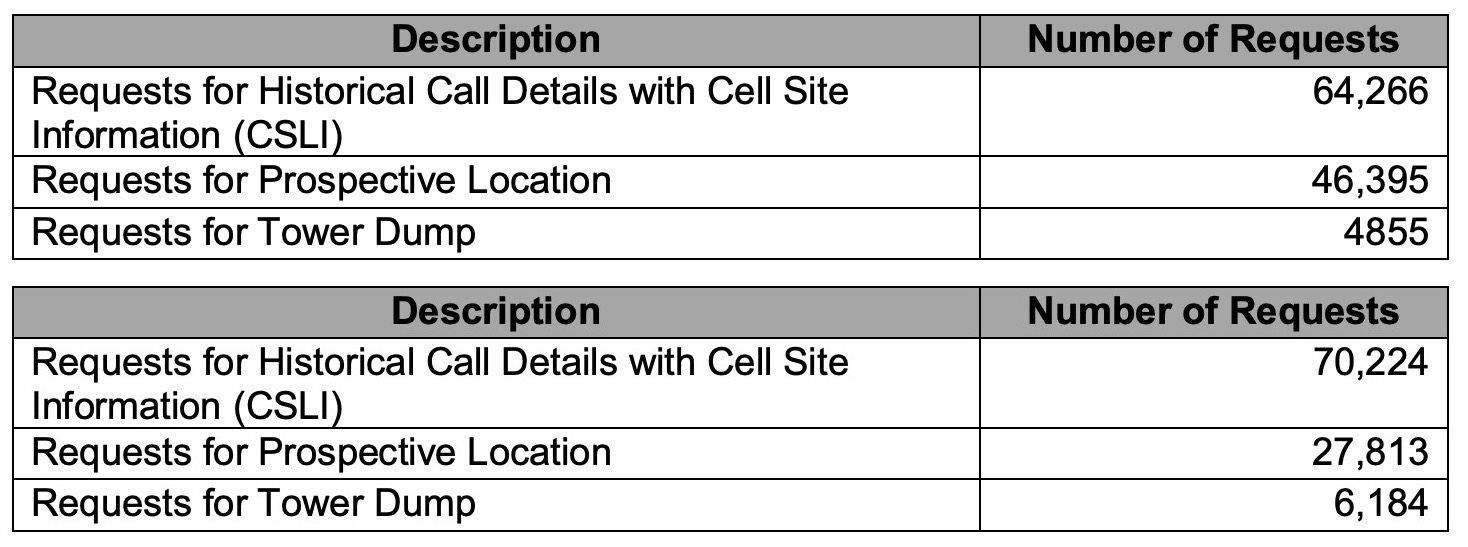
For 2018, the company received 70,224 demands for historical call data, up by more than 9 percent on the year earlier.
Historical cell site location data allows law enforcement to understand which cell towers carried a call, text message or data, and therefore a subscriber’s historical real-time location at any given particular time. Last year the U.S. Supreme Court ruled that this data was protected and required a warrant before a company is forced to turn it over. The so-called “Carpenter” decision was expected to result in a fall in the number of requests made because the bar to obtaining the records is far higher.
T-Mobile did not immediately respond to a request asking what caused the increase.
Call records requests by police. (2017 above, 2018 below). Source: T-Mobile.
The cell giant also reported that that the number of tower dumps went up from 4,855 requests in 2017 to 6,184 requests in 2018, an increase of 27 percent.
Tower dumps are particularly controversial because these include information for all subscribers whose calls, messages and data went through a cell tower at any given time. That can include the data of hundreds or thousands of innocent subscribers at any time.
Although T-Mobile says it requires a court order or a search warrant, the Carpenter decision does not affect police accessing data obtained from tower dumps.
T-Mobile currently has 81.3 million customers as of its last earnings call. The company is currently in the middle of a merger with Sprint for $26.5 billion. The Justice Department is reviewing the bid, but several states are looking to block the deal entirely.
Tamar Lucien is CEO of MentalHappy, lives in Bay Area and enjoys spending time hiking, cooking a new vegetarian recipes, meditating and dancing to 90's music!
Birthday cakes, gift cards, free lunches, snacks, movie tickets, and other perks are generously bestowed on employees to celebrate life’s happy moments. This is an improvement from the industrial approach to management, but can we go deeper for our work-family members?
Life’s darker moments hold the greatest opportunity to exemplify a genuine and caring 21st-century workplace culture. One which fosters empathy and camaraderie. Employee turnover is highest when employees take leave, claim FMLA, or use PTO. According to Global Studies, 79% of employees report their reason for quitting was simply due to feeling unnoticed (lack of appreciation).
Appreciation for your employees is best demonstrated as an act of kindness in moments that really matter, like the loss of a family member. Acknowledging that someone great is gone, instead of ignoring the uncomfortable aspects of grief, is a valuable way to embed empathy into your workplace culture.
Recently, while working with a mid-sized (500+ employees) tech company, I asked what they were doing to support employees during the negative life moments. The HR Director replied, “um, nothing really”.
Once realizing how crappy that sounded, another executive countered her by saying he sent an employee a t-shirt and card after a miscarriage. I later learned that the employee he was referring to had been with the company for over 5 years, so it’s safe to assume that she had a couple of company swag t-shirts in her collection prior to getting one as a get well gift.
Even in the largest and most notable companies, where a variety of employee amenities and benefits are offered, the concept and practice of empathy is often neglected. Perhaps you haven’t come across such extreme examples of indifference in your workplace, but you may have participated in signing a generic condolences card or chipping in for some flowers.
The Daily Crunch is TechCrunch’s roundup of our biggest and most important stories. If you’d like to get this delivered to your inbox every day at around 9am Pacific, you can subscribe here.
Before you start complaining about censorship, keep in mind that hidden replies won’t actually get pulled from Twitter — they’ll disappear from the default view, but you can still tap a gray icon to see them.
The goal is to give the person who starts a conversation more control over which comments are visible, making it harder for trolls to jump in and derail things.
In a long-awaited decision, the Federal Elections Commission will now allow political campaigns to appoint cybersecurity helpers to protect themselves from cyberthreats and malicious attackers.
Kantar provides stats and insights on how consumers buy and think of products in areas like technology, media and health — we’ve written many stories citing their numbers.
Time for a new EC-1, which provides an in-depth profile of a successful startup! This time, we’re focusing on Roblox, a company that took at least a decade to hit its stride. (Extra Crunch membership required.)
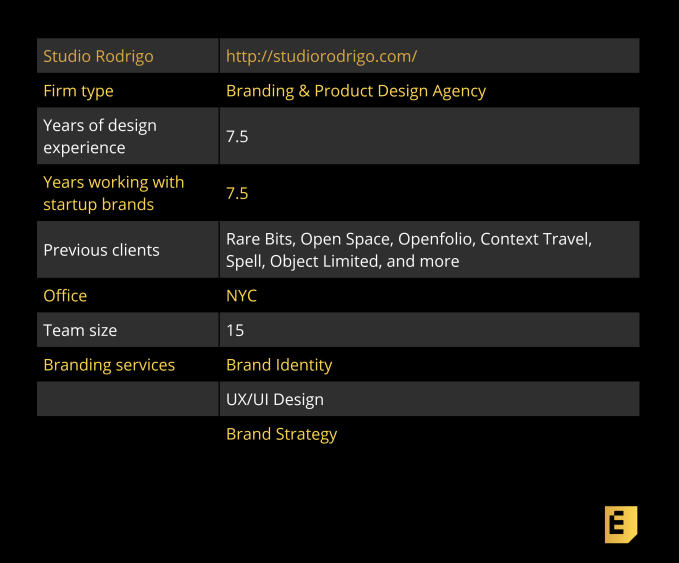
Ritik Dholakia worked as a startup product manager before he co-founded Studio Rodrigo, a branding and product design agency based in NYC. Unlike traditional branding firms, Studio Rodrigo is proud of its product design chops, especially when it comes to helping early-stage startups build version one of their product. It’s not an easy balancing act since most companies eventually want to bring their product design talent in-house, but it turns out, Studio Rodrigo can help with that too. Learn more about the studio in our Q&A with founder Ritik Dholakia.
Studio Rodrigo’s unique approach:
“Studio Rodrigo listened to all of our goals and dreams, concerns and uncertainties, and created a brand identity, website, and marketing materials that were true to our vision but better than anything we could have imagined.” Tze Chun, NYC, Founder, Uprise Art
“Basically, we’re a full-stack product design team. We have people who can do brand identity from a pure graphic design and visual communications standpoint, and who can also connect the dots between design and technology, business, and customer needs. We don’t have a traditional agency model with a project and account management overhead. You work directly with our designers.”
On Studio Rodrigo’s ideal client:
“We like working with clients that are solving big, meaty, challenging problems. We’ve got a smart team that likes to wrap their heads around the kinds of technologies that are pushing industries forward. For us, that’s currently technologies like machine learning and artificial intelligence.”
Below, you’ll find the rest of the founder reviews, the full interview, and more details like pricing and fee structures. This profile is part of our ongoing series coveringstartup brand designers and agencies with whom founders love to work, based onthis survey and our own research. The survey is open indefinitely, so please fill it out if you haven’t already.
Interview with Studio Rodrigo Co-founder Ritik Dholakia
Yvonne Leow: First things first, how did you get into brand design and product development?
Ritik Dholakia: I’ve been in digital design and product development for about 20 years now. I actually started my career as a product manager at a startup. I worked for two venture-backed startups as the first product manager. I was part of the Series A team, managing product development, acquiring initial customers, and building market traction.
The first startup was an enterprise software platform for customers doing triple bottom line reporting. The second one was one of the earliest social networking platforms, pre-Facebook, and around the same time as Friendster, LinkedIn, and Spoke.
Facebook provided TechCrunch with new information on how its cryptocurrency will stay legal amidst allegations from President Trump that Libra could facilitate “unlawful behavior”. Facebook and Libra Association executives tell me they expect Libra will incur sales tax and capital gains taxes. They confirmed that Facebook is also in talks with local convenience stores and money exchanges to ensure anti-laundering checks are applied when people cash-in or cash-out Libra for traditional currency, and to let you use a QR code to buy or sell Libra in person.
A Facebook spokesperson said the company wouldn’t respond directly to Trump’s tweets, but noted that the Libra association won’t interact with consumers or operate as a bank, and that Libra is meant to be a complement to the existing financial system.
Trump had tweeted that “Unregulated Crypto Assets can facilitate unlawful behavior, including drug trade and other illegal activity. Similarly, Facebook Libra’s “virtual currency” will have little standing or dependability. If Facebook and other companies want to become a bank, they must seek a new Banking Charter and become subject to all Banking Regulations, just like other Banks, both National and International”
In a wide-reaching series of interviews this week, the Libra Association’s head of policy Dante Disparte, Facebook’s head economist for blockchain Christian Catalini, Facebook’s blockchain project subsidiary Calibra’s VP of product Kevin Weil answered top questions about regulation of Libra. Here’s what we’ve learned (their answers were trimmed for clarity but not edited):
Would Facebook’s Calibra Wallet launch elsewhere even if it’s banned in the USA by regulators?
Calibra’s Kevin Weil: “We believe that creating a financial ecosystem that has significantly broader access where all it takes is a phone and lower transaction fees across the board is good for people. And we want to bring it to as many people around the world as we can. But as a custodial wallet we are regulated and will be compliant and we will only operate in markets where we’re allowed.
We want that to be as many markets as possible. That’s why we announced well in advance of actually launching a product — because we’ve been engaging with regulators. We’re continuing to engage with regulators and we can help them understand the effort that we’re taking to make sure that people are safe and also the value that accrues to the people in their countries when there’s broader access to financial services with lower transaction fees across the board.
TechCrunch: But what if you’re banned in the US?
Weil: “I’m hesitant to give a blanket answer. But in general, we believe that Libra is positive for people and we want to launch as broadly as possible. The world where the US does that I think would probably cause other regulatory regimes to also be concerned about it. I think that’s very much a bridge that we’ll cross when we get there. But so far we’re having frank, open and honest discussions with regulators. Obviously, that continues next week with David testimony. And I hope it doesn’t come to that, because I think that Libra can do a lot of good for a lot of people.”
TechCrunch’s Analysis: The US House subcommittee has already submitted a letter to Facebook requesting that it cease development of Libra and Calibra until regulators can better examine it and take action. It sounds like Facebook believes a US ban on Libra/Calibra would cause a domino effect in other top markets, and therefore make it tough to rationalize still launching. That puts even more pressure on the outcome of July 16th and 17th’s congressional hearings on Libra with the head of Facebook’s head of Calibra David Marcus.
How will users cash-in and cash-out of Libra in person?
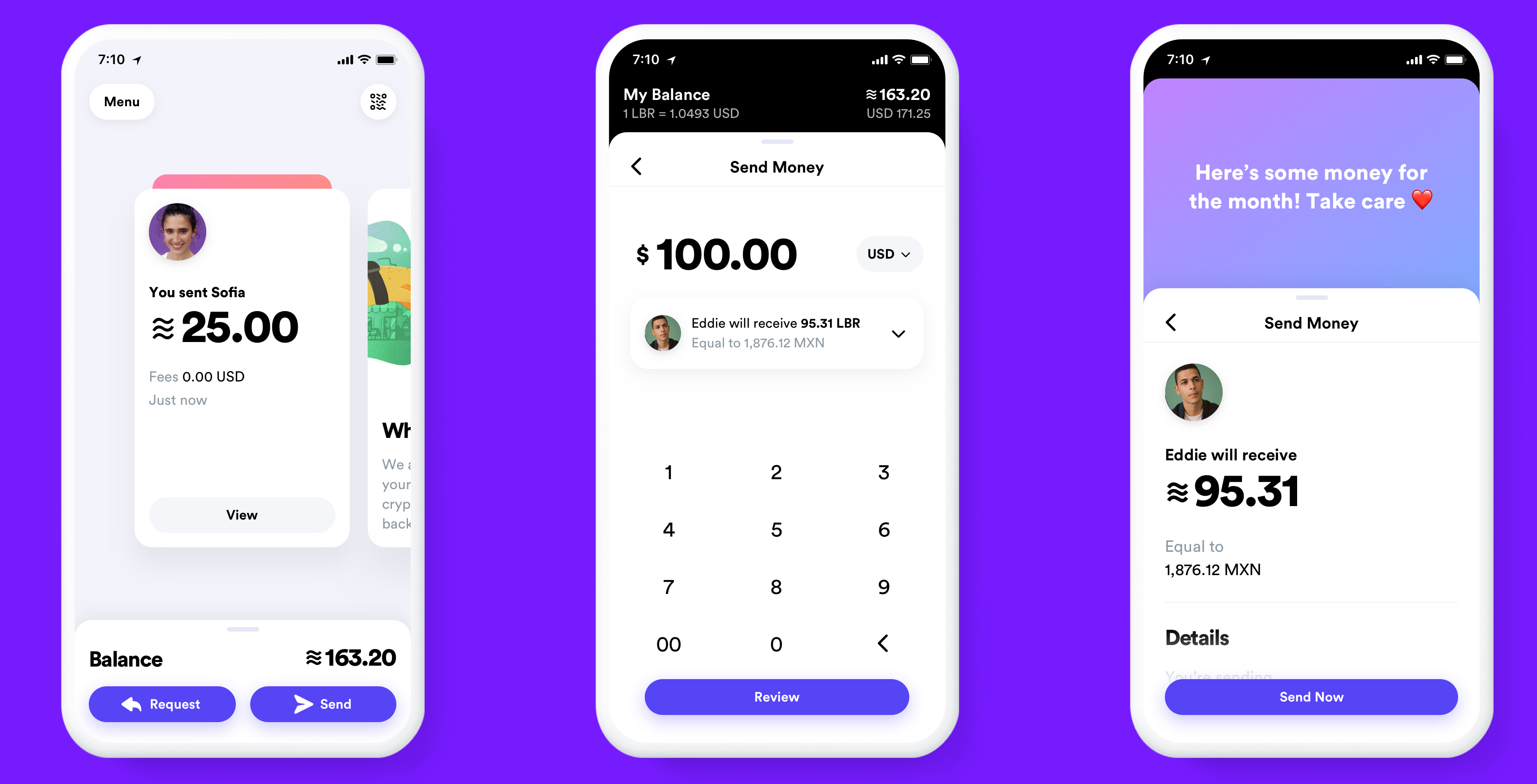
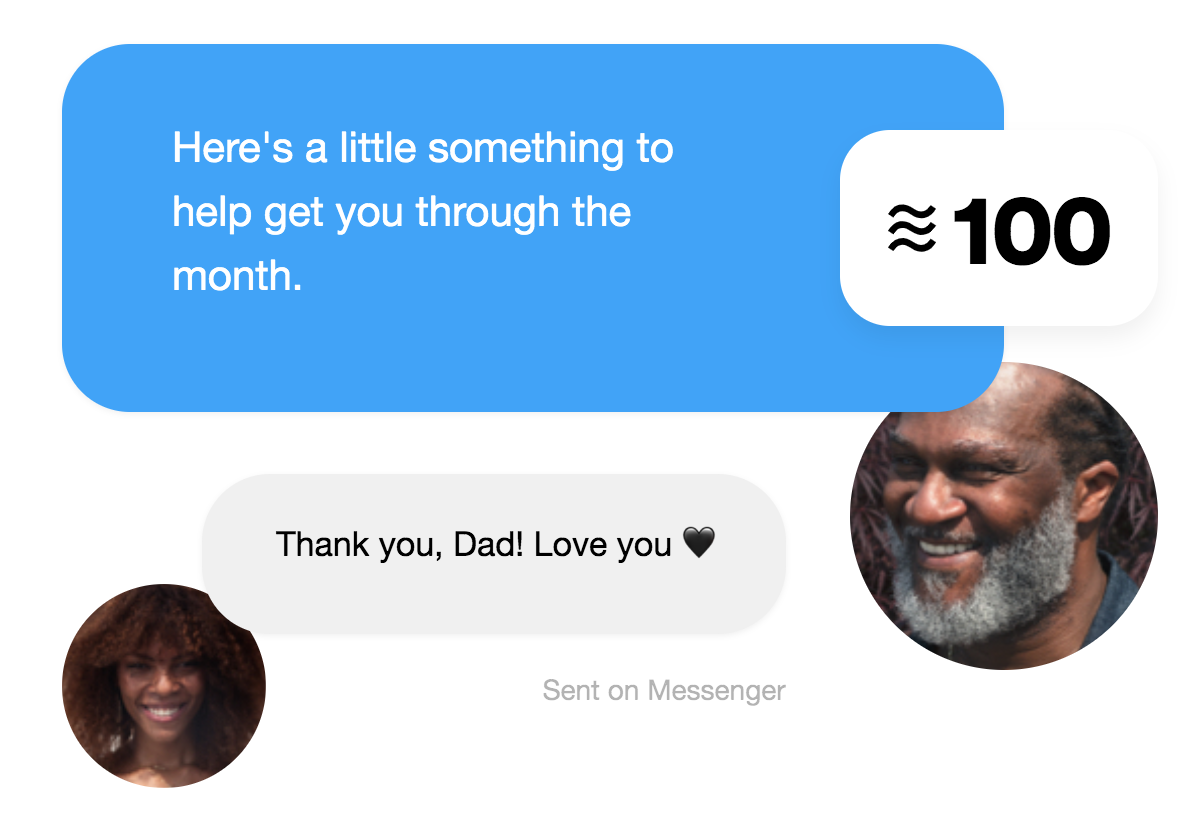
We already know that Facebook’s own Libra wallet called Calibra will be baked into Messenger and WhatsApp plus have its own standalone app. There, those with connected bank accounts and government ID that go through a Know Your Customer (KYC) anti-fraud/laundering check will be able to buy and sell Libra. But a big goal of Libra is bring the unbanked into the modern financial system. How does that work?
Calibra’s Kevin Weil: “Because Libra is an open ecosystem, any money exchange business or entrepreneur can begin supporting cash-in/cash-out without needing any permission from anyone associated with the Libra Association or member of the Libra Association. They can just do it. Today in a lot of emerging markets [there’s a service for matching you with someone to exchange cryptocurrency for cash or vice-versa called] LocalBitcoins.com and I think you’ll see that with Libra too.
Second, we can augment that by by working with local exchanges, convenience stores and other cash-in/cash-out providers to make it easy from within Calibra. You could imagine an experience in the Calibra app or within Messenger or WhatsApp, where if you want to cash in or cash out, you’ll pop up a map that highlights physical locations around that allow you to do it. You select one that’s nearby, you select an amount, and you get a QR code that you can take to them and complete the transaction.
I’d imagine that most of these businesses that we work with will support Libra more broadly, so even if we get these deals started it will benefit the whole ecosystem and every Libra wallet, not just Calibra.”
TechCrunch: Have you struck relationships with any convenience store operators or money exchangers like Western Union or MoneyGram, or Walgreens, CVS or 7/11? Are you in talks with them yet?
Weil: “I probably shouldn’t comment on any specific deals but we’re in conversation with a lot of the folks you might think, because ultimately being able to move between Libra and your local currency is critical to driving adoption and utility in the early days . . . If you’re banked there are easier ways to do that. If you’re not banked and you’re in cash — those are the people we really want to serve with Libra — we’re working very hard to make that process easy for people.”
TechCrunch’s analysis: This approach will let Calibra largely avoid the complicated and potentially error-prone process of KYCing people in person or handing out cash by offloading the responsibility and liability to other parties.
How will Libra stop fraud or laundering while offering access to unbanked users without ID?
Weil: “There are very important populations that don’t have an ID. People in a refugee camp may not, as an example, and we want Libra to be serve them. So this is one example of many of why it’s important that Calibra isn’t the only option for people who want to participate in the Libra ecosystem . . . Others of these will be run by local providers and they have programs to meet customers face-to-face and other ways to serve people and even KYC them that we may not . . .We’re not going be the only wallet, we don’t want to be the only wallet.
This is one of the reasons NGOs have bene members of the Libra association from the start, because we want to encourage the monetization of identity processes both through working with governments issuing credentials for more people and also making use of new types of information for identity and authentication. We hope this process will hep the last mile problem.
In the case of a non-custodial wallet, the user isn’t trusting anyone. The way the regulations have worked and this is evolving as we speak. The on-ramps and off-ramps to the crypto world are regulated and they have direct customer relationships and it’s their responsibility to KYC people. In our case we’ll be a custodial wallet and we’ll KYC people. There are a number of wallets in the Bitcoin or Ethereum ecosystem — non-custodial wallets that don’t have a direct relationships with the users. . . They have to get that Bitcoin somehow. Usually they’re going through an exchange where usually as part of the process they’re KYC’d.
In a lot of emerging markets you have LocalBitcoins.com where you can find a representative or agent who will meet you in person and exchange cash for bitcoin in whatever market you have to be in. And I believe that they just started making sure that they KYC everyone,but they’re doing it in person. And they have more flexibility in how they do it then you might otherwise. I think there are lots of ways that this will happen and the fact that Libra is an open ecosystem will enable people to be entrepreneurial about it.
There are lots an lots of people who are underserved by today’s financial ecosystem who have government ID. So even with requiring everyone go through a KYC process, we’ll be able to serve many, many people who are not well-served by today’s financial ecosystem. We want to find ways to support people who can’t KYC and the important part is that Calibra will fully interoperate with any other wallet, including ones that people in local markets are using because it’s a better fit for their needs.”
TechCrunch: Through that interoperability, if someone with an non-custodial wallet receives Libra and then sends it a Calibra wallet user, does that mean you Libra coming into Calibra from users who weren’t KYC’d and could be laundering money?
Weil: So it’s part of the regulatory situation that’s evolving as we speak. There’s something called the Travel Rule . . . If there’s a transfer above a certain value you have to make sure that you understand both who the sender is, which you do if they’re using a custodial wallet, and who the receiver is. These are evolving regulations, but it’s something that obviously we’re going to make sure that we implement as regulations solidify.”
TechCrunch’s Analysis: Calibra appears to be inviting regulation that it can strictly abide by rather than trying to guess at what the best approach is. But given it’s unclear when concrete rules will be established for transfers between non-custodial wallets and custodial wallets, or for in-person cashing, Facebook and Calibra may need to establish their own strong protocols. Otherwise they could be guilty of permitting the “unlawful behavior” Trump describes.
How will Libra be Taxed?
Dante Disparte of Libra: “Taxing of digital assets is something that’s being designed at the local level and at the jurisdiction level. Our view of the world is that like with any form of money or any form of payment or banking, the onus in terms of compliance with tax is with the individual user and consumer, and the same would hold true broadly here.
We expect that the many, many wallets and financial services providers building solutions on the Libra blockchain would begin to provide tools that make it much easier than it is today [to calculate and file taxes] for digital assets and cryptocurrencies more generally . . . There’s plenty of time between now and Libra hitting the market to begin defining this more strictly at the jurisdictional level among providers.
TechCrunch’s Analysis: Again, here Facebook, Calibra, and Libra association are hoping to avoid shouldering all the responsibility for taxes. Their position is that just as you have to take the initiative of paying your taxes whether or not you use a Visa card or your bank’s checks to transact, it’s on you to pay your Libra taxes.
TechCrunch: Do you think in the United States that it’s reasonable for the government to ask that Libra transactions be taxed?
Disparte: “Tax treatments of digital assets broadly hasn’t been entirely clarified in most places around the world. And we hope that this is something that this project and the ecosystem around it helps to clarify.
Tax authorities will see a benefit from Libra at the consumption level and at the household level, while some cryptocurrencies have avoided taxes until the point they tried to cash out. But the nature of it and the lack of speculation and its design we think should give it a light tax treatment the way you would find with traditional currencies.”
Christian Catalini of Facebook: “Cryptocurrencies are taxed right now every time you have a sale on the differences in gains and losses. Because Libra is designed to be a medium of exchange, those gains and losses are likely to be very tiny relative to your local currency . . . Sales tax would likely be implemented the exact same way on Libra as it is today when you pay with a credit card.
At launch giving current regulations, the Calibra wallet will have to track every purchase and sale of Libra for a US user and those differences will have to be reported on tax day. You can think of the losses, albeit they may be very small gains and losses relative to USD, as similar to the what people do today when they have a Coinbase account with Bitcoin.
The sales tax I think could be implemented in the exact same way as it today with any other sort of digital payment, it would be no different. If you’re buying goods or services with Libra you’ll be paying sales tax the same way as if you used a different form of payment. Like today when you see a percentage, that is the sales tax on your total.”
Disparte: “Maybe the best way to frame how taxes work all over the world is that it’s not up to Libra, Calibra, Facebook or any company to make that determination. It’s up to regulators and authorities.”
TechCrunch: Does Calibra already have plans in place for how to handle sales tax?
Weil: “That’s also a pretty rapidly evolving part of the regulatory ecosystem right now. It’s really an ongoing discussion. We will do whatever the regulation says we need to do.”
TechCrunch’s Analysis: Here we have the firmest answers of our interviews. Facebook, Calibra, and the Libra Association believe the proper approach to taxes is that Libra transactions carry a country’s traditional sales tax, and that Libra you hold in your wallet will have to pay taxes based on the Libra stablecoin’s value (that’s pegged to a basket of international currencies) relative to the US dollar.
If the Libra Association recommends all wallets and transactions follow these rules and Calibra builds in protocols to handle these taxes simply, at least the government can’t argue Libra is a method of dodging taxes and everyone paying their fair share.