Year: 2019

12 Jul 2019

The Google News tab in Search is being redesigned for readability

The Google News tab is getting a makeover. Google announced this week, by way of a tweet, a significant redesign of the Google.com News tab on the desktop, which will organize articles in a card-style layout, while also better emphasizing publisher names. The end result makes Google News more aesthetically pleasing, but it comes at the expense of information density.

To be clear, the changes here are focused on the News tab of Google.com — not the dedicated Google News product at news.google.com. You land on the News tab when you search for a term on Google.com, and then click over to “News” to see the latest coverage instead of Google’s list of search results.

As the preview of the redesign shows, news articles are currently organized in a compact list of links, allowing you to see several headlines around a single topic with just a glance. This design, admittedly, is a bit old-school — but it works.

Within the stack of links, the headline is blue, the publisher is green, and the articles are labeled as “In-depth” or “Opinion,” when relevant. There are small photo thumbnails by the lead story, with other publishers’ links underneath appearing as only text.
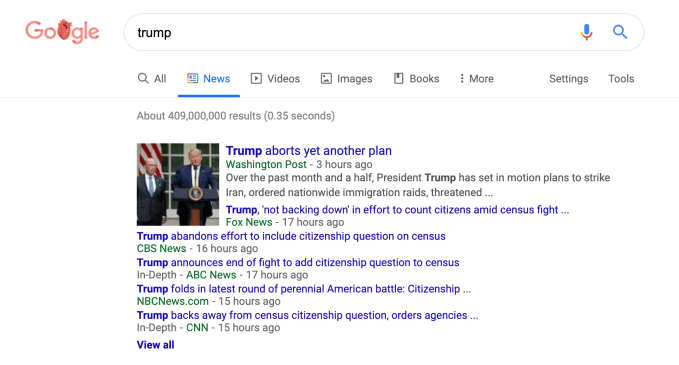
Screen Shot 2019 07 12 at 11.16.03 AM


The updated design is more readable as articles are spaced out and placed in cards, similar to the main Google News product. There’s more white space and longer previews of each story, as well.

But the change means you’re seeing far fewer results on the screen before you have to scroll down.


The updated News tab makes it more obvious where the news is coming from, because publishers’ names are given more prominence. They also get their logo next to the headline, so it’s easier to identify your favorite news outlets with a glance. This is reminiscent of the recent mobile redesign for Google Search, which also put increased attention on the publishers by featuring them at the top of a link alongside their logo.

In addition to providing you with a set of News search results, the redesigned tab includes a new carousel labeled “People also searched for” that points you to other relevant news based on your search query.

Not everyone is thrilled about the update, given it makes it more difficult to quickly scan a number of headlines at once. And because there are fewer publishers’ articles on the first screen, traffic to those “below the fold” will likely drop.

Google says the changes will roll out over the next couple of weeks.
12 Jul 2019

Sage Plus for Experts gives travel experts a central place to share their content

Sage is giving reviewers, chefs and other experts and publishers a central place to share all their content.

To do this, the startup has created a new product called Sage Plus for Experts, which isn’t open to the public yet, but is accepting signups from those aforementioned travel experts — the kinds of experts who can share content around things to do, food, drinks, experiences and shopping.

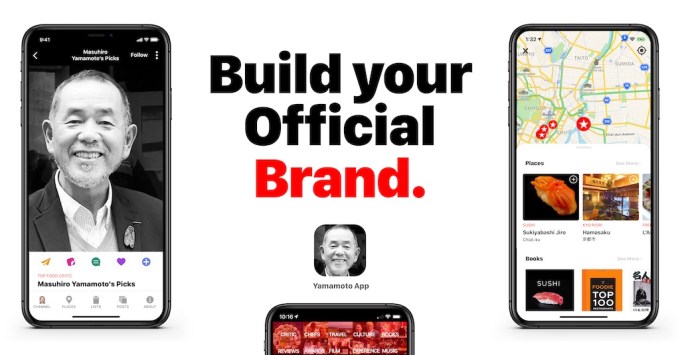
Founder and CEO Samir Arora (who previously led Mode Media/Glam Media) suggested that a Sage profile can serve as the center of a creator or publisher’s online presence. And eventually, it could become the foundation for them to build their own personal direct-to-consumer brand.

In the announcement, Arora said the product was designed to answer “a simple question”: “Why does the internet not offer a simple way to show recommendations by real experts or the authentic experiences and products by the brands we trust and love?”

Sage Plus for Experts

Back in 2017, when he first told me about his vision for Sage in 2017, Arora said his goal was to create a reliable source for location data. In an interview earlier this month, he said the plan to focus on verified sources eventually led him to this new product.

“We started to say that the only way to have verified information is to go backwards, to verify the sources of information — the journalists,” he said.

To do that, Sage starting curating a list of trusted experts, and it started working with those experts, who Arora said were asking for something like this. He showed me how someone could come onto the Sage service and quickly connect their social media accounts and author pages —after that, the profile updates automatically.

So there’s no technical expertise required, and after the initial setup, no additional work — though if they want to, experts can also post reviews and lists made specifically for Sage. They can even publish their Sage profile as a separate mobile app, and start monetizing through things like bookings and merchandise sales.

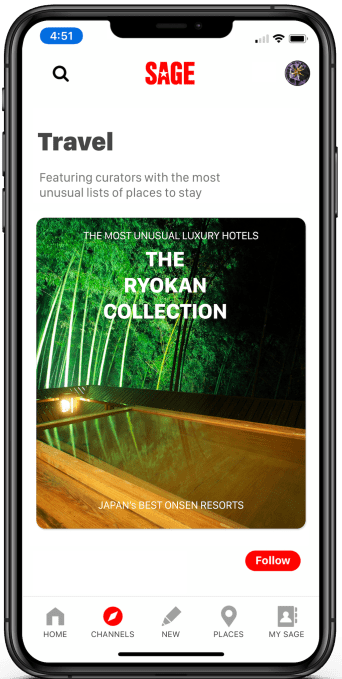
Travel Featured curator on Sage Plus for Experts

In some cases, the profile will already exist, and the expert simply needs to claim it.

“We’ve been manually curating sources while training an AI to reliably to go out into the world to find people who are professionally in this business,” Arora said.

He added that Sage’s list has already grown to 5 million experts, with 200,000 active profiles. The active experts include food critic Masuhiro Yamamoto (who you may know from “Jiro Dreams of Sushi”).

Ultimately, all expert content goes back into the broader Sage platform, and it will allow the startup to recommend trustworthy publishers and provide travel recommendations on what to do and where to go.

12 Jul 2019

MIT’s human-mirroring robot nails the Bottle Cap Challenge

MIT’s Computer Science and Artificial Intelligence Lab (CSAIL) has a robot that can mirror the actions of a human just by watching their bicep. This has a number of practical applications, including potentially assisting a person to lift large or awkward objects, but it can also be applied to… more topical pursuits.

The robot, which CSAIL calls RoboRaise, managed to successfully take its cue from its human pal and perform the Bottle Cap Challenge, which is that thing going around right now where people (including tons of celebrities) either successfully or unsuccessfully try to demonstrate extreme motor control by kicking off the threaded cap of a plastic bottle with well-placed kick.

RoboRaise can’t kick because, well, because it’s just an arm – but it’s still an impressive demonstration of how well its mimicry and soft robotic hand appendage works to see it manage to spin the cap off the bottle without disturbing the bottle itself. The robot itself seems pretty pleased with it own prowess, too, judging by the smug smile on the face on its display.

12 Jul 2019

Amazon Prime Day’s top device deals include discounted Echo speakers and Fire TV’s

Amazon’s list of Prime Day deals has finally dropped. The retailer’s Black Friday-style sale for its Prime members is one of the biggest online shopping days of the year, as other retailers now take part with their own competitive sales. But some of the best deals to be found on Prime Day are those on Amazon’s own devices. This year, Amazon is pushing its Echo speaker and Fire TV Stick devices in particular, with sale prices that are 50% off or higher from the regular list prices.

According to an analysis of this year’s deals by Offers.com, the three biggest device deals this year are the $49.99 Echo Smart Speaker 2nd Generation (50% off its regular price of $99.99); the $14.99 Fire TV Stick (63% off its regular price); and the $24.99 Fire TV Stick 4K (50% off its regular price).

These prices don’t officially go live until Prime Day’s now two-day sale begins on Monday, July 15 at 12 AM PT.

However, the devices may not be selling for their “list” price today — Amazon has discounted some items ahead of Prime Day to encourage early shopping. And some will go on sale ahead of Prime Day on Saturday, July 13 — but only if you ask Alexa “what are my deals?” to gain early access.

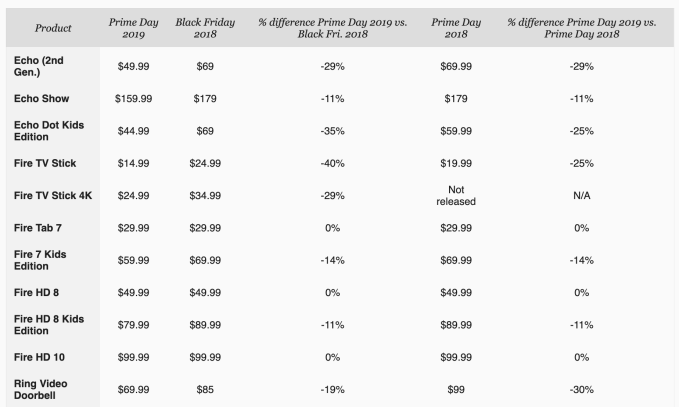
Compared with Prime Day 2018, 70% of this year’s deals are better and three are tied, with an average price decrease of 14.5%, according to Offers.com’s report. And compared with Black Friday 2018, 72% of the deals are better, and three are tied, with an average price decrease of 17%.

Screen Shot 2019 07 12 at 10.32.27 AM

Above: Prime Day deals comparison via Offers.com

What’s interesting is that last year’s Prime Day and Black Friday/Cyber Monday bestseller, the standard Echo Dot, isn’t included on the Prime Day 2019 device deals list. Instead, Amazon is listing discounts for its Echo, Echo Show, Echo Plus, Echo Input, Echo Dot Kids Edition, and even Facebook’s Portal (which has Alexa built-in), along with its Alexa-powered Fire TV devices.

That being said, the Echo Dot was marked down ahead of Prime Day to its lowest-ever price of $24.99 — half off its list price of $49.99.

Other Amazon’s device deals span Kindle tablets and e-readers, Ring and Blink home security products, as well as smart home products from ecobee, eero, and Amazon itself.

More broadly, Amazon says it will offer over a million deals during the sales event, with a special focus this year on “celeb deals” from Jaden Smith, Marshmello, Zac Brown, and others, including the exclusive launch of Lady Gaga’s HAUS Laboratories beauty collection.

The full list of Amazon’s device deals is below.

Fire TV

  • Save $25 on Fire TV Stick with Alexa Voice Remote, $14.99
  • Save $25 on Fire TV Stick 4K with Alexa Voice Remote, $24.99
  • Save $50 on Fire TV Cube, $69.99
  • Save $100 on Fire TV Recast, now starting at $129.99
  • Get a $45 Sling TV Credit, which can be applied to $15 off your first three months when you buy a Fire TV Stick, Fire TV Stick 4K, Fire TV Cube, or Fire TV Recast
  • Get 50% off for three months when you subscribe to SHOWTIME or STARZ on Prime Video channels or in-app
  • Get 50% off for three months when you subscribe to CBS All Access on Prime Video channels
  • Get SEGA Classics for $4.99

Echo & Alexa

  • Save $50 on Echo, $49.99
  • Save $70 on Echo Show $159.99
  • Save $40 on Echo Plus, $109.99
  • Save $20 on Echo Input, $14.99
  • Save $120 on Portal from Facebook with Alexa Built-in, $79

Fire tablets

  • Save $20 on the all-new Fire 7 tablet, $29.99, or get two for $49.98—a $50 savings
  • Save $30 on the Fire HD 8 tablet, $49.99, or get two for $79.98—an $80 savings
  • Save $50 on the Fire HD 10 tablet, $99.99, or get two for $179.98—a $120 savings

Kids Devices

  • Save $40 on the all-new Fire 7 Kids Edition tablet, $59.99, or get two for $99.98—a $100 savings
  • Save $50 on the Fire HD 8 Kids Edition tablet, $79.99, or get two for $139.98—a $120 savings
  • Save $50 on the Fire HD 10 Kids Edition tablet, $149.99, or get two for $279.98—a $120 savings
  • Save $25 on Echo Dot Kids Edition, $44.99

Kindle

  • Save up to $80 on Kindle Oasis (9th generation), plus get a $5 eBook credit and three months free Kindle Unlimited, starting at $174.99
  • Save up to $50 on Kindle Paperwhite, plus get a $5 eBook credit and three months free Kindle Unlimited, starting at $84.99
  • Save $30 on the all-new Kindle, plus get a $5 eBook credit and three months free Kindle Unlimited, $59.99

Home Security

  • Save $30 on Ring Video Doorbell, $69.99
  • Save $80 on Ring Video Doorbell Pro, $169
  • Save $130 on a Ring Alarm 14-Piece Kit, $199
  • Save $60 on Ring Spotlight Cam, $139
  • Save $55 Ring Stick Up Cam, $124.99
  • Save $60 on a Blink Indoor Cam 2-Cam System, $79.99
  • Save $80 on the all-new Blink XT2 2-Cam System, $99.99

Smart Home

  • Save up to $200 on eero WiFi systems
  • Save $100 on an eero Router, just $99
  • Get an Amazon Smart Plug and Echo for $54.98
  • Save $50 on the all-new ecobee Smart Thermostat with Alexa Built-in, $199

Amazon’s Prime Day 2019 non-device deals, meanwhile, can be found here.


12 Jul 2019

Dejbox wants to deliver food to offices in business districts at scale

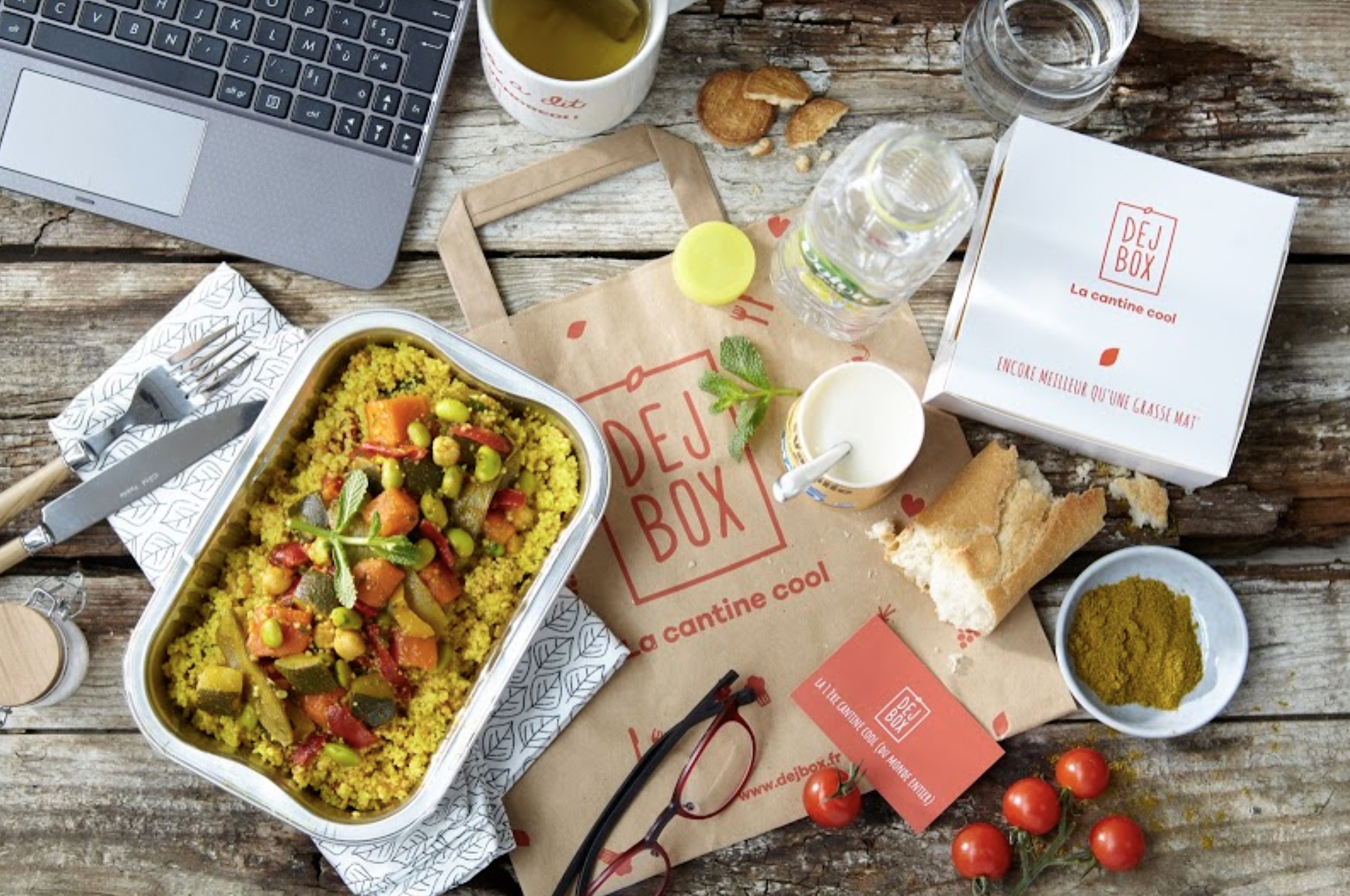
Meet Dejbox, a French food delivery startup that tries to avoid busy cities in order to accommodate people who really need a new lunch option. The company is a full-stack food delivery startup that designs its own meals, cook them, sell them and deliver them.

“Corporate headquarters are more and more often far from city centers. But what about lunch options for those areas?” co-founder and co-CEO Vincent Dupied told me.

Answering this question creates logistical challenges more than anything else. It’s hard to cover wide areas that are spread out all around busy cities, such as Paris, Lille and Lyon. And Dejbox has made some radical decisions that set them apart from well-known companies, such as Deliveroo, Uber Eats or even Frichti.

Each delivery person drives a truck with 100 to 150 meals. This way, they can deliver multiple offices during one run. It means that customers can’t just order something and get it 30 minutes later.

They need to complete their order before 10:30am or 11am to get it for lunch time. And of course, you can also order multiple days in advance in case you don’t want to think about lunch for the rest of the week.

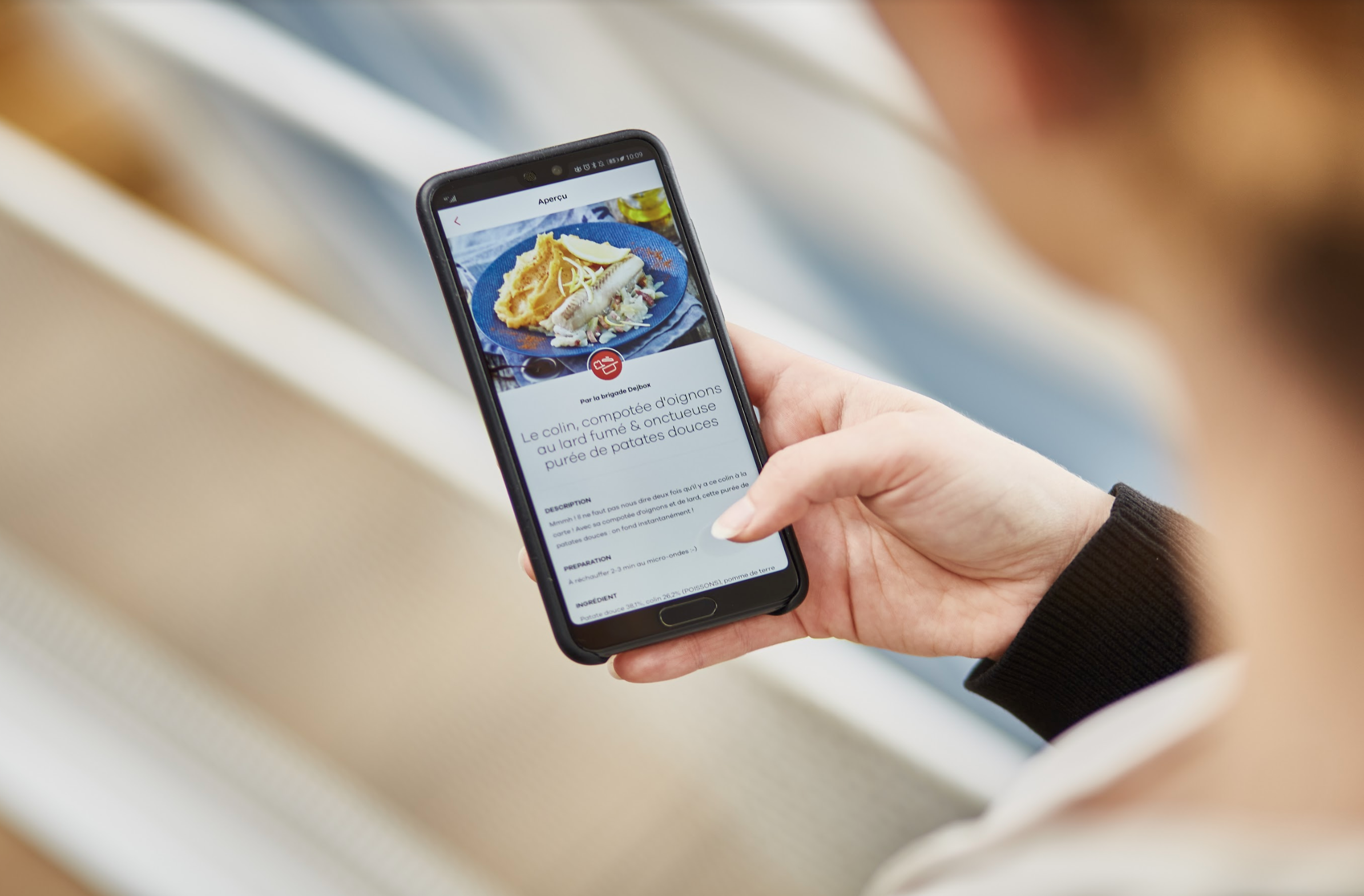
vue appli

When it comes to sales, Dejbox tries to spot the most promising companies to pitch them the service. After that, multiple employees usually order from Dejbox every day. It means that delivery persons carry multiple meals and leave them in the kitchen or at the reception desk.

“Our delivery persons are a bit like mail carriers, they have the same itinerary every day and their own clients,” Dupied said.

That’s why Dejbox wants to empower its delivery staff as much as possible. They’re all full-time employees and they get monthly reports telling them how much revenue they’ve generated for the company.

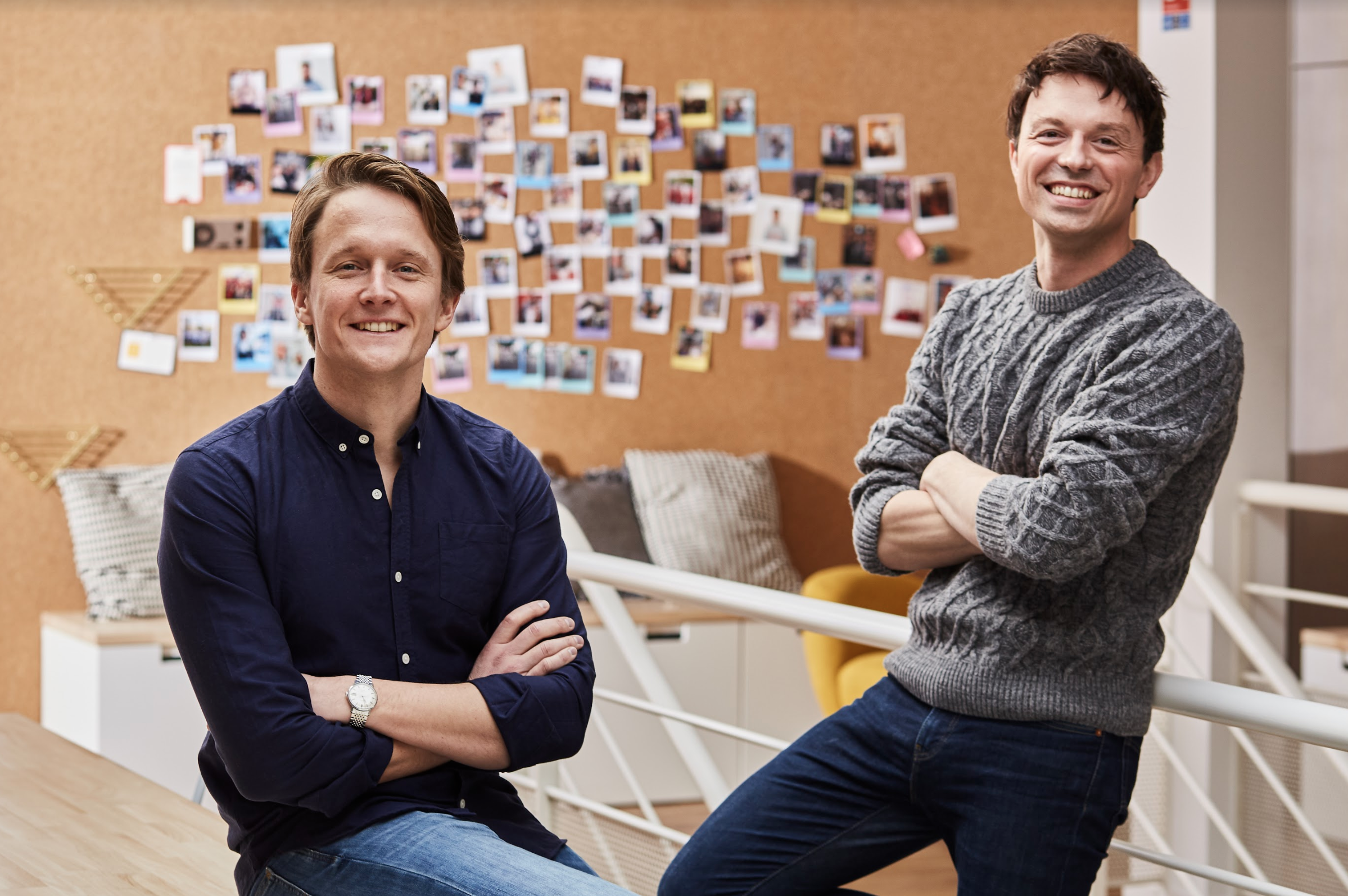
vinc adri

This combination of low customer acquisition cost, low unit economics and high lifetime value has been working well. Partech first spotted them at the end of 2015 and invested a tiny $560,000 seed round (€500,000). Dejbox was only delivering 80 meals per day in the Lille area back then.

The startup quickly expanded to Paris and Lyon with the exact same focus on corporate headquarters in boring areas. In March 2017, Dejbox raised a $2.3 million Series A round (€2 million) from Partech and Leap Ventures. The company launched in Bordeaux a few months later.

And the company is quite transparent when it comes to metrics. During the first ~18 months, the startup generated $1.4 million in revenue, $4.5 million in 2017 and $11.3 million in 2018 (€1.2 million, €4 million and €10 million respectively).

This year, the company plans to generate $22.5 million in revenue (€20 million) and open two new cities — Nantes and Grenoble. Dejbox now delivers 10,000 people every day.

formule 4

12 Jul 2019

Elon Musk-backed Neuralink to detail its progress on upgrading the brain to keep pace with AI

Elon Musk’s brain computer interface (BCI) venture Neuralink will provide some more insight into what they’ve been working on for the past two years, during which time we’ve heard very little in the way of updates on their progress. In 2017, we learned that Neuralink’s overall driving mission was to help humans keep pace with rapid advancements in AI, ensuring that we can continue to work with ever-more advanced technology, by closing the input and output gap between ourselves and computers.

Musk has famously forewarned of the potential dangers of artificial intelligence, and what happens when it becomes more powerful relative to out own ability to control and understand it. He also founded OpenAI alongside Sam Altman and others as a research organization hoping to collaborate on the development of AI specifically designed to benefit, not harm humanity.

At Recode’s Code conference in 2016, and again in 2017 at an event in Dubai, Musk discussed how BCI could help people communicate with computers with much higher bandwidth and lower latency than is possible now, using our relatively primitive input methods (keyboard, mice and touch all introduce a surprising amount of lag and fidelity loss if you think about it).

Neuralink seems to be Musk’s long-term play to help bridge this gap, which basically amounts to an effort to accelerate the kind of ‘singularity’ moment advocated by Ray Kurzweil and others wherein humanity effectively merges with technology as a new stage of engineered evolution. In the interim, however, it originally set its sights on addressing medical conditions including epilepsy and clinical, chemical depression via implanted brain interfaces, as a stepping stone to its more ambitious and more broadly applicable goals for BCI.

This update from Neuralink should shed light on where they are with that approach (if that’s even still the approach), and who knows: we might even get a clue as to how and when we can expect to truly become one with our computers.

12 Jul 2019

FEC says political campaigns can now get discounted cybersecurity help

In a long awaited decision, the Federal Elections Commission will now allow political campaigns to appoint cybersecurity helpers to protect political campaigns from cyberthreats and malicious attackers.

The FEC, which regulates political campaigns and contributions, was initially poised to block the effort under existing rules that disallow campaigns to receive discounted services for federal candidates because it’s treated as an “in kind donation.”

For now the ruling allows just one firm, Area 1 Security, which brought the case to the FEC, to assist federal campaigns to fight disinformation campaigns and hacking efforts, both of which were prevalent during the 2016 presidential election.

Campaigns had fought in favor of the proposal, fearing a re-run of 2016 in the upcoming presidential and lawmaker elections in 2020.

FBI director Christopher Wray said last in April that the recent disinformation efforts were “a dress rehearsal for the big show in 2020.”

In an opinion published Thursday, the FEC said the rules would be relaxed because Area 1 “would offer these services in the ordinary course of business and on the same terms and conditions as offered to similarly situated non-political clients.” In other words, political campaigns are not given a special deal but are offered the same price as others on its lowest tier of service.

Several other companies, like Facebook and Google-owned Jigsaw, have already offered free services to campaigns to fight disinformation and foreign hacking efforts.

However many political campaigns still are not taking basic security precautions, researchers found.

A spokesperson for Area 1 did not return a request for comment.

12 Jul 2019

Amazon reportedly ramps development on Alexa-powered home robot on wheels

Bloomberg reported last April that Amazon was working on a home robot codenamed ‘Vesta’ (after the Roman goddess of the hearth and home) last year, and now the publication says that development on the project continues. Plus, the report includes new details about the specifics of the robot, including that it will indeed support Alexa and have wheels to help it move around. My terrible artist’s rendering of what that could look like is above.

The plan for Vesta was apparently to release it this year, but it’s not yet quite ready for mass production, according to Bloomberg’s sources. And while it could end up mothballed and never see the light of day, as with any project being developed ahead of launch, the company is said to be putting more engineering and development resources into the team working on its release.

Current prototypes of the robot are said to be about waist-high, per the report, and make their way through the world aided by sensor-fed computer-vision. It’ll come when you call thanks to the Alexa integration, per an internal demo described by Bloomberg, and should ostensibly offer all the same kind of functionality you’d get with an Echo device, including calling, timers and music playback.

For other clues as to what Vesta could look like, if and when it ever launches, a good model might be Kuri, the robot developed by Bosch internal startup Mayfield Robotics which was shuttered a year ago and never made it to market. Kuri could also record video and take photos, play games and generally interact with the household.

Meanwhile, Amazon is also apparently readying a Sonos-competing high-quality Echo speaker to debut next year.

12 Jul 2019

The IPO window that never closes

Hello and welcome back to Equity, TechCrunch’s venture capital-focused podcast, where we unpack the numbers behind the headlines.

This week was a bit of a turn-about. Kate was off this week and Alex was back, so we brought back a few favorites to tide us over until our regular leader returns. For this IPO-themed episode, we had TechCrunch and Extra Crunch’s Danny Crichton in the studio along with Deloitte’s Barrett Daniels, a prior guest on the show and one of our favorite humans.

It being roughly the middle of the year, we decided to do a bit of run through the first two-quarters’ worth of tech IPOs. There was, as you can expect, a lot to get chat about.

We started with notes on how the Chinese venture capital market is changing, most notably in terms of its share of the world’s largest venture rounds. After leading the world for what felt like years, venture investment into China-based companies is slipping. And the declines are picking up attention (here, here).

But not all the news was gloomy on the show this week. Indeed, while some global data relating to the global IPO market wasn’t exactly sparkling, the US-listed tech IPO market is doing really well.

After we went over a number of the companies that went out and did well post-IPO (nearly every company aside from the ride-hailing players), we conceded that things are pretty damn warm for companies going public. At the same time, we couldn’t agree on how long the IPO market would remain so welcoming.

If it stays open, more unicorns will make it out. If the IPO window closes soon, we’ll see hundreds of unicorns trapped on the wrong side of the glass.

And we wrapped with notes on everyone’s favorite space-faring SPAC. We’ll see you all really soon.

Equity drops every Friday at 6:00 am PT, so subscribe to us on Apple PodcastsOvercast, Pocket Casts, Downcast and all the casts.

12 Jul 2019

Amazon said to be launch new Echo speaker with premium sound next year

Amazon is reportedly looking to offer an Echo that more directly competes with high-end speakers like the Sonos line of device of Apple’s HomePod, according to a new report from Bloomberg. The speaker should be released sometime next year, according to the sources cited in the report, and will be somewhat wider than the existing Echo models (perhaps more akin to the Echo Sub, pictured above), packing in four separate tweeters to help boost the song quality.

It will, of course, also offer access to the company’s Alexa voice assistant, which is what has propelled Echo to its current level of success. Bloomberg notes that it’s also likely to work better for the high-fidelity audio version of Amazon’s music streaming service that has previously been reported to be in the works.

This could make for an interesting working relationship with some of Amazon’s existing partners, including Sonos, since it sounds like this will be a direct competitor. Newer Sonos speakers, including the Sonos One and Sonos Beam, support Alexa voice commands out of the box. While both Echo devices and Sonos support multi-room streaming and speaker grouping, Sonos has always had far superior audio quality when compared to the Echo hardware – albeit at a premium price.

Sonos, meanwhile, is gearing up to launch speakers powered by its technology with Ikea, with the Symfonisk line that is set for release in August. Smart speakers are a busy space with a lot of money and interest from many companies big and small, but Amazon has a lot working in its favor if it can also produce something that wins on high-quality audio at a reasonable price.