Year: 2019

20 Nov 2019

Apple expands and updates its ‘Everyone Can Code’ program

Apple announced today an expansion of its program designed to get more students coding. The company says it has redesigned the “Everyone Can Code” curriculum with a focus on introducing more elementary and middle school students to coding, while also adding more resources for teachers, a new student guide, and refreshed Swift Coding Club materials. It’s also adding thousands of free coding sessions at Apple Stores in December, to celebrate Computer Science Education Week.

The updated curriculum is meant to make coding more approachable, Apple explains, by offering activities that are more closely connected to the students’ everyday lives. It also includes a new guide to Swift Playgrounds called Everyone Can Code Puzzles, where students can experiment with concepts and apply their understanding across over 40 hours of activities.

The guide comes with a teacher companion, which includes the solutions, assessment strategies, accessibility resources, and more.

The curriculum is also now optimized for VoiceOver, includes closed-captioned videos, and videos in American Sign Language.

In another expansion, Apple has integrated its Everyone Can Create project guides into the new curriculum. Launched last year on Apple Books, Everyone Can Create has served to get teachers to integrate things like drawing, music, filmmaking and photography into their classroom, by way of Apple technology.

Related this news, Apple says it’s increasing the number of Today at Apple coding sessions from December 1 through 15, 2019 in order to celebrate Computer Science Education Week.

The free, interactive sessions are meant to inspire young coders with block-based coding using robots, while more advanced coders use Swift Playgrounds to learn coding concepts or to code an AR project.

Some stores will also offer preschool-aged coding sessions in the new Coding Lab with Helpsters, the little monsters who star in the new Apple TV+ show, from the makers of Sesame Street. Other sessions will involve Apple Distinguished Educators, Apple Entrepreneur Camp innovators, developers, and artists. A Develop in Swift curriculum will continue to be available for high school and college students, Apple noted.

And for the seventh consecutive year, Apple will support the Hour of Code with a new Hour of Code Facilitator Guide that will help teachers and parents host sessions using Swift Playgrounds.

20 Nov 2019

PayPal to acquire shopping and rewards platform Honey for $4B

PayPal announced today it has agreed to acquire Honey Science Corporation, the makers of a deal-finding browser add-on and mobile application, for $4 billion, mostly cash. The acquisition, which is PayPal’s largest to date, will give the payments giant a foothold earlier in the customer’s shopping journey. Instead of only competing on the checkout page against credit cards or Apple Pay, for example, PayPal will leap ahead to become a part of the deal discovery process, as well.

Currently, Honey’s 17 million monthly active users take advantage of its suite of money-saving tools to track prices, get alerts, make lists, browse offers and participate in an Ebates-like rewards program called Honey Gold. Its users tend to be younger, millennial shoppers, both male and female.

PayPal aims to add Honey’s technology to its own product line, expanding its reach to PayPal’s 300 million users.

“What’s exciting is that we can take the functionality Honey now offers — which is product discovery, price tracking, offers and loyalty — and build that into the PayPal and Venmo experiences,” explains PayPal SVP of Global Consumer Products and Technology, and former Xoom CEO, John Kunze. “When Honey says they’re putting money in the pockets of their customers — that’s perfectly in line with what we want to do. We want to make digital commerce and financial services more affordable, easier to use, more fun and more accessible to people around the world,” he says.

In addition, PayPal’s network of 24 million merchant partners will gain the ability to offer targeted and more personalized promotions to consumers as a means of acquiring new business and driving increased sales. PayPal Credit may also be integrated into Honey to help finance larger purchases.
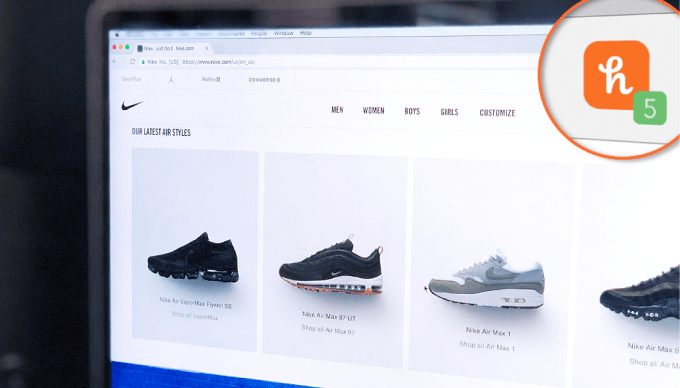
Honey has flown under the radar to some extent since its founding in 2012.

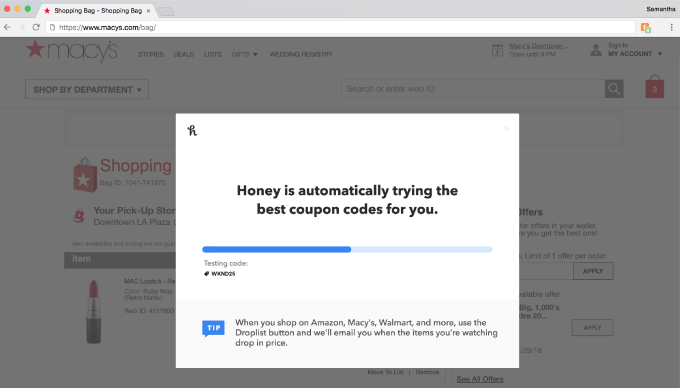
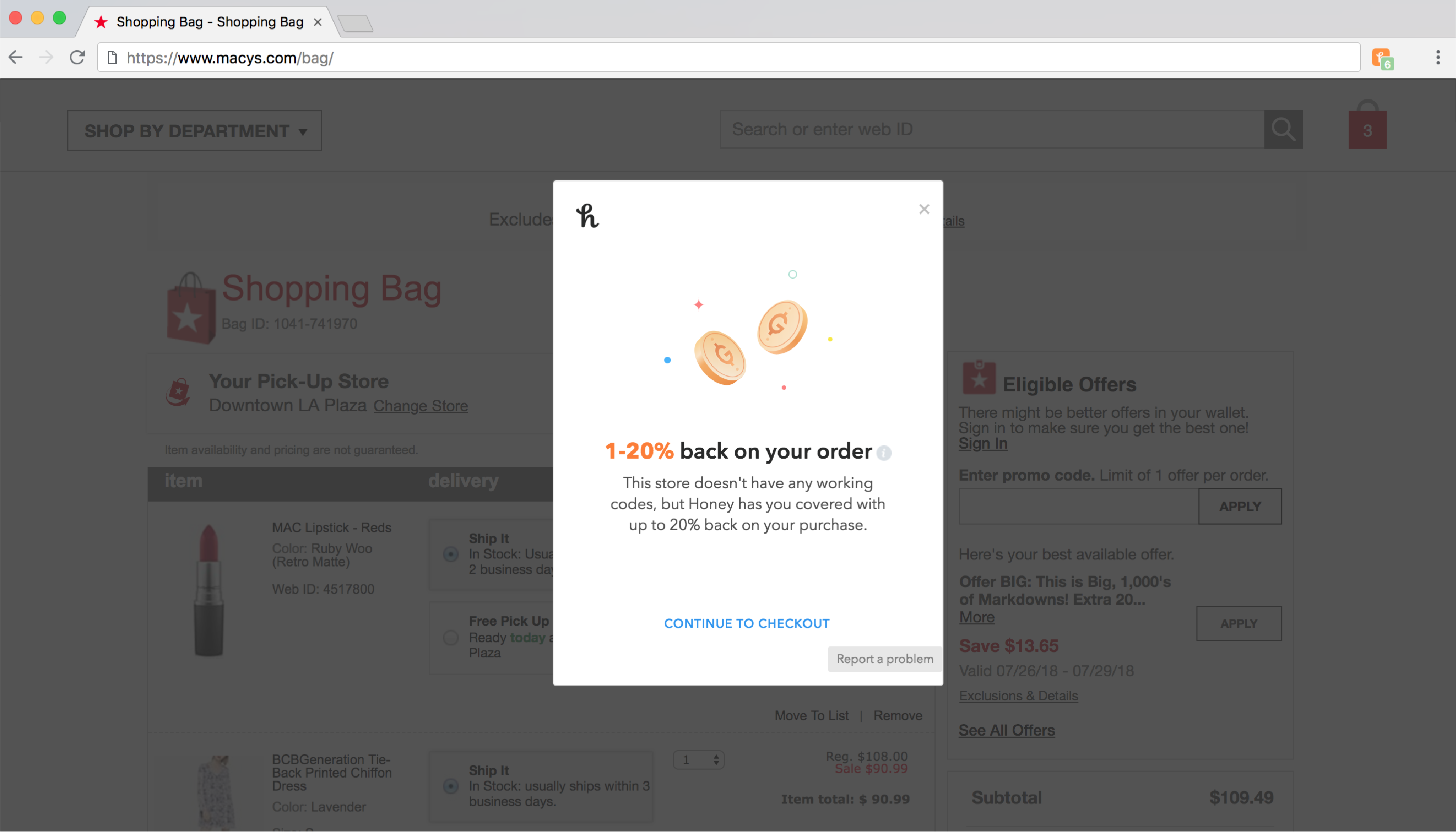
Originally only a web browser extension, Honey tracks sales and retailers’ promo codes, as a rival to RetailMeNot and others. What makes the extension so useful is that it automatically tries all the eligible promo codes for you during checkout then selects the one that provided the most savings and applies it on your behalf. This helps shoppers feel more comfortable with their purchases and reduces shopping cart abandonment.

The company also rolled out features to inform shoppers of an item’s price history, including the historical pricing of any product on Amazon’s marketplace. In 2017, Honey launched DropList, which would track and alert users to lower prices, as well as tools for finding travel deals.
As more consumers shifted their shopping to e-commerce merchants, Honey’s user base also rapidly grew.

Its browser extension now works across approximately 30,000 merchant websites, including fashion, technology, travel and even pizza delivery. Last year, Honey publicly shared that its 10 million members had saved over $800 million using its tools. As of today, Honey’s 17 million members have saved more than $2 billion to date.


“Honey is amongst the most transformative acquisitions in PayPal’s history. It provides a broad portfolio of services to simplify the consumer shopping experience, while at the same time making it more affordable and rewarding,” said Dan Schulman, president and CEO of PayPal, in a statement.

“The combination of Honey’s complementary consumer products with our platform will significantly enhance our ability to drive engagement and play a more meaningful role in the daily lives of our consumers. As a partner of choice for our merchants, this is another way that we can help them build and strengthen their customer relationships, provide personalized offers, and drive incremental sales. The combination of Honey and PayPal adds another significant and meaningful dimension to our two-sided platform,” Schulman added.
The acquisition also gives PayPal a way to fight back against the increased competition from Apple, Google, Facebook and other tech companies that have entered the payments market in recent years. On Apple’s Q4 2019 earnings call, for example, CEO Tim Cook noted that Apple Pay has now exceeded PayPal transaction volume with 3 billion transactions in the quarter. Meanwhile, analysts are predicting Facebook Pay has the potential to unseat both Apple Pay and PayPal alike.

Then there are PayPal’s original rivals — the world’s biggest card networks like Visa, Mastercard, American Express and Discover. These companies are also fighting to remain relevant online, with a new PayPal competitor of their own to simplify online checkout.

With Honey, PayPal immediately shifts the battle away from the checkout page itself to instead compete against all the places people go to discover, browse, get inspired and deal-hunt — whether that’s directly on retailers’ sites or through newer platforms, like Pinterest or Instagram Shopping.
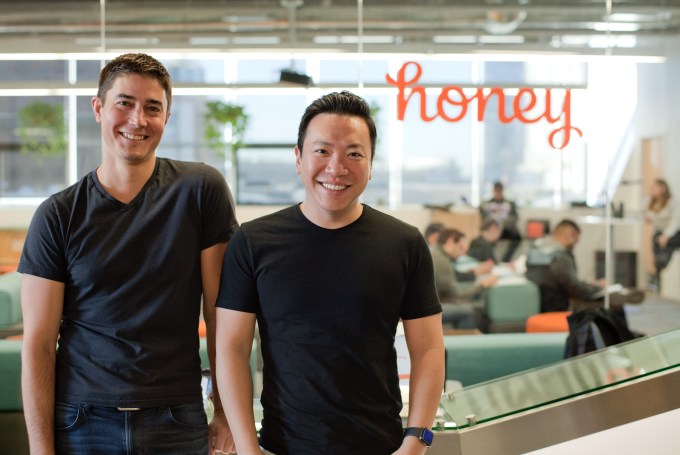
As a result of the acquisition, Honey co-founders George Ruan and Ryan Hudson will join PayPal where they’ll work on product integrations and scaling the technology to a much larger user base. Also joining is Honey’s predominantly L.A.-based team of 350 employees.

The Honey team and headquarters will remain in L.A., where they’ve just signed a lease on a new office space with expansion goals in mind.

“Combining PayPal’s assets and reach with our technology, we can build powerful new online shopping experiences for consumers and merchants,” said Hudson. “We’ll have the ability to help millions of retailers efficiently reach consumers with offers that deliver more and more value to Honey members.”

To date, Honey had raised $49 million from investors, including Ludlow Ventures, Zuma Partners, Mucker Capital, SXE Ventures, BAM Ventures, Plug and Play, Wonder Ventures, Cendana Capital, Anthos Capital and others, according to Crunchbase.

Honey was already profitable on a net income basis in 2018, PayPal notes. The acquisition is expected to close in the first quarter of 2020, subject to regulatory approval. It’s expected to be accretive to PayPal’s non-GAAP earnings per share in 2021.

PayPal will hold a conference call at 2 PM PST today to discuss the transaction further.

20 Nov 2019

Google Cloud launches Bare Metal Solution

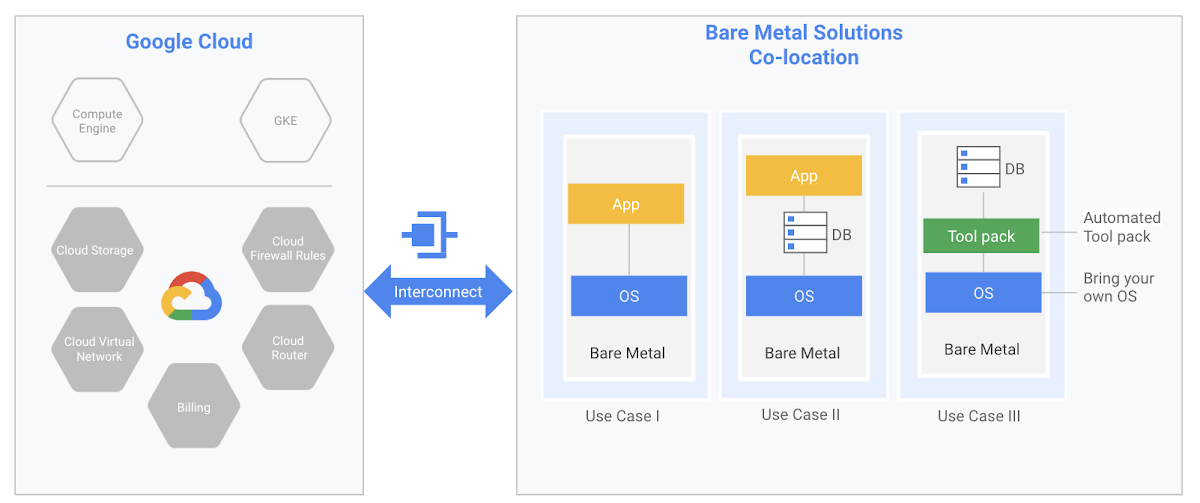
Google Cloud today announced the launch of a new bare metal service, dubbed the Bare Metal Solution. We aren’t talking about bare metal servers offered directly by Google Cloud here, though. Instead, we’re talking about a solution that enterprises can use to run their specialized workloads on certified hardware that’s co-located in the Google Cloud data centers and directly connect them to Google Cloud’s suite of other services. The main workload that makes sense for this kind of setup is databases, Google notes, and specifically Oracle Database.

Bare Metal Solution is, as the name implies, a fully integrated and fully managed solution for setting up this kind of infrastructure. It involves a completely managed hardware infrastructure that includes servers and the rest of the data center facilities like power and cooling, support contracts with Google Cloud and billing are handled through Google’s systems, as well as an SLA. The software that’s deployed on those machines is managed by the customer — not Google.

The overall idea, though, is clearly to make it easier for enterprises with specialized workloads that can’t easily be migrated to the cloud to still benefit from the cloud-based services that need access to the data from these systems. Machine learning is an obvious example, but Google also notes that this provides these companies with a bridge to slowly modernize their tech infrastructure in general (where ‘modernize’ tends to mean ‘move to the cloud’).

“These specialized workloads often require certified hardware and complicated licensing and support agreements,” Google writes. “This solution provides a path to modernize your application infrastructure landscape, while maintaining your existing investments and architecture. With Bare Metal Solution, you can bring your specialized workloads to Google Cloud, allowing you access and integration with GCP services with minimal latency.”

Since this service is co-located with Google Cloud, there are no separate ingress and egress charges for data that moves between Bare Metal Solution and Google Cloud in the same region.

The servers for this solution, which are certified to run a wide range of applications (including Oracle Database) range from dual-socket 16-core systems with 384 GB of RAM to quad-socket servers with 112 cores and 3072 GB of RAM. Pricing is on a monthly basis, with a preferred term length of 36 months.

Obviously, this isn’t the kind of solution that you self-provision, so the only way to get started — and get pricing information — is to talk to Google’s sales team. But this is clearly the kind of service that we should expect from Google Cloud, which is heavily focused on providing as many enterprise-ready services as possible.

20 Nov 2019

Reimagine inside sales to ramp up B2B customer acquisition

Slack makes customer acquisition look easy.

The day we acquired our first Highspot customer, it was raining hard in Seattle. I was on my way to a startup event when I answered my cell phone and our prospect said, “We’re going with Highspot.” Relief, then excitement, hit me harder than the downpour outside. It was a milestone moment – one that came after a long journey of establishing product-market fit, developing a sustainable competitive advantage, and iterating repeatedly based on prospect feedback. In other words, it was anything but easy.

User-first products are driving rapid company growth in an era where individuals discover, adopt, and share software they like throughout their organizations. This is great if you’re a Slack, Shopify, or Dropbox, but what if your company doesn’t fit that profile?

Product-led growth is a strategy that works for the right technologies, but it’s not the end-all, be-all for B2B customer acquisition. For sophisticated enterprise software platforms designed to drive company-wide value, such as Marketo, ServiceNow and Workday, that value is realized when the product is adopted en masse by one or more large segments.

If you’re selling broad account value, rather than individual user or team value, acquisition boils down to two things: elevating account based-selling and revolutionizing the inside sales model. Done correctly, you lay a foundation capable of doubling revenue growth year-over-year, 95 percent company-wide retention, and more than 100 percent growth in new customer logos annually. Here are the steps you can take to build a model that realizes on-par results.

Work the account, not the deal

Account-based selling is not a new concept, but the availability of data today changes the game. Advanced analytics enable teams to develop comprehensive and personalized approaches that meet modern customers’ heightened expectations. And when 77 percent of business buyers feel that technology has significantly changed how companies should interact with them, you have no choice but to deliver.

Despite the multitude of products created to help sellers be more productive and personal, billions of cookie-cutter emails are still flooding the inboxes of a few decision makers. The market is loud. Competition is cut throat. It’s no wonder 40 percent of sales reps say getting a response from a prospect is more difficult than ever before. Even pioneers of sales engagement are recognizing the need for evolution – yesterday’s one-size-fits-all approach to outreach only widens the gap between today’s sellers and buyers.

Companies must radically change their approach to account-based selling by building trusted relationships over time from the first-touch onward. This requires that your entire sales force – from account development representatives to your head of sales – adds tailored, tangible value at every stage of the journey. Modern buyers don’t want to be sold. They want to be advised. But the majority of companies are still missing the mark, favoring spray-and-pray tactics over personalized guidance.

One reason spamming remains prevalent, despite growing awareness of the need for quality over quantity, is that implementing a tailored approach is hard work. However, companies can make great strides by doing just three things:

  • Invest in personalization: Sales reps have quota, and sales leaders carry revenue targets. The pressure is as real as the numbers. But high velocity outreach tactics simply don’t work consistently. New research from Monetate and WBR Research found that 93% of businesses with advanced personalization strategies increased their revenue last year. And while scaling personalization may sound like an oxymoron, we now have artificial intelligence (AI) technology capable of doing just that. Of course, not all AI is created equal, so take the time to discern AI-powered platforms that deliver real value from the imposters. With a little research, you’ll find sales tools that discard  rinse-and-repeat prospecting methods in favor of intelligent guidance and actionable analytics.
20 Nov 2019

Daily Crunch: Free Spotify comes to Alexa

The Daily Crunch is TechCrunch’s roundup of our biggest and most important stories. If you’d like to get this delivered to your inbox every day at around 9am Pacific, you can subscribe here.

1. Spotify’s free music service will now stream on Alexa devices, plus Bose and Sonos smart speakers

Spotify has worked with Amazon Echo since 2016, but only for premium subscribers. Today, that changes.

The Alexa support — which includes playing Spotify’s Top Hits playlist, Discover Weekly and more — will be available for users in the U.S., Australia and New Zealand. Support for Sonos and Bose is more broadly available to users around the world.

2. Facebook’s latest experiment is a meme-creation app, Whale

Currently, the app allows users to decorate photos with text and stickers in order to create memes that can be shared to social media or texted to friends.

3. Vayyar nabs $109M for its “4D” radar tech, which detects and tracks images while preserving privacy

Vayyar is an Israeli startup that builds radar-imaging chips and sensors, as well as the software that reads and interprets the resulting images, for use in automotive and IoT applications.

4. Google Assistant introduces personalized playlists of audio news

When you say “Hey Google, play me the news” to a Google Assistant-enabled phone or smart speaker, you’ll get a tailored playlist of the day’s big headlines and stories. Your News Update draws from a variety of publisher partners, focusing on the stories that seem relevant to your interests and your location.

5. Bunch, the Discord for mobile games, raises $3.85M from Supercell, Tencent, Riot Games

Users who download the game can connect with friends and join an audio or video chat with them. From there, users can choose a game to load and the whole party is instantly taken into a multiplayer game session with their friends.

6. Build trust with remote users to get qualitative feedback

As co-founder of a digital health company, Alex Gold had to build a community of test patients. And because of security and privacy concerns, he had to approach this process unconventionally. (Extra Crunch membership required.)

7. 5 reasons you need to be at Disrupt Berlin

We’re one month out from Disrupt Berlin. And no matter which part of the startup ecosystem you inhabit, the event should be a huge opportunity. (I’ll be there!)

20 Nov 2019

Mercedes prices its all-electric EQC SUV at $67,900

The Mercedes-Benz EQC 400 4MATIC, the German automaker’s first all-electric vehicle under its new EQ brand, will start at $67,900 when it arrives in the U.S. early next year.

Mercedes-Benz announced Wednesday the price of the EQC 400 at the LA Auto Show. The price, which doesn’t account for the $7,500 federal tax credit, is notable because it’s below competitors like the Jaguar I-Pace, Audi e-tron and Tesla Model X.

It’s been a year since Mercedes-Benz unveiled the EQC, an all-electric SUV that kicked off the automaker’s plans to invest more than $12 billion to produce a line of battery-powered models under its new EQ brand. And in March, TechCrunch got a brief ride in the SUV in Austin during SXSW. In short, information about the vehicle has been out there. But the price has not.

The Mercedes EQC has a new drive system with compact dual electric drivetrains at each axle, which together generates 402 horsepower and 561 pound-feet of torque. The EQC can travel from 0 to 60 miles per hour in 4.8 seconds.

Mercedes has configured the vehicle motors to handle different aspects of the driving. The front electric motor is optimized for efficiency in the low to medium load range, while the rear motor is designed to create a sporty driving experience.

The vehicle’s 80 kilowatt-hour battery has an estimated range of around 200 miles, Mercedes-Benz has said in the past. The company didn’t provide updated numbers The battery has standard DC fast-charging that can reach an 80% charge in 40 minutes.

The EQC will come standard with the company’s new MBUX infotainment system, which is already in the A-Class. The infotainment system has put an emphasis on voice assistant technology and navigation, which will be a critical for new EV converts worried about locating charging stations. EQ-optimized navigation, driving modes, charging current and departure time can also be controlled and set via MBUX, the company said.

MBUX will recommend the shortest amount of time needed to get to a destination uses online services to find available DC fast charging stations to use if the operating range is insufficient. Mercedes-Benz customers can also find charging stations via the Mercedes me Charge card, the Mercedes me App or directly from the car.

The onboard charger makes the most from available external power, with the battery able to recharge from 10% to 80% in just 40 minutes.

The EQC will be available in three tiers at launch called progressive, premium and advanced. The progressive and premium tiers will offer two curated paint and upholstery options, while three selections will be available for the more expensive advanced tier.

The entry level progressive trim will come standard with MBUX, two 10.25-inch digital displays with touchscreen, advanced driver assistance system features like active brake assist with autonomous emergency braking, LED headlamps with adaptive high-beam assist and three years of

Production of the EQC started this year at the Mercedes-Benz plant in Bremen.

20 Nov 2019

Apple’s iPhone 11 Pro battery case sports a new camera button

Apple just released the iPhone 11 Pro’s battery case and it comes with surprise: a button for the camera. This is a minor, but welcomed addition to an otherwise standard battery case.

The button is clever. It’s located on the bottom half of the case is not a soft button that presses something on the phone. This button is exclusive to this case and when pressed, launches the iPhone’s Camera app even if the iPhone is locked. A quick press takes a photo and a longer press takes a QuickTake video.

The $129.00 case has other features too. It’s compatible with Qi-certified chargers and works with USB-PD-compatible chargers to pump power into the battery at a faster rate. Apple says, when the case is fully charged, it will provide the 50% longer battery life.

This is the first time Apple has added a shortcut of sorts to the camera app. On most Android phones, a double press of the power button launches the camera app. It’s handy, and while this button is exclusive to a case, is a step in the right direction. Here’s hoping that Apple figures out how to add this button to non-battery cases.

20 Nov 2019

VEnvirotech transforms organic waste into bioplastics

After a year of testing out environmental technologies for a private company, co-founder Patricia Ayma developed a process for bioplastic production using bacteria. The system turns organic matter, such as food waste, into a product that can be used as a biodegradable alternative to single-use plastics. “I realized that it was a simple technology for taking to society, that will benefit everyone,” she tells us.

The biotech startup began its pilot phase near Barcelona, at a BonArea supermarket plant, where they were able to develop and test the technology on an industrial scale with a potential customer. Ayma plans to push the innovation toward two sectors: Organic waste producers that want to shrink waste management costs and companies interested in purchasing the bioplastics for various applications.

The startup recently closed an investment round of more than €2 million, which will allow them to open a 33,000-square-foot plant to start production on the VE-box: A portable waste management container that will transform organic waste into biodegradable plastics. 


20 Nov 2019

Smart Compose is coming to Google Docs

At its Cloud Next event in London, Google Cloud CEO Thomas Kurian today announced that Smart Compose, the AI-powered feature that currently tries to complete phrases and sentences for you in Gmail, is also coming to G Suite’s Google Docs soon. For now, though, your G Suite admin has to sign up for the beta to try it  and it’s only available in English.

Google says in total, Smart Compose in Gmail already saves people from typing about 2 billion characters per week. At least in my own experience, it also works surprisingly well and has only gotten better since launch (as one would expect from a product that learns from the individual and collective behavior of its users). It remains to be seen how well this same technique works for longer texts, but even longer documents are often quite formulaic, so the algorithm should still work quite well there, too.

Google first announced Smart Compose in May 2018, as part of its I/O developer conference. It builds upon the same machine learning technology Google developed for its Smart Reply feature. The company then rolled out Smart Compose to all G Suite and private Gmail users, starting in July 2018, and later added support for mobile, too.

20 Nov 2019

Announcing TechCrunch Early Stage, a new event series all about founders

TechCrunch covers a lot of bases in the tech startup world, but none is more important than supporting founders — especially early-stage founders. That’s what our new event series, TechCrunch Early Stage, is all about.

These single-day events debuting next year will be highly interactive opportunities for founders to tap experts in the core startup disciplines, starting with early-stage investors (lots of investors), legal wizzes, growth gurus, product-market fit wallahs, tech stack experts, recruiting aces and much more, including workshops on pitch breakdowns.

TechCrunch’s goal is to provide founders with insights and new relationships on par with what an accelerator experience provides, only in a single day, and with a much greater variety of experts and investors.

TC Early Stage is an outgrowth of Extra Crunch, TechCrunch’s subscription-based editorial offering that focuses on deep analysis and advice around the big topics facing founders. In October this year at Disrupt SF, we brought Extra Crunch to life on its own stage and featured experts on dozens of topics, including:

  • How to Raise My First Dollars (Russ Heddleston, DocSend, Charles Hudson, Precursor Ventures,  and Annie Kadavy, Redpoint Ventures)
  • How to Hire at Breakneck Speed (Scott Cutler, StockX, Harjeet Taggar, TripleByte, and Liz Wessel, WayUp)
  • How to evaluate talent and Make Decisions (Ray Dalio, Bridgewater Capital)
  • How to get into Y Combinator (Michael Siebel, Y Combinator),
  • How to Decide Between Bootstrapping and Raising Venture (Ben Chestnut, Mailchimp and Kathryn Petralia, Kabbage)

The sessions were mobbed. The TechCrunch team knows a winner when they one, and the result is this new event series. The first of three TC Early Stage events next year will be in San Francisco on April 28, with one in Paris on October 28 and another in New York City (date TBA).

TC Early Stage is designed for founders who are in their early innings, anywhere from pre-seed through series A, when entrepreneurs need all the guidance they can get. With that in mind, the event’s heart is dozens of breakout sessions run by with experts and curated by TechCrunch editors. The breakouts will be long on attendee questions and conversation, and the event is structured so that attendees can easily get to six to eight different breakouts over the course of the day. In addition, TechCrunch editors will hold a handful of interviews on a main stage with notable founders and investors in time slots that will not conflict with the breakouts.

Here is a sampling of the types of breakout sessions TechCrunch Early Stage will feature:

  • Raising a first seed round
  • Landing a Series A
  • Raising early stage investment for a SaaS company (also consumer and other major categories)
  • Considering your first term sheet
  • Growing users fast
  • Recruiting a fabulous team
  • Building a tech stack (you won’t regret)

Between sessions, attendees can also meet the experts running the breakout sessions, as well as each other, via CrunchMatch, TechCrunch’s event networking platform that connects like-minded attendees and arranges a meeting time and place.

The TechCrunch team is already busy building an all-star line-up for experts for the breakout sessions and memorable interviews for the main stage. The response from the expert community around TechCrunch has been resoundingly clear. Everyone sees the need – the deeper education of early stage founders – and they love the TC Early Stage format – a single day, highly interactive event that brings together early stage founders with an unprecedented collection of experts from across the startup ecosystem.

Tickets for the San Francisco event are available now, so jump in and grab yours to secure your seat while they last.

Not an early-stage founder? That’s okay, too. Later-stage founders, investors or just general startup enthusiasts are welcome to attend. A limited number of “Innovator passes” are available for folks who are not early-stage founders.

Partners are also very welcome! The event has many sponsorship opportunities, including breakout sessions. Contact the sales team to learn more by filling out this form.