Year: 2019

19 Nov 2019

Vulog will power Hyundai’s new LA car-sharing service

The technology behind Hyundai’s new car-sharing service in Los Angeles is provided by a company that is largely unknown despite its ubiquity.

Vulog announced Tuesday during Automobility LA that Hyundai will use its technology platform for a car-sharing pilot that will launch in Los Angeles at the end of 2019 and will eventually grow to 300 vehicles.

Vulog might have a low profile, but it’s hardly a startup. The French-based company has been providing the underlying hardware and software needed for car-sharing services since 2006. Vulog’s product, which includes tools like fleet management and a consumer-facing app, is used in car-sharing services in more than 30 cities globally. The company says its turnkey product can get a large-scale car-sharing service up and running in about three months.

Today, its platform is used by Volkswagen’s WeShare, Kia Motor’s Wible and Groupe PSA’ Free2Move car-sharing service. Aimo, which is owned by Sumitomo Corporation, and a British Columbia Automobile Association company called Evo also uses the platform. And now, Hyundai.

Earlier this month, Hyundai Group launched MoceanLab, a mobility service venture based in Los Angeles and the latest effort by the automaker to diversify and modernize its core business of producing and selling vehicles. MoceanLab will focus on piloting autonomous ridesharing, shuttling, multimodal transportation, and personal mobility in Los Angeles.

One of the efforts under MoceanLab is Mocean Carshare, the car-sharing service that will use Vulog’s technology platform. The service is part of a permit pilot program offered by the Los Angeles Department of Transportation and Los Angeles County Metropolitan Transportation Authority.

The car-sharing service will use 20 Hyundai Ioniq plug-in hybrid electric vehicles. Mocean Carshare will eventually transition to a fleet of 300 fully electric vehicles from Hyundai and Kia Motors. 

MoceanLab, the umbrella mobility services venture, will do more than car-sharing. The Hyundai-owned company is eyeing the 2028 Olympics in Los Angeles as an event to offer a variety of services to alleviate congestion, including autonomous ridesharing and shuttling.

The creation of MoceanLab follows Hyundai’s joint venture with autonomous driving company Aptiv and the launch of BotRide, an autonomous ride-hailing service in nearby Irvine, California with Chinese autonomous startup Pony.ai  and Via.

Meanwhile, Vulog has its own ambitions. The company plans to double its footprint in the next year to hit 60 cities by the end of 2020.
19 Nov 2019

Facebook announces dates for its 2020 F8 developers conference

Facebook announced its plans for its F8 annual developer conference, which is where the company shows off its latest technology, apps and its vision for the future. The company says the next event will take place on May 5-6, 2020 at the McEnery Convention Center in San Jose, CA.

Interested attendees can sign up at www.f8.com to be notified when registration opens and receive updates.

Last year, the company used the F8 event to introduce a huge redesign of Facebook.com, plus upgrades, products, and expansions in areas like Messenger, WhatsApp, Dating, Marketplace and beyond. It also showed off how it’s putting new technology to work, including with VR, smart home, hardware, and other developer-facing technology, including Facebook’s Ax and BoTorch initiatives.

Facebook isn’t yet talking about what it will show off at F8 in 2020, but says it will feature: “product demos, deep-dive sessions that showcase how technology can enable you to come together and create your best work, and opportunities for you to network with our global developer community and learn from each other,” according to its announcement.

Beyond the news that comes from F8 in terms of individual products, the conference gives Facebook a platform to present its overarching vision.

Last year, for example, it was one of a network that’s trying to become more private and working to retain users. More recently, Facebook’s initiatives show a company that’s still trying to be disruptive, with new products like Libra. But some of its launches also demonstrate that the company is painfully aware of how much it’s ceding traction to other social apps, like Snapchat and TikTok. We’ll see if Facebook has any new responses to those challenges, or to the larger, more existential issues Facebook now faces with the rise of anti-trust investigations that put Facebook in their crosshairs.

19 Nov 2019

Google Assistant introduces personalized playlists of audio news

Starting today, when you say “Hey Google, play me the news” to a Google Assistant-enabled phone or smart speaker, you’ll get a tailored playlist of the day’s big headlines and stories.

That’s probably what many of us are hoping for when we listen to a news radio station or a daily news podcast during the morning commute. But those come from a single broadcaster, and may require you to hop around to get all the news you’re looking for.

In contrast, the feature that Google is calling Your News Update draws stories from a variety of publisher partners, focusing on the ones that seem relevant to your interests and your location.

“Audio has always been great,” said Audio News Product Manager Liz Gannes (a former tech journalist herself.) “It’s a tremendously evocative medium that conveys an immense amount of information.”

But she suggested that “the distribution technology has been slower [t evolve] than things like text and video,” which is why Google has been experimenting in this area. For example, it’s already added news stories to Google Assistant, as well as responses to news-related questions like “What’s the latest news about Brexit?”

Gannes added that behind the scenes, the company has been developing “an open specification for single topic audio stories.” So rather than dealing with an unwieldy hourlong broadcast or podcast, Google Assistant is working clips focused on a specific piece of news.

Your News Update usually starts with a few brief, general interest clips — namely, the big headlines of the day. Then it starts playing longer stories that are selected based on what Google knows about you.

For example, when I tried it out this morning, my update began with a 30-second update on the impeachment from Fox News (not one of my regular news sources) and ran through other then major stories of the day, then switched to longer (two- to three-minute) entertainment stories from sources like The Hollywood Reporter.

Gannes noted that “there’s a big emphasis on local news in this product — that don’t just mean where you live, but also other locations you care about.” And she said the average update will be around an hour and a half — so it can keep you occupied during a long commute, no dial-fiddling required.

John Ciancutti, Google’s director of engineering for search, added that the recommendations should get smarter over time: “If you want to skip a story … the more you listen, the better sense we get of your tastes and interests.” He also suggested that Your News Update could become more sensitive to context, offering different stories depending on whether (say) you’re in your car or in your kitchen.

“You can imagine in the future, you tune in and we know you’re in your car on Tuesday morning at 7:36, and we can predict based on other listening that you’ve got about a 28-minute commute,” Ciancutti said.

Your News Update is currently available in English in the United States, with plans for international expansion next year.

19 Nov 2019

Robotics startup Picnic, known for its automated pizza assembly system, raises $5 million

Picnic, a robotics startup that focuses on food production, announced today that it has raised $5 million in additional seed funding. The new round was led by Creative Ventures, with participation from Flying Fish Partners and Vulcan Capital.

The company also said it has hired Kennard Nielsen, a product engineer who worked on the first four Kindle Fire tablets, Nike Fuelband, Microsoft Xbox and Doppler Labs’ HereOne from Doppler Labs at previous positions, as its new vice president of engineering.

The new funding will be used for product development, hiring and marketing.

Picnic is known for an automated pizza assembly system that launched in October. The configurable, modular platform currently focuses on high-volume pizza production and can reach rates of up to 180 18-inch pizzas or 300 12-inch pizzas an hour. The system fits into existing kitchen layouts, including food trucks and kiosks, and integrates with Picnic’s software to provide backend data and cloud analytics that help with consistency, speed and reducing food waste.

Picnic operates on a “robotics-as-a-service” model, with users paying for the system on a subscription basis. The pizza assembly system’s first customers were Centerplate, a food and hospitality provider for large event venues, and Washington-based restaurant chain Zaucer Pizza.

In June, Picnic also hired Mike McLaughlin, a food and beverage industry veteran who previously held roles at BUNN, Concordia Coffee Systems and Starbucks, as its vice president of product.

19 Nov 2019

Robotics startup Picnic, known for its automated pizza assembly system, raises $5 million

Picnic, a robotics startup that focuses on food production, announced today that it has raised $5 million in additional seed funding. The new round was led by Creative Ventures, with participation from Flying Fish Partners and Vulcan Capital.

The company also said it has hired Kennard Nielsen, a product engineer who worked on the first four Kindle Fire tablets, Nike Fuelband, Microsoft Xbox and Doppler Labs’ HereOne from Doppler Labs at previous positions, as its new vice president of engineering.

The new funding will be used for product development, hiring and marketing.

Picnic is known for an automated pizza assembly system that launched in October. The configurable, modular platform currently focuses on high-volume pizza production and can reach rates of up to 180 18-inch pizzas or 300 12-inch pizzas an hour. The system fits into existing kitchen layouts, including food trucks and kiosks, and integrates with Picnic’s software to provide backend data and cloud analytics that help with consistency, speed and reducing food waste.

Picnic operates on a “robotics-as-a-service” model, with users paying for the system on a subscription basis. The pizza assembly system’s first customers were Centerplate, a food and hospitality provider for large event venues, and Washington-based restaurant chain Zaucer Pizza.

In June, Picnic also hired Mike McLaughlin, a food and beverage industry veteran who previously held roles at BUNN, Concordia Coffee Systems and Starbucks, as its vice president of product.

19 Nov 2019

DoorDash tipping practices prompts lawsuit from DC Attorney General

DoorDash is facing a new lawsuit regarding its tipping practices. This time, it’s coming from Washington, D.C. Attorney General Karl Racine. In the suit, Racine accuses DoorDash of engaging in deceptive tipping practices while also failing to provide any relief to workers whose tips were taken.

Racine’s office first opened an investigation into DoorDash’s practices in March 2019. In D.C., the suit alleges DoorDash customers paid millions of dollars in tips that the company used to offset the costs of its payments to workers over the span of two years. Racine’s office is seeking to make DoorDash pay damages and restitution.

“We strongly disagree with and are disappointed by the action taken today,” a DoorDash spokesperson told TechCrunch in an email. “Transparency is of paramount importance, which is why we publicly disclosed how our previous pay model worked in communications specifically created for Dashers, consumers, and the general public starting in 2017. We’ve also worked with an independent third party to verify that we have always paid 100% of tips to Dashers. We believe the assertions made in the complaint are without merit and we look forward to responding to them through the legal process.”

The suit focuses on how DoorDash had been offsetting the amount it pays its delivery drivers with customer tips. DoorDash’s payment structure as follows: $1 plus customer tip plus pay boost, which varies based on the complexity of order, distance to restaurants and other factors. It’s only when a customer doesn’t tip at all, which DoorDash told Fast Company happens about 15 percent of the time, that DoorDash is on the hook to pay the entire guaranteed amount.

In July, DoorDash announced it would change its tipping model, about a month after it doubled down on that same model. In August, DoorDash revealed how its new model would work but it later made clear that it would not be paying back any workers for lost wages.

“There’s no ‘back pay’ at issue here because every cent of every tip on DoorDash has always gone and will always go to Dashers,” a DoorDash spokesperson previously told TechCrunch via email in response to a question about whether or not DoorDash would back pay its delivery workers.

When Instacart changed its tipping practices earlier this year, it retroactively compensated shoppers when tips were included in the payment minimums. DoorDash, however, does not see the need for back pay. DoorDash fully implemented its new policy in September.

Meanwhile, DoorDash is funding a ballot initiative alongside Uber and Lyft to try to ensure it doesn’t have to treat its workers as W-2 employees.

The ballot measure looks to implement an earnings guarantee of at least 120% of minimum wage while on the job, 30 cents per mile for expenses, a healthcare stipend, occupational accident insurance for on-the-job injuries, protection against discrimination and sexual harassment and automobile accident and liability insurance.

This initiative is a direct response to the legalization of AB-5, the gig worker bill that will make it harder for the likes of Uber, Lyft, DoorDash and other gig economy companies to classify their workers as 1099 independent contractors.

I’ve reached out to DoorDash and will update this story if I hear back.

19 Nov 2019

Make a personal plan for your exit or IPO

Whether you’re a founder, an early employee or an executive, the possibility of an exit offers extraordinary financial possibilities.

However, I see plenty of founders having liquidity events only to find themselves making hurried decisions with their newfound wealth, ultimately feeling frustrated when they realize they’ve paid a painful price by not having the proper advice. 

Typically, I recommend breaking your planning into two separate phases to reduce overwhelm and maximize your wealth: planning before an exit and planning after an exit.

Determine your goals and strategy

Before an exit, it’s important to coordinate planning and hammer out key details that will carry you through the sale of your business. This typically means teaming up with a financial adviser, an accountant, and an estate planning attorney. Just as you’ve built the team of your company to help your business grow and succeed, it’s important to build a team that’s coordinated and focused on your personal financial success both now and in the future. 

Spending time upfront to determine your goals, objectives, and desired lifestyle can save you endless headaches on the back end of an exit, possibly save you a surprising amount in taxes and set you up for long-term success and fulfillment.

Taxes and QSBS

Speaking with a professional can help you determine what tax savings opportunities would be most applicable to your specific situation. For example, if you’re a startup founder, you may qualify for the QSBS exclusion (qualified small business stock). This exclusion could, if you qualify, allow you to exclude up to $10 million, and sometimes multiples of that, in federal capital gains tax after selling your stake in the company. 

One of our clients whose company was being acquired did not know whether he would qualify for the QSBS exclusion when he was introduced to us. By coordinating with his corporate counsel and accountant, we determined he would. In this specific situation he had acquired the domestic C Corporation shares of his tech company, and held them for over five years by the time the acquisition happened. And when he initially obtained the shares, the gross assets of the company were less than $50 million. Needless to say, he was pleased to learn that the first $10 million of his gains were exempt from federal tax!

Requirements to qualify for QSBS include but are not limited to:

  1. Domestic C corporation stock acquired directly from the company and held for over 5years
  2. Stock issued after Aug 10th, 1993, and ideally, after Aug 27th, 2010 for a full 100% exclusion
  3. Gross assets of the company must be less than $50 million when the stock was acquired 
  4. Active business with 80% of assets being used to run the business. Cannot be an investment entity
  5. Cannot be an excluded business type such as, but not limited to finance, professional services, mining/ natural resources hotel/ restaurants, farming or any other business where the business reputation is a skill of one or more of the employees.

Estate planning and wealth transfer

19 Nov 2019

Here’s the first look inside Orbex’s Scotland rocket factory

European private launch startup Orbex is getting ready to start actually launching payloads aboard its own rockets, and it’s pulling back the curtains to give a look at the factory it’s using to build its launch vehicles. The UK-based company is building its rockets from a facility in Scotland, and this virtual tour gives an idea of what they’re doing to make the first rocket field by renewable, clean-burning fuel a reality.

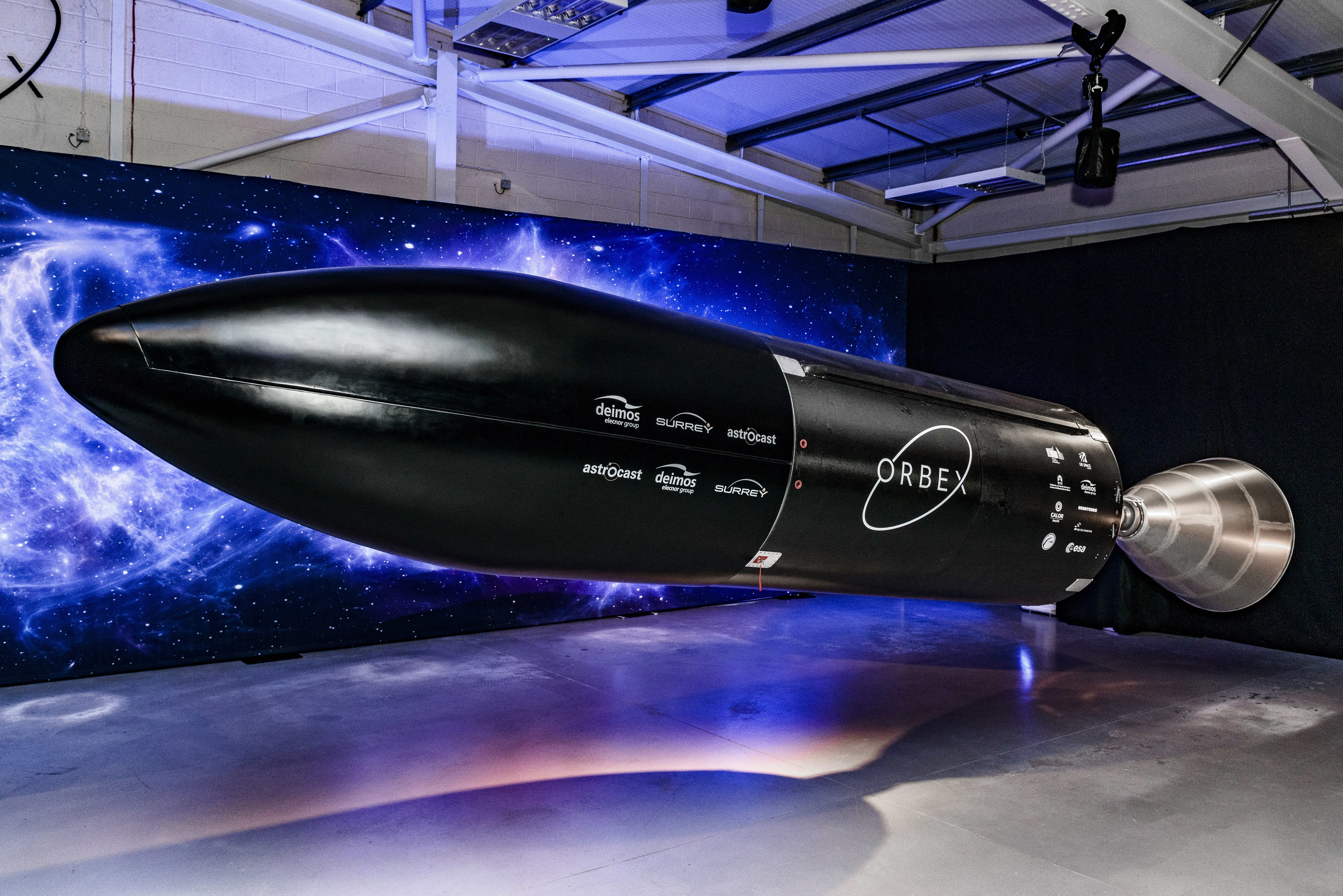
Orbex Prime’s Stage 2 vehicle.

The second stage that Orbex will use employs bio-prone for its fuel, which will reduce carbon emissions by as much as 90 percent vs. the kerosene based fuel used on most similar vehicles. Orbex also built reusability into their ‘Prime’ launch vehicle design, and it’s 3D-printing its engines in one single piece, working with partner SLM to make this possible. That will add more structural reliability to the engine, the company says.

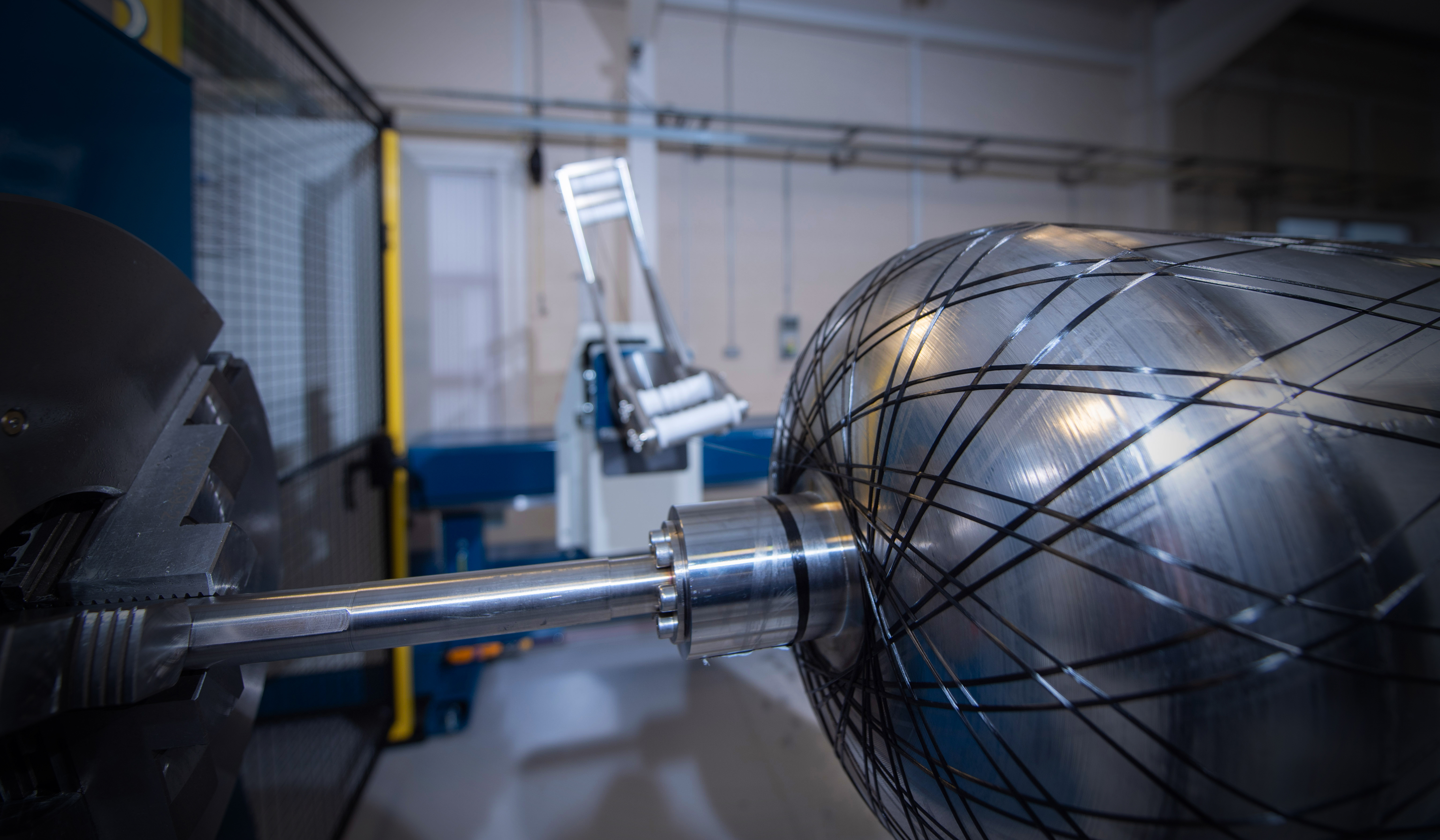
Orbex carbon fibre winding machine.

In service of making this unique vehicle, the Orbex site in Scotland features “one of the largest carbon fibre winding machines in Europe,” which measures around 60 feet long and which can produce its rockets with a weight savings of up to 30 percent vs. similarly sized vehicles already on the market. That weight savings means faster acceleration and more fuel efficiency.

Also part of the new facility is a large autoclave that is used to bring the rocket components to the proper temperature for setting and curing. The company says that its equipment can wind its main stage fuel tanks in just a matter of hours using this equipment, which is a big part of ability to achieve launch vehicle construction efficiency, which leads to affordable costs for small satellite launch clients keen to make use of the Prime to deliver their payloads.

Orbex’s 3D-printed rocket engine.

The 3D printer for the engines can fully print one of the Prime’s engines in just five hours – each Prime launcher will make use of six for the vehicle that will power the first stage, and a seventh, vacuum-rated one to power the second stage as it makes the final trip to orbit to delivery its payloads.

Orbex already has a number of commercial contracts in place, and expects to fly Prime for the first time sometime in 2021. It’ll look to launch from the proposed Sutherland spaceport, which is currently in development and will be Europe’s first ever mainland orbital spaceport once complete.

19 Nov 2019

Amazon’s new Fire TV Blaster works with Echo to control your TV, soundbar, cable box and more

Amazon already offers Alexa voice control to TV owners through its Fire TV devices, by way of a voice remote or by pairing an Echo device with a Fire TV, for hands-free voice commands. Now, it’s introducing a new device, the Fire TV Blaster, which extends that same hands-free voice control to your TV itself and other TV devices — like your soundbar, cable box, or A/V Receiver.

That means you’ll be able to say things like “Alexa, turn off the TV,” or “Alexa, switch to HDMI 1 on TV.” You can also control the volume and the playback.

And if you have other TV devices, you can control them hands-free as well, by saying things like “Alexa, turn up the soundbar volume,” or “Alexa to ESPN on cable.”

The Fire TV Blaster is designed to be added to the mix when you’re already using an Echo paired with a Fire TV.  The idea is to make it possible to go 100% hands-free, in terms of controlling your devices with your voice, no matter what your particular setup is like.

Amazon says customers use Alexa more when they don’t have to push a button on their remote. For instance, when customers use the Fire TV Cube, which offers hands-free voice control, they use Alexa 8 times more often. But the Fire TV Cube is more expensive — and a bulky, big cube isn’t the aesthetic everyone wants in their living room. Plus, many customers already own a Fire TV Stick or other Fire TV device, and just want to extend its functionality.

That’s where the Fire TV Blaster would come in.

The new device arrives at a time when Amazon Fire TV isn’t only competing against Roku as the media player (or TV OS) of choice among consumers — it’s also competing for control of the whole living room. Thanks to Roku’s recent launches of its smart soundbar and wireless subwoofer, at various price points, as well as its wireless speakers, Roku wants to more of the market. Amazon has countered with the launch of its own soundbar and other devices.

Many consumers like to buy devices from all the same brand because they know the devices have been designed to work well with one another — like the HomePod and Apple TV or the Echo Studio and Fire TV, or the Roku and its speakers.

But many others have a hodgepodge of devices from various manufacturers. If they don’t want to swap them out, the Fire TV Blaster can just work with them instead, while keeping the customer in the Amazon family.

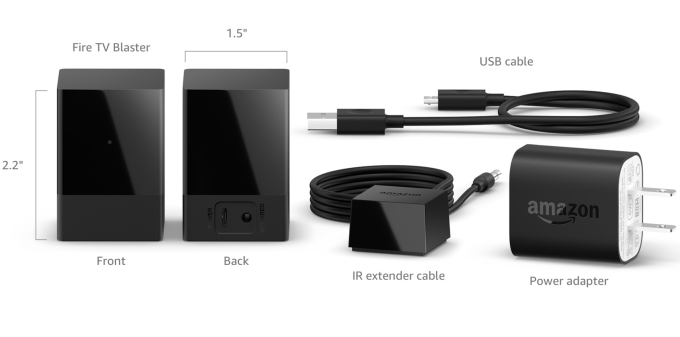
The Fire TV Blaster includes a power cord (micro-USB), wired infrared support / IR extender cable, and support for 802.11 a/b/g/n 2.4 GHz and 5 GHz wi-fi. It works with the Fire TV Stick (2nd Gen) with Alexa Voice Remote (2nd Gen), Fire TV Stick (2nd Gen) with Alexa Voice Remote (1st Gen), Fire TV Stick 4K, Fire TV (3rd Gen), Fire TV Cube (1st Gen and 2nd Gen), and any Echo speaker or smart display.

The device is available for $34.99 in the U.S., Canada, U.K., and Germany and ships on December 11, Amazon says. You can also buy it in a bundle for $79.99 with a Fire TV Stick 4K and Echo Dot.


19 Nov 2019

Hands-on with DJI’s Osmo Mobile 3

Hello, it’s your video-making friends at TechCrunch again. This time, DJI sent us the latest iteration of their mobile phone gimbal to try out for a couple of weeks. While I took mine to Budapest and Vienna, Gregory tested his demo unit all around the Bay Area.


With added tools like gesture control, story mode, Hitchcock dolly zoom and hyper-lapse, the Osmo 3 breaks up the monotony of regular footage and makes shooting more fun. It’s a great hardware design upgrade for DJI and a must-have for content creators, influencers and regular folks. For anal-retentive video makers like us, we just need a little bit more control.