Year: 2019

19 Nov 2019

Salesforce Customer 360 aims to bring all customer data into a single view

The holy grail of customer experience these days involves gathering all of the data on an individual customer into a single record. Today at Dreamforce, the company’s massive customer customer conference taking place in San Francisco, Salesforce announced the latest iteration of Customer 360, its platform of tools designed to create that single record.

The goal here is to be able to have all your customer data in a single place so that you can build a deep understanding, and deliver meaningful experiences based on that knowledge. The company is not alone in this. Adobe announced genera availability of a similar product last week and startups like Segment are also trying to solve this issue.

Salesforce has been working on this problem for the last year, and today it announced Customer 360 Truth. “What we’ve been working on for the last year is some new capabilities and some existing capabilities, and bringing them all together to actually go and try to create that single source of truth of your customer,” Patrick Stokes, EVP of platform and shared services at Salesforce explained.

This isn’t just about pulling Salesforce data into this record. “We are connecting to every application, not just within Salesforce, but external to Salesforce as well. We are helping you authenticate and govern the customer data that you have. And then ultimately getting it into a state where you can use it to really deliver personalized experiences,” Stokes said.

The Salesforce solution involves four main components, which generally are part of any solution like this. The first is Customer 360 Data Manager, which provides a way to connect to and gather data from a variety of data sources. Next is Salesforce Identity, which is designed to create a unified login, which could help make it easier to identify who the person is. Customer 360 Audience, which helps you identify all of the different online identities an individual has, and finally there is Salesforce Privacy and Data Governance, which lets you control how the data is used.

The solution also encompasses MuleSoft’s tools to help connect to various data sources and pull them into a single view, and the Cloud Information Model, an open source data model introduced last week with AWS and Genesys also involved. The Customer 360 Truth platform is built on top of this model.

All of the components are generally available starting today, except Audience Manager, which is expected some time in the first half of next year.

All of this is hard to do, and while Salesforce is providing all the base level tools you need for a solution like this, time will tell how well all of these components fit together to build the kind of complex customer profile this promises.

19 Nov 2019

Meet Dongtu, the Giphy of China

With its own universe of homegrown social networks, e-commerce platforms and search engines, the Chinese internet is a world apart from its counterpart in the U.S. But in some areas, the two countries are surprisingly similar. That’s particularly true of people’s love for GIFs .

Some feelings are better expressed in pictures and animations than words. Starting in the 2010s, the onset of smartphones gave rise to the need for portable, flexible ways to send images and videos in chats. GIFs, the 1987-invention otherwise known as the graphics interchange format, is a perfect solution for transmitting lightweight pixels. These endlessly looping images quickly caught on in China, where mobile-first internet has flourished over the last decade.

Noticing the trend, Californian Grant Long moved to China and partnered with local entrepreneurs Ann Ding and Jiaming Yin to create Dongtu, which means “moving pictures” in Chinese. Much like Giphy and Google-owned Tenor, Dongtu runs an in-house creative team that pumps out a bountiful supply of GIFs; it also distributes works of third-party creators such as entertainment studios and contracted designers, as well as popular memes sourced from the web. The startup’s content is then baked into some 3,000 apps with chatting features, including mainstream ones like WeChat, Twitter-like Weibo and Dingtalk, Alibaba’s answer to Slack.

Dongtu claims it generates 750 million daily searches and over 3 billion views per day through the GIFs it provides to third-party platforms. In comparison, its American predecessor Giphy, which uses different performance metrics, had some 300 million daily users as of last March. Aside from tapping into China’s obsession with GIFs, the journey of Dongtu is as much about a foreign entrepreneur carving out his spot in the crowded Chinese market as it is about a budding startup surviving alongside the giants.

Navigating the Chinese internet

Dongtu’s logo

Before his time in China, Long managed product and business development at Swyft Media, a New York-based company that made branded micro-content like stickers and fonts. In 2015, Swyft began working closely with rising messengers Kik, KakaoTalk and Viber, through which Long came to believe that a major growth opportunity was coming up in Asia. He wanted Swyft to enter this part of the world, but it became harder to push for changes after the startup got acquired by publicly-traded Monotype Imaging.

In 2016, Long packed up for China and began studying the market on the ground from Shanghai. Before long, he realized that a fully foreign entity would not be able to succeed alone for “both localization challenges as well as political reasons,” he told TechCrunch in a phone interview. The American entrepreneur approached Biaoqingyun (“Emoji Cloud”), a local sticker startup that would otherwise be his competitor, to partner and create Dongtu together.

“It’s definitely not the case that China is 100% different from America and America is 100% different from China because ultimately, we’re all humans. And we have very similar tendencies of natural behaviors and desires for things,” said Long, who now leads business strategy at Dongtu. “If you have a lot of understanding from another market, a lot of that actually does translate [in a new market]. You just have to localize it in terms of the platforms and services.”

Having a local partner is crucial to navigating local media regulations. Apps in China can get pulled for spreading content that is illegal or simply deemed “inappropriate,” a liability that’s often vaguely defined. Before anything goes live, publishers are compelled to conduct stringent screening and GIF distributors are no exception.

Dongtu does not currently allow open uploads of user-generated content because doing so can be risky in China without significant content moderation efforts. “I’m personally very impressed by [China’s] short video platforms,” said Long. “If you think of the volume of content created and shared, and the fact that they’re able to survive for as long as they have under the oversight that that is required.”

Source: Dongtu

Even with the advance of machine learning technology, Chinese media platforms still rely on large armies of human auditors to address the ever-changing whims of regulators. “Historically, something might be considered appropriate, but now suddenly, it isn’t. I think the risk is that it’s hard to draw a line and decide, well, what makes this piece of content inappropriate and different from this other thing that looks similar but is fine,” noted the founder.

Dealing with Chinese giants

Dongtu has over time found a sweet spot in China’s fierce internet industry by providing the essential content that thousands of apps need to enrich user communication. One big-name client is WeChat. The startup runs a GIF store inside Tencent’s billion-user messenger where users can search for trending GIFs and load up their sticker arsenal.

A less expected partner is e-commerce titan Alibaba. While Amazon shoppers normally make decisions based on what others have to say on the products, Chinese consumers not only pore over reviews but also tend to pose detailed questions to vendors. Direct messaging is thus an inseparable part of Chinese e-commerce apps. Livestreaming has also emerged to allow shoppers and sellers to interact in a real-time manner. GIFs can play a big part in social commerce just like they would lighten up conversations in messengers.

Dongtu GIFs are integrated into the chatting feature of Alibaba’s Taobao marketplace. Source: Dongtu

Chinese users might be similarly into animated images as Americans, but the adaptability of the format is far wider in China. Dongtu’s vast library contains everything from NFL-themed stickers to soap opera memes. “A grandma in a rural city who’s on WeChat can be quite familiar with sending sticker content whereas, in the U.S., I think it’s far more of a young person’s behavior,” Long observed.

The way that Chinese apps adapt GIFs is also reflective of their hands-on approach to the customer journey. Most critically, the majority of Dongtu’s integrations with partners happen through SDK instead of API. The former, which stands for Software Development Kit, gives third-party developers a more “turnkey” user experience. For instance, a Dongtu-powered GIF on China’s largest podcast app Ximalaya can lead to a landing page that Dongtu has predetermined, a process that would not be otherwise achievable through the lightweight Application Programming Interface, which leaves it to the main app to display content the way they want.

In contrast, Giphy and Google-owned rival Tenor were originally built on API integrations. “For us, it’s more like our SDK talking to our back end, so we’re having a two-way conversation with ourselves. It’s decentralized across all these different channels,” suggested Long.

Working with giants brings Dongtu a steady revenue stream — and potential funding opportunities. The rivaling pair Alibaba and Tencent rarely invest in the same startup, but for Long, “the ideal scenario would be if we could raise from both Alibaba and Tencent, because we do so much with both of them.”

Dongtu makes money from a combination of paid consumer functions as well as paid promotions commissioned by marketers who want the brands they represent to be part of people’s GIF-powered communication, including a structure that incentivizes large app partners to co-sell these GIF campaigns to their own large base of direct clients.

Dongtu counts ZhenFund as one of its seed investors. Cheetah Mobile, the Chinese firm known for developing utility apps, led its Series A round. Other investors from these rounds include InnoAngel, a venture fund started by alumni of China’s prestigious Tsinghua University, and Creation Ventures, an investment fund specializing in entertainment and content.


19 Nov 2019

SNC’s Dream Chaser spacecraft can supply NASA’s lunar space station – and become its own orbital platform

Sierra Nevada Corporation (SNC) is in the process of developing ‘Dream Chaser,’ a reusable spacecraft designed to ferry cargo to the International Space Station, and bring it back to Earth, landing on a runway like the Space Shuttle. Today, the company revealed more about the Dream Chaser at a press event at Kennedy Space Center in Florida.

It literally showed off a new cargo component of the Dream Chaser, with a full-scale model on site – the ‘Shooting Star’ is an ejectable, disposable secondary cargo vehicle that can itself dock with the ISS while in orbit, take on waste cargo from the station, and then do a controlled de-orbit to burn up in the atmosphere, leaving nothing behind. This expendable component adds a lot of versatility to the Dream Chaser’s design, and extends the vehicle’s mission capabilities with safe disposal of materials that otherwise wouldn’t be suitable for loading aboard the Dream Chaser for its return journey to Earth.

So it’s got a nested cargo craft that can itself autonomously dock with the ISS and take out the trash, but that’s not the only trick up the Dream Chaser’s sleeve: The spacecraft will also be able to reach and resupply the Lunar Gateway, a Moon-orbiting space station that NASA plans to deploy to act as a staging point for its lunar surface missions. The Dream Chaser will have to have its satellite bus attached to make that trip, but it means it’ll be able to participate much more in NASA’s Artemis program. Probably not coincidentally, SNC was named as one of the new approved vendors that can bid on NASA’s Commercial Lunar Payload Services (CLPS) contracts (basically deliveries to the Moon’s surface).

Dream Chaser can also actually become an orbital satellite itself – its design allows for an inflatable module to be attached that can essentially convert it into an orbital platform with a very high payload and power capacity. Multipurpose is the name of the game when it comes to making multi-planetary space-based operations a viable, recurring long-term thing that we can actually accomplish, so Dream Chaser is looking like quite the high-value package if all of this comes together.

Already, Dream Chaser has been tapped by NASA to run commercial resupply services (via the CRS-2 contract – you’ve probably heard the ‘CRS’ term because both SpaceX and Orbital Sciences (now part of Northrop) won the first batch and have been providing those over the course of the last several years. The Dream Chaser spacecraft is currently under construction, and is aiming for 2021 for its first mission on behalf of NASA.

19 Nov 2019

Spotify turns its personalization technology to podcasts with launch of Your Daily Podcasts

Spotify is taking the personalization technology that powers its music playlists, like Discover Weekly and Daily Mix, and turning it to podcasts. The company announced this morning the launch of a new podcast playlist called Your Daily Podcasts, that allows users to discover new shows and keep up with their favorites. In other words, it’s a discovery mechanism for finding new podcasts — similar to how Discovery Weekly will recommend new music.

The playlist will only appear when you’ve listened to at least four podcasts in the past 90 days, Spotify says. It will be available in the “Your Top Podcasts” shelf in the Home tab or in the “Made for You” hub in the app.

As with Spotify’s music playlists, algorithms will be used to analyze your podcast listening behavior like what’s you’ve recently streamed and what you follow. It will then recommend what episode to listen to next based on this history and what sort of podcasts you like. This could be the next episode in something you’re already listening to, a standalone evergreen episode from a popular podcast, or a more timely episode from a daily updating podcast, the company says. It also promises it won’t skip ahead if you’re listening to a story-driven sequential series.

After a few recommended episodes from your own subscriptions or history, Spotify will suggest new shows and begin playing their episodes after a brief intro that says, “And now, something new based on your listening.”

But unlike Discover Weekly, where the main goal is to keep users engaged and subscribed to Spotify’s service, Your Daily Podcasts has a secondary motive as well — to point users to Spotify’s own, in-house programs. While the new playlist at launch doesn’t appear to be favoring Spotify’s shows over others, it certainly is including them.

Over time, Spotify’s playlist could help grow the fan bases for its own programming, which listeners can’t get elsewhere. That also keeps them subscribed. Plus, podcasts are another surface against which Spotify can advertise, and they don’t have the hefty licensing fees associated with streaming music — especially when their creation is handled in-house.

In the third quarter, Spotify launched 22 original and exclusive titles from Spotify Studios, including The Ringer: The Hottest Take and The Conversation with Amanda de Cadenet in the U.S. It also launched a number of originals from the studios it recently acquired, Gimlet and Parcast, the company said. As a result of its efforts, it’s seeing exponential growth in podcast hours streamed (up 39% from the prior quarter).

However, podcast adoption among the overall user base lags…just under 14% of users are listening to the audio programs. A new playlist like this could help, but it also misunderstands how some people listen to audio shows. They don’t necessarily want to hear any ol’ program they like at any time. Much like selecting something to watch on TV, people will be in the “mood” for one type of podcast over another at different times. Sometimes, it may be true crime, sometimes news, sometimes pop culture, sometimes comedy, etc. Throwing all those genres into the same mix is a disjointed experience.

If anything, Spotify should be trying to design a podcast experience that looks more like Netflix than a music app. Perhaps with rows where there are different grouping by genre or topic, or rows featuring short-form quick bites or longer, in-depth shows. A row with clips where you could check out new shows then click “subscribe” to keep following them. It could even put easy-to-access buttons next to these rows in order to launch a stream of favorites from a given genre. Basically, personalize the whole podcast interface so it feels like your own rather than trying to do that within a single playlist.

This is not Spotify’s first attempt at a podcast playlist. It also recently launched “Your Daily Drive” which combines music and podcasts. And it now allows users to create their own playlists using podcasts.

Spotify says the new playlist is available free and Premium users in U.S., U.K., Germany, Sweden, Mexico, Brazil, Canada, Australia, and New Zealand.


19 Nov 2019

India says law permits agencies to snoop on citizen’s devices

The Indian government said on Tuesday that it is “empowered” to intercept, monitor, or decrypt any digital communication “generated, transmitted, received, or stored” on a citizen’s device in the country in the interest of national security or to maintain friendly relations with foreign states.

Citing section 69 of the Information Technology Act, 2000, and section 5 of the Telegraph Act, 1885, Minister of State for Home Affairs G. Kishan Reddy said local law empowers federal and state government to “intercept, monitor or decrypt or cause to be intercepted or monitored or decrypted any information generated, transmitted, received or stored in any computer resource in the interest of the sovereignty or integrity of India, the security of the state, friendly relations with foreign states or public order or for preventing incitement to the commission of any cognizable offence relating to above or for investigation of any offence.”

Reddy’s remarks were in response to the parliament, where a lawmaker had asked if the government had snooped on citizens’ WhatsApp, Messenger, Viber, and Google calls and messages.

The lawmaker’s question was prompted after 19 activists, journalists, politicians, and privacy advocates in India revealed earlier this month that their WhatsApp communications may have been compromised.

WhatsApp has said that Israeli spyware manufacturer NSO’s tools have been used to send malware to 1,400 users. The Facebook-owned company has in recent weeks alerted users whose accounts had been compromised. The social juggernaut earlier this month sued NSO alleging that its tools were being used to hack WhatsApp users.

NSO has maintained that it only sells its tools to government and intelligence agencies, an assertion that stoked fear among some that the state could be behind targeting the aforementioned 19 people — and perhaps more — in the country.

Reddy did not directly address the questions, but in a blanket written statement said that “authorized agencies as per due process of law, and subject to safeguards as provided in the rules” can intercept or monitor or decrypt “any information from any computer resource” in the country.

He added that each case of such interception has to be approved by the Union Home Secretary (in case of federal government) and by the Home Secretary of the State (in case of state government.)

Last month, the Indian government said it was moving ahead with its plan to revise existing rules to regulate intermediaries — social media apps and others that rely on users to create their content — as they are causing “unimaginable disruption” to democracy.

It told the country’s apex court that it would formulate the rules by January 15 of next year.

A report published today by New Delhi-based Software Law and Freedom Centre (SFLC) found that more than 100,000 telephone interception are issued by the federal government alone every year.

“On adding the surveillance orders issued by the state governments to this, it becomes clear that India routinely surveils her citizens’ communications on a truly staggering scale,” the report said.

The non-profit organization added that the way current laws that enable law enforcement agencies to conduct surveillance on citizens’ private communications are “opaque” as they are run “solely by the executive arm of the government, and make no provisions for independent oversight of the surveillance process.”

19 Nov 2019

Amazon makes its music streaming service free with ads

Amazon is making its music streaming service free. The company previously offered free, ad-supported streaming only to customers who owned an Amazon Echo device. Now it’s rolling out free streaming to anyone using the Amazon Music app on iOS, Android, Fire TV and Amazon Music on the web in the U.S., U.K., and Germany.

The company has been steadily making its music streaming service more accessible by reducing prices. Earlier this year, for example, Amazon said it would no longer charge the $3.99 per month for streaming from Amazon Music Unlimited to Echo devices or require customers to pay for Amazon Prime in order to gain access to Prime Music’s smaller, 2+ million song catalog. Instead, it rolled out an ad-supported version of Amazon Music for free to Echo owners.

This is basically the same 2 million song catalog that comes with Prime Music, it just includes advertising and doesn’t require Prime membership.

Now, it’s making Amazon Music free for anyone — Echo owner or not — across a range of devices. This will allow users to play thousands of stations based on any song, artist, era, or genre, similar to Pandora. They’ll also gain access to top playlists, like “All Hits” featuring the world’s top songs, or the “Holiday Favorites” station, among others.

The move doesn’t really threaten paid subscription services like Spotify or Pandora’s premium tier or Apple Music, as Amazon’s free service has a much smaller catalog. It’s also not nearly as advanced in terms of its personalization technology, which powers things like Spotify’s Discover Weekly and other custom playlists. These are a big draw for music fans, and a reason they opt for one streaming service over another.

Instead, Amazon’s free music service serves more as a way to upsell consumers by encouraging them to join Amazon Prime in order to remove the ads from their music. (Prime Music’s 2 million songs are an added perk of a Prime subscription.) This is Amazon’s true motive: lock in more customers to Amazon Prime, ensure they realize the value of the free shipping and other benefits, then get them to renew every year. Once a Prime member, people will shop more often from Amazon, which is where the retailer’s profits lie.

The free music service also serves as an entry point into Amazon’s wider music ecosystem. If customers decide they want a larger, ad-free catalog, they can up to join Amazon Music Unlimited instead, which offers 50 million songs at $7.99 per month for Prime members, or $9.99 per month for others. And true audiophiles can upgrade to Amazon Music HD for $12.99 per month for Prime members, or $14.99 per month for non-members.

For the time being, Amazon is offering 4 months of Amazon Music Unlimited for $0.99.

19 Nov 2019

Sweden drops rape investigation into Wikileaks founder, Julian Assange

Sweden has dropped an investigation into Wikileaks founder, Julian Assange, on allegations of suspected rape.

In a statement today the country’s prosecution authority said the evidence has “weakened considerably” in the almost a decade that’s elapsed since the events in question.

“I would like to emphasise that the injured party has submitted a credible and reliable version of events. Her statements have been coherent, extensive and detailed; however, my overall assessment is that the evidential situation has been weakened to such an extent that that there is no longer any reason to continue the investigation,” said Eva-Marie Persson, Sweden’s deputy director of public prosecution.

The prosecutor had only announced in May that it was reopening an investigation into allegations of sexual offences which date back to August 2010. The investigation was earlier discontinued in 2017 but reopened at the request of the lawyer for the alleged victim following Assange’s arrested at the Ecuadorian embassy in London, after the country withdrew diplomatic immunity.

After his arrest Assange was convicted for violating bail conditions and sent to Belmarsh prison in London where he remains.

He is now facing potential extradition to the US which quickly instigated extradition proceedings against him — initially charging Assange with conspiracy to hack into a classified computer, and then additional charges under the Espionage Act.

The extradition hearing is due to take place in February 2020 after a UK judge denied a request by Assange’s lawyers to delay proceedings to give him more time to prepare his defence.

When Assange fled to the Ecuadorian embassy in 2012 it was an attempt to avoid extradition to Sweden. The Wikileaks founder claimed he would be at risk of extradition to the US. But after spending some seven years of self-imposed incarceration in Knightsbridge he faces a major legal fight to stave off the same outcome.

19 Nov 2019

The iRobot Roomba s9+ and Braava m6 are the robots you should trust to clean your house well

This holiday season, we’re going to be looking back at some of the best tech of the past year, and providing fresh reviews in a sort of ‘greatest hits’ across a range of categories. First up: iRobot’s top-end home cleaning robots, the Roomba s9+ robot vacuum, and the Braava m6 robot mop and floor sweeper. Both of these represent the current peak of iRobot’s technology, and while that shows up in the price tag, it also shows up in performance.

iRobot Roomba S9+

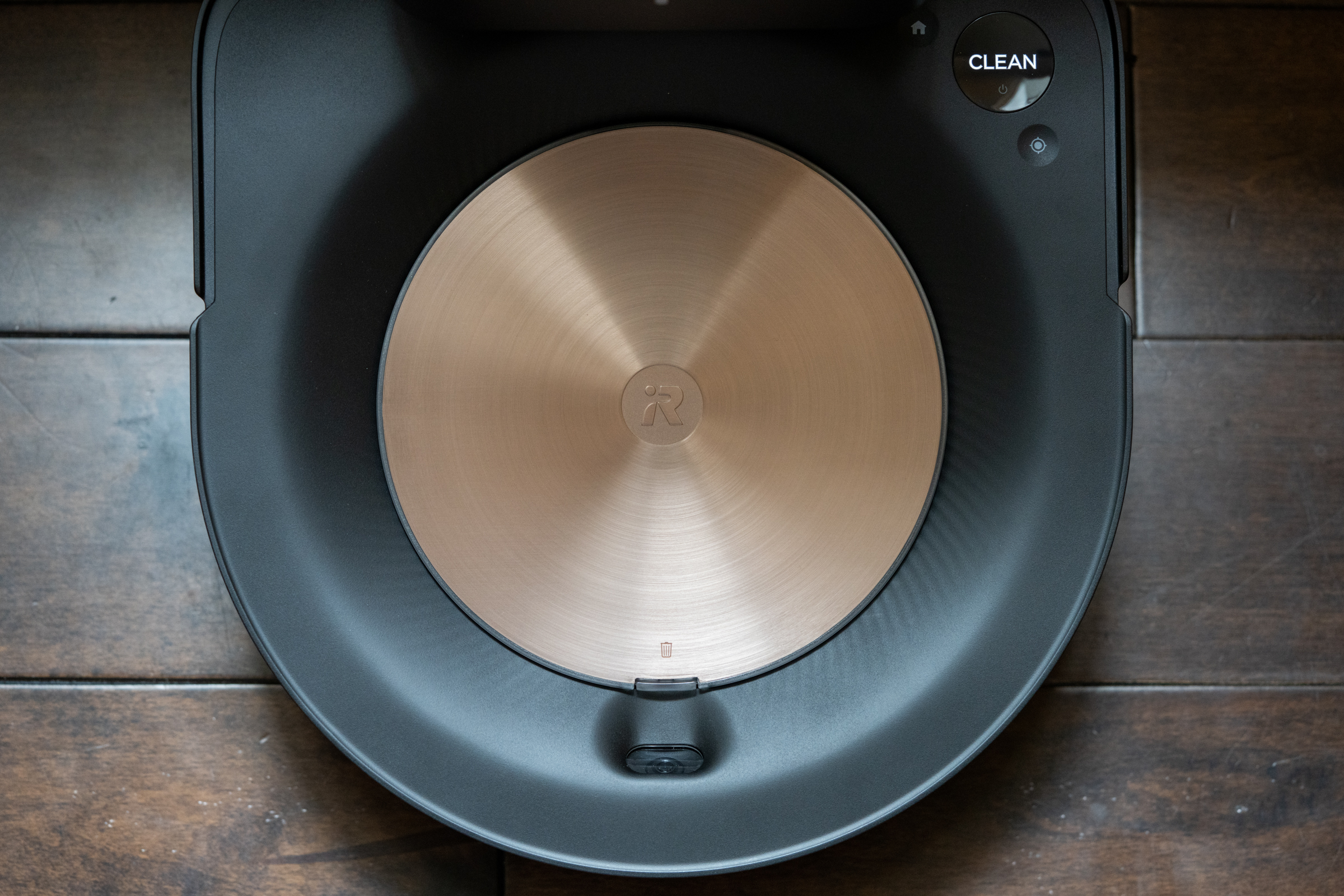
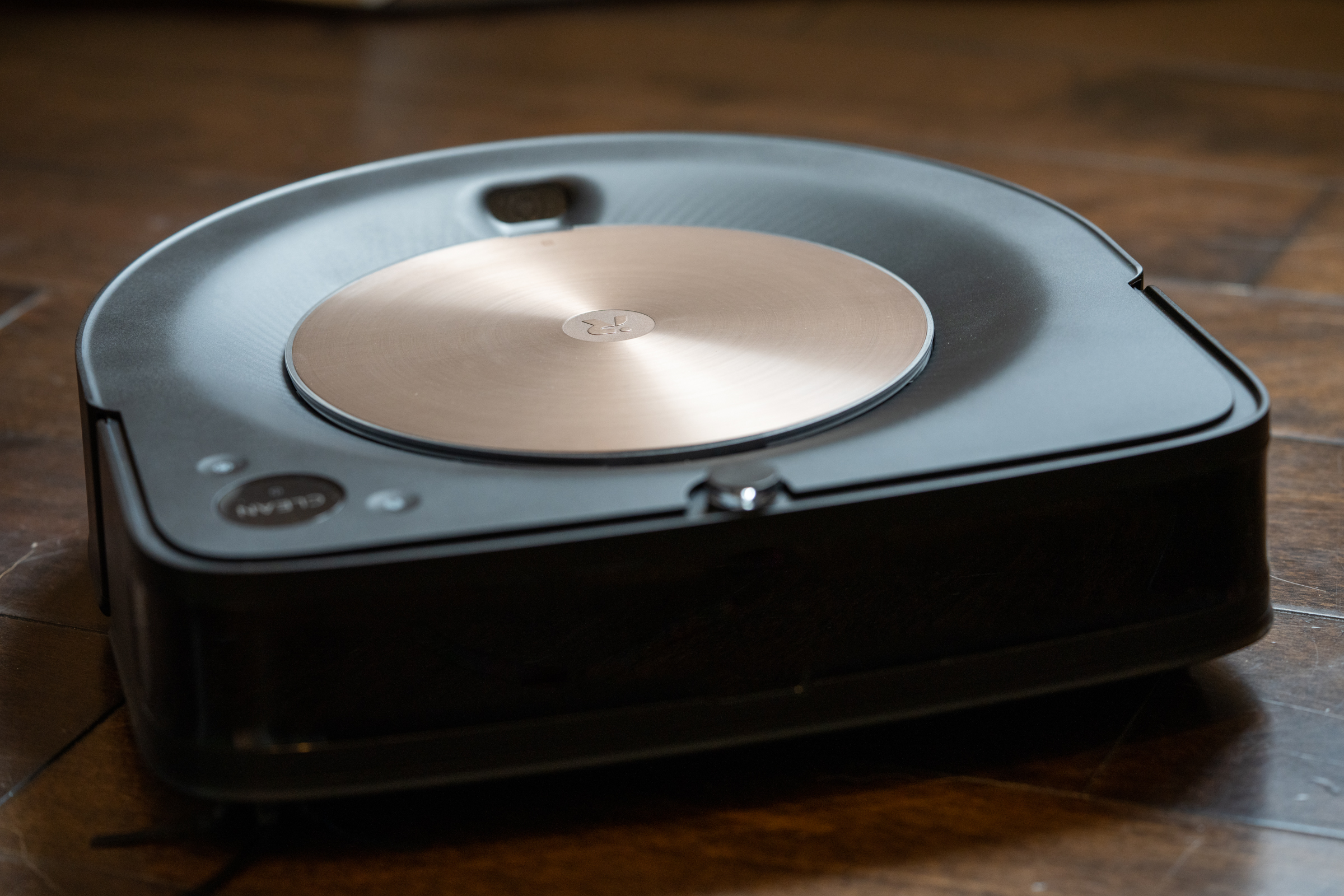
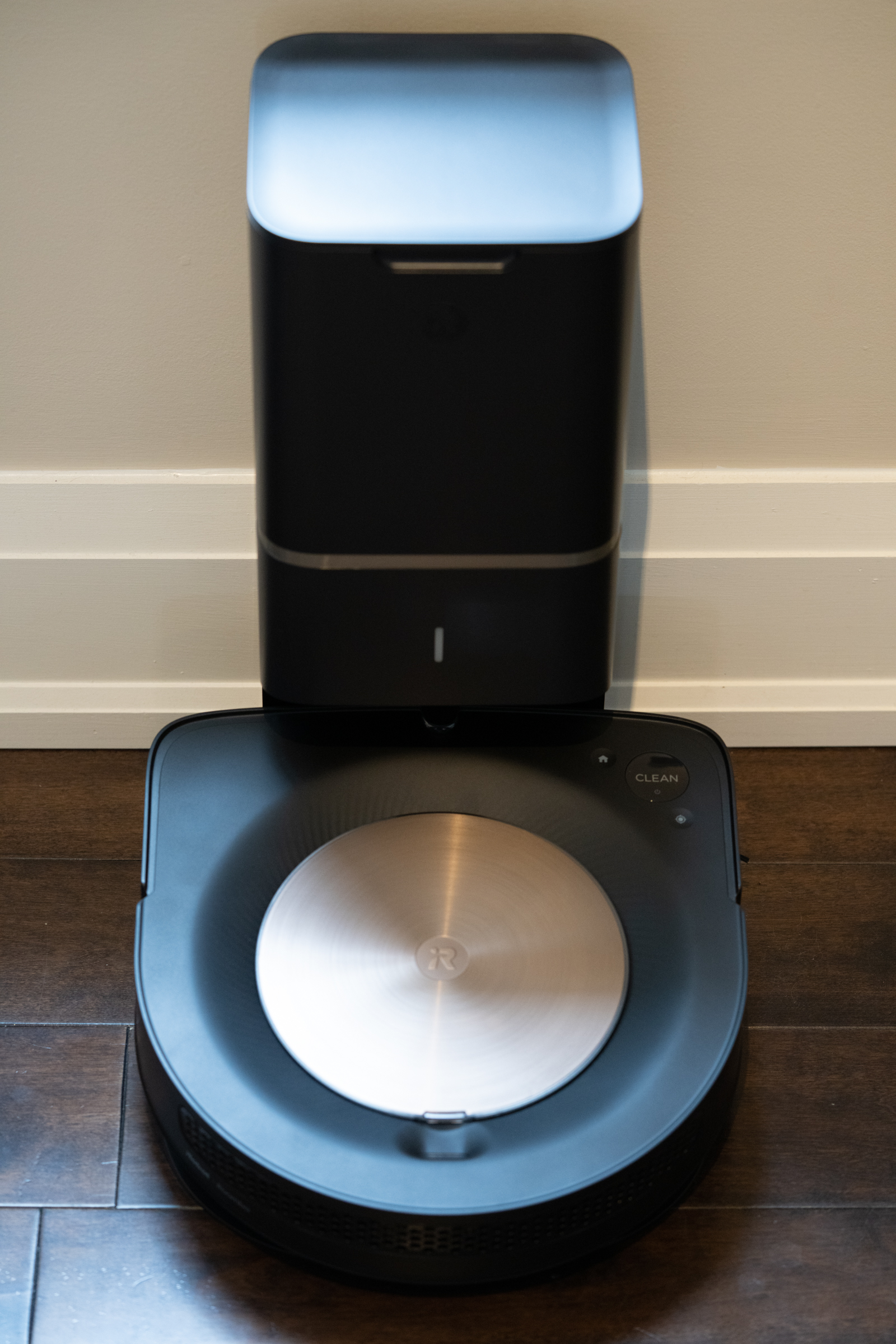
The iRobot Roomba S9+ is actually two things: The Roomba S9, which is available separately, and the Clean Base that enables the vacuum to empty itself after a run, giving you many cleanings before it needs you to actually open up a bin or replace a bag. Both the vacuum and its base are WiFi-connected, and controllable via iRobot’s app, as well as Google Assistant and Alexa. Combined, it’s the most advanced autonomous home vacuum you can get, and it manages to outperform a lot of older or less sophisticated robot vacuums even in situations that have historically been hard for this kind of tech to handle.

Like the Roomba S7 before it (which is still available and still also a great vacuum, for a bit less money), the S9 uses what’s called SLAM (Simultaneous Localization and Mapping), and a specific variant of that called vSLAM (the stands for ‘visual’). This technology means that as it works, it’s generating and adapting a map of your home to ensure that it can clean more effectively and efficiently.

After either a few dedicated training runs (which you can opt to send the vacuum on when it’s learning a new space) or a few more active vacuum runs, the Roomba S9 will remember your home’s layout, and provide a map that you can customize with room dividers and labels. This then turns on the vacuum’s real smart superpowers, which include being able to vacuum just specific rooms on command, as well as features like letting it easily pick up where it left off if it needs to return to its charging station mid-run. With the S9 and its large battery, the vacuum can do an entire run of my large two-bedroom condo on a single charge (the i7 I used previously needed two charges to finish up).

The S9’s vSLAM and navigation systems seem incredibly well-developed in my use: I’ve never once had the vacuum become stuck, or confused by changes in floor colouring, even going from a very light to a very dark floor (this is something that past vacuums have had difficulty with). It infallibly finds its way back to the Clean Base, and also never seems to be flummoxed by even drastic changes in lighting over the course of the day.

So it’s smart, but does it suck? Yes, it does – in the best possible way. Just like it doesn’t require stops to charge up, it also manages to clean my entire space with just one bin. There’s a lot more room in here thanks to the new design, and it handles even my dog’s hair with ease (my dog sheds a lot, and it’s very obvious light hair against dark wood floors). The new angled design on the front of the vacuum means it does a better job with getting in corners than previous fully round designs, and that shows, because corners are were clumps of hair go to gather in a dog-friendly household.

The ‘+’ in the S9+ is that Clean Base as I mentioned – think of it like the tower of lazy cleanliness. The base has a port that sucks dirt from the S9 when it’s done a run, shooting it into a bag in the top of the tower that can hold up to 30 full bins of dirt. That ends up being a lot in practice – it should last you months, depending on house size. Replacement bags cost $20 for three, which is probably what you’ll go through in a year, so it’s really a negligible cost for the convenience you’re getting.

Braava m6

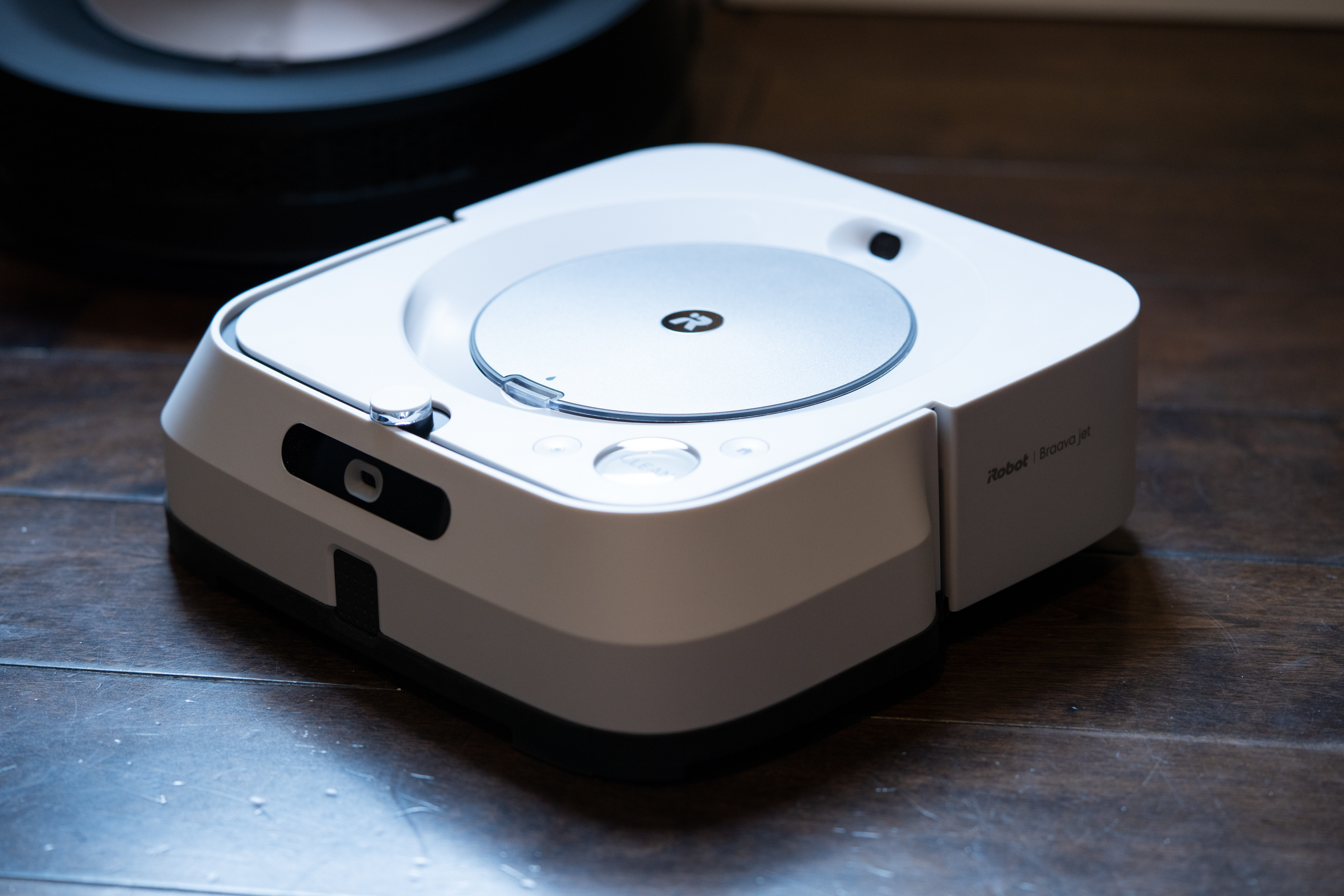
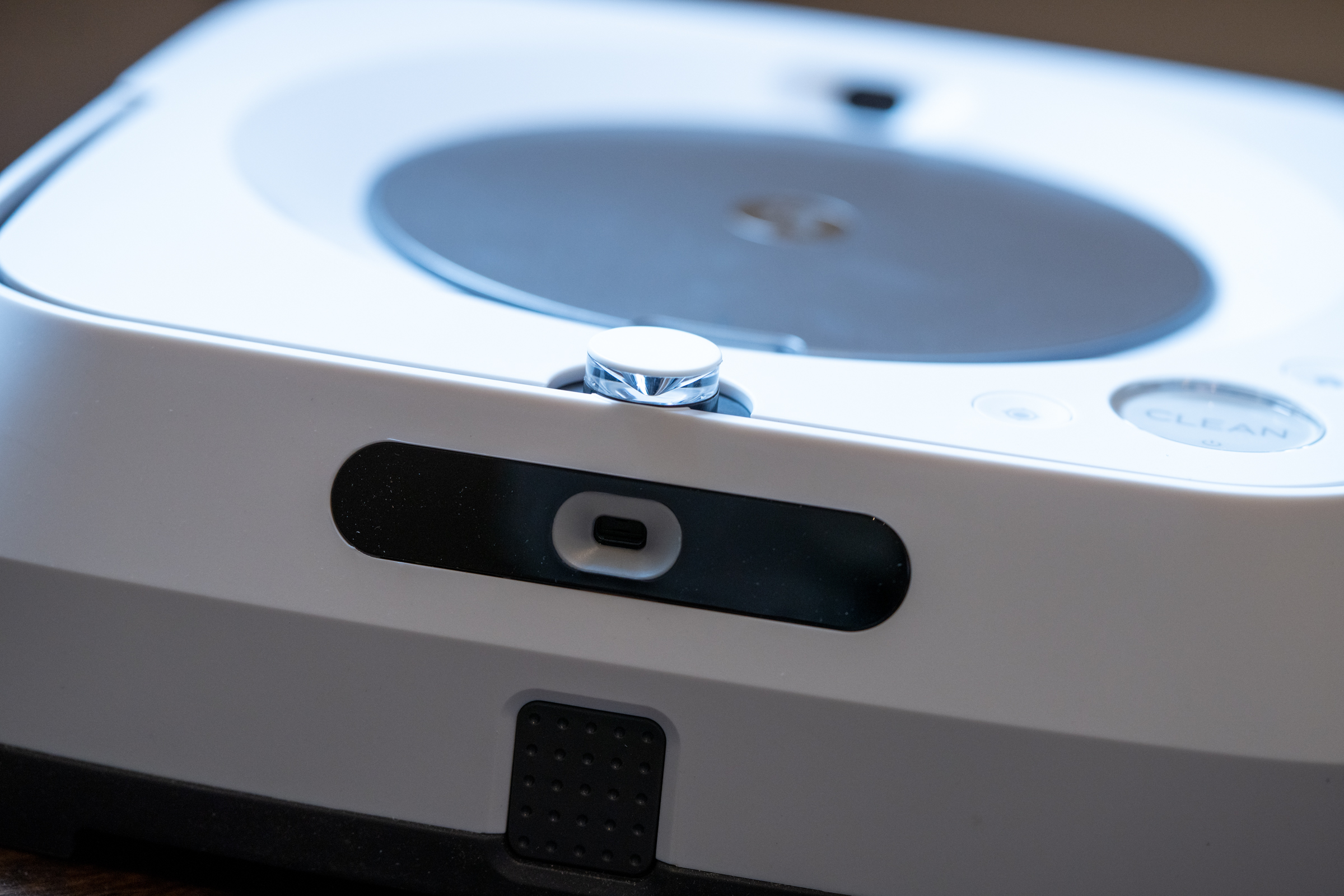
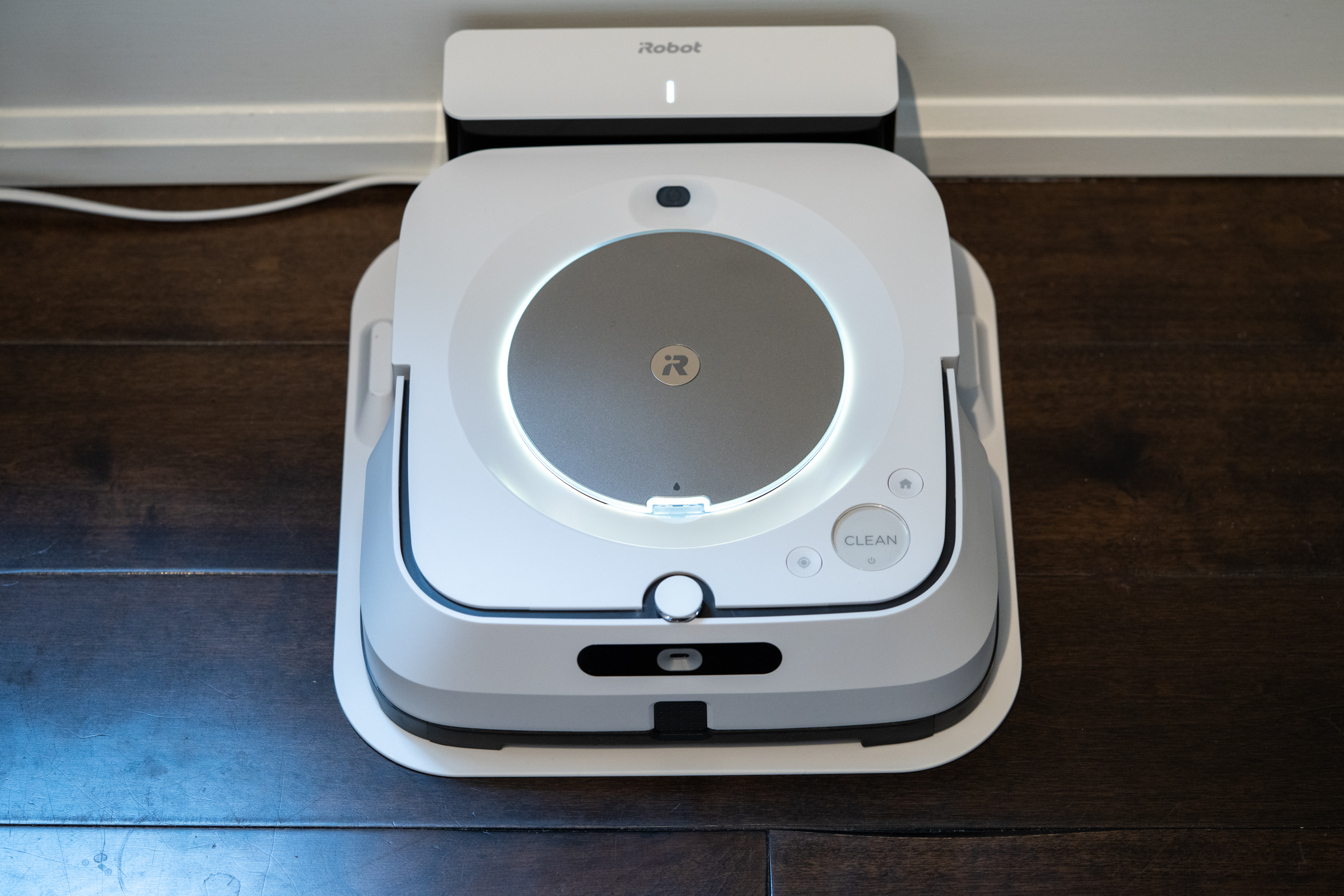
The Roomba S9’s best friend, if you will, is the Braava m6. This is iRobot’s latest and greatest smart mop, which is exactly what it sounds like: Whereas Roomba vacuums, the Braava uses either single use disposable, or microfibre washable/reusable pads, as well as iRobot’s own cleaning fluid, to clean hardwood, tile, vinyl, cork and other hard surface floors once the vacuuming is done. It can also just run a dry sweep, which is useful for picking up dust and pet hair, as a finishing touch on the vacuum’s run.

iRobot has used its unique position in offering both of these types of smart devices to have them work together – if you have both the S9 and the Braava m6 added to your iRobot Home app, you’ll get an option to mop the floors right after the vacuum job is complete. It’s an amazing convenience feature, and one that works fairly well – but there are some differences in the smarts powering the Braava m6 and the Roomba s9 that lead to some occasional challenges.

The Braava m6 doesn’t seem to be quite as capable when it comes to mapping and navigating its surroundings. My condo layout is relatively simple, all one level with no drops or gaps. But the m6 has encountered some scenarios where it doesn’t seem to be able to cross a threshold or make sense of all floor types. Based on error messages, it seems like it’s identifying some surfaces as ‘cliffs’ or steep drops when transitioning back from lighter floors to darker ones.

What this means in practice is that a couple of times per run, I have to reposition the Braava manually. There are ways to solve for this, however, built into the software: Thanks to the smart mapping feature, I can just direct the Braava to focus only on the rooms with dark hardwood, or I can just adjust it when I get an alert that it’s having difficulty. It’s still massively more convenient than mopping by hand, and typically the m6 does about 90 percent of the apartment before it runs into difficult in one of these few small trouble areas.

If you’ve read online customer reviews fo the m6, you may also have seen complaints that it can leave tire marks on dark floors. I found that to be true – but with a few caveats. They definitely aren’t as pronounced as I expected based on some of the negative reviews out there, and I have very dark floors. They also only are really visible in direct sunlight, and then only faintly. They also fade pretty quickly, which means you won’t notice them most of the time if you’re mopping only once ever few vacuum runs. In the end, it’s something to be aware of, but for me it’s not a dealbreaker – far from it. The m6 still does a fantastic job overall of mopping and sweeping, and saves me a ton of labor on what is normally a pretty back-hostile manual task.

Bottom line

These iRobot home cleaning gadgets are definitely high-end, with the s9 starting at $1,099.99 ($1,399.99 with the cleaning base) and the m6 staring at $499.99. You can get a bundle with both staring at $1439.98, but even that is still a lot for cleaning appliances. This is definitely a case where the ‘you get what you pay for’ maxim proves true, however. Either rate s9+ alone, or the combo of the vacuum and mop represent a huge convenience, especially when used on a daily or similar regular schedule, vs. doing the same thing manually. The s9 also frankly does a better job than I ever could wth my own manual vacuum, since it’s much better at getting into corners, under couches, and cleaning along and under trip thanks to its spinning brush. And asking Alexa to have Roomba start a cleaning run feels like living in the future in the best possible way.

19 Nov 2019

Salesforce, AWS expand partnership to bring Amazon Connect to Service Cloud

Salesforce and AWS announced an expansion of their on-going partnership that actually goes back to a $400 million 2016 infrastructure services agreement, and expanded last year to include data integration between the two companies. This year, Salesforce announced it will be offering AWS telephony and call transcription services with Amazon Connect as part of its Service Cloud call center solution.

“We have a strategic partnership with Amazon Web Services, which will allow customers to purchase Amazon Connect from us, and then it will be pre-integrated and out of the box to provide a full transcription of the call, and of course that’s alongside of an actual call recording of the call,” Bill Patterson, executive vice president for Service Cloud explained.

It’s worth noting that the company will be partnering with other telephony vendors as well, so that customers can choose the Amazon solution or another from Cisco, Avaya or Genesys, Patterson said.

These telephony partnerships fill in a gap in the Service Cloud call center offering, and give Salesforce direct access to the call itself. The telephony vendors will handle call transcription and hand that off to Salesforce, which can then use its intelligence layer called Einstein to “read” the transcript and offer the CSR next best actions in real time, something the company has been able to do with interactions from chat and other channels, but couldn’t do with voice.

“As this conversation evolves, the consumer is explaining what their problem is, and Einstein is [monitoring] that conversation. As the conversation gets to a critical mass, Einstein begins to understand what the content is about and suggests a specific solution to the agent,” Patterson said.

Salesforce will begin piloting this new Service Cloud capability in the spring with general availability expected next summer.

Only last week, Salesforce announced a major partnership with Microsoft to move Salesforce Marketing Cloud to Azure. These announcements show Salesforce will continue to use multiple cloud partners when it makes sense for the business. Today, it’s Amazon’s turn.

19 Nov 2019

SocialRank sells biz to Trufan, pivots to a mobile LinkedIn

What do you do when your startup idea doesn’t prove big enough? Run it as a scrawny but profitable lifestyle business? Or sell it to a competitor and take another swing at the fences. Social audience analytics and ad targeting startup SocialRank chose the latter is going for glory.

Today, SocialRank announced it’s sold its business, brand, assets, and customers to influencer marketing campaign composer and distributor Trufan which will run it as a standalone product. But SocialRank’s team isn’t joining up. Instead, the whole staff are sticking together to work on a mobile-first professional social network called Upstream aiming to unbundle LinkedIn.

Started in 2014 amidst a flurry of marketing analytics tools, SocialRank had raised $2.1 million from Rainfall Ventures and others before hitting profitability in 2017. But as the business plateaued, the team saw potential to use data science about people’s identity to get them better jobs.

“A few months ago we decided to start building a new product (what has become Upstream). And when we came to the conclusion to go all-in on Upstream, we knew we couldn’t run two businesses at the same time” SocialRank co-founder and CEO Alex Taub tells me. “We decided then to run a bit of a process. We ended up with a few offers but ultimately felt like Trufan was the best one to continue the business into the future.

The move lets SocialRank avoid stranding its existing customers like the NFL, Netflix, and Samsung that rely on its audience segmentation software. Instead, they’ll continue to be supported by Trufan where Taub and fellow co-founder Michael Schonfeld will become advisors.

“While we built a sustainable business we essentially knew that if we wanted to go real big, we would need to go to the drawing board” Taub explains.

Two-year-old Trufan has raised $1.8 million Canadian from Round13 Capital, local Toronto startup Clearbanc’s founders, and several NBA players. Trufan helps brands like Western Union and Kay Jewellers design marketing initiatives that engage their customer communities through social media. It’s raising an extra $400,000 USD from Round13 to finance the acquisition, which should make Trufan cash-flow positive by the end of the year.

Why isn’t the SocialRank team going along for the ride? Taub said LinkedIn was leaving too much opportunity on the table. While it’s good for putting resumes online and searching for people, “All the social stuff are sort of bolt-ons that came after Facebook and Twitter arrived. People forget but LinkedIn is the oldest active social network out there”, Taub tells me, meaning it’s a bit outdated.

Rather than attack head-on, the newly forged Upstream plans to pick the Microsoft-owned professional networkapart with better approaches to certain features. “I love the idea of ‘the unbundling of LinkedIn’, ala what’s been happening with Craigslist for the past few years” says Taub. “The first foundational piece we are building is a social professional network around giving and getting help. We’ll also be focused on the unbundling of the groups aspect of LinkedIn.”

Taub concludes that entrepreneurs can shackle themselves to impossible goals if they take too much venture capital for the wrong business. As we’ve seen with SoftBank, investors demand huge returns that can require pursuing risky and unsustainable expansion strategies.

“We realized that SocialRank had potential to be a few hundred million dollar in revenue business but venture growth wasn’t exactly the model for it” Taub says. “You need the potential of billions in revenue and a steep growth curve.” A professional network for the smartphone age has that kind of addressable market. And the team might feel better getting out of bed each day knowing their trying to unlock career paths for people instead of just getting them to click ads.