Year: 2019

13 Nov 2019

Techstars launches a virtual space tech accelerator with USAF, the Netherlands and Norway

Techstars is following up the first class of their Starburst space-focused program with a new, virtual accelerator program that is being run in partnership with the U.S. Air Force, the Netherlands Ministry of Defence, the Norwegian Ministry of Defence and the Norwegian Space Agency. It’s called the Techstars Allied Space Accelerator, and its focus is specifically on startups operating in the commercial space industry.

Unlike most other Techstars programs, this one won’t require companies to work out of a centralized physical hub during the course of the program, which will span 13-weeks. It’ll be mostly remote, punctuated by three separate one-week visits on-site at the program’s government agency sponsors, which will supplement the virtual mentorship and guidance.

Techstars already has experience working with the U.S. Air Force, through the Techstars Air Force Accelerator, but this new program will give it a chance to work together both with the entrepreneurial organization, and also with some of its international partners. This kind of collaboration with industry could help pave the way to establishing more clear and widely accepted rules of the road when it comes to how the commercial space industry operates relative to national borders and international cooperation.

This inaugural program will run from June through September of 2020, and it’s open for applications as of today, with the cut-off for accepting new potential participants on March 3, 2020.

13 Nov 2019

Netflix and Nickelodeon partner on original programming, following Disney+ launch

Netflix is taking on the Disney+ threat by partnering up with kids entertainment giant Nickelodeon, which will produce original content, including films and TV shows, for its streaming service. The company announced this morning it has entered into a new, multi-year output deal that will produce animated feature films and shows that will include both Nickelodeon’s well-known library of characters as well as all-new IP.

The shows will be aimed at kids and families around the world, Netflix says.

The deal is an expansion of Nickelodeon’s existing relationship with Netflix. Already, Netflix streams a number of popular Nickelodeon’s titles, including animated specials s “Rocko’s Modern Life: Static Cling” and “Invader Zim: Enter the Florpus.” It’s also soon to add specials based on “The Loud House” and “Rise of the Teenage Mutant Ninja Turtles.”

The deal news comes only a day after the launch of Disney+ in the U.S., which will be one of its largest markets. Disney+ has been positioned as a potential rival for Netflix, with some forecasts even stating that Netflix could lose subscribers to the family-friendly streamer. One report from market research firm Audience Project out today, in fact, claims that 33% of U.S. consumers who are planning to sign up for Disney+ are considering canceling their Netflix subscriptions around the same time.

To retain customers, Netflix will need to have more kids’ content that will appeal to families — a powerful demographic that all streamers today target with investments in original programming and licensing deals.

“Nickelodeon’s next step forward is to keep expanding beyond linear platforms, and our broader content partnership with Netflix is a key path toward that goal,” said Brian Robbins, President, Nickelodeon, in a statement.

“The Nickelodeon Animation Studio is home to the world-class artists and storytellers behind some of the most iconic characters and shows ever made, and our head of Animation, Ramsey Naito, has been building on that legacy over the past year by ramping up development and production exponentially. The ideas and work at our Studio are flowing, and we can’t wait to work with Melissa and the Netflix team on a premium slate of original animated content for kids and families around the world,” he added.

Netflix didn’t offer any details on which iconic Nickelodeon IP would be involved in the new programming, or what sort of new characters may be under development. Nor did it speak to the number of titles it expects the multi-year deal to produce or when the first shows or movies would arrive. Instead, today’s announcement was more focused on taking the wind out of Disney’s sails following its big (and sometimes glitchy) U.S. launch.

Nickelodeon isn’t the only new partner in the children’s and family space that Netflix has brought in, as a means of challenging the Disney+ threat. As The New York Times recently reported, the streamer has been amassing a number of creators and executives as part of its counterattack strategy, including former Pixar and Disney animators. It also recently worked with the Jim Henson Company to produce “The Dark Crystal: Age of Resistance.”

Netflix has touted the value of kids’ programming to its service, noting that around 60% of Netflix’s global audience watches the service for children and family content on a monthly basis.

13 Nov 2019

Brave launches version 1.0 of its privacy-focused browser

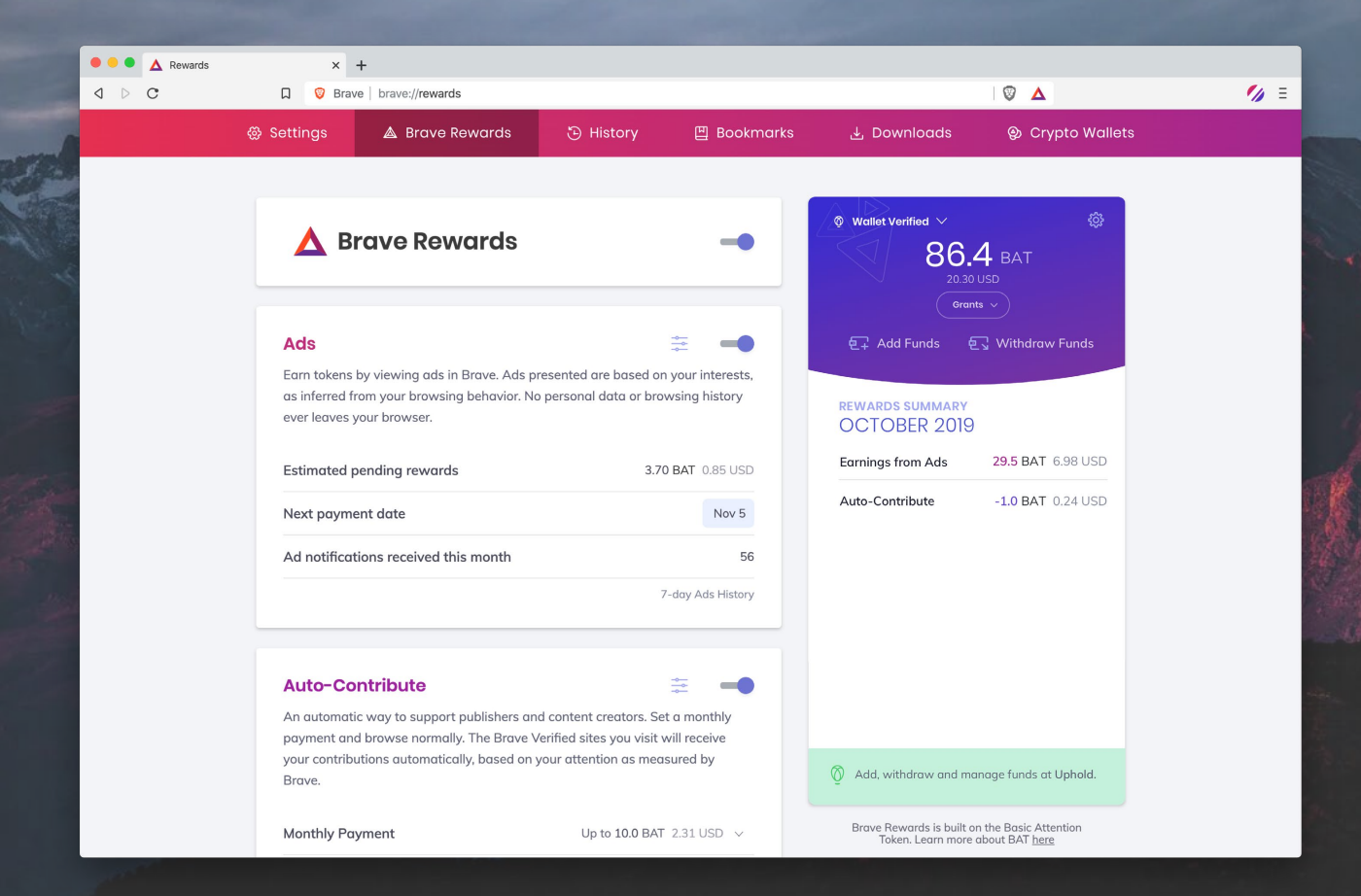
Brave, the company co-founded by ex-Mozilla CEO Brendan Eich after his ouster from the organization in 2014, today launched version 1.0 of its browser for Windows, macOS, Linux, Android and iOS. In a browser market where users are spoiled for choice, Brave is positioning itself as a fast option that preserves users’ privacy with strong default settings, as well as a crypto currency-centric private ads and payment platform that allows users to reward content creators.

As the company announced last month, it now has about 8 million daily users. Its Brave Rewards program, which requires opt-in from users and publishers, currently has about 300,000 publishers on board. Most of these are users with small followings on YouTube and Twitter, but large publishers like Wikipedia, The Washington Post, The Guardian, Slate and the LA Times are also part of the ecosystem. Using this system, which not every publisher is going to like, the browser replaces the ads on a publisher’s site with its own, based on the user’s browsing habits. Users then receive 70 percent of what the advertisers spend on ads, while Brave keeps 30 percent.

As users view these ads, they start earning Basic Attention Tokens (BAT), Brave’s cryptocurrency, which they can keep or give to publishers. In its early days, Brave actually started with Bitcoin as the currency for this, but as Eich noted, that quickly became too expensive (and since the price was going up, users wanted to hold on to the Bitcoin instead of donating it).

Brave also comes with a built-in ad blocker that is probably among the most effective in the industry, as well as extensive anti-tracking features. “Everybody’s bothered by the sense of being tracked and bothered by bad ads,” Eich told me. “But I think ad aesthetics are not the problem. It’s the tracking and the cost of tracking which is multifarious. There’s page load time, running the radio to load the tracking scripts that load the other scripts that load the scripts that load the ads, that drains your battery, too.” Eich argues that with Brave, the team found a way to tie this all together with anti-tracking technology and an approach to ad blocking that goes beyond the industry-standard blocklists and also uses machine learning to identify additional rules for blocking.

For those users that really want to be anonymous on the web, Brave also features a private browsing mode, just like every other browser, but with the added twist that you can also open a private session through the Tor network, which will make it very hard for most companies to identify you.

At its core, Brave is simply a fast, extensible Chromium-based browser. That’s also what the company believes will sell it to users. “The way you get users, […] I think speed is the first one that works across the largest number of users. But you can’t just leave it at speed. You want to have all your benefits tied up in a pretty knot and that’s what we have done,” he said. For Brave, speed and ad/tracking protection are obviously interconnected, and all the other benefits accrue from that.

Looking beyond version 1.0, the Brave team plans to implement better sync, with support for tab and history syncing, for example. Brave also aims to make participating in Brave Rewards an experience with much lower friction for the user. In the early days, before it was on Android, the opt-in rate was around 40 percent, Eich told me, and the team wants to get it back to that.

If you want to give Brave a try, you can download it here.

13 Nov 2019

Wayfair’s app adds 3D visualization tools, including interactive photos & a room planner

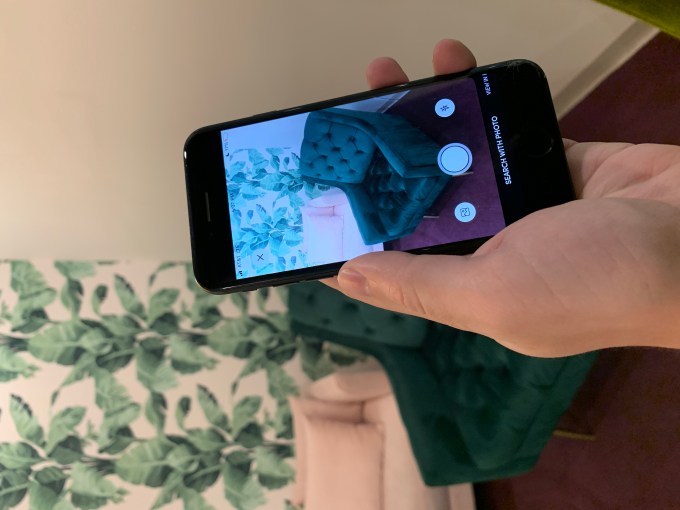
Home furnishing retailer Wayfair was among the first to adopt AR technology as a means of helping people better visual furniture and accessories in their own home, ahead of purchase. Today, the company is expanding its feature set to allow for more visualization capabilities — even when you’re shopping out in the real world and aren’t able to take a photo of your room to use AR.

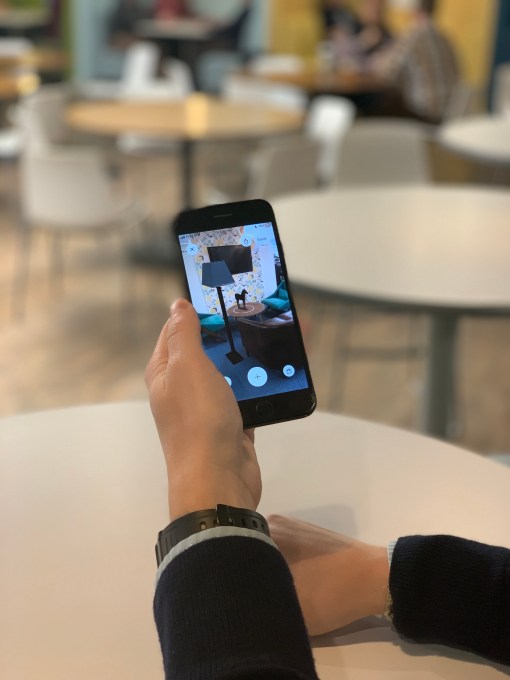
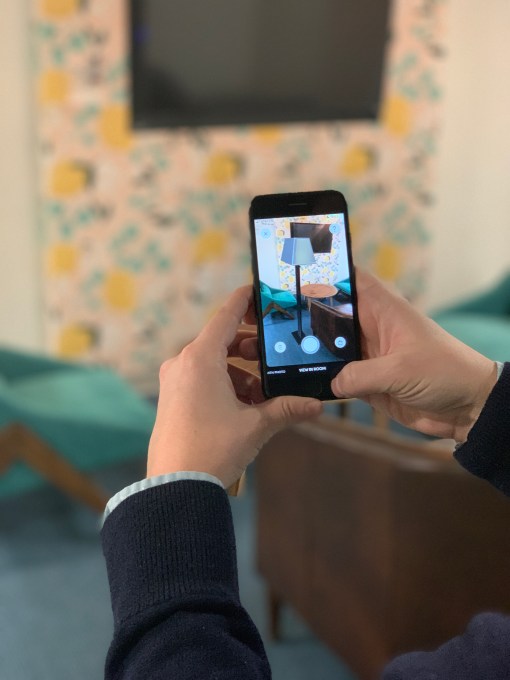
Instead, shoppers will be able to leverage a new feature called “Interactive Photo,” which lets shoppers take a photo of their room then visualize multiple products within it, even when they’re not home in their own space. The feature itself uses technology to understand the spatial information of the room in the image to give you an AR-like experience using your photo.

Alongside this addition, Wayfair has updated its app to put its camera tools more at the forefront of the app experience. Similar to how you can click a camera icon next to the Amazon app’s search bar, you can now do the same in Wayfair. You can also then toggle between the various camera-based features with swipe gestures, in order to move between Wayfair’s visual search and its “View in Room” AR feature, which is also where you’ll find the new “Interactive Photo.”

The retailer has also launched its room design tool, Room Planner 3D, on the mobile shopping app. This allows shoppers to create an interactive room 3D room that they can view from any angle, while testing out different layouts, styles, room dimensions and more.

The update follows Amazon’s launch earlier this year of its own visual shopping experience called Showroom, which let online and mobile shoppers try out furniture and other décor in a customizable virtual room where they pick the wall color, flooring, carpet and more.

“With the latest updates to the Wayfair app, we continue to push the limits of what’s possible by iterating on advanced AR and machine learning capabilities, and introducing new and innovative spatial awareness techniques to an e-commerce experience, bridging the gap between imagination and reality,” said Matt Zisow, Vice President of Product Management, Experience Design and Analytics at Wayfair, in a statement.

The new feature set comes shortly after Wayfair’s third-quarter earnings, where the company reported a wider-than-expected loss of $2.33 per share, adjusted, versus the expected $2.10 per share. Revenue was up 35% year-over-year to $2.3 billion, above the anticipated $2.27 billion, however. The company attributed the miss to “short-term headwinds from tariffs.”

However, as the holiday shopping season heats up, Wayfair still needs to unveil enticing features that will encourage consumers to redownload its app and shop — especially given that smartphones alone drove $2.1 billion in U.S. online sales last Black Friday.  

The new Wayfair app is out now on iOS and Android, but the new features — Interactive Photo, Integrated Camera and Room Planner 3D — are only on iOS.

13 Nov 2019

JetPack Aviation raises $2M to build the prototype of its flying motorcycle

Flying cars are fine – but why use a car when you can have a motorcycle instead? YC-backed startup JetPack Aviation wants to answer that question with the world’s first flying motorcycle, a personal aircraft dubbed ‘The Speeder,’ a name that Star Wars fans will surely appreciate. Now, JetPack has raised a seed round of $2 million from investors indulging Draper Associates, Skype co-founder Jaan Tallinn, YC, Catheis Ventures and a group of angels that it says will fund the development of the Speeder’s first functional prototype.

Back in March, JetPack revealed its plans for the Speeder, which it says will provide a fully stabilized ride that’s either pilot-controlled or fully autonomous. It can take off and land vertically, and reach top speeds of potentially over 400 MPH. There are not exposed rotors systems, which make it a lot safer and easier to operate than a lot of other VTOL designs and helicopters, and the company says it can also be refuelled in under 5 minutes, which is a dramatically shorter turn around time for powering up vs. an electric vehicle.

This isn’t JetPack’s first aerial rodeo: The company, led by CEO and founder David Mayman, has already created an actual jet pack. Mayman himself has demonstrated the personal aerial jet pack numerous times, and it’s been certified by the FAA, plus it landed a CARADA agreement with the U.S. Navy Special Forces for use in short-distance troop transportation. The jet pack also boasts a lot of features that sound, on paper, like diene fiction: Over 100 mph top seed, and suitcase-sized portability, for instance.

That track record is why when Mayman tells me this $2 million round “should fully fund the first full scale flying prototype, including all modelling designs and build,” I tend to believe him more than I would just about anyone else in the world making a similar claim.

Part of the reason the Speeder is more viable near-term than other VTOL designs is that it will rely on turbine propulsion, rather than battery-based flight systems. This is because, in Mayman’s opinion, “current battery energy density is just too low for most electrically powered VTOLs to be truly practical,” and that timelines optimistically for that to change are in the 5 to 10 year range. The Speeder, by comparison, should feasibly be able to provide quick cargo transportation for emergency services and military (its first planned uses before moving on to the consumer market) in a much shorter period.

13 Nov 2019

Apple’s Mac Pro ships in December with maximum 8TB of storage

Apple is making its Mac Pro and Apple Pro Display available in December, it announced today. The machine was announced earlier this year but no availability window had been set.

In addition to the previously announced specs, Apple also noted that it would be able to be ordered with up to an 8TB SSD. Apple’s Pro Workflow Team continues to take feedback about wants and needs of its pro customers and Apple says that the MacBook Pro can now handle up to 6 streams of 8K Pro Res vide, up from 3 streams quoted back in June. 

Apple also says that Blackmagic will have an SDI to 8K converter for productions using a serial digital interface workflow on set or in studio. This was a question I got several times after Apple announced its reference monitor to go along with the Mac Pro. This makes it more viable for many on-set applications that use existing workflows. 

I was able to get a look at the Mac Pro running the SDI converter box as well as a bunch of other applications like Final Cut Pro and it continues to be incredibly impressive for pro workflows. One demo showed 6 8K Pro Res streams running with animation and color coding in real time in a pre-rendered state. Really impressive. The hardware is also still wildly premium stuff. The VESA mount for the Pro Display XDR alone feels like it has more engineering behind it than most entire computers.

The new Mac Pro starts at $5,999 for tis base configuration, which includes 32GB of RAM, a 256GB SSD and a Radeon Pro 570X graphics card, and the Pro Display XDR 32-inch reference quality monitor that Apple will sell alongside it starts at $4,999.

13 Nov 2019

MacBook Pro 16” first impressions: Return of the Mack

In poker, complacency is a quiet killer. It can steal your forward momentum bit by bit, using the warm glow of a winning hand or two to cover the bets you’re not making until it’s too late and you’re out of leverage. 

Over the past few years, Apple’s MacBook game had begun to suffer from a similar malaise. Most of the company’s product lines were booming, including newer entries like the Apple Watch, AirPods and iPad Pro. But as problems with the models started to mount — unreliable keyboards, low RAM ceilings and anemic graphics offerings — the once insurmountable advantage that the MacBook had compared to the rest of the notebook industry started to show signs of dwindling. 

The new 16” MacBook Pro Apple is announcing today is an attempt to rectify most, if not all, of the major complaints of its most loyal, and vocal, users. It’s a machine that offers a massive amount of upsides for what appears to be a handful of easily justifiable tradeoffs. It’s got better graphics, a bigger display for nearly no extra overall size, a bigger battery with longer life claims and yeah, a completely new keyboard.

I’ve only had a day to use the machine so far, but I did all of my research and writing for this first look piece on the machine, carting it around New York City, through the airport and onto a plane where I’m publishing this now. This isn’t a review, but I can take you through some of the new stuff and give you thoughts based on that chunk of time. 
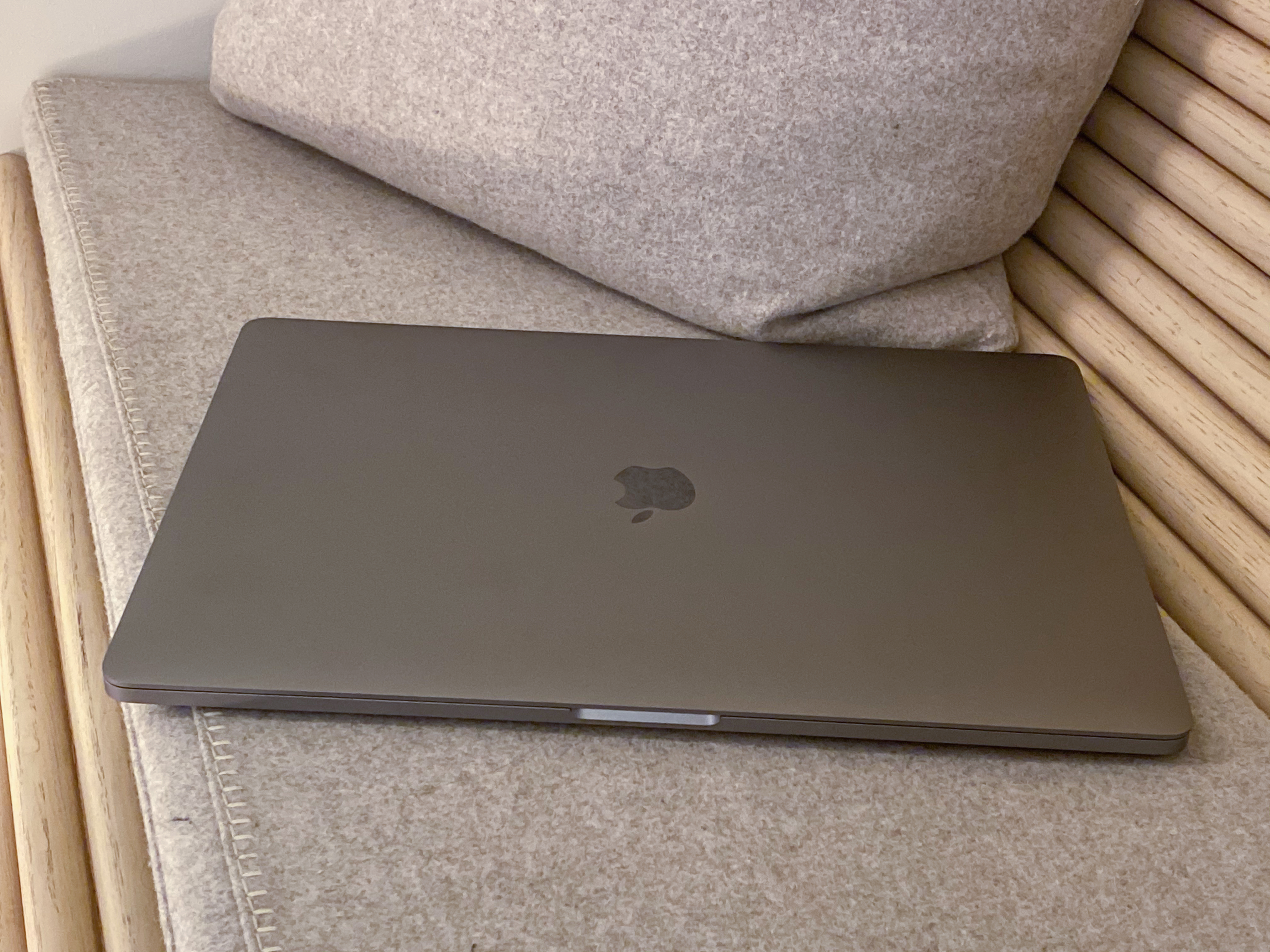
This is a re-think of the larger MacBook Pro in many large ways. This is a brand new model that will completely replace the 15” MacBook Pro in Apple’s lineup, not an additional model. 

Importantly, the team working on this new MacBook started with no design constraints on weight, noise, size or battery. This is not a thinner machine, it is not a smaller machine, it is not a quieter machine. It is, however, better than the current MacBook Pro in all of the ways that actually count.

Let’s run down some of the most important new things. 

Performance and thermals

The 16” MacBook Pro comes configured with either a 2.6GHz 6-core i7 or a 2.3GHz 8-core i9 from Intel . These are the same processors as the 15” MacBook Pro came with. No advancements here is largely a function of Intel’s chip readiness. 

The i7 model of the 16” MacBook Po will run $2,399 for the base model — the same as the old 15” — and it comes with a 512GB SSD drive and 16GB of RAM. 

Both models can be ordered today and will be in stores at the end of the week.

The standard graphics configuration in the i7 is an AMD Radeon Pro 5300M with 4GB of memory and an integrated Intel UHD graphics 630 chip. The system continues to use the dynamic handoff system that trades power for battery life on the fly.  

The i9 model will run $2,699 and comes with a 1TB drive. That’s a nice bump in storage for both models, into the range of very comfortable for most people. It rolls with an AMD Radeon Pro 5500M with 4GB of memory.

You can configure both models with an AMD Radeon Pro 5500M with 8GB of GDDR6 memory. Both models can also now get up to 8TB of SSD storage – which Apple says is the most on a notebook ever – and 64GB of 2666 DDR4 RAM but I’d expect those upgrades to be pricey.

The new power supply delivers an additional 12w of power and there is a new thermal system to compensate for that. The heat pipe that carries air in and out has been redesigned, there are more fan blades on 35% larger fans that move 28% more air compared to the 15” model. 

The fans in the MacBook Pro, when active, put out the same decibel level of sound, but push way more air than before. So, not a reduction in sound, but not an increase either — and the trade is better cooling. Another area where the design process for this MacBook focused on performance gains rather than the obvious sticker copy. 
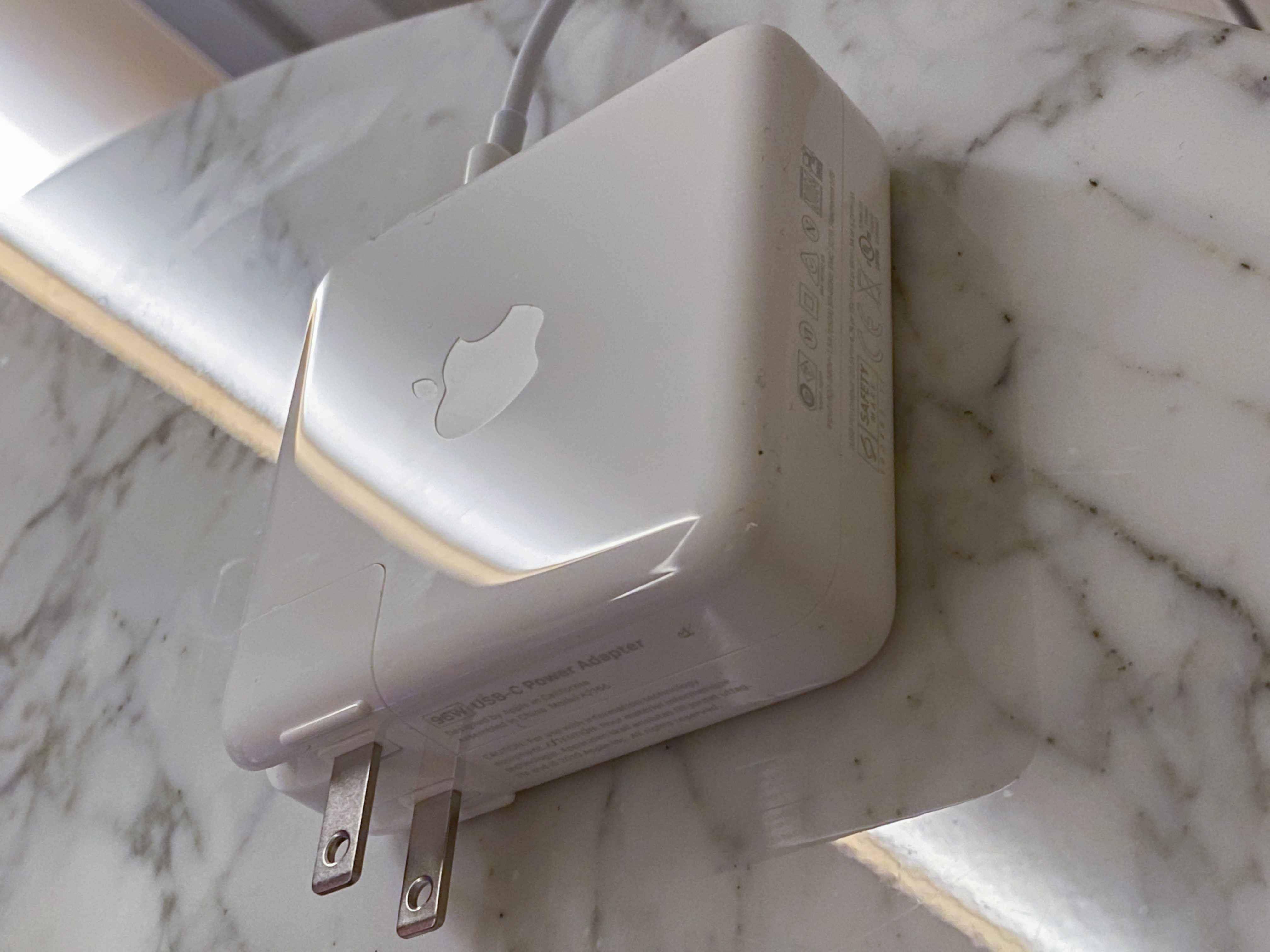
There’s also a new power brick which is the same physical size as the 15” MacBook Pro’s adapter, but which now supplies 96w up from 87w. The brick is still as chunky as ever and feels a tad heavier, but it’s nice to get some additional power out of it. 

Though I haven’t been able to put the MacBook Pro through any video editing or rendering tests I was able to see live demos of it handling several 8K streams concurrently. With the beefiest internal config Apple says it can usually handle as many as 4, perhaps 5 un-rendered Pro Res streams.

A bigger display, a thicker body

The new MacBook Pro has a larger 16” diagonal Retina display that has a 3072×1920 resolution at 226 ppi. The monitor features the same 500 nit maximum brightness, P3 color gamut and True Tone tech as the current 15”. The bezels of the screen are narrower, which makes it feel even larger when you’re sitting in front of it. This also contributes to the fact that the overall size of the new MacBook Pro is just 2% larger in width and height, with a .7mm increase in thickness. 
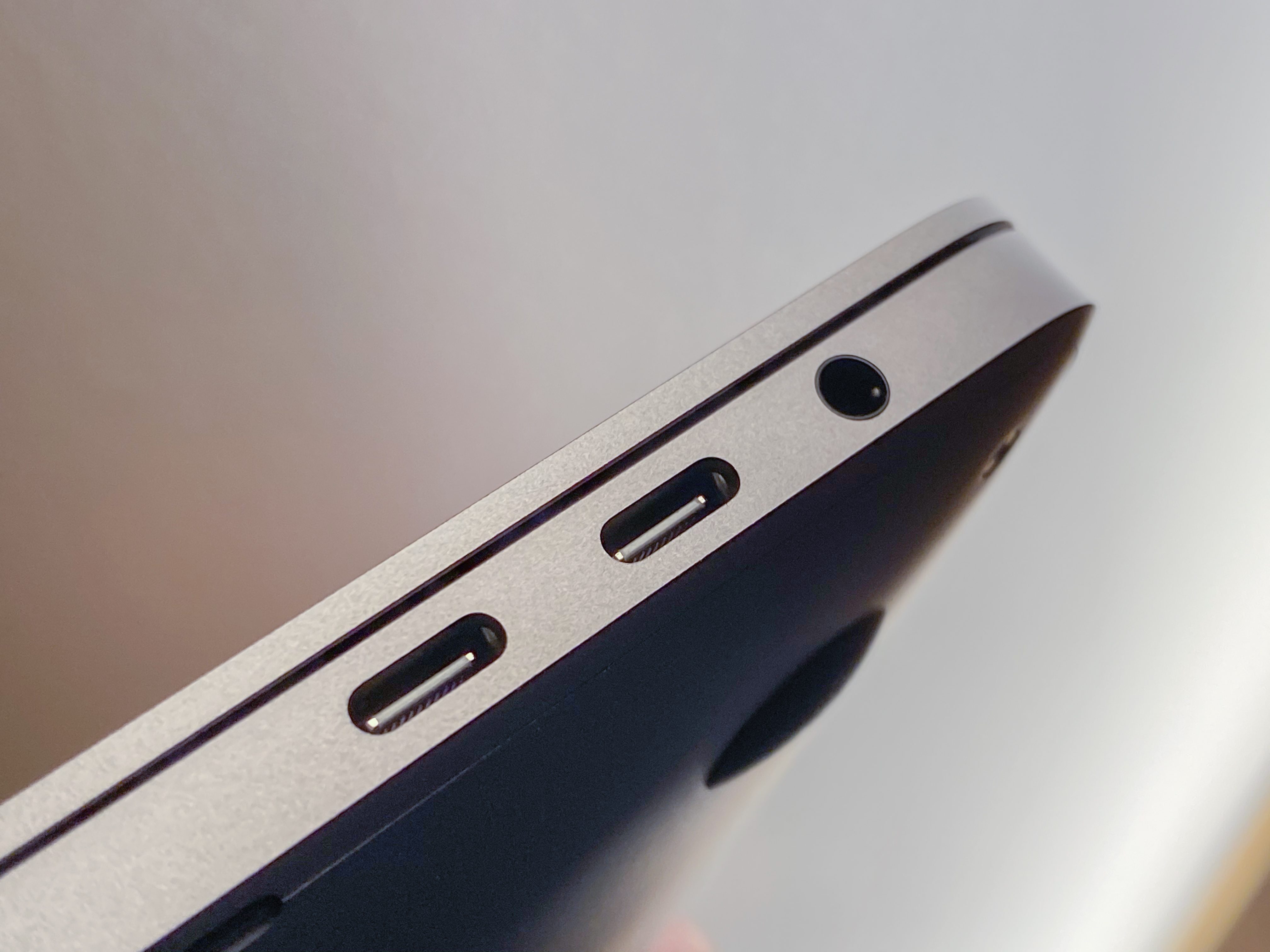
The overall increase in screen size far outstrips the increase in overall body size because of those thinner bezels. And this model is still around the same thickness as the 2015 15” MacBook Pro, an extremely popular model among the kinds of people who are the target market for this machine. It also weighs 4.3 lbs, heavier than the 4.02 lb current 15” model.

The display looks great, extremely crisp due to the increase in pixels and even more in your face because of the very thin bezels. This thing feels like it’s all screen in a way that matches the iPad Pro.
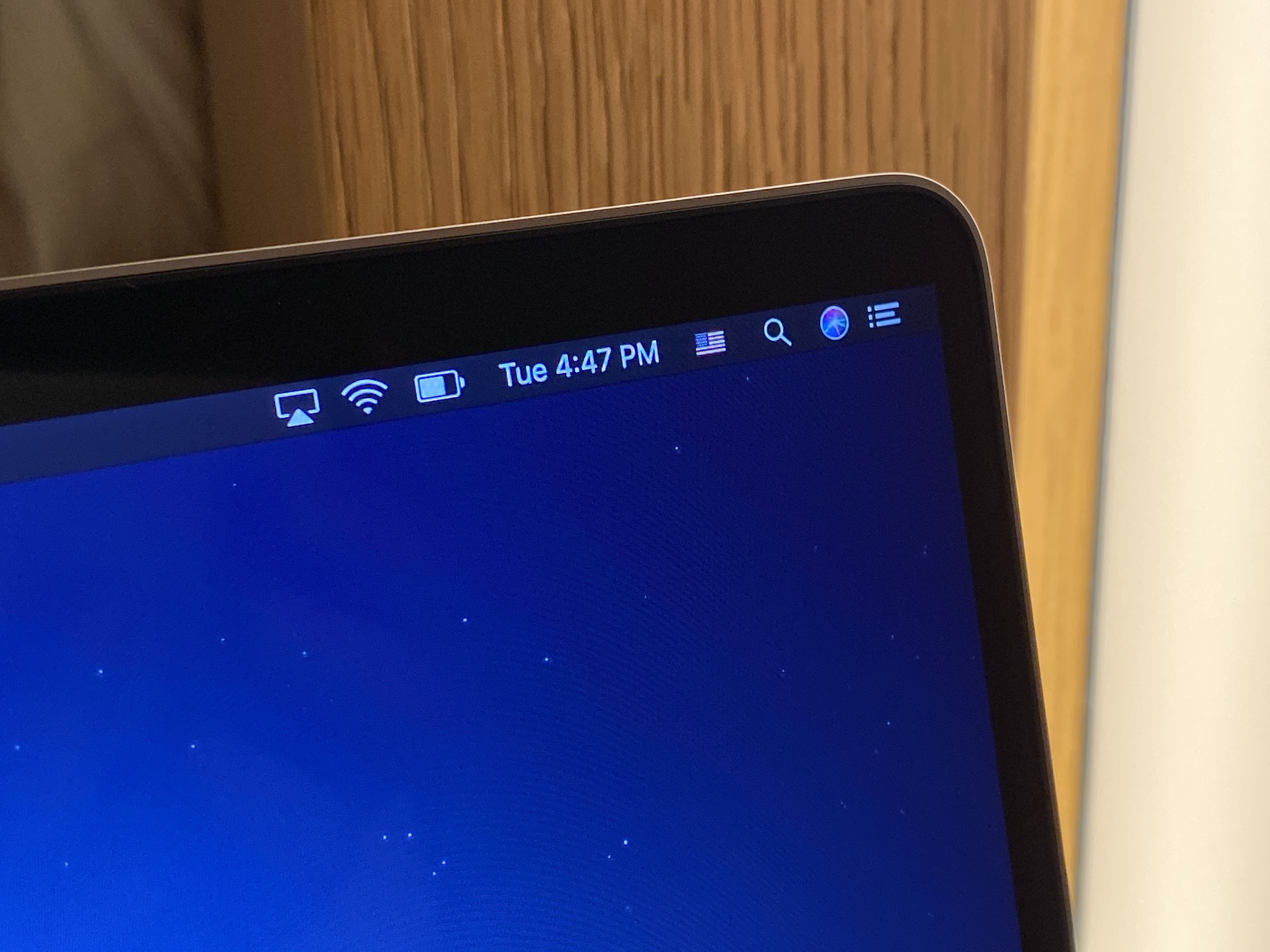
This thick boi also features a bigger battery, a full 100Whr, the most allowable under current FAA limits. Apple says this contributes an extra hour of normal operations in its testing regimen in comparison to the current 15” MacBook Pro. I have not been able to effectively test these claims in the time I’ve had with it so far. 

But it is encouraging that Apple has proven willing to make the iPhone 11 Pro and the new MacBook a bit thicker in order to deliver better performance and battery life. Most of these devices are pretty much thin enough. Performance, please.

Speakers and microphone

One other area where the 16” MacBook Pro has made a huge improvement is the speaker and microphone arrays. I’m not sure I ever honestly expected to give a crap about sound coming out of a laptop. Good enough until I put in a pair of headphones accurately describes my expectations for laptop sound over the years. Imagine my surprise when I first heard the sound coming out of this new MacBook and it was, no crap, incredibly good. 

The new array consists of six speakers arranged so that the subwoofers are positioned in pairs, antipodal to one another (back to back). This has the effect of cancelling out a lot of the vibration that normally contributes to that rattle-prone vibrato that has characterized small laptop speakers pretty much forever.

The speaker setup they have here has crisper highs and deeper bass than you’ve likely ever heard from a portable machine. Movies are really lovely to watch with the built-ins, a sentence I have never once felt comfortable writing about a laptop. 

Apple also vents the speakers through their own chambers, rather than letting sound float out through the keyboard holes. This keeps the sound nice and crisp, with a soundstage that’s wide enough to give the impression of a center channel for voice. One byproduct of this though is that blocking one or another speaker with your hand is definitely more noticeable than before.

The quality of sound here is really very, very good. The HomePod team’s work on sound fields apparently keeps paying dividends. 
That’s not the only audio bit that’s better now though, Apple has also put in a 3-mic array for sound recording that it claims has a high enough signal-to-noise ratio that it can rival standalone microphones. I did some testing here comparing it to the iPhone’s mic and it’s absolutely night and day. There is remarkably little hiss present here and artists that use the MacBook as a sketch pad for vocals and other recording are going to get a really nice little surprise here.

I haven’t been able to test it against external mics myself but I was able to listen to rigs that involved a Blue Yeti and other laptop microphones and the MacBook’s new mic array was clearly better than any of the machines and held its own against the Yeti. 

The directional nature of many podcast mics is going to keep them well in advance of the internal mic on the MacBook for the most part, but for truly mobile recording setups the MacBook mic just went from completely not an option to a very viable fallback in one swoop. It really has to be listened to in order to get it. 

I doubt anyone is going to buy a MacBook Pro for the internal mic, but having a ‘pro level’ device finally come with a pro level mic on board is super choice. 

I think that’s most of it, though I feel like I’m forgetting something…

Oh right, the Keyboard

Ah yes. I don’t really need to belabor the point on the MacBook Pro keyboards just not being up to snuff for some time. Whether you weren’t a fan of the short throw on the new butterfly keyboards or you found yourself one of the many people (yours truly included) who ran up against jammed or unresponsive keys on that design — you know that there has been a problem.
The keyboard situation has been written about extensively by Casey Johnston and Joanna Stern and complained about by every writer on Twitter over the past several years. Apple has offered a succession of updates to that keyboard to attempt to make it more reliable and has extended warranty replacements to appease customers. 

But the only real solution was to ditch the design completely and start over. And that’s what this is: a completely new keyboard.

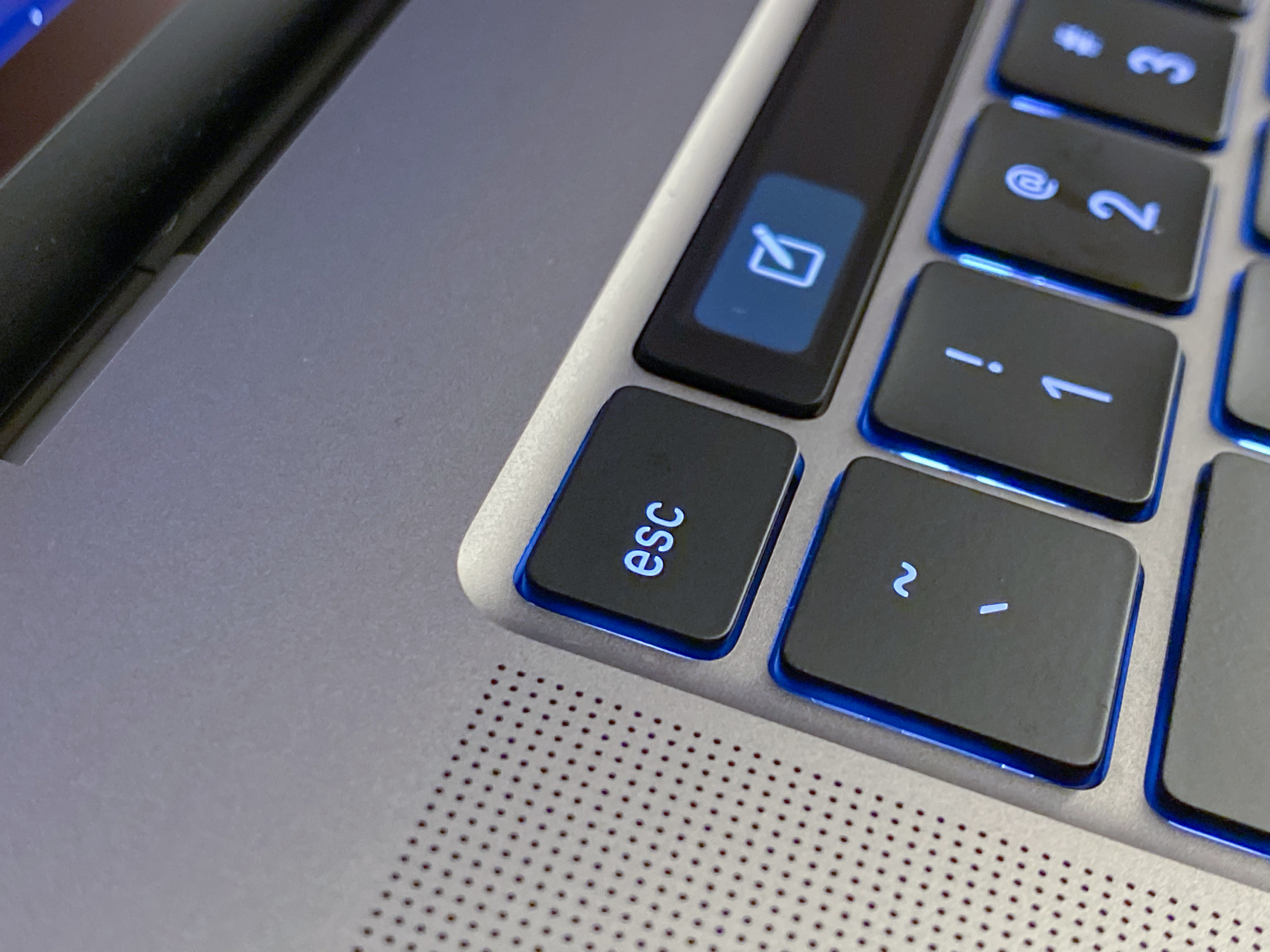
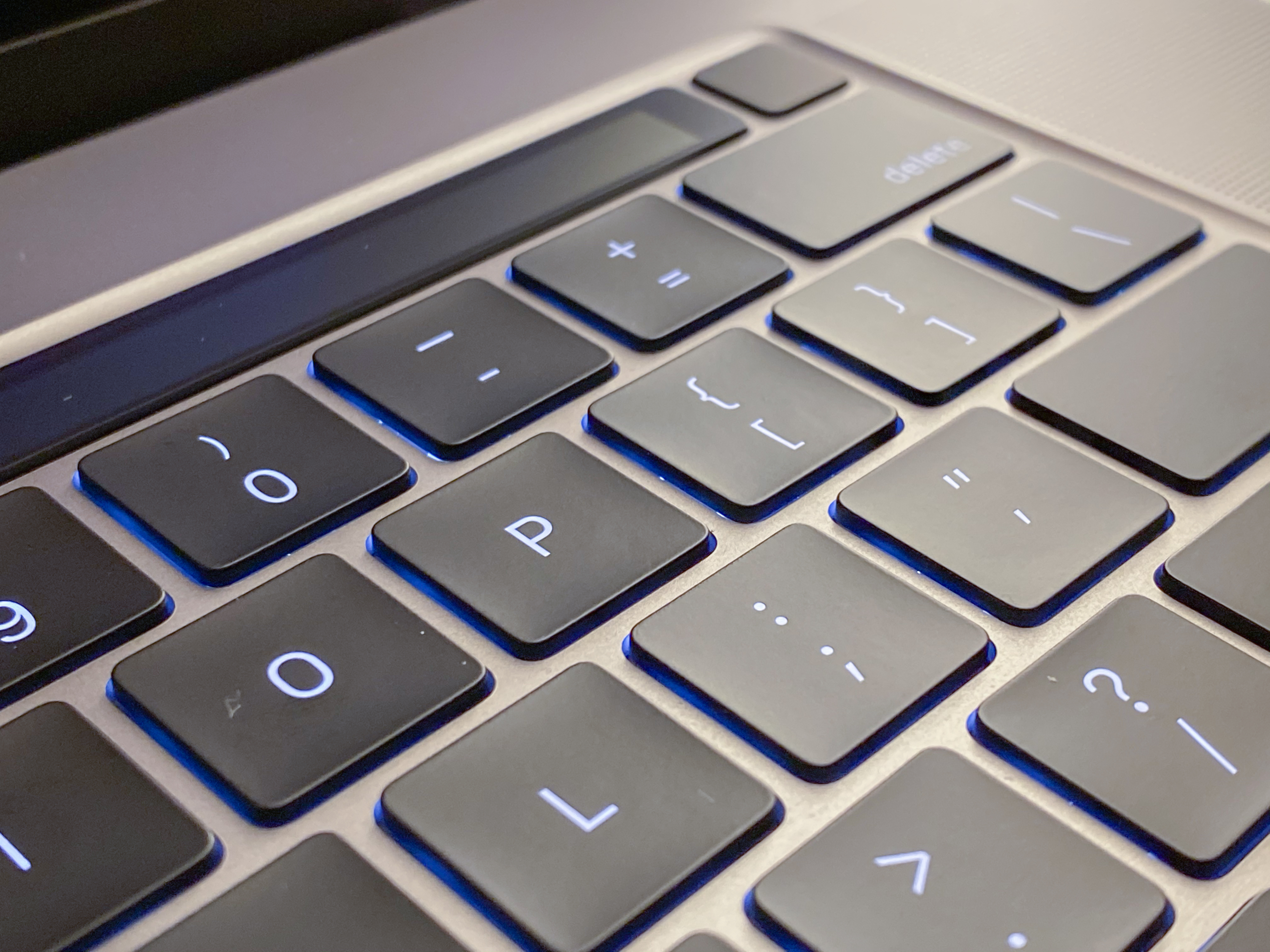
Apple is calling it the Magic Keyboard in homage to the iMac’s Magic Keyboard (but not identically designed). The new keyboard is a scissor mechanism, not butterfly. It has 1mm of key travel (more, a lot more) and an Apple-designed rubber dome under the key that delivers resistance and springback that facilitates a satisfying key action. The new keycaps lock into the keycap at the top of travel to make them more stable when at rest, correcting the MacBook Air-era wobble. 

And yes, the keycaps can be removed individually to gain access to the mechanism underneath. And yes, there is an inverted-T arrangement for the arrow keys. And yes, there is a dedicated escape key.

Apple did extensive physiological research when building out this new keyboard. One test was measuring the effect of a keypress on a human finger. Specifically, they measured the effect of a key on the pacinian corpuscles at the tips of your fingers. These are onion-esque structures in your skin that house nerve endings and they are most sensitive to mechanical and vibratory pressure. 

Apple then created this specialized plastic dome that sends a specific vibration to this receptor making your finger send a signal to your brain that says ‘hey you pressed that key.’ This led to a design that gives off the correct vibration wavelength to return a satisfying ‘stroke completed’ message to the brain.
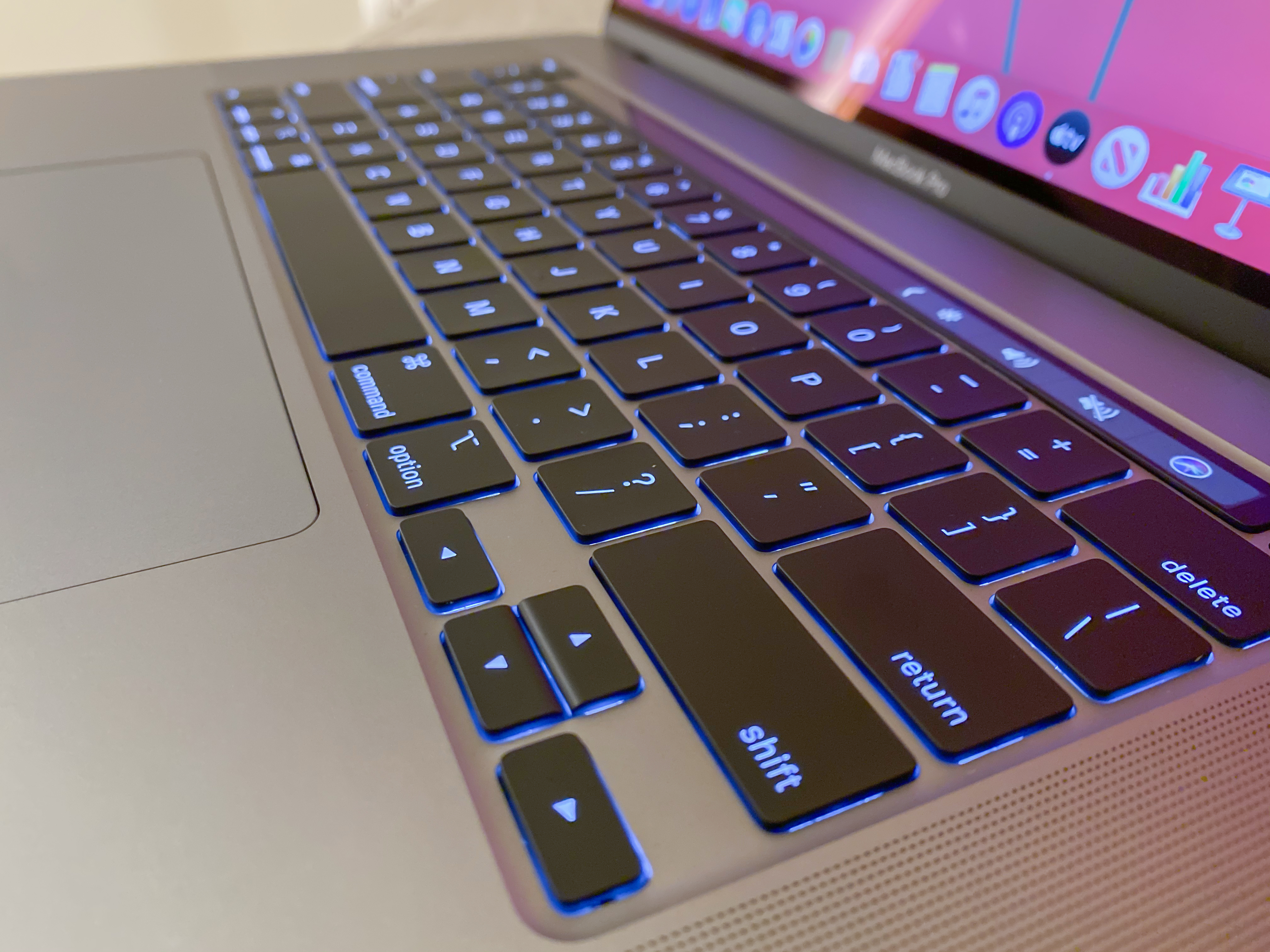
There is also more space between the keys, allowing for more definitive strokes. This is because the keycaps themselves are slightly smaller. The spacing does take some adjustment, but by this point in the article I am already getting pretty proficient and am having more grief from the autocorrect feature of Catalina than anything else. 

Notably, this keyboard is not in the warranty extension program that Apple is applying to its older keyboard designs. There is a standard 1 year warranty on this model, a statement by the company that they believe in the durability of this new design? Perhaps. It has to get out there and get bashed on by more violent keyboard jockeys than I for a while before we can tell whether it’s truly more resilient. 

But does this all come together to make a more usable keyboard? In short, yes. The best way to describe it in my opinion is a blend between the easy cushion of the old MacBook Air and the low profile stability of the Magic Keyboard for iMac. It’s truly one of the best feeling keyboards they’ve made in years and perhaps ever in the modern era. I reserve the right to be nostalgic about deep throw mechanical keyboards in this regard, but this is the next best thing. 

Pro, or Pro

In my brief and admittedly limited testing so far, the 16” MacBook Pro ends up looking like it really delivers on the Pro premise of this kind of machine in ways that have been lacking for a while in Apple’s laptop lineup. The increased storage caps, bigger screen, bigger battery and redesigned keyboard should make this an insta-buy for anyone upgrading from a 2015 MacBook Pro and a very tempting upgrade for even people on newer models that have just never been happy with the typing experience. 

Many of Apple’s devices with the label Pro lately have fallen into the bucket of ‘the best’ rather than ‘for professionals’. This isn’t strictly a new phenomenon for Apple, but more consumer centric devices like the AirPods Pro and the iPhone Pro get the label now than ever before. 

But the 16” MacBook Pro is going to alleviate a lot of the pressure Apple has been under to provide an unabashedly Pro product for Pro Pros. It’s a real return to form for the real Mack Daddy of the laptop category. As long as this new keyboard design proves resilient and repairable I think this is going to kick off a solid new era for Apple portables.


13 Nov 2019

These sneakers vibrate

Sometimes it seems like you can hear a song all the way in your toes. With these new sneakers, you actually can.

Meet the new EP 01 sneakers out of DropLabs. Yes, you read that right. We’re talking about sneakers.

Invented by a man named Ross Seiler, and led by former Beats by Dre CEO Susan Paley, DropLabs aims to take audio to a whole new level by syncing music, movies and other audio to shoes that vibrate the soles of your feet.

It started when Seiler, who works in the music industry, was standing in a side room at a recording studio while a band was recording. He could feel every beat and low note in the song in his feet while standing over this particular patch of floor, and wanted to experience all music like that, as though he could feel the energy of the stage itself.

Eventually, Paley signed on as CEO of DropLabs and the EP 01 was born.

The EP 01 is a slightly chunky sneaker that’s equipped with Bluetooth, a speaker-grade transducer, and a power source to sync with almost any audio. As a movie or music or video game plays, the sneaker picks up the audio and sends it as a perfectly synced vibration right to the soles of your feet. For big, thunderous steps of a T-Rex in Jurassic World, the vibrations are heavy and full. For the pitter patter of the townspeoples’ footsteps in Red Dead Redemption II, the vibrations are light and muted.

What’s more, the vibrations are slightly directional. Noise that’s coming from the right vibrates on the right, and vice versa, which can be particularly impactful while playing video games.

Indeed, Paley sees gaming as a huge opportunity to enter the market. Audio, and particularly good directional audio, is incredibly important for gamers who compete at a high level. The growth of esports has allowed a number of brands to emerge as the “X for gamers”, not least of which being energy drinks.

DropLabs has an opportunity to market to gamers, offering a more immersive experience across their games and potentially even a competitive advantage.

Paley explained to TechCrunch that the brain actually functions at a higher level when three or more of the senses are engaged. Feeling something, alongside hearing and seeing it, flips a switch when it comes to processing information.

For this reason, Paley sees a huge potential to target gamers as an early demographic, particularly big name streamers and gaming influencers.

In fact, DropLabs has given the shoes to various researchers and universities around the country to learn more about how these shoes might be used. After meeting with them, Paley believes that there are applications that extend well beyond entertainment and into the health space.

I got a chance to try on the shoes and play around with them for a little while last week, and while I’d like to reserve my complete thoughts for a proper review, it goes without saying that wearing the shoes surely leaves an impression.

[gallery ids="1911372,1911373,1911374,1911375,1911376"]

But the EP 01 have challenges ahead.

For one, the shoes cost upwards of $500. It’s a mighty high price point for a gadget that most folks will need to try before they feel committed to buying.

“Whenever you create a new category and a new product, you have the challenge of asking consumers to change their behavior,” said Paley. “And this, in particular, is so visceral. How do you communicate viscerally what is an emotional experience? You can talk about it, but it’s very different to put someone in the shoe.”

The EP 01 must also find their place in a category that’s defined by fashion and personal style. Our shoes say something about us, and for now, the EP 01 comes in one style and one color (black). It’s as universal a shoe as it can be, considering all the electronics packed in there, but it doesn’t leave customers many options to change up their own look.

Of course, DropLabs is deep in the learning phase, soaking up as much information about its first-gen sneaker as possible as it looks to iterate for v2.

The EP 01 is available for pre-order now, and DropLabs has plans to launch pop-up shops and other IRL experiences for folks interested in the shoes.

13 Nov 2019

Google to offer checking accounts in partnership with banks starting next year

Google is the latest big tech company to make a move into banking and personal financial services: The company is gearing up to offer checking accounts to consumers, as first reported by the Wall Street Journal, starting as early as next year. Google is calling the projected “Cache,” and it’ll partner with banks and credit unions to offer the checking accounts, with the banks handling all financial and compliance activities related to the accounts.

Google’s Caesar Sengupta spoke to the WSJ about the new initiative, and Sengupta made clear that Google will be seeking to put its financial institution partners much more front-and-center for its customers than other tech companies have perhaps done with their financial products. Apple works with Goldman Sachs on its Apple Card credit product, for instance, but the credit card is definitely pretend primarily as an Apple product.

So why even bother getting into this game if it’s leaving a lot of the actual banking to traditional financial institutions? Well, Google obviously stands to gain a lot of valuable information and insight on customer behavior with access to their checking account, which for many is a good picture of overall day-to-day financial life. Google says it’s also intending to offer product advantages for both consumers and banks, including things like loyalty programs, on top of the basic financial services. It’s also still considering whether or not it’ll charge service fees, per Segupta – not doing so would definitely be and advantage over most existing checking accounts available.

Google already offers Google Pay, and its Google Wallet product has hosted some features beyond simple payments tracking, including the ability to send money between individuals. Meanwhile, rivals including Apple have also introducing payment products, and Apple of course recently expanded into the credit market with Apple Card. Facebook also introduced its own digital payment product earlier this week, and earlier this year announced its intent to build its own digital currency called ‘Libra’ along with partners.

The initial financial partners that Google is working with include Citigroup and Stanford Federal Credit Union, and their motivation per the WSJ piece appears to be seeking out and attracting younger and more digital-savvy customers who are increasingly looking to handle more of their lives through online tools. Per Sengupta’s comments, they’ll also benefit from Google’s ability to work with large sets of data and turn those into value-add products, but the Google exec also said the tech company doesn’t sue Google Pay data for advertising, nor does it share that data with advertisers. Still, convincing people to give Google access to this potentially sensitive area of their lives might be an uphill battle, especially given the current political and social climate around big tech.

13 Nov 2019

Less than 72 hours left to buy early-bird passes to Disrupt Berlin

Pull your heads out of the trenches, startup fans. You have just 72 hours to save up to €500 with early-bird pricing on passes to Disrupt Berlin 2019. When the clock strikes 11:59 p.m. (CEST) on Friday, 15 November, the early bird is no more.

Three days will fly by in a flash, so don’t wait. Take 10 minutes now, buy your early-bird pass and save today.

Disrupt Berlin offers two programming-packed days of opportunity and education. On top of classic events like the Startup Battlefield pitch competition and the Hackathon, you’ll find hundreds of boundary-pushing startups on display in Startup Alley, including our recently announced TC Top Picks.

We have an outstanding line up of speakers, workshops, fireside chats, panel discussions Q&A Sessions and interviews with some of the greatest minds and makers, doers and shakers in tech and investment. Check out the Disrupt Berlin agenda and find the topics most relevant to your interests. Here’s a peek at just some of the awesome presentations you can attend.

Curious about investing in South African growth markets or tapping the pool of talented developers across Africa? Don’t miss either of these compelling discussions.

Investing and Operating in Growth Markets with Bob van Dijk (Prosus and Naspers). Prosus is a global consumer internet company with interests in food delivery, payments and fintech, classifieds, travel, retail, media, social platforms and a dedicated ventures team, not to mention a huge stake in Tencent. CEO Bob van Dijk discusses what Prosus believes is around the corner in these growth markets and why Naspers, a South African internet company, listed Prosus on the Euronext Amsterdam stock exchange in September, thus creating Europe’s largest listed consumer internet company in 2019.

Investing in Africa’s Tech Talent with Jeremy Johnson (Andela) and Lila Preston (Generation Investment Management). Generation Investment Management, the firm co-founded by former U.S. Vice President Al Gore, was built on the premise of backing sustainable startups. The fund’s lead, Lila Preston, brings their portfolio company Andela to discuss how they have harnessed the booming talent in Africa to solve global outsourcing issues and what’s next in building sustainable companies.

Perhaps you want a better understanding of what investors look for when it comes to prospective startups. We’ve got you covered.

What does it take to raise a Series A with Jessica Holzbach (Penta), Louise Samet (Blossom Capital) and Hannah Seal (Index Ventures). Venture capital funds have boomed this decade, but raising money is still hard for young companies. What are investors today looking for in teams, metrics and products?

Fireside Chat with Atomico with Sophia Bendz, Siraj Khaliq, Hiro Tamura and Niall Wass (Atomico). From a single London base a few years ago, European VC firm, Atomico has spread to the U.S. and Asia. Hear from key partners about this global VC’s strategy going forward.

Disrupt Berlin 2019 takes place in one month, but you have only until Friday, 15 November at 11:59 p.m. (CEST) — that’s just three days — to buy your pass at the best possible price. Don’t wait, act. And we’ll see you in Berlin!

Is your company interested in sponsoring or exhibiting at Disrupt Berlin 2019? Contact our sponsorship sales team by filling out this form.