Year: 2019

13 Nov 2019

Convoy raises $400 million to expand its on-demand trucking platform

Convoy, the digital freight network that connects truckers with shippers, has raised $400 million in a Series D funding round as it aims to scale its business amid an increasingly competitive market.

The funding round brings Convoy’s post-money valuation to $2.75 billion.

The round was co-led by Generation Investment Management and previous Convoy investor T. Rowe Price Associates. Asset management firm Baillie Gifford, which has fondness for pre-IPO tech companies, Fidelity and Durable Capital Partners as well as Series C investors CapitalG and Lone Pine Capital also participated in the round.

Convoy has managed to attract a slew of high-profile investors— and their capital — such as Jeff Bezos, Salesforce CEO Marc Benioff and even U2’s Bono and the Edge. In the four years since its founding, Convoy has raised a total of more than $668 million. Early investors include Greylock Partners, Y Combinator, Cascade Investment (the private investment vehicle of Bill Gates) and  Code.org founders Hadi and Ali Partovi.

And that money has been put to work. Convoy co-founders Dan Lewis and Grant Goodale set out in 2015 to modernize freight brokerage, a fragmented and oftentimes analog business that matches loads from shippers with truckers.

The company has gone from hundreds of loads per week in 2016 to tens of thousands per week across the U.S. Notably, Convoy’s platform handles 100% of the matching, as opposed having humans complete the task.

Convoy also has about 100 routes, many of them concentrated around economic hubs such as Chicago. Michigan and California, Lewis told TechCrunch.

The 850-person company wants to accelerate those efforts with capital raised in this latest round. Although it’s bound to face more competition. Uber Freight, Loadsmart and Flexport are just a few online marketplaces that are targeting freight.

Convoy has added new features to its platform as part of its scaling strategy. The company launched in 2019 an automated reloads feature that allows truckers book multiple loads at a time. It also added Convoy Go, which allows drivers to bring their truck cab and hook up to a trailer pre-filled with cargo.

13 Nov 2019

The Garage is a new blockchain-focused incubator based in Paris

Meet The Garage, a new incubator in Paris that is all about blockchain projects. Co-founded by Cyril Paglino from Starchain Capital, Fabrice Le Fessant from Dune Network and Oussama Ammar from The Family, the company will support blockchain startups, help big companies launch blockchain projects and educate engineers about blockchain development.

The Garage is a sort of puzzle made out of multiple pieces. First, it wants to create a community of startups and support those startups in different ways.

“We copy and paste The Family’s model, which means that it’s built on trust. We take 5% of equity after six months if the startup and The Garage are happy,” The Garage director Damien Daübe said during a small press conference yesterday.

In exchange for 5%, startups that are part of The Garage community get some help when it comes to product, engineering, press relations, marketing, etc. Eventually, The Garage wants to tap its network of investors to make some introductions and help them get some funding and traction.

There are already five startups participating in the program, such as Ipocamp, Ticket721 and Elite Chain. Eventually, The Garage wants to help 25 startups per year. The Family receives a lot of applications. You could imagine that The Family might recommend The Garage to some of them.

But taking some equity isn’t going to generate revenue from day one. The Garage is also going to work with Dune Network, the new blockchain from OCamlPro. According to The Block, OCamlPro was working with the Tezos Foundation but decided to part ways, create a fork and start a new blockchain.

The Garage is going to work with big corporate clients on some blockchain projects. This could generate some revenue much more quickly.

Finally, The Garage is also going to teach software engineers about blockchain development. The company will host with free lessons in the evening. There will be some online resources as well.

All of this is going to happen in a recently renovated building that looks like a hybrid between an Apple Store and a movie set. If you’re into concrete, metal and industrial design, it’s a beautiful place. It was mostly used for fashion week events until The Garage started renting it.

[gallery ids="1911098,1911099,1911100,1911101,1911102,1911103,1911104,1911105,1911106"]

13 Nov 2019

Plum, the ‘AI’ money management app, raises $3M more and comes to Android

Plum, the U.K.-based “AI assistant” to help you manage your money and save more, has raised $3 million in additional funding — money it plans to use for further growth, including European expansion.

The London company has also quietly launched its app for Android phones, adding to an existing iOS app and Facebook Messenger chatbot.

Backing this round — which is essentially a second tranche to Plum’s earlier $4.5 million raise in the summer — is EBRB, and VentureFriends, both existing investors. Christian Faes, founder and CEO of LendInvest has also participated

It brings the fintech startup’s total funding to $9.3 million since being founded by early TransferWise employee Victor Trokoudes, and Alex Michael in 2016.

The new investment is said to come at the end of a year of “rapid expansion for Plum” in both London and Athens, including growing the team to 31 employees. Senior hires include Max Mawby, Plum’s Head of Behavioural Science, who previously worked for the U.K. government and ran the fintech sector-focused Behavioural Insights Team.

In a call, Trokoudes told me that take up for Plum’s iOS app has been high and Android is also following a similar trajectory, proof that the startup’s AI assistant has perhaps outgrown its chatbook and Facebook Messenger beginnings (competitor Cleo has also released dedicated iOS and Android apps as an alternative to Facebook Messenger).

He also says Plum now has 650,000 registered users, of which around 70% are active monthly. In recent user feedback sessions conducted by the startup, the biggest draw to the app is that it’s aim of changing financial behaviour to help people save more appears to be working.

When users stick around using Plum for long enough, Trokoudes says they are surprised (and delighted) that it actually works.

Like similar apps, Plum’s “artificial intelligence” deems what you can afford to save by analysing your bank transactions. It then puts money away each month in the form of round-ups and/or regular savings.

You can open an ISA investment account and invest based on themes, such as only in “ethical companies” or technology. Another related feature is “Splitter,” which, as the name suggests, lets you split your automatic savings between Plum savings and investments, selecting the percentage amounts to go into each pot from 0-100%.

Trokoudes says that Plum recently launched two new “intelligent” saving rules: the 52 Week Challenge, which aims to help you save £1367 over a year; and the Rainy Day Rule, which puts aside money whenever it rains (yes, really!).

“Saving rules use automation to help people save more effectively without overloading them with information,” adds the Plum founder in a statement. “We have good evidence that this approach works: our automated round-ups feature, that we launched earlier this year has become a firm favourite among Plum users, boosting their savings by 50% on average”.

Meanwhile, another one of Plum’s competitors, Chip recently raised £3.8 million in equity crowdfunding on Crowdcube. It was part of a round targeting $7.3 million in total, although it isn’t clear if all of that has closed yet (last time I checked the company had so far secured $5 million). Noteworthy, the equity crowdfund gave Chip a pre-money valuation of £36.78 million based on “over 153,000” accounts opened.

13 Nov 2019

Could your startup earn the Wild Card at Disrupt Berlin 2019?

We’re just about one month away from opening the doors to infinite early-stage startup opportunity. We’re talking about Disrupt Berlin 2019, which takes place on 11-12 December. But today we’d like to highlight a specific opportunity you might not be familiar with — the Wild Card.

Why is this opportunity a big deal? The startup that earns the Wild Card designation gets to compete in Startup Battlefield, our epic pitch competition with a $50,000 prize. Ka-ching!

How do you qualify? Every early-stage startup that exhibits in Startup Alley, our expo floor and the heart of every Disrupt — has a shot at the Wild Card. And we mean every startup — Startup Alley Exhibitor Package holders, our recently announced TC Top Picks, members of a Country Pavilion — no matter how you come to exhibit in Startup Alley, you’re eligible.

Here’s how it all works. The day before Disrupt Berlin 2019 opens, TechCrunch editors will review the exhibiting startups and select one standout to join the cadre of Startup Battlefield competitors. The Wild Card team receives roughly 24 hours’ notice before they step out onto the Main Stage to pitch their product and company in front of a live audience — and a panel of expert VCs and technologists waiting to be impressed.

Talk about pressure. But startuppers don’t back away from a potentially life-changing opportunity — they rise to the occasion, amirite? Case in point: the little startup that could. Legacy earned the Wild Card at Disrupt Berlin 2018 and went on to win Startup Battlefield, beau coup love and attention from investors and media — not to mention that $50,000 equity-free cash infusion.

Here’s the good news: There’s still time for you to be an exhibitor at Disrupt Berlin 2019 — and have a shot at competing in Startup Battlefield. Simply buy a Startup Alley Exhibitor Package and you’re good to go.

Here’s even better news. Exhibiting in Startup Alley holds tremendous potential to move your business forward — whether you get the Wild Card or not.

This is how David Hall, co-founder of Park & Diamond, describes his experience in Startup Alley.

“Exhibiting in Startup Alley was a game-changer for us. We received insight on our product development process, and we got to engage with media and potential investors. The chance to have those discussions and to potentially form relationships was invaluable.”

The opportunity that is Disrupt Berlin 2019 takes place on 11-12 December. Make the most of that opportunity — exhibit in Startup Alley and take your shot at the Wild Card and Startup Battlefield. We’ll see you in Berlin!

Is your company interested in sponsoring or exhibiting at Disrupt Berlin 2019? Contact our sponsorship sales team by filling out this form.

13 Nov 2019

PalmPay launches in Nigeria on $40M round led by China’s Transsion

Africa focused payment startup PalmPay has launched in Nigeria after raising a $40 million seed-round led by Chinese mobile-phone maker Transsion.

The investment came via Transsion’s Tecno subsidiary, with participation from China’s NetEase and Taiwanese wireless comms hardware firm Mediatek a Transsion spokesperson confirmed to TechCrunch.

PalmPay had piloted its mobile fintech offering in Nigeria since July, before going live today at a launch in Lagos.

The startup aims to become Africa’s largest financial services platform, according to a statement. 

As part of the investment, PalmPay enters a strategic partnership with mobile brands Tecno, Infinix, and Itel that includes pre-installation of the startup’s app on 20 million phones in 2020.

The UK headquartered venture — that was also founded with Chinese seed investment — offers a package of mobile based financial services, including no fee payment options, bill pay, rewards programs, and discounted airtime.
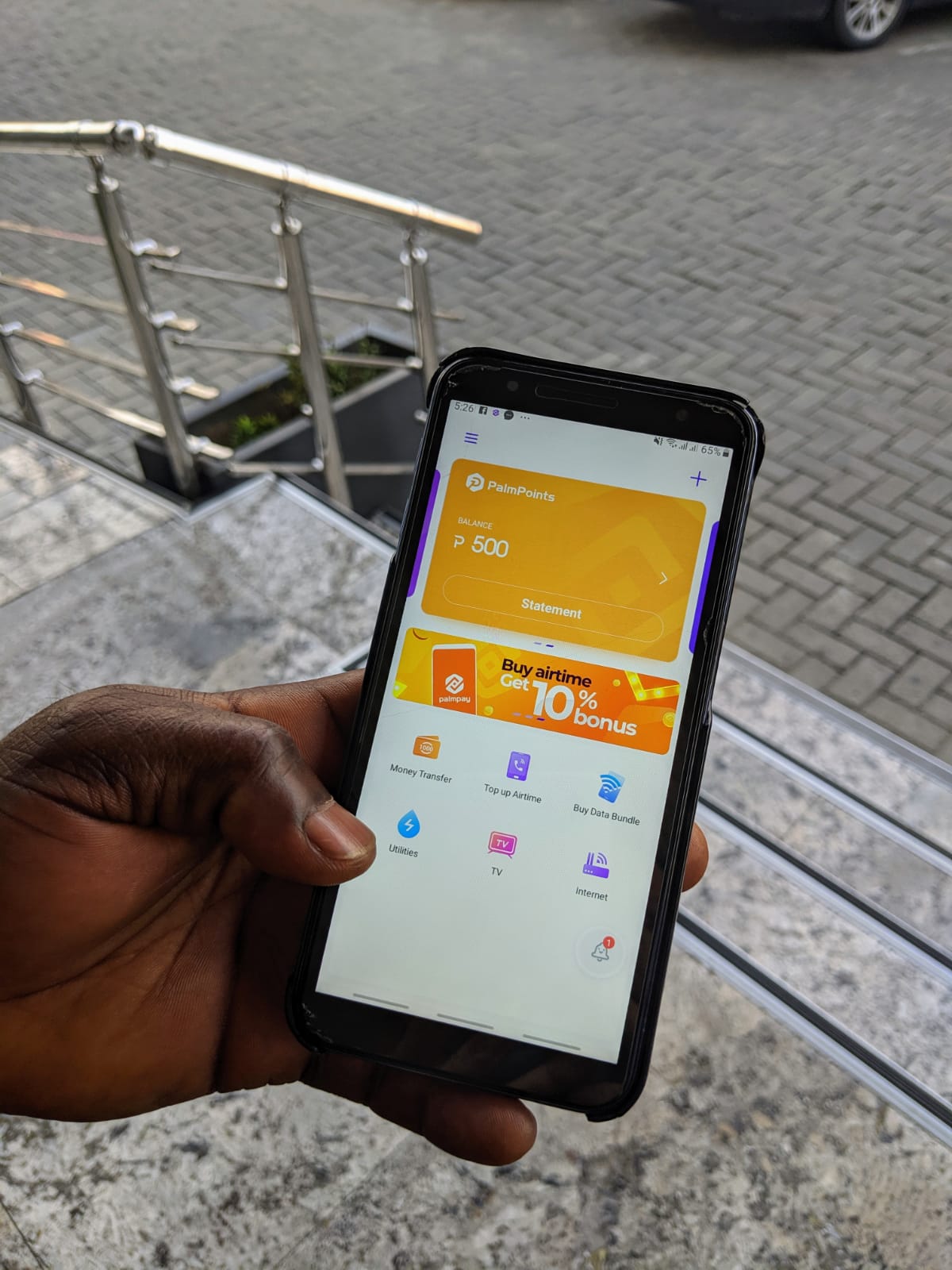
In Nigeria, PalmPay will offer 10% cashback on airtime purchases and bank transfer rates as low as 10 Naira ($.02).

In addition to Nigeria, PalmPay will use the $40 million seed funding to grow its financial services business in Ghana. The payments startup has plans to expand to additional countries in 2020, PalmPay CEO Greg Reeve told TechCrunch on a call.

PalmPay received its approval from the Nigerian Central Bank as a licensed mobile money operator in July. During its pilot phase, the payments venture registered 100,000 users and processed 1 million transactions, according to a company spokesperson.

With its payments focus, the startup enters Africa’s most promising digital sector, but also one that has become notably competitive and crowded  — particularly in the continent’s largest economy and most populous nation of Nigeria. 

By a number of estimates, Africa’s 1.2 billion people represent the largest share of the world’s unbanked and underbanked population.

An improving smartphone and mobile-connectivity profile for Africa (see GSMA) turns this scenario into an opportunity for mobile-based financial products.
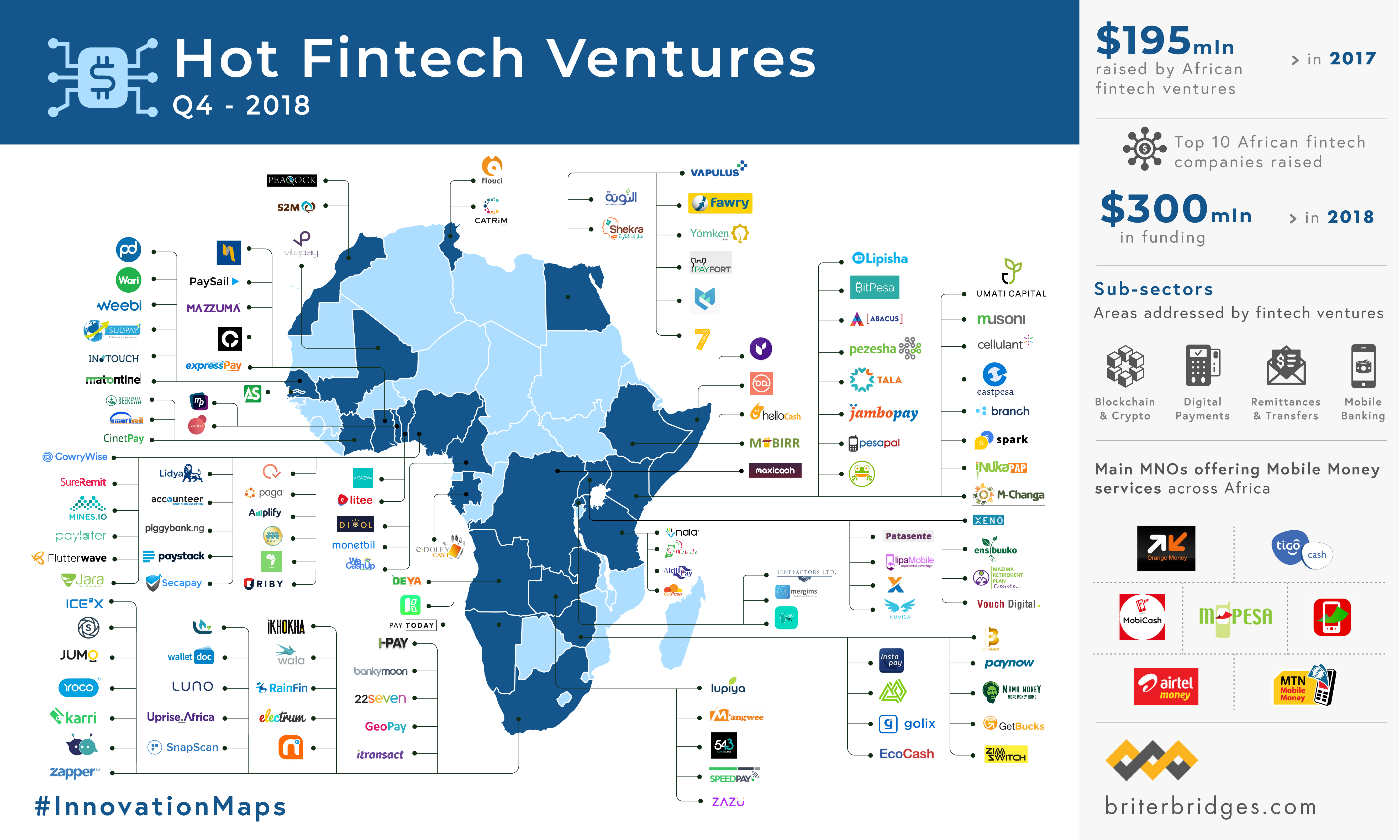
That’s why hundreds of startups are descending on Africa’s fintech space, looking to offer scalable solutions for the continent’s financial needs. By stats offered WeeTracker, fintech now receives the bulk of VC capital and deal-flow to African startups.

Nigeria has multiple new digital-payments entrants — see Chippercash — and several firmly rooted later stage fintech players, such as Paga and recently confirmed unicorn Interswitch.

PalmPay CEO Greg Reeves believes the company can compete in Nigeria and across Africa based on several strategic advantages. A big one is the startup’s support from Transsion and partnership with Tecno.
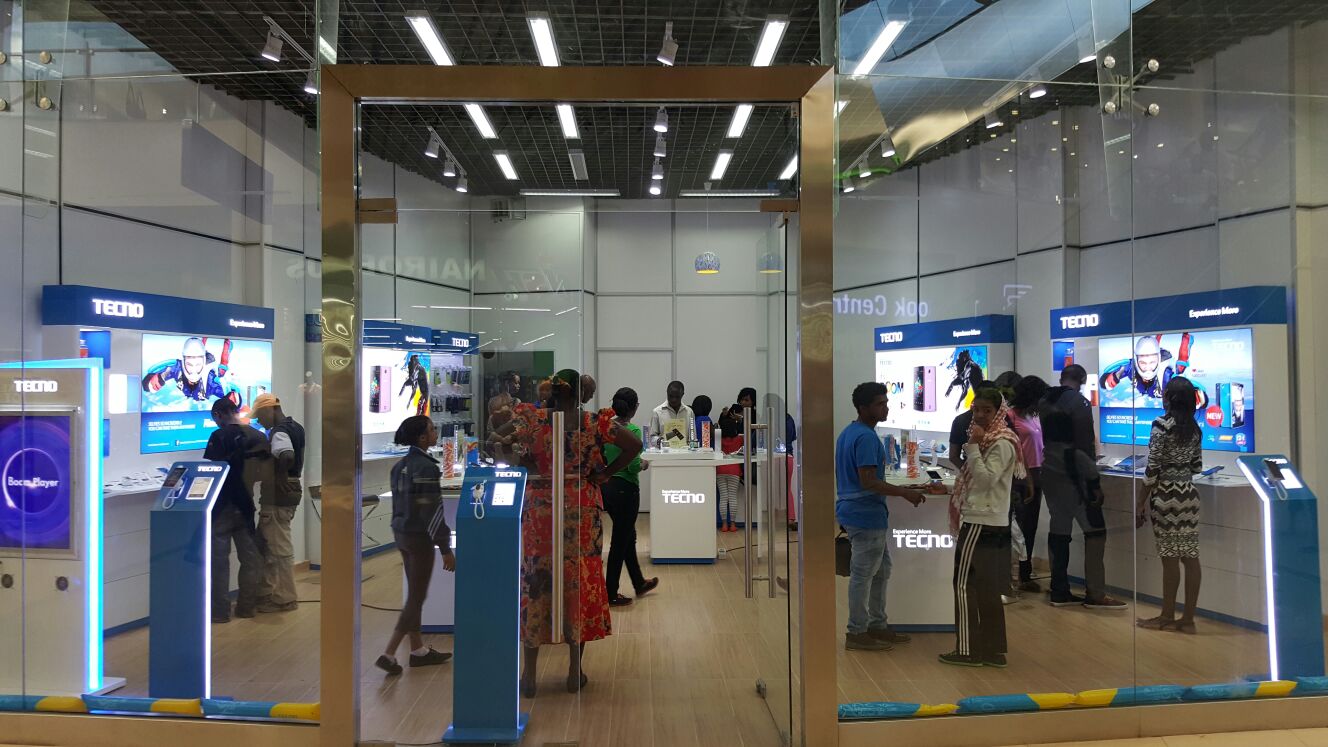
Transsion Tecno Store Africa“On channel and access, we’re going to be pre-installed on all Tecno phones. Your’e gonna find us in the Tecno stores and outlets. So we get an immediate channel and leg up in any market we operate in,” said Reeve.

Tecno’s owner and PalmPay’s lead investor, Transsion, is the largest seller of smartphones in Africa and maintains a manufacturing facility in Ethiopia. The company raised nearly $400 million in a Shanghai IPO in September and plans to spend roughly $300 million of that on new R&D and manufacturing capabilities in Africa and globally.

In addition to Transsion’s support and network, Reeves names PalmPay’s partnership with Visa . “We signed a strategic alliance with Visa so now I can deliver Visa products on top of my wallet, link my wallet to Visa products and give access to someone who’s completely unbanked to the whole of the Visa network,” he said.

Another strategic advantage PalmPay may have as a newcomer in Africa’s fintech space is Reeve’s leadership experience. He comes to the CEO position after serving as Vodaphone’s global head of M-Pesa — one of the world’s most recognized mobile-money products. Reeve was also a GM for Millicom‘s fintech products across Africa and Latin America.

“I’ve had my fingers in mobile financial services for the last 10 years,” he said.

Reeve confirmed that PalmPay has local teams (and is hiring) in Nigeria and Ghana.

With the company’s launch and $40 million raise — which is potentially the largest seed-round for an Africa focused startup in 2019 — PalmPay’s bid to gain digital payment market share is on.

The Transsion led investment also serves as a big bold marker for China’s pivot to African tech in 2019. It follows several big moves by Chinese actors in the continent’s digital space.

These include Opera’s $50 million investment in multiple online verticals in Nigeria and a major investment by Chinese investors in trucking logistics startup Lori Systems this week.


13 Nov 2019

PalmPay launches in Nigeria on $40M round led by China’s Transsion

Africa focused payment startup PalmPay has launched in Nigeria after raising a $40 million seed-round led by Chinese mobile-phone maker Transsion.

The investment came via Transsion’s Tecno subsidiary, with participation from China’s NetEase and Taiwanese wireless comms hardware firm Mediatek a Transsion spokesperson confirmed to TechCrunch.

PalmPay had piloted its mobile fintech offering in Nigeria since July, before going live today at a launch in Lagos.

The startup aims to become Africa’s largest financial services platform, according to a statement. 

As part of the investment, PalmPay enters a strategic partnership with mobile brands Tecno, Infinix, and Itel that includes pre-installation of the startup’s app on 20 million phones in 2020.

The UK headquartered venture — that was also founded with Chinese seed investment — offers a package of mobile based financial services, including no fee payment options, bill pay, rewards programs, and discounted airtime.

In Nigeria, PalmPay will offer 10% cashback on airtime purchases and bank transfer rates as low as 10 Naira ($.02).

In addition to Nigeria, PalmPay will use the $40 million seed funding to grow its financial services business in Ghana. The payments startup has plans to expand to additional countries in 2020, PalmPay CEO Greg Reeve told TechCrunch on a call.

PalmPay received its approval from the Nigerian Central Bank as a licensed mobile money operator in July. During its pilot phase, the payments venture registered 100,000 users and processed 1 million transactions, according to a company spokesperson.

With its payments focus, the startup enters Africa’s most promising digital sector, but also one that has become notably competitive and crowded  — particularly in the continent’s largest economy and most populous nation of Nigeria. 

By a number of estimates, Africa’s 1.2 billion people represent the largest share of the world’s unbanked and underbanked population.

An improving smartphone and mobile-connectivity profile for Africa (see GSMA) turns this scenario into an opportunity for mobile-based financial products.

That’s why hundreds of startups are descending on Africa’s fintech space, looking to offer scalable solutions for the continent’s financial needs. By stats offered WeeTracker, fintech now receives the bulk of VC capital and deal-flow to African startups.

Nigeria has multiple new digital-payments entrants — see Chippercash — and several firmly rooted later stage fintech players, such as Paga and recently confirmed unicorn Interswitch.

PalmPay CEO Greg Reeves believes the company can compete in Nigeria and across Africa based on several strategic advantages. A big one is the startup’s support from Transsion and partnership with Tecno.

Transsion Tecno Store Africa“On channel and access, we’re going to be pre-installed on all Tecno phones. Your’e gonna find us in the Tecno stores and outlets. So we get an immediate channel and leg up in any market we operate in,” said Reeve.

Tecno’s owner and PalmPay’s lead investor, Transsion, is the largest seller of smartphones in Africa and maintains a manufacturing facility in Ethiopia. The company raised nearly $400 million in a Shanghai IPO in September and plans to spend roughly $300 million of that on new R&D and manufacturing capabilities in Africa and globally.

In addition to Transsion’s support and network, Reeves names PalmPay’s partnership with Visa . “We signed a strategic alliance with Visa so now I can deliver Visa products on top of my wallet, link my wallet to Visa products and give access to someone who’s completely unbanked to the whole of the Visa network,” he said.

Another strategic advantage PalmPay may have as a newcomer in Africa’s fintech space is Reeve’s leadership experience. He comes to the CEO position after serving as Vodaphone’s global head of M-Pesa — one of the world’s most recognized mobile-money products. Reeve was also a GM for Millicom‘s fintech products across Africa and Latin America.

“I’ve had my fingers in mobile financial services for the last 10 years,” he said.

Reeve confirmed that PalmPay has local teams (and is hiring) in Nigeria and Ghana.

With the company’s launch and $40 million raise — which is potentially the largest seed-round for an Africa focused startup in 2019 — PalmPay’s bid to gain digital payment market share is on.

The Transsion led investment also serves as a big bold marker for China’s pivot to African tech in 2019. It follows several big moves by Chinese actors in the continent’s digital space.

These include Opera’s $50 million investment in multiple online verticals in Nigeria and a major investment by Chinese investors in trucking logistics startup Lori Systems this week.

13 Nov 2019

Chaka opens up global investing to Africa’s most populous nation

Fintech startup Chaka aims to open up online investingd to Africa’s most populous nation, Nigeria.

The seed-stage company recently went live with its mobile-based platform that offers Nigerians stock trading in over 40 countries.

Chaka positions itself as a passport to local and global investing. The startup has created an API and interface that allows Nigerians with a bank account (and who meet KYC requirements) to create trading accounts to purchase global blue chip and local Nigerian stocks.

Investors can get started with as little as 1000 Naira or $10 to create a local and global wallet to trade, according to Chaka founder and CEO Tosin Osibodu.

The platform has partnerships with two brokers to facilitate stock purchases: Citi Investment Capital and U.S. based DriveWealth.

“Embedded in our offer is the ability to buy on the local stock market…we make it more seamless than usual, and assets…from this whole universe outside the continent,” said Osibodu.

The Nigerian Stock Exchange has been upgrading its platform to digitize and accommodate more listings. It has a five-year partnership with NASDAQ and Airtel Africa listed on the NSE in July. 

On the Chaka’s addressable market, “Our outlook is that within Nigeria…between one and two million people are strongly in the market for this product,” Osibodu said.

Tosin Osibodu

Chaka looks to offer more than stocks. “Our product road-map includes not just equities, but other investment products people are interested in — mutual funds, fixed income products, and eventually even cryptocurrencies — so that really expands our bounds,” said Osibodu.

Chaka’s fee structure is 100 Naira (or 3%) for local trades and $4.00 for global trades.

To mitigate the FX risk of the often volatile Nigerian Naira, the startup converts locally to dollars and funds client trades in USD. Chaka agrees to intra-day forward rates at 9am each day and locks them in until 2pm for transactional activity on its platform, according to Osibodu

Chaka hasn’t disclosed amounts, but confirms its has received pre-seed funding from Nigerian founder and investor Iyinoluwa Aboyeji, aka E.

The startup is in a unique position in African fintech. The sector receives the bulk of the continent’s VC (according WeeTracker), but most of it is directed toward P2P payments startups — vs. personal investment platforms.

An alum of U-Penn and Dartmouth, Chaka’s founder got the idea to form the venture, in part, due to challenges attempting to access well-known trading platforms, such as E-Trade.

“I tried to open these accounts and whenever I…disclosed I was Nigerian very shortly after those accounts were closed or denied,” said Osibodu. 

For decades, Nigeria has been known as an originating country for online fraud, commonly referred to as 419 scams. This is something for which the country’s legitimate business operators pay an undue reputational cost, according to Osibodu. 

In recent years, Nigeria has also become a magnet for legitimate business in Africa. The country has the continent’s leading movie and entertainment industry and has emerged as a hotspot for startup formation and VC activity.

Chaka backer Iyinoluwa Aboyeji, who confirmed his investment in the company to TechCrunch, believes progressive trends in Nigeria will open up a new investor class.

In addition to Aboyeji, Chaka has also received seed-funds from Microtraction, a Lagos located early-stage investment shop founded by Yele Bademosi and supported by Y-Combinator CEO Michael Seibel.

Chaka allows for API integrations and has a developer team. The company has created an automated customer verification process. “It sounds trivial compared to the American market, but it’s a bit of a first in Nigeria,” said CEO Tosin Osibodu.

On Chaka’s long-game, “The grand mission of the company is to reduce capital market access barriers,” cording to Osibodu.

“With a two to five million customer base — and a $40 to $200 ARPU — on the really conservative end that’s a $100 million revenue opportunity,” he said.


13 Nov 2019

Chaka opens up global investing to Africa’s most populous nation

Fintech startup Chaka aims to open up online investingd to Africa’s most populous nation, Nigeria.

The seed-stage company recently went live with its mobile-based platform that offers Nigerians stock trading in over 40 countries.

Chaka positions itself as a passport to local and global investing. The startup has created an API and interface that allows Nigerians with a bank account (and who meet KYC requirements) to create trading accounts to purchase global blue chip and local Nigerian stocks.

Investors can get started with as little as 1000 Naira or $10 to create a local and global wallet to trade, according to Chaka founder and CEO Tosin Osibodu.

The platform has partnerships with two brokers to facilitate stock purchases: Citi Investment Capital and U.S. based DriveWealth.

“Embedded in our offer is the ability to buy on the local stock market…we make it more seamless than usual, and assets…from this whole universe outside the continent,” said Osibodu.

The Nigerian Stock Exchange has been upgrading its platform to digitize and accommodate more listings. It has a five-year partnership with NASDAQ and Airtel Africa listed on the NSE in July. 

On the Chaka’s addressable market, “Our outlook is that within Nigeria…between one and two million people are strongly in the market for this product,” Osibodu said.

Tosin Osibodu

Chaka looks to offer more than stocks. “Our product road-map includes not just equities, but other investment products people are interested in — mutual funds, fixed income products, and eventually even cryptocurrencies — so that really expands our bounds,” said Osibodu.

Chaka’s fee structure is 100 Naira (or 3%) for local trades and $4.00 for global trades.

To mitigate the FX risk of the often volatile Nigerian Naira, the startup converts locally to dollars and funds client trades in USD. Chaka agrees to intra-day forward rates at 9am each day and locks them in until 2pm for transactional activity on its platform, according to Osibodu

Chaka hasn’t disclosed amounts, but confirms its has received pre-seed funding from Nigerian founder and investor Iyinoluwa Aboyeji, aka E.

The startup is in a unique position in African fintech. The sector receives the bulk of the continent’s VC (according WeeTracker), but most of it is directed toward P2P payments startups — vs. personal investment platforms.

An alum of U-Penn and Dartmouth, Chaka’s founder got the idea to form the venture, in part, due to challenges attempting to access well-known trading platforms, such as E-Trade.

“I tried to open these accounts and whenever I…disclosed I was Nigerian very shortly after those accounts were closed or denied,” said Osibodu. 

For decades, Nigeria has been known as an originating country for online fraud, commonly referred to as 419 scams. This is something for which the country’s legitimate business operators pay an undue reputational cost, according to Osibodu. 

In recent years, Nigeria has also become a magnet for legitimate business in Africa. The country has the continent’s leading movie and entertainment industry and has emerged as a hotspot for startup formation and VC activity.

Chaka backer Iyinoluwa Aboyeji, who confirmed his investment in the company to TechCrunch, believes progressive trends in Nigeria will open up a new investor class.

In addition to Aboyeji, Chaka has also received seed-funds from Microtraction, a Lagos located early-stage investment shop founded by Yele Bademosi and supported by Y-Combinator CEO Michael Seibel.

Chaka allows for API integrations and has a developer team. The company has created an automated customer verification process. “It sounds trivial compared to the American market, but it’s a bit of a first in Nigeria,” said CEO Tosin Osibodu.

On Chaka’s long-game, “The grand mission of the company is to reduce capital market access barriers,” cording to Osibodu.

“With a two to five million customer base — and a $40 to $200 ARPU — on the really conservative end that’s a $100 million revenue opportunity,” he said.


13 Nov 2019

Chinese EV startup Xpeng Motors raises $400 million, takes on Xiaomi as strategic investor

Xpeng Motors, the Chinese electric vehicle startup backed by Alibaba and Foxconn, has raised a fresh injection of $400 million in capital and has taken on Xiaomi as a strategic investor, the company announced.

The Series C includes an unidentified group of strategic and institutional investors. XPeng Motors Chairman and CEO He Xiaopeng, who also participated in the Series C, said the received strong support from many of its current shareholders. Xiaomi founder and CEO Lei Jun previously invested in the company.

“Xiaomi Corporation and Xpeng Motors have achieved significant progress through in-depth collaboration in developing technologies connecting smart phones and smart cars,” Xiaomi’s Jun said in a statement. “We believe that this strategic investment will further deepen our partnership with Xpeng in advancing innovation for intelligent hardware and the Internet of Things.”

The company didn’t disclose what its post-money valuation is now. However, a source familiar with the deal said it is “better” than the 25 billion yuan valuation it had in its last round in August 2018.

The announcement confirms an earlier report from Reuters that cited anonymous sources.

XPeng also said it has garnered “several billions” in Chinese yuan of unsecured credit lines from institutions such as China Merchants Bank, China CITIC Bank and HSBC. XPeng didn’t elaborate when asked what “several billions” means.

Brian Gu, Xpeng Motors Vice Chairman and President added that the company has been able to hit most of its business and financing targets despite economic headwinds, uncertainties in the global markets and government policy changes that have had direct impact on overall auto sales in China.

The round comes as XPeng prepares to launch its electric P7 sedan in spring 2020. Deliveries of the P7 are expected to begin in the second quarter of 2020.

Xpeng began deliveries of its first production model the G3 2019 SUV in December and shipped 10,000 models by mid-June. The company has since released an enhanced version of the G3 with a 520 km NEDC driving range.

The company plans to launch the P7 sedan in the spring 2020 and will start delivery in 2Q 2020.

XPeng has said it wants to IPO, but it’s unclear when the company might file to become a public company. No specific IPO timetable has been set and a spokesperson said the company is monitoring market conditions closely, but its current focus is on building core businesses.

12 Nov 2019

Minecraft Earth is live, so get tapping

Microsoft’s big experiment in real-world augmented reality gaming, Minecraft Earth, is live now for players in North America, the U.K., and a number of other areas. The pocket-size AR game lets you collect blocks and critters wherever you go, undertake little adventures with friends, and of course build sweet castles.

I played an early version of Minecraft Earth earlier this year, and found it entertaining and the AR aspect surprisingly seamless. The gameplay many were first introduced to in Pokemon GO is adapted here in a more creative and collaborative way.

You still walk around your neighborhood, rendered in this case charmingly like a Minecraft world, and tap little icons that pop up around your character. These may be blocks you can use to build, animals you can collect, or events like combat encounters that you can do alone or with friends for rewards.

Ultimately all this is in service of building stuff, which you do on “build plates” of various sizes. These you place in AR mode on a flat surface, which they lock onto, letting you move around freely to edit and play with them. This sounded like it could be fussy or buggy when I first heard about it, but actually doing it was smooth and easy. It’s easy to “zoom in” to edit a structure by just moving your phone closer, and multiple people can play with the same blocks and plate at the same time.

Once you’ve put together something fun, you can take it to an outdoors location and have it represented at essentially “real” size, so you can walk around the interior of your castle or dungeon. Of course you can’t climb steps, since they’re not real, but the other aspects work as expected: you can manipulate doors and other items, breed cave chickens, and generally enjoy yourself.

The game is definitely more open-ended than the collection-focused Pokemon GO and Harry Potter: Wizards Unite. Whether that proves to be to its benefit or detriment when it comes to appeal and lasting power remains to be seen — but one thing is for sure: People love Minecraft and they’re going to want to at least try this out.

And now they can, if they’re in one of the following countries — with others coming throughout the holiday season.


  • United States
  • United Kingdom
  • Canada
  • South Korea
  • Philippines
  • Sweden
  • Mexico
  • Australia
  • New Zealand
  • Iceland

You can download Minecraft Earth for iOS here and for Android here.