Year: 2020

29 Oct 2020

Redpoint and Sequoia are backing a startup to copy edit your shit code

Code is the lifeblood of the modern world, yet the tooling for some programming environments can be remarkably spartan. While developers have long had access to graphical programming environments (IDEs) and performance profilers and debuggers, advanced products to analyze and improve lines of code have been harder to find.

These days, the most typical tool in the kit is a linter, which scans through code pointing out flaws that might cause issues. For instance, there might be too many spaces on a line, or a particular line might have a well-known ambiguity that could cause bugs that are hard to diagnose and would best be avoided.

What if we could expand the power of linters to do a lot more though? What if programmers had an assistant that could analyze their code and actively point out new security issues, erroneous code, style problems, and bad logic?

Static code analysis is a whole interesting branch of computer science, and some of those ideas have trickled into the real-world with tools like semgrep, which was developed at Facebook to add more robust code-checking tools to its developer workflow. Semgrep is an open-source project, and it’s being commercialized through r2c, a startup that wants to bring the power of this tool to the developer masses.

The whole project has found enough traction among developers that Satish Dharmaraj at Redpoint and Jim Goetz at Sequoia teamed up to pour $13 million into the company for its Series A round, and also backed the company in an earlier, unannounced seed round.

The company was founded by three MIT grads — CEO Isaac Evans and Drew Dennison were roommates in college, and they joined up with head of product Luke O’Malley. Across their various experiences, they have worked at Palantir, the intelligence community, and Fortune 500 companies, and when Evans and Dennison were EIRs at Redpoint, they explored ideas based on what they had seen in their wide-ranging coding experiences.

r2c’s team, which I assume only writes bug-free code. Photo by r2c.

“Facebook, Apple, and Amazon are so far ahead when it comes to what they do at the code level to bake security [into their products compared to] other companies, it’s really not even funny,” Evans explained. The big tech companies have massively scaled their coding infrastructure to ensure uniform coding standards, but few others have access to the talent or technology to be on an equal playing field. Through r2c and semgrep, the founders want to close the gap.

With r2c’s technology, developers can scan their codebases on-demand or enforce a regular code check through their continuous integration platform. The company provides its own template rulesets (“rule packs”) to check for issues like security holes, complicated errors, and other potential bugs, and developers and companies can add their own custom rulesets to enforce their own standards. Currently, r2c supports eight programming languages including Javascript and Python and a variety of frameworks, and it is actively working on more compatibility.

One unique focus for r2c has been getting developers onboard with the model. The core technology remains open-sourced. Evans said that “if you actually want something that’s going to get broad developer adoption, it has to be predominantly open source so that developers can actually mess with it and hack on it and see whether or not it’s valuable without having to worry about some kind of super restrictive license.”

Beyond its model, the key has been getting developers to actually use the tool. No one likes bugs, and no developer wants to find more bugs that they have to fix. With semgrep and r2c though, developers can get much more immediate and comprehensive feedback — helping them fix tricky errors before they move on and forget the context of what they were engineering.

“I think one of the coolest things for us is that none of the existing tools in the space have ever been adopted by developers, but for us, it’s about 50/50 developer teams who are getting excited about it versus security teams getting excited about it,” Evans said. Developers hate finding more bugs, but they also hate writing them in the first place. Evans notes that the company’s key metric is the number of bugs found that are actually fixed by developers, indicating that they are offering “good, actionable results” through the product. One area that r2c has explored is actively patching obvious bugs, saving developers time.

Breaches, errors and downtime are a bedrock of software, but it doesn’t have to be that way. With more than a dozen employees and a hefty pool of capital, r2c hopes to improve the reliability of all the experiences we enjoy — and save developers time in the process.

29 Oct 2020

The Level Bolt and Level Touch smart locks are a cut above the competition in design and usability

Level is one of the newer players in the smart lock space, but with a design pedigree that includes a lot of former Apple employees, the company’s already attracting a lot of praise for its industrial design. I tested out both of its current offerings, the Level Bolt and the Level Touch, and found that they’re well-designed, user-friendly smart locks that are a cut above the competition when it comes to aesthetics and feature set.

The basics

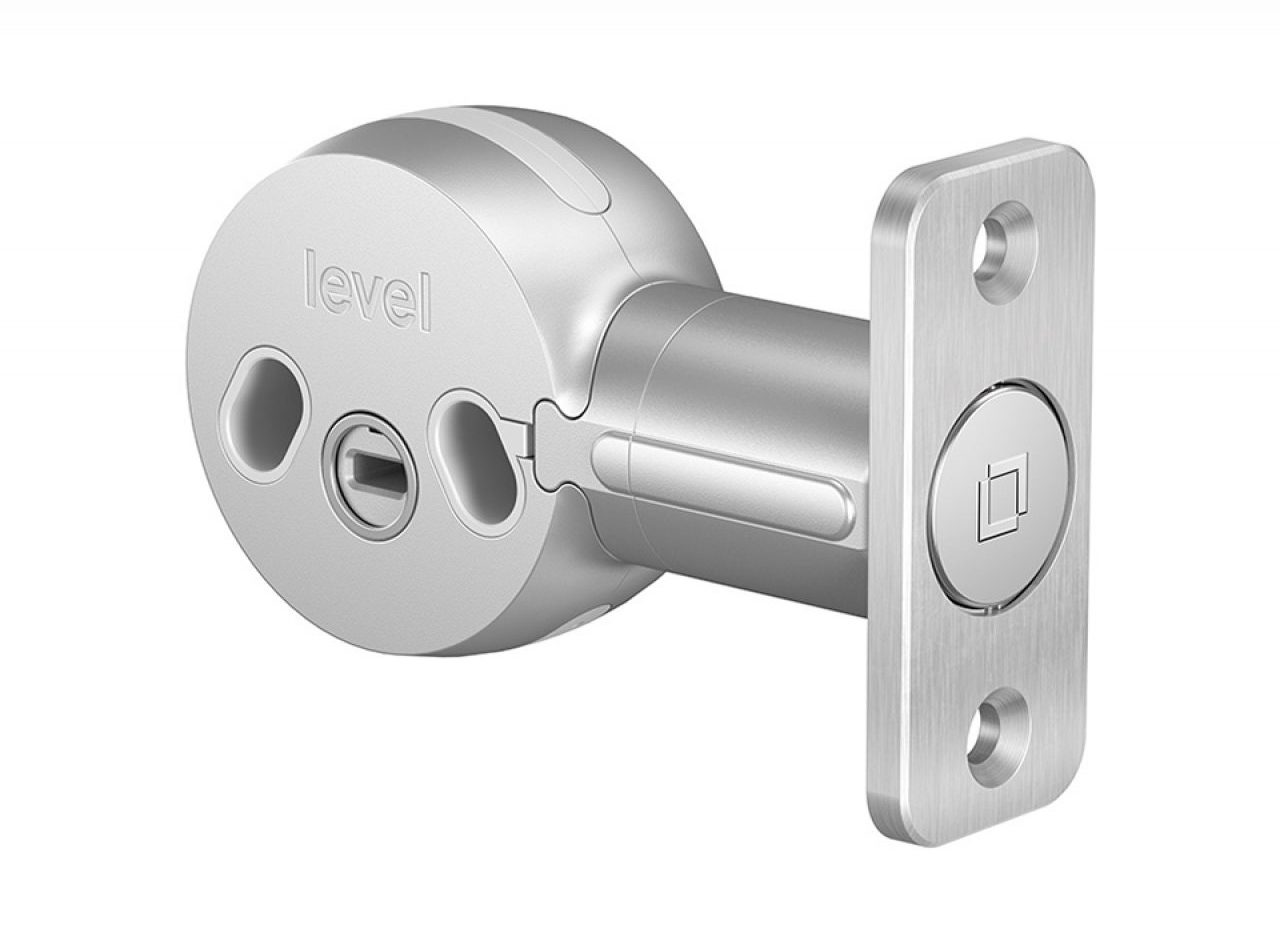
Level’s debut product, the $229 Level Bolt, works with existing deadbolts and just replaces the insides with a connected locking mechanism that you can control from your smartphone via the Level app. The newer $329 Level Touch is a full deadbolt replacement, include the faceplates, but unlike most other smart locks on the market it looks like a standard deadbolt from the outside – albeit a very nicely designed one. The Level Touch is available in four different finishes, including satin nickel, satin chrome, and polished brass and matte black (the latter two are listed as ‘coming soon’)

Image Credits: Level

The Bolt is similar in concept to other smart lock products like the August lock, in that you use it with your existing deadbolt, which means no need to replace keys. It also leaves the thumb turn intact, however, meaning from all outward appearance it isn’t at all obvious that you have a smart lock at all. Installing it is relatively simple, and basically amounts to a lock mechanism transplant. Level includes different cam bar adapters that fit the vast majority of available deadlocks, so it should be something most homeowners can do in just a few minutes. The Bolt offers access sharing via the app, auto lock when you depart, Auto Unlock when you arrive, an activity log, temporary passes, and a built-in audio chime. It also works with Apple’s HomeKit for remote control, voice control via Siri, automation and push notifications.

Image Credits: Level

The Level Touch takes everything that’s great about the Bolt, and adds in some super smart additional features like a capacitive external deadbolt housing, which allows an amazing touch-to-lock/touch-to-unlock feature, and NFC that allows you to use programmable NFC cards and stickers to issue revokable passes to unlock your door. On top of all that, it’s probably the most attractive deadbolt I’ve ever owned or used, which is saying a lot in a field of smart locks where most offerings have unsightly large keypads or large battery compartments.

Design and features

The Level Bolt’s design is clever in its ability to be completely invisible when in use. The deadbolt itself is the battery housing, holding one lithium CR123A battery (included in the box, offers over a year’s worth of use). Installing the Bolt was as easy as unscrewing my existing deadbolt, removing the internal deadbolt mechanism, picking out the right adapter for the cam bar, and then inserting it into my door’s deadbolt lock and screwing back together the external face plates. It took under 10 minutes, start to finish.

Setting up the lock was also simple. You just download the app and follow the instructions, and you’ll be able to control your app in just minutes, too. Using the app, you set up a home profile for your lock or locks, and you can also invite others in your household to share access (they’ll have to install the app and get a profile to do so). You can also set up HomeKit if you have an Apple device and a HomeKit hub (this could be an Apple TV, or an iPad) and instantly unlock a lot of features including remote unlocking and locking control when you’re away from home.

Image Credits: Level

Even without HomeKit, you can set up Level to automatically lock once you leave a certain geofenced area around your home, and to automatically unlock once you return within that perimeter. It’s a fantastic convenience feature that works great and offers tons of benefits when it comes to things like coming home with armfuls of groceries, or large packages.

With the Level Touch, you get all of the above, plus a feature I’ve come to find indispensable: touch control. The metal exterior of the Level Touch’s outside cylinder has capacitive touch sensors, which means that like your iPhone’s screen, it can detect when it’s touched by a finger or skin. You can activate a touch-to-lock feature which will allow it to lock whenever people leave and hold their finger to the deadbolt cover, and you can even set it to unlock when it detects a touch combined with immediate proximity of your phone for identity verification purposes.

To me, this is even more useful than auto-lock/auto-unlock, and yet still much more convenient than fumbling with keys or even using the app to manually lock/unlock. It’s one of Level Touch’s unique advantages, and it’s a big one.

As for installation of the Level Touch, it’s also very easy – no more difficult than installing any deadbolt you might buy at the hardware store. Like the Bolt, it uses a single CR123A battery loaded right into the deadbolt itself that should give you enough power for over a year of use.

Bottom line

Smart locks have become a lot more prevalent over the course of the past few years, but they also haven’t really progressed much in terms of functionality or design. Level has upended all that, bringing the best of convenience features and miniaturized hardware technology to smart, modern design that leapfrogs the competition.

29 Oct 2020

Juganu begins selling its tunable lighting system for pathogen disinfection and deactivation in the US

Juganu, the venture-backed Israeli company that makes lighting systems capable of emitting light at specified wavelengths, is now selling a product that it claims can disinfect surfaces and deactivate pathogens in an attempt to provide buildings with new safety technologies that can prevent the spread of the coronavirus that causes COVID-19.

The company claims that its J.Protect product was clinically validated through a study conducted by Dr. Meital Gal-Tanamy at the Bar-Ilan University Faculty of Medicine (although Dr. Gal-Tanamy’s research typically focuses on the Hepatitis C virus, which has a different transmission vector than airborne viruses like Sars-Cov-2, the coronavirus that causes COVID-19).

Juganu said that the new product has been registered with the US Environmental Protection Agency in 46 states and is currently working with Comcast, Qualcomm, and NCR Corp. to bring its lighting disinfectant and deactivation technology to markets around the country.

The lighting technology uses two kinds of ultraviolet light — A and C — to render viruses inert and kill bacteria on surfaces, according to the company’s claims.

When people are present in a room, the company’s system uses UVA light which can render viruses inert after eight hours of exposure. If the room is empty, the lighting system will use UVC light, which is more potent as disinfectant and more harmful to people, to disinfect a room in under an hour.

The company tested its technology on surfaces, but did not conduct any tests involving their lighting system’s effects on aerosolized viral particles, which have been determined to be the main cause of infections from the novel coronavirus.

“We got an exemption from the FDA and are approved for distribution by the EPA in 48 states,” said Juganu chief executive, Eran Ben-Shmuel in an interview.

The company has already pre-sold the lighting technology in Israel and in India, according to Ben-Shmuel, and is now taking orders for installations in the US.

Juganu, which has raised $53 million to date from investors including Comcast Ventures, Viola Growth, Amdocs, and OurCrowd has offices in Israel, Brazil, Mexico, and the US, has already sold lighting systems to municipalities and businesses around the country.

The new hardware opens up a new line of business in the booming market for technologies targeting the reopening of businesses in the nations that have been hit the hardest by the COVID-19 pandemic.

“Smart lighting will be one of the biggest areas of opportunity for physical spaces. We are evolving from lights simply illuminating spaces to disinfecting and securing them, as well as promoting well-being by recreating natural light shifts based on sunrise and sunset,” said Ben-Shmuel, in a statement. 


29 Oct 2020

Shopify stock is up in pre-market trading as earnings blow past estimates

Shopify stock jumped nearly 3% in pre-market trading today after announcing earnings that handily beat the estimates set by Wall Street.

The Ottawa-based provider of e-commerce services for retailers reported earnings of $133.2 million, or $1.13 per-share, for the third quarter after posting a loss of $33.6 million, or 29 cents per-share, in the same period last year. Analysts tracking the company had expected earnings per-share of 52 cents.

Pretty much everything about the company’s business looked good, partly driven by plummeting brick-and-mortar retail sales as health regulations to limit the spread of the novel coronavirus like occupancy constraints have slowed down foot traffic.

Shopify’s $767.4 million in revenue for the quarter was up 96% from a year ago and handily beat the expectations of analysts who were predicting for the company to bring in roughly $658 million. Operating income was also up from the year-ago period with Shopify calling about $50 million, or 7% of revenue, compared to a nearly $36 million loss for the year ago period. Adjusted operating income was nearly $131 million.

“The accelerated shift to digital commerce triggered by COVID-19 is continuing, as more consumers shop online and entrepreneurs step up to meet demand,” said Harley Finkelstein, Shopify’s President, in a statement. “Entrepreneurs will be the force in rebuilding economies all over the world, which makes it even more important for Shopify to innovate and build the critical tools that merchants need to succeed in a low-touch retail environment.”

“Shopify’s tremendous third-quarter results reflect the resilience and entrepreneurial spirit of our merchants,” said Amy Shapero, Shopify’s CFO . “More entrepreneurs are signing on to Shopify so they can quickly and easily put their ideas into action. We continue to evolve our global commerce operating system to make it easier for merchants to get online and start selling, get discovered, and get their goods to buyers, while providing a delightful shopping experience.”

Shopify is interesting not only for its own revenue, but what its revenues say about the health of direct-to-consumer retail businesses — some of which have raised significant investment from venture capitalists.

Looking at the company’s merchant solutions revenue, which grew by 132% to $522.1 million — the state of these direct-to-consumer companies’ bottom line must be pretty healthy. Gross merchandise volume, the figure from which Shopify derives its merchant solutions gains, was $30 billion. That figure is an increase of $16.1 billion over the year-ago period.

Shopify is sitting on a pretty hefty financial cushion with $6.12 billion in cash and equivalents, up from $2.46 billion at the start of the year.

Outside its financials, Shopify is making moves to expand its footprint in social commerce, through a recent partnership with TikTok, announced yesterday. The deal should enable more Shopify sellers to reach TikTok’s audience by marketing directly on the platform using a toolkit integrated with Shopify’s dashboard, the two companies said.

“More entrepreneurs are signing on to Shopify so they can quickly and easily put their ideas into action,” said Amy Shapero, Shopify’s chief financial officer. “We continue to evolve our global commerce operating system to make it easier for merchants to get online and start selling, get discovered, and get their goods to buyers, while providing a delightful shopping experience.”

29 Oct 2020

Twitter’s API access changes are chasing away third-party developers